Sri Mahadevar Temple, Edayarpakkam


Moolavar - Sri Mahadevar
Place - Edayarpakkam, Chennai, Tamilnadu
Mahadevar Temple is located in Edayarpakkam village, Kanchipuram district.This place is in the border of the Kanchipuram district and Thiruvallur district. The temple is protected by ASI.
The Chola period Mahadevar shrine is apsidal (horseshoe-shaped) dvitala (two tiered) vimana and an ardha-mandapam.Herefore the vimana is called gajaprishta or hastiprishta, both terms in Sanskrit meaning ‘back of an elephant’ as it is curved at the rear.
According to most historians the apsidal form of vimana is of Buddhist origin. However current studies have confirmed that the apsidal vimana architecture was attempted by pan-Indian-tradition and the style was in existence much before the Buddhist era. This form of vimana is found in few other Chola temples in and around Chennai
There are four inscriptions belonging to the later Chola period, especially that of Kulottunga Chola I (1070 - 1120 A.D.), Kulottunga Chola II (1133 - 1150 A.D.) and Rajadhiraja Chola II (1163 - 1178) are found at Edayarpakkam Mahadevar temple near Kanchipuram
References:
1.http://know-your-heritage.blogspot.com/2016/11/edayarpakkam-mahadevar-temple-granite.html
2.http://indiancolumbus.blogspot.com/2016/04/edayarpakkam.html
Sri Vedhanteeswarar Temple, Vallam (Sivan malai)


Amman -Sri Gnaanaambigai
Moolavar - Sri Vedhaantheeswarar
Place - Vallam, Chengelpet, Tamilnadu
Vallam has a beautiful small hillock on which two wonderful rock cut temples are found. There are steps leading to the temples. According to the inscriptions found, these temples are said to have been built during the period of Mahendravarma Pallava. Inscriptions also reveal the ancient name of the place as Valla Naadu under Kalathur Kottam.On the left hand side there is a temple for Lord Shiva called Sri Vedhaantheeswarar. Goddess here is Sri Gnaanaambigai.
This is perhaps the only place where one can have dharshan of Sri Vinayagar, Sri Subramanyar, Lord Shiva, Sri Ambaal and Sri Sandigeswarar from the same place where we stand. Lord Muruga here is called as Sri Muthukumaaraswami.Unlike other Shiva temples, here Goddess Sri Gnaanaambigai is facing the east. Sri Gnaanaambigai looks like a very new idol with clear details and is beautifully decorated with silk saree. The face has so much of Thejas and benevolence.
Dwarapaalakaas are so exquisitely sculpted in life size. The Soolam and Mazhu, which are the weapons of Lord Shiva, are carried by the Dwaarapaalakaas here. It is said that, in this temple, during Pradhosham, the Abishegams are first performed to Dwaarapaalakaas and then to Sri Vedhaantheeswarar and finally to Sri Nandhigeswarar. Now a concrete structure is built around this temple for convenience.It is said that during the sunrise, the rays from the Sun fall directly on the Lord like a garland.
On the right hand side there is a temple for Sri Giri Varadharaaja Perumaal. Sri Perumaal is seen here with his consorts Sri Devi and Bhu Devi. Dwaarapaalakaas are found outside the sanctum.
Unusually, Sri Durgai is found in the Perumaal temple facing south instead of north as found in Shiva temples. According to the inscriptions, it is found that a lady called Kommai daughter of a Pallava King has installed Sri Durgai in this temple 1300 years back.The temple pond is called as Sivaganga Pushkarani, the water from which is used for Abishegams to the Gods.
Pradhosham and all other Saivite and Vaishnavite festivals are done here at these temples. On usual days, priest visits the temple once a day for daily rituals. But one can have dharshan even in the absence of the priest.
Nice temple with serene ambience with excellence of Pallava architecture.
References:
http://www.dharsanam.com/2009/03/vallam-sri-vedhaantheeswarar-sri-giri.html
Sri Omkareswarar Temple, Madipakkam


Moolavar - Sri Omkareswarar
Amman - Sri Swarnambikai
Place - Madipakkam, Chennai, Tamilnadu
Well maintained temple with separate Sannidhi for lord Ganesha, Murugan, Sastha, Veerabadhrar. There is huge sahasra sivalingam with lot of small Sivalingams around. A nice place for meditation.
Address: Dr Ambedkar Salai, Periyar Nagar Extension, Jeeva Nagar, Madipakkam, Chennai, Tamil Nadu 600091
Sri Thillai Natarajar Temple, Chidambaram (Pancha Bootha Sthalam - Akasham or Space)


Moolavar - Thirumoolanathar
Amman - Umayambikai - Sivakama Sundari
Place - Chidambaram, Tamilnadu
This temple is 78 km south of Pondicherry and 235 Km from Chennai. The Sangam classics refer to Viduvelvidugu Perumtaccan, respected clan of traditional Vishwakarmas, as being the chief architect of the temple renovation. There have been several renovations in its history, particularly during the days of Pallava/Chola emperors in ancient and pre-medieval periods.
Chidambaram is one of the five holiest Shiva temples, each representing one of the five natural elements; Chidambaram represents akasha (aether). The other four temples in this category are: Thiruvanaikaval Jambukeswara,Trichy (water), Kanchi Ekambareswara (earth)Kanchipuram, Thiruvannamalai Arunachaleswara (fire),Thiruvanna malai and Kalahasti Nathar (wind),Kalahasti
The temple complex spread over 50 acres in the heart of the city. It is an ancient and historic temple dedicated to Lord Shiva Nataraja and Lord Govindaraja Perumal, one of the few temples where both the Shaivite and Vaishnavite deities are enshrined in one place.To the followers of Shaivism (Saivism) or the saivaite, the very word koil refers to Chidambaram. In the same way, to the followers of Vaishnavism it refers to Srirangam or Thiruvarangam.
The story of Chidambaram begins with the legend of Lord Shiva strolling into the Thillai Vanam (Vanam meaning forest and thillai trees - botanical name Exocoeria agallocha, a species of mangrove trees - which currently grows in the Pichavaram wetlands near Chidambaram. The temple sculptures depicting the Thillai trees date back to the 2nd century CE).
In the Thillai forests resided a group of saints or 'rishis' who believed in the supremacy of magic and that God can be controlled by rituals and 'mantras' or magical words. The Lord strolls in the forest with resplendent beauty and brilliance, assuming the form of 'Bikshadanar', a simple mendicant seeking alms. He is followed by his Grace and consort who is Lord Vishnu as Mohini. The rishis and their wives are enchanted by the brilliance and the beauty of the handsome mendicant and his consort.On seeing their womenfolk enchanted, the rishis get enraged and invoke scores of serpents or Naga by performing magical rituals. The Lord as the mendicant lifts the serpents and dons them as ornaments on his matted locks, neck and waist. Further enraged, the rishis invoke a fierce tiger, which the Lord skins and dons as a shawl around his waist.Thoroughly frustrated, the rishis gather all their spiritual strength and invoke a powerful demon Muyalakan - a symbol of complete arrogance and ignorance. The Lord wearing a gentle smile, steps on the demon's back, immobilizes him and performs the Ánanda Thaandava (the dance of eternal bliss) and discloses his true form. The rishis surrender, realizing that this Lord is the truth and he is beyond magic and rituals
The Ananda Tandava posture of Lord Shiva is one of the famous postures recognized around the world by many. This celestial dancing posture tells us how a Bharathanatium Dancer should dance.
The demon under Nataraja's feet signifies that ignorance is under his feet
The Fire in this hand (power of destruction) means destroyer of evil
The raised hand signifies that he is the savior of all life.
The Ring at the back signifies the cosmos.
The drum in his hand signifies the origin of Life.
These are the main things that the Natarajar murti and the celestial dance posture depict. A rare type of thandava posture is seemed in Melakadambur temple near by 32 km from here.In this Karakoil, Nataraja dancing on a bull and deva's rounds the structure it's an pala art being kept in this shrine
Reference:
https://en.wikipedia.org/wiki/Nataraja_Temple,_Chidambaram
Sri Kailasanathar Temple, Tharapakkam


Moolavar - Sri Kailasanathar
Amman - Sri Anandavalli Amman
Place - Tharapakkam, Chennai, Tamilnadu
This is a very old temple which is recently renovated.Carvings of dasavatharas are seen in the pillars.
Address:
Sadanandapuram, Tharapakkam, Thandalam, Tamil Nadu 600116
Sri Atcheeswarar Temple, Acharapakkam


Moolavar - Sri Atcheeswarar
Amman - Umai Atcheeswarar
Place - Acharapakkam, Chennai, Tamilnadu
This temple at Acharapakkam is one of the 275 Thevara Padal Petra Sthalams. The temple has two presiding deities Atcheeswarar and Umai Atcheeswarar gracing the devotees from two separate sanctum sanctorums. Lord Shiva is a Swayambumurthi.
Three cruel demons Tharaka, Kamalaksha and Vidyunmali, proud of the boons and the resultant powers they gained from Lord Brahamma through their intense penance, began to harass the Devas violently. Unable to face their onslaught, Devas appealed to Lord Shiva for protection and freedom. Lord Shiva combined both earth and heaven and marched against the demons. According to rules, every work should start with Vinayaka worship. Lord Shiva is no exception. In his hurry to wage the war against the demons to save Devas, He forgot this protocol. Devas too, having Lord Himself with them ignored Vinayaka. Angry Vinayaka stopped Lord Shiva’s march by breaking the axis of His car. Axis in Tamil means Achu. Realizing the mistake, Lord asked Vinayaka to help in His mission. Son immediately obeyed. This event took place here. Hence, the place came to be known as Achu Iru Bagam (where axis broke) and later Achirupakkam came to stay. Lord is Atcheeswarar.
The main temple is a big one, measuring 265 feet East-West and 140 feet by South-North with a 5 tier Rajagopuram and two praharams. The main entrance is towards Aacheeswarar, a Swayambu lingam on a Square avudayar built by the Sage Thirinendhrathari for himself in line with the Dwajasthambam, Bali peetam and Nandhi.
It is strongly believed that prayer to Lord Atchipureeswarar would elevate the devotee to ruling position with management abilities. Also as the Lord is in the form ‘Letters – Akshara’ the devotee will shine in education.
The scene of Lord Shiva and Parvathi devi giving dharshan to Sage Thirunendhrathari under the Sthala vruksham – Kondrai tree
Worshipped by Kannuva muni, Gouthama Muni in Thredha yuga; Brahma and Vishnu in Dwabara yuga; and Agasthiar in Kali Yuga. The temple tank outside in front of the temple is considered to be created by Brahma and is called Brahma Theertham; and the well near the kondrai tree in the outside praharam is considered to be created by Vishnu.
References:
http://templesoftamilnadu.co.in/atcheeswarar-temple-at-acharapakkam/
http://temple.dinamalar.com/en/New_en.php?id=66
http://www.acharapakkamaatcheeswarartemple.tnhrce.in/
Sri Kachabeswarar and Sri Marundeeswarar temple, Thirukachur
The twin temples of Thirukachur


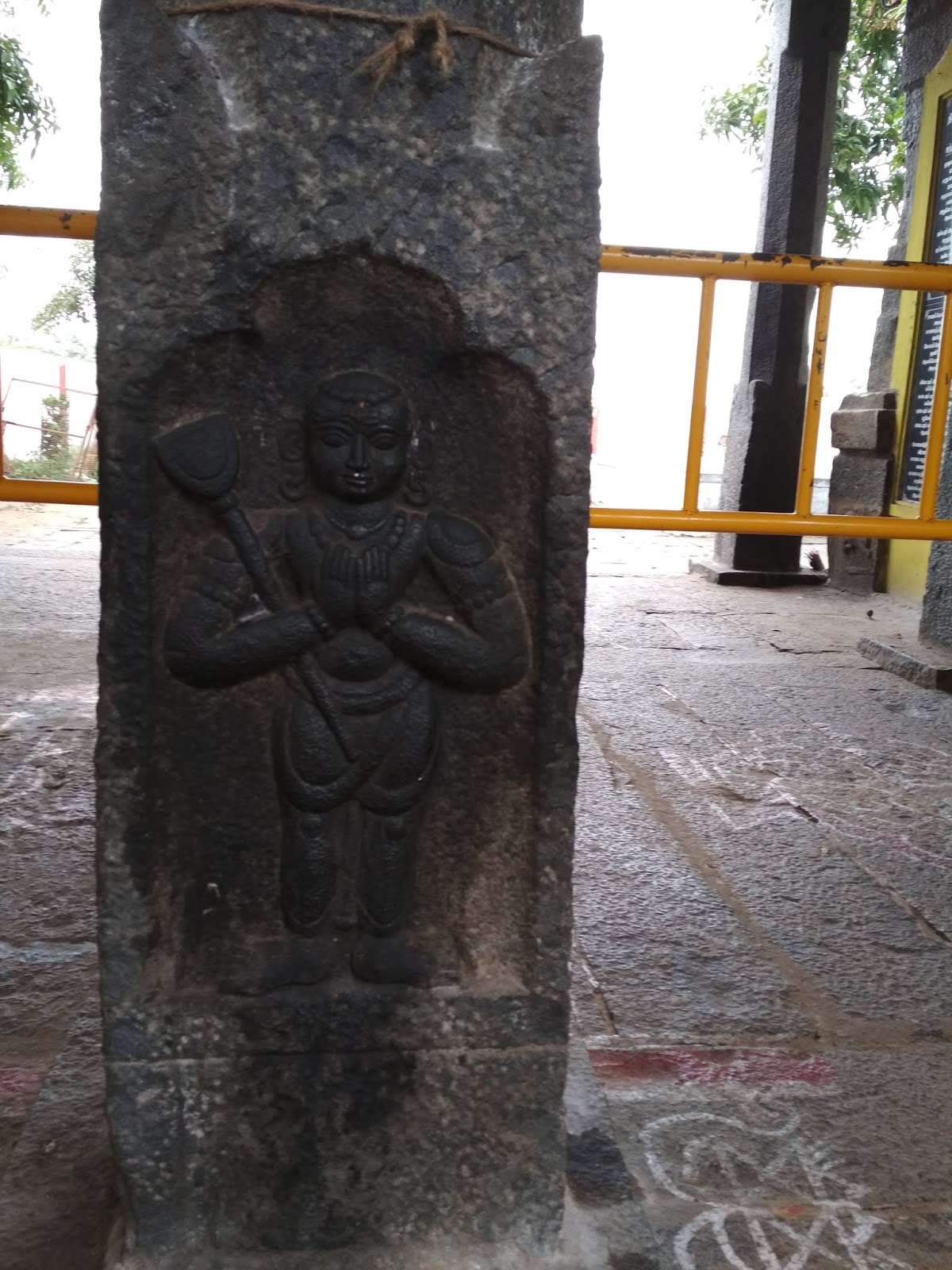


Moolavar - Sri Kachabeswarar
Amman - Sri Anjanatchi Amman
Place - Thirukachur, Chennai, Tamilnadu
As per Hindu legend, Vishnu in the form of tortoise (called Karkada) worshiped Shiva to attain divine ambrosia at this place. On account of the legend, the place was called Kascapavoor, which went on to become Kachoor and the presiding deity, Shiva came to be known as Karchabeswarar. The temple has a recorded history from the 10th century, but scholar attribute the presence of the temple at least from the 8th century, pertaining to the period of Sundarar, the famous Saiva Nayanar. Sundarar has glorified the temple in his verses in 11th Thirumurai of Thevaram.
The temple has a flat gateway tower and all the shrines of the temple are enclosed in concentric rectangular granite walls. There is a sixteen pillar hall in front the gateway that has sculpted pillars dating back to the 16th century. The temple occcupies an area of around 2 acres (0.81 ha). The temple tank is located adjacent to the sixteen pillared hall. The central shrine houses the image of Kachabeswarar in the form of Lingam. The shrine of Irulneeki Thayar (also called Anthaga Nivarini]], facing West is located in the Mahamandapam leading to the sanctum. The central shrine is approached through the shrine of Thyagaraja located adjacent to the sanctum. As in other Shiva temples in Tamil Nadu, the shrines of Vinayaka, Murugan, Navagraha, Chandikesa and Durga are located around the precinct of the main shrine. There is a shrine depicting Shiva offering food to Sundarar on the Western side.
Moolavar - Sri Marundeeswarar
Amman - Sri Irulneeki Amman
As per Hindu legend, Devas, the celestial deities, got cured off their illness by worshiping Shiva at this place. The Devas were treated by Aswani Devata, the divine doctor at the behest of Shiva. Shiva thus obtained the name Marundeeswarar, Marundu literally means a curative. The temple has a recorded history from the 10th century, but scholar attribute the presence of the temple at least from the 8th century, pertaining to the period of Sundarar, the famous Saiva Nayanar. Sundarar has glorified the temple in his verses in 11th Thirumurai of Thevaram.
The temple complex covers an area of one acre and all its shrines are enclosed with a granite concentric rectangular walls. The temple has a number of shrines, with those of Marundeeswarar and his consort Irulneeki Thayar being the most prominent.
Sri Velleswarar Temple, Mangadu (Sukran Sthalam)


Moolavar - Sri Velleswarar
Place - Mangadu, Chennai, Tamilnadu
The temple is dedicated to Lord Shiva and derives its name from being worshiped here by Sukra (Vellee in Thamizh) - the planet Venus as per Hindu mythology. Lord Sukra is the guru of the Asuras. Special poojas are hence offered by devotees on Fridays - the day dedicated to Venus. This temple forms part of the Navagraha temples around Chennai. Devotees offer white field beans (Mochai) as a special offering signifying the cereal in relation to Sri Sukra.
According to the legend, when Goddess Sri Kamakshi performed tapas here in Mangadu, Lord Shiva came down to earth to give darshan to Her and then marry Her. It is said that Sri Sukra worshipped Lord Shiva here. When Sri Kamakshi came here to have darshan of Lord Shiva, she saw Sri Sukra worshiping the Lord. The Goddess went back as She did not want to disturb the penance of Sukra.
Later, Lord Shiva directed the Goddess to come to Kanchipuram and married her there. As Sri Sukra worshipped Lord Shiva here, the Lord came to be known as Sri Velleeswarar and also as Sri Bhargaveswarar. This temple is Sukra Sthalam among the Navagraha Temples of Chennai (or Thondai Mandalam). Sri Sukra blesses people with wealth, prosperity, good family, vehicles, fame and social status
Sri Thiruvetteeswarar Temple, Triplicane


Moolavar - Sri Thiruvetteeswarar
Amman - Sri Shengbagambikai
Place - Triplicane, Chennai, Tamilnadu
The temple assumes importance as a sacred place for remedy from the adverse aspects of planets Rahu and Ketu. The temple has three flag posts-Kodi Maram for Lord Shiva, Lord Shanmuga and Mother Ambica. It is said that Mother Mahalakshmi worshipped Lord Shiva here to have the Hand of Lord Vishnu. Supporting this story, Mother Mahalakshmi is seen performing abishek to Lord Shiva depicted in a pillar sculpture. Mothers Mahalakshmi and Maha Saraswathi are seen side by side in a shrine. Lord Vinayaka has a separate shrine where devotees light lamps with coconut oil and coconut garlands. Lord Shanmugha graces from a separate shrine on the peacock vehicle. On every Sashti day – 6th day of either new moon or full moon days – pujas are conducted in the shrine with six flowers, six nivedhanas, six fruits by six priests performing the ‘Shatru Samhara Trisadha’ puja, a special event in the temple
References:
1. http://temple.dinamalar.com/en/new_en.php?id=38
2. http://www.tiruvallikenitiruvetteeswarartemple.tnhrce.in/
Sri Rathnagiriswarar Temple, Besant Nagar


Moolavar - Sri Rathnagiriswarar
Amman - Sri Aralakesi Amman
Place - Besant Nagar, Chennai, Tamilnadu
Way back in 1968, when the residents of Besant Nagar, mostly
Government employees, at that time wanted a place of worship.
Accordingly when His Holiness Sri Abhinava Vidyathirtha Maha Sannidhanam
visited Chennai, Besant Nagar residents invited him and sought his
blessings for building a prayer structure. His Holiness with His
benevolence blessed them and sprinkled holy water, flowers and akshthai
at the place where Sri Rathnagiriswarar temple stands now.
The residents later decided to form a regulated forum for this
purpose and thus created a body and named it as BHAKTHA MANDALI. This
was registered under the Tamil Nadu Societies Registration Act. Bhaktha
Mandali (Regd) then purchased a piece of land admeasuring around 4
grounds for building a pucca place of worship .
Bhaktha Mandali members then approached the most venerable sage of
Kanchi Sri Chandrasekarendra Saraswati Maha Swamigal and sought his
benign grace for building a temple in Besant Nagar. His Holiness
prophesied that they could search the seashore in Thiruvanmiyur where
they would locate a Maha Lingam, which could be installed as the
presiding deity of the proposed temple. The elated residents taking the
words of His Holiness Sri Maha Swamigal with absolute faith, searched
the seashore of Thiruvanmiyur coast and finally located the Mahalingam
Vigram there. With the help of the local residents and with the help of
His Holiness Sri Jayendra Swamigal’s poorvasrama father Sri Mahadeva
Iyer who was staying in Thiruvanmiyur at that time, brought that
Mahalingam to Besant Nagar and placed it on a sandy pedestal, at the
place where the Gharbharaham of Sri Rathnagiriswarear stands today – on
sacred Maha Sivarathri day, 7th March, 1970.
All important functions like Maha Sivarathri, Sarada Navarathri,
Sri Rama Navami Mahotsavam, Aashada Mahotsavam, Arudra Darsanam,
Annabhishekam, etc. are celebrated in a most sacred manner, strictly
following the vedic injunctions and vaideeha pooja vidhanam.
References:
1.http://rathnagiriswarar.org/
2.http://greenmesg.org/temples_chennai/b/besant_nagar_rathnagiriswarar_temple.php
Sri Dharmalingeswarar Temple, Nanganallur


Moolavar - Sri Dharmalingeswarar
Amman - Sri Sarvamangalabikai
Place - Nanganallur, Chennai, Tamilnadu
Sri Dharmalingeswarar Temple is adorning the southern tip of the temples-map of Nanganallur, a flourishing calm cultural southern suburb of Chennai. The temple is at a distance of about 2 kilometers from the market area, and is very easily accessible.
This temple was known
in ancient times as Dhanmisar Semponkoil, as inferred from a stone
inscription found in the temple. The inscription dates this temple's
existence to the sixth year of rule of the Great King Raja Raja Chola
(991 A.D.).
The granite sanctum sanctorum of this temple along with
the moolavar came up from an earthern mound covered with shrubs, only
during late 1960s. Since then, the name and fame of the deities of this
temple have grown from strength to strength and travelled to far-off
regions.
The temple is undergoing steady expansion, strictly according to aagama saastras right from the day the Lord Dhanmisar revealed Himself in this place - thanks to the devotees who have been regularly contributing small amounts for the improvement and upkeep of the temple, in the absence of any major property or resources or endowments or big-donations. Perhaps, the Lord here is in constant communion more with the ordinary devotees and blessing them, rather than a chosen few! Recently, a new 3-tier East Rajagopuram was constructed, and kumbhabhishekham (the third during this century), was performed on 10th September, 2000. Another new 5-tier Rajagopuram was constructed at the Southern Entrance, and kumbhabhishekham (the first during 21st century), was performed on 4th September, 2009. A new Yagasalai Mantapam has been constructed on the Northern Prakaram. A new Chariot has also been made to facilitate the Tiru-Veedhi-Ula of Utsava Moorthies on prescribed days.
References:
1.http://www.sridharmalingeswararkoil.in/
Sri Chandramouleeswarar Temple, Medavakkam


Moolavar - Sri Chandramouleeswarar
Amman - Sri Kamatchi Amman
Place - Medavakkam, Chennai, Tamilnadu
A beautiful small temple tugged in the midst of the residential area of Medavakkam. The temple apparently had Sri Kamatchi Amman for over 50 years and recently Sri Chandramouleshwarar has been brought in from other location.
It has all the goshta vigrahams and also it’s got separate Sannidhi for navagraham. Very simple n beautiful temple.
Address:Chandra Mouleeswarar Temple,Second Main Rd,Munusamy Nagar, Vimala Nagar, Medavakkam,Chennai, Tamil Nadu 600100
Sri Swarnapureeswarar Temple, Vengaivasal


Moolavar - Sri Swarnapureeswarar
Amman - Sri Mangalambigai
Place - Vengaivasal, Chennai, Tamilnadu
A beautiful temple located in the middle of the residential area of Vengaivasal at Bhajanai Kovil Street.
It seems that few decades ago while excavating the land for building a house a localite found the Sivalingam and decided to build a temple. Later they have found the Nandhi while clearing the tank and you can still see the old Nandhi. Though they have newer Nandhi installed.
The initial thought was to name this Vengaeshwarar but later decided to call it Swarnapureeswarar.
There is a 5 headed snake being carved on the sivalingam which can be seen while doing abhishekam.It is said that this sivalingam is of the same period as the Dhenupriswarar and the rest of the goshta murthies are fairly new.
The interesting fact is that when pure cow’s milk is used for the abhishekam on the sivalingam it turns blue in colour and we were lucky to witness the same today.
You can connect with the Gurukkal at 7358337055. His name is Sriram.
Address: Sornapureeswarar Temple, Noothencheri, Vengaivasal, Chennai, Tamil Nadu 600126
Sri Agastheeswarar Temple, Nemilichery


Moolavar - Sri Agathiswarar
Amman - Sri Aanadavalli ambal
Place - Nemilichery, Chrompet, Chennai, Tamilnadu
A good 1000 year old temple in midst of the developing residential area of Chrompet.
The
moolavar has been worshiped by sage Agasthiar and hence the name
Agasthiswarar. The interiors of the temple is very old and you can see
the fish symbol on the roof which is significance the ancinentness of
this place.
A separate Sannidhi for sage Agasthiar here. A rare sight
of bairavar along with suryan and Chandiran can be seen in this temple.
It is belived that those who have sugar complaints get rid of their problems by visiting and praying to lord Agasthiswarar.
References:
1. https://www.columbuslost.com/temples/Sri-Agasteeswar-Temple-Nemilicherry-Chrompet-Chennai/info
Sri Thirunavaleeshwarar Temple, Navalur


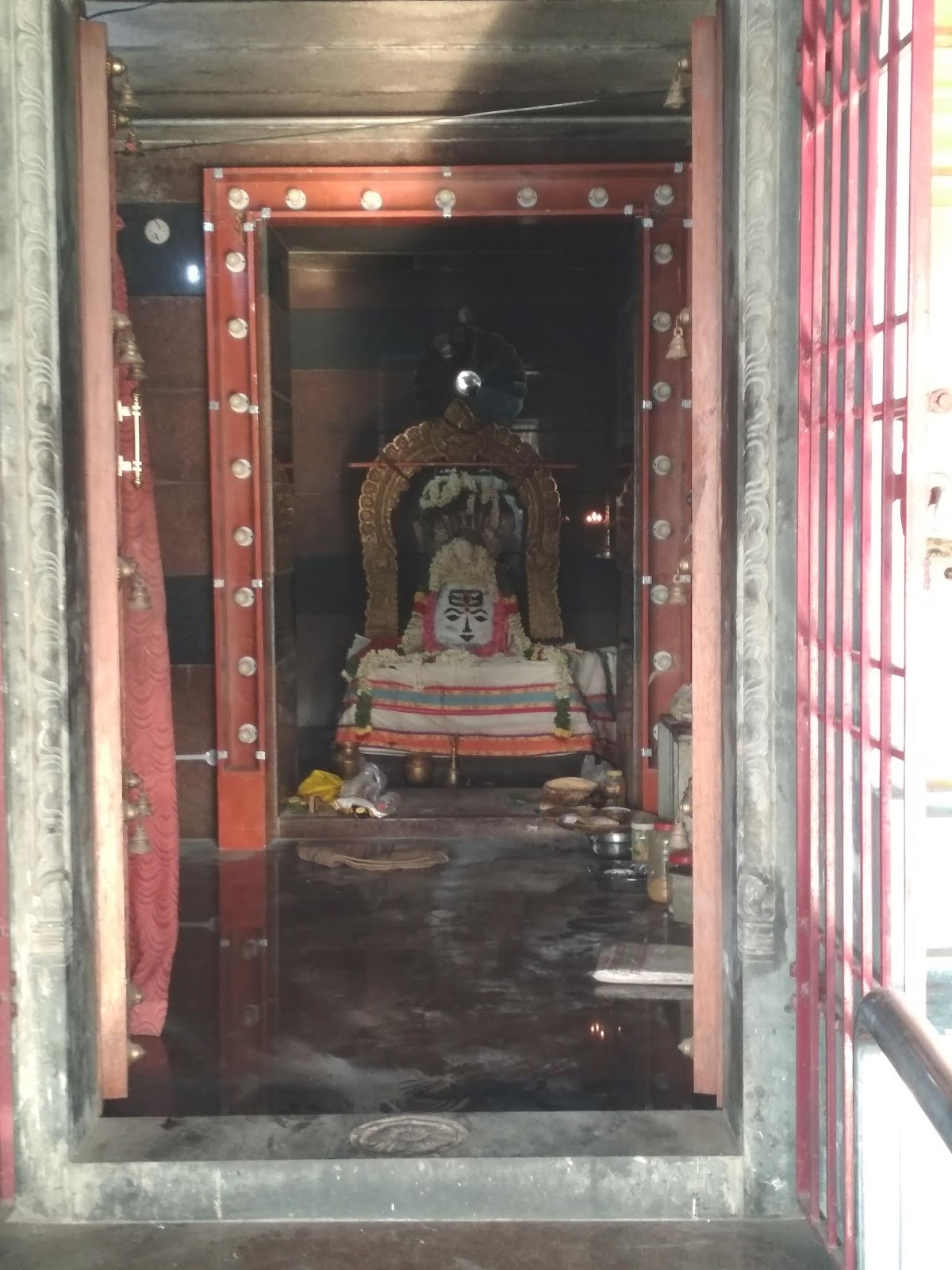

Moolavar - Sri Thirunavaleeshwarar
Amman - Sri Akhilandeswari
Place - Navalur, Chennai, Tamilnadu
The Siva lingam and Nandhikeshwarar vigraham is around 1000 plus years and structure around is fairly new. As per the priest around 10 to 15 years old. The theppa Kulam or the pond seems to have around 11 wells. The Sanskrit name for the lord is Sri Jambukeshwarar.
As per the advise of MahaPeriyava, the temple was built by few local people. The place is called Navalur because of this temple. Subsequently Akilandeswari Amman sannidhi, Vinayagar & Murugar Shrines were added. Recently Ayyapan Shrine in typical Kerala style was built. There is also a huge pond in front of Shivan sannidhi. Prodhosham is celebrated in a big way here.
There is a separate Sannidhi for Sri Lakshmi Narayanan
Address : Thirunavaleeswarar Kovil,Old Mahabalipuram Rd, Navallur, Tamil Nadu 603103
Sri Agastheeswarar Temple, Villivakkam


Moolavar - Sri Agastheeswarar
Amman - Sri Swarnambikai
Place - Villivakkam, Chennai, Tamilnadu
The Agastheeswarar Temple (1000 + years old temple) is dedicated to Sri Shiva as Agastheeswarar Swamy and Divine Mother Shakti as Swarnambikai.
The entrance is south facing and when you enter the inner praharam the goddess is in front facing south. She is in standing posture.Dwajasthambam, Palipedam and nandhi are at the east entrance in the outer prakaram.
Vinayagar and Subramaniyar are at the entrance of sanctum. Dwarabalakars are little big in size.
The
entrance of the Goddess shrine has the idols of Lakshmi and Saraswati.
The main shrine also houses the Navagraha idols. Guru (Jupiter) is
facing the Goddess.
As Guru and the Goddess are facing each other, it is believed that those unmarried ladies who worship the Goddess here get the grace of Guru and get married soon.
Lord Veerabadra graces from a separate temple at the southern entrance of Lord Agastheeswara temple. He appears with two sharp teeth with a Danda in His left hand. Daksha is before Him in a bowing form. Mother Badrakali shrine is in the front mandap. As Lord Veerabadra is another form of Lord Shiva, Pradosha pujas and one time puja on the Shivarathri day are dedicated to Him.
The main sannidhi of Siva is east facing and is a majestic sivalingam.
There is a standing Nandi (Adhikara Nandi) with human form and Bull face facing the lingam in a small niche near the door.
References:
1.http://www.villivakkamagastheeswarartemple.tnhrce.in/
2.http://dilipkumar.in/articles/chennai-temples/1000-years-heriatge-agastheeswarar-temple-villivakkam-chennai.html
Sri Chenganmaaleeswarar Temple, Kelambakkam


Moolavar - Sri Chenganmaaleeswarar
Amman - Sri Brihannaayagi
Place - Kelambakkam, Chennai, Tamilnadu
In Thamizh, Chenganmaal denotes the name of Lord Vishnu. It is
said that Lord Vishnu worshipped Lord Shiva here and hence the deity got
the name, Chenganmaaleeswarar and the village, Chenganmaal. It is also
said that, as this temple was built by an ancient Chozha king called Ko
Chengannan (who built Thiruvaanikkaaval temple, this place got its name
after the king Chengannan.
Temple legend has it that Lord Vishnu worshipped Lord Shiva here
offering 1008 lotus flowers. He was praying to Lord Shiva with utmost
devotion. Lord Shiva made a trick and made one flower vanish from 1008
lotuses. When Lord Vishnu was about to offer the last flower, he was
shocked to see that there was no more flower. Lord Vishnu immediately
offered himself as the last flower to complete the pooja. This temple is
believed to have been built during 12th century. This temple does not
have a Rajagopuram. The Lord here is facing east. Goddess Sri
Brihannaayagi is beautiful and is facing south.
This small temple has a beautiful Prakaram on which Lord Ganesha
is on the south west corner. Lord Ganesha is seen here as Sri Selva
Vinayaga. There is an Utsava mandap made of stone pillars, adjacent to
Sri Selva Vinayaga shrine. Other deities are Sri Subramanya, Sri
Dhakshinamurthy, Sri Brahma and Sri Durga. Surya Bhagavan has a small
shrine facing west adjacent to the main entrance. There is a tall
concrete mandap adjacent to Surya Bhagavan shrine for the temple's bell.
An old, tall Dwajasthambha adds attraction to the Prakaram (outer
corridor).
There is a big pond outside the temple, on its northern side,
which serves as ‘theertham’(holy water) for this temple and is called as
‘Vishnu Theertham’. The sthala vruksham here is Vilvam. A small, yet
beautiful and calm temple to cherish is not too far from the city
References:
1.http://www.templeadvisor.com/temples-in-india/hindu-temples/sri-chenganmaaleeswarar-temple
2.http://www.dharsanam.com/2008/03/chenganmaal-sri-chenganmaaleeswarar.html
Sri Agatheeswarar Temple, Kolapakkam


Moolavar - Sri Agatheeswarar
Amman - Sri Aanandhavalli Ambal
Place - Kolapakkam,Chennai, Tamilnadu
A beautiful Shiva temple where the main deity is Sri Agatheeswarar (also called Sri Vaakeesa Mahadhevar) and Goddess Sri Aanandhavalli.
This temple is said to be over 1300 years old. According to legend, Sri Surya Bhagavan had worshipped Lord Shiva at this temple. Sri Surya Bhagavan has a separate shrine inside this temple facing the Lord towards west. This temple is one of the Navagraha temples of Chennai devoted to Sri Surya Bhagavan. The Sun God is given prominence in this temple, where all important deities of the temples are facing Surya Bhagavan shrine.
It is said that, apart from Surya Bhagavan, Sage Agasthiyar too had worshipped Lord Shiva here and hence the name Sri Agatheeswarar. Another Rishi called Vaakeesa Muni also had worshipped Sri Agatheeswarar here.
The temple is built facing south on a vast land. Sri Agatheeswarar is seen facing east. Ambaal Sri Aanandhavalli is facing south and is in standing posture. Nandhi is seen facing the Lord towards east.
There is a separate shrine for Lord Ganesha called Raja Ganapathy here. Also, Sri Kaasi Viswanathar and Sri Visaalakshi have separate shrines facing east at the south west portion of the temple. Lord Subramanyar also has a shrine in the temple in which a Maragatha Mayil (Peacock made of green granite) is found.
Sri Kaala Bhairavar is very popular in this temple and is said to be more powerful. Special Poojas and Abishegams are performed to Sri Kaala Bhairavar every Sunday during Raahu Kaalam (4.30 pm to 6 pm) timings. It is said that people worshipping Sri Bhairavar here for 6 consecutive Sundays, get their wishes fulfilled.
Many kings have patronized this temple during various periods. A king called Aadhithyan is said to have done renovations to the temple during 878 AD.
One strange thing is everyday a cat comes here when the temple is opened and sits right in front of the lord and stares at the lingam as if he is meditating. The priest says probably Agatheeswarar Muni is worshipping the lord in the form of a cat
Also Raja Raja Chozha I, Raja Raja Chozha II (1152 AD), Kulothunga Chozha III (1188 AD), Sundara Pandiyan (1200 AD), Veera Rajendra Chozha, a Telugu Chozha king called Vijayakanda Gopala are said to have contributed much to the temple, according to the inscriptions found in the temple
References:
1.http://www.dharsanam.com/2008/04/kolappaakkam-sri-agatheeswarar.html
2.http://templesoftamilnadu.co.in/suryan-sthalam-kolapakkam/
Sri Agastheeswarar Temple, Nedungundram


Moolavar - Sri Agastheeswarar Temple
Amman - Sri Thiripurasundari Ambal
Place - Nedungundram, Chennai, Tamilnadu
On a beautiful rainy morning at Chennai visiting this 13th century temple was an amazing experience.
The temple is facing east with an arch on the east side and an entrance on the south. Dwajasthambam, Balipedam and Nandhi are immediately after the south side entrance arch. Vinayagar and Murugan are at the entrance of the arch. Temple tank with a big banyan tree is in front of the temple.
In the prakaram sannadhi for Iyappan, Sri Valli devasena Subramaniyar, Maha Lakshmi, Bairavar, Navagrahas with their vahanas, Sandikeswarar and Nagars under a neem tree.
The sanctum sanctorum consists of Sanctum, antarala and arthamandapam. Urchavars, Bala Ganapathy, Bala Subramaniyar, Bala Sundari are in the arthamandapam.
Moolavar is little big and Ambal is in separate sannadhi in arthamandapam facing south. In Koshtam Dhakshinamurthy, Mahavishnu, Brahma and Durgai.
Inscriptions of Rajaraja –III, ie 13th century inscriptions are on the kumudham of athidanam. One of the inscription speaks about donation of a cow to burn a perpetual lamp till sun and moon exists, also the the cow’s calf to be maintained in the temple when the Cow becomes old. Another inscription mentions this place as PerunKulathur, it means a big water body / Kulam latter changed to the present name of Perungalathur.
References:
1.http://remoteoldtemples.blogspot.com/2017/03/nedunkundram-sivan-temple.html
Sri Sathyapureeswarar Temple, Ponmar


Moolavar - Sri Sathyapureeswarar / Shakthipuriswarar
Amman- Sri Sathyapureeswari / Sakthipureeswari
Place - Ponmar, Medavakkam - Mambakkam Road, Chennai, Tamilnadu
This temple is unusally a south facing temple. There are very few south facing temples and this unknown temple in a very small village is one of those. The Lord is east facing and the Goddess is facing south.
The goddess is very unique with her head tilted a little towards the left and it seems she is willing to listen to all your prayers.
There are inscription on the walls which belongs to the Vijaya Nagara Empire, dating inscribed 1520 AD during the reign of Sadasivarayar, nephew of Krishna Deva Raya. This location is referred to as Thyaga Vinodha Nalloore now called Ponmaru. This inscription also refers to a small village called Poyilicheri near Ponmar.
The exterior of the temple has a separate shrine of Kasi Viswanathar. The outer areas are very beautifully engraved with great amount of detailing.
Other shrines here are of Brahma, Valampuri Vinayakar with trunk turned to right and has a beautiful smile, Lord Muruga, and Bhairavar. Behind the temple there is a small pond. There are no goshta murtis around which is very unlikely for any Shiva temples.
It is believed that doing abhishekam to the goddess here with manjal (turmeric) helps in thyroid issues for ladies. And lord shiva here heals issues with stomach aches n pains.
This is very well maintained temple and has special worships during pradhosham and other festivals. A must visit temple for all those who like to visit old Shiva temples
There is a need for some bit of restructuring and those willing to contribute funds for the Thirupani can reach to Srinivas 9940262654
References:
1.http://travel.bhushavali.com/2011/09/sathyapureeswarar-temple-kanchipuram.html
Sri Othandeshwarar Temple,Thirumazhisai


Moolavar - Sri Othandeshwarar
Amman - Sri Kulirvitha Nayagi Amman
Place - Thirumazhisai, Chennai, Tamilnadu
Chola king Karikal Peruvalathan was proceeding on his elephant to worship Shiva in another place. On the way, one leg of the elephant was caught in a creeper. Despite efforts, it could not pull out from the bush. The king tried his hands to remove the bush but could not. He began cutting the bush with his sword which began to bleed. Shocked king, found a Shiva Linga hidden under the bushes. Realizing that he had offended the Lord, he unhesitatingly cut his hand with the same sword when Lord appeared before him with Mother on His Nandi and fixed the hand as before. Remembering the event, Lord is praised as Kai Thandha Piran – Lord who gave hands. Lord consoled the king. Mother narrated to king the stories of Shiva devotees and cooled his mind. Kulirvithal in Tamil in this context means cooling the sorrows of devotees, hence, she is praised as Kulirvitha Nayaki.
There is a scar on the head of Shiva
Linga caused by a cut. Lord and Mother grace together from behind the
Linga in the sanctum sanctorum facing east. Devotees firmly believe that
worshipping them together would release them from all the sins and
ensure total salvation. Lord Othandeswarar is also praised as Mano
Anukula Easwarar as He blesses the devotees with mental strength.
Lord Vinayaka of the temple is revered as
Prasanna Vinayaka. The faith is strong among the devotees that unity among the couple would be closer if they worship Lord Nataraja and Mother Ambica both looking at each other ensuring happiness in life. The Vimana, tower above the sanctum sanctorum is of Gajabrushta design. Lord Vishnu facing west is on the goshta. There are shrines of Sani Bhagwan, Vrushaba Nayaka in the prakara-corridor.
Sri Somanaadheeswarar Temple, Somangalam


Moolavar - Sri Somanaadheeswarar
Amman - Sri Kamakshi Amman
Place - Somangalam, Chennai, Tamilnadu
Somangalam lies at about 35 kms south west of Chennai city. One can take the route from Tambaram via Kishkinta to reach Somangalam. The better alternative is to take the road from Pallavaram going to Kunrathur. After reaching Kunrathur junction, one has to take left (towards south) to reach Somangalam. Somangalam is about 10 kms from Kunrathur. Also plenty of busses ply from Porur directly to Somangalam.
Somangalam is an ancient, beautiful village having a temple for Lord Shiva. The main deity here is Sri Somanaadheeswarar and Goddess Sri Kamakshi Amman.
This temple is one of the Navagraha temples of Chennai (or Thondai Mandalam) devoted to Sri Chandra Bhagavan (Moon God). According to legend, once, Sri Chandra Bhagavan (also called Soman) is said to have got cursed by Dhakshan. As a result, he lost his divine charm and forgot all 16 form of arts he acquired. To come out of this, He is said to have created a pond here called Soma Theertham and worshipped Lord Shiva here. After this, he got back his beauty and wisdom. As Sri Soman (Sri Chandra Bhagavan) worshipped the Lord here, Lord Shiva here is called Somanaadheeswarar and the place came to be known as Somangalam.
This temple is a Parihaara Sthalam for those having any Dhosham related to Chandra Bhagavan. Sri Chandra Bhagavan has a separate shrine in the temple, facing west.
This temple is said to have been built by Kulothunga Chozha in 1073 AD during his 3rd year of reign. According to inscriptions found here, this place was referred as ‘Jayankonda Chozha Mandalathu Senkaattu Kottathu Maaganoor Naattu Somangalamaana Rajasigaamani Chathurvedhi Mangalam”
Those days the places gifted (tax free) to Vedic Brahmins by ancient kings were called Chathurvedhi Mangalams.
There
lived a king called Somakaanthan in this part of the country, who
wished to build 108 Shiva temples throughout his country. While he was
in the middle of the construction work for this temple, he had his
enemies marching towards his territory for war. The king was shocked to
hear this, because he was never prepared for a war at that time and had
engaged all his soldiers in the temple construction work.
With much
grief, he prayed Lord Shiva here to save him. Lord Shiva was pleased
with his devotion in constructing the temple, directed Sri
Nandhigeswarar to fight against the king’s enemy. Nandhi turned towards
east and blew away the entire troupes of the enemy just with his
forceful breath. Lord Shiva made Nandhi to face east permanently to make
sure that there were no further attacks to the king’s country by
enemies.
Here one can see Nandhi unusually facing east instead of facing the Lord in the sanctum. This is one of the very unique features of this temple.
Ambaal Sri Kamakshi Amman has a separate shrine in the temple, facing south.
Lord Natarajar here is present as Chathura Thaandava Murthy which is again very unique and rarely seen anywhere.
The sanctum is built in Gajabrishta shape or Thoongaanai Maadam type which is popular in Chozha architecture. Such structures would look like the back of a sleeping elephant.
References:
1.http://www.dharsanam.com/2008/04/somangalam-sri-somanaadheeswarar.html
2.http://www.templeadvisor.com/temples-in-india/hindu-temples/somangalam-sri-somanaadheeswarar
Sri Jambugeswarar Temple, Sembakkam


Moolavar - Sri Jambugeswarar
Amman - Sri Azhagambikai
Place- Sembakkam, Chennai, Tamilnadu
Sembakkam village is situated about 45 kms from Chennai. It lies
on the road connecting Thirupporur (OMR) and Chengalpattu and at about 7
kms while going from Thirupporur. There is an arch on the left side of
the road, indicating the direction to the temple. The temple is about 1
km from the main road.
Sembakkam has an ancient temple for Lord Shiva where the main
deity is Sri Jambugeswarar and Goddess Sri Azhagaambigai. This temple is
also called Vada Thiruvanaikkaa or Uthara Jambugeswaram as this temple
also represents Water element. Moreover, this temple is also built by
the same king Ko Chengannan who built the Thiruvanaikkaa Sri
Jambugeswarar temple.
According to the legend, when Lord Muruga killed Soorapadhman
(Soora Samhaaram) the head of the demon is believed to have fallen here
and hence the place was known as Sirampakkam (Siram means Head in
Thamizh). It is said that the name Sirampakkam got changed as Sembakkam
down the generations. Even today, the flag hoisting ceremony of
Thirupporur Sri Kandhaswamy temple (for Lord Muruga) is done by the
people of Sembakkam.
It is said that Sri Aadhiseshan along with Vasuki and other Naga
Kanyas came here and worshipped Lord Shiva to get relieved of their sin
as Sri Aadhiseshan spit Poison while churning the mighty ocean. Another
story has it that Sage Naradha was explaining the sanctity of Sri Uthara
Jambugeswarar to Lord Indra who didn’t pay much attention in listening
to the sage. Because of this, Indra got into difficulties and came
personally and worshipped Lord Shiva here.
As per Sthalapuraanam, the king Ko Chengannan who was childless
was traveling across the country worshipping Lord Shiva at various
places. When he reached Sembakkam the axle of his Chariot broke down
here and he was resting at this place. Lord Shiva appeared in his dreams
and directed him to build a temple here, where He would be called Sri
Jambugeswarar along with Goddess Sri Azhagaambigai. The king built this
temple for Lord Shiva and was blessed with a child.
This beautiful temple has a wide landscape inside the compound
where a beautiful garden is maintained. Sri Jambugeswarar is facing east
from a small sanctum with Dwarapaalakas guarding it. A beautiful Nandhi
is facing the Lord here towards the sanctum.
References:
1.https://tamilnadu-favtourism.blogspot.com/2016/12/jambugeswarar-temple-sembakkam.html
2.http://www.dharsanam.com/2008/03/sembakkam-sri-jambugeswarar.html
Sri Muruganatheeswarar Temple, Mambakkam

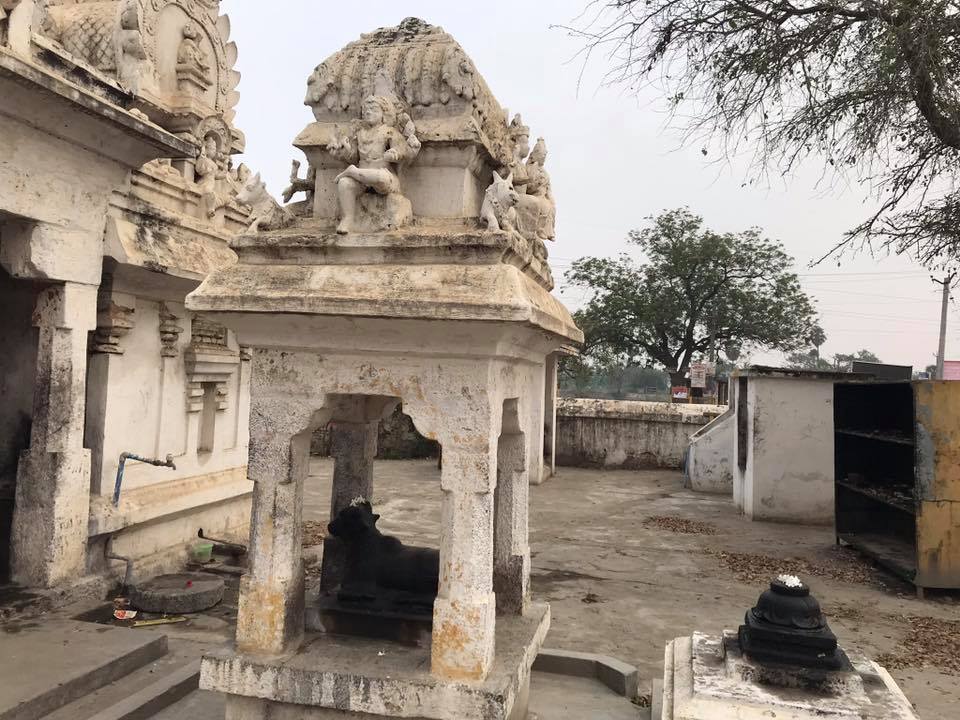


Moolavar - Sri Muruganatheeswarar
Amman - Sri Deivanayagi
Place - Mambakkam, Chennai, Tamilnadu
Muruganatheswarar Temple is situated at Mambakkam in Kanchipuram district of Tamil Nadu. This temple is said to be is over 800 Years old. But 12th to 14th century epigraph is at the base of moolavar wall. This temple has several images of fishes on the ceiling, so most probably this temple was built by the Pandya Kings.
This temple has its own bunch of epitaphs. And this comes under the Hindu Religious Endowment Board. And the most unusual part of this temple is that its made of limestone and a kind of a brick and not the typical granite that every temple of that era was made of.
Thirukkulam is in front and the sanctuary is facing east. There is no rajagopuram and Dwajasthambam. Ambal Deiva Nayagi is in standing stance with abaya and varadha hastham. Goddess Deiva Nayagi model was etched by the figure who had a place with the same vamsavali of the stone worker who shaped the Thirukkadaiyur Abirami Ambal. There is additionally a sannidhi for Sri Vinayagar, Sri Valli Devasena Samedha Sri Subramaniyar and Navagrahas
References:
Sri Agatheeshwarar Temple, Old Perungalathur


Moolavar - Sri Agatheeshwarar
Amman - Sri Akhilandeswari
Place - Old Perungalathur, Chennai, Tamilnadu
A good 1000 years old temple with a beautiful praharam. It has all the goshta murthies that we normally see in shiva temples. The Nandi is very unique here though it seems to be a recently installed.The Byiravar here is called Swarna Akarshana byiravar who is with his consort seated on his lap indeed a very unique Byirava murthy.
Separate Sannidhi for Raja Ganapathy and Sri Muthukumaraswamy with Valli and Devasena.There is no dhwahajasthamba in this temple and they have plans to build a Raja Gopuram.
This temple has been worshipped by sage Agasthiyar and hence the name Agatheeshwarar.
Address: Agatheeswarar Temple, 1st Main St, Old Perungalathur, Tamil Nadu 600063
Sri Kameshwarar Temple, Dindigul


Moolavar - Sri Kameshwarar
Amman - Sri Kokilambal
Place - Mullipadi, Dindigul, Tamil Nadu
Sri Kokilambal Thirukameshwarar Temple
Location:
Mullipadi, Dindigul
Sri Theneswarar Temple, Coimbatore


Moolavar - Sri Theneeswarar
Amman - Sri Sivakamasundari Ambal
Place - Vellalore, Coimbatore, Tamilnadu
The temple is facing east with a unique stone structure and square Gopuram. Dwajasthambam, Palipedam and Nandhi are immediately after the entrance square gopuram.
As per the local belief, this was the Lingam worshipped by the celestial cow Kamadhenu and hence came to be calle Dhenu Eswarar which over a period of time, became Theneeswarar.
This temple is constructed by Karikala Chozhan.Though it is more than 1000 years old, during the 14th century, Allaudin Kilji’s forces destroyed the temple. During the 19th century ( in 1874 ), a complete renovation and Kumbabishekam were done.
Location:Sri Theneswarar Temple, Vellalore, Coimbatore
Reference:
https://en.wikipedia.org/wiki/Theneeswarar_Temple
Sri Thatheeswarar Temple, Chithukadu


Moolavar - Sri Thatheeswarar
Amman - Sri Prasunakunthalambigai
Place - Chithukadu, Chennai, Tamilnadu
Temple is located at Chithukadu, near Chennai. Sitharkadu or chithukadu is located around 8 km from Poonamallee.The Vidhana of the Rajagopuram is exquisite with a beautiful panel of Various Roopas of Lord Shiva. The Nandi in front of the temple does not have a noose around its nostrils. Chithukadu had been( and continues to be ) a land of Siddhars.Out of the several Siddhars who dwell here, the two notable saints ( or atleast I must say those who have been identified) are "Padukkai Jadamudi Siddhar" and " Prana Deepika Siddhar". Since the Nandi was in the company of these saints, it was serene and calm and hence there was no need for a noose, says Kumaran. An image of Prana Deepika Siddhar can be found on the pillar next to the Nandi here.
The Padukkai Jadamudi Siddhar and Prana Deepika Siddhar while meditating in this region installed a Shiva lingam under an Amla Tree because of which he came to be known as Dhathriswara. They created a beautiful garden here which gave sweet smelling flowers for the worship of the Lord because of which this place came to be known as "Thirumanam" - Holy Fragrance. The Nandavanam probably created by them, is like this today.
Prana Deepika Siddhar is said to protect people from life threatening ailments and several people with chronic ailments are said to have prayed to him and become better. The Padukkai Jadamudi Sithar can be seen with very long hair on which he is said to lie down in Yoga Nitra and move around saving people and protecting lives then and now.
It was interesting to note that the pillars had the Dasavatharams of Vishnu inscribed on them, which again goes to prove the Shaivaite - Vaishnavaite harmony in those days. There were also some pillars where the Rishabaruda was found at the bottom of the pillars and Siddhars above it.
The book Sivamayam Kanda Siddhargal which mentions that this place was also an abode of Bodo Siddhar whose Jeevasamadhi can be found here and he is supposedly the father of "Modern Computer Science"!! By worshipping him, one could be rid of any discomfort experienced due to Ashtama Sani, Ezharai Sani or Jenma Sani. We tried to identify this siddhar but could not do so. Anyone who has any further information about this siddhar, may share it here for benefit of all of us.
Sundararaja Perumal temple which is behind the Dhathriswara Temple, connected by the temple tank. There is an Anjaneya Swamy temple near the steps of the tank.
Both the temples are believed to have been constructed during the times of King Sundara Pandiyan about 800 years ago. The King is said to have found the Goddess Prasunna Kundalambikai's statue in the Nandavanam (Garden) and so he installed it in the Dhatriswara Temple calling her "Poonkuzhali". As the King died in war before the temple construction could be completed, the work is believed to have been completed by a landlord Mr. Nalla Chinnathambi Mudaliyar from this village whose generations till date serve as Dharmakarthas of this temple (Source: Thalavaralaru of the temple)
Reference: http://temple.dinamalar.com/en/New_en.php?id=1387
Sri Boodhapureeswarar Temple, Sriperumbudur


Moolavar - Sri Boodhapureeswarar
Amman - Sri Soundaravalli Ambal
Place - Sriperumbudur , Chennai, Tamilnadu
This famous sivan temple is situated in Sriperumbudur. This is an
Ancient temple with over 1500 yrs of history. Kulothunga chola and
Pandyas have built this temple. It is believed that all the bootha ganas
have worshiped this lord and hence the name Boodhapureeswarar. The
ancient name of this area has been Boodhapuri.
Amman Soundaravalli is facing east in this temple which is unique and said to be the ardhanarishwara dharshanam.
Byravar is closer to the Nandhi in the worshipping position which is also unique
People believe that , they get rid of all their problems, after praying to this god.
References: 1.http://www.boodhapureeswarar.tnhrce.in/history.html
2. https://tamilnadu-favtourism.blogspot.com/2016/12/bhutapureeswarar-temple-sriperumpudur.html
Sri Ekabandheswarar Temple, Singaperumal koil


Moolavar - Sri Ekabandheswarar
Amman - Sri Yerumunai Nayagi
Place - Singaperumalkovil, Chennai, Tamilnadu
This temple was built by pallavas during the 8th century and was
buried under the ground. And around 1995 they have unearthed to find the
actual foundation built during the 8th century.
The legend goes that lord Siva took the form of ‘sarapakshi’ a
bird form to calm down Sri Narasimar here at Singaperumal when he had
taken the Ugra avatharam.
The goddess is called as yerumunai nayagi as the villagers have
been manufacturing the grubbing axe used for farming which is called
Yeru in Tamil.
The Navagrahas can be seen with their consorts. The avudayar of the sivalingam is in a unique lotus shape.
A beautiful temple in middle of the village and a must visit place.
Sri Swarnalingeswarar Temple, Nallambakkam


Moolavar - Sri Swarnalingeswarar
Amman - Sri Thirunalamangai eswari
Place - Nallambakkam, Chennai, Tamil Nadu
Relatively 1000 years old sivalingam. Had an excellent abhishegam today. It was placed in the hill 100 years back. Square avudayar shows the ancient history. This place is coming under reserved forest. Must visit.
Address: Arulmigu Swarna Lingeshwarar Temple,Vandalur-Kelambakkam Road, Nallambakkam, Tamil Nadu
References: http://remoteoldtemples.blogspot.com/2017/05/nallambakkam-sivan-temple.html
Sri Kailasanathar Temple,Thandalam


Moolavar - Sri Kailasanathar
Amman - Sri Kaamatchi amman
Place - Thandalam, Chennai, Tamilnadu
A good 1500 plus year old temple in the interior village of
Thandalam. The base structure has still been maintained in its old age
charm. The vimanam for both the Sannidhi has been recently been built.
Well maintained praharam and the inner walls have around 12 Thirumurais
painted.
The main deity lord Kailasanathar in the form lingam is facing the
east and Kamatchi Amman facing the south in a standing position.
Separate Sannidhi for lord Ganesha and lord Subramanian with his
consorts Valli and Deivaanai is seen.
A peaceful surrounding with a pond outside. There is no dhwajasthambam
Sri Thirukadayur Kailasanadhar Temple, Sembakkam


Moolavar - Sri Kailasanathar
Place - Sembakkam, Chennai, Tamil Nadu
A very unique sivalingam of 3 feet approximately which looks like a pillar. Seems like been unearthed during some excavation and set here in a small temple. There is a small vigrham of Lord Ganapathy and Anjaneyar. Also a very unique yenthiram like stone in Star formation and the letters describing the Navagrahas.
The local family close by is taking care of daily puja but not full fledged. There are no other separate Sannidhi for Devi like in other temples.
Needs development and maintenance.
Address : Vembuliamman Koil St, Gowrivakkam, Sembakkam, Chennai, Tamil Nadu
Sri Hrudayaaleeswarar Temple, Thirunindravur


Moolavar - Sri Hrudayaaleeswarar
Amman - Sri Maraghadhambigai
Place - Thiruninravur, Chennai, Tamilnadu
Thiruninravur has an ancient temple for Lord Shiva which is about
1500 years old. The story of this temple dates back to 7th century
during Pallava reign. There was a Shiva devotee living in this place
during 7th century called Poosalaar. He has been an ardent devotee of
Lord Shiva. Poosalaar had an extreme ambition in his mind to build a
temple for Lord Shiva at this place within his lifetime. He sought for
help with many rich people who can fund him to raise a temple. But none
helped Poosalaar. So he decided to build a temple for the lord by
himself in his heart. As he knew all the Aagama Vidhis (rules and
nuances to build a temple), he wanted to build a temple. So he sat under
a tree called iluppai tree in the village and started meditating. He
planned each and every small detail to perfection for the construction
of his own temple in his mind itself. He also marked an auspicious day
to start the holy work. The temple started growing up in his mind. It is
said that Poosalaar actually took the same time (or months) which will
be consumed to construct an actual temple. He built the temple step by
step. He had designed everything in his mind right from vimana, sanctum,
temple pond, compound walls etc., and executed each in detail as per
what he had in mind. After everything shaped up in his mind the temple
construction work came to a finish. He even had organised all the
utensils required for the temple. Finally, he also fixed an auspicious
date for Kumbhabishegam of the temple. He prayed to Lord Shiva to be
present for the consecration and offer his blessings. During the same
period, a king called Rajasimha Pallava was ruling this part, with his
capital as Kanchi (today’s Kanchipuram). He also was a sincere devotee
of Lord Shiva and was building a huge beautiful temple for the Lord, at
Kanchi. He also named the God as Kailasanathar and the temple as
Rajasimmeswaram. The king was too happy to see the grandeur of the
temple constructed by him.
The king also marked a date for consecration, while the finishing
touches were going on at the temple. One day after visiting the progress
of the temple work, he came back tired to bed. Lord Shiva appeared in
his dream and told him that he cannot make it to the consecration of the
king’s temple on the said date and asked him to change the day of
consecration, as he had to be present for consecration of another temple
built by Poosalaar of Thiruninravur. The king woke up shockingly and
couldn’t believe himself. He was worried that God Himself has given
priority to someone else’s temple than his temple. He wanted to know
about the temple which God informed him of. He immediately started with
his queen, ministers and parivaar to see Poosalaar’s temple at
Thiruninravur. He came to Thiruninravur the next day and enquired with
many people about a new Shiva temple built by Poosalaar. Nobody knew
anything about the temple but directed the king to the place where
Poosalaar was meditating under the Iluppai tree. King went and asked
Poosalaar himself about the temple. Poosalaar, on hearing the king
explaining about his dream, was overwhelmed to realize the mercy shown
to him by Lord Shiva. Poosalaar explained the king that he had been
constructing the temple in his heart and had fixed a date for
consecration. Poosalaar made the king to look at his heart and realize
the temple which he constructed. King was able to see and realize the
temple made by Poosalaar. Knowing this , Rajasimma was amazed to see the
devotion and sincerity of Poosalaar. The king himself took all the
specifications of the temple which Poosalaar had in mind and physically
constructed a temple for the Lord here. This temple is also called
Manakkoil. As Poosalaar originally built the temple for the Lord in his
Hridaya, the Lord here is known as Hridhayaaleeswarar.
There is a grand Dhwajasthambha and Nandhi on the outer prakaara.
The sanctum is built in Gajabrishta or Thoongaanai maadam shape, that
is, the sanctum's shape will look like the back of the sleeping
elephant. Lord Hridhayaaleeswarar offers dharshan in the form of a Shiva
Linga. Poosalaar is seen praying to the Lord. There is an idol of
Rajasimha Pallava too inside the temple. Sri Ganapathy and Sri
Subramanya are seen in standing posture. Other deities like Sri
Dhakshinamurthy, Naalvar, Sri Maha Vishnu, Sri Shiva Subramanyar with
Sri Valli and Sri Devasena, Sri Brahma, Sri Durgai, Sri Sandigeswarar,
Sri Shivagama Sundari Sametha Sri Nataraja and Sri Bairava are seen in
the inner praakaaras. There is also a mandap in which vaahanam for the
Lord is kept ready for processions. Many devotees in recent years have
started worshipping Lord here, for getting recovered from heart
ailments, as the Lord himself is called Hridayaaleeswarar.
There is also a wonderful 'Sri Bakthavatsala Perumal' temple in
Thiruninravur, which is one of the Divya Desam close to this temple.
References : 1.https://en.wikipedia.org/wiki/Hridayaleeswarar_Temple
2. http://temple.dinamalar.com/en/new_en.php?id=646
Sri Ramanathaeaswarar (Guru Sthalam) Temple, Porur


Moolavar: Sri Ramanathaeaswarar
Amman: Sri Sivakama Sundari Ambal
Place: Porur, Chennai
A beautiful temple with a histroy connecting with Ramayanam.
While Sri Rama came in search of Sita he happend to step stumbled on a stone at this place in Porur Chennai and realised it was a swyambu lingam and to clear his dhosham of stepping on the lingam started to do a 45 days penace under the nelli maram ( Amla tree) by just eating one amal a day. Once his penance was completed he could see the sivalingam grown up to a 6 ft high and Sri Rama offered his prayers. In return lord siva informed Rama to head to Rameswaram from here.
Interestingly there are certain practice that we see only in Vaishnava sthalam which is also practiced here in a sivasthalam.People who cannot visit Rameswaram can visit this temple to offer their prayers. Hence aptly this place is called vada rameswaram
Location:
Sri Vengeeswarar Temple , Vadapalani

Moolavar: Sri Vengeeswarar
Amman: Sri Saanthanayaki Ambal
Place: Vadapalani, Chennai
The Vengeeswarar Temple is a Hindu temple situated in the neighbourhood of Vadapalani in Chennai, India. Though the sthalam dates back to vedic age, the temple structure is over 1000 years old and one of the oldest Hindu temples in Chennai city. The temple is dedicated to Shiva who is called Lord Vengeeswarar and the goddess is called Saanthanayaki Ambal. The entrance to this temple is crowned with a big rajagopuram adorned with several stucco images. Other deities: Ganapathi, Kasi Viswanathar and Visalakshi, Bairavar, Lord Subramanya, Goddess Gajalakshmi. There is a separate shrine for Lord Saneeswarar.
Reference:
https://en.wikipedia.org/wiki/Vengeeswarar_Temple
Location:
Sri Kasiviswanather Temple, West Mambalam


Around 400 years ago, the part which is today called West Mambalam was a small hamlet with big and enormous vilwa trees. The place had been called Mahabilam. They say that the name became Mambalam in course of time. When a swayambhu lingam appeared in Mahabilam, people built a temple for it. Researchers say that the temple might have been built by a Nayakka king of Vijayanagar Empire. The God appeared in the dream of a Nayakka king after he worshipped Him in Kasi and told him to build a temple for Him. Accordingly, Kasi Viswanatha temple was built in Tenkasi. The sthala purana says that the temple at Mambalam in Chennai was also built during this same period by the Nayakka king. Usually, at the temples built during the Nayakka regimes, an emblem of fish will be seen. At the granite roof of this temple also, figures of fishes are seen. Researchers say that this is a proof for the claim that the temple was built by a Nayakka king
In the sanctum, Kasi Viswanatha, facing the east, blesses His devotees. He is a lingam, installed on a high peedam. The small Nandi in front of the sanctum holds our attention with its beauty. After praying to the Lord, when we move rightward, we see the sannidhi of Lord Vinayaka. Then, we’ve the darshan of Lord Muruga along with His consorts Valli and Devyani. Next is situated the sannidhi of Annai Visalakshi. We feel ecstatic seeing the beautiful Visalashi thaayar in a beautifully built sannidhi.
The prahara is spacious so that devotees can have darshan of deities without difficulty. There are Vasantha mandap and Navagraha mandap too
Pradosham is celebrated here every month on a very grand scale. Also, Sivarathri and Arudra vizha are being celebrated with grandeur.
Those, who are unable to go to Kasi for darshan of God can visit this temple and pray to the deity and be blessed by the Lord with all prosperity
Reference:
http://www.westmambalamkasiviswanathartemple.tnhrce.in/history.html
Seven Shiva Temples (Saptha Sthaana) of Mylapore


There are seven great Shiva temples in Mylapore, Chennai. Most have heard of the famous Kapaleeswarar Temple, but how about the other six? In fact, many who visit the Kapali temple regularly have not even stepped inside the important Velleeswarar Temple just next door to it!
The key to this Siddha worship procedure is that devotees should offer worship at the six other Shiva temples first before visitng the Kapaleeswarar Temple.
Order of temple in which we need to visit:
Mylapore Saptha Sthaana Shiva worship includes
(1) Sri Karaneeswarar Temple
(2) Sri Theerthapaleeswarar Temple
(3) Sri Velleeswarar Temple
(4) Sri Virupaksheeswarar Temple
(5) Sri Valeeswarar Temple
(6) Sri Malleeswarar Temple and
(7) Sri Kapaleeswarar Temple, in that order
Given its the month of Aadi we started this trip of 7 temples after visiting the Famous Mundagakanni Amman temple dedicated to Devi. It was indeed a divine experience to see the early morning Nirmalya dharshan and also the previous day Pradosha Utsavar vigraham
Kanchipuram Shivan Temples (Ekambareswarar, Kachabeswarar and Kailasanathar)


Ekambareswarar Temple, Kanchipuram:
(Pancha Bootha Sthalam - Earth)
This
vast temple is one of the most ancient in India having been in
existence since at least 600 AD. Second century AD Tamil poetry speaks
of Kama kottam, and the Kumara kottam (currently the Kamakashi Amman
temple and the Subramanya temple). The existing structure then, was
pulled down and rebuilt by the Pallava Kings. The Cholas, who came
later, also made several contributions to the temple.No separate shrine
for Parvati exists here (as in other Shiva temples in Kanchipuram).
There is a small shrine for Lord Vishnu named Thiru Nilaaththingal Thundathan. Here, the Lord Vishnu is prayed as Vamana Murthy.
The
temple covers an area of over 40 acres. Reaching a height of 57 meters,
the temple's Raja gopuram (the entrance tower to the temple) is one of
the tallest in South India and was built by the Vijayanagar King,
Krishnadevaraya.
One notable feature of the temple is the Aayiram
Kaal Mandapam, or the "hallway with a thousand pillars", which was
built by the Vijayanagar Kings. The temple's inner walls are decorated
with an array of 1,008 Siva lingams.
The sthala-virutcham is a 3,500 year old mango tree whose branches are said to yield four different types of mangoes.
Legend
has it that once Parvati was doing tapas under the temple's ancient
Mango Tree. In order to test her devotion Lord Shiva sent fire on her.
Goddess Parvati prayed to her brother, Lord Vishnu, for help. In order
to save her, he took the Moon from Lord Shiva's head and showed the rays
which then cooled down the tree as well as Parvati.
After that,
Lord Shiva again sent the river Ganga to disrupt Parvati's tapas.
Parvati devi prayed to Ganga and convinced her that both of them were
sisters and so should not harm her. And so Ganga did not disturb her
penance after that. Then Parvati made a Shiva Linga out of sand and got
united with Lord Shiva.
According to another legend, it is
believed that Parvati worshipped Shiva in the form of a Prithivi Lingam
(or a Lingam improvised out of sand), under a mango tree. Legend has it
that the neighboring Vegavati river overflowed and threatened to engulf
the Shiva Lingam and that Parvati or Kamakshi embraced the Lingam. Shiva
touched by the gesture materialized in person and married her. In this
context he is referred to as Tazhuva kuzhainthaar ("He who melted in Her
embrace") in Tamil.
Temple Timings:
Morning 6.00 a.m. To 12.30 p.m
Evening 4.00 p.m. To 8.30 p.m
Pooja Details:
Koo Pooja - 6.00 a.m
Ukshakala Pooja - 6.30 a.m. To 7.30 a.m
Kala santhi Pooja - 7.30 a.m. To 8.30 a.m
Uchikala Pooja - 11.30 a.m. To 12.00 Noon
Pradhosa Kaalam - 5.00 p.m. To 5.30 p.m
Sayaratchai Pooja - 6.00 p.m. To 7.00 p.m
Arthajama Pooja - 8.30 p.m
Reference:
http://www.ekambaranathartemple.tnhrce.in/index.html
Location:
Ekambareswarar Temple, Kanchipuram
Kailasanathar Temple, Kanchipuram:
The
Kanchi Kailasanathar temple is the oldest structure in
Kanchipuram.Located in Tamil Nadu, India, it is a Hindu temple in the
Tamil architectural style. It is dedicated to the Lord Shiva, and is
known for its historical importance. The temple was built from 685-705
AD by a Rajasimha (Narasimhavarman II) ruler of the Pallava Dynasty. The
low-slung sandstone compound contains a large number of carvings,
including many half-animal deities which were popular during the early
Pallava architectural period.The structure contains 58 small shrines
which are dedicated to various forms of Shiva. These are built into
niches on the inner face of the high compound wall of the
circumambulatory passage.
The main shrine has a 16 sided
Shivalinga in black granite stone deified in the sanctum sanctorum.
Within the walls of the main shrine there is padabhanda adhisthana (main
pedestal) with very elegantly carved images of gods with a sculpted
Nandi, a little distance away giving guard to the deity. On each face of
the outer walls of the main shrine there are many carvings of deities.
In
the south facing wall the sculpture depicts Shiva as Umamaheshavara
(Shiva with his consort Parvati) with Lingodbhava (emergence of Shiva as
fiery pillar - linga) surrounded by Brahma and Vishnu and flying amaras
on the lower level.
The west facing hall has sculptures of Shiva
in the form of Sandhya Tandavamurti and Urdhava Tandvamurti and the
ensemble is completed with images of ganas in dancing poses and also
with images of Brahma, Vishnu, Nandi and Parvati.
The carving of
Shiva on the north facing wall is a composition of Tripurantaka flanked
by three ganas, goddess Durga with three ganas, and goddesses Bhairavi,
Kaushiki and Jyestha.
The exterior faces of the vimana (tower)
have images of aspects of Shiva - Bhikshatana, Somaskanda and in
Samhara-Tandava (destructive dancing) pose.
Temple Timings:
Morning 6.00 a.m. To 10.00 p.m
Evening 5.00 p.m. To 8.00 p.m
Reference:
https://en.wikipedia.org/wiki/Kanchi_Kailasanathar_Temple
Location:
Kailasanathar Temple, Kanchipuram
Kachabeswarar Temple, Kanchipuram:
Tirukachur
is near Chengalpat in Kancheepuram district. There are two Shiva
temples here one at the top of the hill, the other at the foot of the
hill. Saint Sundarar had sung the praise of the Lords in a single
Pathigam – 10 verses. Maha Ganapathy and Thalamoola Vinayaka grace the
devotees. The Vimana of Lord Shiva is of Gajabrushta design.
Kachabeswarar temple is one of the most important and big temples of
Kanchipuram city, the city of thousand temple. Kachabeswarar temple is
located in the southern corner of Western Raja street, at a distance of
around 1 km from the famous Ekambareswarar temple in Kanchipuram.
Kachabeswarar temple is a Shiva temple, and Lord Shiva, the main deity
of this temple is called as Kachabeswarar. The goddess is called as
Soundarambikai. The temple has big Raja gopuram (temple tower) and very
big in area. The temple also houses other idols such as Saraswati,
Ganesha, Chadurmukeswarar, Sastha and Bhairav. There are four shrines of
Lord Shiva around the temple tank (called as Ishta Siddhi Teerth) -
Dharma Siddheswarar, Kama Siddheswarar, Artha Siddheeswarar and Moksha
Siddheswarar. Near the main deity Kachabeswarar, there is an idol of
Lord Ganesha called as Satyamozhi Vinayaka, which was worshipped by Lord
Vishnu.
Legend:
While churning the milk ocean, the
Mandhara hill used as the stick (mathu) began to sink. To bring it out,
Lord Vishnu incarnated as Kachaba-tortoise to help the Devas. He came to
this place, created a spring, bathed and prayed to Lord Shiva in the
endeavour. As Lord Shiva helped Vishnu, hence named Kachabeswarar. The
place came to be known as Tirukachur after this event.
Mother Anjanakshi in Kachabeswarar temple blesses the devotees from a
separate shrine. Anjanam means eyes. As the Mother is protecting
devotees as Her own eyes, She is so named. Admiring Her beauty, She is
also praised as Sundaravalli. The Sri Chakra is installed in the mandap
before this shrine. Women light ghee lamps here for family welfare and
prosperity. Lord Shiva also staged His Ajaba Dance here as Thiagaraja
for Lord Vishnu. As a procession deity of the temple, all festivals are
dedicated to Him. Saint Arunagiriar had sung the praise of Lord Muruga
of this temple. As Kallala Maram (Banyan tree) is the sacred tree, the
temple is also known as Aala Koil – banyan tree temple.
Timings:
Morning : 5.30 A.M. to 12.00 Noon
Evening : 4.00 P.M to 8.00 P.M
Reference:
http://www.kanchipuramkachabeswarartemple.tnhrce.in/index.html
Location: Kachabeswarar Temple, Kanchipuram
Sri Kachchaleeswarar Temple, Parrys

Moolavar:Sri Kachaaleshwarar
Amman: Sri Soundaraambikai
Place: Parry's corner, Chennai
Kachchaleswarar
Temple, also known as the Great Kachali Pagoda, is a Hindu temple
located in Armenian Street, in the neighbourhood of Parry's corner (Old:
George Town) in Chennai city, Tamil Nadu, India. Constructed on land
belonging to dubash Kalavai Chetty in 1725, the temple belonged to the
left-hand castes and was the site of the first major conflict between
left and right-handed castes in the then Madras city.
The temple
is modelled on the Kachaaleshwarar temple at Kancheepuram.
Kachaaleshwarar (Shiva) is the main deity and Soundaraambikai, the
consort deity.
Location: Sri Kachchaleeswarar Temple, Parrys
Sri Kurungaleeswarar Temple, Koyambedu
Moolavar:Sri Kurungaleeswarar
Amman:Sri Aram Valartha Nayagi
Place: Koyambedu, Chennai
Kurungaleeswarar
Temple is a historically important Hindu temple in the neighbourhood of
Koyambedu (the name coming from ‘ko(horse)+ambu(arrow)+pedu(fence)’
when lava & Kucha caught the horse sent by Rama in a fence made of
arrows) Chennai, India. The temple encloses a large tank and dates from
the Medieval Chola period.
Kurungaleeswarar Temple is a Hindu
Temple dedicated to Lord Shiva located in the neighbourhood of Koyambedu
in Chennai City of Tamil Nadu. This temple is situated on the banks of
river Cooum at Koyambedu. The presiding deity is called as
Kurungaleeswarar / Kuchalavapureeswarar and Mother is called as
Dharmasamvardhini / Aram Valartha Nayagi. Sthalavriksham (the divine
tree of the temple) is a jack tree.
This temple was believed to
be developed by Valmiki while Sita has come down with heavy heart after
separating from Lord Rama. She had been worshipping Siva and she gave
birth for Lava and Kusha. Both have been growing well with the support
of Valmiki. One day the Aswamedha Yagna was conducted by Lord Rama at
Ayodhya and the horse was running away and reached this place, which is
presently called Koyembedu. Earlier it was called Kosai. The horse has
to be traced and brought back to the place where Yagna was started. But
these two children of Rama kept the horse and firmly resisted Lord
Rama's battalion. Finally Lakshman also came and he was also defeated.
Finally Lord Rama had to enter into the battle and his sons were
preparing. Fortunately, Saint Valmiki made the children realise that
they are going to fight against their own father and vice versa. After
this the Ram family was united and from then on, this temple is known
for family unity and togetherness as Shiva was the cause for the
re-uniting of Lord Ram's family
Reference:
https://en.wikipedia.org/wiki/Kurungaleeswarar_Temple
Location:
Sri Kurungaleeswarar Temple, Koyambedu
Sri Dhenupureeswarar Temple, Madambakkam
Legend:
Dhenupureeswarar
got his name because he gave moksha to a cow (Sanskrit: Dhenu).Sage
Kapila is said to have been reborn as a cow for his sin of having
improperly worshiped a Shiva lingam using his left hand. The cow
continued to worship Shiva by pouring milk on a Shiva lingam buried in
the ground. The cowherd initially punished the cow for wasting the milk,
but when the villagers unearthed the Shiva lingam, Shiva appeared and
granted moksha (liberation) to Kapila and forgave the cowherd who had
mistreated him. Legend has it that the king had a dream of this
occurrence at this site and had the temple built to commemorate it.
Dhenupureeswarar's
consort here is Dhenukambal. The main building of the temple, which
contains the statue of Dhenupureeswara in linga form, faces east and his
consort faces south in a separate sanctum.The Shiva lingam is Swayambhu
Lingam or Self Manifested Lingam.
The temple was built during
the reign of the Chola king, Parantaka Chola II, father of Raja Raja
Chola I, who constructed the famous Brihadeeswarar Temple in Thanjavur.
The main sanctum (Sanskrit: garbha griha), like some other Chola temples
in and around Chennai, is apsidal in shape (Sanskrit: gajaprishta
vimana) (also described as shaped like the back of a sleeping elephant),
unlike most Hindu shrines, which are square or rectangular.
The temple is thought to have been consolidated with stones during the reign of Kulothunga Chola I.
Well-preserved Chola sculptures and carved pillar bases are present in and around both sanctums.
A number of fine inscriptions and sculptures dating to the Vijayanagara Empire are also preserved.
Reference:
https://en.wikipedia.org/wiki/Dhenupureeswarar_Temple_(Madambakkam)
Sri Nandeeswarar Temple, Guduvanchery
Moolavar: Sri Nandeeswarar
Amman: Sri Soundara Nayagi
Place: Guduvanchery, Chennai
Legend:
As
per the legend, Lord Brahma advised to churn the celestial sea to
obtain “Amruth” which would help devas to become immortal. Devas, unable
to churn the sea alone with Manthara Mountain and vasuki sought the
help of Asuras. In the beginning, poison came out of the sea. Lord Shiva
took the poison himself and saved this universe. At the end of the
churning, Danwanthari appeared with Amruth pot in his hand. After the
brief quarrel with Asuras, devas were able to retrieve the pot and
consume the Amruth. The devas started singing, dancing and enjoying
after having Amruth, and they totally forgot Lord Shiva due to who they
were alive. After some time, they realized their mistake and apologized
to Lord Shiva. Lord Shiva forgave them and danced in the middle of his
vahan (vehicle) Nandi’s (bull) horns, and hence he got the name
Nandeeswarar.
The temple is half a km away from the Guduvanchery
bus terminus.This temple is believed to be built by Nandivarma Pallava
in 715 CE.
Nandeeswarar Temple have seperate shrines for Lord
Brahma, Lord Mahavishnu , Lord Dakshinamurthy , Lord Bhairavar , Lord
Durgai , Lord Valampuri Vinayagar, Lord Arumugar.
The temple is open from 6 AM to 11 AM and 4 PM to 7 PM
Reference:
http://temples-chennai.blogspot.com/2011/06/nandeeswarar-temple-nandivaram.html
Location:
Sri Nandeeswarar Temple, Guduvanchery
Sri Pateeswarar Temple, Perur, Coimbatore
Moolavar: Sri Patteeswarar
Amman: Sri Pachainayaki
Place: Perur, Coimbatore
Perur Pateeswarar Temple is a Hindu temple dedicated to Shiva located at Perur, in western part of Coimbatore in state of Tamil Nadu in India. The temple was built by Karikala chola in 2nd Century.The temple is located 7 km west of the Noyyal River and has been patronized by poets like Arunagirinathar and Kachiappa Munivar. Lord Shiva, known as ‘Patteeswarar’, is the presiding deity of this temple together with his consort Parvati, who is known as ‘Pachainayaki’. The deity is believed to be ‘Swayambu Lingam’ (self emerged). The pillars raised in this temple depict the architectural prowess of the Tamil sculptors.
History:
This
ancient temple was built by king Karikala Chola in 2nd Century, thus
making this one of the oldest temple in the state. During the rule of
Raja Raja Chola I, 'Artha Mahal' and 'Maha Mahal' were constructed. In
addition to this, there were regular donations from the Chola king,
which were documented on the temple walls.
History reveals that
the great poet Sundarar sung the devotional 'Devaram' song in this
temple by the 7th Century. Nonetheless, strangely Perur Pateeswarar
Temple does not make it to the list of Kongu Nadu Padal petra sthalams,
which otherwise has seven of the 276 temples.
From the 14th to
17th Centuries, the kings from different dynasties like Hosala dynasty,
Vijanagara Empire, Nayakkar Kings have contributed immense donations for
the maintenance of this temple. The famous 'Kanaga Sabhai' was built
around the 17th century, by Azhagathiri Nayakkar of Madurai.
By
the 18th Century AD, the primary deities were renovated and also a Mahal
for the 63 Nayanmaars were raised. By the 20th century, the Kalyana
Mahal and the front Mahal were constructed, and the tower was renovated
as well.
The temple is open on all days.
Timings:
Morning : 05:30 a.m to 1:00 p.m
Evening : 4.00 p.m to 9:00 p.m
Reference:
https://en.wikipedia.org/wiki/Perur_Pateeswarar_Temple#
Location:
Arulmigu Patteeswarar Swamy Temple, Perur
Sri Nalinakkeswarar Temple, Oragadam
Moolavar: Sri Nallinekeswarar
Amman:Sri Deivanayak
Place: Ezhichur, Oragadam
Sri
Nallinekeswarar Temple is situated at Ezhichur village– 603 204,
located about 50 Kms South West of Chennai, on the road connecting
between Tambaram and Kanchipuram. This temple’s last Consecration
(Kumbhabhishekam in Tamil) undergone during 1948 after which it got
dilapidated. Many trees, plants and bushes were covering the temple for
so many years. An auto driver (Muslim) identified this temple inside the
bushes during his trip to Ezhichur and informed the local villagers.
The
native villagers have taken their initiative to completely rebuild the
temple with stone structure and with much difficulty starting from the
year 2000 to 2012 the temple was built up with Stone Structure and
Consecration (Kumbhabhishekam) was performed on 29th June 2012.
Importance of this Temple:
Around 1100 years old temple with Historical records.
Shiva statue is "Suyambu" (which, according to tradition, was not sculpted by man but formed spontaneously) here.
The
name of the god is Nallinekeswarar and the Nandhi are unique in nature,
archaeological department done a research and confirmed this
information.
Traditional Belief in this temple is Shiva will
solve all your problems smoothly, especially husband and wife’s problem,
family relationships, problems between brothers and sisters, problems
between father and mother and all other family members as the name has
“Nallinekam – God of harmony”. Apart from this, the business
relationship with the customers and the development of the business is
well progressing, if you are visiting Nine Pradhosams or Sixteen
Pradhosams Continuously.
Nandhi wearing beautiful ornaments and
cloths, all are carved on it. Nandhi folded one of his forelegs backward
and other one is in stretched position. Nandhi’s back legs position,
one is folded while another leg goes beneath its stomach and this leg is
seen jutting out on the other side. Similarly the tail goes underneath
the belly and stretches out on its left side.
A large snake is
visiting this temple daily 2 times and doing Pradakshina to the Shiva
Idol. (Priest confirms this detail, every day they are seeing the snake
visiting the temple).
54th Adhishtaanam (Samadhi) of ‘Sri
Vyaasaachala Mahadeva Saraswathi Swamigal’ of Kanchi Mutt is also found
in the temple at south west of the sanctum.
A Copper plate
inscription about the donation of temple and village to the 54th
Peedathipathi “Sri Vyaasaaachala Mahadeva Saraswathi Swamigal” of Kanchi
Mutt is available at Kanchi Mutt, Kancheepuram.
Temple Timings:
6.00 a.m to 12.30 p.m
4.00 p.m to 8.30 p.m
Location:
Sri Nalinakkeswarar Temple, Oragadam
Sri Thirusoolanaadhar Temple, Thirusoolam
Moolavar: Sri Thirusoolanaadhar
Amman:Sri Thiripurasundhari
Place: Thirusoolam, Chennai
Legend:
Though
Thirusoolam means the weapon (Thrishul) of the Goddess Parvathi, the
temple legend has an interesting background attached to it. As Lord
Brahma, the creator worshipped Lord Shiva here; it was called as
Brahmapuri originally. According to the stone inscriptions found in the
temple, the place was called as Vaanavan Maadevi Chathurvedhi Mangalam.,
which later turned to become Pallavapuram (today’s Pallavaram).
Presently,
the place is known as Thirusoolam. The temple is situated amidst 4
hills surrounding it. In Thamizh, the place between the hills is called
‘Churam’ and hence this place was called as ‘Thiru Churam’ which had
later become Thirusoolam.
According to the legend, originally,
Lord Brahma was 5 headed. As Lord Brahma was too proud of himself, Lord
Shiva cut one of his heads off to bring down his ego. Later Brahma
continued his duty of creation. He prayed Lord Shiva that he couldn’t
concentrate on his duty because he was disturbed losing a head. Lord
Shiva blessed him and granted peace of mind after which Lord Brahma
continued his duties peacefully.
After this incident, as part of
his duty, Lord Brahma created one of the most beautiful dancers of
Devaloka, called Thilothama. After creating her, Lord Brahma himself
fell in lust with her, because of her divine beauty. Lord Brahma went
and spoke to her. Thilothama refused to accept him saying that as Brahma
himself being her creator, he is in the position of her father and
hence she can’t think of involving herself with him.
Knowing
this, the Siva Ganas (Lord Shiva’s parivar) started chasing Lord Brahma,
to punish him for the sin he committed. Lord Brahma hid himself, amidst
the hills in this place and also realized his sin. To be relieved off
the sin, Lord Brahma installed a Shiva Lingam here and started
worshipping Lord Shiva.
Lord Shiva was pleased with his prayers apologized Lord Brahma as he realized and admitted his sin.
This very ancient temple is beautifully located amidst 4 hills at Thirusoolam. It is believed that these 4 hills denote 4 Vedas.
This
temple is said to have been built during the reign of Kulothunga
Chozha, about 1000 years ago. The Lord, Sri Thirusoolanaadhar is facing
the east. Goddess Sri Thiripurasundhari is facing south, outside the
sanctum. There is another idol for Goddess inside the main sanctum
itself just in front of the Moolavar. It is said that, during some
invasion, the original idol of the Goddess was damaged by intruders and a
new idol was made and installed outside the sanctum. The then priest
got a dream, in which he was directed by the God himself to place the
damaged idol next to the main deity itself. So, the Goddess which was
originally there, found a place just next to the main deity Himself.
The
sanctum has been built in Gajabrishta or Thoongaanai Maadam shape. The
inner Praakaaram has Lord Ganapathi facing the south. Here Lord
Ganapathi is seen as ‘Naaga Yagnopaveetha Ganapathi’, as he is wearing
the Naagam (snake) as his sacred thread.
Sri Dhakshinamurthy here
is also very unique. He is called as Veerasana Dhakshinamurthy, as He
is seen sitting in the ‘Veerasana’ Posture, with his left leg folded and
his right leg on the Muyalaka Asura.
Other deities here are Sri
Subramanyar, Sri Maha Vishnu, Sri Brahma, Sri Durgai, Sri Bhairavar and
Naalvar inside the Praakaaram. The outer praakaram has shrines for Sri
Ayyappan and Sri Aadhi Sankaracharya.
Pradhosham and Maha
Shivarathri days are celebrated in a grand manner at this temple. A
small but wonderful temple secluded between the hills with great history
behind it.
Timings:
Morning : 7:00 A.M to 11:00 A.M
Evening : 4:00P.M to 8:00 P.M
Reference:
http://www.tirusulanathartemple.tnhrce.in/
Location:
Sri Thirusoolanaadhar, Thirusoolam
Siva Vishnu Kovil, T.Nagar
Siva Vishnu Kovil, T.Nagar, Chennai
This
temple is right in the center of the city and in the most popular
shopping place of Chennai. The sannadhis of both Shiva and Vishnu are
present in the same temple.
The temple is a minute's walk from
the Tnagar bus stand on Usman road. Almost all the parts of the city are
connected by bus services to the most happening and busy shopping area
of Tnagar. By train, Mambalam station on the Beach-Tambaram route is the
nearest.
Vishnu temple sannadhis:
Srinivasa perumal
Mahalakshmi thayar
Anjaneyar
Ramar
Lakshmi Narasimhar, Tumbikai alwar and Krishna in the praharam
Siva temple sannadhis:
Subramanya swamy with Valli, Devanai
Siddhi buddhi vinayagar
Natarajar
Parvathi amman
Kedarishwarar
Dakshinamoorthy
Sandikesevar
Nagar and sthala vruksha on a seperate platform
Durgai
Kasi Vishwanathar
Varasiddhi vinayagar
Navagraha
Bhairavar
Specialty of the temple:
The striking feature is the presence of both Shiva and Vishnu sannadhis in the same temple complex.
Devotees can perform pooja to Kasi Vishwanathar themselves like in the temples of North India.
Temple timings:
The temple is open from 6 am to 11 am in the mornings and from 5 pm to 9 pm in the evenings
Reference:
http://temples-india.blogspot.com/2011/01/siva-vishnu-temple-tnagar-chennai.html
Location:
Siva Vishnu Kovil, T.Nagar
Annamalaiyar Temple,Thiruvannamalai (Pancha Bootha Sthalam - Fire)

Moolavar: Annamalaiyar
Amman: Unna Malai amman
Shiva
is known by devotees as Annamalayar or Arunachaleswarar. And this is
believed to be the largest temple in the world dedicated to Shiva. The
history of this Annamalayar temple dates back to thousand years. Mention
has been made in the Thevaram and Thiruvasagam, both great works in
Tamil.
Bramha took the form of a swan and flew to see the
crown of Siva. Unable to see the crown, Bramha saw a thazhambu flower
which had decked Siva's crown falling down. He asked the flower as to
the distance of Siva's crown whereby the flower replied that he had been
falling for forty thousand years. Bramha, realizing that he would not
be able to reach the crown asked the flower to act as a false witness.
The thazhambu flower acting as a false witness declared that Brahma had
seen the crown. Siva became angry at the deception and cursed that
Bramha should have no temple on earth and that the thazhambu flower
should not be used while praying to Lord Siva. The place where Lord Siva
stood as a column of fire to eliminate the ego is Thiruvannamalai.
The Saiva cult is a world phenomenon. Thiruvannamalai is the capital of
Saivism. The South Indian deity Siva is the God of all countries.
Annamalaiannal is the most sacred of the names of the manifestation of
Lord Siva.
Pooja Timing:
Ukshakala 05:30 A.M
Kala santhi 08:00 A.M
Uchikala 11:30 A.M
Sayaratchai 05:30 P.M
Irandam Kala 07:30 P.M
Arthajama 09:00 P.M
Reference:
http://www.arunachaleswarartemple.tnhrce.in/
Location:
Annamalaiyar Temple,Thiruvannamalai
Vedapureeswarar temple, Thiruverkadu

Vedapureeswarar
Temple is a Hindu temple dedicated to the deity Shiva, located in
Thiruverkadu, a Municipality in Tiruvallur district in the South Indian
state of Tamil Nadu. Shiva is worshipped as Vedapureeswarar, and is
represented by the lingam. His consort Parvati is depicted as
Balambigai. The presiding deity is revered in the 7th century Tamil
Saiva canonical work, the Tevaram, written by Tamil saint poets known as
the Nayanars and classified as Paadal Petra Sthalam.
The temple
complex covers two acres and it houses two gateway towers known as
gopurams, each facing the Vedapureeswarar and Balambigai shrine. The
temple has a number of shrines, with those of Vedapureeswarar and his
consort Balambigai being the most prominent.
Legend:
As
per Hindu legend, during the divine wedding of Shiva and Parvathi,
there was heavy crowd at Kailash, the abode of Shiva. Sage Agasthya
could not view event and prayed to Shiva at this place to get him a view
of the event. Pleased by his devotion, Shiva appeared to the sage and
his wife Lopamundra along with Parvathi in his marriage attire. Shiva
made the place his abode and appeared in his marriage posture to
Agastya. The same legend is associated with Papanasanathar Temple and
Agasthiyar Falls
It is one of the shrines of the 275 Paadal Petra
Sthalams - Shiva Sthalams glorified in the early medieval Tevaram poems
by Tamil Saivite Nayanar Sundarar. The temple also finds mention in
Tirumular's Thirumantiram, Arunagirinathar's Tiruppugazh and
Manikkavacakar's Tiruvacakam
Timings:
Morning 6 to 12
Evening 4 to 8
Reference:
https://en.wikipedia.org/wiki/Vedapureeswarar_temple,_Thiruverkadu
Location:
Vedapureeswarar Temple, Thiruverkadu
Arulmigu Karaneeswarar Temple, Saidapet

It is dedicated to Lord Shiva. The Goddess is known as "Swarnambika". Apart from this, there are separate shrines for Lord Ganapathi,Lord Karthikeya and other Parivara Devtas. This temple is located next to the Saidapet Railway station.
History and legend:
The temple boasts of a hoary mythology. Lord Indra having given his divine cow " Kamadhenu" to Sage Vashishta is worried as she has not returned even after a long time .He find out that she has been cursed into an ordinary one because she had created obstacles during Pooja and Prayer of Sage Vashishta. He consults his Ganas and on that basis finds out that the Holy Cow Kamadhenu can be redeemed if he constructs a Temple to Lord Shiva in between Mylapore and Thiruvanmiyur on the North western direction.
He then ordains the clouds (Kar) to rain and cool the area thereby creating a wonderful green pasture. He installs a Linga and prays to the Lord Shiva - who redeems the holy cow for him and also blesses him by granting him the status of Gopathi ( Lord of Cows). The tank he made is known as Gopathi Saras. It is said that people who take a ritual bath in this tank on full moon days get cured of many of their illnesses.
This temple has a 7-storied Gopuram with two prakarams(closed precincts of a temple). This temple has a beautiful tank. We come across the shrine for Ganesha and as we move further after circumambulating the temple we come across the Shrine for Lord Karthikeya and further as we move towards the Dwajasthamba we cross the shrine of Lord Vedagiriswara. We enter the main precinct of the Temple where the main Shrine of Lord Karaneeswara and the Goddess Swarnambika are situated.
We find beautiful idols of Lord Dakshinamoorthy and Nayanmars installed inside the inner Prakara (Precinct). There are also separate shrines for Lord Palani Andavar, Lord Virabhadra and Lord Surya inside the temple. Beside the Temple is the temple tank and on the steps of the tank we can find a shrine for Lord Ganesha - who is in a standing posture along with his consorts siddhi and Buddhi.This temple has nandavanam (Garden) as well.
Pooja Timings:
Palliyarai Pooja 5.45 a.m.
Kalasanthi Pooja 6.30 a.m. To 7.30 a.m
Uchikala Pooja 11.00 a.m.
Sayaratchai Pooja 6.00 p.m.
Arthajama Pooja 9.15 p.m.
Reference:
http://www.saidapetkaraneeswarartemple.tnhrce.in/index.html
Location:
Karaneeswarar Temple, Saidapet
Sri Dharmeswarar Temple, Manimangalam


This village has a very high historic importance because of the huge battle fought here between Narasimhavarma Pallava and the Chalukya King Pulikesi II. This battle was fought in Manimangalam during 7th Century AD.
Manimangalam has an ancient temple for Lord Shiva called Sri Dharmeswarar. The Goddess here is Sri Vedhaambigai. According to the inscriptions, this temple is said to have got constructed by Chozhas. This temple has mentions in the inscriptions as Grama Sikhamani Chathurvedhi Mangalam, belonging to Kunrathur Naadu, a division of Puliyur Kottam in the district of Jayamkonda Chozha Mandalam.
In ancient days, the lands along with temple were donated by the kings to the Vedic scholars for performing Vedic rituals for the well being of the country. Such villages were called as Chathurvedhi Mangalams. Manimangalam is one such village and was called as Grama Sikhamani Chathurvedhi Mangalam.
The temple is built on a very vast space amidst greenish paddy fields. A beautiful Peepul tree welcomes you as you enter the gates of the temple. This temple is maintained by Archeological Society of India and protected properly. The looks and the structure itself show the antiquity of the temple.
There is a small Mandapam outside the sanctum. Sri Vinayagar and Sri Subramanyar are seen on either sides of the entrance of the sanctum. The main deity, Sri Dharmeswarar is seen facing east. There had been a beautiful Sri Natarajar here in ancient days and some miscreants had stolen the deity. While local people chased them, it is said that the miscreants had thrown Sri Natarajar in the nearby pond and ran off, in which Sri Natarajar’s idol was damaged
The whole temple is built on stone with wonderful architecture. Even the steps to reach the Mandapam outside the sanctum is done beautifully, but damaged in few places.
Reference:
http://www.dharsanam.com/2009/03/manimangalam-sri-dharmeswarar.html
Adhipureeswarar Temple, Pallikaranai
Moolavar: Adhipuriswarar
Amman: Santhanayagi amman
Place: Pallikaranai, Chennai
This
Adhipuriswarar Sivan temple is an ancient temple situated in
Velachery-Tambaram main road , just on road-opposite to the tank
situated on the main road. It is just 4 kms from Velachery bus stand.
This
is a parikarashthalam for Raghu-Kethu dosham, hence it gains prominence
among Chennaites. During Raghu-Kethu peyarchi, lot of devotees assemble
to get that dosha nivarthi.
God is Lord Adhipuriswarar and
Godess Santhanayagi amman. This Santhanayagi Ambal is powerful in
mitigating married couples problems, and hence during Sri Kethara Gowri
Vritham day, couples throng this temple with nivethiyam.
Navagraha sannidhi is also there, apart from Raghu-Kethu and Bairavar sannidhies.
Timings:
Morning 6 to 11.30
Evening 5 to 8.30
Reference:
https://www.tripadvisor.in/ShowUserReviews-g304556-d13040126-r535913693-Adipureeswarar_Temple-Chennai_Madras_Chennai_District_Tamil_Nadu.html
Location:
Adhipureeswarar Temple, Pallikaranai
Sri Thiruvaleeswarar Temple, Padi
Ambal: Sri Jagadhambal, Sri Thayammai
Place: Padi, Thiruvallur
This is one of the 276 Devara Paadal Petra Shiva Sthalams and 21st Shiva Sthalam in Thondai Nadu.Lord Shiva in this temple is a Swayambumurthi (self-manifested).
This east facing temple has a 3-tiered main tower (Rajagopuram) and it has two corridors.Lord Vinayakar’s wedding with Kamalai and Valli took place here.
The Vimanam (roof tower) of the sanctum sanctorum has been constructed according to the Gaja Brishtam style of architecture.This temple is famous as a Parihara Sthalam for Lord Guru (planet Jupiter)
History of the Temple:
This ancient temple is believed to have been constructed by Chola kings. The historical name of this place is Thiruvalithayam but it is now known as Paadi.
Legend:
According to the legend, Lord Brahma's two daughters - Kamalai and Vimalai wished to marry Lord Shiva. Knowing that their wish is very difficult to be fulfilled, Lord Brahma sent them to worship Lord Shiva on the banks of river Paalaru. Lord Shiva was pleased with their penance and appeared before them. He told them that it was not possible for him to marry them as he was already married to Goddess Parvathi. He further advised them to marry Lord Vinayakar instead. Heading to Lord Shiva’s wishes, they married Lord Vinayakar in this place as soon as he returned after conquering the demon king Gajamukasuran.
(Another legend states that Lord Vinayakar’s wifes are called Siddhi and Buddhi.)
Another legend is associated with this place dates back to the time of Mahabharatha. It is believed that Sage Bharadwaj (Dhronachariyar’s father), had visited this temple. It is believed that once Sage Bharadwaj had been cursed to take the form of a bird. He visited many Shiva temples and worship the lord to seek relief from this curse. Finally, he is believed to have reached this place, created a well (Bharadwaja Theertham), worshipped Lord Shiva here and got his curse lifted. The name Thiru Valithayam comes from “Valiyan” – a black bird in Tamil and “Thiru” is a respectful prefix. Hence, the lord here is also praised as “Sri Valithaya Nathar”.
It is believed that Lords Indra, Mahavishnu, Ram, Hanuman, Lov, Kush, Manmadan, Sugreeva, Sage Agasthiar, Sage Bharadwaj, Yama, Vayu, Agni, Sun and Moon have worshiped the lord here.
It is believed that Planet Jupiter (Brahaspathi /Guru Bhagwan) worshipped Lord Shiva here and got relieved of his sins.
Temple Timings:
From 07.00 AM to 12.00 Noon and from 04.30 PM to 08.30 PM.
Reference:
Sri Agatheeswarar Temple, Pozhichalur
Moolavar:Sri Agatheeswarar
Amman: Sri Aananthavalli
Place: Pozhichalur, Chennai
Legend:
Near
Chennai, behind the Chennai Air Port, at a distance of 2 K.m. from
pallavaram railway Station, Pozhichalur is situated. This Temple is the
only place in the North Tamil Nadu, among the Thondai Mandala Navgraha
remedial place for the Saturn God which is found in Sri Aananda valli
Sametha Agatheeswarar Temple. This beautiful temple is one among the
Navagraha temples of Chennai or Thondai Mandalam Tamil Nadu tourism
recently introduced.
Saturn God has different phases like Kanda
Sani, Janma Sani, Ezharai Sani. He impacts upon the devotees during the
aforesaid periods and gives them ill effects trouble and hardships. To
get relief out of these sins, Sri Sani bhagavan, wanting to be relieved
of his Dhosam,prayed Lord Shiva for help. Lord Shiva asked Sri Sani
bagavan to come to this place and worship him. As directed. Sri Sani
Bhagavan came to this place, created a holy pond called “Nallar Sani
Theertham” and worshipped Lord Shiva and got relieved of his problems.
where in Sani Bhagavan worships God Siva and cleanses himself the sins
he had committed to others. As he was relieved of his sins, he is seen
in this temple as the prime God- Next to Thirunallar- In the north Tamil
Nadu, in Chennai, this is the only temple dedicated to God Sani where
in devotees throng in large numbers to get them relieved of the impacts
of Sani and this place offers remedy for Naadi Jothidam.
In this
temple , when offerings of food is done to God Sani, the crows that are
said to be his vehicles come in large numbers and eat the food given to
them. During this time, those who want to get rid of the adverse impact
of God Sani, gather in large numbers and feed the crows, cattle, dog and
get themselves relieved from their sins.
This is an ancient
temple in which there is a (swayambu- self evolved) Lingam that had come
up of its own. During the 12th century when chozha kings were ruling
their land: this temple was built up by our ancestors at a private land
which belonged to our ancestors. When the saint Agathiya returned from
Himalayas to podhigai mountain: he had stayed here for a short period of
time and was offering worship to God. And hence, the deity here is
known as Agatheeswarar and the goddess Aananthavalli. There is another
specific aspects to this temple: Moorthi, Sthalam, Theertham, all these
aspects are combined as one and its importance is well-known.
In
this temple, the God is facing the east and the Goddess is facing the
South. In the month of Chitirai. Only on these dates 7,8,9 when the sun
rises in the east, its rays fall only on the Sivalingam, which is inside
this temple and there is a entrance gate to this temple facing North.
Reference:
http://www.pozhichalursaneeswarartemple.org/index.php
Sri Kapaleeshwarar Temple, Mylapore

Moolavar: Sri Kapalishwarar
Amman: Sri Karpagaambal
Place: Mylapore, Chennai
The Legend Behind The Temple:
The name Mylapore is derived from the legend that the Goddess Uma worshipped Siva in the form of a peacock (or mayil in Tamil). We can see a representation of this legend on stone in a small Shrine under a Punnai tree (Sthala Vriksha) in the Courtyard of the temple.
Mylapore's Ancient Past:
Mylapore fell into the hands of the Portuguese in A.D.1566, when the temple suffered demolition. The presne temple was rebuilt 300 years ago. There are some fragmentary inscriptions from the old temple, still found in the present Shrine and in St. Thomas Cathedral.
One enters the hall then, where Arulmigu Karpagambal is enshrined. In front of the Goddess, outside, is a Stone sculpture of a Lion, the mount of the Goddess. (Just as Nandi or the Bull is for Lord).
Daily And Special Services:
There are six daily Puja Services. Kala Santhi (morning) Uchchikala (Mid-day) Sayamkala (Evening) and Ardhajama (late Night). The evening Service will be picturesque as the Shodasa Upacharas (16 Propitiations) with waving of lights. etc. ared performed. Other special occasions are Pradhosa (13th day of new moon-full moon) Panchaparva etc
Reference:Location
http://www.mylaikapaleeswarar.tnhrce.in/index.html
Location:
Sri Kabalishwarar Temple, Mylapore


No comments:
Post a Comment