Sri Vazhakarutheeswarar Temple, Kancheepuram
https://sivanadiyargal.blogspot.com/2025/01/sri-vazhakarutheeswarar-temple.html


Sri Agastheeshwarar Temple, Palanjur, Chembarambakkam, Chennai


Moolavar: Sri Agastheeshwarar
Amman: Sri Anandhavalli Ambal
This Temple is one among the thousand eight Chola-built Shiva temples. The moolavar got his name from sage Agathiyar, who worshipped this "Shivalingam" many years ago, hence giving it its name. There is a belief that this idol was installed by Sage Pathanjali, hence the place got its name as "Pathanjaliyur," further modernized as "Pathanjur,"and eventually as "Palanjur."
The temple is fully surrounded by the Chembarambakkam lake so much that Nandi mandapam, Bali Peedam, kodi Maram and Navagraham are all submerged in water. The moolavar is on square Avudayar and is very beautiful.
The temple is a parihara sthalam and Rahu Ketu are standing as the Dhwarapakas. There are 5 Nandhi at the Nandhi Mandapam and you see him with his consort. During specific months the sun falls directly on one half of the shivalingam and another month it falls on the other side.
It’s indeed a beautiful temple and must visit for all people living in and around Chennai.
Contact: The temple opens by 5 am to 9 am in the morning and evening again from 5 to 9. The temple Sivanadiyar Sri Kumaresan can be reached on 9940296009
Sri Vaithyanadheeswarar Temple, Pazhaiya Seevaram, Kanchipuram

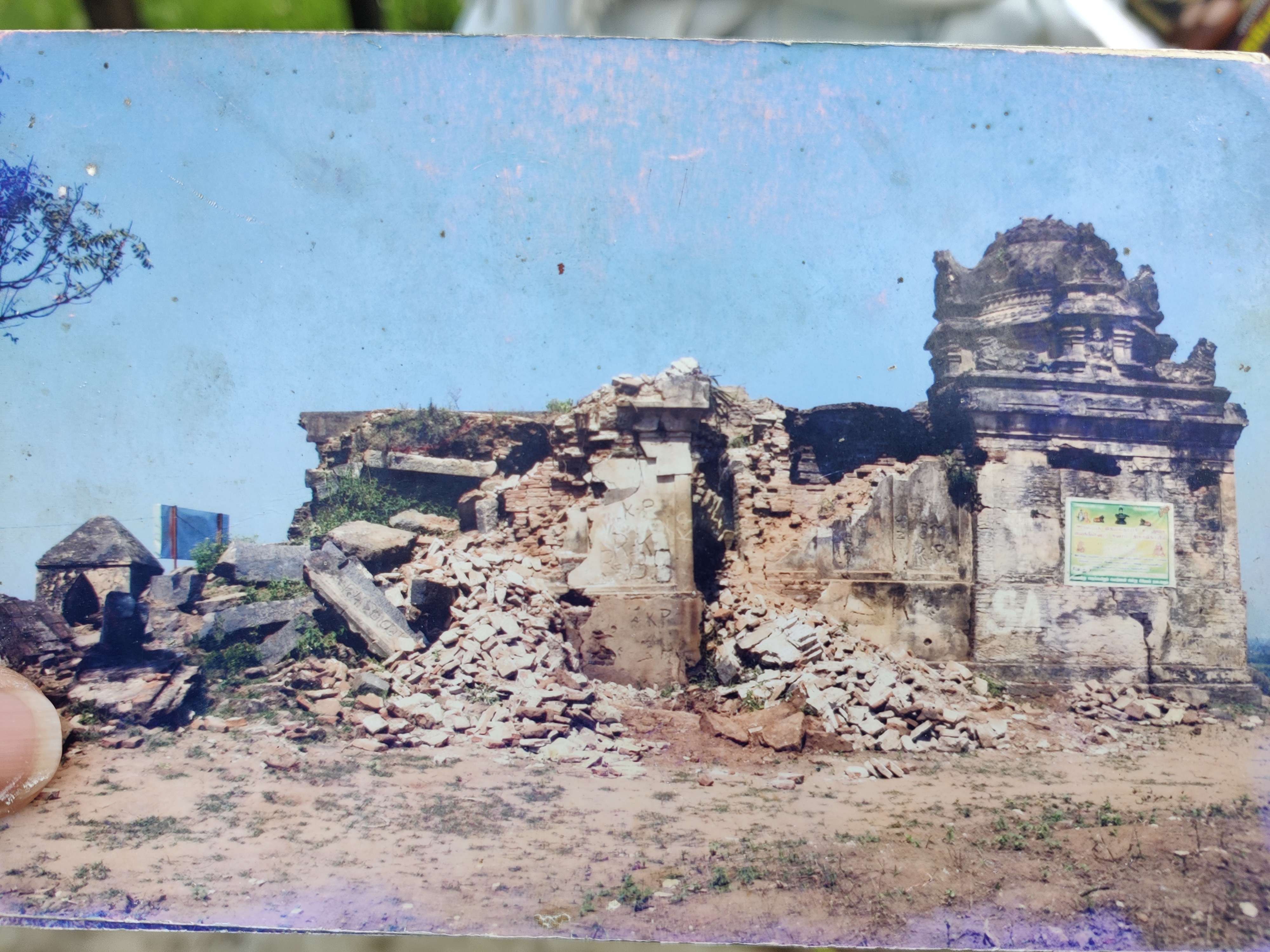


Moolavar: Sri Vaithyanadheeswarar
Amman: Sri Thaiyal Nayagi
A beautiful shiva temple on top of hillock which can be reached through 100 odd steps. This temple is towards the North side of a very well known Sri Lakshmi Narashima Swamy Temple. The name, Palaya Seevaram actually is the changed name of Pazhaya Sivapuram.
The temple is close to a Mandapam where Kanchipuram Varadaraja Perumal’s Utsava murti used to stay during his visit to Palayaseevaram.
It is believed that the Shiva lingam is more than 1000 years old. The old temple was built by the chola kings and that temple was completely dilapidated. The current temple faces east only with a Shiva Lingam under shed and you have a very beautiful Nandhi in the open along with a balipeedam is in front of the temple.
There are 2 approaches to the top of the hill one by road from the south side and from the north side steps lead up to the hill. The road side approach has a beautiful Maha Ganapathy murthy and there are plans of building a Natarajar Meditation hall there.
Contact: The temple opens by 7 am daily and one Kala pujai is performed by a Sivanadiyar Sri Sivarajendran can be reached on 9791747230 and also 97900 25699
Sri Kumareshwarar Temple, Gudi Perambakkam, Chengalpattu


Sri Rajarajeswaramudaiya Mahadevar Temple, Sivapuram, Kalambakkam


Sri Aamullai Eswarar Temple, Manali, Chennai


Moolavar: Sri Aamullai Eswarar
Amman: Sri Alliyangodhai Ambal
This temple moolavar Sri Aamullai Eshwarar was in a village called Aamullaivoyal and due to the construction of some factories 3 villages were evacuated and along with them moolavar moved here and a new temple was constructed.
Moolavar and Nandhi is said to be very old and almost 2000 years old is what they said. Swamy is facing east and Ambal is facing south, you also have a Selliamman and Gangai Amman temple and currently a perumal temple is getting constructed next to the right of the Sivan Sannidhi.
Contact: The temple is run by the local villagers and Sivanadiyar Rajendran can be reached on 9566056212
Sri Parasurameshwarar Temple, Gudimallam, Tirupati District, Andhra Pradesh


Moolavar: Sri Parasurameshwarar
Amman: Sri Anandavalli Ambal
A 2nd century BC the Gudimallam Temple is considered to be the oldest Shiva temple identified so far. The Lord here is known as Parasurameswara and this lingam is believed to depict the trinity. The legend of the temple connects it to Parasurama, an avatar of Lord Vishnu. The enigmatic nature of this shivalingam form is not seen anywhere within hundreds of miles, and indeed, throughout South India. If dated to an early period, the figure on the linga would represent one of the earliest and most unequivocal depictions of the god Shiva to have survived.
An image of Shiva in sthanaka posture is carved in high relief. On the front portion of the linga the god is standing on the shoulders of a figure of Apasmara, a dwarf who represents spiritual ignorance. The figure of Shiva resembles a vigorous hunter; He holds a ram or antelope in his right hand and a small water pot in his left hand. There is a battle axe (parasu) resting on his left shoulder. He wears many heavy earrings, an elaborate flat necklace, and a girdle with a dangling central portion. His arms are adorned with five bracelets, with different designs in relief, on each wrist, and a high arm ring on each side. He wears a dhoti of very thin material, fastened at his waist with a vastra-mekhala. This extends round the whole shaft of the linga. He has no yagnopavita or sacred thread. Emerging from a complicated turban-like head-covering, his hair is long and plaited (not matted).
Legend has it that Parashuram’s mother Renuka was suspected of infidelity by her husband Sage Jamadagni. The Sage ordered Parashurama to behead his mother. Parashurama obeyed his father and when Sage Jamadagni wanted to reward his son, Parashurama asked him to bring his mother back to life. And she was brought back to life.
But Parashuram could not overcome guilt of beheading his mother and he felt remorse about his act. As a penance he was advised by other Rishis to worship Shiva at Gudimallam.
After searching for several days, Parashurama found the temple in the middle of a forest. He dug a pond nearby and began his penance.
Every day morning a single flower used appear in the pond and Parashuram offered it to Shiva. To guard the single flower, he appointed Chitrasena, a Yaksha. Chitrasena was actually a manifestation of Lord Brahma.
Chitrasena had kept a condition that to guard the flower he should be given an animal to eat and a pot of toddy. Parashuram agreed to it and he used to hunt an animal for Chitrasena daily.
One day when Parshuram went out to hunt, Chitrasena felt tempted to worship Shiva himself. He used the single flower to worship Shiva. An enraged Parashurama attacked Chitrasena when he found the flower missing.
Finding the transgression grievous, the Parshuram entered into a fierce fight with the demon. When the vanquished demon was about to be crushed, Lord Shiva appeared and blessed both with their desire of Sayujyamukti – merging in Him. Brahma as Chitrasena, Vishnu as Parasurama and Shiva as the lingam form the Gudimallam Shivalingam.
Sri Jyothilingeswarar Temple, Panakattupakkam, Chengalpattu


Moolavar: Sri Jyothilingeswarar
Amman: Sri Karpagambal
A small temple that is on the main road towards Kayar. It’s been built by an individual named Bhakthavatsalam in his own property. The temple is facing east and in ghoshtam you have all the ghosta vigrahams.
It’s very well maintained and the moolavar is on a square Avudayar. Daily morning and evening puja is performed.
Contact: The Sivanadiyar Bhakthavatsalam can be reached on 97910 51954 and contributions for any puja can be sent on 91766 89995
Sri Sadaiyeeswarar Temple, Vallam, Kanchipuram


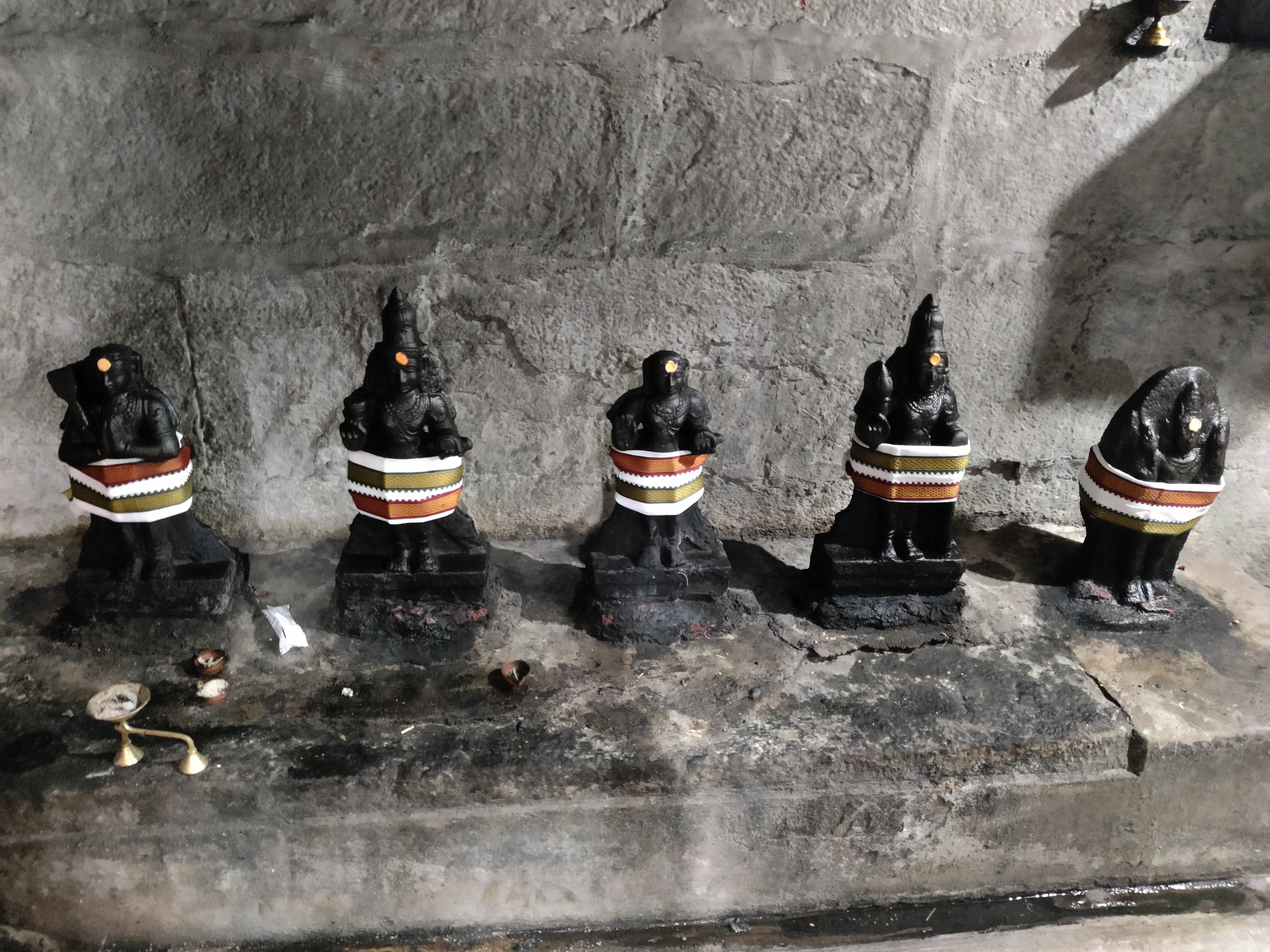


Sri Angalaparameswara Swamy Temple, Ondipudur, Coimbatore


A very good Sivan temple built and maintained by Kamatchipuri Aathinam coimbatore. They have idols installed in a single place to represent all 51 sakthi peedam from all around the world. Very peaceful environment and good for meditation.
Sri Soleeswarar Swamy Temple, Kavanthandalam, Kanchipuram


Moolavar: Sri Soleeswarar swamy
Amman: Sri Sundarambal
The temple is facing east with an entrance arch. Stucco image of Shiva and Parvati as rishabaroodar is on the top of the arch. Balipeedam, Dwajasthambam / Kodimaram and Rishabam are after the entrance arch and before the Mukha mandapam. Moolavar is on a round avudayar. In koshtam, Siddhi Vinayagar, Dakshinamurthy, Maha Vishnu, Brahma and Durgai.
In the inner praharam, Nalvar, Naga Lingam, Sri Valli Devasena Subramaniyar, Natarajar with Sivakami and Chandikeswarar. Vinayagar and Navagraha are in the outer praharam. Ambal is in standing posture with abhaya varada hastam in a separate sannidhi facing south.
HISTORY AND INSCRIPTIONS
During Chozha period this place was called as Jayangonda Chozha mandalathu URRukattu Kottathu Thamanur Nattu Kaivanthandalam alias Chathurvedi Mangalam, Srikarana Chathurvedimangalam. The inscription recorded for this temple belongs to Vikrama Chozha, Thirubhuvana Chakravarthi.
This temple was constructed during Rajaendra Chozha- I's – (1017 to 1040 CE ) period. The temple was called as Rajendra Chozheeswaram and this place was called as Jayangonda Chozha mandalathu Ootrurkottaththu Thammanur Nattu, Kavanthandalam alias Chaturvedi Mangalam. Now the Shiva temple is called as Chozheeswarar Temple. Even-though this Shiva temple was built during Rajendra Chozha-I’s period, his period inscriptions was not found, Instead Vikrama Chozha’s and Kulothunga Chozha’s inscriptions are found.
The inscription at Sri Lakshmi Narayana Perumal Temple, in the same Village records the construction of this Shiva Temple. Rajendra Chozha-I's – (1017 to 1040 CE ) period. The Sanskrit inscription records the building of this “Rajendra Chozheeswaram” Temple by Vallala Kandan Pichan a Minister under Rajendra Chozha of Vaigur and this place was called as Jayangonda Chozhamandalathu ORRukattu Kottaththu Thammanur Nattu Kavanthandalam or Chaturvedi Mangalam. The inscription also mentions Pichan as Chozha Country Minister.
In sanskrit this place was mentioned as sthandilam - ஸ்தண்டிலம். How a Shiva Temple's inscription went to that Lakshmi Narayana Temple is not known. The details of the inscription with explanation are written by Sri Sankaranarayanan G in Sarasvatam. ( The inscription is recorded in South Indian Inscriptions Volume 7, No 423 and Kanchipura mavatta Kalvettukkal Volume 4 )
Another Rajendra Chozha-I’s ( 1027 CE ) period ( SII-Vol 7, 424 ) inscription mentions as “Chaturvedi mangalathu Mahasabha … This is a incomplete and damaged inscription and further details are not known.
Kulothunga Chozha’s, 24th reign year ( SII Vol 7, 415 ) inscription starts with meikeerhi as Thiribhuvana Chakravarthi madurayum Pandyan Mudithalaiyum koNdaruLina.... திரிபுவனசக்ரவர்திகள் மதுரையும் பாண்டியன் முடித்தலையும் கொண்டருளின... The inscription records the gift of land measuring 380 Kuli after sale as a capital by Kanakkani udaya Karanathan Kavaythandalamudayan alias Thiruvavalanchuzhi Udayan and Chozhamandalathu Thirupputhur nathar Koyil Kaikolan Eesanadevan and his brother Periya Pillai.
Vikrama Chozha ‘s 5th reign year inscription ( SII Volume 7, 416 ), records the endowment of Naivedyam by Jayangonda Chozhamandalathu Kiliyur nattu Kuruchi Udayan Bhoomisutheeran Kannalathevan’s wife Poongamalachelvi. For the same a land was gifted to the sabha after sale for 20 Kasu.
Vikrama Chozha’s 5th and 6th year, inscription ( SII Volume 7, 417 ) records the endowment of burning 3 sandhi lamps by Poongamalachelvi ( mentioned in the above inscription ) and her Sister’s daughter Nangai. For the same 3 araiyee irandu ma kasu – 3 அரையே இரண்டுமா காசு--- was gifted.
Vikrama Chozha’s 6th reign year inscription ( SII Volume 7, 418 ), records the endowment Naivedyam, by the servant of the temple, who does thirupani called Andar Manivasagangadanthar. For the same a land was gifted after purchase for 6 Kasu.
Sri Maheswarar Temple, Thandalam, Thiruporur


Moolavar: Sri Maheswarar
Amman: Sri Maheswari Amman
New temple built by localites and 2nd kumbhabisekam done recently.1300 year old idols of Jeshta Devi and Dakshinamurthy placed in prakaram and all other idols are new.
Excellent place and ideal place for mediation.
Trustee member Amsaveni can be reached at 9790815110
Sri Thiruvaleeswarar Temple, Nerumbur Village, Periyakattupakkam


Sri Maakaleswarar Temple, Palayanoor, Chengalpattu


Sri Nityanandeeswarar Temple, Orathur, Chengalpattu


Moolavar: Sri Nityanandeeswarar
Amman: Sri Bhuvaneshwari Ambal
A beautiful location surrounded by hills on all the four sides and away from the hustle bustle of the people is this standalone temple of Sri Nityandeeswarar.
The shivalingam is on a square Avudayar representing that it must have been installed and worshiped by sidhars those days. Ambal Bhuvaneshwari is facing south and you have separate small Sannidhi for Pillayar and Balamurugan.
The location is very serene and ideal for meditation and other spiritual activities.
Sri Kayarohaneeswarar Temple, Pillaiyarpalayam, Kanchipuram


Moolavar: Sri Kayarohaneeswarar
Amman: Sri Kamalabikai
Kayarohaneswarar Temple is a Hindu Temple dedicated to Lord Shiva located in Pillaiyarpalayam, a well-known locality in Kanchipuram City in Kanchipuram District of Tamil Nadu. Presiding deity is called as Kayarohaneswarar and Mother is called as Kamalambigai. This temple is considered as a Guru Parihara Sthalam. Hence, this temple is popularly known as Guru Koil / Guru Temple of Kanchipuram. This Temple is considered as one of the 108 Shiva temples mentioned in Kanchi Puranam. This Temple is considered as one of the three Kaya Rohanam Temples in Tamil Nadu.
Kayam means body and Arohanam means lifting. It is believed that Sivan lifted Thirumal and Bramha in his shoulders and did ruthrathandavam.
It has 6 lingas in a separate place which is meant for 6 Mavithira munivargal worshiped here. There is a separate sannidhi for Mahalakshmi with Lotus in her hand.
There is a separate sannidhi for Guru bhagavan worshipping towards east facing lingam
Sri Thirumanangeeswarar Temple, Melur, Chennai


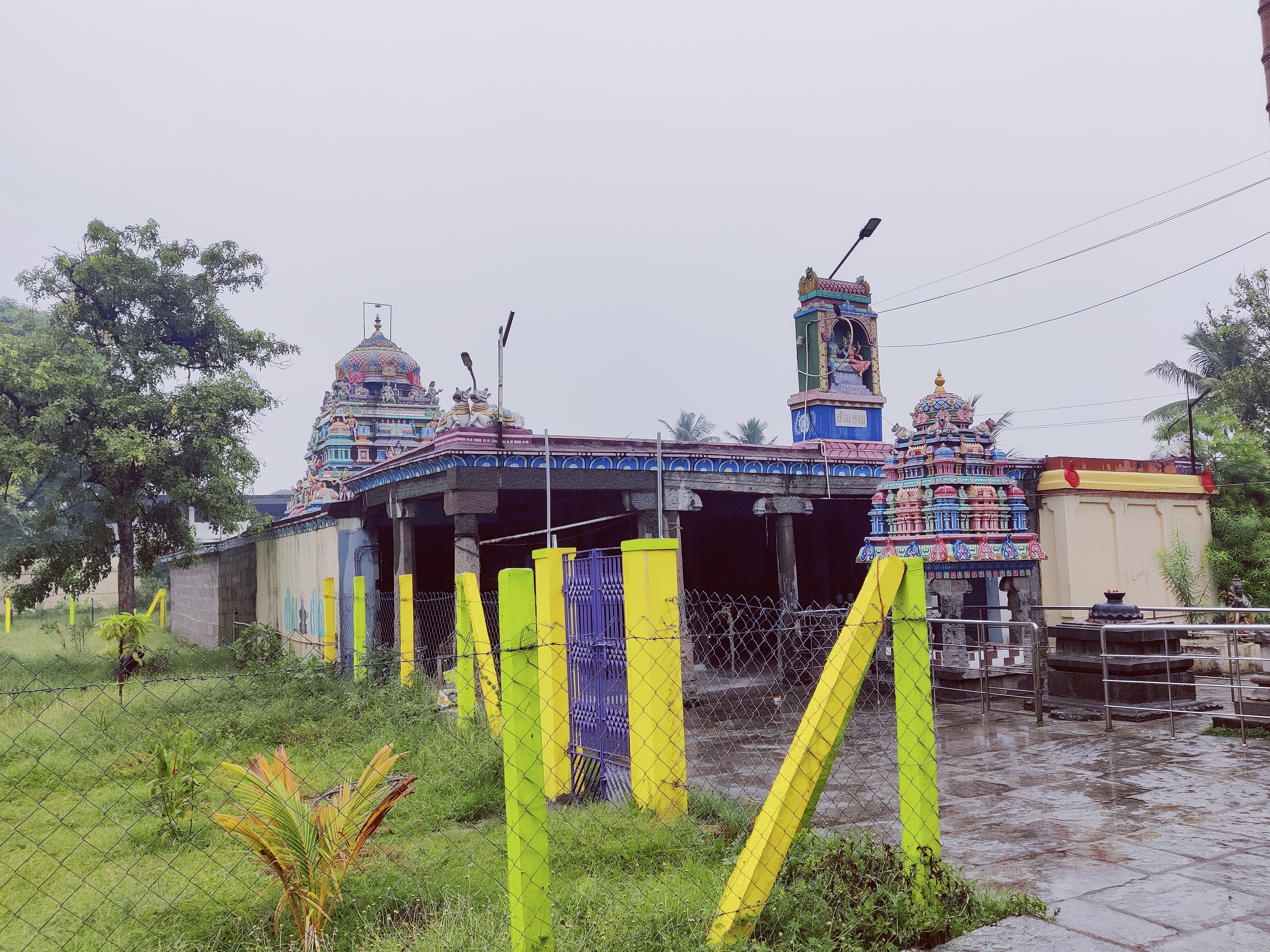


Moolavar: Sri Thirumanangeeswarar
Amman: Sri Thiruvudai Amman
A beautiful old shiva in Melur located in the North of Chennai. This place was once a forest filled with trees and shrubs with sweet-smelling flowers and was known as Suganda Vanam (Suganda-indicating sweet smelling Vanam-forest). A rich man found his cow showering its milk into a shrub which was in the form of a Shivalingam and a snake consuming the milk and going inside. He covered this Swayambu Lingam with an armour and started worshiping the Lord as Sungandavaneswaran. In due course the name changed to Thirumanangeeswarar which means the same in Tamil.
Once in Kailash Parvathi playfully closed the eyes of Lord Shiva for three seconds and thus darkening the world. For this sin, Lord Shiva cursed her to be born in the world thrice (Icha Sakthi, Gnana Sakthi and Kriya Sakthi) after which he will appear and marry her again. This is the story behind the three temples. one of the Tri-Shakti temples in and around Chennai. Devi Thiruvudai Amman represents Iccha Shakti in this temple (Power of Will).The divine wedding is also believed to have happened here. The form of the Amman in all three temples (others are Thiruvotriyur and Thirumullaivoyal) are identical and sculpted by the same sculptor. Vadivudai Amman Temple representing Jnana Shakti and Kodiyidai Amman Temple representing Kriya Shakti.
Thiruvudai Amman and is facing south. Amman Shrine has been recently rebuilt with cement. The Ambal is about 5 feet tall and she is in standing posture. There is a snake pit in front of the Ambal sannidhi and portrait of Iccha Shakthi can be seen below the snake pit. Presiding Deity is called as Thirumanangeeswarar and is facing east. The lingam is a Swayambu lingam of sand putru and is being given a silver covering. It is rare to see Lord Brahma as seen here with moustache and beard. Shrines of Appar, Sundarar, Manickavasagar, Suryan, Bairavar and Veerabhadrar can be found in the prakaram. Sthala Vriksham is a Peepal tree arising from a mango tree.
Contact: The temple is opened by 7:30 am and the Kurukal Sugandhan can be reached on 9600147124
Sri Ishtalingesvarar Temple, Tiruvallikeni, Chennai


Moolavar: Sri Ishtalingesvarar
Amman: Sri Abayambigai Ambal
A good 1350 years plus old shiva temple which was worshiped by Ganapathi Siddhar. The original old temple was apparently at the site of the Rajaji hall before the construction of the New secretariat (now made as Govt multi-speciality hospital). The government has moved the old temple to its current location which is right behind the Government guest house.
The moolavar Sri Ishtalingesvarar is a huge shivalingam on a Padma Peedam facing west and is one of the 4 well known shiva temples facing west in Chennai. The other three are Sri Kapaleeswarar Thiru Mayilai, Sri Marundeeswarar Thiruvanmiyur and Sri Thyageswarar Thriruvatriyur and this one is Thruvallikeni. It is said that this is last shiva temple on the banks of the river Koovam before the river enters the Bay of Bengal.
It is said the famous Tamil poet and literate Sri Ki Va Jagannathan has written many songs on this moolavar Sri Ishtalingesvarar.
Daily the temple an opened by 8:00 am and puja happens by 7:30 am. The temple is run by a group of individuals and very well maintained.
Contact: The kurukal Sri Subramania can be reached on 9444988979
Sri Vaitheeswaran Temple, Military Quarters, Alandur, Chennai


A beautiful small shiva temple in the calm and serene place within the Military Quarters of Alandur. The locals say that this shivalingam has been here for many years and from last 30 years ago a small shed has been built and locals are worshiping it daily.
There is no Ambal Sannidhi, but we can see a very old Anjaneyar next to the shivalingam. The Moolavar Vaidheeswaran is on a circular Avudayar and very small in size and facing east. Outside the moolavar Sannidhi there is a small Ganesha and Durgai.
Very calm and serene place and ideal for meditation.
Sri Sundareswarar Temple, Kumaran Kundram, Chrompet, Chennai


Moolavar: Sri Sundareswarar
Amman: Sri Meenakshi Ambal
Kumaran Kundram is a small temple dedicated to Murugan and lies atop a hillock, facing the north, in Chrompet, en-route to Hastinapuram. The temple is located between the hill temples of Trisioolam and Tiruneermalai. The Kumaran Kundram temple is over 40 years old, and the presiding deity is Murugan called Sri Swaminathaswamy and you need to clone over 108 steps to reach the hillock temple.
Sri Chandrasekarendra Saraswati Swamigal, fondly called Sri Mahaperiyava, had visited Chrompet in 1956 and observing the hillock, he proposed that a temple be built for Murugan. The people at that time just built a temple for Siddhi Vinayagar that year. Nearly twenty years later, when the people were clearing the hillside for making a path, they came across a Vel (spear), the primary weapon of Murugan. This discovery propelled the people in building the temple for Murugan on the hilltop and the Kumbhabhishekam was 1979.
Enroute to this hill temple is where the Meenakshi Sundareswarar temple is located in a very beautiful location. The temple had a Ghajabrushta Vimaanam and a very rare north-facing sanctum for a shiva temple. The image of Shiva is chiseled on the Shiva Lingam. Goddess Meenakshi has a sanctum too and Sarabeshwarar too has a Sannidhi here. Given is Meenakshi Subdrrewarar temple the Madurai Velli Ambala Natarajar is seen here with his dancing pose and his right leg lifted position. Usually you see all Natarajar with his left leg lifted representing the importance of Shakthi.
At the bottom of the hill are the sanctums of Siddhi Vinayagar, Idumban, and Navagraha. There is a deity of Kaali here and is called Jeyamangalathanma Kaali. In this form, she denotes peace and calm, and bestows well-being and victory. Special Pooja is offered to her on full moon day. Also, every pournami girivalam is performed by many devotees here.
Sri Varaheeswarar Temple, Damal Village, Kanchipuram


Moolavar: Sri Varaheeswarar
Amman: Sri Gowriamman
A beautiful Pallava period temple with lot of historical significance of that period which is over 1000 years. The original sanctum was built by Pallavas. Antarala and arthamandapa are added during Chozha period. The Prakara, Mahamandapa and mukha mandapa are added during Vijayanagara period.
There are many tales behind the Village name Damal which was earlier know as Damsr. The word Damar might have been derived from the name of a Pallava Chieftain Daman ( Daman Thondrikon ) ruled Damar Nadu or from a Vijayanagara Nayak ruler Damarala Venkattappa Nayaka. In fact Damar is also referred in sangam literature Purananuru, a poet by name Damappa Kannanar, who hails from this Village.
As per Pallava King Simhavaraman-III ( 556CE ) copper plate this place was mentioned as Damar or Thamar, Damar kottam, Damar Nadu, Damanallur and Damar. Damal was also called as Damalachery during Maratha period. Damar Nadu was a sub-division under Thondai mandalam. Lord Shiva was called as Tirupannriswaram Udayar ( பன்றி – Boar in English and Varaha in Sanskrit ), is now called as Varaheeswarar, in Sanskrit. Damal is the home town of D.K. Pattammal, D.K.Jayaraman and Seshadri Swamigal
As per the legend Vishnu after killing Hiranyakshan, in the Varaha avatara and brought back the Earth, couldn’t control his anger and behaved ferociously. So Devas seeked Lord Shiva’s help. Lord Shiva as a hunter fights with Varaha, hugged and plucked the tusks, which was coated with Demon’s blood. Lord Vishnu’s Demon behaviors disappeared and he worshiped Lord Shiva.It is said that this entire episode happend at this place. Due to embracing Varha, the Conch and Chakra impressions are found on the Shiva Linga.
The temple is facing west with a 7 tier Rajagopuram. Balipedam and Nandhi are in front of a Vijayanagara period mandapam. Sri Vinayagar and Valli Devasena Subramaniyar sannadhis are on both sides of Nandi. Sarabeswarar is also present in the temple. Many of the columns at the front of the Varaheeswarar Temple are carved with various depictions of Bhairava, a form of Shiva who is always accompanied by his faithful dog. On other columns one sees other gods, like Hanuman and Ganesha.
Gowri Ambal is in a separate Sannidhi and Elephant is present before Ambal Sannadhi (Normally Lion will be there). Moolavar Lingam having snake roopam on it and also Sudarshana Chakram and Sangu on it. Sun and Moon Eclipse can be seen over main door of Moolavar Sannadhi. Ashta (Eight) Bhairavars are available on pillars at outer Praharam. Two faced Bhairavar is located in a separate Sannadhi. The wonder of the temple is that on Rathasapthami day, in the Tamil month of Masi (February-March), the sun’s ray’s fall directly on the Shiva Lingam
Contact: Daily morning the temple is opened by 6:30 am.
Sri Mandala Eswarar Temple, Babasahib pet, Walajhabad, Kanchipuram


Moolavar: Sri Mandala Eswarar
Amman: Sri Periyanayagi
Very ancient Sivan temple, facing the east side. This temple is the head of all nearby Sivan temples, hence called as Mandala Eswarar temple. Under HR&C control hence very dilapidated condition.Oru kala Pooja and all auspicious days celebrated here.
Contact: Gurukkal Vikki can be reached at 9361389860
Sri Kamadhenu Eswarar Temple, Kalavakkam, Chengalpattu


Moolavar: Sri Kamadhenu Eswarar
Amman: Sri Kokilambal
The Lingam was found near the compound wall of SSN College. A temple was built later as per the advice of Kanchi Shankaracharya to house this Shiva Linga. This lingam, vinayagar and Nandiyam peruman is believed that more than 1000 years old.
This Temple is facing towards east. The sanctum sanctorum consists of sanctum, ardha mandapam and mukha mandapam. Presiding Deity is called as Kamadenu Eswarar and is facing east. He is housed in the sanctum in the form of Lingam.Vinayaga, Dakshinamoorthy, Vishnu, Brahma and Durga are the koshta idols located around the sanctum walls. Mother is called as Kokilambal. There is no idol for Kokilambal in the temple. A temple tank can be seen near the temple. A very old unique Vinayagar shrine is also seen near the temple.
Contact: Sivanadiyar Munusamy is doing oru kaala Pooja and all other auspicious days without fail. He can be reached at 9962596849
Sri Chidambareswarar Temple, Thiruthottikalai, Sevvapetai, Thiruvallur


Sri Kappeeswarar Temple, Annathur, Uthiramerur, Kancheepuram


Moolavar: Sri Kappeeswarar
Amman: Sri Ennachiamman
A beautiful temple in the village of Annatur in Chengalpattu district is said to be over 800 years old, other than that no major history is found about the temple. The temple is facing east and Sri Kappeeswarar is seen on a square Avudayar, signifying that some rishis or siddhars must have worshiped it.
Ambal Ennachiamman is facing south and apparently in 2012 the temple was renovated and the Pillayar, Valli Deivayanai samedha Subramanya swamy and Kala Byravar vigrams were shifted out of the maha Mandapam and installed in separate sannidhi.
The outer praharam has a separate Sannidhi for Navagrahaas which seems to be a latest addition. The Nandhi is very beautiful and is seen seated in a very straight posture.
Contact: Daily one Kala pujai happens and the temple is opened by 6:30 am. A sivanadiyar named Saravana Vel is taking care of the daily puja and can be reached on 9600617445
Sri Soleeswarar Temple, Pillayarpalayam, Kanchipuram


Moolavar: Sri Soleeswarar
Amman: Sri Kamakshi Ambal
A beautiful 9th Century Pallava period temple in the temple town of Kanchi. The original temple belongs to 8th to 9th Century Pallava period and may be reconstructed during Chozha's and Vijayanagara's period.
It is believed that ashta Bhairavas or the eight forms of Bairavan have worshiped Lord Shiva of this temple. Devotees worships Ashta Bhairavas on theipirai Ashtami day to get their wishes fulfilled.
The eight Bairavas are
Samhara Bhairava with Dog as vahanam
Asitanga Bhairava with Swan as vahanam
Viduvacha vaneswarar - Chanda Bhairava with Peacock as vahanam
Ruru Bhairavar with bull as vahanam
Krotha Bhairava with Eagle as vahanam
Unmatta Bhairava with Horse as vahanam
Kapala Bhairava with elephant as vahanam and
Beeshana Bhairava with Lion as vahanam
All these ashta bairavas are in the linga form in this temple
The temple is facing east with an entrance arch with a Shiva and Parvati sudhai murthy on the entrance. Moolavar Soleeswarar is of Dhara Lingam and a beautiful huge shivalingam and he is also called as Samhara Bhairavar. You can see the relics of Ambal and swamy on the back side wall of Sanctum sanctorum.
Contact: The kurukal Sri Pattabhi can be reached 7989252044
As most of the shiva temples in Kanchipuram, here too there is no separate Ambal Sannidhi and referred as Kamakshi as the consort for all shiva temples in and around Kanchi.
Sri Kailasanathar Temple, Parameshwara Mangalam, Kalpakkam


Moolavar: Sri Kailasanathar
Amman: Sri Kamalambigai Ambal
A beautiful Pallava period temple belived to be built between 869 to 880 AD built by then Pallava kings. The temple is built on a small island in Palar River where the river further goes to join the ocean. It’s indeed a beautiful temple to see from a distance. Initially this Temple was called as Saileswaram.
As per the legend, the Ayapakkam Sri Shenbakeswarar came to this place and hid on a small hill in the middle of the river Palar. Parvati came in search of him. She climbed the hill with her knees. Lord Shiva and Parvati stayed here as Sri Kailasanathar and Kanakambigai. The depression markings on the rock is believed to be Parvati’s knee marks. The Shenbakeswarar Temple Nandhi is facing this Sri Kailasanathar temple and waiting for Lord Shiva’s arrival to that temple.
Some of the salient features of this temple are...
The temple is on a rocky island of the river Palar. A Bridge was constructed to reach the temple. A Dakshinamurthy sannadhi is on the right side of the bridge end. The temple is facing east with Balipedam, Dwajasthambam. A Lion pillar and Nitupathungan inscription stone are kept at the entrance of sanctum sanctorum. In koshtam Vinayagar, Dakshinamurthy, Mahavishnu, Brahma and Durgai. In the prakaram Sandikeswarar, Vinayagar, Navagrahas, Bhairavar and Valli Devasena Subramaniyar.
This island is connected to the main land using a cross way bridge. This Temple is built facing East. Like other Temples this Temple also has a Dwajastambam and Balipeedam. There is a huge Dakshinamoorthi Idol at the entrance of this Temple.
Contact: Daily one Kala pujai happens and Kurukal Vijayakumar can be reached on 8940281959
Sri Panamudeeswarar Temple, Iyyangar St, Kancheepuram


Moolavar: Sri Panamudeeswarar
Amman: Sri Kamakshi Ambal
A beautiful 10 century temple which was in sand stone temple built by Sundara Chozha. The other mandapas are extended latter. As per the inscriptions Lord Shiva was called as "Padamudaya Nayanar" The 18th Century Sri Sivagnana Swamikal had written the sthalapurana of this temple in Kanchipuranam under Panathesara padalam.
It is said that once Garudar became strong and started attacking all the snakes around this area, so all the snakes together worshipped lord shiva here and took all the snakes and adored on his body as jewels. As shiva adored all Panas (snakes) on him the lord is named Panamudeeswarar. This temple belived to equavent to Sri Kalahasti.
This temple is Raghu & Kethu Parikara sthalam and you can see 2 shivalingams representing Rahu and Ketu right in the left side of the maha mandapam. There is no separate Ambal Sannidhi as in Kanchipuram for all shiva tenples Kamakshi temple is the Ambal.
The temple is facing east with a two tier Rajagopuram, spread over 25 cents area land. Balipedam and Nandhi are in front of the temple. Urchavars, Raghu and Kethu Lingas are in the arthamandapam. There is no separate sannadhi for Ambal, but Yoga Sakthi Amman in the form of procession deity is in the sanctum. In koshtam, Vinayagar, Dakshinamurthy, Maha Vishnu, Brahma and Durgai ( A new Durga was installed in front of the old murti )are in the koshtam. Koshta murtis are made of sand stone. Since sand stones murtis are eroded heavily due to age, lime plastering was done.
In Mandapam Sannadhi for Natarajar, Sri Sidheeswarar, Vara Siddhi Vinayagar, Kalahastheeswarar, Sri Valli Devasena Subramaniyar, Navagrahas, Shaniswar, Vishnu, Bhairavar and Suryan.
The sanctum sanctorum consists of sanctum, antarala, arthamandapam and a maha mandapam. The entrance to the sanctum is on the south side. The sanctum sanctorum was built on a simple padabandha adhisthana with tripatta kumuda. The structure above the adhisthana was built with brick. A 2 tier Vesara Vimana is above the prastaram. The prastharam is of kapotha style. The sanctum sanctorum is now supported with inclined brick structure, to avoid further damage to the original structure.
Contact: The temple is opened by 7 am but puja is performed only by 8 am, the temple Kurukal can be reached on 9841850866
Sri Mutratheeswarar Kailasanathar Temple, Vayalanallur, Thiruvallur


Moolavar: Sri Mutratheeswarar Kailasanathar
Amman: Sri Periyanayagi
A chola period temple, said to be close to 1150 years which has been completely destroyed. Currently being renovated by the local villagers. The temple is surrounded by beautiful temple tank. The moolavar is a huge sivalingam and is on a square Avudayar.
The Temple is located at a walkable distance from Vayalanallur Murugan temple which is well known as the BramhaSastha Vigraham. We can see the 6 feet Murugan with a japa malai and kamandalam in the other hand.
The Vayalanallur village actually belongs to old Chola period and should have been a very prosperous village with very big temples, now there is only few traces of the old history.
Contact: The temple is opened by 6:30 am and daily one Kala pujai is performed and the Sivanadiyar Rajan can be reached on 9790811331
Sri Chandramouleeswarar Temple, Thiruvakkarai, Viluppuram

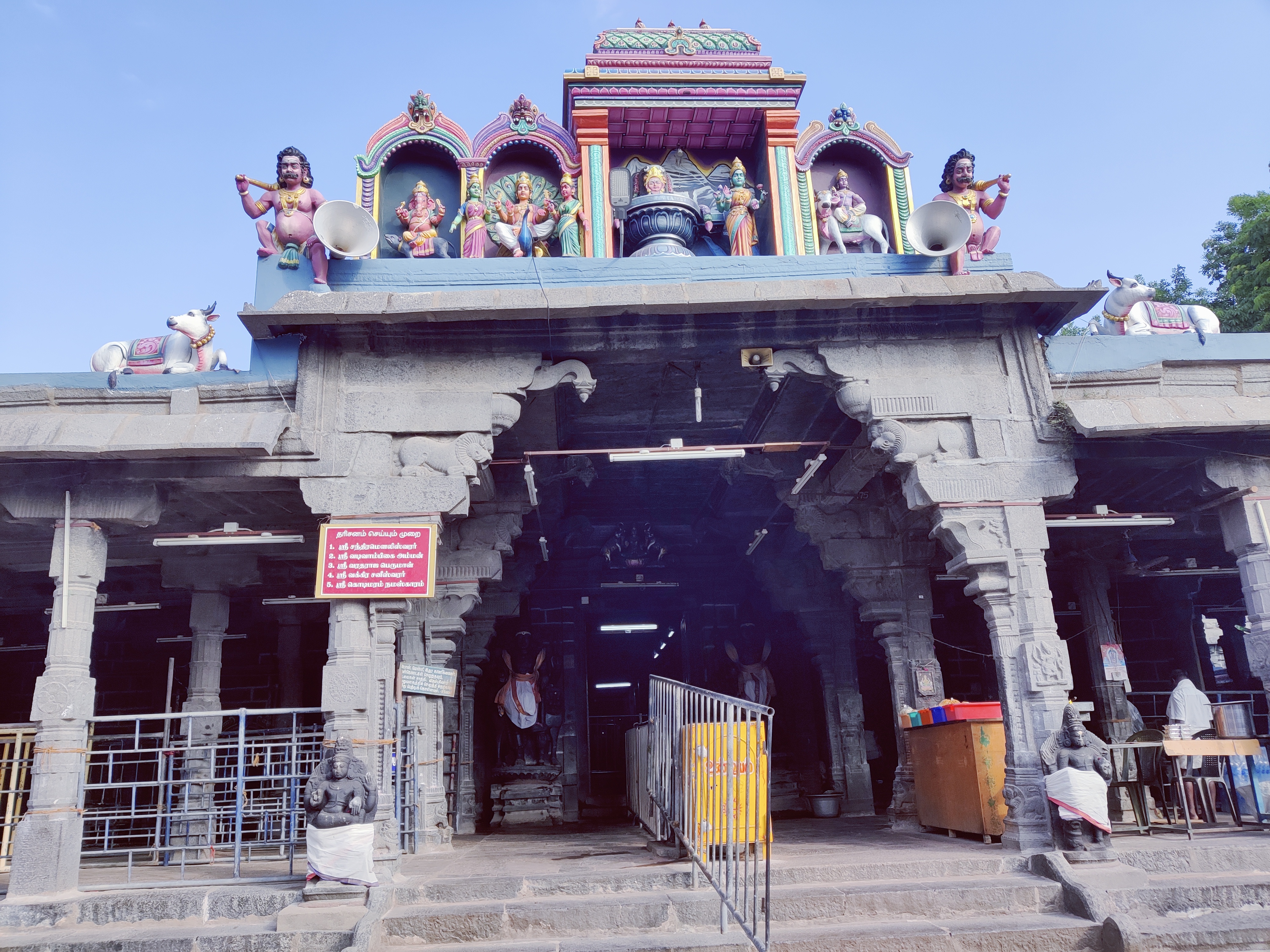


Sri Kaalakandeswarar Temple, Chengalpattu


Sri Singeswarar Temple, Avalur Village, Kanchipuram


Sri Kailasanathar Temple, Gerugambakkam, Chennai


Moolavar: Sri Kailasanathar
Amman: Sri Kamatchi Ambal
A relatively new temple built around 2019 inside a residential area of Gerugambakkam. Big spacious and nicely maintained East facing sivalingam which is big in size. All prahara murthies along with Navagraha peedam placed appropriately. Daily oru kaala poojai is happening and celebrating all other auspicious days.
Very peaceful and blissful.Ohm Namasivaya.
Sri Kailasanathar Temple, Palur, Chengalpattu


Moolavar: Sri Kailasanathar
Amman: Sri Karpagambal
A very beautiful Pallava period temple which is on the south banks of the Palar River in Chengalpattu district. The temple is situated is a very serene village surrounded by paddy fields.
The temple is facing east and has a beautiful pillarard front mandapam and a main Maha mandapam with antrala and grabhagraham. Moolavar Sir Kailasanathar is facing east and Ambal Karpagambal is facing south.
The temple is maintained by an old Sivanadiyar named Jayaraman who stays here within the premise and takes care of the daily puja. He is so devoted in his activities and with such simplicity that is really impressive and inspiring. He does all the activities himself and has completely dedicated his life to the lord.
The outer praharam has Sannidhi for Pillayar, Valli Devasena sametha Subramaniam Sannidhi and also kalabyravar Sannidhi. There is a beautiful garden being maintained and the flowers plucked from here only are offered to the lord.
Sri Akshaya Rathna Lingeswarar Temple, Amarambedu, Sriperumbudur


Moolavar: Sri Akshaya Rathna Lingeswarar
Amman:Sri Rathnambigai
A chola period temple and believed be over 800 plus years. There is inscriptions found in the temple to prove its antiquity. The present temple was built as per the olai Suvadi / palm leaf manuscript and prasannam during 2013-2014.
As per the Palm leaf manuscript, it was said that the power of Shiva will be multifold on Akshaya Tritiya day and hence the moolavar was to be named as Akshaya Ratna Lingeswarar. It is believed that, to get rid of debt, to flourish wealth, devotees worships Shiva, Ratnambigai and Pidari Amman who has a separate sannidhi outside the temple facing the north.
The temple consists of Sanctum, ardha mandapam and Mukha mandapam. The total temple was re-constructed with bricks, cement concrete during recent years. The Sanctum sanctorum is on a upanam and adhistanam, square in shape. The two teir Gajaprishta Vimanam is above the sanctum sanctorum with 3 kalasas. Sudhai images of Shiva & Parvati, Dakshinamurthy, Maha Vishnu and Brahma are in the kostam.
The outer praharam has Sannidhi for Rathna Vinayagar, Valli Devasena sametha Rathnavelan and Kalabyravar Sannidhi.
Contact: Daily one kala pujai is performed and the temple Kurukal Sri Balaji can be reached on 9944614957
Sri Vaitheeswaran temple, Pasumpon nagar, Perumbakkam, Chennai


Sri Jalakandeswarar Temple, Kottamedu, Nellikuppam, Chengalpattu


Sri Puniyakodeeswarar Temple, Kottaikuppam, Thiruvallur


Moolavar: Sri Puniyakodeeswarar
Amman: Sri Annapoorani Ambal
A very old shiva temple believed to be worshipped by Barghava Rishi and Parashara Rishi. The Vijayanagar empire has done lot of Thirupani for this temple. You can still see the image of the king and the queen on the pillar close to Ambal Sannidhi.
The history goes like, when Bhargava and Parashara Maharishi were going to Kasi they passed through this village which is actually an island formed by the river Kosasthalai and stopped for their Sandhya Vandhanam. As there was no temple here, they installed the present Shivalingam and worshipped here in this village. It is said that they lived here for sometime and set all pujas for the swamy and then moved on with their Kasi Yatra.
You can see both their Vigram here on the south side of the outer praharam.
In later years, the Vijayanagar kings have done renovation and also have installed the Ambal Annapoorani here. Every year for the first 3 days of the tamil new year month of Chithirai the sun directly enters the grabhagraham and worships the moolavar sri Punyakodeeswarar.
Contact: Daily orukala pujai happens and the kurukal Sri Puniakodi can be reached on 94440 67607
Sri Ramalingeswarar Temple, Thimmarajampettai, Kanchipuram


Moolavar: Sri Ramalingeswarar
Amman: Sri Parvathavarthini Ambal
A very old shiva temple built during the chola period and is considered to be the Rameshwaram of the north Tamilnadu or Vada-rameshwaram in Tamil. The Vijayanagar empire Thimmapa Nayakar has done lot of donation and renovation to this temple.
In the grabhagraham you can see somaskandar in the pudapu chitiram like you see in Kachi Ekambareswarar temple and pravathavarthini is exactly like the one in Rameshwaram.
The temple is bang on the main road from Walajabad to Kanchipuram and it is said that People who are not able to go down to Rameswaram, can pray here and get the same benefits of visiting that temple.
Many people from different counties actually visit this temple during the month of Puratasi for Mahalaya ammavasai and also perform pithru kariyam during that pithru paksham or 15 days.
Temple faces east, Lord faces east, Ambal faces south. The outer prakaram, there is a beautiful vinayagar Vigram on the compound and seems like the separate Sannidhi must have been demolished for road widening those days. Also you have a separate Sannidhi for Valli Deivayanai Samedha Sri Subramania swamy. Now again road widening plans are underway and we hope and pray the temple is not demolished.
Contact: Daily one kala pujai is performed and the temple opens between 7:30 am to 8 am. And the Kurkal Sri Srinivasan can be reached on 8610913076
Sri Agneeswarar temple, Venkadamangalam, Kandigai, Chennai


Moolavar: Sri Agneeswarar
Amman: Sri Nithya Kalyani Ambal
A very old sivalingam which was found while digging for road formation. Village people built a small shed and placed him named as Agneeswarar. It is believed that all heat related diseases will be rectified if we worship here. Very powerful and big avudayar facing the east direction. Morning sun rays falling on him directly like a garland.
There was a sithar who worshiped this some time ago and blessed all devotees.
Contact: Gurukkal can be reached at 9884461559
Trustee member Rajaram can be reached at 9940217893.
Sri Rudra Kodeeswarar Temple, Thirukazhukundram


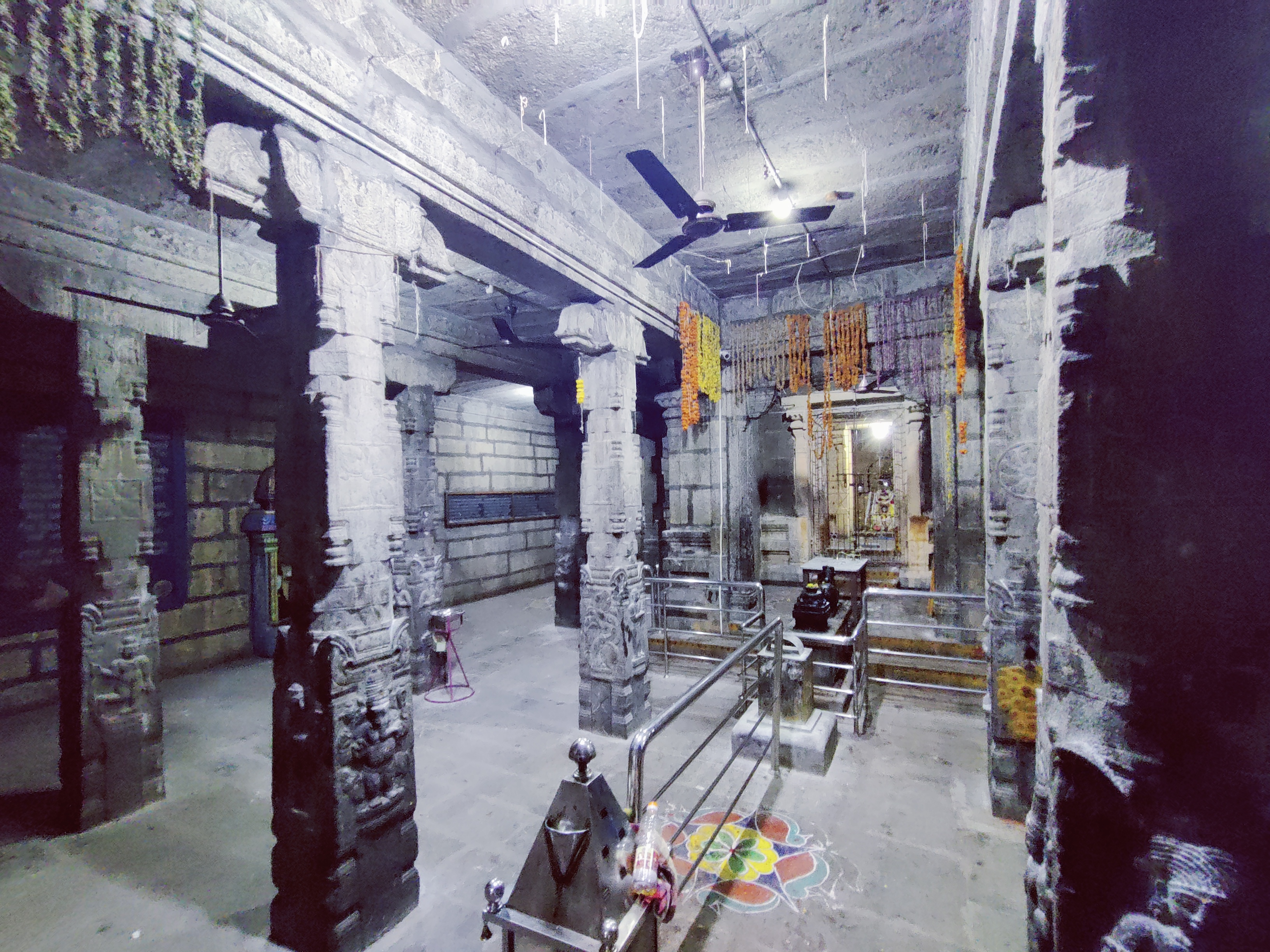


Moolavar: Sri Rudra Kodeeswarar
Amman: Sri Abhirami Ambal
The temple is considered as Thevara Vaippu Sthalam, meaning non of the Nalvar has come here and sung hymns in the temple premises, but has referred this temple in on of their songs. Thirunavukarasu Nayanar has referred about this temple in his devaram. The temple is situated at the foot hill of Thirukazhukundram Vedagiriswarar near the Sangu Theertham. Like Vedagireeswarar, Rudrakoteeswarar is a suyambu murthy and has a rich history to its name.
According to the legend , the celestial beings who could not bear the torture of the Kodi Asuras (1 crore Demons) who emitted from Kashyapa rishi, prayed to Lord Siva, pleased by the devotion he made one crore Rudras emerge from his body to destroy the demons. The Rudras had a very striking feature – thick tangled locks of hair, wearing garland made of skulls and jewels with symbols of snakes, carrying a trident (Trishool), with four armed hands each carrying weapons such as bow, arrow, discus etc. They bowed before Lord Shiva awaiting His order. Lord Shiva directed the Rudras to kill the demons and evil creatures that disturb and terrorize sadhus and devas and protect the universe. And the Rudras obediently followed the strict orders issued by Lord Shiva and kept the demons at bay, protecting the universe.
An ancient poem, inscribed in the inner wall of the temple says, while Kasi (Benares), Thiruvarur, Chidambaram, Thiruvannamalai, Kanchi, Kalahasti and Madurai formed the body of Lord Siva the Koteeswarar Temple at Rudrakoti or Rudrankoil is His heart. According to Saiva Siddhanta, Rudra is the presiding deity of one of the five elements of Nature — Fire. Rudra is referred to in the Vedas, not as a sectarian deity, but as the Supreme Lord, who guides the Universe from one level of perfection to the higher one. Sri Rudram, which forms part of the Upanishads, speaks of the glory of Rudra and says that the Lord is always pleased with obeisance and it offers salutations to Him many times. Praying to Rudrakoteeswarar at this temple continuously during 16 Pradoshams, would rid one of ailments of the heart, hypertension, diabetes and also problems caused by planetary changes. The Vedas also speak about the presence of 11 Rudras and their consorts, 11 Rudranis. Of the 108 Sakthi Peetams, the 24 th is considered to be Rudrakoti's Sakthi. Devi Bhagavatham says that She adorns the Rudrani Peetam. It is believed that praying to Her at the temple on nine full moon days helps a devotee unite in wedlock, lead a happy family life and be free from all afflictions.
The name of the Goddess is known by Rudrani , Abhirami Nayaki and Pennin Nallal. The shrine of the Goddess is situated on the left side and She looks southwards through an opening on the temple wall towards the Kali Temple at Vattaparai (circular rock), situated at some distance.
The temple also has shrines for Dakshinamurthi, Vinayaka and Subramania with His consorts, the Thevaram trio — Appar, Sundarar and Gnanasambandar — and also Manickavasagar. While in the Siva temples the image of Lingodhbavar is found on the western side of the sanctum sanctorum, here one can find the image of Mahavishnu with Abhaya Hastham.
Contact: Daily one kala pujai happens and the kurukal Sri Prasanna can be reached on 8248094678
Sri Mallikatheeswarar Temple, Karumbakkam, Kanchipuram


Moolavar: Sri Mallikatheeswarar
Amman: Sri Bramhakamakshi Ambal
A good 2000 years old temple in the beautiful village of Karumbakam. There is no known history for this temple.The temple has a beautiful prakaram with lot of flowering plants.
The moolavar is facing east and the moolavar structure is vey old and is in granite. Moolavar Mallikatheeswarar is very small shivalingam and Ambal Bramhakamakshi is facing south.
The praharam has Sannidhi for Pillayar, Vallidevasena samedha Subramaniam, Natarajar, Navagrahas, Nalavar, Suryan and Chandran. The Raja Gopuram is a 3 tiered Gopuram. The sthala vriksham is Vilvam.
Contact: Daily one kala pujai is performed and the Sivanadiyar Sri Arumugam can be reached on +919578989219
Sri Pattamudeeswarar Temple, Pichivakkam, Kanchipuram


Sri Tiruvaleeswarar Temple, Koovathur, Chengalpattu


Moolavar: Sri Tiruvaleeswarar
Amman: Sri Tripurasundari Ambal
A beautiful temple on the banks of river Palar and known to over 2000 years old. The structural temple is largely from the time of the Vijayanagara Dynasty, in the 15th or 16th century. The moolavar Lingam is 16-sided – such polygonal Lingams are usually seen in Pallava temples, which may give some indication to the age of the original temple here.
Koovathur gets its name from “koovam”, the Tamil for the Sanskrit “koopam”, meaning a well (of water). The 9 sacred rivers of Bharatam are said to have come together here, taking the form of wells, which has given the place its name. The waters of these rivers are believed to be enshrined together in the temple’s Teertham.
During the Ramayanam period Sugreeva’s brother Vali killed the demon Mayavi. However, as a result of this, Vali was affected with brahmahatya dosham. To be rid of this sin, he bathed at the temple tank here, as it was the essence of all the nine sacred rivers, and worshipped Siva at this place. The temple’s Teertham (Vaali Teertham) and moolavar are named after Vaali, post this incident.
Some of the salient features of this temple are....
The temple is facing east with a 5 tier Rajagopuram. The temple tank with lotus flowers is in front of the temple. Balipeedam, Dwajasthambam and Nandhi are after the Rajagopuram. Dwarapalakas are in the arthamandapam. Moolavar is in the sanctum and in koshtam Vinayagar, Dakshinamurthy, Lingothbavar, Brahma and Durgai.
In prakaram Vinayagar, Sri Valli Devasena Subramaniar, Ambal Sannadhi, Chandran, Suryan, Saneeswarar, Bhairavar and Chandikeswarar. Ambal sannadhi is in the mukha mandapam facing south.
Contact: Daily one kala pujai happens and the temple opens by 8 am only. The kurukal Sri Kumar can be reached on 9952677940 and Kurukal Sathyamurthy can be reached on 9787271053
Sri Tiruvaleeswarar Temple, Koovathur, Chengalpattu
Moolavar: Sri Tiruvaleeswarar
Amman: Sri Tripurasundari Ambal
A beautiful temple on the banks of river Palar and known to over 2000 years old. The structural temple is largely from the time of the Vijayanagara Dynasty, in the 15th or 16th century. The moolavar Lingam is 16-sided – such polygonal Lingams are usually seen in Pallava temples, which may give some indication to the age of the original temple here.
Koovathur gets its name from “koovam”, the Tamil for the Sanskrit “koopam”, meaning a well (of water). The 9 sacred rivers of Bharatam are said to have come together here, taking the form of wells, which has given the place its name. The waters of these rivers are believed to be enshrined together in the temple’s Teertham.
During the Ramayanam period Sugreeva’s brother Vali killed the demon Mayavi. However, as a result of this, Vali was affected with brahmahatya dosham. To be rid of this sin, he bathed at the temple tank here, as it was the essence of all the nine sacred rivers, and worshipped Siva at this place. The temple’s Teertham (Vaali Teertham) and moolavar are named after Vaali, post this incident.
Some of the salient features of this temple are....
The temple is facing east with a 5 tier Rajagopuram. The temple tank with lotus flowers is in front of the temple. Balipeedam, Dwajasthambam and Nandhi are after the Rajagopuram. Dwarapalakas are in the arthamandapam. Moolavar is in the sanctum and in koshtam Vinayagar, Dakshinamurthy, Lingothbavar, Brahma and Durgai.
In prakaram Vinayagar, Sri Valli Devasena Subramaniar, Ambal Sannadhi, Chandran, Suryan, Saneeswarar, Bhairavar and Chandikeswarar. Ambal sannadhi is in the mukha mandapam facing south.
Contact: Daily one kala pujai happens and the temple opens by 8 am only. The kurukal Sri Kumar can be reached on 9952677940 and Kurukal Sathyamurthy can be reached on 9787271053
Sri Rudhra Vaaleeswarar temple, Uthiramerur, Kanchipuram


Moolavar:Sri Rudhra Vaaleeswarar
Amman: Sri Balagujambal
Rudhra Vaaleeswarar Temple is dedicated to Hindu God Shiva located at Pullambakkam Village in Uthiramerur taluk of Kanchipuram District. The presiding deity is called as Rudhra Vaaleeswarar and Mother is called as Bala Gujambal. Holy Theertham is the Cheyyar River.
A very old temple situated near the river banks of cheyyar and maintained by localities.
Contact: Oru kala poojai has been performed by sivanadiyar who can be reached in his mobile 9443620370.
Sri Kameeswarar Temple, Villianur , Pondicherry


Moolavar: Sri Kameeswarar
Amman: Sri Kokilambikai
Kameeswarar temple is located in Villianur, a village on Puducherry - Villupuram main road. The temple has a flat entrance tower facing South, and all the shrines of the temple are enclosed in concentric rectangular granite walls. The central shrine is approached through pillared halls. The central shrine facing East houses the image of Kameeswarar in the form of Lingam (an iconic form of Shiva).
The shrine of Kokilamba Amman, facing South, is located in a separate shrine around the first precinct. The central shrine is approached through a Mahamandapam and Arthamandapam. As in other Shiva temples in South India, the shrines of Vinayaka, Murugan, Navagraha, Chandekeswara and Durga are located around the precinct of the main shrine. The second precinct has the temple tank and a garden around the periphery of the compound wall.
The original structure is believed to have been constructed during 12th century, while the later additions are believed to have been built by Medieval Cholas and Vijayanagar Empire, while the present masonry structure was built during the 16th century. There are inscriptions from Raja Narayana Sambuvarayar (1339–63),who is believed to have donated around 850 acres (340 ha) to the temple and it was irrigated by Ossudu Lake ss per the census of 1961
Must visit temple, divine experience.
Sri Thiruvaleeswarar Temple, Pudupakkam, Chengalpattu


Moolavar: Sri Thiruvaleeswarar
Amman: Sri Thiripurasundari Ambal
A very old Pallava period temple and it is said that the original temple was constructed during Pallava period, later the temple received contributions from Chozhas, Sambuvarayars, Pandyas and Vijayanagars. As per the inscriptions this place was called as Jayangonda Chozha mandalathu, Kalathur Kottathu Kalathur Nattu, Thiruvalakoyiludaya Nayanar, Thiruvalakoyiludayar, Thiruvalayappan, etc,.
It is said that Vaali is belived to have worshiped the moolavar and hence he is called Valeeswarar. The Ambal Sannidhi is within the mahamandapam facing south and has simam facing her from the south side. It is said that during the month of Maasi around February or March, the sun rays falls directly on the sivalingam which shows the ancient architecture and related science. And also following months the rays fall on Ambal, Pillayar and the Naaga murthy which is all in the mahamandapa.
The temple consists of Sanctum sanctorum, antarala and ardha mandapam. The sanctum sanctorum is square in shape, on a lotus petals upa peeda and Adhistana is of Padabandha with Three patta Kumuda. Bhitti starts from Vedhigai. The temple has rich inscriptions mentioning immense contributions of land, cattle’s, oil, ghee and many other items, made by The Chozha King Rajarajan, Vikrama Chozha, Kulothunga Chozha, the Pandyan king Sundara Panyan, Rajanarayana Sambuvarayan and Vijayanagara King Viruppanna Udayar. Very disappointing to see the condition of the temple and the maintenance done by so called the HR&CE department.
The Koshta images Vinayagar, Dakshinamurthy, Maha Vishnu ( in makara thorana Maha Vishnu is in Sayana Posture ), Brahma and Durgai are looking beautiful. The Makara thorana above the Koshtas also has the respective deities images. There are many miniature sculptures of a King and Cow worshiping Lord Shiva, Gajasamharamurthy, Kannappa Nayanar, Chandeswara Nayanar and Markandeyar / Kala samhara murthy purana, A pregnant lady being assisted by other ladies, Elephants, Vali Sukreevan fight, etc,. are beautifully carved.
Contact: Daily one kala pujai is performed and the Kurukal Sri Shiva can be reached on 6379275163
Sri Lavapureeswarar Temple, Perugavoor, Madhavaram, Chennai


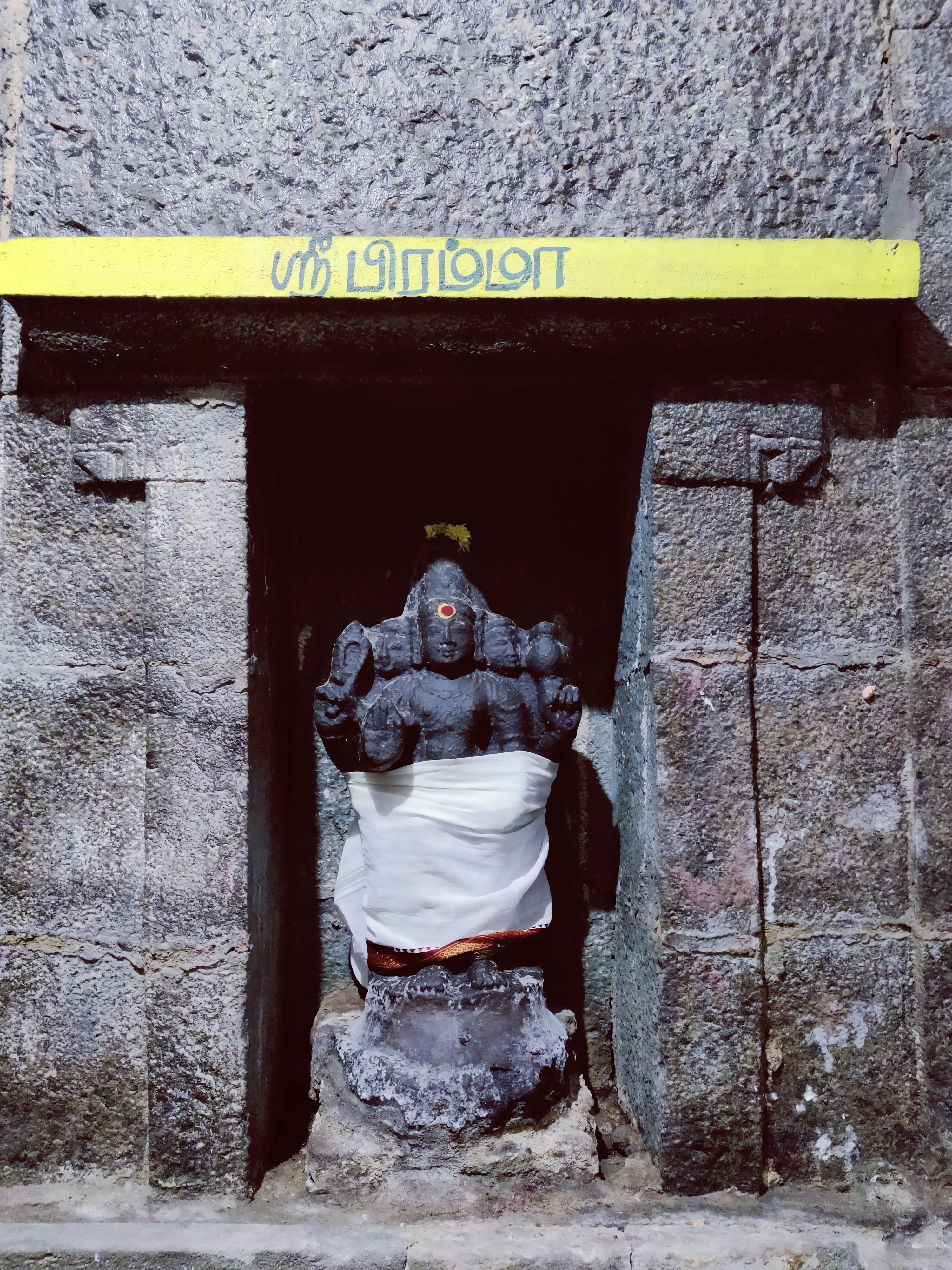


A very old temple believed to be in existence from the Ramayana period as both the sons of Shri Rama, Lava and Kusha have worshipped this shiva linga when they were in exile along with Sita Devi after she was sent off to the forest by Shri Rama when she was pregnant as per Ramayana.
The current Ambal and moolavar Sannidhi is believed to be over 1500 years. The moolavar Lavapureeswarar is facing east and the moolavar sivalingam is on a grand square Avudayar and is really beautiful to see specially during Abhishekam.
Ambal was earlier called Sri Maragadhambikai and later has been changed to Sri Thripurasundari, but reasons are not known as to why this change was done. She is in a separate Sannidhi and just on the left of Shivan Sannidhi facing east, which represents the Kalyanam kolam.
The inner praharam has Navagrahm Sannidhi also. We can see 63 Nayanar Vigraham. Both swamy and Ambal ghostam has beautiful Vigrahams and looks like has been constructed very much according to the earlier agama sasthras.
Contact: Daily one kala pujai is done and the Kurukal Sri Narasimhar can be reached on 7502543882 and the main Kurukal Pichumani can be reached on 9840139072
Sri Agastheeswarar Temple, Alathur, Thiruporur


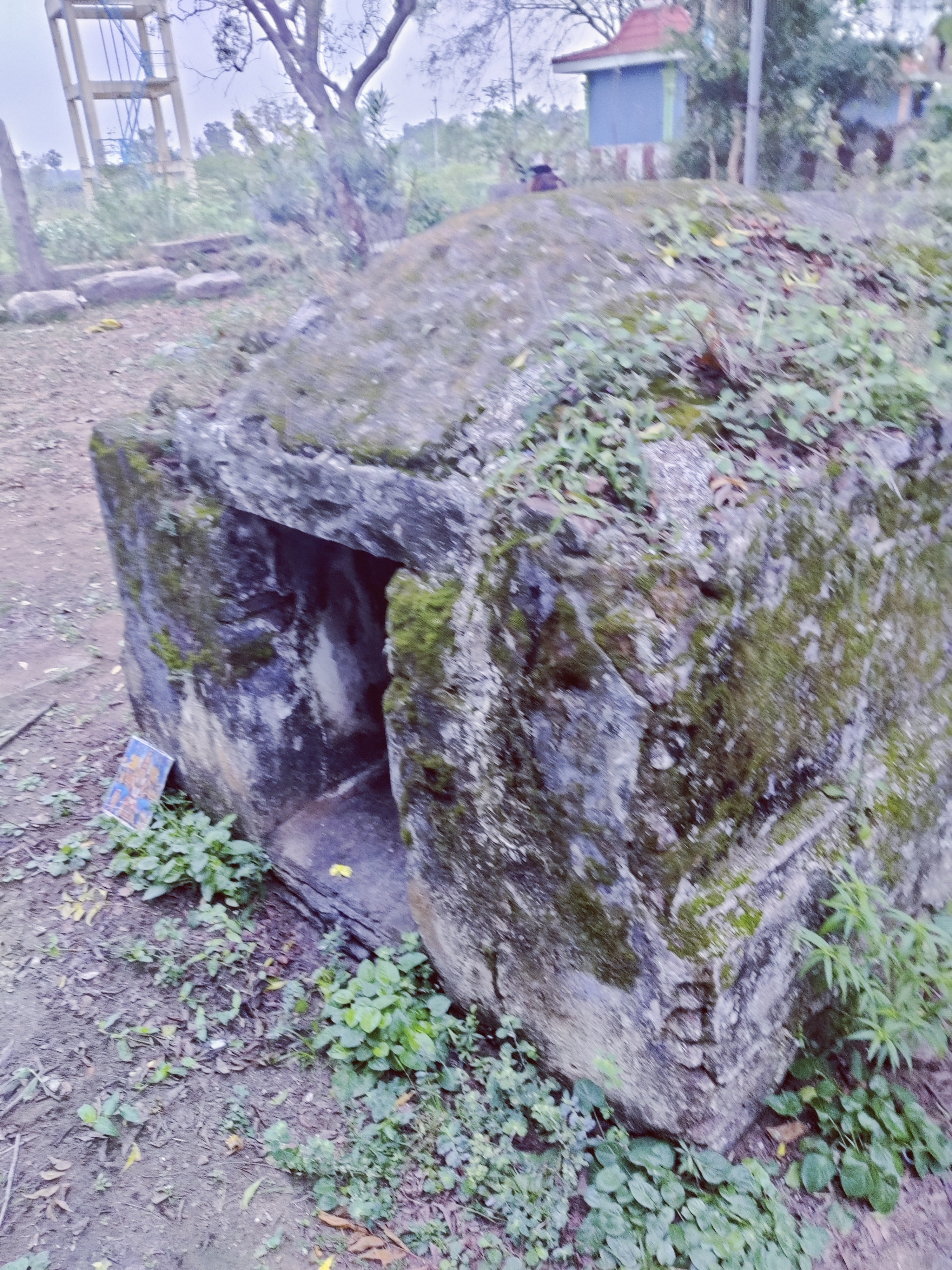


Sri Mallikarjuna Swamy Temple, Srisailam, Andhra Pradesh


Moolavar: Sri Mallikarjuna Swamy
Amman: Sri Brahmaramba
The only padal petra sthalam in the state of Andhra and one of the 12 Jyothirlings in India. The temple is at an altitude of over 1500 ft. above the Sea level in the picturesque natural environment in the Northern most part of the Nallamalas hill range.
The Temple built in 14th Century and the walls are carved with depictions of elephants hunting scenes and Lord Shiva in different manifestations. Apart from the main temple there are other places like Sikhareswaram, the gates of Heaven, Hatakeswaram and PalaDhara – PanchaDhara, Sakshi Ganapathi, Sivaji spurthikendra, Pathala Ganga
When Shiva and Parvati decided to find suitable brides for their sons. Shiva got Buddhi (intellect), Siddhi (spiritual power), and Riddhi (prosperity) married to Ganesha. Kartikeya on his return was enraged and went away to stay alone on Mount Krauncha in Palani in the name of Kumara brahmachari. On seeing his father coming over to pacify him, he tried to move to another place, but on the request of the Devas, stayed close by. The place where Shiva and Parvati stayed came to be known as Srisailam
There are inscriptional evidence from the Satavahana dynasty which place the temple to be existent from the 2nd century. Most modern additions were done during the time of king Harihara I of Vijayanagara Empire.The veerasheromandapam and paathalaganga steps was constructed during the time of Reddi Kingdom.
The temple complex covers 2 hectares and houses four gateway towers known as gopurams. The temple has numerous shrines, with those of Mallikarjuna and Bhramaramba being the most prominent. The temple complex houses many halls; the most notable is the Mukha Mandapa built during the Vijayanagar period. The temple is situated facing East. The center mandapam has several pillars, with a huge idol of Nadikeshwara. The temple is enclosed by tall walls measuring 183 m (600 ft) by 152 m (499 ft) and 8.5 m (28 ft) tall. There are a number of sculptures in the precinct each rising above another. The Mukamandapa, the hall leading to the sanctum, has intricately sculpted pillars. The shrine where Mallikarjuna is housed is considered the oldest in the temple, dating back to the 7th century. There is a Sahasra linga (1000 linga), believed to have been commissioned by Rama and five other lingamsbelieved to have been commissioned by Pandavas. A mirror hall in the first precinct has images of Nataraja.
Sri Agastheeswarar Temple, Sozhipalayam, Thiruvallur


Moolavar: Sri Agastheeswarar Temple
Amman: Sri Akhilandeswari Ambal
A beautiful temple in the village of Sozhipalayam, and is dated back to over 600 years. The old temple must have been constructed during the chola period and hence this place itself is called Cholavaram.
The temple has a big praharam and swamy is facing east and Ambal is facing south in a separate sanndhi. In the praharam we can see Ganapathy and Subramaniam Sannidhi.
Contact: The temple opens daily but not any particular timing so we need to call the kurukal Mr.Ravi at 70104 75486 and fix timings
Sri Sarva Sitheswarar temple, Madipakkam


A south facing small temple placed under a shed. When they dug to construct a tank, there was a small lingam found and they placed under this shed. Lord was named as Sitheswarar as he blesses us for all education related improvements. Magilam tree is the sthala viruksham here. Srinivasan who stays near this temple takes care of it and he can be reached at 9840931980.


No comments:
Post a Comment