


Moolavar: Sri Panchavarneshwarar Swamy
Amman: Sri Thiripurasundhari Ambal
A very beautiful old temple and believed to be one of the Pancharanya Thalam located in and around Chennai and Thiruvallur.
Temples surrounded by forest are usually called Aranyam thalam or Kaatu Thalam. Accordingly Chennai and Thiruvallur is sorrounded by 5 Aranya Tham or Kattu Thalam, those are -
Thiruvalangadu (Alangadu),
Tirupasur (bamboo forest),
Poondi (Ilantaikadu) known as Tiruvenpakkadu
Tiruvilkolam (Darpaikadu) and
Eekadu (Echangadu
All these 5 kshetrams are revered as Pancharanya Thalam. Among these, except Ekkadu Talam, others fall under Devar Padal Petra sthalam.
Perhaps, even Eekadu temple also must have been praised in the Padhikam and traces could not be found yet. However, Ekkadu has the same mythological significance as the other padal petra sthalam around.
Lord Shiva, who graces the sanctum sanctorum of this temple, appears in five colors in the early morning, mid morning, noon, afternoon and evenings and showers his blessings to all.
The mythology around this temple says that when Kubera poured nectar from the amrita kalasa in his hand, a Shiva linga drenched in nectar emerged from that place. All the gods including Kubera worshiped it. According to the legend, the Lord accepted their request and appeared at this place.
Bhogar, one of the eighteen Siddhars, is believed to have mixed Navapashanam on this shivalingam and drinking the abhishekam water or milk poured on to this lingam would cure inexhaustible pain.
Contact: Temple person Ramesh can be contacted on 7200066990 / 9940859958
Sri Uthandeeswara swamy Tenple, Uthandi, ECR, Chennai


Moolavar: Sri Uthandeeswara swamy
Amman: Sri Meenakshi Ambal
A very recent temple and is believed to be built over 35 years ago on the main road of ECR. The praharam has two main Sannidhies one for Sri Rajaganapathi and one for Sri Meenakshi Ambal Samedha Sri Uthandeeswara swamy. The moolavar Uthandeedwarar is along with Meenakshi Ambal in the same Sannidhi next to each other.
The temple is facing west and very well maintained and is very clean. The Rajaganapathi Sannidhi ghostam has Vignaganapathi, Bala Ganapathy and Yoga Ganapathy with dhandam in one hand. Swamy ghoshtam has Durgai, Mahavishnu and Dhakshinamoorthy.
Contact: Daily the temple is opened by 7 am and one kala pujai is performed. The temple Kurukal Sri Hari can be reached at 9043671945
Sri Agastheeswarar Temple, Vengudi, Kanchipuram


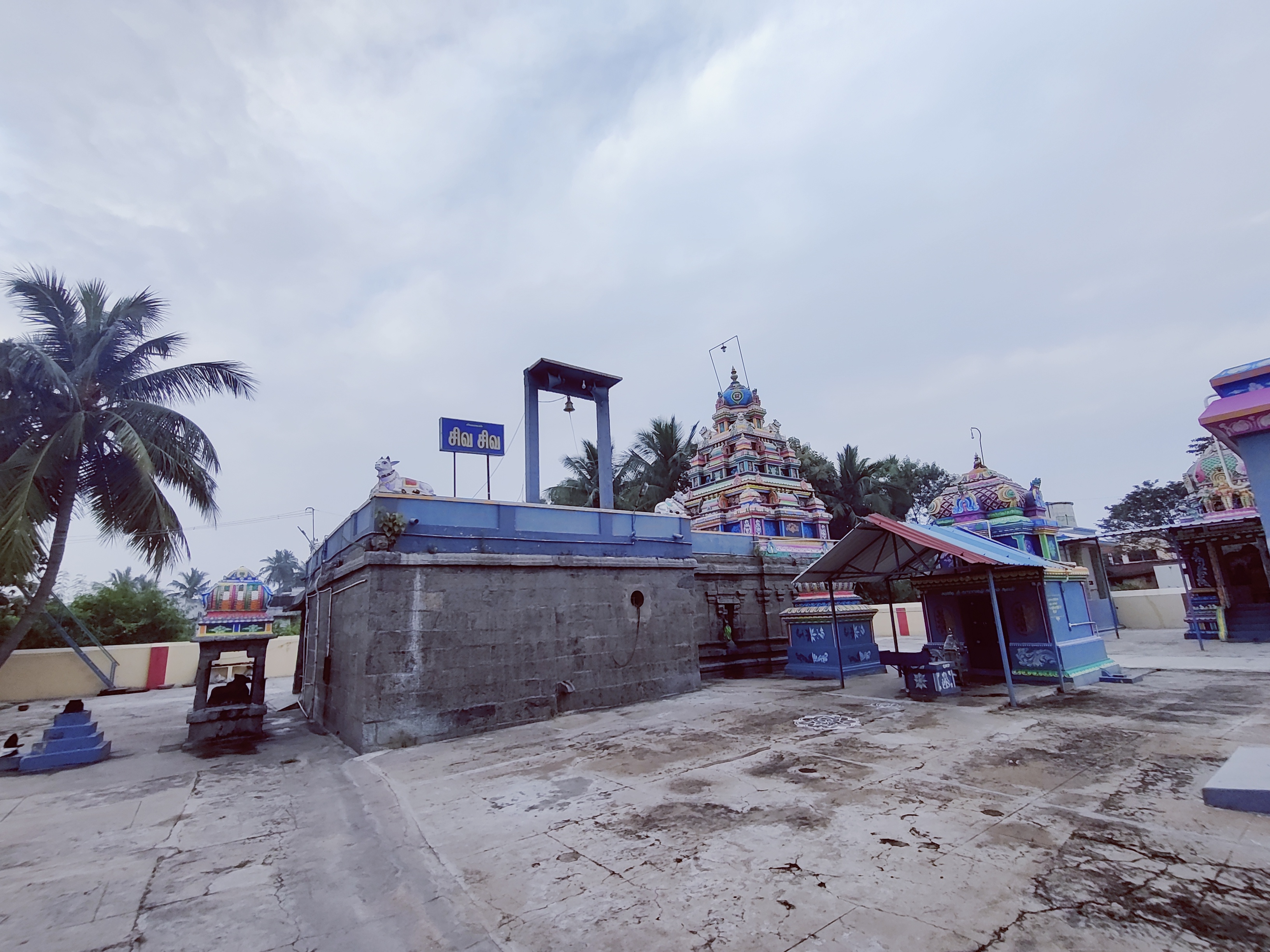


Sri Paanjaleeswarar Temple, Paanjalapattu, Sriperumbudur


Moolavar: Sri Paanjaleeswarar
Amman: Sri Parvathambigai
A beautiful temple in the village of Paanjalapattu, it is said that many years ago a small sivalingam and a small Nandhi was being worshiped by a brahmin for generations and after he crossed over 100 years of age had given the lingam to the current family here who has built a temple now.
The small sivalingam is under the main shivalingam now and the small Nandhi can still be seen in front of the main Nandhi.
They also told an instance that during a heavy rainy day lightning hit the temple and the sudhai Vigram of swamy on top of the main mandapam took the hit of the lightning but with just a small hole in the arch nothing happened to anyone or anything to the temple. It’s really a miracle and you can still witness the small hole in the arch above the sudhai vigraham on the mahamandapam.
Contact: The temple is open by 6 am and the priest Kodhandaraman can be reached on 98942 83365
Sri Vaali-sera Paleeswarar Temple, Alapakkam, Porur, Chennai


Sri Vaali-sera Paleeswarar Temple, Alapakkam, Porur, Chennai
Sri Vaali-sera Paleeswarar Temple, Alapakkam, Porur, Chennai
Sri Agatheewarar Temple, Manaparai, Karur


Sri Abhimuktheeswarar Temple, Nenmeli, Chengalpattu


Moolavar: Sri Abhimukhtheeswarar
Amman: Sri Thripurasundari Ambal
A good 2500 years old temple and is said he built by the Cholas and also Thirupani has been done by the Cheras as well. The moolavar is facing east and the temple is located in the North East corner of the village.
The moolavar is believed to be providing Mukthi to all the dead ones here as he faces the funeral ground which is not away from the temple. And hence the name Abhimukhteeswarar.
The old structure has been retained as it is and renovated really beautifully. The temple is open from 7 am.
Contact: The temple kurukal Sri Subramanian can be reached on 9789181873 and daily one kala pujai is performed.
Sri Agastheeswarar Temple, Kilambakkam, Thiruvallur


Moolavar: Sri Agastheeswarar
Amman: Sri Agilandeswari
We had the privilege of doing annabhishekam to the moolavar.
A good 1000 years old temple which is believed to be built by Raja Raja Chola I. The stone inscription found shows the details of the donations made towards lighting lamps for regular puja.
The earlier name of this village has been Kalanthai Nagar and it is said that sage Agasthyar has installed the Shivalingam and has worshiped him here in this village. It is also said that he stayed in this village and performed many Urchavam for the moolavar here.
The moolavar resembles the moolavar of Annamalai Sri Annamalayar. Ambal Akhilandeswari faces south and she is seen with a third eye in the forehead. This eye is clearly visible when milk Abhishekam is performed. The outer praharam has Pillayar, Naganatha swamy, Valli Devayanai Sametha Subramania Swamy and Navagraha Sannidhi.
The famous Urchavam in this temple is Arudhra Dharshan and Natarajar comes out for a procession in the evening. All pancha murthy porapadu happens.
Contact: Daily one kalapujai happens and the the Kurukal Sri Karthik can be reached +91 95512 07784
Sri Vayaaleeswarar Temple, Manimangalam, Kanchipuram


A very old Sivalingam which is between the famous Dharmalingeswarar Temple and Kailasanathar in the famous village of Manimangalam. This village a historical significance since the time of Pallavas. History records the famous Manimangalam war as well.
This should have been a famous temple 1500 years ago. The remains of the broken temple can be found around the current shrine. The old Nandhi has been broken and looks like has been cut off with a sword. The moolavar Vayaaleeswarar is facing east and is looking at lush green fields. There is no Ambal and a new Nandhi has been installed. The local villagers have set a small shed and daily puja is performed.
A new temple needs to be constructed and villagers are seeking help towards this.
Contact: The local caretaker a lady named Kalaiselvi can be reached on 7418284145.
Sri Agastheeswarar Temple, Kilambakkam, Thiruvallur
Moolavar: Sri Agastheeswarar
Amman: Sri Agilandeswari
We had the privilege of doing annabhishekam to the moolavar.
A good 1000 years old temple which is believed to be built by Raja Raja Chola I. The stone inscription found shows the details of the donations made towards lighting lamps for regular puja.
The earlier name of this village has been Kalanthai Nagar and it is said that sage Agasthyar has installed the Shivalingam and has worshiped him here in this village. It is also said that he stayed in this village and performed many Urchavam for the moolavar here.
The moolavar resembles the moolavar of Annamalai Sri Annamalayar. Ambal Akhilandeswari faces south and she is seen with a third eye in the forehead. This eye is clearly visible when milk Abhishekam is performed. The outer praharam has Pillayar, Naganatha swamy, Valli Devayanai Sametha Subramania Swamy and Navagraha Sannidhi.
The famous Urchavam in this temple is Arudhra Dharshan and Natarajar comes out for a procession in the evening. All pancha murthy porapadu happens.
Contact: Daily one kalapujai happens and the the Kurukal Sri Karthik can be reached +91 95512 07784
Sri Vayaaleeswarar Temple, Manimangalam, Kanchipuram
A very old Sivalingam which is between the famous Dharmalingeswarar Temple and Kailasanathar in the famous village of Manimangalam. This village a historical significance since the time of Pallavas. History records the famous Manimangalam war as well.
This should have been a famous temple 1500 years ago. The remains of the broken temple can be found around the current shrine. The old Nandhi has been broken and looks like has been cut off with a sword. The moolavar Vayaaleeswarar is facing east and is looking at lush green fields. There is no Ambal and a new Nandhi has been installed. The local villagers have set a small shed and daily puja is performed.
A new temple needs to be constructed and villagers are seeking help towards this.
Contact: The local caretaker a lady named Kalaiselvi can be reached on 7418284145.
Sri Pushpagiriswarar Temple, Pammal, Chennai


Moolavar:Sri Pushpagiriswarar
Amman: Sri Pushpambikai
A very old temple in the busy area of Pammal. The first inscription is dated to the 35th year of the reign of Virarajendra alias Kulotunga Chola III. The probable date in the English calendar is 3rd November 1210 CE. The inscription refers to an endowment of land to the nearby.
It is said that the Ranganathar from Thiruneermalai has done the prathisht of this shivalingam. The footprint of Ranganatha is found. It is a highlight of this temple. The icons representing the holy symbol called Namam, conch, discus, Hanuman, and Garuda are found around the sacred footprint.
This temple is on a very small hillock. Although the temple is completely renovated, the bottom portion of the wall where the inscriptions are found is not disturbed.
The second inscription is incomplete and dated to the 21st year of the reign of Rajaraja Chola III, which is in 1227 CE. It mentions that Pammal belonged to Kulotunga Chola Valanaattu Surathur Nadu sub-division of Puliyur Kottam in Jayankonda Chola Mandalam. It talks about the endowment for burning a lamp at Azhaga Perumal temple at Pammal. (Reference MCC 1972/03; Kalvettu - 65 January 2005 edition).
Contact: Daily morning the temple opens by 9 am and the Kurukal Sri Sriram can be reached on +91 88389 03366
Sri Thiruneetreshwarar Temple, Padiyanallur, Thiruvallur


Moolavar: Sri Thiruneetreshwarar
Amman: Sri Thriloganayagi
A good 1000 years old temple believed to be built during the Pallava period and oldest temple of all in Padiyanallur, the name Padiyanallur for this village came because, one of the Nayanmar has sung a song in this temple. Hence the name Padiyanallur came for this village.
The name Thiruneetreshwarar has come as lord shiva after killing asuras has applied the ashes on his body and Thiruneer is the name for scared ashes and that’s how he got the name Thiruneetreshwarar.
It is said during the month of puratasi for initial few days sun rays directly fall at the feet of shivalingam here and this has been even written in Agasthyar Naadi a form of astrology.
It is also said that Agasthiar has sat in this temple has given upadesam to his devotees here.
Contact: Daily pujai are performed in the morning and Sri Shankar kurukal can be reached at 9840058107
Sri Vanniswarar Temple, Padapai, Chennai


Moolavar: Sri Vanniswarar
Amman: Sri Soundranayagi
A beautiful small temple attached to a Vanni Tree in the village of Padapai. It is said that this is over 300 years old and has always been under the Vanni tree. Locals have built a beautiful small Sannidhi.
Swamy and Ambal are in the vigraham form right above the sivalingam. The sivalingam is very unique and has both sivalingam and Nandhi carved in front.
It is also said that Sri Variyar Swamigal used to visit the Ganesha temple very next to this Siva tenple and this has been his favourite place. A separate Sannidhi for Variyar Swamigal is in the Ganesha temple.
Contact: Daily one kala pujai is performed and the priest kumaravel can be reached on 9790887233
Sri Vedapureeswarar Temple, Thiruvothur Village, Cheyyar, Thiruvannamalai


Sri Kopineswarar Temple, Thane, Mumbai, Maharashtra


Kopineshwar temple is believed to have been built during the reign of the Shilahara dynasty, which ruled over parts of Maharashtra from the 9th to the 13th centuries. The temple is dedicated to Lord Shiva, one of the principal deities in Hinduism.
The temple holds historical significance as it is said to have been visited by the famous Maratha warrior king, Chhatrapati Shivaji Maharaj. He is known to have paid homage to Lord Shiva at this temple during his rule in the 17th century.
Over the centuries, the temple has undergone several renovations and expansions to accommodate the growing number of devotees. The present structure of the temple reflects a blend of architectural styles, including elements of the Hemadpanthi style, which was popular during the Yadava dynasty in Maharashtra.
Kopineshwar Mandir is known for its beautiful carvings and sculptures that adorn the temple premises. The sanctum sanctorum houses the main deity, Lord Shiva, in the form of a Shivling (a symbolic representation of the deity). Devotees flock to the temple to seek the blessings of Lord Shiva and offer prayers.
The temple is also famous for its annual Mahashivratri festival, which is celebrated with great enthusiasm by devotees from Thane and the surrounding areas. During this festival, the temple is adorned with colorful decorations, and special rituals and prayers are performed to honor Lord Shiva.
Kopineshwar Mandir holds cultural and religious significance for the people of Thane and continues to be a place of worship and devotion. It stands as a symbol of the rich history and heritage of the region.
Sri Sivapureeswarar Temple, Sivayam, Karur


Sri Jalakandeswarar Temple, Aathur Village, Chengalpattu


Moolavar: Sri Jalakandeswarar
Amman: Sri Akhilandeswari
One of the 7 shiva temples around this beautiful village called Aathur in Chengalpattu district. The shivalingam and Ambal vigraham looks very old and estimated to be over 1000 years. It is said that the shivalingam was found under the ground while the road work was being carried out many years ago. The local villagers with the help with other local people installed this shivalingam and Ambal in a temple hut and started worshiping here.
After many years in early 90’s a proper structure was constructed and today the temple is in the right on the Aathur main road.
The other 6 temples around this village are-
Sri Muktheeswarar
Sri Vazhithunai Paneeswarar
Sri Swarnapureeswarar
Sri Muthupureeswarar
Sri Aadhilingeswarar
Sri Trishkarneeswarar
Contact: Daily one kala pujai is conducted and the Shivanadiyar Kishore can be reached on +91 7397714021
Sri Ambalavaneshvarar Temple, Angambakkam, Kanchipuram


Moolavar: Sri Ambalavaneshvarar
Amman: Sri Sivakamsundari Ambal
A beautiful temple on the banks of Palar river and is also known as the Uthira Chidambaram or Chidambaram of the north Tamil Nadu. This temple is said to be in existence even before 10th Century which is Rajaraja Chozha ( 985 – 1014 CE ) period. The Rajaraja–I, period inscription on a pillar records the gift of goats to light perpetual lamp. During Kulothungan period, the temple was renovated and an inscription records the donation of 96 kuzhi land to bring 2 pots of water to carry out daily abhishekam. Inscriptions are available up to Sadaya Varman Sundara Pandyan’s period.
The temple with Rajagopuram base may be 400 to 500 years old, built during Vijayanagara Nayaka period. The temple prakaram was found rebuilt at a latter stage. It was told that the temple has 60 acres of land and a 3 floor House at Chennai Purasawalkam. But no income is received from the property. There are two 20th Century inscriptions found in the temple which records the gift of lands ( one by a person .thaiappa, from Mudaliar Community belongs to Attuputhur Village and an another by a Vedagiri Mudaliar’s son Nallanna Mudaliar. It was learnt the the person, who donated the land belongs to this place and he moved to Attuputhur Village, about three generations before ) with survey numbers for conducting regular poojas.
A legend says that a Brahmin was on his way to Kashi to immerse his father’s remains / asthi, when he crossed this place with the pot of asthi and worshiped Lord Shiva of this temple from outside itself. After which he sat to take some rest and when he opened the asthi pot found that it turned to fragrant Jasmine flower and performed his tharpanam at this place itself. Hence this place obtained its name as Angambakkam as the Asthi or body angam changed to flowers and is also considered similar to Kashi, to perform tharpanam to the ancestors.
The temple is facing east with a Rajagopuram base ( mottai Gopuram ) with two prakaras. Dwarapalakas are in the mukha mandapam at the entrance of inner prakaram. Nataraja with Sivagami & Urchavars / procession deities are in the artha mandapam.
In Koshtam Vinayagar, Dakshinamurthy, Mahavishnu, Brahma and Durgai. In Prakaram Nalvar, Suryan, Somaskandar, Lakshmi, Kasi Viswanathar and Visalakshi, Murugan, Vishnu, Sri Valli Devasena Subramaniar, Chandikeswarar and Navagrahas.
Ambal Sri Sivakama Sundari is in a separate sannidhi facing South.
Contact: The temple is opened in the morning and evening and Sri Sundarasekaran can be reached on 9600678032
Sri Vaadamaleeswarar Temple, Oragadam, Thirukazhukundram


Moolavar: Sri Vaadamaleeswarar
Amman: Sri Amrithavalli Ambal
A 7th century temple built by the Pallava king named Narasimha Pallavar 2. It’s situated on a small hillock and can be reached by climbing a 100 steps.
Sri Rama once was doing penance to get the Dharshan of lord shiva but for many months together he never got his wish fulfilled, but instead he heard a voice from the skies which was of shiva himself. The voice said that daily he should pray the lord with one kind of flower and the day he sees the flower with which he has worshipped is not dried and remains fresh, that day he would be blessed with lord Shiva’s dharshan.
So as per the instruction Rama wordshiped the shivalingam here with one type of flower a day. Once when he worshiped the lord with Jasmine flowers called Malli poo, and he sees that the flower did not dry at all. So since then the moolavar’s name became Vaadamaleeswarar, meaning the lord who was worshiped with jasmine flower which will not dry.
After this episode lord Shiva gave Dharshan to Sri Rama and Rama kept a jasmine flower on his ears and took a pradhshina of shiva in this place. Even today it’s a practice amongst devotees to take one jasmine flower which has been used for the puja and keep it on that earlobe and take a pradhakshinam of the temple. It is also said that all ear related problems are solved by doing this.
It is said that people who have family issues, those who do not have kids, those ladies who suffer from abortiion or have weak uterus and unable to conceive come here and have a bath in the temple tank below the hill, wear yellow coloured clothes and take Malli poo malai or Jasmine flower garland to be offered to lord Vaadamaleeswarar, so that their life is not dry and hopes to be as sweet as the fragrance of a jasmine flower.
Contact: The temple is daily opened at 6 am and Sri Murthy is the contact person who can be reached at 9600884203
Sri Jalakandeswarar Temple, Nenmeli, Vallam, Chengalpattu


Moolavar: Sri Jalakandeswarar
Amman: Sri Akhilandeswari Ambal
A beautiful small temple and completely built in granite by a local devotee called Ramu Nayakar. It is said that a munivar named Swamymunivar had come in the dreams of this devotee and instructed him to build a shiva temple in his village. So based on this dream, this temple was built like 8 years ago and Kumbhabhishekam was performed in April 2015.
The temple faces the east and right on the Nenmeli road. Ambal is facing south in a separate Sannidhi. You have separate Sannidhi for Valampuri Vinayagar, Valli Deivayanai Samedha Subramaniaya swamy. In the ghostham you can see Narthana Vinayagar, Dhakshinamoorthy, Mahavishnu, Bramha and Durgai. Also Chandikeswarar was placed in the ghostam of Subramanian such that he is facing the moolavar. You also have a separate Sannidhi for Kalabyravar and Navagrahas.
Daily one kala puja is performed by Sri Ramu himself and he can be reached on 8940390595
Arulmigu Peruvudaiyar Kovil, Thanjavur


Arulmigu Peruvudaiyar Temple, Gangaikonda Cholapuram, Ariyalur


Sri Vedapureeswarar Temple, Madhura Melacheri, Chengalpattu


Moolavar: Sri Vedapureeswarar
Amman: Sri Lalithambigai Ambal
A beautiful Temple surrounded by a lake on three sides. It is said that the moolavar was found buried under the ground and the villagers along with the support and guidance of Chrompet Sri Kannan and the grace of kanchi Periyava, the temple was constructed and Kumbhabhishekam was performed. Nobody know how old the temple must have been here.
Moolavar is facing east and Ambal is facing south. On the ghostam you can see Dhakshinamoorthy, Mahavishnu and Bramha. They have also found a good four feet Maha Vishnu Vigram while digging the earth for sone work. They have just kept it and awaiting support to install it and build a small Sannidhi.
Contact: Daily one kala pujai is performed and the temple contact person is Sri M Muniswamy Nayakar and can be reached on 8870613413, 9976305974 and Parthiban can be reached at 9444865777
Sri Kasi Viswanathar Temple, Kollumedu Village, Thiruvallur


Moolavar:Sri Kasi Viswanathar
Amman:Sri Kasi Visalakshi Ambal
A 1000 years old temple and has been rennovated in the year 2012. The moolavar Kasi Viswanathar is facing east is on a square Avudayar. This signifies that sidhargal must have worshipped him many years ago.
Ambal Kasi Visalakshi is facing south and both the Sannidhis are within the maha mandapam. Pillayar and Valli Deivayanai Samedha Murugan can be seen. Visalakshi is exactly like how we see in Kasi, with Japa malai in her right front hand and kamandalam in her left and on the right top hand she is holding a sivalingam and left hand has a small Pillayar. Behind the moolavar Ambal there is another Ambal vigraham.
It’s a beautiful temple and is maintained by Lingayat community from north Karnataka and daily pujas are performed both in the morning and evening.
Contact: The priest Sri Veeranna can be reached on 9444533173
Sri Vilvanatheeswarar Temple, Thiruvallam, Vellore


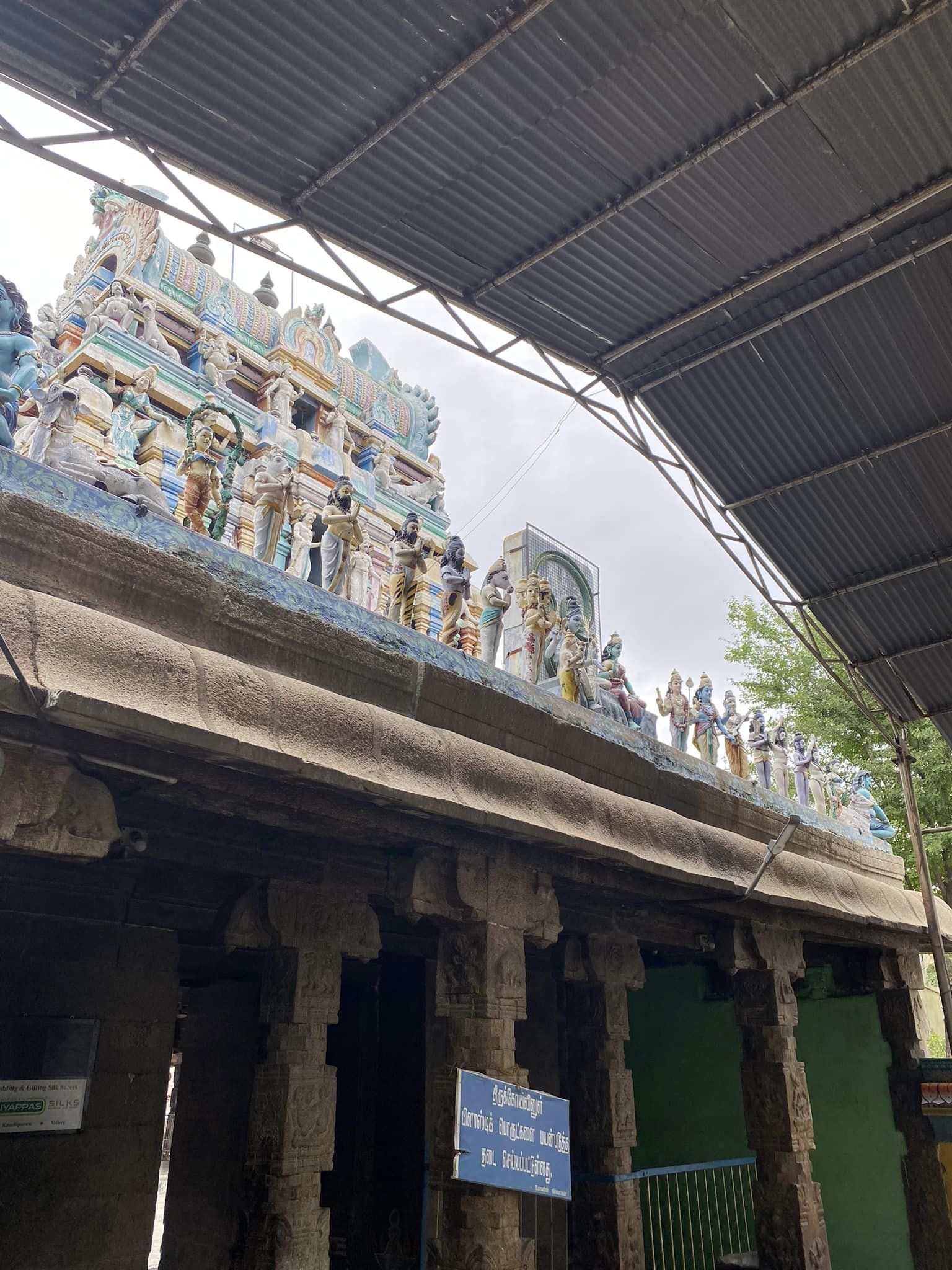


Moolavar: Sri Vilvanatheeswarar
Amman: Sri Vallambikai
A padal petra sthalam, and one of the 276 thevara padal petra sthalam and is considered as the 242nd temple in the list. Saint Thirugnanasambandhar has sung hymns on Sri Vivanatheeswarar in the 7th century. As per the inscriptions in the temple, the temple is referred to as Theekali Vallam. In the verses of Sambandar, the place is referred as Thiruvallam, while in the 15th century Arunagirinathar refers the temple as Thiruvalam and the presiding deity as Thiruvallam Udaiyar. Ambal is also knows as Dhanumadhyambal.
A good 1000 years old temple from the Chola period and is the temple occupies an area of around 4 acres. This place is believed to have been a Vilva forest (Vilavanam). There seemed to be a termite hill where a cow used to milk water. The termite hill drained and eventually became a Lingam, around which the current temple is built.
According to a legend, Narada handed over a sacred mango to Shiva and wanted him to hand it over to a single person without cutting the fruit. Vinayagar and Murugar, the sons of Shiva, were fighting for the fruit. Shiva held a competition, stating that whoever circled the world three times would receive the fruit. Muruga immediately started on his peacock mount around the world. Vinayaga, who had a smaller rat mount, circled his parents Shiva and Parvathi three times and sought the fruit. He convinced his parents that for him, his parents were his world and he attained the experience of coming around the world by circumambulating them.
Since Pillayar is believed to have come around (called valam in Tamil) his parents at this place, it came to be known as Thiruvalam, which with time became Thiruvallam.
According to another legend, a priest in the temple was troubled by a giant named Kanja as he brought water from the nearby Kanjan mountain every day. He prayed for help, and Shiva sent the bull Nandi to guard the priest. As per another legend, Shiva is believed to called nee vaa meaning come here, on account of which the river came to be known as Neva river. It is also called Ponnai river.
The temple houses the samadhi of Sanakar, the disciple of Dakshinamoorthy in front of the image of Shiva. The temple is also the place where Sivananda Mouna Guru Swamigal was doing penance. The Dwarapalas on both sides on the entrance of the sanctum are of architectural importance. One of them is unique and is sported in dance posture with a raised hand. There is a shrine of Pathaleswarar in the first praharam here the shrine of Lingam is located underground.
Sri Sivanandheeswarar Temple, Thirukandalam, Thiruvallur


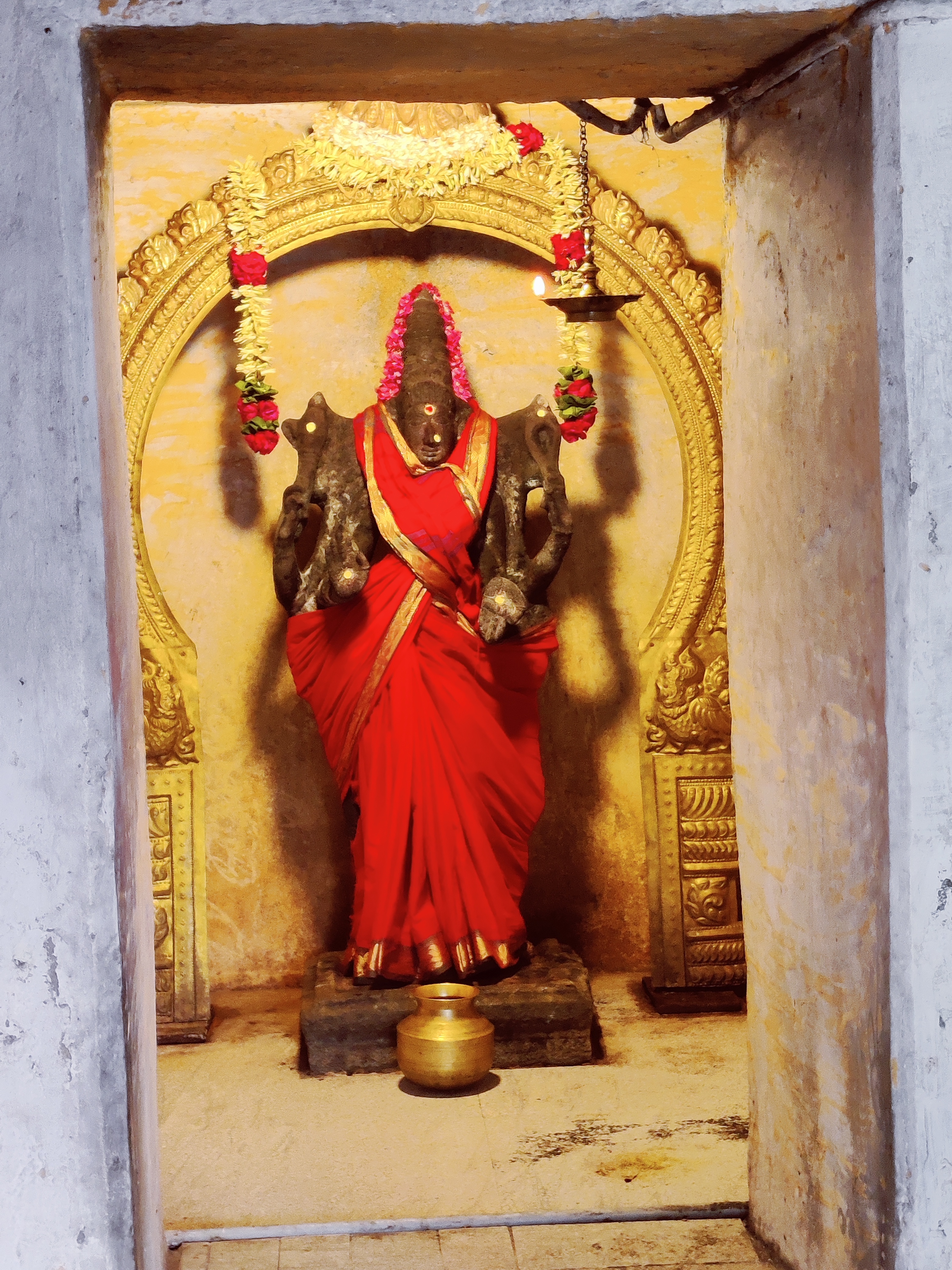

Sri Valeeswarar (Koyyamalarnathar) Temple, Kuranganilmuttam, Tiruvannamalai


Sri Bhuthapureeswarar Temple, Sivanthangal, Sriperumbudur


Sri Visveswaraswamy Temple, Kovilpalayam, Coimbatore


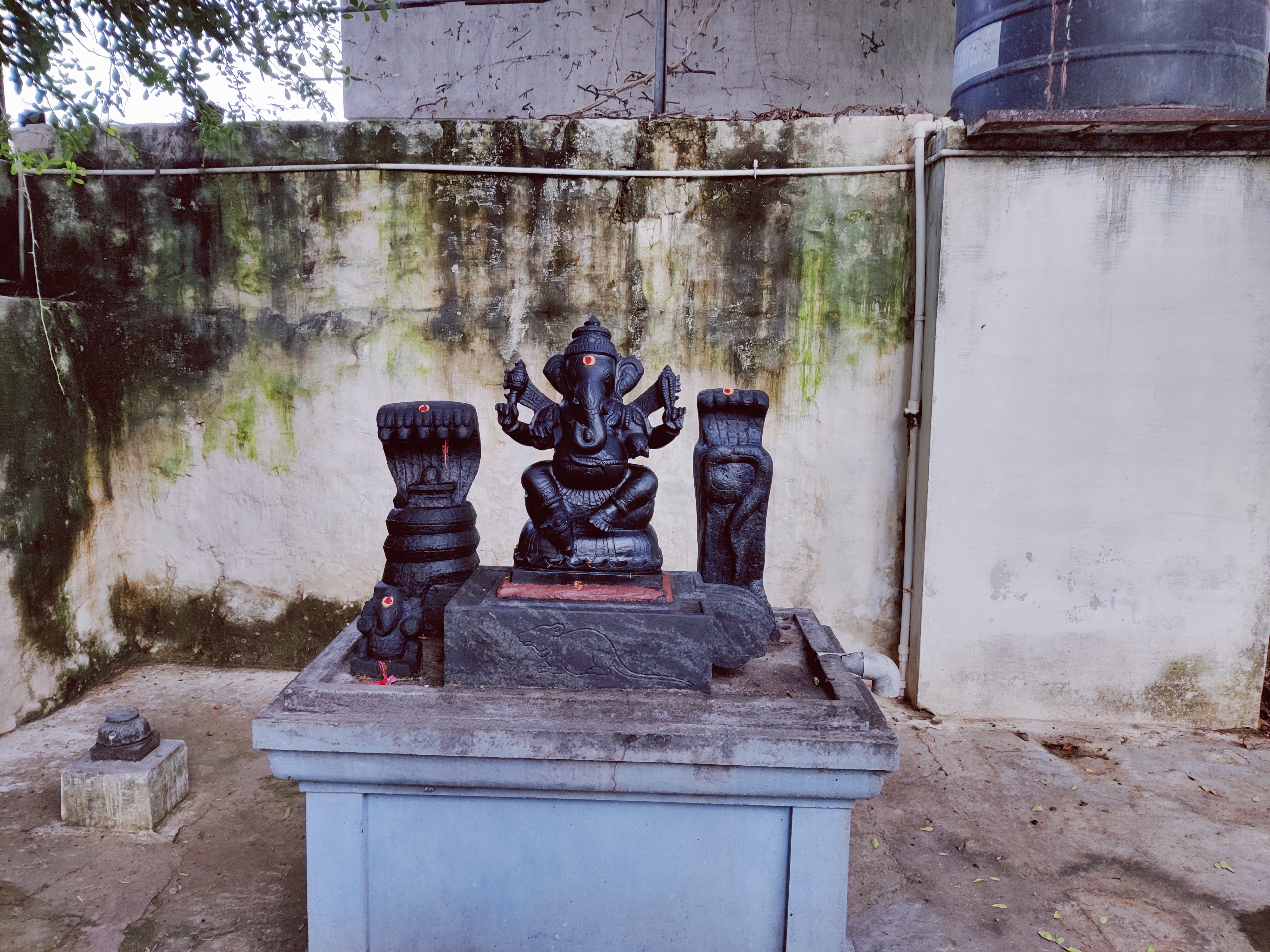


Moolavar: Sri Visveswaraswamy
Amman: Sri Vishalakshi Amman
A very old temple reconstructed again in 1916 without damaging the old structure.
Very small sivalingam facing east and elegant ambal in a 3d structure. Vinayagar, Dhakshinamurthy, Lingothbhavar, Bramha, and Sandhikeswarar and murugan idols placed in the prakaram.
Old pillars and stone structure temple, nicely maintained by locals. 2 Kaala poojai happening on a daily basis. Big Vilvam tree is appearing as sthala viruksham.
Sri Muktheeswarar Temple, Edamachi, Uthiramerur, Kanchipuram


Moolavar: Sri Muktheeswarar
Amman: Sri Kamakshi Ambal
A good 650 years old temple which apparently been built by the Vinayagar king called Thiruvarangan. May be it was earlier built by Pandya kings as we see the fish symbol on the walls. It’s a beautiful temple completely built in granite stone completely in the Vijayanagar Architecture.
The temple is facing east with a beautiful backdrop of a hill which locally is called as Annamalai. There is shiva temple on top of the hill but there is no moolavar there. Apparently the moolavar was brought down long ago due to sone superstition and now they are planning to reinstall that sivalingam.
The ghosta vighrahams are very beautiful and there is a separate Sannidhi for Pillayar called Selva Ganapathy and Sri Valli Deivayanai Samedha Sri Arumugan which is very beautiful to see.
The Muktheeswarar temple is due for Kumbhabhishekam. The temple is taken care by local young boys and daily one kala pujai is performed. The temple opens by 6 am.
Contact: Sri Vimalraj can be reached on 93619 44051
Sri Kaaraneshwarar Temple, Kakkalur, Thiruvallur


Moolavar:Sri Kaaraneshwarar
Amman:Sri Shenbagavalli Ambal
A beautiful huge shivalingam which is says to be over 1000 plus years was found buried on the banks of the temple tank, this was taken out and was kept in a temporary make shift shed for few years. During that period a huge snake had come and removed its skin on top of the sivalingam. This skin has been framed and kept in the temple.
With the support of the villagers and many donors, a beautiful temple was built for him. The moolavar Sri Kaarneeshwarar is on a huge square Avudayar signifying that it just have been installed and worshiped by sidhars thousand years ago. The Nandhi and Byravar are also belonging to the same era and the archeological department is in the process of finding its antiquity.
The moolavar’s alangaram is done in a such a way that it looks like he is facing the North East or Eshanya corner. Shani Bhagwan has a separate Sannidhi here and also a separate temple itself for Sri Ayyappan can be found in the outer praharam. Ambal Shenbagavalli faces south and has a Nandhi in front of her like we see on temple of the Chola and Pandya period.
The temple’s entrance is in the west but the main shrine faces the east and overseen by the big temple tank. It is said that when Ajaneyar was carrying Sanjeevani parvatham a piece of rock fell in this temple tank, a small piece of which they have kept in front of the Nandhi Mandapam.
Very beautiful temple and a must visit for everyone. Daily one kala puja happens but the temple is open both in the morning as well as evenings. Weekdays it’s opened by 6:30 am and closes early but weekends it’s opened by 7 am.
Contact: Sri Rajesh who is the care taker can be reached on 9894528333
Sri Mahalingeswarar Temple, Uthukadu Village, Kanchipuram


Moolavar: Sri Mahalingeswarar
Amman: Sri Periyanayaki Ambal
A good 1000 year old temple which is believed to be built by Rajaraja Chola in the beautiful serene village of Uthukadu. The name Uthukadu has come up because you can find water sources wherever you dig the earth (such sources is called Uthu in Tamil).
The moolavar Sri Mahalingeswarar is on a round Avudayar and facing east, Ambal periyanayagi is facing south and both in the inner praharam.
In the ghostam the murthies are very unique especially Sri Dhakshinamoorthy who is seen with a Veenai in his hand. You can see Pillayar and Valli Devasena Samedha Subramanian on either side in the Maha mandapam.
The temple was said to be completely ruined in the past and the local villagers have rebuilt it with the same granite stones and pillar. Very well maintained and beautiful temple and a must visit.
This village is also famous for Sri Uthukadu Subramaniam who was a profound person in the Carnatic music world and has written many famous Carnatic songs in Tamil like Thaya Yashodha, Alayipaydhe etc.
Daily one kala pujai is performed and it’s open since 6:30 am onwards through the day and closes only by 8 pm.
Contact: Sri Siva who is the person taking care of this temple can be reached at +919787088964 and Kurukal Saravanan can be reached on +918940878834
Sri Picheeswarar Swamy Temple, Mamundur, Thiruvannamalai


Sri Panchavarna swamy Temple, Uraiyur, Trichy


Sri Mallikeswaraswamy Temple, Ashok nagar, Chennai


Moolavar: Sri Mallikeswaraswamy
Amman: Sri Maheswari ambal
East facing Sivan temple.
It was told that Sri Thopa Swamigal, a siddhar stayed here and did pooja to Sri Mallikeswarar about 400 years before. His jeeva Samadhi is at Saidapet, near Vellore.
To prove it’s antiquity, the roof of the sanctum was built with granite stone. Completely modified during the present renovation and tiles were laid on the walls and floors and kumbhabhishekam was performed during 2016.
The temple is facing east with a 3 tier Rajagopuram. The sanctum sanctorum consists of Sanctum, Artha mandapam and muka mandapam. Nandhi and balipeedam are in the mukha mandapam. In Koshtam, Veerabhadra, Dakshinamurthy, Lingothbavar, Vishnu, Brahma, Saraswathy, Mahalakshmi and Durgai. The sanctum is in a rectangular shape. Sri Mallikeswarar is at the center, Sri Sakthi Ganapathy is on the right and Sri Visalakshi Samedha Sri Viswanathar ( in the same sanctum ) is on the right. Sri Maheswari is facing south.
Sri Agastheeswarar Temple, Ulavoor, Kanchipuram


Sri Oondreeswarar Temple, Thiruvenpakkam (Poondi), Thiruvallur


Sri Mettraleeswarar Temple, Tirumettrali, Kancheepuram


Moolavar: Sri Mettraleeswarar
Amman: Sri Parasakthi Ambal
A padal petra sthalam and is 2nd Shiva Temple in Thondainadu region praised in Thevaram out of the 276 padal petra sthalam. Saint Tirunavukkarasar, Saint Gnana Sambandar and Saint Sundarar all 3 have sung praises on Thiru Mettraleeswarar.
Saint Sundarar in his Thevaram hymn says that how he could praise a Lord other than Him gracing from Tirumettrali as he enters the heart sooner thought of as a light, sweet as honey and nectar. Saint Tirunavukkarasar praises Kancheepuram as a city of boundless education – Kalviyil Karai Illadha Kanchi Ma Nagar. Hence, worshipping Lord Shiva here the devotee is gifted with good education.
A good 1500 plus years old temple.Mettraleeswarar is a swayambumurthy facing west. Actullay there are two presiding deities in two separate sanctum sanctorums. The second moolavar is called Odhavurugeeswar and means Odha-singing, Urugu-melting, Easwarar- Shivan – Odhavurugeeswarar.
The history goes like this, Lord Vishnu while reclining in the ocean of milk had a desire to have the form of a Shiva Linga and requested Lord Shiva for the same, but Shiva told his inability to grant his wish. But Maha Vishnu did not give in and began penance on Shiva. Surprised at his determination, Lord Shiva told Vishnu that He could have His wish granted by performing the penance at this temple facing His Swayambu form, which is facing west. Lord Vishnu came to this place, began penance facing east looking at the lingam in a standing form after taking a bath in Vegavati River.
Saint Tirugnana Sambandar was visiting this place Mettraliyur at the same time, he saw Lord Vishnu standing in penance. The saint thought it was Lord Shiva himself by just seeing the back. Saint began singing in praise of the Lord. Vishnu in penance was moved by the divine melody and began to melt. He completely melted and got the Linga form that he wished for. But, his feet remained in the same place and even today you can have the Dharshan of the Mahavishnu Padham in this temple along with his lingam form at the sanctum sanctorum.
As Vishnu began to melt at the singing of the saint, the name Odhavurugeeswar came up for the 2nd shivalingam here.
Saint Gnana Sambandar who sang in praise of the Lord from the end of the street has his shrine there itself. As the saint is also known as Aludaipillayar and Sambanda Pillayar, the place is also named Pillayar Palayam. The place also has a name Pachimalayam.
Though Tirumettraleeswar is the principal deity, the Rajagopuram and the main entrance belongs to Odha Urugeeswarar.
Muyalagan, symbol of Ignorance under Lord Dakshinamurthy is on the left of the Lord differently against the right side. 100 Rudras, Seekandar, Veerabadra, Krodhar and Mandalathipathis, all totaling 116, had worshipped Lord in this temple.
As Mother Kamakshi is regarded as the only Mother Goddess in Kancheepuram, there are no Ambal Sannidhi in most of the Shiva temples here. But, this is one temple with an exception with Mother Parasakthi having her own Sannidhi facing east blessing the devotees with her sweet appearance. As Lord Shiva is facing west –Merku in Tamil- He is named Mettraleeswarar. The word Thali (Mettrali_ also means temple.
Contact: Sathish kurukal can be reached at 6383887910 and daily 2 kala pujai happens here
Sri Karpageswarar Temple, Mogappair west, Chennai


Moolavar: Sri Karpageswarar
Amman: Sri Karpagasoundari ambal
2000 yrs old shiva lingam. The avudaiyar is in square shape. The shiva lingam along with nandiyam perumal found in the ground while digging for some construction work
The local people constructed east facing temple along with the village kaval deivam Sri Pidari Amman. Instead of simham another Nandhi installed in front of Amman. Neem and peepal trees appear together as sthala viruksham. All prahara murthies along with Navagrahas have been installed in the appropriate places. And temple has been very well maintained. Coming under HR&CE department.
Sri Arambeswarar Temple, Ilambayankottur, Kanchipuram


Moolavar: Sri Arambeswarar
Amman: Sri Kanakakuchambal
A padal petra sthalam and is the 13th sthalam in the thondai mandalam, and one of the 276 padal petra sthalams.
Saivaite saint Thirugnana Sambandar has sung 10 songs in glory of Arameswarar. After visiting the Koovam temple Sambandar was just going off, when lord shiva appeared in a form of a child, an old man and later in a form of a cow and led him to this temple. Also he insisted him to sing hymns at this temple.
The swamy is a Swayambhu murthy and is seated on a fairly large size Avudayar. It is said that while he started on the chariot to vanquish Thripuram, the chariot slightly tilted and the Kondrai flower from his head fell on the ground and formed a Swayambhu sivalingam. He is known as “Theenda Thirumeni" meaning that shivalinga banam should not be touched by anyone, even during pooja or abhishekam. There are 5 such Theenda Thirumeni and the places they are is given below-
1. Thirupachur
2. Koovam
3. Thakkolam
4. Ilambayankotur
5. Kalahasthi
It is said that Aramba from the devalokam along with Urvashi and Thilothama worshipped this swamy for 48 days to get back their beauty which was lost due to a curse. As Aramba worshipped him he is called Arambeswarar and the place was called Arambapuri, Arambayamkotur. As thondai mandalam has many places named Kottur, they added a prefix called Ilumbai meaning water body surrounded with lush greenery. And hence the name Ilumbayamkotur.
As the lord assisted the devas in destroying Tripuram, he is also knows as Deivanagaeswarar. Also, lord Chandiran (moon) has prayed here to get relived from the curse of Dhakshan and lord Siva not only blessed him but adored moon on his head in this place only. Hence he is also called Chandrasekaran.
This place is also known as Guru parihara sthalam and those affected by the guru cone here to do special pariharam. The Dhakshinamurthy or Guru bhagawan is very unique and can be seen holiding the chin mudhirai towards his chest.
Very serene and beautiful temple and a must visit.
Sri Thiyagaraja Swamy Temple, Nallambakkam


Moolavar: Sri Thiyagaraja swamy
Amman: Sri Kamalambikai Amman
Very old temple, history unknown,located inside the hill area. Sithar installed this long back near a well. Village people built this temple very recently with all prahara murthies. Moolavar facing west and ambal facing south.
Daily orukala abhisegam done by sivanadiyar. He can be reached in his mobile 9444813068
Sri Theertheswarar Temple, Theerthapuri, Thiruvallur


Moolavar: Sri Theertheswarar
Amman: Sri Thiripura Sundari Ambal
A very old and beautiful temple located right behind the famous Veera Raghava Perumal Temple in Thiruvallur District. The temple belongs to the Pallava period and is completely built in granite stones. The Temple is located facing the huge temple tank of Veera Raghava Perumal temple.
The highlight of the temple is that both the swamy Sannidhi of Theertheeswarar and the shrine of Ambal Tripura Sundari are facing the east direction and between the two is the Sannidhi for Murugan representing the somaskandar form.
The name of swamy was known as Maal-Vinay-Thereetha swamy which simply means the one who removed the distress for Thirumaal or Maha Vishnu which in later times became Theertheshwarar.
The temple has just one prakara. As usual, the dhwajasthmbam,, bali peedam and Nandi are located facing the sanctum sanctorum.
The temple is very peaceful and serene and a must visit in Thiruvallur District
Contact: The temple has two kala pujai and Ravi kurukal can be reached on 9500843667
Sri Agatheeswarar temple, Kolathur, Chennai


Moolavar: Sri Agatheeswarar
Amman: Sri Akilandeswari
2000+years old temple in Kolathur area, beautifully maintained. Since sage agathiyar worshipped this lingam hence named as Agatheeswarar. Very small square aavudayar facing east. Ambal is also facing east in this temple which is unique. Big outer compound and trees enriching the temples beauty.
Kariya sithi vinayagar facing south. Dakshinamurthy, lingothbhavar, murugar, Bramma, Sandikeswarsr, and Vishnu Durgai housed in the inner prakaram.
Many inscriptions and sculptures are available in the pillars of inner mandapam.
Contact: Archagar Prabu can be reached at 9444108378
Sri Villeeswarar temple, Idikarai, Coimbatore


Moolavar: Sri Villeeswarar
Amman: Sri Vedhanayagi Amman
Idikarai is around 16 Kms from Coimbatore city on the Mettupalayam Road.The place is situated between two streams coming down from the nearby hills. As it is between two Karais ( banks ) of the streams, it was called Iru Karai which later became Idikarai. The temple is that of Sri Vedanayaki sametha Sri Villeeswarar ( Villeswarara Paramudayar ). There are number of epigraphic evidences in the form of inscriptions confirming the antiquity of this ancient temple.
There are three temples in close proximity. They are in a straight line- this temple, Shri Kalakaleswarar of Kovilpalayam and Shri Virundeeswarar of Vadamadurai.Hence worshipping in all these three temples in a single day, is considered very auspicious. The same king- Karikalan- constructed all these three temples and there is an underground passage linking all the three. This was used by the King during the war times.
Sri Rama is believed to have worshipped this Lord and was blessed with the Holy Bow ( Vil in Tamil ). Hence He is called Villeeswarar. The presence of Shri Kodandaramar temple in the nearby Govindanaickenpalayam further confirms this legend. There is another legend that this Lord was worshipped by the hunter community whose main weapon was Vil. This gives rise to the name of the Lord as Villeeswarar.
The construction of these temples by Karikalan commenced after the soothsaying by a Gypsy Lady so that the kingdom would flourish and the illness of the King’s sons cured. This is believed to be the 29th out of the 36 temples constructed by him. The temple was constructed after clearing the land full of Vilwa trees. Durga who was occupying this place demanded her sacrifices. The King agreed to this demand and gave a cock, goat and swine, after constructing the Shiva temple.
The Lord is a Swayambumurthy on whose forehead there are three straight lines ( like the Vibhuthi pattais ). There is a small Nandi in front of the Lord. The rays of the Sun fall on the Lingam between 14th and 16th of Tamil month Panguni ( Mar-Apl ). The Navagrahams are installed just a foot above the ground level which is rather unusual. Devotees write their requests on pieces of paper and submit to the planets. They believe that their problems are taken care of within 30 days.
Mother Vedanayaki is housed in a separate shrine. Instead of simham she got Nandhi infront of her which is unique here.
Contact: Mr.Ravi can be reached at 8883344099 for any poojas.
Sri Thalapureeswarar(Panangattu Easwarar) & Krubapureeswarar Temple, Tirupanangadu, Tiruvannamalai


Sri Parasurameswarar Temple, Palur, Chengalpattu


Moolavar: Sri Parasurameswarar
Amman: Sri Parvadhavardhini Ambal
A good 5000 years old sivalingam that was found under the ground and was worshipped by Parasuramar himself.
Once upon a time, Sage Maharishi Jamadagni along with his wife Renukadevi and son Bhargava lived in a forest. They built an ashram and lived there. Then one day the king who ruled that place wandered into the forest and found the ashram there. When he went there, the king was welcomed by sage Jamadagni and entertained him with good food. When the king asked how they were able to make such rich food, the Maharishi said that it was because of the Gomatha that they grow. The king immediately said, "Let this cow be offered to me and I will do good to the people."
But Maharishi refused to give the cow saying that this cow was like his own mother. Therefore, the king got angry and ordered his guards to bring the cow to the palace and brought the cow to the palace. Bhargava Jamadagni’s son got to know about this incident and immediately went to the palace and asked the king to give back the cow. King refused. Bhargava killed the king and rescued the cow and came to the ashram. Seeing this, the father said that you have committed a great sin and that you should repent to Lord Shiva, who watches over the whole world. Then the king's sons, killed Maharishi. Seeing this, Bhargava vowed that he would make the Kshatriya clan cry. Bhargava did penance towards lord Shiva and got a weapon called Parasu, and since then was known as Parasurama.
Parasurama consecrated the Siva Lingam here the Swayambu idol, and took water from the nearby pool and performed Pooja. The theertha is known as Parasuraman theertha and from that day the swamy was known as Parasurameswaram.
Later years Chalukyas built the temple and as years went by it was completely ruined and recently it has been rebuilt to its current glory by a group of individuals and temple volunteers.
Contact: The care taker of the temple Sri Kapilan can be reached at 9026791234 for fixing any pujas or offerings
Location:
Sri Solaipureeswarar Temple, Sundarachola Puram, Thiruverkaadu, Chennai


Moolavar: Sri Solaipureeswarar
Amman: Sri Kamakshi Ambal
A Chola period shivalingam that was found srounded with tress and shrubs way back in 80s was being worshiped by the local villagers. And in 2002 a group called Annamalai Girivala Kootam got together and have built this beautiful temple completely in granite and have performed Kumbhabhishekam in 2012.
The temple though is new construction it’s built in such a way that it really looks like a structure belonging to earlier years.
The Ambal Sannidhi is within the Arthamandapam facing south. Ghostam has all the murthies as per agamam and at the back side right in front of lingothbavar you can see the old Nandhi kept.
The moolavar Solaipureeswarar is really beautiful and a big linga banam on a round Lotuus avudayar, knows as padmapeetam. It’s very Auspicious to see Sivalingam with Padmapeetam.
Contact: The Sivanadiyar who is performing the daily pujas is really doing it with lot of devotion and dedication. His name is Murali and can be reached on 9952091515
Location:
Sri Vairava Eswarar temple, Adambakkam


300 year old Suyambu temple under a small mandapam structure. East facing god. Here Sivan is appearing in the form of Arthanareeswarar. Dakshinamoorthy, Vishnu, Bramha, Durgai Amman are in the prakaram.
Big Arasamaram is appearing as sthalaviruksham.
Contact: Gurukkal vaidyanathan can be reached at 7358763297
Location:
Sri Anumaneeswarar & Agastheeswarar Temple, Porpandal, Uthiramerur, Kanchipuram


Sri Velleeswarar Temple, Meyyur, Sathurangapatnam, Kalpakkam




Moolavar: Sri Velleeswarar
Amman: Sri Vedhambikai
A good 800 plus year old temple located in the village of Meyyur. It is a Rahu Kethu Parihara Sthalam. People worship here to get rid of marriage obstacles and for children. Abishekam is done to Natarajar of this temple for six times in a year. Thala Vriksham is Arasa Maram.
The moolavar Sri Velli Eswarar is a beautiful Swayambhu murthy on a square Avudayar. It is said that Sri Kamandala Sidhar worshipped Shiva at this place and you can see a separate Sannidhi for this siddhar here.
Natarajar has a Nandhi facing him which is very unique in this temple.
Ambal Sri Vedhambigai is having a separate Sannidhi and is facing south. She is called as the Ambal for all 4 vendam and hence the place is called Sadhuranga patinam and later it’s become Sadras.
The moolavar is also called Bhargaveeswarar and it is said that Shukra bhagawan has worshiped the moolavar here and hence the name Velleeswarar.
Contact: The temple kurukal Sri Eashwar can be reached at 7200179835
Location:
Sri Velleeswarar Temple, Meyyur, Sathurangapatnam, Kalpakkam
Sri Aadhikailasanathar Temple, Avadi, Chennai


Sri Theerthapaleeswarar Temple, Triplicane


Moolavar: Sri Theerthapaleeswarar
Amman: Sri Thirupurasundari
Theerthapaleeswarar Temple is the second Saptha Sthana temple for Lord Shiva worshiped by Saptharishis in Mylapore in Chennai (seven great temples of Mylapore).
A very old temple. When the divine marriage of Lord Shiva and Parvati happened in the Himalayas, all the Devas went there to attend the function. To balance the earth from the south, Shiva asked Agastya to go towards the south direction. On his way to Podhigai hills, Agastya took rest under a Vanni tree in the site where this temple is located today. As per the advice from Lord Shiva, he took a dip in the ocean and also performed pooja to the Shiva Linga idol using the sea water. As the sea water was used for abhisheka by the sage, the Lord was named as Theerthapaleeswarar. In order to help the dwarf sage Agastya to perform poojas, the Shiva Linga Murti reduced his height.
The current structure of the temple might be around 500 years old. However, as per the legend, the temple was worshiped by the sages Agastya and Atri.
Currently temple construction is going on hence all prahara murthies are covered and abisekam happening for lord Shiva and Ambal alone.
Sri Vadaranyeswarar (Alavana Nathar) Temple, Thiruvalangadu , Thiruvallur


Sri Virupaksheeswarar Temple, Sathananchery, Palur, Kancheepuram


Moolavar: Sri Virupaksheeswarar
Amman: Sri Vidyambigai
Saathanan, Seethanan Kurumanan are the 3 kings from the chozha period and the 3 villages here are named after these kings.
A good 1000 years old beautiful stone temple on the banks of Palar river, about 20 KM from Chengalpattu. The main entrance is facing south indicating that this is a parihara sthalam. Swamy Virupaksheeswarar is facing east and Ambal Vidyambigai is facing south.
The outer prakaram has all the murthies in the ghostam like Pillayar, Dhakshinamoorthy, Mahavishnu, Bramha and Durgai.
The temple is really in a bad shape and needs reconstruction.
Contact: The temple point of contact is Sri Pavalaannan can be reached at 6380125892
Location: Sri Virupaksheeswarar Temple, Sathananchery, Palur, Kancheepuram
Sri Siva Vishnu Temple, Pallavaram, Chennai


Sri Margasahayeshwarar Temple, Maduravoyal, Chennai


Moolavar: Sri Margasahayeshwarar
Amman: Sri Maragathavalli
During Ramayan period it is says that Sri Rama lost his way and he prayed to this Shivan and he showed the way forward for Rama and hence his name Marga-Sahaya Eeshwarar, meaning the one who helped in showing the way.
A very old Temple belonging to the 13th century Telugu Chozha period and inscriptions are found on the adhistanam. 13th Century inscriptions belongs to Telugu Choha Vijayakandagopalan ( 1246 - 49 CE ), who ruled this region for about 25 years from 1242 CE and a feudatory ruler of Chozhas. The Chinese traveller Yuan Chwang, also referred this Telugu Chozhas as "Chulias". The two inscriptions records the gifts to this Temple on different occasions.
The 1246 CE inscription records the gift of 4 Cows and a lamp for burning to this temple.The 1249 CE inscription records the gift of farm Lands situated in Sembakkam Village, Singalur of Tiruvallur District. The revenue in the form of taxes earned should be spent towards maintenance of this temple.
Inside the maha mandapam you can see all the carvings of all panchasthalam. It is said this place was the entrance to Madurai and in tamil, Madurai vainuzhal, which later became Maduravoyal.
The temple is facing east with an entrance arch. Stucco images of Sri Shiva with Parvati as a Rishabaroodar, Vinayagar and Sri Valli Devasena subramaniyam are on the entrance arch. Kodimaram / Dwajasthambam, Balipeedam and Rishabam / Idabam are on the east side after the entrance arch. A Jala is provided on the east wall of maha mandapam, for Idabam to see moolavar. The entrance to the maha mandapam is from south side. Moolavar is little short. In Koshtam Vinayagar, Dakshinamurthy, Maha Vishnu, Brahma and Durgai.
In the outer prakaram sannidhi for Vannimara Vinayagar, Arasamara Vinayagar and Nagars, Navagrahas and Karunakara Perumal sannidhi. The sanctum pillars has the relief of Bhageeratha and Harichandra etc,.
Contact: The temple kurukal Sri Balasubramaniam can be reached at 9941023158
Location: Sri Margasahayeshwarar Temple, Maduravoyal, Chennai


No comments:
Post a Comment