Tuesday, April 15, 2025

https://sivanadiyargal.blogspot.com blog back up 3


 Sri Vadakkeeswarar Temple, Vadakkupattu, Medavakkam


Moolavar: Sri Vadakkeeswarar

Amman: Sri Gangai Amman

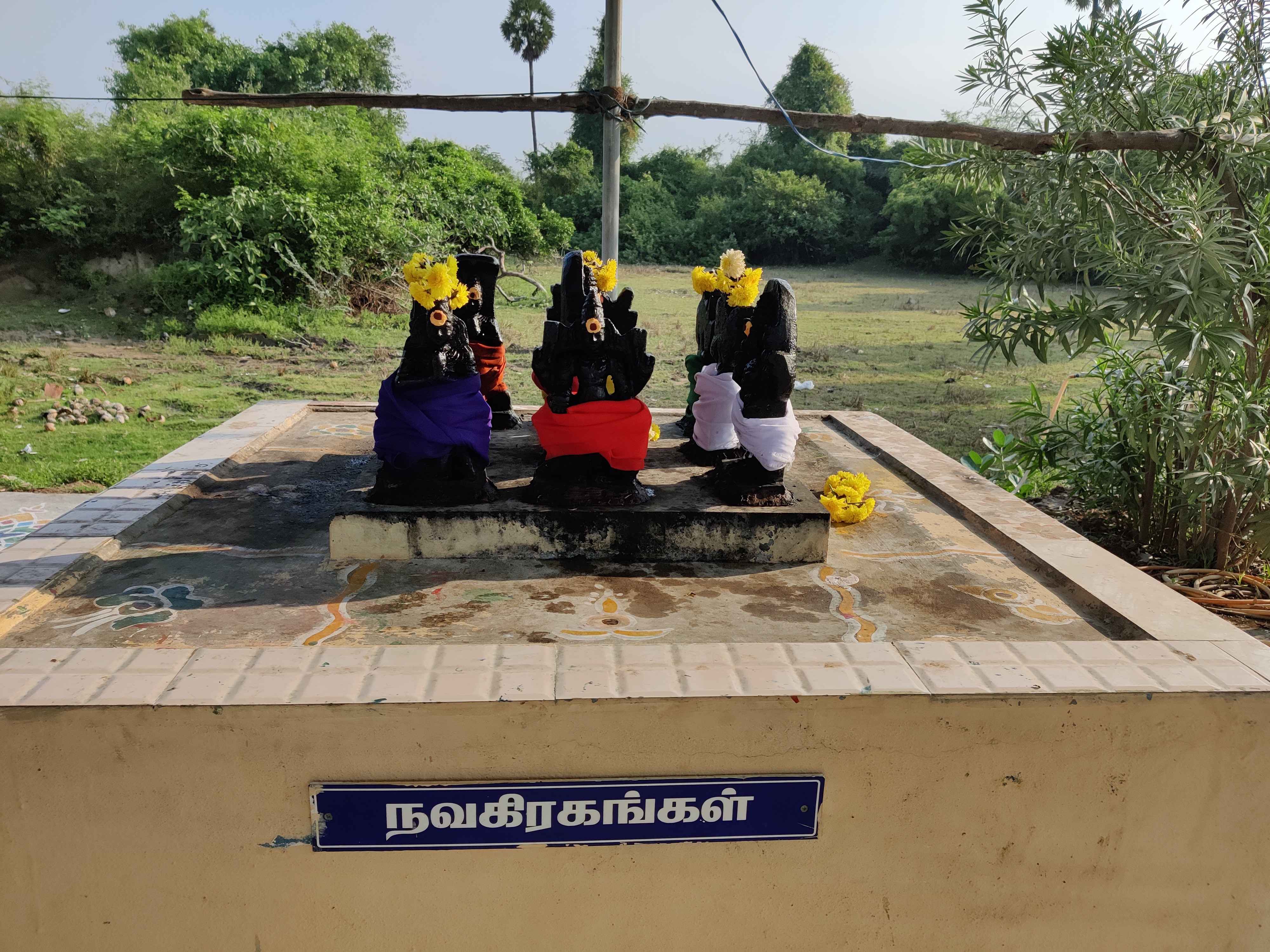
A well maintained east facing Sivan temple with a huge lingamurthy. Gangai Amman is also facing east which is the primary in this temple since ages. Later they installed Sivan along with big valampuri vinayagar, Valli Deivanai sametha Sri Murugan also blessing us in the prakaram. Since the name of the village is Vadakkupattu they named god also Vadakkeeswarar. There is a big sannidhi for Navagrahas also built in the north east.

The Banyan tree is the sthala virtkcham here.

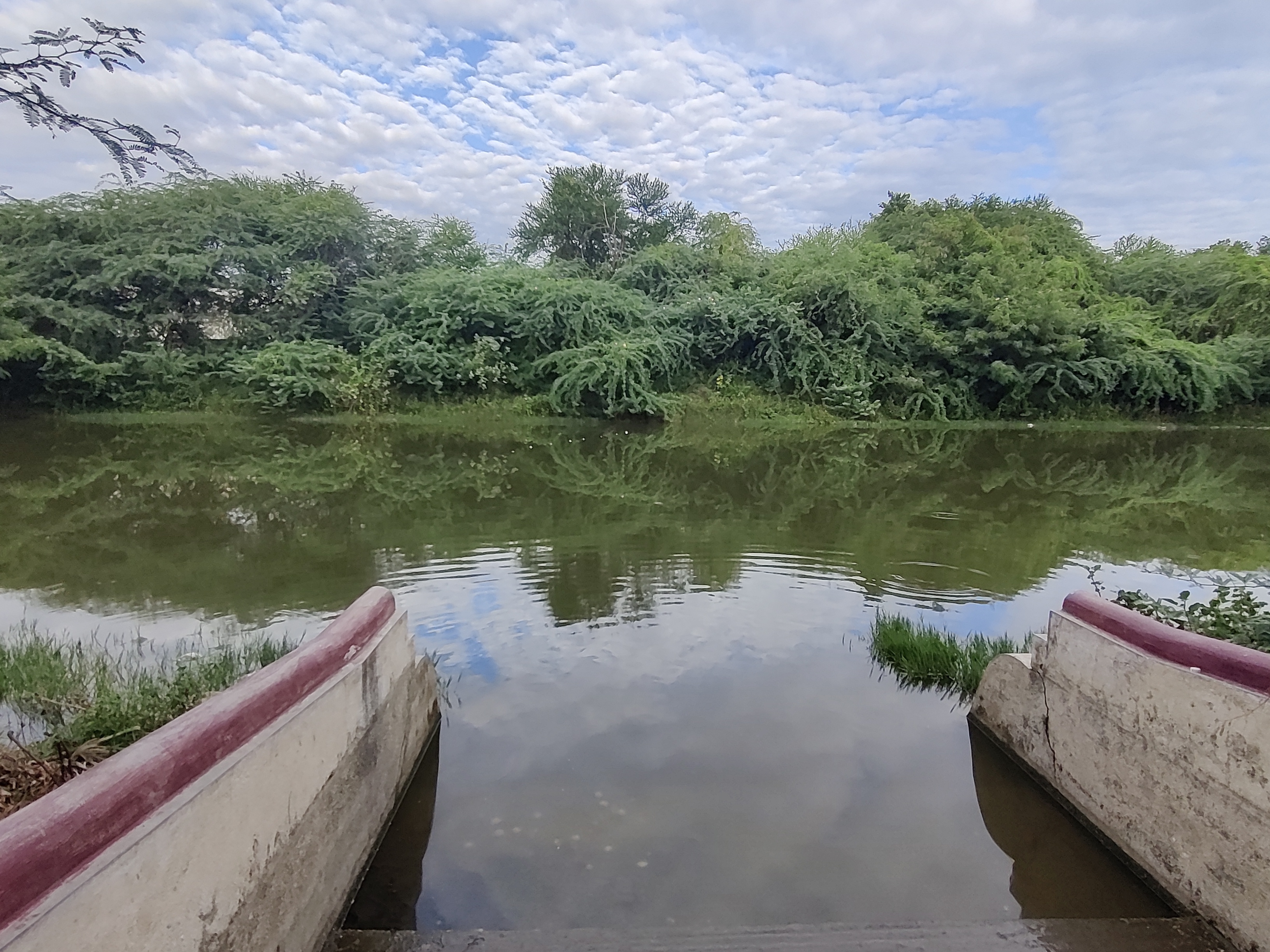
There is a huge temple tank in the backyard of the temple. 

Daily orukala poojai in the morning and all auspicious days celebrated here.

Location: Sri Vadakkeeswarar Temple, Vadakkupattu, Medavakkam

 Sri Arkeeswarar Temple, Pammal, Pallavaram


Moolavar: Sri Arkeeswarar

Amman: Sri Amirthambikai

A beautiful 1000 years old temple from the Pallava period in the village of Pammal. It is said that the temple was constructed during the 7th to 8th century period. Earlier in 7th century it was just constructed as a brick temple and in later years around the 8th century it was renovated to be a complete granite and mortar mixed construction.

The moolavar has been worshiped by lord surya and Arka is one of the 12 names of surya Bhagwan. As Arka himself worshiped this moolavar he is known as Arkeeswarar. The 12 names of surya is recited during surya Namaskaram.

The swamy Sannidhi is facing east and the grabhagraham is completely made of granite stones in which you can have the Dharshan of the sivalingam on a square peedam standing good at 5 feet abd giving a mesmerizing Dharshan.

Amabal Amirthambikai is in a separate Sannidhi facing the south. The Ambal murtham is also so beautiful and she has a very merciful eyes and it really attracts the devotees, specially if she is very well decorated one cannot take their eyes off her.

A separate Sannidhi can be seen in the north east corner of the temple for an Ambal called Suriamman and she is believed to be the gramadevathai of pammal and many families who had moved long ago from here to South Tamil Nadu, places like kallakuruchi and other nearby villages, even today visit this Amman once every year to offer their prayers. Chithirai month 1st day 108 kudam pal abhishekam is very famous for this Amman.

The temple tank is spread across for 5 acres and the water is completely from the ground water source. Also, once while they were planning to build a Vasantha Mandapam and excavated the earth they found many panchaloha vigrahams belonging to more than 1000 years old which is safely kept in this temple itself.

This is place where people are blessed and get relived from all ailments like mental disorders, physical ailments and also it is said to remove all your 6 bad gunas.

Contact: Daily two kala pujai happens to the swamy here and the temple trustee Sri Vedachalam can be reached at 9150727923.

Location: Sri Arkeeswarar Temple, Pammal, Pallavaram, Chennai

 Sri Bhimeswarar Temple, Old Tambaram, Chennai


Moolavar: Sri Bhimeswarar

Amman: Sri Dharmabikai 

A very old temple named as Bhimeswara, as the name suggests a huge east facing linga Murthy and an elegant Ambal named as Dharmabikai bless us. Sivan and Ambal were unearthed from a sarakondrai tree and later built this temple. This temple has a huge temple tank in front of sivan, which has been maintained very well.

All ghosta murthies,Biravar and Navagrahas placed appropriately. Another huge siva lingam is placed under a tree inside the campus.

This temple has associated Vishnu temple also nearby hence people calling it as siva Vishnu temple.

It opens at 7:30 daily orukala poojai and then all auspicious days are celebrated in a grand manner.

Location: Sri Bhimeswarar Temple, Old Tambaram, Chennai

 Sri Kalyana Pasupatheeswarar Temple, Thirukachur, Maraimalainagar, Chengalpattu


A very old shivalingam was found in the midst of thorny shrubs couple of years ago near the Kachabeswarar temple, which currently has been installed in a small temple. It is said that the shivalingam is more than 1000 years old and could be at the same time as Kachabeswarar temple.

There is no Ambal and the swamy Avudayar is round signifying that some kings must have got it installed those years. There is a Small Nandhi and balipeedam.

Daily puja has been done by local villagers. Very peaceful and beautiful village to be visited and Also people should visit all 3 shiva temples in this village Marundeeswarar, Erandheeswarar and Kachabeeswarar

Location: Sri Kalyana Pasupatheeswarar Temple, Thirukachur, Maraimalainagar, 

 Sri Kailasanathar Temple, Periyanatham, Chengalpattu


Moolavar: Sri Kailasanathar
Amman: Sri Kamalambigai Ambal

A very beautiful old shiva temple which is said to be in existence since Adi Shankaran’s time. The old temple has been recently renovated very beautifully without any impact on its antiquity. The fishes on the roof slab shows it’s been built in the Pandyas period. The ghoshta murthies are really beautiful to see.

It is said thst Adhi Shankara during his visit to this location installed the Rahu Ketu vigraham and also gave the name Sir Kailasanathar to this swamy. The sivalingam is small in size with a round Avudayar. Ambal Kamalambigai is facing Sourh and the entrance to the inner mahamandapam is from south only. Most of the vigrahams are very old and recently they have installed Sivasuryan, Byravar and Nalvar.

The Navagrahas are placed in a separate Sannidhi and that is where you can see the Rahu Ketu vigraham installed by shankarar.

A must visit temple and daily pujas are performed and the temple opens by 7:30 am. 

Contact: Sri Balaji kurukal can be reached on 9976221428

Location:

 Sri Araseeswarar Temple, Sathurangapatnam, Kalpakkam, Kanchipuram


Moolavar: Sri Araseeswarar 

Amman: Sri Thiruvaateswari Ambal

A very beautiful pandiya era tenple which has belongs to the 16th to 17th century. Completely built in granite this temple is a visual treat in a calm beautiful village of Sathurangapattinam near Kalpakkam.

The temple has 2 praharam the inner praharam has the Swami Sannidhi facing east and Amabal Sannidhi facing south. You can see all ghosta murthies in really large size here. There are vigrahams of Arunagirinathar near the Murugan Sannidhi in the inner praharam. The outer Praharam has a vigraham of vyagrapathar. You can see many sages and rishisi idols engraved on the pillars.

The moolavar Sri Araseeswarar is on a square Avudayar signifying that it must have been worshiped by siddhars and sages of those period.

The Navagraha Sannidhi in the inner praharam is really beautiful to see. There is a  dhwajasthmbam too signifying that once upon a time lot of Brahmotsavams must have been conducted here and must have been place with lot of festivities.

Also in this area you have 3 shiva temples including this and the other two are Valeeswarar and Ekambareswarar Temple. 

Contact: Daily one kala puja is performed and the temple kurukal Sekar can be reached on 9971474963

Location: Sri AraseeswararTemple, Sathurangapatnam, Kalpakkam, Kanchipuram

 Sri Paleeswarar Temple, Kozhumanivakkam, Mangadu, Chennai


Moolavar: Sri Paleeswarar Temple
Amman: Sri Sivagamavalli Ambal

A beautiful temple which apparently is said to be over 1300 years old. The antiquity of the temple is clearly made out of by seeing the Chandikeswarar vigraham. It’s said that this pallewarar was worshipped by Sage Agasthiar.

After over a 100 years the Maha Kumbhabhishekam has been performed on 28th October 2022. The Raja Gopuram is facing south which represents it to be a parihara sthalam. The outer praharam has Sannidhi for Pillayar, Valli Devasena Samedha Subramania swamy, Kala Samhara Byravar Chandra Bhagwan and Suraya Bhagwan. Also there is a separate small temple for Kasi Viswanathar. 

Contact: The temple contact person is Kumaravel can be reached on 9444940777


 Sri Yoga Gangadheeswarar Temple, Periyakovilambakkam, Chennai


Moolavar: Sri Yoga Gangadheeswarar
Amman: Sri Yoga Gangadheeswari 

It is said that the sivalingam was in open at this place and nobody know how old it could date. The local villagers gathered together around 2002 and have built a small beautiful temple for Yoga Gangadheeswarar and have made a separate Sannidhi for Ambal Yoga Gangadheeswari facing the south. 

The swamy vimanam is in Gajabrishta style and on the ghostam you can see Dhakshinamoorthy, Mahavishnu and Bramha. There is a small temple tank which is now filled with water plants and needs cleaning.

The sivalingam is very old, it has a round Avudayar and easily it will be over 1500 years old.

A beautiful small temple right adjacent to the Pallavaram Radial road right behind the Fortune Towers building. The approach road is next to the Sangeetha restaurant.

Contact: Daily one kala puja happens and the temple opens by 8 am and the temple sivanadiyar Sri Krishnamoorthy can be reached at 9043560046


 Sri Aravaneeswarar Temple, Naduveerapattu, Sriperumbudur


Moolavar: Sri Aravaneeswarar
Amman: Sri Abhirami Ambal

A 1000 years old sivalingam that was found to be in a completely dilapidated temple here for over 4 generations,  was taken up by one Sri Murugan who is a localite and around 12 years ago a beautiful temple was built. Since then regular puja is going on.

It is said to be one of the 108 temples around Kanchipuram. The Sivalingam, Nandhi, Pillayar, Byravar and Chandikeswarar are dated back to over 1000 years old. The Ambal and the other Sannidhi vigrahams are new.

The name Aravaneesavarar means one who has adorned Aravam (snake in Tamil) as his ornament.

You can see a single palm tree here which is said to be the sthalavriksham.

Lot of events are celebrated here in a grand manner and given there is also an Ayyappan Sannidhi within the prakaram, anna dhanam is happening very regularly and many participate in these celebrations. Annabhishekam is celebrated in a big way too during the month of Aipasi. Also daily around 25 old aged people are fed food here in the morning. 

Contact: Daily one kala pujai happens and Sri Murugan who is the caretaker can be reached on 9841025618

Location:

 Sri Thirumeni Azhagar Temple, Pannayur, ECR Road, Chennai


A very beautiful small temple just few meters away from the beach on ECR road. As the name suggests the shivalingam is so beautiful and has a square Avudayar signifying that it must have been installed by siddhars. 

The history is not known, but looking at the Avudayar you can make out that it is really old.

The temple though in a small room kind of structure is very well maintained and absolutely clean and neat. You can see a peepal tree and neem tree together. You can experience the cool breeze from the sea and is very peaceful atmosphere and ideal for meditation.

Contact: Currently a couple known as Raji and Murali are maintaining this temple and there is no other source of funds. They can be reached at 86828 34083

Location:

 Sri Anekadhangavadeeswarar Temple, Kanchipuram (Paadal petra sthalam)


Moolavar: Sri Anekadhangavadeswarar
Amman: Sri Kanchi Kamakshi 

A padal petra sthalam and this is the 4th shrine in Thondaimandalam region praised in Thevaram hymns. Saint Sundarar describes the place as one inhabited by enlightened souls, bright with sunlight and playground of nightingales with their pairs, where Lord Anekadangavatha Easwara graces in the holy city of Kanchi.

Due to his righteous life in his previous birth, Kubera was born the son of Arundaman and became the king Alakapuri. Shukra, the Guru of demons grew jealous of him and began to create troubles. Kubera worshipped this Lord Shiva seeking protection from Shukra. Lord swallowed Shukra and destroyed his pride.

Maharshi Mareechi, while bathing in a lotus tank, found a female child on the leaves. He took the child and brought her up. He named her Vallaba. She was a staunch Shiva devotee. She was abducted by demon Kesi. She prayed to Lord Shiva to come to her rescue. Lord Shiva wanted to send Vinayaka to protect her. Ambica requested Lord to bless Vinayaka with victory in the war against the demon. Lord said that He would be victorious if he worships in this land. Lord Vinayaka followed the advice and installed the Linga. Demon was destroyed and Vallaba rescued. Lord Shiva and Mother performed the wedding of Vinayaka with Vallaba here. Though Lord Vinayaka held the hands of Mother Vallabha in this place in marriage, He is in a shrine alone. Those facing problems in marriage proposals pray to him offering Arugampul – grass – with nivedhanas hoping to have their wish realized early.

Shivalinga in the temple is big in size. As Mother Kanchi Kamakshi is the consort of Lord Shiva, there is no separate Ambal shrine in this temple.

A beautiful temple and a very peaceful environment and ideal for meditation and a must to visit. One kala pujai happens and the kurukal comes only by 10 am, but the temple is open for Dharshan. 

Contact: The temple Kurukal Ramesh can be reached at +91 99409 31888


 Sri Thriskarneeswarar Temple, Athur, Chengalpattu


One of the 7 temples around Athur has been worshiped by the locals for around 10 years in a make shift shelter, now have constructed a beautiful granite temple, with grabhagraham, Arthamandapam and a beautiful Maha mandapam and the Kumbhabhishekam has just been completed on 7th Sept 2022.

Very rare thing about this Sivalingam is that you can see the Ambal very slightly etched on the sivalingam itself which you can see while abhishekam is performed. As Ambal is kept hidden within him he has been named Thriskarneedswarar.

The temple is opened by 5 am and daily one kala Pooja is been performed and the sivanadiyar Sivakumar can be reached on +91 97150 52200

Location:

 Sri Boominathar Temple, Thiruvidanthai, ECR


Moolavar: Sri Boominathar
Amman: Sri Boologanayagi 

Very old east facing suyambu lingam, very pleasant and quiet place inside the uppalam(back water salt lake)

Good place for meditation. Lingam was identified in a well and later built a small temple. Daily orukala pooja and all other auspicious days being celebrated.

Must visit this temple to experience the vibe. Ohm Namasivaya.

Contact: Sivanadiyar can be reached in his mobile 7904877975


 Sri Thiruvagatheeswarar Temple, Kadambadi, ECR


Moolavar: Sri Thiruvagatheeswarar

Amman: Sri Manonmani Amman

This temple was built in 7th century (615-330).

Sivalingam alone was under a neem tree and recently renovated using old stones. Sivan facing east and it was constructed that morning sunrays directly fall on him.

Nicely maintained and daily oru kala Pooja performed by sivanadiyar Pazhani who can be reached at 9751893028.

Location: Sri Thiruvagatheeswarar Temple, Kadambadi, ECR

 Sri Ekamabareswarar Temple, Tammanur, Walajabad


Moolavar: Sri Ekamabareswarar

Amman: Sri Kamatchiamman

The temple may be built during 12th to 13th Century by latter Chozhas. The temple was expanded with mandapas during Vijayanagara / Nayaks period. Couldn’t trace any inscriptions.  

Some of the salient features of this temple are, The temple is facing west with a temple tank with a small entrance. The entrance arch is on the east side. Balipedam with Mayil vahana mandapa

It was told that the Moolavar is made of sand stone and no abhishekam  is done. In koshtam Durgai, Brahma, Dakshinamurthy and Vinayagar. There is no image in the back side Koshtam.  Sri Kamakshi Amman is in a separate  sannidhi  in the mandapa facing south with a stucco vimana.

Contact: Gurukkal Rajan may be contacted on his mobile 9629540348, for further details.

Location: Sri Ekamabareswarar temple, Tammanur, Walajabad

 Sri Thiruvaaleeswarar Temple, Thiruvannaikovil Village, Kanchipuram


Moolavar: Sri Thiruvaaleeswarar
Amman: Sri Panmozhiyammai

The temple may be constructed during 13th  to 14th  Century and has the contributions from Pandyas, and Vijayanagaras. The Vijayanaga period inscriptions records the endowment of burning Lamps, poojas, for the same, money, lands were gifted to this temple.

Kochadaya Varmar Thiribhuvana Chakravarthikal Sri Sundarapandya period inscription records the endowment of burning Sandhi lamp for which donations were made.

LEGENDS
It is believed that this is one of the temple in which the Vanara King Vali installed and worshiped Lord Shiva and Agasthiyar also worshiped.

Since Lord Shiva is facing North, this temple is considered as a Guru Sthalam. It is believed that Lord Shiva teaches the Gnanam ( Knowledge and wisdom ) and it will be auspicious to worship Lord Shiva on Thursdays, to excel in studies. It is also believed that this is a marriage boon sthalam, after removing obstacles in the marriage process.   

Contact:
Sivasenthil archakar may be contacted on his mobile +91 89407 33278 and +91 77080 17278 for further details. 

Location:

 Sri Mahakaleswarar Temple, Irumbai, Pondicherry


Moolavar: Sri Mahakaleswarar
Amman: Sri Kuyilmozhi Ammai / Sri Madhu Sundara Nayaki 


This is one of the 276 Devara Paadal Petra Shiva Sthalams and 32nd Shiva Sthalam in Thondai Nadu.Lord Shiva in this temple is a Swayambumurthi (self-manifested).
This is one of the three places where the Shiva Lingam is said to have been installed and worshipped by Mahakala Rishi.
The Vimanam - the tower above the sanctum sanctorum is an excellent example of the Ekadala style of architecture.
It is believed that this temple was built in the 7th century by Chola King Kulothungan III.

As per the inscriptions on the stone walls of the temple, the village’s name is mentioned as “Iruncheri”.

Another reasoning behind the name Irumbai is that this place was once densely populated by Iluppai trees and so the village got the name Iluppai. Over a period of time this name got changed to Irumbai.

This temple is associated with the legend of Kaduveli Siddhar, a famous yogi who lived in the area about five hundred years ago. 

Legend:
According to the legend, a saint called Mahakala Rishi, during his pilgrimage, installed three lingams – one in Ujjain in North India (Vada Naadu), one at Ambar Makalam near Mayiladuthurai in the south (Then Naadu) and the third one at this place (Nadu Naadu). Hence the Lord here is named Sri Mahakaleshwarar. 

Another interesting story associated with this place is that of sage Kaduveli Siddhar. It is believed that he would perform severe penance by sitting under a peepal tree in yogic posture for days at a stretch. Once, during his penance, the heat of his body became so intense that the rain gods suffered, there was no rain and the people were exposed to hardship and drought. The situation worsened to such a degree that it finally came to the knowledge of King Kulothungan, who ruled from Kottakkarai. Since no one dared to disturb Kaduveli Siddhar in his penance as he chanted the mantra of Lord Shiva, the King announced that whoever could break the Siddhar’s penance will be suitably rewarded.

Tempted by the reward, a temple dancer named Valli who was devoted to Lord Shiva, decided to try her best to break the Siddhar’s penance. She observed that the Siddhar would occasionally catch and consume the falling and withered peepal leaves. To get his attention, she tactfully prepared some fried papads (thin, crispy wafers) which had salt in it and placed them around him. After a few days of consuming the salted papads thinking that they were peepal leaves, the Siddhar got back to his sense. When he opened his eyes and saw the papads and also saw Valli standing nearby, he asked her why she had fed him these papads and what had happened. She explained him about the abnormal heat around this place and the lack of rain. She further told him that this was due to his severe penance.  Since his penance was broken and the heat started reducing, the rain god was relieved from the torturous heat and granted showers of rain.

In order to celebrate this event, the King ordered for a big pooja to be held at this temple. Valli being the temple dancer was supposed to perform the cosmic dance of Lord Shiva (Anantha Thandavam). She invited the Siddhar to the temple for the Pooja as well as to watch her dance performance, which he accepted.

However, during the performance, one of her anklets fell off, and she lost her rhythm. Kaduveli Siddhar, who saw the Lord Shiva in Valli, picked up the anklet and put it back on her feet. Since he had touched the feet of a dancing girl, he was exposed to the ridicule of the people as well as the King. Angered by the heckling, the Siddhar asked Lord Shiva to come out of his temple and prove his innocence by causing a rain of stones.

The song that the Siddhar sang is as follows:

“வெல்லும் பொழுது விடுவேன் வெகுளியை
செல்லும் பொழுது செலுத்தினேன் சிந்தையை
அல்லும் பகலும் உன்னையே தொழுதேன்
கல்லும் பிளந்து கடுவெளியாமே”


Immediately the lingam in the sanctum sanctorum of the temple exploded into three pieces, and wherever those fragments fell, that place became a desert. The Siddhar cursed that these places would become uninhabited and devoid of all vegetation. To this day, there is such a desert called “Kaduveli” at a distance of about three kilometres from this village.

On realizing the truth and power of the Siddhar the King begged for forgiveness and pleaded him to quench the effects of the curse. The Siddhar was appeased by the King’s request and said that although he could not change what had already happened, in the future, people from far-off lands would come and make the deserted lands green and fertile again.

Further, the Siddhar was also requested to mend the broken Shivalingam. He sang the following song to join the broken fragments. When he finished this song the fragments were joined together.

“எட்டும் அறிந்த உந்தனுக்கு
எட்டும் அறியாத எந்தனுக்கு
எட்டு அறிந்தும் ஒன்று  சேருமே”


Today, some of the villagers feel that the Aurovilians are the people from the far-off lands that the Siddhar had mentioned and that the curse is now beginning to leave.

Location:

 Arulmigu Arasaleeswarar temple (Paadal Petra sthalam)


Moolavar: Sri Arasaleeswarar
Amman: Sri Periyanayagi

Most of the Chola temples built during the period of 866 and 1004 CE is associated with certain military events or political campaign. During 940 Parantaka had frequent trouble from invading Rashtrakutas. Takkolam War, dubbed as the greatest war held in the Tamil region, was fought between Cholas and Rashtrakutas. Parantaka's son Rajaditya was killed in the campaign and Krishna III assumed the name "conqueror of Tanjai and Kanchi".The temple has five inscriptions from the period of the Medieval Cholas like Vikrama Chola and Kulothunga Chola. In modern times, the temple is administered by the Hindu Religious and Charitable Endowments Department of the Government of Tamil Nadu. The bronze idols of the temple were stolen and were later restored by idol wing of Tamil Nadu Police during 2009.

Legend:
As per Hindu legend, sage Vamadeva visited many temples to worship Shiva. He came to the place and was standing under an Arasu tree (peepli tree) and felt that it would be nice if Shiva appeared in the place. Pleased by the devotion of the sage, Shiva appeared in the place of the Arasu tree and came to be known as Arasaleeswarar and the place came to be known as Arasili. As per another legend, a king named Sathyavardhan who ruled the place was a staunch devotee of Shiva. He installed a garden to garner flowers for his worship. Each day the gardener complained that someone stole the flowers of the garden. The king found that a deer was eating the flowers of the garden. Angered at the deer, the king shot an arrow at it which missed its mark but hit the Arasu tree behind. The king found that blood was oozing out from the Arasu tree, which the king found out to be the incarnation of Shiva. The scar mark in the Lingam of the temple is believed to be the arrow hit by the king.

Location:

 Sri Agastheesvarar Temple, Panchetti Village, Thatchoor


Moolavar: Sri Agastheesvarar

Amman: Sri Ananda Valli

A Temple that dates back a 1000 years old, Pancheshti had got its name from Pancha Ishti. Pancha means 5 and Ishti means Yagna means Penance which is performed to get some wish fulfilled.

According to legend, Once the three sages Vasishtar,Gauthamar and Kalvar were looking for a place to do their penance. They went to Brahma and requested him to show them such a place. Brahma then made a wheel made of dharba grass and rolled it. It rolled and rested in a place and Brahma indicated that particular place is good for them to perform their penanace. The place indicated by Brahma is beleived to be this Pancheshti.

Panch meaning five and ishti means Yagna. As per legends, there was a 'Yatchan' (demon king) called Sukethu, who was cursed by Lord Subramanya to be born as an Asura, for showing his arrogance towards Shiva and Parvathy. Sukethu later married an Asura woman and gave birth to three boys. These boys who came to know about the curse of the father, did a penance towards Goddess Parvathi and became powerful. They then started teasing the devas with their strength. Devas then went and complained to Lord Shiva. Lord Shiva directed Sage Agastiyar to teach a lesson to Sukethu. Meanwhile Sukethu after losing a battle with three asuras went and hid under the sea. Sukethu's sons went in search of his father deep into the sea thus destroying the sea lives and creating a lot of commotion. Sage Agastiyar to curb the mischievous sons of Sukethu, drank all the sea thus trapping the three sons and Sukethu in his stomach. The earth became dry and Devas pleaded to restore the sea. Sage Agastya restored the sea by spitting the sea back in its place.He also spat some remaining water in his mouth in Pancheshti and the pond here in the temple is known as 'Agasthya Theertham'.

Sukethu and his sons pleaded to Sage Agasthya to pardon them and releive them of their curse. To get him relieved of the curse, Sage Agasthiyar performed about 5 yagnas called Deva Yaagam, Brahma Yaagam, Bhootha Yaagam, Pithur Yaagam and Manusha Yaagam here. Hence this place got its name Pancha Ishti which later became as Pancheshti and now colloquially called Panchetti.

The Goddess here is ambal Sri Anandhavalli, who is seen in standing posture facing south. She is made of 'Margatham stone' (Emerald) and is three eyed and considered powerful. She has her left foot forward depicting that she is the destroyer of evil 'Chathru Samhaari' . It is beleived that worshipping her eliminates all the evil forces and hurdles in devotees' life.

Though the main deity is Shiva more importance is given to Ambaal Anandavalli. The sculptures in the Raaja Gopuram face the Ambaal. The Navagrahas sculpted on the other side face towards Ambaal. Lord Saneeshwara is seen with Eagle as his Vahanaa instead of crow.

Though the lord faces east, the entrance to the temple to have a darshan of the lord is from the south. These types of temples with south entrances are called parihara sthalams. The walls of Raja Gopuram of this temple, carries hundreds of sculptures which are a feast to watch. Though this is a Shiva temple, the sculptures of Vaishnava concepts are given equal importance here. The entire walls of RajaGopuram, have sculptures connected to incidents from all the 4 Yugas.

Contact: Kandan Gurukkal @9962570445 or the temple office @93823 16493

Location:

Sri Agastheesvarar Temple, Panchetti Village, Thatchoor

 Sri Bramapureeswarar Temple, Mamandur


Moolavar: Sri Bramapureeswarar
Amman: Sri Aram valartha nayagi

A very old and elegant temple which was built during Krishna deveraya period. All prakara murthies are available in separate sannidhis. Beautiful architecture, very spacious. Daily oru kala Pooja at morning and all other important days.

Gurukkal is staying near by the temple.

Location:

 Sri Kailasanatha Eswarar Temple, Chettipunniyapuram, Chengalpattu


Moolavar: Sri Kailasanatha Eswarar

Amman: Sri Tripurasundari Ambal

A very old Shiva temple in the middle of Chettipunyapuram, it is believed to be around 1000 years old and might have been from the Chola dynasty. The Shivalingam, Ambal, Chandikeshwarar are really old. We can see the antiquity of the vigraham when observed carefully.

There are no ghosta murthies around on the outer praharam and the structure is fully in granite.

The Maha mandapam has a Pillayar and Murugan Sannidhi and in the outer praharam there is another Pillayar under a peepal tree, separate Sannidhi for Byravar and Navagrahas can be seen.

There is absolutely no support from the local villagers to run the temple.

Contact: Mr. Ezhumalai takes care of the temple and does one kala poojai. He can be reached at 7867841956. 

Also there is a famous yoga Hayagreevar Temple in the same village where lot of parents come along with their kids to pray for better improvement in their studies and for knowledge improvement.

Location:

Sri Kailasanatha Eswarar Temple, Chettipunniyapuram, Chengalpattu

 Arulmigu Avinashilingeswarar Temple, Avinashi


The Avinashi temple is believed to be the first among the seven shivastalams of Kongunadu. It is also known as the Karunaiyaathaal temple. The temple's construction is connected to a legend based on Sundaramurthi Nayanar. The 'Moovendargal' Cheras, Cholas and Pandyas have made huge bequest to this Temple.

The Tamil saying goes – Kasiyil Vasi Avinashi meaning that what the devotee derives by worshipping in Kasi-Varanasi, he/she derives half of the benefits by worshipping Avinashi Lingeswara in Avinashi. Lord Avinashi Appar, Lord Bhairava and the holy water-Theertham- are brought from Kasi. Bathing in the Kasi well in the temple on new moon day-Amavasya brings manifold benefits to the devotee. There will be no interval closing of the temple on new moon days. Vinasam in Sanskrit or Tamil means perishable. Avinashi means imperishable.

The inner corridors on the four sides of the sanctum sancotrum are decorated with the images of Nayanmars, Murugan Sannidhi in the northwest and Karaiakal Ammaiar Sannidhi on the northeast.

The shrine of Goddess Karunambikai (consort of Avinashi Lingeswarar) is seen separately and is located on the right side of the presiding deity. It is located in the southern side of the temple corridor. The front mandapam of Goddess Karunambikai shrine has carvings of figures like the elegant and beautiful Kurathi or her more rugged male counterpart Kuravan, which arrests the attention of everybody entering this shrine. At the back of the shrine is carved a figure of scorpion, which is said to have the efficacy to cure a person, from even the bite of a venomous snake and sting of scorpions. The Kala Bhairava shrine of this temple has a special status.

Legend:
Sundaramurthi Nayanar was passing through the town of Avinashi on his way to meet Cheraman Peruman. While going along a street he observed two houses overlooking each other. He couldn't help but notice the contradictory auras emitting from both houses: one of joy and the other of sorrow. Enquiring about the event he came to know the reason behind the incongruity. Two boys, of the same age went for a swim in a river nearby. While they were having their bath a crocodile appeared all of a sudden out of nowhere and consumed one of them. Sage Sundarar immediately went to the temple and demanded the Lord to direct the crocodile to give back the boy it swallowed three years ago when he was four. He prayed to Lord with a Pathigam (10 verses).

As he sang the fourth stanza begging the Lord to direct the crocodile to return the boy, to the joy of all around him, the crocodile brought back the boy with the growth he would have at the age of seven. 

Sundarar took the boy to the parents and arranged his Upanayanam too. This is a great event related with this temple.

 During the Panguni Uthiram festival in March-April, Mudalai Vai Pillai – boy in the grip of the crocodile – Utsav is celebrated for three days.

Location:

 Sri Jambukeswarar Temple, Thiruvankarani village, Walajabad, Kanchipuram


Moolavar: Sri Jambukeswarar

Amman: Sri Akhilandeswari

A beautiful small temple that has been recently built in the village of Thriruvankaranai. The way this temple came into being is quite interesting as well as quite inspiring too.

It is said that the villagers here has been requesting for a Shivalayam  for some time and a local Iyangar bhattachar named Sri Srikanth initiated the efforts and gathered the villagers together and approached few trusts in Chennai like Gurukataksham Trust and Thirukovil Vazhipadu Khuzu team and under the guidance of Sri Chrompet Kannan maama and the support of Avalur Venkataramanan and Avalur Manoharan, this temple work was undertaken in a rapid 108 days scheme. The decision of site and construction was taken on 17th Mar 2022 and on 17th Jun 2022 the Mahakumbhabishekam was performed.

The lingabanam here has a good story behind it. A person named Sri London Venkatraman had a dream that he is supposed to travel to India and go through the river Narmada and pick up Sivalingams from underneath. So based on this dream he came down to India and travelled 30 kms across Narmada on a boat and took dips in prominent points showed by the boat man and had picked up 19 Narmada Shivlingams. These lingams are naturally formed under the river. All 19 linga banams were handed over to Sri Kanchi Madam and was kept at the Adhishtanam in Orikai.

When the villagers approached Sri Chrompet Kannan mama, he took them to Bala Periyava at Orikai in Kanchipuram and got them this beautiful Shivalinga Banam for this temple. And interestingly Bala Periyava's blessing was given in the form of naming this temple moolavr as Jambukeswarar and Ambal as Akhilandeswari. The most astonishing thing is since the time the Yagasalai for Kumbhaishemak was erected, rains have been pouring continuously in middle of June which is very rare, and just to show that Sri Jambukeswarar who is known for water in the Pachabootha sthalam is really blessed this village with water during the kumbhabhishekam event.

It has been a blessing for our team also to have played a small role in supporting this noble cause and we thank the Gurukataksham trust for the opportunity.

Currently Mandalabhishekam is going on and a Kurkal has been appointed to take care of the daily puja kaingaryam. This temple even celebrated its first Pradosham on 26th June 2022.

A must visit place for all, especially to see the beauty of Narmada lingam which is naturally formed so perfectly.

Contact: The Temple Contact at present is Sri Srikanth who can be reached at 9962229110

Location:

Sri Jambukeswarar Temple, Thiruvankarani village, Walajabad, Kanchipuram

 Sri Sivakozhundandavar Temple, Sivan Koodal Village, Sriperumbudur, Kanchipuram


Moolavar: Sri Sivakozhundandavar

Amman: Sri Maragathavalli

A very Ancient temple belived to be built during the Rajendra Chola period. The temple inscriptions show it as the 3rd regional year of Rajendra Chola. There are inscriptions referring to Kulothugs Chola as well as Vikrama Cholas gifting huge amounts of land to this temple. Vikram Chola had renovated the vimanam as per the inscriptions, but now there is no vimanam at all.

The outer prakaram and ghosta murthies show the antiquity of this temple. Apparently the vimanam has been destroyed by age and now a small vimanam has been constructed on top which actually does not match the magnificent look of this temple. 

In the outer prakaram, on the right above the ghosta vigrahams, you can see very interesting carvings. For example above Ganapathy you can see Gajalakshmi, above Dhakshinamoorthy you can see Kuberan being worshipped by a king, right above Mahavishnu you can see Krishna in Kaliyamardhanam and above Durgai you can see an elephant being carved. Right around the temple on top you can see series of bhoothaganams, as if in a pose of holding the roof of the temple in their hands.

You can see many broken idols right around the temple premises. It is supposedly to be maintained by ASI. There is no daily puja being performed and only Pradhosham and Shivaratri has many people visiting.

Contact: Mr. Chinrasu can be reached on 9791421924 for opening the temple. People are allowed to perform pujas on their own

Location:

Sri Sivakozhundandavar Temple, Sivan Koodal Village, Sriperumbudur, Kanchipuram

 Sri Vedagiriswarar Temple, Thirukalukundram, Chengalpattu


Moolavar: Sri Vedagiriswarar
Amman: Sri Sokka Nayagi Ambal

This Shiva Sthalam is the 28th Devaram Paadal Petra Sthalam in Thondai Nadu. Vedagiriswarar, the Lord of the Hill Temple, has been praised in song and verse by the four great Tamil Saints; Thirugnana Sambandar, Appar, Sundaramurti and Manikkavasakar. These four Nayanmars have visited the temple complex. A shrine, Naalvar Koil, It is also considered as Thiruvasaga Sthalam. Saint Arunagirinathar had praised Lord Murugan of this Temple in his Thirupugazh Hymns.
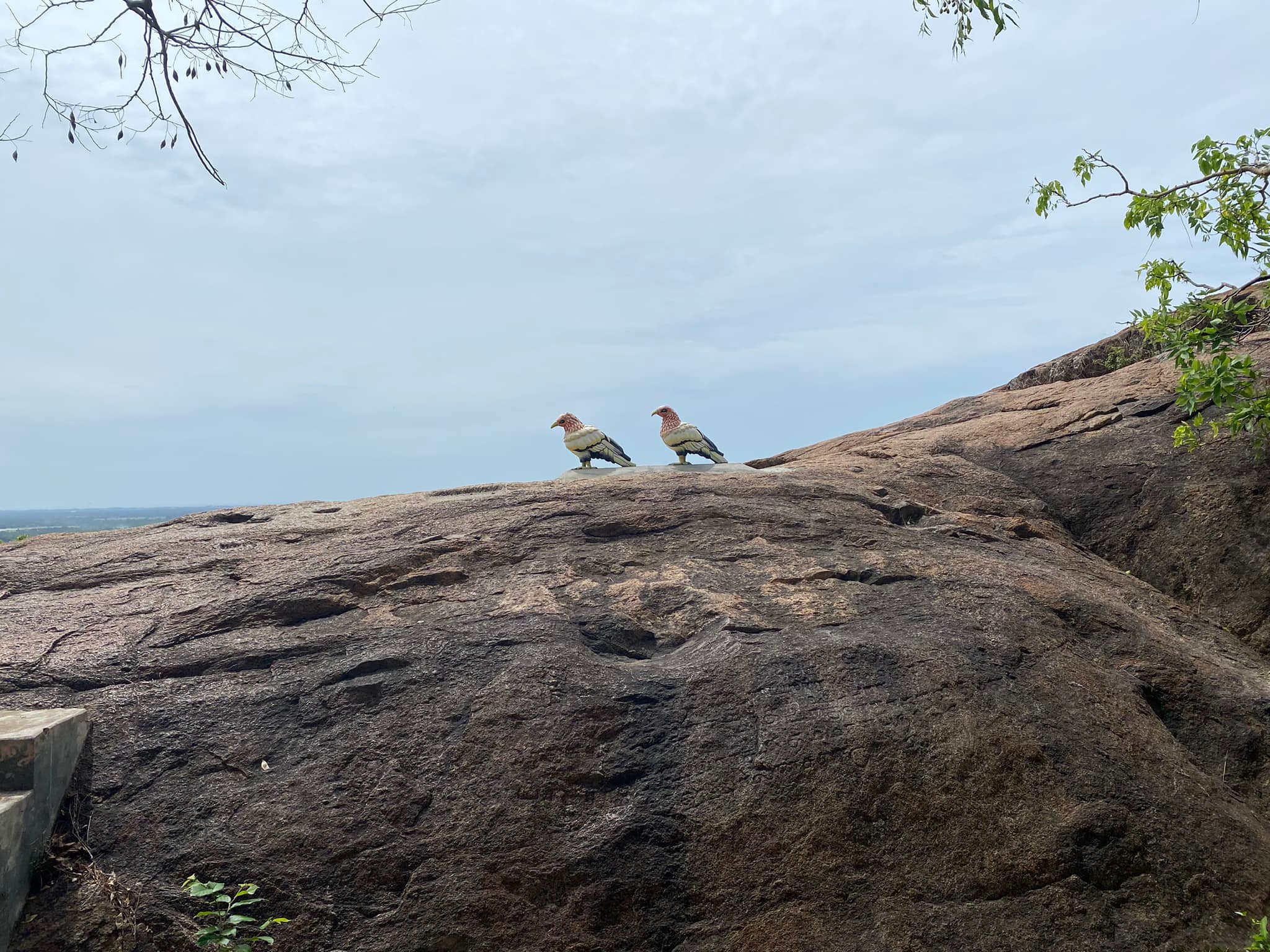
The word Thirukazhukundram comes from the Tamil words Thiru (Respectful), Kazhugu (Vulture/Eagle), Kundram (mount). It was known as "Thirukazhugukundram" in ancient times, which over time became Thirukazhukundram. The town is also known as Pakshi Theertham (Bird's Holy Lake) because of a pair of birds -Most likely Egyptian vultures- that are believed to have visited the site for centuries.

This temple consists of two structures, one at the foot hill and the other at the hill top. The Foot Hill Temple, also called as Thazha Koil houses the presiding Bhaktavachaleswarar and Mother Thirupurasundari. The temple at the foot-hills has four towers (gopurams) closely resembling the architecture of the Annamalaiyar Temple. It was in Bhaktavachaleswarar Temple that Lord Siva appeared before the Tamil saint Manikkavasakar, in the form of Dakshinamurthy, and initiated him into the secrets of the holy Panchakshara.

The Hill Temple, also called as Malai Koil houses Vedagiriswarar and Mother Sokka Nayagi.

According to a legend, sage Pusha and sage Vidhadha performed penance on Lord Shiva seeking Sharoopa status. Lord modified their demand and granted the Sayujya status and promised elevation to Sharoopa later. The sages refused to accept the offer and were adamant on their demand. Angry Lord cursed them to become eagles. Since then, they are in this hill known as Shambu and Aadhi and are worshipping Lord with the Pakshi Theertha they had created.

It is believed that they are the two eagles that visit Thirukazhukundram daily from time immemorial, in order to worship Siva and to obtain salvation from their curse. To attain moksha and regain their original forms, they have to worship the deity of this temple till the end of Kaliyuga. While these sacred Eagles were known as Sandan and Prasandan in Thretha Yuga, Sambathi and Jatayu in Krutha Yuga, Sambhukthan and Mukundan in Dwapara Yuga, in Kali Yuga they are now known as Pusha and Vidhadha.

It is said that after a bath in the Ganges in the morning, they come here at noon for food, reach Rameswaram in the evening for darshan and return to Chidambaram for the night. The eagles circle around the temple top and approach the priest. They eat the balls of rice and after cleaning their beaks in the water kept in a small vessel nearby, take off, circle around the tower again and fly off. This has been going on for centuries now. The scene is also sculpted on one of the walls in front of Goddess Thirupurasundari, in the lower temple.

The hillock is named as Vedagiri, since it is traditionally believed that the four (Rig, Yajur, Sama and Atharvana) Vedas are seen one above the other in the form of four rocks. Lord Shiva is believed to be emerging from the head of the fourth (Atharvana) Veda and said to have derived the name Vedagiriswarar (a Swayambhu lingam), When Sri Anjaneya took the Sanjeevi Parvatha from Himalayas, some parts of Mountain fell over this mountain. Hence even today rare herbals are available here.
It is believed that Indira is still worshipping Lord in this temple. As an evidence of this fact, thunder falls through a hole in the tower above the sanctum sanctorum (Vimana) and goes around the Shivalinga. Unbearable heat is experienced while opening the sanctum next day. This happens once in a few years. Scientists had proved that such an incident took place on the 10th November 1930.

Location:

 Sri Agatheeswarar Temple, Kilakondaiyur, Thiruvallur


Moolavar: Sri Agatheeswarar
Amman: Sri Swaranbigai

A good 1500 years old Sivalingam which is said to be worshipped by Agasthiya Mahamuni. This sthalam was worshipped by many siddhars in particular 11 key siddhars are mentioned. This sthalam is known to be the place lord Shiva gave Dharshan to Agasthiar in his wedding kolam. This place is said to be associated with Thillai ( Chidambaram) and Thirupattur. 

It is said after this place came into existence many cure for major diseases came into practice. Hence it is known to be a sthalam for curing diseases and to obtain Mukthi. This place is also associated with kings from the Chozha dynasty. There is 
The moolavar grabhagraham is in the Gajabrushta style and bern recently built. Ambal Swarnambigai is facing south. In the outer praharam you have a separate Sannidhi for Sage Agasthiar, Swarnakarshana Biyravar, Navagrahas and Anjaneyar.

The temple is opened from 6am in the morning. 

Contact: The sivanadiyar Gajendran can be reached on 9789053053

Location:

 Sri Munkudumeeswarar Temple, Pon Valaintha Kalathur (PV Kalathur), Chengalpattu


Moolavar: Sri Munkudumeeswarar
Amman: Sri Meenakshi Ambal

A beautiful Chola period temple built by Rajendra Chozhan. It is said to be close to 1300 years old now.

The Chozha king who was ruling this part of the Tamil Nadu in ancient days was an ardent devotee of Lord Shiva and had a habit of getting Prasadam from this temple every day before starting his routines. The priest of this temple used to perform daily morning pooja to the Lord and carry the Prasadham for the king at his palace.

Once, as usual, the priest performed the pooja and went to the palace to submit to the king. The king was having his bath the priest had to wait for a while for the king to return and accept the Prasadham. Meantime, the queen saw the priest waiting and enquired him. The priest told that he had brought Prasadham from the temple for the king. The priest was holding a plate carrying Vibhuthi, Kumkum, fruits and some flowers offered to the Lord.

The queen liked the fresh flowers on the plate and out of curiosity took the flowers and wore on her head. The priest was shocked and told the queen that the first Prasadham from the temple is meant only for the king and asked her keep the flowers back on the plate. As requested by him the queen removed the flowers from her hair and kept them back on the plate. The king arrived and accepted the Prasadham with much devotion. But he was shocked to see a single long hair stuck with the flowers of the temple. The king got angry and asked the priest on how the hair got mixed up with flowers from the temple and whether the Lord had a long hair. The priest got frightened as he cannot tell the king that the queen was the responsible for it. At the same time, he had to answer. So, the priest told the king that the Lord in the temple has a long hair and hence the flowers taken from the Lord’s idol had a hair mixed up among the flowers.

The king couldn’t believe it and told that he will visit the temple the next day morning during the Pooja and if he doesn’t find the hair on the Lord, the priest’s head will be cut off. The priest returned to the temple, cried and prayed the whole day in front of the Lord to save him from the king’s punishment.

The next day both the priest and the king arrived at the temple for morning Pooja. When the priest opened the doors of the sanctum to start the Pooja, he was astonished to see a tuft near the forehead of the Shiva Lingam. The priest was in tears realizing the mercy of the God to whom he was doing Poojas with full devotion. The king, on seeing the tuft apologized with the priest for suspecting him. As the Lord has a tuft (Kudumi) towards his forehead, he came to be known as Sri Munkudumeeswarar. Even today, we can witness the tuft on the Lord’s (Lingam’s) head.

The legend behind the name of this village goes like this - Once, Vedanta Desikar couldn’t get alms to feed Lord Hayagriva at night while staying in this village. The next day morning the villagers complained to him that a white horse had destroyed their paddy fields in the night. When Desikar went there, the places through which the horse had run through had turned into gold. Hence this village got the name Pon Vilaintha Kalathur wherein pon refers to gold and Vilaintha means yield from cultivation in Tamil.
The presiding deity graces the devotees sitting under Gajabrushta Vimana (roof design of the sanctum sanctorum). There are Anukkai Vinayaka, Muruga with his consorts Valli and Deivanai, Kalabhairava and Navagraha (9 planets) shrines in the corridor. It is the tuft on the head of the Shivalinga makes the temple especially famous.

Great poet Pugazhendi Pulavar, who wrote Nala Venba, was born here. One of the 63 Nayanmars called Sri Kootruva Nayanar is also said to have lived in this village.

Timing: The temple opens by 6:30 am 

Contact: The temple kurukal Natarajar can be reached at 9443168951

Location:


 Sri Thirumakaraleeswarar Temple, Magaral, Kanchipuram


Moolavar: Sri Thirumakaraleeswarar

Amman: Sri Tribuvananayagi Ambal

A padal petra sthalam and one among the 275 padal petra sthalam and It is the 7th of the 32 Tevara Stalams in the Tondai region of South India. 

Saint Gnanasambandar has sung 11 verses in his Thevaram inpraise of this Lord. Magaral lies on the Northern banks of the Cheyyar River.

1300 years old temple and the original complex is believed to have been built by Cholas, while the present masonry structure was built during the Vijayanagar Empire Nayak during the 16th century.There are several inscriptions from the period of Kulothunga Chola I (reigned 1070–1120), Sundara Pandiyan and Vijayakanta Kopaletevar, indicating generous gifts to the temple.

Legend goes like this, Lord Brahmma, after performing puja to the Lord in this place, planted a miracle jack tree that would yield one fruit each day. King Rajendra Chola struck by the wonder ordered that one person from each family should carry this fruit on their head to Chidambaram to be offered as nivedhanam to the Lord Natarajar . After the pujas, it was ordered to be sent to the king.

One day it was the turn of a Brahmin boy. He thought that the king ought to have appointed his own men for the job instead of burdening the public. He told the people of the village that he was a boy and could not bear the weight of the fruit and requested them to do the job and offered to take care of their houses till their return. 

All the people left the place together to help the boy. The boy thought that this problem will continue only if the tree existed and he simply burnt it. He told the people that the tree caught fire some how and was reduced to ashes. When the king enquired the boy, he said, “You made no facility for us to carry the fruit to Chidamabaram, hence, I burnt it.” The king replied that the boy ought to have demanded the facility and ordered him to be exiled tying his eyes.

The king accompanied the boy while being taken for exile. He found a golden iguana cross his way to an anthill. The king dug the anthill only to see blood woozing out. A divine voice told him that it was Shiva who appeared as the iguana to save the boy and the king had to build a temple for his propitiation. Since Shiva appeared as magaral (Tamil word for Iguana), the place came to be known as Magaral and Shiva is called as Magaraleeswarar.

As per another legend associated with this place, Indra, the king of celestial deities, presented his white elephant to Muruga, the son of Shiva, during his marriage at Thiruparakundram. The divine couple travelled on the elephant. When Vishnu wanted to view the couple, they appeared at Thirumagaral. Also, it is said Lord Murugan came here on Ayravatham elephant to killed a demon called Magaral.

The temple at Magaral is spread over an area of 2 acres (8,100 m2). The main rajagopuram is on the east side with seven tiers and pierces the large rectangular granite walls. The temple tank, Indra Theertha, is located inside the main entrance. The temple is built on an elevated platform and there are two corridors inside the temple. At the main entrance, the sculptures of Ganapathy and Muruga can be found on both the sides

Location: Sri Thirumakaraleeswarar Temple, Magaral, Kancheepuram

 Sri Karkadeswarar Temple, Kalivanthapattu, Maraimalai Nagar, Guduvancheri


Moolavar: Sri Karkadeswarar

Amman: Sri Karkadanayagi Ambal

A very old Shivalingam and dates are unknown as to which period the lingam belongs to.

According to the legend sidhars kakabhujandar and bhogar prayed to lord shiva to destroy the demons named Vilvan and Vathai. Even all devas insisted that the 2 demons has to be killed to safeguard dharna. So it is said  that lord shiva took a form of a 16 year old young valored Vanniyar and fought with the demons. 

The demon Vilvan got killed but Vathapi took a form of Crab (Nandu or Karkada) and hid himself in the fish  nets. Lord shivan pulled him out of the nets and killed him. When he was killed he turned into a flash of light and got merged with the lord and asked for a boon.

Based on that boon it is said that lord took the form of Karkadeswarar and stayed in this place. So it is said that if people take bath in the temple tank here and worship Sri Karkadeswarar all the dhosham formed from Kali will be removed.

A King named Sambuga has done lot of contributions to this temple and also in later years Pallavas too have renovated the temple. Today the old temple is completely erased with time and a new temple has been built around the Shivalingam and a new Sannidhi for Ambal Karkadanayagi was installed.

Daily one kala puja is performed as early at 5:30 am in the morning

Contact: The temple priest Veeraraghavan can be reached on 9094173252

Location: Sri Karkadeswarar Temple, Kalivanthapattu, Maraimalai Nagar, Guduvancheri

 Sri Singapureeswarar Temple, Kovilpadhagai, Avadi


Moolavar: Sri Singapureeswarar

Amman: Sri Singavalli Nayagi

A good 1000 years old Shivalingam and Nandhi was found here many years ago and it has been confirmed that it is from Chola period. The Shivalingam was said to be covered completely with an anthill and the locals have removed the anthill and have built the current structure which apparently is not completely as per agamam.

Three years ago only a new Ambal vigraham has been installed and also Byravar has a separate Sannidhi. You also can see a vigraham of Shaniswarar. 

There is a plan to completely Renovate this temple and build two floors and one floor completely dedicated for Annadhanam. Apparently there are has been lot of Annadhanam being done here during covid time.Daily 1 kala puja is performed.

They are looking for funds to renovate.

Contact: The temple is run by a group of shivanadiyars and you can reach Murthy at 8754307893/8072052461. 

Location: Sri Singapureeswarar Temple, Kovilpadhagai, Avadi

 Sri Kaaleeswarar Temple, Konathi Village, Kaatankulathur, Chennai


Moolavar: Sri Kaaleeswarar
Amman: Sri Shanthanayagi

A very old Shivalingam with a big Avudayar and was found amongst think bushes here and locally the villagers have built a small temple for Kaaleeswarar. 

The earlier temple was in red stone and is said to be in the form of a shivalingam itself and in due course was completely destroyed. Only in 2019 they have built the current structure and performing daily one kala pujai.

Ambal shanthanayagi is facing south and there is a separate Sannidhi for Navagrahas. 

Contact: The temple contact person is Sri Kanniyappan and can be reached at 9092631545 and Gowtham at 8122248984.

Location:

 Sri Gnanapureeswarar Temple, Velachery, Chennai


Moolavar: Sri Gnanapureeswarar 
Amman: Sri Gnanambikai

Excellent temple, recently kumbabhisekam done. Big rajagopuram and elegant idols for all prahara murthy. Nicely maintained and very peaceful place to do meditation.

There is a separate sannidhi for sarvamangala maha ganapathi.

Contact: Gurukkal can be reached at 9841338804

Location:

 Sri Panchamuka Kailasanathar Temple, Kunnathur, Chengalpattu


Moolavar: Sri Panchamuka Kailasanathar
Amman: Sri Kanakambigai Ambal

A beautiful Shivalingam which is believed to be over 3000 years old and there was no temple around it. The swamy was in deep forest surrounded by  bushes. Now since 2017 they got a temporary shed around him and now they have just started building a temple in granite.

They have found lot of inscriptions from all Chola and Pandya dynasty. The villagers are really dedicated to take care of this temple and a bunch of shivanadiyars are taking care of it.

Contact: Sivanadiyar Gunasekar can be reached @ 9176842663

Location:

 Sri Kaaraneeswarar Temple, Katrambakkam Village, Sriperumbudur


Moolavar: Sri Kaaraneeswarar

Amman: Sri Kamakshi Ambal

An old Shivalingam and Kamakshi Ambal vigraham along with a broken Nandhi has been found in this village and the earlier name was called Kammangaadu. The local villagers have built a small temple for Kaaraneeswar and have been maintaining it really well.The temple is at the edge of Chembarambakkam lake. The kumbhabhishekam was done 2003.

Very peaceful and serene village and the temple has an amazing vibration. It was told that when the Sivalingam was taken out the Aadharapeedam had 9 holes representing like a yanthiram. Also there is a yanthiram that is kept at the feet of Kaaraneeswarar and daily puja is being offered.

It’s worth a visit for all devotees of lord Shiva.

Contact: The temple person Shanmugam and Yukesh can be reached at 9626336303

Location: Sri Kaaraneeswarar Temple, Katrambakkam Village, Sriperumbudur

 Sri Sathyanatheswarar Swamy Temple, Tiruneri Karaikadu, Kanchipuram


Moolavar: Sri Sathyanatheswarar Swamy
Amman: Sri Biramaraambigai

A good 1500 years old temple and a padal petra sthalam. Saint Tirugnanasambandar has praised the temple in his Thevaram hymns. This the 5th shrine in Thondaimandalam region praised in Thevaram.

The history goes like this- Indira, the king of Devas had a boon to take to any form. His eyes fell on Akalya, wife of Maharshi Gautama. He took the form of a cock and cried near the hermitage of the Rishi indicating the dawn of the day. Rishi set out in the belief that the day is dawn. Waiting for such a chance, Indira immediately took the form of Maharsi, entered the Ashram and behaved with Akalya as Rishi himself.

However, sensing something wrong, Maharsi Gautama returned to the Ashram and saw Indira escaping as a cat. He cursed him to have eyes throughout the body and also Akalya to become a rock.

Indira wandered in earth praying to Lord Shiva in many places seeking relief. He saw Lord Shiva among the Karai bushes in this place, worshipped Him in a touching manner and got his relief from the curse. Lord assumed the name Karai Tirunathar following this event.

Lord Satyanathaswami appears slightly pink in colour. Mother is also known as Vandar Kararkuzhali. Nandhi’s neck alone is turned towards south. There is an entrance before Nandhi. Budha-Mercury graces in the prakara with Indira nearby.
Chandra-Moon was learning under his Guru Jupiter. He developed a desire on Dhara, his Guru Patni-wife. He once conducted a Yagna dedicated to Lord Vishnu seeking His grace. Jupiter attended the Yagna with his wife Dhara as Moon’s Guru. Moon allured Dhara and made her stay with him. Budh-Mercury was born to Moon and Dhara.

Jupiter prayed to Lord Shiva and took back Dhara. Budha was brought up by Chandra-Moon. When he grew older, Budha was pained to learn the nature of his birth and took to penance. He came to this temple and begged Lord Satyanathaswami to give him a place among the planets. Lord appeared before him and assured that he would get the place at an appropriate time. Budha-Mercury is in a shrine in the prakara south of the Lord.

Lord Shiva is facing west as a swayambumurthy. As Mother Kamakshi is the common Ambica for all Shiva temples in Kancheepuram, many Shiva temples do not have a shrine for Goddess. Yet in this temple, Mother has a place in the sanctum sanctorum with Lord Shiva as procession deity facing south. Though a procession deity, all pujas performed to Lord are equally offered to Ambica. On festival days, Mother is not taken out from the sanctum in procession.

Timing:
The temple is open from 7.00 a.m. to 1.00 p.m. and from 4.00 p.m. to 7.00 p.m.

Location:

 Sri Santheeswarar Temple, Melmanambedu, Vellavedu, Thirumazhisai
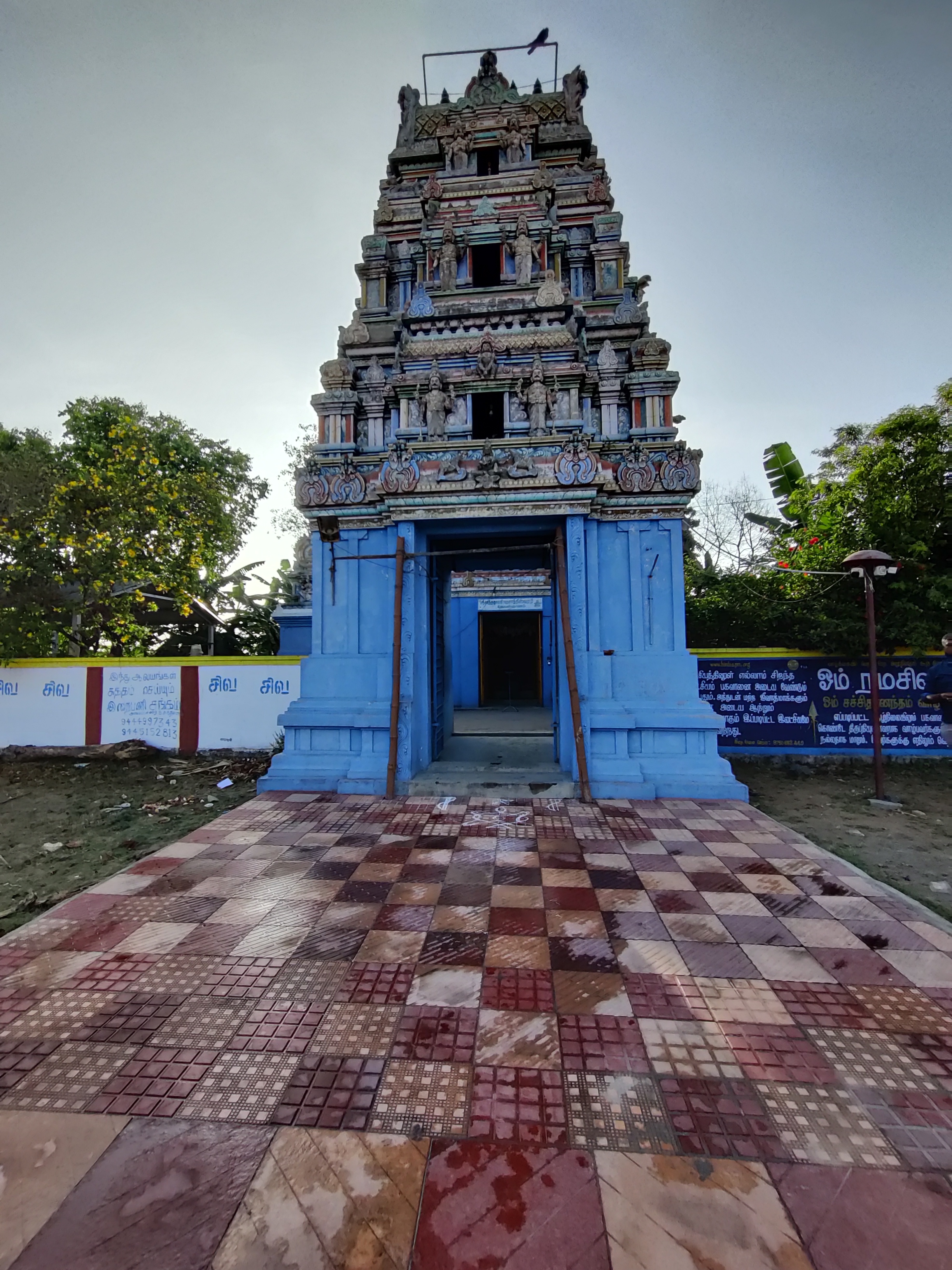


Moolavar: Sri Santheeswarar

Amman: Sri Santha Nayagi Ambal 

A beautiful 1200 years and temple located very close to Sri Dhathreeswarar temple in Vellavedu village of Thiruvallur. The temple is facing west which is not very common for Shivan temples and you will find very few temples facing west.

The Shivalingam facing west has a a square Avudayar. And Ambal Shanthanayagi is facing South. The temple is surrounded on east as well as South by a beautiful temple tank. 

As the name itself suggests this place is very peaceful and serene and ideal for meditating and having a peaceful time.

Contact: The temple opens by 6 am and the temple contact person Sri Sridhar can be reached on 9840136888

Location:

Sri Santheeswarar Temple, Melmanambedu, Vellavedu, Thirumazhisai


 Sri Maasilamaneeswarar Temple, Siruseri Village, Chennai


A beautiful old Shivalingam facing the east along with a Nandhi is all that you can see under a makeshift shed in the middle of Siruseri. The Shivalingam and Nandhi looks pretty old and may be 500 plus years atleast or more.The Avudayar is  circular in shape signifying that it must be installed by some king. 

Though the Ambal name has been given as Oppilamulaiumai Ambal, there is no Ambal Sannidhi or murtham. You can see a beautiful temple tank right in the front of the tenple structure singnifying that there must have been a fairly large temple here many years ago. There are similar 2 other Sivan temples like this with just the sivalingam alone in this Siruseri and Thazhambur village.

From a location perspective it is straight behind Siruseri TCS office but the approach road is from Navalur.

Contact: Daily one kala pujai is performed by local person called Mahadevan 8248070277

Location:


 Sri Baleeswarar Temple, Dindigul


Very powerful, elegant Sivan facing North. History unknown, people mentioned that this has been brought from Kasi and placed it here under a small shed. 

Very neatly maintained by local people.

Unique thing to notice in this temple is , the lingam represents both Sivan and Vishnu roopam together. 
Thiru namam appears in the forehead of lingam which is unique.

Contact:
Sivanadiyar Sambaji can be reached in his mobile 9443773589. 

Daily oru kaala poojai is happening and all other auspicious days.

Location:


 Sri Arthanareeswarar temple, Egmore, Chennai


Moolavar: Sri Arthanareeswarar
Amman: Sri Tripurasudari

This temple is small east facing with out any rajagopuram or entrance arch or Dwajasthambam. The lord is also called Saptharishinadhar. Arthanareeswara is the form of shiva and Parvathi in equal parts. Here this form is represented in the form of large Lingam mounted on an Avudayar of about 3.5 feet which belong to 7th century. The original temple was destroyed before the Britishers period by the Dutch. About 2 centuries back an old man of this place found these idols while cleaning up the tank in his land. The present temple was built later. The famous saint Thirunavukkarasar has sung about this temple and refered this place as "Ezhum Oor" meaning "awakening" which become Ezhumboor and Egmore in English.

Timing: Temple remains open between 7am to 11 am and 5pm to 8pm.

Contact: Gurukkal Madan can be reached at his mobile number 9940166691

Location:

 Sri Parasuramalingeswarar Temple, Ayanavaram, Chennai


Moolavar: Sri Parasuramalingeswarar
Amman: Sri Parvathambigai

A beautiful temple with lots of interesting information and facts associated with it. Though the current temple structure looks fairly new it is said that presiding deity in the form of shivalingam is believed to be at least 1000 years old.. 
The moolavar is Theendaa Thirumeni, meaning the Linga banam will not be touched even by the kurukal performing daily pujas. Hence only water, tender coconut and panneer is offered in abhishekam to the lingabanam and rest of the dhravyam like milk curds etc are offered to the Avudayar which is around the linga banam. The linga banam is also very unique and square in shape rather than the usual round/cylindrical shape. This temple is a Thevara Padal Vaippu Sthalam (called as Ayaneechuram).

Not many of us would know that the current Ayanavaram was actually known as Ayanpuram in those days. The word  “Ayan” depicts Lord Bramha himself. According to Kandapuranam when Bramha could not tell the meaning for “Pranavam” or Om when lord Murugan as a kid asked him, he was put in jail by lord Muruga and then took over the duty of creation on himself. So to get back his duty of creation lord Bramha prayed to lord Shiva, came to this Kshetram of Parasuramalingeswarar and took bath in the temple tank here and hence as Ayan came here it was named Ayan Puram and as days passed by was knows as Ayanavaram. It was also referred as Bramhapuri in those days. The temple tank is named as Bramha theertham as he took a dip in this tank.

Another interesting feature of this temple is that you can see lord Murugan in BramhaSastha vigraham form. A form that depicts his portfolio of creation which he took over from lord Bramha. You can see him with Akka  malai and kamandalam in both his hands. A very beautiful vigraham and is said to be done during the 8th or 9th century and a marvellous creation of the Pallava carving artists.

Mahavishnu’s sixth incarnation Parasuramar based on his father Jamadhagni’s instruction actually cut off his own mother Renukadevi’s head and ended up as a sinner. To get rid of this sin he worships lord Shiva in this Ayan Puram kshetram and hence the moolavar here is called Parasuramalingeswarar.

Yet another feature of this tenple is the Ambal Parvathambigai’s Sannidhi. Usually you will find Ambal towards the left side of the moolavar and will be facing South. But here you can see her Sannidhi is towards the right of moolavar Sannidhi and is facing the east. This is believed to be very auspicious and it is said that she will bestow all your wishes.

Contact:
The temple contact sivanadha kurukal can be reached at 8124763613

Location:

 Sri Ooraneeshwarar Temple, Urappakkam, Chennai


Moolavar: Sri Poornambikai
Amman: Sri Poornambikai

The name Sri Ooraneeswarar has come because in tamil, reptiles are called ooranai and as they have worshipped this Shiva lingam called Ooraneeswarar and the place hence became Oorapakkam (later spelt Urappakkam). The sivalingam is very beautiful and has a square Avudayar signifying that siddhars must have installed it in those days. Swamy here is facing west which is very auspicious and even the new temple is getting constructed facing west only.

It is said that the sivalingam alone is over 1500 years old and was found under a tamarind tree way back in late 90s when the roads were not as big as they are now. After that a small make shift arrangements were made on a temporary basis and daily puja is being performed since 23 years now. The temple is on the GST main  road in Urappakkam.

As days went by they have added other parihara vigrahams like Pillayar, Valli Devasena Samedha Subramania swamy, Ambal Poornambikai. Chandikeswarar, Mahavishnu, Vishnu Durgai and Dhakshinamoorthy alone is found in the outer circle.

Since last 23 years the new temple construction is still going on without any support from the government or the HR&CE department and purely on the funds collected by devotees.

Temple has got rare photo of Idaikadar siddar (whose venba is in all tamil panchangam ) a separate Sannidhi is there for Anjaneyar as well Navagrahas.

Timing: The temple opens by 6 am

Contact: The temple contact person Sivakumar can be reached at 8056171993

Location:

 Sri Agastheeswarar Temple, Vadakkupattu Village, Oragadam


Moolavar: Sri Agastheeswarar
Amman: Sri Tripurasundari Ambal

A beautiful Tempke built within the Hiranandani premises. It is said that the old temple was completely demolished here and the old sivalingam was taken by the local villagers and is installed near the oragadam main road.

The Hiranandani builders have installed this new Shivalingam with the same name Agastheeswarar and have built a very beautiful temple. The vicinity is very pleasant and well maintained. There are separate Sannidhis for Pillayar, Murugan with Valli & Deivyanai, Kala Byravar and Navagrahas. There is also a separate Sannidhi for Perumal.

They have a beautiful lawn and they have planted 27 different trees rrepresenting the 27 stars. Very peaceful and beautiful temple and worth for meditation and other spiritual activities.

Contact:
The temple is maintained by one Sri Ravi who can be reached at +91 9941827199. 

Timing: The temple opens only by 8:00 am.

Location:

 Sri Mugaleeswarar Temple, Mugaleevakkam, Chennai
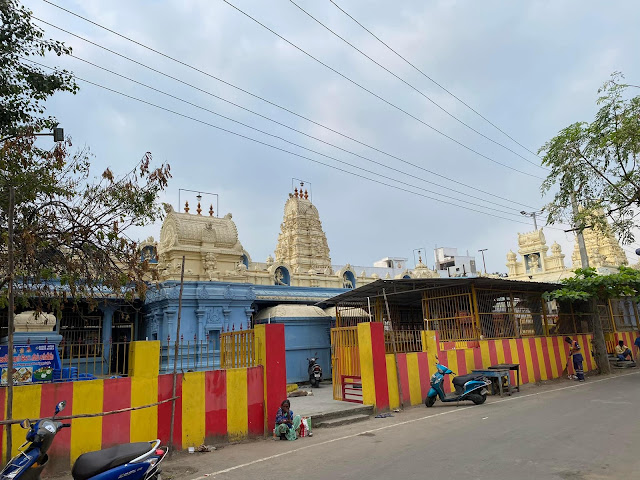


Moolavar: Sri Mugaleeswarar
Amman: Sri Balambigai
 
A beautiful fairly large temple in middle of Mugalivakkam. The temple has a big prakaram and within the inner prakaram there are separate Sannidhis for Mangala Vinayagar, Valli Devasena Samedha Sri Subramanya swamy, Durga, Lakshmi, Saraswati, Natarajar, Kalabyravar and suryan and Chandran also found. Separately Nalvar can be seen and also Aravathimoovar facing north.

Swamy Sri Mugaleeswarar  is facing east and Ambal Sri Balambigai is facing south. In the outer prakaram there is a huge Pillayar and also Balasubramaniam. The Adhikara Nandhi is really huge and very beautiful. Next to the Shiva temple in the same prakaram there is a  Varadharaja Perumal Temple and also a big hall for conducting functions.

Naagar is below a peepal and neem tree and also a separate sannidi for Navagrahas can be seen.

The name Mugalivakkam has come based on Sri Mugaleeswarar. 

Contact: The temple contact number is 9940557155.

Location:

 Sri Malleeswarar temple, Nellikuppam, Thiruporur


Moolavar: Sri Malleeswarar
Amman: Sri Mangalambikai

Ancient sivan temple facing east. Elegant lingam and blissfull Nandhi has been kept in a small hut under a peepal tree.

Village people are building a huge and beautiful temple nearby.

As of now to there is no Ambal but there is a feet of her kept for worship.

Contact: Temple trustee Mr.Sambasivam can be reached in his mobile number 9360730995

Location:

 Sri Bheemeswarar Temple, Thodukadu, Sriperumbudur


Moolavar: Sri Bheemeswarar
Amman: Sri Nagaimugaivalli Ambal

A beautiful Temple built in the Chola period and easily dates over 1000 years plus. It is said and also been referenced to a book that was written by one of the 63 Nanyanmar Sri Iyyadigal KadavarKon (570 to 585 AD) called Veemeshwarar Udayar that first Astrology (Jodhidam) related work was written here in this temple. So it is said to be the birthplace of Astrology.These details are also said to be on the inscriptions on the stones in this temple. To confirm that there is no separate Sannidhi for Navagrahas.

Sri Bheemeswarar’s earlier name was Veemeshwarar and in the due course of time it became Bheemeshwarar. The moolavar lingam is called Shodash (16 in Sanskrit) lingam as it has  been divided into 16 cuts. And it is said to represent 16 Selvam (prosperity). 

Also another story is related to Nalayani who according to legend, is a symbol of absolute chastity. Wife of a disgruntled sage, she serves him in every possible way and that with a smile. He is said to have assumed the form of an old man with a dreaded disease just to test the level of her chastity. She is said to have even carried the disabled man in a basket to a prostitute’s house when he wanted to visit her. For all the trouble the husband gave her he was cursed and Nalayani being a devoted wife prayed to Bheemeshwarar to get her husband rid of his curse and got united with him. 

So it is believed that those who have issues in their marriage and or separated from their spouse pray to Sri Bheemeshwarar and they get united and live happily ever after.

There is a very tall pillar like shiva lingam with an Avudayar outside called the Akasha lingam and it is believed that there was a samadhi of siddhar underneath this Akasha lingam and nobody knows the name of the siddhar. In the pillars of this temple Yogabyravar, Sarabeshwarar, Anjaneyar and other murthies can be seen. Also murthy of the Chola king and queen on the pillar.Interestingly there are 3 Nandhis in this temple.

Outer prakaram has recently built Sannidi for Pillayar and Anjaneyar.

Contact: The Temple Kurukkal Merunathan can be reached at 9894097466 and 8248936825

Location:

 Sri Illupaipoovaneswarar Temple, Pooiluppai, Karumbakkam, Thiruporur


Moolavar: Sri Illupaipoovaneswarar
Amman: Sri Poovachi Amman
 
A beautiful small Sivan temple in the village facing east and Ambal Poovachi Ambal is facing south. There is a beautiful temple tank behind the temple.

Apparently Illupai poo or flowers (Mahua) was being taken from this village in those days and were being taken to Thirukazhukundram Sri Vedagireeswarar temple. And once while doing this Kaingaryam a snake bit the person and he was blessed by this lord and a boon has been given that anybody bitten by any poisonous creatures in this village will not die. And since then till date there has been no deaths caused by any snake bite or any other poisonous creatures.

Contact:
The temple person Thiagarajan can be reached at 9840234803. 

Timing: The temple is opened from 6 am in the morning.

Location:

 Sri Malligeshwarar Temple, Madayathur, Thiruporur


Moolavar: Sri Malligeshwarar
Amman: Sri Manikavalli

A beautiful old temple and it is said that the shivalingam was only present and was filled with thorny bushes. Way back in 2004 Kanchi madam Sri Jayendrasarwathi swamy has performed the kumbhabhishekam. 

The swamy Sannidhi is facing east and.Ambal is facing the south. There is a separate Sannidhi for Navagrahas. The temple is surrounded by a lake as well as lush green farm lands.

Contact:
The temple person Chandrasekar can be reached at 9283736233

Location:


 Sri Aabathsahayeswarar Temple, Thenneri, Kanchipuram


Moolavar: Sri Aabathsahayeswarar

Amman:Sri Anandavalli

A beautiful old temple which was built in the year 1090 CE by Kulothunga Chola I as per the stone inscriptions found here.

In ancient times the lord is believed to have come to the rescue of a king was in crisis and hence his name here is Abathsahayeswarar (one who came to the rescue). It is also said that in a distant Karnataka Village called Elavetti people were perishing every day for some unknown reason. Upon advise by a traveler they came here and worshiped the Lord with Vibhuti and took it back and sprayed the Vibhuti Prasadam across their village by chanting the name of lord shiva and their sufferings  ended.

As per the inscriptions  Lord Shiva was called as Thiruvananthecharamudaya Mahadevar and the place was called as Kulothunga chaturvedi mangalam.

During Uthama Chozha Period this place was called as Utama Chozha Chaturvedi Mangalam and during Kulothunga-I ( 1090 CE ) period, this place was called as Thirayanur alias  Kulothunga Chozha Chaturvedi Mangalam. It is believed that this temple was originally built during Uthama Chozha’s mother Chembian Maha devi and latter reconstructed with stone by Kulothunga Chozha. The inscriptions of Kulothunga Chozha-I, Sambuvarayas, Sundara Pandyan and Vijayanagara inscriptions are found in this temple. The temple was latter extended and re-constructed during Vijayanagara Nayak Period. This inscriptions records the Gift of land, money towards poojas and lighting of perpetual Lamps / Santhi lamps.

The Kulothunga Chozha’s inscription starts with his meikeerthi records the gift of Two cows with a calf towards lighting of one sandhi lamp by Malaikudaiyan Padampakka Nayakan and the same was received by Amarakan Sundara Bhattan and his brother.

The Sundara Pandyan’s 14th year rule inscription records the gift of Land with periphery Soola Stone  towards celebration of  festival on Aadi month, Monday. Another inscription records the gift towards naivedyam.

The Rajadhi Raja with title records the gift of land by a merchant called Mangalangilan of Puliyur Kottathu Poonthanmali / Poonamallee  a part of Chennai towards Thirupalli Nachiyar’s  5th day Naivedyam.

Another Kulothunga Chozha’s inscription starts with his mei keerthi records the gift of 12 Goats to give 12 nazhi ghee towards lighting of Lamp.

Veera Rajendran’s period inscription records the gift of land to this temple, which is incomplete and eroded/ damaged in many places. 

Another Kulothunga Chozha-I’s inscription with his full meikeerthi / Title records the gift of Land to this temple. The inscription elaborately describes the income from the land to be used for Naivedyam (Salt rice, Vegetable rice, Curd Rice  etc) and the materials like Paddy / rice to be offered,  paddy to be offered for Abhishekam, lighting of perpetual lamp, etc,.

The temple was recently renovated by Archaeological Survey of India ( ASI ) and is under their control 

A large and beautiful outer courtyard leads into the temple which has a single Prakaram. The outer walls of the sanctum sanctorum have a lot of stone inscriptions detailing all those information given above. In the front there are a few miniature carvings below eye level. The idols are all magnificent works of art. The main deity is a large lingam. There is a large and disused temple tank north of the temple.

The Temple is 9 kilometers south of Sunguvarchathiram (in the Chennai to Bangalore highway before Kancheepuram) and in the northern fringes of Thenneri village.

Contact: It is under the oru kala poojai scheme and the temple kurukal Dhandapani can be reached on his mobile number 9444661365

Location:

Sri Aabathsahayeswarar Temple, Thenneri, Kanchipuram

 Sri Airavatesvarar Temple, Pazhanthandalam, Kundrathur


Moolavar: Sri Airavatesvarar
Amman: Sri Aanandhavalli

A Chola period temple which easily looks to be around 1000 plus years old. It is said that when the Chola kings have built over 108 shiva trmples in and around this part of Kanchipuram. It is said that the lord has been worshipped by the elephant of lord Indran called Airavatham, hence the moolavar here is called Airavatesvarar.

Swamy is facing east and Ambal is facing south. The Vimanam and the grabhagraham is in gajabrishta form which is style that most of the Chola temples are built in this belt. In the prakaram there is a separate Sannidhi for Selva Vinagar and Subramania swamy with valli deivayanai and also for Navagrahas.

Contact: The priest is from Puri Orissa and his name is Santhosh Kumar Panda and can be reached at 7358070781. Also Mohanraj can be contacted on 8939594705. He is taking care of the temple activities

The temple normally is opened by 6 am.

Location:

 Sri Arunachaleeswarar Temple, Puduchathiram, Thiruvallur


Moolavar: Sri Arunachaleeswarar
Amman: Sri Sornambikai

A very old temple on the Chennai Thiruvallur Road which easily could be over 800 plus years. The moolavar Arunachaleswarar is facing east and Ambal sornambikai is facing south. 

The prakaram has Nandhi mandapam, Bali peedam and in the ghostam there is Narthana vinayagar, Dhakshinamurthy, Mahavishnu, Bramha, Durgai and Chandikeswarar. There is a separate Navagraha Sannidhi which was built during 1965. There  is a Kala Byravar murthy as well as Suryabhgavan here. Apparently Chandran is missing. There is a Naagar at the entrance wall of the Arthamandapam.

This temple seriously needs a Rennovation and as always there is no support from any official body. There is also a beautiful Temple Tank in the South side and also a  Hanuman temple right behind the temple which also belongs to this temple and a beautiful Veera Anjaneyar facing south.

Contact: The temple Kurukal Saravanan can be reached at 9940269410 

Timing: The temple opens by 6:30 am to 7:30 am and evening from 5 to 7 pm

Location:

 Sri Agastheeswarar Temple, Karumbur, Chengalpattu


Moolavar: Sri Agastheeswarar

Amman: Sri Akhilandeswari

 A good 1400 year old temple which apparently had been completely in deplited condition and the local villagers had got together and had built a nice temple here in the middle of the field. The sivalingam, Akhilandeswari Nandhi, surya bhagawan and balipeedam alone very old and the ASI has confirmed that it’s dated over 1400 years old.

The shivalingam seems to be Swayambhu and is on an a square avudayar. Ambal Akhilandeswari is facing south. In the ghostam you have vinayagar, Dhakshinamoorthy, lingotgbavar, Bramha, and Durgai. The earlier chandeekeswara has been replaced with a new idol as it was broken.

There is a separate Sannidhi for byravar and a beautiful big Ardhanareeswarar Sannidhi is also found here. 

Very peaceful atmosphere and in the middle of a field it’s really a place to be visited. 

Contact:

The temple is been taken care by one person named Murugan and his wife. He can be reached at 9551026081

Location:

Sri Agastheeswarar Temple, Karumbur, Chengalpattu

 Sri Bhoominadheeswarar Temple, Kelambakkam


Moolavar: Sri Bhoominadheeswarar

Amman: Sri Keliamman

A Swayambhu shiva lingam under a huge peepal tree and close to Keliamman temple. There is a beautiful temple tank beside and the temple has been made in a shed. A Swayambhu Pillayar is formed on the tree itself. 

The name Kelambakkam has come us because of this Ambal called Keliamman.

There is also a naagar found next to the shivalingam. Swamy is in a square Avudayar which shows that Siddhars have worshipped this shivalingam. 

Even though the shed is covered completely the Sun light in the morning directly falls on the shivalingam for few minutes. 

It’s a very peaceful area away from the hustle and bustle of the city and is opened all the time. Very neatly maintained and must visit temple. Ideal for meditation 

Contact: The temple priest can be reached on 9840126975.

Location:

Sri Bhoominadheeswarar Temple, Kelambakkam

 Sri Sathuragiri Sundharamahalingam Temple, Medavakkam, Chennai


Moolavar: Sri Sathuragiri Sundharamahalingam

Amman: Sri Angaallaman

A beautiful small temple in Santhosapuram of Medavakkam which is in a makeshift structure. All the murthies have pure Tamil names like Arulmigu Azhagiya Pillayar, Arulmigu Ilamurugan and even Sivan is known as Arulmigu Sathuramalai Azhagiya Mathirumeni Appar, there is Kubera lingam in the outer praharam called Arulmigu Selvan Thozha Thirumeni. Also they have a Dhakshinamurthy which looks like a Swayambhu Pilllayar found from the nearby lake. Tamil Agamam is followed here completely.

To name this temple they had over 108 names to chose from and itseems that Sundaramahalingam surfaced three times and the people here went to Chathuragiri in Virudhunagar and a siddhar confirmed it and gave a handful of mud from Chathuragiri which was gotten back here and this temple was built. Swarnakarshna Byravar is seen with his consort seated on his left lap. 

As the Tamil agamam is followed anybody and everybody can do abhishekam here during the morning puja.

Contact:

The temple sivanadiyar Kamaraj can be reached at 9790784166

Location:

Sri Sathuragiri Sundharamahalingam Temple, Medavakkam, Chennai

 Sri Pasupatheeswarar Temple, Thiruvelichai, Kelambakkam


Moolavar: Sri Pasupatheeswarar
Amman: Sri Simha Priya Ambal

Pasupatheeswarar temple is actually a private temple. Originally, it was built for the purpose of private worship for a saint called Gnanacheri Gnanigal. During 17th - 18th centuries, there was an Advaita philosopher, Carnatic composer and a saint named Sadashiva Brahmendra. During that period, he was very popular in the region of the current Tamilnadu state. It is believed that in the earlier births, he was born as Dattatreya, Ugra Pandya, Aanaya Nayanar, Vilvamangala Swamigal and Abirami Bhattar. In the later part of his life, Swamiji became a Mouna Guru and never spoke. It is believed that Swamiji took rebirth in the 20th century in Tamilnadu.

He started a religious organization called Gnanacheri in 1979 CE and hence the devotees called him as Gnanacheri Gnanigal. Pasupatheeswarar temple is built in Gnanacheri. The temple dedicated to Shiva and the shrines dedicated to Varadaraja Perumal, Anjaneya and Prathyangira Devi all were built for private worship for Swamiji. The kumbhabhishekam of the temple took place in 1999 CE.

The Pasupatheeswarar shrine is the main section of the east facing temple, which has five tiered tower (Raja gopuram). Ganesha, Dakshinamurti, Lingodbhava, Brahma and Vishnu Durga are found as the niche images around the walls of the sanctum. Chandikeshwarar sub shrine is found in its usual location. In the prakara, the sub shrines of Ganesha and Murugan with his two consorts are situated. Dattatreya, Adigalar, Surya, Chandra, Bhairava and Navagraha are some of the other deities found in this section of the temple. A small stucco idol of Hanuman in tall pillar is also situated.

In the prakara of Pasupatheeswarar shrine, a separate east facing shrine along with a front side mandapam is found for Varadaraja Perumal. Varadaraja Perumal is found along with his consorts Sri Devi and Bhoo Devi in the main shrine. There is a small north facing sub shrine for the Goddess Kanaga Valli and two small sub shrines of Garuda and Hanuman facing towards Varadaraja are all situated in the mandapam. The wall behind the shrine has the niche image of Krishna playing flute.

Contact:
You can reach the contact person at 9841028028

Location:

 Sri Chandra Mouleeswarar Temple, Gowriwakkam, Chennai


Moolavar: Sri Chandra Mouleeswarar
Amman: Sri Thripura Sundari

A beautiful temple in the middle of a residential area of Gowriwakkam with lot of Sannidhies. It is said that the sivalingam is very old. Swamy and Ambal murthies behind the shivalingam in kalyana kolam, which is found in very old temples around from the chola period. 

There is no separate Ambal Sannidhi. The Pillayar Sannidhi Ganesha is with Siddhi and Bhuddi and is called Nithyananda Ganapathi. There is a separate Sannidhi for Annapoorani, Kanaka Durgai, Saraswathi, Rajarajeshwari, a Vishnu Sannidhi in the form of Ranganayagi Samedha Ranganathar and panchamuka Anjaneyar is also found.

Separate Sannidhi for Natarajar, Byravar and Navagrahas also is seen. Also a separate Sannidhi for Ayyappan is found.

Contact:
The temple Kurukal Subramanian can be reached at 9884441661 

Timing: The Temple is opened by 7:30 AM

Location:

 Sri Margabandeeswarar Temple, Tiruvirinjipuram, Vellore


Moolavar: Sri Margabandeeswarar

Amman: Sri Maragadhambikai

A good 1000 plus years old temple in the town now called as Virinjipuram and the history of which rulers built it is not clearly known. Marga Bandhu Eeaswarar (a constant relation guiding us in the path of life) and in Tamil the name is Vazhithunai Eeswaran.

The history goes like this- Once Brahmma had to bear the effect of speaking a lie, though he did not really see the head of Lord Shiva in Tiruvannamalai, unwilling to admit the failure, he used a flower (Thazhamboo) that fell from the head of Shiva and said that it was evidence of his seeing the head of the Lord. So Lord Shiva did not want to give darshan to Brahmma in His real form and Brahamma was born to a priest in the temple named Shiva Sharman. After the death of the priest, he succeeded his father to serve the Lord.

After worshipping Swarna Ganapathi in the temple, Shiva Sharman came to the Lord for His abishek with the Tirumanjanam pot, but could not touch the head of the Lord as he was a boy. Merciful Lord bent His head to help the boy and acknowledged his services. Hence the Lord is found slightly bent towards esanya or northeast. is. 

The presiding deity is a swayambumurthi in a leaning form. The rays of Sun fall on the Lord in the month of Panguni (March- April). Palm tree is the sthala Vruksha of the temple which is in the inner corridor – prakara of the temple. This has a peculiar character of giving the fruits in black in a year and white the following year. The importance of the temple lies in the Rudraksha roof above the Sanctum sanctorum. Virinjipuram has also the reputation of being sung by renowned Vedic scholar and Shiva devotee, Sri Appayya Dikshithar.

There are 1008 shivalingams in this temple. It is said that off the main 108 shivalingams 18 of them are very special, and this shivalingam is one of the 18 and a must see.

The temple is an outstanding example of Tamil architectural skill. The temple is noted for child boon prayer. It is the staunch faith of the devotees that taking the first bath in Palaru river followed by dips in Brahmma and Simha theerthas (tanks) and going round the deity ensures child boon. People also pray for timely marriages. Devotees also throng the temple for relief from the effects of witchcrafts occupying the family or the individual.

The temple is open from 6.00 a.m. to 11.00 and 4.00 p.m. to 8.00 p.m.

LocationSri Margabandeeswarar, Tiruvirinjipuram, Vellore


No comments:

Post a Comment

मनसर

 प्रकार : गिरीदुर्ग जिल्हा : नागपुर उंची : १२०० फुट ...