In all ancient cultures or primitive societies women formed to be
the foundation pillars upon whom rested the important tasks of giving
birth and rearing the young, while teaching them what were seen as
social norms, culture-heritage, behavioral habits, and traditions of
those times. The women were seen as life producers with regenerative
capacities, hence her organs that helped in procreation became the
symbols of new life, and motherhood became the core figure in
magico-religious cults of those times. The Paleolithic female figures
found in abundance from various excavation sites with exaggerated
maternal organs, stand as an evidence, showing the popularity of Mother
Goddess worship in prehistoric times; a practice still popular in India,
in a more developed form of worship of the Sakti or the feminine
principle.
A regular supply of food and offspring would have been the most
important requisites of the primitive society, thus one can assume that
preservation of life would be at the core of any prehistoric religious
cult. As a general norm it is seen that the way of life of a
Paleolithic burial in sleeping position. (photo from the internet)
group of people tend to define the basic framework for the type of
deity and manner of worship in that group. From hunter gatherers, as the
primitive society moved towards food production or farming, the
regular food (hunted or farmed) acquired a high degree of importance and
sacredness, and it was likely that the women’s capability of
procreation got associated with the plants and animals that kept the
society nourished in ancient times. Thus, the primitive mother goddess
figures (from Middle and Upper Paleolithic times) that we see with
grossly exaggerated sexual organs, initially would have been part of
some fertility rituals asking for greater production of game and human
offspring. During the Neolithic times as the society slowly moved
towards agriculture, the religious beliefs started adding agricultural
rituals alongside the hunting ones that were already in practice. The
graves found in the upper paleolithic sites across the world held
skeletal remains with bones that were reddened using ochre, along with
food, tools, weapons, and ornaments. Red being the colour of
regeneration, and foetal positions of the skeletons tend to point to a
belief that the soul or body would regenerate (a rudimentary concept of
re-birth) and start a new life again. However, Neolithic graves show
some changes, and the visibly greater pomp and
Dooey’s Cairn – Neolithic Court Grave. 4000-5000 years old grave site in Ireland. (photo from the internet)
reverence in laying down the body under the earth, pointed at a
changed belief where the body was believed to affect the crops that
sprung forth from the Mother Earth. Thus, during the Neolithic times the
Mother Goddess was not just a life creating mother, she was also the
Mother Earth from whom the crops sprung, and who like any other woman
could also be influenced with gifts and entreaties and allow herself to
be controlled through various rituals and rites. Across all neolithic
cultures spread across Egypt, Mediterranean, Syria, Iran, and parts of
SE Europe, female figurines in bones, stones, or clay have been found
that are said to be the direct descendants of the images of deities
created by the older Mesopotamia, Syrian, and Greek societies.
Venus of Willendorf, Naturhistorisches Museum Wien, 22000 to 24000 BCE -Upper Paleolithic
“The Paleolithic Era (or Old Stone Age) is a period of prehistory from about 2.6 million years ago to around 10000 years ago. The Neolithic Era (or New Stone Age)
began around 10,000 BCE and ended between 4500 and 2000 BCE in various
parts of the world. In the Paleolithic era, there were more than one
human species but only one survived until the Neolithic era. Paleolithic
humans lived a nomadic lifestyle in small groups. They used primitive
stone tools and their survival depended heavily on their environment
and climate. Neolithic humans discovered agriculture and animal
husbandry, which allowed them to settle down in one area.” Source
Seated Mother Goddess of Çatal Höyük: the head is a restoration, 6000 BCE- Neolithic era. Museum of Anatolian CivilizationsThis
figurine was discovered at the Neolithic site of Çatalhöyük in Turkey.
It was carefully buried beneath a platform in a house, along with a
valuable piece of obsidian. Made of marble, it’s nearly 7 inches long. SourceHow
they lived in Paleolithic era. Image of the Magdalenian settlement in
Gönnersdorf, 12 500 BP (Paleolithic era- Old Stone age). Traces of two
small round tents, and three large, fur-covered dwellings, with a broad
oval shape, similar to a yurt, were revealed with a diameter of 6 to 10
metres. They were coloured red on the inside and outside, and the floors
were paved with slate. The settlement was systematically excavated over
an area of 650 square metres, and bones were found of mammoth, horse,
bison, aurochs, reindeer, deer and arctic fox, as well as birds. Text and Photo source.
Paleolithic era of the Old Stone age is correlated with food
gathering or Hunting societies/economy; while Neolithic era roughly
relates to the transition from food gathering to food producing
societies, though the latter has no uniform time frame in terms of the
economy. This is especially so in India, hence it is more logical to
focus on the anthropological categorizations, which can be better
identified and recorded from among the different surviving Indian tribes
(many of whom were still following the prehistoric customs until very
recently). From a study of the existing Indian tribes three main types
that had been derived are: hunting-food gatherers, pastoral, and agricultural.
However, the three are not mutually exclusive, nor do they have any
strict chronological order. So often we find pastoral communities that
practice agriculture along with stock raising, and agricultural
communities that indulge in stock raising along with farming. Regarding
the cults and rituals followed by the food gatherers and agricultural
societies, the worship of mother goddess was at the core of all their
magico -religious beliefs. However, the pastorals had a very different
way of living, and they endured greater hardships in their daily lives.
The pastorals were more dependent on a good leadership to protect their
cattle, and this in turn gave rise to the development of the cult of
heroes and ancestors who were worshiped and highly revered by the
members of this community. Since the pastorals spent a large time under
the open skies and endured the wrath of the nature in form of storms,
harsh sun, or heavy rains, their gods were inevitably connected to the
sky in which nature and astral objects were personified as gods. The
Supreme God of the pastorals is thus a man who leads and protects them,
much like the head man of a joint patriarchal family. On the other hand,
agricultural societies who are dependent on the earth to produce their
crops developed the worship of feminine energy and the cult of Mother
Goddesses, which involved rituals related to fertility and magic.
Khoikhoi
of South Africa dismantling their huts, preparing to move to new
pastures—aquatint by Samuel Daniell (1805). Pastoralism has a rich
history in Africa, spreading from the Saharan region to East Africa and
then across the continent. (Samuel Daniell). Source: Smithsonian magazine. A Neolithic settlement in artist’s imagination. (photo from the internet)Pastoralism in modern India (A 2017 photo taken while travelling to Ladakh)
Mother Goddesses and fertility
The concept of Mother Goddess and associated fertility rituals is the
most primitive and longest surviving religious practices in the world.
The belief that women can multiply crops and fruits because they can
create children out of their bodies was universal across all ancient
societies. Thus, came the belief that what is sown or planted by a
pregnant woman will also grow to bear fruits much like the child in her
womb, while a barren woman will make the fields barren too. As per the
prehistoric thinking, women, who were also the first cultivators, with
their child bearing capabilities would create a similar effect on the
earth’s vegetative powers leading to good harvests, and thus women were
seen as repositories (storeroom) of agricultural magic. In prehistoric
era people would apply their own experiences from life to the various
things that they saw around them, which is now known as principle of
analogy. Thus, natural productivity was compared to human procreation
capability, and earth mother or the mother goddess was conceptualized
from a human mother. There are innumerable such examples from old Indian
literature. Almost all the Puranas and Smritis (law books for various
sects) have the line Ksetra-bhuta smrta nari vijabutah smrtah puman,
where kshetra (seed-field) refers to woman (woman is mentioned as a
seed field also during the marriage ceremonial rites), and a man is
identified as the seed. This likening of the woman to the field or earth
means that the functions of the two are the same, with the belief that
conditions that lead to a woman becoming fertilised applies also to the
Earth. The same belief continues in the ritual known as ambuvaci
(observed on and from 7th day of the third month of the Hindu
calendar). It is believed that that during the four days of the ritual
the Mother Earth also bleeds to prepare for fertilization. All kinds of
agricultural work like ploughing, sowing etc, are suspended at this time
so that Mother Earth can rest during her menstruation (also refer to
the rituals of Kamakhya devi in Assam during ambuvaci).
The
Zhob and Kulli sites in north and south Baluchistan have yielded many
such terracotta figurines, and these represent the earliest embodiment
of the primitive Mother Goddess figures in the Indian subcontinent.
photo Source
The tantric form of worship also lays special importance to the
menstrual blood for the same reason. Here in comes the use of the color
red/vermilion, which we see being used in almost all Indic religious
traditions. The Bhil tribes before sowing their fields followed the
traditions of setting up of a stone smeared with vermilion. Since
vermilion or red colour symbolises the menstrual blood, the smearing of
vermilion implies the passing of the energy of procreation to the earth
and making it fertile. The Mohenjodaro Mother Goddesses mostly have a
red slip or wash paint over them, as are the Venus figures of Willendorf
(Austria). Briffault who connected the red color with menstrual blood
and fertility further said that in many countries across the world it
was an ancient custom for pregnant or menstruating women to colour their
bodies with red ochre in order to improve their chances of fertility
and also to keep off men during those times. The same tradition is still
seen in Hindu women who wear vermilion (sindoor) after marriage,
signalling their bindings to one man and the readiness to procreate. For
the same reason widows and unmarried girls cannot use sindur, because
they cannot procreate. Holi, which is also a ritual of fertility,
originally showed the profusion of colour red.
The vermilion or sindur on the forehead and hair parting signals that the woman is marriedApplying sindoor on each other (a Durga puja ritual practiced between married women)Applying sindur or vermilion on the Mother Goddess
In Tantric form of worship the focus remains on the rituals centering
around the female genitals (lata sadhana), and the tantric yantras that
symbolise female organs. During Durga puja a yantra known as sarvatobhadramandala
symbolising the female procreation organs is drawn on the ground in the
form of alpona. Then a purnaghata or a purnakumbha symbolizing the womb
is placed on it and sindurputtali or the figure of a baby is drawn on
the ghata, and finally five leaves or amrapallava is placed on the ghata
with a sindur smeared coconut on top. This is thus a simple fertility
ritual that connects female regenerative powers of both humans and
plants (human and natural fertility) to ensure continual procreation.
Purnaghata with the five leaves and coconut on top, denoting a fertility ritual. (photo from the internet)Worshipping the purnakalasha. photo from wikipedia
That the yantra and purnaaghata is associated with fertility is best
depicted in the murti of a mother goddess found on the hilly slopes
facing the river Krishna in Nagarjunakonda. It depicts the lower part of
a female figure in a sitting or squatting position with legs doubled
up and set wide apart and the feet facing outwards. The bifurcated part
prominently shows the vulva or the yoni- dvara, and the ornamented
broad belt or girdle (mekhala) from below the naval creates a
purna-ghata like imagery. Satapatha Brahmana equates a purnaghata with the mother goddess; while Kathasaritasagar is more detailed in its comparison of the purnaghata with that of a womb.
The Mother Goddess from Nagarjunakonda, 3rd c. CE. “There
is a single line Prakrit Inscription in Brahmi characters of third
century AD engraved on the narrow strip of space at the bottom of the
sculpture (partly covered by the pedestal). It records that the figure
was caused to be made by Mahadevi Khamduvula who was an avidhava (whose
husband was alive) and a Jivaputa (whose sons were alive) and whose
husband is Maharaja Siri Ehuvula Chamtamula. This peculiar iconic form,
typical of the Deccan, even in terracotta medium, represents a widely
prevalent fertility cult associated with conference of longevity to the
lady worshipper’s husband and offspring’s as attested by the inscription
too“. Text and Photo sourcePurnakalasha is a popular motif on temple walls, and are frequently seen as pillar capitals and even bases.
Post Script: the concept and development of Mother
Goddess worship across all the ancient civilizations is a long topic and
cannot be covered in one such post. I will try to write more on this
topic in some of my later posts, and one topic that I particularly wish
to take up is the concept of ‘sacred prostitution’ or the ‘devadasi
pratha’ that was once a part of this mother goddess worship cult and
seen commonly across all the ancient civilizations.
References
Agarwala, PK, Goddesses in Ancient India, 1983.
Briffault, R. The Mothers, 1952.
Bhattacharya S., Tantra Paricaya (Bengali), 1952.
Bhattacharya, NN., Indian puberty rites, 1980.
Banerjea, Development of hindu iconography
Bharata, Bhārata, Bharatā, Bharat ~ That is India
5–6 minutes
||Why Bhārata instead of India||
There is a 2200 years old “Hātigumphā Inscription” found in the
‘Udayagiri Hills’, near Bhubaneshwar in Odisha. This is a very special
inscription, as it contains the earliest recorded mention of the word
“Bhāratavarṣa” (Prakritized as – ‘Bhāratavasa’). Line number 10 of this
inscription mentions “Bharatavarsha” (translation published by Jayaswal
and Banerji in Epigraphia Indica -Volume 20 (is in public domain).
The inscription was commissioned by “Mahārāja Kharavela
Mahameghavāhana” of Kalinga. and refers to his expeditions throughout
“Bhāratvarsha” that is India. The Inscription is dated to 13th year of
Kharavela’s reign in 2nd c. BCE, thus giving us indisputable evidence
that our country was known as Bhārat 2200 years ago.
Translated it means: “The Country that lies north of the ocean and
south of the Himālaya is called Bhārata, there dwell the descendants of
Bharata (Bharata Santati).”
Vishnu Purana that has the Bharata script
|| The word Bharata as given in the Rig Veda ||
The word “Bharata” can be traced back much earlier to the Rig Veda,
when compared to the Greek historian Herodotus of 5th century BCE, who
first mentioned “Indía,” from a Greek perspective, as a derivative of
“Indós”, the Sindhu river (for Persian equivalent of which is “Hindu”).
Images: The Dashrajana war between Bharata tribes and a
coalition of 10 other kings took place in phases, and the last phase was
fought by the side of the Parusni river, which according to Yaska
(nirukta 9.26) refers to the Iravati or Ravi river, which is now located
in West Punjab, Pakistan.
In the 18th hymn of the Rig Veda Samhita, Mandala 7 also known as
Vasishtha Mandala book, there is detailed recount of the “Dasharajna” or
the battle of ten kings. The conflict was between the Bharata tribe led
by King Sudas and a coalition of 10 other tribes (both Vedic and non
Vedic – eg. Alinas, Bhrigus, Dasas, Druhyus, etc.). Raja Sudas Paijavana
and his army (Bharatavamsha) of the Bharata tribe won the war.
Rig Veda, which was compiled around 1500 BCE, holds in its verses knowledge much older than 1500 BCE. Infact, Rig Veda has verses that speak in symbolisms of the end of the ice age period (some 10000 plus years back).
This Bharata tribe is from the Rig Veda and is the earliest
reference to the term Bharata. Rest are later period Puranic stories.
One such story tells that Queen Merudevi and King Naabhi had a son named
Rishabha, who was a part-incarnation of Sri Vishnu. King Rishabha and
Queen Jayanti’s son was Bharata, after whom our country Bharata is
named. This is mentioned in Bhagavata Purana 5.3.16–5.4.9, 5.7.3.
The other version of this story tells us Marudevi Mata & Nabhi
Raja are parents of Rrishabhadev the 1st Tirthankar of Jains, who is
also known as Adinath. His eldest son is Chakravarty samrat Bharat.
Another story from ‘Adi Parva’ in Mahabharata tells that
king Bharata was the son of Queen Shakuntala and King Dushyanta, and it
was after him that this land was named Bharatavarsha.
Again there is another story of Bharata (a son of Queen Sunanda and
Jain tirthankara Rishabhadeva) who fought against his brother Bahubali.
|| How did the Bharata clan of RigVeda get that specific name Bharata ||
The Bharata clan/ tribe got their name from Agni, whose other name is
bhaarata/bhArata; hence signifying the ancient Vedic Bharata clan were a
community of fire worshippers.
tvaṃ no asi bhāratāgne vaśābhir ukṣabhiḥ aṣṭāpadībhir āhutaḥ ||
~ RV 2.7.1
(Translation: Agni, descendant of Bharata, you are ours…..)
The priests of a yajna who light the fire are also known as bharatas.
As they start Agni, the latter is symbolically referred to as their
child. As per Sanskrit grammar, a child can be named by prolonging one
or more vowels in the parent’s name (guNavRddhi). Based on that Agni is
the symbolical son of the priests, bharatas (भरताः), and so he is called
bhArata (भारतः) in the above given hymn.
Bharata comes from the root ‘bhṛ’, which means: to support or
maintain. It also refers to Agni /bhArata’ ; so automatically when the
clan named itself as Bharata, it meant they were supporters or carriers
of the fire or Agni; which in simple terms meant – fire worshippers or
Agni upashak.
Thus, behind the name Bharata/Bharat lies the identity of the
ancient homa or fire sacrificial culture, known as the Agnihotra
culture. The Bharata clan were Agni worshippers and performed constant
homas or agnihotras, with their initial area of control being the
Saptasindhu region.
Bengal temples II- Hindu revival period (16th-19th c. CE)
15–19 minutes
A brief look at the political and socio-religious scenario that led up to the 16th century Hindu revivalism under Sri Chaityna
With the start of the Muslim invasions from the end of the 12th
century and the subsequent settling down of these invaders in Bengal
marked a sharp breakaway from the past within the socio-cultural fabric
of the region. For almost a century (13th-14th century CE), as the
Muslim invaders tried consolidating their power over the local Hindus
kings and lords, anarchy prevailed, and this period was especially
marked by widespread iconoclastic destruction of temples and violent
conversions of masses into Islam by the Sufi practitioners. As we have
already seen (in my previous blog article – to read it, click here)
the iconoclastic destruction of temples had a singular effect of wiping
out almost all ancient to early medieval temples in Bengal , leaving
very little as structural evidences for current studies on ancient
Bengal temples, which are mostly based on examining the temples seen in
old manuscripts illustrations, miniature models, sculptures, etc. During
such chaotic times, after almost a century, the Hindu chiefs and Muslim
warlords came to an uneasy compromise of uniting against the Delhi
based Mughal rule (16th century).
As the Muslim foreign invaders constantly faced stiff opposition from
the time of their entry into Bengal, they soon realised that in order
to subjugate the local forces and broaden their power base they needed
to secure the support and sympathy of local people in the areas that
they ruled. It was at this time that they devised the idea of
regionalism, as a separate entity from rest of India (of those times),
and appealed to the regional spirit of the common people in the areas
they ruled. Thus, historically it can be said that placing parts of
Bengal as separate and independent regional political entities (a
concept also known as separatism) was first conceptualized under Ilyas
Shah (1342-1357), and during the time of the Husayn Shahi dynasty Bengal
slowly came under more localised administration under its various local
level rulers/zamindars/chieftains/rajas. To keep up with this game of
regionalism, the Muslim rulers acted as sympathetic patrons of the
Bengali literature, art, and architecture, thereby using the oppertunity
to slowly force in the use of foreign elements, especially in Bengali
language, in order to attempt and cut off the language from its root
Indic sources. During this time many Hindu Bengali cultural aspects were
also adopted by the Muslim rulers in an attempt to pacify the local
people in the areas they ruled. However, as Muslims tried their best to
cut off Bengal from rest of India, this period remains remarkable in
starting what is seen as the strongest resistance movement of Hindu
revivalism, largely under the teachings of Mahaprabhu Chaitanya
(1486-1533).
In 16th century Bengal saw the advent of the Delhi based
Mughal rule, but even then Bengal local kings/chiefs enjoyed almost full
independence from central (Delhi) interference by just sending revenues
to the Delhi court. By 18th century, Mughal rule became weak, and
complete power was back in the hands of the local level chieftains,
rajas, governors, and nawabs, bringing back the separate regional
identity of Bengal within the then Indian political scenario. This
separate independent political position of Bengal, seeds sowed by the
Muslim foreign invaders, continued well into the 19th century, until the
British took over entire India.
In order to resist the Muslim invasions and thereafter attempts to
cut off Bengal from mainland Hinduism, started the Hindu revival, or the
‘Pauranic Renaissance’ as Dineshchandra Sen calls it. This resistance
movement had been gradually building up from late 14th century through the spread of Sanskrit scriptures in Bengali translations. However, the revival gained steam from 16th
century and popularized the Hindu sect worship of devi Durga and Kali,
and Radha-Krishna under impetus from Sri Chaitanya the exponent of
Gauriya Vaishnavism. While Radha-Krishna worship was present in Bengal
from at least the time of Raja Lakshmana Sena (1178-1206) under his
court poet Jayadeva, it gained mass popularity in the early 16th
century and was the primary force behind the revival of Hindu art and
architecture, as evident from the remaining highly ornamented temples of
the 16th-17th centuries that are mostly dedicated to Radha-Krishna.
Of the various religious movements that Bengal witnessed in the 16th
century, Gauriya Vaishnavism under Sri Chaityna (1486-1533) had the
most profound effect. This was because he focused on the equality of all
among the Hindus, thus attracting people from all castes and creeds,
turning it into a hugely unifying Hindu religious and cultural movement.
Sri Chaityna was a follower of Sri Krishna and his path to moksha was
through bhakti or devotion, expressed through deep love for his god.
This movement also had an effect on the literary traditions of Bengal,
where the vernacular literature was particularly focused on to help
spread the teachings of Chaityna among the common people, including the
tribal communities. Many Epics and Puranas were translated into Bengali
at this time, including the Bengali version of Ramayana that was written
Krittivasa, besides the biographies of Chaityna, innumerable Vaishnava
songs, narratives and verses on Sri Krishna, and poems on devi Chandi
and Manasa.
Interestingly, temple building had not entirely stopped even during
the Islamic invasions and its subsequent rule in some parts of Bengal
(early 14th to 16th century). Nothing could deter
the powerful Hindu rajas and chiefs (Dinajpur rajas or Bhaturiya) from
building temples. In the ASI- Bengal Circle report (1910-11, I, p.31)
there are the chronicles of the rajas of Bishnupur, in which it is
mentioned that Shanreshvara temple (Dihar) was built by Prithvi Malla in
1335-36, as found written in an inscription obscured under a buttress.
Besides this, there are other temples built by the Malla kings during
this period, such as the Shantinatha temple at Sihar by Jagatnatha Malla
(1309), Jagannatha temple in Bishnupur by Patit Malla in 1449,
Dasabhuja temple in Bishnupur by Chandra Malla in 1529, Gopala temple at
Banki and Ekteshvara temple by Bir Malla in 1545. In fact the entire
Malla kingdom is scattered with innumerable temple ruins and murtis
(such as the ruins at AtbaiChandi village) of this period that speak of
their extensive temple building activities. The Jains too kept on
building temples until the 13th century or even later (in the
remote western parts of Manbhum district), and some are still found
standing in Bahulara, Ambikanagar, Chharra, Pakbira, Deoli, etc. The
famous trade centre at Telkupi on the Damodar was a stronghold of both
the Vaishnavites and Shaivites and held temples that ranged from 10th to the 15th
centuries, which were unfortunately submerged under the Panchet dam
post-independence. From an inscription it is clear that two temples were
built at Barakar in 1461, a Shiva temple at Phulbari (1444-1445), one
temple at Kiriteswari(1465-1466), a panchaupasana shrine at Wari (1545),
an inscriptional plate found affixed to a mosque in Patna district that
tells the building of a temple in Rajdhara on the bank of Ganga on 7th
January 1496, Bashuli temple at Chhatna (1553), etc. Thus, temple
building never really stopped in Bengal and was carried on despite the
severe persecution and temple destruction.
However, between the earlier Hindu period and later Hindu revival
period, Bengal temple architecture saw a major transformation and
underwent sea changes. The earlier tiered form (pidha style) and the
tall nagara sikharas (mostly rekha deul styled) almost went out of
fashion, and was replaced by the chala and ratna architectural styles.
Chala style temples
This style is a replica of the simple village hut on an elongated
base with the two sides to the roof and gable ends. In Bengal villages
this hut is a common occurrence where it has either a bamboo frame with
reed /jute lattice work or a mud walled body with thatched roof curved
at the ridge and lower edges. This design is known as the ek bangla or
the do chala, while two such huts attached to each other are known as
jor bangla, the most famous in Bengal temple architecture of these
times.
Since in West Bengal the walls of huts are mostly made of mud,
do-chala houses though used (mostly in Birbhum), is not a preferred
style both in house and temple construction. Instead the char-chala
structures are more common (both for houses and temples), built on a
square base with curved cornices, and curved side edges, which would
help to throw off the heavy rains so common in Bengal monsoons.
The Bengal chala or hut style, which became so popular in the Hindu
revival period for temple construction, however architecturally goes
back to the ancient times. Such structures have been seen on an artifact
from Chandraketugarh, and are widespread in Mauryan times as granaries
or as leaf thatched structures seen on Gandharan bas-reliefs that are
similar to the Bengal at-chala temples. Adris Banerji in his book
“Temples of Tripura” had produced a representative sketch of a
jor-bangla design from a Shunga era pillar that was found at Sarnath. In
Bengal the chala style makes a comeback in the Hindu revival period,
and the earliest dated hut styled temple is the Simhavahini temple at
Ghatal (1490 CE). This is a char-chala temple with a char-chala porch
attached in front, giving the semblance of a jor-bangla.
The char-chala and the at-chala temples, which appear post Islam
invasions, with their superstructures supported on arches and vaults, as
per some historians, appear to be Muslim influenced; however, that is
not so. Village mud huts in Bengali chala style have been a part of
Indian landscape from times immemorial, and imitation of village huts in
bricks and stones for building religious structures is an ancient
feature in Indian architecture, as clearly evident from the rock cut
Sudama cave in Barabar hill (3rd c. BCE), or the famous free-standing Draupadi ratha in Mahabalipuram that is of 7th c. CE. An image standing inside an at-chala hut is seen in the Cambridge manuscript (Add. no. 1643) of Ashtasahasrika Prajnaparamita,
which was copied in 1015 CE. These examples show the ancient
structural origin of this type of temple, a tall standing char chala
with mud walls from which project veranda roofs at a lower level
supported on bamboo poles (exactly what a village hut still looks like)
Sudama cave, Barabara hills, 3rd c. BCE
Draupadi ratha, Mahabalipuram, 7th c. BCE
“Traditional Bengali’s hut roof or the Chala roof is
gable type with two-, four- or eight – sloping roofs with curved edges
or cornices meeting at a curved ridge. The slope of the roof performs
the drainage function against rainfalls. The curved structure is due to
flexibility of roofing material i.e, bamboo and thatch used in Bengali
hut. The interior curvature of traditional hut roof supported by the
bamboo or wooden posts forms a dome. To increase the longevity in high
rainfall areas, temples were made of regionally available bricks and
terracotta. Keshta Raya temple (Bishnupur), Raghavesvara temple
(Diknagar), Siva temple (Amadpur) are some of the preserved Bangla
temples. Even today, the rural huts are built of concrete and bricks
with do- or cahu- chala roof made of corrugated iron sheeting or clay
tiles, sustaining a legacy of Bengal’s traditional vernacular
architecture.” ~ ENVIS Center on Human Settlements.
The Ratna or Pinnacled styled
The ratna or pinnacle style shows the same basic lower structure as
the chala style, with a rectangular box and curved cornices, but in the
ratna style the roof is more or less flat and it has a towering pinnacle
known as the ratna (jewel). A single central tower is eka-ratna and is
the simplest of the design, while increasing numbers of pinnacles adds
to the complexity of the structure. From eka-ratna, four more can be
added in the corners, which is called as pancha-ratna; and by increasing
the number of stories and corner turrets, the number of ratnas can be
multiplied by 9, 13. 17, and 21, upto 25 (panchavimshati-ranta).
While there are few claims that turrets and their multiplications are a Muslim feature , such claims are absolutely not true.
Pancha-ratna can be compared with the panchayatana group of temples
(five shrines on a single plinth); but a closer parallel would be the
placing of miniature towers of stupas at corners of tiered roofs at
Pagan, culminating in a topmost central tower (Thatbinnyu temple, 1144
CE). This temple design and architectural type was in fact taken from
Bengal to Burma, as per the scholars. Apart from the architectural
style, the practice or principle of decorating the tower with miniature
temples is an ancient style in Hindu art, seen both in south and north
Indian temples, wherein in the south they are clearly outlined while in
the north they merge into the curvilinear sikhara. The ratna style is
also said to have been derived from the old Hindu ratha (chariot),
though no rathas have survived from earlier than the ratna temples.
The ratna style, which emerged sometime in the 16th
century, became popular in the 17th century, and was a great favourite
of the Malla kings of Bishnupur, with the earliest ones being the ruined
temple of Vrindavana Chandra at Birsingha (1638, possibly a
pancha-ratna temple), and the pancha ratna temple Gokula-Chand temple at
Gokulnagar (1639).
A closer look at the eka-ratna temples with a porch or corridor on
all sides suggest that eka-ratna is likely to have originated from a
rekha deul with an additional covered circumambulatory veranda all
around. Examples of such extant eka-ratnas are, Kalanjaya Shiva temple
at Patrasayer, and Kanakeshvara Shiva at Kanpur. This is also seen in
panchayatana temples of central and north India (late period), where the
four corner shrines are connected by a veranda or gallery on all four
sides, the roof of which abuts the central chamber, above which rises
the sikhara (a rekha tower); while smaller towers are raised above each
corner shrine to give the pancha ratna appearance.
Ek-ratna Ramchandraji temple at Guptipara, Hooghly district
Ek-ratna temple at Radhakantapur, Paschim Medinipur district
Pancha-ratna Shyam Rai temple at Bishnupur, Bankura district
Nava-ratna Radha Binode temple at Jaydev Kenduli, Birbhum district
With 13 ratnas Hangseshwari temple, at Bansberia, Hooghly district
Saptadasa-ratna (17 pinnacles or 17 ratnas) Parvatinatha Temple at Chandrakona, Paschim Medinipur district
Panchavimsati-ratna ( 25 pinnacles) Gopalbari temple at Kalna City, Purba Bardhaman district,
Flat roofed dalan temple style– Besides the
early Hindu period traditional style, and the later Hindu revival
period chala styled and the ratna styled temples, another category was
seen known as the flat roofed dalan style. With heavy cornices on S
curved brackets, they show European influences, and became popular in
the 19th century for a brief period. These were internally domed, more
usually spanned by a shallow vault, and latterly flat ceilinged. Almost
always they had a porch with one or more pillars, initially showing the
traditional faceted type, but in the 19th century these became the
clustered pilaster type. Arches in such style are cusped, and facades
were patterned with terracotta designs and later by plasterwork.
Gradually this design lost its traditional features and turned into a
mere paka ghar or brick built room, similar to any modern domestic
architecture of the late 19th-20th century.
Flat-roofed dalan temple at Bhalki, Purba Bardhaman
Flat roofed Dalan temple, Sharabhuja Gauranga temple at Panchrol, Purba Medinipur district
Flat roofed Dalan temple with rekha deul superstructure, Radha Binoda temple at Panchrol, Purba Medinipur district
Flat roofed dalan with dome, Madan Mohan Bari, Cooch Behar
(Disclaimer: images are from Wikipedia and for representational puproses only)
Reference:
David McCutchion, Brick temples of Bengal
Photodocumenting Museum Sculptures I – Coochbehar Palace Museum (newly renovated)
All photos by Anirban Sarkar (if images are downloaded and shared, please give his name as reference)
Surya, 10th c. CE
Navagraha panel, 10th c. CE
4 armed Devi, 9th -10 c. CE
Fragmentary remains of a likely Vishnu Stele, at the two sides are Devis Lakshmi and Saraswati, 11-12th c. CE
remains of ornametal stele, 10th -11th century CE
Vishnu, 11th-12th century CE
Avalokiteswara, 11th century CE
Surya , 10th c. CE
Taking a look at the Devi images on seals and other artefacts from the Harappan times to the Gupta era in Hindu Iconograpy
18–22 minutes
Hindu temple iconography is a difficult subject. It takes a lot of
reading and understanding of the philosophies behind the symbolism to
get at the basics. Then of course there are the varying interpretations
of each symbolism as per the philosophy one tends to believe in. There’s
a saying in Bengali : joto mot, toto poth, which means there are as many ways as there are ideas/philosophies.
“Lady with a mirror,” Pratihara, 9th c.CE ~ National Museum, Delhi
When delving on the topic of Hindu temple iconography, some of the
great masters such as Stella Kramrisch, Gopinath Rao, Jitendra Nath
Banerjea, and Coomarswamy through their writings will take you down the
fascinating lanes of ancient scriptures, inscriptions, sculptures,
coins, and seals that all aim at understanding the complexities of Hindu
temple iconography. The word Icon or ikon is derived from the Greek eikon,
which when literally translated means a figure (in painting, sculpture,
or even mosaic) representing a deity or a saint that is used for
purpose of worship or is associated with some rituals connected with
worship. The Greek word eikon has close parallels in Indians words as arca, vigraha, bera, etc., which are often found in Indian texts metaphorically describing the very body of the gods (tanu or rupa).
These are sometimes represented theriomorphically or
anthropomorphically, or sometimes just symbolically. The study of these
images is what we now term as Iconography; a subject that helps one to
interpret the religious art of a community or country that has
manifested itself in many different ways.
Eikon,
means a figure (in painting, sculpture, or even mosaic) representing a
deity or a saint that is used for purpose of worship or is associated
with some rituals connected with worship. The Greek word eikon has close parallels in Indians words as arca, vigraha, bera, etc.
Interestingly the English word image is derived from the old Latin-French word ‘imago,’ and denotes likeness, but is used in the same sense as the Greek eikon. Now the term image also finds its parallel in Indian words such as vimba, pratima, etc. The word vimba means reflection, and often refers to images of our deities. This however also reminds one of the Bengali custom of darpan bisarjan and snana-jala
of devi Durga during her annual worship in autumn. A mirror is placed
on a copper or brass bowl in such a way that the devi’s image is
reflected in the mirror. For bisarjan the reflection symbolises her immersion and going away, while for snana-jala
ritual the water is poured on the reflection, symbolising bathing or
ablution of the devi. So the likeness or reflection (vimba) takes the
place of the real divinity, and becomes equally significant.
Worshipping the pratima of devi Durga
In our epics and other literary texts words such as pratikriti, vimba, pratima, etc are often used that show the use of murtis as images or likeness of a person. As for example, in Bhasa’s Pratima-Nataka we find that pratimas of dead royalties were made as objects of reverence. In Mahabharata, we read of the ayusi pratima
of Bhima, which was given to Dhritarastra for hugging that he
eventually crushed. In Ramayana, Sita’s golden pratima was used by the
side of Rama, in her absence.
Sita, 1100-1150, Tamil Nadu
Thus, a glance at the past shows that India has always
given an importance to images or pratikriti. Now how and when the
concept of worshipping pratimas came into vogue is a different question
altogether that explores some very complex avenues, which include a
long walk through the Vedic era when sacrificial images ruled roost, to
the later Vedic era and post-Vedic era where the gods finally started
getting their human and animal forms (anthropomorphism and
theriomorphism) that were worshipped as murtis. An interesting
exploration of the past, which I will take up some time later in another
post. For now, my focus will remain on the devi/female deity as she is
found on various seals and other artefacts from pre-historic times to
the Gupta period.
Famously known as the dancing girl, she is much more than just a dancing girl. Mohenjo- Daro
Tracing the devi
Harappan seals and figurines set the trend
The innumerable seals and other similar objects that have been found
across India that date back to 3rd-4th millennium BCE, continue into the
golden Gupta era and later, give a clear insight into the divinities
and how they developed over the period. These seals contain various
figures that often show theriomorphic, anthropomorhic, and also
therio-anthropomorphic forms; and these figures of deities along with
their symbols very clearly represent the popular religious creeds of
that era (especially those of the Kushana and Gupta period ones).
Looking back at Harappan times we come across various seals and
artefacts, which according to the British archaeologist John Marshall
could have belonged to the Mother-goddess cult, evident from the
baetylic stones, ring stones, and phalli that were found in abundance
from the various excavated sites. The different female figures in
terracotta discovered from India and modern Baluchistan mostly appear
standing and nude, with a girdle around the waist, and elaborate
head-gears and collars. Mother goddesses were typically represented as figures with broad hips, narrow waists and heavy breasts.
Female figures from late period Mehrgarh, ca 3000 BCE (Musée Guimet, Paris)Female figure from Harappan times, likely from the Mother-goddess cult.Terracotta female figure from Harappan period with elaborate floral head dress, showy collar, and a thick waistband- 3000 BCE
A terracotta oblong seal discovered from Harappa shows interesting
scenes on its two sides. On one side we see a female figure upside down,
legs wide apart, a plant issuing from her womb, and arms in the same
position as the Pashupati seal figure. There are two tigers facing each
other on the left side of the female deity. On the opposite face of the
seal is seen two human figures, a male and female, which according to
Marshall could be associated with sacrificial offerings to the
mother-goddess. Details of both sides of the seal are shown in the photo
below.
The Harappan seal showing upturned Earth or Mother goddess figure. Photo from the Internet.
The Harappan seal with a female deity with plant issuing from her
womb is easily comparable to the terracotta relief from Bhita site of
early Gupta period that shows the goddess in the same position with a
lotus coming out from the neck instead of her womb (better known as Lajjagauri or Aditi Utanapad).
Devis in similar sitting position with legs wide apart are also seen in
Kusana era figurines found in Bhita. These figures are symbolic of
sexuality, fertility, and the creation of new lives, carrying with them
the same concept of Mother goddess.
Figurines of Mother-goddesses from early Kusana era (Bhita site), Indian museum KolkataLajja Gauri from early Gupta period, Bhita site (photo from internet)Lajja gauri from Gupta period (6th c. CE), Madhya Pradesh. photo from internet
Another interesting seal that we see from the Harappan times was
discovered at Mohenjo-daro. An asvatta tree with typical pointed leaves
is seen on the right top corner, and between the two branches shown to
depict the tree stands the nude figure of a goddess (likely a tree
deity/spirit) with long hair, a trident horn, and armlets; while a
devotee, also with long hair, kneels in front; and a human faced goat
(likely a protecting local deity with minor position) stands behind the
worshipper.
Harappan
seal showing a tree goddess within an asvatta, with a worshipper in
front and human faced goat standing behind the worshipper. photo from
internet
Besides these seals, Harappa and Mohenjo-daro has also thrown up many
ring stones, varying from large ones showing 4 feet diameters, to
smaller ones made of shells or faience. While there are many different
views on their purposes, with suggestions ranging from the stones being
used as architectural pieces to stone money. However, one line of
thought places these ring stone as symbolising the yoni, which
represents fertility and motherhood. These are comparable to the stone
discs found from ancient Taxila sites of Bhir (4th c. BCE) and Hathial
(1000 BCE) mounds that show cross and cable pattern on their upper sides
with nude female figures alternating with honeysuckle relief patterns.
Similarly a partially broken disc from Rajghat (8th c. BCE) shows a palm
tree with a horse, and a female figure sitting beyond holding a bird in
her outstretched hand. The female deity is repeated thrice on the disc
surface in three varying postures, and with varying accessory figures.
The central hole is absent in the disc, and instead of the hole that
part shows beautiful scroll patterns. The Bharat Kala Bhavan Museum that
holds this Rajghat disc also holds another ring stone (with a hole in
the centre) also from Rajghat, which is similar to the Taxila ones with
nude female figures with hands outstretched and honeysuckle patterns
alternating. Another ring stone from the same museum, found at Kosam,
shows Ashokan era Brahmilipi, which besides the typical nude goddesses
between three pronged trees, interestingly shows a band of alligator
like animals below a twisted rope. All these ring stones and discs can
be compared to the prehistoric ring stones found at Harappan sites, and
were likely to have belonged to some Mother-goddess cult of worship.
Another interesting point to note here is the association of alligators
in the some of the discs with Mother-goddess figures that can be related
to the development of the Sakti cult later on. In medieval era Parvati
murtis from Bengal are always shown with an alligator or iguana or
godha. In this context it can be said of the 21 stone discs made of
soapstones that were found way back in 1951 from Patna. These stones
which likely belonged to the Sunga period (187 to 78 BCE) showed nude
fertility goddesses or Mother-goddesses, along with different animals
and birds, such as elephant, horse, antelope, ram, peacock, stag, lion,
and parrot, thus clearly linking these animals with the goddesses. These
goddesses also have elaborate vegetation designs (lotus, date-palm,
etc.) around them, which is easily linked to the Puranic form of worship
of the devi Durga. Thus, a pattern is seen emerging that fall in line
with the devi cult, which evolves around the figure of fertility or the
Mother goddess.
Mathura, 2nd c. BCE, terracotta, Mathura museum
Mother goddess in Terracotta, Tamluk (West Bengal), 2nd-1st c. BCE, Oxford Ashmolean museum.
The
Fine Carvings In Low Relief are of mother goddesses (Marshall,
Banerjea). Kramrisch has opined that these ringstones are the prototype
of the amalakas seen on temple shikharas (ref: The Hindu temple).
( Photo – Victoria and Albert Museum, London)
Stone discs from the Sunga period (187 to 78 BCE) showing nude fertility goddesses or Mother-goddesses, PatnaStone discs from the Sunga period (187 to 78 BCE) showing nude fertility goddesses or Mother-goddesses, Patnafemale deity on a seal – NalandaGaja-Lakshmi.
Terracotta. Uttar Pradesh. 1st century bce. 14.6 cm height. Los Angeles
County Museum of Art. Photo courtesy: John Anderson
Moving to the common era, we find that Marshall described three
seals from Bhita, which show a female deity standing with her left on
hip and right hand outstretched. The scripts place the seals at around
2nd- 3rd c. CE, dedicated to Shiva, and the female figure is most likely
that of Durga, consort of Shiva. Nalanda has also thrown up some
interesting seals of the devi cult dated to the late Gupta period and
early medieval era. While Nalanda mahavihara was primarily associated
with Buddhism, the numerous seals of Hindu deities found from that site
was found to have belonged to royal families, rural bodies/guilds of
different janapadas, and private officials; thus, showing that the
rulers and common people living outside the Nalanda mahavihara practiced
mostly Hinduism. A seal depicting a four armed devi seated on a lotus
carried by her simha vahana bears the name of Nalanda vihara with the
legend reading as Srimad- Devesrari is probably devi Durga. On
another seal from the same place the devi holds a gada, a sword, and a
lotus, with an animal looking a buffalo below her. On another seal the
devi is four armed carrying a sword, chakra, and a trisula. Another
fragmentation seal shows a 6 armed devi riding a bull who is believed to
be Maheswari, one of the matrikas, with rather unusual number of arms. A
red clay seal with the legend reading Brahmani shows a devi with a
pasa, trisula, lotus bud, and a kamandala; while another seal shows a
simhavahini Durga. There are two more seals that depict four armed devis
riding alligators or iguanas, something we have already seen in Mauryan
era ring-stones. The most interesting among the Nalanda seal is a one
that depicts a skeletal devi holding a skull-cap or kapala, trisula, a
scythe, and a sword. She is pretasana, with a sunken belly and
flesh-less look, and the attributes clearly place her as Chamunda. The
abundance of these seals thus show that Nalanda and its surrounding
areas were strong centres of Sakti worship during the late Gupta and
early medieval period.
The devi that frequently appears on seals from both before the common era and post common era is Sri or Lakshmi, and she is also the earliest form of devi to have taken a clear shape, in terms of Hindu iconography (first seen as Gajalakshmi
on an uninscribed tribal coin from Kaushambi, 3rd c. BCE). According to
Marshall, some of the Maya figures on gateways and balustrades of
Buddhist stupas were mostly inspired by the Sri-lakshmi figures
in their postures and motifs. These motifs that were carried on into
the common era are also seen in the Gupta era coins found at Bhita and
Basarh sites. Interestingly, a terracotta figurine from Bengal belonging
to the Maurya-Sunga period has a devi with a pair of unusual wings and
heavy jewellery and is believed to be Lakshmi. Gajalakshmi
figures are also frequently seen, and one particular seal shows the
devi with an dwarf attendant (yaksha) who is depicted as throwing coins
from a money bag kept in front, the bag being the same in shape as the
one seen in the kalpavriksha capital from Besnagar. The devi is also
found on a unique Basarh seal were she is seen with one hand on hip and
the other outstretched, and standing on an object that appears as a
barge, quite likely justifying the old saying Vanijye vasate Lakshmi. The other devi that also makes frequent appearances is Durga. One Gupta era seal found in Bhita depicts a purnaghata (a vase) on a pedestal and the words below mention it as Saraswati, thus also showing a symbolic representation of the devi of learning. Durga,
interestingly, is depicted in various ways. Sometimes as simhavahini
and holding a trisul, while the other hand remains on hip in
katyavilambita pose; sometimes in her eight armed ruup carrying various
accessories such as noose, bell, lotus, etc., and hands in varada and
abhaya mudras. In one Rajghat seal the devi is shown with a four pronged
object in one hand and wreath in the other hand, the hair is braided,
while a snake is seen on her right. Durga is recurrently seen as part of
Hindu iconography from the Kushana period (1st century CE to around 320
CE) onwards.
A plaque depicting a winged female figure- Lakshmi , standing on a lotus, 1st century BCE to 1st century CE – Chandraketugarh (courtesy: Sengupta, Roy Chowdhury, Chakraborty 2007)Winged
Mother goddess/Lakshmi in terracotta , Sunga dynasty, Chandraketugarh,
West Bengal, 2nd-1st century B.C, , Ethnological Museum, Berlin. photo
from the internet.Fertility goddess- Mother goddess, Chandraketugarh, Sunga era, 2nd-1st century BCE. at MuséGuimet,Paris. photo from the internetDurga
mahishasuramardini destroying the buffalo with two bare hands. Stone.
Mathura. Circa 200. 24.1 cm height. Los Angeles County Museum of Art.
She holds a khadga, solar and lunar symbols. Photo courtesy: John
AndersonGajalakshmi, Kausambi, 3rd c. CE, Early Gupta, Allahabad university. photo from the internetParvati, Ahicchatra, Gupta (wikipedia)Durga- Mahisaurmardini, Gupta period, Bhumara, 5th century CE, American Academy of Benaras. photo from the internetTerracotta
sealing found at Nalanda, depicting an eight-armed goddess riding a
lion in the upper register. She carries attributes like sword, shield,
chakra, bow, and bell. Her lowest right hand hangs in gesture of
benevolence (Varada) and lowest left hand carries a Kalasha. This
appears to be one of the more elaborate forms of Durga. The lower
register has a inscription in Brahmi of c.AD600-700 and reads
“Ghrtanjana-Grama-Janapadasya”. Hiralal Shastri (who reads it as
‘Ghananjana’) identifies it with the village of Ghenjan in Gaya district
which has yielded many Hindu and Buddhist antiquities. (National Museum
of India) (Photo and text courtesy: Shailen Bhandare)Lakshmi enthroned facing, holding cornucopia and diadem, Gupta gold coin, c. 335-375 CE (photo source)Goddess
Durga enthroned facing, seated on recumbent lion left, holding
cornucopia and diadem, Brāhmī legend at right: Lichchhavayah: Gupta
period , gold dinar, c. 335-375 CE (photo source)Goddess
Ganga standing left on makara, holding long-stemmed lotus in left hand,
right hand outstretched, crescent-topped standard at left, Gupta period
gold dinar, c. 335-375 CE (photo source)Lakshmi seated left on a stool, holding a cornucopia and diadem, Gupta, gold dinar, c. 335-375 CE (Photo Source)Cave 6 Shakti Durga as Mahishasura-mardini. Gupta year 82 (401 CC). photo from wikipedia
From the brief note that I have written on the devi images it is thus
seen that from the pre-historic times to the Gupta period, a clear
pattern of iconography of the devi cult evolves, which slowly shifts
from the worship of Mother goddesses or female fertility deities to
individual female deities slowly acquiring separate identities and cult
status from around 3rd c. BCE as per archaeological finds (it is quite
likely that the process might have started earlier too). To understand
this a more detailed look at the various available seals, coins,
inscriptions, and scriptures is necessary, a rather complex topic which I
might take up some other day .
(the views expressed here are my own derivations after
reading various books and journals given as references below. The photos
taken from the internet are purely for representational purposes and
has no commercial use).
References
Annual reports of the ASI – A. Cunningham
Annual reports of the ASI – J. Marshall
Al basham, The wonder that was India
Ananda K. Coomaraswamy. Early Indian iconography.
Kramrisch, S, The Hindu temple.
T.N. Gopinath Rao, Elements of Hindu Iconography
Devi sakti and Durga in her two main forms: Katyayani and Mahishasuramardini
16–20 minutes
Listen, O Devi, I will speak concisely of the
essence of yoga. The body resembles a tree, with the root above and the
branches below. In the macrocosm there are tirthas (bathing
places) which also exist in the body. The macrocosm is like the
microcosm. ~ Todala Tantra, II
Liberation comes from knowledge of self.~ Kaula Upanishad
Within the realms of Hinduism, the concept of god (Brahman, or the Paramatma-Supreme Soul) comes as both saguna (with attributes, where there is a form and gender) and nirguna (where god is formless and infinite). The nirguna
concept, which is based on higher level philosophical thoughts is
difficult to comprehend or even visualise. It has always been easier for
the common people to follow the saguna form of worship, where
their revered god takes an anthropomorphic form. This need to see the
revered deity in front led to the development of murtis and their
worship. Thus, we see the Shaivites worship Shiva as their supreme god,
and the Vaishnavites worship Vishnu as their supreme god. There is a
third group that worship the female Energy or Sakti as their supreme
god, the Devi. This group of worshippers is known as the Saktas, and
they worship the feminine power as the main god. Here the Devi is not
limited to being just a consort of a male devta (as we see in Shaivism
and Vaishnavism), but she is the one in focus as the main deity.
Pata Durga, Boreghat,Photo source: Ajoy Konar
Worshipping the female energy or principal goes long back into Indian
history, and like in other parts of the ancient world, its worship
started in the remote pre-proto historic era. Many artefacts from the
Harappan civilisation show the presence of the Mother goddess
form of worship. The most commonly obtained artefact from the various
IVC (Indus-Saraswati or Harappan civilisation) sites are pottery remains
with a female figure wearing a girdle and a skirt. As Mackay would
write “these pottery images of the goddess whose name is unknown
were kept almost in every house in the ancient Indus cities, probably in
a recess or on a bracket on the wall.” Aniconic form of worship
was also prevalent as seen in the ring-stones available from various
sites of the IVC. Similarly the seal from Harrappa, which depicts a
goddess with a tree emerging from her womb, is comparable with the later
period lajja gauris (as seen in the image given below); and this
association of the devi with vegetation matches the Shakamabhari concept found in Devi-Mahatmya, where the devi provides nourishment for the famine afflicted people from her own body.
Mahisasuramardini panel, Karanda,Photo source: Ajoy Konar
The Rigveda doesn’t mention names of those devis that later came to
represent the Sakta cult (Rig Veda has names of other devis such as
Aditi, Usha, etc, that are mentioned in the next paragraph here);
however these names, such as Ambika, Shri, Durga, etc., started
appearing in the later Vedas. Thus, we find that Ambikafirst appears as a devi and Rudra’s sister in Vajasaneyi Samhita and Taittiriya Brahmana; while in Taittiriya Aranyaka she is mentioned as Rudra’s consort. Durga Vairocani is mentioned inTaittiriya Aranyaka(10th book), where she is described asKatyayaniand Kanyakumari (in Durga-gayatri). Shri first makes an appearance as a devi in Shatapatha Brahmana; while the devi is named variously as Bhavani, Bhadrakali, and Durgi in later Vedic works such as Griha-sutras and Sankhayana. Thus,
it is clearly evident that the devi concept as we see in the Puranas
and the Epics, take a firmer shape and form in the later Vedic period.
Mahishasurmardini , Kalna,Photo source: Ajoy Konar
Interestingly, while the Rigveda at a superfluous glance gives little
importance to the female energy, a closer study will reveal that the
devis present in it are quite striking in their concepts. When one reads
the verses attributed to Usha (goddess of dawn), Ratri (goddess representing a starlit night), Vac (the goddess of speech), Saraswati (the river goddess), Ila (goddess of abundance), Aditi (the divine mother), Prithvi
(the earth goddess), etc., one cannot ignore the feeling of an
underlying importance given to these devis that were seen as a
manifestation of the great female energy. Of these devis, Vac or the
goddess of speech, occupies an important position, as she comes to
exemplify the divine Energy or Sakti, omnipresent in all living
organisms. This is what is seen expressed in a sublime manner in the 8th
verse of the Devi-sukta, and this later becomes a part of the central theme of Shakta puja followed in the later eras.
Mahishasuramardini at a Shiva temple in village of Uro. Photo source: Ajoy Konar
Developing an image of Devi Durga for the saguna worship
The two well known Durga stotras in Mahabharata (recited by Yudhisthira in Viratparva and Arjuna in Bhishmaparva) and Aryastav III in Harivamsha (which is addressed to Yoga-nidra,
an aspect of devi Durga) gives us a clear picture of the various images
or aspects associated with the Devi. From being a mother, a daughter,
and a sister, to a deity who is highly revered and worshipped, the
characteristics attributed to her combine many aspects that weaved
together the Vedic and non-Vedic worship practices. From being
worshipped by the Kushikas and Katyas (Vedic rishi clans), the devi is
also worshipped by the Shavaras, Pulindas and Barbaras (Shavarairbarbaraishcaiva pulindaishca supujita). Devi Durga is also referred to as Aparna, Nagna- Shavari, and Parna-Shavari.
While the interpolations (khilas) in the Mahabharata
shows the devi’s significance, the other epic Ramayana, doesn’t give
much insight on the worship of the devi or Sakti. The part
where Rama invokes devi Durga and worships her while facing difficulties
in the war with Ravana is found only in the Bengali Ramayan written by
Krittibash. In the original Ramayan in Sanskrit we find that muni
Agastya tells Rama to worship Surya and ask for his help to fight Ravana
(Yuddhakanda).
Mahishasurmardini in a terracotta plaque in a temple in Supur,Photo source: Ajoy Konar
However, unlike the Ramayana, the Puranas are full of devi-stutis
that help us in understanding the characterization of devi from various
composite strands. Among the various stutis the most important ones are
found in the Devi-mahatmya section within the Markendeyapurana that contain the Narayani stuti, Brahma stuti, and Shakradi stuti. In
the last few verses where the devi speaks, she tells of reincarnation,
the various forms that she takes in different births in order to protect
the three worlds (trailokyasya hitharthya) and kill the evil forces (danavas).
“ Whenever trouble arises due to the advent of the demons, I shall incarnate and destroy the foes. “
(Markandeypurana, 91.51: Eleventh Chapter of the Devi Mahatmya: last couplet of Narayani stuti).
Devimahatmya MS
in Sanskrit on palm-leaf, Bihar or Nepal, 11th c. CE, 5 lines in an
early Bhujimol script, borders marked with double lines with orange
pigmentation between lines, 1 miniature in text. Binding: Nepal, 11th
c., carved wooden covers, decorated with 10 miniatures, poti with hole
for the binding cord. Provenance: 1. Monastery in Nepal (ca. 11th c.
CE); 2. Sam Fogg cat. 17(1996):40. Photo from Wikipedia.
Thus, the Vedic verses in Devi sukta and Ratri sukta that subtly define the female energy, find a complete expression in the Durga strotra (Mahabharata) and the Puranas, where the Vedic and non-Vedic elements are brought together to create a complete and unequivocal concept of the devi shakti .
Mahishasuramardini in a terracotta plaque in a temple in Dasghora,Photo source: Ajoy Konar
Sakta Worship
While for the Saktas the Devi stands as the Supreme Power in both the
macrocosm and microcosm entities, Saktism as a form of worship tends to
be aligned with Shaivism in many aspects. The Sakta and Shaiva forms of
the Devi are many, and her Sakta forms are also linked to Shaivism in
most cases. The Samkhya theory is one such link between
Shaivism and Sakta, which expounds the union of Purusha (passive energy)
and Prakriti (dynamic energy), where Shiva is the purusha and the Devi
is prakriti. Kundalini sakti forms a basic concept of the Sakta
worship, which can be awakened through various yogic practices and
raised from the lowermost Muladhara chakra to the highest Sahasrarachakra. The process of awakening the chakras from the lowest to the highest is known as Satcakrabheda, and when one successfully awakens all the 7 chakras, he or she can view the Devi in her full glory, and attain moksha.
The Samkhya theory: Union of Purusha (passive energy) and Prakriti (the dynamic energy). Photo from the internet. The Seven Chakras.Photo from the internet.
While there are many forms and images of the Devi within Sakta
worship, the focus here will be only on her major forms: Durga and her
Katyayani-Mahishasuramardini aspects. Durga being an important form of
the devi finds a connection to both Shaivism and Vaishnavism.
Durga slaying the Buffalo demon Mahishasura, Mathura, 2nd-century CE. Photo from Wikipedia.
Durga and her two most popular forms: Katyayani and Mahishasurmardini
Durga
Devi Durga, the sister of Vishnu (Surabhedagama), a part of
Adi Sakti, can be shown with four or more arms, three eyes, and should
be of a dark complexion. She should be made beautiful with a voluptuous
body, dressed in yellow clothes, bejewelled, and shown wearing a karanda
mukuta. When shown with four hands, her front left hand should be on
the hips in a katyavalambita/katisamsthita-hasta pose, while the back
left hand should carry the sankha. The right front hand should be in
abhaya pose and the back right hand should carry the chakra. The devi
should be standing on a lotus seat, or on the head of a buffalo, or
should be seated on a lion. A snake should form her breast band, and a
red drape should be on the upper part of her body. When depicted with 8
arms, besides carrying the sankha and the chakra, the devi is shown
with weapons, such as, sula, khetaka, khadga, pasa, a bow, and an arrow.
Devi Durga standing on a mahisha headDevi Durga standing on padmasana, Mahabalipuram/Mamallapuram, 7th c. CE
Katyayani
The devi is shown with ten arms (which can go up to 18 arms, but that
is a rare occurrence), possessing the aspects of Brahma, Vishnu, and
Shiva. Like Durga she is also associated with the colour red, and wears
a jatamukuta with a crescent moon in it, is youthful, bejewelled, and
has beautiful eyes. She is shown with 10 hands carrying pasa, khetaka,
ghanta, parasu, and ankusa in her 5 left hands, and bana, trisula,
khadga, chakra, and saktyayudha in her five right hands. Below her is
shown the Mahishasura, and the devi is shown in the act of killing him.
Often Mahishasura is depicted as just a buffalo; some times he is shown
with a human body and a buffalo head, and sometimes he is shown as
emerging from the dead body of the buffalo. Once Katyayani kills Mahisasura, thereafter she is known by the name Mahishasuramardini.
Slaying
the Buffalo. Cave 21, Ellora. Katyayani pulls up the head of the
buffalo demon, just before delivering her killing blow. Here the asura
is depicted as a buffalo. 6-7th c. CE Photo from Wikipedia. Katyayani in a battle with Mahishasura who is shown as with a human body and a buffalo head, Mahabalipuram, 7th -8th . c. CEBattling with Mahishasura who is shown as emerging from the body of the buffalo, Kamarpara-West Bengal. Post 15th c. CE terracotta panel. Photo by Ajoy Konar.
Devi Katyayani is worshipped on the 6th day of the Navratri as part
of the navadurgas (9 manifestations of Durga) that takes during Durga
puja. She is associated with awakening of the sixth chakra, which is the
Ajna Chakra or the Third Eye, and she is invoked by focusing on this
point.
Mahishasuramardini
Devi is generally depicted with ten hands, three eyes, a jata mukuta
with a chandra-kala in it, her eyes are like the blue lotus, and her
skin is like that of an atasi flower. In her right hands she carries
khadga, chakra, saktyayudha (a spear), bow, and trisula. In her her left
hands are seen ghanta, pasarau, khetaka, pasa, and ankusa. At her feet
would be the cut head of a just killed buffalo or the Mahishasura should
be seen coming out of the body of the buffalo with a sword in hand and
her trisula plunged deep inside his neck. Devi’s right leg should be on
the lion and her left leg placed firmly on the Mahishasura.
Mahishasuramardini, Gangeswar
Mahishasura-vadh according to different Puranas
Varaha Purana– while devi Vaishnavi was
doing tapasya on the Mandara mountain surrounded by her female
attendants, Narada muni passed by and noticed the beautiful devi. He
described her beauty to Mahishasura and the asura decided to marry her.
With courtship and marriage in mind he sent the devi a messenger, who
spoke of Mahishasura’s greatness, power, intelligence, bravery, story of
his birth, and lineage. Jaya, an attendant of the devi, however sent
the messenger back saying neither the devi nor her attendants were
interested in marriage. Mahishasura took offence at the blunt refusal,
and arrived with a large army to attack the devi. The devi and her
attendants met them head on, and destroyed the entire army of the
asuras.
Mahishasuramardini, Aantpur
Vamana Purana – the powerful asura
king Mahishasura defeated all the gods; and the gods then led by Brahma
went to Vishnu and Shiva for protection and help. After hearing the
tribulations faced by the gods, flames of anger emitted from the eyes of
Shiva and Vishnu and other gods and a large luminescence was created,
from which emerged the trinayani devi Katyayani, shinning with the glory
of thousand suns, hair as black as night, and with 18 hands. The gods
armed her with their own weapons, and presented her with various
ornaments, and a lion. The devi then moved to the Vindhya mountains. Two
asuras Chanda and Munda who saw her when she arrived, informed their
king Mahishasura about the arrival of a beautiful devi. The king after
hearing of her beauty wanted to marry her, and sent Dundubhi, the son
of Maya, to speak to the devi. Katyayani agreed to hear the message
brought forth by Dundubhi, who then went on to praise Mahishasura,
heaping the highest accolades on him. Katyayani agreed to marry
Mahishasura, but on the condition that he do battle with her as a form
of wooing, and if he could defeat Katyayani she would marry him.
Mahishasura agreed to this condition, and came ready for a battle. Just
prior to the battle the devi was given a shield by Vishnu to protect
herself, as Mahishasura was deemed invincible owing to a boon by Shiva.
When the battle started, the devi attacked the asuras with a barrage of
arrows, and having caused havoc among their ranks she took up a vina and
damaru and played them gleefuly. As the devi moved around playing the
music, the bhootas and pretas accompanying her responded with shouts of
joy and danced around her, while the lion tossed around the bodies of
dead asuras. Seeing this, an enraged Mahishasura decided to go into a
direct combat with the devi; and thus started a fierce war that carried
on for a long time with both the devi and the asura king not showing
any signs of defeat. Finally tired of it all, the devi jumped down from
her lion and sprang up on the back of the mahisha, put her feet on his
head, and cut it off in one stroke.
Vishnudharmottara– refers to the devi
as Nanda. Here she is the daughter of Bharadvaja, is four armed, white
skinned, and seated on an elephant. Of the four hands, the front two are
in varada and abhaya poses, and the two back arms carry a padma and and
an ankusa, or alternatively they may be holding a khetaka and a khadga.
Varaha Purana also refers to Nanda, and here the devi appears
as eight armed, wearing a kirita, and carrying sankha, chakra, gada,
khadga, dhanus, pasa, bana, and ghanta. She kills Vetrasura, an asura
who was disturbing the gods, after which the gods praised her and then
made a prophesy that she will be called again in the future to kill
Mahishasura.
In most of the other texts the stories of
Mahishasura-vadh are similar to the one we find in Vamana Purana, with
slight variations. The killing of Mahishasura is often seen as
metaphorical; wherein the asura is an imagery representation of
ignorance who is killed by knowledge or Jyana-sakti.
Mahisasuramardini from various temples in West Bengal (all photos provided by Ajoy Konar)
TNG. Rao, Elements of Hindu Iconography, Vol 1-part II.
S. Kramrisch, The Hindu Temple, Vol II.
J. Banerjea, Development of Hindu Iconography.
The various Durga-Mahishasuramardini pratimas as seen through the ages – a pictorial depiction
10–13 minutes
The ugra aspect of the devi is best characterised by her Mahishasuramardini image, which has been depicted in various ways over the centuries. The Vedic text such as Vajasaneyi Samhita, Taittiriya Aryanaka, Kena, Mundaka Upanishads, Sankhayana grihasutras
mention Durga in her various forms; the soumaya (quiet/placid) forms
among them being that of Gauri, Parvati, etc. Her fiercer aspects are
named as Kali and Karali (same as the two names of the seven tongues
ascribed to Agni, Rudra), Chandi, Chamundi, and the Nava Durgas. The
Nava Durgas are named as Ugra Chanda, Prachanda, Chandanayika,
Chandogra, Chandavati, Chanda, Ati Chandika, ChandraRupa, and Rudra
Chanda. The Devi’s motherly aspect prevalent as the Mother Goddess from pre-historic times is well represented in her Shakambari ruup (MarkandyaPurana), also beautifully expressed in the worship of the Navapatrika during the ashwin (autumnal) Durga puja in Bengal. Among the principal murtis of the Devi worshipped by the Saktas is her form: Durga-Mahishasuramardini.
The earliest images of a Mahishasuramardini found are
terracotta plaques from Nagar in Rajasthan, belonging to the 1st c. BCE –
1st c.CE time period.
Photo 1: Mahisasuramardini
The four armed devi in photo 1 is of 1st c. CE from Nagar Rajasthan,
and she is seen holding up a mahisha/buffalo (theriomorphic
representation of the asura), by pushing him up with her front right
hand and pulling his tongue with her front left hand. She carries a
rectangular armour or khetaka in her back left hand, and a trisula in
her back right hand. Her simha/lion vahana sits quietly below her, and
seems quite uninvolved in the tussle going on above him. Few
more similar images were found from Nagar (ranging from 1st c. BCE to
1st c. CE), thus showing the presence of the devi worshippers (Sakta
group) in this region even in the pre-Kushana era (Agrawala, 1958).
Similar images of the devi from the Kushana period were also found from
Besnagar and Mathura (photo 2). The findings of these murtis in the
late 1940s- 50s dispelled the earlier theory (by Banerjea, 1941) that
Mahishasuramardini murtis were not extant prior to the Gupta period.
Mathura museum holds 6 statuettes of the
Mahishasuramardini of the Kushana period from various sites in and
around Mathura, of which one is four armed and the rest are 6 armed.
According to Agrawala, a plaque kept in the Mathura museum belonging to
the Kushana era depicting Mahishasuramardini is of particular interest.
Here the devi is 6 armed, her upper hands hold an iguana, while her
lower left hand holds the asura and she carries a sword in her right
hand. Interestingly enough the asura here is in human form, and there is
no buffalo (Agrawala, p.123, 1958). Agrawala also quotes from Mrs.
Odette Viennot’s reports that an exhibit number 8622 in the Indian
Museum (Kolkata) is likely that of a Kushana period Mahisasuramardini ,
where again she is holding an iguana in her upper arms (Agarwala, p.
124, 1958).
The pre Kushana and Kushana era Mahishasuramardinis are simple in form and lack the complexities of the ‘Devi Mahatmya’
iconographic descriptions. The devi wears the typical Kushana era
styled dhoti and girdle, and carries a sakti (spear) and trisula. One
important aspect to be noted here is that in the fight between devi and
the mahisha, the battle is more of a bare handed fight than the use of
weapons. The devi has no attendants and even her vahana simha is absent
most of the times. Thus, the pre-Kushana and Kushana era
Mahisasuramardinis are more rustic in appearance, and can be said to be a
pre-cursor or a prototype of the devi that we find described in details
in the ‘Devi-Mahatyma’ (which was complied around 4th c.CE).
Besides Mathura, the 1st BCE to 1st c. CE Mahisasurmardini sect was
spread across other parts that include Nagar, Bhita, Ahichchatra, etc.
Kushan period, 2nd century CE, Uttar Pradesh, Mathura. Photo Source
While identifying Durga in early Indian coins, it is believed that a 1st c. BCE coin of the Azes,
which depicts a female figure standing on a lotus, one hand holding a
lotus and the other in katyavilambita pose, with the forepart of a lion
by her side, and a bull (Shiva’s emblem) on the reverse is among the
earliest coins depicting Durga-simhavahini. Some of Huvishka’s coins (2nd c. CE)
depict the devi as Uma, where she carries a lotus or a
cornucopia/matulunga (OMMO written in Greek characters), that were
identified by Prof. E. J. Rapson and Jitendranath Banerjea. While some
have pointed out that the female deity shown on Azes coins appear
similar to that of the Syrian-Elamite goddess Nanaia (seen in some
Kushana era coins); however, the devi figure seen on Azes coins is
purely Indian in style, with her katihasta and trivanga postures
(Banerjea; Dasgupta).
There are also various seals of the devi found from different parts
of the country. A particular seal from Rajghat (Uttar Pradesh) is
interesting, where the devi carries a wreath in one hand and a four
pronged sula in the other hand, with the letters Durggah written in Gupta script. Another seal from Bhita (Uttar Pradesh) shows the devi standing with a trident-axe in hand and in katihasta pose. The Gupta
period yielded another beautiful bronze murti of the devi from Nalanda,
where she is trinayani, with four arms carrying aksmala, kamandala, and
hooked staff (the fourth arm being broken). Here interestingly we see a
godha or an iguana below her, which got associated with the devi in
Sakta worship, and can be easily linked to the Mauryan-Sunga period
figures of Mother Goddesses seen with alligators (Banerjea). There are
also the usual figures of the lion and bull near the base of this bronze
murti. Another bronze murti of the same period found at Deulbandi
(Bangladesh) shows an eight armed form of the devi, in sampadahasthanaka
posture on a lion, who is couchant on a padmasana and triratha stand.
She carries sankha, chakra, khadga, ghanta, trisul, khetaka, sara and
dhanus in her 8 hands, and her name as inscribed on the pedestal is Sarvaani, which is a name for Gauri or Parvati, as Sarva is another name of Shiva. Generally Sarvaani or Parvati
is shown with four arms, carrying a linga-aksmala, trisula, and a
kamandula, and this form of the devi, which is popular in medieval
Bengal (seen in the photo 3), is also seen in parts of south-east Asia,
such as Java.
Other seals from Nalanda of the late Gupta period show the devi as Durga simhavahini
where she is four armed, sitting on lion and on padmaasana. It is also
believed that simhavahini devi seen on the Chandragupta Kumaradevi
coins, and the lion slayer ones seen in gold coins of Chandragupta-II
all represent Durga.
Durga
enthroned facing, seated on recumbent lion left, holding cornucopia and
diadem, Brāhmī legend at right: Lichchhavayah: Gupta period , gold
dinar, c. 335-375 CE (photo source)Seal
, Gupta period, depicting Durga Simhavahini, 600-700 CE, National Museum (Delhi).
Durga in her Mahishasuramardini form, while being
present in iconography from the pre-Kushana period, became popular in
Hindu temple iconography mainly from the Gupta period in eastern India,
from where it rapidly spread to all parts of the country and even to
foreign lands.
Images or Murtis of Mahishasuramardini
Mahishasuramardini
destroying the buffalo with two bare hands. Stone. Mathura. Circa 200.
Los Angeles County Museum of Art. She holds a khadga, solar and lunar
symbols. Photo courtesy: John AndersonCentre of Vijayawada and Amaravathi CEO E. Sivanagi Reddy found the sculpture at Gurajala in Guntur district [Credit: Deccan Chronicle] Dr. Reddy said that the iconographical style of the sculpture suggests that it belongs to post Ikshvaku period. The
simple ornamentation and the typical animal form of Mahishasura is
identical to the style of Vishnukundinas. The idol is seen with a saree
and all ornaments and killing the demon, Mahishasura, piercing him with
the trident. She holds a sword in her right hand
and the tail of the demon, in the shape of a buffalo, in her left hand.
She holds a trident and a mace in her additional two hands. A small head
gear, necklace, ear ornaments, bangles and armlets suggests the typical
style of Vishnukundinas, said Dr Reddy. This also suggests that the
Saktite religion survived in Palnadu region along with Shaivism and
Vaishnavism. source Cave 6 Shakti Durga as Mahishasura-mardini. Gupta year 82 (401 CE). photo from wikipediamid 7th century CE, North India, from the V&A’s collections. SourceAihole, 8th c. CE8th c. CE, UP, SourceDurga, Pala period, Bengal.SourceRelief sculpture of Mahishasuramardini in an exterior niche of the Vaital Deul temple, c. 750 CE, Bhubaneswar, Orissa, India. SourceThe Goddess Durga Slaying the Buffalo Demon (Mahishasuramardini) | 8th c. CE, Odisha, India | Philadelphia Museum of Art.source8th – 9th century Durga Mahishasuramardini , Sirpur Chhattisgarh. From WikipediaMahishasuramardini, Indonesia (Java)Mahishasuramardini,Borobudur. photo sourceDurga Slaying the Buffalo Demon Indonesia, Central Java, 9th-10th century Sculpture Volcanic stone SourceEast Java, 13th c. CE SourceDurga killing the buffalo demon, 900-1000. India. Granite. The Avery Brundage Collection. Photo from the internetmid 10th c.CE, MP, IndiaSource
Napier Museum
Mahisasuramardini, Pala, Bengal, 10th-11th c.CE. SourceMahishasuramardini, Odisha, 13th c. CE, British Museum, London. SourceKadamba dynasty, 12th-13th century CE, Archaeological museum in old GoaMahishasuramardini, Dulmi, Manbhum district in Bihar.British LibraryKerala, 17th c. CE (photo from the internet)Bengal Terracotta, post 16th century CE. Photo by Ajoy Konar.
Some paintings of the Devi
1820-1825. Trichinopoly, IndiaBundi, 18th c. CESimhavahini, RajasthanOdisha PatachitraBengal, Kalighat patachitra, 19th c. CEcalendar art of early 20th century, Kolkata, West BengalDurga in the Ramayana pata(shown above) Birbhum, 19th Century A.D. A collection of the Gurusaday Museum, Joka, Kolkata. Source
References
Agarwala, R., C. The Goddess Mahiṣāsuramardinī in Early Indian Art. Artibus Asiae Vol. 21, No. 2 (1958), pp. 123-130.
Banerjea, J. 1941. Development of Hindu Iconography.
Iyer, K. B. An Early Gupta Seal of the Mahiṣāsuramardinī. Artibus Asiae. Vol. 31, No. 2/3 (1969), pp. 179-184.
Majumdar, R.C. (ed.); K.K. Dasgupta (Joint Ed.). A Comprehensive History of India: Volume III: Part I.
(photos taken from the internet and used here are purely for representative purposes, and have no commercial use)
Bengal Temples I – The Early Hindu period
19–25 minutes
The history of Bengal’s Hindu temple architecture can be divided into three basic categories:
Early Hinduperiod – from ancient
times to end of 12th century. This architectural type was transferred
and carried on in northern and western parts of India, even as Bengal
changed its architectural style after it faced massive destruction in
the hands of Islamic invaders post 12th century.
Islamic invasion and rule era – from 14th to early 16th centuries.
Hindu revival – 16th to 19th centuries.
Here in this article I will discuss the Early Hindu period.
Early Hindu temple architecturein Bengal
The temples in the early Hindu period in Bengal were in large numbers
but have mostly disappeared mainly due to the widespread iconoclastic
temple destruction by the Islamic invaders and rulers. From the few that
remain standing (mainly from the 10th-12th centuries, with very few
from the earlier era) or have been excavated from the tumbled ruins, and
from evidences of miniature replicas, images, stone reliefs,
inscriptions, and manuscripts , it is found that these temples show 3-4
types of designs.
The first type (the earliest
type possibly) shows a horizontally tiered roof that gradually
diminishes in size as it goes up, with a recess between each stage.
Earliest images of this type are found on some sculptures from Sarnath,
and are found spread across northern India. In its later developed form
with the horizontal tiered stages compressed to form a pyramidal shape
it is seen in the temples of Odisha as the roof of the jagmohana
(mandapa), and is known as the bhadra or pida deul. In Bengal this
tiered form is seen in the Asrafpur bronze chaitya (7th c. CE); and the
early form of this type, reminiscent of earlier wooden or bamboo
pillars, with its typical finial (seen in modern wooden and corrugated
structures) make the experts believe that this style had its origin from
the thatched hut construction.
Despite the many renovations over centuries, the
Rareshwara temple in Durgapur is a good example of the tiered roof type
(bhadra/pidha style) of temples once prevalent in Bengal.
The second type, which seems
to have been the more predominant type, is the rekha deul form with its
tall lofty shikhara over the square sanctum. The rekha deul is what is
better known as the nagara architecture in later silpasastras, and of
which the Kalinga style is a regional variation. This style which
developed its intial standard form in the 7th-8th century in eastern and
central India, later spread to places as far as Aihole (Deccan), Osian
(Rajasthan), Roda (Gujarat), and Kullu and Mandi valleys in Himachal
Pradesh. Among the best surviving examples of this temple form in Bengal
is the Siddeshwara temple in Barakar and it belongs to the early
period. Later this style went on developing for over 4 centuries,
increasing in height and complexities, but retaining its basic features:
a square shrine with vertical ratha projections. The distinctive
features of this type are : cruciform ground plan (square sanctum with
offset projections on each face), and a curvilinear tower (sukhanasa sikhara), and this style is seen across entire northern India.
Besides these two which appear more frequently in the early Hindu
temple architecture category of Bengal , there are one or two more types
that existed in Bengal and are unique. However these appear to be
mostly elaborations or amplifications of the first type, ie.
the tiered type. The most popular amplification was the building of a
superstructure or sikhara (or alternatively, sometimes it would be a
stupa instead of a sikhara) over the tiered roof, which was a
combination of the bhadra and rekha elements. Further elaborations of
this type were seen in miniature replicas of the crowning superstructure
at the corners of the tiered stages and in the front. Such types are
seen in the detailed illustrations in the Buddhist manuscript (Prajnaparamita)
of Nepal that were copied first in 1015 CE (now in the Cambridge
University Library) and then again in 1071 CE (Asiatic Society Library,
Calcutta) respectively.
The earliest excavated temples in Bengal, such as the one from Khana
Mihirer Dhibi (Berachampa, 24-parganas), had attached mandapas with
pillars in front (found to have been used in many later period mosques).
Thus, the temple architecture of ancient Bengal can be divided into four basic types:
The Bhadra, pida, or tiered type, in which the roof over the sanctum
consists of a series of gradually receding tiered stages crowned by the
usual finials including the amalaka;
Rekha or sikhara type with a curvilinear tower and usual crowning elements;
tiered type surmounted by a stupa; and
tiered type surmounted by a sikhara.
Discussion on the ancient temple types in Bengal
Note: structural examples of the 1st type are
few in Bengal, while the 3rd and 4th types are almost non-existent now
structurally, owing to the massive destruction it faced during the
Islamic invasion period. These styles have been majorly derived by
experts from various illustrations seen in earlier manucsripts, reliefs,
miniature replicas, etc. There are examples of such temples in SE Asian
nations like Burma, Indonesia, etc., that not only highlight the
influence of Eastern Indian architecture in these regions, but also show
how the Bengal temples looked like before they were destroyed. The 1st
type (tiered type) is easy to trace especially in the Burmese elaborate
pyatthats with their many tiered roofs. The earlier plain specimens of
pyatthats, as seen in the tierered palaces of Prince Siddharta in the
sculptures at the Ananda temple in Pagan are similar to the early tiered
type temples found across India, and since the India temples were
earlier in date, it can be said they were the antecedents to the tiered
form architecture. Similar shrines (monolithic in nature) are also seen
in the Chandi Panataran in Java, and is also present within the modern
architecture of Bali.
In the type 1 or tiered type of temples, as we have
already seen, the shape is that of a highly stepped pyramid rising from
the straight, perpendicular walls of the sanctum. They are made up of
horizontal slabs of stones (pidas as they called in Odisha), gradually
decreasing in size as they rise with a recess between each course. Over
the last course is placed a huge amalaka sila on a narrow cylindrical
neck, ultimately capped by the usual finials. This type of temple was
once popular in ancient Bengal, and dotted the landscape is evident from
the large number of representations of the images of such temples in
sculptures across Bengal. The Ashrafpur bronze stupa dated 7th-8th c. CE
gives us an idea in relief of this tiered temple. Here we find a simple
roof consisting of two receding courses of sloping tiers with a
recessed space in between and crowned by a peculiar finial ( in the
drawing)
The The Ashrafpur bronze stupa dated 7th-8th c. CE (A). A digram showing the temple in relief where Buddha is sitting (B).
As this type gradually evolved it added more tiers with more
decorative elements, and often there would be temples with trefoil
arches suppported by richly decorated pillars, roofs showing odd numbers
of sloping tiers or pidas (in 3 or 5), and the whole surmounted by
amalaka and finials. The last tier (the tier just below the neck) would
often show rampant lions at the corners. To have an idea of this, one
needs to look at the sculptures from Bengal that depict such temples. As
for example, if we look at the Uma Maheswara murti we find them seated
inside a temple having pillared doorway with a trefoil arch, with three
tiered roof, surmounted by an amalaka and finials.
Uma Maheswara from Birol, Rajshahi (Bangladesh). Note the
deities sit inside a temple framed beautifully within a carved doorway
with a trefoil arch. On top is a 3 tiered roof (shown by 3 slabs/lines
on each side of the trefoil arch), with an amalaka and the usual finials
on top. Thus the scultpure shows the tiered temple type that was once
prevlent in ancient to medieval Bengal.
The ground plan of this temple type shows the ratha style (the
cruciform style), where the rathas are produced by adding one or two
projections on each side of the sanctum wall. This temple architecture
type is still surviving in West Bengal in the simple brick temples, the
roofs of which rise in two receding tiers, and also in many reliefs in
the terracotta decorative plaques in the 16th -17th century temples
(both standing and ruins), which are spread across the state.
Ekteswara temple in Bankura is an example of a tiered
temple. The roof rises in two tiers with the amalaka and finials on top.
It is a simple square shrine with projections, and has a pyramidal roof
in two tiers. While the date of construction of this temple is not
known, and with later renovations, it may have lost the original touch,
yet it gives us a fair idea of how ancient Bengal temples (first type)
would have looked like, beyond the examples seen in manuscripts,
reliefs, and sculptures.
The earliest form of the second type or the rekha deul form of
temple in Bengal is the most likely to be the Siddhesvara temple at
Barakar, which is placed at 8 th c. CE (early Pala era) and shows a
modest tri-ratha (actually depicting a transition from tri-rath to
pancha-ratha) structure rising to a height of 36.5 feet. It has a high
sanctum on a low basement and short stunted shikhara, gradully curving
inwards from the very beginning and capped by a huge amalaka-sila. Both
the sanctum and shikhara are square in cross section, with the sharp
edges of the corners and ratha projections manintained rigidly
throughout. The shikhara is divided into seven planes (or bhumi) as
clearly evidenced by the six bhumi-amlakas that mark the planes. The
shikara shows ornamentations carved in shallow relief. The temple shows
a garbagriha (sanctum) holding a shivlinga, and antarala (vestibule),
while the ruined mandapa was later rebuilt. At the edge of the neck of
the shikhara there are four lion figures placed as four corner
projections. Though the walls of the temple lack ornamentation, there
are pretty votive chaityas near the bottom; while the shikhara shows
some carved panels, depicting various figures, generally from the epics
and puranas (dasavataras, stories associated with Shiva), and other
non-celestial figures such as apsaras, gandharvas, etc. The temple
sukhanasa has a relief of Lakulisa with his disciples, thus showing the
Saivite nature of the temple.
Siddeswara temple at Barakar in Bankura, is of the early
Pala era (8th century CE) and shows the curvilinear shikhara style also
known as the rekha deul. Images from Google.
In the Sat deulia brick temple at Deule in Bardhaman, which is placed
at 10th c. CE, there is seen a pancha ratha ground plan with a
perpendicular straight garbagriha, topped by a curvilinear sikhara, the
crowning elements of which are now missing, and were likely to consist
of an amalaka and the usual finials. A feature worth noticing here is
that at the top the external walls (cella) of the sanctum there are
several inverted offsets that form a cornice, on the top of which the
sikhara is placed. The facades of the sanctum and sikhara both have
sharp ridges resulting from the walls being divided into rathas and
pagas. While the sanctum body is plain, the shikhara shows profuse
decorations of scrollwork and chaitya windows.
Sat deulia brick temple at Deule in Bardhaman, 10th c. CE.
Following the architectural patterns of the Sat deule is the
Siddeswara temple at Bahulara, which shows a more developed type. In
this brick temple, besides the rathas on walls, the plainness of the
sanctum is broken by niches capped by miniature sikharas in the central
rathas, and by three horizontal bands passing all around (bandhana) in
the centre. Here the corners of the sikhara and the pagas were rounded
off , while the ornamentations are also more elaborate and cover the
whole exterior face of the temple from the basement to the sikhara top.
Unfortunately the amalaka and the finials are missing giving the temple
a rather bald look. Despite that, owing to the graceful proportions and
elegant styling of the temple, it is considered among the best extant
specimens of Indian temple architecture. From the basic decorative style
and architecture the temple is placed at around 10th- 11th c. CE.
Siddeswara temple at Bahulara, around 11th c. CE. more developed in style than the Sat deulia that was built little earlier
Among the stone temples, the Saresvara and Sallesvara temples at
Dehar (Bankura) have only their sanctums preserved, and they closely
resemble the Siddeshwara temple at Bahulara, and all three are
considered to be of the same period (10th-11th c. CE). To this same
period or somewhat slightly later, belong the Jatar deul temple in
Sunderbans, south 24 parganas. The Jatar deul, traditonally is
associated with an inscription (not traced) by a Raja Jayantachandra,
who had supposedly issued it in 975 CE. While terrible modern
conservation work has destroyed much of the original characteristics of
the temple, from an old photograph it is clear that the temple once
closley resembled the Siddeshwara temple of Bahulara in plan, elevation,
and decoration; except that the Jatar deul had a more curvilinear
outline of the sikhara.
Saresvara and Sallesvara stone temples at Dehar (Bankura), around 11th c. CE
Jatar deul, likely around 11th century built
Jatar deul. Image by Bengal antiquityJatar deul. Photo by Bengal antiquity.
A study of the rekha deul temples of Bengal shows that they were
related to the earlier group of Odishan temples, such as the
Parasurameswara, Mukteswara, etc. Interestingly these early group of
Odishan temples were closer to the old archetypes of the Gupta and post
Gupta periods, and different from the Kalingan architectural style ( a
regional variation of the nagara form) that developed later, as seen in
the famous Lingaraja temple in Bhubaneswara temple. Another unique
feature is that majority of the Bengal temples have a single element ,
the deul proper, with ony few showing a mandapa in front in jagamohan
style. Instead the Bengal temples had accomadated an approach vestibule
in the thickness of the front wall (common in the Himalayan temples, an
architectural feature carried across from Bengal), which formed the
entryway into the temple.
Besides the one mentioned here, there are few other rekha deul styled
temples in Bengal, as listed by RD Banerji, but all are from a later
period (later than 12th century), as for example, the I, II, III, and IV
temples at Barakar are of 15th century CE, while the Icchai Ghosh
temple at Gaurangapur (Bardhaman) is of 18th century CE. These later
examples of rekha deul styled temples are of great significance in the
history of Bengal temple architecture, as they are survivals of an
architectural style in a period when that style was completely forgotten
and replaced by a completely different architectural style.
Barakar temples- I,II and III are from 15th century CE
Icchai Ghosh temple at Gaurangapur (Bardhaman) , 18th century
The third group of temples, the tiered
type surmounted by a stupa, is known from a Lokanatha temple at Nalendra
from a painting in a manuscript, and this style likely was from the
tradition which led to the Abeyadana and Patothyama temples at Pagan
(Myanmar). Here the roof rises in gradually receding tiers and is
surmounted by a fairly large stupa. The corners at each stage are
further decorated with miniature replicas of the stupa. No such
structural temples now remain in Bengal.
The fourth group of temples, the tiered
type surmounted by a sikhara, are best seen in an illustrated shrine of
Lokanatha, from the 1015 CE copied version of the Prajnaparamita
manuscript (MS. Add. 1643 at Cambridge). Here the roof rising in
gradually receding tiers is surmounted by a sikhara, complete with all
its component elements. In all the found illustrations it is seen the
roof is a sloping one with gradually diminishing stages and curvilinear
sikhara placed over the last stage. In the top section there is the
amalaka and the usual finials (a stupa at top if it was a Buddhist
temple).
Shrine of Lokanatha in Bengal, from the 1015 CE copied
version of the Prajnaparamita manuscript. Gives a good view of the
fourth group of temple architecture (tiered temple with a sikhara on
top) prevalent in Bengal then.
Manuscript sketch or illustration of a Buddhist temple
at Pundravardana, which shows the fourth group of temples prevalent in
ancient Bengal
A Vishnu murti of the Pala era (11th c. CE) showing the
doorway with a trifoil arch of a shrine in which the deity is shown
standing. The trifoil arch, seen in Kashmir temple architecture, was
popular in ancient Bengal temple architecture, in the tiered temple
types. In the previous given sketch of the Buddhist temple at
Pundravardana, this trefoil arch is also seen in the temple doorway.
Sarvatobhadra temples- a unique feature of the ancient and early medieval Bengal temple architecture
Excavations in Paharpur by the ASI (1922-34) had brought to light the
presence of a terraced chaturmukha shrine within Indian temple
architecture that is unique to Bengal with likely origins in this part
and later spreading to other parts of the country (there are however
very few such specimens in other parts of India; some in Kashmir and one
in Himachal Pradesh- Baseswara temple in Bajoura , Kullu district). The
Paharpur colossal structure had a gigantic square cross with angles of
projections between the arms which, S.K. Saraswati had identified with
the sarvatobhadra of the Silpashastras. This cruciform plan with
re-entrant angles is found in Shalban vihara at Mainamati, & Gokul
Merh and Govinda Bhita at Mahasthan. These terraced temples have opening
on four sides (quasi sarvatovadras have false doors on 3 sides with
opening on only one side, example the Baseswara temple in Bajoura,
Kullu). Their counterparts are however seen in the Pagan temples of
Mynamar. The Paharpur temple plan shows a remarkable similarity wth the
Ananda temple (1105 CE) and other chaturmukha temples at Pagan. The
sikhara would have also been similar, with a grand tiered pirha styled
roof ending with a rekha spire.
Image from ALEXANDER LUBOTSKY “Sarvatobhadra” temple of Vishnudharmottara Purana &Vishnu temple of Deogarh
The sarvatobhadra temples are built on a square, broad jagati or
platform, and are surrounded by a wall or prakaras containing smaller
shrines. It can be approached from all four sides by stairs that have
two smaller shrines on two sides. There is one such smaller shrine at
each corner of the square terrace. The main temple lies at the centre of
the courtyard, and its square garbhagriha has four mandapas in the four
directions with four doors. In the corners of the sanctum are placed
four other smaller sanctums and correspondingly four smaller shrines are
placed in corners between the mandapas. The central shikhara is the
tallest, and dwarfs the others, each with its own sukhanasas, and the
shikharas are richly carved with amalasarakas, gavaksas, jalas, and
various other motifs. There are tanks spread across the courtyard of the
sarvatovadra temples. Sarvatobhadra temples are also described in other
books such as the Visvakarmaprakasha, Matysa Purana (speaks of 16 sides), Samaranganasutradhara, and Brhat Samhita, each with variations in measurements, proportions, and parts.
Iconographic scheme of the Sarvatobhadra temple. Panels
around platform indicated in italics. image from ALEXANDER LUBOTSKY
“Sarvatobhadra” temple of Vishnudharmottara Purana & vishnu temple
of Deogarh
Baseswara temple dated around 10th-11th c. CE was built
during the Pala dynasty rule in the valley. It shows quasi sarvatobhadra
plan; quasi because while it has a chaturmukha plan with four openings,
three openings are false doors (sealed doors), with the only opening on
the eastern face.
(All images from Google for representation purposes only).
Cover image is of a Pala era temple now submerged under Panchet dam- a
standing example of how apathy ruined Bengal heritage post
independence.
References
David McCutchion, Brick temples of Bengal
Stella Kramrisch , The Hindu temple
Cunningham, A. Report of a Tour in Bihar and Bengal in 1879-80.
R.C. Mazumdar, A history of Bengal, Vol I. 1976.
Saraswati, S.K. Temples of Bengal. Journal of Indian Society of Oriental Art. 1934.
Mudras and Postures seen in Indian Iconography
10–12 minutes
Studying the murtis created in the past helps in understanding a
great deal of the social history of that times, and the local cultures
from where the murtis originated. The dress, jewellery, weapons, etc.,
depicted on a murti is a direct reflection of what was in vogue among
people living in that era. Varahamihira in his book explains the same by
saying the dress and ornaments worn by people in a country are similar
to the ones shown on the bodies of the deities worshipped (Desanurupabhusanavesalankara-murttibhih karya).
Besides the dress and ornaments, these deities are shown in various
postures and poses (mudras). This article will explore these hand poses
and postures using their iconographic terminologies.
12th-century Japanese scroll showing different mudra gestures
Mudras and Hastas
The various poses in which the hands of the murtis are shown are generally termed as mudras. Sometimes the word hasta
is also used for some of the hand poses. However, the term hasta is
used generally for referring to a pose where the whole of the arm along
with the hand is depicted in a certain posture, such as, dandahasta, gajahasta, katihasta, etc. Mudras are more involved with palms and fingers and the way they are depicted, such as cin mudra, abhaya mudra, yoga or dhyan mudra, etc. Hasta can also be used for referring to what is held in the hand, such as padmahasta (carrying a lotus), gada hasta (carrying a gada or a mace), pustaka hasta
(carrying a book), etc. Sometimes the terms may also have a double
meaning, as for example, suci means a sewing needle; however, the same
word also means pointing at something or the act of pointing. So when an
image is said to be suci-hasta it could mean that the murti is
holding a sewing needle in his or her hand, or it could also mean the
pointing pose. Similarly danda hasta may mean carrying a club, or it
could also relate to a specific gesture (the word daṇḍahasta in
iconography is used to denote the arm and hand thrown forward and held
straight like a stick or like the trunk of an elephant – refer to the
two images below).
Minanatha and Bhairavanatha seated on their vehicles, Shrisailam, Andhra. Minanatha wearing the rudrakshamala in his neck, his left hand in a danda-hasta mudra posture is resting on the yoga–danda which is placed on the fish; his right hand is resting on the tail of the fish in a katya valambita mudra; his left leg is folded and rested on the fish and his right leg is hanging in lalitasana pose. Similarly, Bhairavanatha is also in a lalitasana
pose whose right leg is folded and resting on the scorpion and the left
leg is hanging. He is wearing some necklace like ornament; his left
hand in a danda-hasta mudra posture resting on the yoga–danda,
Gorakshanatha (Boganandishvara temple, Nandi, Karanataka) in ardhapadmasana. His left hand is resting on the left knee in a katya valambita mudra and the right hand and right leg on the tiger’s back in danda hasta mudra.
Mudras and hastas indicate action in which the god or other figures
are engaged in, where the gesture expresses the action in the form of an
idea. While humans are gifted with the power of speech to express
themselves, it is also often necessary to express thoughts and ideas
through gestures, which give a greater impact than just speech. In our
daily lives too, we often find that sometimes a simple gesture of the
hands or any other limb expresses thoughts better than volumes of long
speeches. So when a sculptor creates his deity, who is otherwise mute,
he adds these gestures to express the idea symbolised by the deity.
Even in prehistoric India we find expressive poses on seals, amulets and
in other figurines.
Seated male in namaskara mudra, Harappa, 2700-2100 BCE, National Museum
Some mudras of a highly developed type as seen in later deities
(medieval period- seen in Shiva and Vajrayana deities), and described in
drama based works such as Natyasastra, Abhinayadarpana,
etc., don’t form a part of the daily lives; however, most of the
earlier murtis are devoid of such highly technical mudras. R.K. Poduval
in his Administrative report to the Archaeological department of the
Travancore State categorizes three basic types of mudras- Vedic, Tantric, and Laukik.
According to Poduval there are ’64 mudras in Art and 108 in Tantra.’
The Vedic mudras mostly relate to finger gestures for controlling
rhythm, stress, and intonation while chanting the Vedic strotrams.
Poduval has listed as many as 45 mudras which are described as anjali, vandani, vainayaki, hrdaya, siras, sikha, astra, netra, etc.; five types of pranahuti ( likely denoting the five pancha pranah, of five vital breaths- prana, apana, samana, udana, and vyana); and many others such as pushpa, gandha, dhupa, dipa, matsya, naivedya,
etc. If one carefully studies these names he will find that the names
are associated with the deities to be worshipped, some with the
devotees, while some are related to upacaras used in pujas. Poduval
draws a parallel between the pose outlined by the fingers and hands and
the by the name in which they are referred to as, such as sankha-mudra denotes a conchshell, vainayaki mudra denotes the elephant head of Ganesha, harina-mudra denotes a deer with antlers, kapala mudra
is a skull, etc. Among the 45 Tantric mudras listed by Puduval, there
are few that are seen in the deities and their associates from their
early representations, such as abhaya, varada, anjali. Other popular mudras or hastas include yoga or dhyan mudra, jnana, dharmachakra, katihasta, vyakhyana, suci, kataka, tarjani, bhusparsa, etc.
Among the commonest mudras is the Abhaya mudra, which Varahamihira in his Brhatsamhita referred to as santida
while describing Vishnu murtis, and which Utpala described in his
commentary as ‘the hand turned towards visitors (palm facing front)
with fingers raised upwards,’ – drastura-bhimuka urdhvangulih santidah karah.
This mudra is seen among almost all deities, the most common being on
Buddha. It is a symbol of assurance, fearlessness, peace, and
protection, which the deity gives to his or her devotee. Another popular
mudra is the Varada mudra, which symbolizes
benediction (anugraha) or giving boon to the devotee. Here the palm
also faces outwards but the fingers point downwards. Varahamihira refers
to this pose while describing Ekanamsa who is depicted showing this
pose. Utpala in his commentary explains it as a pose in which the palm
faces outward and fingers downwards (uttanodhon-gurlihasta varadah– Brhatsamhita, ch. 57, p. 780). The Anjali mudra, also known as Namaskara or Vandanamudra,
is seen among the devotees or attendants of the deities, and is also
one of the earliest mudras in Indian art, its antiquity going back to
the Harappan times, where seals and figurines depict devotees with hands
folded in worship. Kupiro yaksha (Kubera, the king of the yaksas and
the directional god guarding the northern parts) is seen in Bharhut with
his hands folded in namaskara mudra. Besides yaksas and devotees, nagas
are also frequently seen with this mudra. Another important figure is
that of Nandi, who when represented in human form has his front two
hands always in the anjali/ namaskara mudra. Dhyan mudra
is also another one of the earliest mudras in Indian art, as seen in
the famous Harappan seal of a yogi in dhyan posture with his two hands
stretched over the knees (proto Shiva- Pashupati). While it is the
mulabandhasana that is depicted in the Harappan proto Shiva seal, the
pose is also a form of dhyan posture that is still followed by ascetics
in India even now.
Namaskara mudra
Given below are pictorial representations of the various mudras and hastas seen in our murtis(ref T. A. Gopinath Rao for mudras)
Figures 6 & 7 are a token of silence
Fig 1: katihasta or katisamsthita or katyavalambita hasta , a posture
of ease where the arm hangs down loosely and the hand rests on the hip
Fig 6 : tarjani mudra, where the finger points up as if scolding or
threatening someone. the opposite of this is the suci mudra, a rare
mudra in iconography, where the finger points downwards.
Mudras are an important of yoga practice and natyasastra (dance)
These complicated hand mudras are mainly ritualistic in nature
performed during sadhana by a sadhana or during worship by a bhakta.
The eight mantras associated with with 8 hand poses are as follows:
Om vajranalahandaha-pathamabhanjana hum 2. Om vajrapasa
hrim 3. Om vajrapasa swaha 4. Om vajradvipe swaha 5. Om
vajramkusa ja 6. Om vajranaivedya swaha 7. Om
sarvvatathagatasiddhivajrasamaya tistha esastvam sharayami vajrasattava
hi hi hi hi humiti 8. Om sarvvavit vajradhupe tram.
Here the 1,2, 3,7, and 8 are associated with different mantras;
however 4, 5, and 6 are associated with a lamp, an elephant goad, and
pot of offering. Here it must be noted that the priests when dedicating
naivedya to the deity adopt the number 6 mudra, holding a flower with
the tips of their index fingers of the two interlocked hands and then
gently placing it on the naivedya. The waving flames of fire, hands tied
by a noose, and offering of a palmful of flowers are expressed in 1, 2,
and 3.
Explaining the Mudras and Hastas
(S.P. Gupta ” Elements of Indian Art, pp. 128-132)
Devi Sri in abhaya mudra, Java- Indonesia.
Nataraja, upper right hand in abhaya mudra
Ganesha showing varada mudra in his lower left hand.
Yoga Narayana, Vishnu in dhyan mudra or meditation.
Buddha in dharmachakra mudra. It is a combined representation of jnana and vyakhana mudra. He is in the act of spreading the Ultimate Knowledge.
Dakshinamurti Shiva in vyakhyana mudra (his lower right hand), which means explaining or expounding something
Jain tirthankara in dhyan mudra
Devi in kataka mudra. Generally a flower is inserted in the space formed by her thumb and forefinger
Buddha in bhumisparsha mudra
Ekanamsa- an aspect of Devi Sakti in Vaishnavism
7–8 minutes
The Sakta group of followers within Hinduism believes in the Feminine
principle as the Brahman or the Supreme Consciousness, and their
worship revolves around various Devi images, many of which are popularly
associated with Shiva. However, Devi sakti is also associated with
Vishnu-Krshna from an early period in Indian history. Besides Sri or
Lakshmi, who we see as Vishnu’s consort, there is one more aspect of
the feminine principle associated with Vaishnavism that was once a
popular form of worship across India, known as Ekanamsa.
Samkarsana, Vāsudeva and
Ekanamsha, on a punch-marked coin, 4th-2nd century BCE, Mauryan era.
Described and illustrated in (1989). “Brahmanical Imagery in the Kuṣāṇa
Art of Mathurā: Tradition and Innovations”. East and West 39 (1/4):
116-117.
The Durgastrotras in the Mahabharata and Aryastava of the Harivamsa (HV) describe Ekanamsa as being born to Yasoda and Nanda (Yasodagarbhasambhutam… | Nandagopakule jatam…). It is the same description that is found in Markandeyapurana, and the ‘Narayanstuti’ in it describes her as the infinitely powerful Vaisnavasakti (ch. 91, v. 4: Tvam Vaisnavisaktiranantavirya visvasya vijam Paramasi maya).
Balarama, Vāsudeva and the female Goddess Ekanamsha shown in a rock painting at Tikla,
3rd-2nd century BCE. Ref_-Gupta, Vinay K. “Vrishnis in Ancient
Literature and Art”. Indology’s Pulse Arts in Context, Doris Meth
Srinivasan Festschrift Volume, Eds. Corinna Wessels Mevissen and Gerd
Mevissen with Assistance of Vinay Kumar Gupta: 70–72.
Ekanamsa- Krshna- Balramain Harivamsa
In HV, Sri Krishna is mentioned as Vishnu’s avtar, while Balaram is
the manifestation of Seshnaag. Here and there in the HV are references
to the third figure in the triad as Ekanamsa, Nidra, and Kali, which
are all in close associations with Krishna and Balarama. There are three
such specific interactions – when the devi (as Ekanamsa/ Kali) appears
at the time of Krishna’s birth; mention of a previous interaction when
devi Kali played a role in the killing of the asura Kalnemi (who has
come back in the form of raja Kansa, Krishna’s uncle) by Vishnu; and
once again the devi appears in Dwaravati, the city which Krishna built
for his Vrisni clan/ Yadavas, as the city gears up for completion and
celebrations, where she is greeted with showers of unhusked rice,
flowers, and roasted grains of rice. The Yadavas worshipped her as
Ekanamsa devi, who is a yogakanya (here the term yogakanya or
yogastri, as per Kautilya, denotes a woman who acts as per methods that
are kept secret or who is in secret service), and one who appeared only
once alone (ekam) to save Krishna. Her position is between
Balrama and Krishna with a golden lotus in her hand, uniting the two
brothers, and her abode is in the Vindhya mountains with multiple
temples across the country in her name (denoting a strong group of
followers of this devi, possibly in the BCE and early CE).
The HV gives a detailed description in chapters 45-47 of Vishnu’s
plan to end Kansa’s rule, and in 47.10 we find the presence of Nidra
(personified sleep, a form used by the maya of the yogis- nidramayam yogam), who is shown also as an aspect of Time or Kalrupini in 47.24, a person who is capable of performing all kinds of maya
(yoga-maya). Nidra’s role, as we see in HV, is that of precisely
carrying out all of Vishnu’s instructions, from behind the scenes. She
is responsible for all out of the ordinary incidents that took place
during Krishna’s birth, and is symbolic of the magical power or energy
of Vishnu. This best explained in the lines from HV 48.10 – vishnoh sarirajam nidram visnor nirdesakarinim (Nidra coming forth from Vishnu’s body, obeying His orders).
The devi is seen full form and glory in HV 48.28-30, where Kansa
smashes Devaki’s eight child, a girl, onto a rock. Even before the body
touches the rock, the soul, which is Nidra devi, moves out and appears
in her full divine form, a four armed young woman in black and yellow
clothes. She then pronounces a curse at Kansa saying that as he had
hurled her infant body against a stone, similarly his dead body will be
dragged on the ground of the arena where he will be killed. The hymn
which starts from the end of ch. 47 also depicts this devi as Katyayani
or Durga, the feminine power that is beyond the ordinary. As Nidra we
find she helps Vishnu in establishing dharma by carrying out his
instructions using her powers of maya or magic to create confusions in
minds of those doing adharma; and also in working towards Vishnu’s
welfare (Sri). As Kali she also has the same magical powers of creating
confusion and making things appear different than they actually are.
The oldest references in terms of iconography of the devi is found in Brhtsamhita,
where she is said to be of two, four, or eight armed. When two armed,
devi stands between Krishna and Balrama in katihasta position (left
hand), while her right hand holds a lotus. Vishnudharmottara also gives the same description which says- Ekansapi kartavya devi padmakara tatha |Katihastavamahasta sa madhyastha Rama Krsnayoh (Book III, ch. 85, 71-2).
Ekanamsa devi, 3rd c. CE, Patna museum
Some interesting points on Ekanamsa devi :
Interestingly in the epic Mahabharata Ekanamsa is never named as
Subhadra. In Mahabharata the one who is named as Subhadra or Bhadra is
also Krishna’s sister, but from another of Vasudeva’s wife (as Krishna
says- mamaisabhagini…saranasya sahodara). Arjuna
falls in love with Subhadra, and elopes with her with Krishna’s
consent. So, the ancient wooden triad at Puri is actually Devi Ekanamsa,
with Krishna and Balarama. It is in BrahmaPurana, which was
compiled later, where the names are mixed up and Ekanamsa is turned into
Subhadra, and the devi is now worshipped in Puri in this name.
The
worship of Ekanamsa was popular in the eastern parts of India, which
is evident from the found fine bronze murti of the triad from Imadpur in
Bihar of the Pala era, which is now in the British Museum (the cover
picture). Here the iconography departs from the given textual
references, wherein we see the two armed devi standing on a lotus and
holding a mirror in left hand, while her right hand is shown in
varadamudra.
The devi when four armed carries a book and a lotus
in her left hands, while her right hands are seen in varadamudra and
carrying an aksmala. When eight armed her hands carry a water pitcher, a
bow, lotus, book, varadamudra, arrow, mirror, and aksmala.
The Vrsni Triad, 1st -2nd c. CE, Mathura Musuem.
The cover photo. Pala era bronze murti of the triad. From the British Library archives.
One among the most influential gods in Hinduism, Shiva is a part of
the old Hindu triad, and his followers are cumulatively known as
Saivites, although there are many sects within it. While Shiva is
associated with the act of destruction (Samhara) or dissolution (Pralay) within the Hindu Trinity, for his followers he is the Lord of everything, that is, he is the Master of Creation (Srishti), Preservation of Life (Sthiti), and the Master of Destruction (Pralay). Along with three acts, Shiva is also shown with the acts of anugraha or prasada where he rewards his devotees, and tirobhava (power of concealment). These five together are known as pancakriyas
or the five fold activities that is seen in his various manifestations
depicted on temple walls. He is also the Lord of alive and dead- Pashupati and Bhutanatha, the Master of concentration and meditation- Adiyogi, the greatest among all gods (Mahadeva), and the beloved husband of Uma (Umapati).
Head of Shiva, Mathura, 400-420 CE, Ashmolean Museum
The Shiva that we find in the Epics and the Puranas had developed
from his older counterparts that had combined both the Vedic and non
Vedic aspects. In the Vedas it is Rudra who is the counterpart of the
Puranic Shiva, and his traits are well enumerated in the one hundred
names attributed to him in the Sukla Yajurveda (Satarudriya).
Here it is worth mentioning that the worship of a deity akin to that of
the Puranic Shiva is many respects seems to have been popularly
worshipped during the Indus Saraswati civilisation too. While we are
yet to know the name by which the Harappans worshipped this deity
(termed often as proto Shiva by the archaeologists), the Vedic name
Rudra continues in the epics and puranas. The name Shiva, which means
auspicious, is used often for describing other gods in that particular
sense in the early Vedic literature It became a proper name in the later
Vedic strata. In Svestasvara Upanishad the word Shiva is used multiple times as one of the names of Rudra. Besides Shiva, the other names used are Rudra-Siva, Mahesvara, Mahadeva, and Isana (Brahmanas). He is also Giritra (one who resides in the hills), Krttivasa (garment made of animal skin), and Kapardi (wears a crown of snail shell like jata on his head). In Atharvaveda we find Rudra becoming the supreme god where he is described with epithets such as Bhava, Sarva (one who wields arrow), Ugra, Pasupati, Mahadeva (greatest among all gods), and Isana. The Brahmanas (Satapatha and Kaustiki) add Asani which make 8 such epithets (including Rudra). Each of these 8 epithets also signify his two aspects (4 each) – the aghora/ghora or terrific aspect, and the Saumya or his peaceful aspect. Thus, Rudra, Sarva, Ugra, and Asani are his terrific or destructive aspects; while Pasupati, Mahadev, Isana, and Bhava depict his peaceful or beneficent aspect.
Six-armed Shiva with Nandi, Gandharan Art, Akhun Dheri, 3rd-4th Century, Peshawar Museum
Shiva and Parvati, 3rd c. CE, Gandhara art. source
The worship of Shiva (Shaivism) is one of the oldest and the most
popular or widely spread practice within the group of Indic religions.
Shaivism has many sub sects and the well known ones among them are the Agamanta
or Suddha saiva sect, the Vedanta Saivas, the Pasupatas, the
Kapalikas, Kalamukhas, Virasaivas, Nayanars, Pratyabhijnas, etc.
With varying practices and rituals these sects form a complex and
different topic altogether, and I will perhaps some day take it up in a
separate article. Here in this post I will focus solely on the the
iconography of Shiva.
Harappan era linga, at the Harappa Gallery-National Museum, Delhi.Relief Showing Shiva Linga being worshipped by Saka Devotees – Kushan Period, Mathura Museum.
Shiva on coins
The presence of Shiva in early coins is easily noticed by the bull
appearing in many coins of indigenous nature and also on those made by
the foreign rulers. He has also been represented theriomorphically in
many cases. Thus, the humped bull on the back side of an unknown
Indo-Scythic king (inscribed in Greek and Kharosthi scripts the words Tauras and Usabhe (vrisabha)
is quite likely to stand for Shiva. In his studies of ancient Indian
coins J. Allan has mentioned few uninscribed cast coins that show
emblems depicting lingam with or without a pedestal. Sometimes these
coins ( from Taxila with inscriptions in Brahmi, dated 2nd-3rd c. BCE
if not earlier) would show a hill between two trees and a chattri on
top, or the linga placed between two trees which were likely referring
to a particular Saiva sect. Besides Allan, Coomaraswamy and Banerjea
also stated that these phallic representations of Shiva (lingam) are
probably among the earliest found Shiva’s representation on local or
tribal coins from historical period. Shiva’s connections with trees and
mountains are easily accounted for in many of the old texts, and similar
depictions continued well into the Gupta period. Some of the other
symbols (such as a crescent moon) that depicted Shiva on early historic
coins are :
1. trisula placed inside a railing with two pillars on two sides
depicting Rudra-Shiva (pancala series of their kings Rudragupta and
Agnimitra),
2. a star with double trident with prongs on top and below,
3. tree in center with two figures on either side inside an enshrined trisula, and
4. combined trident and a battle-axe (coins of Audumbara chief Dharaghosha, and Wema Kadphises).
Shiva appears in his anthropomorphic form for the first time in coins from Ujjayini and its surrounding areas as:
a) a single figure holding a staff and a vase
b) accompanied with his Nandi,
c) three headed figure standing alone carrying the staff and vase.
The copper coins of Audumabara kings (1st -2nd c. BCE) would
invariably show “2 storied domed stupa like structures” (Coomaraswamy)
with the trident and battle axe in front. These coins clearly show the
stupa like structures were actually Shiva shrines, which most likely
had a linga or an image placed inside. These coins also clearly
establish the fact the worship of Shiva and some of its sects were
already well in place by the 3rd c. BCE.
Some of the Shiva representations on the early historic coins of India. Ref: Banerjea plate I, “Coin devices“.
Note: Here I have mentioned the ancient most coins of the historic era that were found depicting Shiva, but if
one is further interested in reading on the coins that show more
representations of Shiva, it would be prudent to take up the coins of
Kushana era kings (Wema Kadphises, Kanishka, Huvishka, and Vasudeva) who
had minted many unique coins depicting Shiva on them; followed by a
study of the coins by the Gupta dynasty.
Oesho or Shiva, Kanishka era
Oesho or Shiva with bull, Kanishka era
Shiva on seals
Shiva has been represented in various forms on ancient seals that
have been unearthed from different sites such as Basarh, Bhita, Rajghat,
etc., which range from the Kushan era to the Gupta period. examples of
these finds include a seal showing a linga between two trees with the
word padapesvara (in Gupta characters) inscribed on it (from
the collection of Dhir Singh Nahar of Calcutta) ; or the one discovered
by T. Bloch at Basarh, where it showed a shivlinga with a trisula and a
parasu with the inscription Amratakesvara, meaning the lord of Amrataka (a mountain- there are 8 guhya lingas as given in Matsyapurana– Amratakesvara is one of them).
A look at the Harappan era seals show many figures in
yogic postures often sitting on deer throne and wearing deer horns while
surrounded by animals such as buffalo, rhinoceros, tiger, and elephant.
While the script remains undeciphered, many archaeologists and
historians have termed these seals as proto-Shiva; associated with what
later developed into the Puranic Shiva.
The
famous Pashupati seal discovered during excavation of Mohenjo-Daro and
showing a possible representation of a “yogi” or “proto-Shiva” figure
as Paśupati (Lord of the Animals) Circa 2350-2000 BCE.
Moving on to the Basarh seals, one found by Spooner of the early
Gupta period, shows a roughly sketched bull running to the right with a
moon on top, and which Spooner described as “nothing but Siva with crescent moon (Sasankasekhara) in his theriomorphic form (bull- Nandi)”. Another seal from the same collection shows a recumbent bull in the middle of a field with the inscription Rudradevasya.
The humped bull, trisula, and parasu are common motifs seen recurring
on many seals depicting Shiv from the Basarh site. Another from
Spooner’s collection (of the Kushan era) shows an ardhanarisvera
which is considered as the earliest representation of this aspect of
Siva. The Bhita site has also yielded many seals that show nandipada,
nandi (shown sometimes with a sphere between his horns in Satavahana
ones), linga, trisula, and parasu, all of which depict Siva. Some of the
seals also depict various aspects of Shiva in human forms such as Kalesvara, Kalanjara-bhattaraka (Kalanjara is the name of a hill in Bundelkhand -Cunningham), Bhadresvara, Mahesvara, etc.
Another seal from this site shows Shiva as two armed seated in
lalitasana on a padmapitha and flames are seen over his head and
shoulders, while the 4th-5th c. CE inscription reads Bhadresvara (of Vamanapurana). Few seals found at Bhita depict Shiva and Durga with the bull and belong to the 2nd -3rd c. CE.
Worshipping the Lingam
It has been an early popular practice among the Saivas to worship
Shiva in his emblem form, which is the Sivalinga. It was placed as the
main object of worship in the main sanctum of the temple, while the
anthropomorphic figures of Shiva were seen sculpted on various parts of
temple walls, mainly as accessory figures for the darshan of the
devotees as they circumambulated the temple.
Uttar Pradesh, Mathura, 1st century CE , India. Sandstone , Philadelphia Museum of Art
Ekmukha linga, Kushana era, Mathura museum
Devotees worshiping Shiva-linga, 11th-12th c. CE, Chandella, Khajuraho-MP, National Museum, Delhi
Shivalinga, Kikkeri. Photo by Jay Shankar
Photo by Jay Shankar
Two such Shivalingas, considered as among the oldest found ones, were
examined by Gopinath Rao using various texts, and described in great
details in his book. Rao had also discovered the Gudimallam linga,
considered one among the two oldest shiva lingas, where a standing Shiva
is carved on the linga.
The Gudimallam lingam (dated between 2nd c. BCE – 1st c. BCE) , an urddhava-retas
linga, is carved out of hard reddish brown igneous rock commonly found
in the Tirupati hills, and shows light polish. It is one foot thick,
stands five foot above floor level, the pindika or pedestal is cut in
the ground in the form of a quadrangular ridge, and is set directly to a
hole cut in the ground. The front part bears the figure of Shiva in
high relief, standing on the shoulders of a grinning apasmarapurusa. The urdhavalinga
Siva (characteristic of the Common Era) is not seen here, though the
linga is made clearly discernible through the diaphanous clothing. Shiva
holds a ram in his right hand by its hind legs, and water vessel in his
left, and a battle axe (parasu) rests on his left shoulder. On
his head, like a turban are the hair plaits (hair not matted), while is
face shows Mongoloid features with a snub nose, high cheek bones, small
forehead, and oblique eyes (suits beautifully the name by which Shiva
is also referred, Virupaksa – he with oblique eyes).
Gudimallam lingam . Photo from wiki
The grinning apasmarapurusa , Gudimallam lingam. Photo from google
Shiva, Gudimallam lingam. Photo from google
The other ancient most linga is from Bhita (hence referred to as the Bhita linga),
and has been described in details by Rakhal Das Banerji. As per his
writings the top of this linga is in the form of a male bust holding a
vase in his left hand, while the right one shows abhaya mudra. Below the
bust are four heads facing four corners. The top male bust is seen
wearing a cloth thrown over the left shoulder. In front, immediately
below the two heads, the phallus is marked by deeply drawn lines. The
lower part of the linga is shaped as a tenon to be fitted into a
mortice. It is very clear from the description that this is a panchamukhalinga, depicting the fives faces of Shiva, which are Isana, Tatpurusha, Aghora, Vamadeva, and Sadyojata.
There is an inscription at the base that gives the details of the
donor’s name, and from study of which with the help of the used
characters RD Banerji placed the linga to be of the 1st c. BCE.
Bhita linga , 1st c. BCE, Lucknow museum
Besides the Bhita and Gudimallam lingas, there is another red
sandstone linga from Mathura housed at the Lucknow museum belonging to
the Kushan era that shows a decorative band separating the upper segment
from middle, and another linga from a slightly later date that is a
huge stone sculpture housed in the Mathura museum and it shows three
distinctive sections (lower, middle, and top) of the shivlinga.
The Gudimallam and Bhita lingas are unique in the sense they
represent the combined mode of depicting Shiva both as human as well as
the phallic form, giving rise to the concept of mukhalingas, which were
popular in the Kushana era (early Common era period in the Mathura
region).
Chaturmukha linga with a decorative band, Kushana era. National Museum, Delhi.
Sivalingas can be of various types, though broadly divided into two classes: chala lingas (movable ones); and achala or sthira
lingas (immovable ones, such as the ones in heavy stones which we see
in temple sanctums). The chala lingas can be categorised into mrinmaya (made of earth), lohaja (metal made), ratnaja (made of precious stones), daruja (wooden ones), sailaja (stone made ones), and kshanika
lingas (made for some occasion and disposed off immediately
afterwards). The achala lingas also known as sthira lingas or dhruva
lingas, as per the Makutagama can be classified into four types: Daivika, Arsaka, Ganapa, and Manusa. The Kamikagama classifies them into six types: Swambhu, Daivika, Arsaka, Ganapatya, Manusa, and Banalingas. Besides the swambhu or the natural ones that have a special significance of their own, the last two are the most important ones. Banalingas, like salagramas, are natural and found in particular river beds, mainly fished out from the river Reva or Narmada. Manusa are man-made lingas; comprising of three parts namely, Brahmabhaga (square lowest section), Vishnubhaga (octagonal middle part), and Rudrabhaga (topmost part, generally cylindrical); and they form the largest group of sthira lingas.
Parts of a Sthiralinga. image: wikipedia
Ekmukha linga, Gupta era. National Museum Delhi.
Mukhalingas, which are a part of the Manusalingas, show faces on the
rudra or puja bhaga, denoting the various aspects of Shiva. The number
of faces shown can vary from 5, 4, 3, or 1 (as per Karanagama),
and a mukhalinga with four faces should have the faces facing four
directions; a mukhalinga with three faces should not have a face at the
back; while a mukhalinga with one face should have the face placed a
little high up and be front facing. In a four faced mukhalinga the
western face should be white, northern should be red, southern face
black and angry, while the eastern face should be of the colour of a
well lit fire (Rupamandana). The five faces of Shiva termed as panchamukhalinga, stands for the five aspects of Shiva which are the Sadyajota, Vamadeva, Aghora, Tatpurusha, and Ishana (which is said to be incomprehensible even to the great Yogis; hence best left unrepresented). While Karanagama speaks of five faced Shiva using the term sarananam (sara is arrow, and number of arrows carried by Kamadeva is 5), it does not speak of the exact position of the fifth face. Rupamandana does not mention a five faced Shiva because the fifth aspect is beyond the comprehension of any living being (pancamam ca tathesanam yoginamapyagocaram).
Rare representation of the Panchamukha linga of Shiva, 15th c. CE, Panchavaktra temple in Mandi, HP
Manusha Lingas can also be classified based on on measurements of the
three sections, and they can also be classified on the basis of the
varying ways in which the Rudrabhaga is carved. The latter classification consists of names such as Sahasralinga, Astottorasatalinga, Dharalinga, etc. Dharalinga has fluted facets with the number of facets varying between 5, 7, 9, 12, 16, 24, and 28 (Suprabhedagama). Astottorsatalinga and Sahasralingas, as the names suggest, have 108 and 1000 little lingas respectively carved on the Rudrabhaga of the main linga.
Dhara linga with Som Skanda on the back wall panel, Shore temple, Mahabalipuram.
Coomaraswamy in his essay described an interesting late Kushan era
Shiva of Mathura , wherein Shiva is shown standing on one side of a long
pillar like emblem. He is four armed, where his front two hands are in
katihasta and abhaya mudras, and the two back hands are placed on his
jatas. Shiva on columnar altars are mentioned in the Mahabharata in the Kiratarjuniya parva, and Asvatthama parva where Asvatthama tries entering the Pandava camp, and these scenarios remind one of the Lingodbhavamurti of Shiva, so commonly seen on the walls of the south Indian temples.
Lingodbhava murti of Shiva, Brihadeswara temple, Thanjavur
As per the Suprabhedagama all figures of Shiva should be
shown with the following characteristics: three eyes, four arms,
crescent moon, datura flowers, snakes on his crown or jatamukuta, tiger
skin garment, the hara, the keyura, yagnopavita, and kundalas. The other
characteristic features that vary with his varying forms are given in Silparatna (at the end), and cover all the special forms of Shiva.
Shiva is represented in two, four, or multi armed human forms on
temple walls in various ways, which can be broadly categorised into two:
the ugra and saumya forms. The various aspects of
Shiva that we see on temple walls are Chandrasekhara, Umasajita,
Alingana Candrasekhara, Vrshvahana, Uma Mahesvara, Som Skanda,
Dakshinamurti (of various types), Ganga avtarana, Nataraja, Sadashiva,
Mahasadashiva, Mahesamurti, Lakulisha, Bhairava, Aghora, Virbhadra,
Virupaksa, Kankalamurti, Bhiksatana, Hari-Hara, Ardhnariswara,
Gajasurasamharamurti, Andhakasuravadhmurti, Jalandhara, Tripurantaka,
Kalanataka, Anugraha murtis, Sarabhesamuti, along with many more.
Given below are some of the images of Shiva in human forms depicting his various aspects:
Shiva, Gandhara, 2nd c. CE. Third eye is horizontal here.
Shiva
and Parvati, early Gupta period. Kausambi. Now at the Indian Museum
(Kolkata). Here again the third eye of Shiva is horizontal.
Shiva at the Elephanta Caves, Maharashtra. 6th century CE. Wikipedia
Uma Mahesvara, Halebeedu, Image by Jay Shankar
Halebeedu , Image by Jay Shankar
Halebeedu , Image by Jay Shankar
Nataraja,Image by Jay Shankar
Tadipatri,Image by Jay Shankar
Bhiksatana murti, 7th c. CE, Kailashnathar temple in Kanchi
Dakshinamurti, 7th c. CE, Kailashnathar, Kanchi
Tripurantaka, Shore temple, 8th c. CE, Mahabalipuram
Som-Skanda murti, Shore Temple, 8th c. CE, Mahabalipuram.
Kalantaka or Kalarimurti, 11th c. CE, Brihadeswara temple, GKC
Jalandhara Shiva, 7th c. CE, Kailashnathar temple in Kanchi
Urdhavatandava,Nrtyamurti Shiva with his Nandi, 7th c. CE, Kailshnathar temple in Kanchi
Chandeshanugrahamurti, 11th c. CE, Brihadeswara temple, GKC
Aghora murti, 12th c. CE, Cholas, Airavateswara temple,
Ardhanariswara, 10th century, Khajuraho, Chandella Dynasty. Wiki
MahaSadaShiva
from Parel, Mumbai. 6th c. CE. At the bottom are the Ganas, while the 3
Shiva murtis in the centre form a column depicting the fiery burning
lingam of the Lingodbhava murti, with 4 Shiva murtis emerging from the
side of this central column.
Sarabhesamuti, 12th c. CE, Airavatesvara temple- Darasuram.
Shiva Parvati, 13th c. CE, Odisha. British Museum.
UmaSahita, 11th c. CE, Bastar. Image by Om Soni.
Ardhanareeswarar in bronze, Chola era, Chennai Museum. Photo by Jay Shankar.
References
T.A. Gopinath Rao, Elements of Hindu iconography, vol. 2 part 1.
J. Allan, Catalogue of Coins in Ancient India in the British museum.
Cunningham , Coins of Ancient India.
ASI reports by Cunningham and J. Marshall.
Yaksha
13–17 minutes
The demi gods/ accessory deities or the Vyantara devatas
With the rise of the element of bhakti during the early stages of
religious worship (Varuna is the first to have been portrayed as the
Vedic moral god, associated with the concept of sin, faith, and divine
forgiveness; thus sowing the seeds of bhakti in Indic religions), there
were many changes in the religious outlook among the ancient Indians.
As the concept of religion took a firmer shape and Indians turned more
towards polytheism, there came to exist many sects and different schools
of philosophical thoughts. The element of bhakti had long been present
in India, starting almost with the dawn of civilization where people
would offer devotion and homage to gods and goddesses of their choice.
The Vedic gods, initially with different essential traits, later merged
with other non Vedic sects, while at the same time there were the
emergence of other newer sects that resulted from deification of various
historical and semi historical personages of ancient India. These new
developments had significant influences on the beliefs and religious
practices of the ancient Indians. As these new sects developed and grew
stronger some of the earlier folk gods and goddesses were relegated into
secondary deities also known as Vyantara Devatas, who were made into
accessory or attendant deities of the higher popular gods of these new
sects, with some even turning into adversaries of the popular deities.
Nagas– Vyantara devatas
The Vyantara Devatas, as per the Jain literature, include names such
as Pisacas, Bhutas, Rakshasas, Yaksas, Gandharvas, Kinnaras, Nagas,
Kimpurushas, Mahoragas, and Asuras. Buddhist texts also have a list that
include Yaksas, Devas, Nagas, Raksasas, Asuras, Gandharvas, Kinnaras,
Mahoragas, Garudas. Hindu literature further adds names of Kumbandhas,
Kabandhas, Danavas, Daityas, Siddhas, Sadhyas, Apsaras, Vidyadharas,
Ganas, Pramathas, etc. Among these the Yakshas, Nagas, Apsaras, and
Gandharvas occupy an important position in Hindu religious and other
literary texts. This is evident from the first three lines of the mantra
recited during tarpan and shraddha rites while giving offerings to the
Pitrganas:
Deva Yaksastatha Naga Gandharvapsarasosurah|
Krurah Sarpah Suparnasca tarava Jihmagah Khagah
Vidyadhara Jaladharasthaivakasagaminah |
[
These three lines have named most of the Vyantara devatas —–>
Devas, Yaksas, Nagas, Gandharvas, Apsaras, Asuras, Sarpas, Suparnas
(garudas), Sacred trees, Jihmagas (sacred reptiles), Khagas (sacred
birds), Vidyadharas, Jaladharas (sacred aquatic animals), Akashgamis
(sadhyas and sidhhas]
Yakshas
Within the realms of the Indic religions, while the popular deities
have their own sacred standing, some of the the demi gods or the
Vyantara devatas such as the Yaksas, also occupy an important place
within the same sacred space. As many other demi gods slowly wilted
away, it is interesting to note that Yaksas held on to their core
concept. The sectarian literature across the different religions with
their clear bias tried their best to overshadow the importance of these
demi gods, while the various religious systems made concerted efforts
to remove and supersede the Yaksas. However, in this process large
number of Yaksa related anecdotes entered the texts and scriptures,
which with their uniformity in representation of these demi gods kept
the concept and images intact. Thus, the dominance of the Yaksha cult
of worship prevailed, which filtered into the various religious systems
without any significant changes in its core concept. Starting their
journey as a sublime divinity in the Vedas, to later being relegated to
as Vyantara devtas of the wild and the forests, no other demi gods
perhaps have seen such diverse role plays and such spectacular ups and
downs. Iconographywise, the Yaksas are among the earliest iconic
representations, hence have always been of great interest to scholars.
Yaksa kingKubera , 1st c. CE, Mathura
A look at the origin of the Yaksha shows that there are various
theories on its etymology. According to Hillebrandt the word may have
meant apparition or ghost (not necessarily magical, though Coomaraswamy
had retained the word magical in his derivation); Rhys, Davids, and
Stede refer to them in the context of Vedic literature as quick ray of
light, perhaps swift creatures that change their abode quickly and at
will ; while in Pali literature the word Yakkha means a creature to whom sacrifice is offered (derived from the word yaj and yajati,
which means to sacrifice); additionally Coomarasway accepted
Hillebrandt’s derivation that gave another possible meaning of the word,
which was ‘to honour’ (from Vedic yaks in pra-yaks).
Most of the scholars believe that the word Yaksha meant to move quickly
towards or flash upon; a momentary flash of light flashing upon sight.
Yaksa from Pitalkhora caves, 2nd c. CE, Chhatrapati Shivaji Maharaj Vastu Sangrahalaya.
Whatever the root meaning of Yaksa may be, there is no doubt of its
presence in the Vedic literature as a class of supernatural beings ,
which are distinctly different from the other Vedic gods. In the
earliest texts a clear dual attitude is displayed towards the Yaksas: one of fear and distrust, and the other of honour and benevolence;
the first attitude in all probability arises from a fear of non Vedic
deities. The fear and distrust emotions are clear in many verses of the
Rig Veda; such as in RV., IV, 3, 13 we read “Do not (O Agni) consort with the Yaksa (familiar spirit) of any smooth swindler, intriguing neighbour….” ; in RV., V, 70, 4 it is said “Let us not, O ye gods of great power, encounter a Yaksa“; and in RV., VII, 56, 16 yaksadrso it is “espying the Yaksa” (seen as an invisible enemy to what is being undertaken). In Kausika Sutra, 93, 3, where Yaksas are clubbed with other adbhutani creatures that are seen as a sign of ill-omen.
Kubera, Karnataka, 1050 CE. now at LACMA
In context of the attitude of honour, we find that Atharva Veda, X, 7, 38, in reference to Varuna, Brahman or Prajapati as the supreme source of life states that, “A
great Yaksa in the midst of the universe, reclining in
concentrated-energy (tapas) on the back of the waters, therein are set
whatever gods there be, like the branches of a tree about a trunk.”
Here the significant aspect is the tree of life, which symbolically
gets carried on to the later texts, where Yaksas are shown as guardians
or spirits of vegetations. Water as the source of life, as first stated
in the RV., X, 82, 5 “Prior to the sky, prior to this earth, prior
to the living gods, what is that Germ which the waters held first and in
which all the gods existed? The waters held that same Germ in which all
the gods existed ; on the navel of the Unborn stood that in which all
beings stood,” also gets carried forward in later iconography,
where we see it as a constantly recurring art in the form of a lotus
stem bearing leaves and flowers, supporting life in form of birds and
animals, and often arising from the mouth or navel of a Yaksa. The
position of the Yaksas is made further clear in another verse from the Atharva Veda VIII, 10, 28 where they (in reference to Kubera and his son Rajatanabhi) are called Punyajana or “sacred folk,” and also as Itarajana or “other folks”; and as their subsistence they are said to “milk” the power of concealment (tirodha) from Viraj (Universe). In later texts the words Punyajana and Itarajana are used as synonyms for the word Yaksa; while Kubera or Vaisravana is mentioned as the king of Yaksas (Yaksaraja, Yaksesa),
who is also associated with wealth and riches as Dhanapati or
Nidhipati. Yaksapati or Guhyapati Vaisravana is also referred to by
Patanjali in his Mahabhasya many times, though he doesn’t use
the more common name of Kubera. Pantanjali’s mentions of Yaksa murtis
and shrines is backed up by similar references in early Buddhist and
Jain texts, which have all been collected and mentioned in details by
Coomaraswamy in his book Yaksas (Part I, from page 17 onwards). Mahabharata also tells us of famous Yakshini shrines at Rajagriha and Munjavata where daily prayers (naityaka) were held. Agnipurana tell us that Yaksha shrines, like the Kartikeya ones, should be built in the northern part of a township. Ramayana
(VII. 104. 12-13) gives another story which tells us that among the
Brahma created beings made for guarding the waters the ones that shouted
Rakshamah or ‘let us guard’ became Rakshasas, while the ones that said Yakshamah
or ‘let us eat’ became Yaksas. The later Puranas portray the Yaksas as
gluttons ; hence likely this etymological derivation was made. The VayuPurana
especially puts emphasis on the maleovalent nature of Yaksas (chapter
LXIX), where it is said they are known to devour or drag the elders. The
Sutras which generally mark the end of the Vedic literature
hold content that show the transformation of Yaksas from being the early
ambivalent god with characteristics that are both good and dreadful
(demonic) to becoming one of the demi gods, a concept which then stayed
on.
References to Yaksa in the Rig Veda (image from Ram Nath Mishra, p. 15)
From the above image it is evident that the Vedic Yaksa is a mix
of various attributes. He is mysterious, not definable (in 1 and 2),
dreadful and not to be consorted with (3 and 4); yet he is also
beautiful (5), and is honorific of Varuna (6). the ambivalence is clear
here with attitudes varying from respect to distrust, and this stuck
with this duality of nature of the Yaksas : malevolence and
benevolence.
Kubera, Airavasteswara temple.
Iconography
In Hemdari’s Chaturvarga-Chintamani (Vol II, Vratakhanda), a later text, there is given a detailed description of the Yaksas : Tundila dvibhujah karyya nidhihastah madokatah Gadi Vaisravana
[pot bellied, two armed, holding two nidhis in their hands, fierce
owing to drunkennesss, their lord Vaisravana holds a club in his hand].
In this context, Hemadri mentions names of various Yaksas, which are
Siddhartha, Manibhadra, Nandana, Kanduti, Sankha, Padma, Ramaka, Sumana,
Pancaka, Maniman, etc., while their king is Dhanadhipa (Kubera). Many
other texts also give descriptions of the Yaksas, primarily because
their king Kubera is also considered as one of the Astadikpalas. As a
directional god the general characteristics of the Kubera murtis show
him as two armed (in rare instances he’s four armed), holding a club in
his hand, has two nidhis with him (sankha and padma), has a man
(mythical anthropomorphic type) or a lamb as his mount, he is pot
bellied and long armed. In Vishnudharmottara there are some additional characteristics, such as, the northerner’s dress and armour (apicyavesa, kavach);
four hands carrying a mace (r), a spear (r), jewel (l), and a pot (l);
he has fangs and moustache; while his consort Riddhi sits on his left
lap. However, during the early and medieval period when Kubera is seen
as a directional god on the outer walls of a temple, he is shown as pot
bellied and carrying a sack of treasure, or he is shown squeezing the
neck of a mongoose who is throwing up jewels. He is shown seated on a
lotus in ardhaparyanka pose, while the dangling leg rests on two jars
that indicate the two nidhis (sankha and padma). Sometimes 8 jars are
also shown, representing the Astanidhis: padma, mahapadma, makara, kacchap, munkunda, nila, nanda, and sankha.
Kubera with astanidhis, Indonesia, Central Java, early 9th c. CE. Now at LACMA.
Kubera. 2nd c. CE, Ahichchatra, UP. National Museum.
Kubera, Pabhosa, Kaushambi, 6th-7th c. CE. Lucknow museum. Photo by Anshika Shukla via Nirjharah Mukhopadhyayah
Quite a number of Yaksa images from the Maurya Sunga
(3rd to 1st c. BCE) period have been found, and a look at these Yaksa
images (Parkham Yaksa, the Patna Yakshas, and the Manibhadra Yaksa)
show clearly that the pot-bellied trait was a later development, which
was from a text titled Mayasamgraha , based on which Hemadri wrote his Chaturvarga-Chintamani.
These murtis are badly damaged with heads and hands missing, which
makes it impossible to recognise any other characteristics.
Parkham Yaksa- photo from Wikipedia
The Parkham Yaksa is attired in Indian dress and shown wearing
long waist and chest bands, necklace, broad breast band
(graiveyaka-harabhari), and ear ornaments. With the hands absent it is
now impossible to say if the hands were carrying any objects.
The Patna Yaksas are slightly different but wear the same Indian attire.
Patna yaksas.Right
statue: inscription “Yakhe Sanatananda” or perhaps “Yakhe Bharata”.
Left statue: inscription “Yakhe Achusatigika” or perhaps “Yakhe
Sanigika”. Cunningham, Alexander, Sir, Report of a tour in Bihar and
Bengal in 1879-80, from Patna to Sunargaon Published 1882, p.3
Yaksha, Patna, Bihar, About 200 B.C.E, Kramrisch, Stella
Patna Yaksas. Photo from Wikipedia.
Manibhadra Yaksha wears a thinner waistband and chest bands, and
there appears to be a scared thread worn in the upavita style, his left
hands carries what appears like a pot or a purse or an encased treasure
(nidhi), while his right broken hand looks to have held a yak tail. The
original Yaksa pedestals, when found preserved, are high, and we find
Patanjali mentioning about the raised pedestal of Vaisravana, (utthita
asaka Vaisravanasya).
Manibhadra Yaksa from pawaya , now at Gwalior museum
Female Yakshinis are seen both in Buddhism and Hinduism and like
their male counterparts associated with vegetation, and show both
benevolence and malevolence attributes.
Didargunj yakshi, 3rd c. BCE-1st c. CE, Patna museum. Bhutesvara Yaksis, Mathura, 2nd c. CEYakshini, 10th c. CE, Mathura. Now at the Guimet museum.
References
Chanda, R,P. Four ancient Yaksa statues. J.D.L., Vol IV, 1921, pp. 47-84.
Coomaraswamy, A. Yaksas- Part 1. Smithsonian Institute, Washington DC, 1931.
Misra RN. Yaksha cult and iconography. Munshiram Manoharlal, New Delhi, 1981.
The face of Glory- Kirtimukhas on Hindu temple walls
11–14 minutes
One of the most intriguing and a common feature among the Hindu
temple adornments is the Face of Glory or Kirtimukha. The half human –
half animal face, swollen with the intake of breath, is most prominently
seen on the sukhanasa, in the centre of the arches of littles niches or
shrines, the apex of windows, in front of the threshold of the
garbhagriha on either side of the lotus stalk in the centre, on
cornices, pillars, and also walls. Kirtimukha is also frequently seen
in a row on the temple bases or socle, and is termed as Grasa-pattika
(Gujarat) and Rahurmukhamala (eastern India). In south Indian temples it
is seen on two sides of the steps at the base of the temple. Thus, this
face of glory with its dark grin is seen looking out from both the apex
and base points of temples.
Kirtimukha.
Warangal fort ruins of Sri Swambhu temple from the Kakatiya era. The
kirtimukha seen here would have once been a part of the temple ceiling
embellishments. Kirtimukha has its equivalents in the Chinese T’ao T’ieh known from around 1st millennium BCE; and in the medieval European architecture where it is seen in the Notre Dame, and in English churches where it is often known as the Green Man.
What is kirtimukha and what does it look like
The kirtimukha most often has the face of a lion and is also known as
simha mukha or the lion faced. It has two horns, with a third or
middle horn in the forehead centre, just above the two bulging eye
globes that protrude out of their deep sockets. The entire face with its
carvings gives the impression of deep inspiration through the nostrils,
and the breath restrained between inspiration and expiration across the
bridge below the eyes and over nose.
Kirtimukha with the face of a lion or simha mukha
Lion is the vahana of Rahu as per the Matsyapurana. As per the Brhatsamhita, (V. 1-3)
Rahu is the son of Simhika, the Lioness, who is Nirrti or Destruction,
and is the daughter of Diti. Simhika with rishi Kashyapa begets a son
who is as cruel as Death (Yama) and Kala (Time), and was known as Rahu . It is Rahu who gives both good and bad luck to man.
Rahu’s
head or kirtimukha is is seen in the apexes of the tall gopurams, and
repeated on gavaksha emblems throughout the temple superstructure, on
the bhumis , and cornices of south Indian temples where it is depicted
in its full meaning, as the Head, and Prakriti in the arch below it.
Seen here are many kirtimukhas in the apexes of the gavakshas on a
Gopuram of the Brihadeswara Peruvudaiyer temple in Tanjore
Kirtimukas in bands known as Grasapatti or Rahurmukhamala as moulding embellishments
While kirtimukhas were present in Indian art and iconography from the
times of classical antiquity (beginning of Common Era or perhaps even
before that, as for example horned kirtimukhas from Sirkap in Taxila),
its most developed form is seen from 10th century onwards when it became
a fixture on the sukhanasa gavaksa. If observed closely it will be
seen that the kirtimukha is an incomplete face with no lower jaw, and
from below its protruding teeth emerge the arch of the gavaksha and the
other forms seen around it. The entire arch formed around or below the
kirtimukha is often filled with ganas and other airy forms seen flying
towards the centre of the archivolt, where in Odisha temples we find a
bell hanging.
Kirtumukha
on the sukhanasa gavaksa, where a bell hangs from the centre of the
archivolt. Mukteswar temple, Bhubaneshwar- Odisha
The outside edge of the gavaksha arch is filled with curvy carvings
denoting foams, waves, and wings. All these are an extension of the
makaras that lie at the arch base forming the two ends; and often these
makaras are seen protruding from beneath the puffed up cheeks of the
kirtimukha. When makaras form the base ends , the kirtmukha is known as
Kala-makara. The inner circle of the gavaksha is open and in the lower
part is generally is seen an aspect of the main deity of the temple, or
it has a lotus in it, and this lotus corresponds to the lotus at the
apex of a prabhatorana (seen in many murtis from eastern India) giving
it the same meaning as a kirtimukha, where both symbolise the threshold.
Kalamakara:Kirtimukha with makaras coming out of its mouth, Bijamandal Vidisha.
Kirtimukha at the premier position in the famous Gupta temple, Nachna Kuthar, Panna
Kirtimukha on the lintel head panel of the antarala leading to the sanctum or garbagriha, Trilokinath temple ~Mandi, HP.
Kirtimukha on top panel of a temple wall niche, Baseswara temple, Bajoura, Kullu district
Kirtimukha is also known as Grasamukha (western India) or Rahurmukha
(eastern India). It also represents time or Kala. The word Grasa, which
means to devour, can be seen at parity with Rahu who devoured the sun
and moon, symbolising the Solar and Lunar eclipses. Kala is also a
devourer, the greatest one, which devours everything at the end. Thus,
the three names frequently associated with the face of the Kirtimukha
are synonymous. The kirtimukha or the Face of Glory as we see depicted
on temples contains in it three parts : a Lion’s face, the head of Rahu
(also loosely referred to as dragon’s head, as some believe Rahu has the
shape of a serpent), and the head of Death (Kala). The Lion, which is
the solar animal, symbolises Yasas- tejas (Splendour) and the Destroyer
of all evil. As per the Upanishads/Vedanta, Paramveswara or the
Supreme God is represented by the Lion; and we see this in the Narasimha
avtar, where the Lion is Vishnu- Narayana and Nara is the body or jiva
(the creature). It is also Vishnu Narayana who cuts off Rahu’s head, and
with this death gesture restores life to the Eternal, the immortal
Head, now released from the ties of the worldly body of strife and
deceit. In the mask of the Kirtimukha, the breath that gives power and
splendor belongs to the simha mukha with its blazing eyes. Behind this
visible face is the sun or the Eye of the All (as per Rig Veda), where “behind the Death’s head, the mask is inflated with breath, the outbreathing of the Supreme which is and makes the world.”
The triple horns, which are rays, denote the three aspects of the
Lion, Rahu, and Kal; and also represent the three aspects of time- Past,
Present and Future (Shiva’s trident).
Daulatabd
fort, kirtimukhas from one of the destroyed temples of the Yadavas.
Stalked lotus in the middle. This would have been the threshold at the
entrance of the temple sanctum.
Kirtimukha,Warangal fort ruins
The three aspects that make up the kirtimukha are:
Terracotta plaque showing Kirtimukha, Nalanda
1. it is the Death head of Kala or Time, the Devourer or Grasa of Rahu;
2. The Death’s head has in it the essence of Ahi Vrtra (the Purusha)
who himself holds splendor, all wealth, knowledge, and gods; who has no
hand or foot, is the source of solar power, and the creature that
envelopes the Universe and also emits it; and
3. from the Lion’s open mouthed out-breathing Supreme Brahman is emitted and sent out, thus giving life to the world.
Mahabharata (XXX.47.17) says that the 3 bodies of the Kirtimukha are also that of the Shiva’s : Kala, Purusha, and Brahman.
The complete representation of Kirtimukha, as the Head and Prakriti in the arch below it. Nilakantheswara temple, Udayapur. Photo from the internet.
The Kirtimukhas reveal that the world is a result of the
outbreathing of the Supreme Brahman, and this is shown as the waves and
curls that emerge out of the mouth. It moves along the curve and arch of
the gavaksha (which is an imagery depiction of the Sun and
manifestation). The breath moves around and often takes multiple
shapes, such as foam of the celestial waters, feathers of the sunbirds,
flames (Agni was the first to emerge from the Breath of heaven – RV. V.
45. I) and makara bodies. Thus, the rhythmic pattern of the creepers
depict the movement of the breath, and is the symbol of Nature or
Prakriti that manifests itself as the curve of the gavaksha in which the
rays of splendor have their circumference. All
the carvings and depictions seen along with Kirtimukha are imagery
depiction or bringing forth to life the lines from Taittriya Aranyaka: ”
O waters whose steeds are the winds, whose lords are the rays of the
sun, whose body is formed of shining rays… May the heavenly waters and
herbs be auspicious to us and may they bring happiness…”
Kirtimukha as tassel decor on a Kakatiya nandi, 1000 pillared temple, Hanamkonda.
Kirtimukhas running in a band , Ran ki vav, Patan ~ Gujarat
Kirtimukha above the gavaksha of the central niche, Osian
The various Puranic stories and other legends associated with kirtimukha
As per Skandapurana and Padmapurana, just when
Shiva was about to marry Parvati, Rahu as the messenger of Jalandhara
came asking for Parvati. Shiva in his anger produced a monstrous being
from his third eye that had the face of a lion with lolling tongue,
standing hair, and with eyes like lightning (looking like Narasimha),
which rushed to kill Rahu; however Shiva stopped it and instead ordered
it to devour itself. This it did as an act of self sacrifice, leaving
only the head, which is the Kirtimukha. Thus, kirtimukha is a part of
Shiva’s Consciousness, where we find Shiva in his terrific aspect of
Mahakaal sharing the features of Kirtimukha as Kaal. Kirtimukha is also
similar to the head of Vishnu avtar of Narasimha.
The two Puranas (Skandapurana and Padmapurana)
further add that kirtimukhas must be seen at the entrance of temples
dedicated to Shiva, and they must be worshipped first before the devotee
enters the sanctum. That is why it is found on front of the threshold
of the shrine, where devotees sprinkle water on it and take care not to
step on it.
Kirtimukha or Simha mukha on front of the threshold of the Shiva shrine, Someswara temple, Bhangarh fort.
A Lingayat legend tells us that after killing Hiranyakasipu
(Simhika’s brother; hence Rahu’s uncle) Narsimha had turned arrogant.
To stop him for causing further destruction, Shiva killed Narasimha, and
out of the severed head of Narasimha, Shiva made the kirtimukha.
Kirtimukha above Narasimha showing similar features.Kalikapurana tells us that Narayana is the simha part in the Narasimha avtar.
Kirtimukha, Egmore musuem, Chennai
Kirtimukhas
on two sides of the niche pilasters flanking a 8th century
Mahisasuramardini from Abhaneri, now at the Albert museum, Jaipur.
Bands of kirtimukhas below the deities and surasundaris, Rani Ki vav.
Kirtimukha on pillar top block at the Sachian mata temple, Osian.
Kirtimukha on the apex of the prabhatorana of Shiva
Kirtimukha
occupying the position of the keystone of the arch in the Prabhatorana
of the stone stele image of Vishnu, Pala era, Bengal, National museum
(Delhi). This was a common feature of the Pala era murtis .
Rahu
and Vastu are two sons of Simhika and Kashyapa; hence they are
brothers. Rahu’s head was cut off by Vishnu, while Vastu was put down by
the gods (Saradatilaka). Vastu is placed at the base of a temple while
Rahu’s head is placed at the sukhanasa, on apex of gates, and repeated
on the superstructure and other parts of the temples. Between Rahu and
Vastu appears the murti, and both give it sustenance; Vastu provides the framework while Rahu gives infinite wealth in form of Prakriti.
For reference, check
Stella Kramrisch, The Hindu temple.
Sri or Lakshmi
16–20 minutes
Sri or Lakshmi- the goddess of wealth and prosperity. The most
sought after devi especially for homemakers and those in trade and
commercial activities. She is also among the earliest represented
deities in Indian iconography in the form of Gaja Lakshmi.
Sri -Lakshmi in texts
Rig Veda uses the term Sri both as a noun and adjective to
denote anything that appears as beautiful, which includes wealth and
prosperity; while as a verb it is used in the connection of mixing milk
with soma where the former adds to beauty or taste of the latter
(enhancement). The Brahmanas first personifies Sri, where she
takes the form of a beautiful woman and appears from the ascetic
Prajapati. The term Lakshmi in Rigveda refers to auspicious qualities, and in later Vedic literature Sri and Lakshmi appear together denoting loveliness. In Srisukta (pre Buddhist period) Sri and Lakshmi are considered as one devi who is padmasthita or stands on the lotus. In Taittiriya Upanishad Sri gives cows, food, drinks, and clothes; hence Sri should be brought home. In the Sutras, Sri is given offerings as the head of the bed, denoting her associations with the fertility rituals and mother goddesses.
Padmastitha,Gaja-Lakshmi. Terracotta. Uttar Pradesh. 1st century BCE. Los Angeles County Museum of Art
While the association of Sri-Lakshmi with Vishnu starts with the
Epics, interestingly a look at the Vedic verses dedicated to Aditi shows
her as the Mother of the Universe and the wife of the Vedic Vishnu (Yajur Veda).
She is sometimes identified as the Earth, who is worshipped for wealth
and prosperity; and sometimes she is referred to as a milk giving cow
whose milk is equal to the heavenly soma. Thus, it is clear that Aditi
as the Universal Mother and the Lady of Abundance of the Vedas bears
resemblances to the later period consorts of Vishnu: Bhu devi and
Sri-Lakshmi. Thus, Sri is the Mother (from an inscription found at
Bharhut, and some later sculptures showing her pressing milk from her
breast), and at the same time as per later Vaishnava theology, she is
also Prakriti, keeping in line with Narayana (Vishnu) as the Purusha or
spirit.
One of the most beautiful representations of Sri-Lakshmi as the Mother (front side). Kushana period, 2nd c. CE, Mathura
Besides Aditi in Yajur Veda, the early Samhita
texts have names of other devis of abstract characters, which remind one
of Sri-Lakshmi of the later period. Purandhi (many regard her as the
Vedic form of Avestan Parendi) is the goddess of plenty, while Raka is
portrayed as a rich and beautiful devi. Sinivali is mentioned in Atharvaveda VIII
as Vishnu’s wife, who is fair, prolific, and invoked for bearing
children. In the later Vedic texts Raka and Sinivali become connected
with the different phases of the moon, where Raka is the presiding deity
of the purnima (full moon) night, and Sinivali is the deity of the new
moon night (amavasya). The Brahmana text (Sathpatha Brahmana)
gives an interesting story regarding the origin of Sri, where it states
that when Prajapati became tired of creating beings, Sri came forth
from him. The gods seeing her perfect and radiant beauty were envious
and wanted to kill her; however Prajapati intervened and asked the gods
to take away her attributes and spare her life. The gods thus took from
her: food, kingdom, sovereignty, noble rank, power, holy shine,
dominion, wealth, prosperity, and beauty. Later the devi offered 10
sacrificial dishes to the 10 gods who had taken away her attributes, and
had everything offered back to her. The underlying point of this story
is that Sri embodies all the major characteristics that are coveted by
man. The Taittiriya Upanishad (I) and other texts also emphasize on these characteristics of the devi, while Sri-sukta
( a late supplement of the Rigveda) gives 15 verses defining the most
distinctive features of the devi, and it is here that Sri is also named
as Lakshmi, and is described as a golden colored antelope with gold and
and silver garlands.
Gaja Lakshmi, Gangaikondacholapuram, 11th century CE
It is in the Epics that Sri-Lakshmi takes a firm shape as the goddess
of wealth and prosperity, and is associated with kings and gods. Here
Sri clearly stands for prosperity, perseverance, and success: the
characteristics of victorious kings. In the Mahabharata and VishnuPurana
Sri-Lakshmi is said to have been born out of the churning waters of
the Ocean during Samudramanthan (her association with the waters has
always been implied by the presence of lotus in her hands or around
her). She is the wife of Vishnu and also the wife of Dharma; and the
mother of Kamadeva ( as the mother of Makaradhvaja or Kamdev she carries
the sign of makara on her hand in Mahabharata xiii, 11, 3).
She is also Rukmini, the chief consort of Krishna and the mother of his
son Pradyumna. As wife of Dharma, Sri is shown separate from Lakshmi,
and in Mahabharata she is associated with abstract forms such as Pusti,
Hri, Uma, Sarasvati, Kirti, Dyuti, etc. ; however barring this
exception, Sri and Lakshmi are seen as one entity. Radha in connection
with Krishna is also seen as the manifestation of Sri-Lakshmi in human
form, in whom we find prem ras or love idealised and perfected. Some
verses in the Mahabharata have also closely associated Kubera with
Sri-Lakshmi and this ideological union between the goddess of prosperity
and the god of wealth is easily understandable.
Sri Lakshmi coming out of the ocean during Samudramanthan
In Buddhist texts Sri is given less importance, and is casually
mentioned in many places as devakumarika; the devi who bestows fortune
and beauty, and is associated with the northern and southern quarters.
In Jataka 535 and in Kadambari, the devi is reproached
for her fickleness, unstable nature, and the willingness to
indiscriminately bestow fortune on the lazy, ugly, and the lowborn,
along with the hardworking, wise, and the high born. In Japanese
Buddhism Sri-Lakshmi is the daughter of Hariti, hence a yakshi.
Buddhist Sri Lakshmi
In Jaina literature, Sri-Lakshmi finds more importance, and in Paryusana Kalpa
the abhiseya of Sri is one of the 14 auspicious dreams of Trisala
(mother of Mahavira), which foretells the birth of this great Jina. The
detailed description of it paints a fine imagery of the abhiseya, where
Sri- Lakshmi of great physical beauty wearing a garland of gold coins
(dinaras) rests on a lotus in a lotus pond amidst the surrounding peaks
of the Himalaya, as the trunks of two elephants pour water on her. In
the much later Jaina text Parisistaparvan, we find Sri devi described as holding a lotus and residing in Padmahrada in the Himalaya.
Lakshmi in modern Bengal art, Owl as her vahana was a much later addition.
Thus, Sri Lakshmi developed quite like how the devi form in the Sakta
sect gradually evolved from the basic concept of mother goddesses,
where abstract ideas acquired greater spiritual depth and were given
concrete imagery shapes in the form of popular deities that related
better with the masses. Thus, while Sri-Lakshmi in the later literature
becomes the devi of fortune moving with kings and gods, she still
manages to retain her old charm associated with love (Radha), beauty,
and a general sense sense of well being; the Universal Mother bestowing
plenty (crops and children) on her devotees.
Lakshmi as popularly seen in modern Bengal art
Sri-Lakshmi in Iconography
From the various available literature one characteristic that is seen
constantly associated with Sri- Lakshmi is that of the presence of
waters, symbolically represented by lotus. According to Coomaraswamy
there are three varieties of Sri-Lakshmi:
She is seen carrying a lotus in her right hand, while her left hand hangs freely or rests on her hips in katihasta mudra (Padmahasta)
Shown as seated or standing on a lotus seat or pedestal (Padmasana or Padmapitha)
Surrounded by lotus foliage, where the devi is sometimes seen holding one of the flowering stems in each hand (Padmavasini or Kamalalaya).
These may appear as separate or the three or two may be combined
together in a murti. While the first two representations are also seen
in yaksis, the third one is the most distinctive feature of the early
representations of the devi.
Padmahasta, Padmasana. Padmavasini. Bas relief of Gaja Lakshmi at the Sanchi Stupa, Stupa I, North gateway, Satavahana dynasty sculpture, 1st century CE. Lotus symbolizes water and Sri is always associated with lotus and waters.
Iconographic studies by TAG Rao shows that Sri Lakshmi can be
two-four or even many armed; however the most common variety is the two
armed form. In her arms are seen the various attributes, such as lotus
(the constant attribute), sriphala or wood apple (bael), sankha,
amritaghata, matulunga (citron), khetaka (shield), kaumodiki (club),
etc. As per the Viswakarmasastra , Mahalakshmi in Kolhapur carries a pot, a club, a shield and wood apple. Candikalpa, which is a supplementary to Devi Mahatmya,
describes the devi with 18 arms carrying japmala, hatchet, club,
arrow, vajra, padma, bow, kundika (small pitcher), staff, spear, sword,
shield, bell, and winecup.
Gaja
Lakshmi, holding lotus and cornucopia, flanked by two elephants and two
lions. From Kashmir, 6th century CE. now at Metropolitan Museum of art
The imagery depiction of Sri Lakshmi in earliest form of Indian
iconographic art has followed various modes. In Bharhut there is a
magnificent pillar relief depicting a standing female figure in
samapadasthanaka posture with her right hand holding a flower, (as per
Coomaraswamy it is a lotus), while her left hand hangs by her side. This
figure is inscribed as Sirima devta, the goddess Mother Sri (as per Sirikalakanni Jataka).
Sirima devta
The variants of Sirima devta is seen across Sanchi, Bodh Gaya, etc.
where sometimes the background changes showing a padmavana (a lotus
forest). Sometimes a makara is also seen associated with the devi, as
seen in a fragmentary coping stone from Amaravati of 2nd c. CE (makara
being a mythical water creature and symbolising fertility; and as also
the mother of Makaradhvaja or Kamdev). The much mutilated female figure
which was found by Cunningham along with the Besnagar kalpataru
capital is also that of Sri Lakshmi as identified by Banerjea. A rather
unique form of the devi is seen from the Mauryan-Sunga period, as in
terracotta figurines (one such is seen in Spooner’s list, number 550)
where she is represented with unusual wings, heavy earrings, heavy
bracelets, torque, and archaic styled costume.
The famous
Pompeii Lakshmi (ivory murti) was found amidst the ruins of Pompeii and
is said to have come from Bhokardan in Maharashtra during the
Satavahana period (first half of the 1st c. CE). It stands as a
testimony of the thriving Indo-Roman trade relations in the beginning of
the Common Era. photo source Wikipedia
Sri-Lakshmi on coins
Sri-Lakshmi is one of the earliest deities in Indian iconography to
be found frequently on tribal coins as Gaja Lakshmi, where she is shown
standing (rarely seated) being bathed by two elephants. This devi was so
popular that she is seen on the coins of both Indian and non-native
rulers of northern India in ancient era. Gaja Lakshmi appears on an
inscribed coin from 3rd c. BCE coin found in Kausambi, coins of Ujjayini
(2nd-3rd c. BCE), coins of Visakhadeva, Sivadatta, and Vayudeva of
Ayodhya (1st c. BCE). Many rulers of foreign origin like Azilises,
Rajuvala, and Sodasa also used this devi as a motif on their coins. In
central Indian many early monuments show the devi in this form in their
relief carvings, thus showing a close connection between the sculptural
and numismatic representations of the devi. This motif (gaja-Lakshmi)
symbolises the Indian idea of prosperity and wealth, and is still held
in great reverence among the Indics.
Azilises Gaja Lakshmi standing on a lotus, 1st c. BCE. From WikipediaGajalaxmi
– Medallion – 2nd Century BCE – Red Sand Stone – Bharhut Stupa Railing
Pillar – Madhya Pradesh – Indian Museum – Kolkata. From Wikipedia.
Sri Lakshmi without the elephants, either seated or standing on a
fully blossomed lotus holding lotus in her hand is seen frequently on
the coins of Ujjayini of various Hindu kings, such as Brahmamitra,
Suryamitra, Vishnumitra, etc. Her hand is frequently seen in the coins
of the Mathura satraps such as Sivadatta, Rajuvala etc. , on coins of
Rajanya janapada, and coins of Bhadraghosa (Pancala). Sri Lakshmi also
appears on the coins of the Gupta kings in various forms (one of which
is an exact Indian counterpart of the foreign origin goddess Ardochso ),
and is a constant on the coins from later periods.
Sri Lakshmi on seals
The Gupta period has yielded many finely executed seals that bear
Gaja Lakshmi as the motif (in her various forms). The copper plate seal
of the Kumaramatyadhikarana (early Gupta period) shows Gaja
Lakshmi standing among trees with elephants pouring water over her and
two dwarfs attendants (yakshas) holding money bags. This form has many
variations on seals, where sometimes the yaksha attendants are missing,
and in some they are shown pouring out the objects in the bag, and in
one there is a kneeling attendant. These money bags are the same as the
one we see at the base of the Kalpataru found at Besnagar. In another
seal found at Basarh by Spooner (seal no. 93) has the devi shown with a
halo behind her, facing front, her left hand on her hip and right hand
raised, standing on a pedestal placed on the centre of what looks like a
barge, justifying the devi’s close association with trade and commerce (vanjiye vasate Laksmih).
Among the seals found from Bhita (another Gupta period site) of Sri
Lakshmi, the most frequently found is that of her in the Gaja Lakshmi
form, shown sometimes with a chakra like motif and named
Vishnurakshita, sometimes with the yakshas, with a sankha, or a bird
like creature likely to be Garuda.
Winged
Mother goddess/Lakshmi in terracotta , Sunga dynasty, Chandraketugarh,
West Bengal, 2nd-1st century B.C, , Ethnological Museum, Berlin. photo
from the internet.A
plaque depicting a winged female figure- Lakshmi , standing on a lotus,
1st century BCE to 1st century CE – Chandraketugarh
(courtesy: Sengupta, Roy Chowdhury, Chakraborty 2007)Seal
Impression with Sri Lakshmi with Elephants (Gaja-Lakshmi) India, Bihar,
Basarh 5th c. CE, Source: Los Angeles County Museum of ArtGajalakshmi, Kausambi, 3rd c. CE, Early Gupta, Allahabad university. photo from the internetLakshmi enthroned facing, holding cornucopia and diadem, Gupta gold coin, c. 335-375 CE (photo source)Lakshmi seated left on a stool, holding a cornucopia and diadem, Gupta, gold dinar, c. 335-375 CE (Photo Source)The
coin featured in the image belongs to Sasanka (600-635 CE). He was the
king of Gauda and his capital was at Karnasuvarna, near Murshidabad. The
obverse of the coin depicts Shiva, nimbate, reclining on a couchant
bull with his left hand upraised and Brahmi legend in the right field
(off flan). The reverse has Goddess Lakshmi, seated on lotus and
elephants pouring water over her head and Brahmi legend ‘Sri Sasanka’.
It is a Base gold Dinar weighing 8.81 grams. This Abhishekha type coin
was sold for INR 40,000 at Todywalla Auction. sourceThis
copper coin was issued by ‘Satakarni’ from the Satavahana dynast. The
obverse of the coin depicts Goddess Laxmi seated on a lotus in padmasana
yogic posture with legend ‘Sri Satakarni’above, and two elephants
showering water on her from either side’. The reverse of the coin
depicts ‘Ujjain Symbol’. source
Sandstone Lakshmi statue (10th century), Museum of Vietnamese History, Ho Chi Minh City.
Cover photo is a gold pendant of the Kushana era (2nd c. CE)
showing GajaLakshmi holding lotus in both her hands, while in her left
over the lotus appears a bowl of fruit (this has been wrongly
identified as Hariti by the Victoria and Albert Museum, where it is currently kept)
References
Kiran Kumar Thaplyal. OBSERVATIONS ON SOME DOUBLE AND MULTIPLE SEALS
AND SEAL-IMPRESSIONS. Proceedings of the Indian History Congress, Vol.
33 (1971), pp. 35-38 (4 pages). Published by: Indian History Congress.
TAG Rao, Elements of Hindu iconography
Sivaramamurti, Goddess Lakshmi and her symbols
Banerjea, Padmini Vidya, 1941
Coomaraswamy, Early Indian Iconography.
Jewellery in Indian Iconography
15–19 minutes
Indians, right from the time they started depicting their gods on
seals and murtis, showed a great deal of love for depicting jewellery on
their deities. Almost all parts of the body from head to ears, nose,
neck, chest, lower and upper arms, fingers, waist, hip, ankle, and feet
are shown with different appropriate ornaments. Grunwedel in his writing
“Buddhist Art” noted this, and stated that “the heroic form of Indian
sculptured figures has been and at all times remained the same- they
are decked as for the gala occasions” (p. 31).
A
salabhanjika with long distended ear lobes caused owing to constant
wearing of heavy earrings, and this was once considered to be sign of
great beauty
While Hindu deities were seen in full glory adorned with all kinds of
jewellery, the Buddhists and Jains could not show their spiritual head
with ornaments, which they made up with a greater zeal on the
subordinate deities, such as Bodhisattavas and Sasanadevatas. Only one Bodhisattava (Simhanada Lokesvara– a form of Avolokitesvara) is nirbhusana,
that is, without jewellery, but this is because of his ideological
association with Shiva, who among the Hindu deities wears the minimum
ornaments. In the medieval era even Buddha got endowed with a jewelled
crown and a torque, especially in the murtis from Eastern India. Even
the murtis of Shiva and Vishnu in yoga-dhyana postures are depicted with
ornaments, perhaps lesser than the other types, but definitely present.
Among the rare exceptions are the two figures of Nara and Narayana on
the side niches of the Deogarh temple, where they are depicted as two
rishis and are devoid of any ornaments. This practice of depicting even
dhyana murtis with ornaments goes long back into the Harappan culture,
where a deity in yogic dhyana posture on a seal (termed as the
proto-Shiva Pashupati) is seen wearing armlets, bracelets, a torque, and
a horned crown.
Yoga Narayana in dhyana posture, adorned with jewellery, 10th c. CE, Khajuraho, Chandella period. National Museum, Delhi.Where
it all started: Harappan seal showing a figure in Yoga-Dhyana posture
(proto Shiva- Pashupati seal) wearing a horned headgear, and other
jewellery
Headgears and Hairstyles:
Elaborate coiffure on a Gupta era head of Devi Parvati, National Museum– Delhi
It is beyond any doubt that the ornaments shown on the deities were
also the ones worn by the people of those times, thus providing us with a
picture of the socio-cultural lifestyle of the ancient and medieval
Indians. As per the Manasara the different types of headgears are placed under a category known as mauli, which are further sub divided into jatamukuta
(hairstyle), kirita mukuta (crown), karanda mukuta (crown) , sirastraka
(crown), kuntala (hairstyle), keshabandha (hairstyle), dhammila (hairstyle), and alaka-cudaka
(hairstyle). Jatamukuta is seen on the heads of Brahma and Shiva, and
consists of matted hair done up in the form of long crown at the centre
of the head. Sometimes the jatamukuta may be adorned with jewels; or in
case of Shiva, with a moon and a skull. One of the names of Shiva is
Kaparddi, which means “someone whose matted locks wave spirally upwards
like the top of a shell.”
Jatamukuta. (Image from TAG Rao, Elements of Hindu iconography)
Kiritamukuta , according to Rao is “is a conical cap sometimes ending
in an ornamental top carrying a central pointed knob, and covered with
jewelled discs and bands ,” and is mostly seen on Vishnu, though it can
also be worn by Surya and Kubera. Varahamihira while describing Vishnu
as wearing earrings and a crown/kirita (kundalakiritadhari),
says that Surya should wear a mukuta, and Kubera should be wearing a
crown or a kirita that should slant on the left side of his head (vama-kirita) (in Brhatsamhita
the words kirita, mukuta, and mauli all have the same meaning, as per
Utpala). Karanda mukuta is a crown, which is shaped like a karanda or a
bowl or a basket with the narrow end pointing up, and is shorter in
size than the kiritamukuta. This is seen in most of the other deities,
and is believed to be denoting a subordinate position. Sirastraka
is the elaborate turban that is worn by the Yaksas, Vidyadharas, Nagas
(primarily of the Sunga era), and by generals or parshnikas of the
kings. In P.K. Acharya’s edition of the Manasara it is said that kirita mukuta is to be worn by a Sarvabhauma, a ruler whose kingdom extends to the shores of the four oceans; and by an Adhiraja, a king whose control extends over seven provinces. Karandamukuta is to be worn by a Narendra or a Chakrvartin, i.e. kings who reign over three provinces ( a lesser position than the Sarvabhauma).
Kirita mukuta. (Image from TAG Rao, Elements of Hindu iconography)Karanda mukuta. (Image from TAG Rao, Elements of Hindu iconography)
Kuntala, keshabandha, dhammila, and alaka-cudaka are various ways of doing up the hair, and seen on the various devis. according to Manasara, the first one (kuntala) is seen on devi Sri or Lakshmi (Indira), first and second one on devi Saraswati and devi Savitri (kuntala and kesabandha). The 3rd and 4th styles (dhammila and alaka-cudaka) find no mention in association with any devis, Instead, Dhammila has been mentioned as the style to be seen on wives of smaller rulers, such as Mandalikas; while Alaka-cudaka
hairstyle is to be worn by women who work as torch bearers of the king,
and by the wives of the sword and shield bearers of the king. These
hair knots were often tied together by flowers known as pushpapatta, or
strings of leaves known as patra-patta, or jewelled bands known as
ratna-patta.
Hairstyles of women (Image from TAG Rao, Elements of Hindu iconography)
In eastern India, a typical hairstyle has been used to denote Krishna and other young deities, which has been termed as kakapaksa,
a type of hair arrangement on two sides of the head where the hair is
arranged in three tufts with the side tufts fanning out like the wings
of a crow and hanging down to the temples. In Gandhara art different
hairstyles are seen on the heads of Avalokitesvara and Maitreya, where
in the former the hair is elegantly arranged upwards with jewelled bands
encircling it, while the later is with long hair tied sideways in
double knot on the centre of the cranium. In few late Gandhara, Gupta,
and post Gupta era Buddha figures it is seen that his hair is arranged
in short separate curls, and the direction of the curls is from left to
right (daksina-vartakesa, which is the sign of a mahapurusa, a mahapurusalaksana).
Avalokitesvara the hair is elegantly arranged upwards with jewelled bands encircling it, from Sri Lanka, ca. 750 CEMaitreya with long hair tied sideways in double knot on the centre of the cranium. Gandhara, 3rd century CE
Earrings
Ekmukha Shivalinga, Shiva wearing a beautifully done up jatamukuta which is accessorized by a crescent moon on top, earrings, and a beaded necklace (of rudraksas). Gupta period, National Museum – DelhiDevi
Ganga with large hanging earrings, hair tied in a tight plait, and
other beautiful head accessories, Gupta period, National museum- Delhi
Piercing the ear lobes for wearing earrings is a practice followed
in India from the ancient times, and while mostly women are seen wearing
it now, earlier they were worn by both men and women. The ear piercing
ceremony or karnavedha is said to be an important ceremony
among the Indics, and the wearing of kundalas was once considered a
privilege for a student initiate (brahmacarin) and a grihastha. Prthukarnata
or long distended ear lobes caused by wearing heavy earrings was once
considered a sign of beauty and greatness; hence we find Buddha with
long distended ear lobes from different periods and from various parts
of India. In fact Agnipurana describes Buddha (Santatman) as Santatma lambakarnasca gaurangascambaravrtah, which means Santatma (or he who has a tranquil soul), is long-eared, fair, and wears garments.
Buddha – Santatma lambakarnasca gauranga, one who is long-eared, and fair
According to TAG Rao, there are five kinds of earrings: patra-kundala, makara-kundala, sankha-patra-kundala, ratna-kundala, and sarpa-kundala. Patra-kundala refers to cones made of coconut or palm leaves, or gold leaves. Makara-kundala as the name suggests refers to the mythical animal makara design of earrings made in wood, metal, or ivory. Sankha-patra-kundala are earrings made of pieces of conch-shells, Ratna-kundala are jewel encrusted earrings, and Sarpa-kundalas were earrings designed in the shape of a cobra and made of metals, ivory, or wood. Sarpa-kundalas are seen on Shiva, and also sometimes on Ganesha. Uma and other devis are often seen wearing sankhapatra-kundalas, while makara-kundala, and ratna -kundala can be seen on the ears of any divinities, both male and female.
Sarpa-kundalas 19; patra-kundala 16; sankha-patra-kundala15 ; ratna-kundala 17 (Image from TAG Rao, Elements of Hindu iconography)Makarakundala (Image from TAG Rao, Elements of Hindu iconography)Large hoop earrings on a salabhanjika
Interestingly the nose ornament termed as vesara (not a
Sanskrit word) is not found in any of the ancient or early medieval
images. It is seen much later in the late medieval images, especially in
murtis of Radha and the gopinis, and this particular ornament is more
likely a foreign import that came in with the invaders.
Radharani.
Necklace
Surya wearing his magnificent hara/necklace, Konark, 13th c. CE
Various kinds of necklaces form to be an essential part of in the
bedecking of the Indian deities, and some of the more popular necklaces
are graiveyaka, hara, niska, etc. The earliest type of neck ornament is
seen adorning the proto Shiva-Pashupati seal from Harappa, where
concentric rows of neck chains or torques adorn the deity’s neck. In Rigveda (hymn 33) Rudra is described as adorned with a beautiful niska,
which denotes a neck ornament, and E. Thomas and D. R. Bhandarkar had
suggested in their papers that it denotes a necklace made of niska
coins, where sometimes it meant gold coins, and in others simply coins.
Hara also means a necklace or a torque, and there are various types of
this ornament seen on the different deities in ancient and medieval
murtis. Surya is especially known to be depicted with a pralambahari or a long torque /necklace (Varahamihira); while Shiva is described in various iconographic texts as being loaded with haras (harabhararpitoHarah).
Graiveyaka is another type of necklace which is broad, and is seen on
the necks and chests of Yaksas and other deities of central India. In
many instances these necklaces have jewel pendants, such as, Vishnu is
shown with the jewel kaustubha mani. The long garland like necklace
hanging from Vishnu’s neck and falling below his knees , is known as
vanamala or vaijayanti, and is five- formed, or made up of five
different types of jewels, such as pearls, rubies, nila, emeralds, and
diamonds.
Vishnu wearing various ornaments and upavita. The vanamala or vaijayanti is partly broken here.
The yagnapavita, in medieval era, is also often depicted as a
jewelled one accompanying the cotton one, worn in the upaviti fashion
where it encircles the torso from top of left shoulder and below the
right arm. Sometimes the skin of an antelope (krsnara) is seen covering a part of the torso and hanging from the shoulder of deities like Narayana and Nara.
Skin of an antelope (krsnara) hanging from, the left shoulder(Image from TAG Rao, Elements of Hindu iconography)Vishnu with a vanamala, upavita, earrings, and kirita mukuta, Mathura , 5th c. CE
Ornaments on the torso, waist, and ankles
A popular ornament of the torso known as the channavira, is a
form of flat disc like ornament that is either worn tied to the mukuta
or hung from two chains over each shoulder in a cross fashion, where the
flat disc lies at the junction of the two chains on the chest. It is
particularly a favourite ornament seen on deities in south India. a
similar form of ornament is also seen seen in some figures at the Taxila
museum, the Besnagar Yakshini, and on the figure of a Kulakoka devta in
a Bharhut pillar.
Gajalakshmi wearing a channavira, Varaha cave II, mahabalipuram
Two other ornaments seen commonly on the torso of deities are known as udarabandha and kucchabandha.
Both are flat bands, where the latter is used for tying the breasts and
holding them in position, and the former for holding a protruding belly
(seen in many Yaksa figures and other minor deities). Kucchabandha is
seen only in some female deities , especially when a male god (Vishnu or
Subramaniam) is shown with two consorts, and generally the devi on his
right hand side is seen wearing the kucchabandha.
Devi Manasa wearing a kucchabandha or a flat breastbandDevi
on right of Vishnu is Sri Devi and she is wearing a kucchabandha
(breast band). On his left is Bhu devi and she is without a breast band.
Chola bronze, British museum. India, Karnataka, Varuna wearing udarabandha, 1050, at LACMA
Waist ornaments are of several types and seen on many deities. The various jewelled waistbands are known as mekhala (girdle), katibandha, kancidama (a girdle with small bells held together by chains). The Surya images are shown with with the avyanga
(waist girdle), which has been likely derived from the Avestan sacred
woollen thread girdle worn by Zoroastrians. Ankles are also shown with
ornaments in many figures, wherein anklets in rows are seen in female figures; and manjira, an elliptical ornament, is often depicted on both male and female figures.
Waist ornamentsSurya in his elaborate avyanga (waist girdle), Odisha
Arm ornaments
Earliest depictions of arm ornaments are seen in the Harappan seal
showing the Shiva-Pashupati from Mohenjo daro. Later the Maurya, Sunga
and other dynasty era images carry on with the trend and depict various
types of arm ornaments on the deities, the names of which are kankana, valaya, keyura, angada,
etc. Kankana and valaya are worn on the lower arms at the wrist, while
the keyura and angada are worn on the upper arms just above the biceps.
Shiva is seen wearing a bracelet at his wrist that is known as bhujanga-valaya,
which is shaped like a snake, and is designed as such that at the
junction of the tail and the body of the snake the hood rises.
Sometimes armlets had little plaques fitted on them, as for example, a
Bodhisattava in the Mathura museum wears an armlet with a plaque that
shows a human figure riding a bird (peacock or garuda). Palms and
fingers are also often shown with ornaments comprising of small round
discs held at the centre of the palm with chains crossing at the back,
and fingers are adorned with rings. In West Bengal this ornament is
known as Ratanchura and is still popular during marriages.
Shiva
Pashutpati seal where the deity in dhyan-yoga posture is shown wearing
armlets that extend from the upper arms to the wrist. Garuda wearing armlets, bracelets, udarabandha, earrings, necklace, and upvitaDevi Yamuna wearing thick bracelets, armlet, necklaces, and long hanging earringsYogini Vrishnana in her various ornamentsGanesha all decked up in his various ornaments. Photo by Jay Shankar
Our deities and our temple art are a documentation of our ancestors
and depict their socio-religious customs, lifestyles, and the general
way of living. Thus, the jewellery that we see on our deities are what
the people of those times wore and what were in fashion; and some of
these ornaments and designs, starting from the Harappan times, still
continue , showing the continuity within our culture; perhaps the
longest surviving religion and culture that is still in practice,
beginning from the prehistoric times until date.
References:
TAG Gopinath Rao, Elements of Hindu Iconography
Worship of the Naga or Serpent Worship
13–16 minutes
The Naga worship or Serpent worship ( also known as Ophiolatry ) is
among the oldest and most widespread forms of religious practices in
that the world. In the minds of the early men there were a fear of the
nature and powerful animals, with a feeling that they were stronger and
wiser than him, or in short: uncanny. This was specially true of the
snake or serpent because of its swift, mysterious, yet graceful gliding
movements without possessing any feet or wings, its fascinating eyes,
the power to disappear swiftly, shedding of its skin which gave a sign
of immortality, and the deadly consequences of its bite. all these
characteristics produced mixed feelings of fascination, fear and
respect, which led to the start of serpent worship, and a subject of
many myths and folktales. In the cults that worship animals, such as the
Naga cult worshipping serpents, there is generally found among its
followers a strong belief in the animal’s magical powers, beneficence,
healing powers, wisdom, and the possession of secret higher knowledge.
In the ancient world serpent worship was popular and universally
practiced in Arabia, Persia, Asia minor, Syria, Egypt, Italy, Greece,
in many parts of northern and western Europe, the current Latin
American nations, China, Sri Lanka, and Japan. However, the Naga cult
assumed special importance in India, and unlike the other nations it
took a more developed form with many interesting variations, and was
also more widely distributed. India is also a country which always had a
wide distribution of a variety of snakes, and the large number of
deaths that took place from their venomous bites explain why the
serpents or Nagas were feared, respected, and worshipped from
prehistoric era.
Manasa devi, the Goddess of Serpents. Popularly worshipped still today in the states of West Bengal and Odisha.
Textual references to Nagas
There are innumerable references to the Naga worship cult in the
ancient Indian scriptures , such as the Vedas, Epics, Sutras and in many
other literature. While the worship of the Naga was in its initial
stages in the Rig-Veda, it became a regular object of worship in the Yajurveda, with offerings of various sacrificial items. The Rigvedic term Ahi budhyna, meaning the “serpent of the Deep” could be a represention of an atmospheric deity, with a figurative form of a serpent. Atharvaveda
gives more details of the Naga worship and is filled with many charms
and incantations against snakes, and also describes a rite for gaining
the favour of the Naga devta on the full moon day in the month of
Agrahāyaṇa/Mārgaśīra. Atharvaveda also mentions names of many snake gods
(such as Asita, Rabhru, Kairata, Prsna, Apodaka, Taimata, etc) in different contexts, and sometimes associates them with the gandharvas, yaksas (punyajanas), apsaras:
Gandhravapsarasah sarpandevanpunyajananpitrrn |
Five such snake gods Tirasciraji, Prdaku, Svajo, Kalmasagrivo, and Svitro
are believed to be the protectors of the southern, western, northern,
eastern, and upper quarters. In Atharvaveda there is the first mention
of the famous Taksaka described as the descendant of Visala (Taksako Vaisaleyo). The Epics (Mahabharata and Ramayana)
are also full of references to the Nagas in various ways. Dhrtarastra
the son of Iravant is said to be the person who milked poison, (the
subsistence of the nagas) from Viraj (Universe), and is mentioned as the best of the Nagas in Mahabharata. Mahabharata also mentions another Naga by the name Manimat, alluding to the belief that snakes bear jewels on their hoods. This belief is an ancient one, and as Varahamihira says “the
snakes of the lineage of Taksaka and Vasuki and the snakes roaming at
will (kamagah) have bright blue tinged pearls in their hoods” (Brhatsamhita, LXXXXI, 25).
Naga devi, Rajarani temple, Bhubaneswar, Odisha, photo by Kevin Standage (taken from pinterest)
The Nagas found a place of great importance among the Vedic and post Vedic deities, and the Gryhya Sutras include a ritual known as Sarpabali
, which was an annual rite that took place for four months during the
rainy seasons, and was held specifically for two fold reasons: honouring
the nagas and also warding off all evil from them. The tradition of
worshipping the Ashtanagas (Taksaka, Vasuki, Ananata/ Sesha, Karkotaka,Shankhapala, Gulika, Padma and Mahapadma), and Manasa (the goddess of snakes, very popular in West Bengal and Odisha even today) during the monsoons, and on Nag Panchami day (in the month of Shravan) are a modern day continuation of the Sarpabali ritual.
Manasa devi being worshipped in Sunderbans, West Bengal. Photo from Wikipedia
Manasa devi, Pala era 12th c. CE, Bengal, Rubin Museum of Art, New York
Besides Hinduism, Nagas have also found a place of significance in
Buddhism, Jainism, Sikhism, and in other local and regional cults, as
clearly evident from their religious monuments, sculptures, paintings,
literature, tradition, and folk tales. The Buddhist text Cullavagga (v. 6) names four tribes of snake kings that are: Virupakkha, Erapatha (Elapatra), Chabyaputta, and Kanhagotamaka, of which the first two are well known in many Buddhist texts. The Buddhist texts also refer to the Naga chiefs Mucalinda, Apalala, Kaliya,
etc. who all pay respects to Buddha in various contexts. Similarly
Krishna’s victory over the Naga Kaliya in Mathura, speaks of the
domination of the Krishna sect (Vaishnvism) over the more primitive
Naga cult.
Interestingly the census report of 1891 prepared by the
the British government in India contains a detailed account of the
distribution and number of snake worshippers in different parts of the
country. At that time “there were 35,356 worshippers of Naga and 12,2991
worshippers of Snake hero Guga pir with other groups in the United
provinces of Agra and Oudh, In Punjab 35,344 worshipped Guga,”1
James Fergusson in his book “Tree and Serpent worship” has written
about the worship of live snakes in Manipur and Sambalpur (Orissa). A
snake temple at Calicut kept many live Cobras that were taken care of by
the priests and worshippers. The snakes were carefully protected and
allowed themselves to be handled and made into necklaces by those who
fed them. They were worshipped as representing the spirits of ancestors.2
1. Census Reports of India, 1891. 2. M.A.Handley, Roughing it in South India, London, 1911,p,70.
ICONOGRAPHIC DEVELOPMENT
Apart from ancient Vedic and other literature to the medieval
era texts that give innumerable descriptions of Naga worship, there are
also epigraphic records that show the Nagas in primarily three
different iconographic forms:
In the first form the serpent is many headed.
In the second type, it is shown in a human form with a polycephalous serpent hood.
The
third type combines the two, where the upper part is that of a human
body while the the lower half is that of a coiled snake.
First form: the serpent is many headed. Cambodian seven-headed naga at the Royal Palace in Phnom Penh. (Photo from Wikipedia)The second type: a human form with a polycephalous serpent hood. A
granite Nagaraja from Sri Lanka, (800 to 900 CE). Now on display at
the Victoria and Albert Museum in West London. (Photo from Wikipedia.).Third
type: a combination of the first two, where the upper part is that of
a human body while the the lower half is that of a coiled snake. Naga
and Nagini in Bhubaneswar, Odisha. (photo from Wikipedia).
The Nagas appear early in the Indic religious scenario as evident
from the excavation finds from the Harappan culture. Among them, there
are two seals from Mohenjo daro that depict a seated deity in yoga
posture, with two kneeling figures one on either side, and behind each
figure is seen a snake head raised with expanded hood . Besides these,
snakes have been found painted on Harappan potteries, and a clay amulet
has been found where a snake figure is seen in front of a low stool on
which there seems to be some kind of an offering.
Harappan seal showing serpents
The iconographic traits of the Nagas as found defined in the Mayasamgraha
says that Nagas have two tongues and hands, 7 hoods with jewels on
them, in one hand they carry aksmala or jaomala, and have curling tails
as their lower body part. The Naga women and children have one or three
hoods. In Vishnudharmottara, Ananata Naga is depicted as four
armed, having many hoods with bhu-devi standing o the cengtral hood. In
his two right hands should be placed a lotus and a pestle, while his
left hands should carry a plough and a sankha. There are further
mentions of ‘sea of liquor’, ‘palm tree,’ and various other things that
show a definite connection with Samkarsana/ Balarama. The text Silparatna
(compiled in 17th century) say that Nagas are humans from naval
upwards, and their lower parts are serpentine. There are hoods
encircling their heads and their numbers vary from 1, 3, 5, 7, and 9.
They should have two tongues, and in their two hands should be shown a
sword and a shield.
Some of the earliest representations of Nagas in the historic period
are of Elapatra and Chakravaka on Bharhut railings (2nd c. BCE). Both
are full humans with five hooded snake heads on top and in namaskara
mudra showing respect to Buddha.
Elapattra worshipping Buddha (Bharhut), Courtesy: Vogel J (Wikipedia)
It is the Naga images found from Mathura area dating back to the
Kushana period that depict them as strong cult objects enshrined by
their devotees. A Naga image found in Chargaon near Mathura is a typical
cult object with 7 hoods and serpent coils visible both in front. Here
the dual nature of the Naga devta is shown by sculpting a human being
standing in front of the polycephalous snake. This form is very similar
to what we see in Balarama. In fact such Naga murtis often still
receive worship in the villages, but under different names where they
are referred to as Dauji ( elder brother) or Baldeo ( Balarama). With
the decline of Kushana empire the Naga worship cult spread in and around
North and Central India where they found other royal patronages. This
is corroborated by the fact that innumerable epigraphic, numismatic, and
literary evidences have been found at Taxila, Padmavati, Vidisa,
Mathura, Kantipura, and Ayodhya that talk of Naga worship. From the
few available coins of a ruler named Virasena ( his capital was at
Mathura) are seen the images of a serpent rising over the throne on
which a female figure is seated (could be devi Ganga) holding a kalasha
in her raised right hand. The coins of three kings Kumudasena,
Dhanadeva, and Visakhadeva (likely kings of Ayodhya between 150 BCE and
100 CE) depict snakes as one of the symbols on them.
Standing
Naga Deity Installed by Senahasty and Bhanuka in the Time of 40 Year of
Kushan Emperor Huvishka – Circa 2nd Century CE – Chargaon . (Wikipedia)
The Naga family of Mayurbhanja ( Odisha) known as the Virata
Bhujanga /Vairata / Virata, had Naga deva as their kul devta, The
Patamundi hill near Puradaharis was once a seat of a Naga devi, which
bore a testimony with the carved image of Kinchaka Naga. Another
example of the Naga cult was seen at the excavation site of Maniyar
matha in Rajgir, which held a temple built in the Gupta period
dedicated to the Nagas, and was known as Naga-Ghara.
Mani Naga and Swastika, Naga devtas, Kushana era, 2nd c. CE, Rajgir.
This strong Naga cult however lost its importance in the northern
part of India from the time of the Gupta period, as is evident from the
fact that they turned into accessories of the higher gods, especially
Vishnu. While their hybrid iconographic form was continued, but when
shown as Sesha or Ananta Naga with Vishnu sitting or lying down on it,
they were depicted as huge polycepahlous snakes.
Vishnu on Sesha Naga, Dasavatara temple, Deogarh. Gupta period. photo from Wikipedia
In South India the Naga worship has a stronger presence even
today, and it is common to find Kavu or snake groves ( resembling the
Nagavana of North India) usually known as Vishattam kavu or poison
shrine or Nagakotta. That Naga worship was prevalent in Southern India
from ancient times is known from an inscription at Banavasi written in
Kannara, which records the erection of a snake stone in the middle of
the 1st c. CE. Snake stones are still common in almost all villages in
south India, and they are also frequently seen under vata or asthwa
trees within temple complexes, or in separate shrines inside large
temple complexes.
Snake stones in a temple in Kanchipuram, TNNaga devta, Kakatiya dyasty (12th c. CE), Telengana.Naga devtas in their separate shrine at Brihadesvara Peruvudaiyar temple in Tanjore, Tamil Nadu
Sarpa Kavu at Sakthanthamburan palace, Thrissur, Kerala (Wikipedia)
Naga Stone, Karnataka.
References
J. Fergusson, Tree and Serpent Worship. London,1873.
J.P. Vogel, Indian Serpent Lore, London, 1926.
A. Cunningham, The Stupa of Bharhut, London, 1879.
V.A.Smith, Catalogue of the coins of the Indian Museum, Calcutta, 1907, pp.148-50.
N.N.Vasu, Archeological Survey of Mayurbhanja, Vol.I, Calcutta, 1912
V.S.Agrawala, Ancient Indian Folk Cults, New Delhi, 1970.
TAG Rao, Hindu temple iconography, 1914.
Documenting the worship of Rama in Bengal history
14–17 minutes
The curious case of Rama in West Bengal
worshipping Ram and Sita in Ramrajatola in Howrah, WB
Mahakavi Krritibas Ojha (1381–1461), a well known poet from Bengal,
was the author of “Sri Rampanchali,” the Bengali version of the Sanskrit
Ramayan. While he had largely changed the narrative of Valmiki’s
Ramayan and made many additions of his own (making Ram quite different
from the original one), nevertheless the book became the lifeline of all
Ramayat Vaishnavites (pre Chaityna era) in Bengal. This love for Ram is
so evident in innumerable Temple terracotta plaques, personal names,
place names, daily idioms, Ram naam jap to dispel fear by children to
adults, folk theatres/dances and folk songs, puppet shows, and even
politics, where Raghupati keeps appearing frequently. 100 years back Sir
Ashutosh Mukherjee had started celebrating the birth anniversary of
this Ramayan Mahakavi, yet now we see that both Krritibas and his Ram
have been almost exiled from West Bengal.
The newest version doing the gossip rounds is that Ram is an outsider
and doesn’t belong to WB. Well, nothing can be more farther than the
truth. Prior to Gaurio Vaishnavism of Sri Chaityna (1486 – 1533) it was
the Ramayat form of Vaishnavism that prevailed in Bengal. Infact the
biographer of Sri Chaityna, Jayanand’s family worshipped Ram as their
kul devta. The gossip that Ram is an outsider and was never worshipped
in Bengal is calculative in its spread, & the historical fact that
has been used to do it was that in 1112 CE Shovanath Chandra in Sribati
established a Raghunath Jeur temple (they built three terracotta
temples). This is a family of Gujarati traders, and their puja still
continues. Two more names crop up from western India (Ramanand Tewari
and a certain Madhav Rao) who settled in Bengal and also started the
puja of Ramchandra. However, beyond these names innumerable Bengali
names crop up too, who were also so to say “Ram bhakts”, including the
families of Sri Ramakrishnadev, Mahakavi Chandidas, etc. So terming Ram
as an outsider in WB is not only a gross historical distortion, it’s a
blatant lie with distinct political motives (we all know who came to
power in WB and ruled for 3 decades, destroying the state completely,
and sadly the trend continues).
Depiction of Rama on a Bengal temple terracotta plaque. Photo by Samata
What actually happened in Bengal was that Ramayat Vaishnavism got
mixed with Gaurio Vaishnavism, and the latter took control. In simple
words, Krishna took precedence over Rama, because of the immense
popularity of Sri Chaityna and Gopal was preferred over Sitanath, but
the latter never entirely disappeared in that sense. Visit the village
of Gohogram in east Bardhaman, to understand how Ram is still a living
tradition in WB (beyond the only too vocal yet empty-headed urban
leftists and their thug allies), where on Ramnavami the entire village
lights up with the colours of abir (gulal). This village has the
Bhattacharya family that are Rama-sevayats, and they have a beautiful
black stone carved murti of Rama with a murti of Sita in astadhatu.
Still today Ram and Sita are worshiped thrice in a day, and during Ram
navami a large festival takes place where Ram and Sita after being
bathed with 108 pots of water are worshipped. In the evening the
Dolyatra takes place where the entire village plays with abir or gulal.
Rama as Raja of Ayodhya, kingdom of Kosala with Sita as his Queen consort. A terracotta temple plaque in West Bengal. Photo by Ajoy da.
This para was Written by Halley Goswami in FB, on Ram pujo in WB
THAKUR & RAM-LALA
Thakur Ramakrishna Paramahamsa had deep bonds of love with the little
deity of child Rama or Ram lalla . Ram lalla was the ishta devata of a
ramaait sadhu named Jatadhaari from north india who had visted
Dakshineshwar and stayed for some time on the banks of Ganga . During
his stay Thakur was in mood of Ram sadhana . He began to see Ram lalla
as a living entity . Ram lalla used to go to take baths in Ganga with
Thakur but used to splash water and make a mess and refuse to leave
water even when time was over . Ramakrishna had to admonish him
repeatedly to get him out of water . Once when Ram lalla was hungry ,
Thakur gave him some flattened rice which he had at his disposal . The
rice contained a few husks and ram Lalla cut his mouth . Seeing this
Thakur began to cry saying – ” Maa Kaushalya had fed you with the best
butter and kheer , and I gave you this crude rice to eat . How wretched
am I ! “When the day arrived for Jatadhaari to leave , Ram lalla
appeared to him in a dream and asked him to give himself to Thakur .
Jatadhaari left Ram lalla in the loving care of Ramakrishna . He
remained in the garbhagriha of Dakshineshwar untill he was stolen along
with other valuables during a theft in the temple .Perhaps , in absence
of the deep love that Thakur showered on him , Ram lalla chose to
un-manifest himself forever .
Ever since the Ram Janmabhoomi movement gained momentum in the late
1980s, historians, politicians and others belonging to the Left and
‘pseudo-liberal’ cabal in Bengal have been propagating a myth: that
Bhagwan Ram is alien to Bengal and that Bengalis never worshipped that
deity.
The false narrative spun and circulated by them was that Bengalis always belonged to the Shakti cult
and were worshippers of the Mother Goddess. Bhagwan Ram, they thus
concluded, had no place in the Hindu pantheon of deities revered and
worshipped in Bengal.
The gathering strength of the BJP, which is closely associated with
the Ram Janmabhoomi movement, in Bengal, and the enthusiastic
celebration of Ram Navami all over the state in recent years led to the
proponents of this false narrative pushing it very aggressively.
The Trinamool and its supporters in academia also pushed this narrative in a futile bid to wean away the masses from the BJP.
Full-throated Jai Shree Ram slogans that reverberated across
the State heralded the handsome gains made by the saffron party in the
Lok Sabha elections last year.
An angry Mamata Banerjee ordered police to take action against those raising that slogan. She even termed the religious slogan an abuse (watch this video). Many ‘intellectuals’ like Amartya Sen endorsed the fake narrative about Bhagwan Ram being alien to Bengal.
However, Hindu scholars, historians and others have effectively
debunked this narrative. They have proved that Bhagwan Ram has been
worshipped by Bengalis down the ages. And that Bengali Hindus have
always been an integral part of the Sanatan parivar.
Delhi University history professor Saradindu Mukherjee, who was part
of a group of eight eminent historians and archaeologists who collected
and collated evidence of the existence of a Ram Mandir at Ram
Janmabhoomi, has been a prominent voice in Bengal to unmask the fake
narrative.
Speaking to Swarajya, Mukherjee said there are innumerable accounts in ancient and medieval Bengal of Bhagwan Ram being worshipped. “The Krittibas Ramayan written
by the 15th century Bengali poet Krittibas Ojha is the best example of
Ramayan’s intricate link with Bengal. Krittibas wrote the Ramayan about
200 years before Tulsidas,” said Mukherjee.
Many litterateurs of ancient, medieval and modern Bengal have also
written about and celebrated Bhagwan Ram, said Mukherjee. During British
rule, Meghnad Badh (the slaying of Ravan’s son Meghnad) by Michael Madhusudan Dutta was considered to be one of the greatest literary works of Bengal.
“Nobel laureate Rabindranath Thakur, Bankim Chandra Chattopadhyay,
late 19th century historian and ICS officer Ramesh Chandra Dutta and
many others wrote poems and prose eulogising Shree Ram and about the
Ramayan. Michael Madhusudan Dutta had said that studying the Ramayan is
essential for anyone trying to understand Bharatvarsh,” said Mukherjee.
Both Bankim Chandra Chattopadhyay and Rabindranath Thakur, he added,
had said that Ramayan is not a myth but a great epic that documents
real-life incidents in ancient India. “There are many popular proverbs
and dictums around Bhagwan Ram and the Ramayan. All these prove that
Bengali Hindus revered and worshipped Shree Ram just like Hindus in
other parts of the country,” Mukherjee added.
Veteran journalist and BJP leader Rantidev Sengupta said that there
are 25 ancient Ram Mandirs all over Bengal. “Rabindranath Thakur had
said that Ramayan is not just an epic but a national treasure and an
essential part of India’s civilisational history,” he added.
Hindu Samhati president
and scholar Debtanu Bhattacharya points to the ‘Gouriya Ramayan’, or
the Ramayan that existed during the ancient Gour era (of Bengal) that
finds mention in Chanakya’s Arthashastra. “The patal khanda of Padma Puran that
deals with Ramayan was very popular and frequently recited in Bengal.
Apart from Krittibas Ojha, there were 51 scholars and poets who wrote
the Ramayan in ancient and medieval Bengal,” he said.
“In the ‘rarh’ region of Bengal (sandwiched between the Chotanagpur
plateau and the Gangetic delta), the ‘Bishnupuri Ramayan’ written by
Sankar Kobichandro was very popular. There are many books and scriptures
of ancient and medieval Bengal about Ramayan and Bhagwan Ram,” he said.
Bhattacharya, Sengupta and Mukherjee point out that the best body of
evidence that Bhagwan Ram has always been part of Bengal lies in the
many names of people and places containing ‘Ram’. One of Bengal’s
greatest saints, Ramakrishna Paramahans, belonged to a family of devout
Ram bhakts.
“Ramarkishna’s grandfather’s name was Manikram Chattopadhyay, his
father’s name was Khudiram and his brothers were Rameshwar and Ramkumar.
From the ancient times, Berngalis would name their children after Shree
Ram, and thus we have names like Rammohan, Ramprasad, Ramkinkar, Ramesh
and many more. Places like Rampurhat and Ramchandrapur have ‘Ram’ in
the names”, they said.
Poet and writer Binayak Bandopadhyay said that it is totally
inconceivable that Ramayan spread to Southeast Asia bypassing Bengal.
“Shree Ram and Ramayan were worshipped in Myanmar, Malaysia, Indonesia,
Singapore, Laos, Cambodia and Vietnam. Ramayan still finds primacy in
the culture of those countries. It just cannot be that the Ramayan went
to those countries from India bypassing Bengal,” he said.
Bandopadhyay points out that the great 19th century saint Bamacharan Chattopadhyay, better known as Bama khepa (khepa means
mad in Bangla) was an ardent devotee of Ma Tara (Goddess Kali). “But he
used to worship Shree Ram also and used to participate very
enthusiastically in Ram Navami celebrations,” he said.
Eminent musician and Hindu scholar Somjit Dasgupta points out that
worship of Shree Ram, Devi, and Vishnu continued syncretically and
harmoniously in ancient, medieval and modern Bengal. “Buddhist caves in
Bengal had carvings showing Shree Ram and ancient Vishnu temples in
Bengal showed Ram and Buddha as the avatars of Vishnu,” he said.
“How does one explain the Ayodhya Pahar (Ayodhya Hills) of Purulia if Ram is alien to Bengal? How do we have a Sita kund in
Chattogram (present-day Bangladesh) that Swami Vivekananda visited? The
famous terracotta mandirs of Bishnupur, including the 108 Shiv mandirs,
depict the ten avatars of Vishnu, including Shree Ram,” he pointed out.
“The ancient and famous patachitra (scroll paintings) of Bengal depict scenes from the Ramayan. Ram is revered by the adivasis in Bengal’s Jangalmahal and their famous chhau dance enact scenes from the Ramayan. The jatras (folk theatre) of Bengal were centered around the Ramayan and Mahabharat,” he said.
Ramakrishna Paramahans, said Dasgupta, was an ardent devotee of
Goddess Kali, but had famously said: “Je Ram, shei Krishna” (Ram and
Krishna are one).
Chaitanya Mahaprabhu, the late 15th century Vaishnavite saint of Bengal, used to preach the Ramayan as well and extol the virtues of Shree Ram as Maryada Purushottam in his discourses.
Both Binayak Bandopadhyay and Debtanu Bhattacharya say that the
propagation of the narrative by Leftists and pseudo-liberals that
Bengali Hindus worship Shakti (or Devi) exclusively is a sinister attempt to make Bengali Hindus rootless.
“This (creation of the fake narrative) is an elaborate plot to divorce Bengali Hindus from the greater Hindu samaj and the Sanatan Dharm and
take Bengali Hindus away from mainstream Hindu society. The objective
is to create a society of deracinated Hindus who will not oppose an
eventual integration of Bengal in Islamic Bangladesh or a takeover of
Bengal by Islamists,” said Bhattacharya.
Endorsing this, Bandopadhyay said that this fake narrative is meant
to distance Bengali Hindus from their religious, cultural and
civilisational roots and heritage. “Just as the worship of Devi was
not exclusive to Bengal, the worship of Shree Ram was not exclusive to
North India as Left academics would like us to believe,” he said.
“We recite the Devi Kavacham stotram in praise of the Nava Durga (nine different forms of Goddess Parvati) before Chandi paath. Are all the Nava Durga mandirs
located in bengal? Aren’t they spread all over India? Aren’t Kamakhya,
Meenakshi, Kalka, Vishalakshmi, Parvati, Uma and Sati all manifestations
of Adi Shakti Mahamaya?
“There are lots of Durga Mandirs in Kashi (Varanasi). At the beginning of all Hindu religious and social occasions, the mantra that is recited (Gangei cha Yamunei chaiva…) takes the names of Ganga, Yamuna, Godavari, Saraswati, Narmada, Sindhu and Kaveri. This mantra binds Bharatvarsha into one. So who are Leftists to divide us? Their evil designs will never succeed,” said Bandopadhyay.
Eminent scholar Anirban Ganguly,
who is also the director of Dr Syama Prasad Mookerjee Research
Foundation, said there is a mountain of empirical evidence to prove
Bhagwan Ram’s inalienable link with Bengali culture, tradition,
religious practices and consciousness.
“Shree Ram enjoys an inviolable and sacrosanct place in the heart and
mind of every Bengali Hindu who is conscious of his history and
heritage. Those who try to say otherwise are charlatans,” he said.
Kesa-vinyas or Hairstyles in Indian art- a photo exhibition by the ASI (2015)
4–5 minutes
My two bits as Introduction
Hair is an important aspect of a person as well as that of an image
or a murti. It gives it an individuality and adds to the personality or
character of that person or image. The Chitrasutra of Vishnudharmottara purana names six different types of hairstyles: Kuntala (loose flowing hair), Dakshinavarta (hair curled towards the right); Taranga (wavy hair); Simha kesara (lion like mane); vardhara (parted) and jatatasara (matted).
Beautifying hair in various ways is innate to human nature and
Kesa-vinyas has always been an integral part of Indian art, starting
from the proto-historic era (Harappan culture/ Sindhu-Saraswati
civilisation).
warrior with the perfect hairstylebeautifully coiffured hair
The Vedic texts abound in citing various types of hairstyles, thus
depicting how people have always given importance to coiffures. As we
see in the ASI exhibition photos, people from different eras have always
dressed their hairs in various styles, and the Vedic texts merely show
us that their lifestyles were no exception. The Vedic texts frequently
use words like opasa , kaparda, sikhanda, kesa, kurira, pulasti, stuka,
sikha, kumba, etc. From these texts it is very clear that hair-styling
was prevalent among both men and women. As for example, in the Opasa
style we find men gathering up their hair on top like a topknot while
leaving it loose enough to give it a dome or a floppy cap like look. As
per the Vedic texts, Indra was fond of this Opasa hair style. Women when
donning the Opasa hairstyle, however would make it appear like a
covered roof of a house or a thatched net. Another hairstyle, Kaparda,
was also seen among both men and women. In men the pleated, braided, or
matted hair was spirally coiled and arranged at different angles on top
of the head. This style as per Vedic texts was associated with Rudra
and Pushan who coiled their hair into a spiral conch shell like shape.
This hairstyle is still donned by many Shaivite devotees. In women,
however the Kaparda style would have most likely formed a crown like
coiffure, with four kapardas like altar corners being in fashion at that
time among young ladies.
Shiva with his matted curls and a tied top knot- Gupta period
The Sathpatha Brahmana and Asvalayana grhyasutra lay stress on a top knot like hairstyle, known as sikha , which depicted mourning. Vedic Kalpa sutras
mention hairstyles, which possibly could be associated with coiffures
maintained by different families based on their familial traditions and
customs . The Grhyasutras give precise directions on how to arrange the hair of a child. Panini in his book Ashtadhyayi, talks of a cultured citizen, where he mentions kesa vesha
as part of a well attired citizen. Kautilya in his book Arthashashtra
also describes hair-styling adopted by the ascetics, though he doesn’t
mention hair-styling of the royalty, nobility, or the common people
(ref: Hair Styles in Ancient India by K. Krishna Murthy, 1982).
braided hairstyle done up in a bun still seen today.
Besides these, we come across the style kesabandha, which is
associated with to devi Sarasvati’s hair donning style among the
deities, and was used by queens of adhirajas among the mortal beings.
The hair- style kuntala associated with devi Lakshmi, and was also
popularly seen among the queens of adhirajas, narendras, and emperors.
The wives of governors of small provinces were required to don their
hair in a style known as dhammilla, which was an elaborate coiffure
comprising of flowers, jewels, and pearls. The women who carried torches
before a king and the wives of the king’s swordsmen were to don their
hair in a knot in a way known as alaka -chudaka. These hair knots were
bound by flower wreaths (pushpatta) or leaf wreaths called patra patta
or jeweled bands known as ratna patta (TAG Rao, 1914)
Think
him first as god with broken tusk, Second as the Lord with one
tusk, Third as the one with reddish black eyes, Fourth as the one who
has the face of an elephant.
लम्बोदरं पंचमं च षष्ठ विकटमेव च । सप्तमं विघ्नराजेन्द्रं धूम्रवर्णं तथाष्टमम् ।।3।।
Fifth
as the one who has a very broad paunch, Sixth as the one who is cruel
to his enemies,Seventh as the one who is remover of obstacles, Eighth as
the one who is of the colour of smoke.
Narada Purana
Ganapati Vighnaraja , Sri Someswara temple, Kolanapaka, Telengana
Ganesha, also popularly referred to as Vighnesvara, is the god who
presides over obstacles, by both placing them in the way and also
removing them. His capability of doing both is explained through a
story in the Lingapurana . The story states
that the various rakshasas and asuras through their virtuous acts and
sacrifices received many boons from Shiva. Armed with these boons they
then turned to attack the devatas and defeated them. After facing many
such defeats the gods headed by their king Indra requested Shiva to
create someone who would provide obstacles in the way of the asuras and
rakshahas in their virtuous acts , hence making them unfit for any
boons. Shiva agreed, and from one of his amsas (his energy or power)
came to life a being known as Vighnesvara, who was asked by Shiva to
create obstacles for the asuras, rakshasas, and other evil beings in
their acts of virtues and sacrifices. He also asked Vighnesvara to help
the devas and other pious beings in their good deeds by removing all
obstacles. In Shivapurana, Matsyapurana, and Skandapurana
the birth of Ganesha is however attributed only to Parvati where while
bathing she combined the oils and ointments with the impurities that
came from her body and created the figure of a man, which she brought to
life by sprinkling the waters of the Ganga.
Nrtya Ganesha, Photo by Jay Shankar
In the earliest known reference to Ganesha, in the Aitareya Brahmana I. 2.2,
he is referred to as Brahma, Brahmanaspati or Brihaspati, wherein in a
list of ganas was mentioned ganapati or the lord of the ganas, which is a
name of Brahmanaspati. It was later identified with knowledge as a
whole, it was Brahma, or the Vedas.
Note 1: Pratisakhyas,
which are Vedic manuals for correct pronunciations of words and
essential for preservation and correct recitation of the rituals, give
ganas; Yaska’s work consists of such ganas.
Note2:Gana
in literal translation means “flock, troop, multitude, number, tribe,
series or class”. It can also refer to a “body of attendants,” or “a
company, any assemblage or association of men formed for the attainment
of the same aims” such as clans of warriors. The word “gana” can also
refer to councils or assemblies convened to discuss matters of politics,
religion or other topics. Example: Ganatranta or Republic, meaning a
state run by assemblies. The word is mentioned in Nāradasmṛti (100 BCE
to 400 CE), a book containing legal treatises (Dharmasashtras- followed
in India until the medieval period) showing India had seen ganatranta rule in ancient times.
It is stated that while composing Mahabharata, Vyasa had Ganesha as
his amanuensis or scribe, who wrote with his own tusk as Vyasa dictated
the verses. In Brahmavaivarta-purana Ganesha
was Krishna himself in human form. In modern times Ganesha is the deity
who is invoked by all those that are performing pujas, sacrifices, while
invoking other gods, during difficult compositions in writing, and in
other times in the daily affairs of men. Ganesha- Vighnesvara’s other
names include Ganapati, Ekadanata, Heramba, Lambodara, Surpakarna,
Gajanana, and Guhagraja
Ganesha has now come to be called as the lord of all
heavenly hosts, wisest of the wise, lord of treasures of treasuries,
most adorable of all, the supreme of all beings, and the king of all
kings. In Ganesha-purana various verses from the Purusha-sukta of the Rig Veda
have been used for invoking Ganesha, and the 9th-13th century eulogy of
Ganeshagita has been almost wholly taken from Bhagavadgita, where
Ganesha, like Krishna, is a supreme being endowed with karuna (highest
level of compassion). Since Ganesha was later identified with Vedic
gods, he was also endowed with their attributes in visual imaging
(murtis and paintings). With the ankusa, vajra, and lotus he is made at
par with Indra; the crescent moon, tiger skin garment, and snake
associates him with Rudra/Shiva; with his pasa (noose) he equals Varuna;
and the axe makes him equal to Brhmanaspati.
Y. Krishan, 1981-82, p.292
Deriving the iconography of Ganesha
Based on the various iconographic studies it is believed that the
images of Ganapati, the main deity of the Ganapatyas (one among the five
major sects of Hinduism), was derived from the Yaksa and Naga
divinities. To understand this it is imperative to understand the
beginning of this sect or group of worship. There are varying opinions
in this regard, and many scholars believe that the Ganapati sect was a
comparatively later development. The first terracotta images of Ganesha
found by archaeologists are from Pal, Chandraketugarh, Verrapuram, and
Ter (1st c. CE ). The earliest Ganesha murtis in stone are from
Mathura, and they belong to the Kushana era (2nd–3rd c. CE). [ref: Kumar, Ajit, 2007. “A Unique Early Historic Terracotta Ganesa Image from Pal”).
Given below are some of the theories regarding the development of Ganesha iconography and the popularity of Ganesha worship.
Photo by Jay ShankarA 5th c. CE marble Ganesha from Gardez, Afghanistan. (present location of the murti is unknown). The inscription reads that this “great and beautiful image of Mahāvināyaka” was consecrated by the Shahi King Khingala” – Photograph and details of inscription: Dhavalikar, M.K., “Gaņeśa: Myth and Reality”, in: Brown 1991, pp. 50, 63. It’s the same period as that of Gupta dynasty.
R. G. Bhandarkar opined that Ganapati and his
worshippers aren’t mentioned in any of the Gupta period inscriptions,
and the description of ganapati in Brhatsamhita (Pratimalakshanam
chapter) was a later interpolation; thus, making it more likely that
Ganesha came to be regularly worshipped after the late Gupta period. He
however traced the start of the worship to a much earlier period (1st
c. CE), which began when people started venerating spirits that placed
obstacles in the lives of men and women, such as Sala, Usmita,
Devayajana, etc (these and many more are mentioned in Yajnavalkya Smrti and ManavaGrhyasutra). These texts along with Mahabharata
termed such spirits as Vinayakas, and also gave various ways of
appeasing these mischievous spirits. In this context one must remember
the various names and their meanings associated with Ganapati -Vinayaka:
Vighnaraja or King of obstacles, Vighna- vinasana or destroyer of
obstacles, and Siddhidata or giver of success. Thus, as Dhavalikar stated, Ganesha was ” first the obstacle creator (vighna-karta), and later (around 6th c. CE) became the obstacle averter (vighna-harta).”
T. A. G. Rao
in his book Hindu iconography has listed many stories about the origin
of Ganesha from our various Puranas and Agamas, where we find Ganesha
is the son of Parvati alone, of Shiva alone, of both Shiva and Parvati,
and even with an independent origin (Swaymbhu- Surya Vinayaka, a
popular narrative in Nepal). These stories clearly show the various
ways of placing Ganesha in line with the two more popular sects of
worship: Shiva and Sakti. Ganesha’s association with Krishna is also a
way of tying him up with the Vaishnavism sect.
Coomarasway
opined that Ganesha iconography was derived from the Yaksha and Naga
traits, and an elephant yaksa is indeed seen on a coping from Amaravati
(2nd c. CE). According to him the potbellied (tundila) trait of the
yaksas is seen in Ganesha, and the head of a Naga as in an elephant
(naga means both a snake and elephant).
The term Ganapati when
literally translated means “leader of the ganas.” Ganapati or Ganesha
almost always has been associated with Shiva , who in Mahabharata is
also known as Ganesvara, reaffirming the connection between the two
deities. In this context Rudra of the Vedas with the Marutganaas is
also noteworthy. In fact according to Banerjea, the elephant head of Ganesha can be explained by referring to the animal faces of Mahaparisadas of Rudra (in Skandabhisekha chapter of Salyaparva of Mahabharata).
These mahaparisadas or ganas who are the attendants of Skanda here,
have the faces of various animals, such as owl, cock, parrot, dog, fox,
elephant, lion, etc. The Bhumara Shiva temple of the Gupta era (6th c.
CE) was said to have many ganas with animal and bird faces (ASI reports
of R.D. Banerji, 1924). Interestingly Ganesvara is also one among the thousand names of Vishnu (Vishnusahasranama– chapter 149 of Anusasanaparva in Mahabharata.
However, the stotra also contains references to Shiva). Presently the
association of Ganesha with wisdom is a likely later derivation from a
confusion made between the Vedic Brhaspati (mentioned previously ), who
is also known as Ganapati (Gananam tva Ganapatim havamahe kaviṃ kavīnāmupamaśravastamam
– RV 2.23.1). To incorporate this association with wisdom, the part of
Ganesha writing the Mahabharata as Vyasa dictated it was added later as a
footnote in an appendix. The association of Ganesha with traders is
easily traced to early medieval times through the Ghitiyala pillar
(Jodhpur) where four images of Ganesha face four directions as the
pillar capital, and shows an inscription dated (VS 918-861 CE), which
reads that Kakkuka had sponsored the building of that structure for a
successful running of the local trade enterprises with the blessings of
Ganesha.
Ganesha mould from Rakhigarhi, Kushana- 2nd c. CE. SourceGanesha, Gupta period, Mathura museum, photo from wiki
Ganesha as a giver of success and fortune is equally venerated by the
Hindus, Jains, and Buddhists. In fact Ganesha is seen in many parts of
SE Asia, and many medieval era images have been found from Java,
Philippines, Bali, Cambodia, Borneo, Burma, Thailand, Sri Lanka, China,
and Japan. India once had six subdivisions under the Ganapatya sect, and
these were devotees that worshipped the 6 different forms of Ganapati:
Maha, Haridra, Svarna, Santana, Navanita, and Unmatta-Ucchista.
From various available books, research papers, and images it can be
derived that that the earliest murtis of Ganesha, of both the standing
and sitting varieties, were with two arms holding a parasu and a mulaka
(radish). The potbelly and one tooth are also among the earliest
characteristics seen that continue even today. TAG Rao in his book on
temple iconography presents a general form of Ganapati collected from
various text sources that show him as four armed; however the Brhatsamhita in a couplet describes him with two arms carrying a kuthara (parasu) and a mulaka, potbellied, and with one tooth :
Interestingly the pot of sweets that is now associated with Ganapati finds no mention in Brhatsamhita,
which has the earliest mention of the deity; however the pot of sweets
appear early in iconography from 1st c. CE (seen in the Pal terracotta
Ganeshas). Later texts like Suprabhedagama, Vishnudharmattora, Rupamandana,
etc. show Ganapati with four arms (which can go up 6, 8, 10, or even 16
arms) carrying the attributes: own tooth (svadanta) , modaka (sweets),
ankusa (elephant goad), pasa (noose), naga, vajra, japmala, lotus, wood
apple (bael), etc. It is in these later texts that we find a mouse
being described as his vahana, and there are mentions of his consorts
Vighnesvari, Buddhi, Sri, Bharati (Sarda), Riddhi, and Siddhi. These
later books also give traits that are commonly seen now in Ganesha
murtis, such as, three eyes, the poses abhanga and samabhanga, tiger
skin as garment, and a snake as his sacred thread. These texts have also
described many other iconographic forms of the god, such as Bala
Ganapati, Bija Ganapati, Sakti Ganesha, Taruna Ganapati, Maha Ganesha,
Nrtya Ganesha, Haridra Ganesha, Heramba Ganesha, etc.
Anand Coomaraswamy had pointed out in his book Yaksas (part
1, p. 42) of a relief from Amaravati (2nd c. CE) which showed an
elephant headed gana (it lacks trunk and tusks) carrying a garland,
which he suggested was Ganesha. Some earlier 1st c. CE Ganesha images
are as described by Dr. Ajit Kumar in his paper, the image of which has
been shared below
Other early Ganesha representations found are in a bas relief from
Mathura (Kushana era) that show 5 elephant headed yaksas or ganas, a
stone in high relief from Fategarh district (UP), a red sandstone
Ganesha murti from Mathura of late 3rd c. CE, a small Gupta era
terracotta image from Monastery II at Sarnath, and one at the Maniyar
Naga mound at Rajgir. From the 5th c. CE onward Ganesha starts
appearing regularly, and we see his images at the Udayagiri caves near
Sanchi, on the Bhitargaon temple plaque, in Nachna, Elephanta,
Aurangabad, Samalaji, etc., where Ganesha appears more developed in
terms of iconography. The 6th c. CE statue from Bhumara shows Ganesha
with 4 arms holding an axe, a broken tusk, a sceptre, and embracing a
Sakti. Some later period beautifully embellished Ganeshas are seen in
Khiching , in Mayurbhanj district of Odisha, and some dancing Ganeshas
of the medieval era Bengal. Comparing the various Ganesha murtis of the
early and late developmental stages give a fair understanding of the
process through which this essentially a folk deity was absorbed and
given much embellishments in the later hierarchy forms of the Hindu
pantheon.
Red sandstone Ganesha, late 3rd c.. CE , early Gupta. photo from the ChristiesStanding Ganesha with two Gana attendants. Kabul museum. Source: Y. Krishan, The Origins of Ganesha.Ganesha
with his Sakti, Gupta period, 5th c. CE, now with the Boston Museum of
Fine arts. Source: Y. Krishan, The Origins of Ganesha.Ganesha, Samalaji, Gujarat, 5th century CE. (photo from internet)Ganesha in bas relief, Fatehgarh, Uttar Pradesh, 3rd century CE. (photo from internet)Ganesha, Deogarh, Madhya Pradesh, 5th century CE. (photo from internet)Ganesha,
late 7th–8th century Central Vietnam, Sandstone. the Cham styled
standing Ganesha from MIson depicts the god a s well fed householder or
a businessman. According to Rene Grousset the sculpture is directly
inspired by Pallava India. The Metropolitan Museum of Art, New York, photo by Jay ShankarPhoto by Jay Shankar
References
A. Coomaraswamy, Yaksas.
ASI reports of R.D. Banerji, 1924
Dhavalikar, M.K. “Gaṇeśa: Myth and reality” in Brown Robert (1991), Ganesh: Studies of an Asian God
Dr. Ajit Kumar, 2007. “A Unique Early Historic Terracotta Ganesa
Image from Pal” in Kala, The Journal of Indian Art History Congress,
Vol XI. (2006–2007), pp. 89–91
T.A. Gopinath Rao, Elements of Hindu Iconography
Y. Krishan, The Origins of Ganesha, Artibus Asiae, Vol. 43, No. 4 (1981 – 1982), pp. 285-301
Triloknath/Trilokinath temple in Mandi, Himachal Pradesh
8–9 minutes
Mandi district as we now see was formed by merging the two
princely states of Mandi and Suket, when the State of Himachal Pradesh
was created post independence (1948). The kings of Mandi and Suket are
believed to be descendants of the mighty Sena dynasty of Bengal. After
the Islamic invasion of Bengal in 1204 where the Sena dynasty lost Gaur,
some members of the royal family fled to Ropar in Punjab, where king
Rup Sen was killed. One of his sons, Bir Sen, then moved to the hills
where he formed the State of Suket.
Sena
dynasty in 1201 CE, photo from the internet. The Senas are believed to
have come from Karnataka who settled in Bengal and filled up the space
left behind by a declining Pala empire, from around 1070 CE. Despite
losing grounds to the devastating attacks by Bakhtiyar Khalji in
1203–1204 CE when the Sena dynasty lost north-east Bengal, the eastern
parts of Bengal remained under the Senas until 1230 CE. The Sena dynasty
were prolific temple builders, and it is believed that they had also
built a temple in Kashmir, known as Sankara Gaureshwara
While the princely state of Mandi was created sometime in the 13th
century by Bahu Sen, the city of Mandi emerged as a separate entity much
later, at the beginning of the 16th century. It is believed that the
Suket king Sahu Sen quarrelled with his younger brother Bahu Sen, and
the latter then left Suket. Bahu Sen later established an independent
territory at Manglan in Kullu, and became a local ruler (a Rana) of the
Mandi state. It was his descendant Raja Ajber Sen (the 19th descendant
of Bahu Sen), who founded the present Mandi city centered around the
‘Bhootnath Temple’ between 1500 CE-1534 CE, building his palace near
this temple. The temple of Trilokinath was also constructed during his
reign by his queen.
The temple of Trilokinath constructed by Ajbar Sen’s queen. photo from wikiRaja Ranjit Sen of Suket and Raja Shamsher Sen of Mandi in the Darbar; ca. 1772, LACMA
The history of Mandi and Suket states is replete with frequent wars
with each other, and also with the other adjoining states. While Mandi
and Suket remained bitter rivals, they refrained from producing any
devastating effects on each other’s States. Their main bone of
contention was the fertile valley of Balh, and both the States wanted
control over it. In February 1846 both the rulers of Mandi and Suket
met Mr. Erskine, the then British Superintendent of the Hill States of
India, and pledged their allegiance to the British government, and in
return they secured the protection of the British. Within a month a
treaty was signed, which allowed the secession of the Doab area around
Satlej and Beas (including Mandi and Suket) from Punjab control to the
British government.
Not much is known about the history about the Suket part before the
Senas took control over it, and until 765 CE the area remained
indistinct, as a part of the Punjab Hills. At this time it is believed
the area was under the control of various local chiefs, or ranas and
thakurs, and the only place from this area which finds a mention in the
Skandapurana as a teerthbhumi, is Rewalsar. However, the area is full of
stories associated with the Mahabharata, and a small village named
Karanpur is believed to have been found by Karna, the son of Kunti.
Another temple at village Gumma marks the area as the place where the
Pandavas stayed after escaping from Lakshagriha.
In the first half of the 20th century, Raja Suraj Sen, who did not
have an heir, dedicated the State to God Madhav Rao (Krishna), thus
making it a theocratic state. His successors still hold the State in
trust for the God and act as Madhav Rao’s representatives on various
festivals and other formal occasions. Madhav Rao is the guardian deity
of the state/district, and all state/district occasions are held in
honour of him. He is also the principal deity of all the gods worshipped
within the state /district of Mandi. Among the most famous
celebrations is the Shivratri mela, where all the local deities gather
in Mandi city to pay their respects to Madhav Rao. During Holi, Madhav
Rao is carried in a chariot and taken to the nearby Bhootnath temple for
a visit, and as he returns at day end to his own abode in the palace,
the Holi celebrations also stop. The main prasad at this time is luchi, a
Bengali version of the puris.
A beautiful Krishna murti adorns the sanctumMap of some Indian princely states in the “Shimla Hill/Punjab Hill Agency” showing Mandi and Suket, 1911
Located in the Purani Mandi part and close to the main bus stand on
the Mandi-Pathankot National Highway, this temple was built by Sultan
Devi, queen of
Panchavaktra temple as seen from Trilokinath temple
Raja Ajber Sen. The sanctum houses a murti of Shiva and devi Parvati.
There is also a stone murti of a three faced Lord Shiva inside the
temple which gave the temple its name Trilokinath. a beautifully carved
standing Nandi faces the sanctum. The shrine also has houses sculptures
of Goddess Narda and Goddess Sharda, along with many other Hindu
deities. Standing on the temple courtyard one can view the beautiful
Beas flowing by its side, and the Panchavaktra temple which stands just
opposite, on the other side of the Beas. The temples are tri ratha to
pancha ratha types, with a curvilinear shikhara of the nagara style and
the amalaka and Kalash on top. The shikhara of the main temple, which is
pancharatha, is now devoid of any design, but originally held chaitya
dormers in relief as evident from some parts still showing the design.
There are detailed and heavy ornamentations on the temple walls right
upto the plinth, with sculptures of Shiva and Parvati on the bull,
Mahisasuramardini, hunting and dancing scenes, among various others,
that adorn the walls. The temple walls have many niches, and one of the
cardinal niches holds two fluted pillars and a beautiful Brahma in it.
Interestingly, the mandapa of the main temple has four projections on
its four corners that show a stellar pattern rising from the base and
forms almost like four separate shrines, each with a shikhara and
amalaka of their own. There are open vatayans or windows on two sides of
the mandapa wall, one of which still carries the original design and
shows a beautiful pillared window with a jutting out ornamented balcony
like structure, or a kakhsanana. The mandapa shikhara is pyramidal.
There is a sukhnasika on which stands a lion. The garbagriha outer walls
hold small niches with small shikharas on top. The smaller temples show
triratha plan with chaitya dormer carvings on their shikharas in relief
and amalakas on the side marking the talas. The walls in two of these
smaller temples show ornamentation, while the third one holds plain
walls. The walls have niches on all three sides of the three smaller
shrines.
Note: while the ASI board says the temples were built in
the 16th century, from the older pillars still visible inside the later
period thick pillars in the temple mandapa, and the tri ratha styles of
the smaller shrines, I personally feel the temples could originally go
back further to 7th- 11th c. CE, and the Rani most likely renovated
these or built over the partially ruined older temples keeping the older
parts intact.
devi Kali
Herostones
Inside the temple: there is a mandapa, antarala, and a garbagriha
New
pillars show the existence of older pillars inside. From the older
pillars it appears that there could have been an older temple at the
place, over which perhaps the new stone temple was built in the 16th
c.CE by the Sena queen.
The three faced Shiva which gives the temple name Trilokinatha
Trilokinatha in the sanctumTrilokinatha with Parvati
panchamukha Linga
Vishnu Avtaars, Matsya avtaar shown with the four VedasBhairava
Garuda – the vahana of Vishnu (Vishnu’s mount)
12–15 minutes
Vahanas (Mounts)
Deities of the Hindu pantheon are known to always exist with their
vahanas. Like the accessories in their hands (ayudhas), the vahanas are
also peculiar to each deity and
Kartikeya of 5th c. CE (Gupta era)
signifies that particular god. Vahanas are an essential part of
iconography of the Indian sculptural genre, especially from the early
medieval period, and is an identifying feature of the deity for the
learners of iconography. Thus, it is difficult to conceive an image of
Shiva without his ever faithful Nandi around him, Vishnu without his
Garuda, Skanda without his peacock, or Brahma without his swan. Among
the earliest representations of deities with vahanas, is a beautiful
Kartikeya of 5th c. CE (Gupta era) sitting on his peacock vahana whose
plumage is outstretched and forms a halo around the god. While vahanas
occupied a relatively significant space in the early stages, they were
later relegated to smaller spaces at the side or at the pedestal, a mere
token or symbolism in the arena of iconography.
Garuda: the mount of Vishnu
Garuda placed at the base/pedestal of a Vishnu murti, below his feet, Pala era, 11th c. CE
Garuda in Indian literary history has had a long run, starting its flight from the Vedas as the Surya or Sun imagined as a bird. The Rigvedic hymn describes how beautiful Garutman looks with his splendid wings: divyah sa suparno Garutman.
Garuda is also referred to as Tarksya in the Puranas and epics, though
RV in its late verses denote Tarksya as a horse. In the Mahabharata,
Garuda is shown as directly connected to the Vedic Garutman, and is the younger
brother of Aruna (the charioteer of Surya); while in the Puranas and
later developed parts of the epics we find Garuda as the son of rishi
Kashyap and Vinata. Rishi Kashyapa had the Nagas as his children from
another wife Kadru, thus making Garuda and Aruna half brothers of the
Nagas.
Winged Garuda in human form, Pratihara, 10th c. CE, Pallu (Rajasthan ~ National Museum Delhi)
In terms of iconography, Garuda is known as the king of birds with a Brahminy kite-like figure. In
its theriomorphic form, Garuda is depicted as a giant bird with
partially open wings; and in an anthropomorphic form Garuda is shown as
a man with wings with some bird like features. In the Mahabharata it is seen that Garuda was seen on the dwaja-stambhs or ritual flagpoles . These dvaja stambhs are “placed
opposite the entrance to the main shrine on axis with the central image
[and] are an object of great importance and worship” (Dallapiccola, 2002, p. 60). Devotees pay respect to
these stambhs before entering the temple. People with snake bites would
often embrace these stambhs with a firm belief that Garuda would
neutralize the Naga poison (Zimmer, 1946). The earliest of the stone
dawajas still standing is the Heliodorus pillar (2nd c. BCE)
built by a Bactrian-Greek ambassador in honor of Vishnu in Vidisha.
While the Garuda is no longer present, the pillar is considered the
first dated structure that can be associated with Vasudeva-Vishnu. To
understand how the pillar may have looked like, one can study numismatic
evidences, such as the golden dinar of King Samudragupta (335-375 CE) that depicts a Garuda dvaja.
Gold
coin of king Samudragupta (335-375 CE). In many of the gold coins of
the Imperial Guptas, Garuda appears as a plump bird with outstretched
wings perched as the capital piece of a Garudadhvaja. On the silver
coins of Chandragupta II Garuda is seen facing with outstretched wings
of a full fledged bird; but on some his copper coins Garuda is shown
with outstretched wings and long human arms wearing bracelets; while on
few others Garuda is shown with wings, without the human arms, and with a
snake in his mouth. On an inscribed terracotta seal of Kumaragupta I
the plump bird stands facing a pedestal and the face is that of a
human. 5th-century Gupta-era coin (Skandagupta Kramaditya Circa 455-467 CE), Garuda with snakes in his clawsHeliodorus pillar, a Garudadhvaja erected around 113 BCE Relief depicting a portable Garuda pillar, Bharhut, 100 BCE (Wikipedia)
In early Indian art, Garuda is shown as a huge parrot
like bird, as seen in the architrave of the eastern gateway of Sanchi.
In front of this parrot like Garuda (with earrings and a bushy tuft) is a
five headed snake, the Naga (identified by Grunwedel).
Garuda on the inner side of the middle architrave of the eastern gateway of Sanchi (1st c. BCE)Garuda
with a three hooded Naga on a torana beam from a site in Mathura, plate
XXV- chapter VIII), panel sketch by Vincent Smith, 1901
In Gandhara art Garuda appears as a large eagle with earrings and
wings, often carrying a naga and a nagini in his beak or with his long
talons. As per the Vedanta Desika’s Garuda Panchashath and Garuda Dandaka, “Garuda
wears the serpent Adisesha on his left wrist and the serpant Gulika on
his right wrist. The serpent Vasuki forms his sacred thread. The cobra
Takshaka forms his belt on his hip. The snake Karkotaka is worn as his
necklace. The snakes Padma and Mahapadma are his ear rings. The snake
Shankachuda adorns his divine hair.”
Garuda with snakes, Pratihara, 10th c. CE, Pallu (Rajasthan ~ National Museum Delhi
The enmity of Garuda with the Nagas is legendary, and the various
stories in our literature place this enmity as the result of the the ill
treatment meted out to his mother Vinata, by his stepmother (Kadru) and
her sons (Nagas). In the Adiparva of Mahabharata we find that after
losing a silly bet, Vinata becomes a slave of Kadru. In order to release
his mother from the enslavement, Garuda was asked by the Nagas to get
them Amrita or nectar. On his way to Indra’s capital, Garuda captured
an elephant named Supratika and a tortoise named Vibhavasu from a lake
named Alamba, and he later ate them. Once in Indra’s capital he defeated
the guardsmen, carried away the pot of nectar, and handed it to the
Nagas. His mother was freed as promised, but the Nagas failed to drink
the nectar, as Indra arrived in disguise and took away the pot. It is
said that Garuda had placed the pot of nectar on kusa grass,
and as the nagas were busy making preparatory religious rites to drink
the amrita, Indra carried the pot away. When the nagas returned they
found the pot missing and in great disappointment they licked the kusa grass on which the pot of amrita was kept. The sharp edged kusa grass slit their tongues, and their tongues remained split thereafter.
Garuda on the top lintel of the doorway leading to the antarala in Teli ka Mandir, Gwalior fort, 8th c. CEGaruda carrying Vishnu, 15th c. CE , Rajasthan, National Museum (Delhi)Garuda
flanked by his consorts Rudra and Sukirthi, Nuggehalli Lakshmi
Narasimha temple, 1246 CE, Hoysala. photo credits: Jay ShankarGaruda on the mandapa roof corner of Varadharaja Perumal Temple in Kanchipuram,Garuda on four corners of the dome of the vimana of the Vaikuntha Perumal Temple, Kanchipuram
Silparatna and Sritatvanidhi describe Garuda as two
armed, but Silparatna also gives a description of Garutman as 8 armed,
holding gada, sankha, chakra, sword, kamandala, a snake, and the feet of
Vasudeva-Vishnu should be resting on his two front hands. Silparatna names two armed Garuda as Tarksya. According to Visnudharmottara,
Garuda should be emerald in colour, with two powerful lustrous wings
that are yellow in colour, four arms, a pot belly, two round eyes; and
the beak, chest, knees, and legs must look like that of a kite. His two
back hands should be carrying a pot of nectar and an umbrella, while
his front hands should be in anjali mudra. When carrying Vishnu Garuda
should be depicted as bejeweled and pot-bellied, and supporting his
master’s legs instead of carrying the pot and umbrella. While Silparatna depicts only the 8 armed Garuda as carrying a snake, the Sritatvanidhi says that Garuda is the holder of a snake hood (phaniphanabhrt) and his head is adorned with snakes (phanimanditah). The epics and the Puranas also lay stress on his association with snakes. Sritatvanidhi also
gives another description where it says Garuda should be shown kneeling
on his left knee and wearing a crown of snakes. His face and body
should be that of a human being, but his nose should be pointed and
raised like a beak. He should be two armed which must be held in an
anjali posture.
Garuda at the Radha Krishna Temple Complex – Sabarna Roy Choudhury Estate – Barisha – Kolkata. Photo from Wikipedia
In medieval art Garuda is seen mainly in two forms: one as a capital
of a Garudadhvaja or placed in front of the Vishnu temple; and the other
where he is shown carrying Visnnu. He is mostly two armed showing
anjali mudra, with a round eyed human face and bird like beak and wings.
Some eastern Indian Garudas of a later period show him with four arms
where the two back hands support Vishnu and Lakshmi. The Garuda on
columns are mostly two-armed with elaborate wings, feet with claws,
bejeweled, nose shaped like bird beak, and hair in coils.
Garuda as a column head of a Garudadhvaja, 11th c. CE – Jalghata Kachery – West Bengal ~ Indian Museum, Kolkata (Wikipedia)Garuda in Chennakeshava temple at Belur (wikipedia)Bas relief carving of Garuda at the feet of Vishnu, Badami cave 3 (photo from internet)
Garuda is a popular figure not only in India, but is also highly
revered in Nepal, Myanmar, Thailand, Cambodia and Indonesia. The
Indonesian official coat of arms has the Garuda in it and the national emblem of Indonesia is known as Garuda Pancasila. The Indian Air Force also has the Garuda in their coat of arms, and their special operations unit is known as Garud Commando Force.
Garuda at Durbar square in Kathmandu, Nepal. Photo from WikipediaPatan Rakta varna Mahavihara.Photo by: Jay ShankarGaruda carrying Vishnu on two sides of the center panel showing Indra riding his elephant, Halebeedu, Photo by: Jay ShankarGaruda fighting the Nagas, Halebeedu, Photo by: Jay ShankarGaruda, Soumyakeshava temple,Photo by: Jay ShankarTusha hiti, PatanPhoto by: Jay ShankarGaruda, Patan Museum, Photo by: Jay ShankarBindiganavile (Karnataka),Photo by: Jay Shankar
Garuda, second half of the 8th–early 9th century, Pandyas, Source: Met Museum.
Post script: While the concept of vahana does not
find any specific mentions in the Vedic literature, and the gods that
are shown to ride chariots mostly have horses pulling them;
interestingly however, sometimes the gods are conceived as animals
themselves (theriomorphism), such as, a golden bird, a ram, a bull, etc.
Perhaps these were the animistic remains from a totemistic state, which
were gradually sublimated through further evolution of religious
iconography. While the Vedic
hymns that invoked the gods gave the deities certain characteristics
that associated them with the animals named, but in no manner do the
hymns give a feeling that an actual animal is being invoked (as would
have been in the case of animistic worship). While associating animals
as vahanas seem to be of a later development, divinities being shown as
humans with animals by their side is an old concept. Innumerable
Harappan seals depict both animals and humans which were most likely
divinities worshipped by the locals. There are also seals that depict
humans riding animals, while some are composite art showing human and
animal parts in one body. Harappan seals also show animals being carried
by humans in ceremonial processions, a practice also depicted on
Amaravati relief panels where a bull effigy is seen carried in a
procession. Animals are again found on columns from the Ashokan
era, which many scholars (Banerjea, KK Ganguli, KK Dasgupta, RP Chanda,
etc) say are more likely to represent the various religious sects
existing at that time, such as the bull would represent Shiva, Simha or lion would represent Durga, etc., much in the lines of the 1st c. BCE Garuda pillar of Besnagar representing Vishnu.
Thus, it is quite clear that representing deities in one or the other
animal form is an ancient practice. In terms of iconography it is seen
that the deities liked sitting on their vahanas for some time (Shiva in
Saka and Kushana eras), but later the vahanas got relegated to the
pedestal and turned into just a token, reflecting their once
significance as a mount.
References
Dallapicolla, A. L. (2002). Dictionary of Hindu lore and legend. New York: Thames & Hudson
TAG Rao, elements of Hindu iconography.
KK ganguli, The concept of vahana in Indian Iconography, Proceedings of the Indian History Congress Vol. 28 (1966), pp. 107-112.
Smith, V. A. (1901). The Jain stûpa and other antiquities of Mathurâ.
Zimmer, H. R., & Campbell, J. (1946). Myths and symbols in Indian art and civilization. [New York]: Pantheon Books.
(Photos taken from the internet are for representative purposes only, and has no commercial use)
Sri Someswara temple in Kolanupaka near Warangal (Telengana)
3–4 minutes
The beautifully sculpted Kakatiyan temples
seen in Telengana are predominantly dedicated to Shiva, and they
generally follow the Ekakuta, Trikuta, or Panchakuta plan. The
sculptural art of this time gives us an idea of the socio-religious
atmosphere of that era. A favourite theme in Kakatiyan temple sculptures
were stories from various epics, such as the Mahabharata, Ramayana,
Bhagavat Gita, and the Puranas. The artisans would take inspiration from
these texts and transfer their imaginations onto stone sculptures on
temple walls and panels, making it easily available for the viewing and
understanding of the common people. The Andhradesa society during the
Kakatiya era also saw some religious movements associated with Jainism,
Buddhism, Shaivism and Vaishnavism.
Given below are photos of a ruined temple dedicated to Shiva on the
way to Sri Someswara temple in a remote village. The temple is ruined
but functional, with the garbhagriha remaining locked at times other
than pujas. A newly constructed homakunda made of bricks was in front of
the sanctum in the mandapa part.
This Shiva temple is situated around 82 km from Warangal
and located near Kulpak ji, a famous Jain temple. The temple is also
known as Veyi Lingala gudi, meaning the temple of the thousand lingas.
Adorned with beautiful carvings and sculptures the temple is believed to
have been originally built in Chalukyan style. Inscriptions found here
place the temple at around 1070-1126 CE as evidenced from the different
narrations found in them detailing how the Chalukyan kings patronised
the temple by donating land, gold, cows, etc. The temple as it stands
now however shows a great deal of Kakatiyan workmanship, possibly owing
to the additions/modifications/renovations made by them, as evident
from the typical Kakatiyan era mandapa pillars that show square blocks
with circular discs in many parts. The huge entrance gate is also built
in the Kakatiyan style. The main deity of the temple is lord Shiva in
the form of Swayambu or Someshwara Swamy, and his consort is Shakti or
devi Chandika. There is a huge Saharsalinga inside one of the temple
sanctums, which gives it the name of Veyi Lingala gudi. It is also
believed that this is the birth place of ‘Renukacharya’, the great
‘Veera Saiva’ saint, who was born from the ‘Swayambu Linga’ found in
this village, and was later absorbed into it after he finished preaching
Veera Saivam. A statue of Renukacharya is present in the sanctum along
with the Swayambu Linga. In front of the temple there is a four pillared
nandi mandapa with a Kakatiyan nandi sitting inside. The temple complex
also houses an Archaeological Museum in the front pillared corridor
area, and this museum gallery holds many wonderful sculptures ranging
from 10th to 14th c. CE that were found in this region.
The main gate to the temple shows unmistakable signs of Kakatiyan workmanship and design
Surya deva or the Sun god- a long journey within the realms of Indic history
16–21 minutes
The Sun causes day and night on the earth, because of revolution, when there is night here, it is day on the other side, the sun does not really rise or sink.
—Aitareya Brahmana III. 44 (Rigveda)
Surya (Bronze), 1st-2nd c. CE- Kushan Period, Government Museum, Mathura
SURYA 12th c. CE HOYSALESWARA TEMPLE HALEBEEDU, KA Photo by Jay Shankar
The journey of Surya deva or the Sun god, the most prominent one
among the other celestial luminaries, has been a long one in the arena
of India history. As seen from the
study of other ancient cultures and religions, sun has been an object
of reverence and worship from the start of human settlements, and
though the Harappan scripts still remain undecipherable, it would not be
very surprising if the circular disc seen in many of its seals and
tablets symbolised the sun. While there are very little available
archaeological evidences to determine the nature of sun worship among
the pre-historic Indians, in the context of literary evidences it is
found that the Vedas are filled with praises for this life sustaining
celestial luminary. In the Rig Veda there are many mentions of Surya and his different aspects, Savitr, Pushan, Bhaga, Vivasvan, Mitra, Aryama, and Vishnu. Savitr, referred to the abstract qualities of the sun, mentioned him as the stimulator of everything on earth (sarvasya prasavita- Nirukta).
Pushan shows him as a pastoral god, with a focus on the beneficial
effects of the sun. Bhaga, as per Yaska, presides over the forenoon, is a
distributor of wealth, and is often associated with his Iranian
counterpart Baga or Bagho. Vivasat, who could have represented the
rising sun, is referred to in the RV as the first sacrificer and
ancestor of human beings. His counterpart was seen in the Avestan
Vivanhant, who had first prepared the haoma (homa). Mitra and Aryama
both had their Iranian counterparts in Mithra and Aryaman. From a study
of the Vedic hymns it becomes clear that the highly revered
atmospheric/cosmic deity later turned into the god of light with the
name Surya.
Surya, Mathura, 2nd c. CE, Philadelphia museum
Among the solar deities named above, Vishnu later became a part of
the Bhagavatam creed that led to the development of the powerful
Vaishnavism sect. These saura or solar deities, along with few others,
such as Daksa, Amsa, Martanda, etc., came to be known as the Adityas.
While in the early Vedas the number of the Adityas varied from 6 to 8,
in the later Vedas the number of Adityas was fixed at 12. In Sathpatha Brahmana
one verse mentions the number of Adityas as 8 where Martanda is
included; however, in two other passages in the same book the number
increases to 12, identifying twelve months with the twelve Adityas. The
Epics and the Puranas stick to the 12 Adityas thereafter.
Mārtanda. Heis the eighth and last of the early Vedic solar deities known as Adityas. In the Rigveda, it is said that: “Eight are the Sons of Aditi who from her body sprang to life. With seven she went to meet the Gods she cast Martanda far away. So
with her Seven Sons Aditi went forth to meet the earlier age. She
brought Martanda thitherward to spring to life and die again” (Ref:
Chapter-10, Verse -72, The Hymns of the Rigveda, translated by Ralph T. H. Griffith) Although
some hymns in the Rigveda mention him as one among the other Adityas
(forms of Surya), but it is evident from the verse above that Aditi had
forsaken her eighth and the last son. Mârtânda is linked to the dead
sun, or a sun that has sunk below the horizon (Arctic Home in the Vedas, B G Tilak, 1903).
The worship of the 12 Adityas along with the nine planets or
navagrahas occupied an important an position in the religious lives of
the Indians. The navagrahaas are Ravi (sun), Soma (moon), Mangala,
(Mars), Budh (mercury), Brhaspati (Jupiter), Sukra (Venus), Sani
(Saturn), Rahu and Ketu (the ascending and descending phase of the
moon). The navagrahas are worshipped to remove the baneful effect of the
planetary positions in one’s rashi by pleasing these deities (as per
the grahayaya or svastyayana vidhi) ; a practice that still runs strong
in India.
Navagrahas in an ashram in RishikeshThe 12 Adityas as described in the Visvakarma-Sastra. (Source: T.A.G Rao, Vol I, part II, p. 310)
As per the Bhavisya, Varaha, and Samba Puranas,
after the great battle of Kuruksetra, Samba, one of Krsna’s sons,
developed leprosy, and he was advised that in order to cure this
dreadful disease he had to worship Mitra the Sun-god. For that, Samba
invited some of the Brahmanas from Sakadvipa (Scythia) to perform the
Surya puja who were commonly known as Magas or Bhojakas. These Saura
Brahmanas also worshipped the images of Brahma, Visnu, Mahesvara, the
Matrikas, Niksubha and Rajni (the consorts of Surya), the two
Asvinidevtas, Agni, and Dandanayaka (attendants of Surya), Mahasveta,
Vinayaka, and Kuvera. Thus, we find written in the Bhavisya Purana
(Brahmaparva) that a temple of the Sun-god should also have places
reserved for the images of these gods and goddesses. These Persian sun
priests known as Magi (Magas in Indian terminology), were entitled to
ceremonially instill Surya murtis in temples, as per the Brhatsamhita.
This close association of the Iranian form of sun worship with the
north Indian form led to a re-orientation of the Surya iconography in
north India.
Surya, Paramara, 8th c. CE, central India. National Museum, Delhi
It has been observed that various Rig Vedic verses dedicated to Surya
tend to have influenced many of his iconographic traits seen in the
later periods. In many of the Vedic verses Surya has been described as
moving on a chariot drawn by one, or by four, or by 7 ruddy horses. In
other verses we find him mentioned as “divya suparna Garutman”
or a beautiful celestial bird, while one verse describes him as a
white brilliant horse. From these descriptions originated the later
vahana of Vishnu as Garuda, and the horse mount of Surya named as
Tarkasya. Surya retained his importance in the Epics and Puranas , and
this is evident in the Mahabharata where we find that he is termed as
Devesvara or the ‘Lord of gods’; and this continued well into the Gupta
period. The sun worshipers who were known as the Sauras believed that
the Surya was the supreme entity and the creator of the world (surya atma jagatastasthu-sasca).
There were 6 classes of the Sauryas, and each group wore their own
namam (distinctive symbols) drawn with red sandalwood paste and red
flowers as garlands and recited the Suryasataka.
Surya, Central India, 10th-11th century CE, sandstone – Matsuoka Museum of Art – Tokyo, Japan
After Samba decided to worship Surya as per the Sakadvipi (east
Iranian/Persian) way, he built a Sun temple at Mulasthanapura (modern
Multan) on the banks of the ChandraBhaga. This temple is found described
in details in the writings of Hiuen Tsang and Arab geographers, such
as, Al Ishtakhri, Al Edrisi, etc. Remains of other sun temples still
extant are in Modhera (Gujarat), Konark (Odisha), Rajasthan, and other
parts of northern India, including the Himalayan states. From an
inscription it has been learned that during the reign of Mihirikula, the
Hun king, a sun temple at Gopadri (Gwalior fort) was built by a devotee
named Matrcheta. The Indor (UP) copper plate inscription tells us of a
sun temple built in that place during the time of Skandagupta, and in
the Mandsor stone inscription there is a mention of an earlier sun
temple built by the silk weavers guild during the reign of
Skandagupta’s father. The large number of sun temples spread across the
North and NW parts of India shows the widespread popularity of sun
worship that lasted well into the medieval times.
Ruins of what was once the Sun temple in Multan. Some Puranas also talk of another sun temple in Mathura built by Samba. SourceArtist’s imagination of the Sun Temple in Multan. “The
temple was mentioned by Greek Admiral Skylax, who passed through the
area in 515 BCE. Multan, earlier known as Kashyapapura, and its temple
are also mentioned by Herodotus. Hsuen Tsang is said to have visited the
temple in 641 AD, and described an idol of the Sun God made of pure
gold with eyes made from large red rubies. Gold,
silver and gems were abundantly used in its doors, pillars and
shikhara. Thousands of Hindus regularly went to Multan to worship the
Sun God. Hsuen Tsang is also said to have seen several devadasis in the
temple. Travelers like Hsuen Tsang,
Istakhari and others, mentioned other idols in their travelogue, saying
that that the idols of Shiva and Buddha were also installed in the
temple. After the conquest of Multan by the Umayyad Caliphate in the 8th
century AD, under the leadership of Muhammad bin Qasim, the Sun Temple
became a source of great income for the Muslim government. Muhammad bin
Qasim ‘made captive of the custodians of the temple, numbering 6000‘ and
looted its wealth, sparing the idol — which was made of wood, covered
with red leather and two red rubies for its eyes and wearing a
gem-studded gold crown — ‘thinking it best to leave the idol where it
was, but hanging a piece of cow’s flesh on its neck by way of mockery‘.
Al-Baruni visited Multan in the 10th Century AD and left a glowing
description of it; however, the temple is said to have been finally
destroyed by Mahmud of Ghazni in 1026 AD. Al-Baruni later wrote that the temple in Multan was never visited by Hindu pilgrims in the 11th century because it was completely destroyed by that time and never rebuilt.”SourceSun temple known as Padmanabha temple in Jhalraptan, Rajasthan
The following description of the Mitra or Sun-god is given in the Visvakarma Silpa :
“His great chariot has one wheel and is drawn by seven horses ; He has a lotus in each of his hands, wears an armour and has a shield over his breast, has
beautiful straight hair, is surrounded by a halo of light, has (good)
hair and apparel, is decorated with gold (ornaments) and jewels, has on
his right side the figure of Niksubha and on the left that of his Rajni
with all sorts of ornaments and whose hair and necklace are bright. His
chariot mentioned above is called by the name of Makaradhvaja. He wears a
crown. The figure is surrounded by a halo. Danda (Skanda) is
represented as one- faced and Skanda as having a bright conch-shell.
These two figures with the form of man are placed in front. Varcha on a
lotus is placed on a horse. His body is represented as lustrous and he
is the one giver of light to all the worlds. A Surijamandala is to be
made by placing nutmeg and Vermillion. He (Mitra) has four hands or only
two with jewels adorning them. In both of his hands there are lotuses.
He is seated on a chariot drawn by horses of variegated; colour. His two
gate-keepers Danda (Skanda) and Pingala (Agni) have swords in their
hands” (translated by Nagendranath Vasu, in “Archaeological survey of Mayurbhanj,” also ref: Visvakarma Silpa MS. pp. 30a-31b).
Namah Suryaya Shantaya Sarvaroga Nivaarine Ayurarogya maisvairyam dehi devah jagatpate” [Translation:
‘O! Lord Surya, ruler of the universe, you are the remover of all
diseases, the repository of peace. I bow to you and please bless your
devotees with long life, health, and wealth]. 13th c. CE Surya from
Konark, Odisha, at the National Museum, Delhi.
The Bhavishya Purana
further states that the Asvinidevatas may also be added as standing on
each side of Surya, along with the other figures mentioned in the Visvakarma silpa. According to Suprabhedagama,
Surya should be shown with two hands holding a lotus each, while
Vishnudharmottora (of a later date) says the the deity can be shown with
four arms. The hands with closed fists carrying lotus flowers should
reach up to the shoulder level. The deity should have a kantimandala or halo around his head; he should be bejeweled with earrings, necklace, and a yagnopavita; and the body should be covered with a coat in the northern style and he should be wearing boots (udicyavesha).
He should be placed on padmapitha (lotus seat), or be placed on a
single wheeled chariot pulled by 1, 3, 4, or 7 horses, and driven by
Aruna. On the right side of Surya there should be Usa, and on his left
side would be Pratyusa, both shown in the act of shooting arrows,
symbolising the various aspects of dawn dispelling darkness (represented
as demons). On his right should stand Pingala or Agni carrying a pen
and an inkpot; while on his left side should stand Danda, carrying a
staff. Other attendants would include his four wives: Rajni, Niksubha,
Chaya, and Suvarcasa. Besides these figures, his four sons Yama,
Revanta, and the two Manus may also be shown accompanying him (Visnudharmattora). Sometimes miniature figures of the other eight grahas are also depicted along with the other accessory figures.
Differences in the North and South Surya Iconography
The South Indian Suryas, which remain free from the Persian/ Iranian influences,
have their hands raised to the level of their shoulders, and they hold
half-blossomed lotuses almost in bud stages. The legs and feet are bare
(that is, he wears no boots), and there is an udarabandha on his waist.
The North Indian Suryas hold their hands at the hips or elbow levels,
and the hands carry long stemmed lotuses in full bloom that reach up to
the shoulders. Northern Suryas wear boots (upanat- upanat padayuglam),
and there is a tight fitting coat of mail on the upper torso, and the
two together make up the Surya’s northerner’s dress known as udicyavesha; his elaborate waist girdle is known as avyanga (different from the south’s udarabandha). The udicyavesha and avyanga are among the more prominent Iranian/Persian influences on the northern Surya imagery.
Aruna and the seven horses are often absent in the southern Surya
murtis, and the number of accompanying figures are also less in southern
depictions. (Rao, Elements of Hindu Iconography)
A very elaborate South Indian Surya from Karnataka, 13th c. CE
Surya in Indian art
Surya was depicted in Indian art through different symbols prior to
the development of a worship-based group or sect centering around the
sun. The symbols were mainly used during sacrifice rituals and they
mainly in the form of wheels, lotus, round golden plate etc., and it is
these symbols that we see in the earliest cast and punch marked coins
from India. Coins by the Pancala Mitra kings like Suryamitra and
Bhanumitra are seen with the solar discs on a pedestal. Surya in his
anthropomorphic form did not take long to develop, and in the earliest
remaining Surya images that we see, is a 1st c. BCE stone railing from
Bodh Gaya where we find him riding his ekachakra chariot drawn by four
horses. There are Usa and Pratyusa on his two sides, driving away demons
or asuras of darkness (symbolised by two male busts on two sides).
Another similar depiction of Surya is seen in the Bhaja cave and is also
from 1st c. BCE. The early Surya depictions from all across India show
that the iconography of this deity was largely the same as seen in Bhaja
caves and Bodh Gaya railings. This form of depiction, however, soon saw
modifications in the Surya icons (likely from late 1st c.CE or 2nd c.
CE), owing to the influence of Persian Maga priests, and gained greater
prominence from the Gupta period.
Given below are Surya images over many centuries (from BCE era to
13th c. CE ) and they give a very good idea of how the Surya iconography
changes over time, especially after the Persian Maga influence (north,
west, and east Indian murtis):
Bodh Gaya quadriga relief of Surya riding between pillars (detail of a railing post), 2nd–1st century BCE.Relief
of the sun god Surya riding in the company of two women on a chariot
pulled by four horses, Bhaja caves, 1st c. BCE. Both the Bhaja and
Bodh Gaya representations followed the Rig Vedic descriptions of Surya.Surya, 1st-2nd c. CE – Kushan Period, Kankali Mound -MathuraSurya, 2nd c. CE – Kushan Period, Ashmolean MuseumSurya, early Gupta era, UP, Source Sculpture
of Aditya (Surya), and and the navagraha, or nine planets, belonging to
the late Gupta period, found in Garhwa, Prayagraj, 1870s photograph8th c. CE ceiling carving of Surya at Pattadakal Virupaksha temple. Photo From WikipediaSurya, from Deo-Barunarak, Bihar, 9th c. CE. Photo by Pramod ChandraSurya, early 10th c. CE, Eastern India, sourceSurya – Basalt – Circa 12th Century CE – Rajshahi – Bangladesh, now in Indian Museum KolkataSurya, 10th-11th c. CE, Pala era, Eastern India, sourceA sculpture of Surya, 13th C. CE, Odisha, British Museum.Surya, 13th c. CE, Odisha. SourceMorning sun, Konark Sun temple, 13th c. CE, Odisha, sourceSurya, 12th-13th c. CE, Kadamba/Yadava, ASI Museum-Goa Surya, Bageshwar, Photo credits: Jay ShankarSurya with navagrahas around him as a halo in the stele, Bhaktapur musuem, Photo credits: Jay ShankarThis is Chandra or the moon, with the tithi (moon phases) around him as a halo in the stele. Bhaktapur musuem, Photo credits: Jay Shankar
Cover photo: Surya from south India. The god is in a typical
pose holding lotus flowers in bud stage. Karnataka or Andhra Pradesh,
India, c. 1100-1150 CE. (Los Angeles County Museum of Art)
References
Anand K. Coomaraswamy, Introduction to Indian art.
TAG Rao, Elements of Hindu Iconography.
Stella Kramrisch, The Hindu Temple.
A Comprehensive history of India (ed. RC. Mazumdar), “Indian Iconography- Surya (300-985 AD)” by KK Dasgupta.
From Jara, Hariti, Jyestha/Alakshmi, to Sitala – an interesting study of the worship of folk devis
19–24 minutes
Interestingly India has seen many folk or tribal deities from
ancient and medieval eras being worshipped from time to time, especially
during the time of epidemics, and other physical and natural
calamities. Some of these deities, which retain their primitive aspects,
are still venerated by many, and temples dedicated to them are seen
spread across the rural parts of India. I have listed some of the better
known tribal/folk devis that were once highly venerated in ancient and
medieval India; among them some have lost their relevance over the sands
of time, while few are still respected and worshipped by their faithful
followers.
Folk deities in Pondicherry. They are the protective guardians of villages. Local deities in a roadside temple in Papanasam, Tamil Nadu
Jara
The story of the king of Magadha, Raja Jarasandha, is well known. The Mahabharata gives details of his stand against Vasudeva-Krsna and the Pandavas , and finally his death in the hands of Bhima.
Bhima
Slays Jarasandha: Page from a dispersed Bhagavata Purana Manuscript
(Book 10) Date: ca. 1520–40 Medium: Ink and opaque watercolor on paper.SourceBhima and Jarasandh Wrestling, by Raja Ravi Verma. Baroda art gallery
While the face-off and fight is well known, the focus remains away
from the giantess or ogress Jara who had attached the two halves of king
Brihadratha’s new born baby, and had given the baby his life back. The
story says that king Brihadratha had two wives but no son as heir,
despite the various pujas and ritualistic sacrifices made by him.
Finally rishi Candakaushika gave Brihadratha a fruit, which the two
queens divided equally and each ate one half of the fruit. Soon the two
queens gave birth, but one child (a son) came out in two fragments, with
each queen producing two equal halves of the child’s body parts. The
two halves were thrown away, which came to the notice of Jara, who then
took the two halves and joined them, bringing the baby back to life. It
is from this Jara that the child was named as Jara-Sandha, which when
translated means ‘united by Jara.’
Interestingly, the concept of two mothers for one
child is also seen in case of the Egyptian sisters Isis and Nethys who
were mothers to Osiris. Ishtar and Belitsheri were also mothers to the
Sumerian god Tammuz. Thus, there is a possiblity that the concept of a
group motherhood as we seen in case of sapta-matrikas who are associated
with Skanda -kartikeya arose from a same source.
While speaking to Brihadratha, Jara describes herself in the Mahabharata as a raksashi who can change forms (kamarupini).
She is worshipped both by the royal family and the common people as
‘Grihadevi’ (the devi of households), and she describes herself as being
depicted on the house and palace walls as a young woman surrounded by
children. As Jara says, blessed are the households that paint her in
this form on their house walls, and those that don’t are cursed with
poverty and unhappiness (Mahabharata II. 18, 1-6). Raksasi Jara
was worshipped in two ways: by painting or sculpting her figure along
with her children on the walls of houses; or, by offering incenses,
flowers, and foods to her. She was the city goddess of Magadha and a
protector of children.
Jara merges two parts of Jarasandha. source: Wikipedia
Hariti
An iconography similar to the one that Jara who had described herself
to be painted on house walls, is also seen in the depiction of Hariti ,
a Yakshini associated with Buddhism. Various Buddhist texts such as Mahavastu, Vinayapitaka, and even the Chinese version of the Sutrapitaka talk
of Hariti, which show close iconographic and conceptual connections
between the two folk deities. According to the story in Samyuktaratna-sutra of the Chinese Sutrapitaka, the Yakshini Hu-anh-shi
(meaning happiness) was said to be patron deity of the kingdom of
Magadha. Owing to her wishes from a previous birth the yakshini stole
children from the people of Rajgir, which she used for feeding herself
and her 500 sons. It is for this reason she was termed by the locals as
Hariti (a thief) who asked Buddha to help them. Buddha stole Hariti’s
youngest son and hid him, in order to teach Hariti a lesson, and when
she came asking for his help, Buddha rebuked her for giving terrible
pain to others by eating their children. A contrite Hariti asked Buddha
how she would survive if she stopped stealing. Thereafter Buddha ordered
all monasteries and houses to paint her figure along with the children
on their walls, and offer them food. Hariti took a vow to protect all
children, and thereafter survived only on a diet of pomegranates. Hariti
was soon seen as the protector of women during childbirth and children.
She also received bodhi from Buddha, which gave her powers to cure sick
people and also fight against evil powers and black magic.
Hariti with children, 1st BCE, Gandhara. Swat Valley, Butkara I area, source: LACMA
Hieun tsang in his travel records mentioned a Hariti stupa from
ancient Gandhara that had been built by Ashoka (identified as the
Sare-makhe-dheri in Peshawar). Her worship had also spread to Korea,
China, and Japan. In China, Kwan-yin (the female Avalokitesvara) was integrated with Hariti; while in Japan Kishi-mo-jin (also called as Kariteimo- check reference section for more details on this) was an ogress who later turns into a saint (Koyaso Kwan-non/Kish-mo-jin); and the story is directly derived from Hariti’s tale. According to the Japanese story Kishi-mo-jin or Kariteimo
was once an ogress (like Hariti) who kidnapped and murdered the
children of others, and fed their flesh to her children. While an
ogress, she took help from her 10 demon daughters (the Jūrasetsu-nyo or Jurasetsu Nyoshin) to kidnap and murder the children. To teach her a lesson Shaka Nyorai(the
Historical Buddha) hides one of her children, and after failing to
trace her child, Kariteimo comes to Shaka, who then makes her understand
the pain and suffering that she has caused to many parents. She repents
and embraces Buddhism (the Lotus Sutra) along with her daughters, and
together they become the protectors of children, and defenders and
guardians of their faith (Nichiren sect).
Hariti
and Panchika – Schist – 2nd Century CE – Gandhara – Jamalgarhi –
Indian Museum – Kolkata (photo from Wikipedia by Biswarup Ganguly)Hariti (Gandhara), 2nd c. CE, Chandigarh museum. The bas-relief of Hariti with her children on inner northern wall of Mendut (Java), 9th c. CE. source: Wikipedia
Jara and Hariti were once the figure heads of two popular sects of
folk worship, both in India and outside, and the conceptual similarities
between the two are well established through different archaeological
artifacts and literary accounts. Hariti, who was popular mainly in north
and north western parts of India, were often depicted along with her
husband Pancika (Kubera) along with the playing children, and some of
her reliefs from the medieval era have also been found from Bengal. From
Tayapur in Mathura, a murti of Hariti was found where she is depicted
with an infant on her lap and four children below her feet, while a
group of children are also seen seen playing on the pedestal.
Interestingly this murti was worshipped by the villagers as Gandhari,
the mother of Kauravas (Bhattacharya, 1970).
Jyestha or Alakshmi
Another interesting deity who was once popularly worshipped in south
India is Jyestha devi. Tondaradippodi (Bhaktanghrirenu), one among the
Alwar saint (a devout Tamil Vaishnava saint), is heard lamenting in his
8th c. CE verse about how the foolish common people would worship
Jyestha devi of low origin, for good health and prosperity, instead of
worshipping his lord, Vishnu deva. This lament shows quite clearly that
Jyestha devi was once very popular among masses, so much so that even
the powerful families, including royal members, succumbed to her
influence too. Hence, it is not surprising to find Jyestha devi in early
temples and temple walls, even though she is no longer worshipped. The Bodhayana Grhyasutra
has an entire chapter on the worship of this devi who rides a chariot
pulled by lions with tigers following her, and is variously named as
Jyestha, Jyaya, Nirrti, Hastimukha, Kapila-patni, and Vighnaprasada
(Shama Sastri, pp. 294-296).
Jyestha devi with her children. Photo sourced from internet
There is an interesting story associated with this devi
in a Shiva temple in Tirupparangunram near Madurai. it is believed that a
Pandyan queen of 8th c. CE had sculpted a Durga rock shrine where she
had got the murti of Jyestha devi carved in half relief (Rao, 1914).
However, over time, as Jyestha devi’s worship declined, the central
figure of her got draped in a man’s attire, and she was then worshipped
as Subhramanyam. The figure on her right with the bovine head (Jyestha
devi’s son) was seen as Nandikesvara, while her daughter on her left
became Subramanyam’s first wife.
These changes over time stand as evidences of changing cultural
and religious practices that keep altering as per sect popularity and
need of the day.
Another interesting story is associated with Jyestha devi and a Chola
princess who was supposedly born with the head of a jackal. The
grieving father prayed to god to change her face, and was asked in a
dream to build a temple for Shiva in the Nangapuram village
(Trichinopoly district) that would cure his daughter. After the king
built the temple, his daughter visited it and lost her jackal face,
which then became the face of the figure which we see sitting on
Jyestha’s right (Rao, 1914, Plate CXXI).
Jyestha devi. photo source: google
Jyestha variously known as Mugadi,
Kaladi, Thavvai/ Tauvai, Mudevi, kettai, and Ekaveni. It is believed
that she was perhaps originally a Mother goddess associated with
agricultural fertility and wealth. Her vahana is an ass and her banner
emblem is that of a crow (kakadhavajasama-yukta), while her weapon is a
broom. In a variation of Suprabhedagama, Jyestha is referred to as the
demon Kali’s wife riding a donkey (Khararudha Kaleh patni). In India it
is a common practice to hang seven chilies and a lemon from a thread
and place it at the main doorway to ward off the baneful influence of
Jyestha /Alakshmi.
The description of Jyestha devi as found in various texts (Surprabhedagama, Vishnudharmattora)
show the devi as two armed, with sagging lips and a long nose, and
pendulous breasts and flabby stomach. Her right hand may be in abhaya
mudra or she maybe holding a blue lotus in her right hand while her left
hand rests on the seat. Her hair is tied up in knot and she is seen
wearing a crown. She is accompanied by her children (kanyaputramvita).
Her two armed bejewelled son with the head of a bull sits on her
right, holding a rope (left hand) and a danda (right hand). On her left
sits her daughter named as Agnimatha. She is young, wears many ornaments
and dons a red garment, wears a karanda mukuta, and in her right hand
carries a blue lotus.
It was said that when Jyestha or Alakshmi entered a household, she brought with her “jealousy
and malice in her trail. Brothers fell out with each other, families
and their male lineages (kula) faced ruin and destruction” (Chakrabarty, 2000, p. 227). The
devi is associated with poverty and unhappiness, and since fights and
arguments follow her wherever she goes, she is also known as
Kalahapriya.
Jyestha devi, Kailashnathar temple in Kanchipuram
According to Lingapurana, Jyestha devi had come out of the
ocean during the second churning of samudramanthan just after the
halaahal poison, and she was married off to muni Duhsaha (alternately
rishi Kapila). The muni realised soon after his marriage that his wife
wasn’t interested in hearing his songs and prayers in praise of Vishnu
and Shiva, and she was also averse to good deeds. On hearing this,
Markendeya advised Duhsaha to humour his wife by taking her to places
where inauspicious things took place. However, Duhsaha decided to free
himself by asking her to take care and sustain herself by oblations from
women, until he comes back from Rasatala-loka (netherlands), which
he never did. When she approached Vishnu for help, he advised her to
visit his exclusive followers for sustenance, thus suggesting
Vaishnavites and women should worship her.
There is an interesting puja associated with Alakshmi known as Alakshmi bidey(getting
rid of the Alakshmi) during the Dipanwita Lakshmi puja, which takes
place on the day of Kali puja. Many Bengalis from West Bengal perform
Lakshmi puja on the day of Kali puja, when both the devis are greeted
(boron kora) with series of oil lamps. However, it is believed that
Alakshmi came out of the ocean before Lakshmi; hence, she is the elder
sister of Lakshmi, so must be worshipped first, and then removed (as she
symbolises unhappiness) before preparing the seat for Lakshmi. On the
day after Bhoot Chaturdashi or Narak chaturdashi, the women of the house
wake up much before sunrise and start preparing for the Alakshmi bidey
and Lakshmi puja. Two crude symbolic feminine figures are made at that
time: one of Alakshmi using cowdung, and one of Lakshmi using alo chaal
(a type of rice grain). The figure of Lakshmi would be then kept on a
banana stem, and a tulsi leaf and flower are placed along with it, which
is then kept aside somewhere inside the house. Once the Lakshmi figure
is made and kept aside, the figure of Alakshmi is made with cowdung in
the open space under the still dark sky; and decorated with torn
clothes, torn hair, and sindoor, and placed on a banana stem. Next a
flower and batasha are offered to her, incense sticks and a lamp are
lighted to welcome her home. After the boron or welcome, the banana stem
holding the Alakshmi is then carried out of the house accompanied with
the beating of winnowing fans and discarded under any tree. At the same
time all the collected garbage (the entire house is thoroughly scrubbed
and cleaned on bhoot chaturdashi night) are burned as a bonfire,
symbolising the removal of all that is inauspicious for the household.
After disposing off the Alakshmi, the women then head for the nearest
pond to take a bath without turning back to look at the discarded figure
of Alakshmi. Once bathed and back home, the women light many diyas,
light incense sticks, and give dhuna. The house is sprinkled with Ganga
jal, conch shells are blown, and the women place the Lakshmi figure in
the puja-sthan, while singing songs in praise of the devi. Devi Lakshmi
is now ready to take her puja, as the ritual of ‘Aakshmi bidey’ has
been completed and the house is now pure. After the completion of this
ritual, the women of the house however do not go back to sleep or rest;
they start with cleaning the courtyard once again, putting alpona all
across the house, and making further puja arrangements required for the
Dipanwita Lakshmi pujo.
Sitala devi
Jyestha completely disappeared from South Indian temple worship
scenario from around 10th c. CE; however the place lost there was
regained by her in another form known as Sitala devi, in the eastern and
western parts of India. Sitala is also similar to Hariti, in terms of
her iconography and other aspects. Sitala rides a donkey, and carries a
broom (to spread and also dust-off germs), a pot (holds germs), and a
pitcher (cooling waters that help to heal), while crowned with a
winnowing-fan. Sometimes, she is also shown as carrying neem leaves (Azadirachta indica)
because of their medicinal properties. While Sitala is born of ashes
and tends to cool, when faced with irreverence or is angered, she can
heat up others, meaning transfer the small pox virus to them. Sitala,
thus can be both benevolent and dangerous, and her traits are summed up
as:
Devi of epidemics such as small pox, cholera etc (both the cause and remedy)
Protector of children (when associated with Sashti and worshipped as
Sitala Sashthi on the 6th day after the birth of a child or on the 6th
day of many lunar fortnights)
Bestows good luck to those who worship and revere her
As per the Devi Mahatya, a demon named Jvarasura (giver of
fever; jvara means fever in Sanskrit) caused fever and sickness to the
children. It was then that devi Katyayani took the form of Sitala to
purify the blood of children and destroy the germs. Sitala is often
worshipped along with Oladevi (devi of cholera) and is depicted along
with Jvarasura, Ghentu-debata (the god of skin diseases), and Raktabati
(the devi of blood infections). Sitala devi is till revered in many
parts of West Bengal as evident from the number of temples extant across
the state.
Sitala Ma Statue at Gokarneshwor Mahadev Temple Premises, Gokarna, Kathmandu.Source
In Bengal worship of Mothers has been widely prevalent from
pre-historic times. While being seen primarily as protector of children,
they are also associated with other functions. Dhelai-chandi is
worshipped as a protector of children and it is believed that she
resides in sacred groves, and rags are tied to such tree branches for
safe guarding of the new-born. Vanadurga is also worshipped as protector
of children in many parts of Bengal, which are now in Bangladesh.
The ancients (paleolithic, and it intensified during neolithic as
agriculture developed) seeing that women knew how to produce children,
firmly believed that they also caused the fruits to multiply and crops
to flourish. So whatever is planted or sowed by a woman with a child or a
pregnant woman will grow much like the child in her womb grows. Thus,
Mother Goddesses were symbols of Creation, the producer of life, which
is the Female Principle (Sakti in later period concepts). When the
hunter-gatherers slowly changed to agricultural communities, the image
of the life producing Mother also got extended to the vegetable world (sakambari
concept pf the devi which we read in later texts). The Mother Goddess
symbolising fertility that helped to increase the progeny (of the
hunter-gatherer clans) then got extended to include the Mother Earth
(Bhudevi), who symbolized the Earth’s womb, which produced crops (later
agricultural communities). It is for this reason, we find that in all
ancient civilisations/cultures the earth spirit is feminine, a devi
(Bhu-devi as in the Indic religions), and the deities associated with
agriculture are also primarily devis. From this concept of fertility
associated with women, also gave rise to the concept of the Mother
Goddess as the protectors of children. Being a life-giver and a
protector, therefore the Mother Goddess cannot forsake her children in
youth or old age. She is also the protector during their sicknesses and
illnesses, and it is for this reason the devi concept also got
associated with various kinds of diseases. Thus, the Mother Goddess or
the Feminine Principle or Sakti is a composite deity, who reflected
various aspects of human lives, as they progressed culturally. As the
concepts further developed, the attributes and functions also matured,
and in the process the various attributes of the Mother Goddess got
diversified, personalised, and deified into the various devis that we
see above.
References:
Bodhayana Grhyasutra
pdf of Srinivasacharya (editor) can be downloaded from archives.org
pdf of Srinivasacharya and Shama Sastri can be downloaded from VedicGranth.org
Dipesh Chakrabarty, 2000.Provincializing Europe: Postcolonial Thought and Historical Difference. Princeton University Press, New Jersey.
Tracy Pintchman 2005. Guests at God’s Wedding: Celebrating Kartik among the Women of Benares. State university of New York Press, Albany.
The Weapons seen in the hands of deities – in terms of Hindu temple iconography
T.N. Gopinath Rao, Elements of Hindu Iconography.
8–11 minutes
When we see a murti and try to identify it, often the first thing
we do is to check the accessories in his or her hands. These include
weapons, musical instruments, birds, animals, etc. These ayudhas,
besides helping to differentiate and identify the different deities,
are primarily used to symbolise the diverse activities of the gods and
goddesses. As T.A.G. Rao explained, “the images of Hindu gods
and goddesses are representations of the various conceptions of divine
attributes. Sculpturally it may be said, the number of hands in an image
represents the number of attributes belonging the the deity, and their
nature is denoted by the ayudha held in the hand or by the pose
maintained by it” (Vol I, part I. Introduction, p.27). These
accessories, in many instances, have also turned into emblems of the
different sects within Hinduism. Since the images are generally seen in
anthropomorphic forms, the accessories shown on them are similar to
what were used and worn by the people of those times, thus giving us a
fair idea of the dresses and ornaments worn, and weapons and musical
instruments in vogue at that time.
The sculpturing of these accessories vary from region to region, and
also from dynasty to dynasty (in reference to works created under
different dynasties, such as the Chola bronze murtis are different from
the Vijaynagara ones). Thus, we find that early Chalukya, Pallava, and
early Chola works cover more or less the same region, yet are varying in
sculptural intricacies. Their simple yet more realistic representations
are no less beautiful than the later artistically more elaborate
sculptures of the later Chalukyas and Hoysalas. Similarly, while ruling
over the same region in Eastern India, the Gupta, Pala and Sena
dynasties show differences in their design and styling of accessories.
Additionally, the eastern Indian sculptures can be easily differentiated
from their north and south Indian counterparts, owing to typical
regional influences seen in the sculptures. The north Indian Surya and
south Indian Surya can be immediately differentiated from a study of
their accessories. The north Indian Surya is seen in his udicyavesa (that include the tightly netted vest like covering on his torso, and his boots) and the waist girdle or avyanga; while the south Surya lacks both.
North Indian styled Surya wearing udicyavesa (the thin net like vest on his torso and boots), Konark, National museum Delhi.Vishnu with his signature weapons: Sankha, Chakra, and Gada; Pala dynastyDurga with her weapons while resting on her lion, Pallava dynasty.Tripurantaka
Shiva carrying his weapons. The two devis on the two side koshthas or
niches are also carrying different types of weapons, Pallava dynasty.Vishnu Durga, carries the same weapons as Vishnu
Examining the weapons specifically, it is seen that there are some
that are more commonly seen in the hands of the deities. These are:
Chakra: seen in the hands of Vishnu it
is considered as a Vaishanava symbol. It is also seen in the hands of
Durga, and closely resembles a quoit with sharp edges, which could be
thrown at the enemy for cutting him through. It is generally held side
way by the rim, and looks like a wheel with spokes. In a more ornamented
form the spokes are styled like lotus petals and the internal circular
part appears like a full blown lotus. Sometimes there are ornamentation
around the rim, and a ribbon like jewelled piece is seen around the
chakra, which is also used for holding it while keeping it front facing.
(Photo I, figs 4 and 5)
Sankha: sankha or a conch shell, was
blown during wars in ancient times for inspiring the soldiers and
creating a feeling of terror among the enemies. In Bhagavad Gita, we find the mention of pancajanya sankha used by Krishna (Vasudeva-Vishnu), which was made from the bone of an asura named Pancajana. (Photo I, figs 1 and 2).
Gada: a club or a mace. It is thicker
than a cudgel/danda, though sometimes it is difficult to differentiate
between the two, especially in the early coins and seals. With a thick
top and tapering end, a gada is held firmly with all fingers, and is
meant for hitting at the enemy from a close a range, hence should never
leave the hand. Iconographically it can be shown plain or with
ornamentation. The gada seen in the hands of Vishnu is known as kaumodaki, or kaumodi (Photo 1, figs 6, 7, 8).
Khetaka: a shield that is either
circular or quadrangular or oblong in shape. It is a defensive weapon
and held by a handle at its back. It may be made of metal, or wood, or
leather (hence it is often referred to as carma/charma in different texts) (Photo 1, figs 11 &12).
Khadga : is a sword, and the swords seen in the hands of different deities often have different names, such as nandaka (Vishnu), nistrimsa (consort of Pradyumna), etc. (Photo 1, figs 9 &10).
Photo 1 (Source: TAG Rao , Vol I, part I, plate I)
Musal: wooden pestle. An offensive
weapon made of cylindrical hard wooden rod that can be used to hit the
enemy. The weapon is mostly seen in the hands of Balaram (Photo 2 , fig 1).
Hala: A plough, which was likely used also as a weapon during the wars. Seen carried by Balram (Photo 2 , fig 1).
Dhanush and Sara: refers to a bow and
arrow (also known as bana). Dhanush or a bow has three different shapes
as seen in the photo 2 (figs 2, 3, and 4). fig 2 has the shape of an
arc, while fig 3 has three bends, and the one in fig 4 has five bends.
These three images of the bows also show the gradual evolution of the
dhanush or bow from a primitive and simple weapon to a more complex one
in the later periods. The bows also have different names based on the
gods that carry them. As for example, Shiva carries he bow name as
Pinak, and Vishnu carries the bow known as Sarnga. Manmatha (Kamdev,
Pradyumna, who is Mara in Buddhism) carries five arrows (pancasara) and a
bow known as pushpadhanush, as it is floral in nature. In medieval era
often Manmatha is seen carrying a sugarcane bow. (Photo 2 , fig 2, 3, 4, and 5).
Tanka: a stone mason’s chisel though a
tool, is often shown in the arms of a deity as a weapon, as it may have
been used for offensive purposes during wars in the ancient times. (Photo 2 , fig 11).
Parasu: A battle-axe, with a steel
blade and wooden handle. The blade is either fitted into a hole on the
wooden handle or is attached to a ring on the handle. The older version of battle axes is seen in Photo 2 , fig 6.
The later period axes look more like a steel blade fitted into a short
wooden block similar to that of a gada, and appears disproportionate (Photo 2 , fig 7).
Khatavanga: a club that was initially
conceived as made of bone from a forearm or a leg and has skull on top
fitted through the foramen (hole in a bone). Later the design was
altered to show a long ornamented wooden handle with a skull on top. It
seen in the hands of fierce form of the deities, such as Bhairav and
Chamunda (Photo 2 , figs 9 and 10).
Agni: agni or fire is seen both as an offering or a weapon. As
a weapon it is shown as a fire ball that we see in the hands of
Shiva-Nataraja, or as torch that can act as an incendiary weapon (Photo 2 , figs 12 and 13). As an offering it is shown as flames issuing from a sacrificial pot, as for example, in Kalyanasundaramurti of Shiva (Photo 2 , fig 14).
Photo 2 (Source: TAG Rao , Vol I, part I, plate II)
Sula: the famous weapon seen in the hands of Shiva. The long handle is wooden that ends in a metal tri-pronged pike (Photo 3, figs 1 and 2). In early representations of Shiva in seals and coins often the god was seen carrying a weapon that combined the sula and parasu (battle-axe) together.
A
combined sula and parasu, as seen in early coin devices depicting
Shiva. (Images from Jitendra Nath Banerjea, Plate I, figs 16, 19, and
21)
Sakti: It is a spear (a sharp pointed metal with a long wooden handle), and seen in the hands of Durga and Kartikeya ( (Photo 4, figs 8 and 9).
Ankusha: An elephant goad. Used in wars as weapon as it has a sharp hook made of metal attached to a short or long wooden stick (Photo 4, figs 3 and 4).
Vajra: thunderbolt seen in hands of
Indra and Shiva. it is depicted in two ways. One is a simple
representation like a club that is narrow in the middle and wide at two
ends. The other is more elaborate with ornamentation, and is a double
faced weapon with sharp three claws at two ends which is held by the
narrow middle part (Photo 3, fig 7).
Pasa: A noose made of ropes, which is
used for tying enemies. It is shown as loops in the hands of deities,
varying from single to multiple loops (Photo 3, figs 5 and 6)
Photo 3 (Source: TAG Rao , Vol I, part I, plate III)Photo 4 (Source: TAG Rao , Vol I, part I, plate III)
References:
Jitendranath Banerjea, The Development of Hindu Iconography.
Kramrisch, S, Indian Sculpture.
Exploring the lanes of ancient Indian city architecture
Cunningham,
24–30 minutes
After reading some of the heated debates on different Facebook
forums centering on the term ‘Vedic architecture,’ I thought of
exploring this subject a bit. This entailed I pull out books written by
well known historians who had read and translated the original texts
that dealt with topics related to ancient Indian architecture. Thanks to
the internet and the information available on it, today almost everyone
is aware that archaeological remains from the Harappan civilisation
(Indus-Saraswati valley civilisation) speak of a well developed urban
culture with advanced form of town planning and high quality civil life.
So it is not very difficult to imagine a high standard of city
architecture in ancient India, sadly quite unlike what we see today.
For people settled down in a certain place, or the civilised people
as we like to call them, it is necessary to build a home. In fact the
the standards of civilisation are often measured, among other things, by
the then available scientific planning, longevity of structures built,
aesthetic appeal, and successful completion of buildings that range
from religious, to military, to residential structures. So it is not
surprising to find Indian writers from ancient times quite taken up with
the subject of architecture, and this obsession is evident in all forms
of literature varying from the Vedic, to Epics, Puranic, Buddhist,
Jain, Agamic, historical, and even the political treatises. Before
delving into the depths of ancient Indian city architecture, a glance
at the pre to proto historic era city/town planning in India
(approximately 5500 BCE to 1500 BCE) will give a good view of how things
looked back then.
Looking at the Harappan advanced form of city planning from various excavation sites (photos from the ASI archives)
These include remains of fortifications, well planned drainage
system, houses with many rooms and sometimes double storeyed, separate
bathroom and toilets, and an advanced system of interconnected tanks and
reservoirs for an elaborate water management .
3D reconstruction of Kalibangan showing the citadel and lower town.Source of photo Fortification wall in Kalibangan. Interestingly from the different site excavations it was revealed that
it was quite likely that in many cities (Mohenjo daro, Kalibangan) the
Harappans had a twin mound system, wherein a raised fort or citadel
would lie on the west and the lower town would be in the east. In some
cities (Lothal) there were no raised mounds for a citadel, and the
citadel was separated from the
town just by a brick wall. Dholavira had a middle town between the
citadel and lower town. There are suggestions that the citadel could
have been the place for the rich and the powerful (as this part always
had the famous buildings such as great bath, granary, house of priests,
etc), while the lower town could have been for the common citizens
(public buildings, houses, blocks and streets with lanes and bylanes).
The citadels and the lower towns were both surrounded by high walls with
broad mud foundations having gates and moats. The fortification walls generally were parallelogram in shape with huge towers. Gate
and fortification wall, Dholavira. Dholavira excavations revealed the
most elaborate and intricate fortifications among the Harappan cities.
Interestingly, here the eastern gate of the citadel showed evidences of a
stone pillar base and fragments that had highly polished surfaces. The
purpose of these thick walled fortifications are however debatable,
with suggestions that they were built more for civic purposes than for
defensive ones. With no conclusive evidences of war or armed
conflicts it is said that the walled protection could have been more for
safeguarding from the massive floods that these cities regularly
faced. First
street , Kalibangan. Most cities of the Harappan sites show neat blocks
divided by broad roads running at right angles. Inside the blocks are
seen narrow lanes with houses crowding around them. Roads have been
found to have been paved with mud bricks with a layer of gravel on the
bricks (Lothal). Often the corners houses were fenced off to avoid
damages or sometimes rounded off for the same reason. Street, KalibanganCurved
drain, Mohenjo daro. A major hallmark of the harrapan civilisation was
the advanced and well planned drainage system in place, which is unparalleled in
any of the contemporary civilisations. Main street drains were covered
with bricks and stones, and there were tertiary drains that connected each house to
the main drains. Second storeys had drains built inside walls that
ended just above the street drains. There were man-holes and soak pits
with covers for removing solid waste. The entire thing then emptied
itself into brick culverts to be finally led to the fields outside city limits. Thus, we see an intricate system of intersecting house drainage pipes, public drains, and arterial drains.Covered drain, Dholavira. Dholavira has the most elaborate and advanced drainage systems among the other excavated sites. Drainage
system, Lothal. Parallel drains from a house leading into another drain
running perpendicularly. Interestingly the sewage pipes were kept
separate from the ones that gathered rain water. Terracotta pipe, DholaviraHouse pattern from early Harappan stage, Rakhigarhi. Houses were of different sizes; had many rooms for different purposes;
a courtyard; were sometimes double storeyed with staircases leading to
the second floor; the floors were either tiled, or plastered, or
covered with clay and sand. Bricks used in construction were of uniform
ratio and size. Terracotta tiles, KalibanganRemains
of what was once a bathroom/ toilet. The Harappans had provisions for a
separate bathroom and toilet in each house. Sometimes a group of
houses would have a separate bathroom. Bathrooms had bathing platforms
with sloping floors to drain off the water into the drain. Toilets
in Harappan sites would generally be a hole over a cesspit. However in
elaborate styles, a commode like system would be made out of a big pot
that was fixed to the ground. The pot would then have a hole at its base
from which the waste would flow out. Sometimes the pot would be
connected to a drain via a sloping channel. A
well in Lothal. Harappan sites show an elaborate system of water
management for collection and distribution of potable and bathing
water. There were separate channels for fresh waters, rain water
collection, and waste water drainage. They also had systems for
collecting/harvesting rain waters as evident from the various
reservoirs, cisterns, and wells. Stepwell, DholaviraReservoir, DholaviraWater harvesting system, Dholavira
The Ancient Indian Architectural texts
In the Indian context, the term architecture is included within the realms of Silpasastra; a treatise, which thankfully has survived the ravages of time and tyrannical vandalism. The term Silpasastras,
which when literally translated, means study of fine or mechanical
arts, and there are 64 such arts that can be studied. Indian
architecture, known as Vastu Sastra, is seen as a part or a subdivision of the Silpasastras, as it encompasses much more than what the term ‘architecture’ generally implies. Thus, Vastu-sastra
would include, besides the basic architecture, all kinds of buildings
being built (civil and military engineering); it would also cover laying
of parks and gardens; town planning; marketplace designing; digging
drains, sewers, wells, and tanks; building dams, bathing ghats, walls
and embankments. Furthermore it would also be a part of designing
furniture suitable for the houses built. Besides these, Vastu Sastra
also includes designing of clothing and accessories, such as headgear
and various ornaments. Carving of sculptures of deities and famous
people are also a part of Vastu Sastra. Even basics, such as
selecting a site, testing the soil of the site, and ascertaining the
cardinal directions of the site are all part of this ancient science of
architecture better known as Vastu Sastra. The treatise that brings together all the varied topics under Vastu Sastra is compiled into 70 chapters and titled as Manasare-vastu-sastra.
Vastu Vidya or Vastu Sastra is so comprehensive and broad in its discourses that it is almost co-extensive with the Silpasastras. As Manasara explains ” Vastu is where the gods and men reside (Sanskrit word vas = reside/sit).” This would include ground or dhara (the principle object as nothing can be built without it), buildings or harmya, conveyance or yana, and an object to rest like a couch or a bed or a paryanka. Town or city planning would primarily involve the planned use of ground and buildings.
Architecture in Vedic Literature
While the concept of town or city planning is undoubtedly a very
ancient branch of Indian science, the technical details of building
structures appear for the first time in the treatises that deal solely
with architecture (Vastu-sastras), and are absent in the non architectural literature prior to the Vastu-sastras. While there is little about the structural details of a house in the Vedic literature, the early Vedas
do carry casual references to this art. That people of this time did
not live in caves and had proper houses as their residences is clearly
evident from the various synonyms used for a house, and also in the
naming of the various parts of a house such as doors, crossbeams, and
pillars (Rig Veda I, 13-39). While details are sketchy, the hymns of the Atharva Veda do give some information on a simple house construction, where it is said four upamit (pillars) were set up on a chosen site, and beams were laid angular as props (pratimit), while the pillars were supported with cross beams (parimit). The roofs were made of rib like structures constructed of bamboos, walls had palada (grass bundles) and the entire structure was held together by bindings of various types (samdamsa, nahana, etc). These houses had many rooms and it could be securely locked up (Rig Veda
VII, 85, 6). A closer look would show that that these houses bear
similarities to the house of the Todas, and had a similar wagon headed
roof in all probability. The Vedic descriptions also bear a striking
similarity to the rock cut chaityas and assembly halls of the Buddhist
caves in western India, where in some of the oldest ones the wooden ribs
on the vaulted roofs still remain (Fergusson, History of Indian architecture).
Karla Buddhist cave showing ribs on the vaulted roof . Photo from Wikipedia (by Vatsalbhawsinka)A toda tribal house with its wagon vault shape. Photo from Wikipedia (Pratheep PS)
There are also stories in the Vedas of Vashistha wanting to live in a three storeyed house; an able king “who sits in a substantial and elegant hall with thousand pillars;” and there are mentions of large mansions of wealthy people that had many pillars and doors (Rig Veda I, II, IV). Varuna and Mitra
are shown to be living in splendid palaces. From these writings it is
pretty evident that while these descriptive verses tend to be
exaggerations to a certain extent, but they are certainly based on real
buildings that the writers had seen (Muir. 1868). Furthermore, R L Mitra
in his Indo- Aryans opines that while mentions of pillars,
doors, and windows may not be decisive indicators of masonry buildings,
but bricks would not have originated unless they were to be used for
specific reasons, and it would be absurd to suppose that bricks were
invented but never used for building houses. In this context, if we read
the Sulva sutras (supplement to Kalpa sutras), we
find that while discussing the details of the vedis or fire-altars, it
is mentioned that these altars were made of bricks. These altars for
Soma sacrifices were made based on specific principles and precise
measurements, and were likely the foundations of religious architecture
in India. These fire altars, first mentioned in the Taittiriya Samhita,
had different shapes and were constructed of 5 layers of bricks
(sometimes even going up to 10-15 layers too), while each layer had 200
bricks. Precise measurements were given as to the sizes and area to be
covered and that were to be followed carefully while constructing these
fire-altars.
Fire
altar- A modern version. (Photo from wikipedia by Madhu K). Some of the
the Vedic altars were more elaborate. Vedic altars were of various
shapes: falcon, tortoise, wheel, etc., and followed the prescribed
measurements to the t. According to the Veda “He who desires heaven is
to construct a fire altar in the form of a falcon. A fire altar in
the form of a tortoise is to be constructed by one desiring to win the
world of Brahman…”Fire altars found at Kalibangan (Harappan civilisation). Source
The Vedic literature also frequently mentions villages (Grama), and towns (Pur) , of which the Pur is frequently mentioned in the Rig Veda. The Pur also referred to forts, and finds frequent mentions with varied names, such as urvvi (wide), prithvi (broad), a stone built fort (asmamayi), of iron built ones (ayasi- though this is more likely to be metaphorical in nature), a fort full of cattle (gomati) denoting that forts were used as strongholds to keep cows, forts used during autumn (saradi– referring to being occupied by the dasyus), and forts having 100 walls or satabhuji.
Instead of being permanently occupied like the medieval forts, these
forts could have been used as places of refuge during times of need.
Some historians (Pischel and Geldner) opine that these fortifications
could be of the Pataliputra type as mentioned by Megasthenes. Thus,
apart from the well developed urban centres in the Harappan sites, and
the frequent Vedic references to forts and towns, it is for certain that
flourishing cities/townships existed much prior to the setting in of
the Common Era. Megasthenes mentions that the grand city of Pataliputra
was more than 9 miles in length. As we learn from details of cities
given in various texts and early reliefs (discussed further below),
Mauryan era cities like Pataliputra were not any sudden developments,
but a continuation of an already established and known urban culture
(Coomarasway).
From the Vedic texts it is quite clear that the writers
of these verses were well aware of fortifications, villages, towns,
forts, carved stones, stone built houses, and brick structures. The
basics of architecture were already in, which were handed over from
generation to generation most likely through oral traditions of
memorizing knowledge and facts. The varna-guild form of social
structure saved the knowledge from going extinct, and it was only much
later that these were compiled into treatises for the better
preservation of traditional knowledge. This is evident from the fact
that while the extant Silpasastras are placed at around 5th c.
CE, we find from different accounts the presence of an advanced and well
developed Pataliputra city in the 3rd c. BCE. Since such large cities
cannot be built with a sudden overnight knowledge, it can be safely said
that the knowledge and science of architecture was already well present
by then; however, compilation in form of books/treatises happened at a
later period.
Architecture in Buddhist texts, the Epics, and the Puranas
In Buddhist literature (Mahavagga, Chullavagga, Vinaya texts, Dhammapada Atthakatha, MilindaPañha, etc)
there are plenty of references to high walls, ramparts and buttresses,
gates, watch towers and moats alluding to fortification of towns and
cities. Mentions are made of houses opening directly to the streets,
thus hinting at a lack of enclosed spaces like gardens in front. These
mostly talk of a large group of houses clumped together around narrow
lanes, of sacred groves, and vast expanses of rice fields beyond. The Jataka
talks of individual houses that remain separate from villages and
towns. In some places Buddha is found sermonizing on architecture, and
in one instance he tells his disciples, ” I allow you O bhikkhus,
abodes of five kinds : Vihara (monasteries), Arddhayoga (special
Bengal buildings that served both religious and residential purposes),
Prasada (storeyed residential houses), Harmya (storeyed mansions or
palatial homes), and Guha (small houses)” (ref: Vinaya texts, Mahavagga). There are detailed descriptions of arama griha
(rest houses) for people who liked to lead a quiet life and stay a
little away from the hustle bustle of the towns. As per the books, such
houses should be located not too far or too close to the towns, the
compounds are to be surrounded by three types of walls (stone, brick,
and wooden fencing), and further surrounded by bamboo fences, thorn
hedges, and moat like ditches. Houses should have living rooms, resting
rooms, store rooms, halls for services, halls attached to bathrooms,
closet rooms, cloisters, open faced mandapas, and ponds (Chullavagga, VI). The inner chambers are to be divided into three parts: square halls (Sivika garbha), rectangular halls (Nalika garbha) and dining halls (Harmya garbha).
Verandas or alindas were essential for these house, and were also
present in prasada or storeyed houses, which were referred to as a
veranda supported on pillars with elephant heads (Chullavagga,
VI). Details of doors, windows (3 types ), stairs (3 types), gateways
with rooms and jaalis on them, and seven storeyed buildings (satta-bhumika-prasada) are frequently mentioned in various Buddhist texts. There is another very interesting structure mentioned in the Vinaya
texts. These are the hot air baths, which are described in great
details; structures similar to the later period Turkish baths. Built on
raised platforms, with a facade of stones or bricks, these buildings had
stone stairs leading up to a veranda with railings. Roofs and walls
were made of wood, with a layer of skin on it, and then a layer plaster
over it all. The lower part of the walls were made of bricks. There were
ante chambers, a hot room, and a bathing pool. Seating arrangements
were made in a circle around a fireplace in the hot room, and bathers
had water poured over them. Digha Niyaka also speaks of
ornamented open air bathing tanks. Such ancient baths have been found in
fairly preserved conditions among the Anuradhapura (Sri Lanka) ruins.
The Buddhist texts are also pretty elaborate in giving details of
accessories such as carpets, rugs, pillows, etc. that were to be used
inside houses.
Megasthenes visiting the court of Chandragupta Maurya, painting by Asit Kumar Haldar, early 20.th c. CE
The Epicsabound in the descriptions of cities (nagara),
large palatial mansions, storeyed buildings, verandas, porches, victory
arches, tanks with masonry stairs, prakara or walls, and various other
structures which are all indicative of a well developed and flourishing
architecture. The city plan of Ayodhya as given in the Ramayana, is found to be similar to the town-plan guidelines as laid down in the Manasara, which included beautiful devayatana (temples), gardens, alms-houses , assembly halls, and mansions. Ramayana also gives a detailed description of the beautiful city of Lanka in its Lanka-kanda. Mahabharata provides us with short but vivid descriptions of the cities of Mithila, Indraprastha, Dwaraka, among many others. Sabha-parvan
provides us with detailed description of different assembly halls,
using examples of Indra sabha, and halls of Varuna, Kubera, Yama, and
the Pandavas. In both the epics there are details of lofty buildings
(mostly painted in white) and large balconies; windows with lattices;
comfortable rooms; king’s palaces; separate mansions for princes,
ministers, army officers, and chief priests; smaller houses for common
people; assembly halls; courts; and shops.
A vision of ancient Indian court life, using motifs from Sanchi (wood engraving, 1878) Source
The Puranas deal with the topic of architecture in a
more serious manner than the casual descriptions as found in the epics.
All the 19 Puranas have dealt with the subject, however 9 of them have
dealt with the topic in a more systematic manner, which in turn provided
material support to the Silpa-sastras compiled later. Matsyapurana has 8 chapters with detailed discussion on architecture and sculptures. Skanda purana has
three extensive chapters that discusses the planning of laying of a
large city. Besides these, the other Puranas that extensively talk on
architectural science are the GarudaPurana, Agnipurana, NaradaPaurna, VayuPurana, and BhavisyaPurana (a late Purana). Brihat-samhita
composed by Varahamihira, also devotes 5 chapters to architecture and
sculpture, and gives the subject a thorough and masterly treatment. From
a definition of the science of architecture, to choosing sites, soil
testing, plan of buildings, to elaborate and comparative measurements of
storeys and doors, carvings. etc., all are dealt with great details in
this treatise. Kautilya Artha-sastra has 7
chapters on the science of architecture, with a focus on structural
details. Interestingly, this book gives detailed descriptions of forts
and fortified cities, military and residential buildings within the
scope of town planning.
A
depiction of an Indian palace from a Mahabodhi railing medallion, which
shows vaulted underground chambers called ”suranga,” as described in
Kautiliya Arthashastra. (Shunga period, 2nd-1st BCE). Photo by Sir
Alexander Mahâbodhi, or the great Buddhist temple under the Bodhi tree at Buddha-Gaya. Published 1892
A closer look at the ancient Indian cities
“It’s impossible for one to obtain salvation, who lives in a town covered with dust” ~ Baudhayana Dharma Sutra.
As we look at the various books that deal with architecture in ancient India, we find that the cities were chiefly built by nagara-vardhaka or city planners/architects, who had help from assistants like itthaka-vardhaki (brick layers), and vaddhaki
(carpenters). These workers lived in their own community based gramas
or villages (example a grama where only carpenters lived), and came to
cities only for their work. As per some records there were 18 guilds (seni) that controlled the craftsmen, such as, the vardhakis, cittakara (painters), kammara (smiths), etc., that worked as per the norms laid down in their traditional crafts work.
The most important aspects of a city appears to have been the moat or parikha, walls (prakara), gates (gopura), defense towers (dvara attalaka), gatehouses (dwara-kotthaka), king’s palace (raja-nivesana, prasada), temples (devasthana), and monasteries (panna-sala). Besides these were smaller houses (gaha), other mansions (nivesana), granaries (kotthaka), alms houses (dana-sala), markets (antarapana), shops (apana),
saloons, taverns, and slaughterhouses. Other essential components of
cities were parks, gardens, lakes and ponds, tanks, sacred trees and
groves, a central square (singhataka), main streets (maha-patha, raj-magga), ordinary streets (vithi), crossings (catumahapatha), and alleys (patatthi).
There were streets occupied by particular varnas, such as a street for
traders/ Vaishyas, a common sight in many parts of India until recently.
Outside the cities stood the suburbs (nigama) and villages (grama).
Ancient
city of Kapilavastu, Sanchi. (Photo from wikipedia). Seen here is a
royal chariot coming out of gate with high towers, the dvara-attalaka,
which were towers of defense, as apparent from the number of soldiers
seen there.City
of Kosala or Sravasti (Sanchi – north torana). A horse ride is seen
coming out from the gate. Beyond the gate towers and walls (prakara)
are seen the stoyered city buildings. (photo from wikipedia)Ancient city of Rajagriha. (photo from Wikipedia)King of the Mallas of Kushinagara under siege. A double storey building is seen on the left side (photo from wikipedia)City
of Kusinagara in the War over the Buddha’s Relics, South Gate, Stupa
no. 1, Sanchi. (photo from wikipedia by Photo Dharma). The brick walls
of the city, defense towers, soldiers, lofty city buildings beyond are
all seen clearly in this relief. Sketch by Coomaraswamy, Indian architecture, 6Sketch by Coomaraswamy, Indian architecture,15
The fortified cities that are seen in Sanchi and on other early
Buddhist reliefs are as per the textual definitions that we read in
various old treatises that deal with ancient Indian architectural
science. These reliefs when studied closely for architectural features
will be found to bear similarities with the later period, medieval, and
even modern era architectural forms, in the context that many of the
ancient characteristic features are found preserved in these later
structures. While the ancient fortified cities have long disappeared,
the reliefs remain behind depicting how they once stood tall, and a
walk through any of the medieval city gates such as the Gwalior fort,
Bijapur fort gate, or the Gujarat and Jaipur city gates will show the
how close the architectural connections are between the ancient, the
medieval, and the present.
How an ancient Indian city looked: Reconstruction of Kushinagara city gates and the city beyond at 500 BCE, from a Sanchi relief
From: Percy Brown, Indian Architecture, Buddhist and Hindu, published in 1956 Bombay, India.
References:
ASI archives
Ananda Coomaraswamy, Early Indian architecture.
Binode Behari Dutta, Town Planning in Ancient India.
John Muir, Original Sanskrit texts on the origin and history of the people of India, their religion and institutions.
Prasanna Kumar Acharya, Architecture of Manasara.
The cover photo is a reconstructed image of the Lothal port, from the ASI archives.
(all photos used in this post are strictly for representational purposes only, and has no commercial use)
Few Artefacts from the National Museum, Delhi
6–8 minutes
The National Museum in Delhi is a treasure trove, and anyone who
loves history need just take a look around to vouch for this sentiment.
The Museum houses almost 2,00,000 artifacts of various kinds, that cover
a time span of more than five thousand years in the context of Indian
heritage, both archaeological and cultural.
The Museum had an interesting beginning. An exhibition of selected
Indian artefacts organized by the Royal Academy took place in the
Burlington House (London) in 1947-48. Thereafter, it was decided that
the same collection would be exhibited in the Rashtrapati Bhawan in
Delhi, before returning the objects to their respective owners and
museums. In 1949 the exhibition was organized, which was a huge success,
thereby paving way for building a museum in Delhi, a blueprint for
which was already prepared back in 1946 by the Maurice Gwyer Committee.
The different state governments, museum authorities, and various private
donors who had loaned the artefacts for this exhibition were requested
to gift or loan the objects, which were met with positive responses from
most. The National Museum was formally inaugurated on 15th August 1949
by Shri R.C. Rajagopalachari, the then Governor-General of India, and
the foundation stone for the building was laid in 1955.
In this post I will share few photographs
of artefacts that are displayed on the outer courtyard on the way to
the main entrance door, the front entry hall, the corridor, and the
round inner courtyard. This will be the ground floor, and my photos will
cover about 60- 70 % of the artifacts displayed in just these spaces.
Beyond that there are the numerous rooms on the ground floor serving as
galleries, and the upper storeys, all with their own galleries and
corridors that are not covered here.
Outer courtyard leading to the entrance way
Gupta period temple panel from Sultangarhi site (6th century CE)Gupta
period temple panel showing a kirtimukha, recovered from Sultangarhi
site (6th century CE). These are kept outside now; and how I wish they
were better kept with their importance pointed out to the viewers. These
panels are among the earliest remnants and evidences of temples in
Delhi, and they surely need better highlighting and display. Would have adorned some pillars in a templeThe same pillar in the photo above, when viewed from the back side.Veerbhadra, Vijaynagara, 16th century CENataraja, South India, 19th centuryKali, South India, 19th century CEMandapa pillar, Vijaynagara, 15th c. CEKartikeya/Murugan/Skanda, South India (Photo credit: Nirdesh Singh)
The Entrance Hall
Shiva Vamana, Vakataka, 5th c. CE, MaharashtraSaraswati, Chahamana, 12th c. CE, Pallu, RajasthanTrivikrama, Pratihara, 11th c. CE, Kashipur- UPLakshmi-Narayana, 11th C. CE, Chandella, Khajuraho, MPParvati, 11th c. CE, Pratihara, Baijnath-Himachal PradeshSurya from Konark, 13th c. CE, Eastern Ganga dynasty. The smile on his lips captivates the heart. I absolutely adore him standing at the entrance way and welcoming me every time I go. Lion capital, 7th c. CE, Vardhana, Gwalior- MPFlying celestials (Apsara and Gandharva), Chalukya, 7th c. CE, Aihole – Karnataka
The Ground Floor Corridors
Surasundari, Pratihara, 10th c. CE, Chittorgarh – RajasthanVishnu,7th c. CE, Chalukya, Aihole- KarnatakaMartanda, an aspect of Surya. Gahadavala, 12th c. CE, RajasthanVishnu, Pratihara, 8th c. CE, North IndiaParvati, Pala, 11th c. CE, BengalLintel showing Hara-Gauri, 8th c. CE, Pratihara, Abhaneri- Rajasthan
Devotees worshiping Shiva-linga, 11th-12th c. CE, Chandella, Khajuraho-MPDevi Ganga on doorjamb, 12th c. CEKrittika (Matrika), 6th c. CE, Thansewar, RajasthanCouple, 11th c. CE, Gwalior -MPYaksha, 4th c. CE, Vakataka, MumbaiYaksha: Patravahaka 2nd Century BCE, Satavahana, MaharasthtraBuddha head in buff Chunar sandstone, Sarnath, 5th c. CE, Gupta Vajra Tara, 10th c. CE, SarnathCrowned Buddha and Astamahpratiharya scenes, 12th c. CE, Pala, BengalPashupati seal (proto-Shiva), Harappan civilisation, 2700 BCE Jain Ayagapatta, 2nd c. CE, Kushana, Kankali tila, MathuraBuddha, Sarnath, 5th c. CE, GuptaDancing girl, Harappan civilisation, 2700-2100 BCEVishnu, 7th c. CE, Pallava, South IndiaBust of a king, Egypt, 1552-715 BCESaptamatrikas, 9th c. CE, Pratiharas, UPGajaYali, 13th c. CE, OdishaBrahma, Vishnu, and Mahesh, 15th-16th c. CE, Arthuna, RajasthanSridevi, Vijaynagara, 16th c. CESurya, 12th c. CE, PalaUma Maheswara, Pala, 9th-10th c. CESimha with warriors, 13th c. CE, OdishaKalyanasundara murti, 10th c. CE, Pala, BiharAgni, 10th c. CE, Pratihara, UPHari-Hara, 5th c. CE, Gupta, MPDwarapala, 5th c. CE, Gupta, Nachna-Kuthara, MPMother and child, Kushana, 2nd c. CE, MathuraYamuna, 8th c. CE, MPSaptamatrika, Pratihara, 10th c. CE, North IndiaGaruda, 10th c. CE, Pratihara, Pallu-RajasthanVishnu, 11th c. CE, Pala, BengalUma Maheswara, 9th-10th c. CE, Pratihara, North IndiaVishnu, 11th c. CE, Pala, Bengal Vishnu, 11th c. CE, Pala, BengalRanganatha, 16th c. CE, VijaynagaraParvati, 11th c. CE, Pala, BengalLady with a mirror applying sindoor, 10th c. CE, Pratihara, Gwalior-MPChamunda, 11th-12th c. CE, Sena, Eastern IndiaHanuman, 18th c. CE, North IndiaLintel showing Brahma, Shiva, and Vishnu, 12th c. CE, Kakatiya, WarangalVishnu, 11th c. CE, Pala, Eastern India
Inner courtyard
Jaina tirthankara, 10th c. CE, Pallava-CholaVishnu, 11th c. CE, CholaNandi, 8th c. CE, PallavaVishnu, 7th-8th c. CE, PallavaVishnu, 12th- 13th c. CE, CholaLion pillar base, 7th c. CE, PallavaVishnu, 15th c. CE, Vijaynagara
While visiting the museum do keep in mind that
Museum remains open from 10:00 AM to 6:00 PM (Monday Closed)
Entry Fee:
An Adult Ticket costs Rs. 20 (for Indians) and Rs. 650 for Foreigners (including Audio Guide)
Students up till class 12 have free entry ticket (with I-cards)
Cameras (not for videography) are allowed, and no extra fees are charged for it
Artefacts are often moved around amongst the numerous galleries, so
the location of the objects shown here may have changed when you visit
the museum.
What do Ganas, Gandharvas, Mithuna Couples, and Dancing girls on temple walls tell us
10–13 minutes
When we embark on a circumambulation of a temple (pradakshina),
our eyes come across many figures besides those of the gods and the
goddesses. Among the ones we most frequently meet are the chubby ganas
busy blowing into conch shells, or bearing heavy loads of the temple, or
sometimes playing the musical instruments. Others that we cannot miss
are the mithuna couples (erotic art), and beautiful apsaras (celestial
dancers); while the Gandharvas (celestial musicians) and Vidyadharas
(celestial figures that dispel ignorance with their sword of knowledge)
make less frequent appearances. Quite often we also notice the motifs of
a hamsa or a swan going around the temple walls, marching along like
soldiers or sometimes even teasing the rotund ganas. As we look at these
images repeated in almost all temples, the figures automatically turn
into an integral part of the temple architecture, embedding themselves
deep into our inner consciousness, so we accept them unquestioningly.
Being a part of the temple walls, these figures or images also acquire a
divinity of their own in the mind of a bhakt, as he or she completes
the pradakshina with thoughts focused on the divine presence inside the
garbagriha.
The Ramappa temple
The Airy Spirits and Breath
Vidyadharas, Gandharvas, Apsaras, Ganas and Hamsas
According to the rules laid by Shilpa Shastra,
certain murtis have their positions fixed on the temple walls, spread
radially from the main deity stationed inside the garbagriha. Such
murtis can be divided into two categories: the prasar-devtas, which are the various forms or aspects (rupa) of the main divinity residing inside the sanctum; and the ashta dikapalas or gods of the eight cardinal directions, whose places are fixed in predetermined niches/positions on the temple walls.
Between the fixed images there are spread various other celestial
figures, such as the apsaras, gandharvas, etc., and among them the ones
that amuse me the most are the little ganas. The ganas, as
Kramrisch would let us know, are the imagery representations of air,
which is one among the five essential elements that make a human body (panchamahabhutas- air, water, earth, fire, and ether
); and as we know, it is the air that summarily supports all our bodily
movements. As India understands better through images, the temple
stapahtis had given a body (an image) to Air and we see that in the form
of ganas, which in a literal sense are mere quantities (gana
when translated denotes a quantity). Shown as potbellied to make them
appear full of air, the little fat airbags or ganas rush around lending a
shoulder to a heavy structure, such as a pillar or the shikhara; or
playing musical instruments; and sometime blowing into the conch-shell.
Airy, full of life, yet in reality body less, the ganas are also a
symbolic represention of the lightness of a mind in full concentration
focused on becoming one with the Brahman or Paramatma.
The Apsaras, the Gandharvas, and the Vidyadharas
represent airy spirits; their bodies made of airy substances that show
the five attributes of air, such as running, jumping, stretching,
bending, etc. Thus, we see Apsaras performing the heavenly dances in the
city of Amaravati, while Gandharvas playing heavenly music there. The
Vidyadharas who are not a part of the musical soirée are often depicted
as flying alone, or sometimes with Apsaras. They soar lightly across,
carrying the sword of knowledge, which they use to cut through clouds of
ignorance. Despite the inevitable aggression of time or kaal that
destroys everything, the vidyadharas with a determined detachment of
mind, keep pursuing knowledge relentlessly.
The geese or swans that we often see marching on
temple walls (they are rarely shown in flight) represent the breathing
rhythm; or Ham-Sa; where HA is the sound of breath going out, and SA is
the sound of air entering the body. The control of breath which is
practiced during Pranayama, is an essential part of Yoga sadhana to
attain the final liberation of the soul. According to Garuda Purana, a
person at any time breathing normally is internally chanting the
rhythmic mantra of Ha-M-sa: Ha-M-Sa. This breath, the essential seed of life, the pran-beeja, finds
an imagery manifestation in the form of Ham-Sa. The Hamsa bird
represents the union point of atma with paramatma, towards which fly all
celestial airy spirits, such as the ganas, gandharvas, and the dancers
(apsaras).
HamSa bird seen on the walls of Sri Someswara temple, Kolunapaka. Photo credit: Zehra CThe
airbags or ganas move in groups, full of joy and energy, often playing
the role of a bharvahaka (Kailashnathar temple, Kanchipuram)A
gana, full of air, blows into a conch shell, producing a sound that is
inherent in the air around us (Brihadeswara temple, Tanjore)Apsaras and Gandharvas (Neelkanth temple. Alwar)Apsaras (Sri Erakeswara temple, Pillalamari)Apsaras and Gandharvas; sometimes the former arereferred to as the latter‘s consorts. Apsaras are also sometimes termed as Surasundaris. As dancers they are also known as Natakas.
Surasundaris are a representation of the Sakti, or the passive primordial Energy. They form a part of the ‘avaran devtas,’
and belong to the air-world or atmosphere. These female figures are a
manifestation of the great beauty of the Devi, who has for a moment has
become conscious of her beauty and is sensing a deep pride in it, while
feeling animated by her sudden passion. Hence, she is charming and
alluring, expressing divine vitality.
Various forms of Sakti include the Apsaras (often also referred to as Suranganas), Yaksis also known as Salabhanjikas, and Natakas. Representing vitality and movement, the Apsaras denote atmospheric movements, while Yakshis/ Salabhanjikas denote foliage movements, and Natakas are bodily movements shown in the form of dancers.
Mithuna:
“Embracing Shiva as the Madhava creeper clasps the young Amra
tree with his bosom like cluster of blossoms” – Yogavashishta,
Nirvanaprakarana
Mithuna couple in an embrace, on the walls of the Neelkanth temple in Alwar
Erotica or mithuna couples that we see carved on temple walls reflect
a deeper underlying philosophy than just representing sensuous earthly
pleasures. Deep in the throes of passion the mithuna couples represent
the transition from a physical to the spiritual plane of consciousness,
analogous to the walk from the mandapa to finally meet the divinity
present within the temple embryo or garbhagriha. In the Vedas, we find the mention of four purusharaths or human life goals, and one among them is Kama or satisfying physical pleasure (the other three being Dharma, Artha, and Moksha).
Mithuna sculptures on the temple walls pander to this ancient Hindu
philosophy, which believes that yoga (spiritual exercise) and
bhoga (physical pleasure) are the two paths that lead to moksha (final
liberation). As Kramrisch explains, when a man is embraced by the woman
he loves he becomes unaware of everything else, inside or outside;
something similar happens when the spiritual being of a person is
embraced by the all pervading Supreme Soul. In both instances he forgets
everything else that is external or internal to his being. He is
satiated, has nothing more to ask for, and becomes free from all pain,
and one experiences unending happiness, a state of sadaa-sukham. Thus, mithuna becomes a reflection of the other purusharath: Moksha,
where there is an union of two inseparable substances, the Purusha
(essence or mind) and Prakriti (Sakti or energy); hence we find Shiva
needs Sakti for the final release or moksha, the ultimate objective of life. Essentially, the mithuna couples are thus an imagery representation of that particular moment when an atma becomes one with the Paramatma, and enters a state of eternal bliss and ecstasy.
This form of ritual (used for mastering the third
purusharath or kama through bhoga) is practiced in Tantric worship, and
it is for this reason we find gods and ascetics also shown in mithuna
postures in some temples. This form of krida or lila, however has
nothing to do with human copulation that aims at procreation. The love
sport of ascetics, which can be practiced only by sanyasis (who have
already crossed the first two levels of sadhana), with a woman who
willingly gives herself just as a “creeper lovingly embraces a tree.”
This form of lila or krida has no connections to dharma, artha, or kama, and strictly aims at achieving the fourth purusharath, moksha.
The Avadhuta (one of the highest among sanyasis in terms of
metaphysical realisations, who is above all castes and social norms)
doesn’t need this union with a woman. He is already one with the Supreme
entity: the Brahman.
** There is another perspective or line of thought that believes the mithuna sculptures on temple walls represent just what it shows: mithuna; or in other words it just shows Kama (one among the four purusharths),
and nothing more. A part of the daily life, it represents physical
pleasure, which one must see to overcome earthly temptations before
viewing the divinity present inside the garbagriha or sanctum. Keeping
this perspective in mind, I will say that arguments on this topic can be
unending without any convergence of ideas. Symbolism will perhaps
depend to a certain extent on the viewer to interpret what he sees and
what he wants to see. Speaking for myself, I will side with
Kramrisch and choose to see mithuna sculptures as reflecting the moment
of ecstasy, which one experiences with final liberation or Moksha, when the antaratma unites with the Paramatma to become one.
Mithuna couple (Tripurasundari temple in Naggar)
The prasara-devtas which are various forms of the main divinity
inside the temple, guide and help us to focus on the Supreme Soul
residing in the sanctum. On the other hand these semi divinities like
the ganas, gandharvas, apsaras, vidyadharas, and the mithuna couples
constantly remind us of our sole objective in life: to become one with
the Paramatma and attain final liberation or moksha. Thus, from that
perspective the temple with all its sculptures also turns into a point
of union of the soul with the Supreme Soul; an imagery concept or a
representation of ecstasy through final liberation or moksha.
Post Script: I hope to take up each of these
celestial beings separately as a series in my next few posts. There are
many more aspects that can be examined about the temple wall figures
that I talked of here; stories of apsaras, gandharvas, and Vidyadharas
that can be told from our historical epics; while adding many more
photos to help understand better. In that context this post remains an
introductory one.
References:
Tarun Chopra, 2016. Temples of India. Thompson Press, Delhi.
Stella Kramrisch, 2015. The Hindu temple. MBP Private Ltd, Delhi.
The doorway to the Hindu temple sanctum or garbagriha- Understanding the sculptures and motifs
7–9 minutes
A Hindu temple is a structure where sculptures abound on the outer
wall surfaces, in the various halls or mandapas, on pillars, ceilings,
and also on the shikharas/vimanas. However, such profusion of carvings
end abruptly as one crosses the threshold of the sanctum, and enters it.
The sanctum or garbhagriha, also known as prasada, is a dark, cuboidal
chamber inside the temple, and remains deprived of any artwork, except
for the murti of the presiding deity or a symbol of the deity. As a
bhakta enters the temple with his mind focused on viewing the deity
installed inside the prasada, he too becomes a part of the architecture
as he stands to gaze or pay obeisance to the various sculptures spread
across the mandapas that guide him slowly towards the garbhagriha. These
exquisite carvings come to an abrupt halt at the doorway to the
prasada, and the bhakta sees them for the last time crowding the door
jambs, the dwara sakhas, and lintels. As he steps inside or peers from
outside into the darkness of the prasada with its stark empty walls, he
finds nothing there to take his mind away, and his entire focus now
centers on the divinity that stands inside.
The blue wings of the door to the garbagriha (Baseswara temple, Bajoura village in district Kullu, Himachal Pradesh)In
larger temples a bhakta crosses various pillared mandapas to reach the
sanctum. Seen here is the nritya or ranga mandapa, in the Sri Erakeswara
temple, Pillalamari village, Telengana.
As a bhakta approaches the prasada or sanctum, he is met with a
framed doorway that follows geometric proportions as given in the
Brihatsamhita. He sees the winged doors, a threshold below it, two
doorjambs on two sides of the threshold, vertical mouldings or
antepagments above the door jambs known as sakhas, and the horizontal
top beam or lintel.
The
threshold shows a now weathered lotus motif, while the horizontal beam
or lintel depicts a worn out Lakulisha at its centre, and the two river
devis adorn the door jambs along with the dwarapalas. Seen here is a
chamber inside the Chausath Yogini temple in Morena, Madhya Pradesh
Generally it is seen that the deity inside and the door to the
sanctum are closely related, wherein his image is carved on the lintel
at the centre; while his dwarapalas (their weapons signifying the main
deity inside) stand guard two on two sides of the door jambs.
On the thresholds there are carved long stemmed lotus flowers,
symbolising the divinity of the universe, and also the emotionless mind
necessary to reach divinity. The priest and the bhakta entering the
garbagriha must cross the threshold without treading on it. As one
enters the sanctum, he or she is also raised to the status of the
divinity, and the sculptures on the door of the sanctum help the priest
and the bhakta to undergo that change.
Long stemmed lotus on threshold with two elephants flanking it. While the lotus motif is fixed, the other components on
two sides may vary. There maybe depicted deities, animals, and
kirtimukahs too. The photo is of a shrine inside the Bateswara temple
complex in Morena, Madhya PradeshSeen here is the sculpture of Shiva (Neelkanth temple in Alwar, Rajasthan) at
the centre of the lintel, which is a manifestation of the presiding
deity inside the sanctum. Often navagrahas or the nine planets are
sculpted on the lintel panels on two sides of the main deity to denote
the celestial world; while sometimes the trinity is also carved
on the two end and the central niches on the lintel beam, with the
presiding deity occupying the central niche. The presiding deity
is also sometimes replaced with the image of Lakshmi or Gajalakshmi,
where initiation or Diksha (the ritual bath before entering) is given
greater importance.
In most Indian temples, on two sides of the two door jambs generally
stand the two river devis: Ganga and Yamuna with their retinues, while
above them are the dwara sakhas. The term sakhas denote branches, and it
is believed that originally a number of branches were held and tied
together to create a doorway to the deity, and the tradition was later
artistically carried on in form of stone vertical mouldings that now
form the dwarasakhas. The sakhas are always seen in odd digit numbers:
1, 3, 5, 7 or 9.
Dwara sakhas, Sri Erakeswara temple
Above the rivers devis are the carved sakhas. The sakhas are in the
form of vertical mouldings that with their sculptural motifs denote
youthfulness and lives nurtured by these river waters. Thus, we see
sakhas with creepers, vines, flowers, leaves, mithuna couples, prancing
yalis, and happy faces of baby like ganas arising triumphantly from the
river devis standing on door jambs. These rivers, which originate from
heaven, possess celestial powers, and as one crosses them, he or she
undergoes the ritual bath, which symbolises ablution and an initiation
to attain divinity. The sacred waters in their celestial state thus wash
away human sins; akin to a dip in the holy waters of a teertha.
The sanctum doors thus form to be the sculptural representations
depicting the descent of the holy waters from heaven, and the subsequent
rise of lives from them. The river devis not only help life to thrive,
but they also foster the garbha (embryo) of the temple; while the
dwarapalas on two ends of the door jambs protect the new lives arising
from the river devis, and most importantly help to preserve the sanctity
of the temple embryo.
The
river devis on door jambs are often depicted without their water pots
and vahanas. Often nagas and ganas accompany the river devis, as they
form a part of the water world. The appearance of the two devis in
temple iconography starts from around early Common Era (earlyGupta period), prior to which floral scrolls were mostly seen on door jambs. There also instances of
a yakshi shown riding a makara and vanadevis flanking the door jambs.
Seen here are the river devis Ganga and Yamuna, without their vahanas on
a door jamb in a shrine inside the Bateswara temple in Morena, Madhya
Pradesh. The two
river devis: Ganga stands on the right side of the door jamb on makara
(her vahana), while Yamuna is on the left side on a turtle (her vahana).
On their sides are their attendants, while the dwarapalas stand at the
two ends. The dwarapalas show the attributes of
the presiding deity inside the sanctum. The devis which rise from
heaven (the dark cell inside) give birth to and nurture new lives; while the
dwarapalas stand as protectors warding of all evil and preventing
contamination of the seed and embryo (garbha) of the temple. (Teli ka mandir, Gwalior fort)Ganga
on makara. “A statue of Ganga, from Besnagar, Bhopal State, Date of
sculptures: Gupta Period, 5th or 6th century CE. Photographer: Beglar,
Joseph David. Date of photograph: 1875.” (Source: wikipedia)Yamuna on her turtle. Source: wikipedia
Thus, for a bhakta entering the temple sanctum, the
garbagriha door is not only a manifestation of the main deity inside,
but it is also a point of initiation; a teerth by itself, which removes
all his sins, wards off evil, flourishes life, and provides him with a
changeover from his human form to achieve divinity for as long as he
crosses the threshold and stays inside the sacred dark chamber.
References:
Kramrisch Stella. 2013. Indian Sculpture. Motilal Banarasidass, Delhi
Gupta, S., and Asthana, P. S. 2002. Elements of Indian Art. Indraprastha Museum of Art and Archaeology, Delhi.
The Dolls and Masks of Bengal: a depiction through pictures
10–12 minutes
The history of Bengal goes long back archaeologically, wherein
tools from the Stone Age era dating back to almost 20,000 years have
been found from various excavated sites. In historical texts, we find
that the epic Mahabharata talks of this area as divided into different
kingdoms: Magadha, Banga, Pundra, Anga, and Suhma. Each part was ruled
by different tribes, and the languages they spoke belonged to the
non-Aryan group of languages, still extant among some of the tribal
communities, such as Santhal, Bhil, and Shabara. The neighbouring
janapadas at that time were the Kalinga (Odisha), Videha (Nepal), and
Assam which the Mahabharata mentions as Pragyajyotisha (prior to the
Ahoms coming from China/Myanmar and settling there in the 13th c. CE).
Later, people speaking the Tibeto-Burman and Dravidian languages settled
in this area, adding to the cultural and linguistic diversities. Bengal
also finds mention in the book Indica, written by Megasthenes, who referred to it as Gangaridai.
A baked clay duck from Bengal, which is a piggy bank.
Bengal art and craft still maintains its tribal roots, which is
evident in some of the toys, dolls, and masks that we see in this state.
The Dolls of Bengal:
The Bengal dolls go long back into history, a journey that started
almost with the start of human settlements in the Bengal area. Various
baked clay dolls of feminine figures found during archaeological
excavations from different parts of Bengal stand as evidences to this
ancient craft of making dolls. Made by the potter communities, these
dolls have been used for centuries in different religious practices, and
sometimes played with as toys; while in the modern context often used
as objects for home decor. Besides baked clay, Bengal artisans also use
jute, metal, shola (sponge wood), wood, palm leaves, shellac, etc., for
making dolls. Interestingly, cow dung is used for making an ugly doll
like figure of the Alakshmi, which is used for ‘Alakshmi vidai’ during
the worship of Lakshmi (the Lakshmi puja that takes place in Diwali/Kali
puja). Given here are some of the traditional dolls and toys of West
Bengal that still survive, despite the various hurdles and hardships
faced by the artisans, which speak volumes of their love and devotion
for their work.
Clay dolls of Krishnagar. The Krishnagar dolls have a relatively modern Clay dolls of Krishnagar. Photo by Sujata AtenDokra
doll of Bengal. Made by the Dokra Damar tribe, who are the
metal-smiths of West Bengal. The lost wax casting of metals has been
named after them, hence the name Dokra metals. The Dokra tribal
community is spread largely across West Bengal, Orissa, Jharkhand, and Chhattisgarh.The
clay lamps of Coonoor (in North Dinajpur). The traditional variety is
known as the “magic lamp.” These pretty oil lamps are made in the
shape of animals such as, a horse, a fish, The
wooden dolls. These dolls were earlier made only by the carpenter
community, and were found in Purulia, Midnapore, and Howrah. Currently
these dolls are found in Patuliand Natungram, and are usually made
by applying colours on teak wood. The popular figures in wooden dolls
series are that of brides, kings and queens, Radha-Krishna, owls,
horses, etcTwo colourful wooden owls from Natungram.The
wheeled toys of Howrah. Made with baked clay, these toys are given a
chalk coating first, before being painted in blue, red, and yellow
stripes. These toys are very similar to the ones that were found from
the archaeological site of Chandraketugarh, thus showing a continuity in
craft-making traditions. Chandraketugarh, an ancient port town, dates
back to the 3rd century BC, and was a continuously inhabited site dating
from the pre-Mauryan era, to Mauryan, Shunga, Kushana, Gupta, and
finally into the Pala-Sena era. The
Deepawali dolls from Midnapore and Purulia. The lower part is made on a
clay wheel and the upper part which is hand made is attached to it
separately, as are the hands and the lamp–stand holding the lamps. Pressed
dolls of Howrah, showing a bride and a bridegroom. These are made by
women from the potter families, by pressing their fingers on wet clay.
Then thedolls are sun dried, and later fire baked. Horse
dolls are also made this way, which are used for offerings to different
folk deities. Hand pressed Sashti dolls of Coonoor (North Dinajpur),
showing a mother and son. In Bengal, Sashti pujo is done by mothers,
wherein they do a day long fast and pray for the well-being of their
children. Tal pata or Palm leafdolls
from Burdwan. Made of palm leaves the limbs are attached with strings.
When attached to the long bamboo stick, the head and limbs of the dolls
can move. This craft is a dying one with very few buyers and makers. Mansa
pot or ghat, this symbolises a pregnant woman, and is a sign of
fertility. These dolls are made in Dakshindari, and are seen during
Shravan Sankranti at the time of Mansa puja. Dolls of Jhulan, Kalighat. These clay items, which depict various stories from Krishna’s life,
are made by the Kalighat patuas, and are seen during the festivals of
Janmashtami and Jhulan, mainly for recreating little episodes from Lord
Krishna’s life. Dolls of Jhulan, Kalighat. The dedication of an artist as he makes his creation. A clay doll of baby Krishna or Gopal. Jute
dolls of Bengal. Jute is a commonly used fibre in Bengal, and besides
the jute dolls, Mursidabad craftsmen make attractive key-chains, wall
hangings, bags, animals, etc., using dyed jute fibres PhotoSource The
clay face of Shiva, Nabadwip. In the month of Chaitra, the ritual
marriage of Shiva and Parvati is celebrated in rural Bengal , and it is
at that time the children take this clay mask of Shiva, and go from door
to door asking for funds for the marriage ceremony to take place.
Masks of Bengal
Historical origin of the Bengal masks is rather vague, but the
general belief is that it has its origins in the pre-historic times,
when the masks were worn by the tribal priests or shamans, to ward off
evil spirits. It is for this reason masks have been incorporated in
various ritualistic dances and used for appeasing evil spirits while
praying for the overall well-being of all. Various folk dances and plays
are enacted, where the actors wear colourful masks, like what we see in
the famous Chau dance of Bengal Palamau. To make masks, the artisans
use a variety of items that range from clay, wood, bamboo, shola, and
paper, and paint on them to create beautiful works of art. Each mask
shows distinctively the characteristics of the region from which they
originate, and each regional variety is unique in its exquisite
craftsmanship.
Chau mask of Purulia (West Bengal). Source A chau dancer wearing the devi Durga’s mask in a play . Photo from WikipediaClay masks from Kumartuli. The face is made of moulded clay and sun-dried, while the decorations are of shola. These masks, which mainly depict the Bengali deities, are made as wall hangings, and are quite popular worldwide. Here a clay mask of devi Durga has been attached on a kulo (a cane made object used for hand husking of rice) and is used a as wall decor.Gamira
masks from Dinajpur districts. These are made from the Gamira wood, and
are created primarily by the Rajbanshi community (North Bengal) to be
worn during different plays enacted by them. The different stories from
our historical epics form the basic theme of these plays, which are dedicated to Gramchandi, believed to be the protector of the Rajbonshi villages (Photo from Wikipedia). From
the Gamira series (of South Dinajpur), this three faced mask represents
Mahiraban, believed to be the brother of Ravana. Known as Patal Ravana,
he had refused to side with his brother, but Ravana later tricked him
into taking part in the war, where he was killed by Hanuman. Another mask from the Gamira series (from north Dinajpur), this is made of shola or sponge wood. Rabankata
mask. A mask from Bishnupur in Bankura, which is used in folk dances
that take place during the Durga puja, and tell the story of the
triumph of good over evil.Bagpa
masks. These masks are a part of Buddhist tantric practices, started by
Guru Rimparche. They are worn in dances that depict the win of good
over evil, known as Bagpa dance or the Lama dance. The
masks are worn while enacting the Banabibi pala. Banabibi pala is a
play popular in the Sunderban villages, and depicts the conflict between
Banabibi (deity of the forest), and Dakshin Roy (the evil king).
Banabibi is worshiped by the honey collectors and wood cutters, as they
enter the dangerous Sunderbans, which are famed for the man eating
tigers. Daksin Roy in spirit is the representation of these tigers, that kill many of the villagers entering the forests.
The dolls, toys, and masks of Bengal speak strongly of their tribal roots, and show the
Tribal mask from Dinajpur. Wikipedia
amalgamation of different cultures that have stayed in Bengal from
the ancient times. Many of these crafts are now rarely seen, and some
are already dying out. As for example, the villages of Pashchimsai,
Panchrol, and Pratapdighi in district Midnapore were once famous for
their shellac dolls. Now only one artisan in the Pashchimsai village
makes them. As these traditional crafts die out one by one owing to a
lack of patronage, at the same time, unknowingly perhaps, we also keep
losing a part of our culture and heritage piece by piece.
A Mask from Purulia (Wikipedia)
These dolls and masks and other Bengal handicraft
products can be seen and ordered at the West Bengal government run
Biswabangla shops. The link to their website is BiswaBangla
Owing to their unavailability and a general lack of information, some
of the photos of the dolls and masks that I have used here are from
Biswabangla:


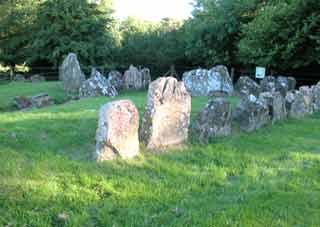
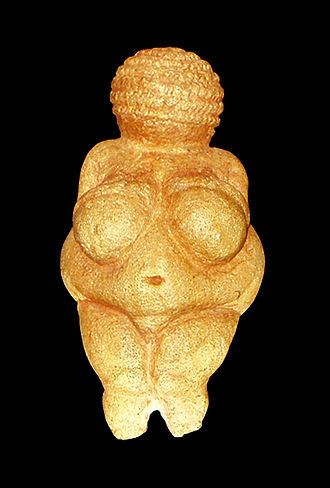

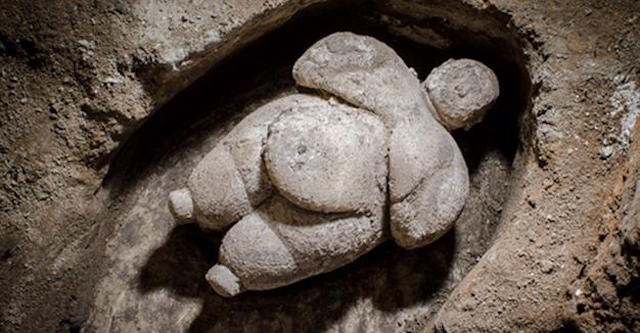


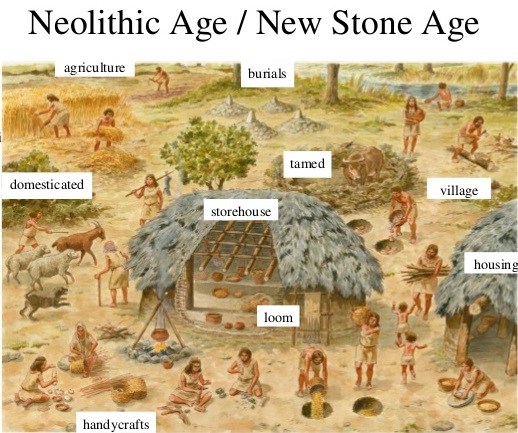

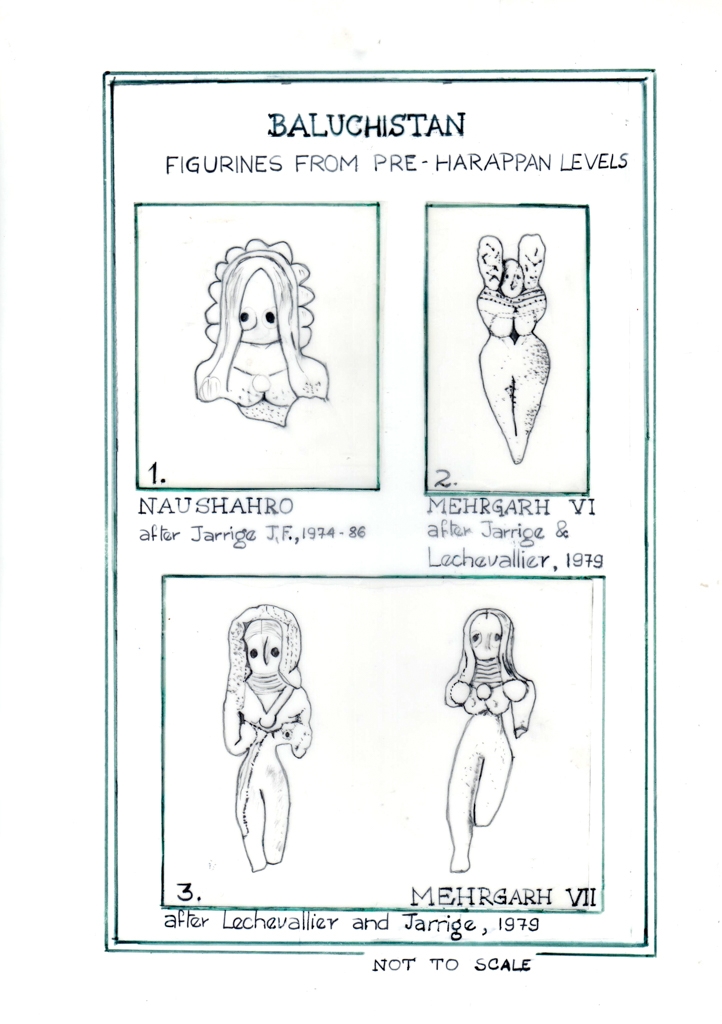


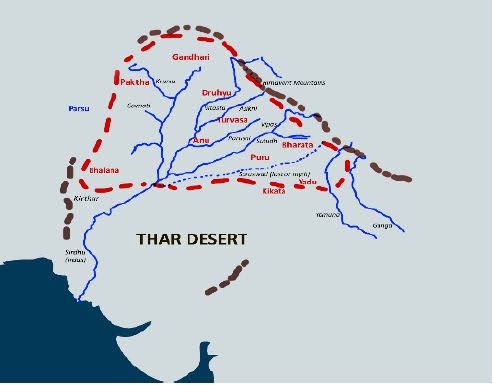


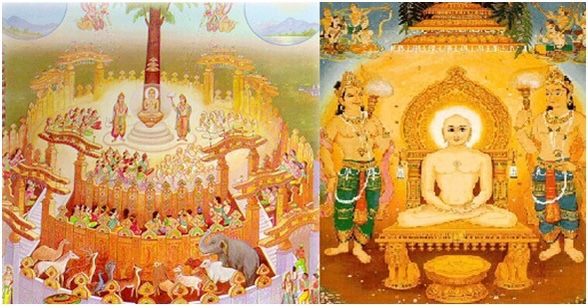


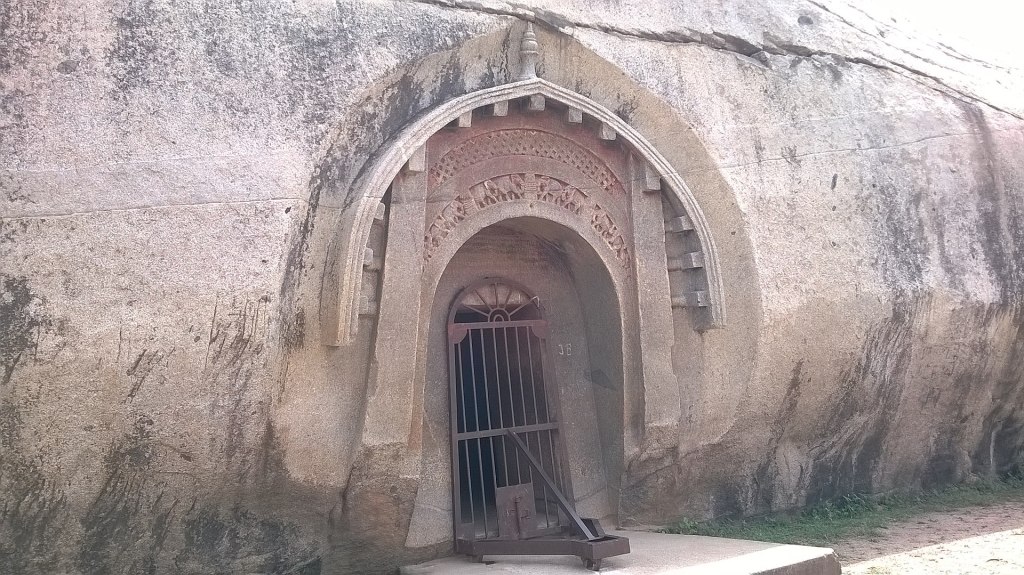
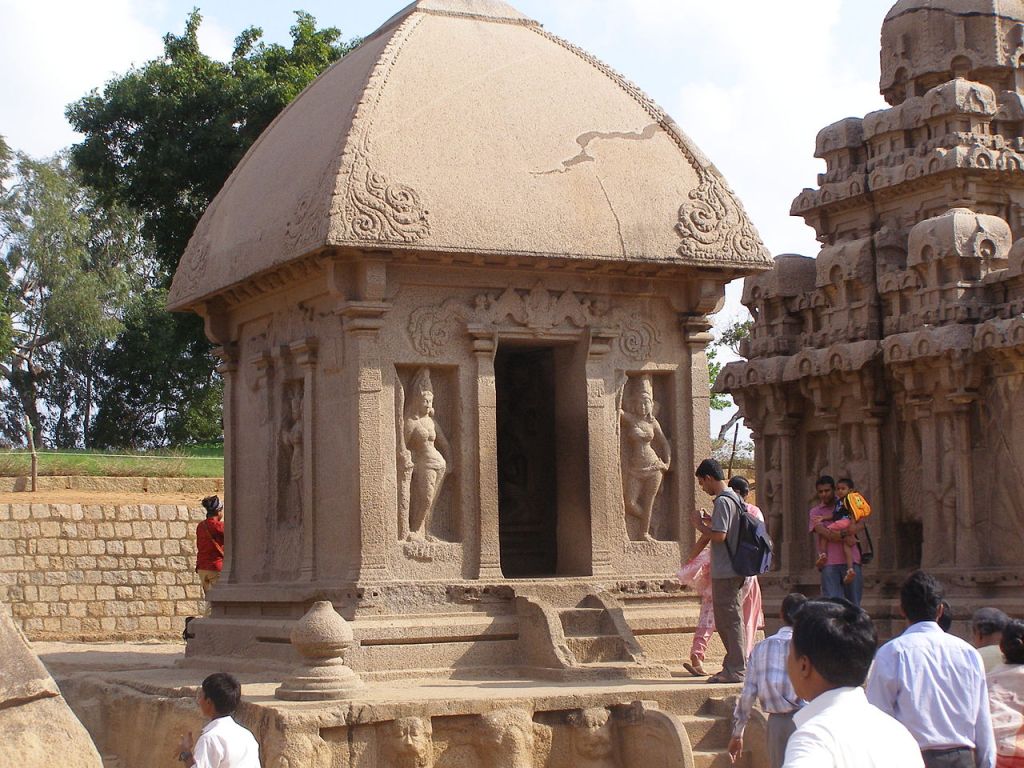
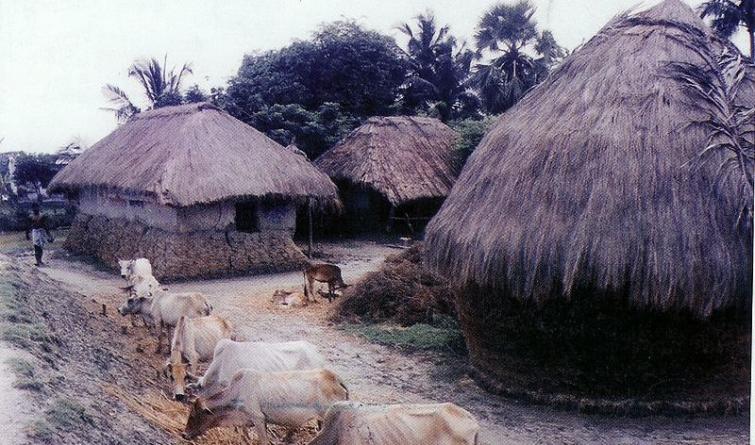
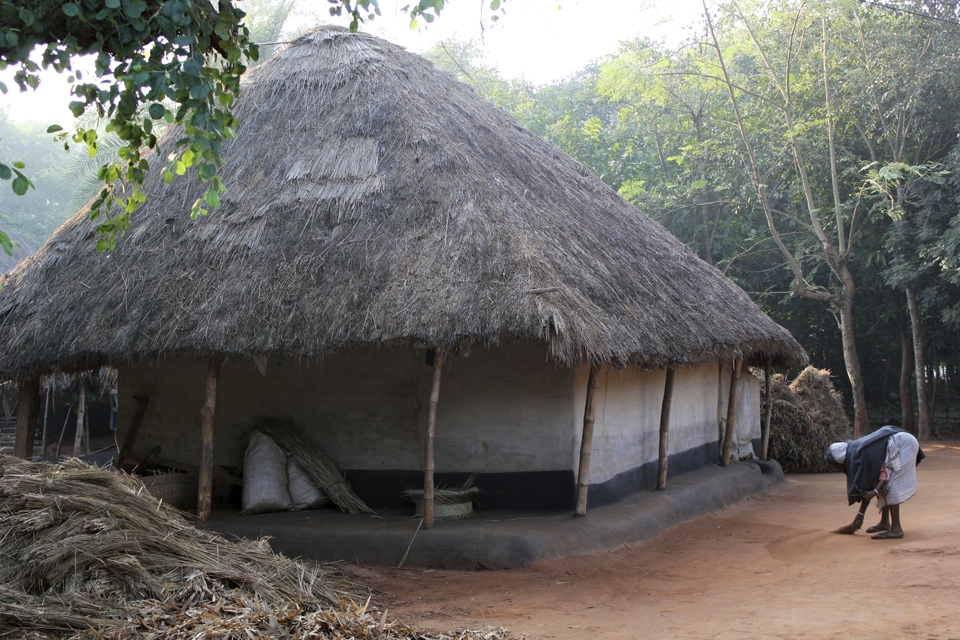
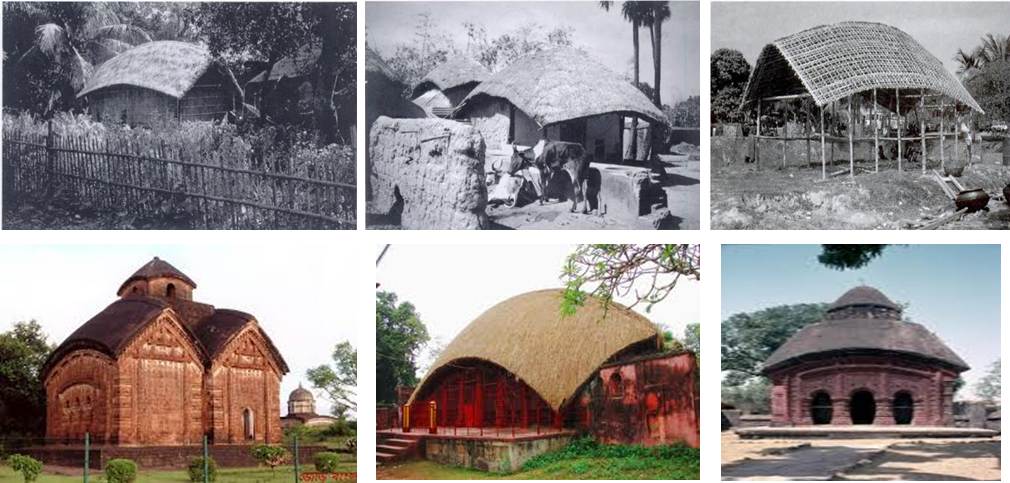
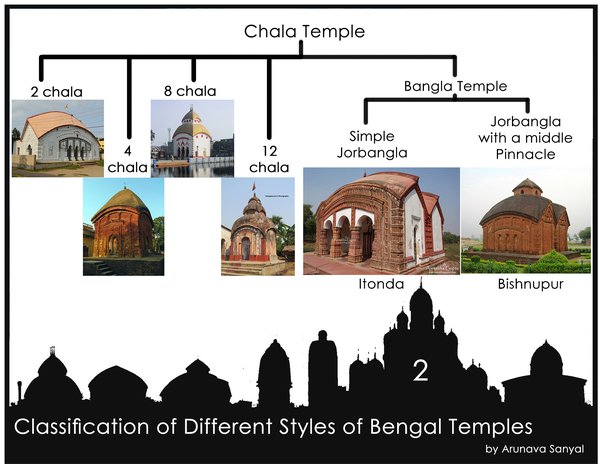
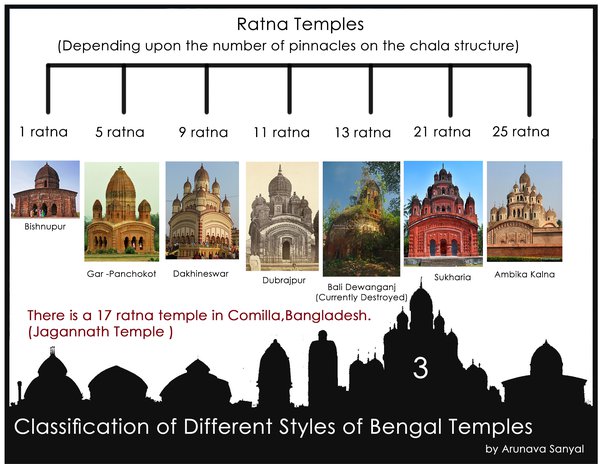
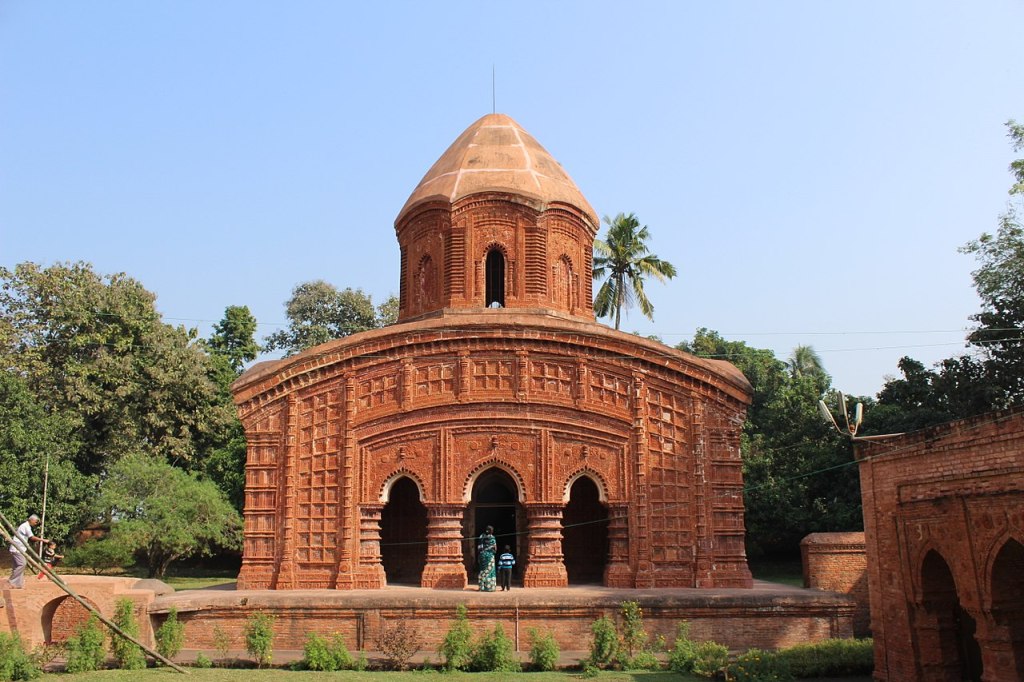
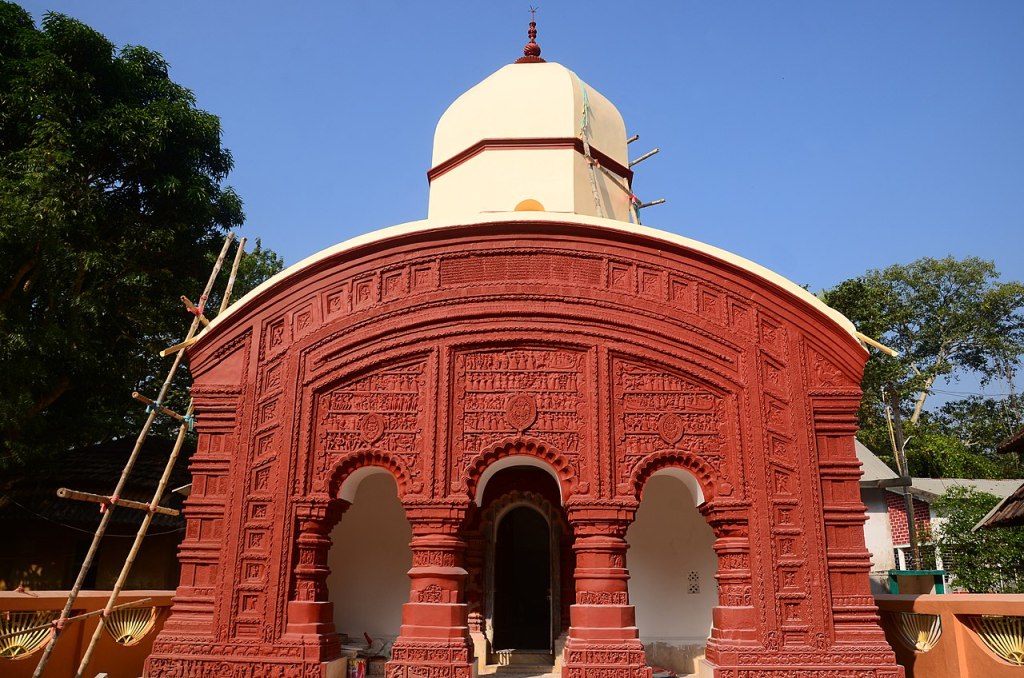
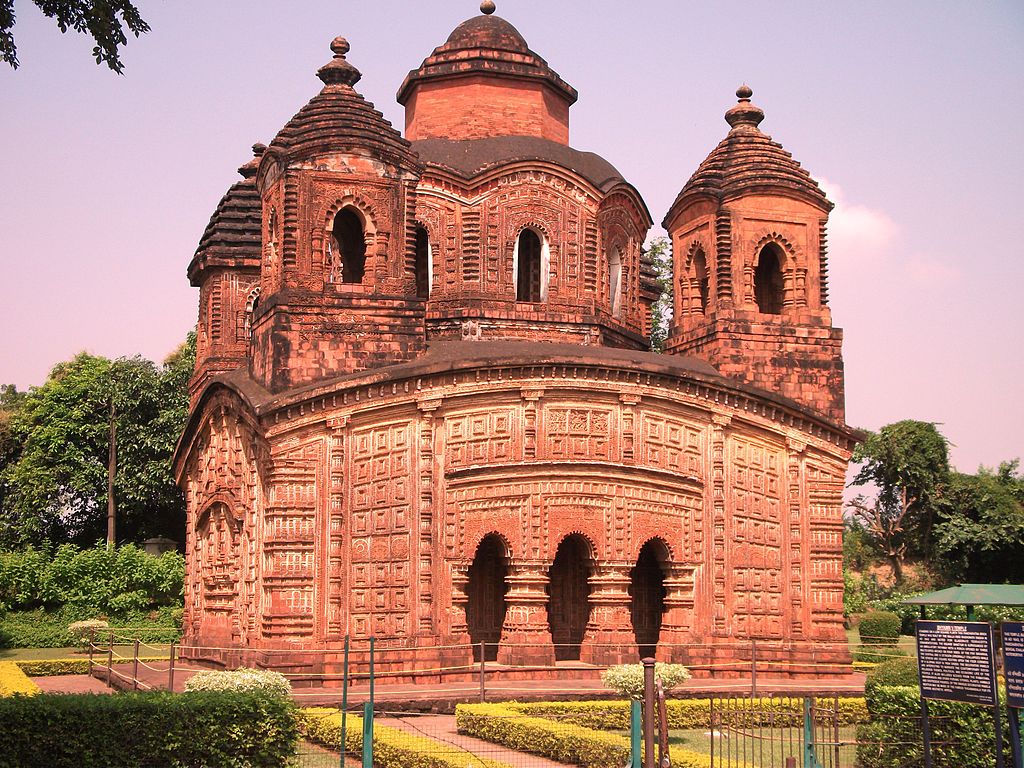

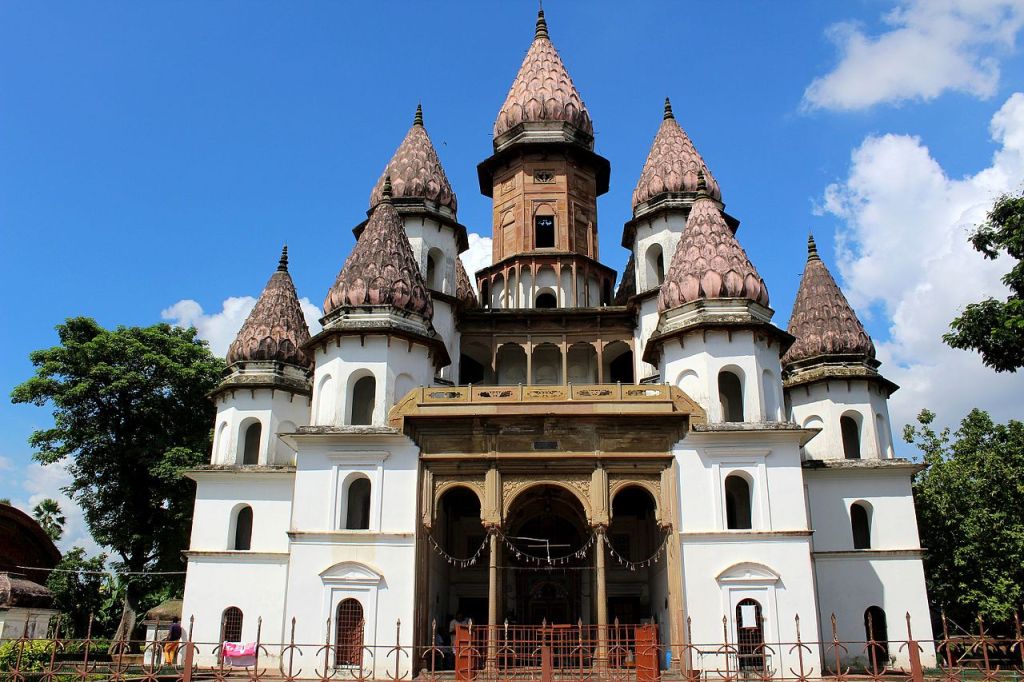
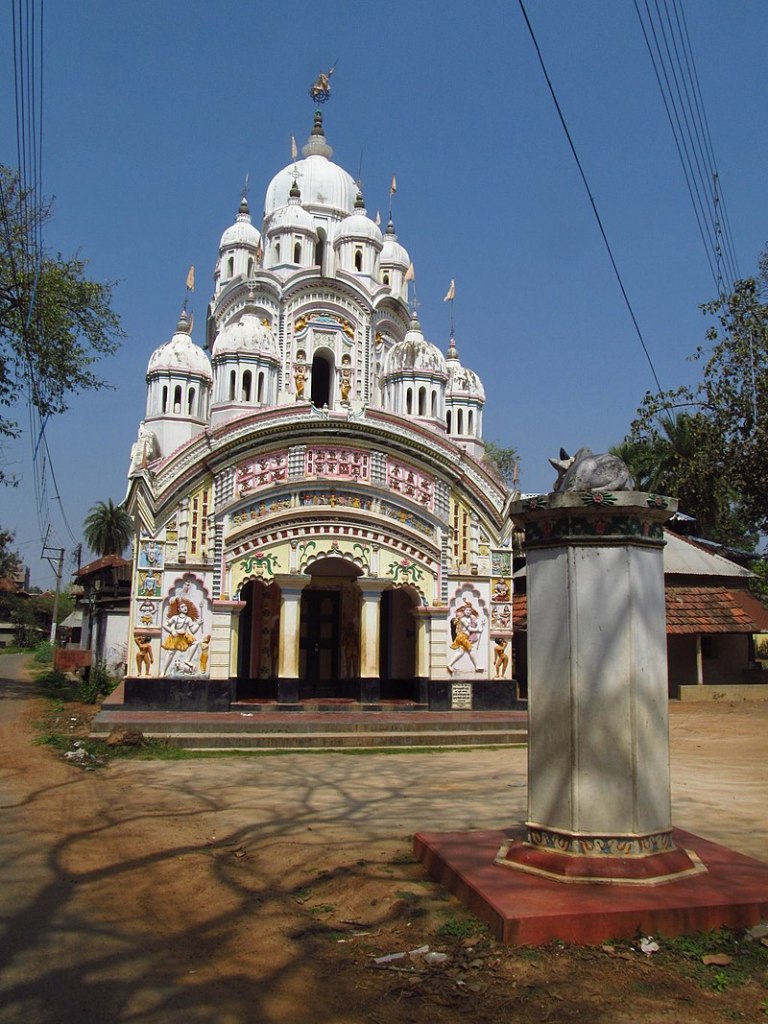
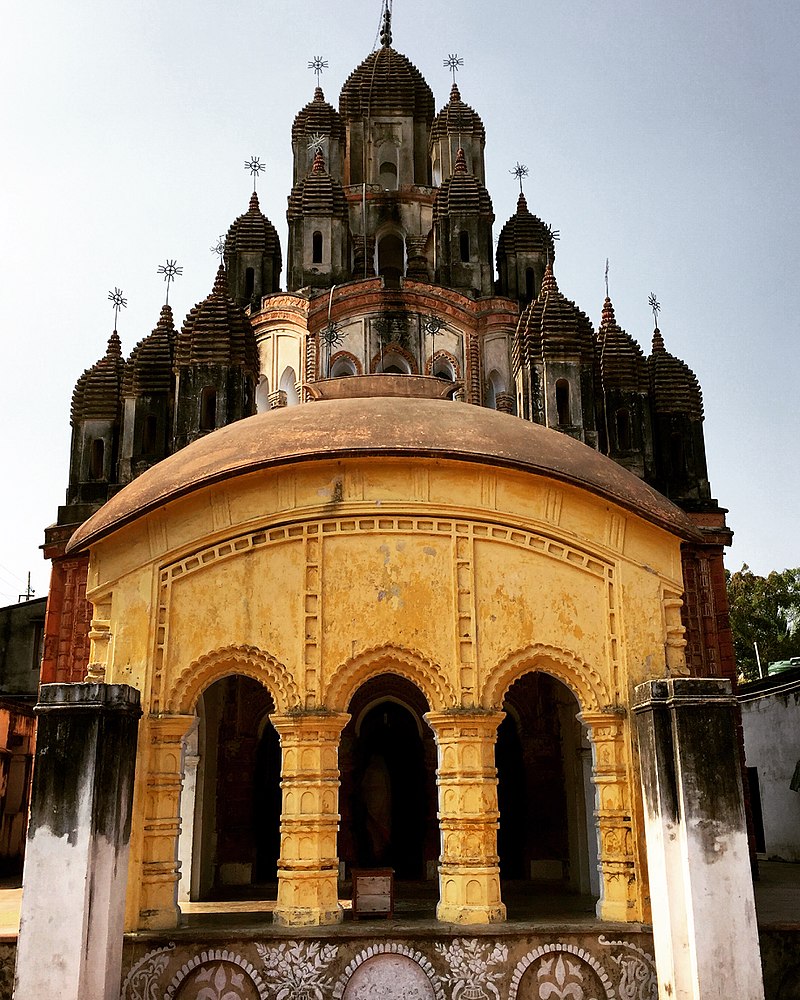

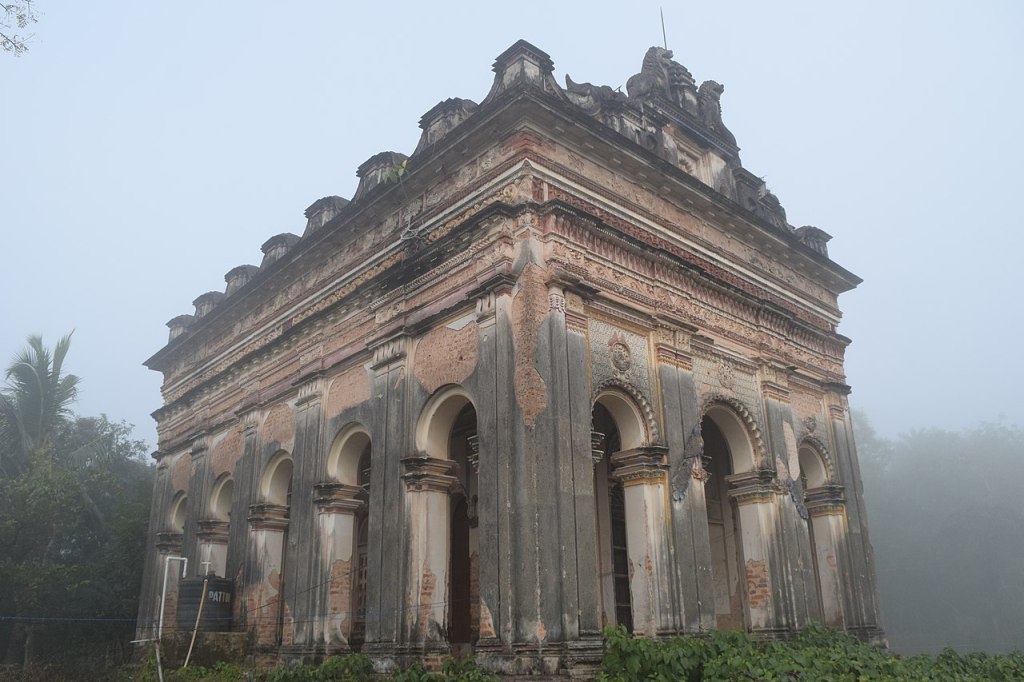
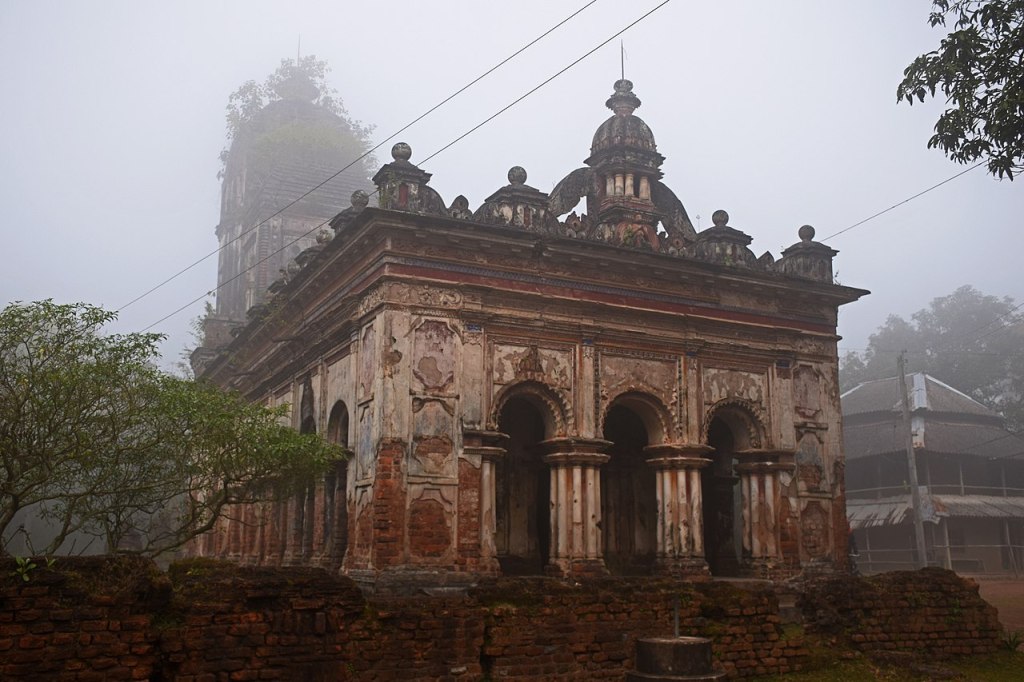
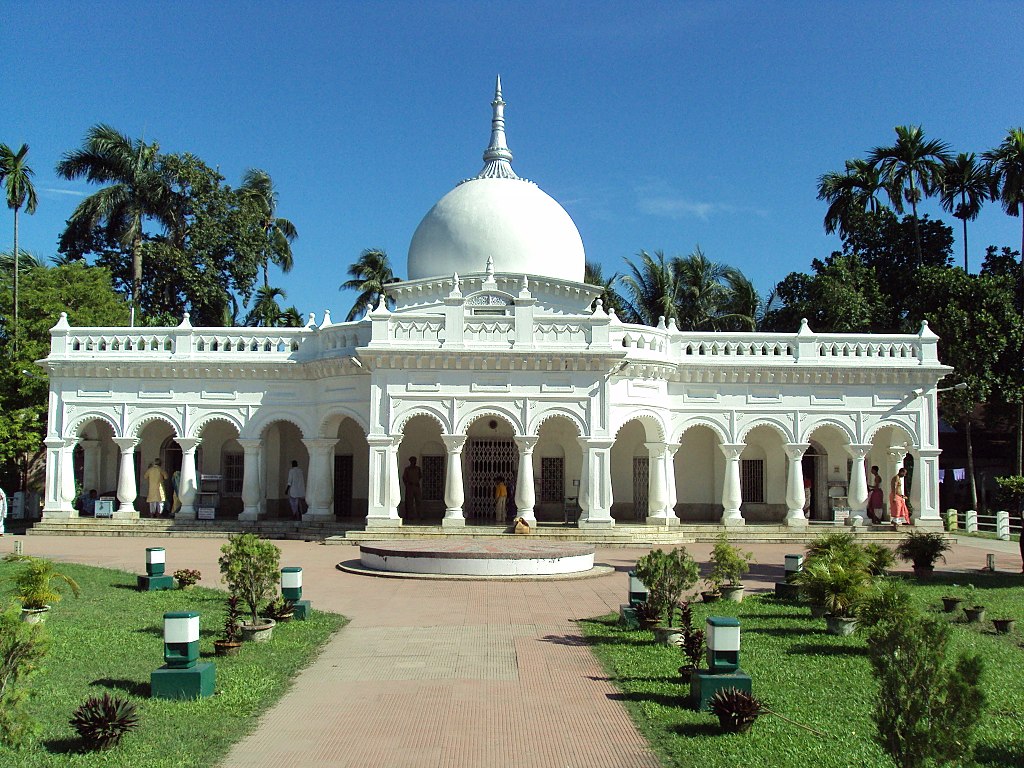
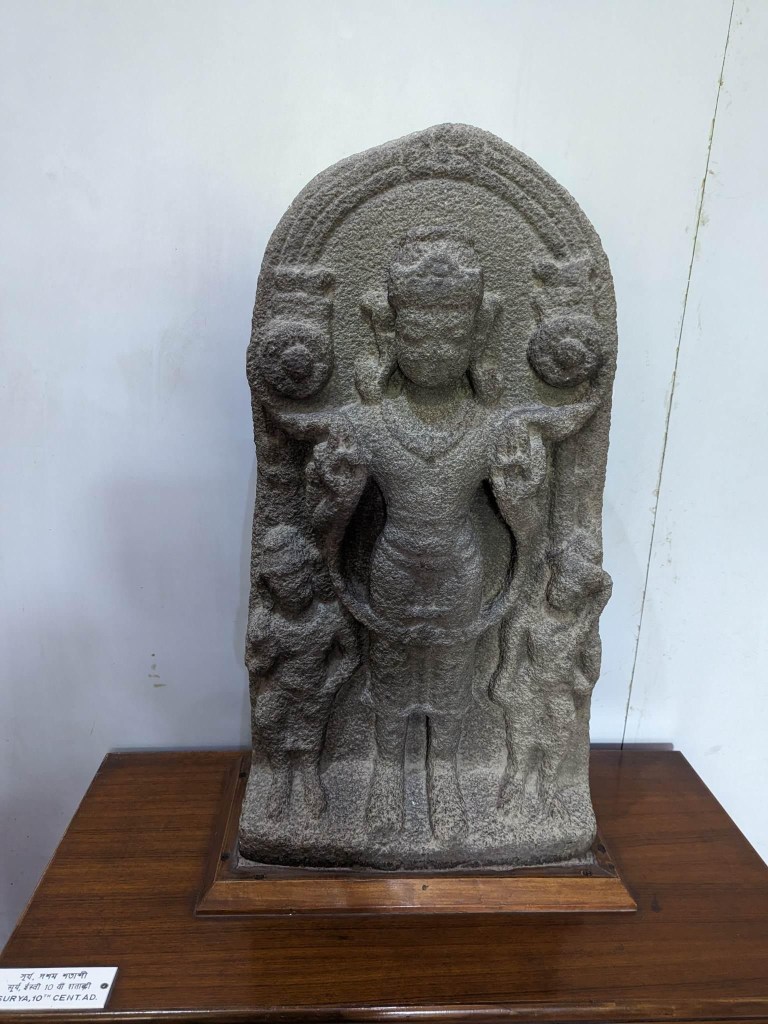
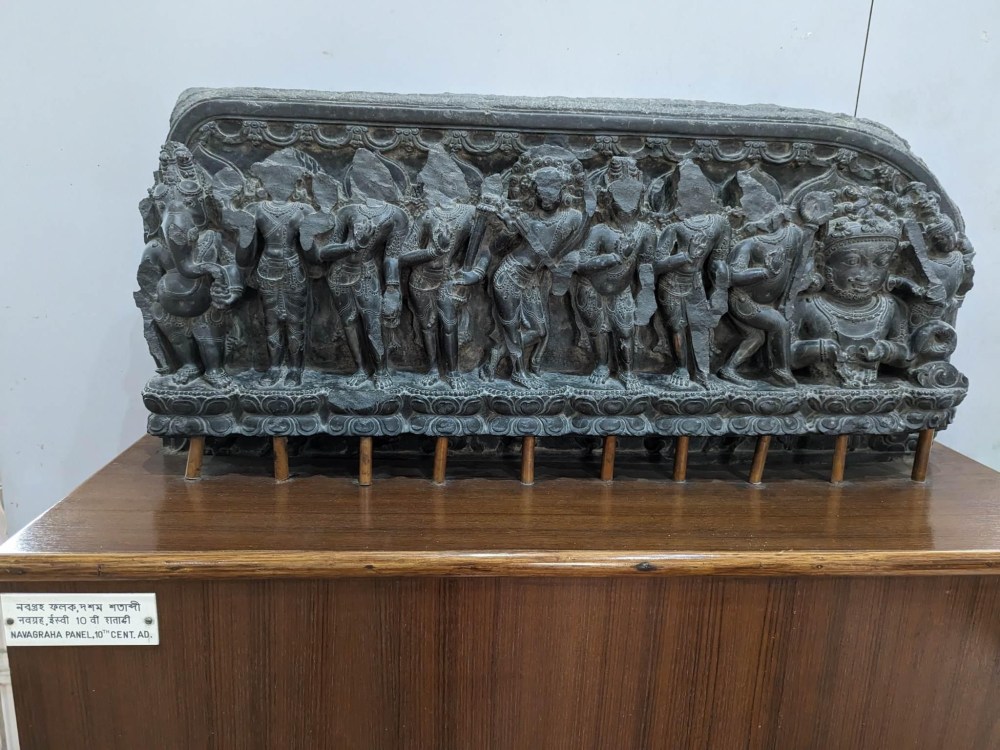
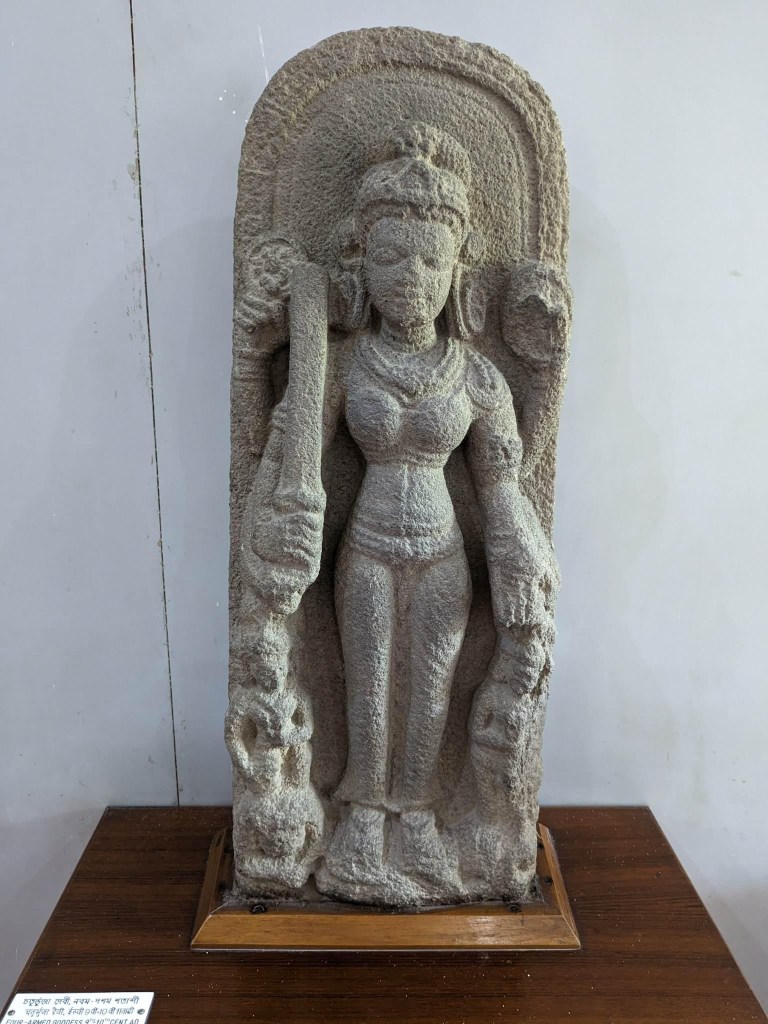
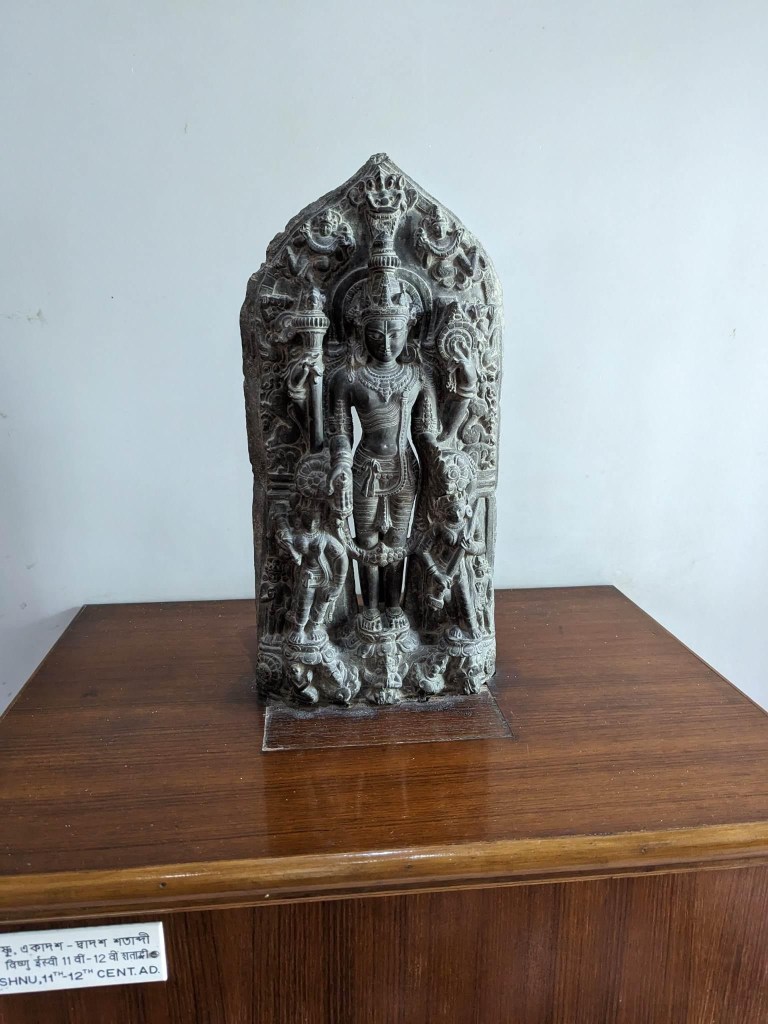
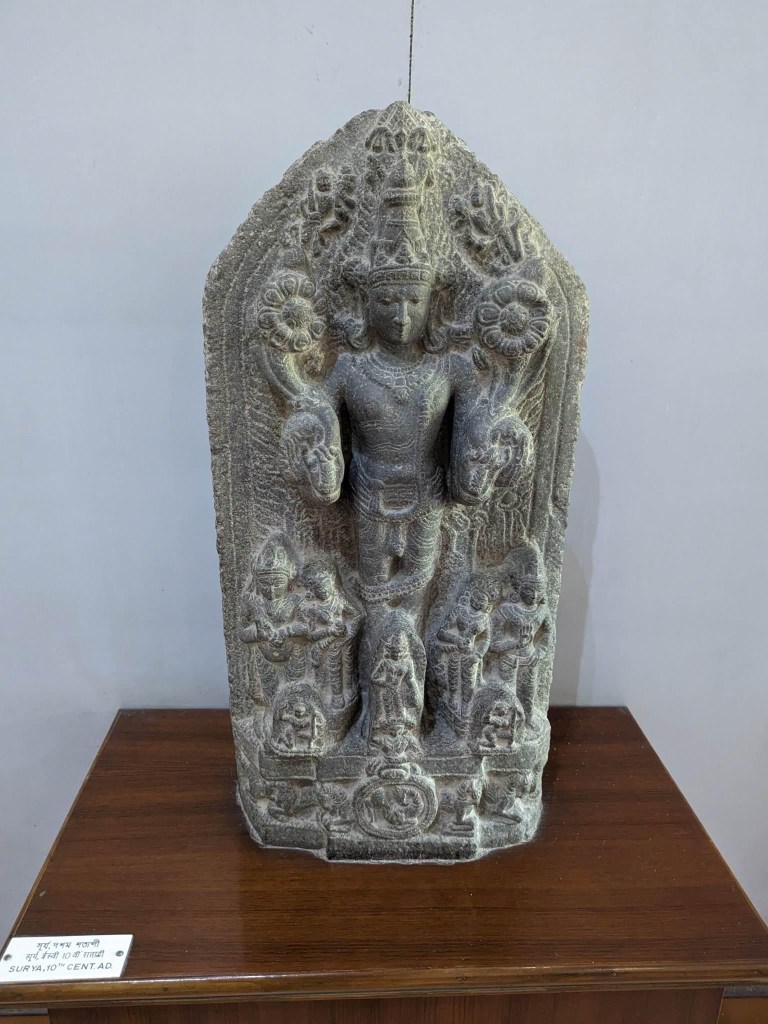
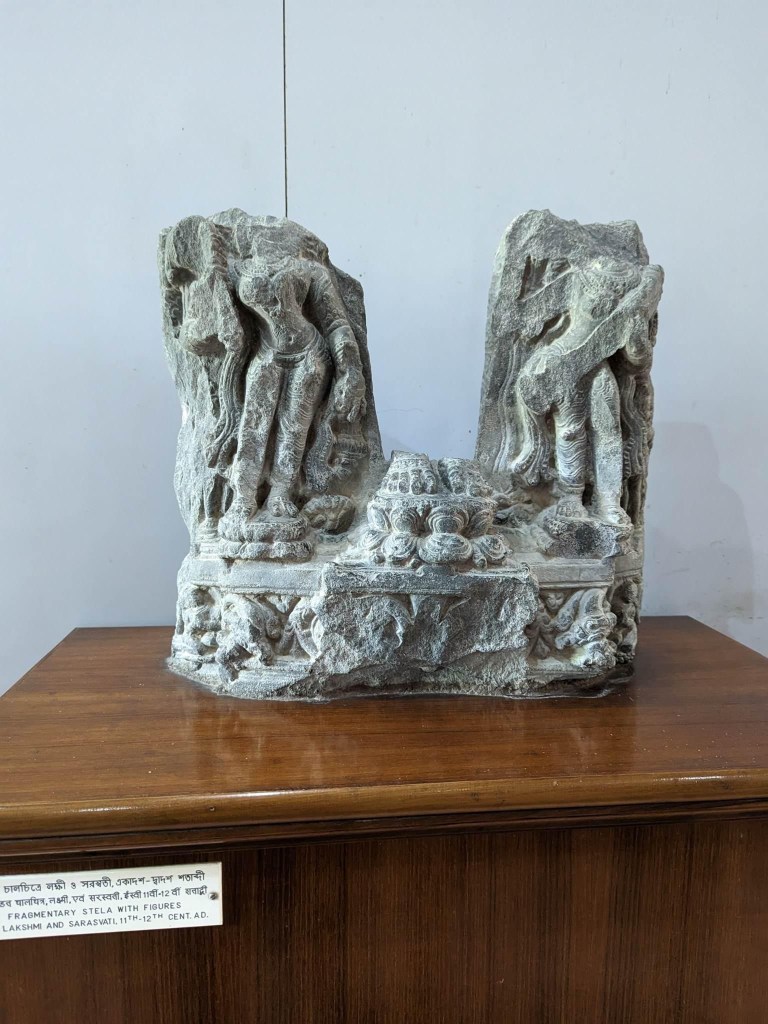

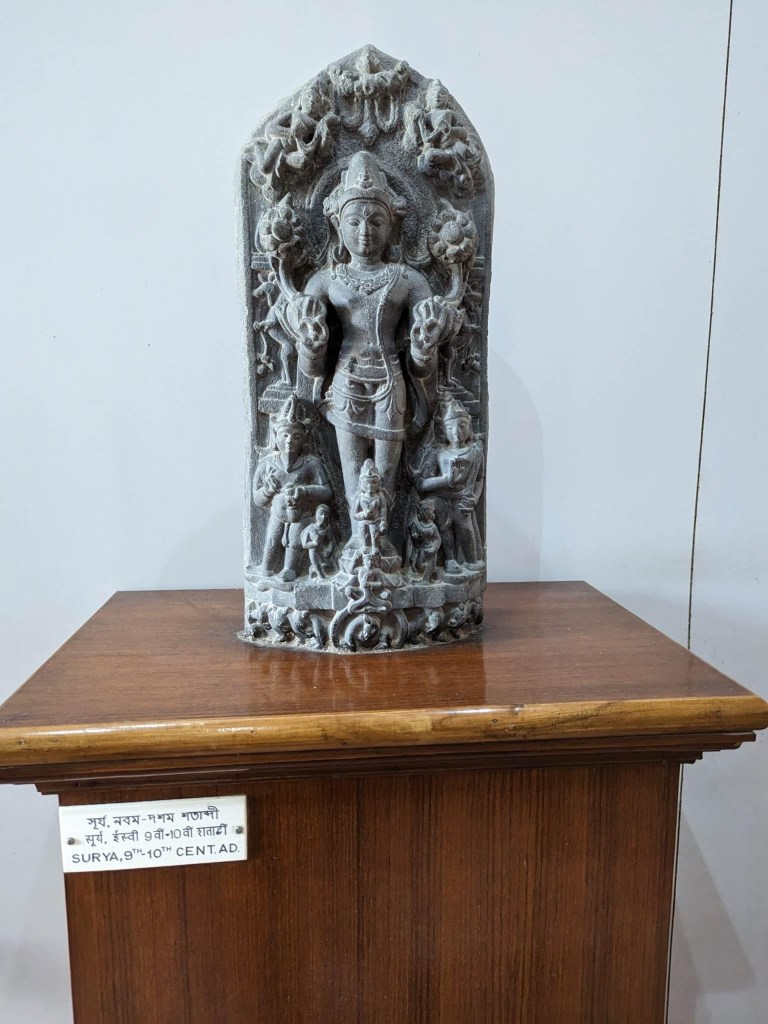
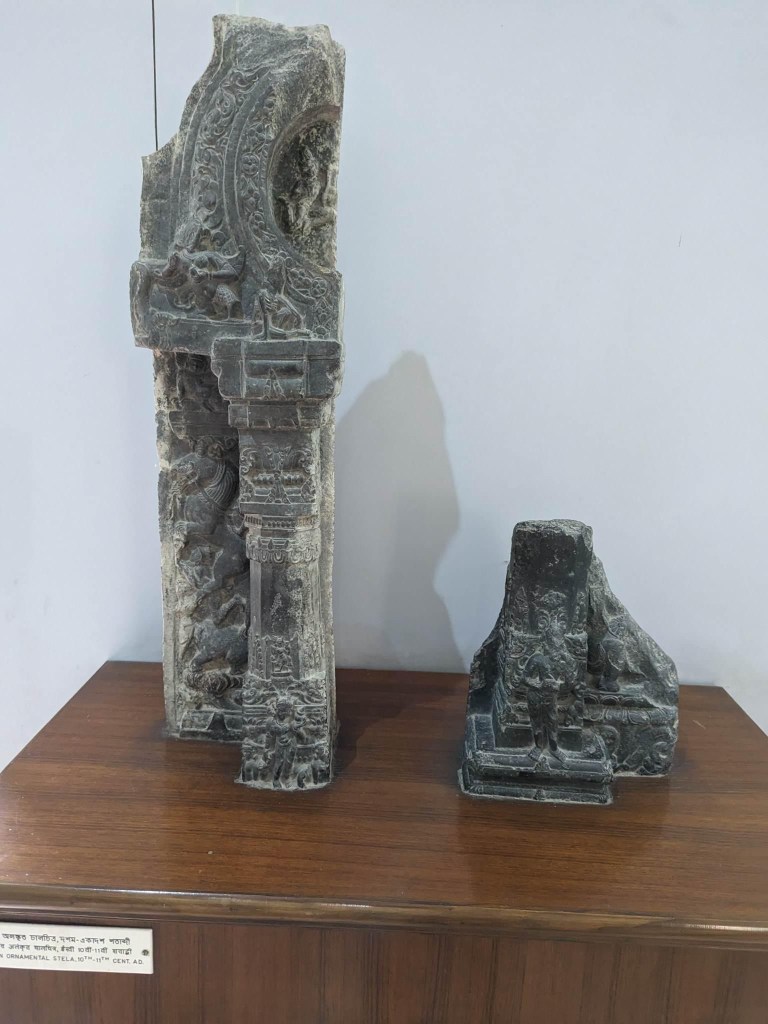

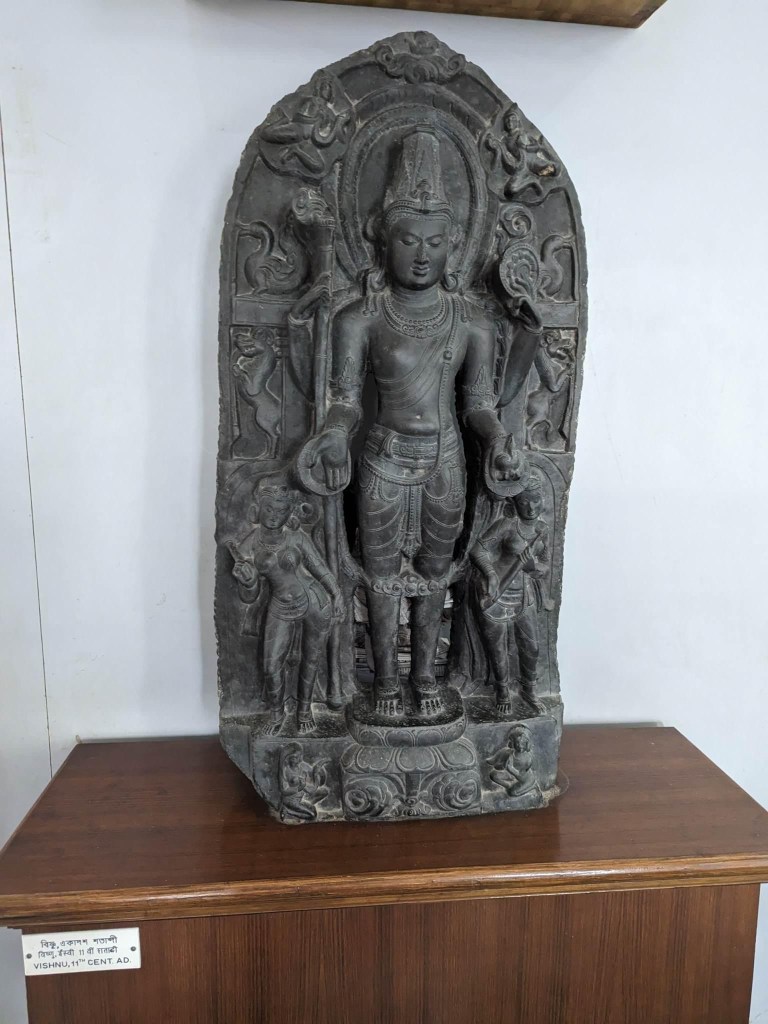
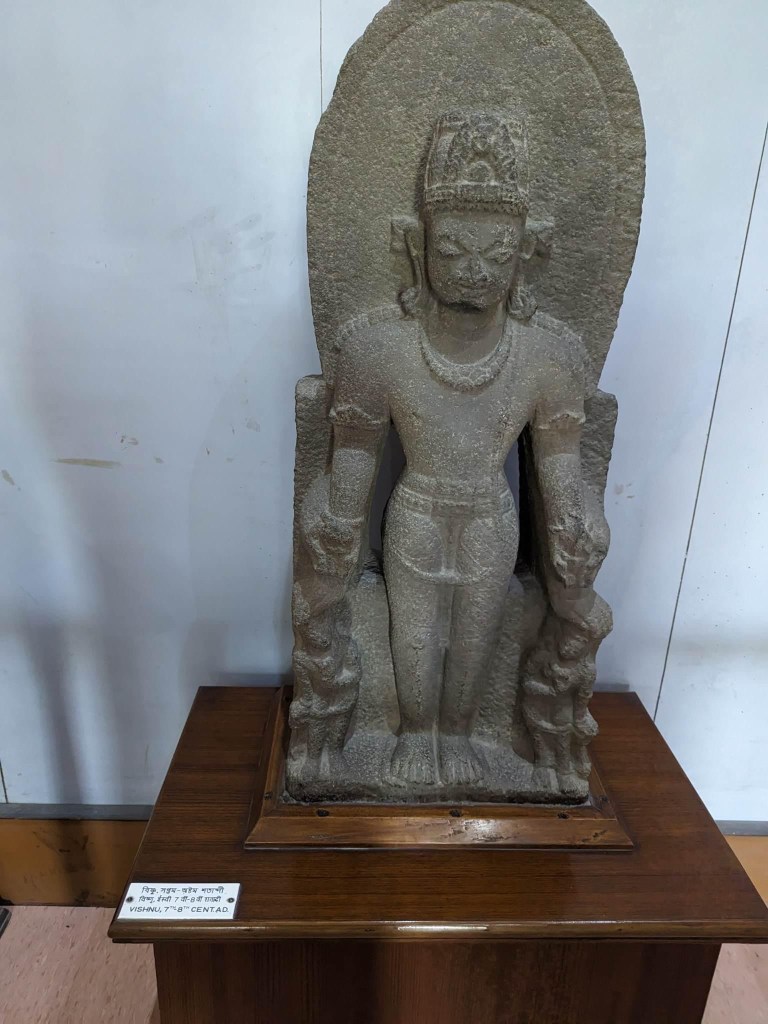

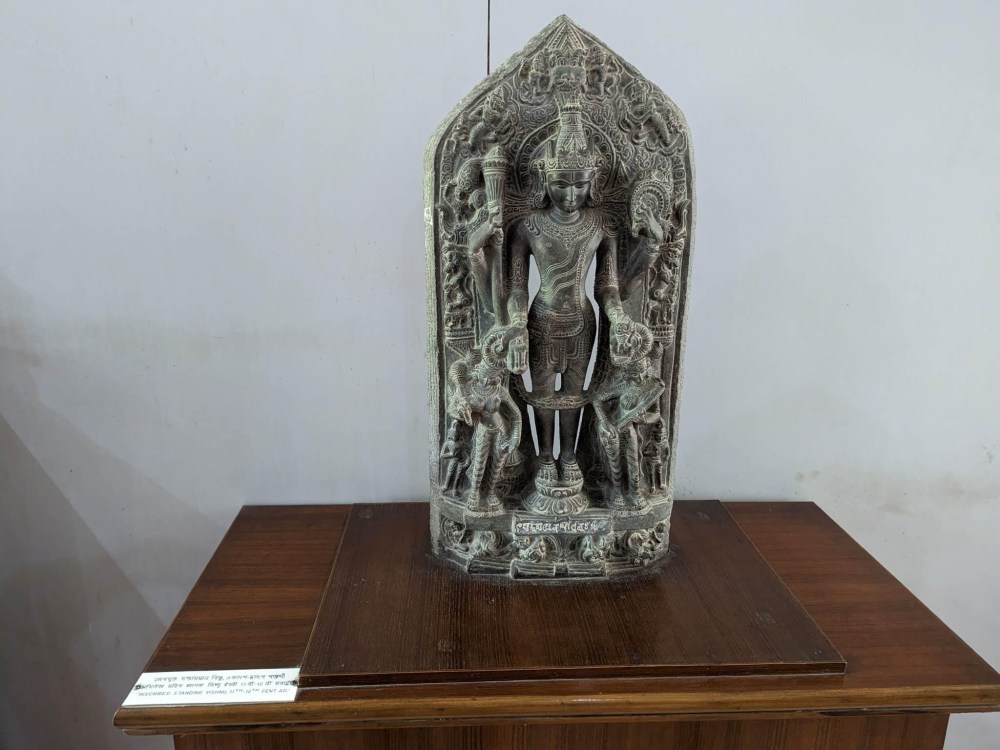
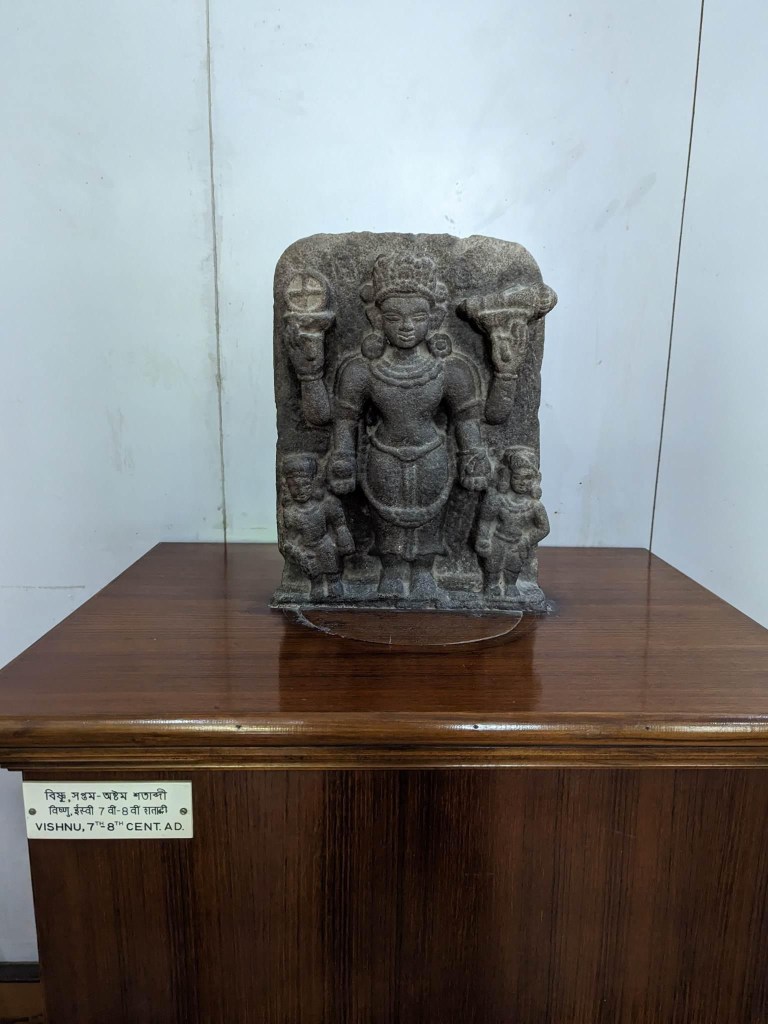
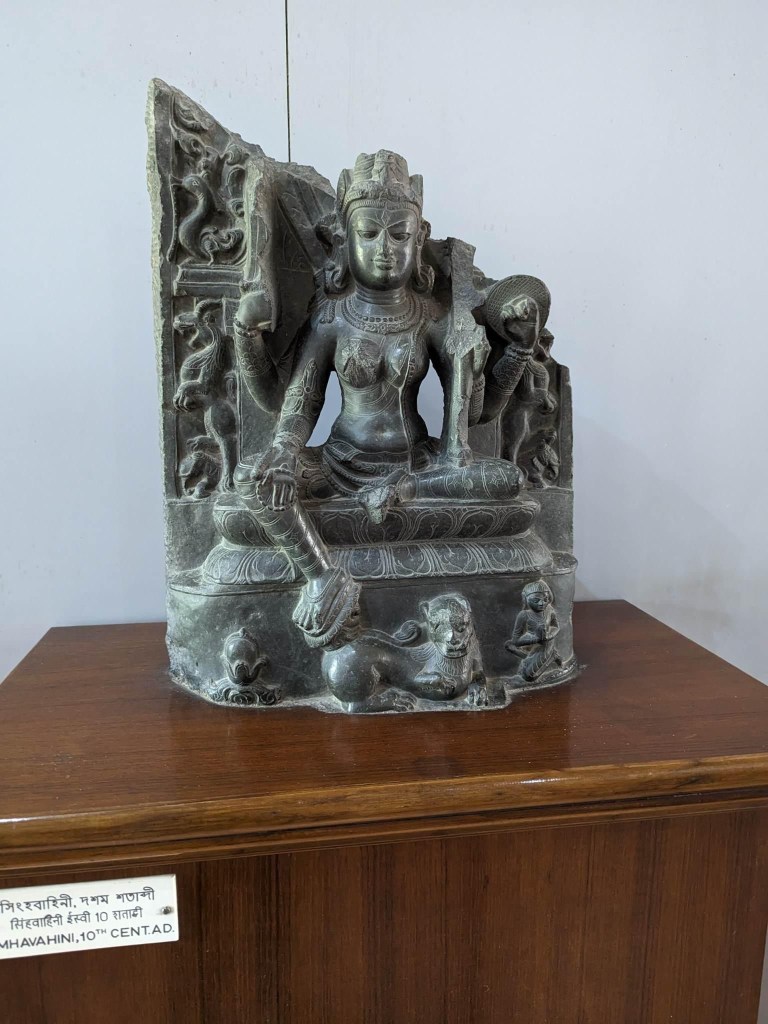
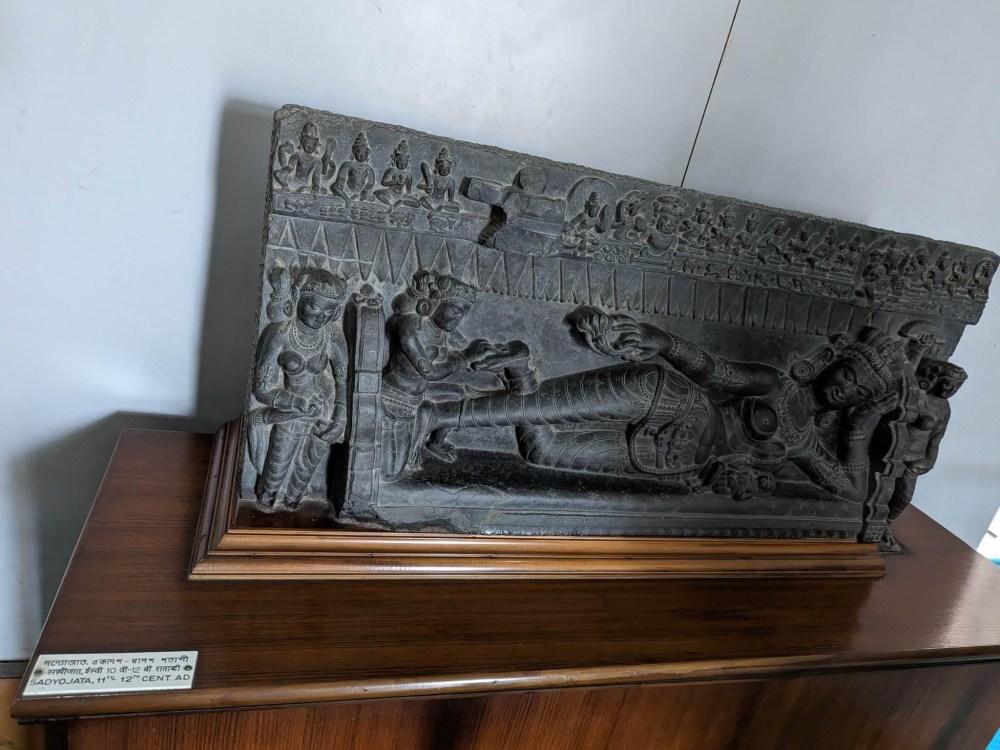
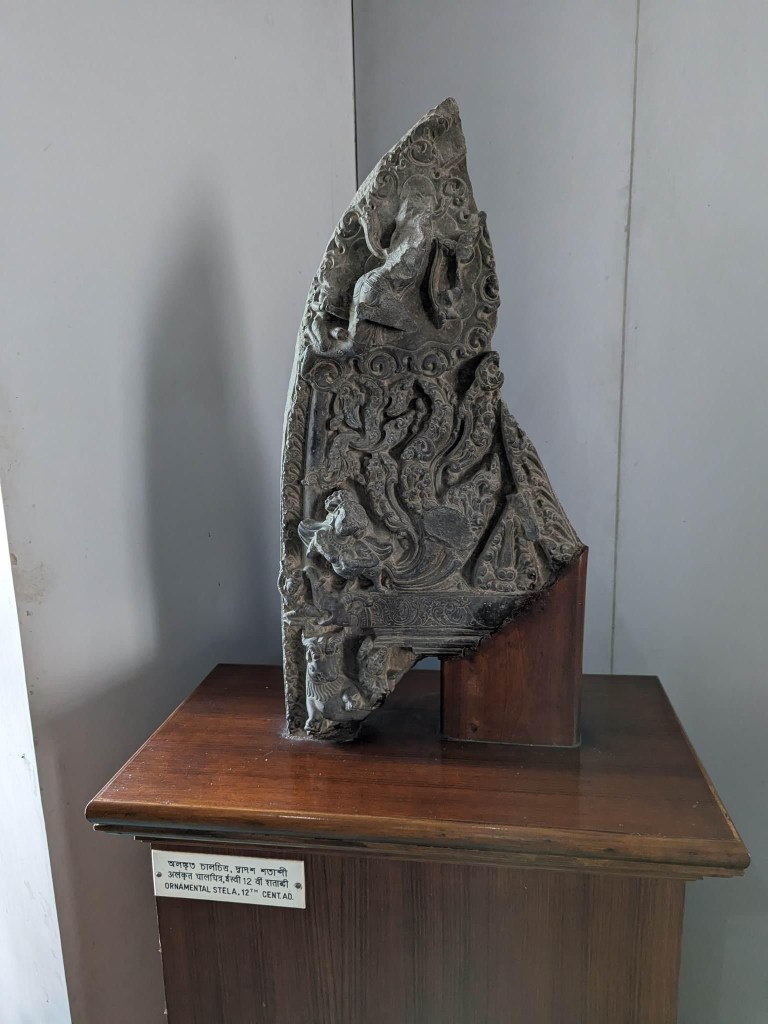
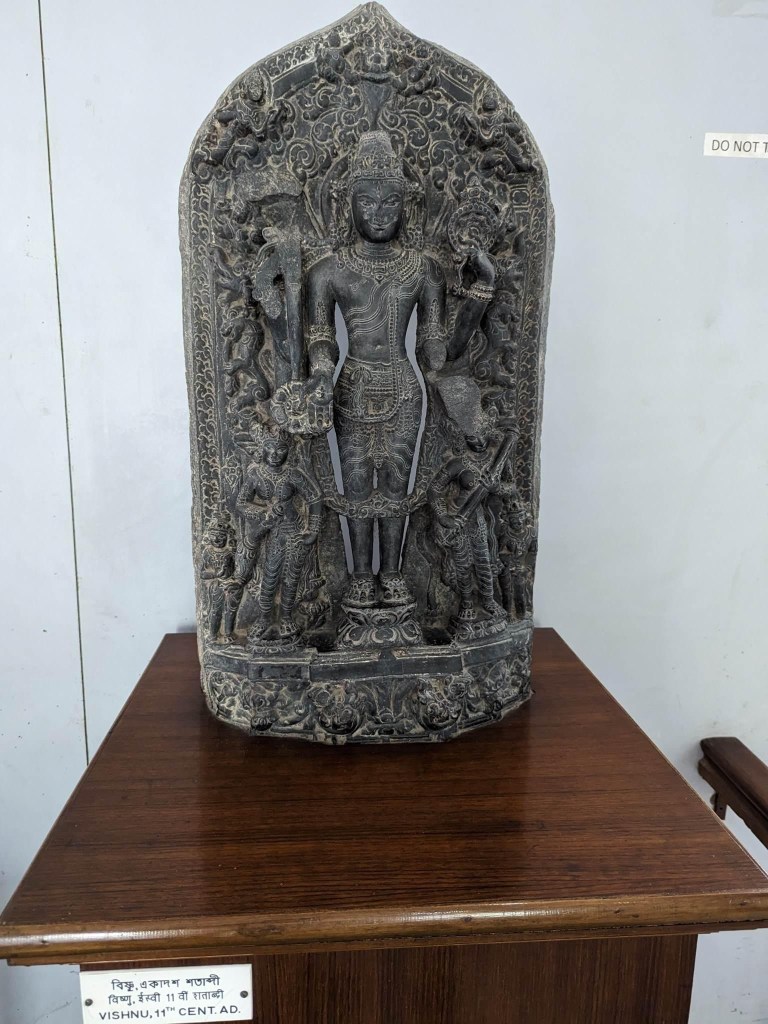
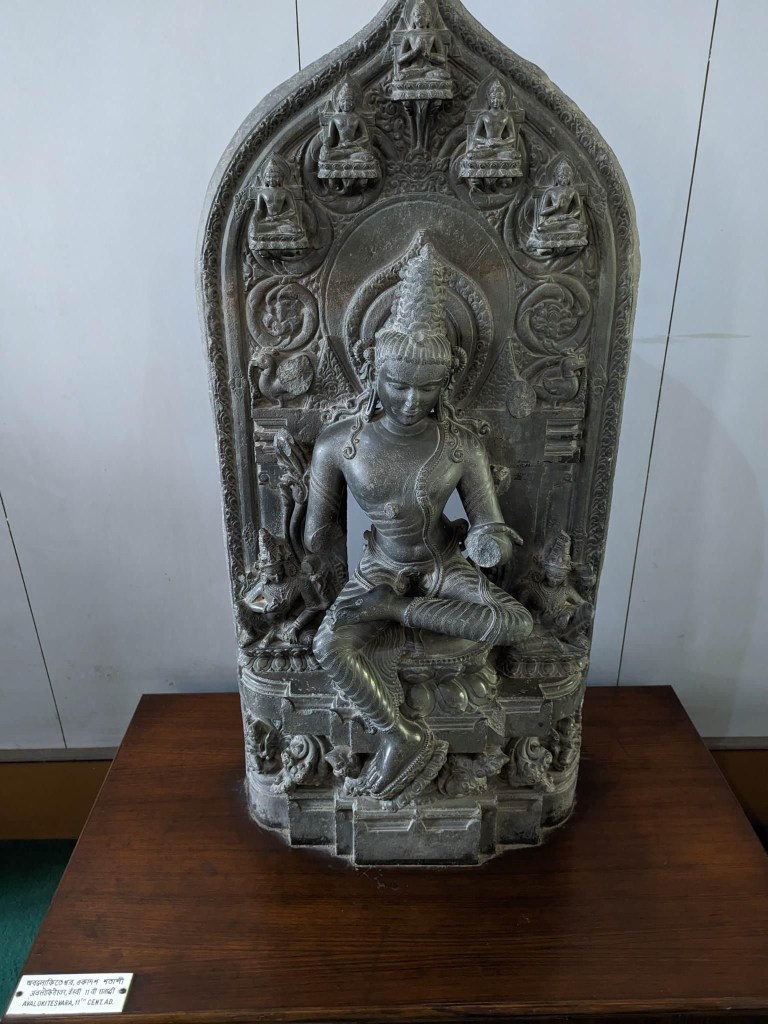
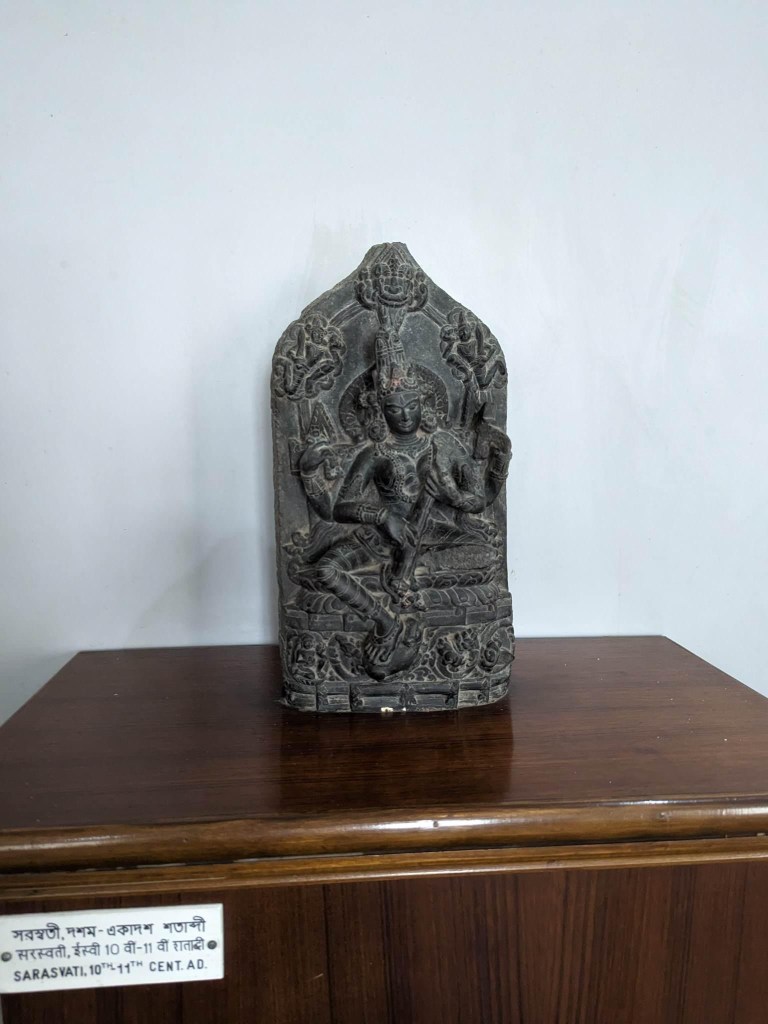
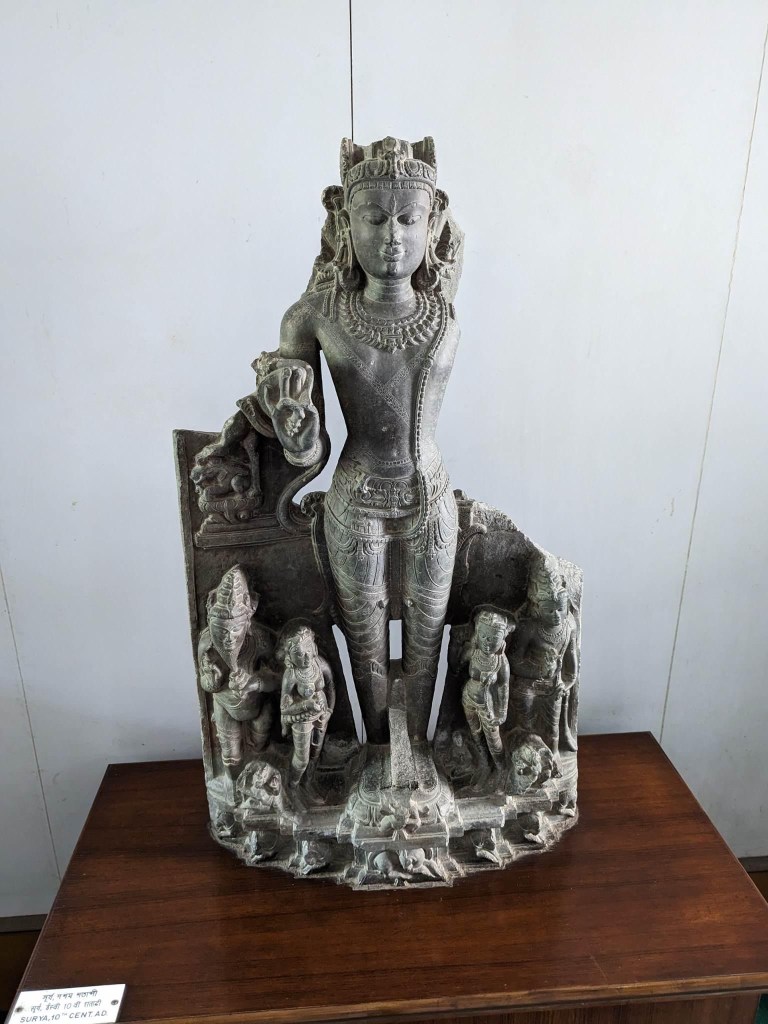
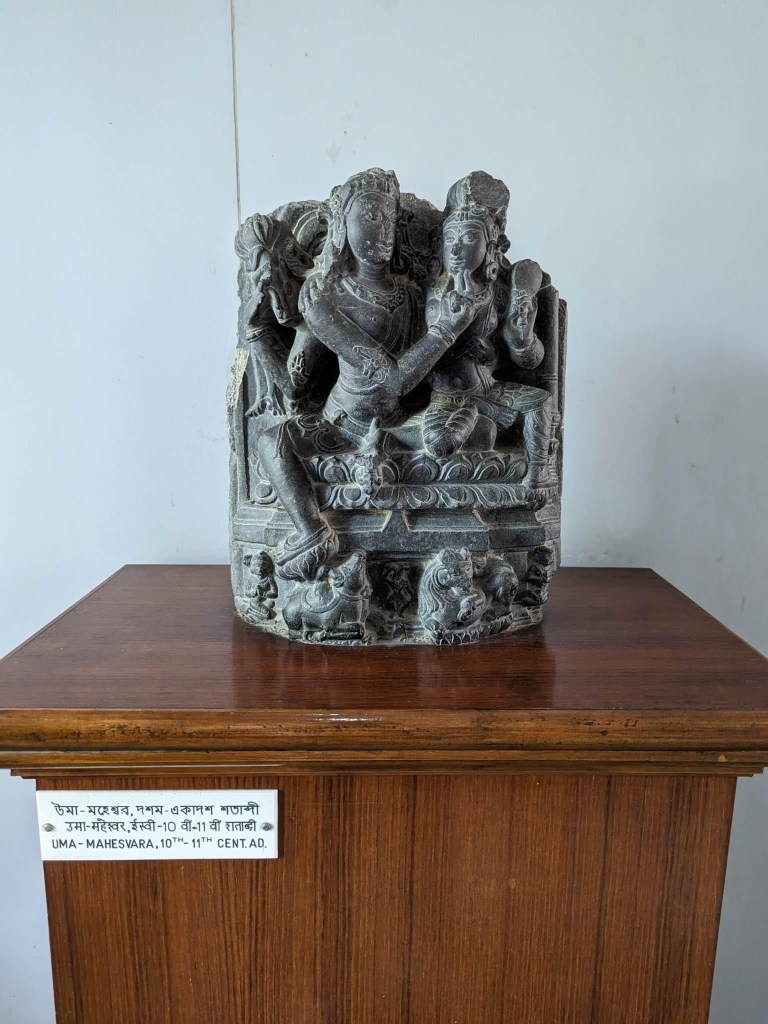
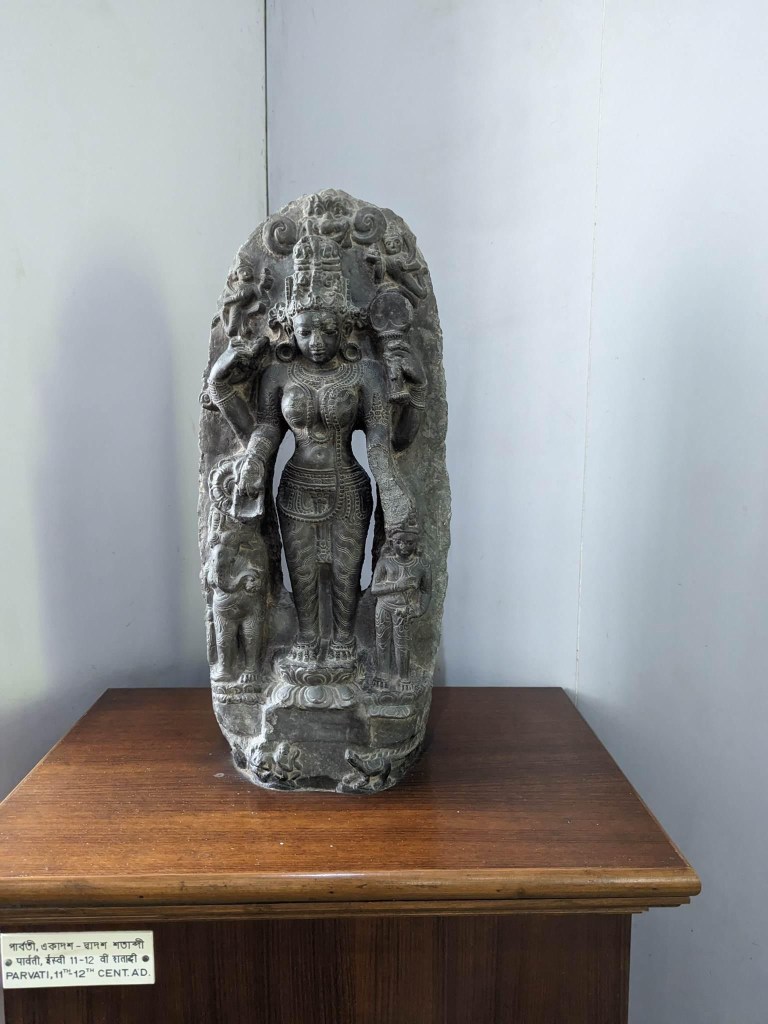
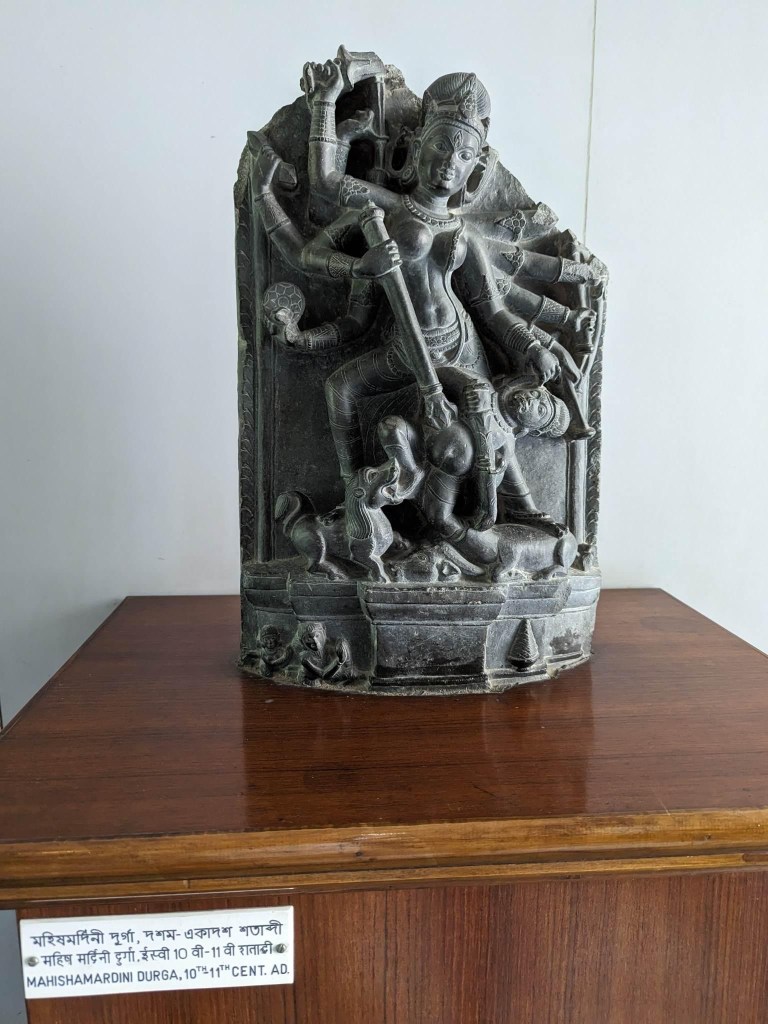
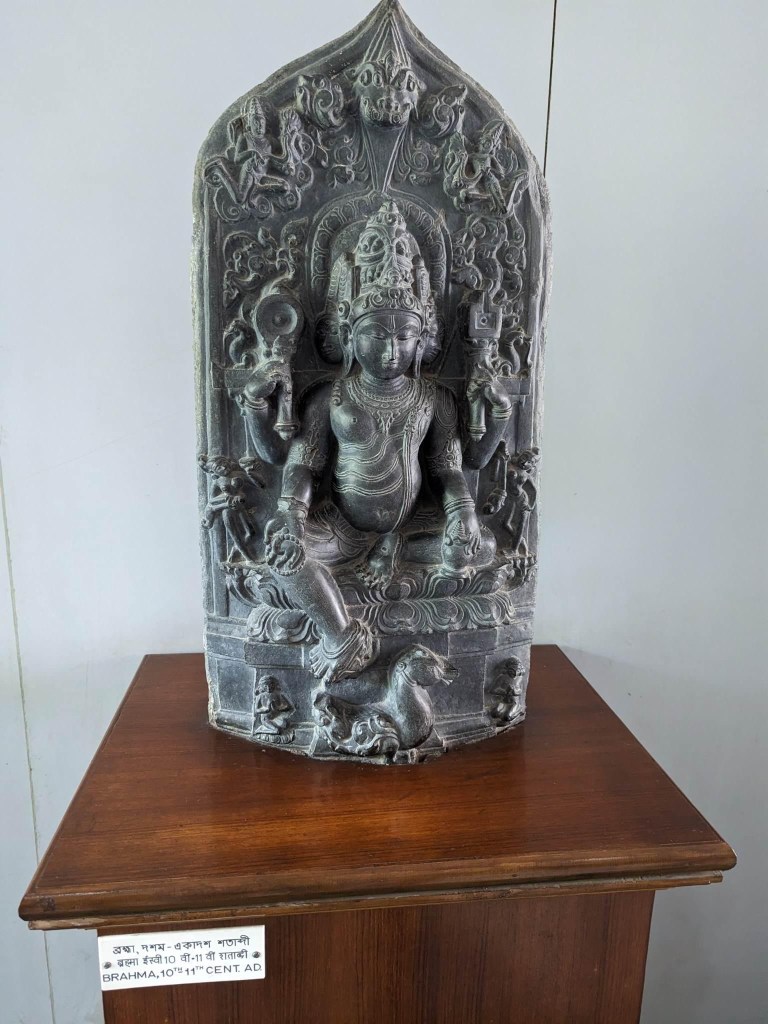


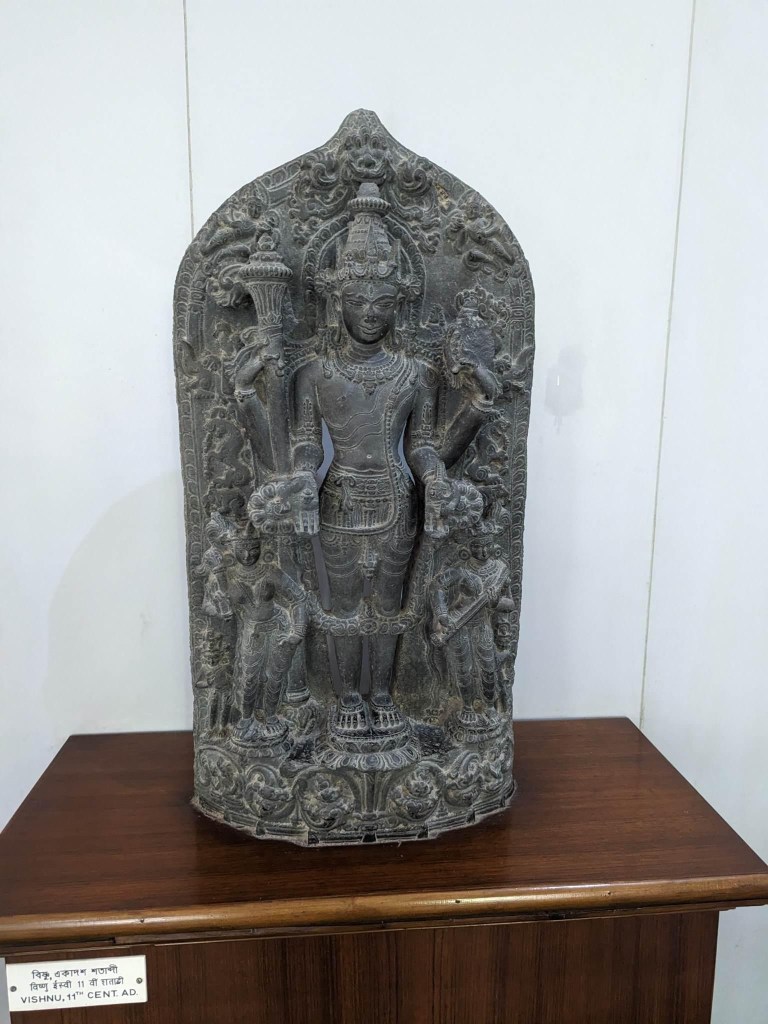

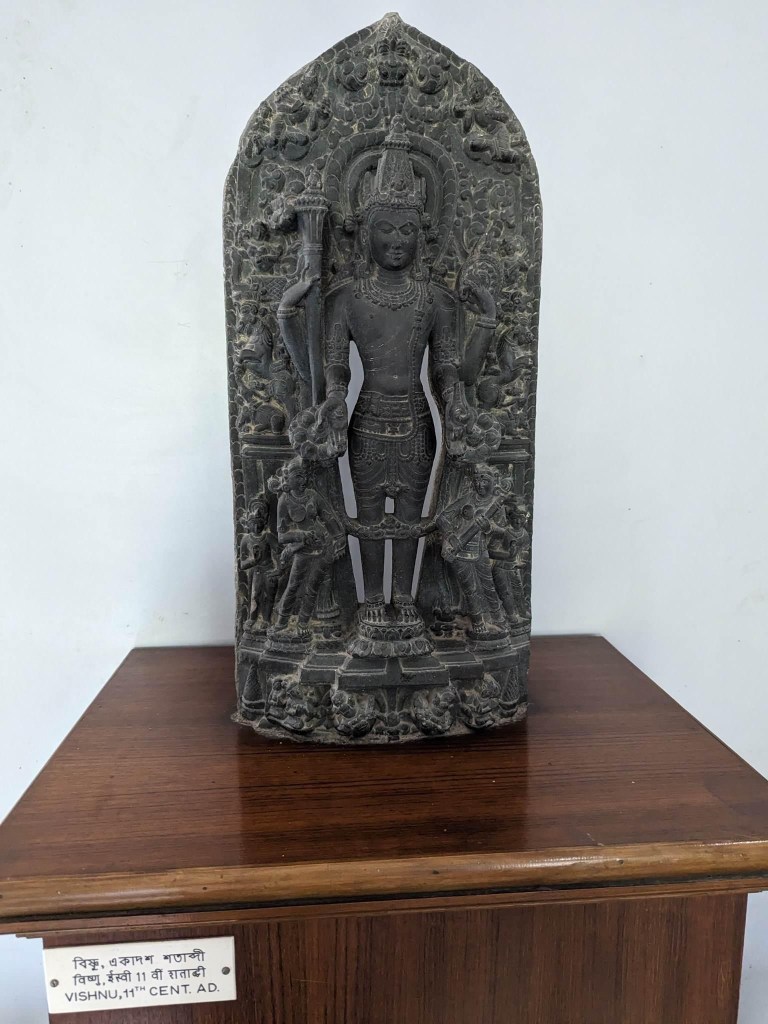
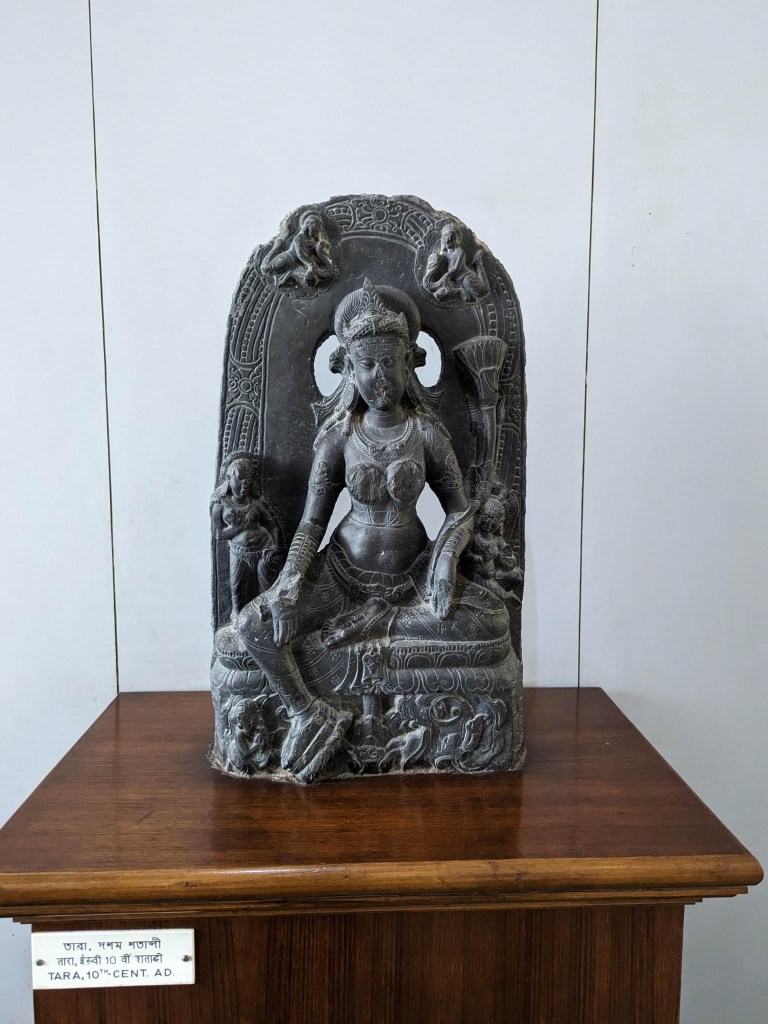


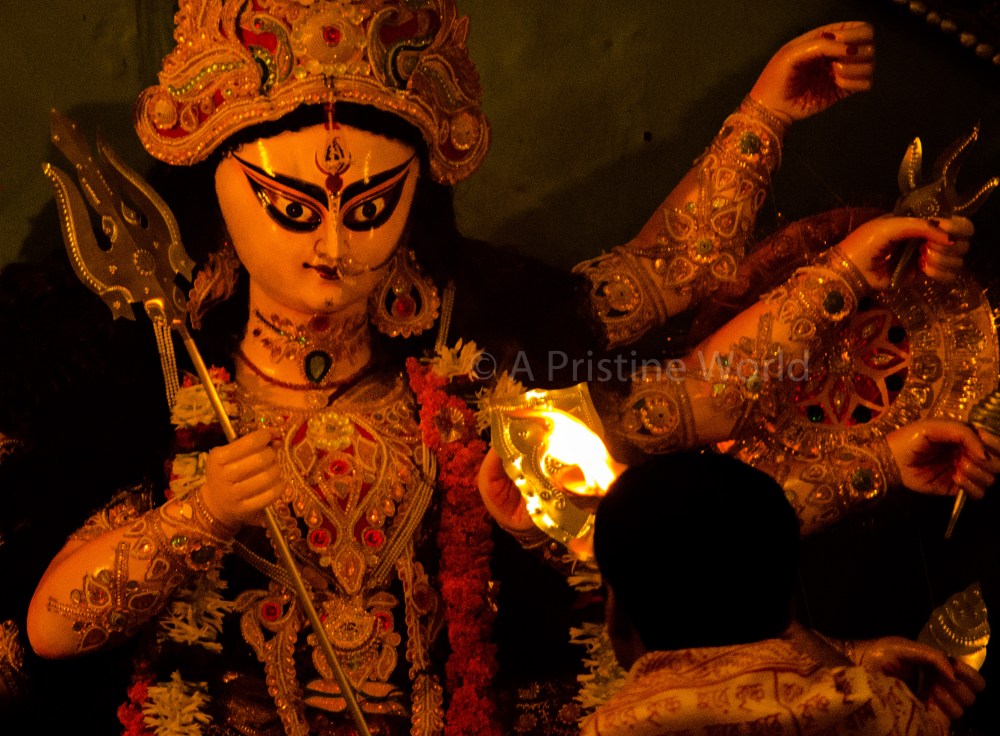
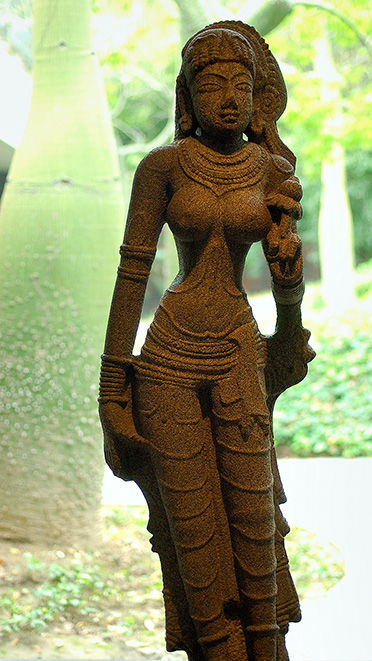
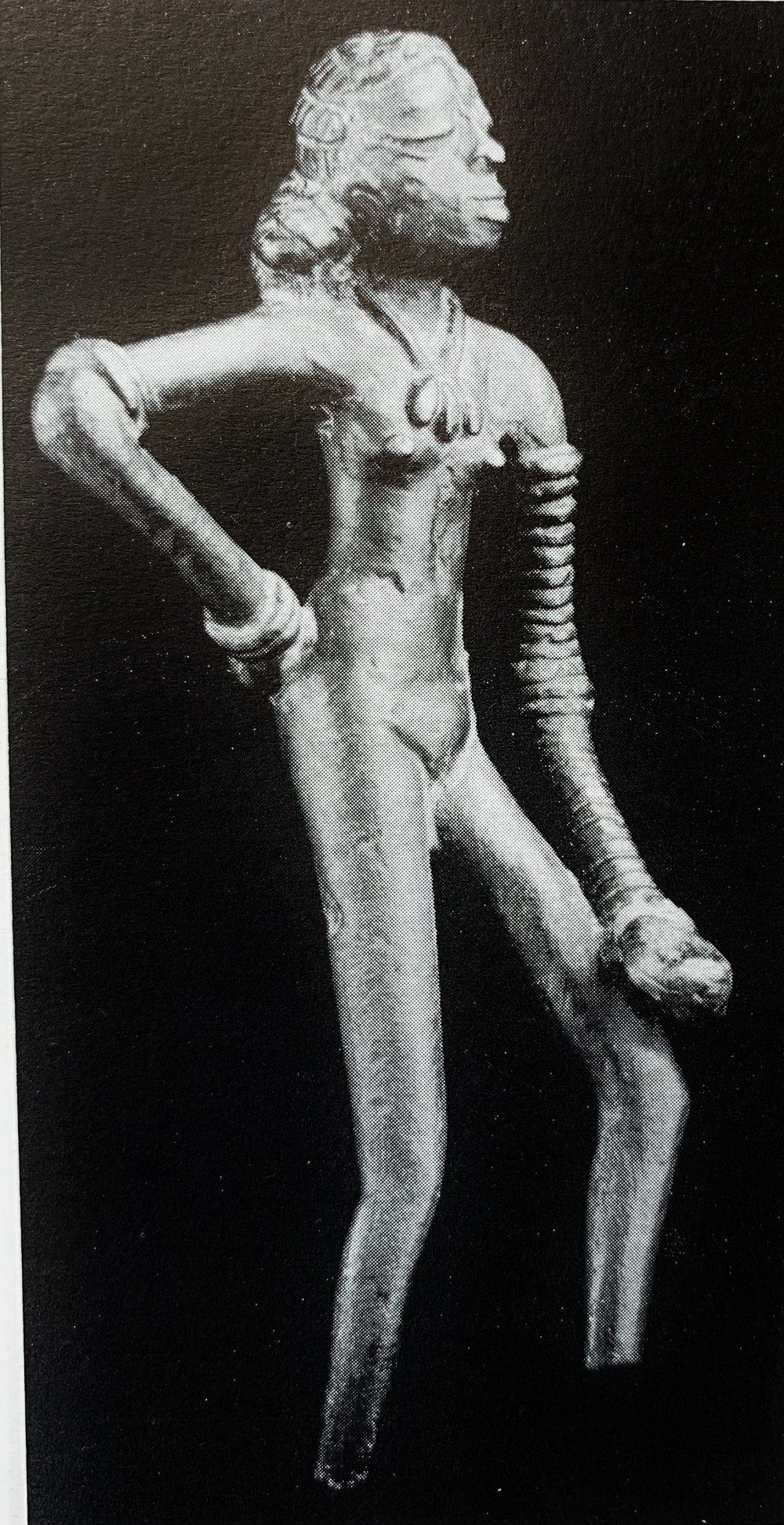
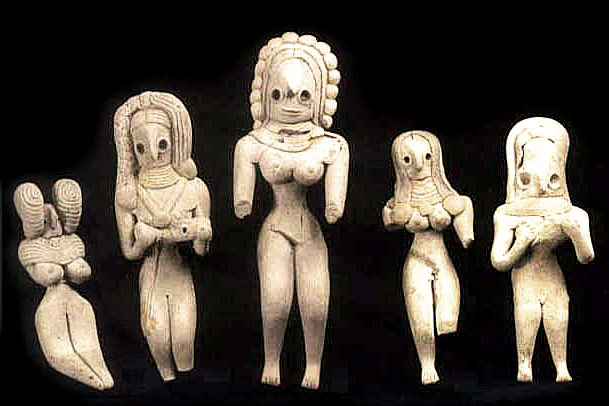
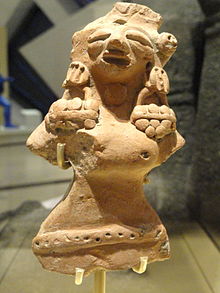
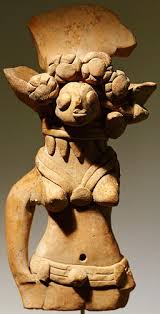
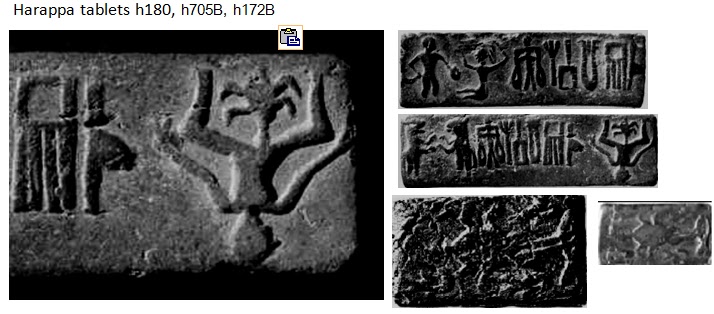
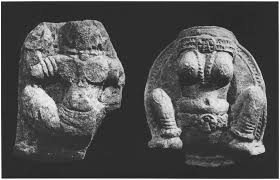
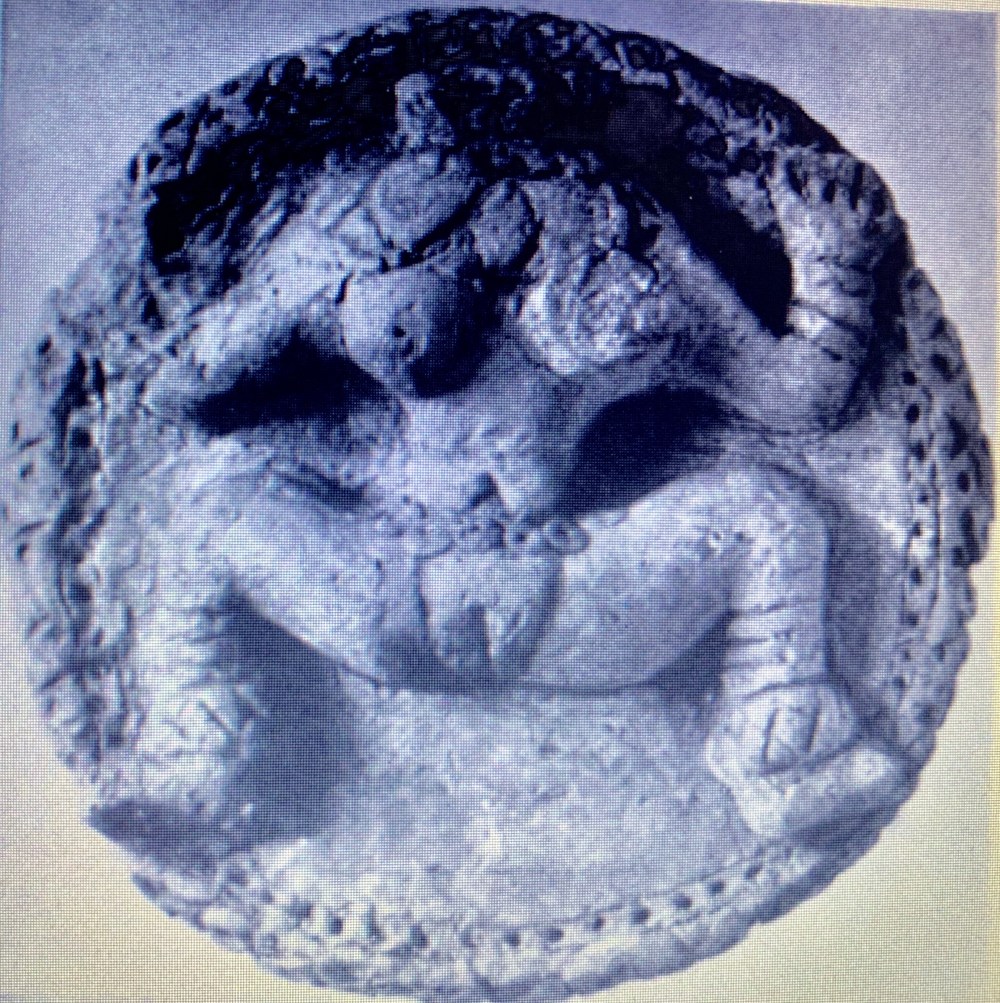
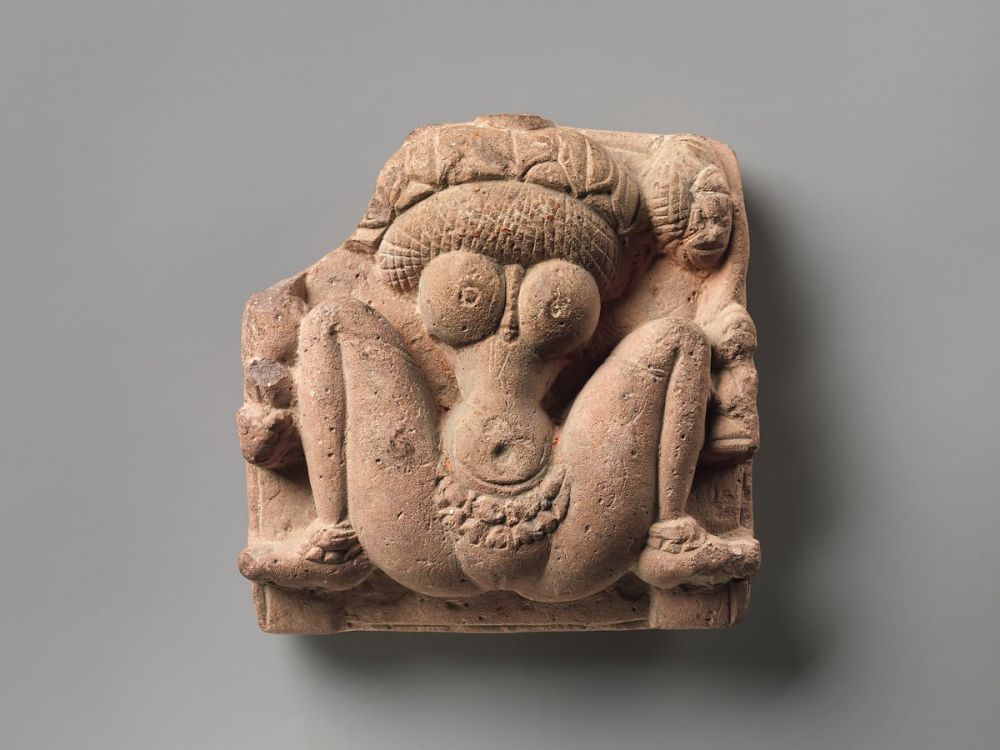
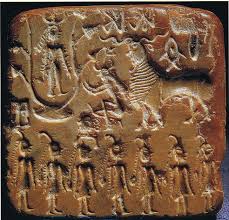
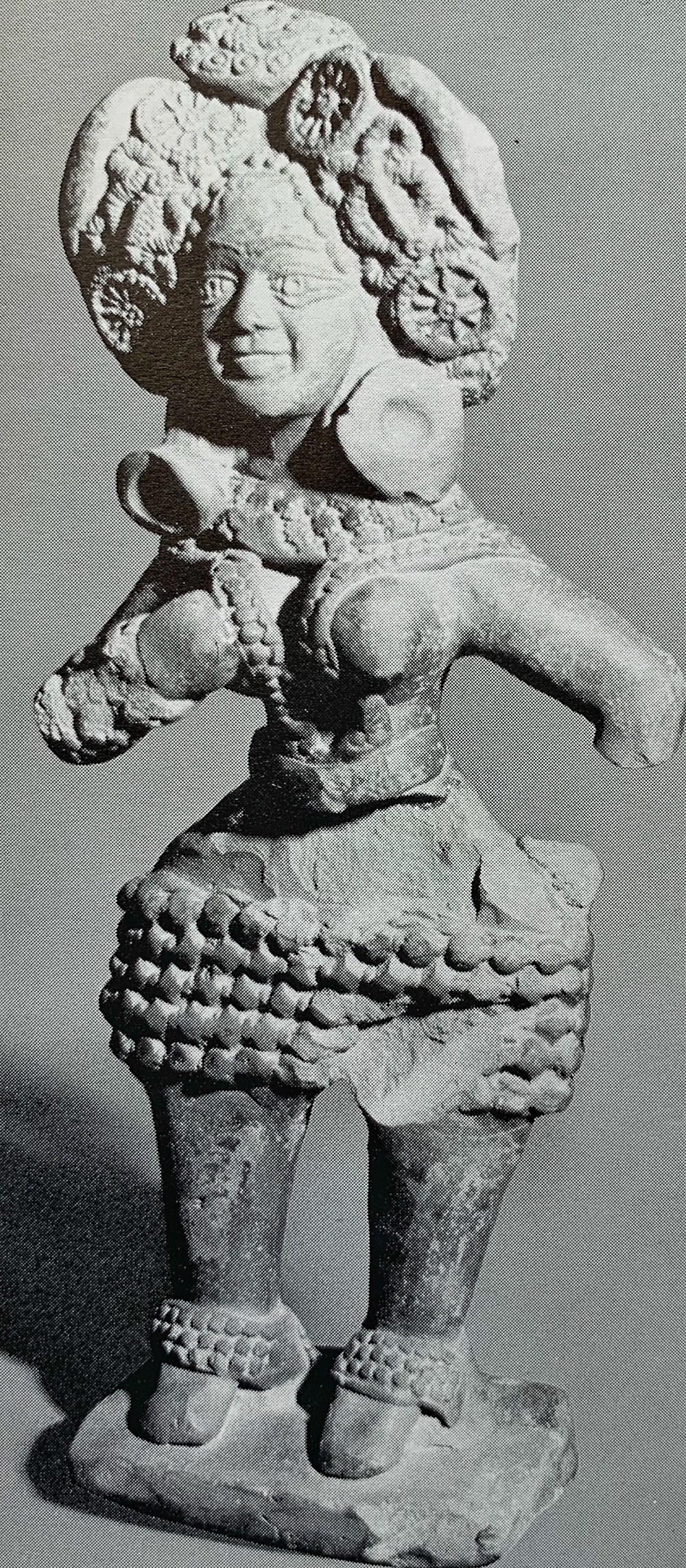

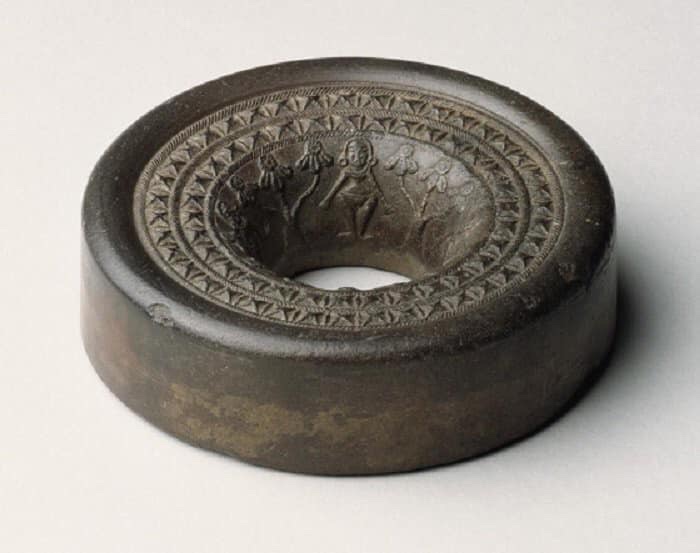
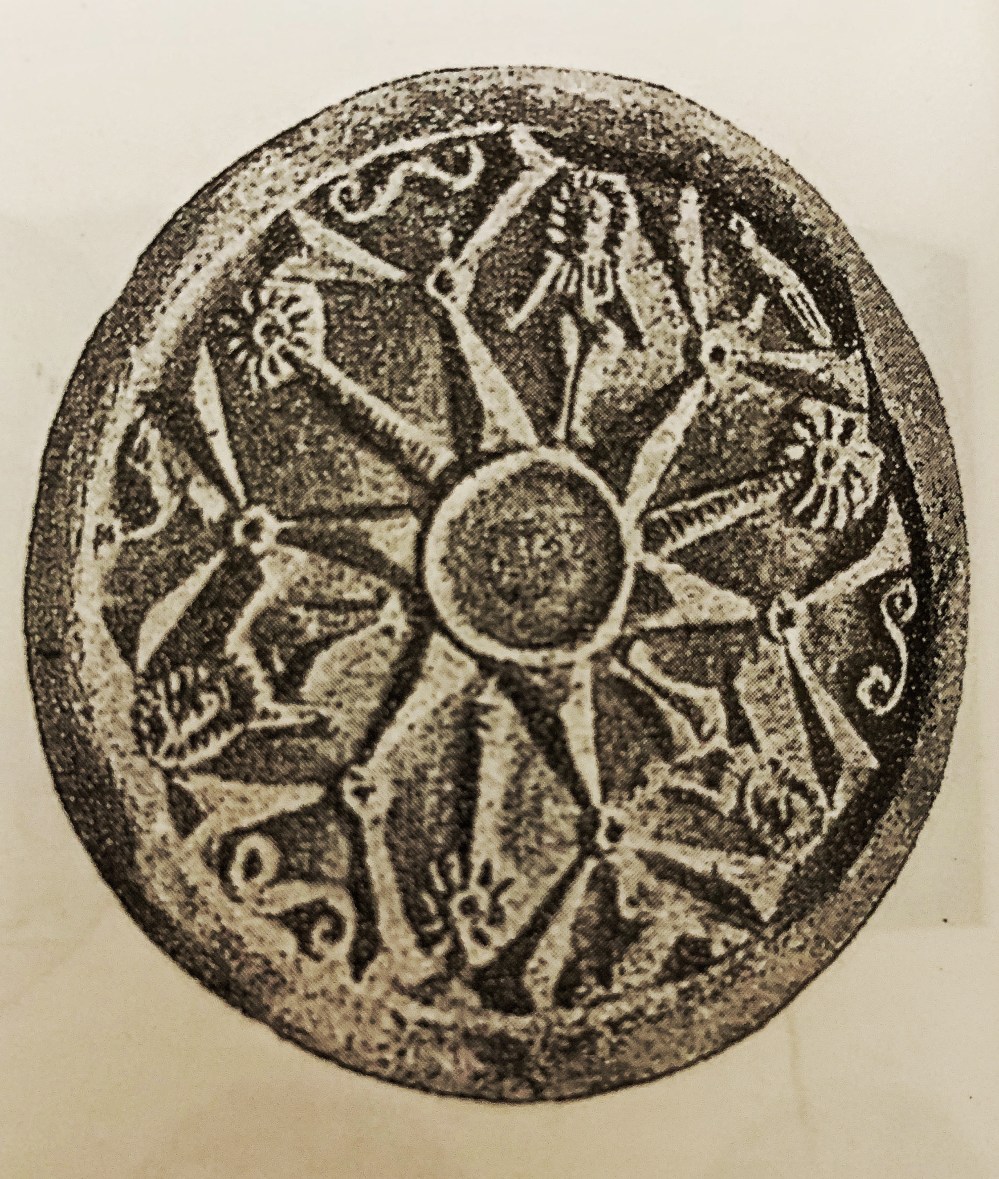
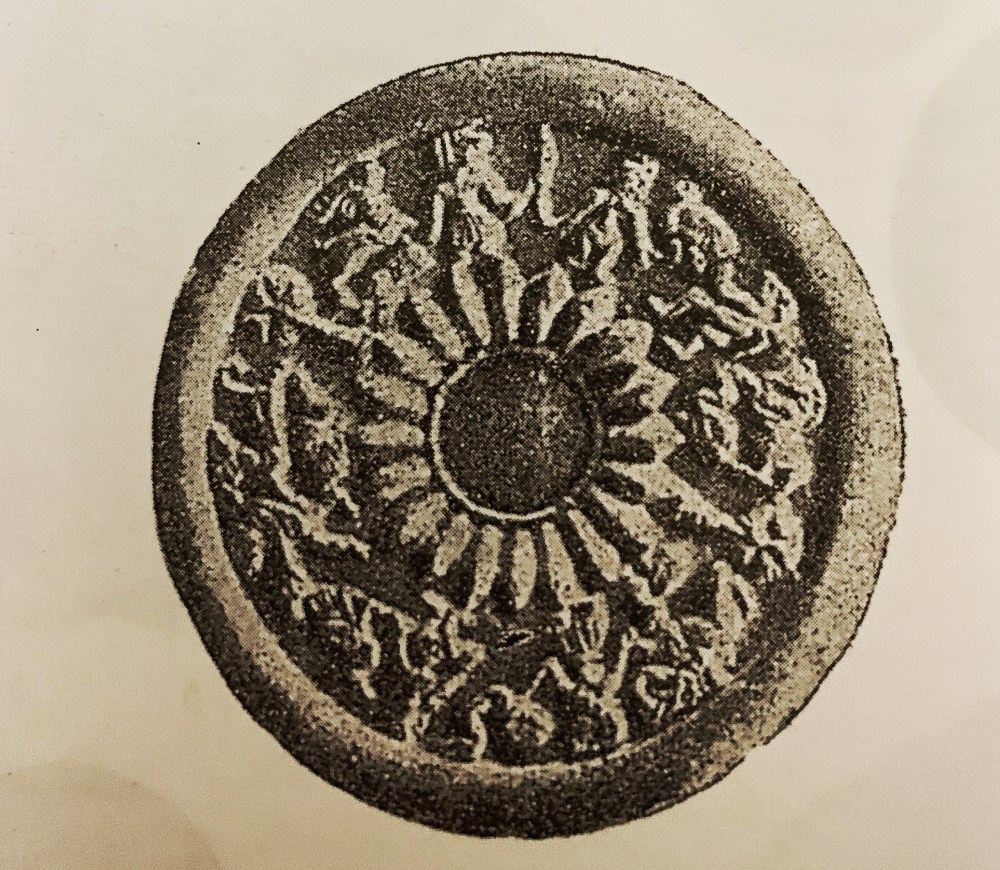
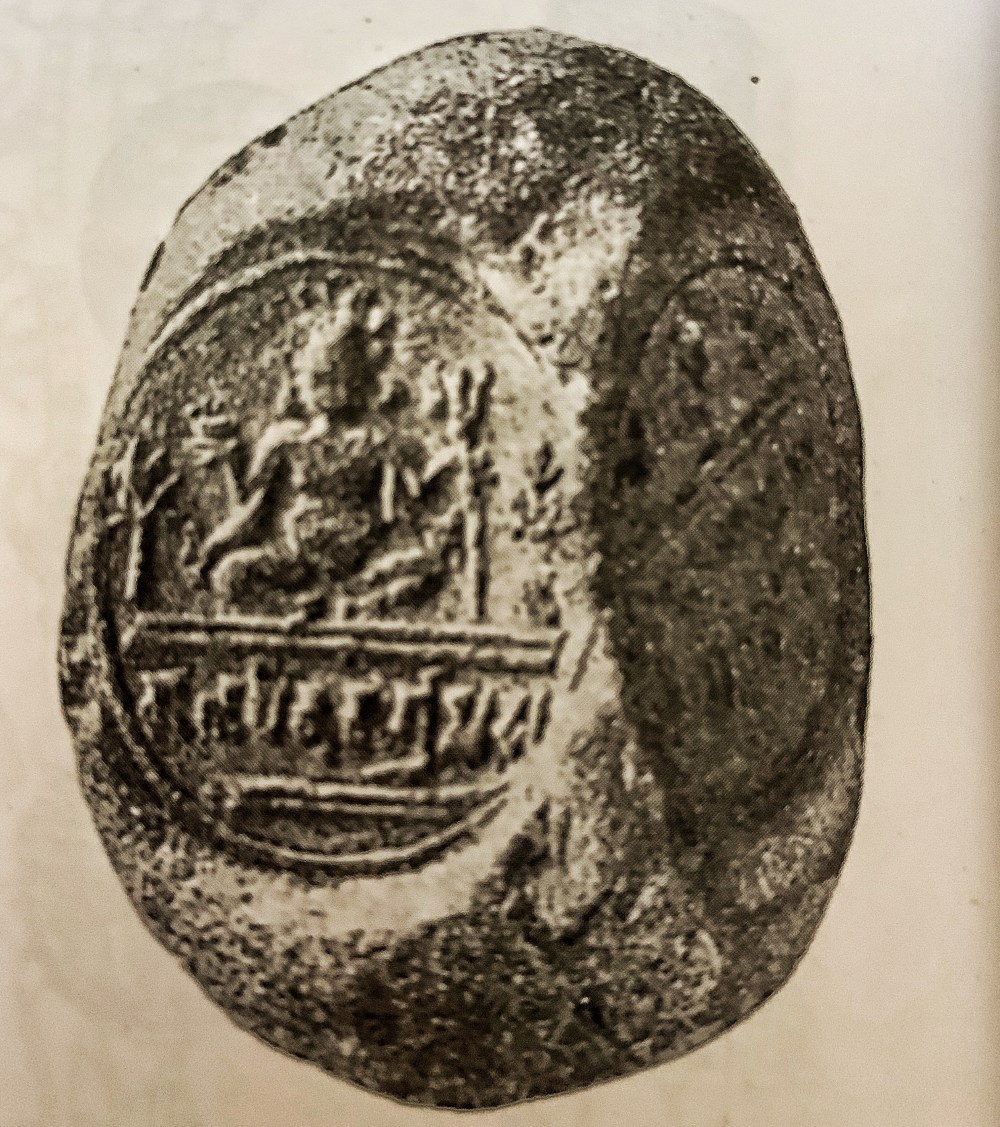
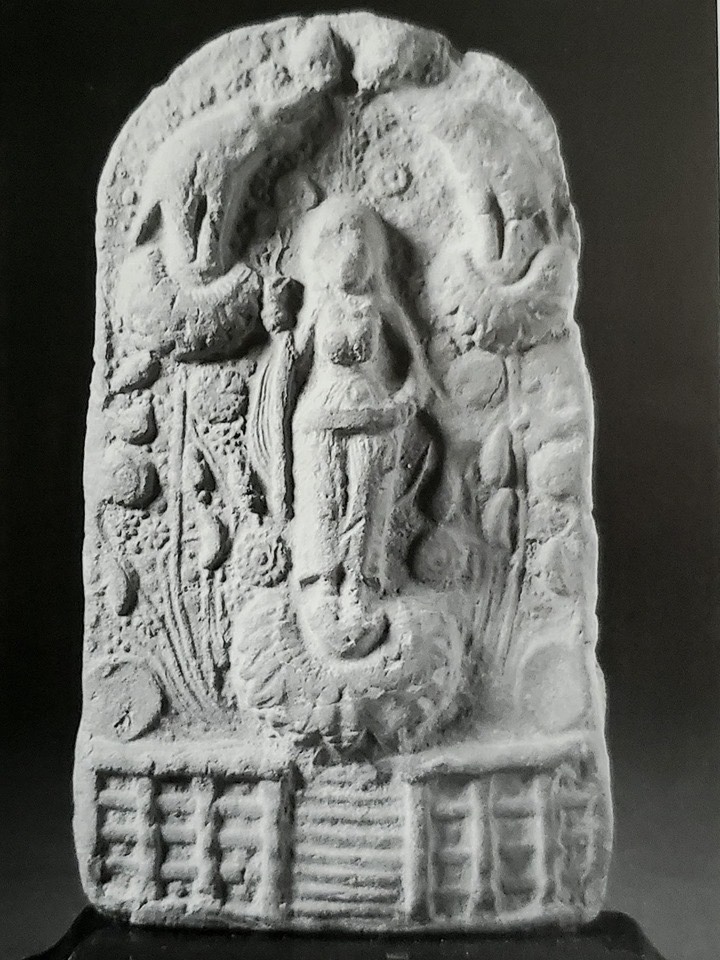
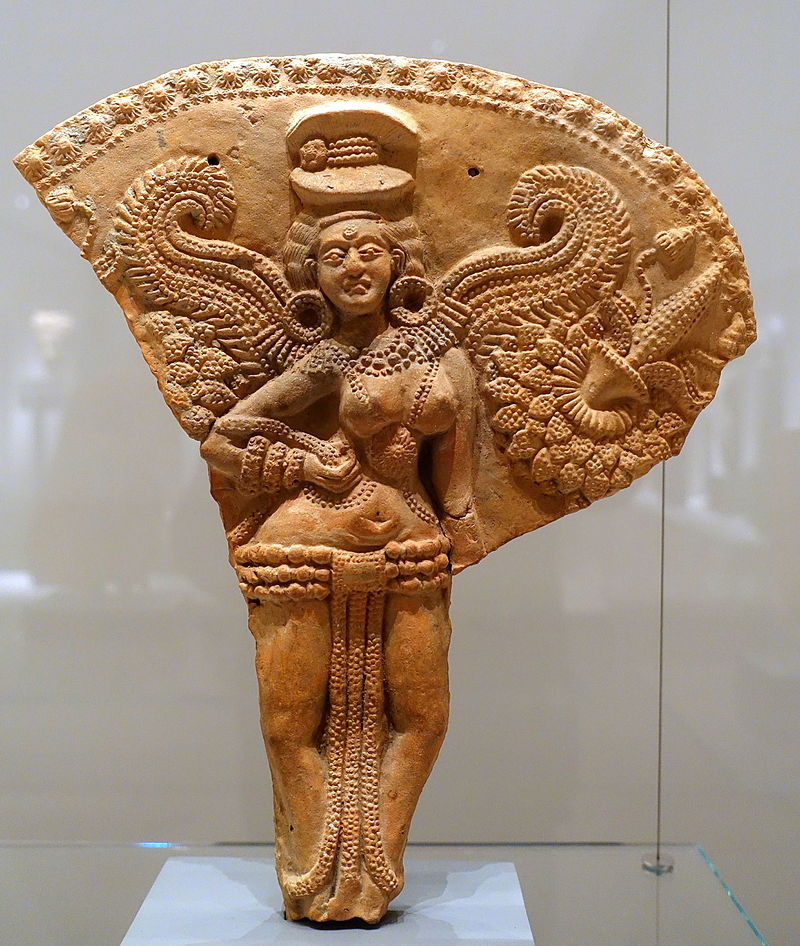
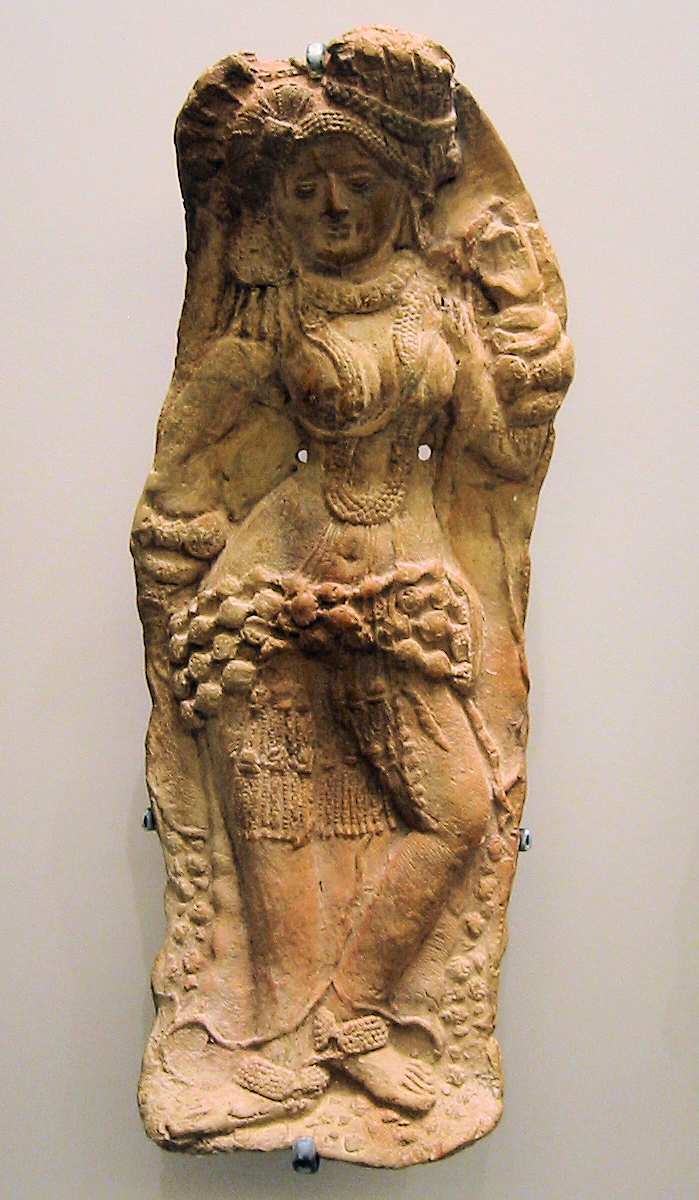
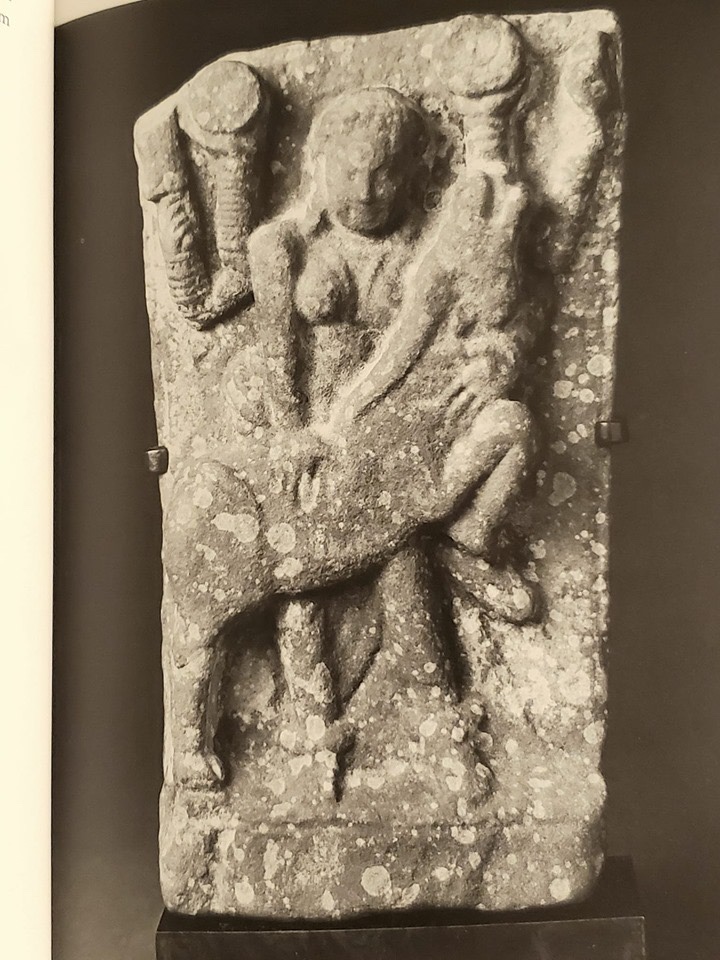
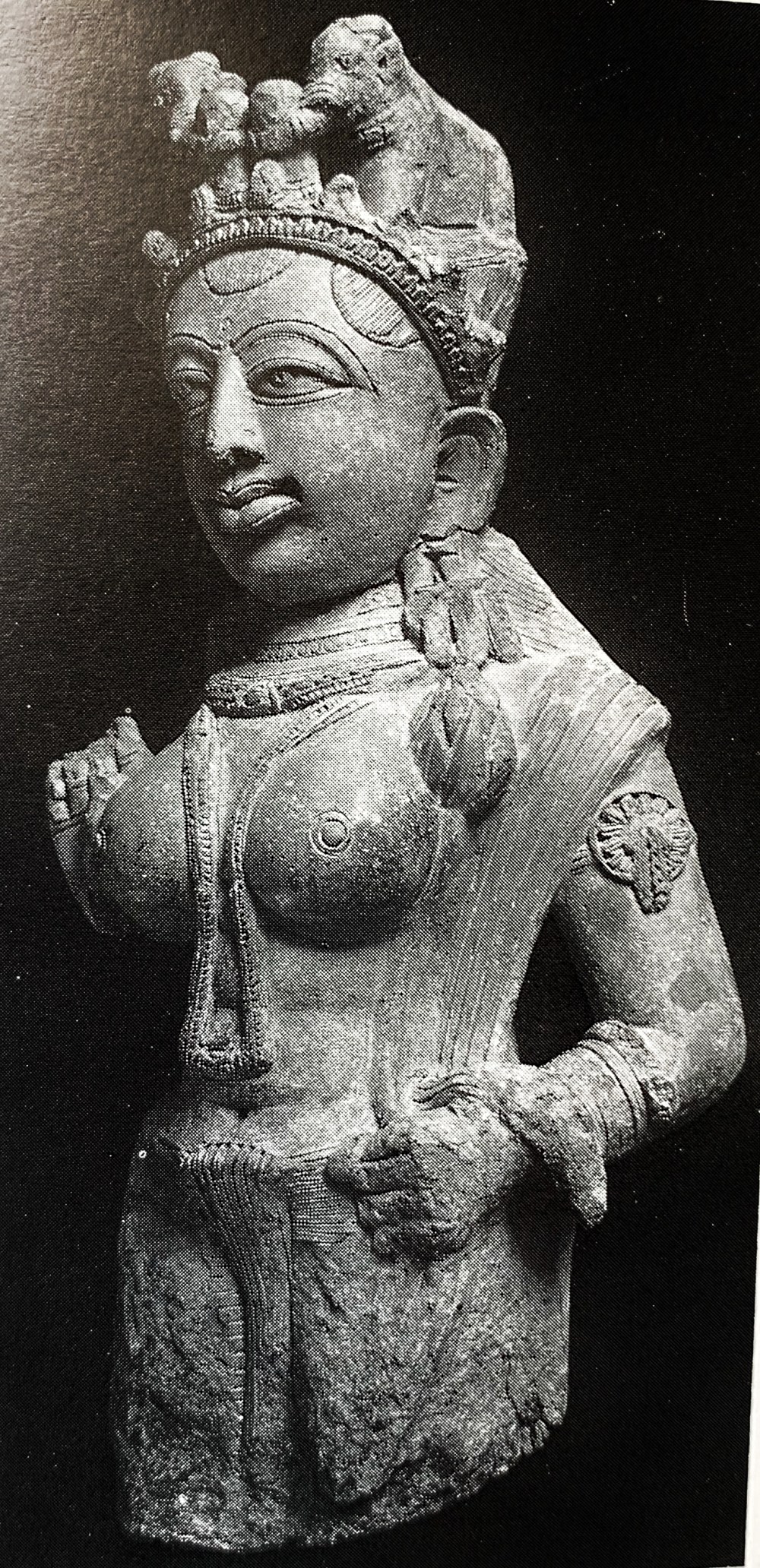
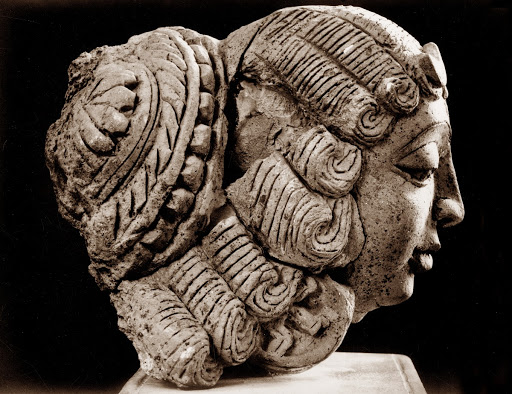
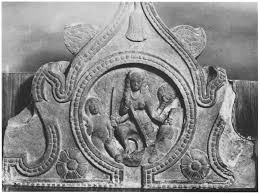
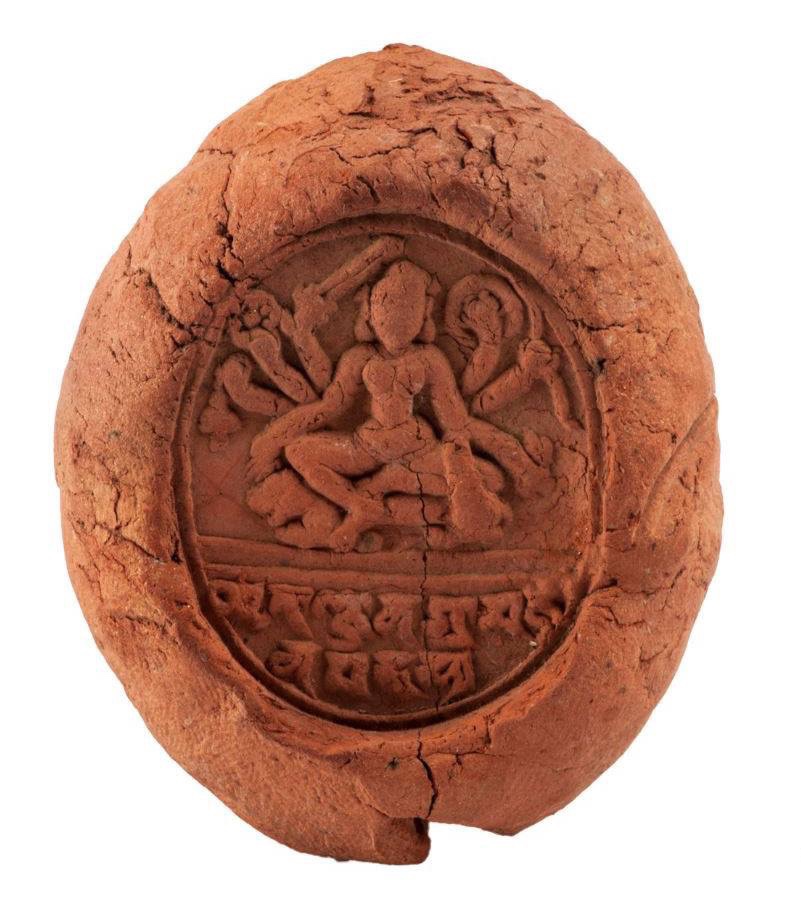
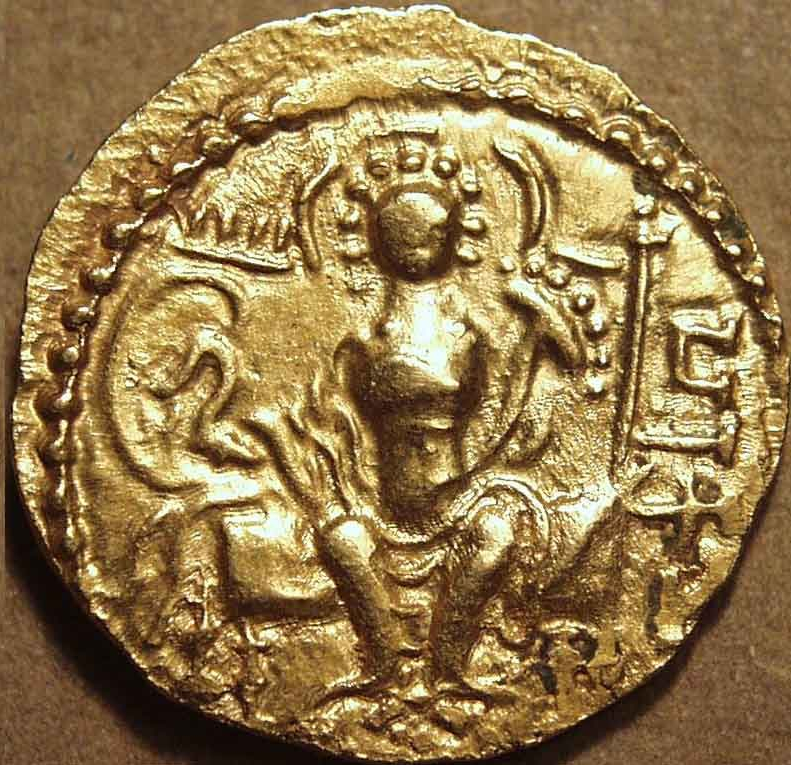
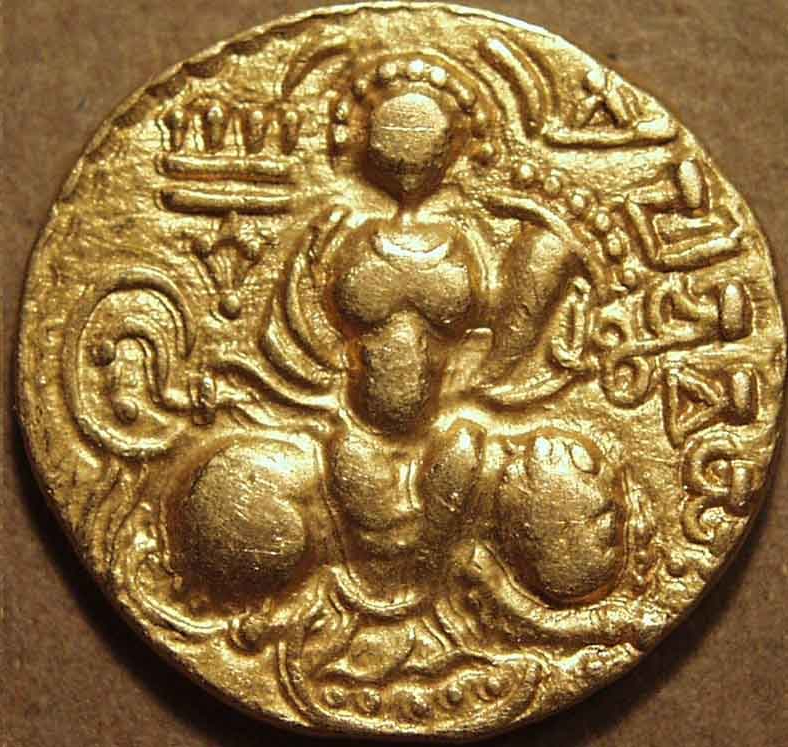
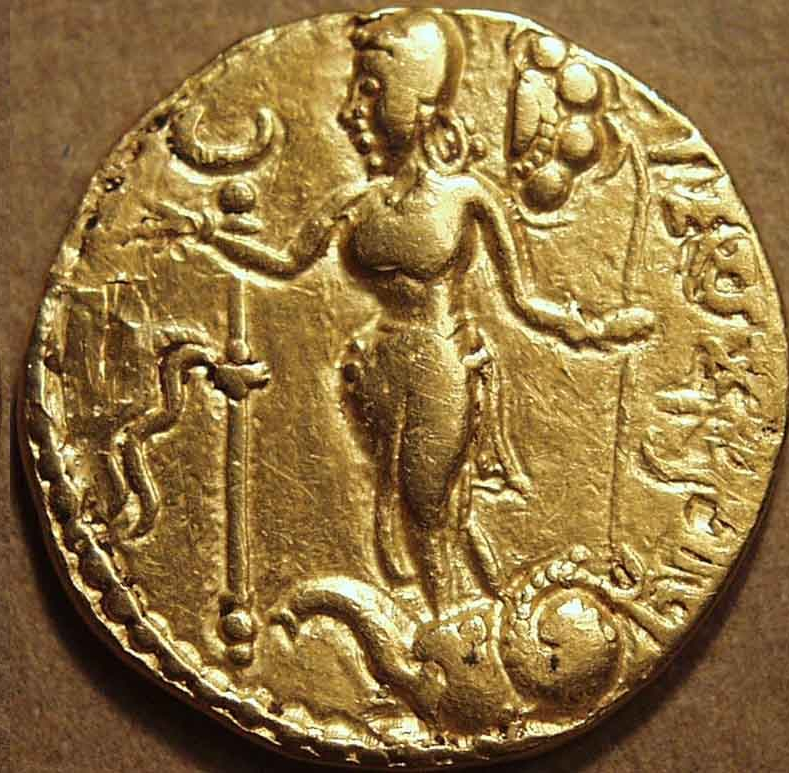
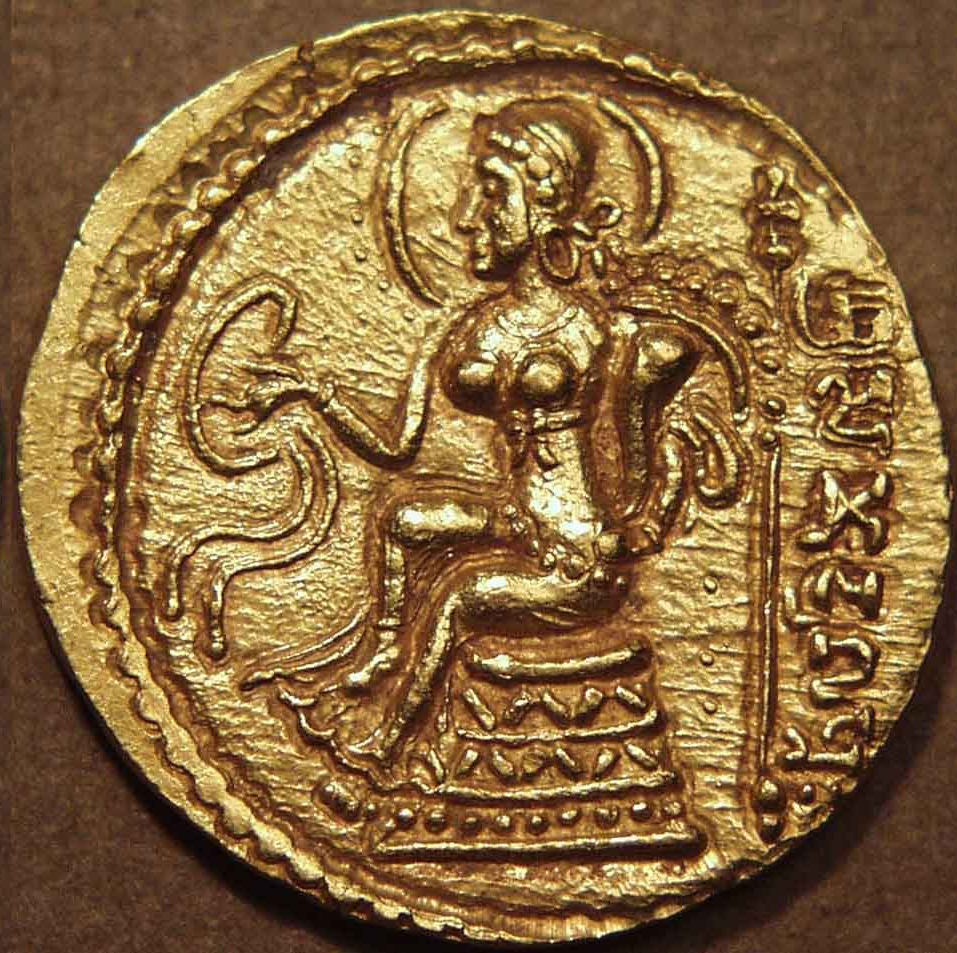
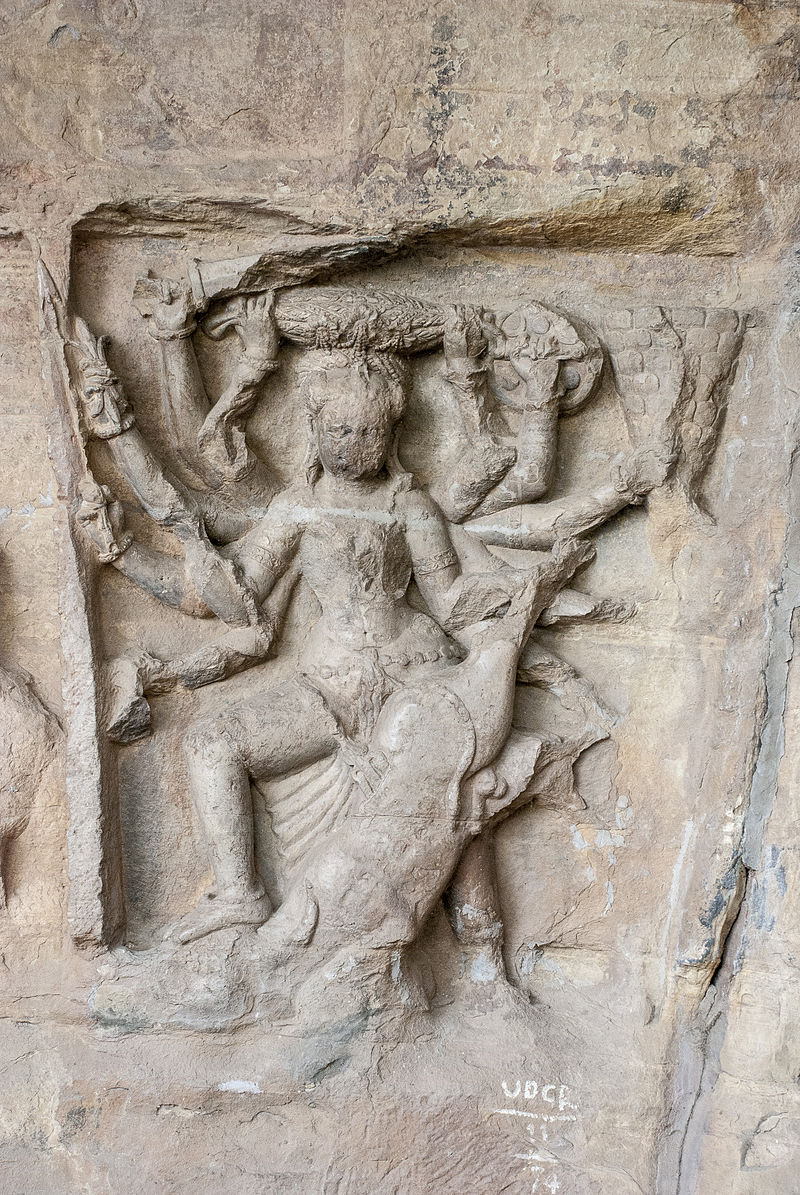
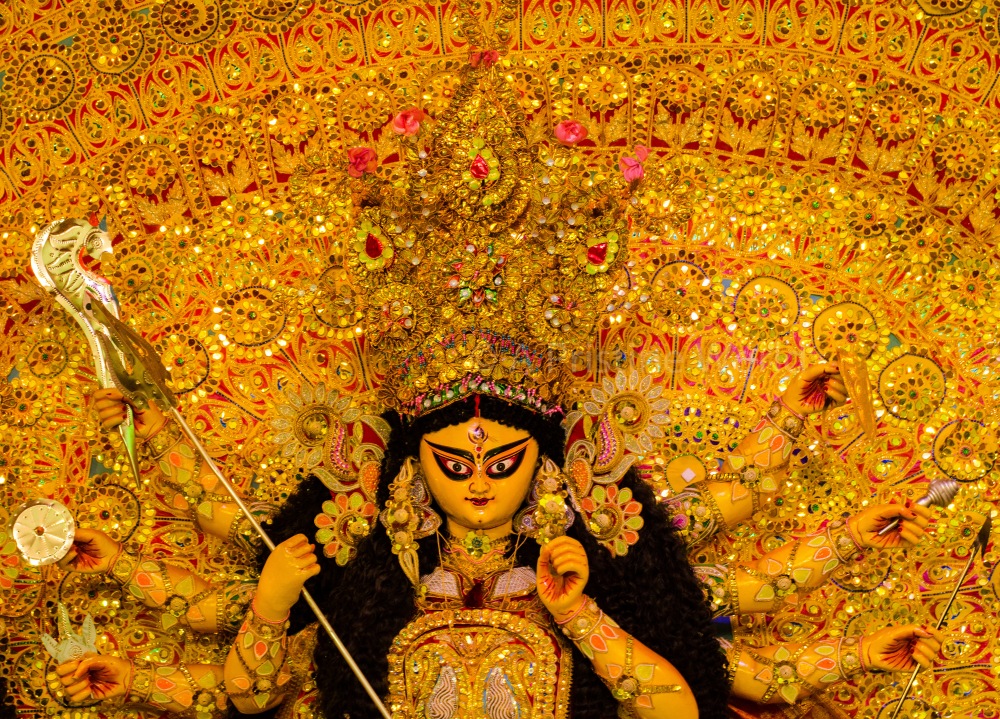

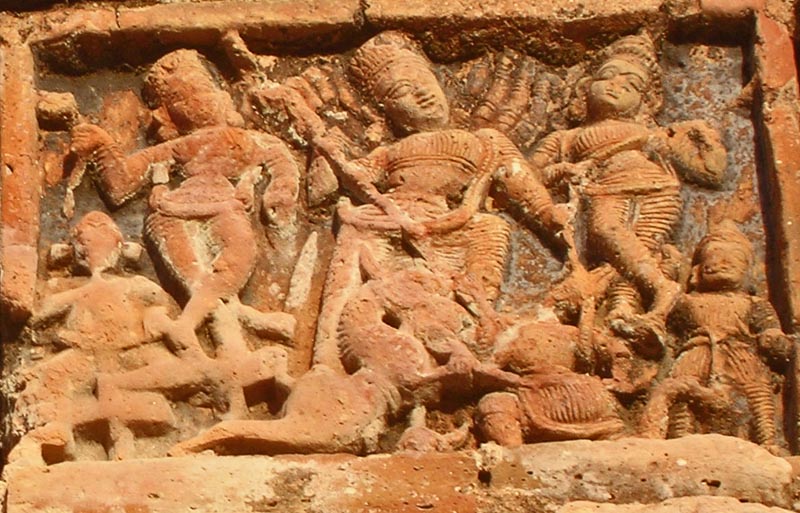


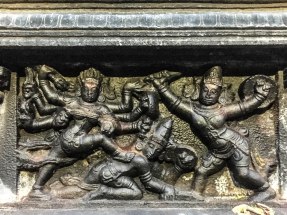 Harivamsha (which is addressed to Yoga-nidra,
an aspect of devi Durga) gives us a clear picture of the various images
or aspects associated with the Devi. From being a mother, a daughter,
and a sister, to a deity who is highly revered and worshipped, the
characteristics attributed to her combine many aspects that weaved
together the Vedic and non-Vedic worship practices. From being
worshipped by the Kushikas and Katyas (Vedic rishi clans), the devi is
also worshipped by the Shavaras, Pulindas and Barbaras (Shavarairbarbaraishcaiva pulindaishca supujita). Devi Durga is also referred to as Aparna, Nagna- Shavari, and Parna-Shavari.
Harivamsha (which is addressed to Yoga-nidra,
an aspect of devi Durga) gives us a clear picture of the various images
or aspects associated with the Devi. From being a mother, a daughter,
and a sister, to a deity who is highly revered and worshipped, the
characteristics attributed to her combine many aspects that weaved
together the Vedic and non-Vedic worship practices. From being
worshipped by the Kushikas and Katyas (Vedic rishi clans), the devi is
also worshipped by the Shavaras, Pulindas and Barbaras (Shavarairbarbaraishcaiva pulindaishca supujita). Devi Durga is also referred to as Aparna, Nagna- Shavari, and Parna-Shavari.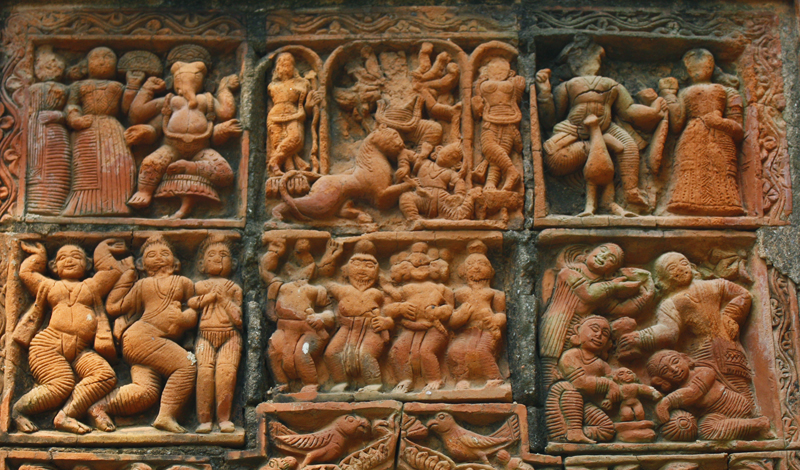
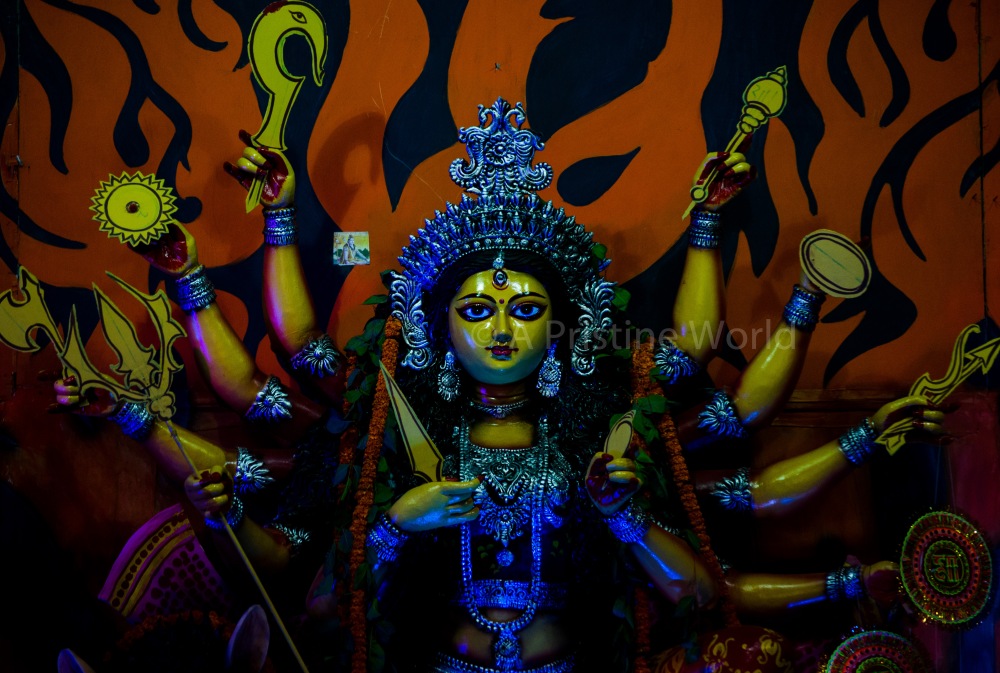
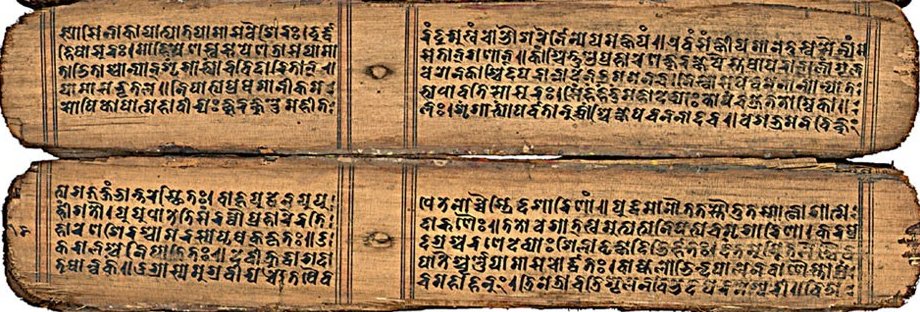
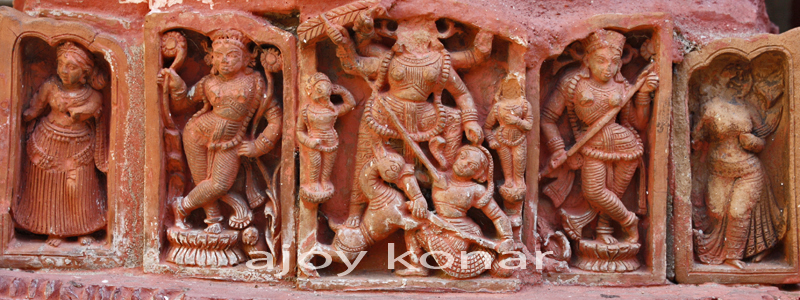

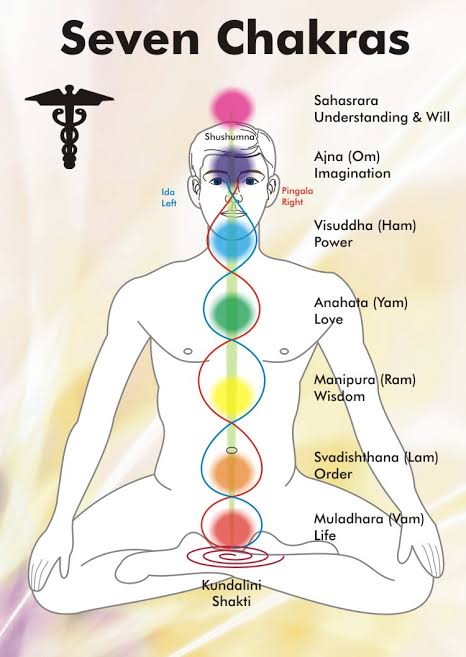
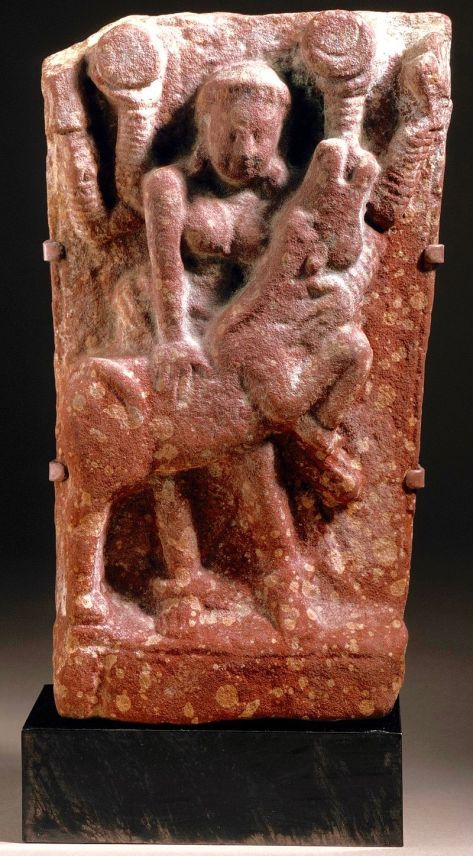

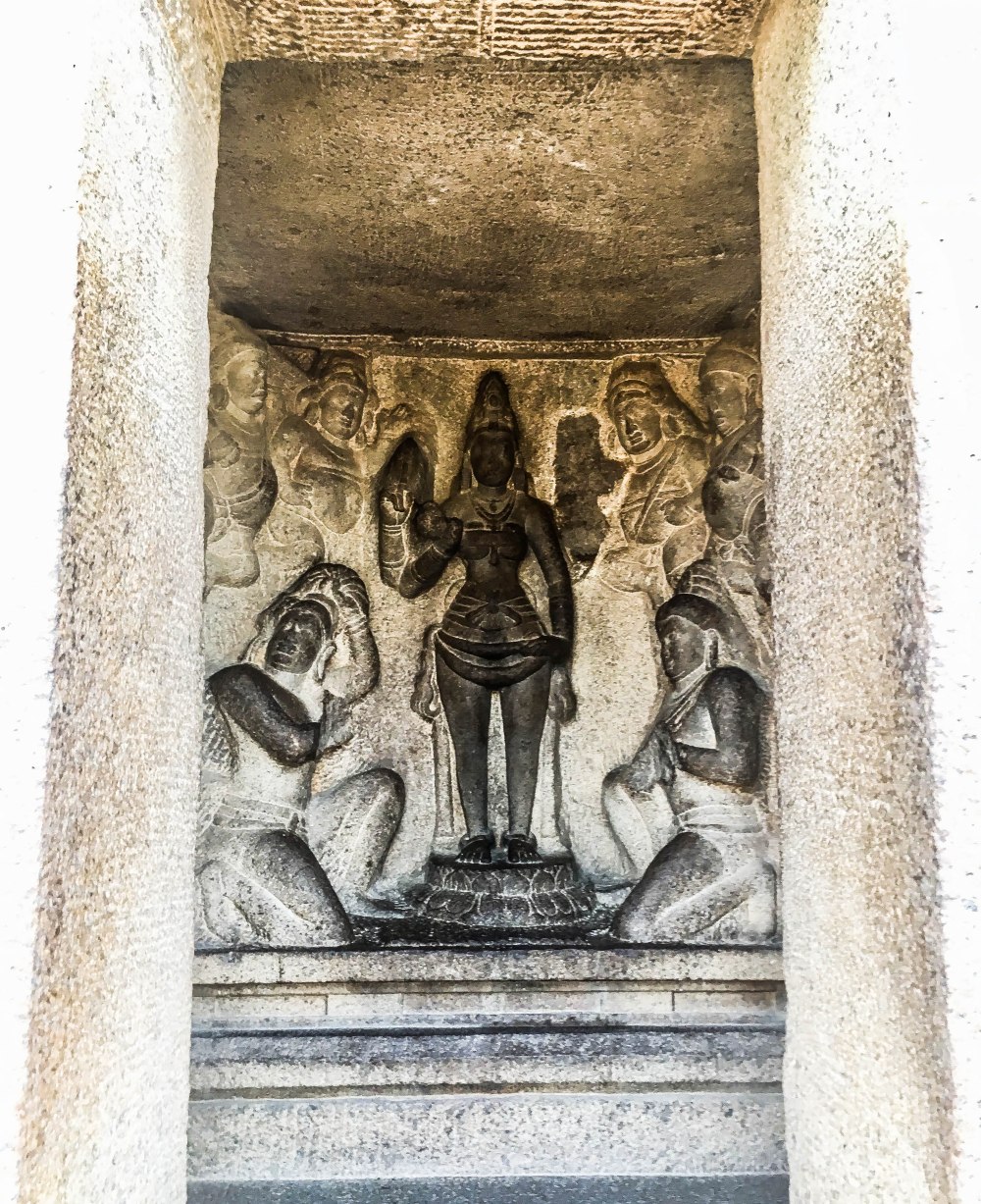
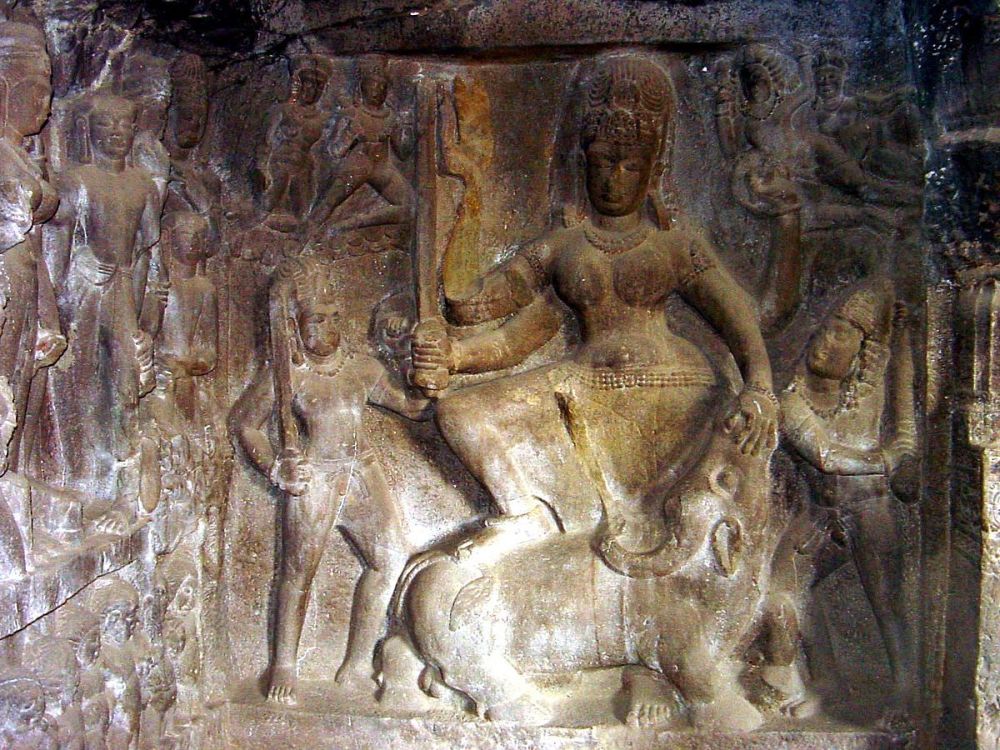

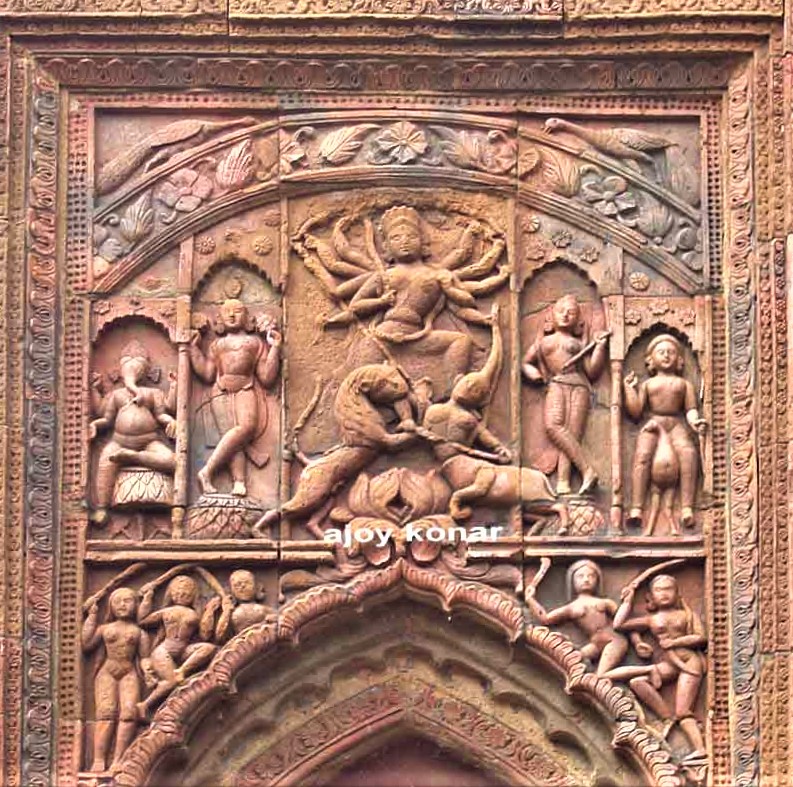


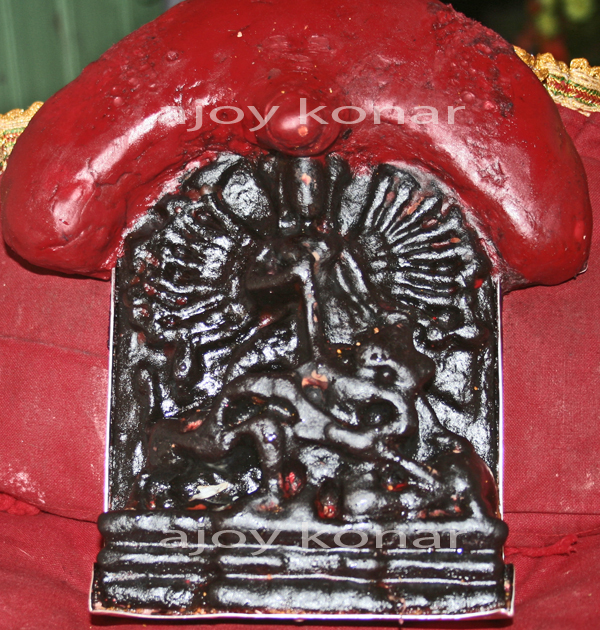

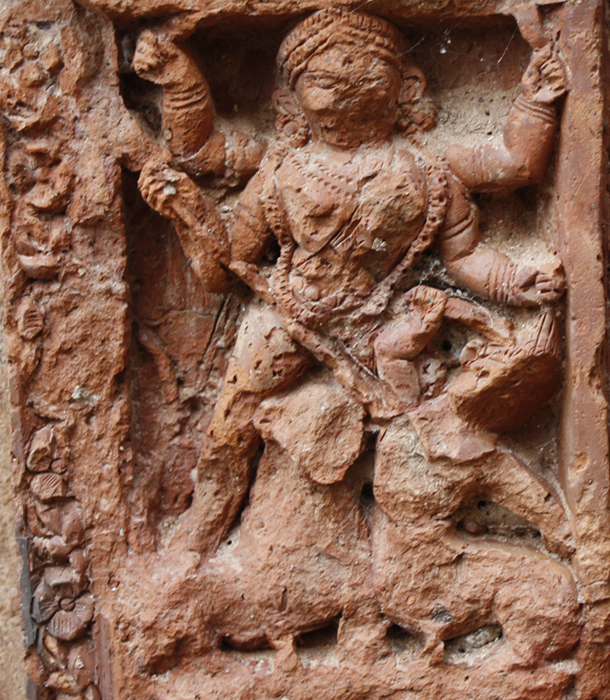
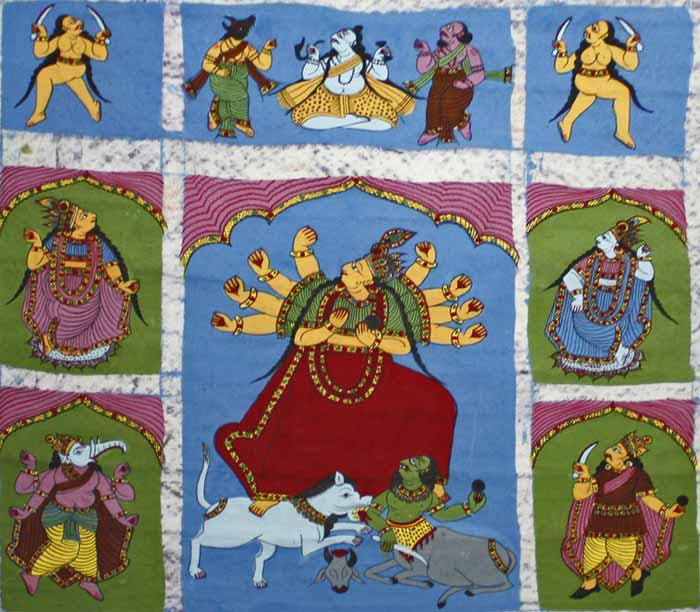
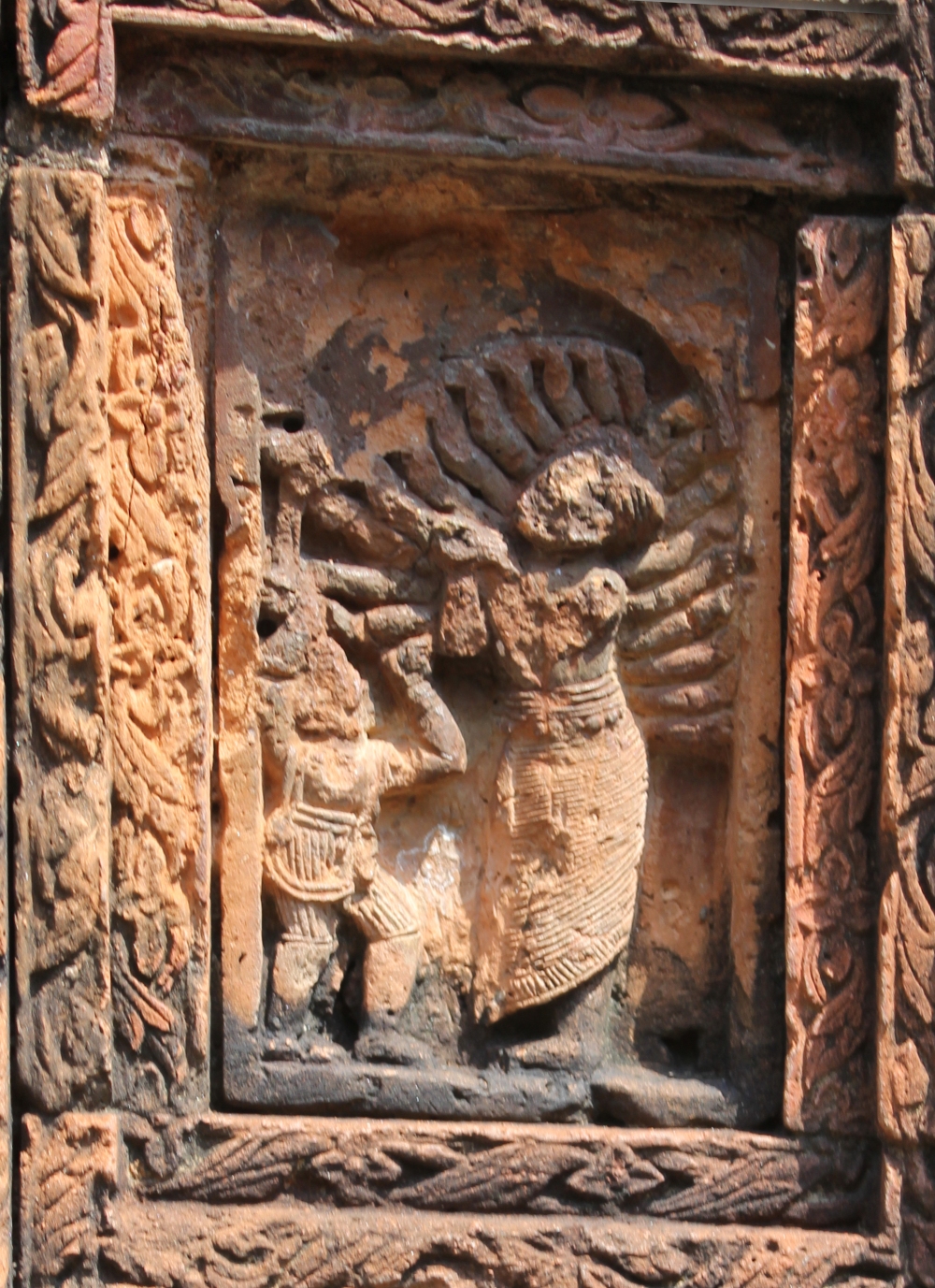
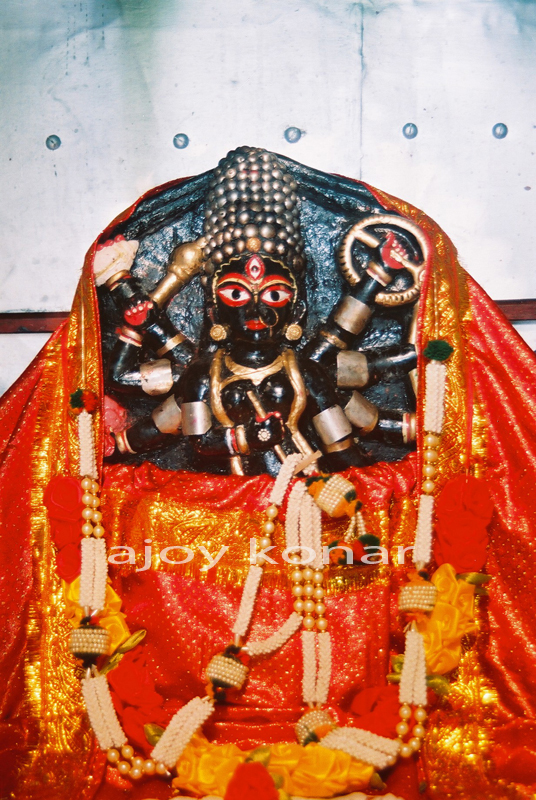


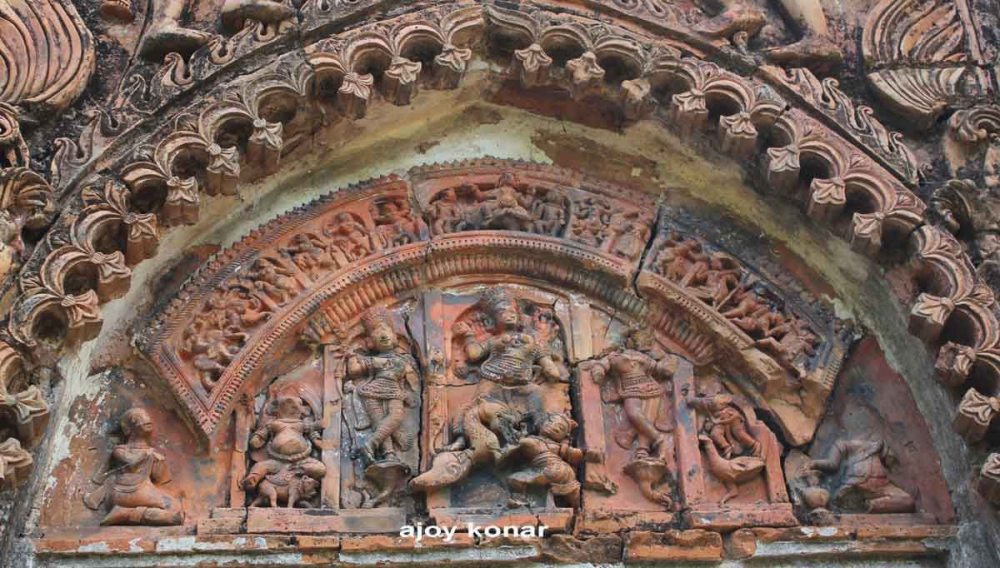
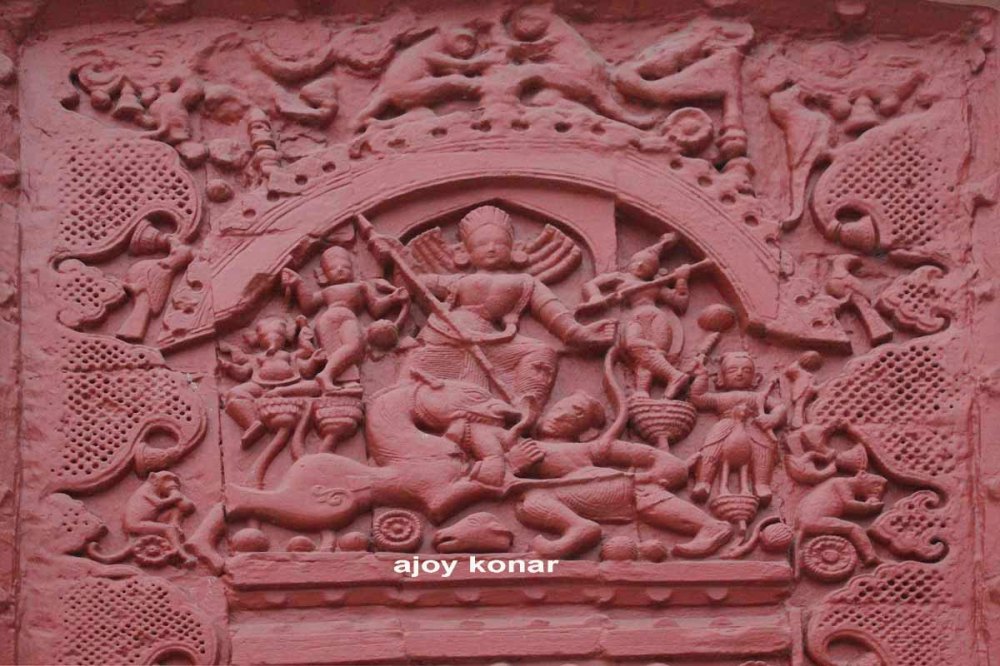

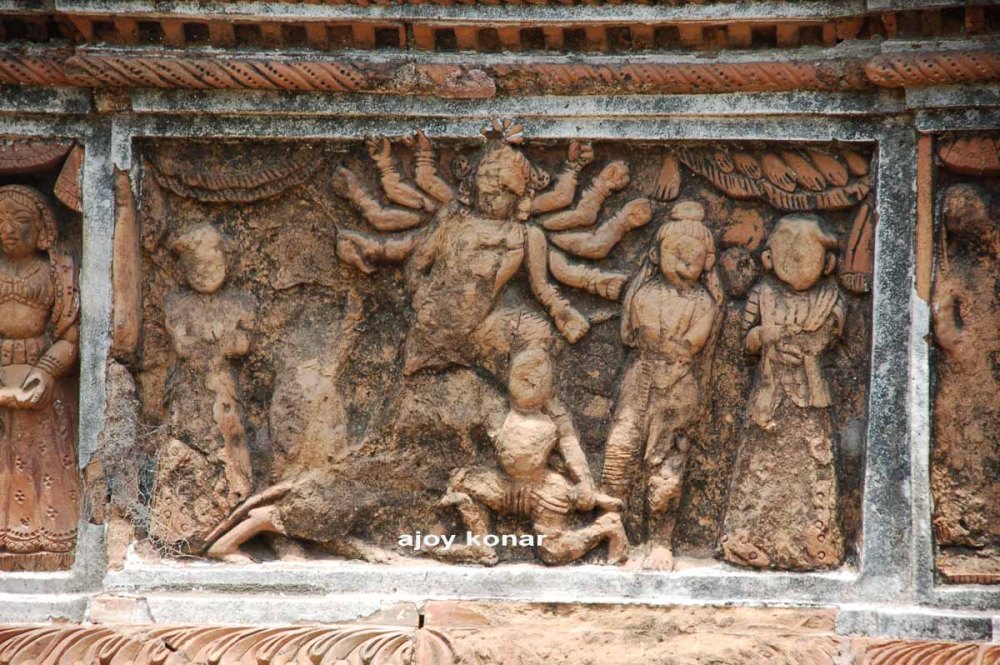
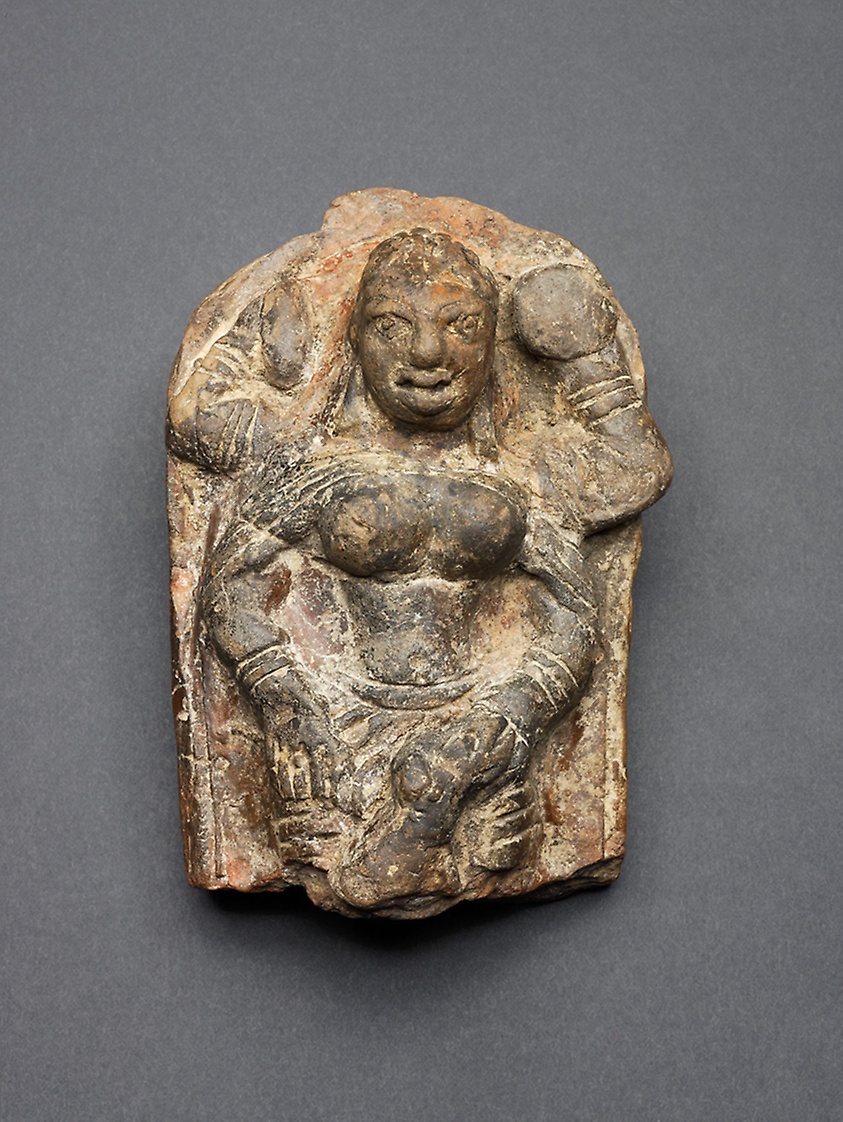

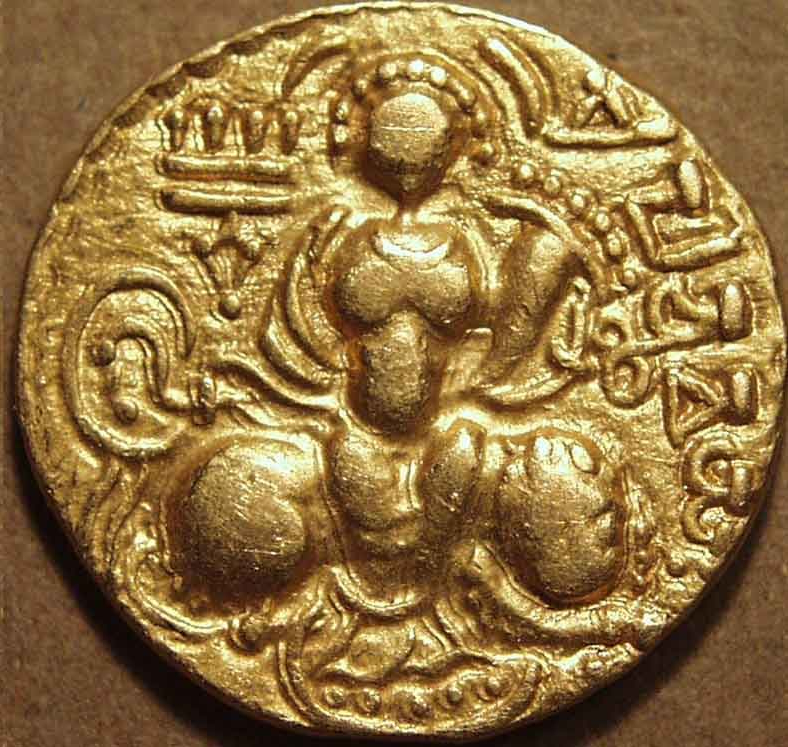
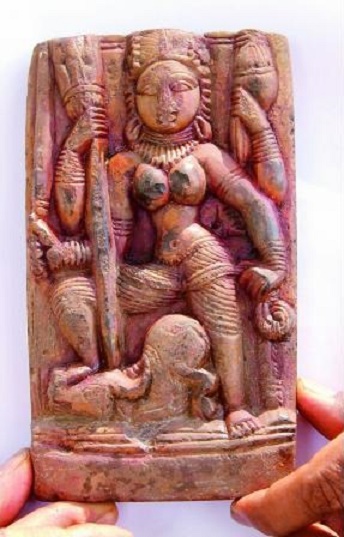
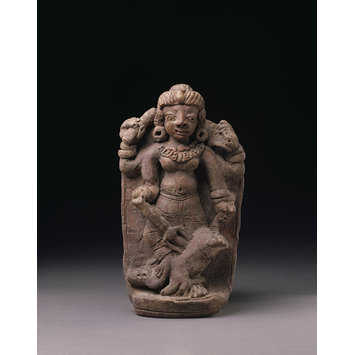
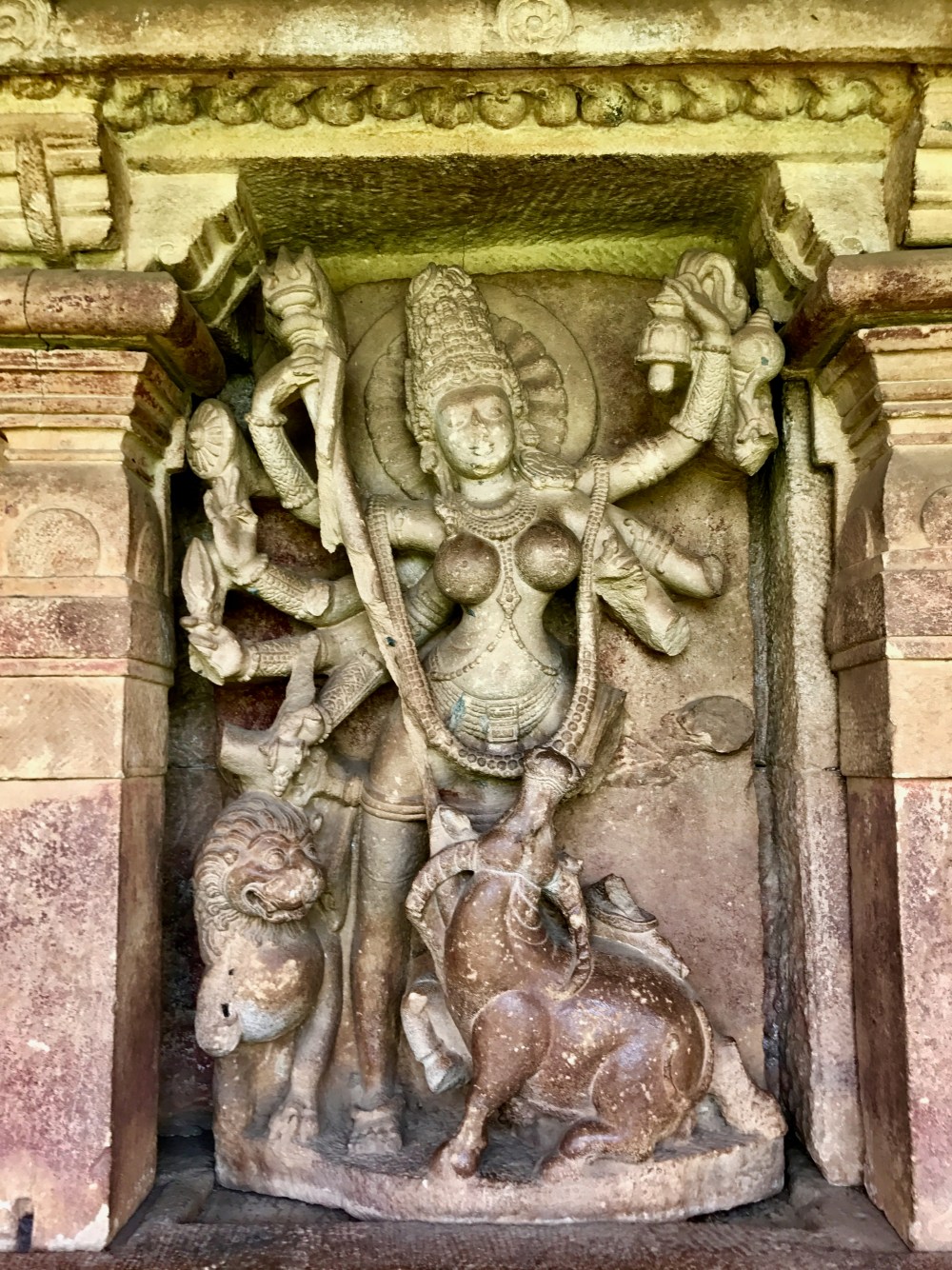
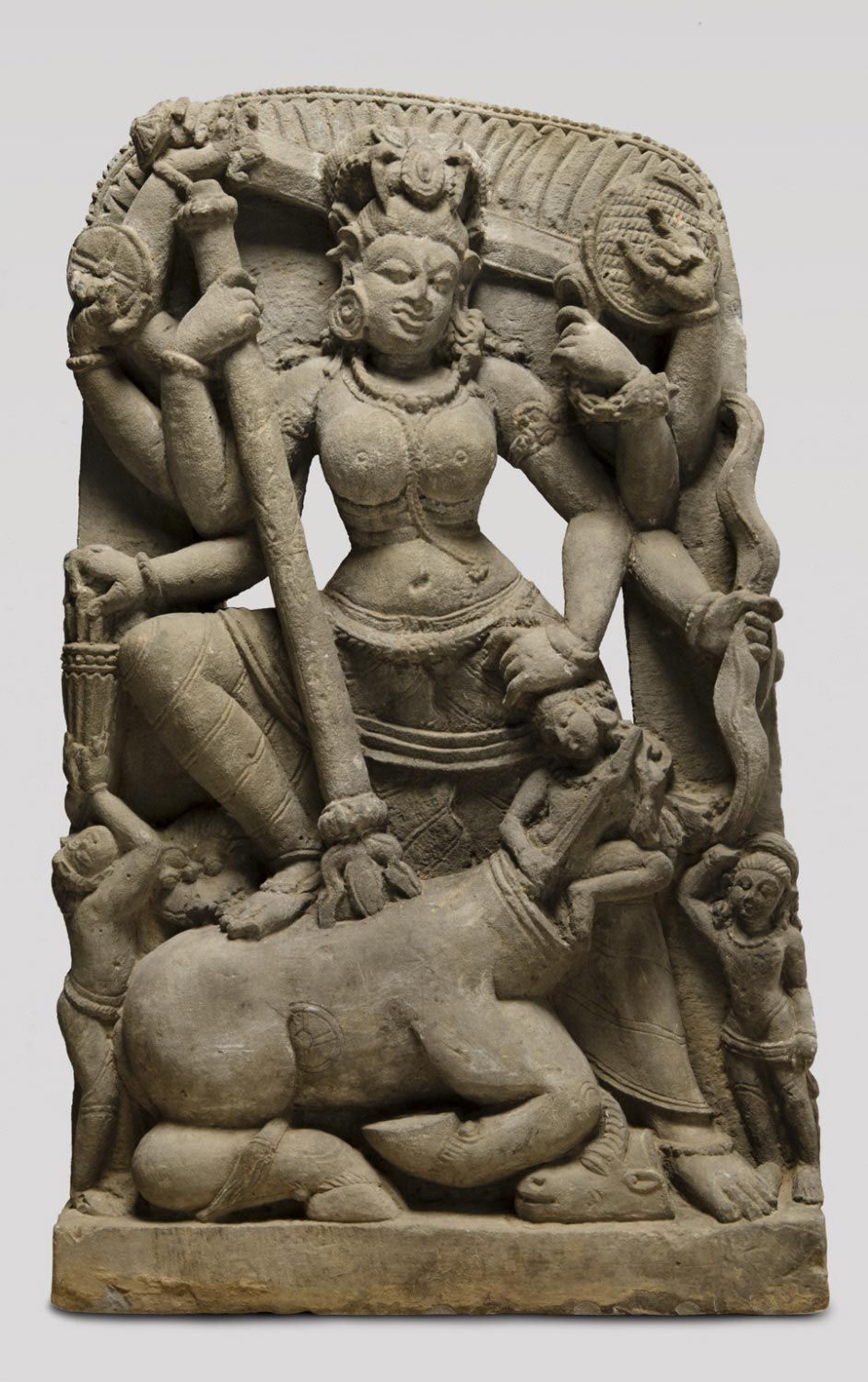
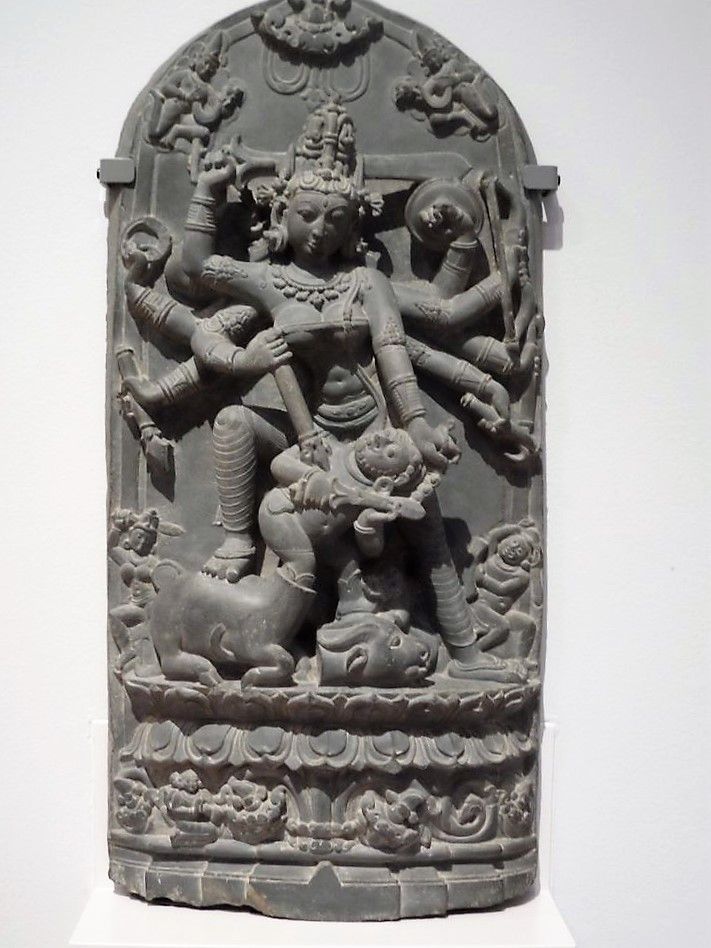
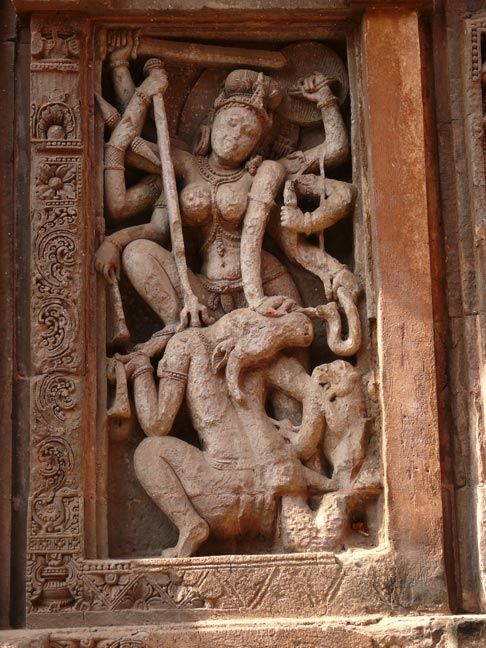
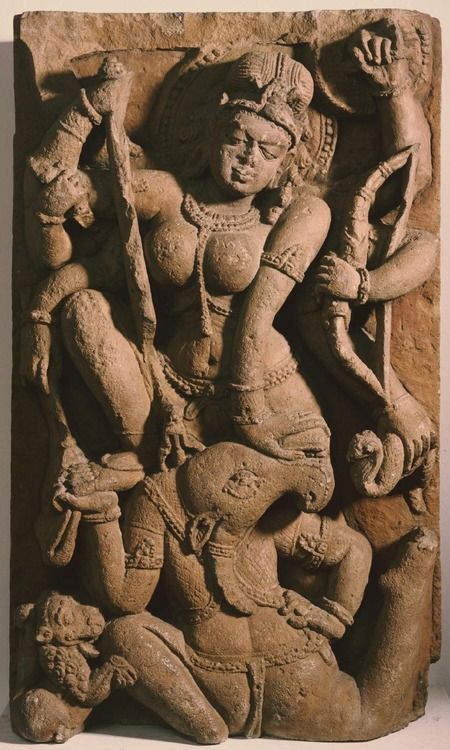
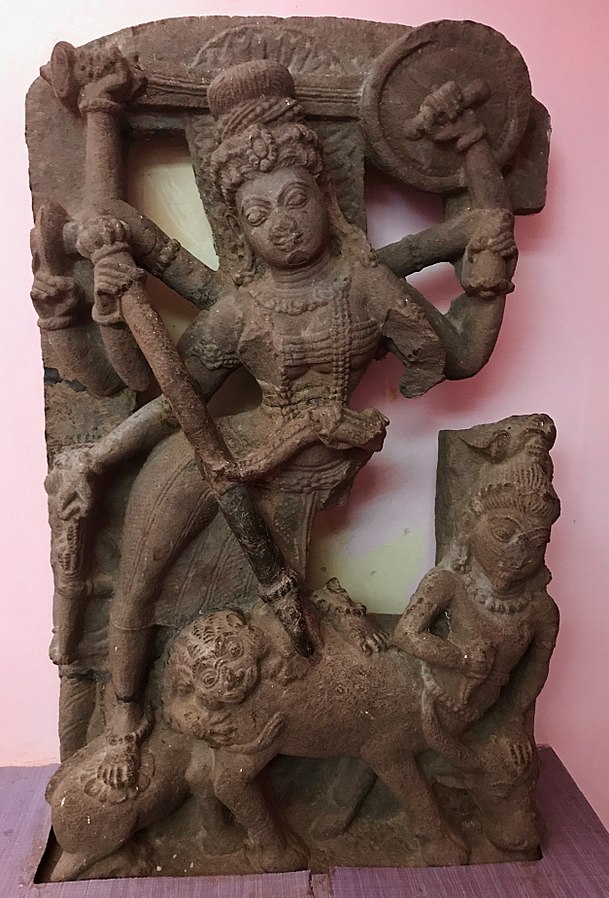
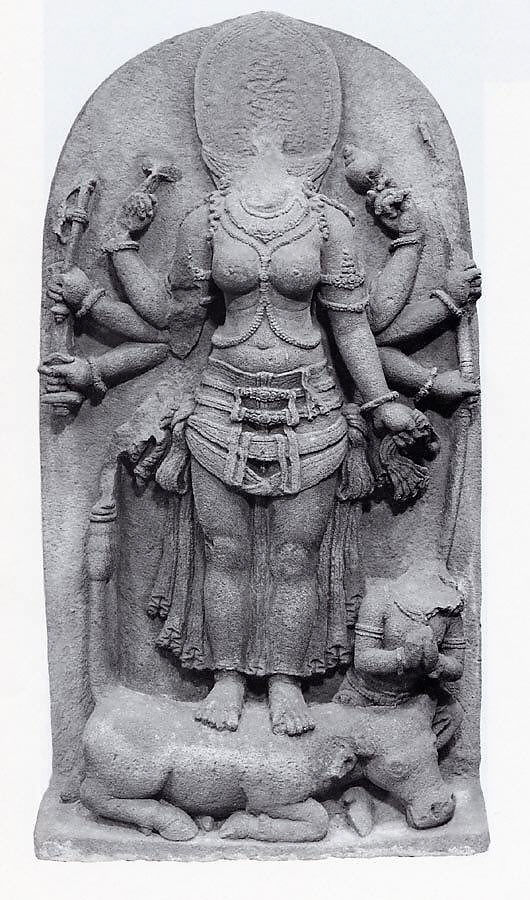
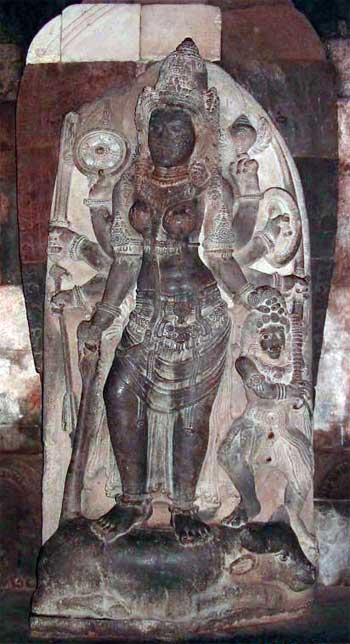
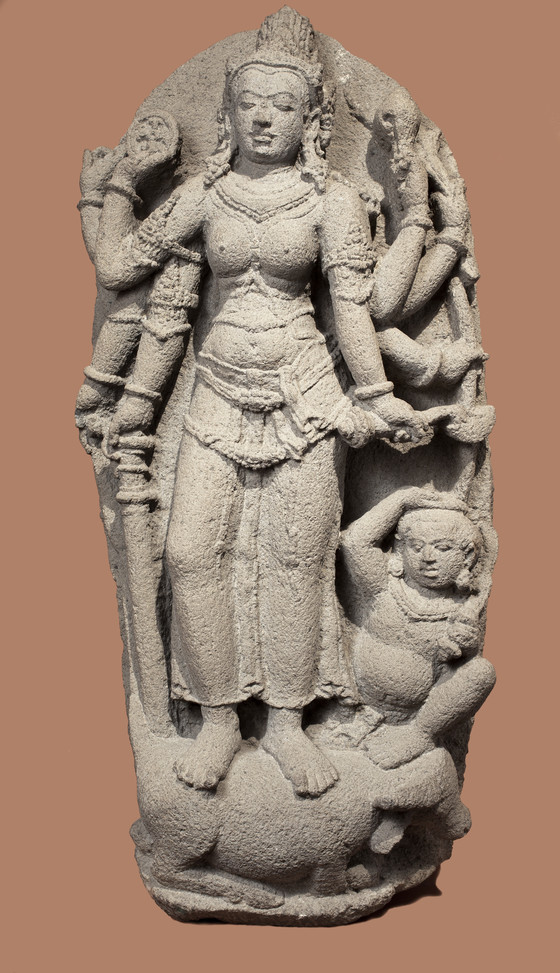
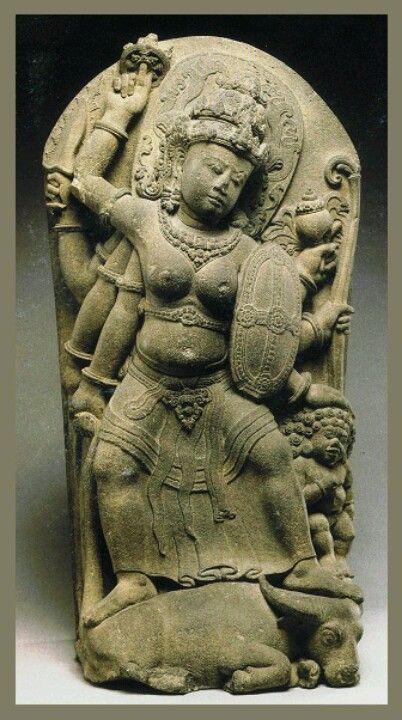
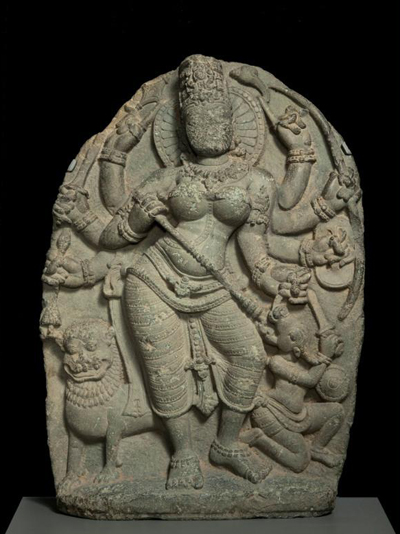
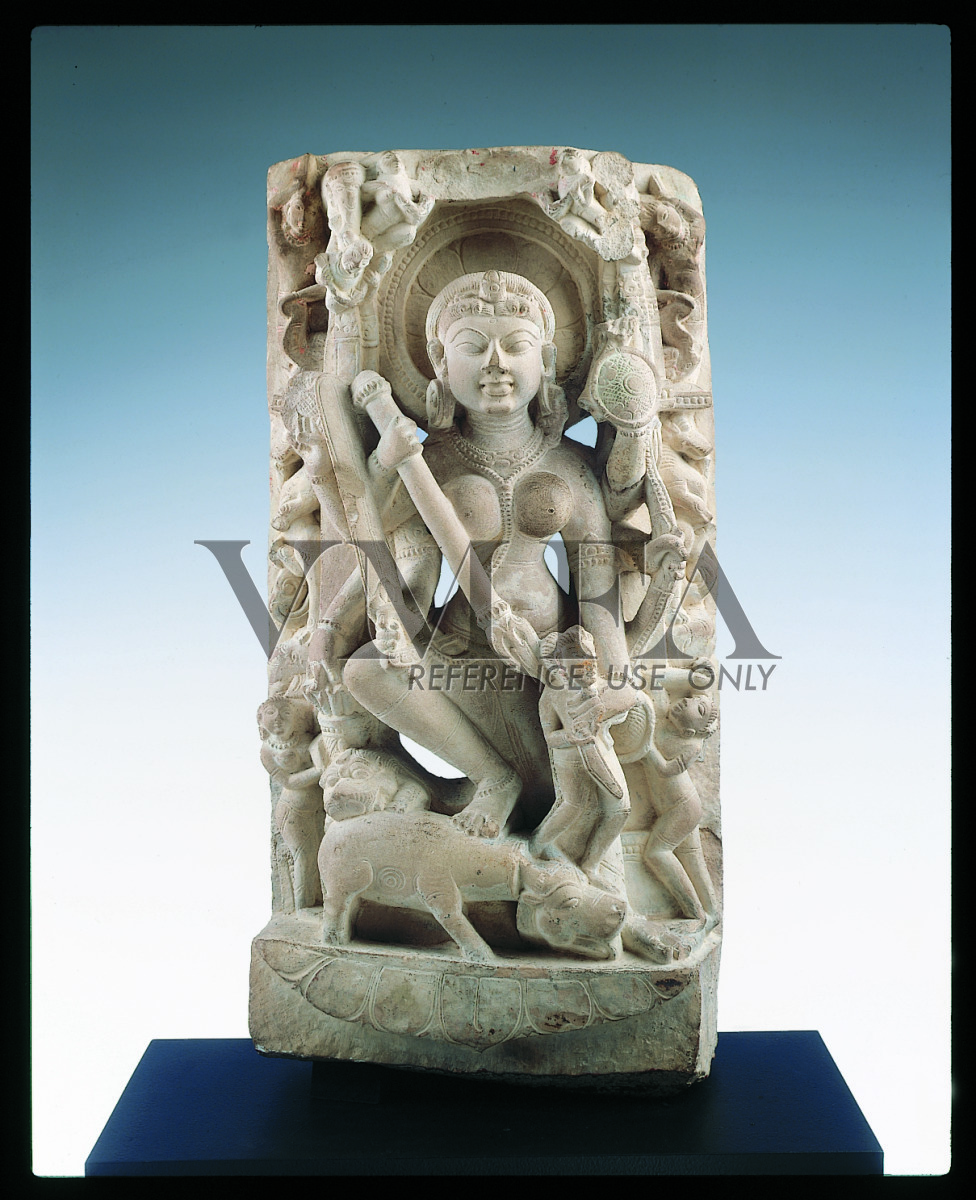
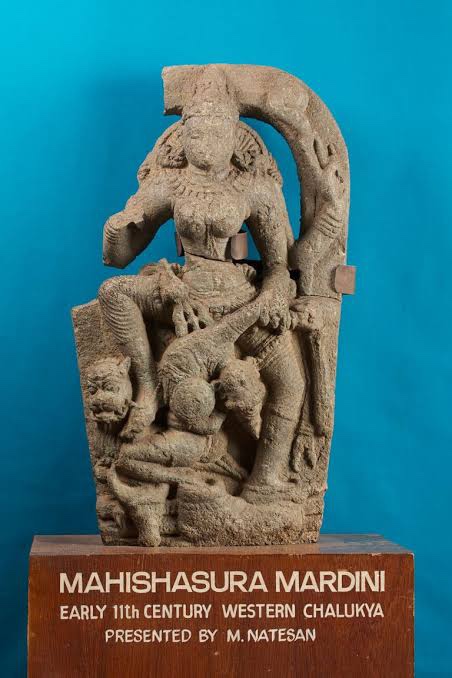
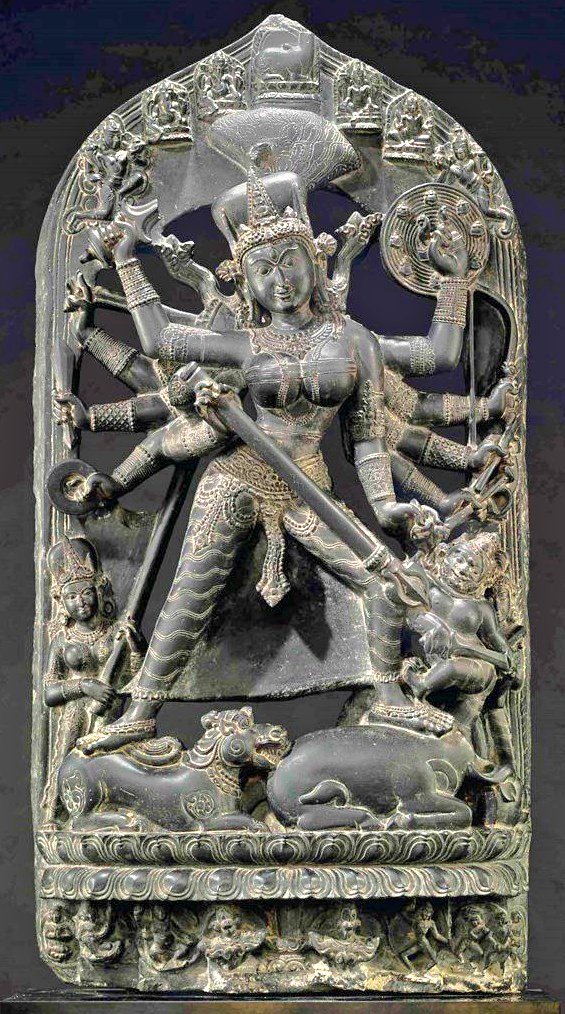
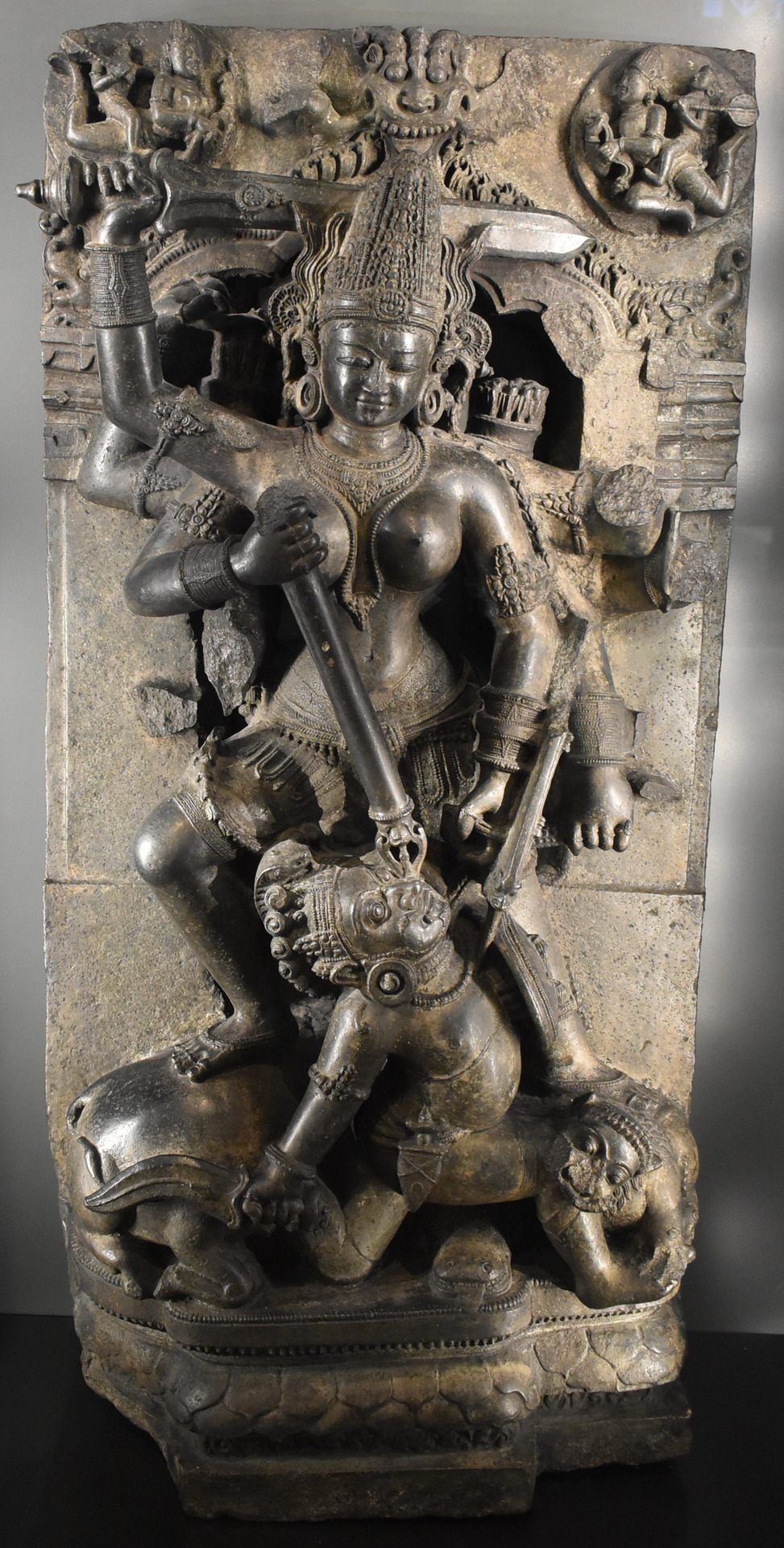
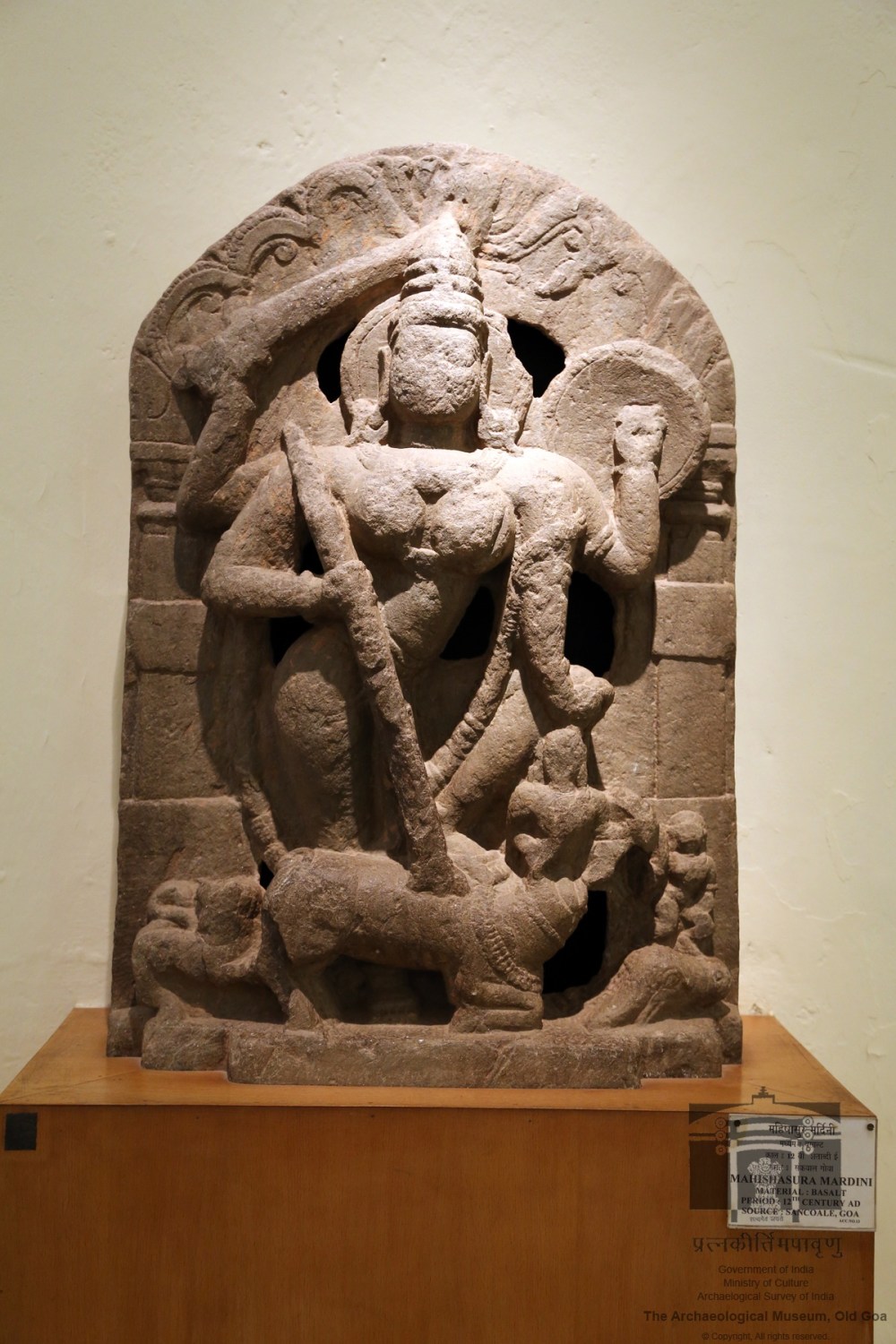

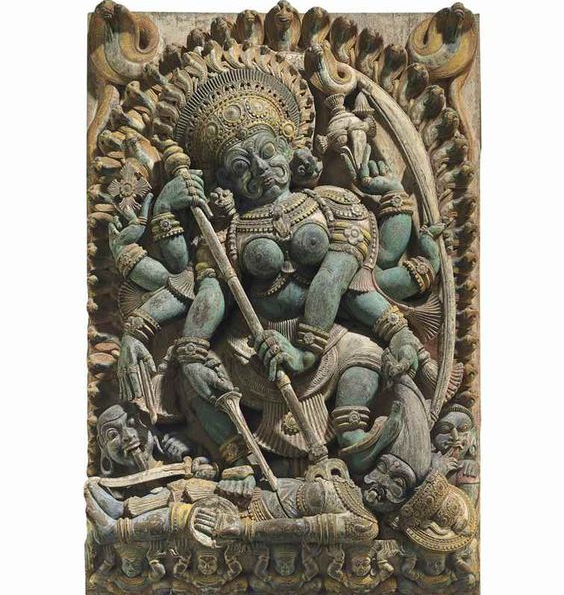
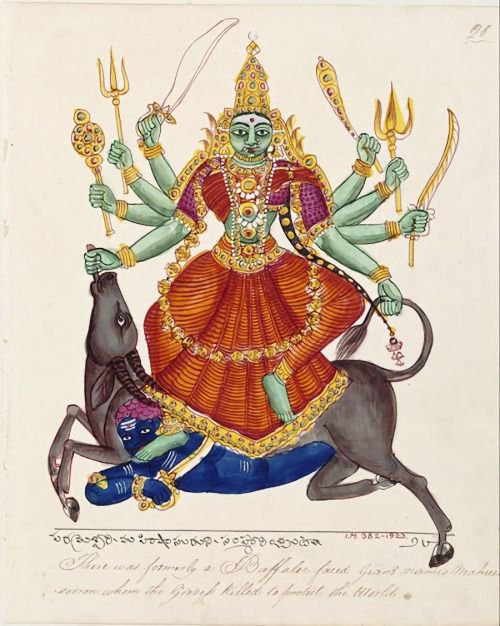


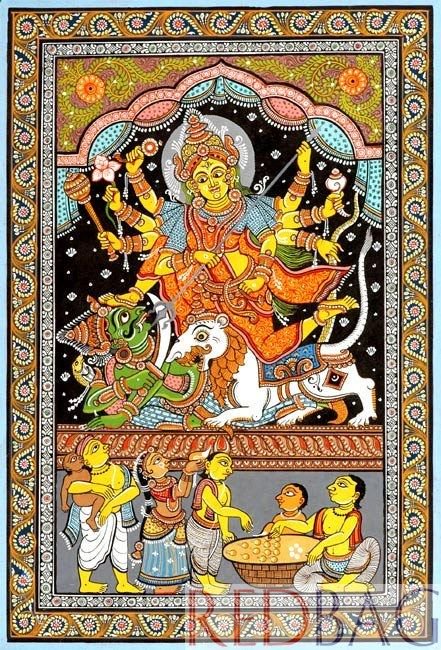
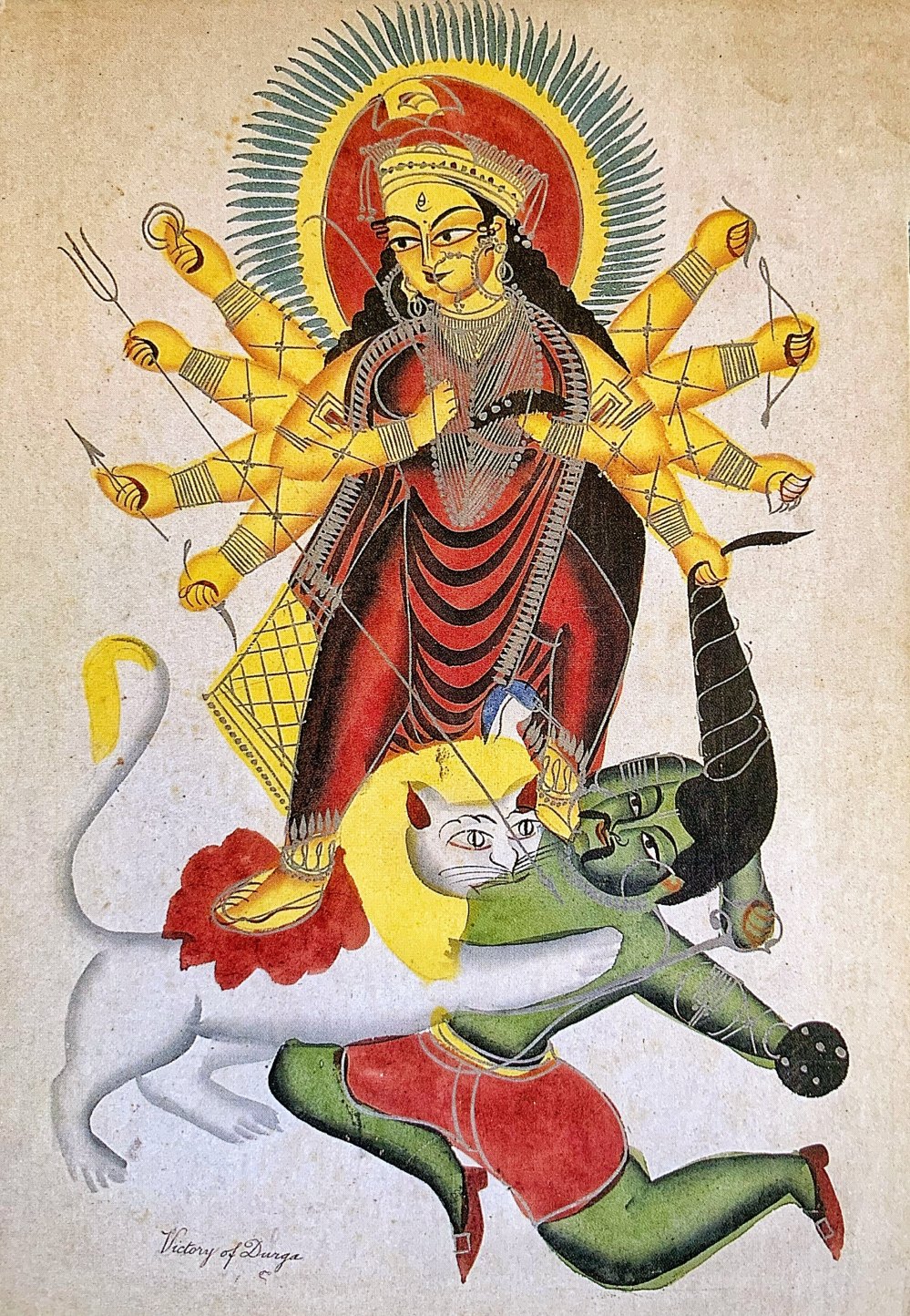
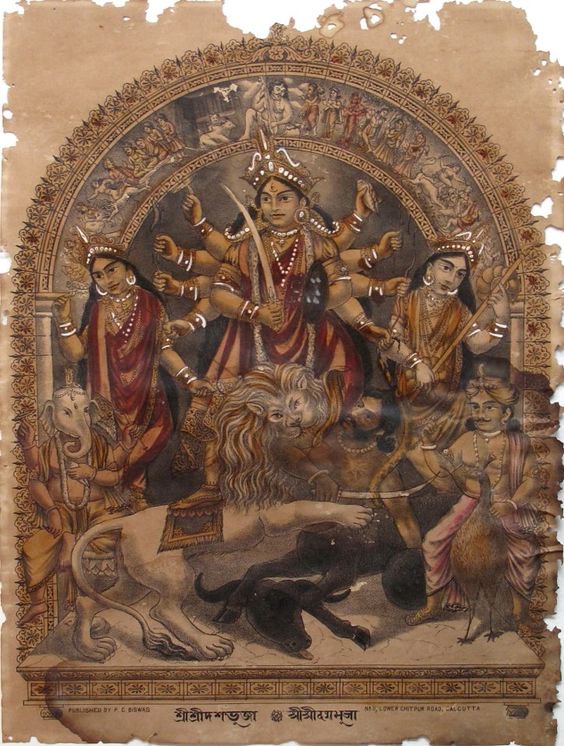
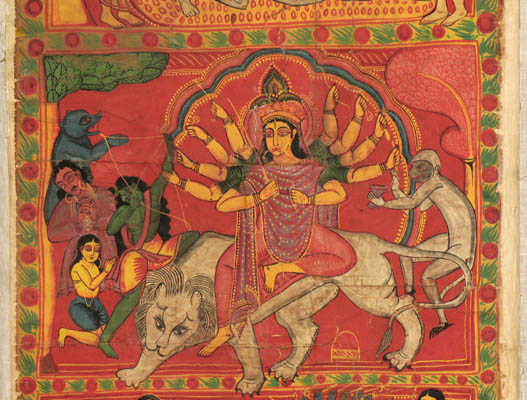
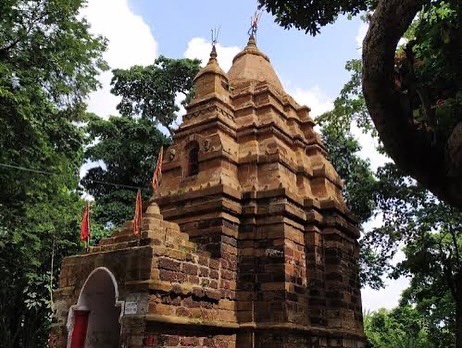
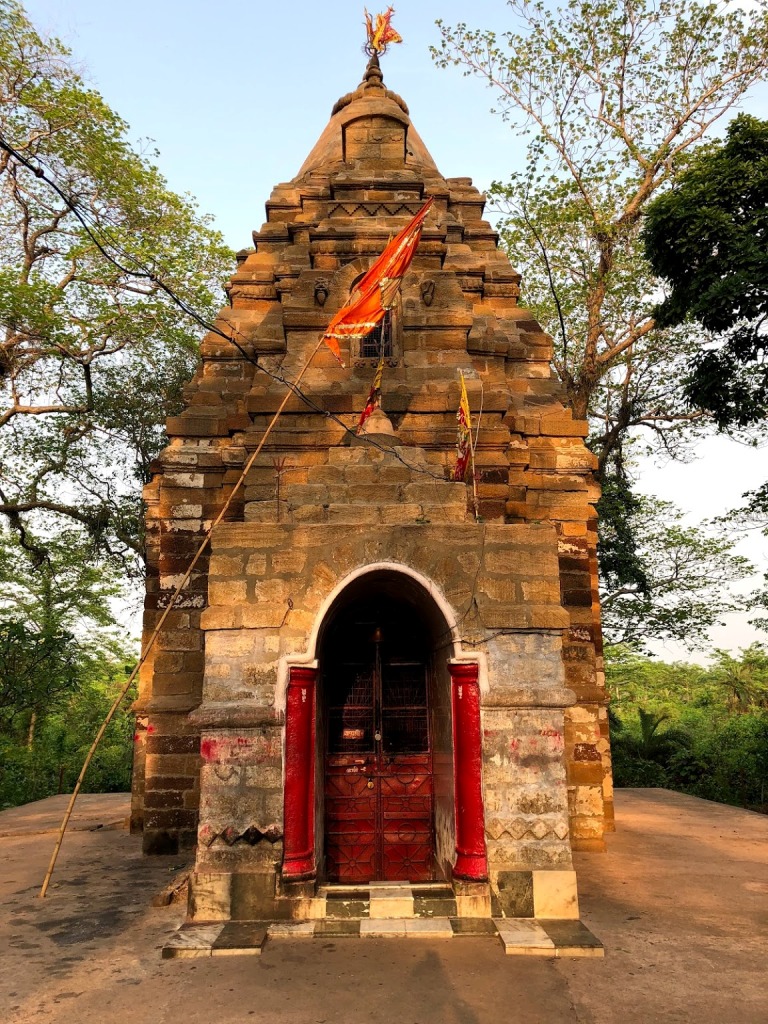
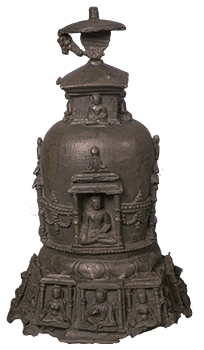

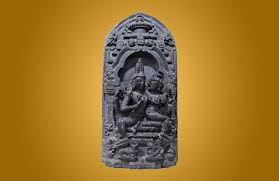
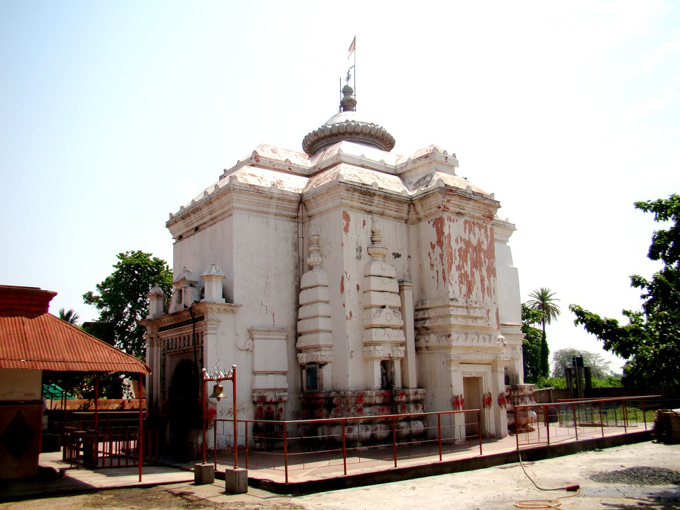
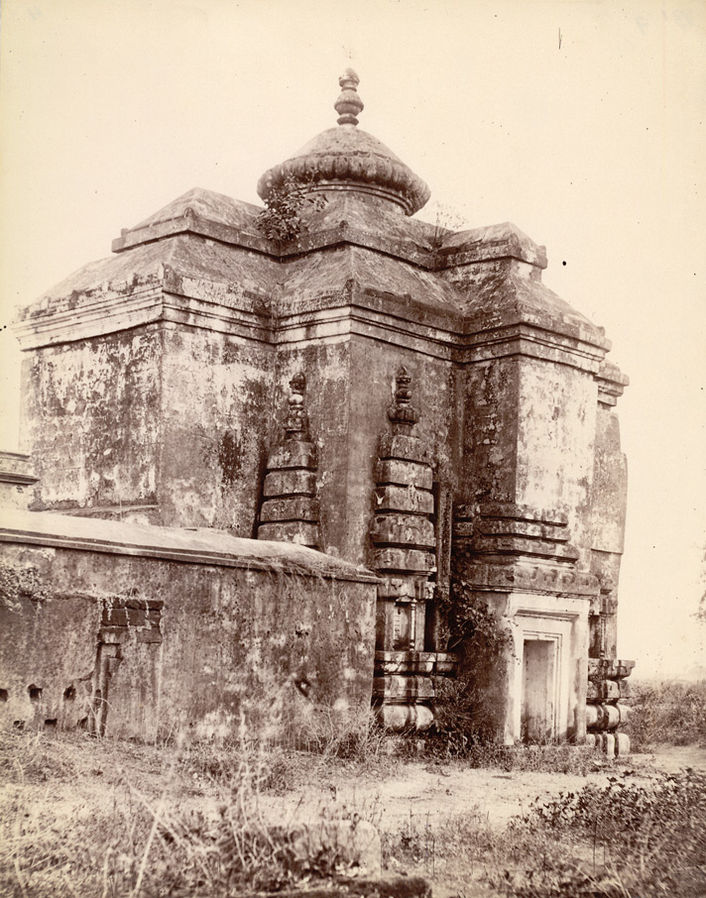
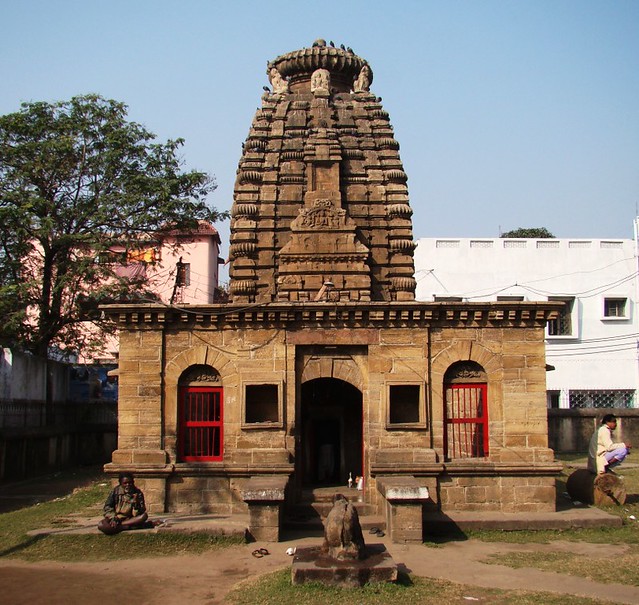


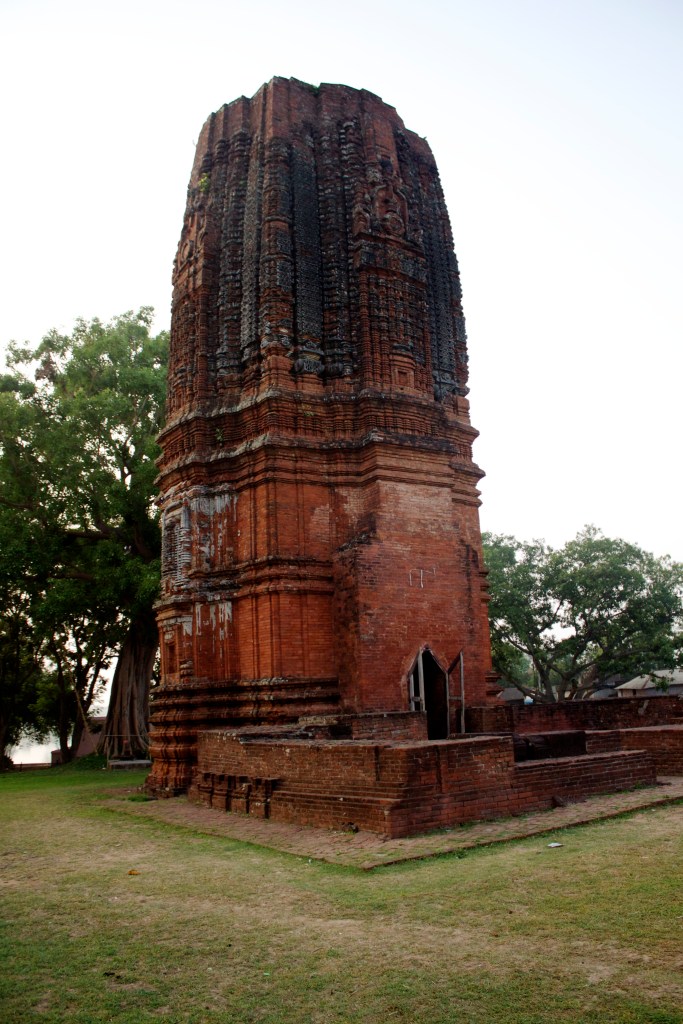
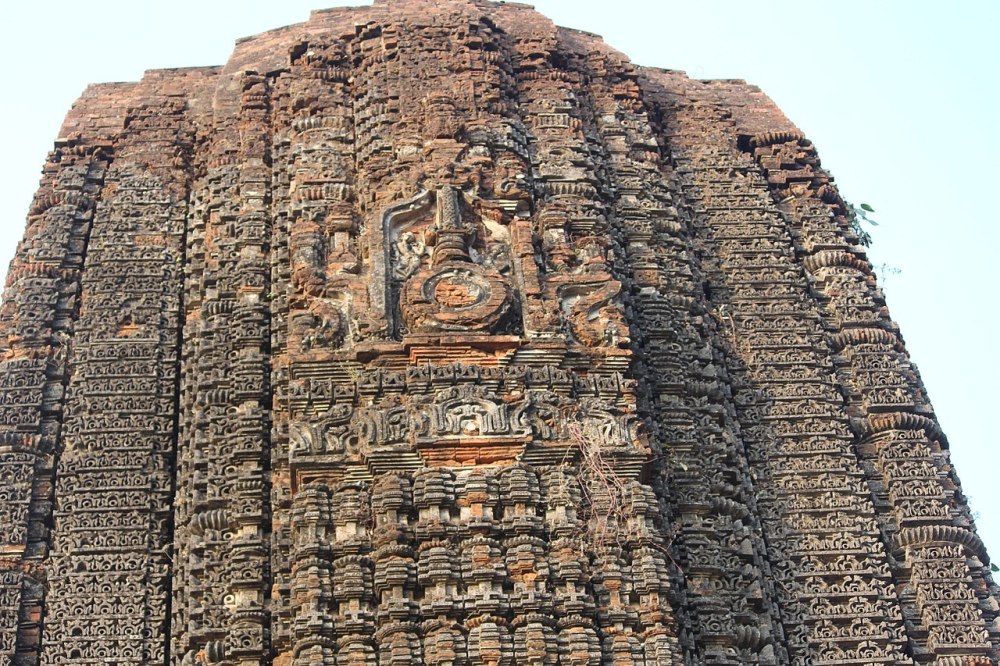
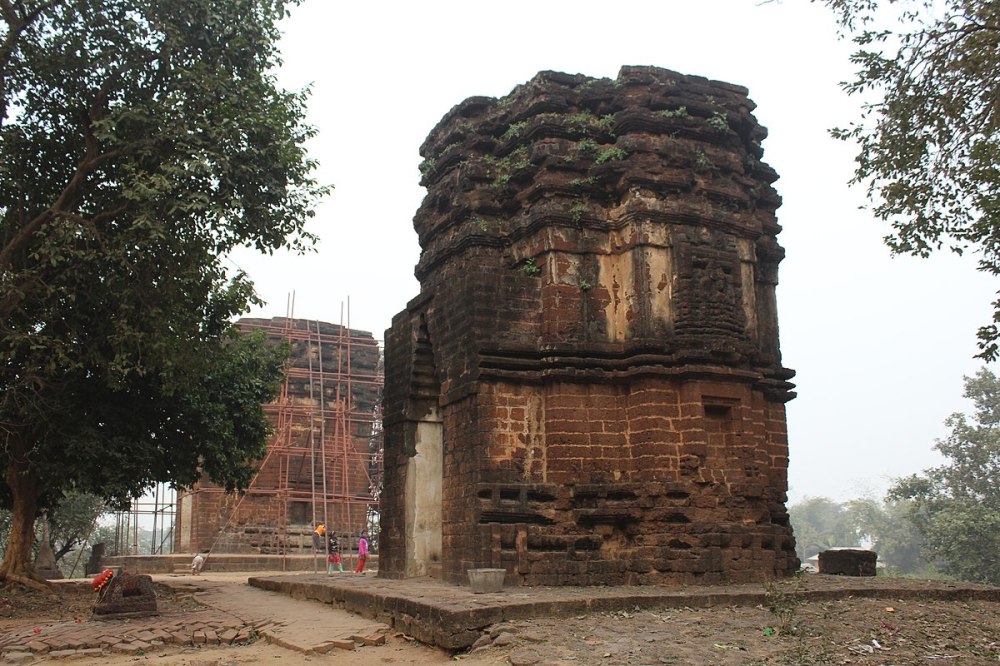
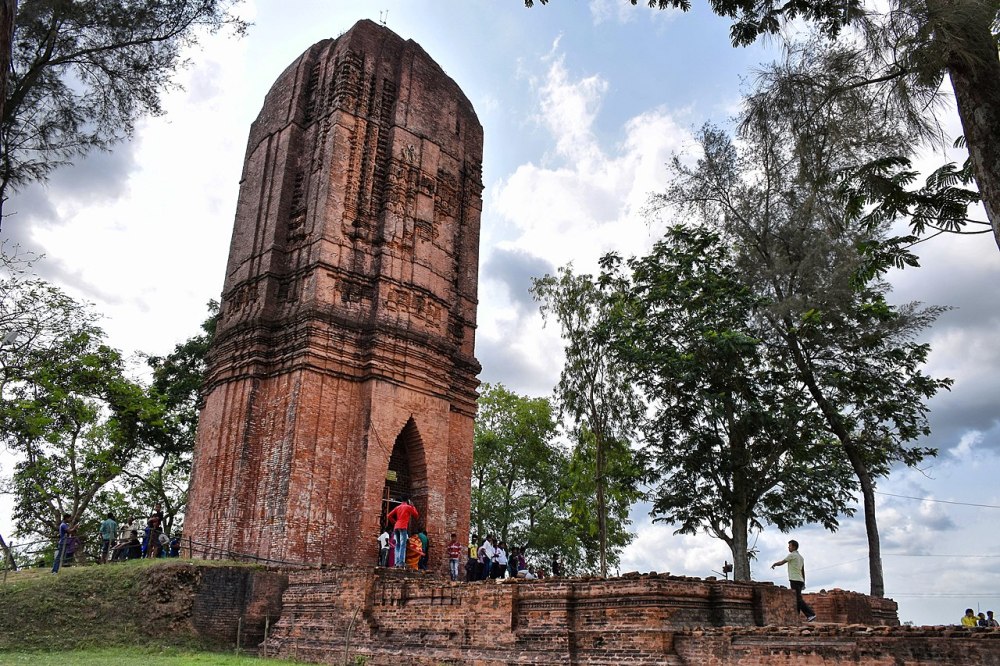

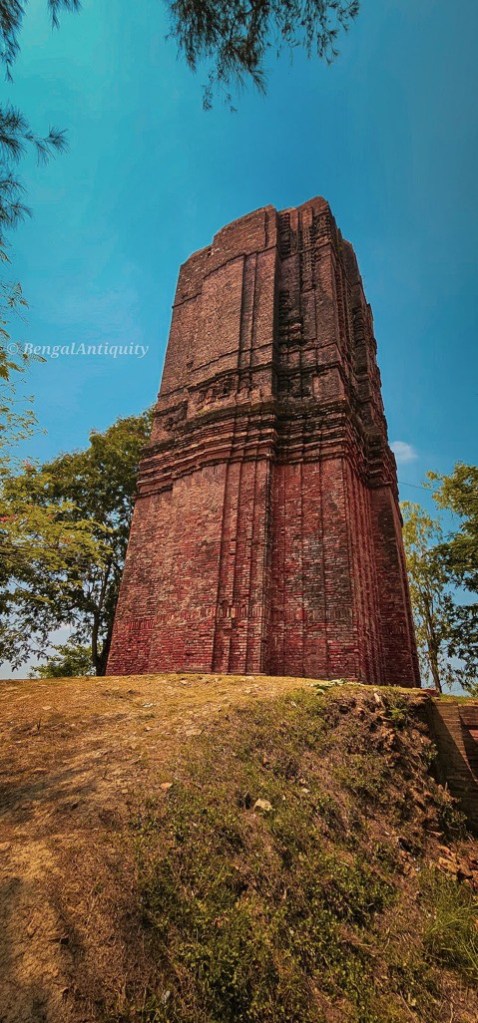

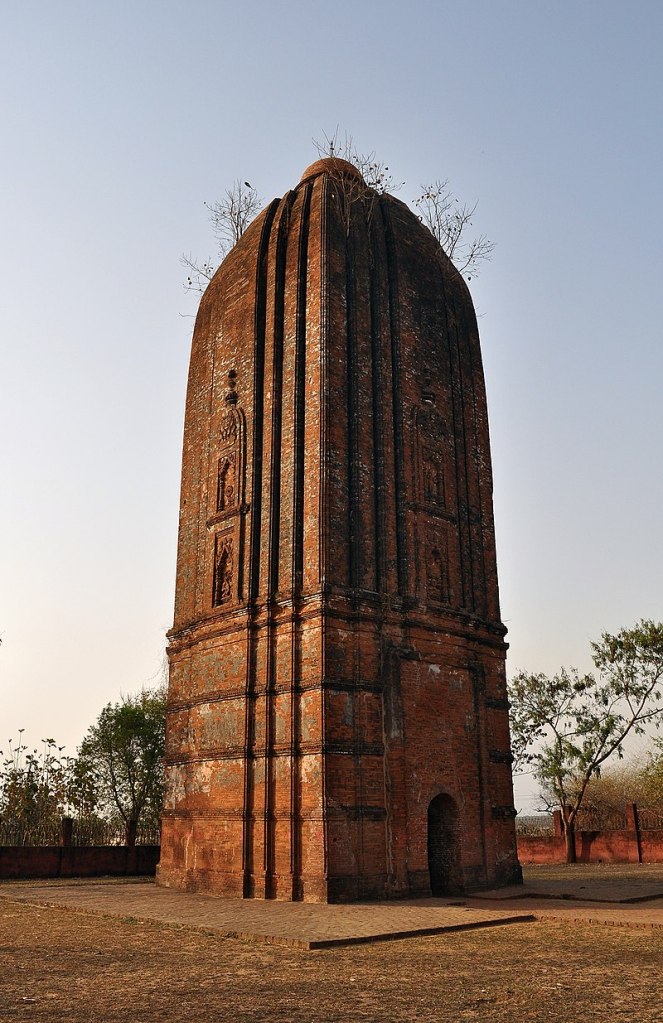
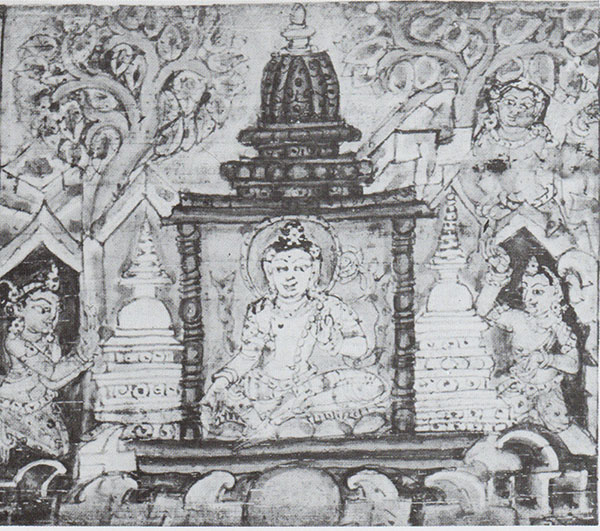
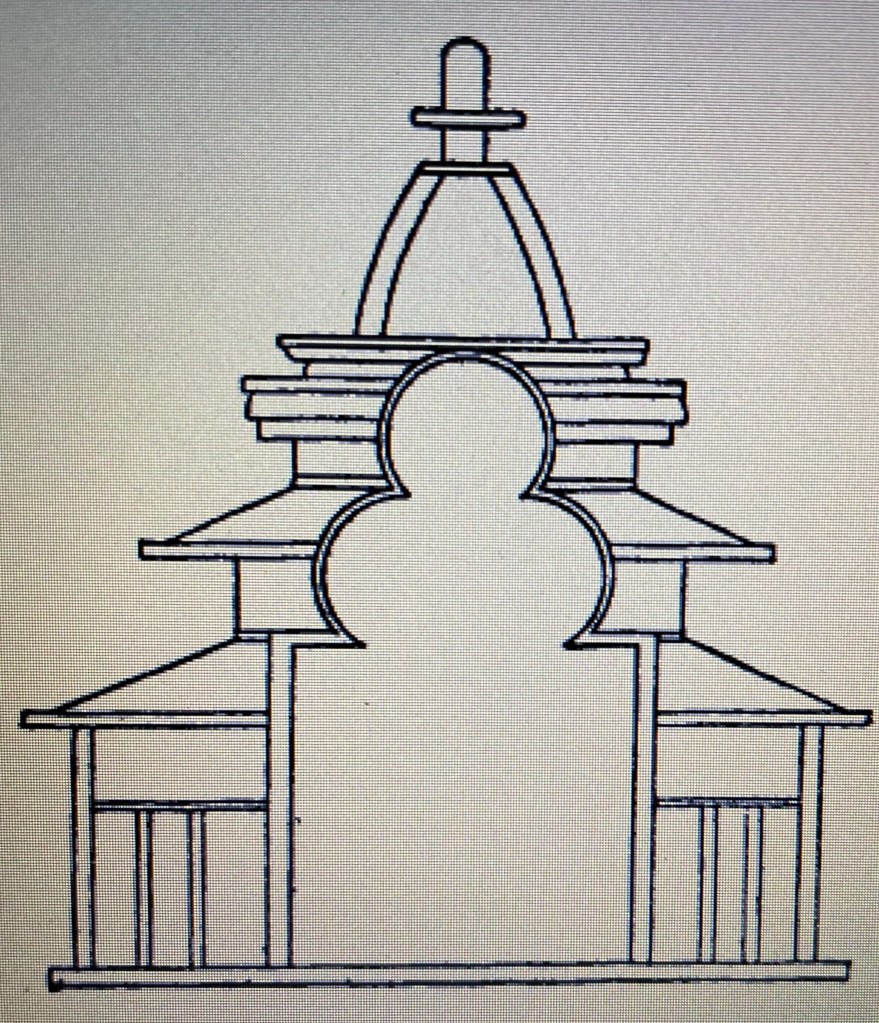
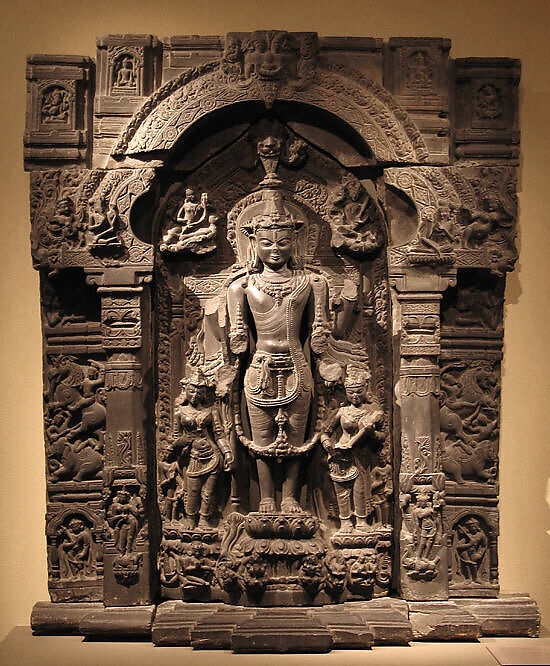
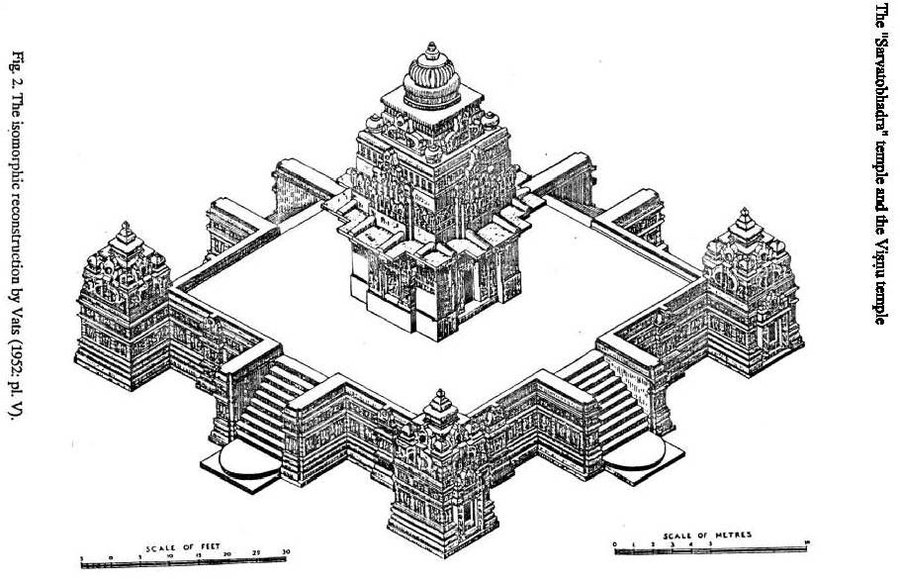
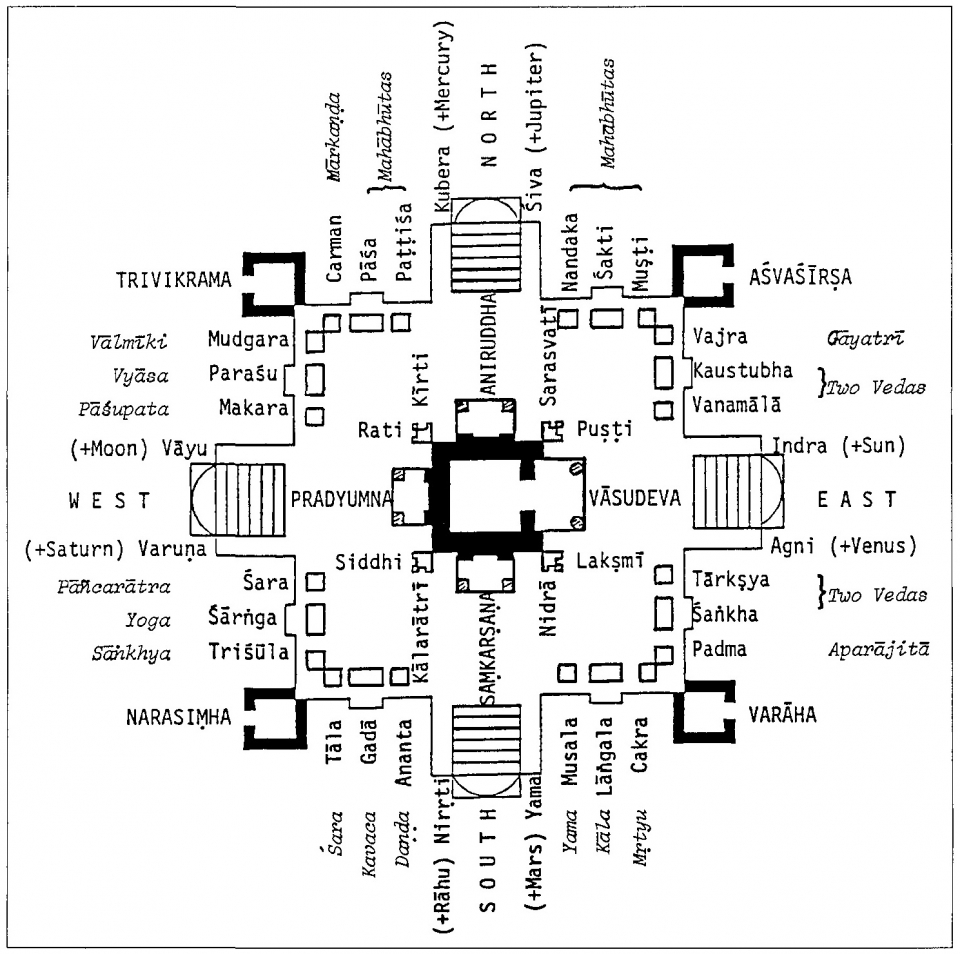


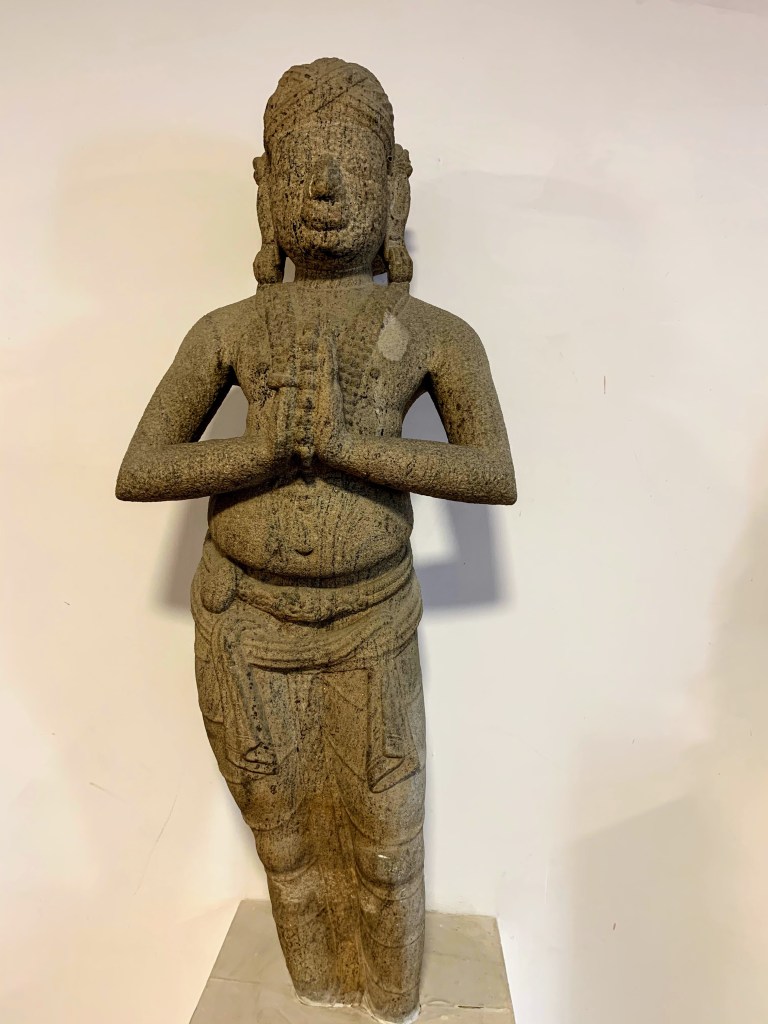
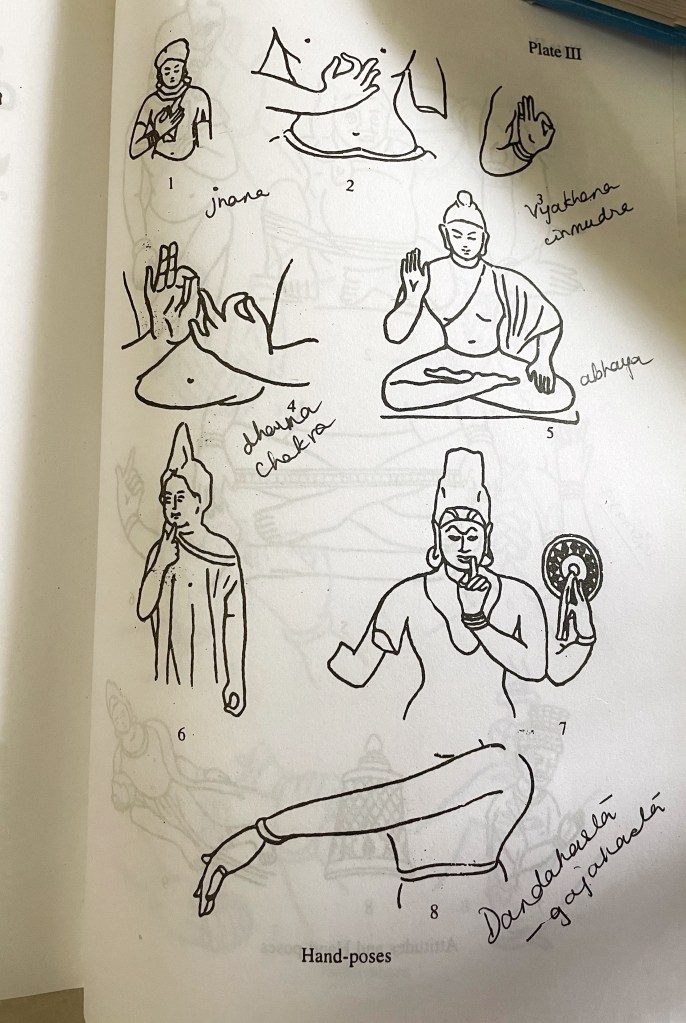
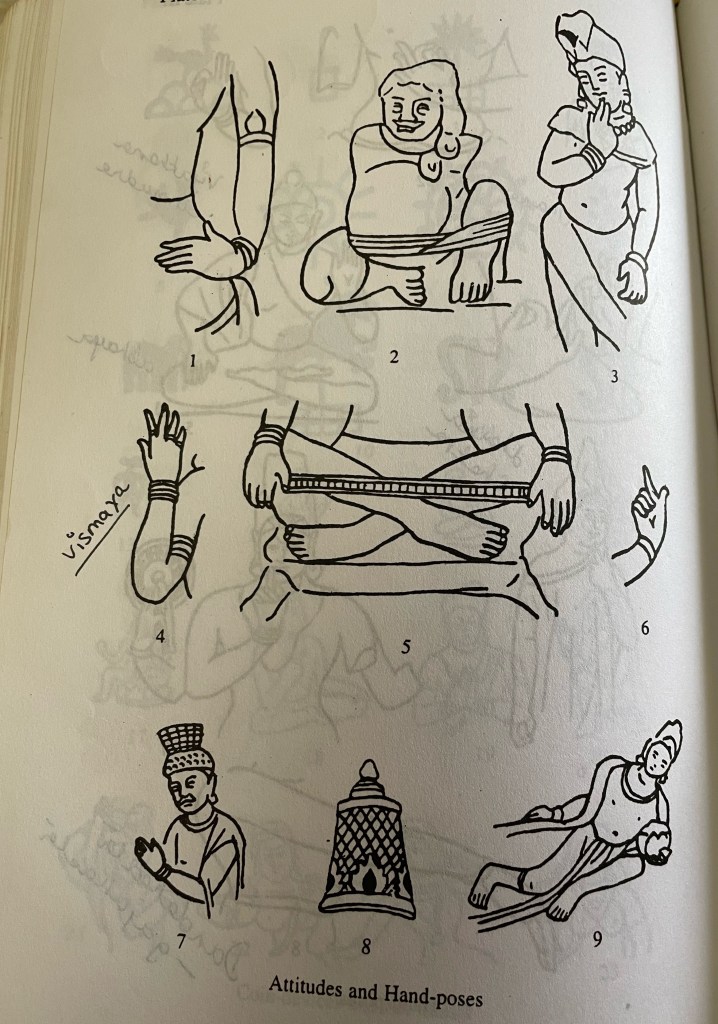

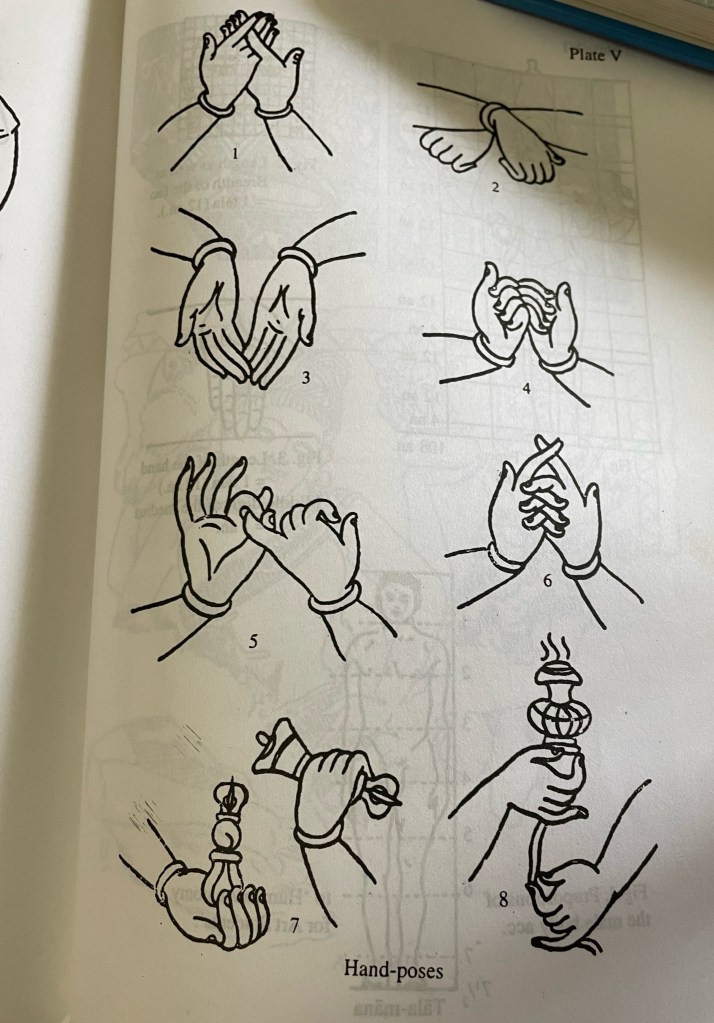
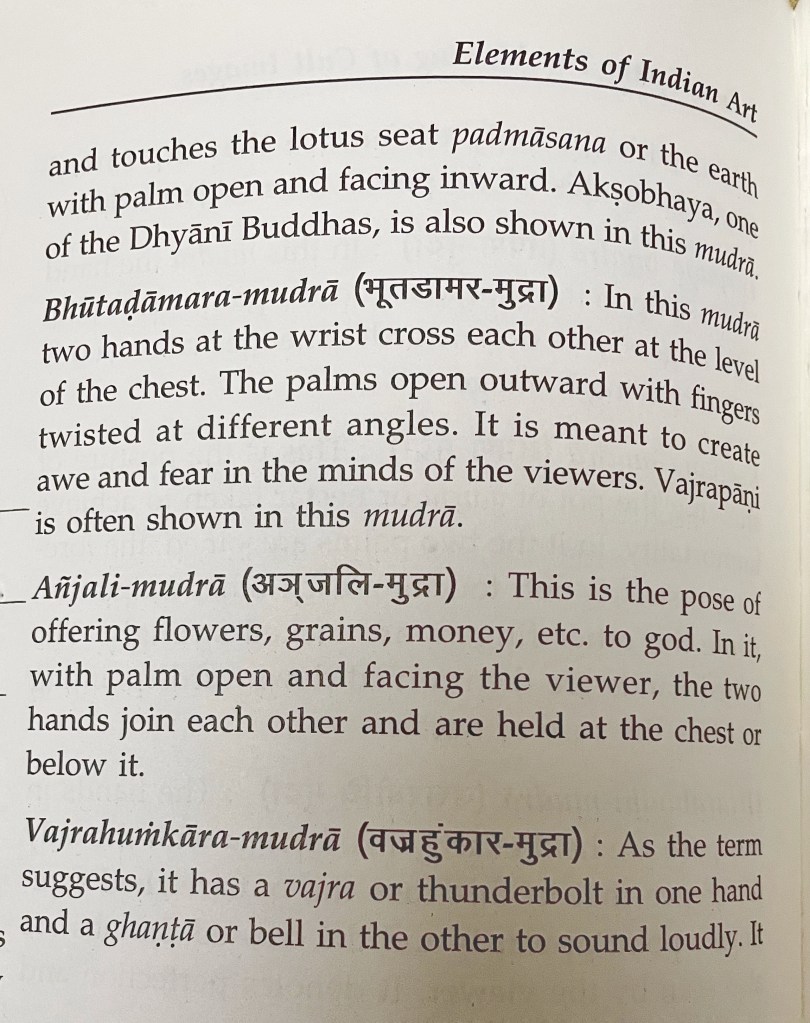

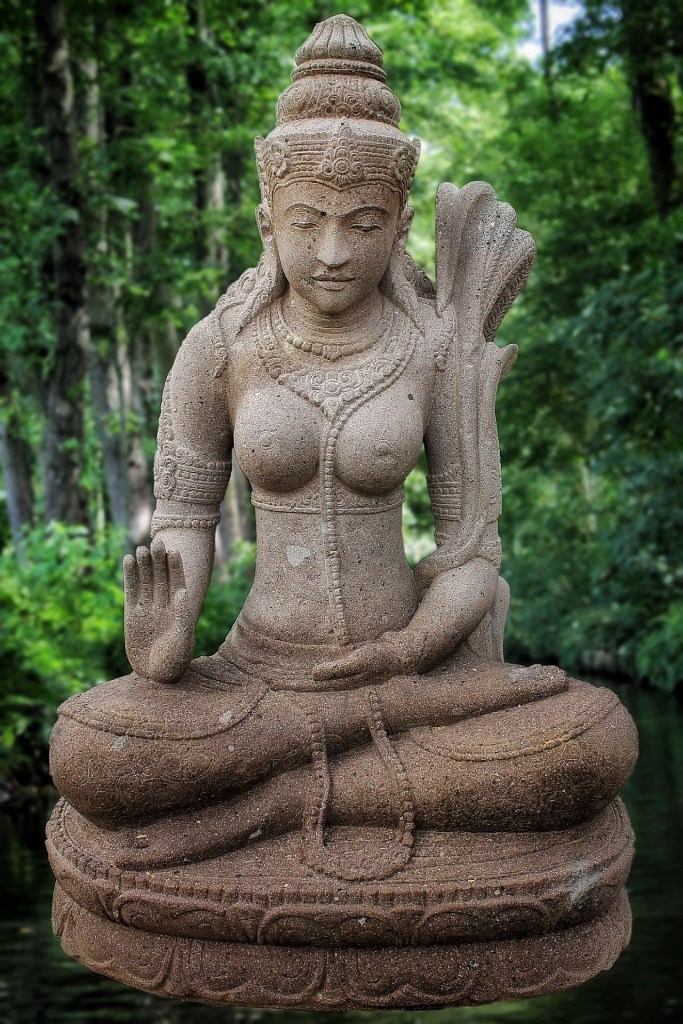
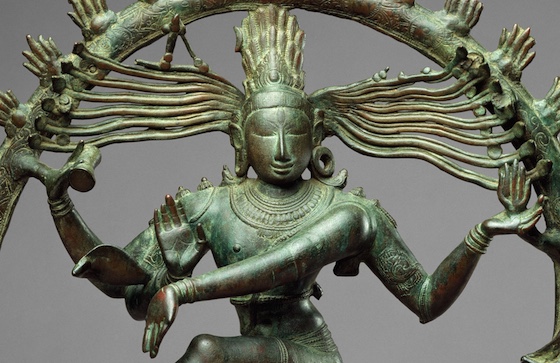
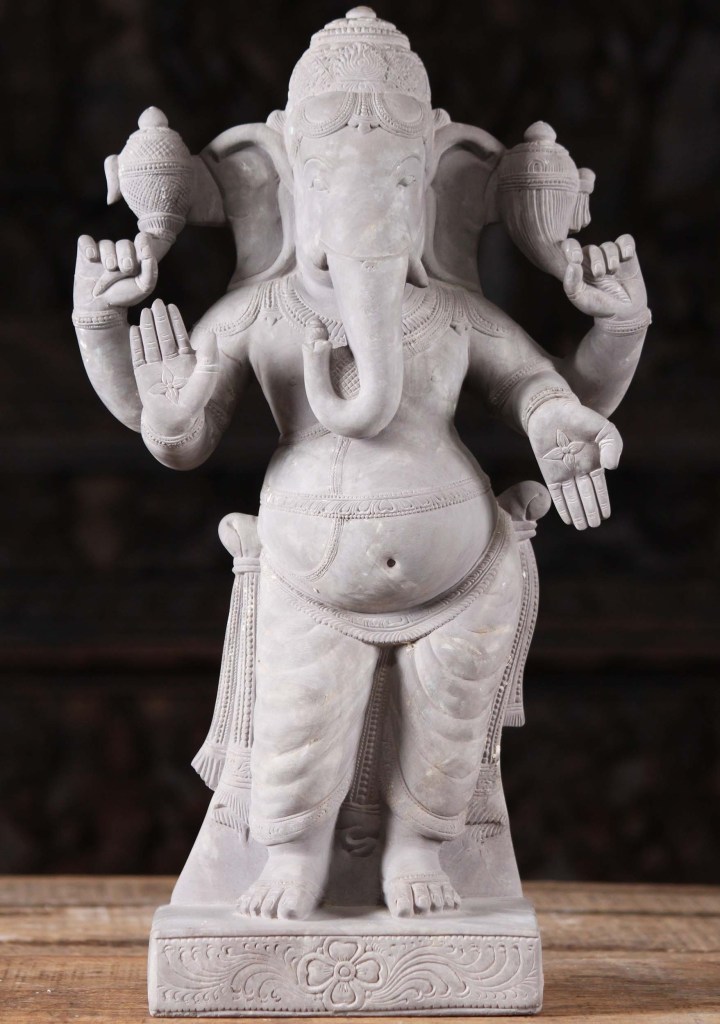
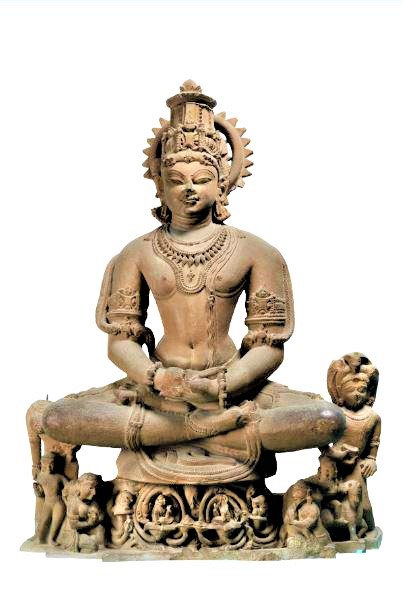
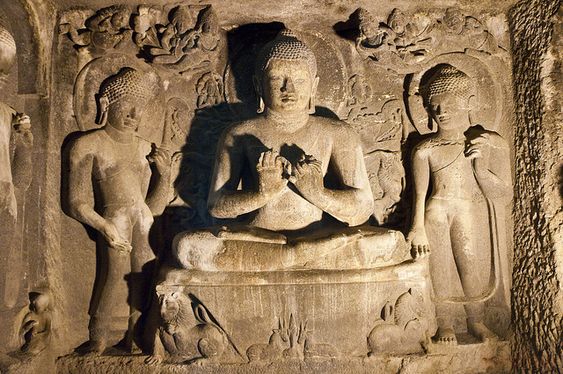
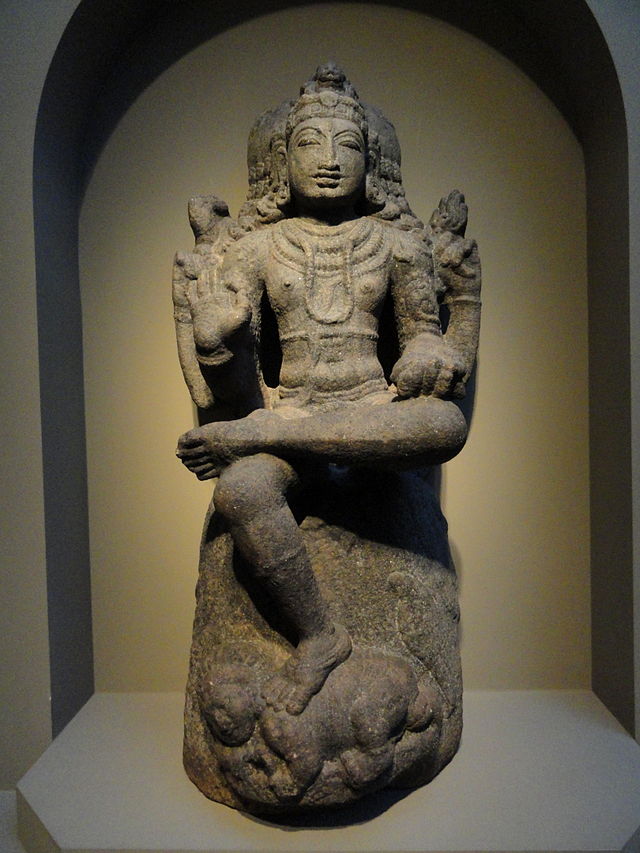
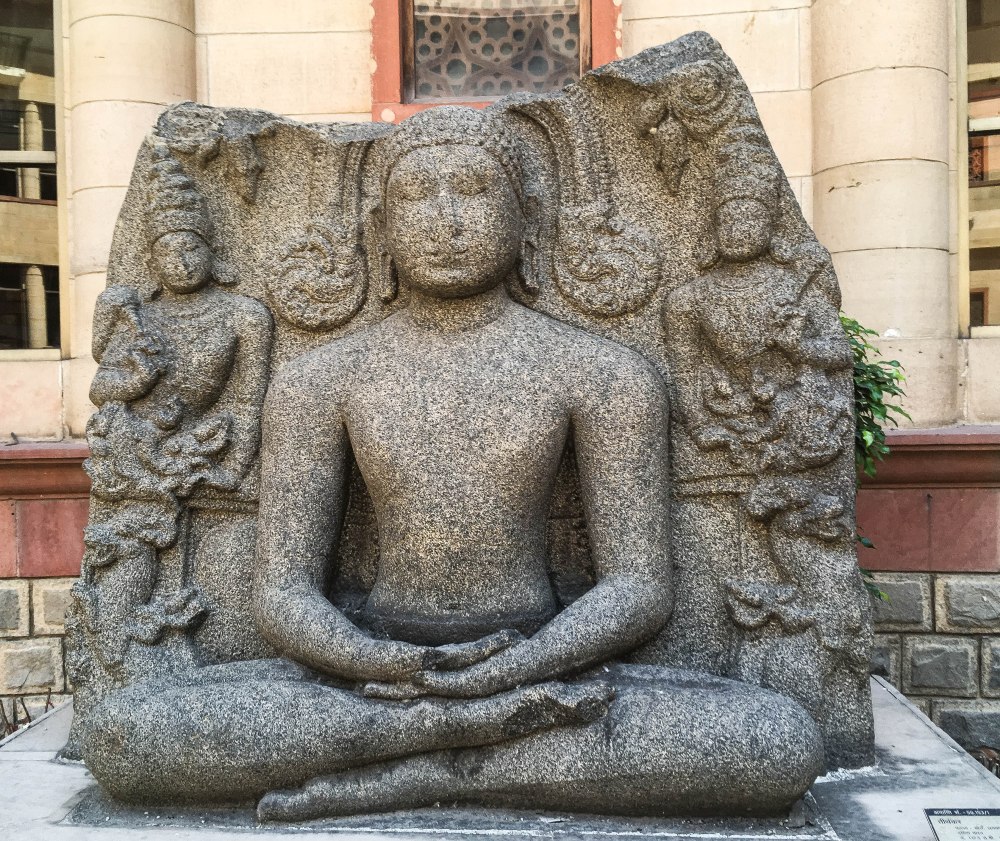

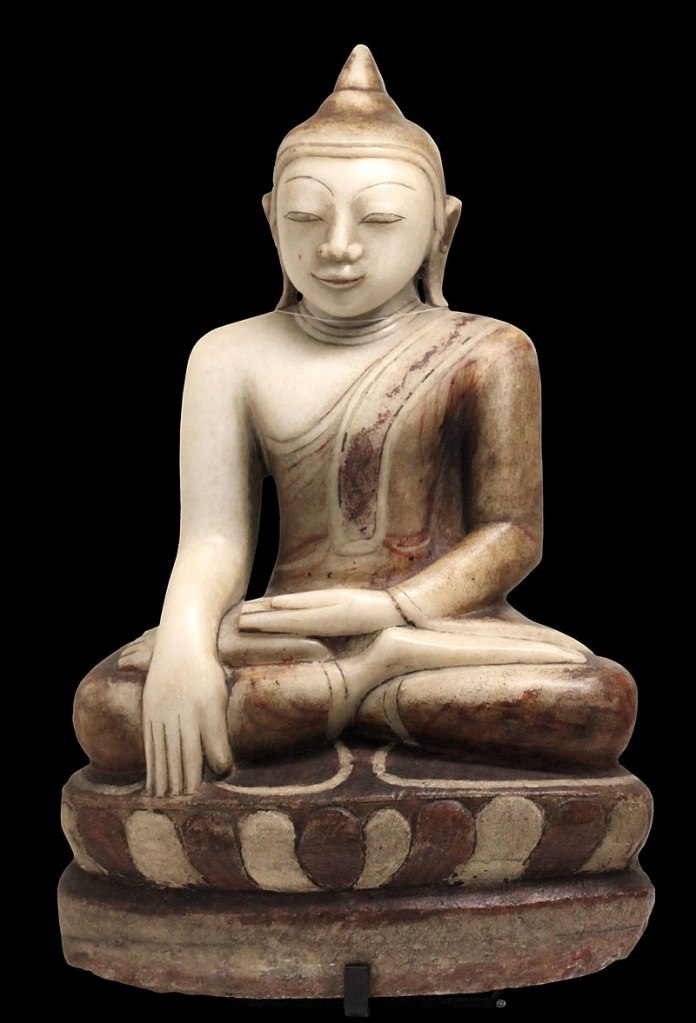
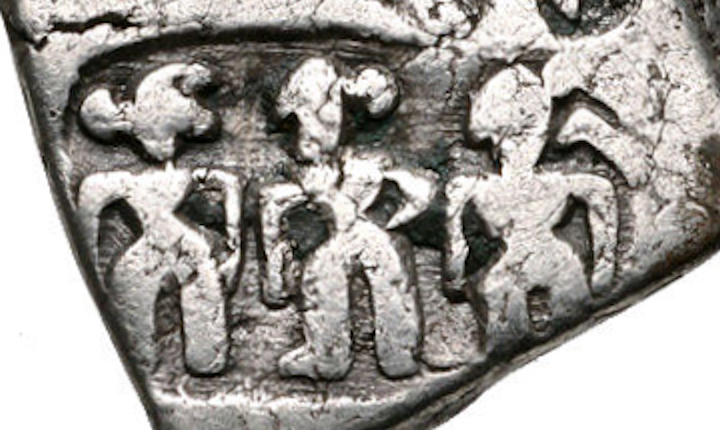
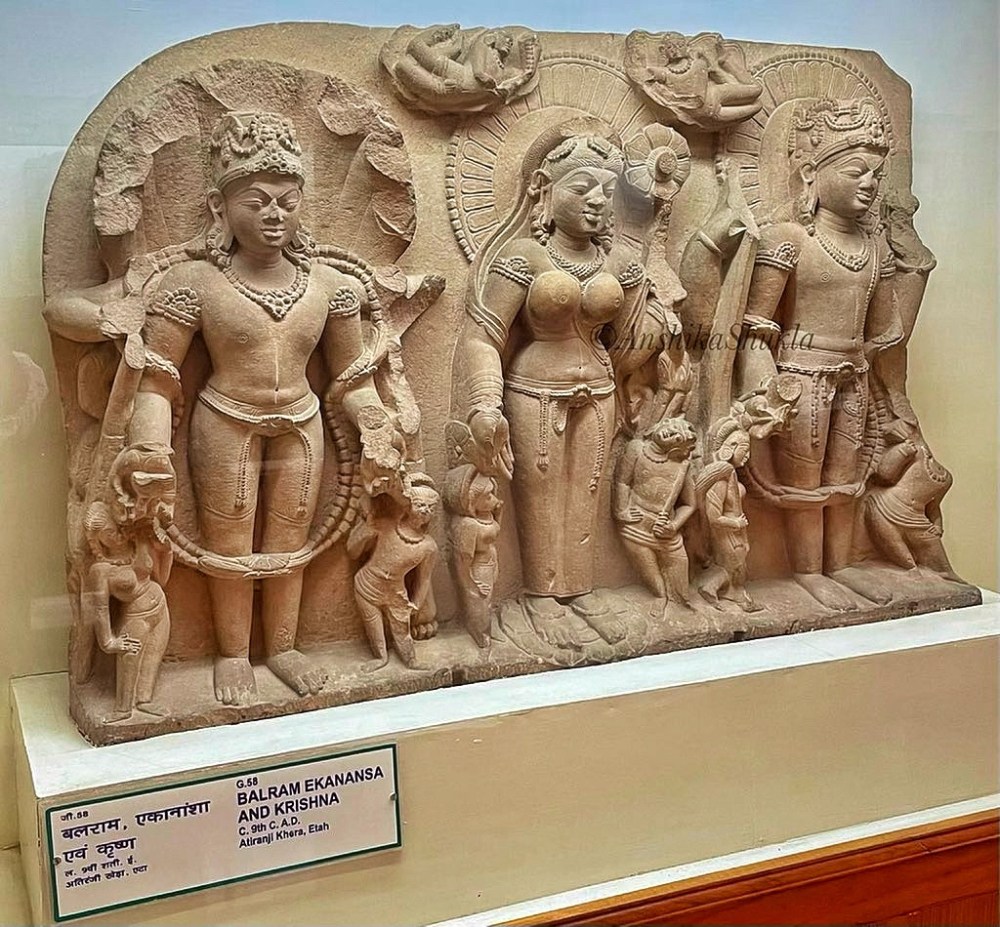


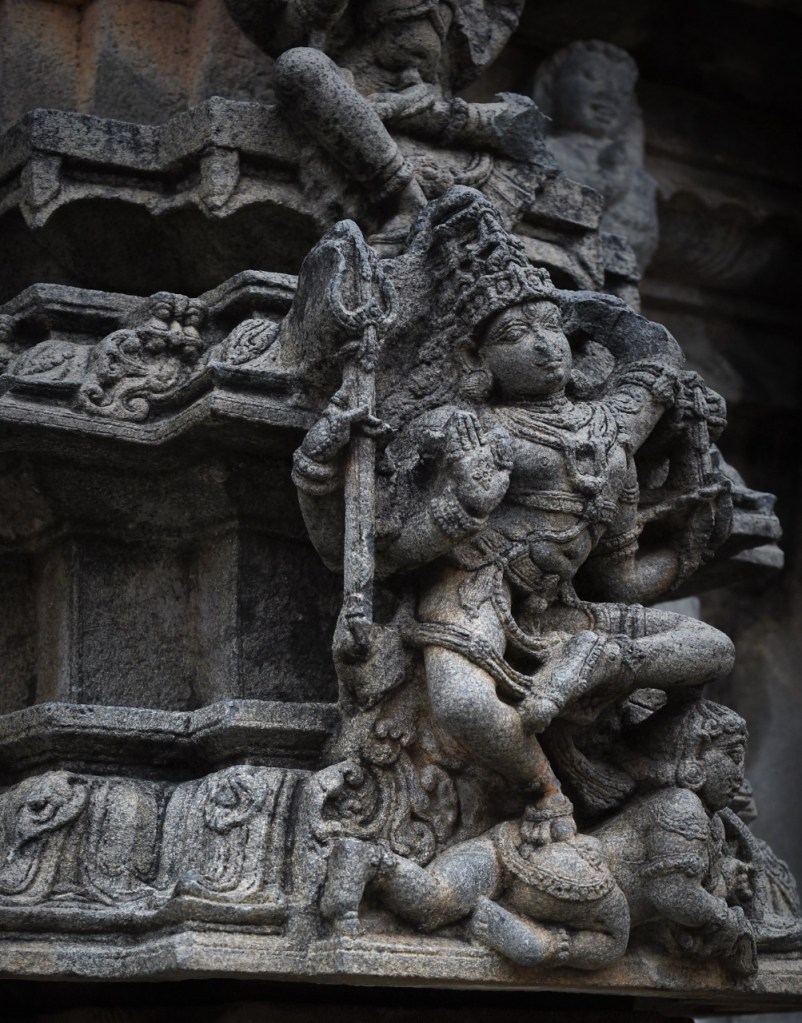

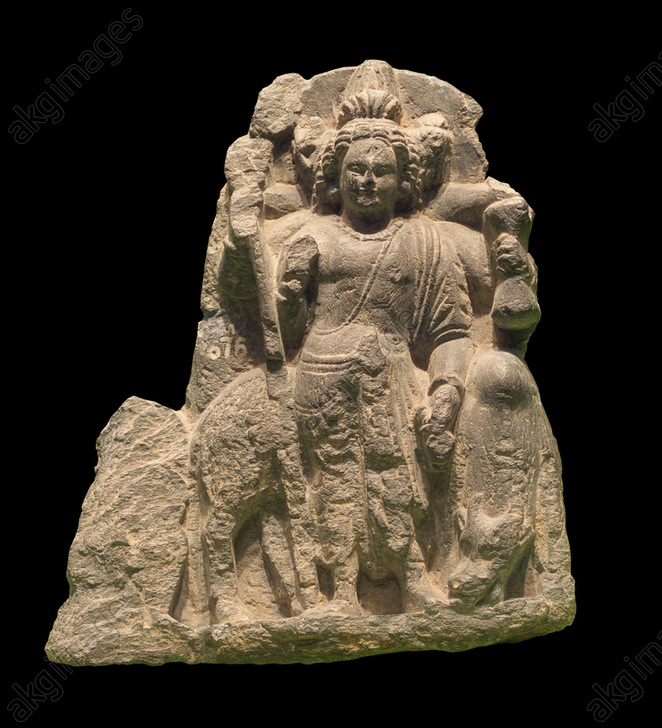
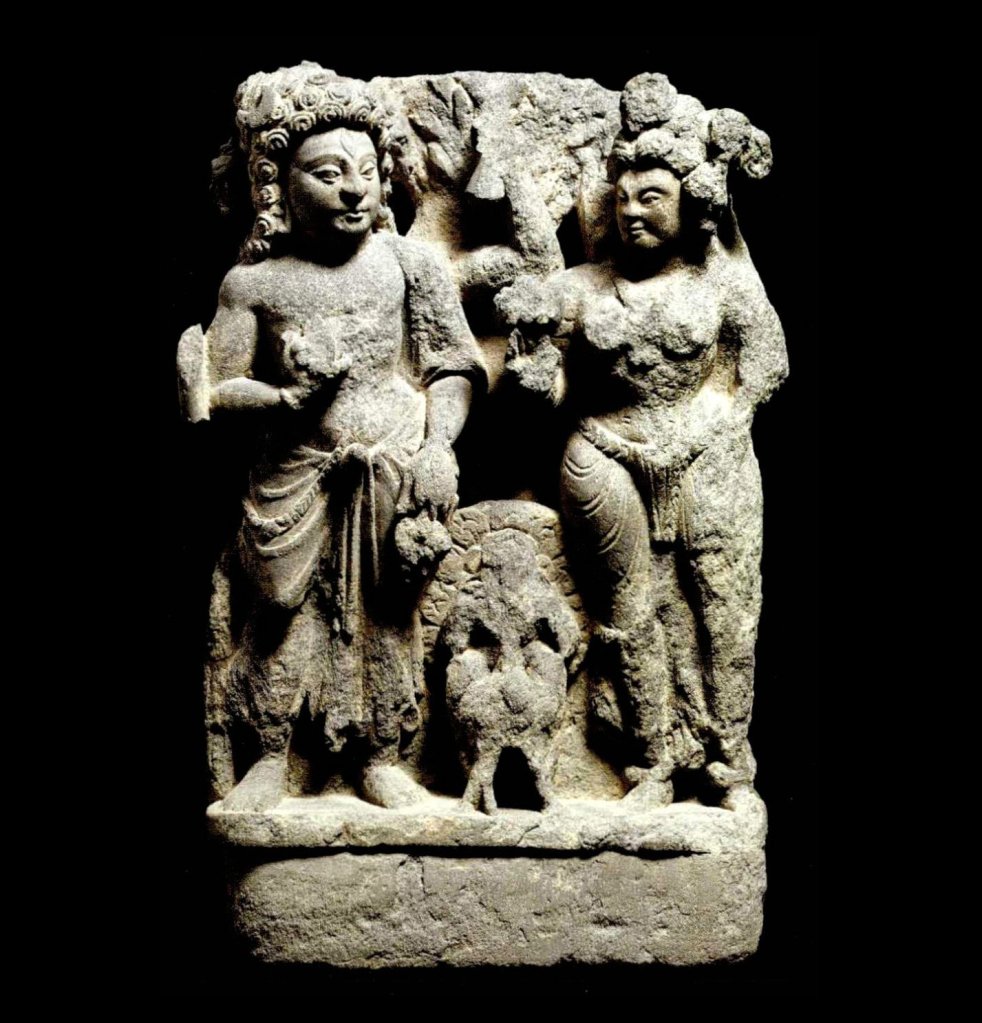
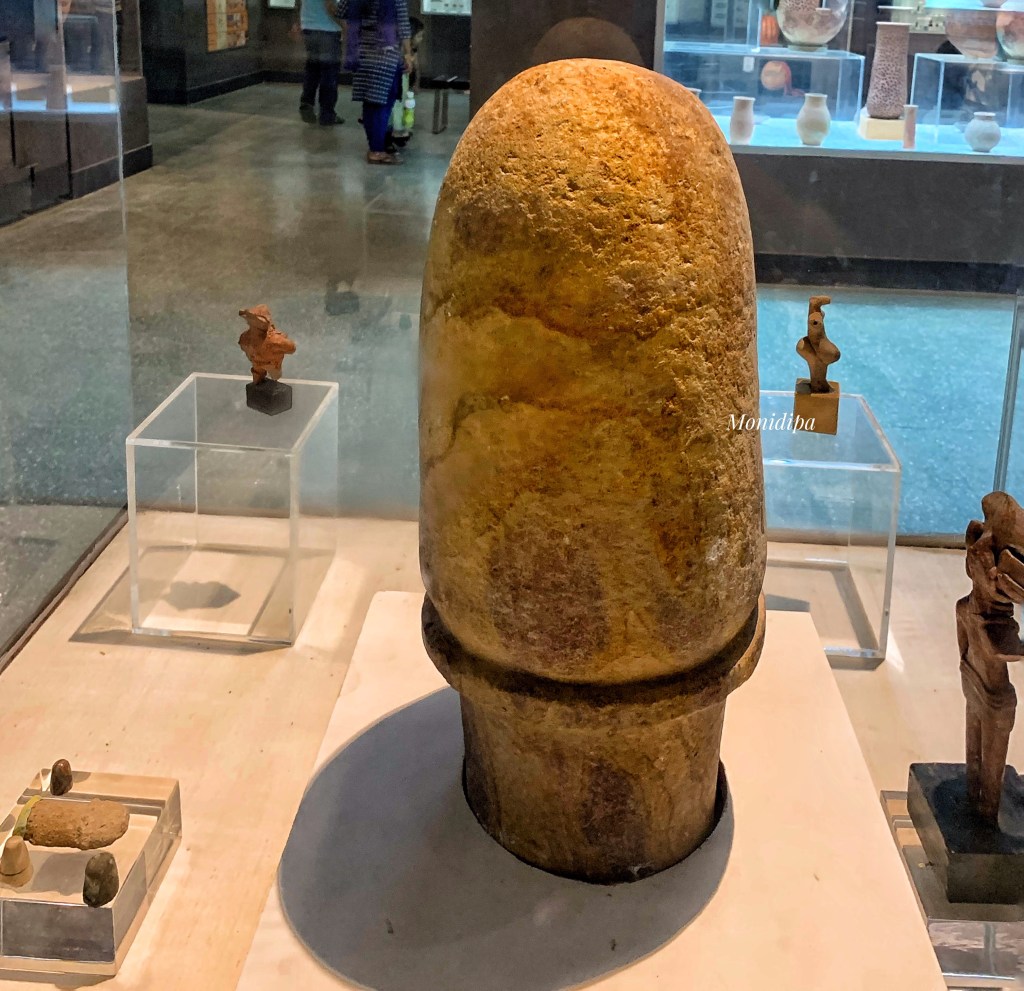
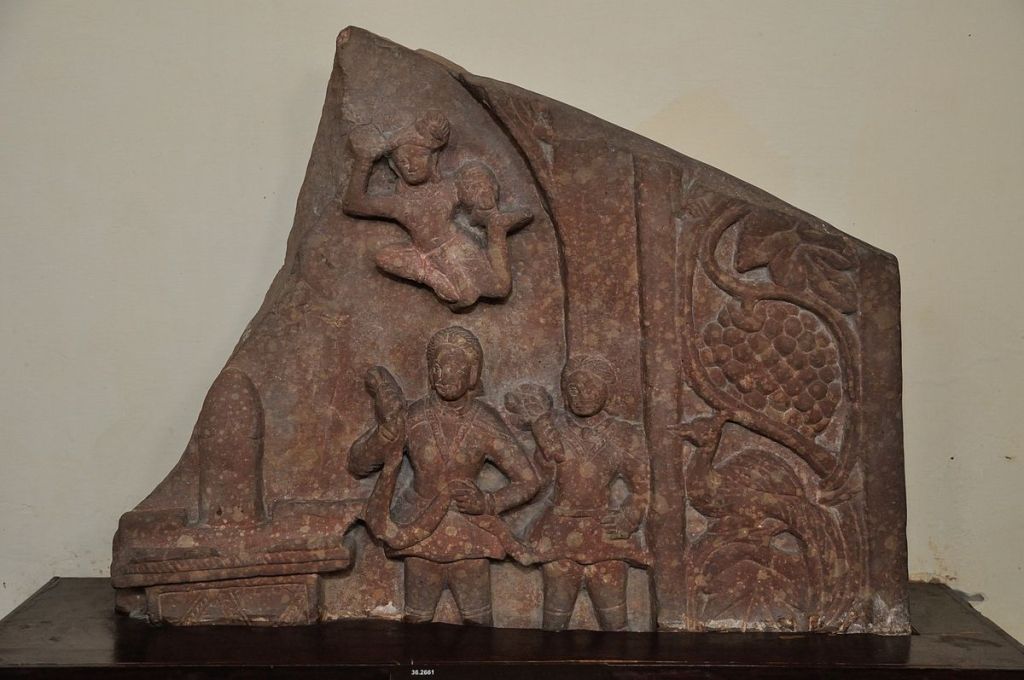
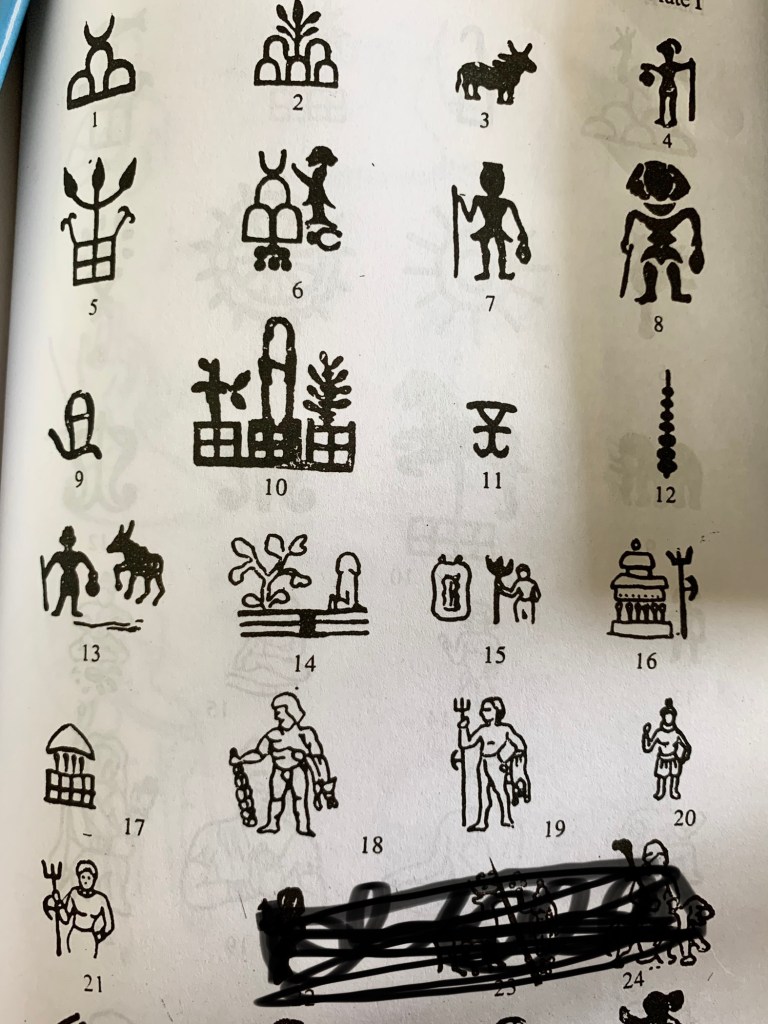
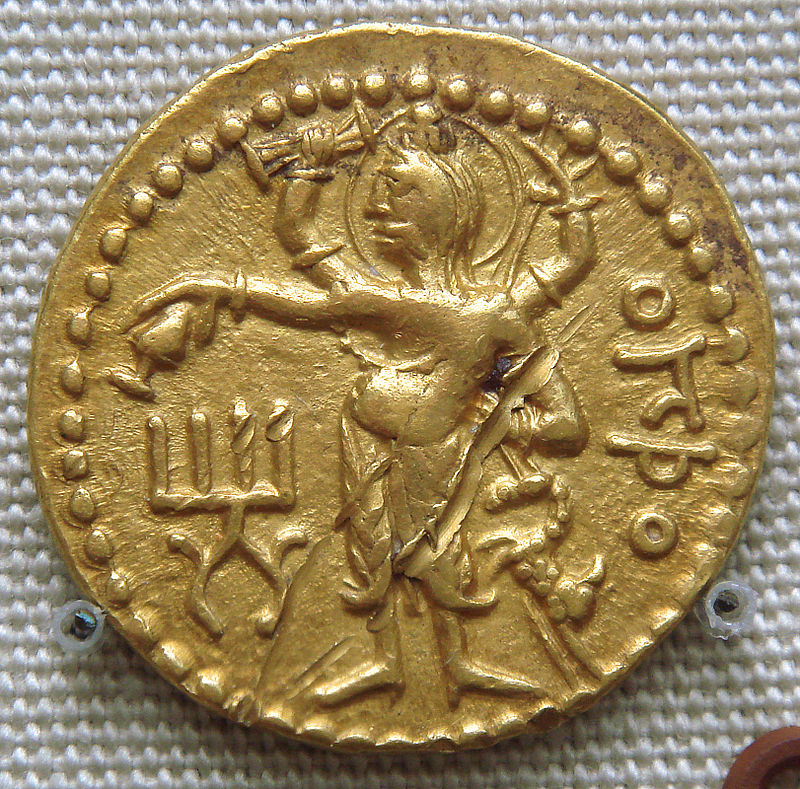
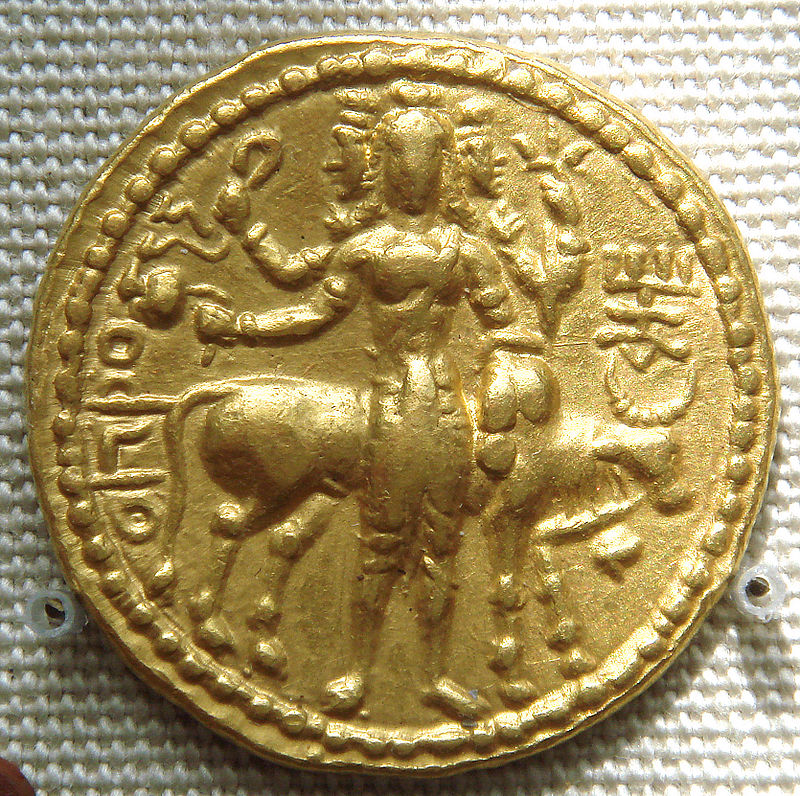
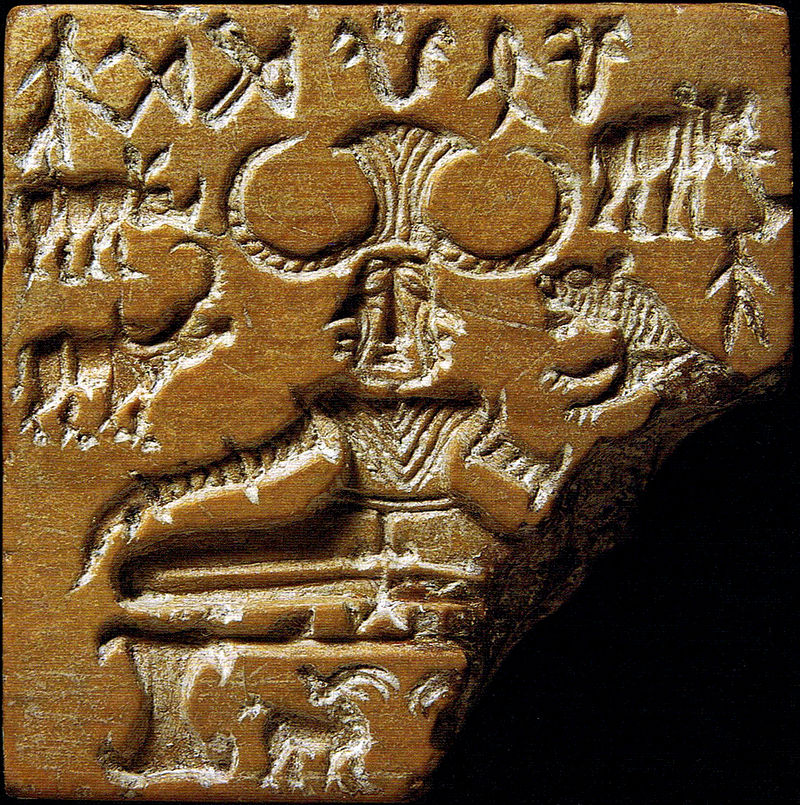
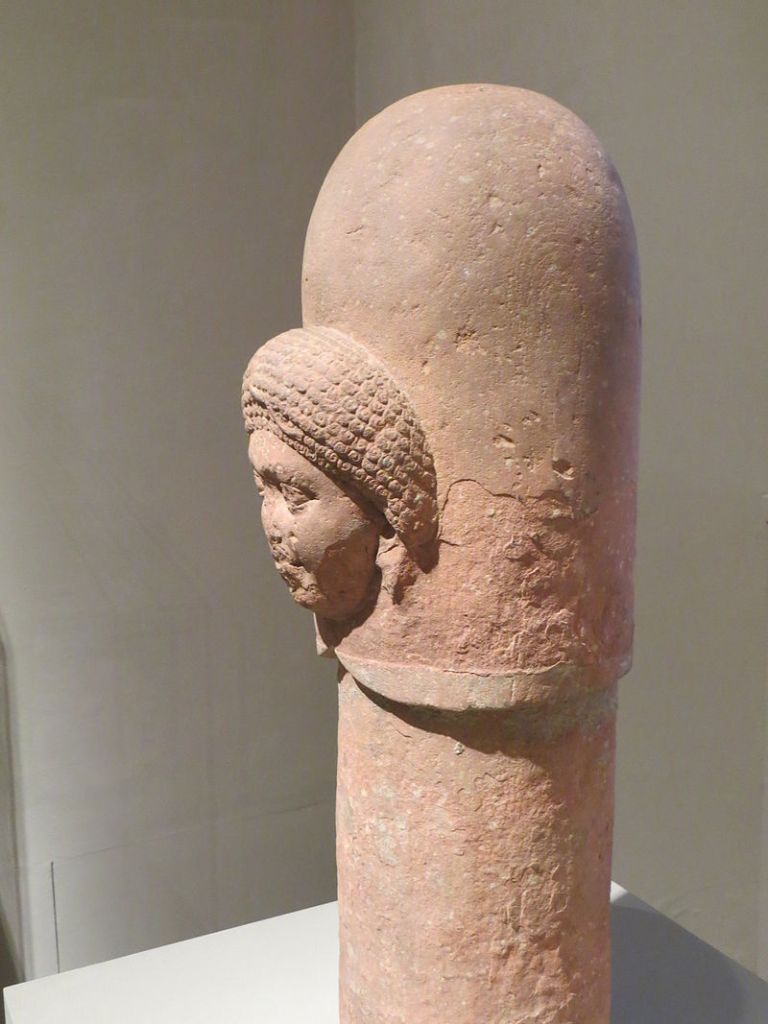


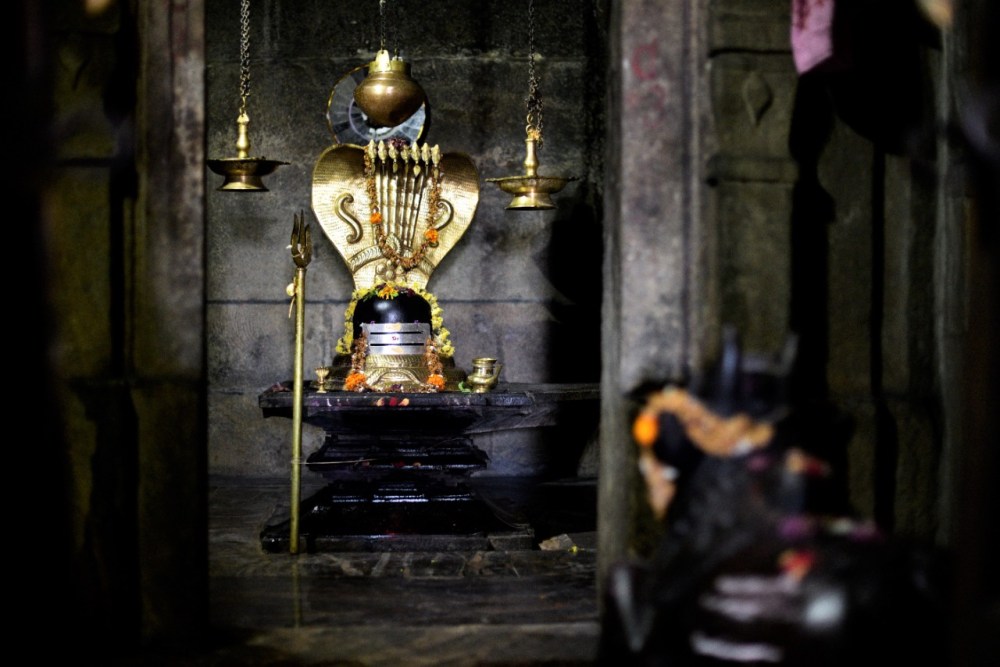
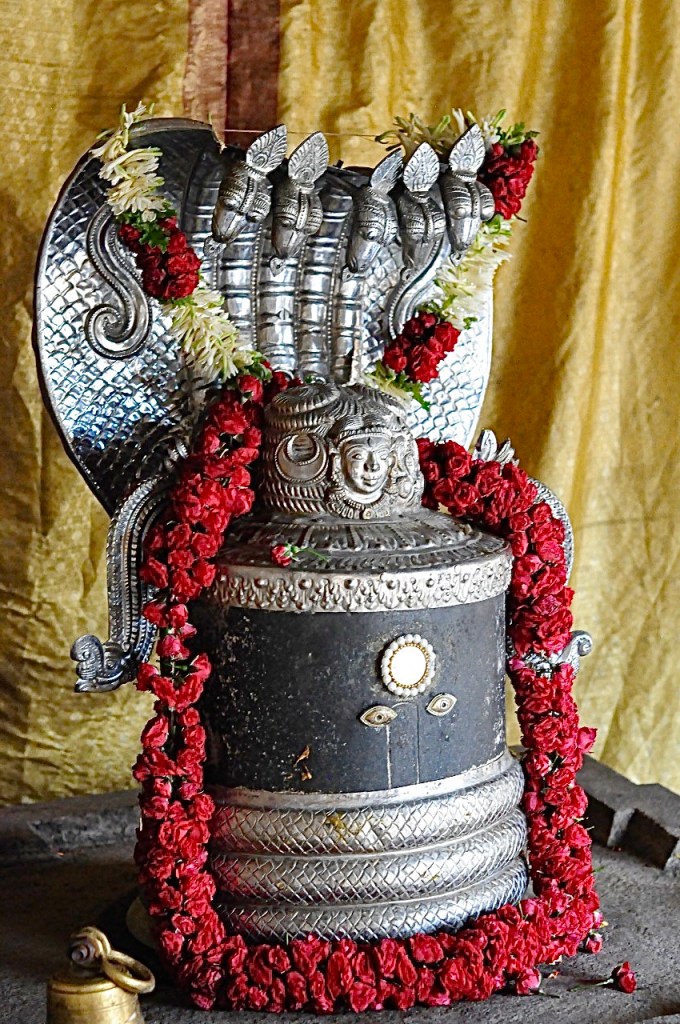

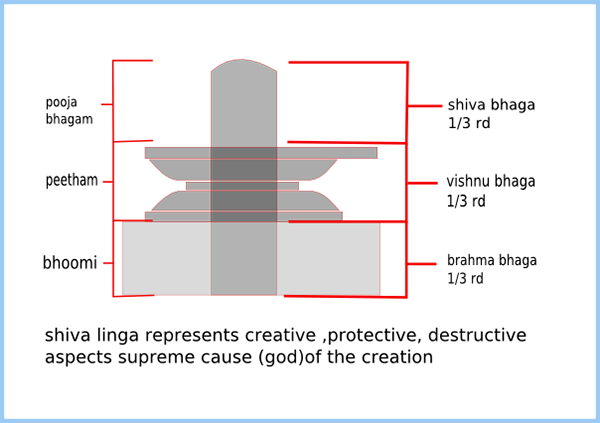
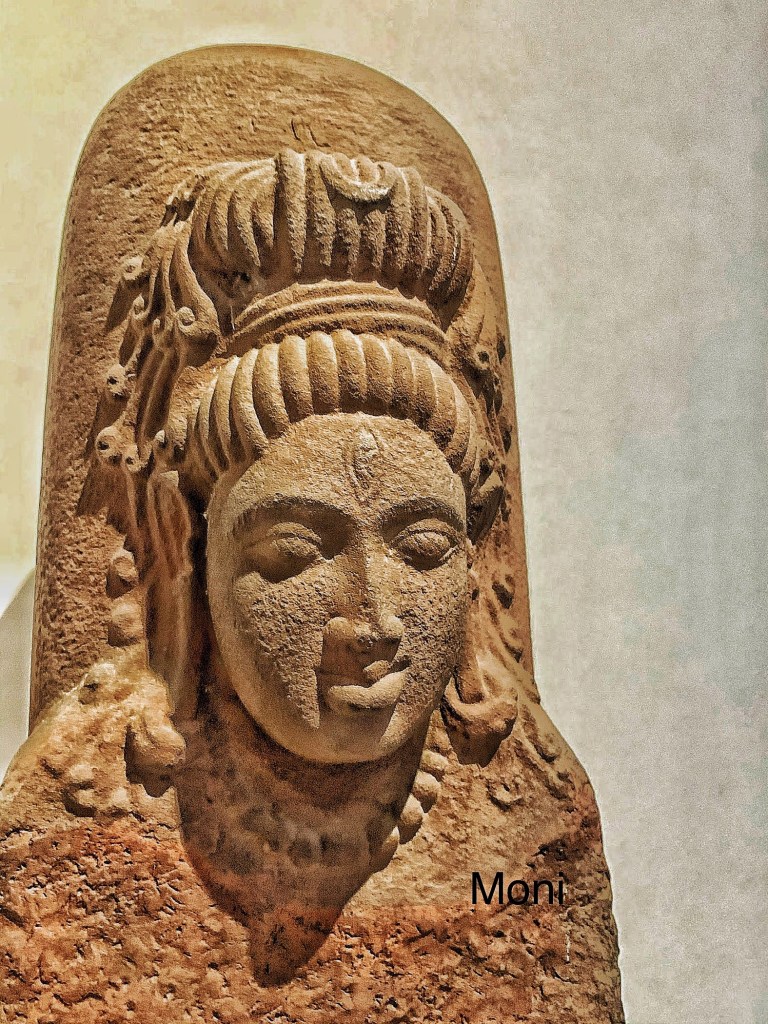
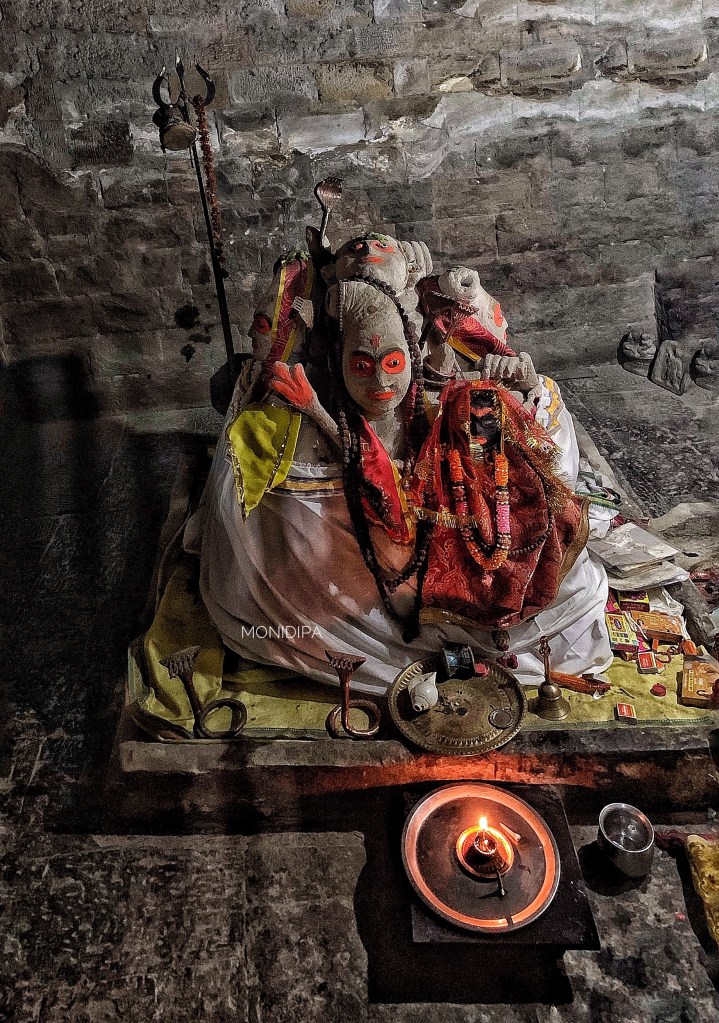
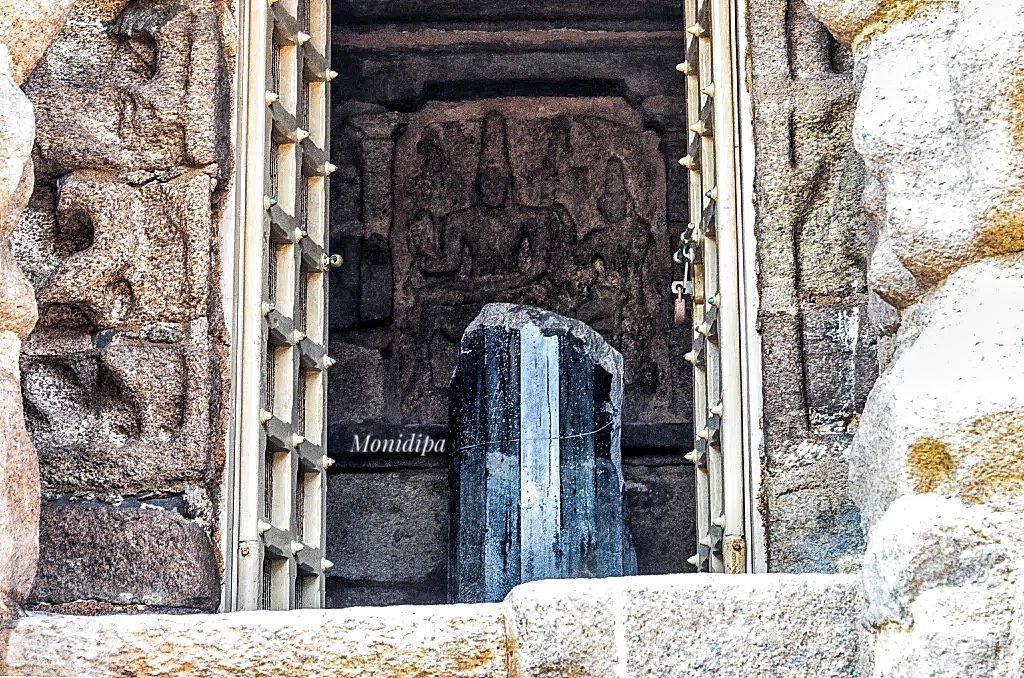
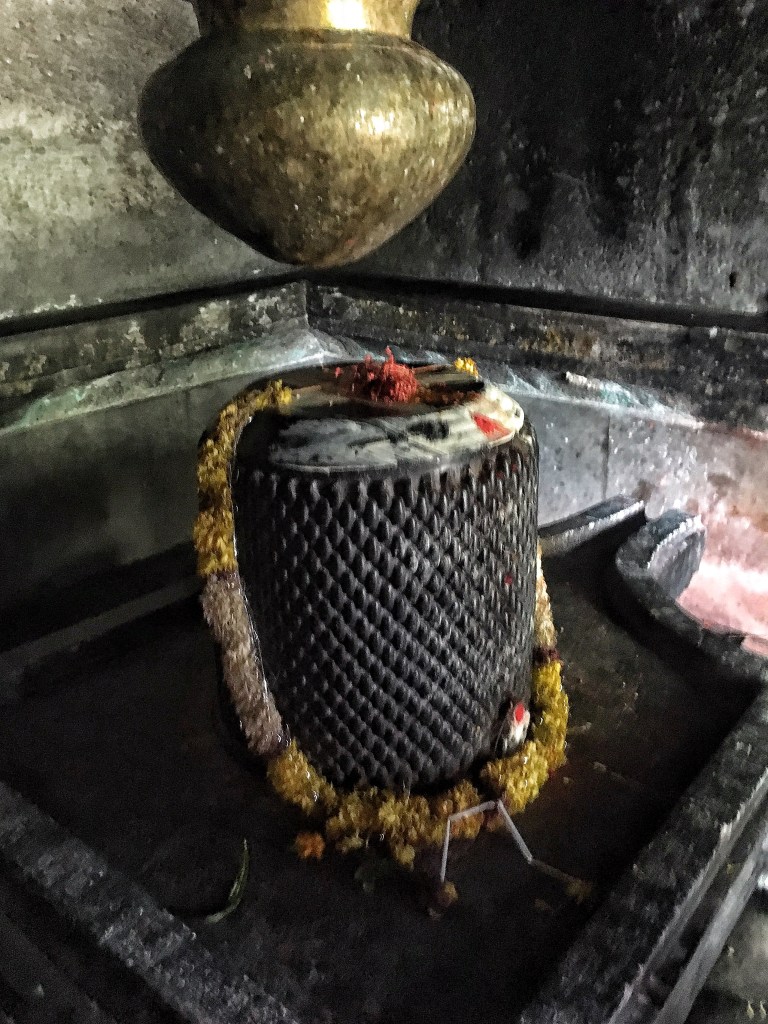

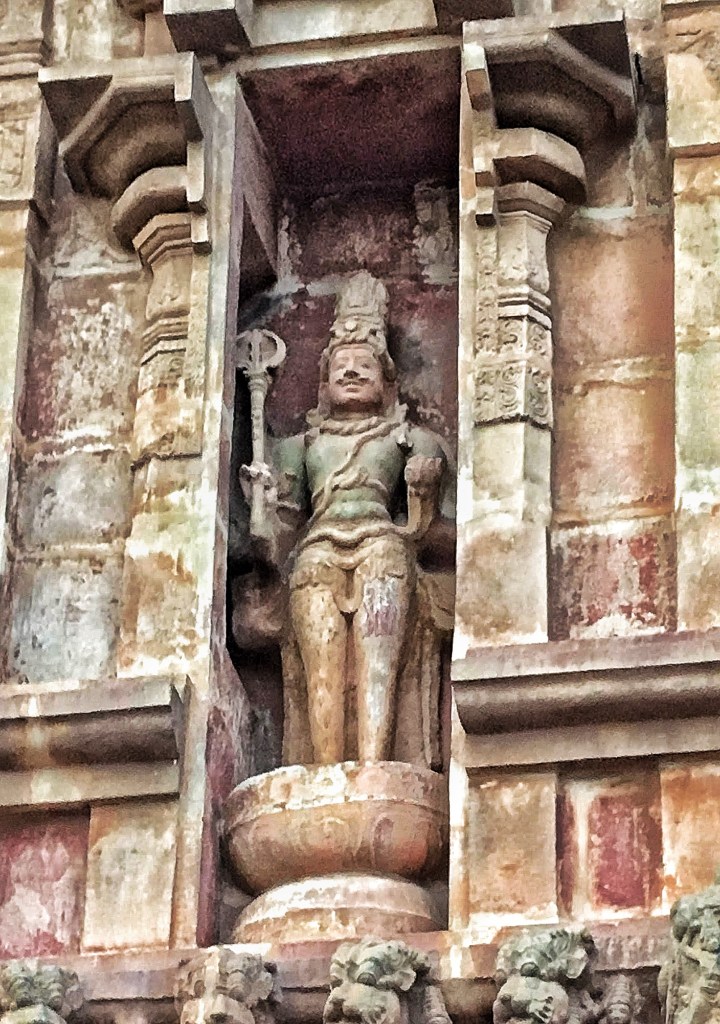
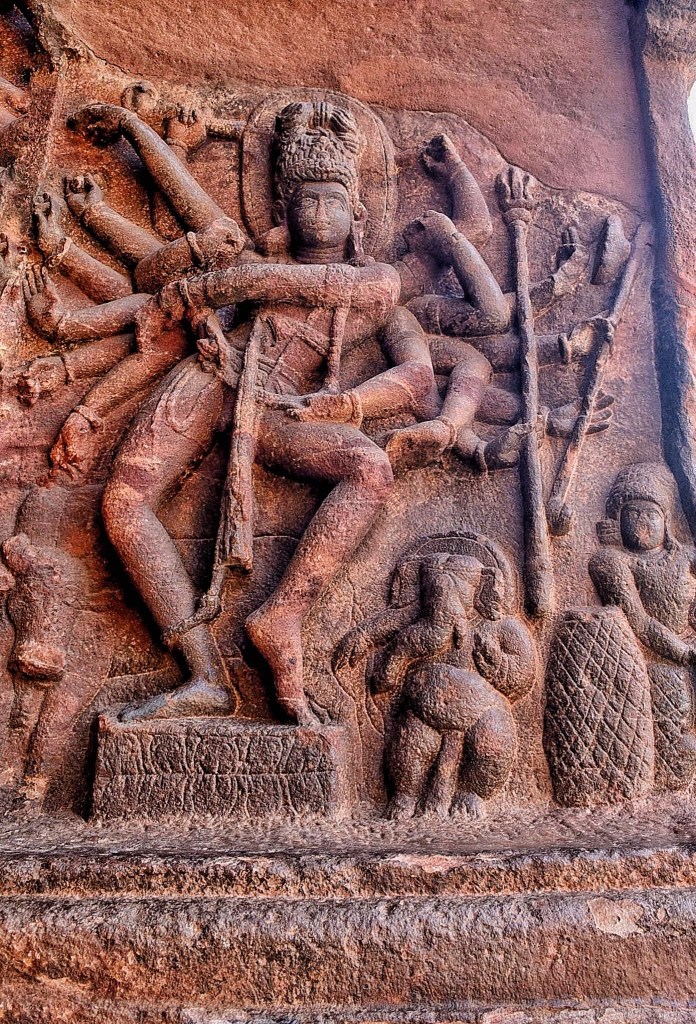
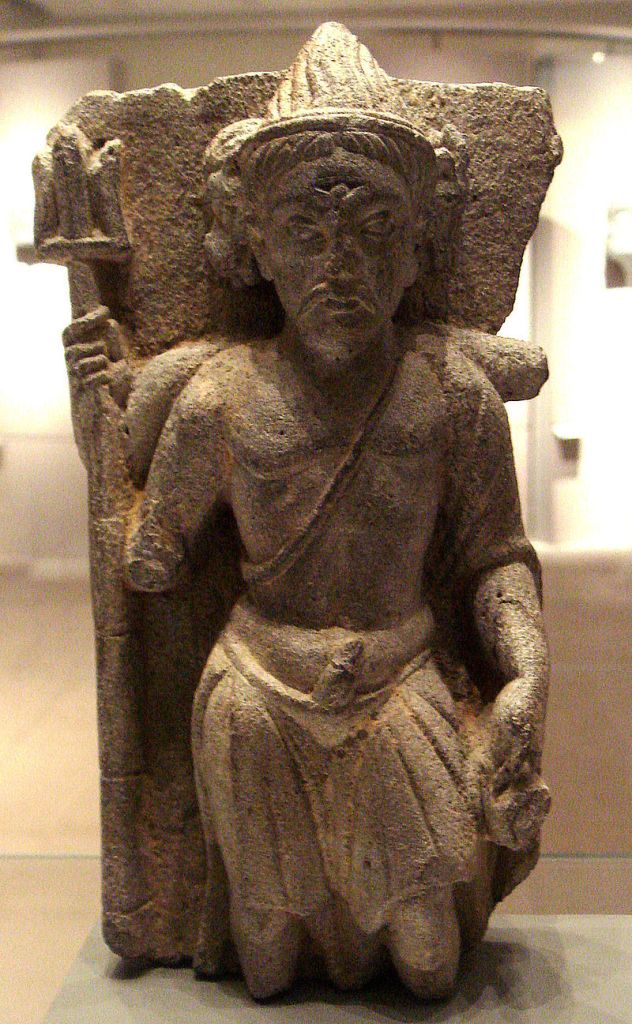
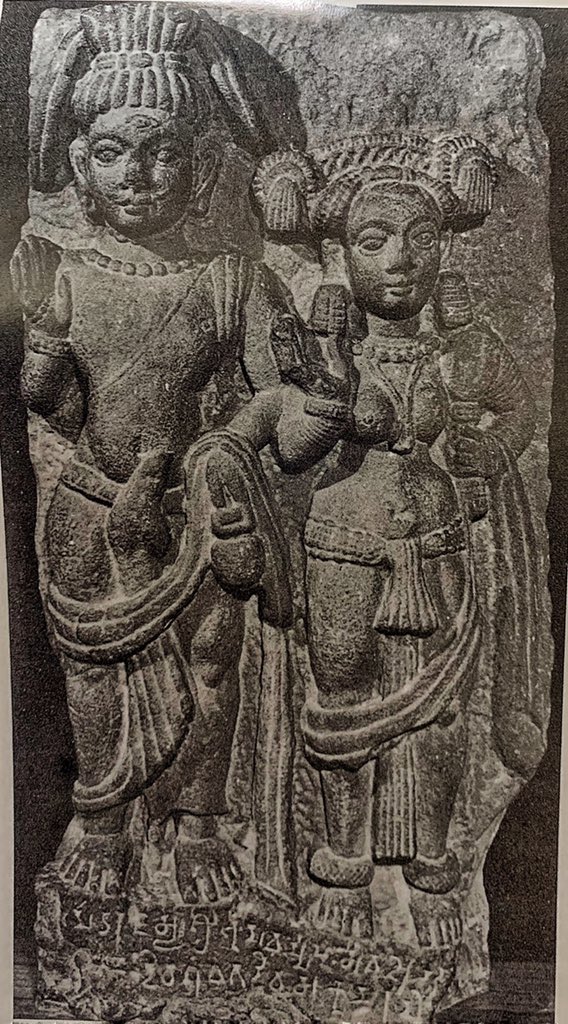

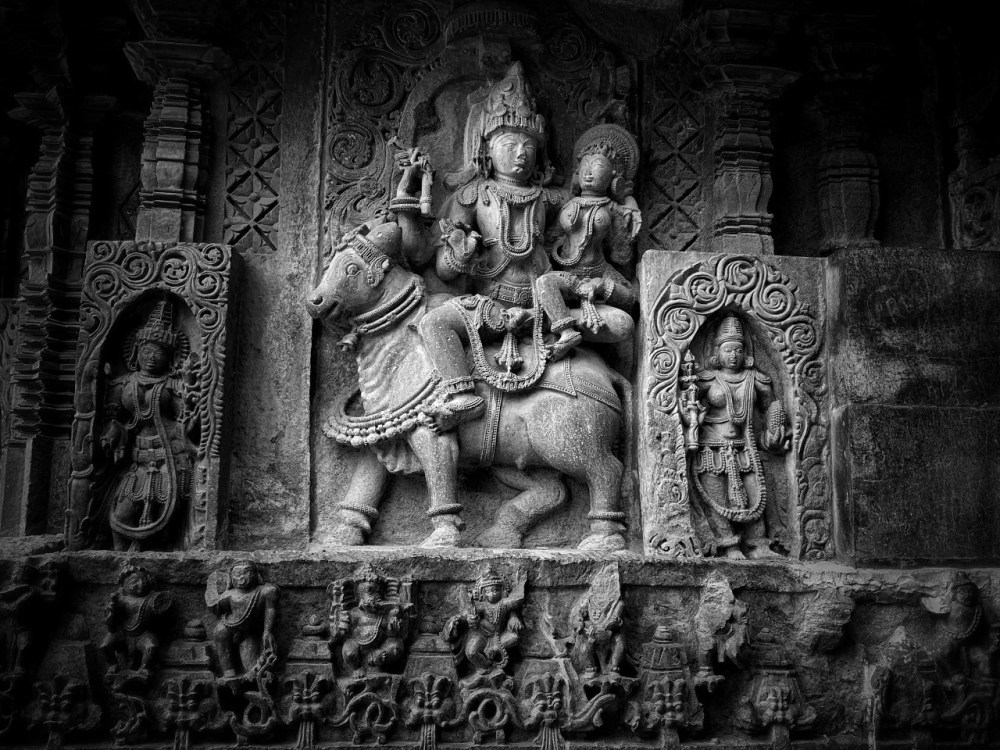
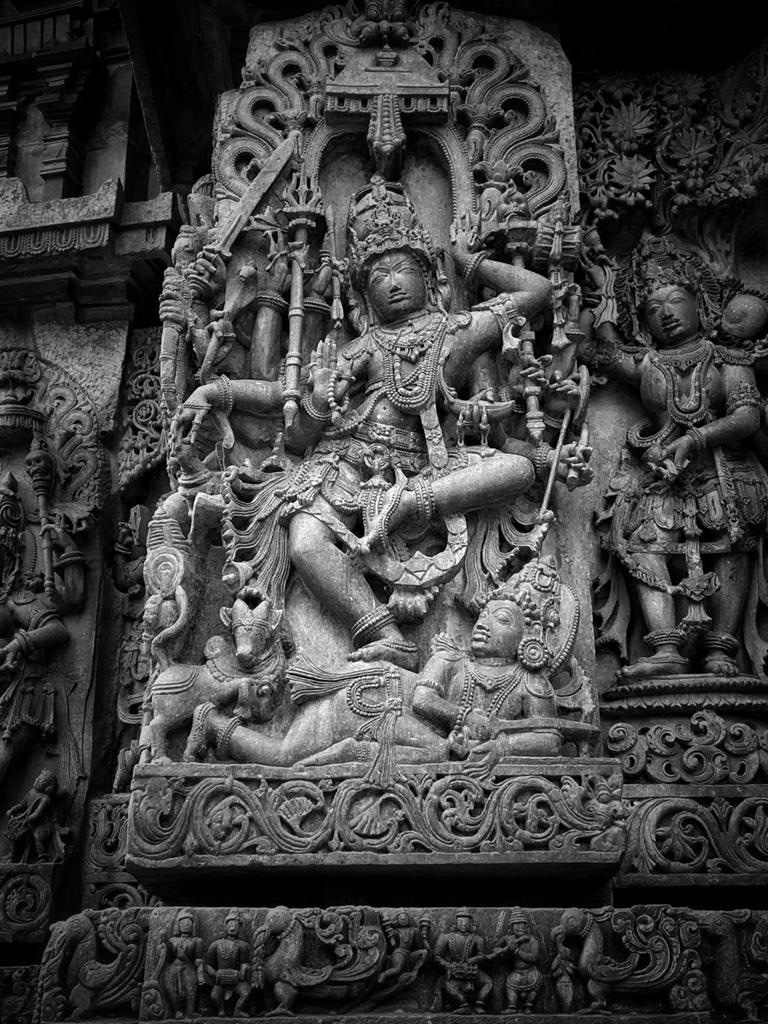
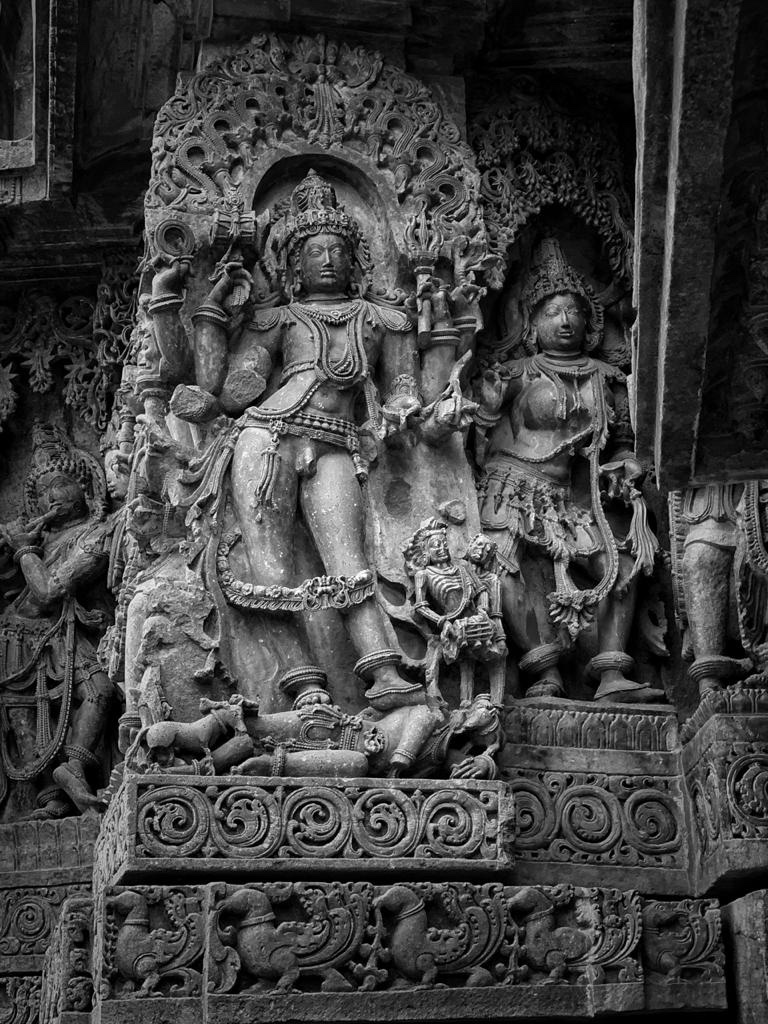
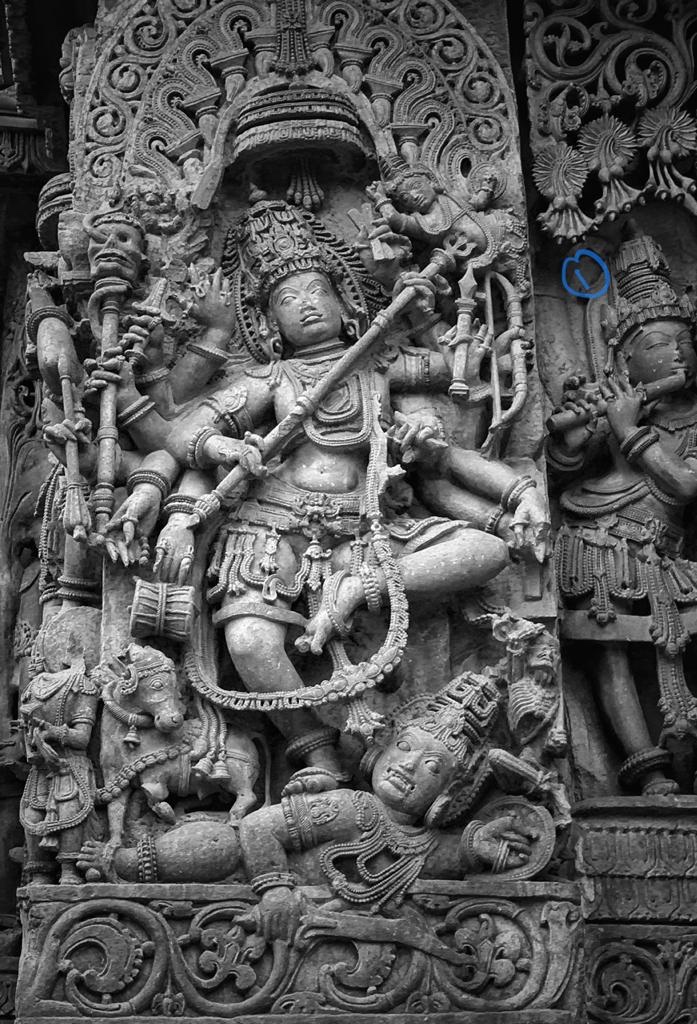
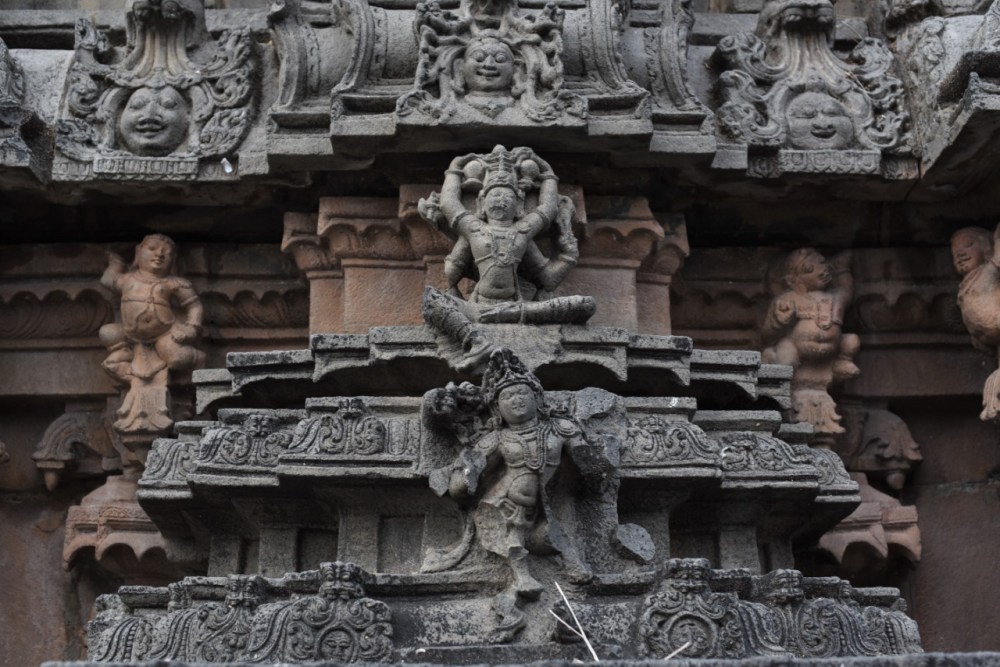

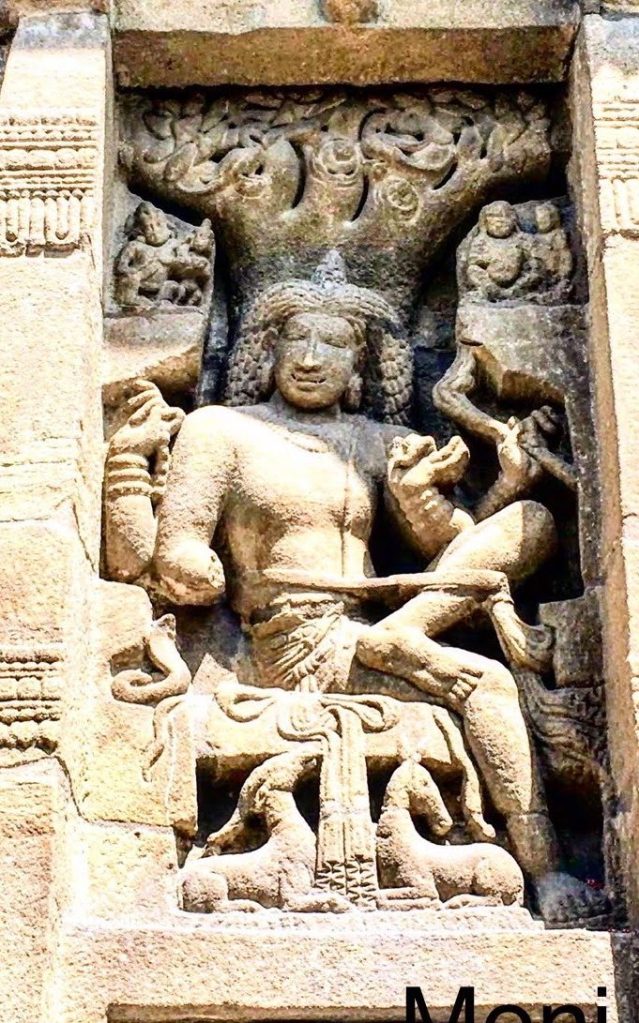
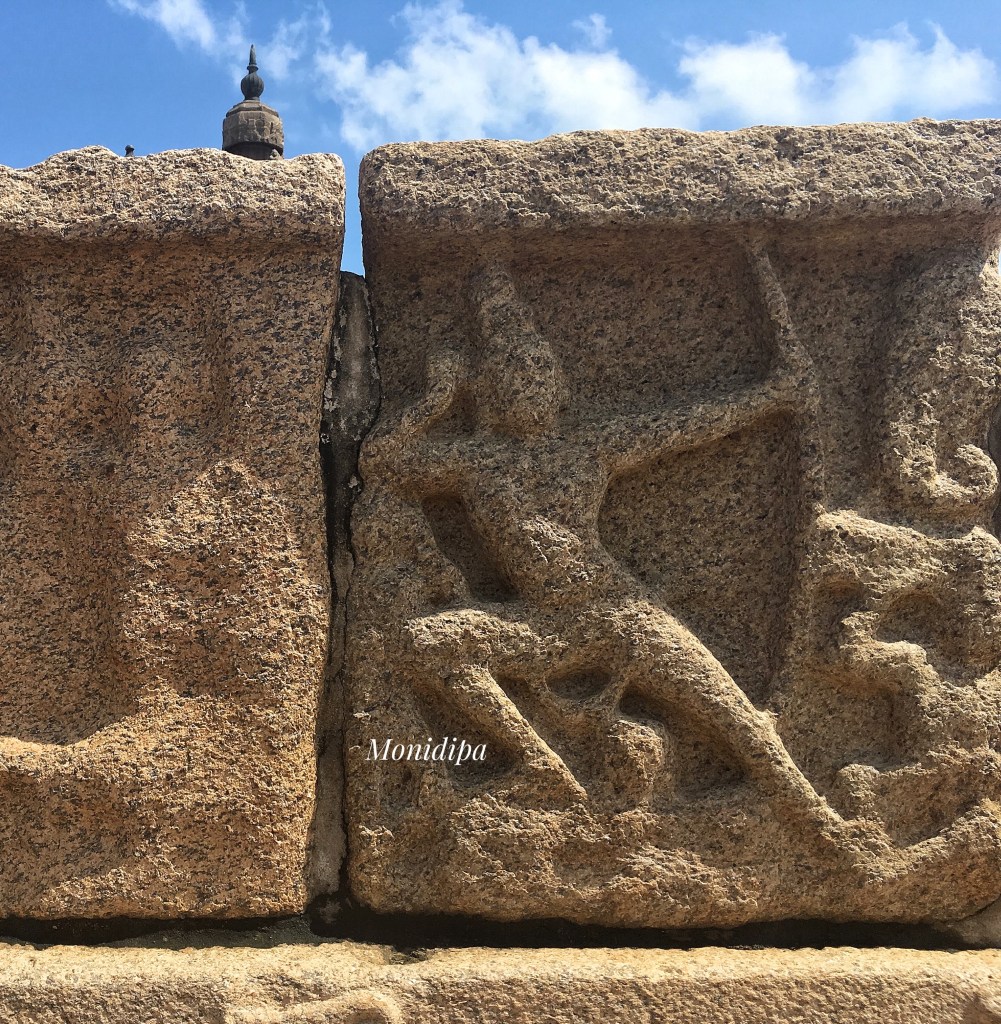
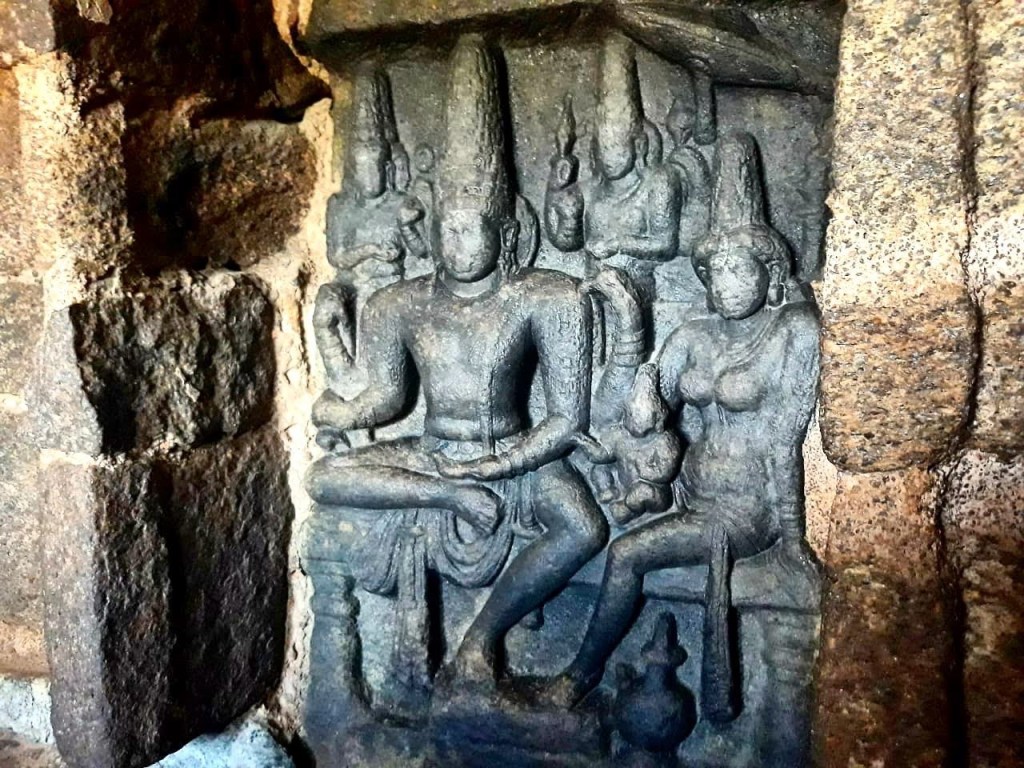
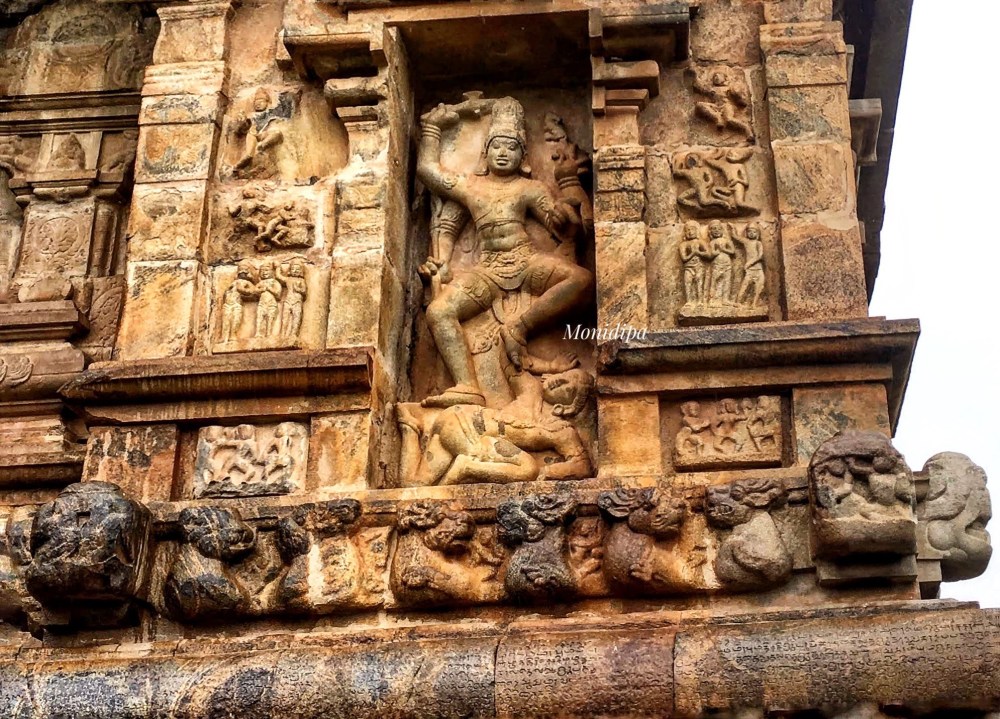

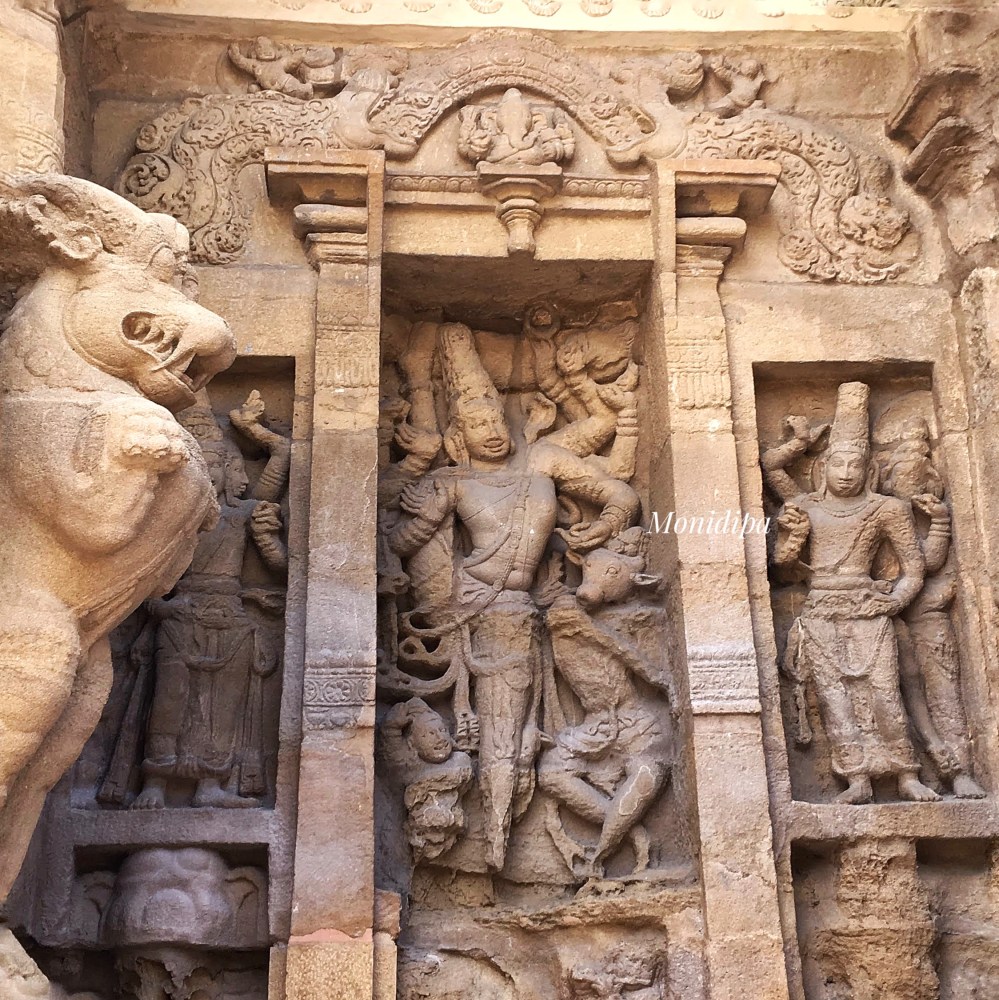
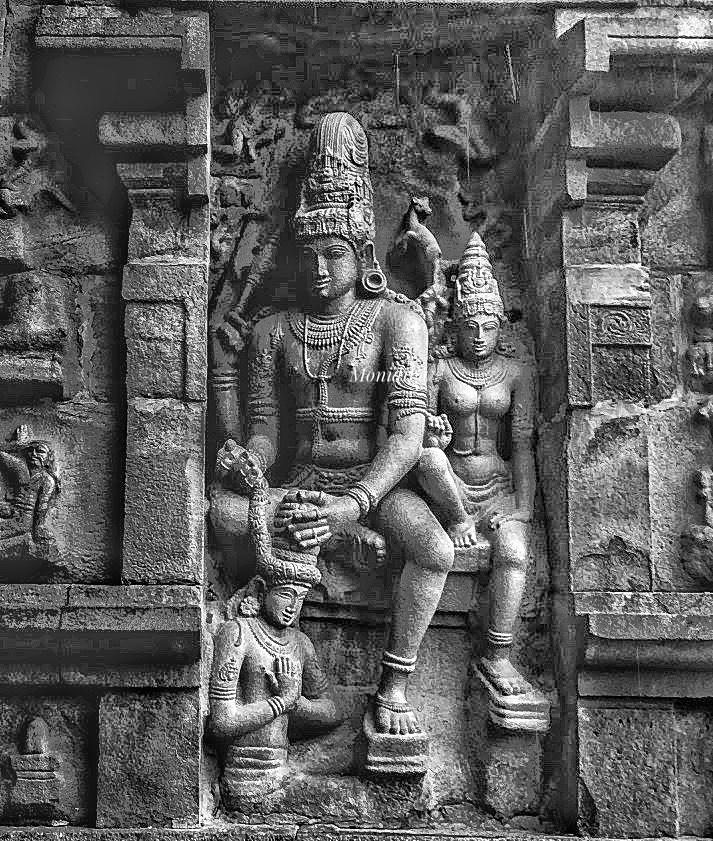

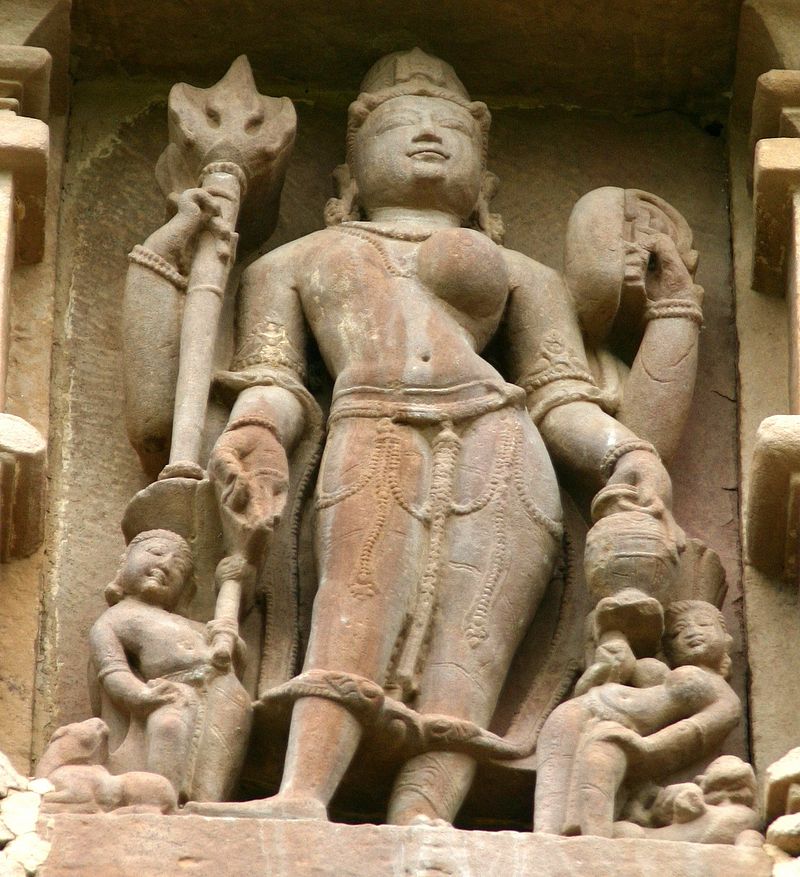
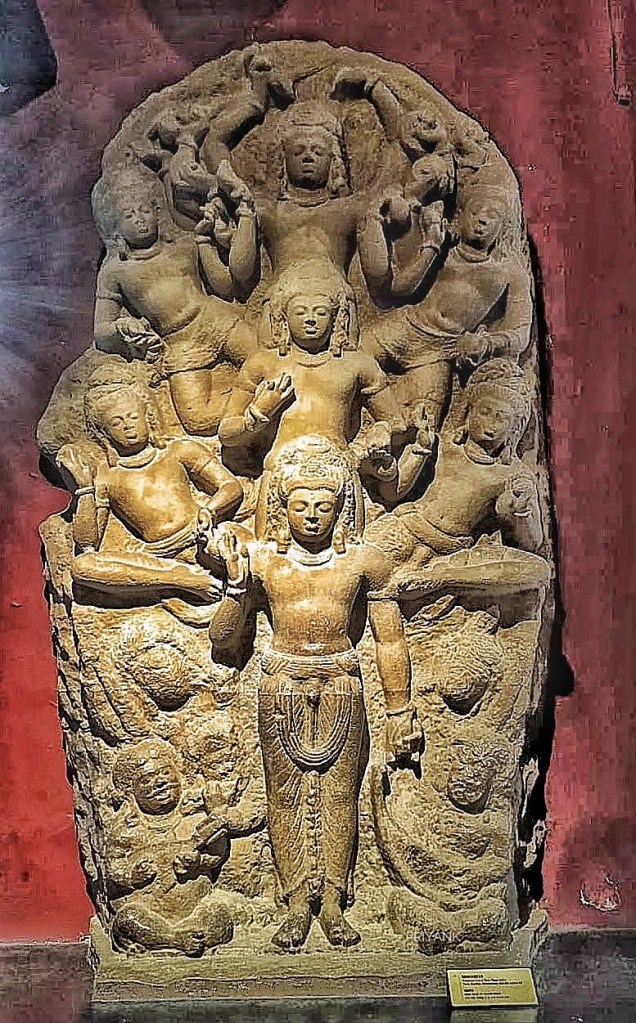

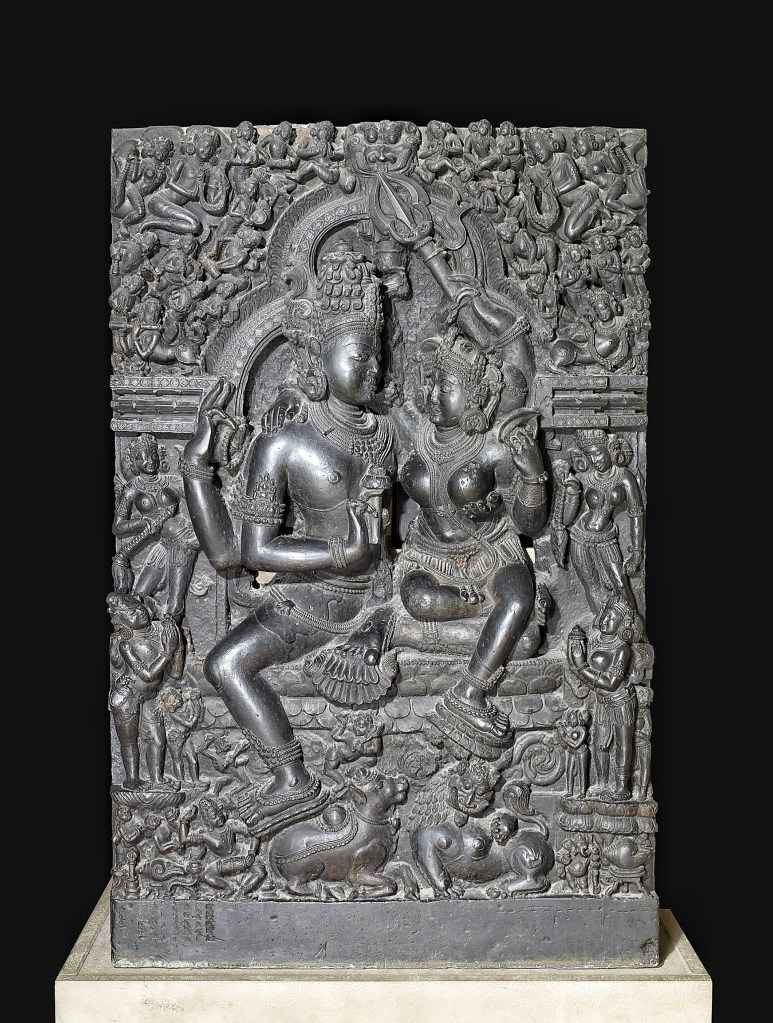
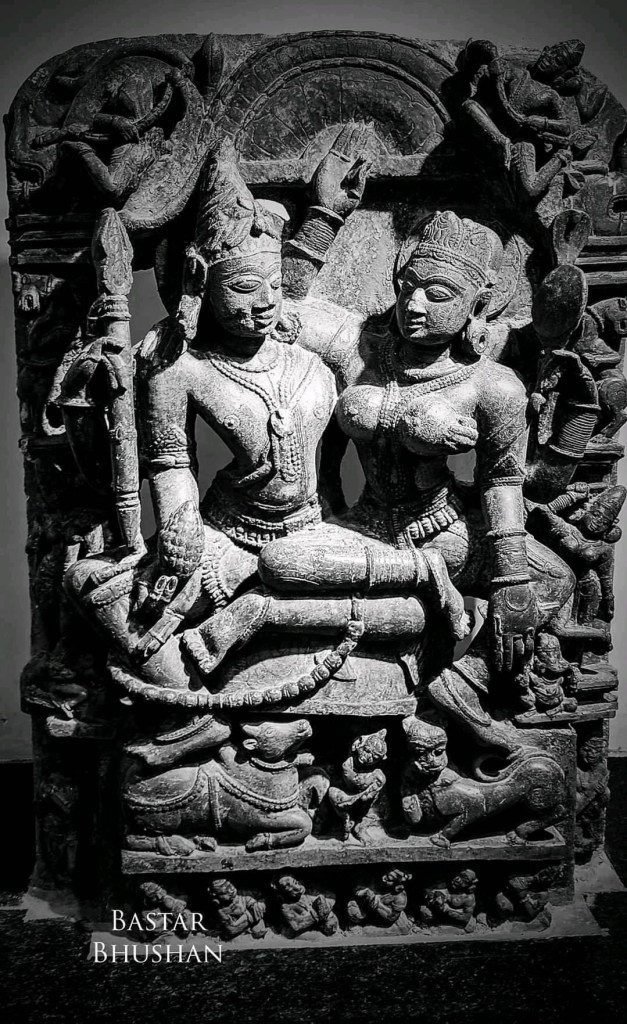
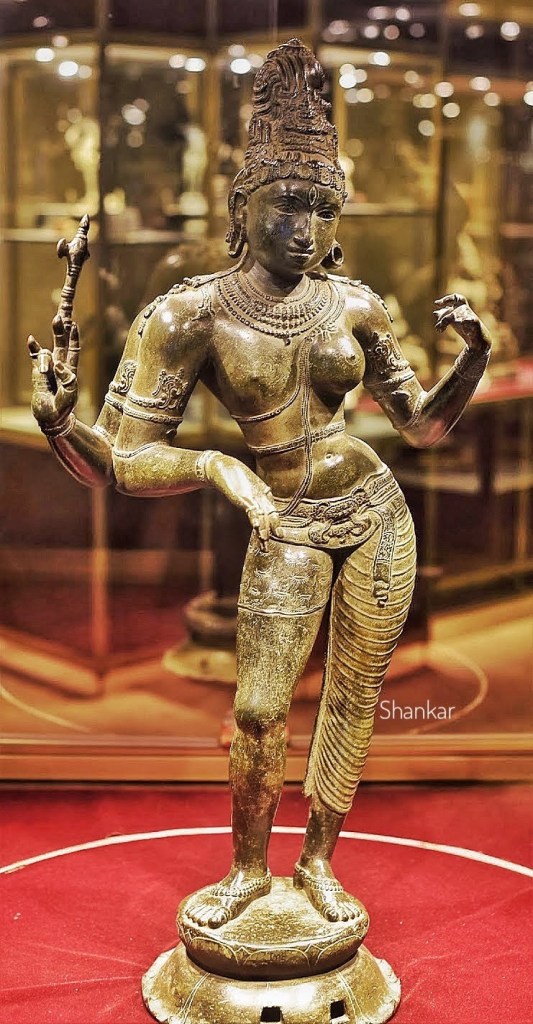

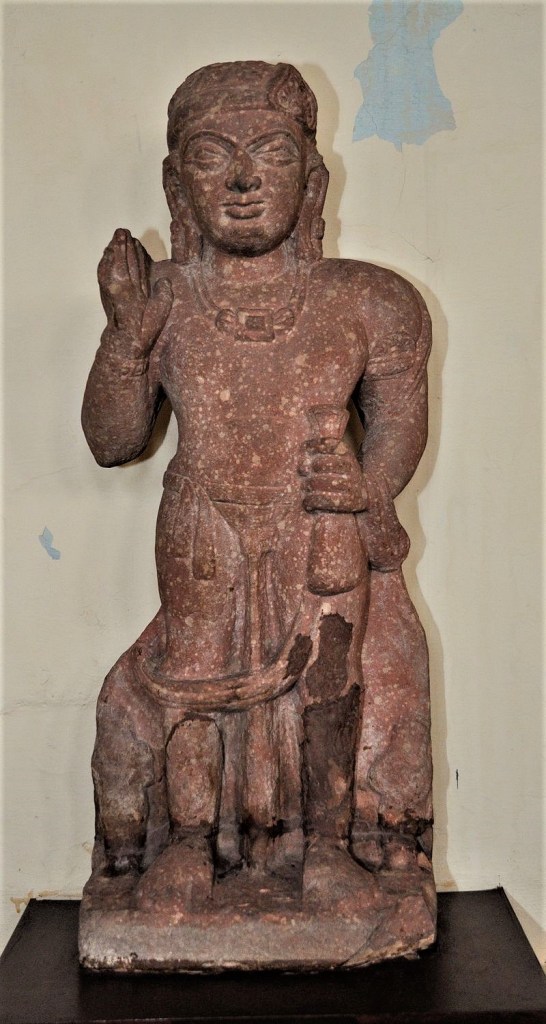
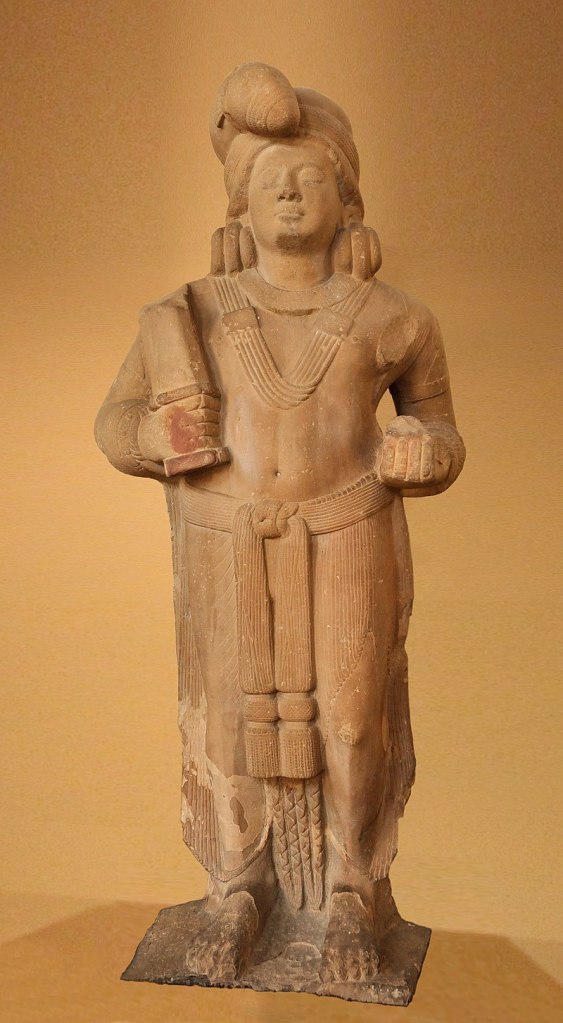
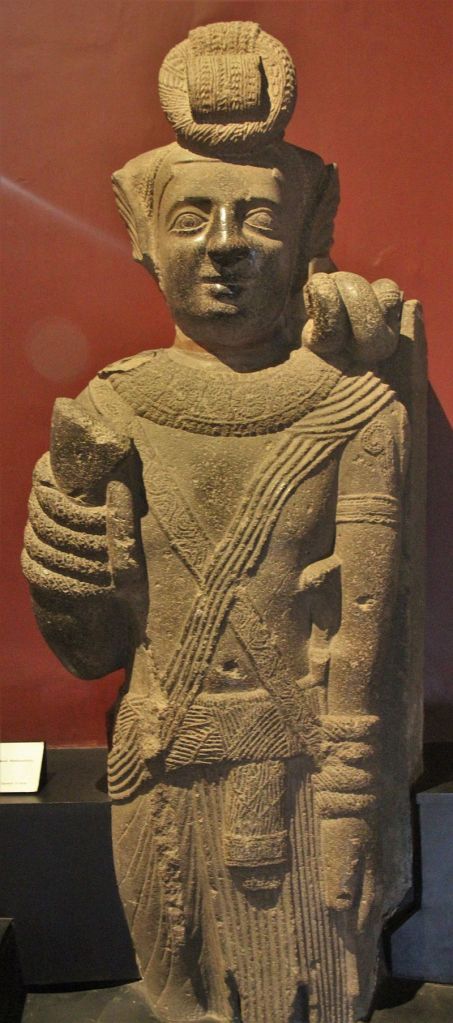
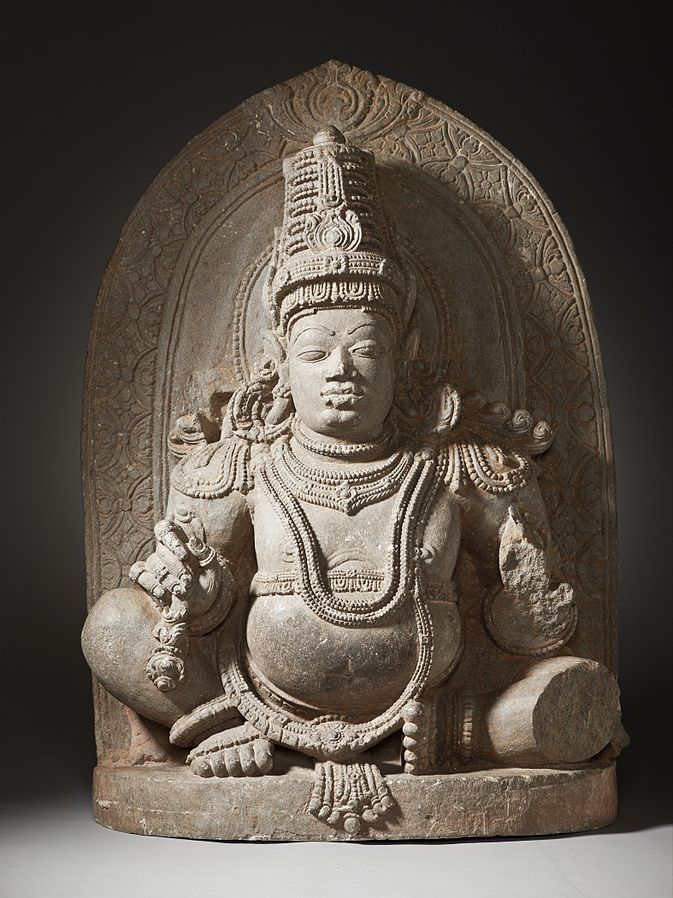
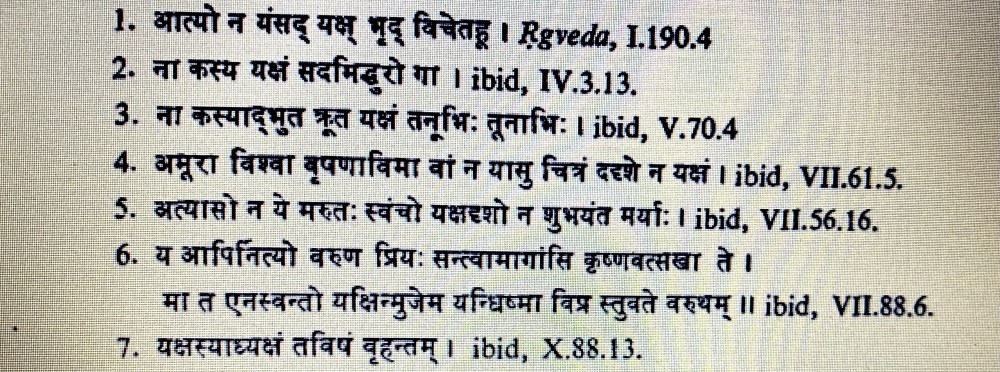
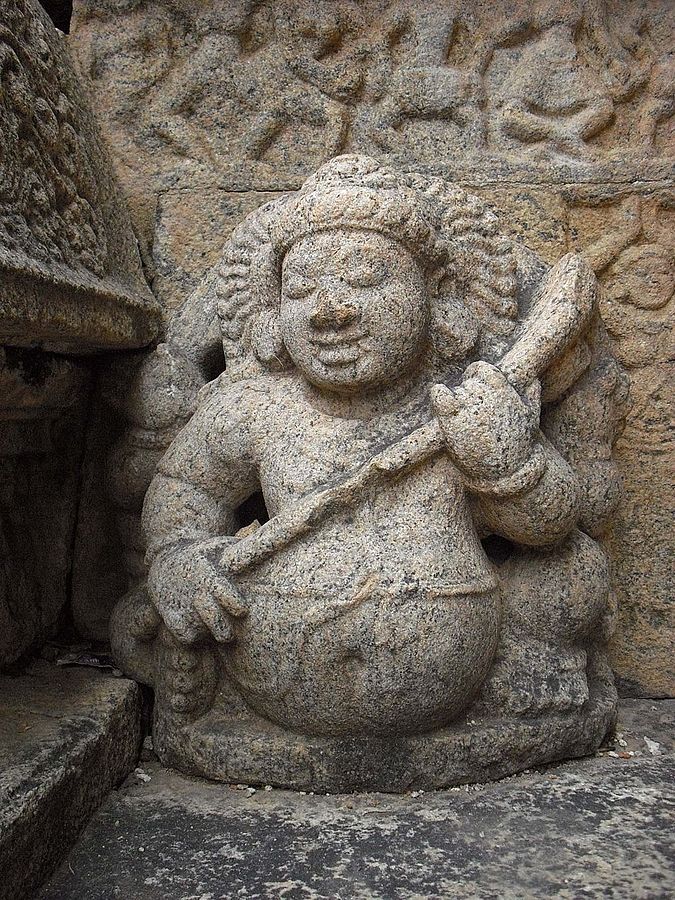
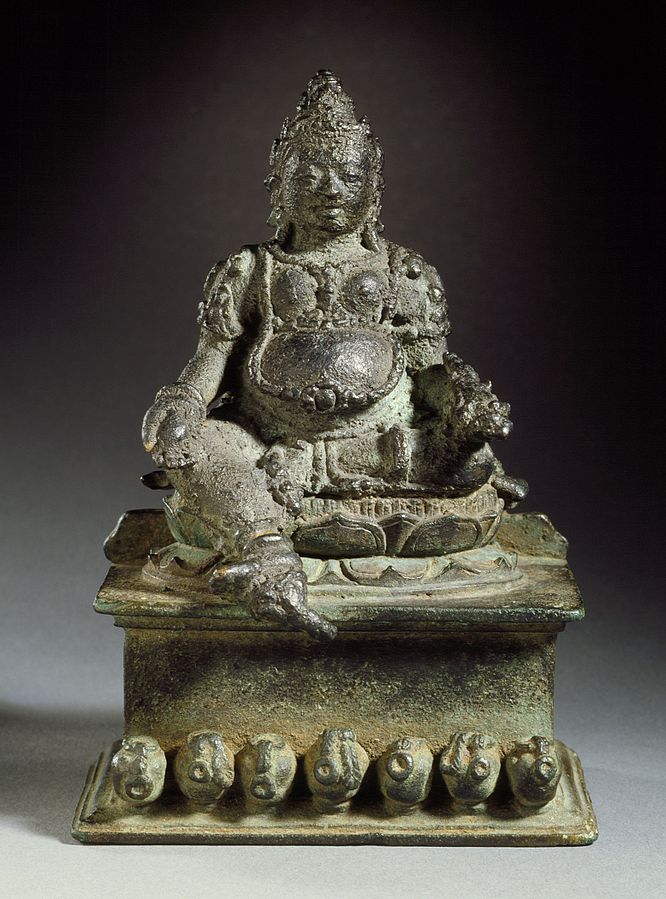
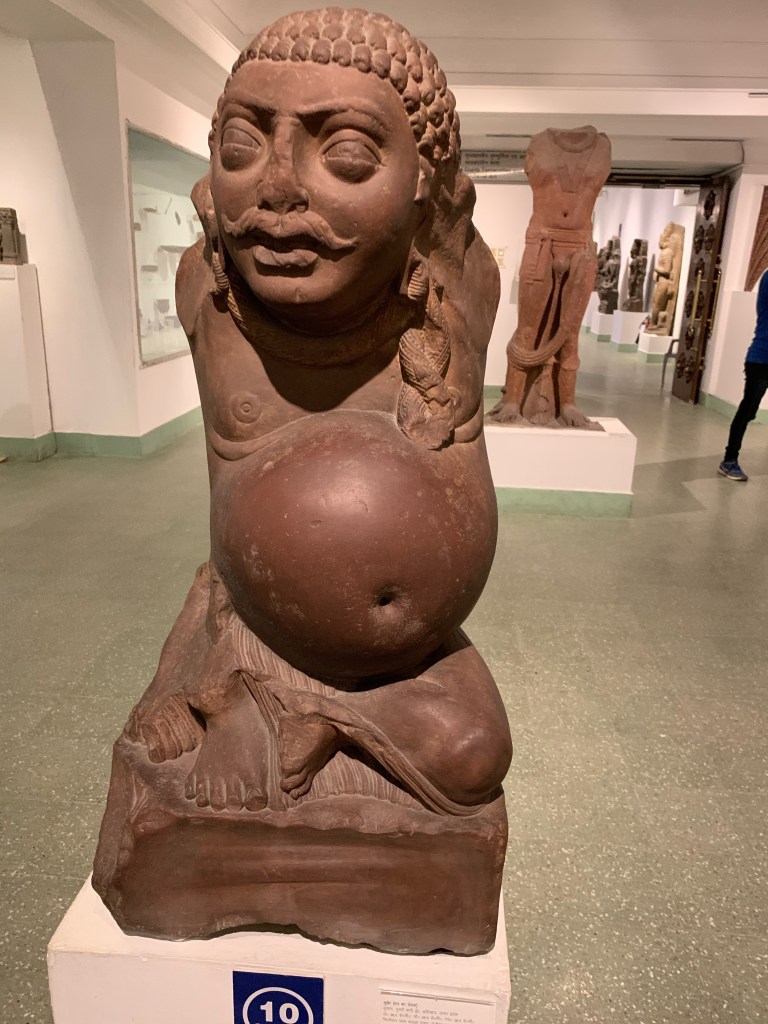
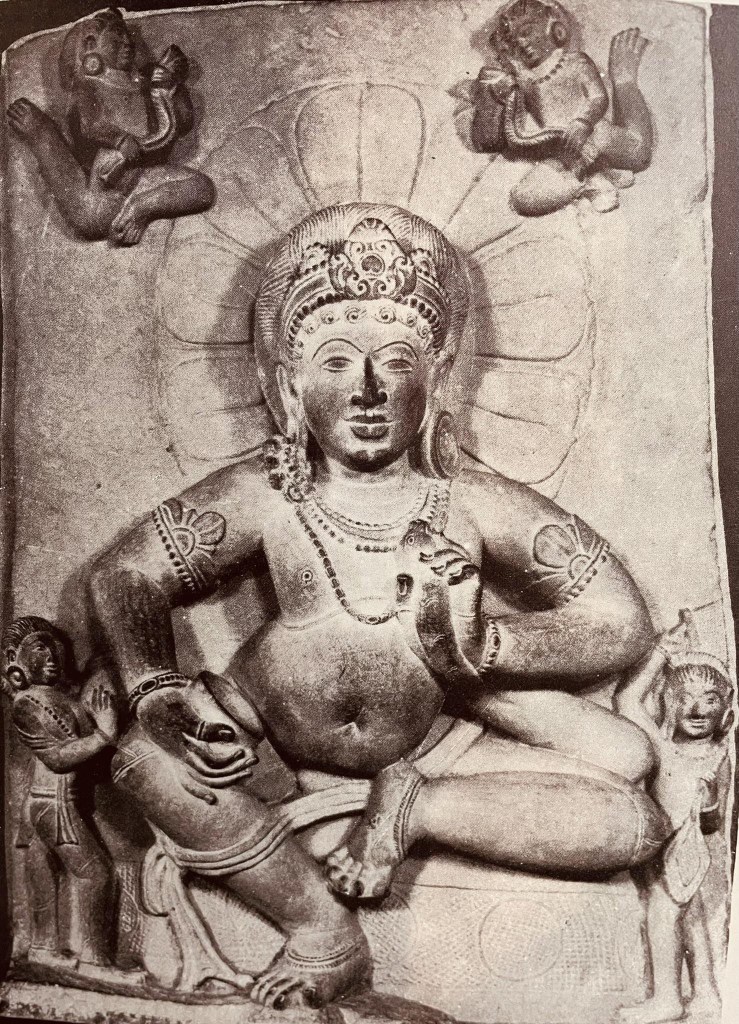
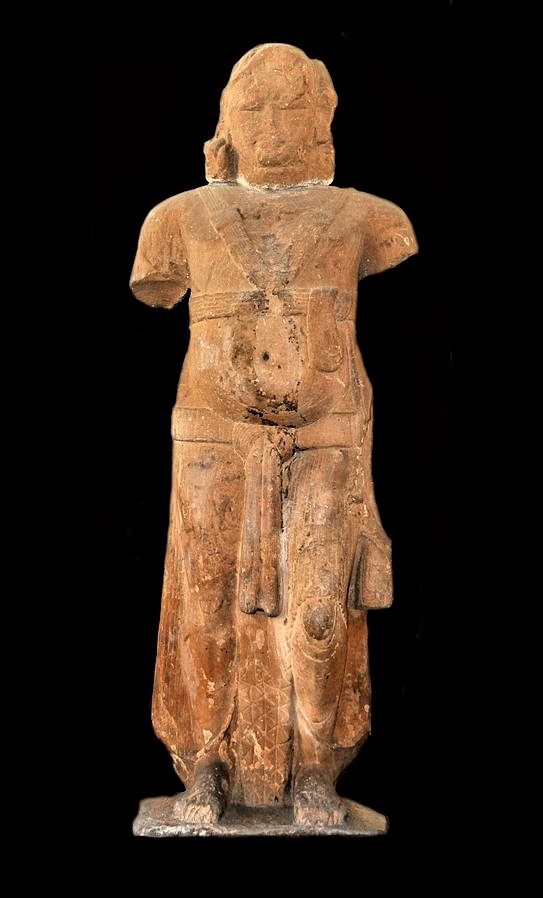
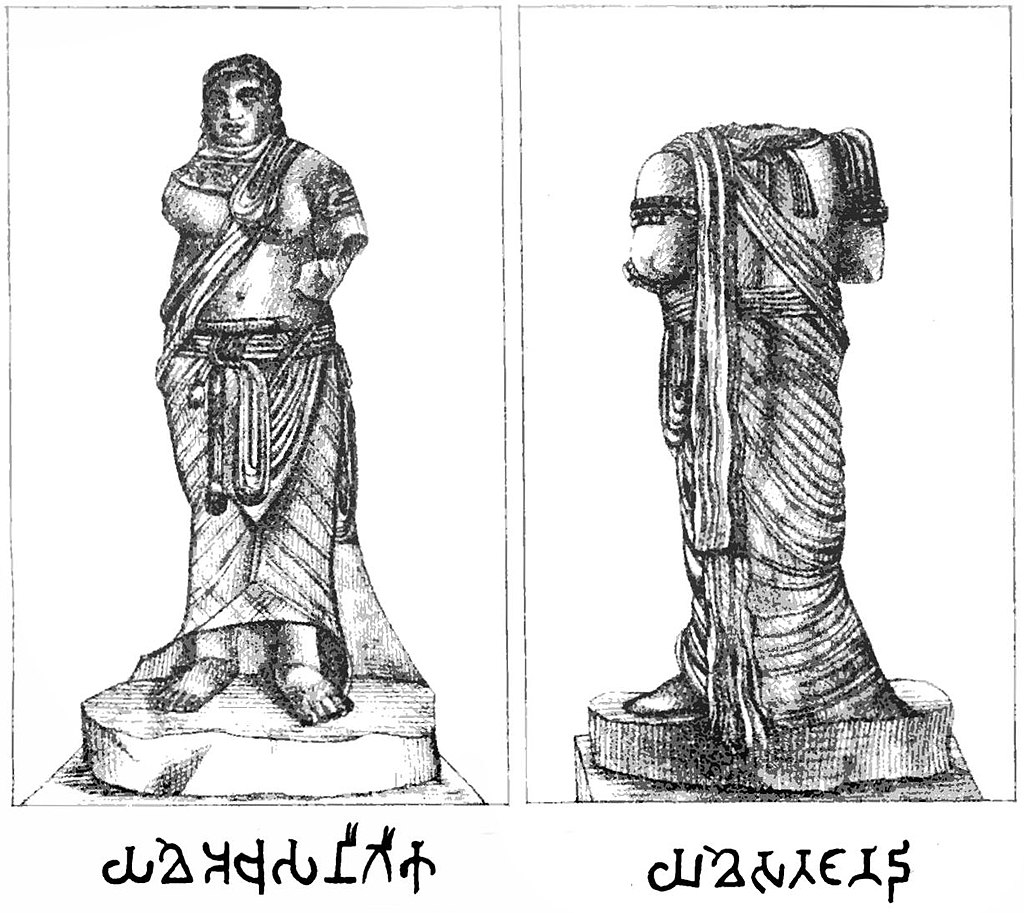
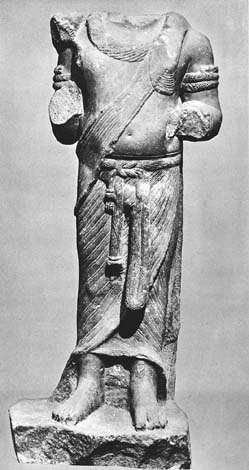
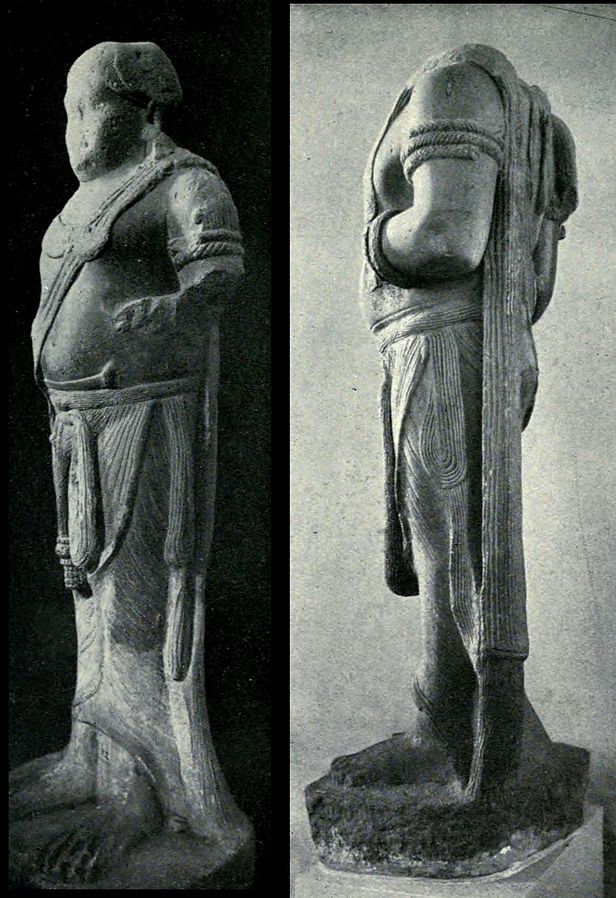
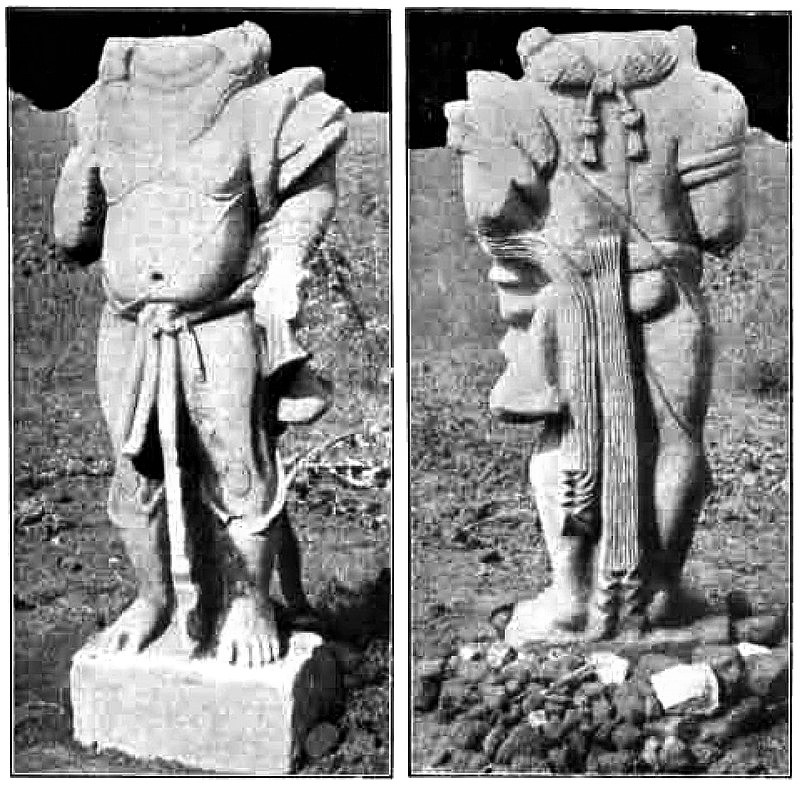
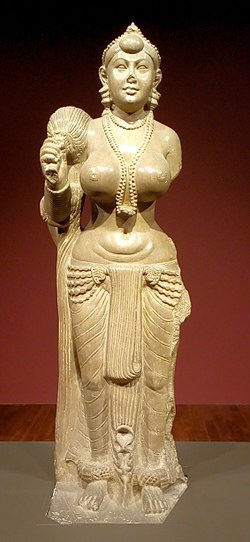
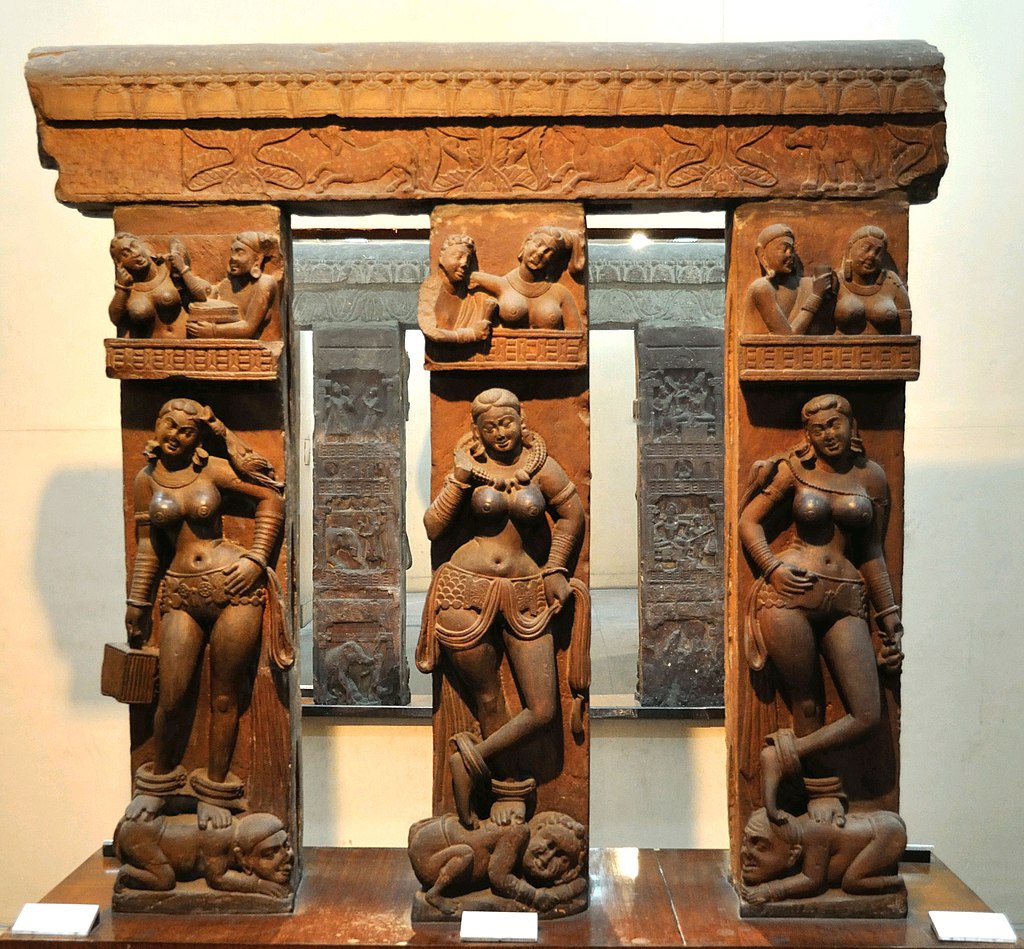
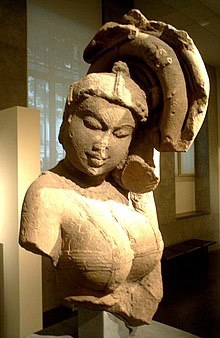
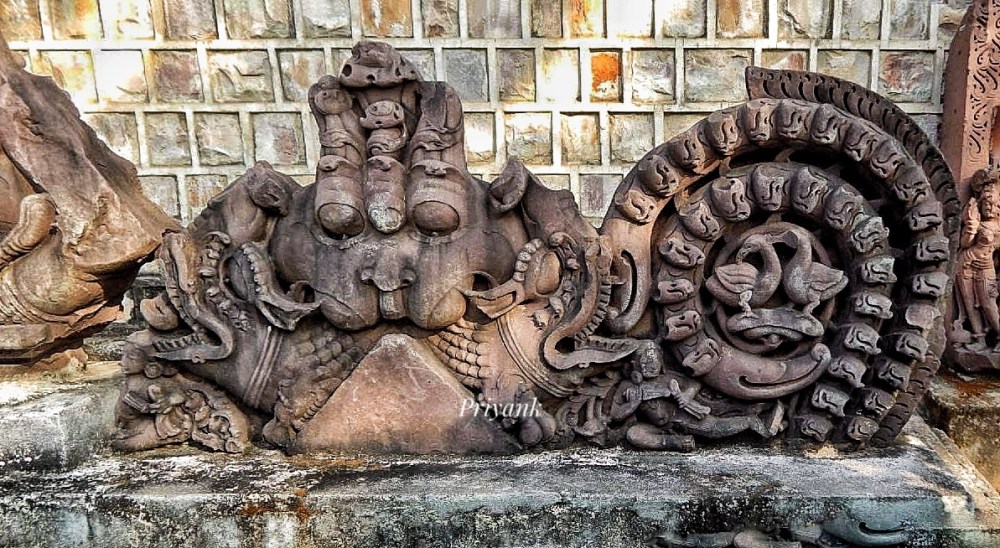
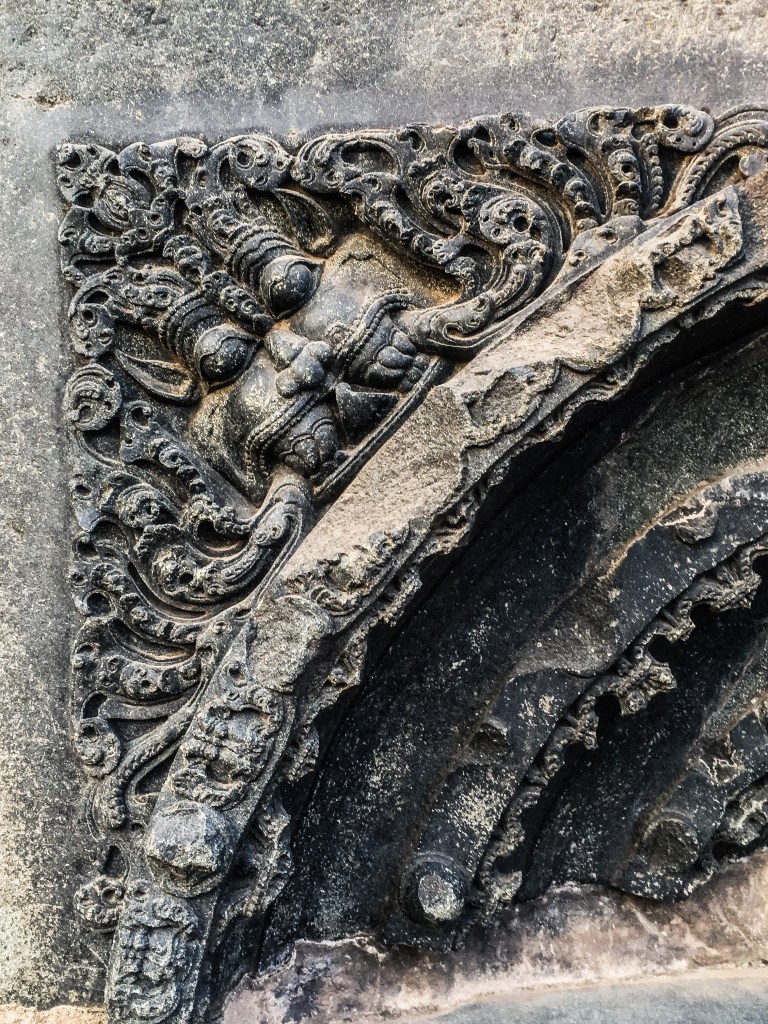





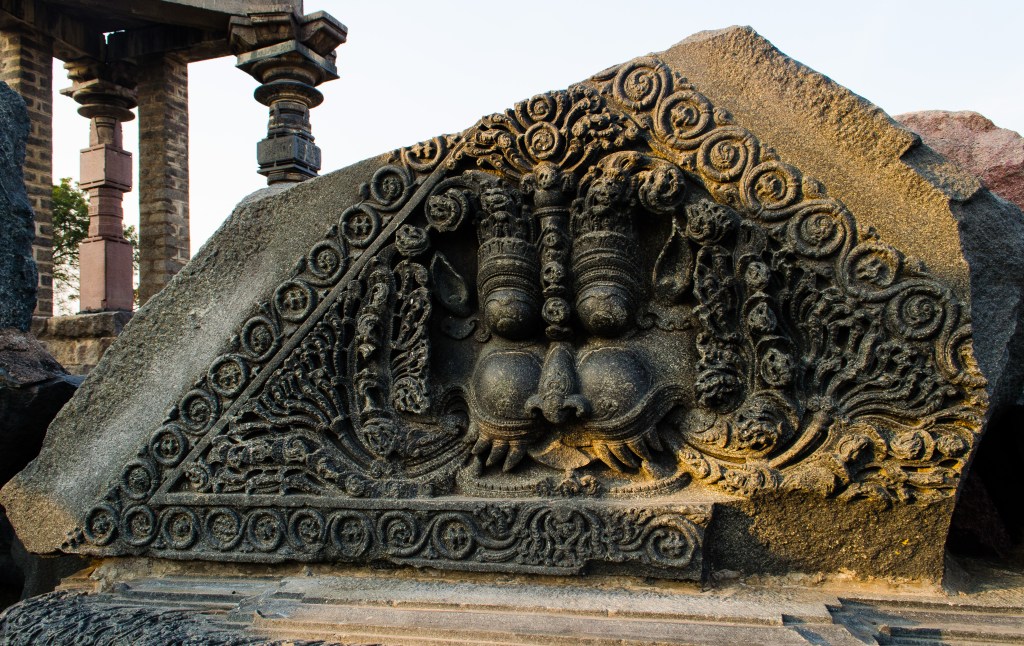
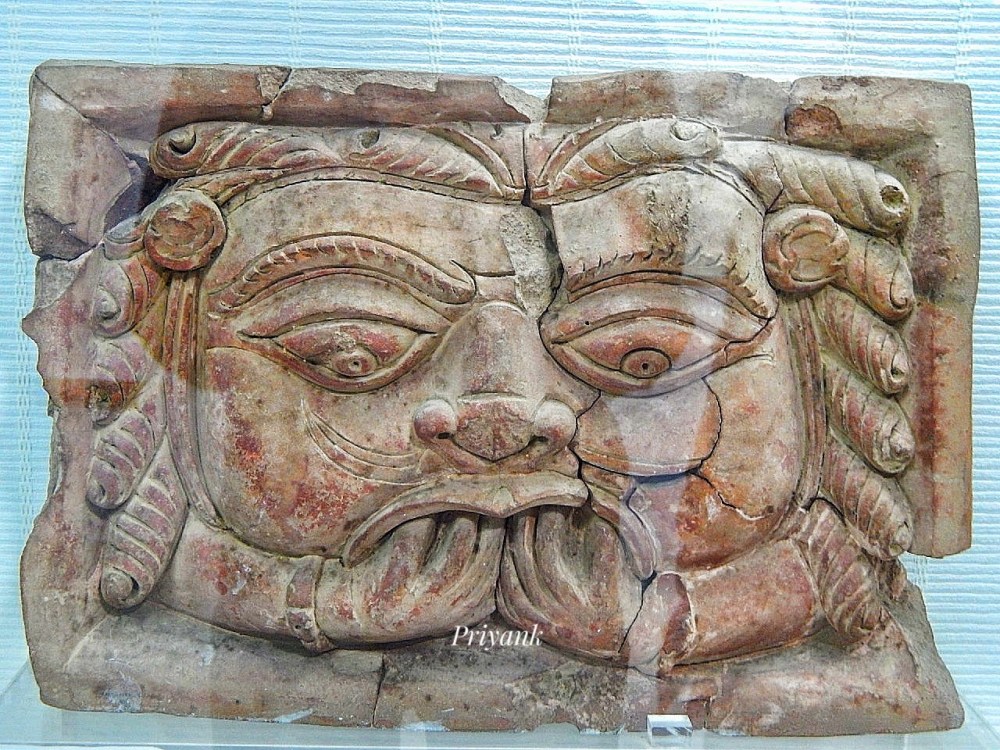
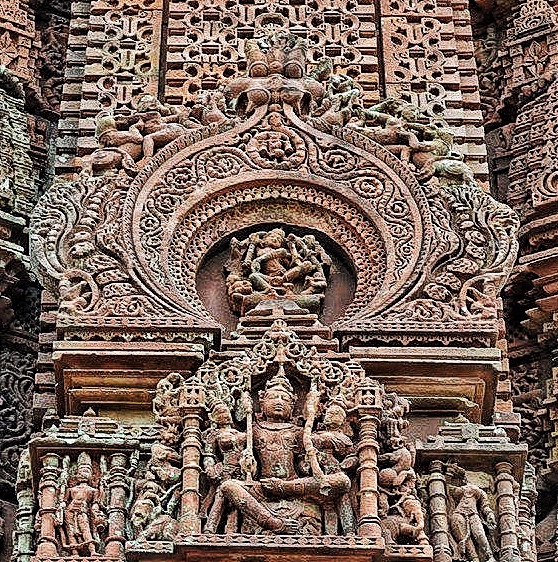


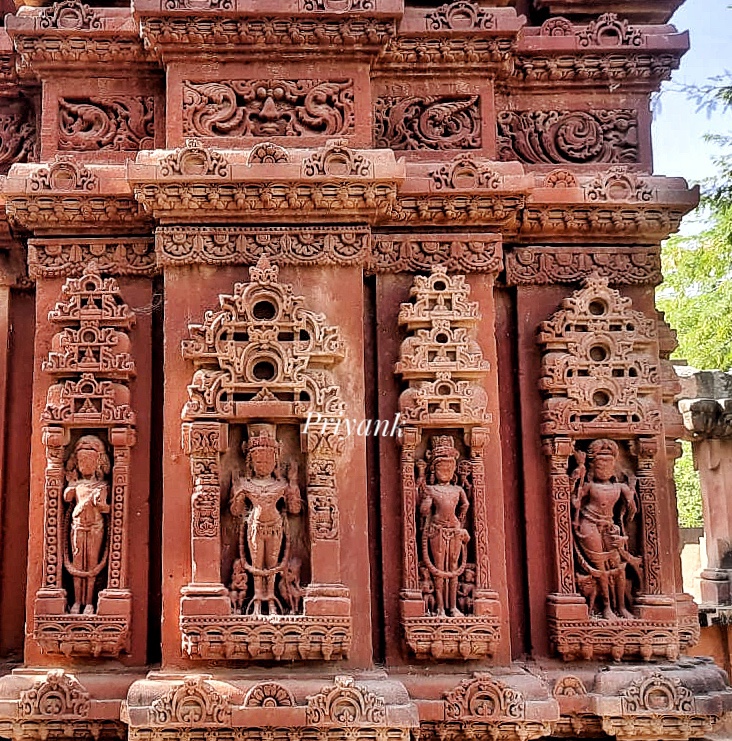


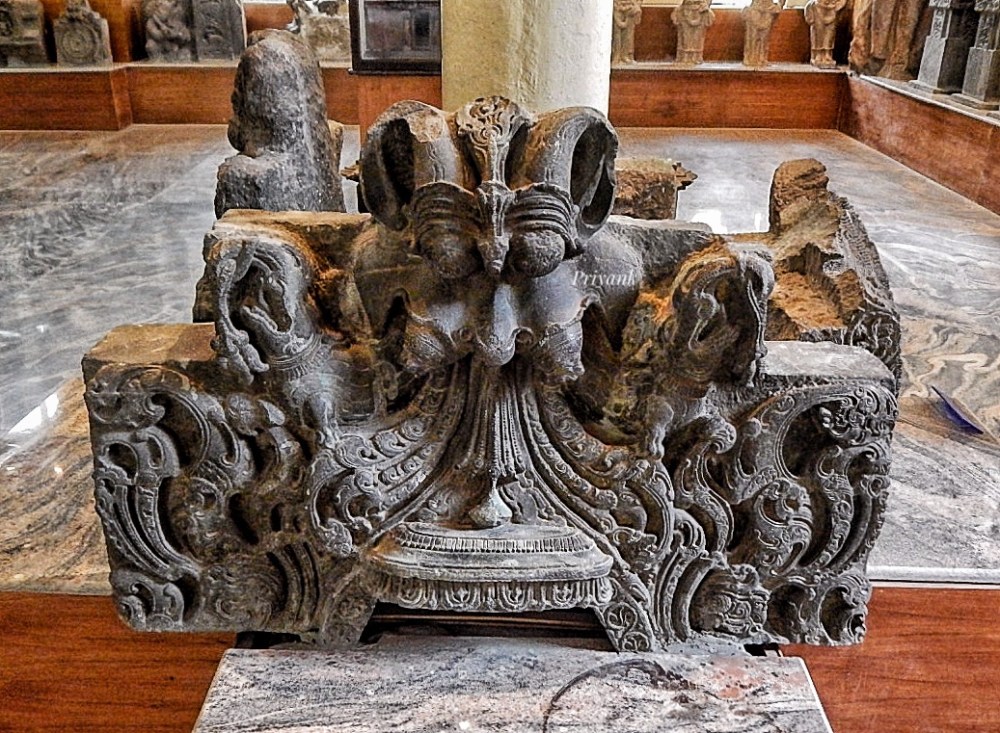


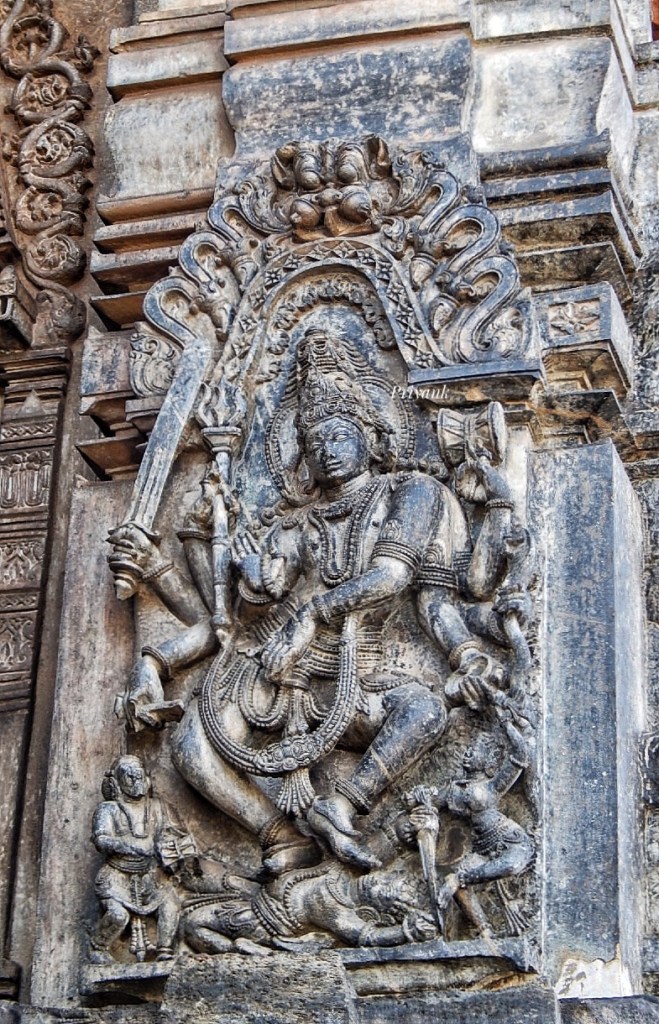
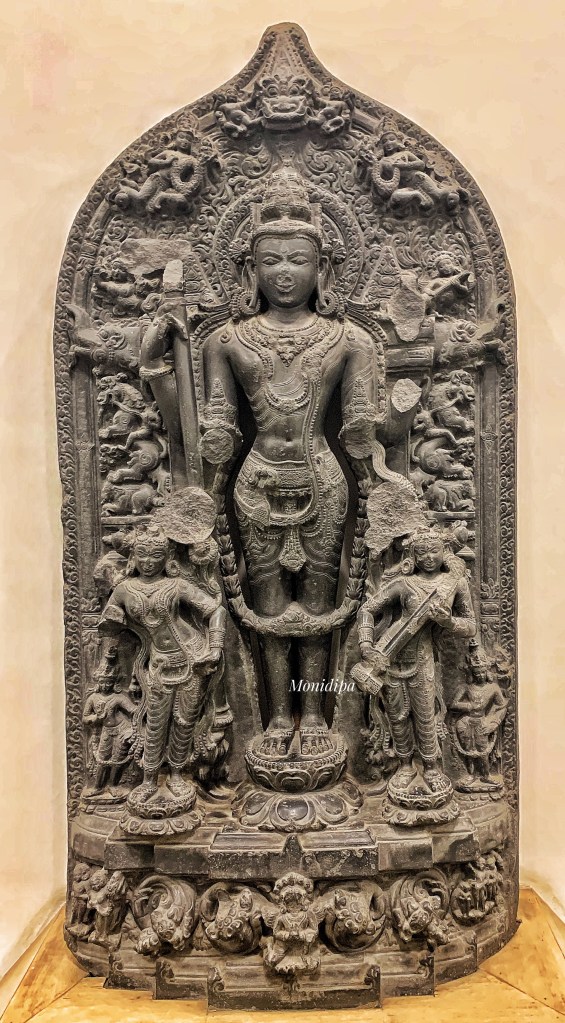
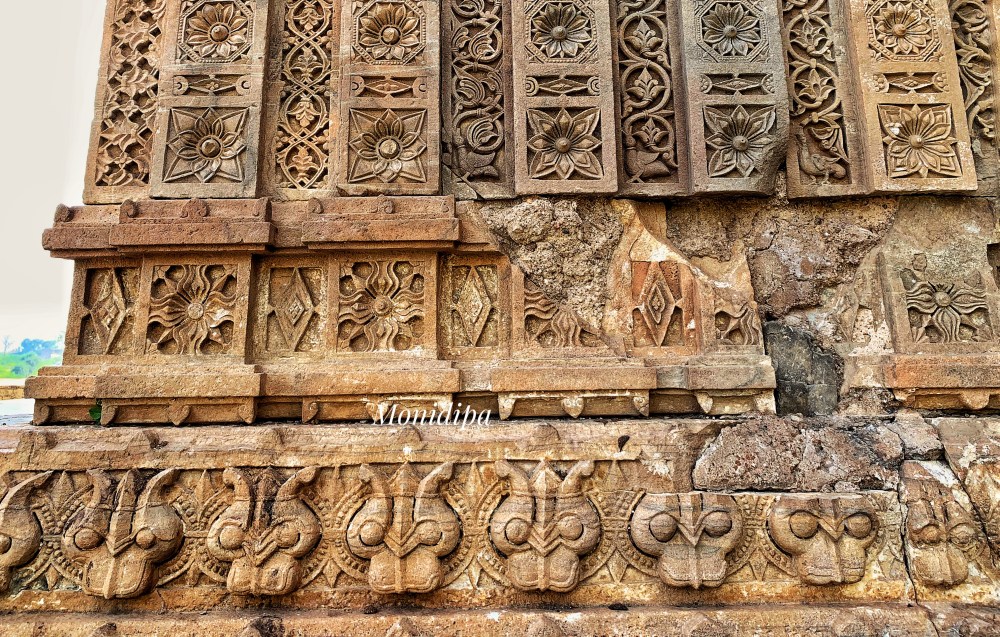
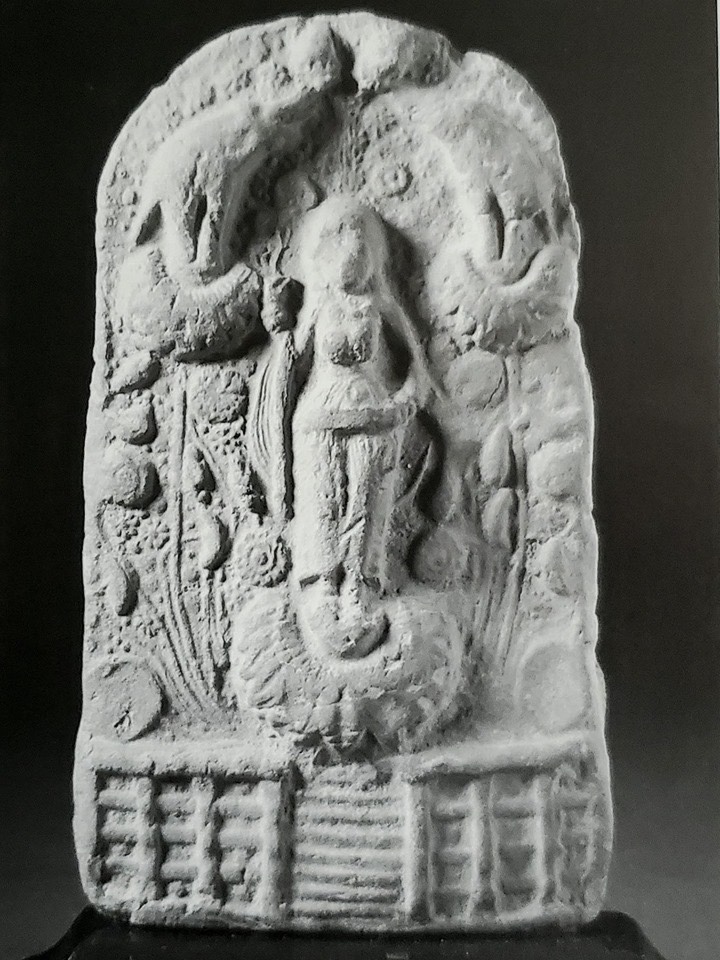
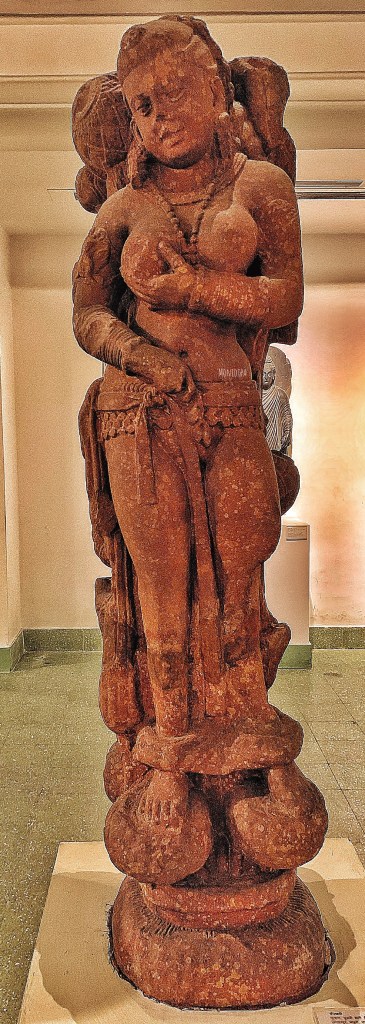
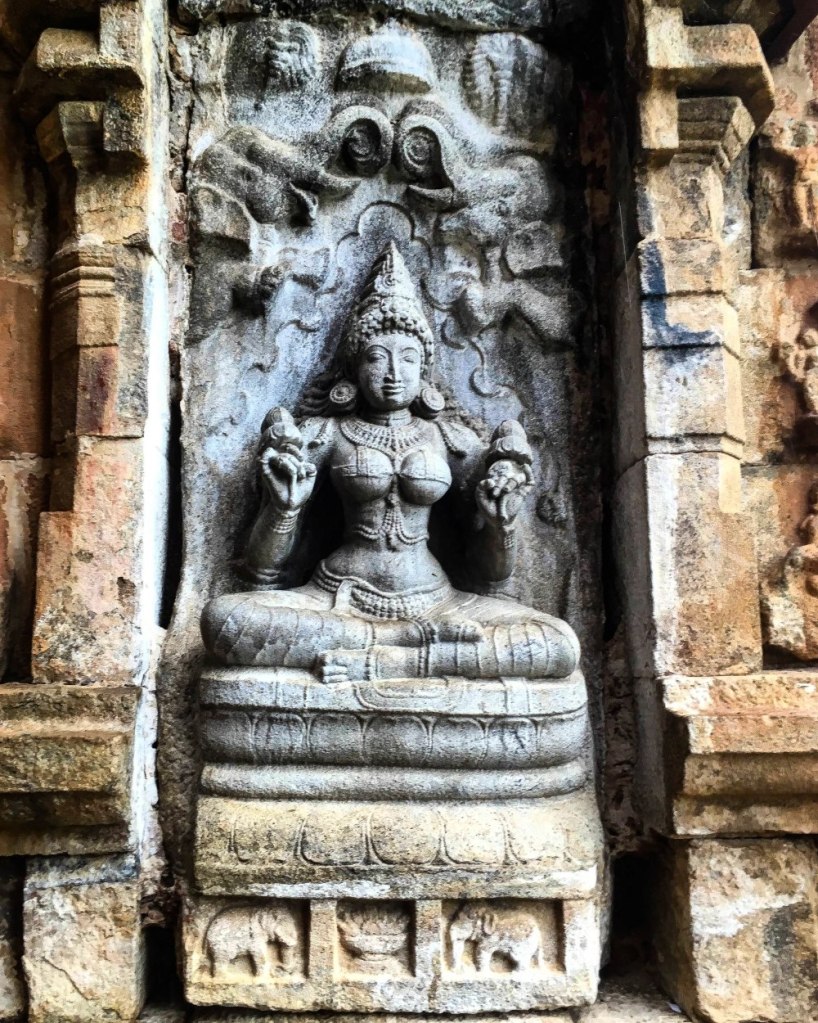
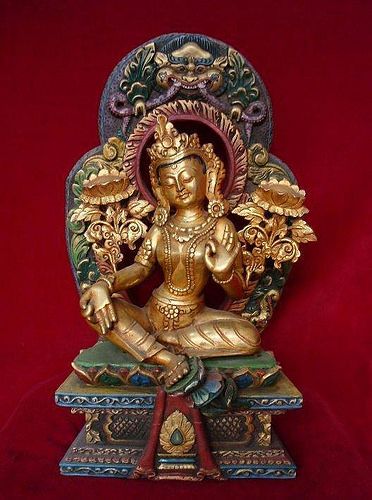
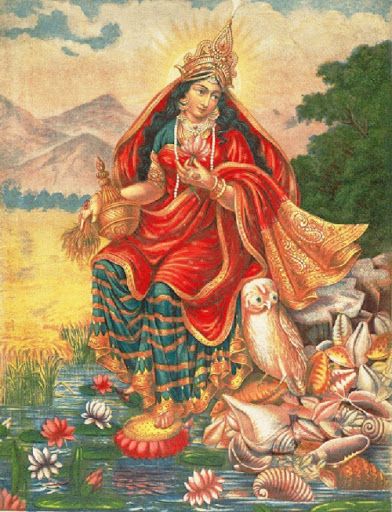
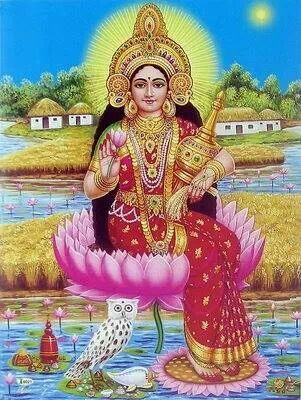
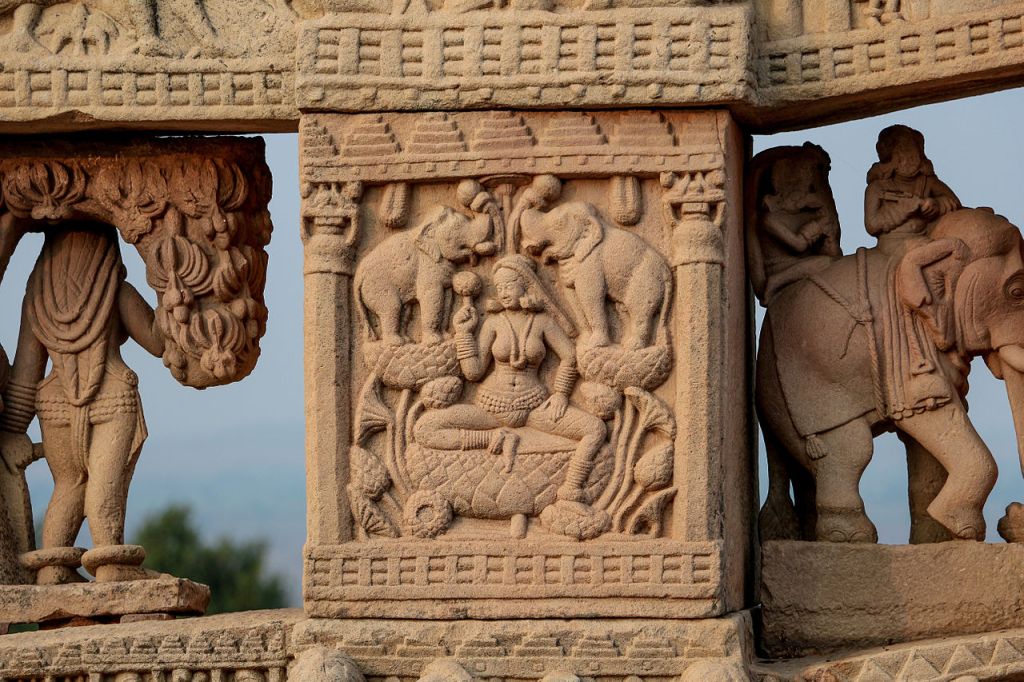
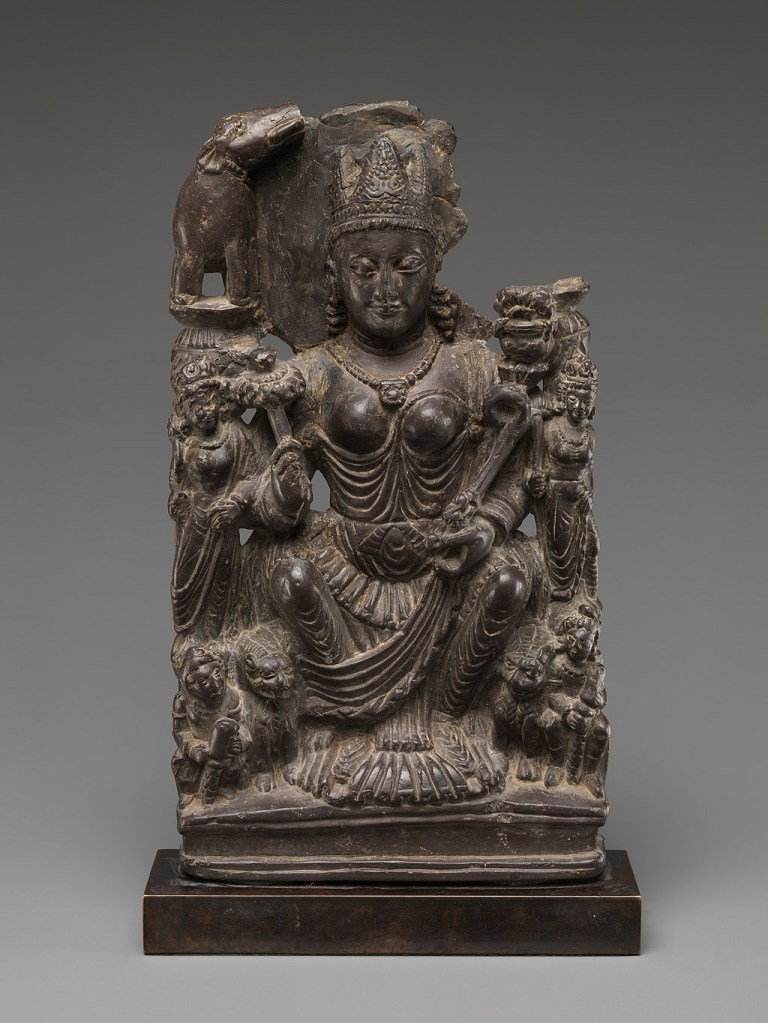
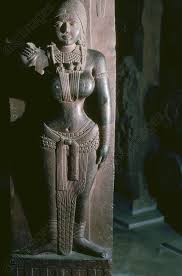
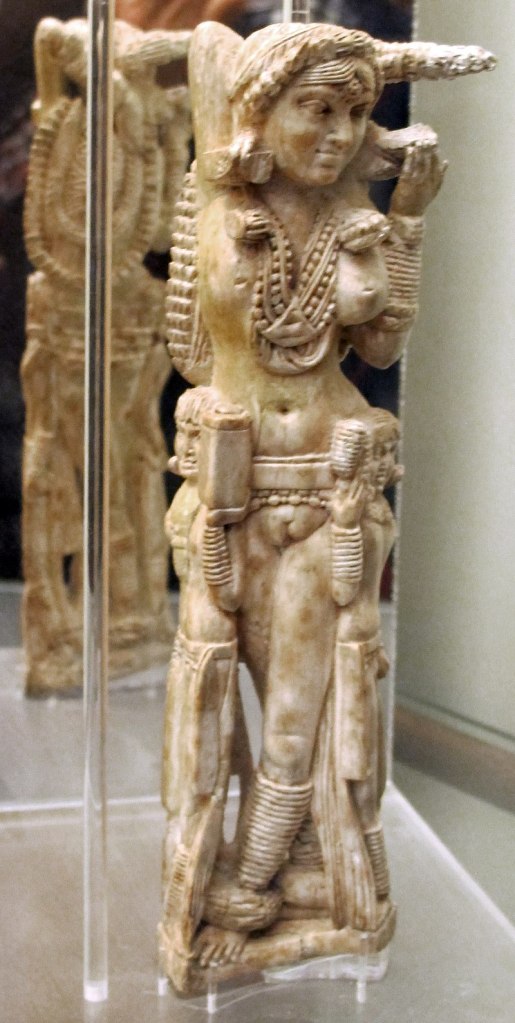
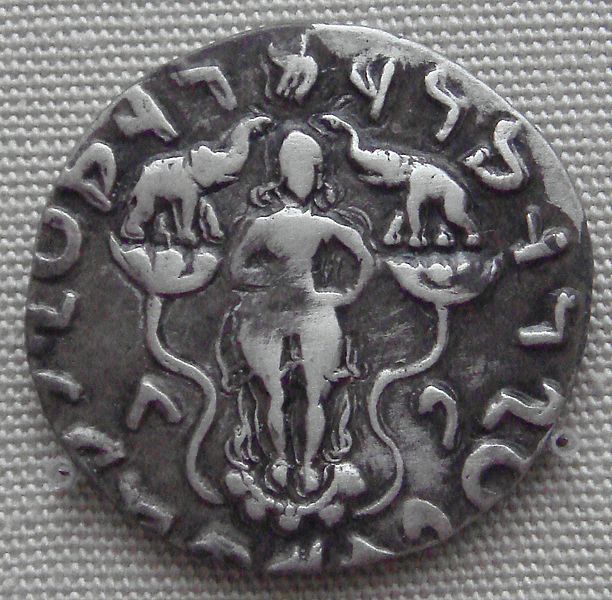
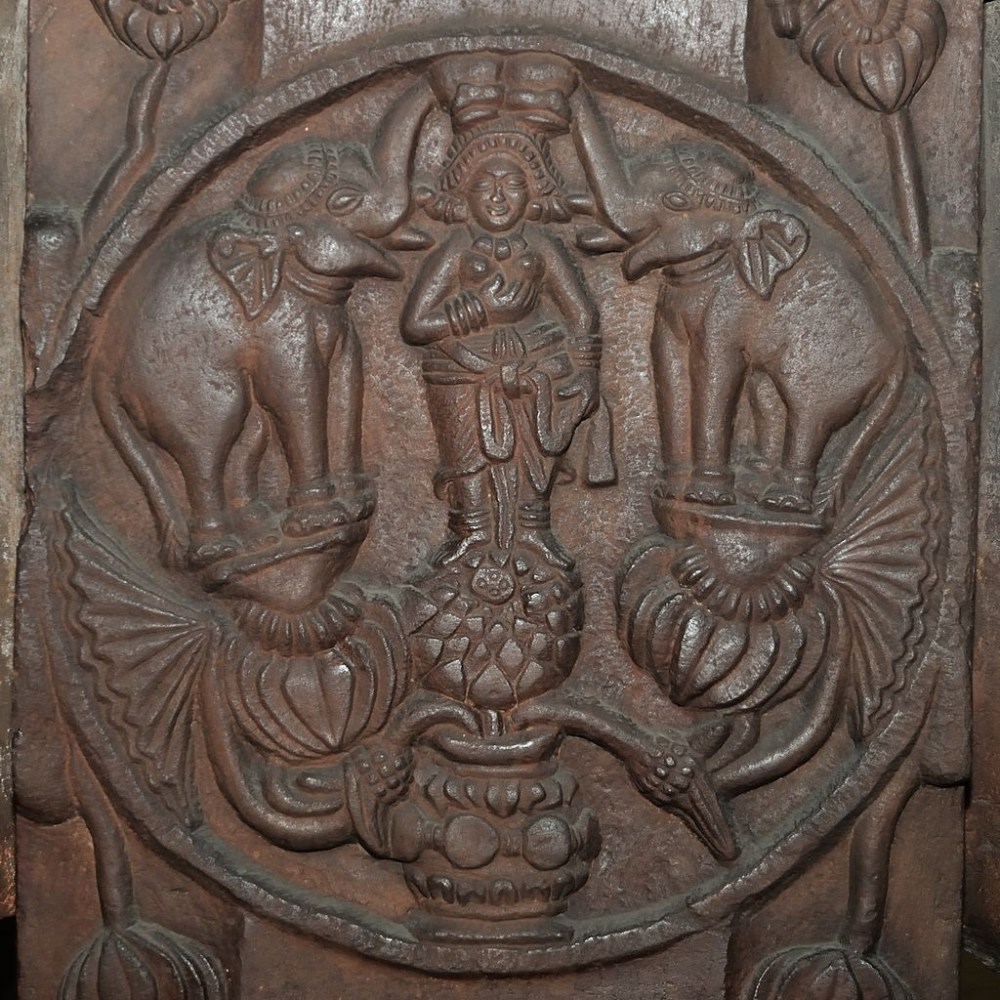
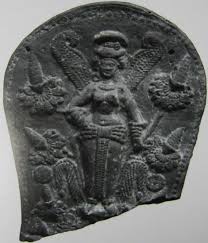
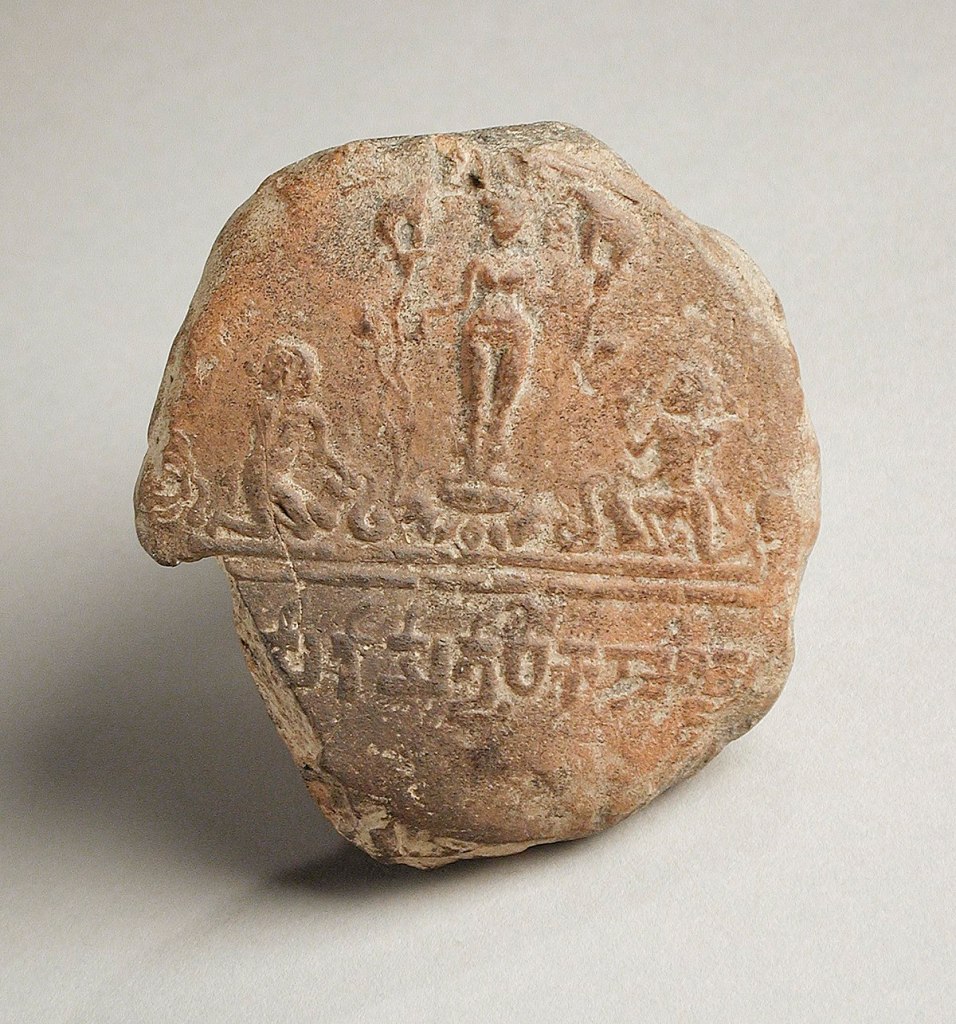

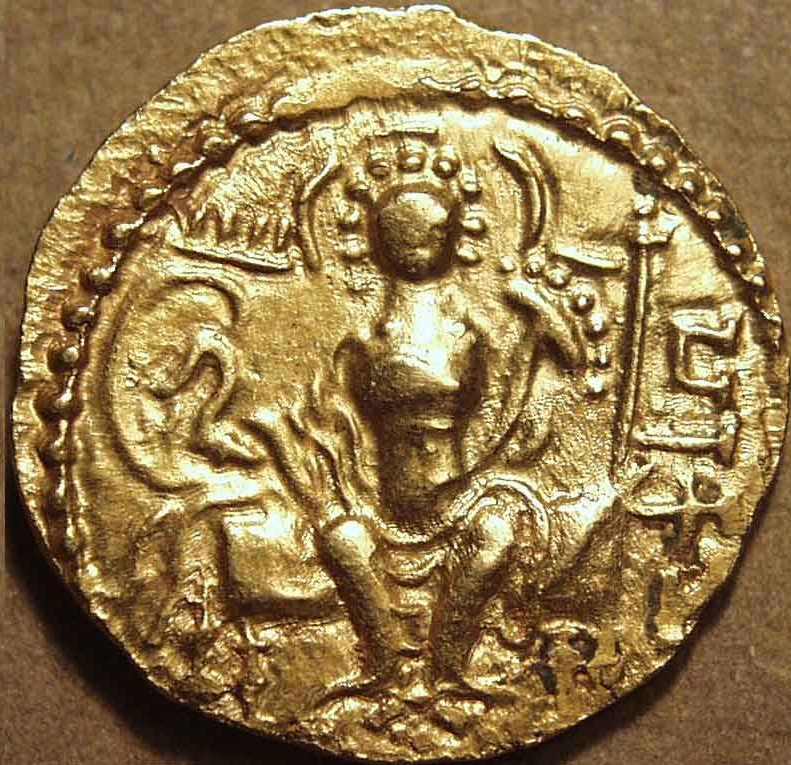
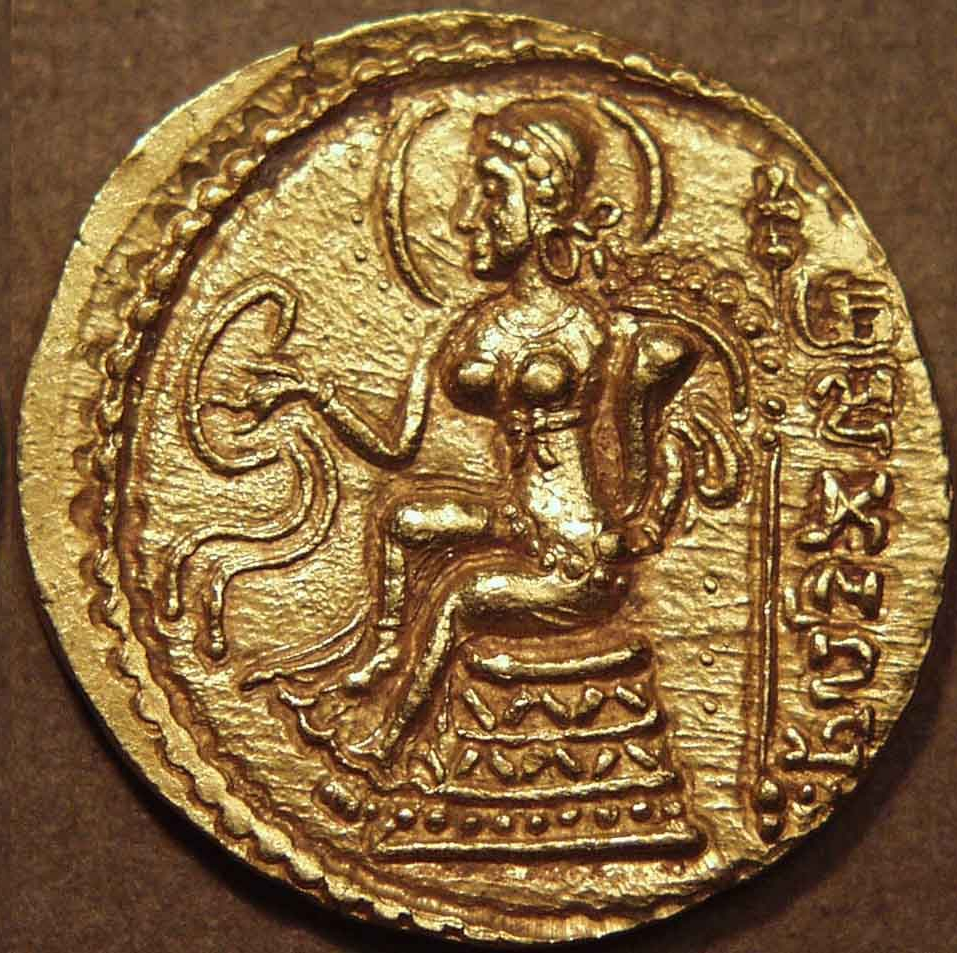
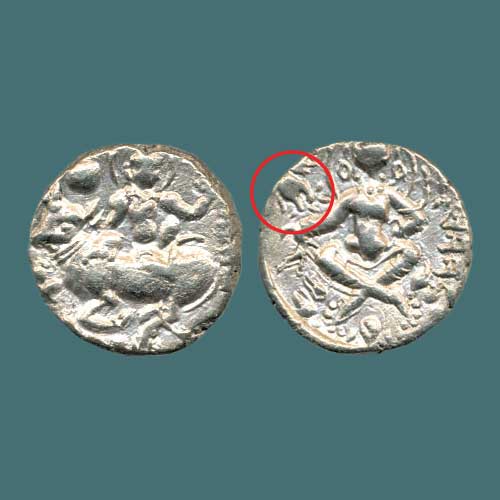
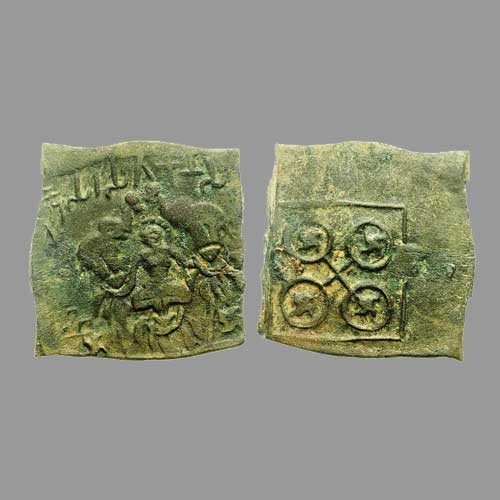
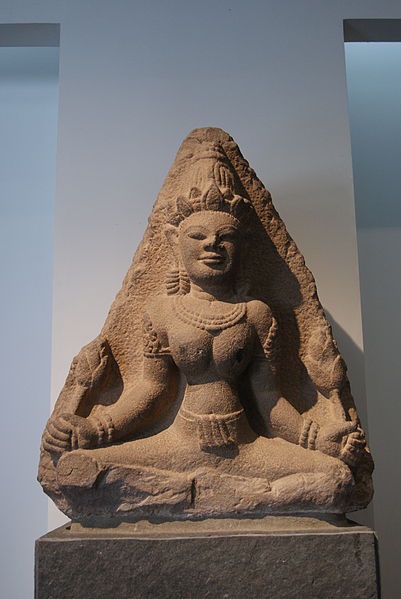
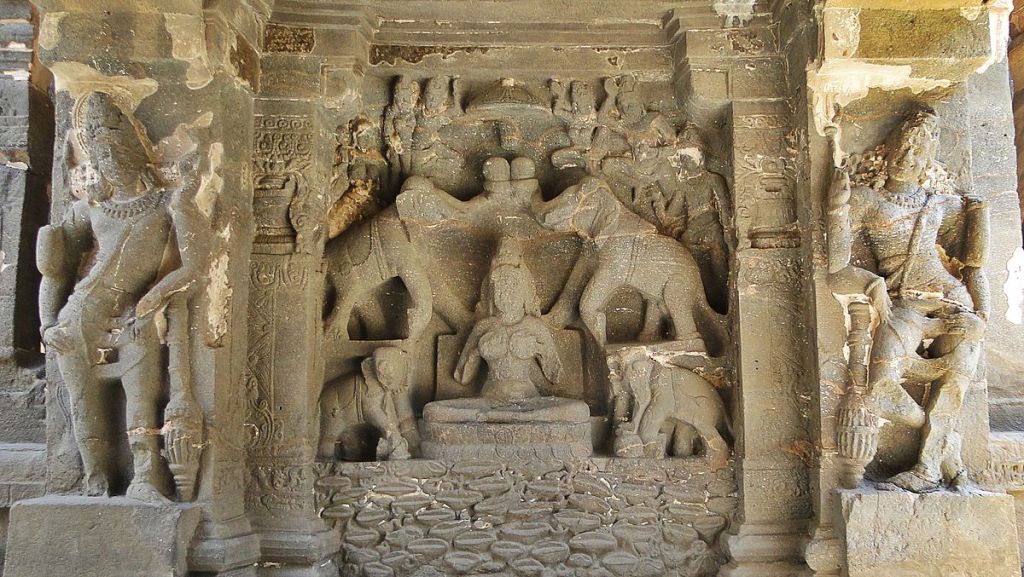
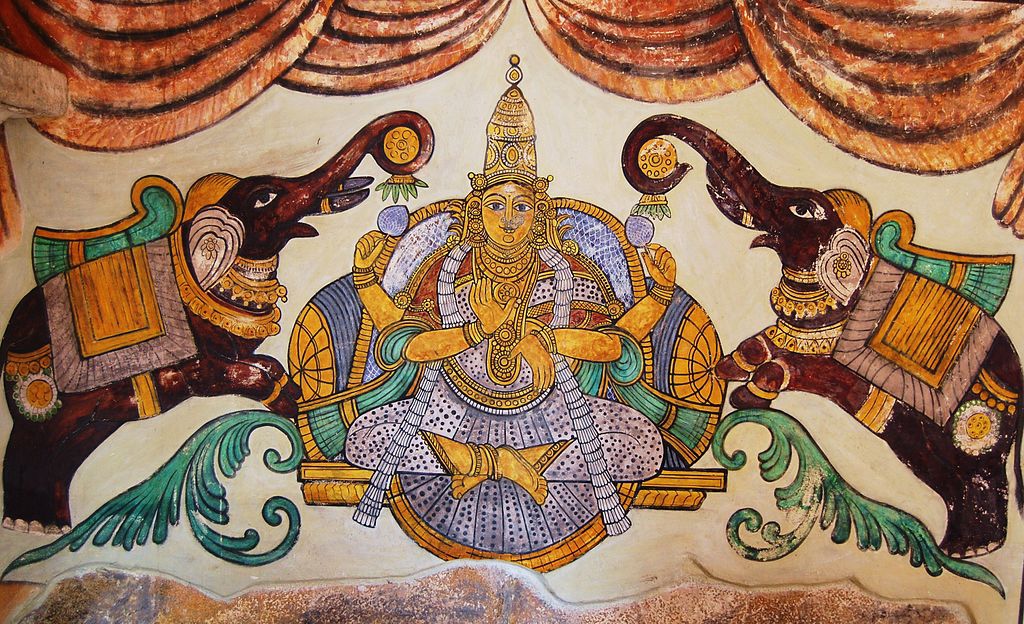
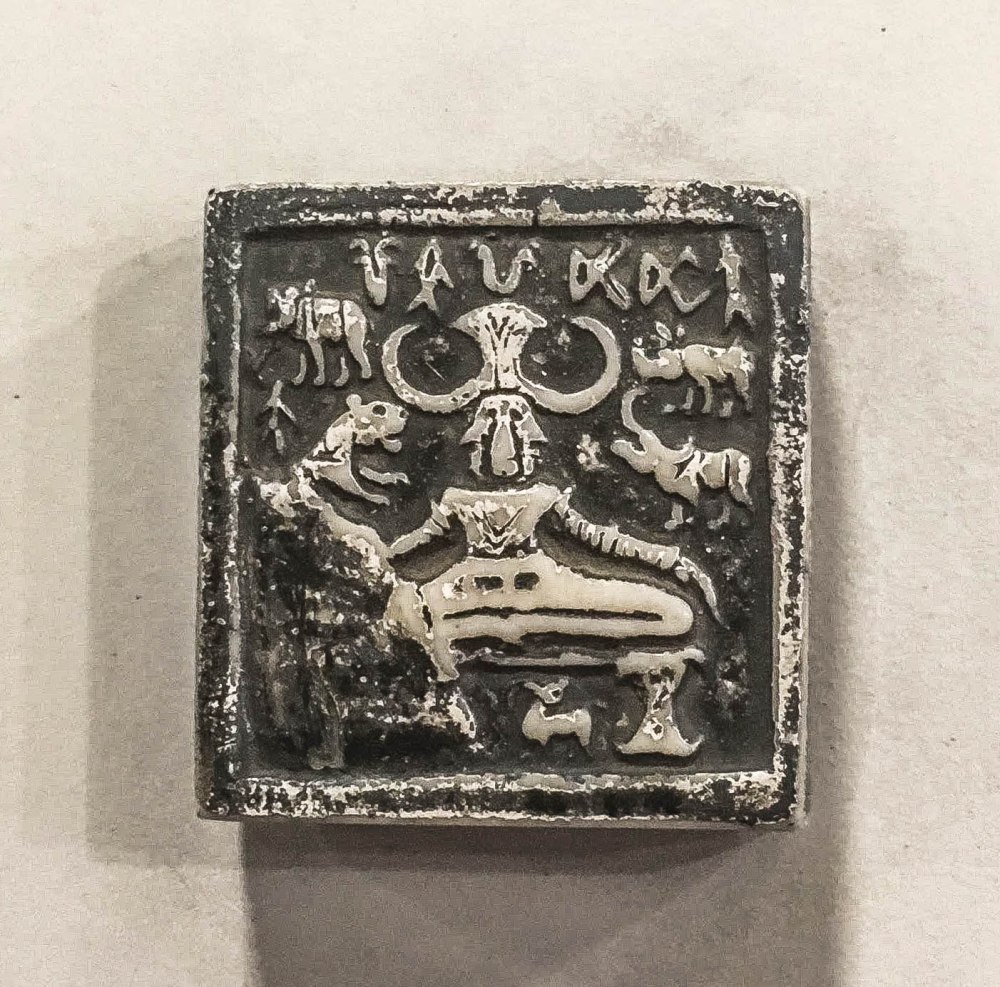




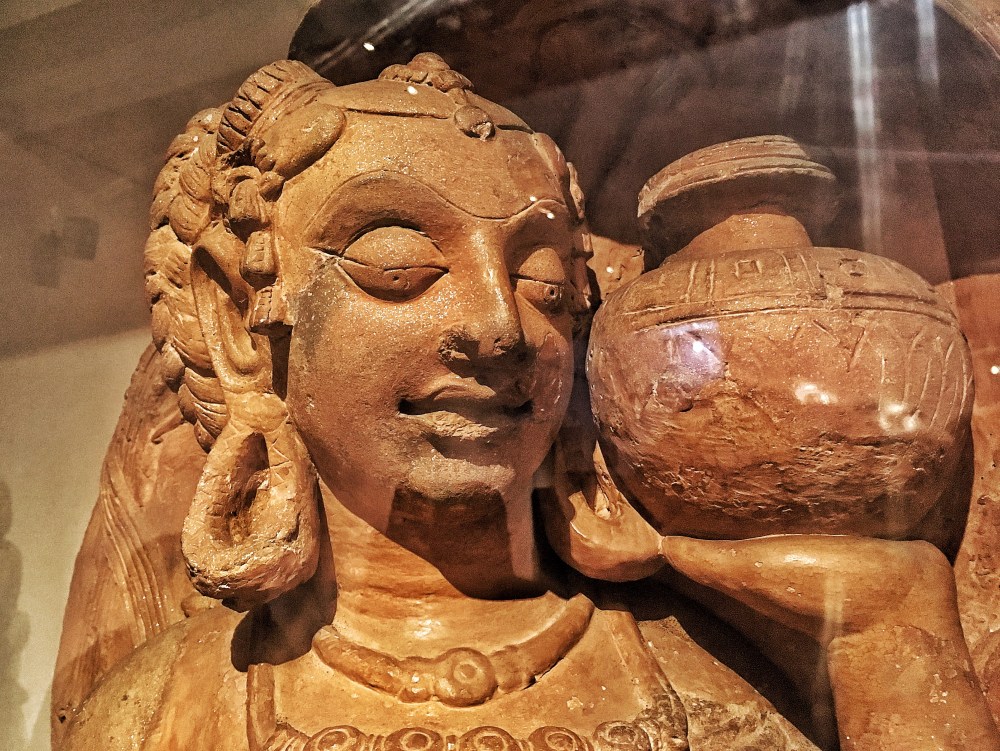
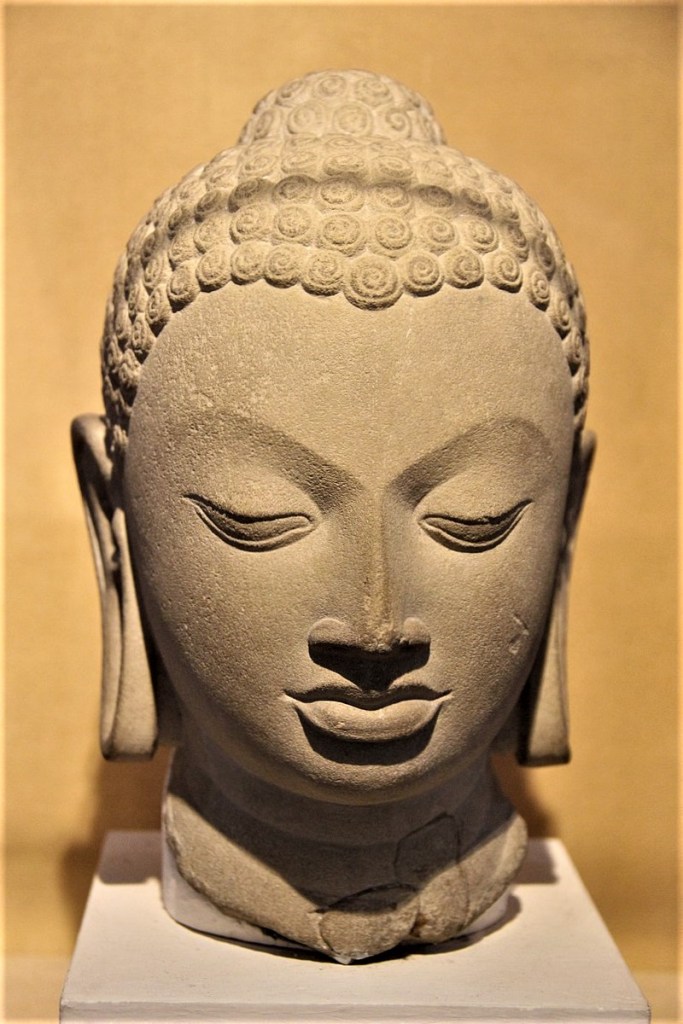
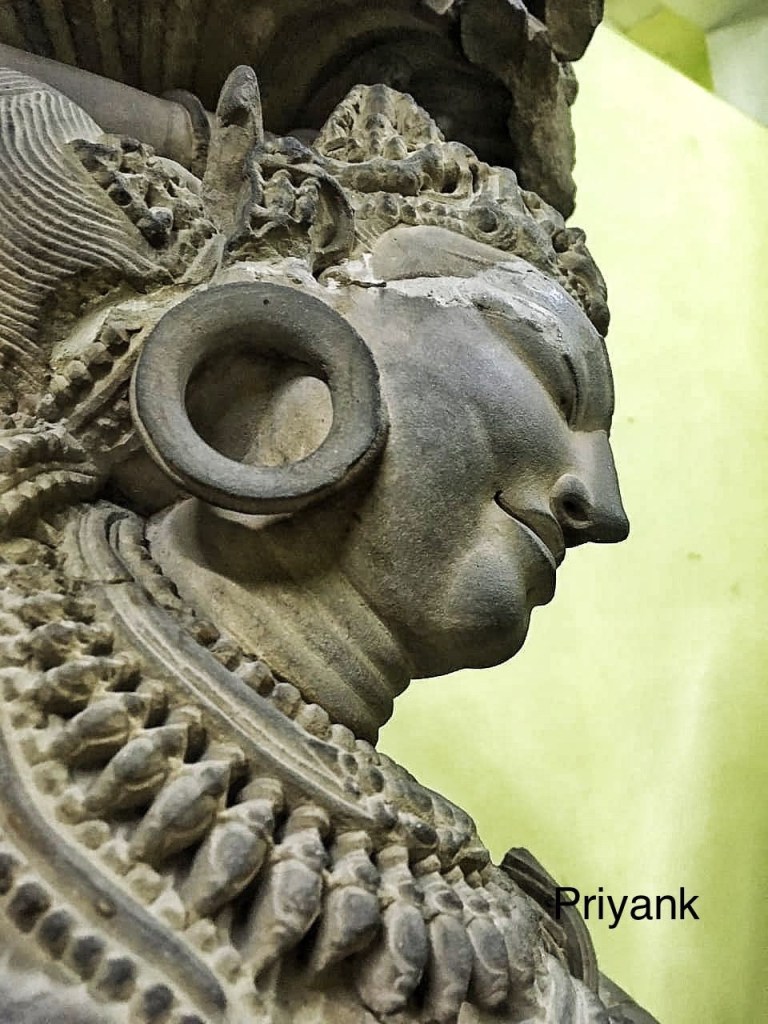
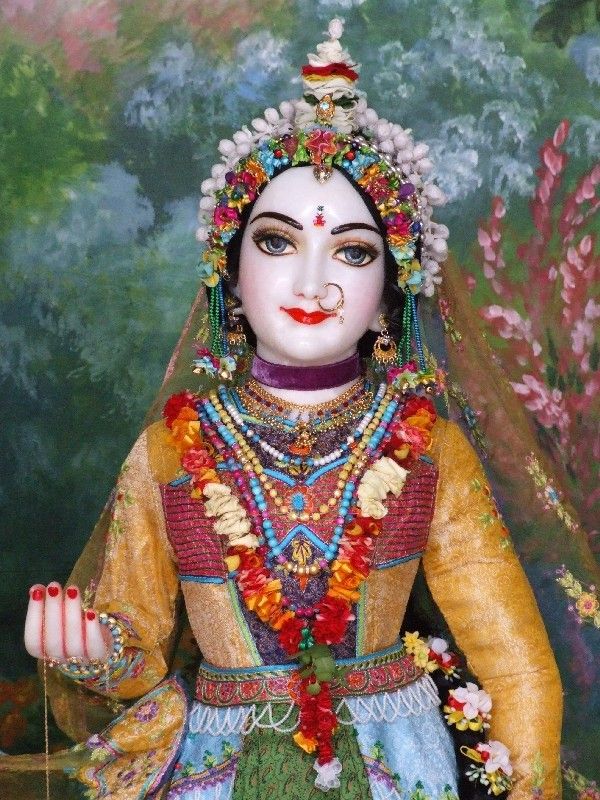
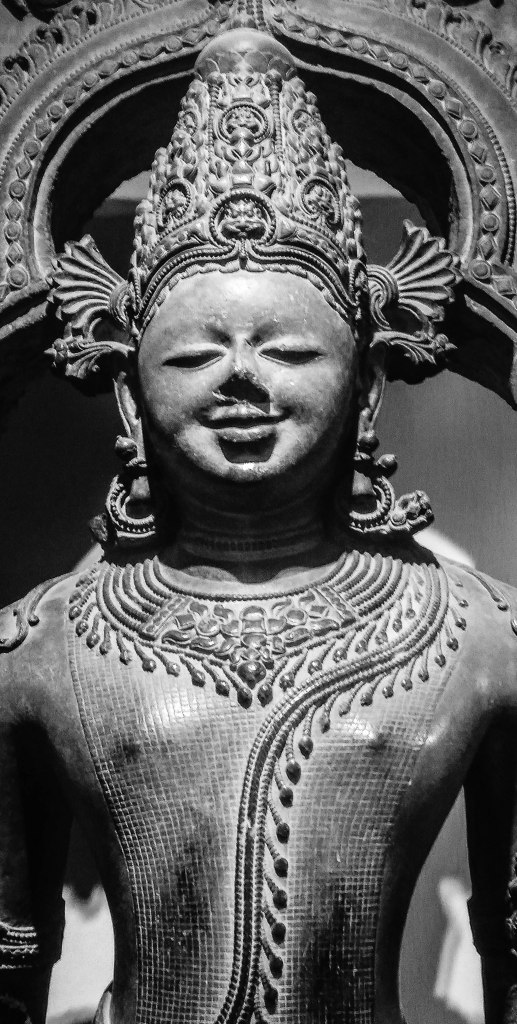
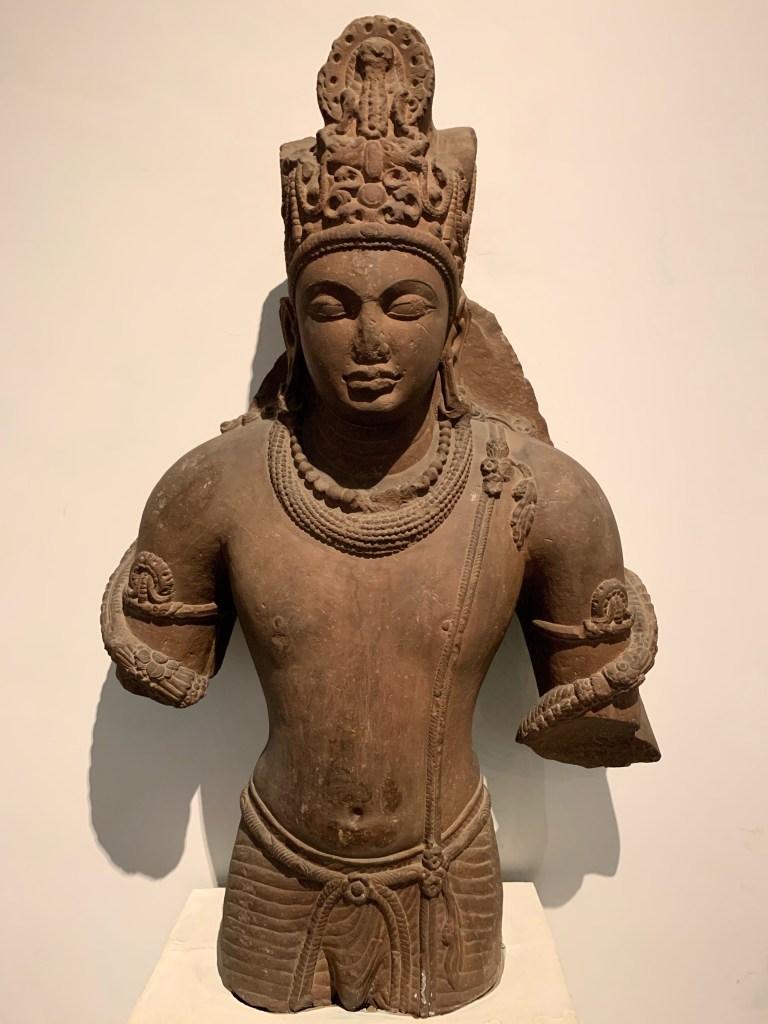
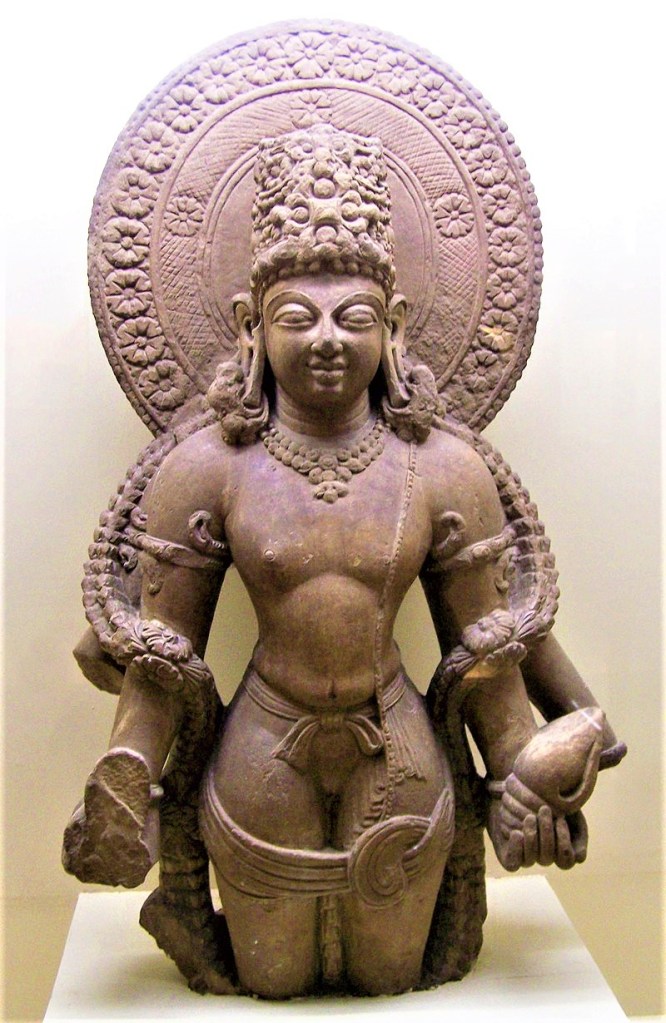
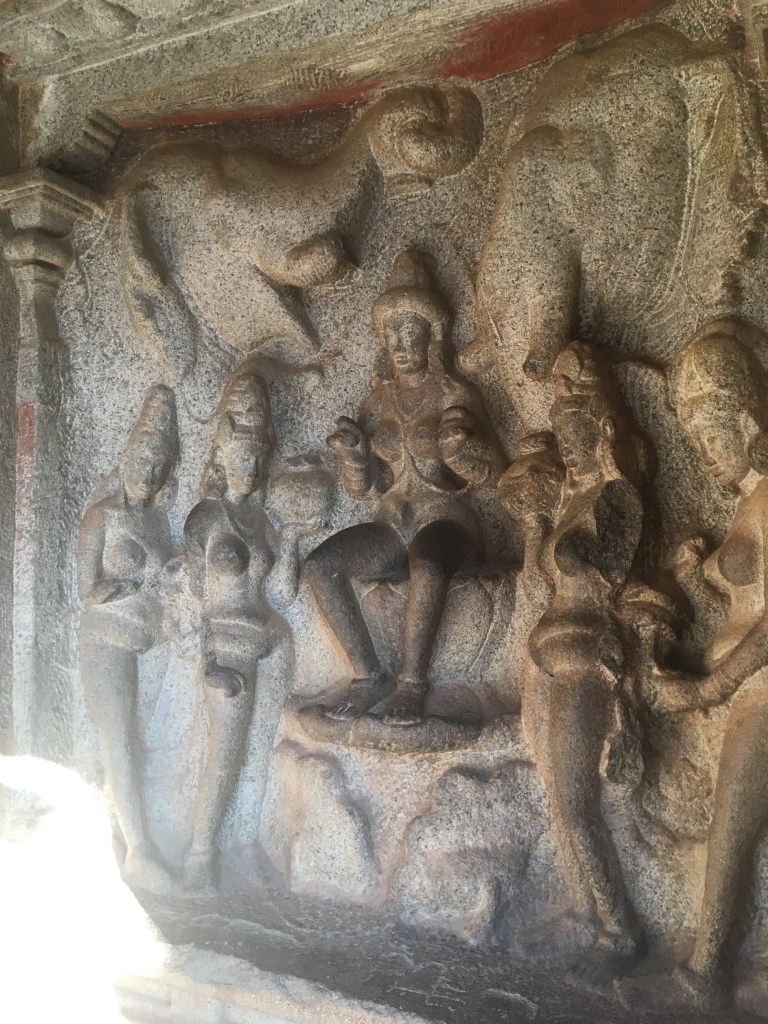
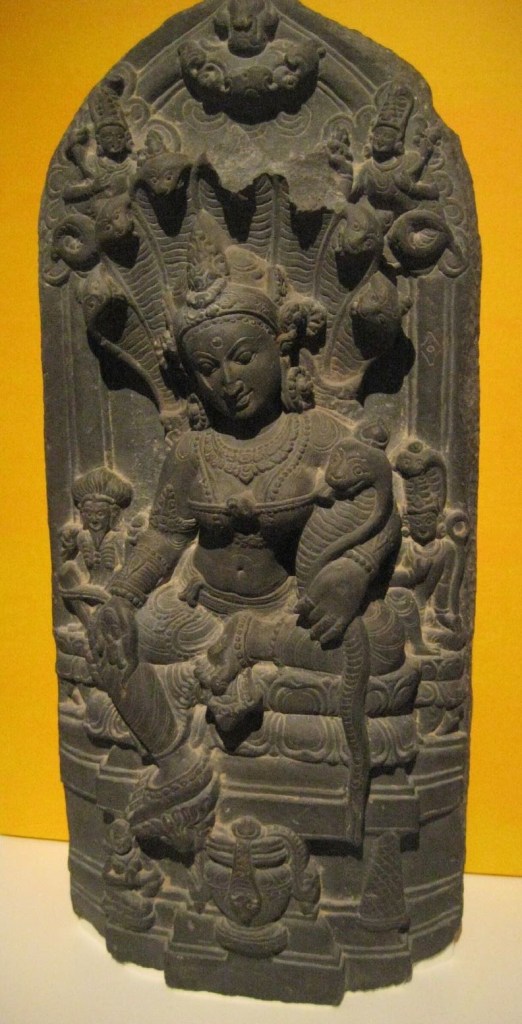
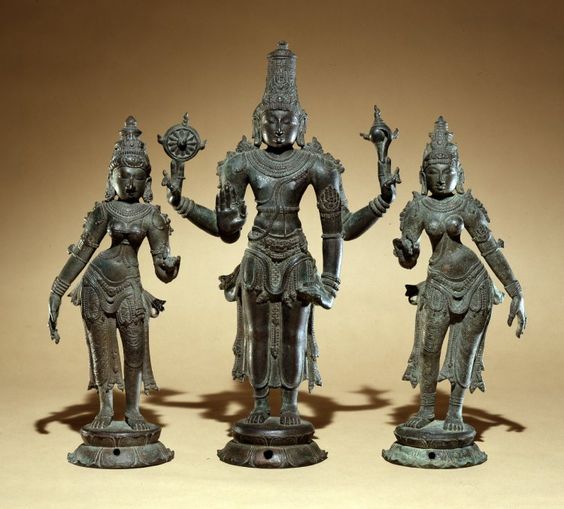
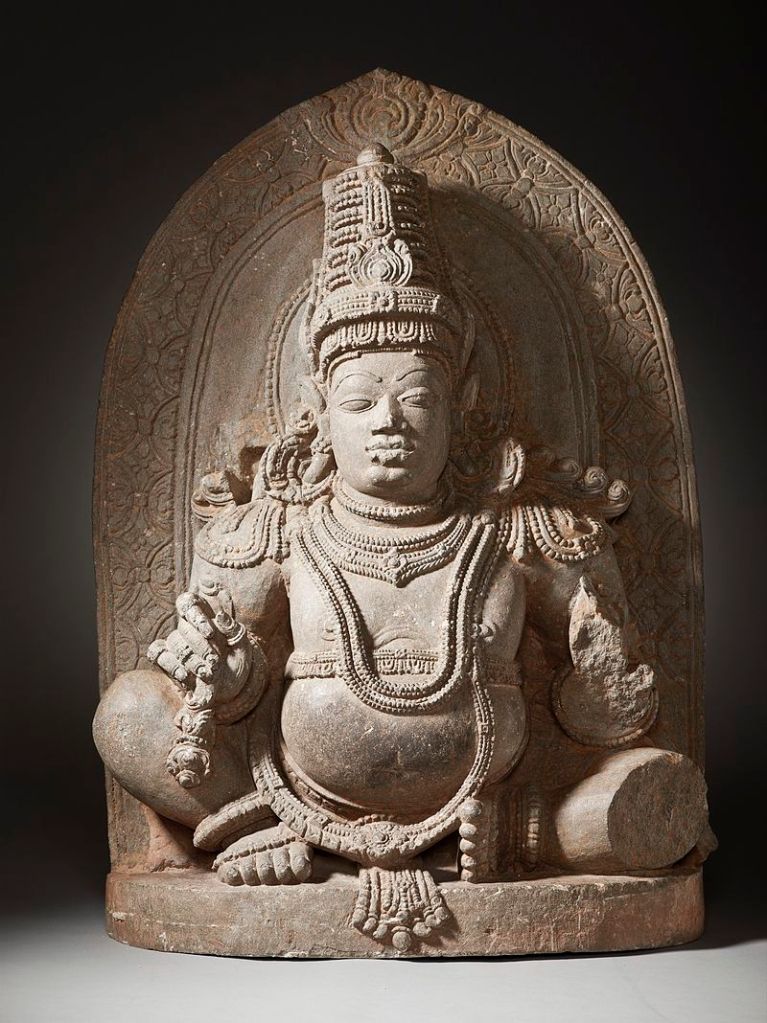
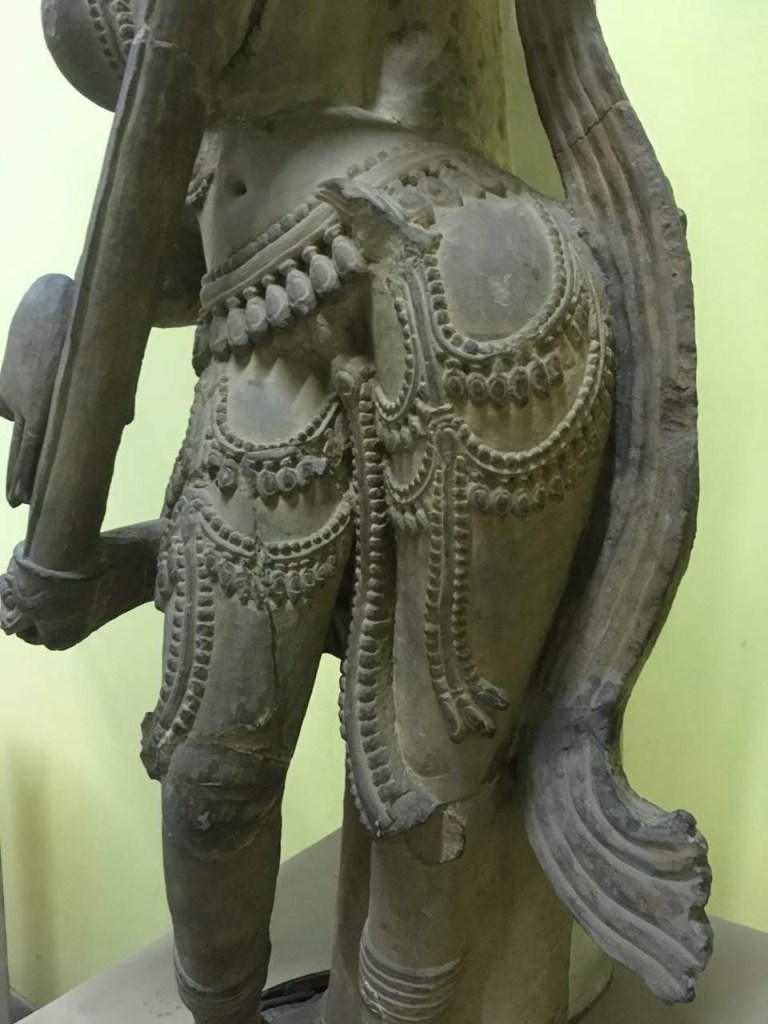
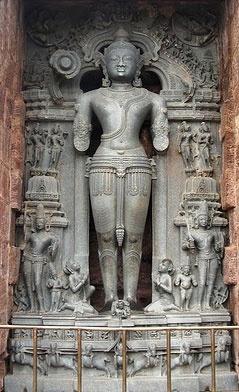
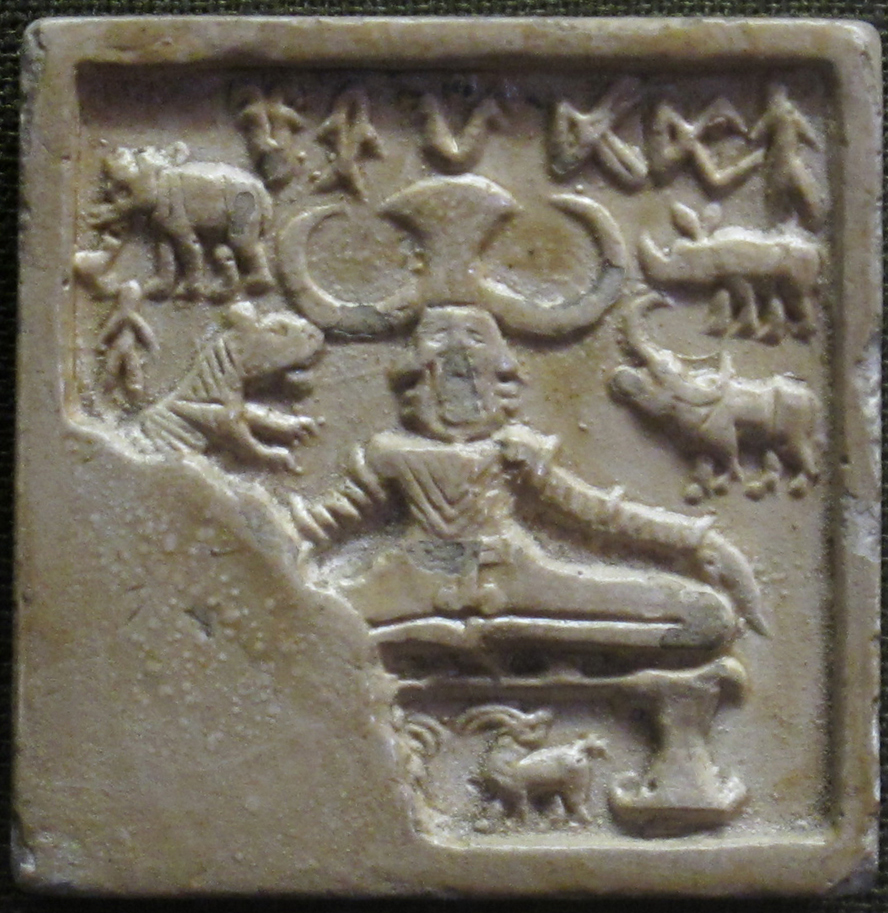
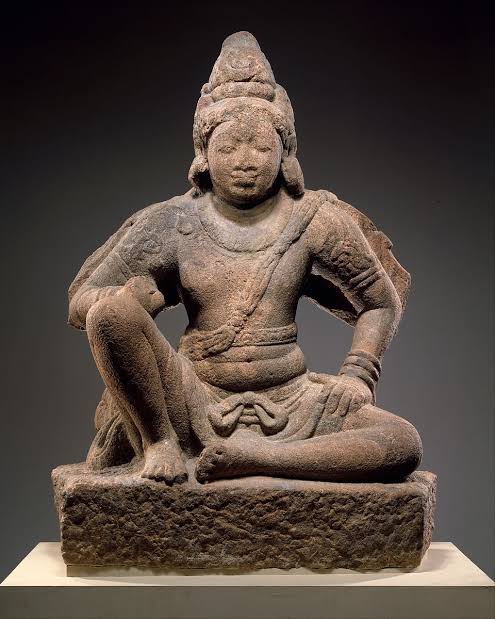
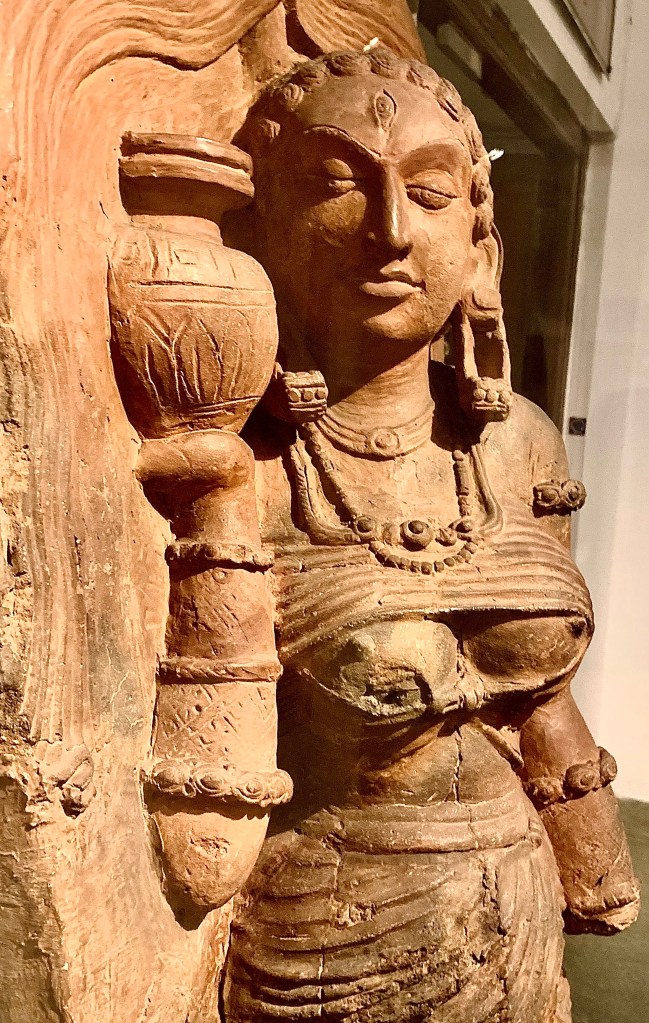
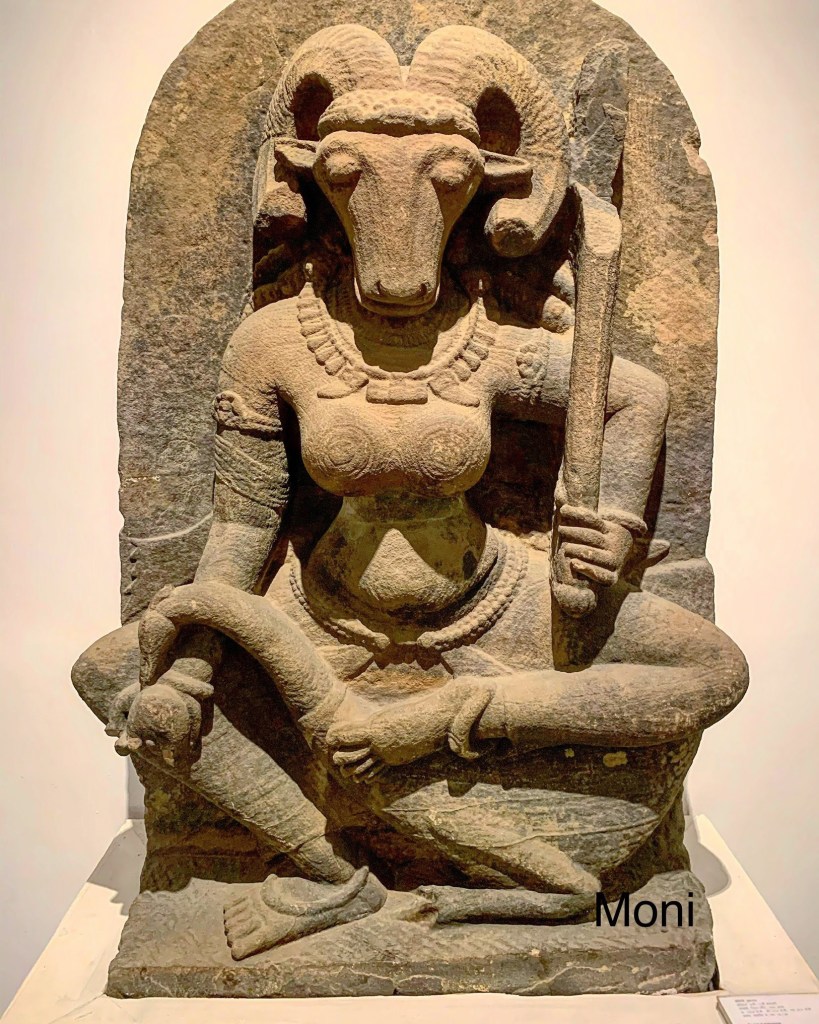

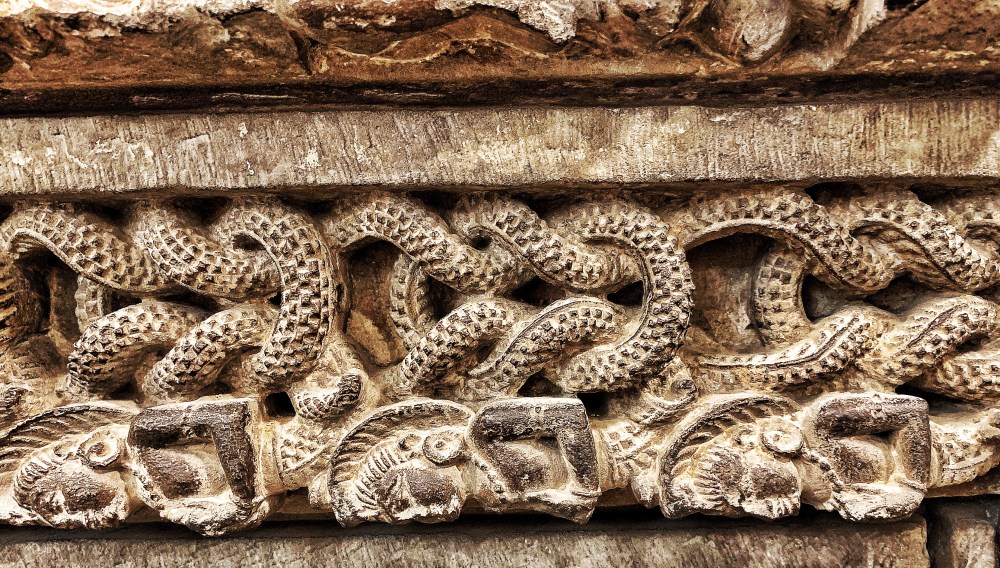
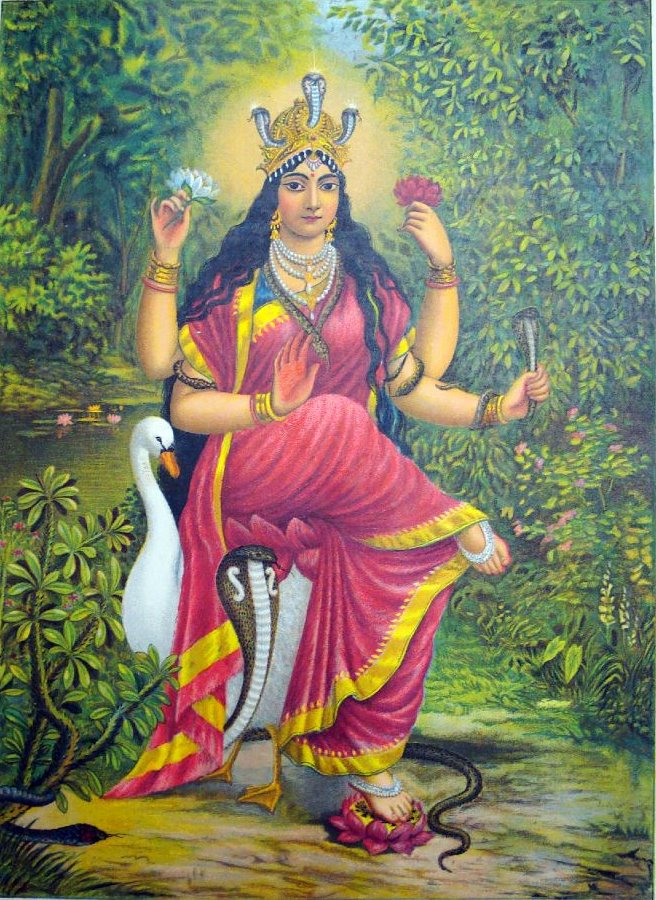
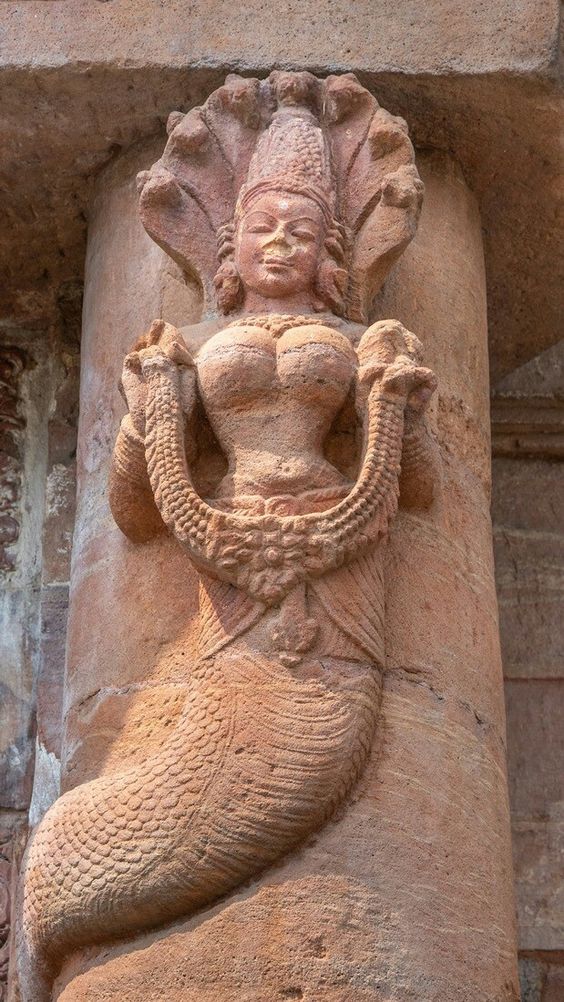
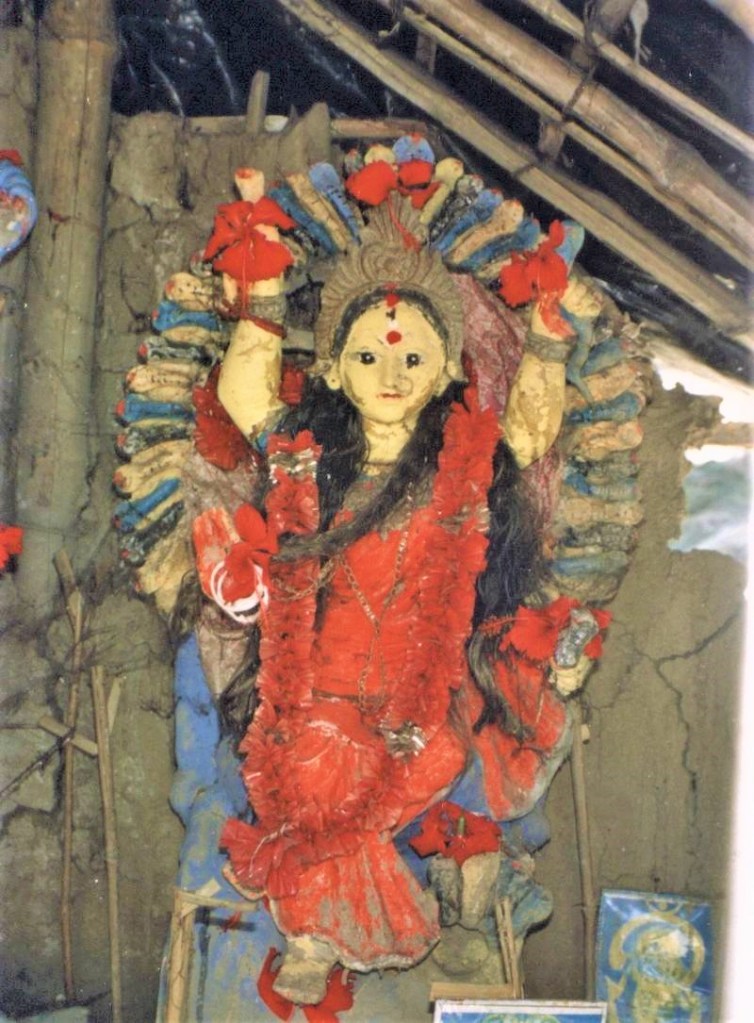
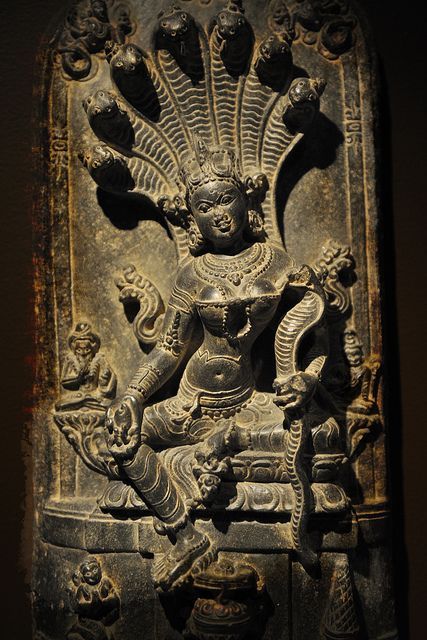
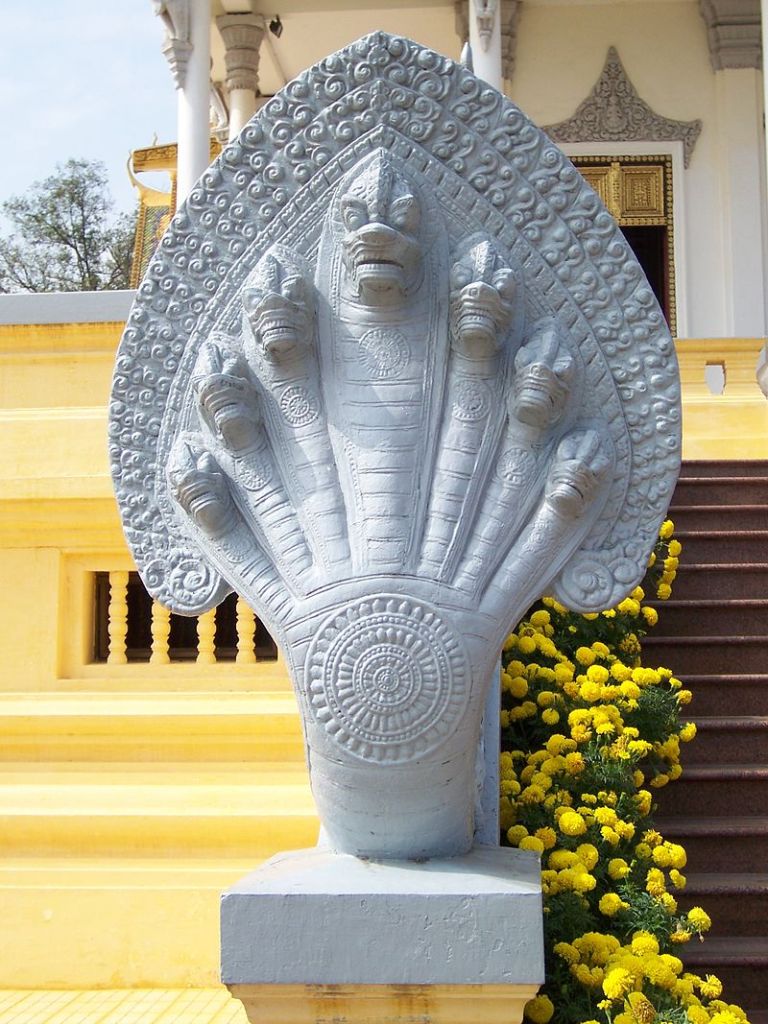
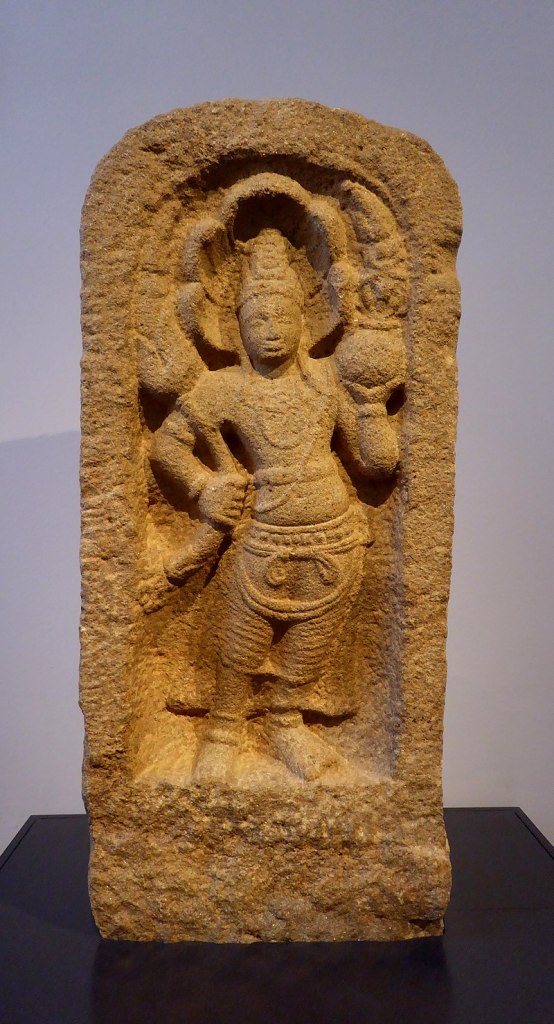
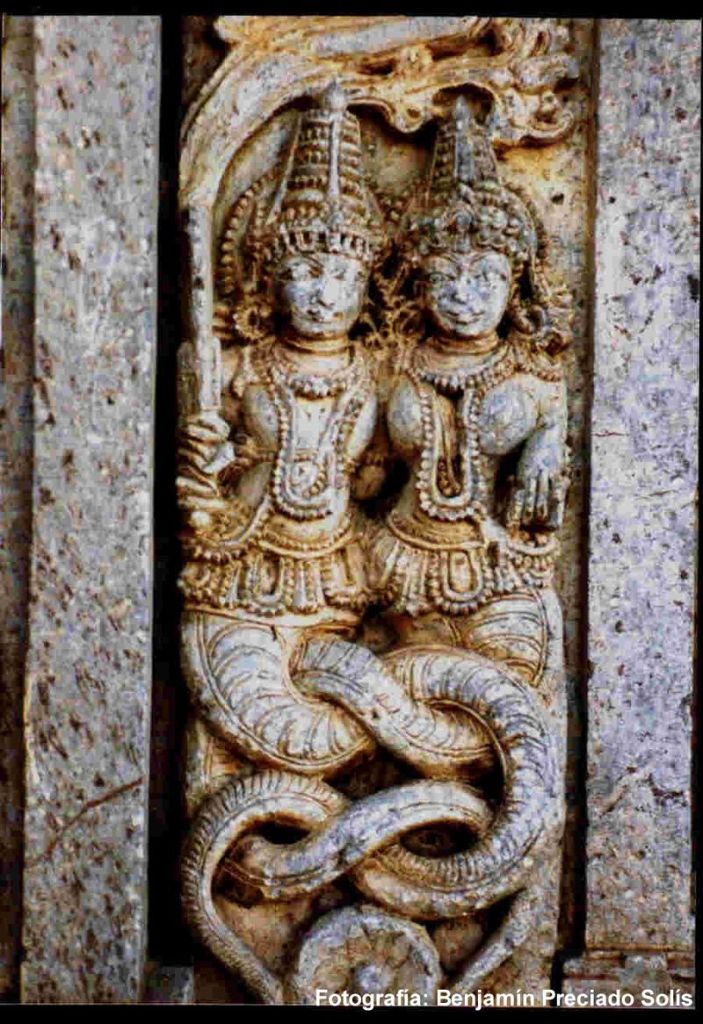
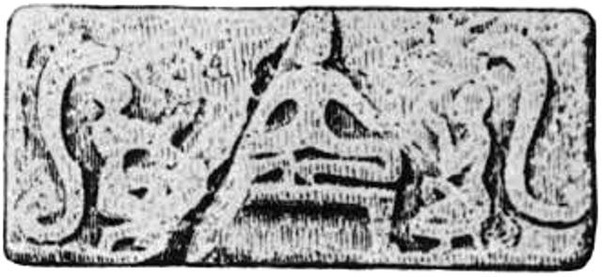
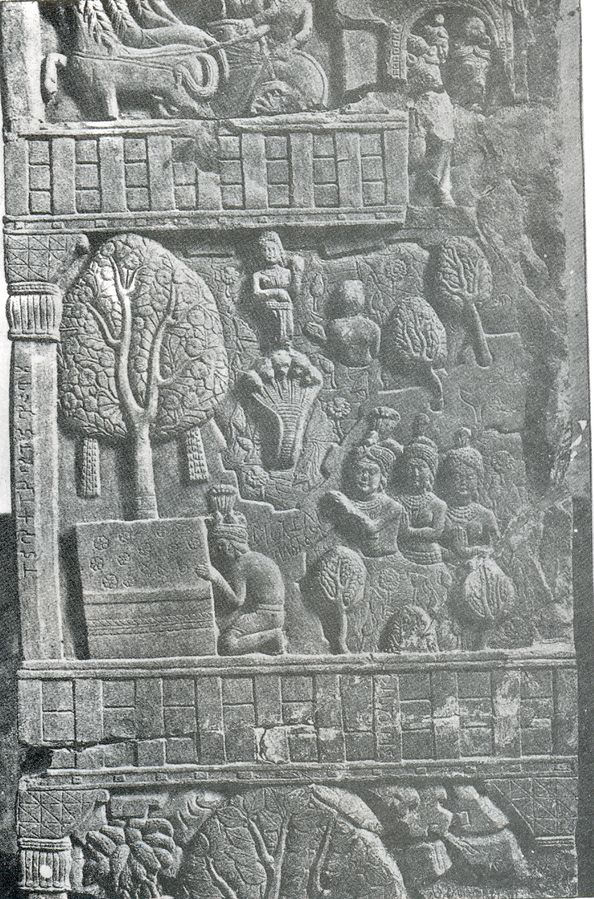
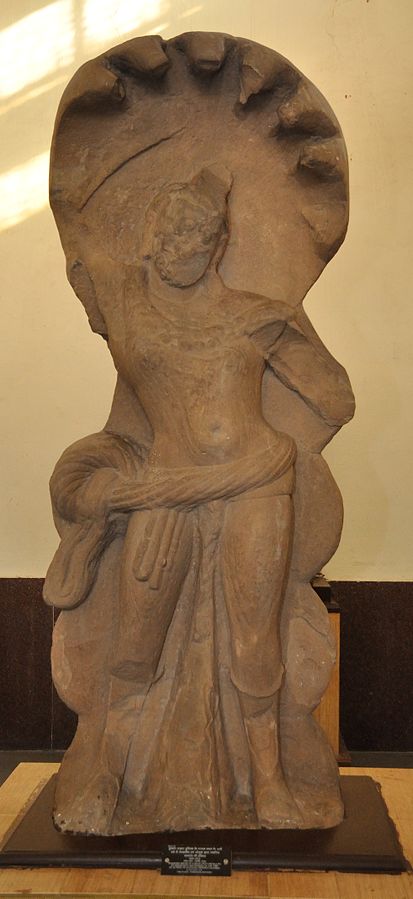
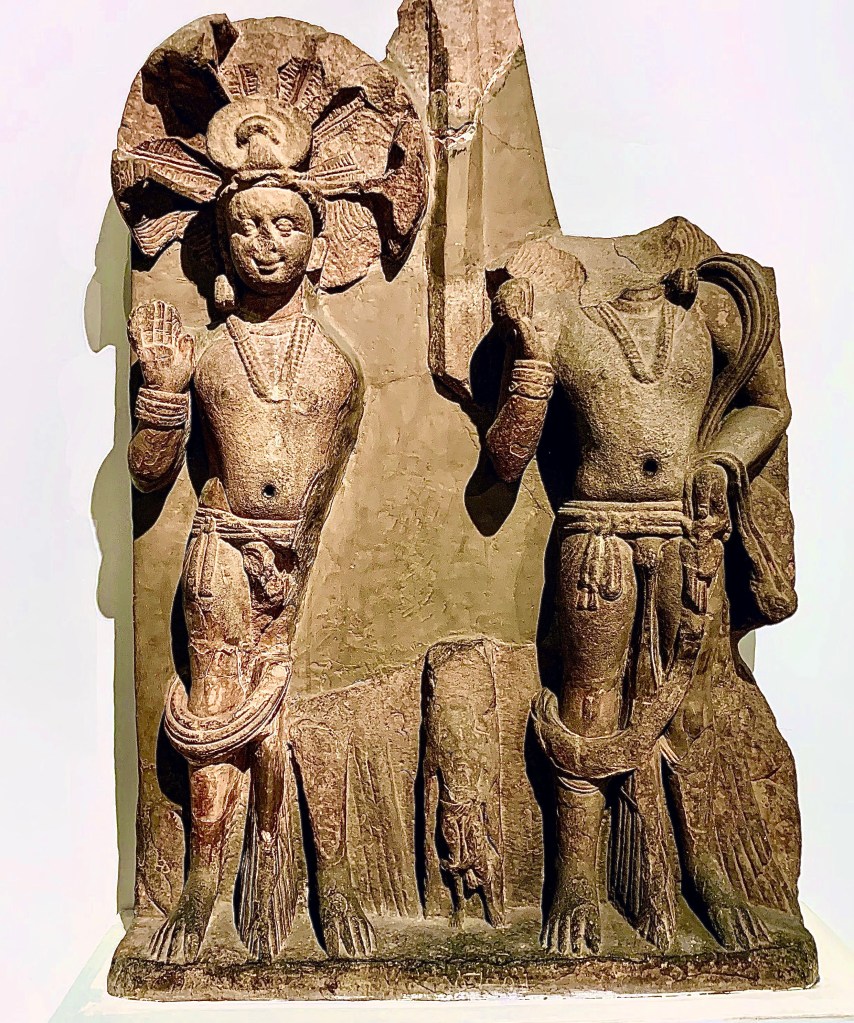
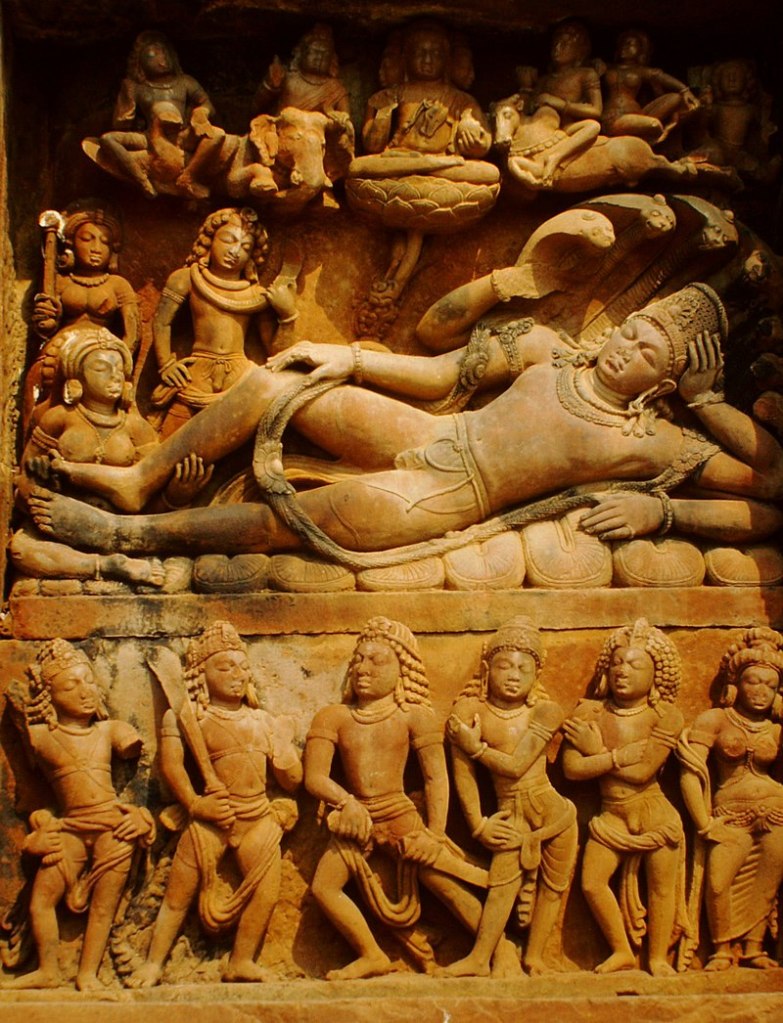
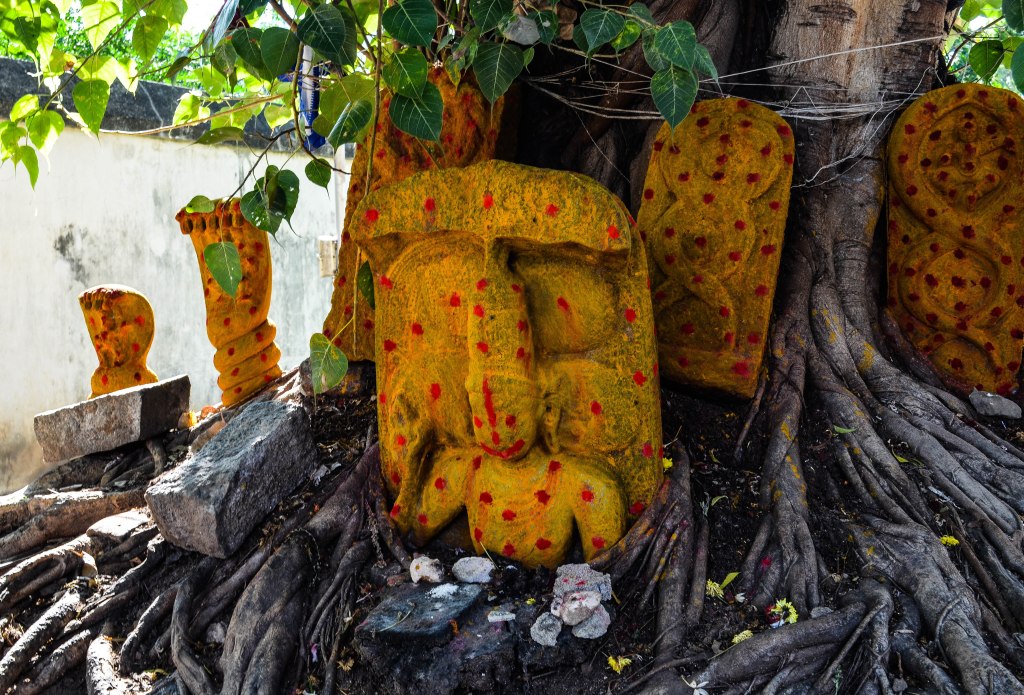
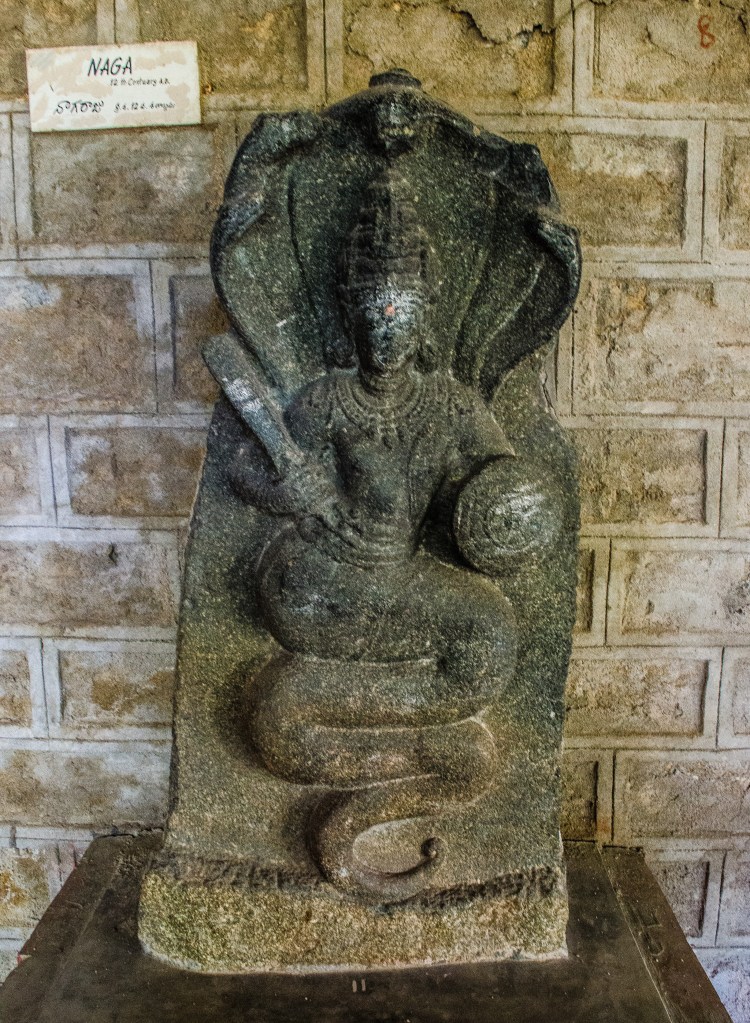
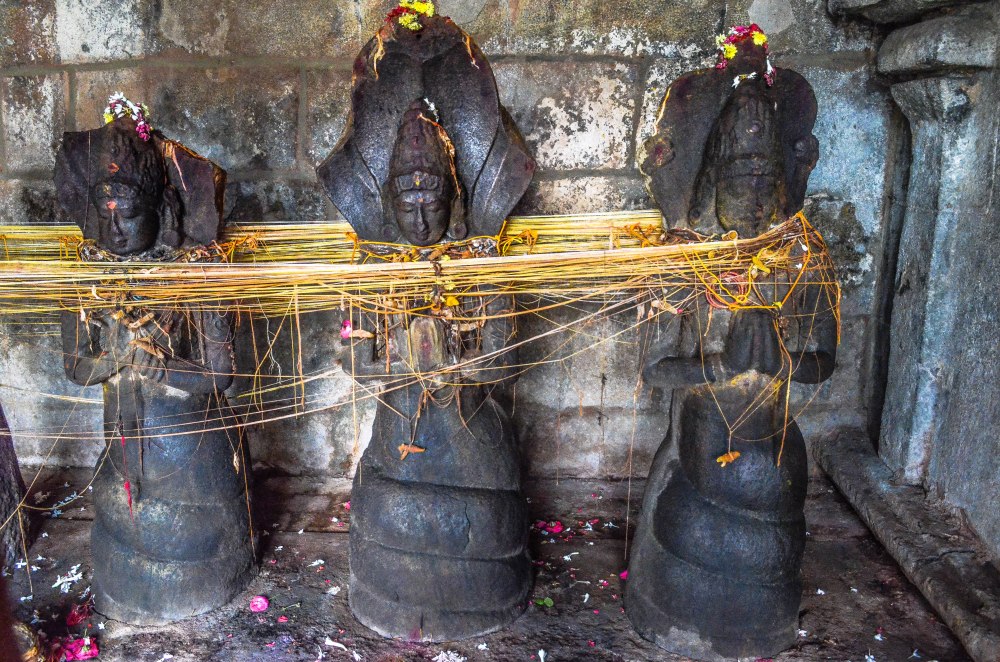
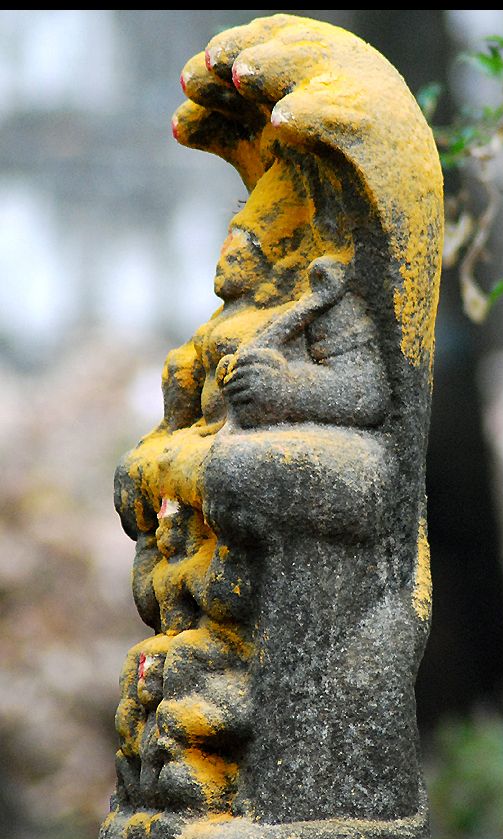
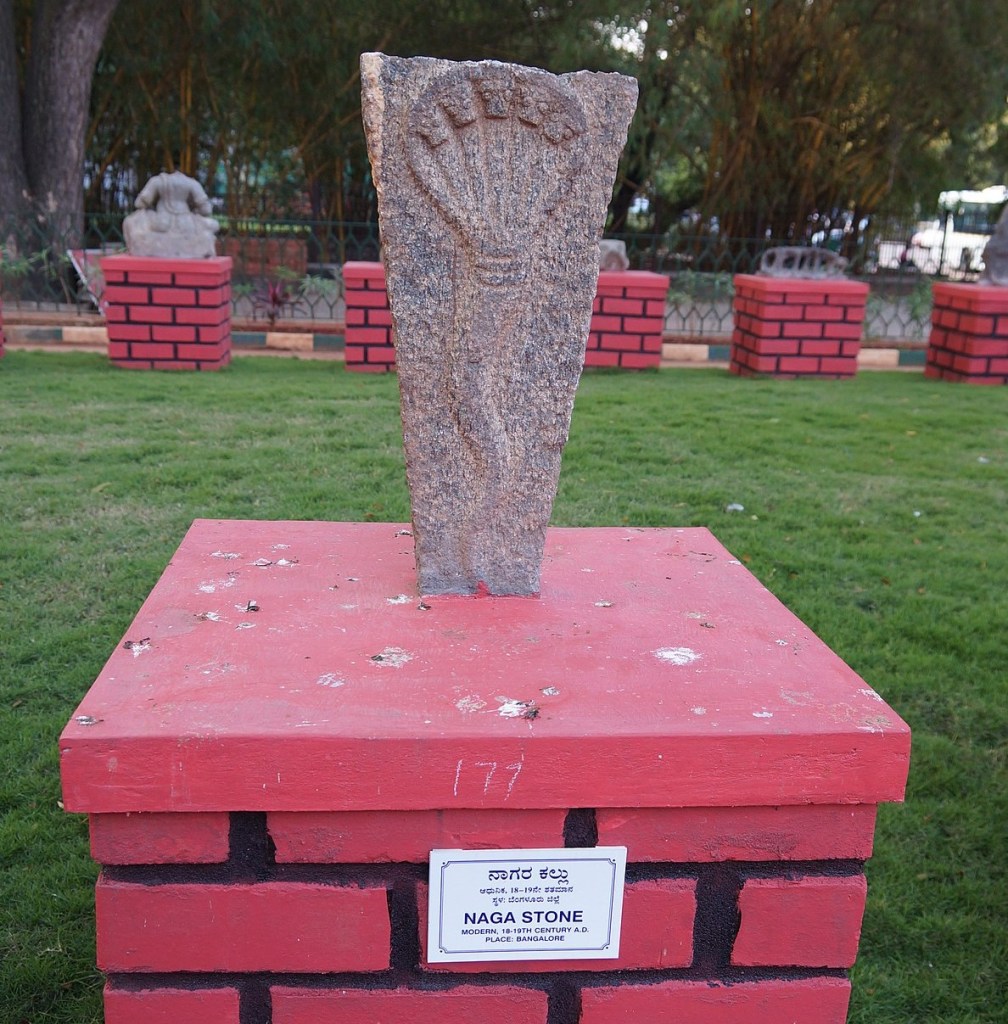

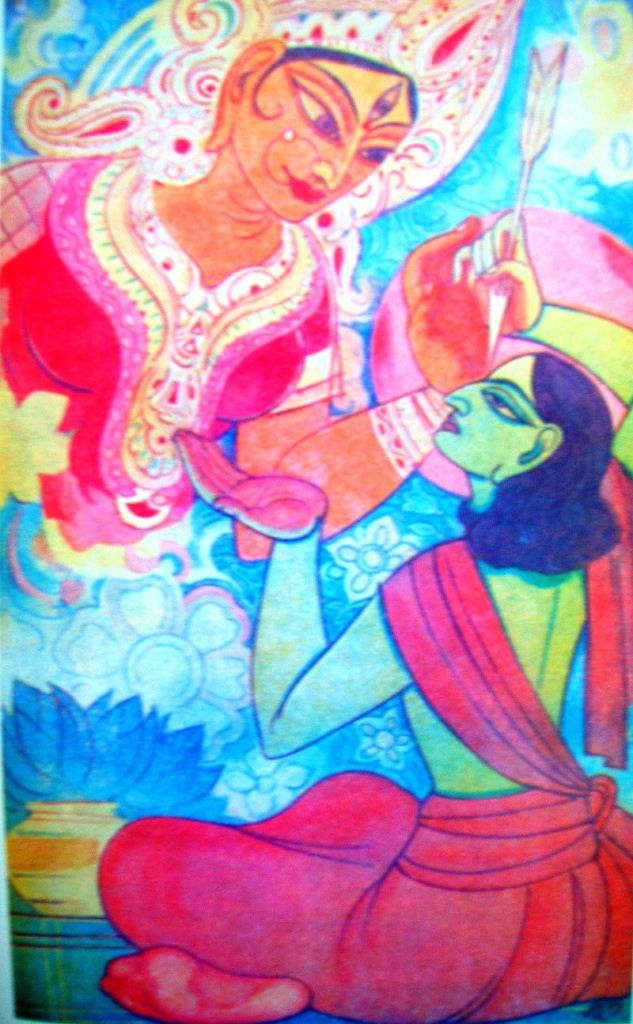

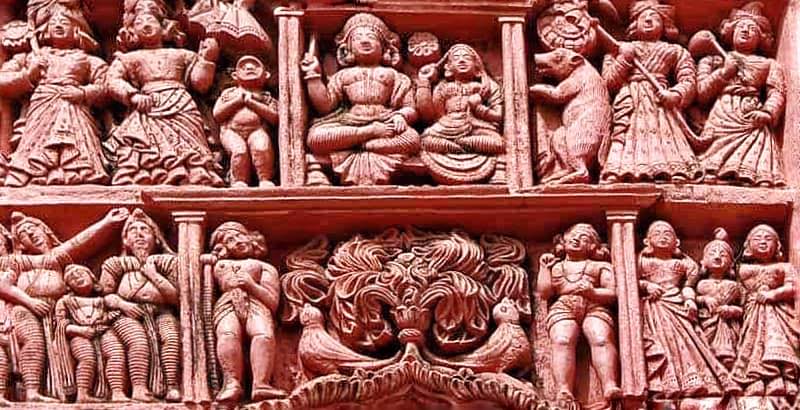




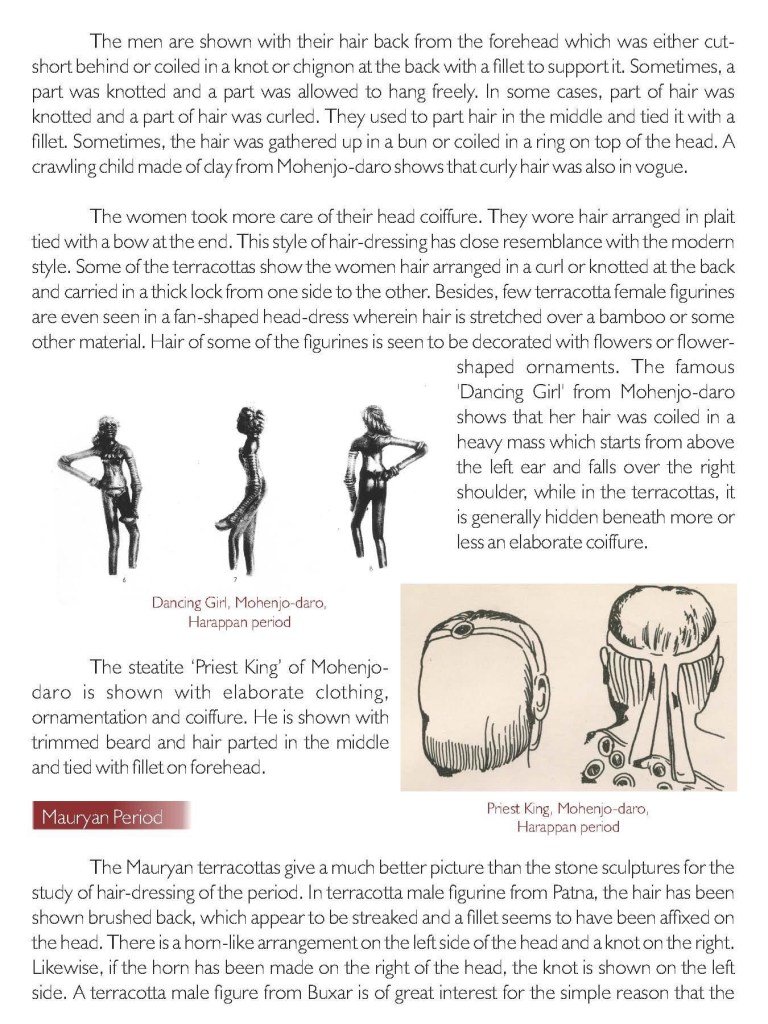
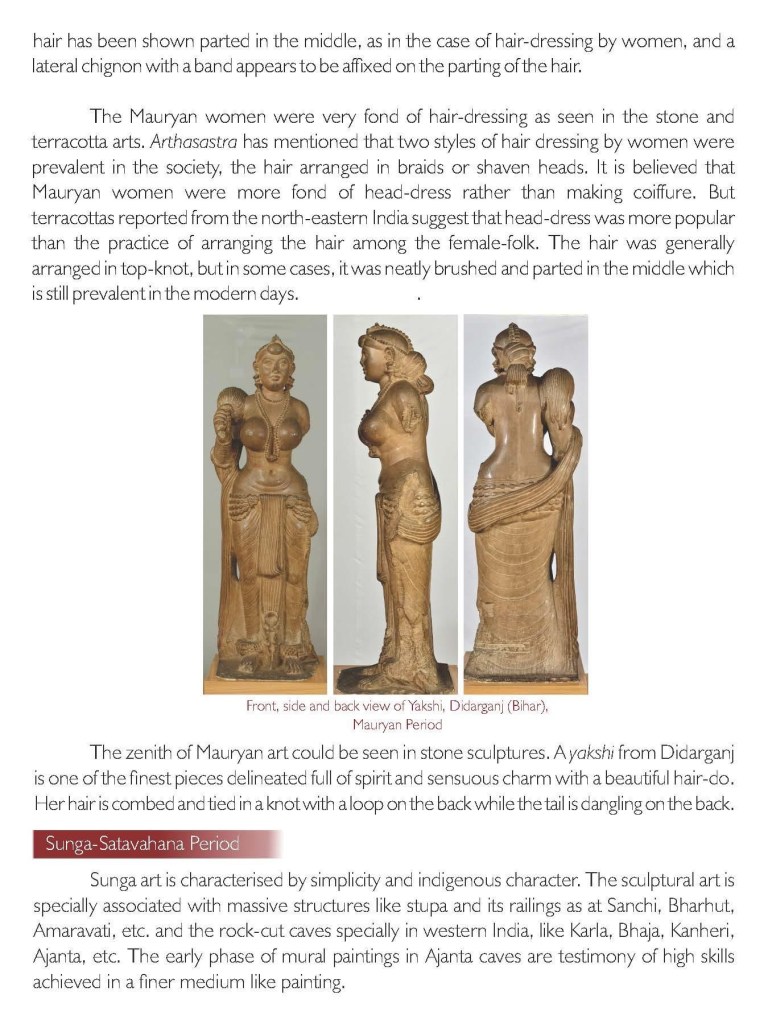
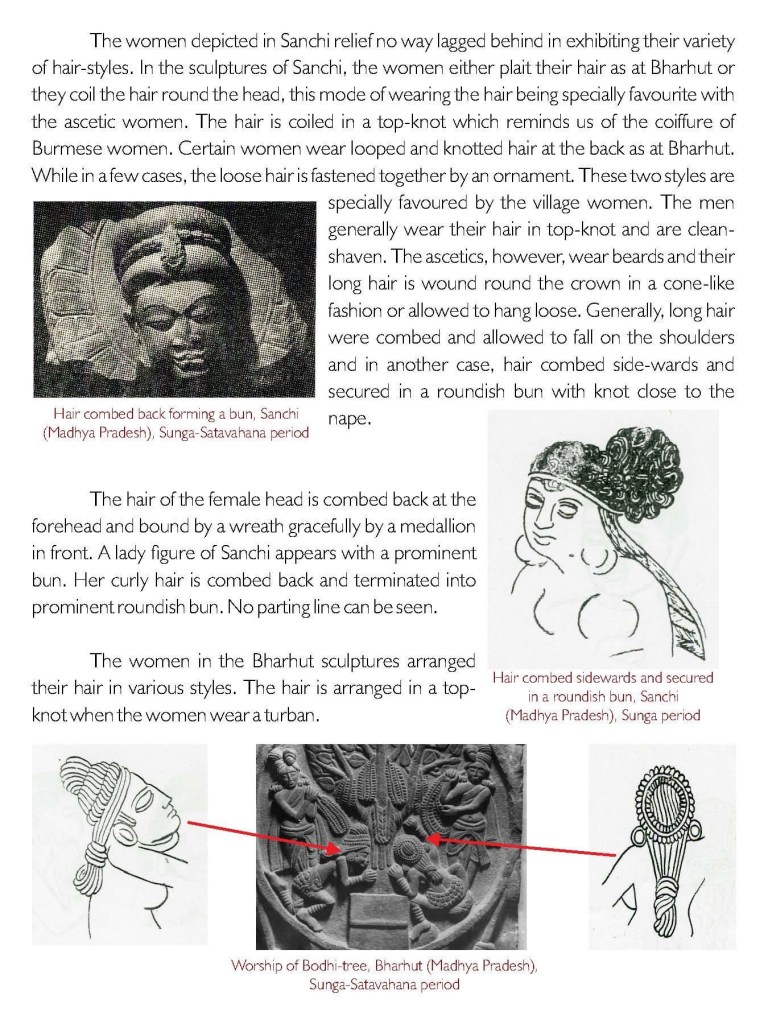
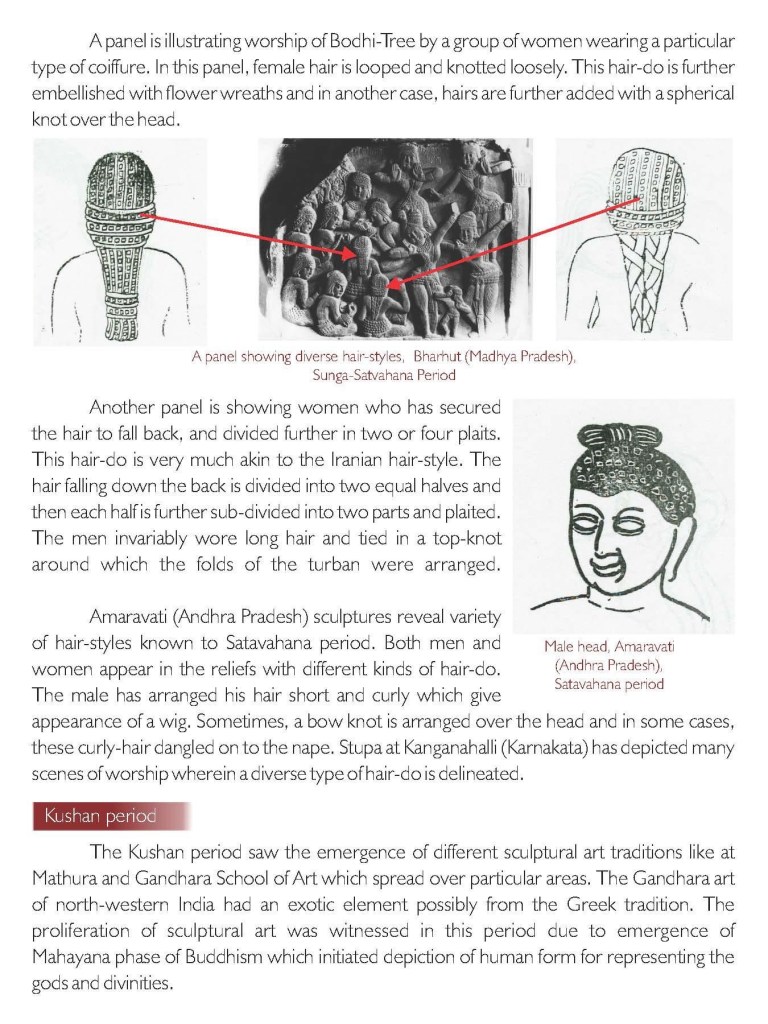

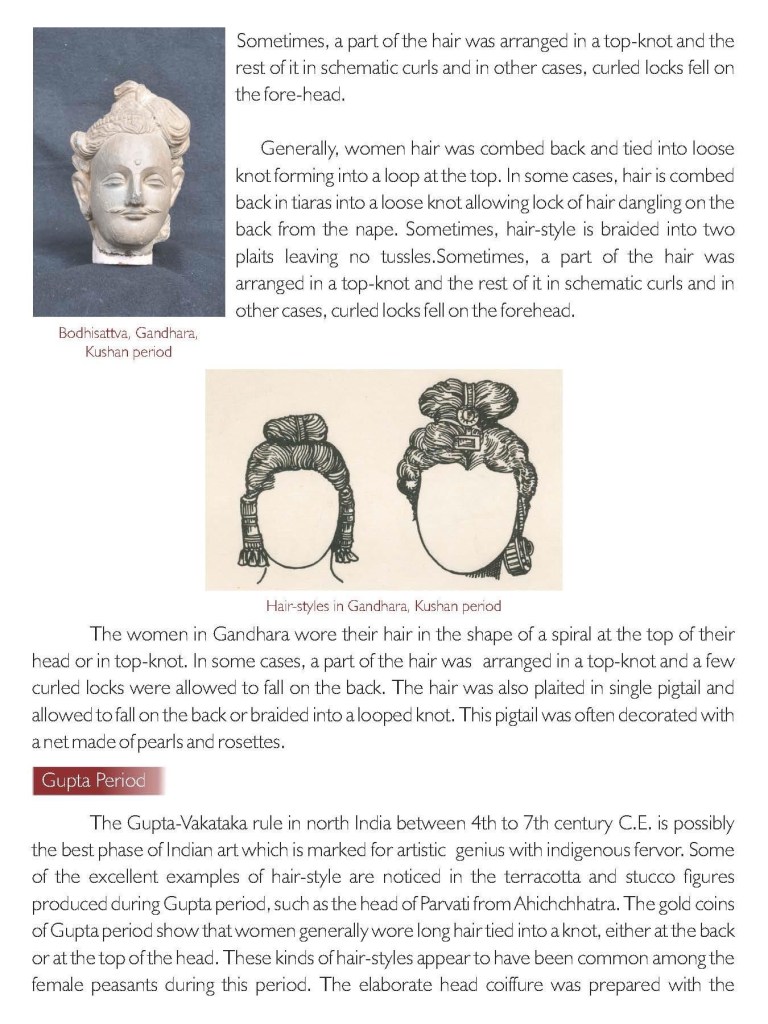
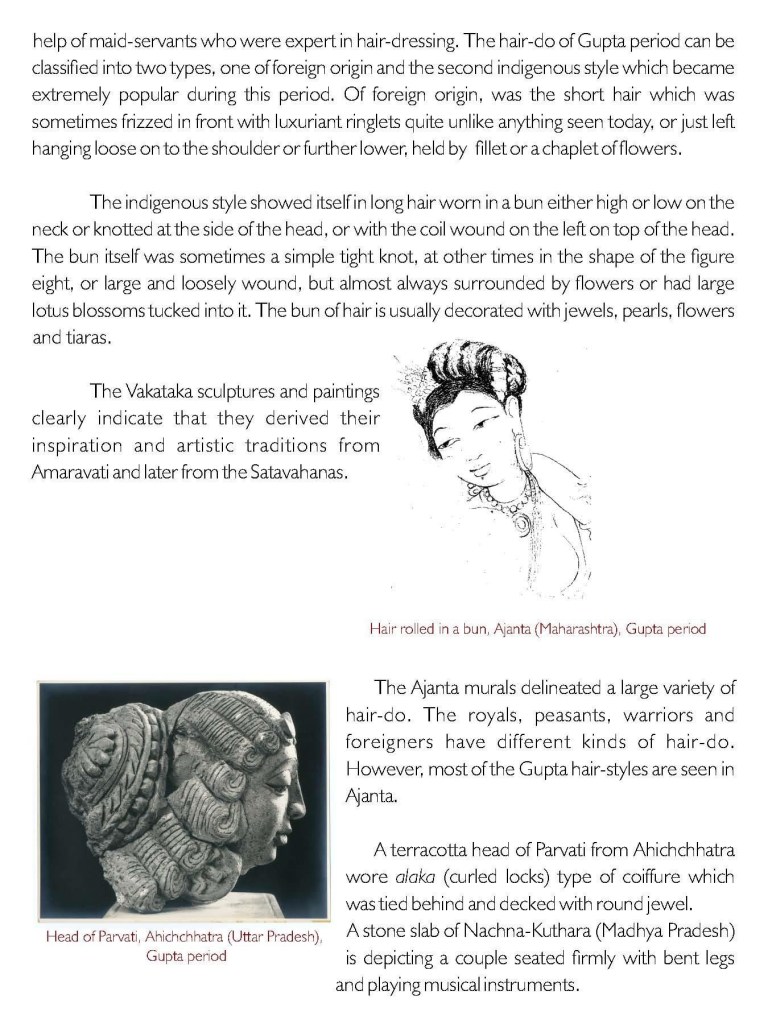

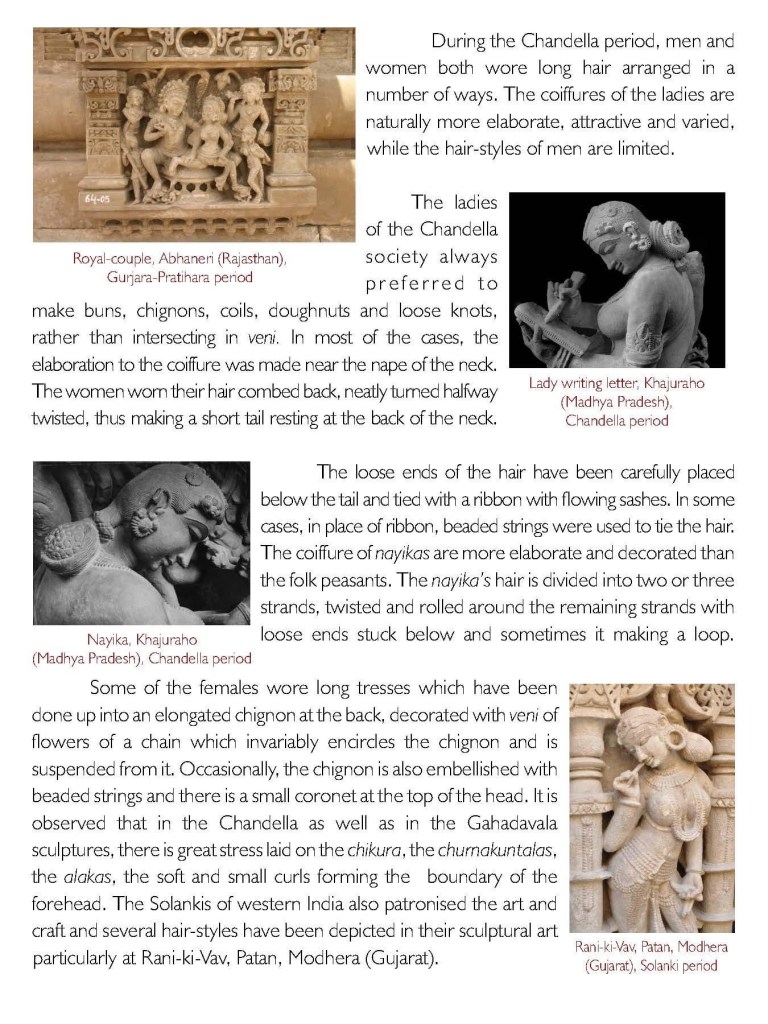
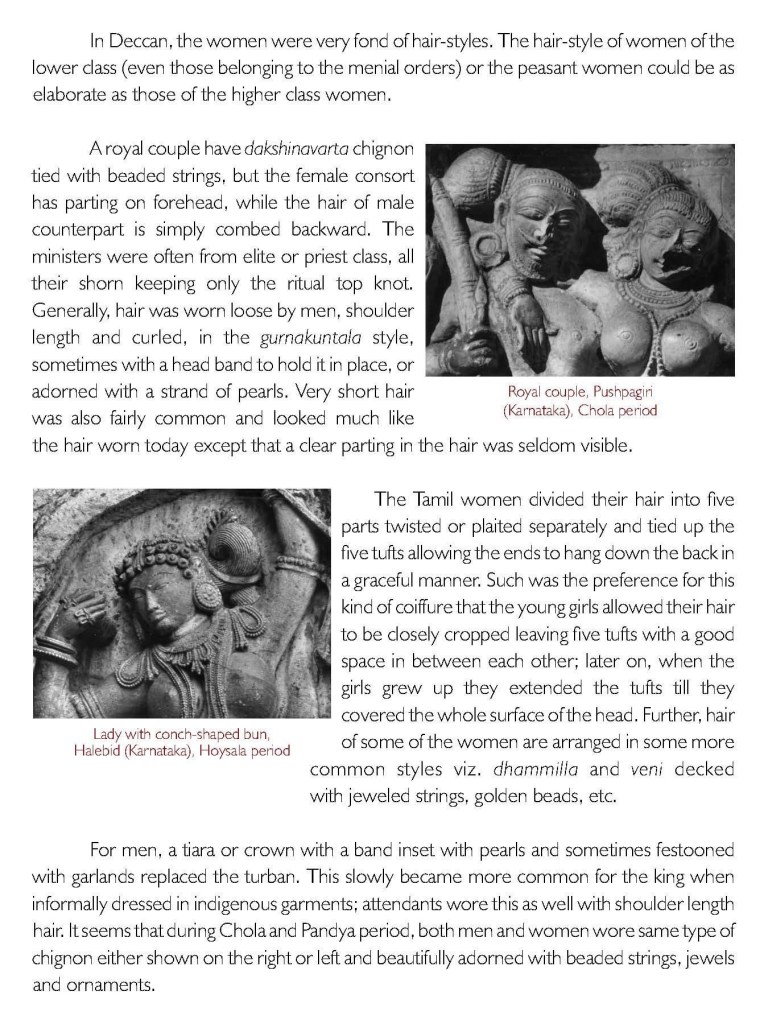
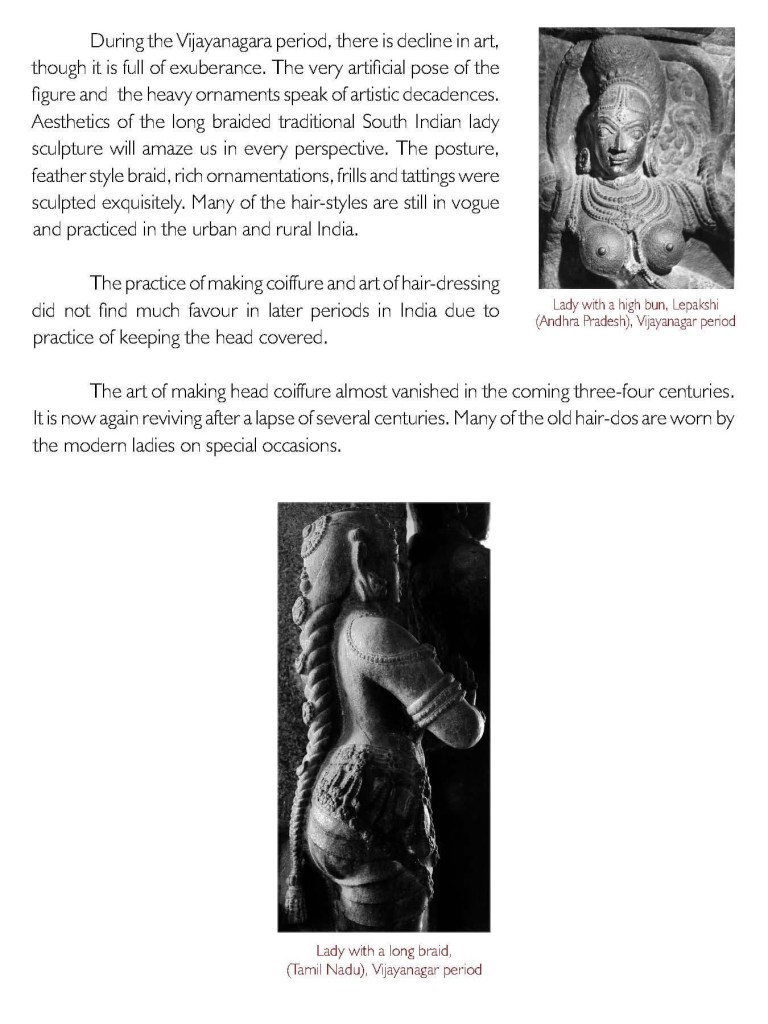

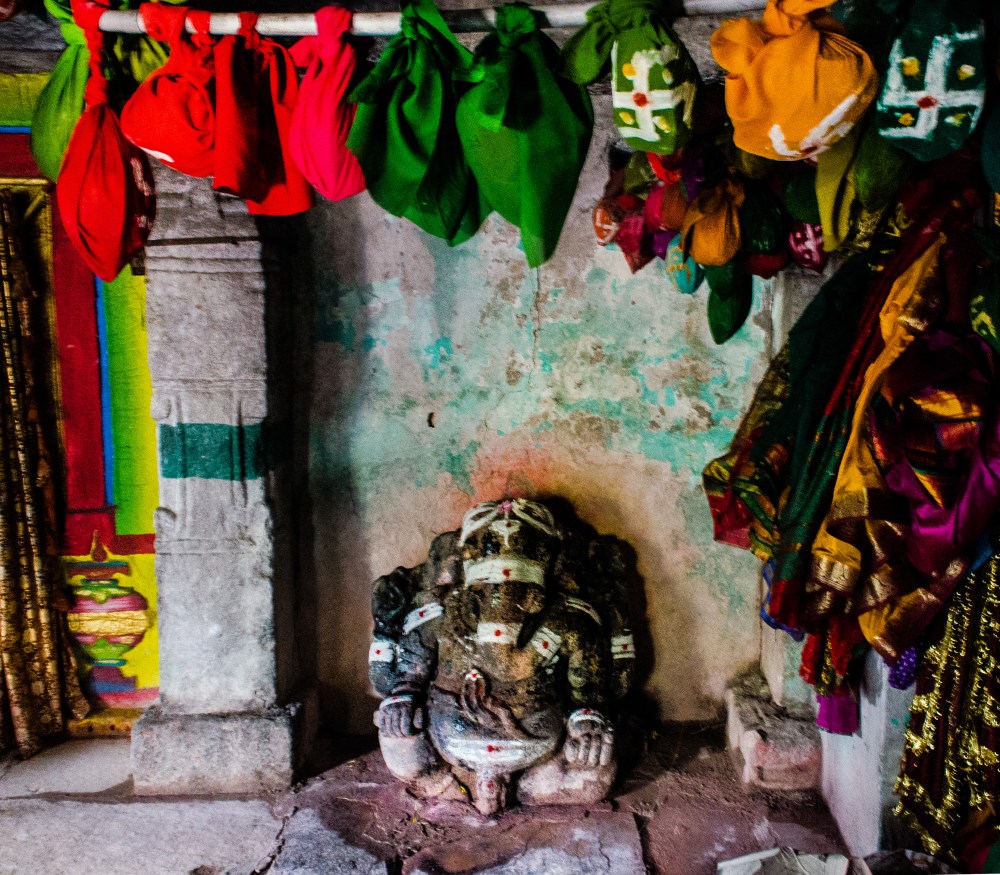
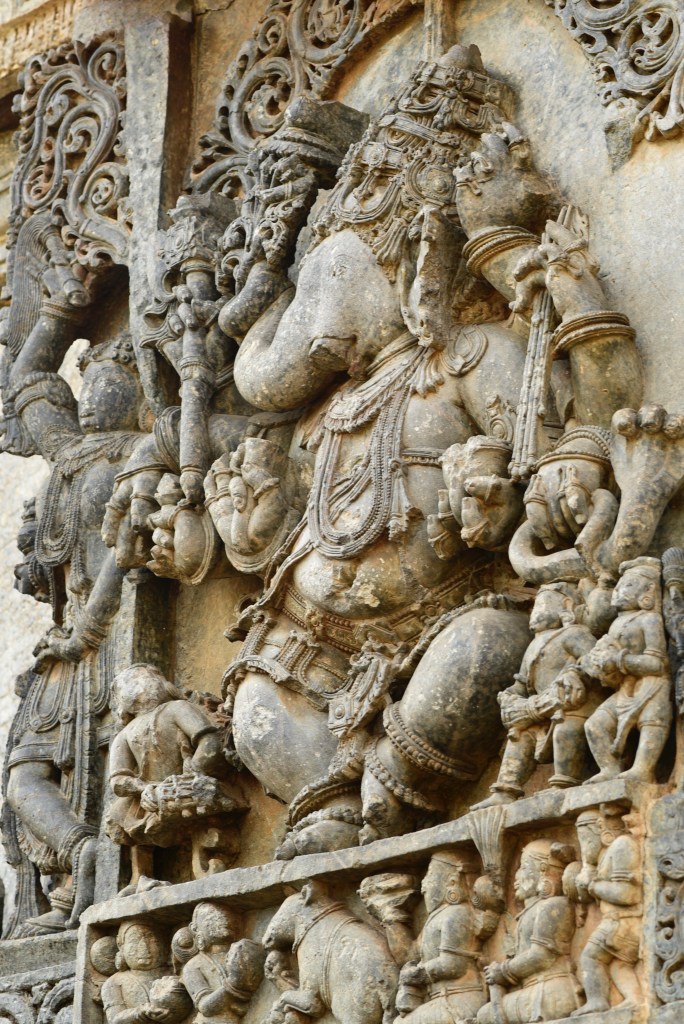
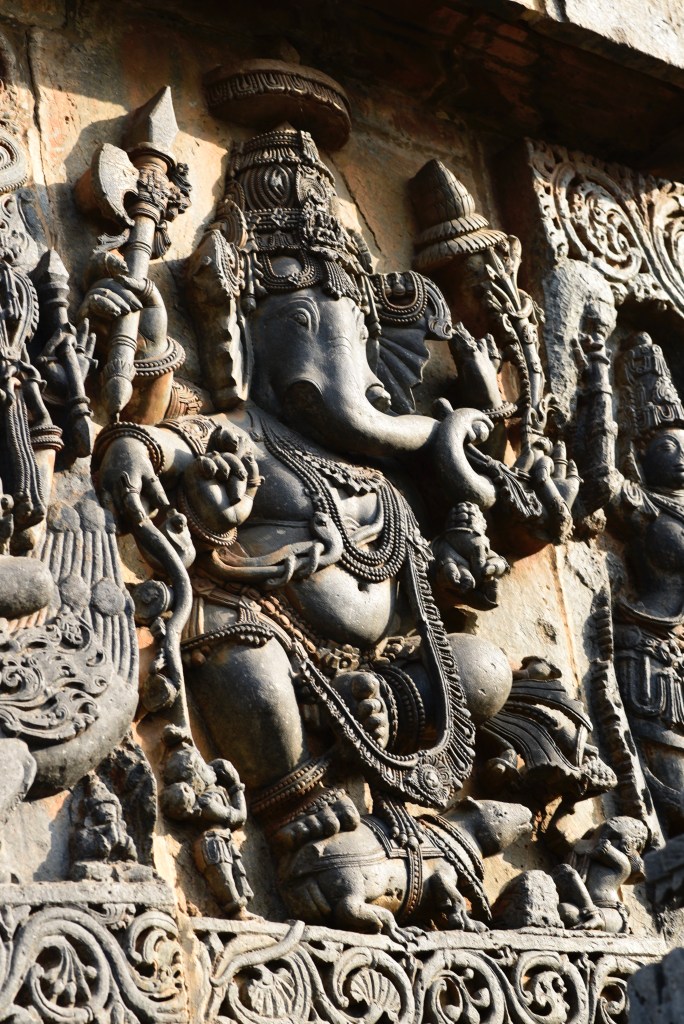





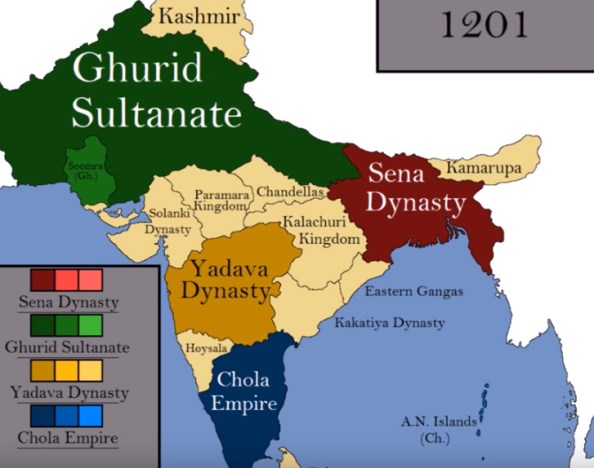



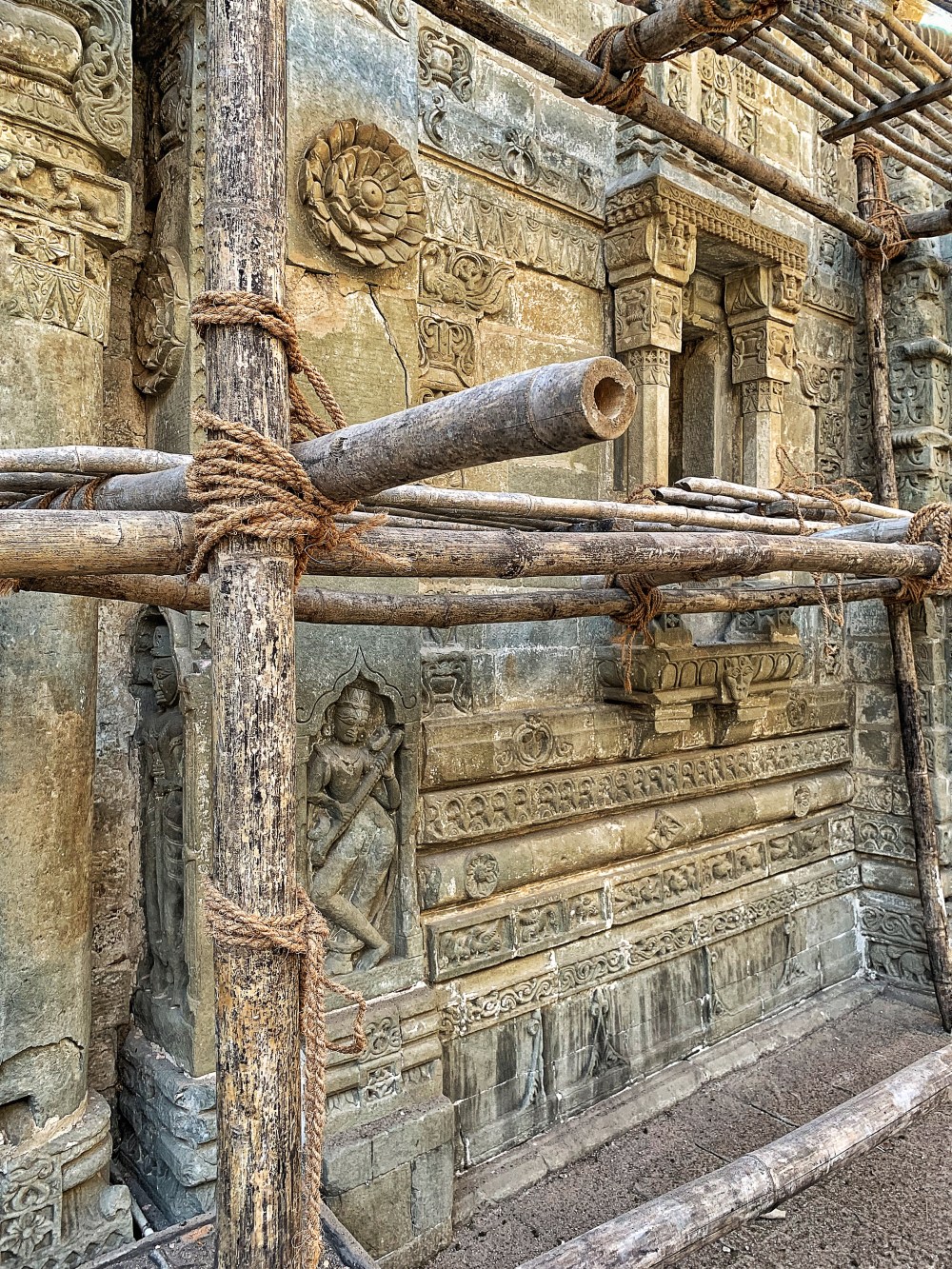
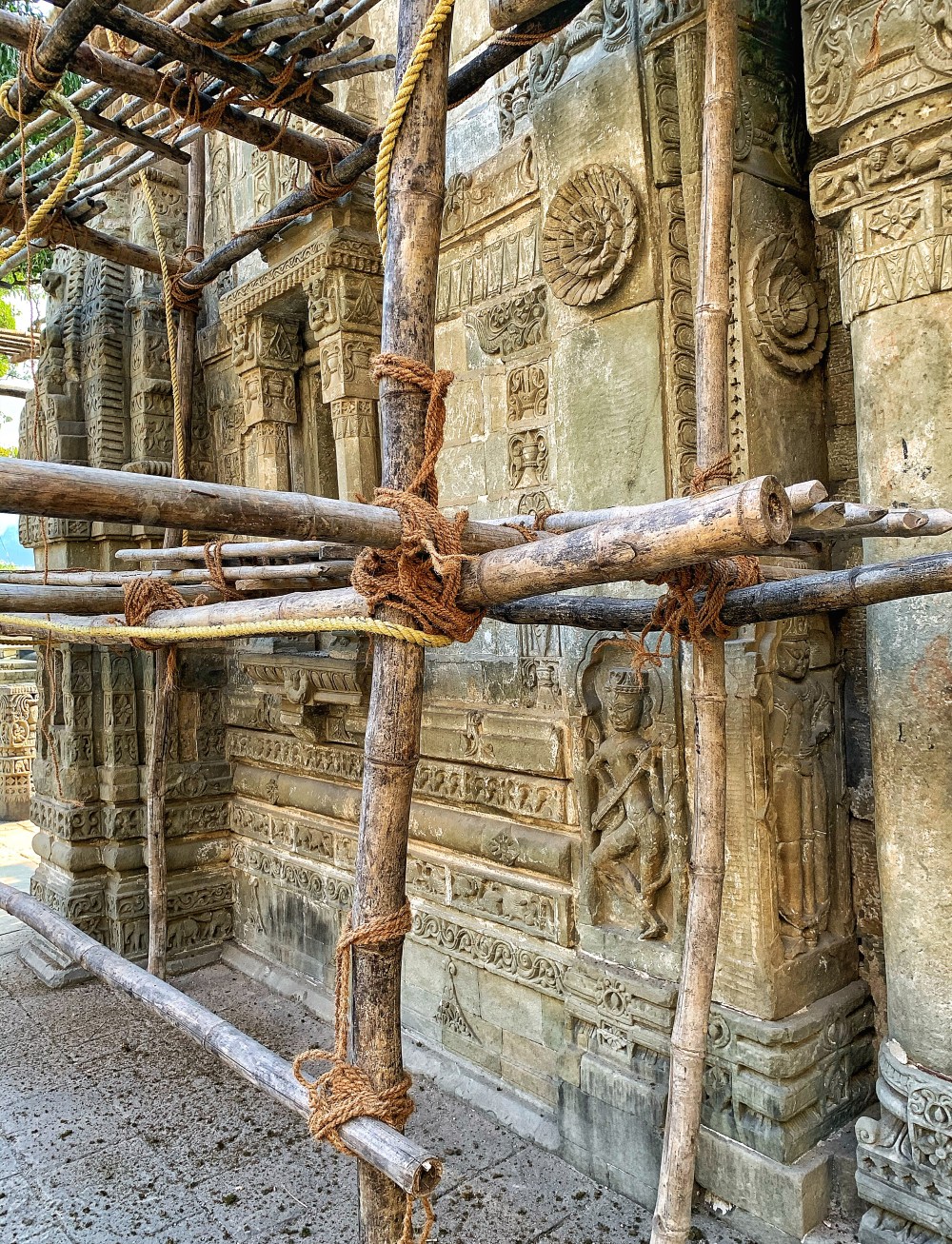

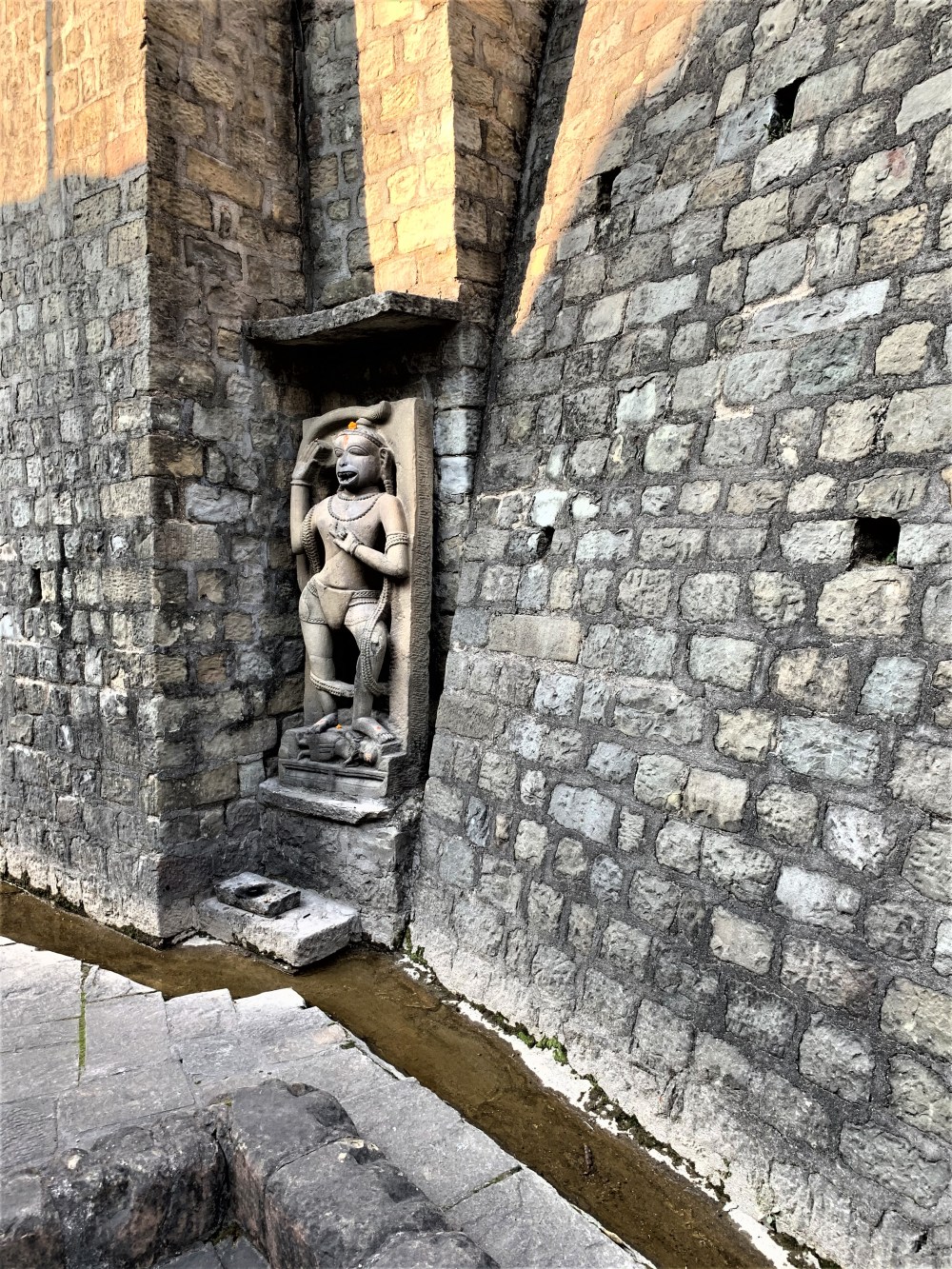

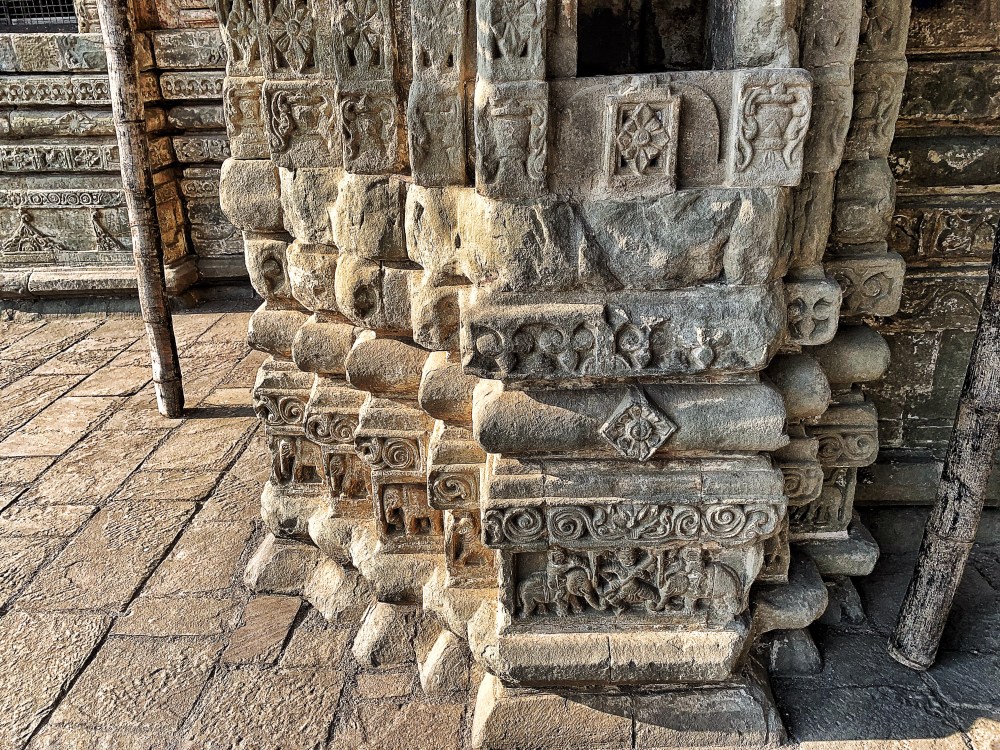
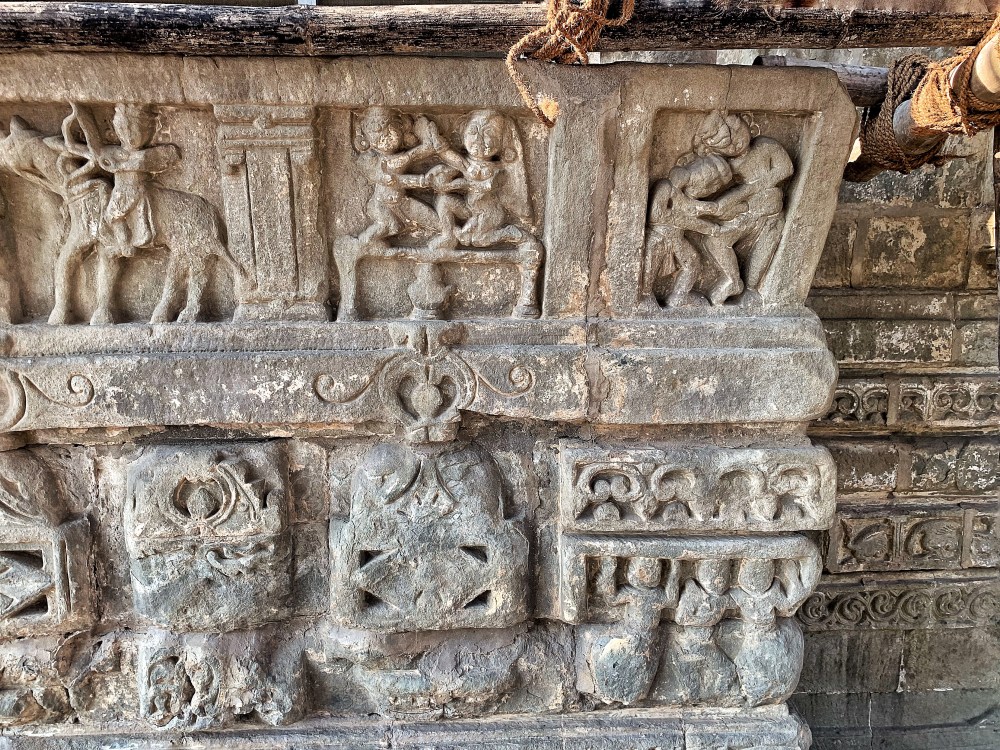

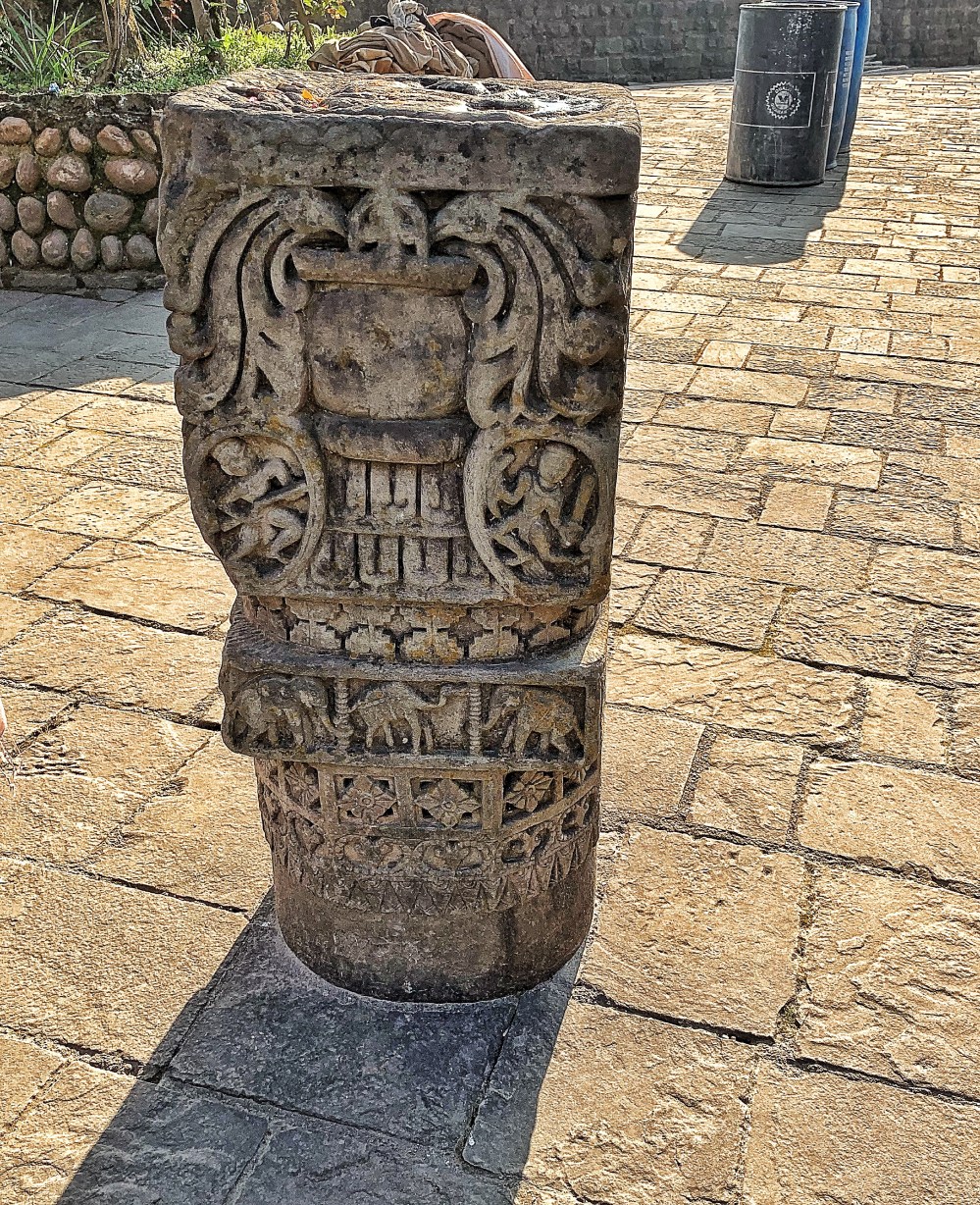

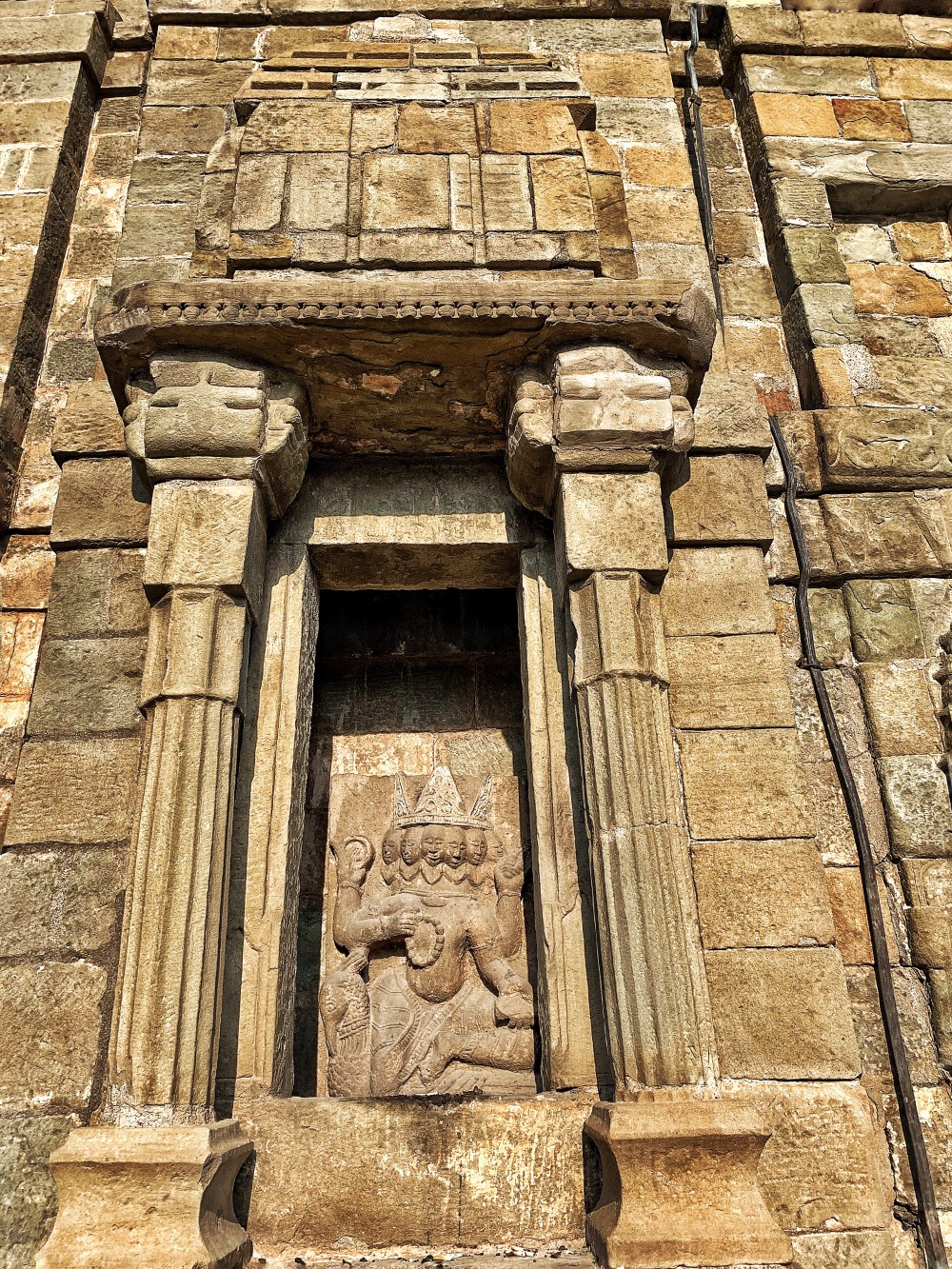


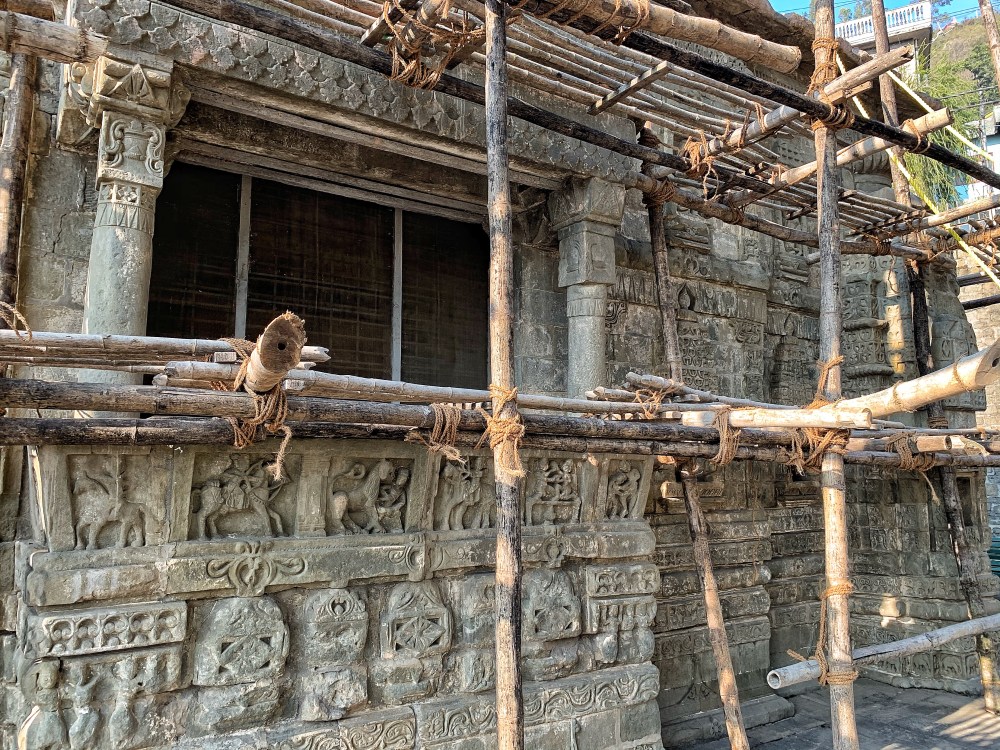

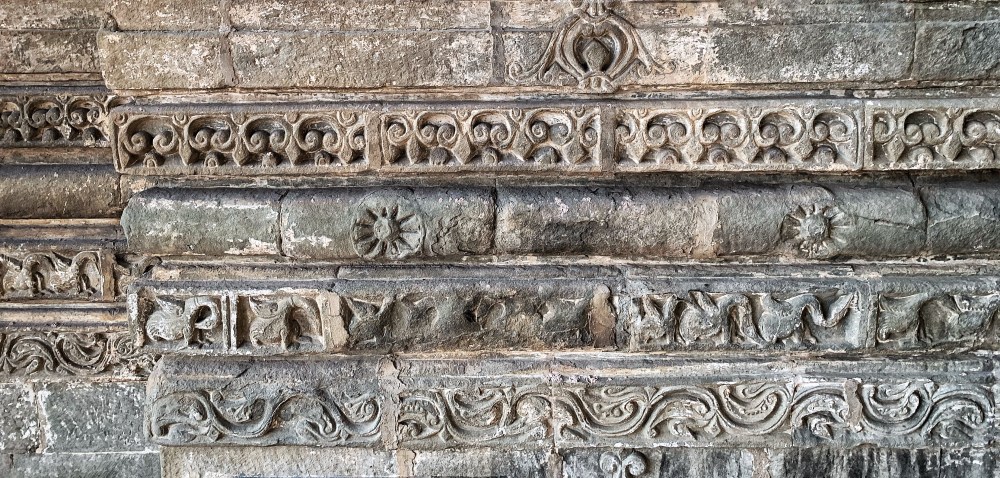


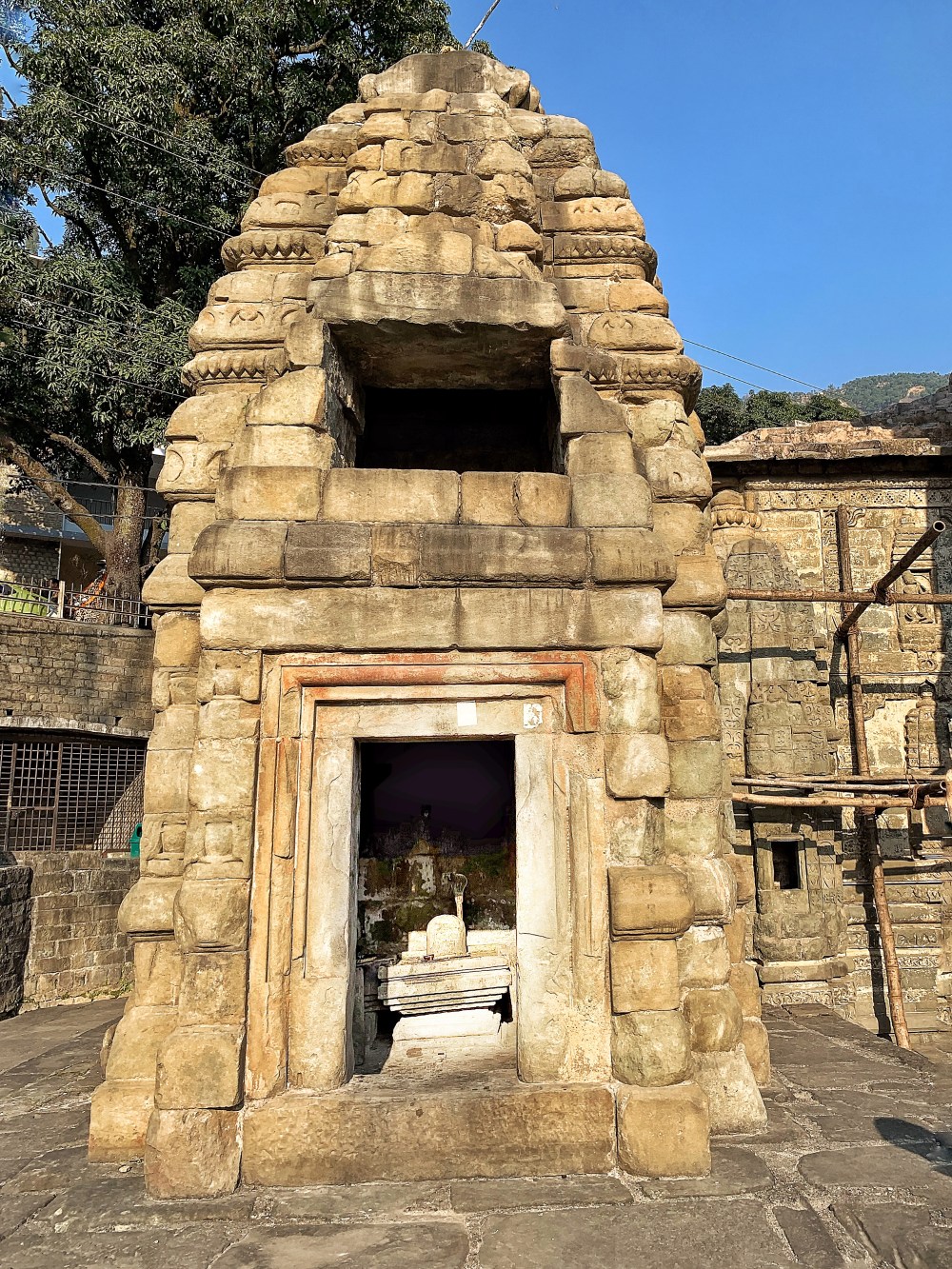


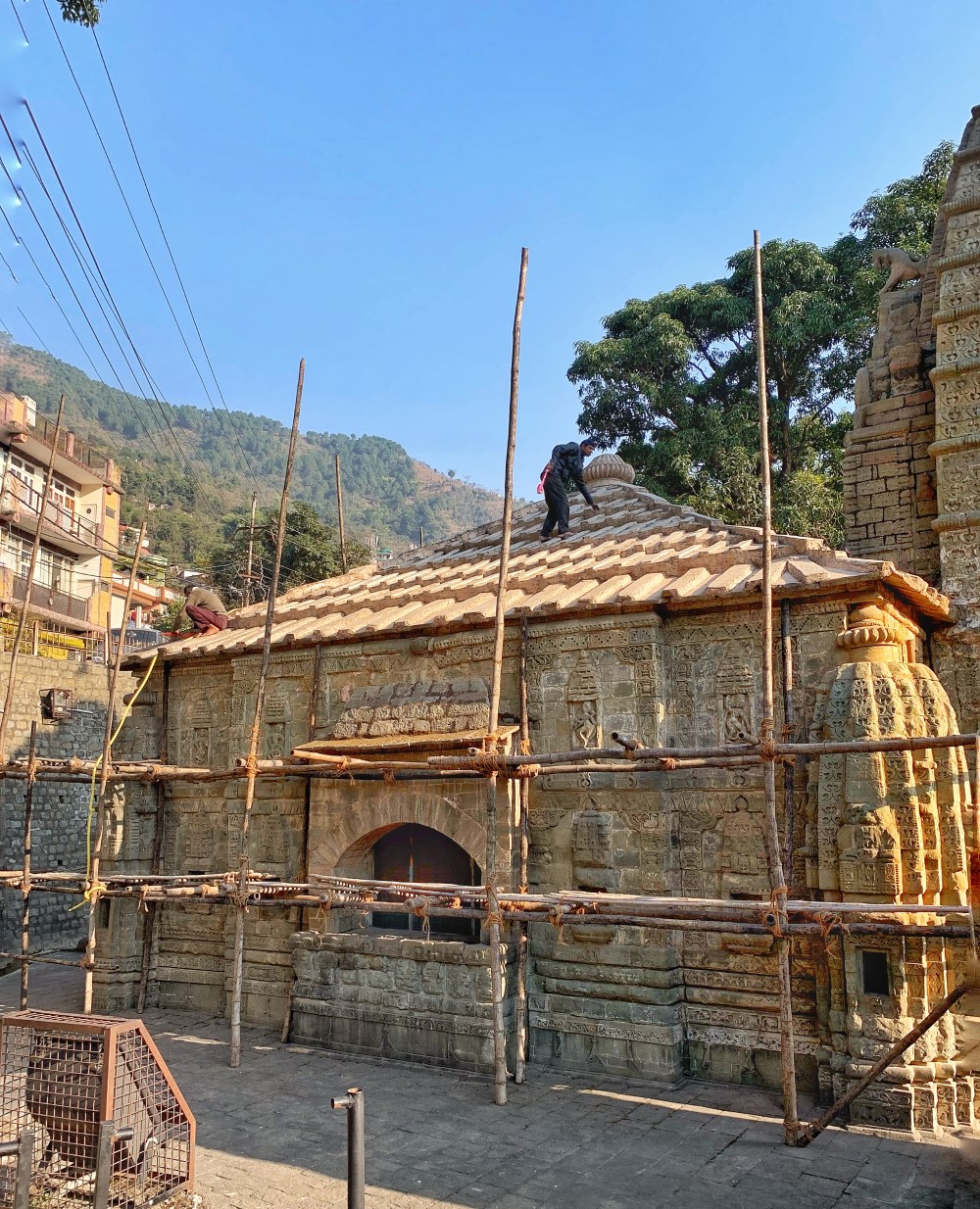


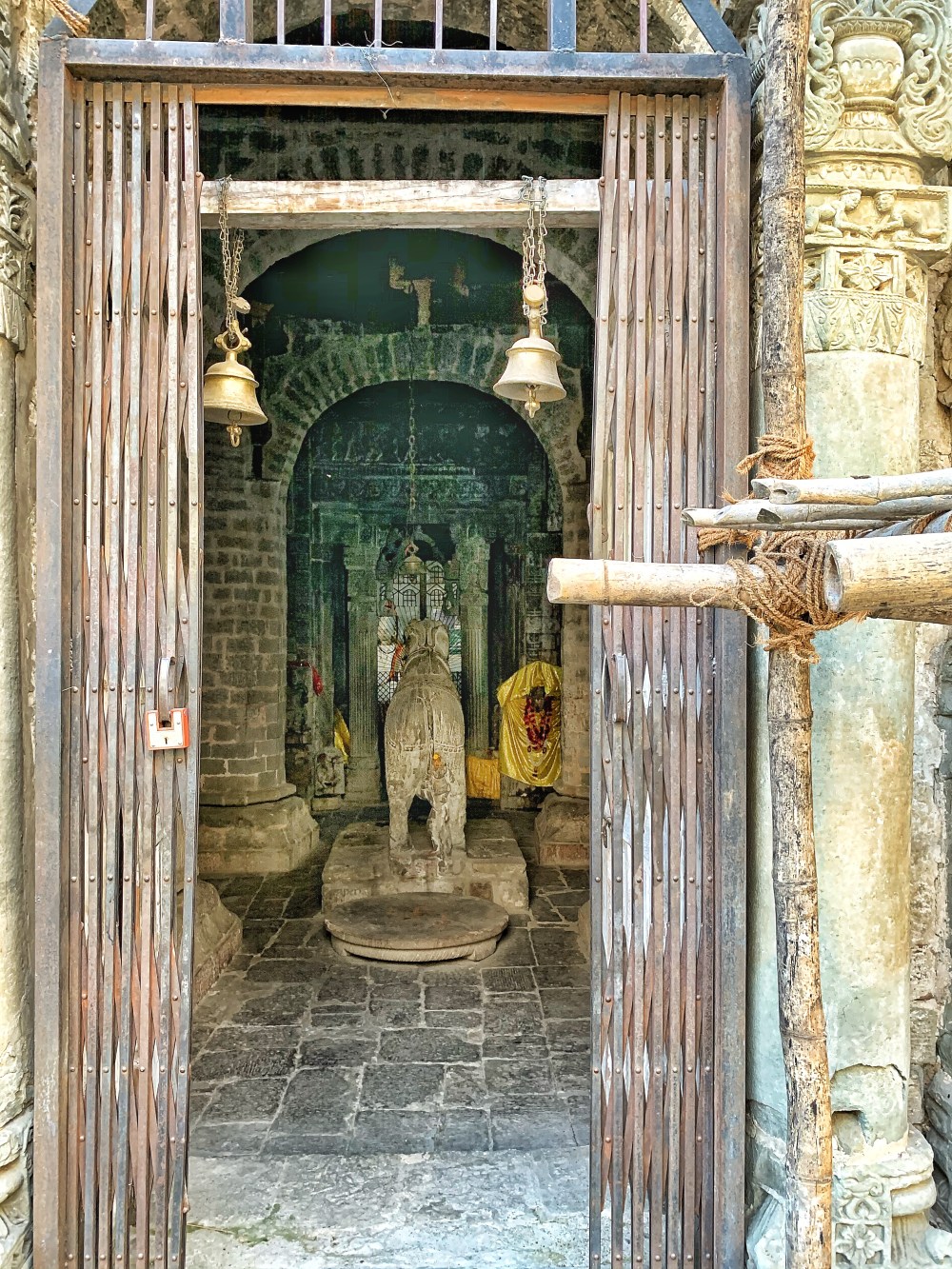
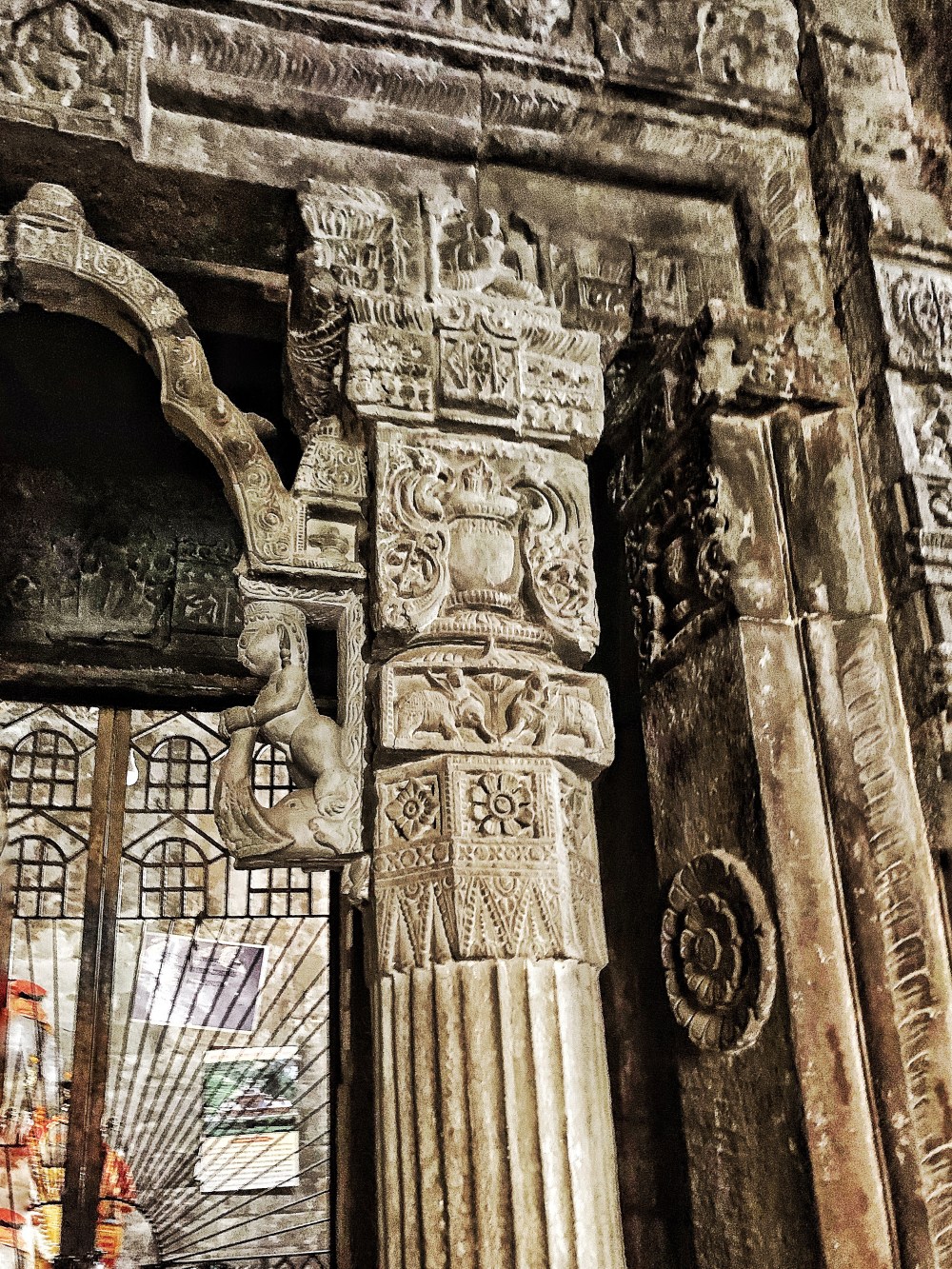
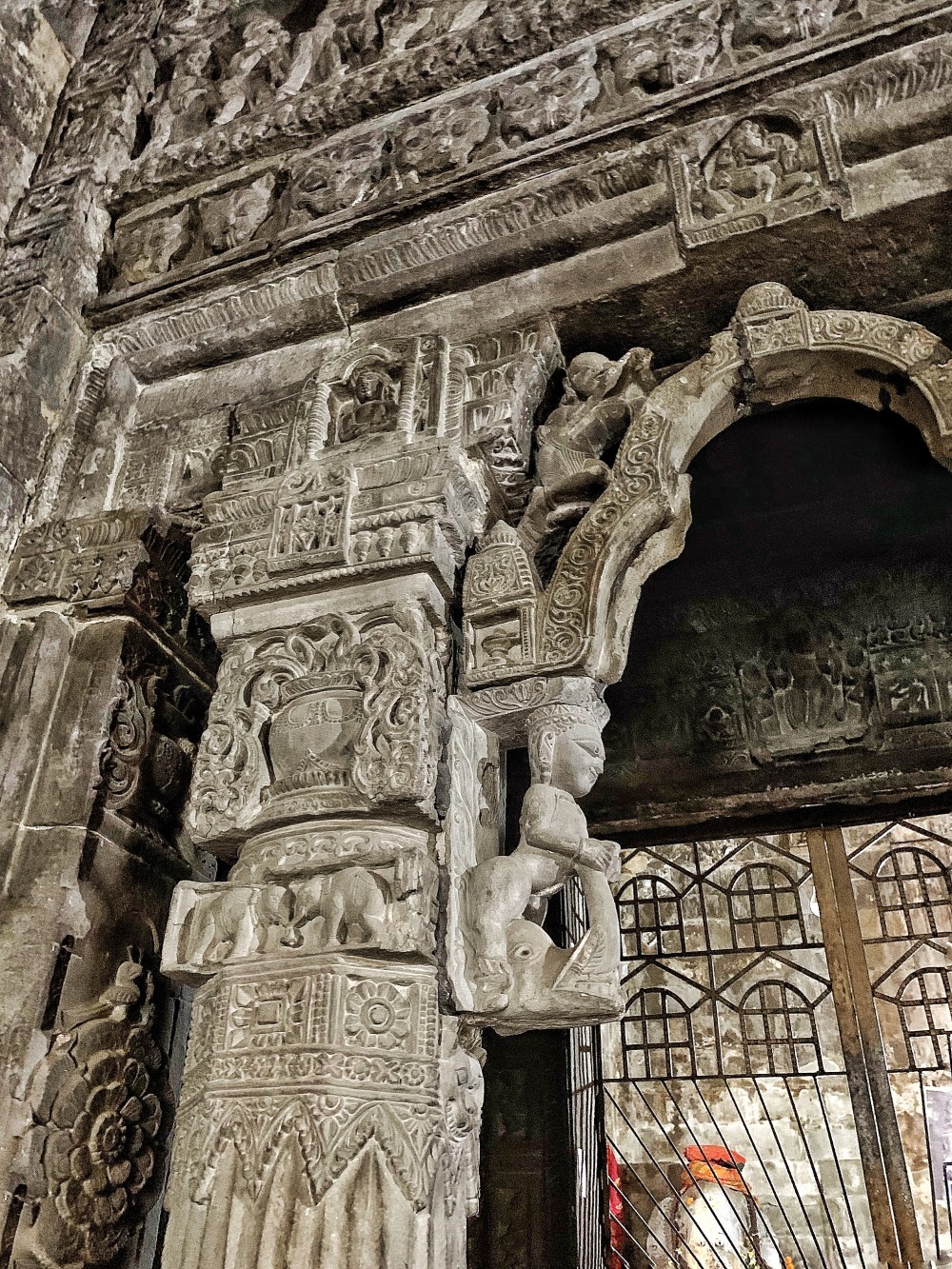


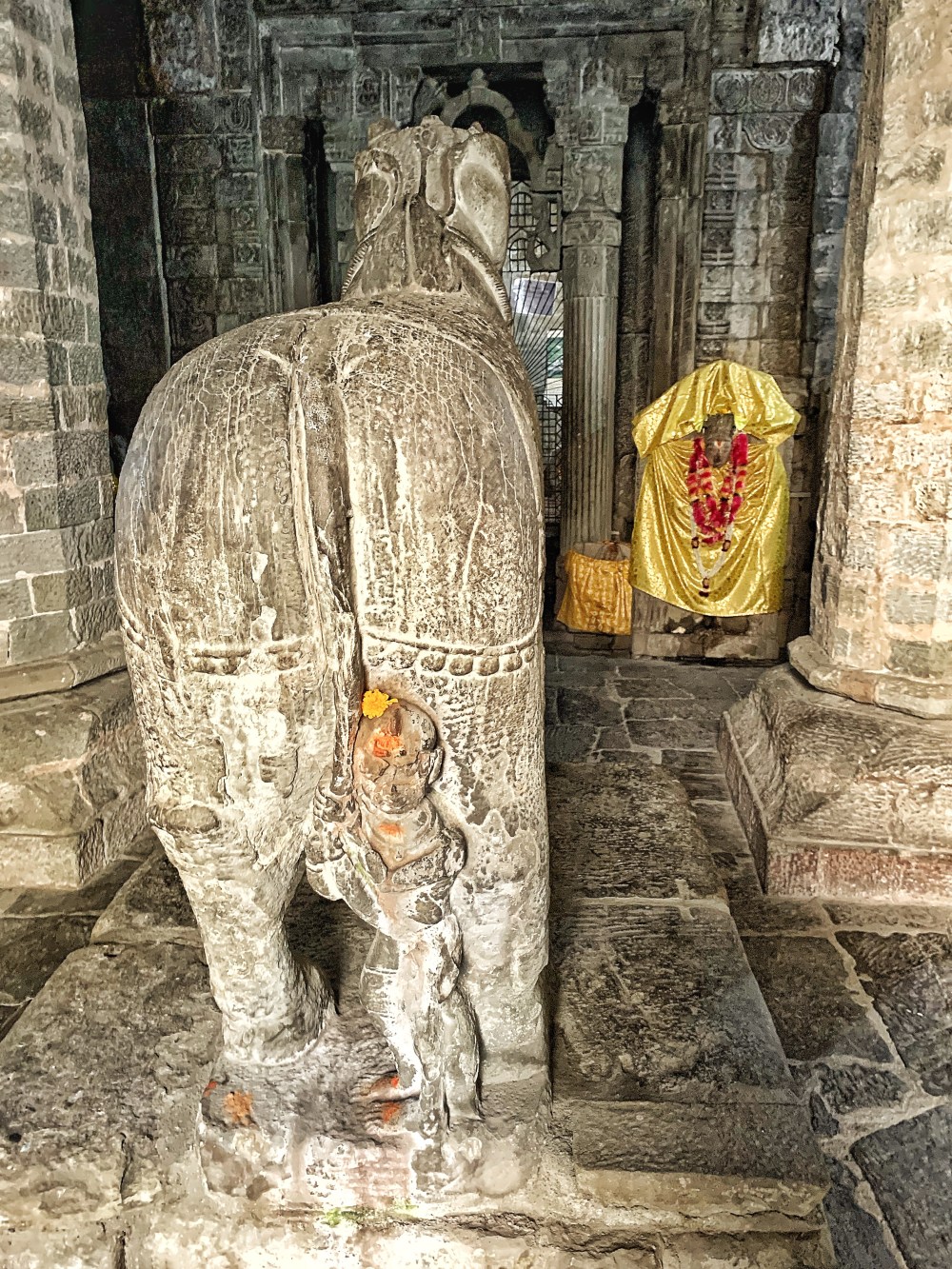


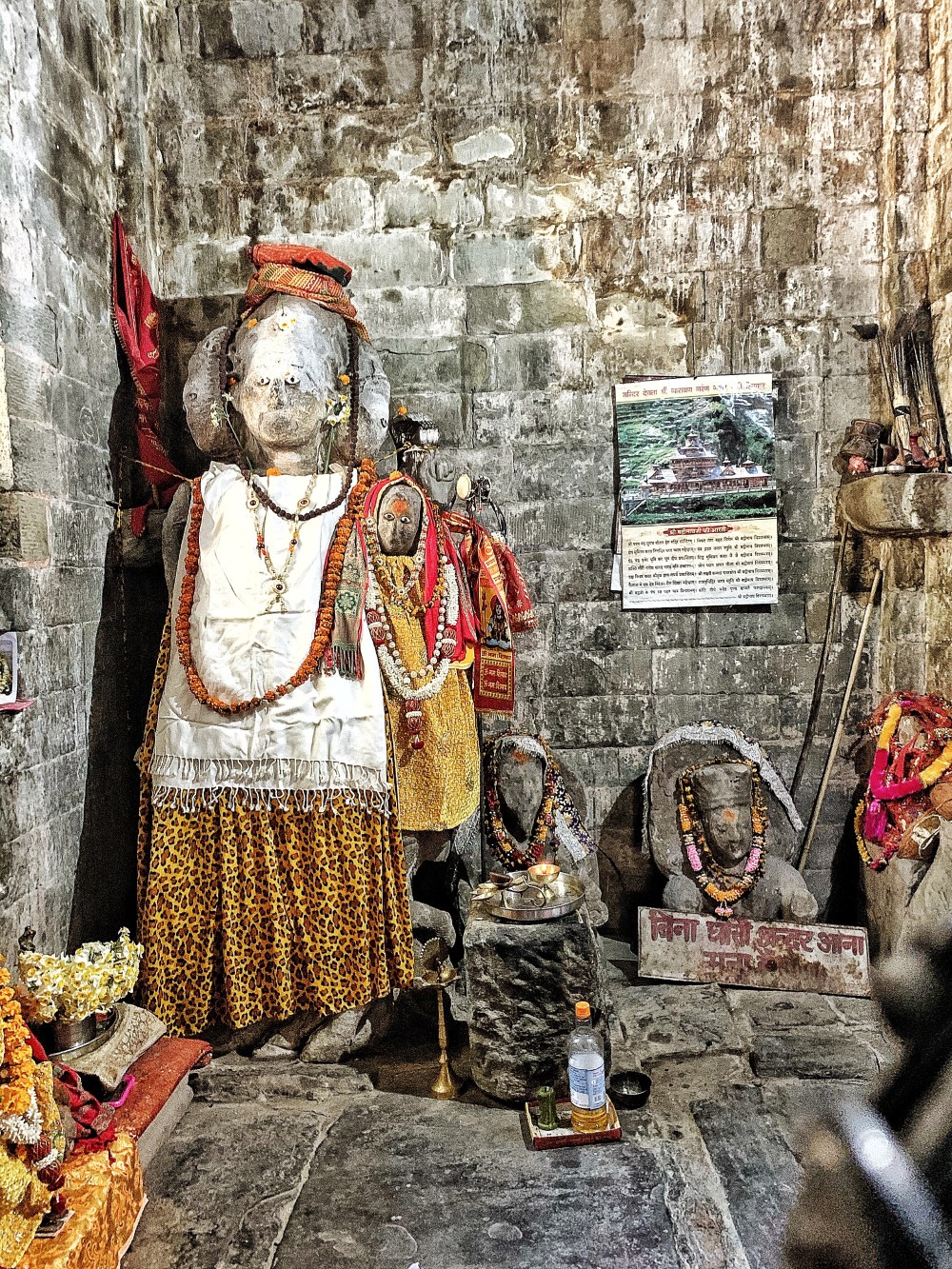


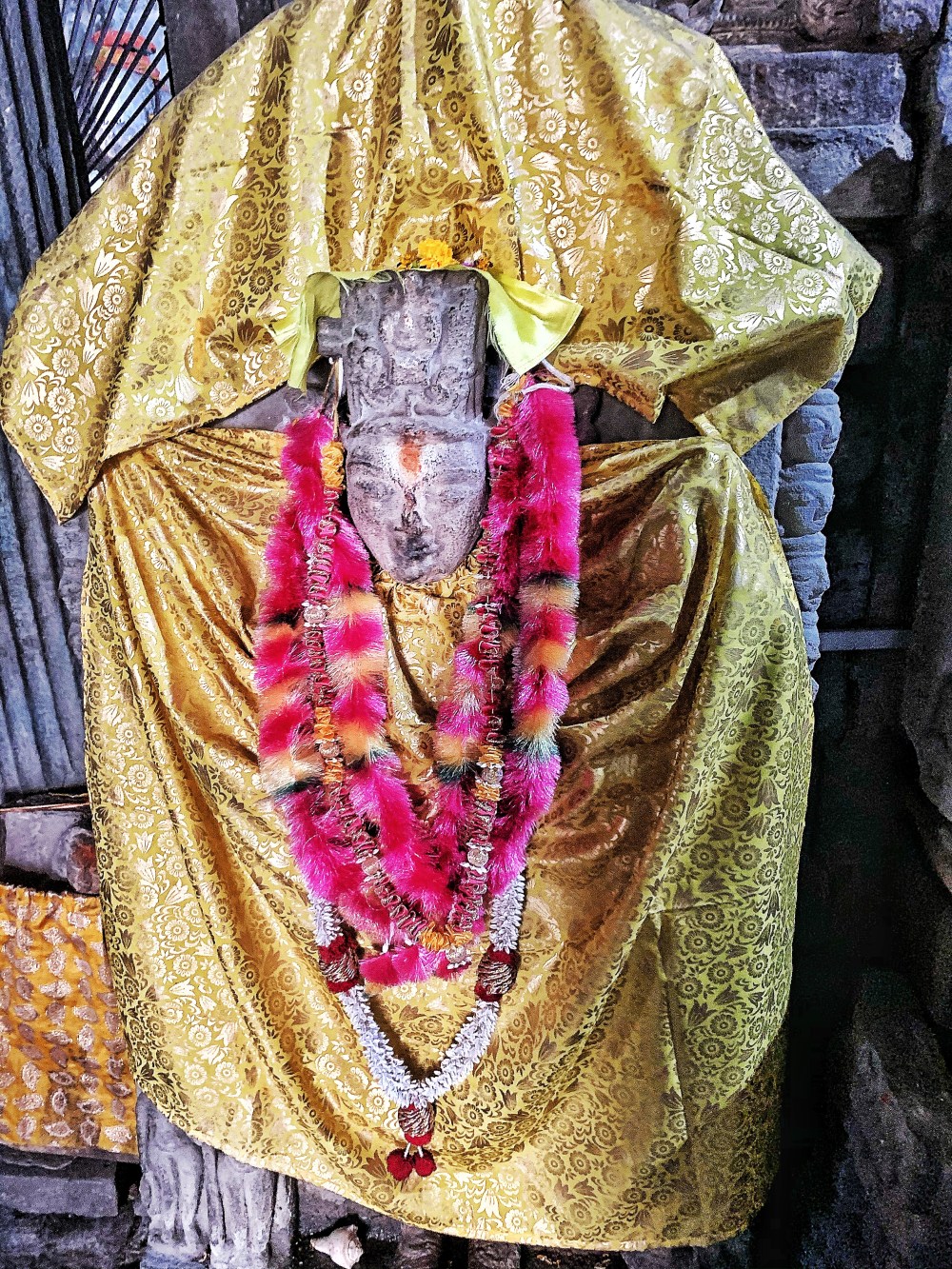
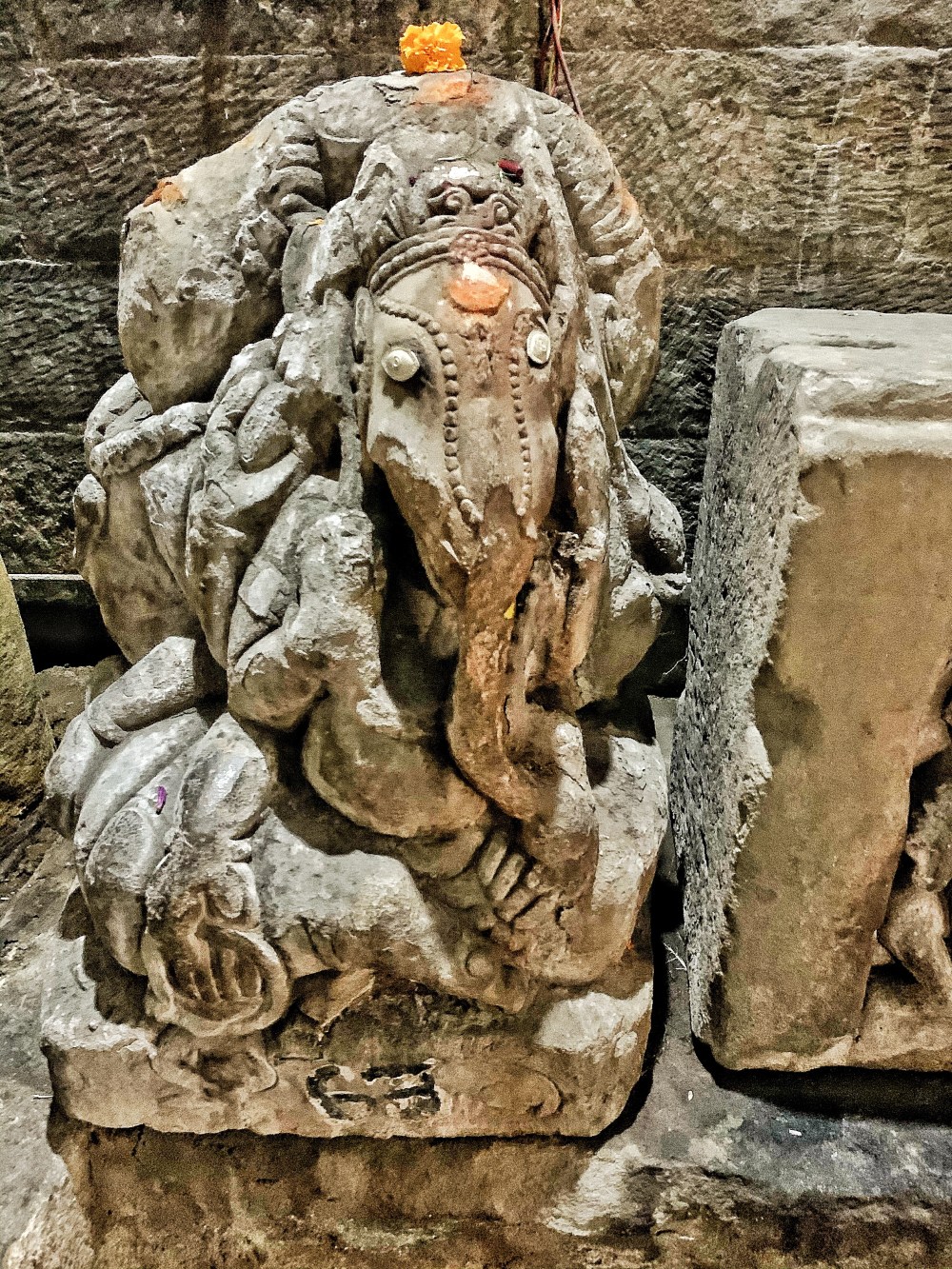

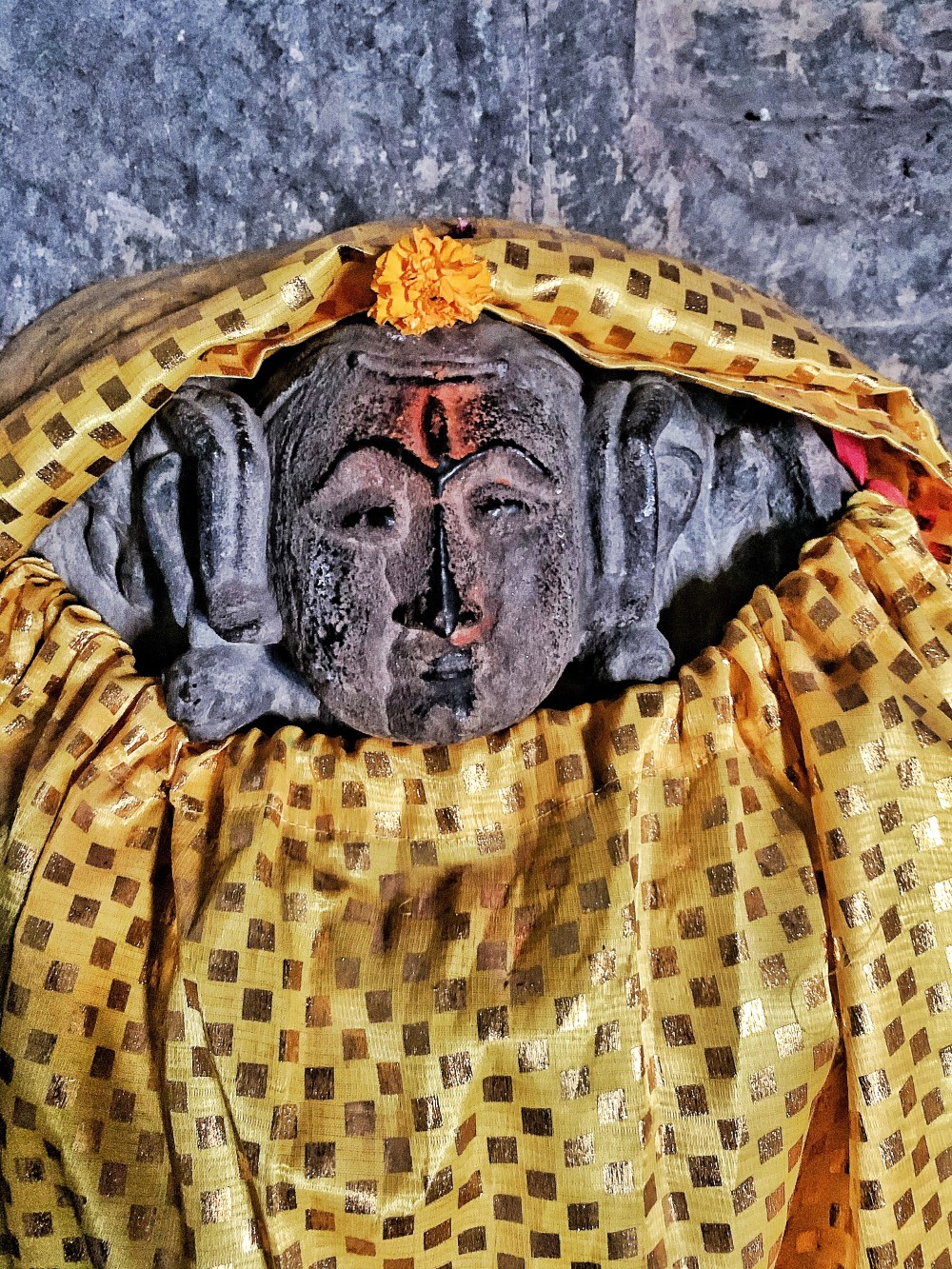

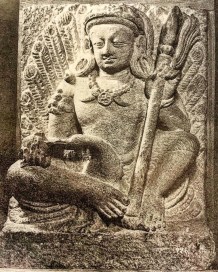
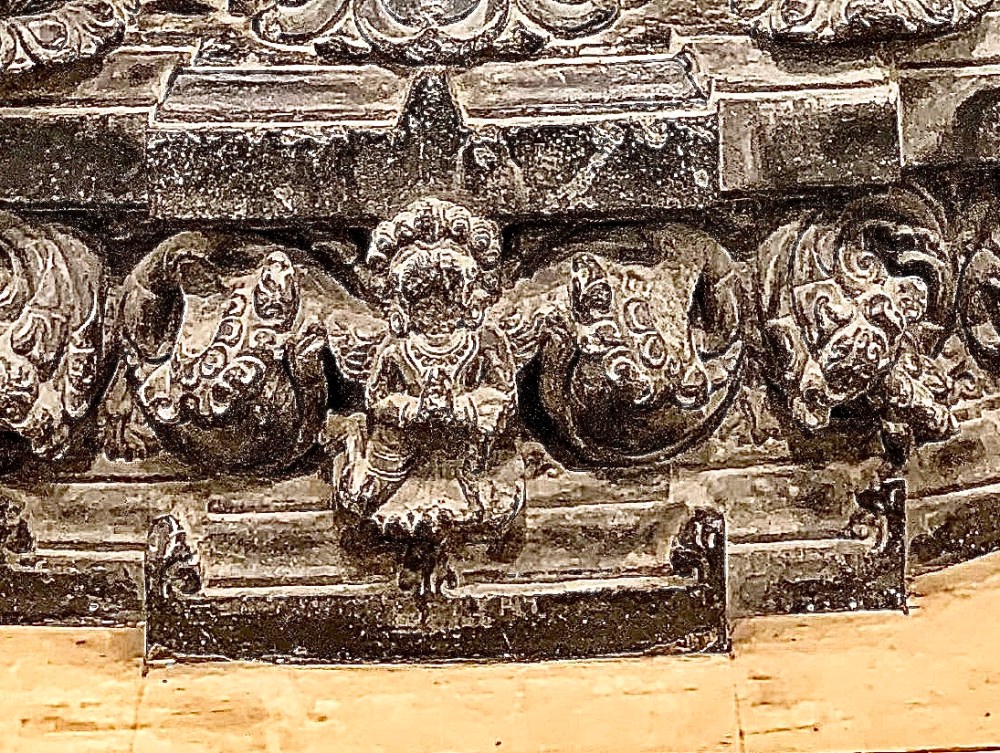


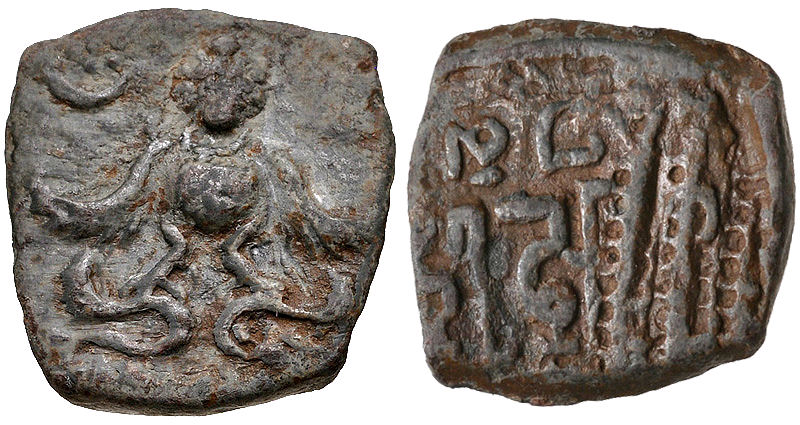


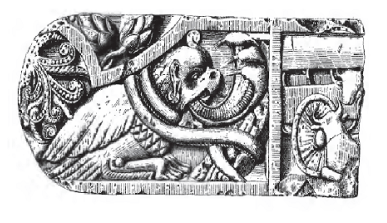


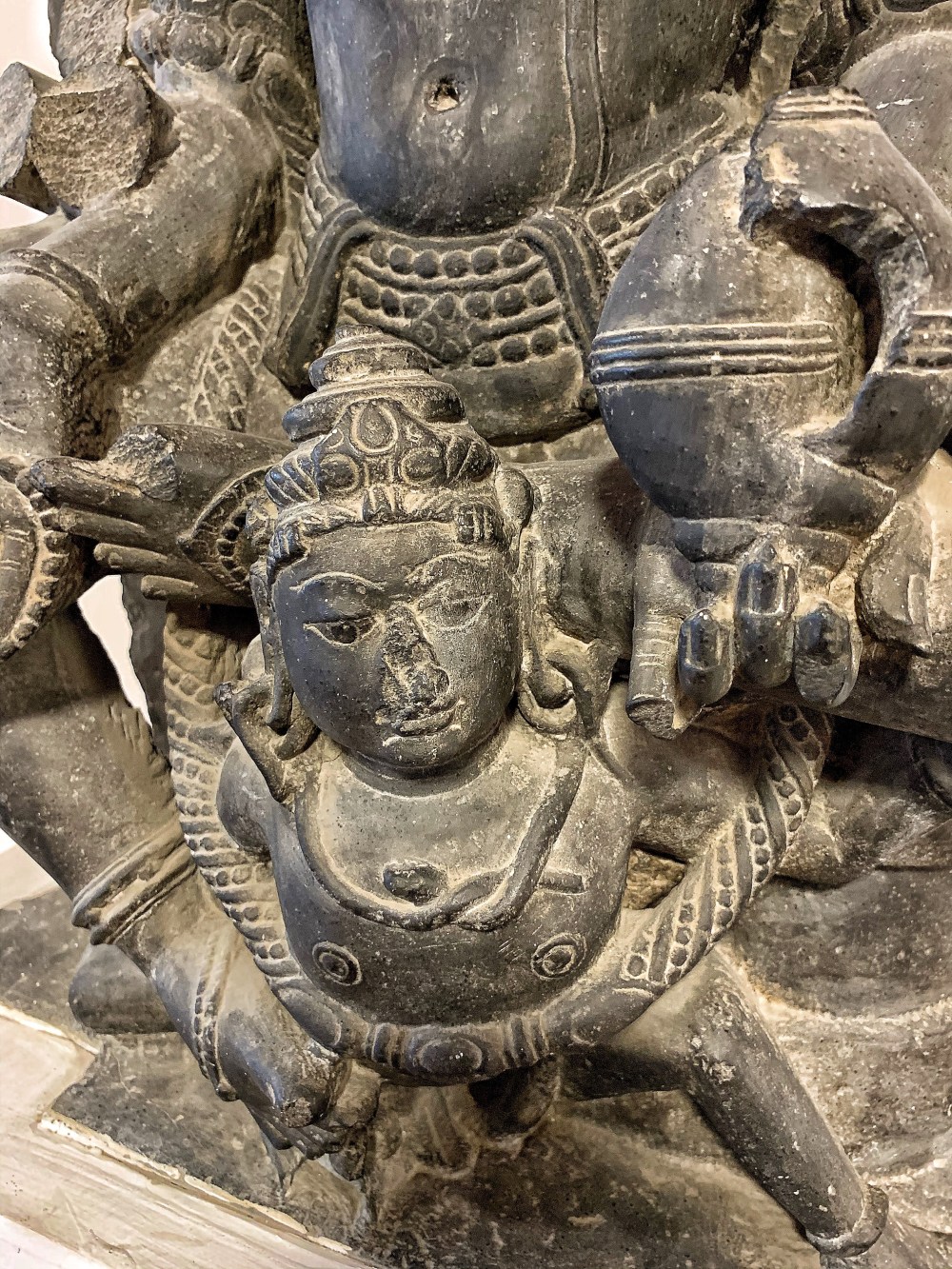


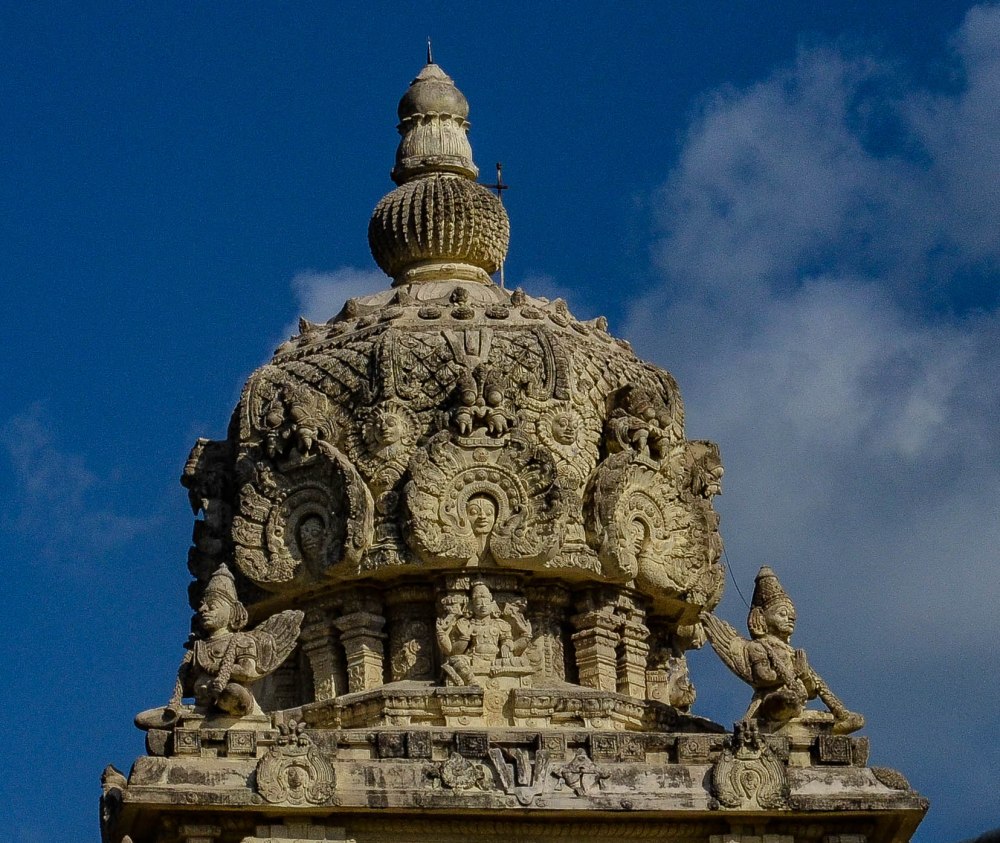
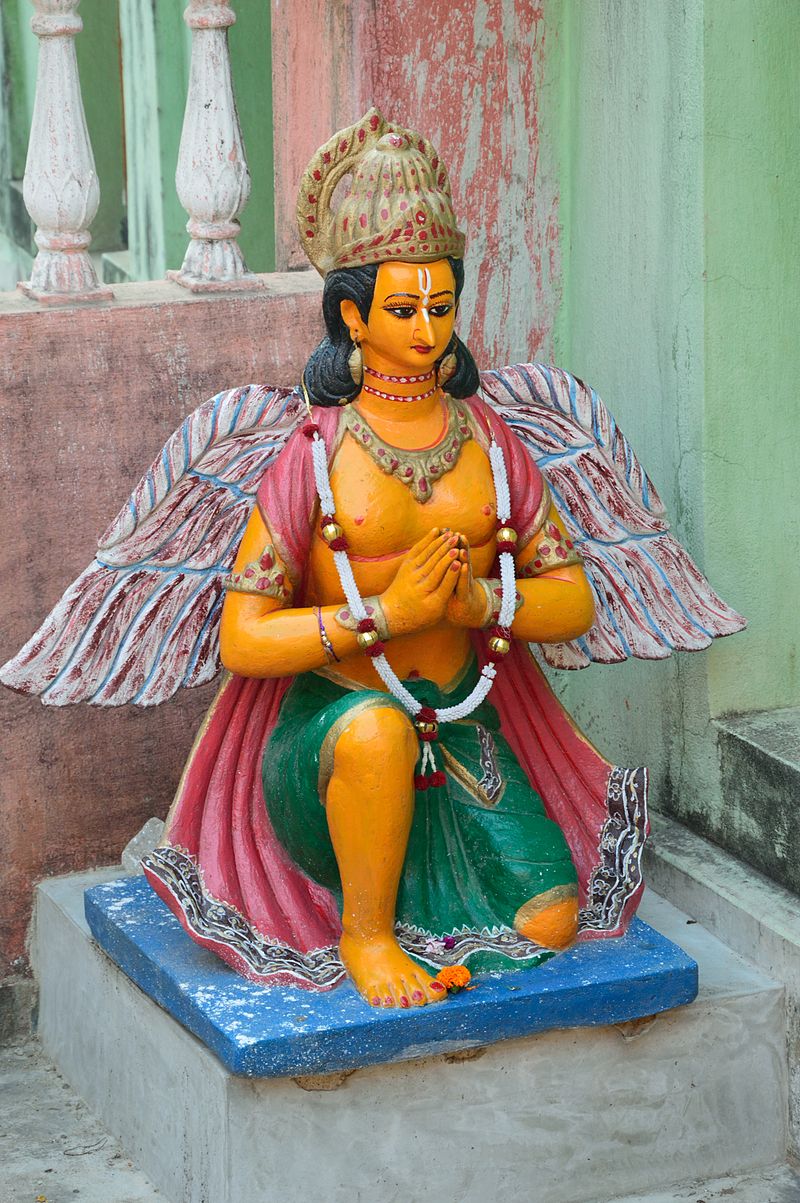


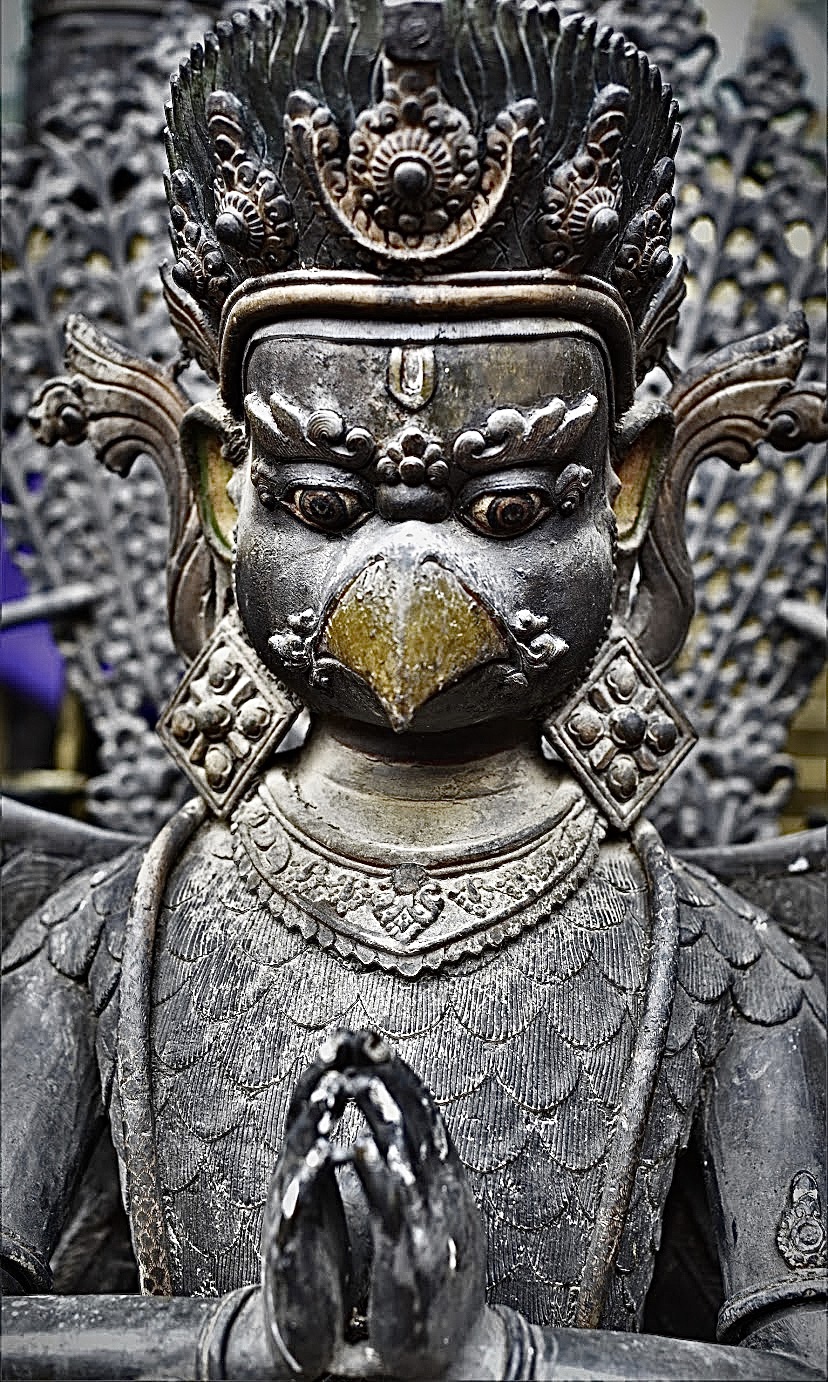



 Vedic
hymns that invoked the gods gave the deities certain characteristics
that associated them with the animals named, but in no manner do the
hymns give a feeling that an actual animal is being invoked (as would
have been in the case of animistic worship). While associating animals
as vahanas seem to be of a later development, divinities being shown as
humans with animals by their side is an old concept. Innumerable
Harappan seals depict both animals and humans which were most likely
divinities worshipped by the locals. There are also seals that depict
humans riding animals, while some are composite art showing human and
animal parts in one body. Harappan seals also show animals being carried
by humans in ceremonial processions, a practice also depicted on
Amaravati relief panels where a bull effigy is seen carried in a
procession. Animals are again found on columns from the Ashokan
era, which many scholars (Banerjea, KK Ganguli, KK Dasgupta, RP Chanda,
etc) say are more likely to represent the various religious sects
existing at that time, such as the bull would
Vedic
hymns that invoked the gods gave the deities certain characteristics
that associated them with the animals named, but in no manner do the
hymns give a feeling that an actual animal is being invoked (as would
have been in the case of animistic worship). While associating animals
as vahanas seem to be of a later development, divinities being shown as
humans with animals by their side is an old concept. Innumerable
Harappan seals depict both animals and humans which were most likely
divinities worshipped by the locals. There are also seals that depict
humans riding animals, while some are composite art showing human and
animal parts in one body. Harappan seals also show animals being carried
by humans in ceremonial processions, a practice also depicted on
Amaravati relief panels where a bull effigy is seen carried in a
procession. Animals are again found on columns from the Ashokan
era, which many scholars (Banerjea, KK Ganguli, KK Dasgupta, RP Chanda,
etc) say are more likely to represent the various religious sects
existing at that time, such as the bull would  represent Shiva, Simha or lion would represent Durga, etc., much in the lines of the 1st c. BCE Garuda pillar of Besnagar representing Vishnu.
Thus, it is quite clear that representing deities in one or the other
animal form is an ancient practice. In terms of iconography it is seen
that the deities liked sitting on their vahanas for some time (Shiva in
Saka and Kushana eras), but later the vahanas got relegated to the
pedestal and turned into just a token, reflecting their once
significance as a mount.
represent Shiva, Simha or lion would represent Durga, etc., much in the lines of the 1st c. BCE Garuda pillar of Besnagar representing Vishnu.
Thus, it is quite clear that representing deities in one or the other
animal form is an ancient practice. In terms of iconography it is seen
that the deities liked sitting on their vahanas for some time (Shiva in
Saka and Kushana eras), but later the vahanas got relegated to the
pedestal and turned into just a token, reflecting their once
significance as a mount.






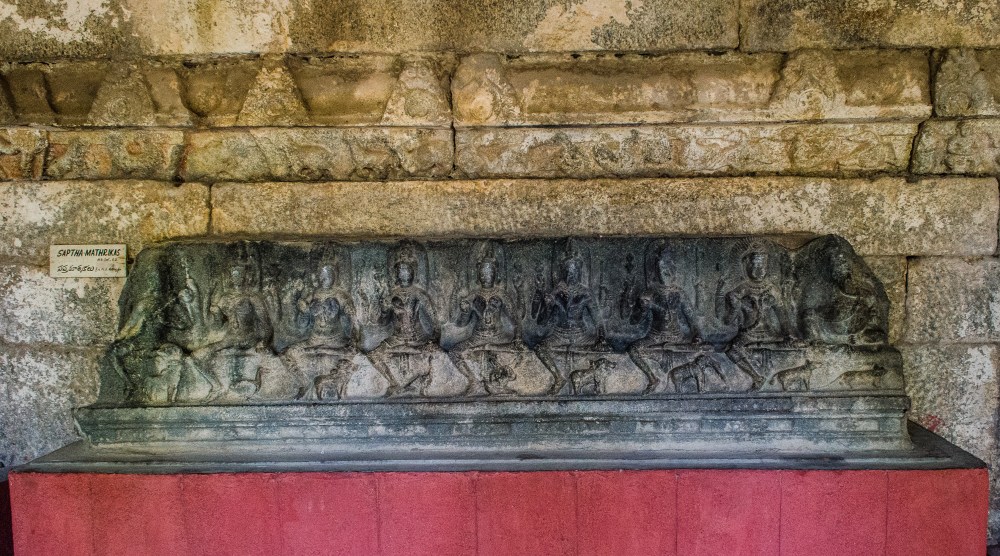








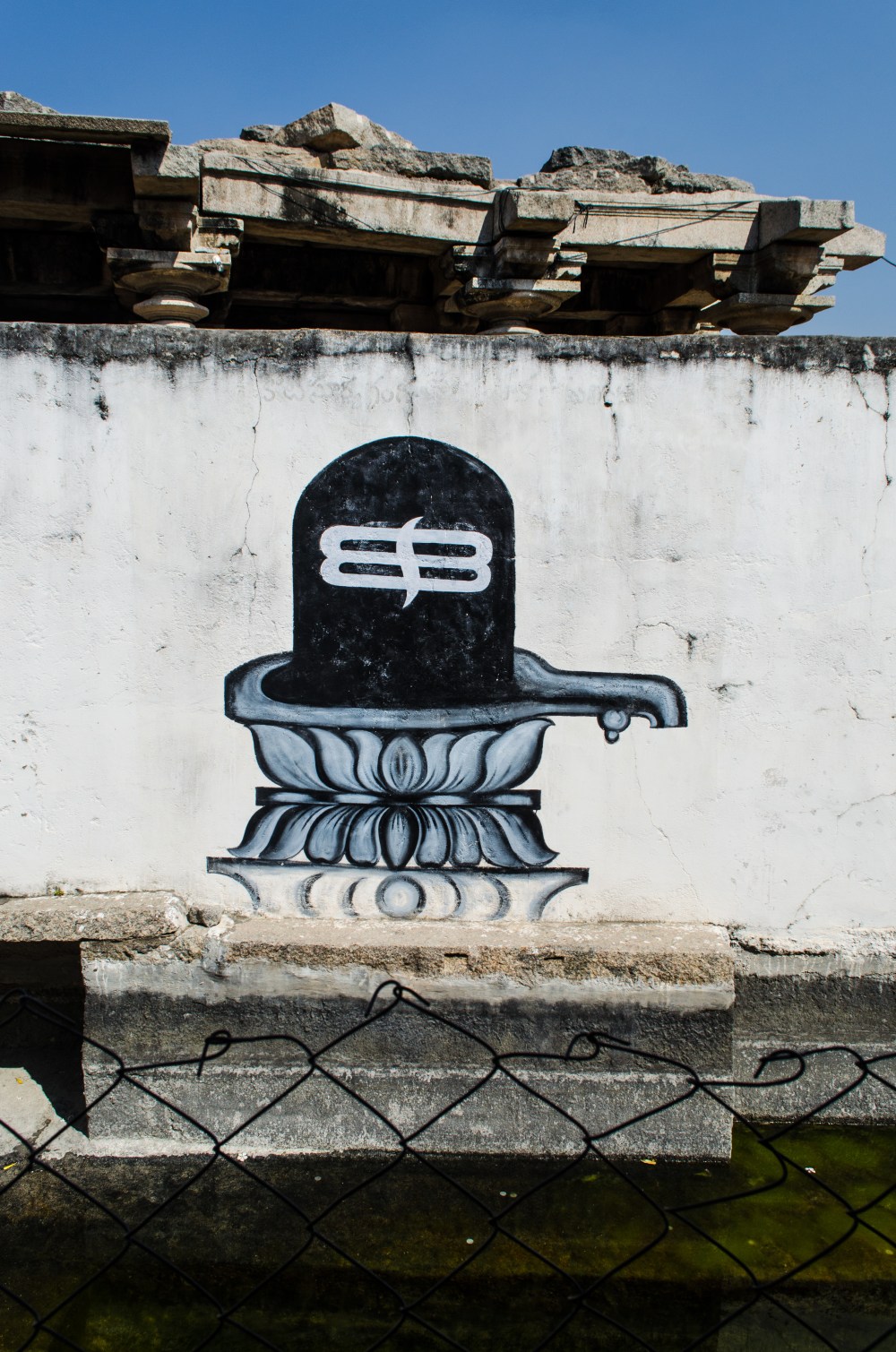




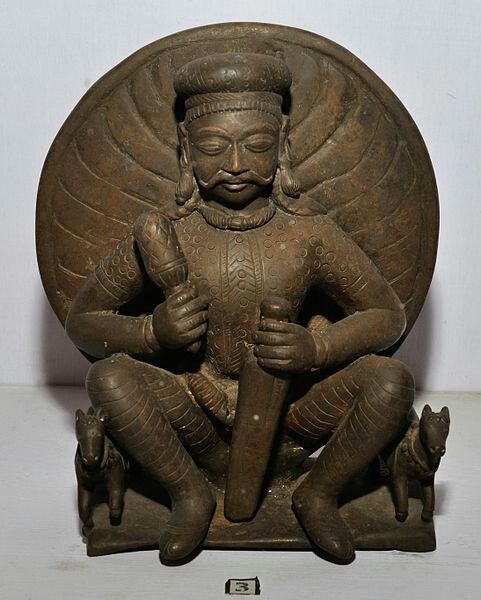
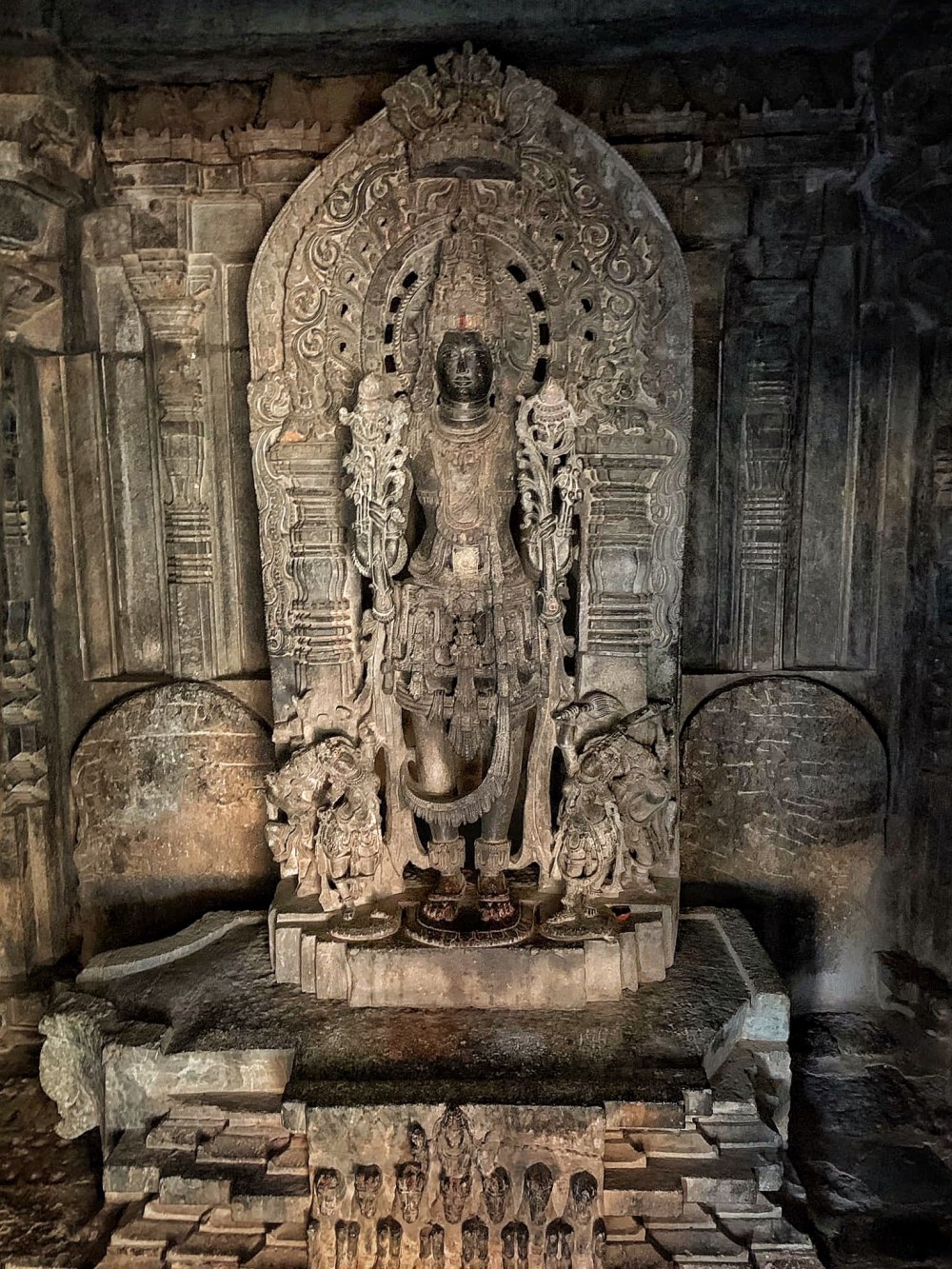
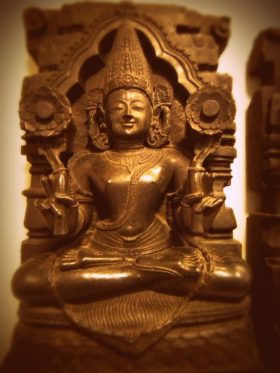
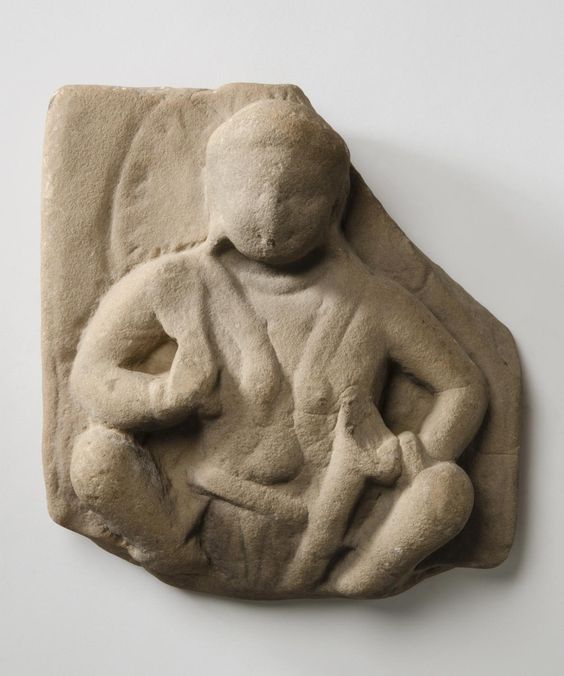
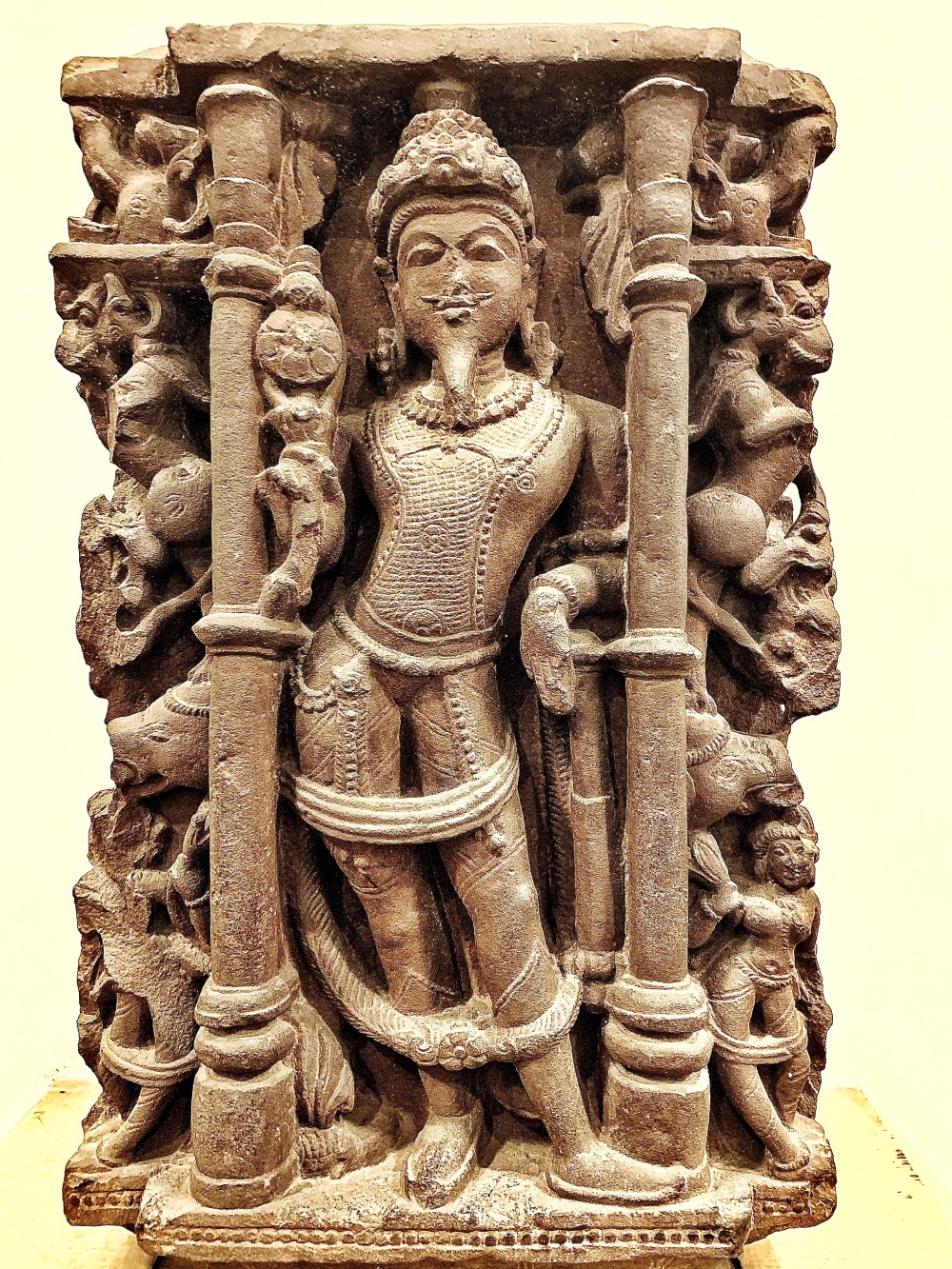
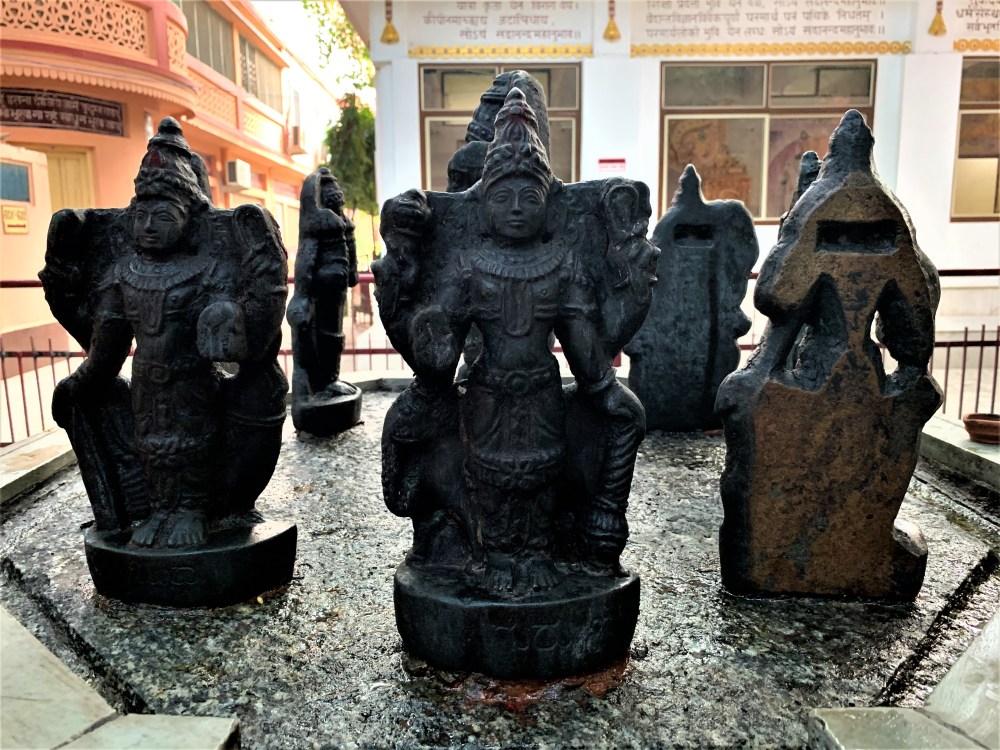
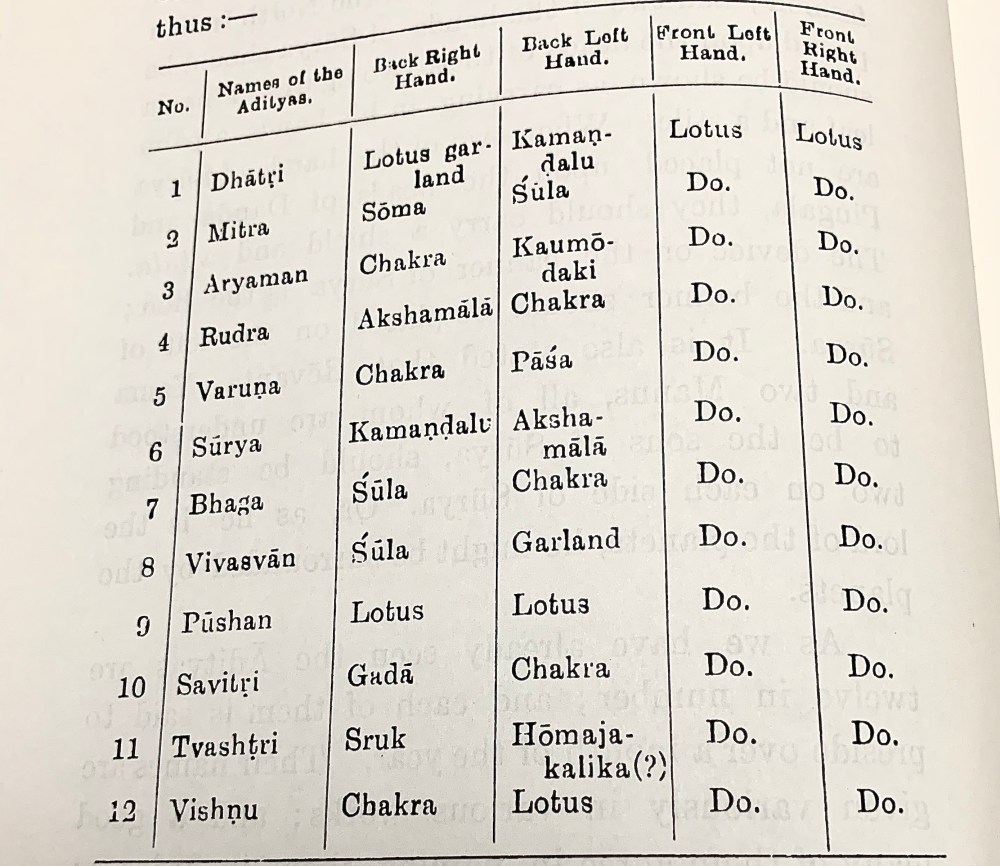

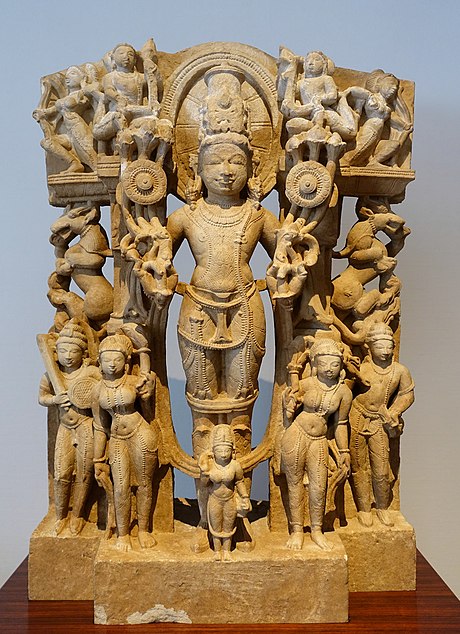
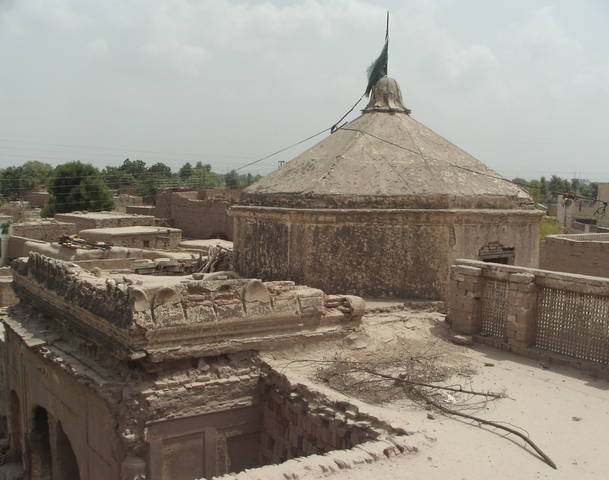
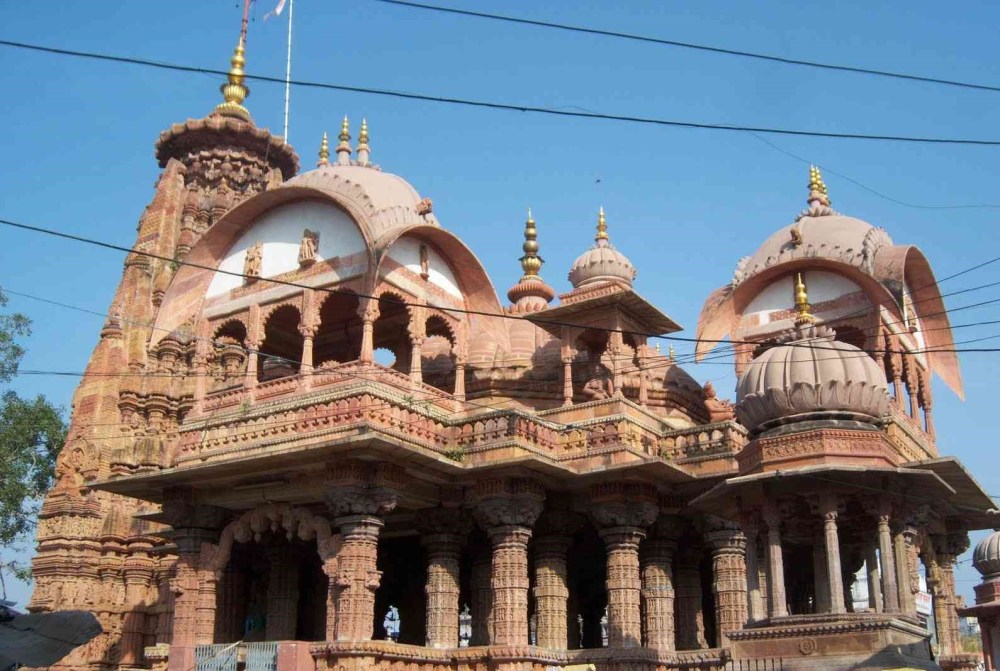
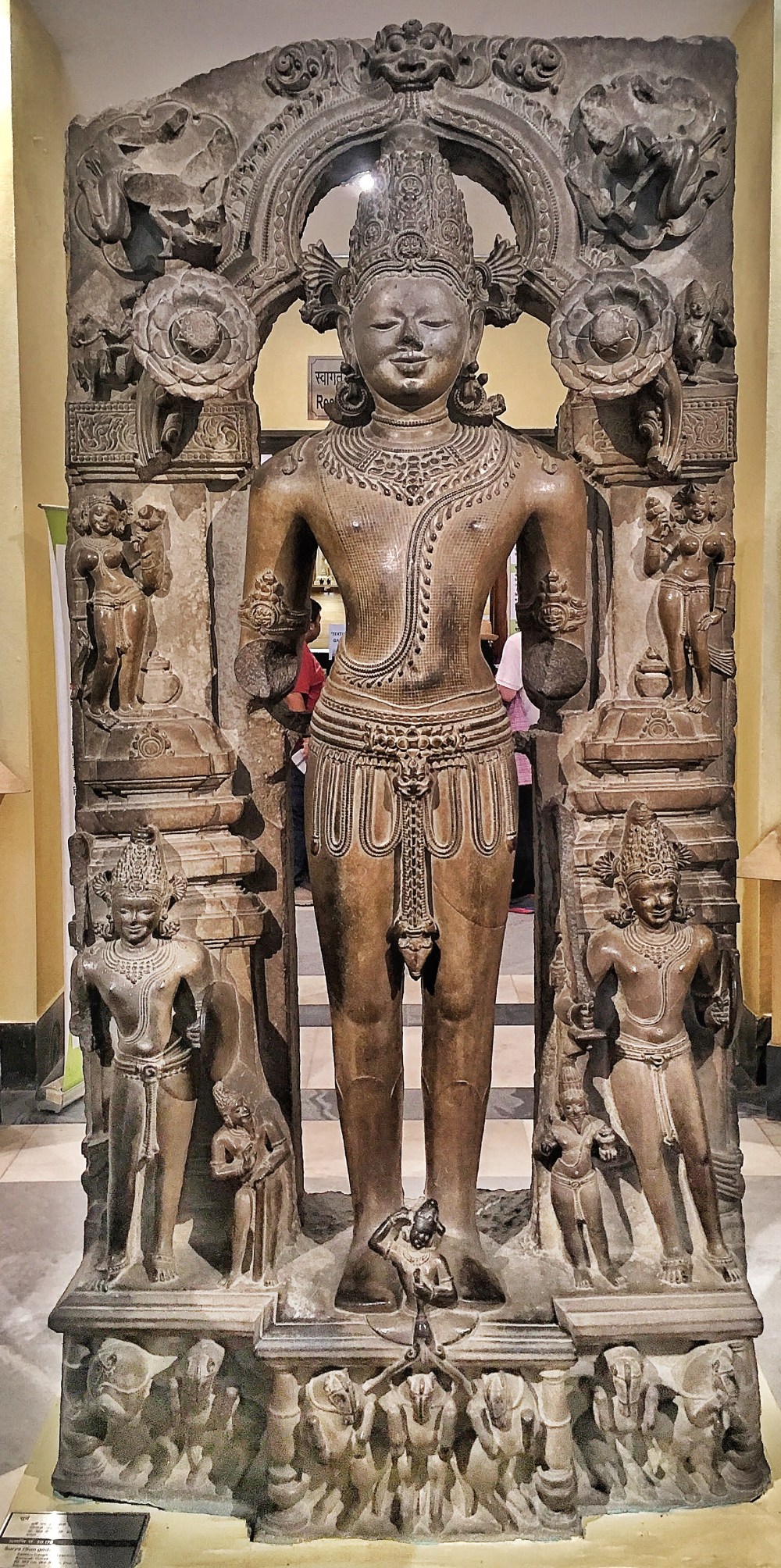
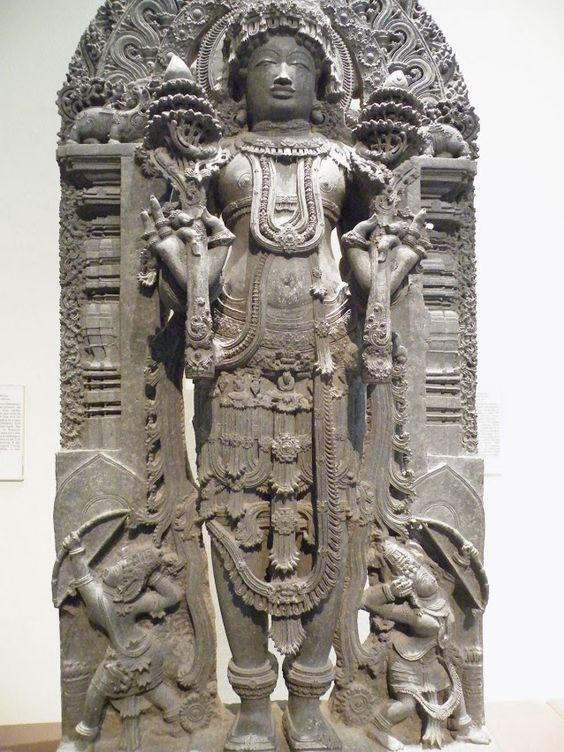
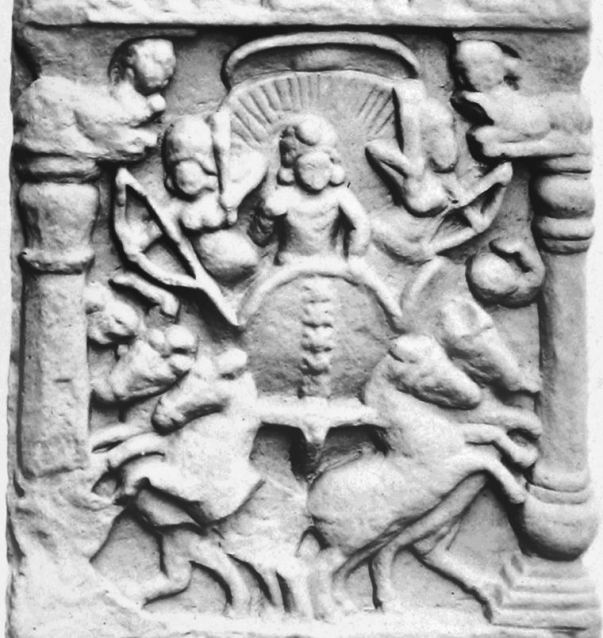
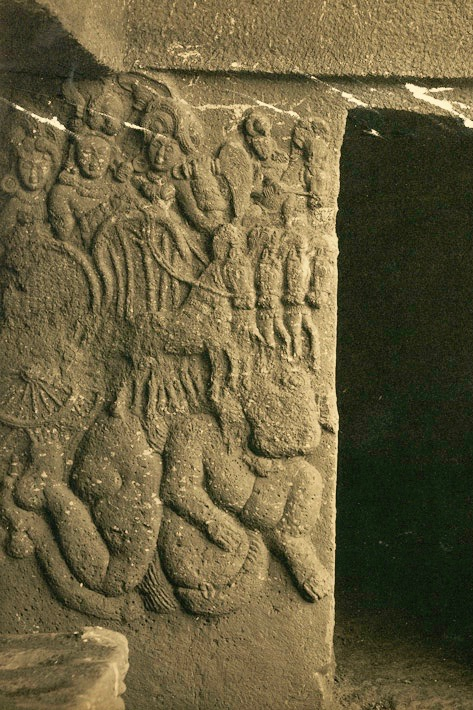
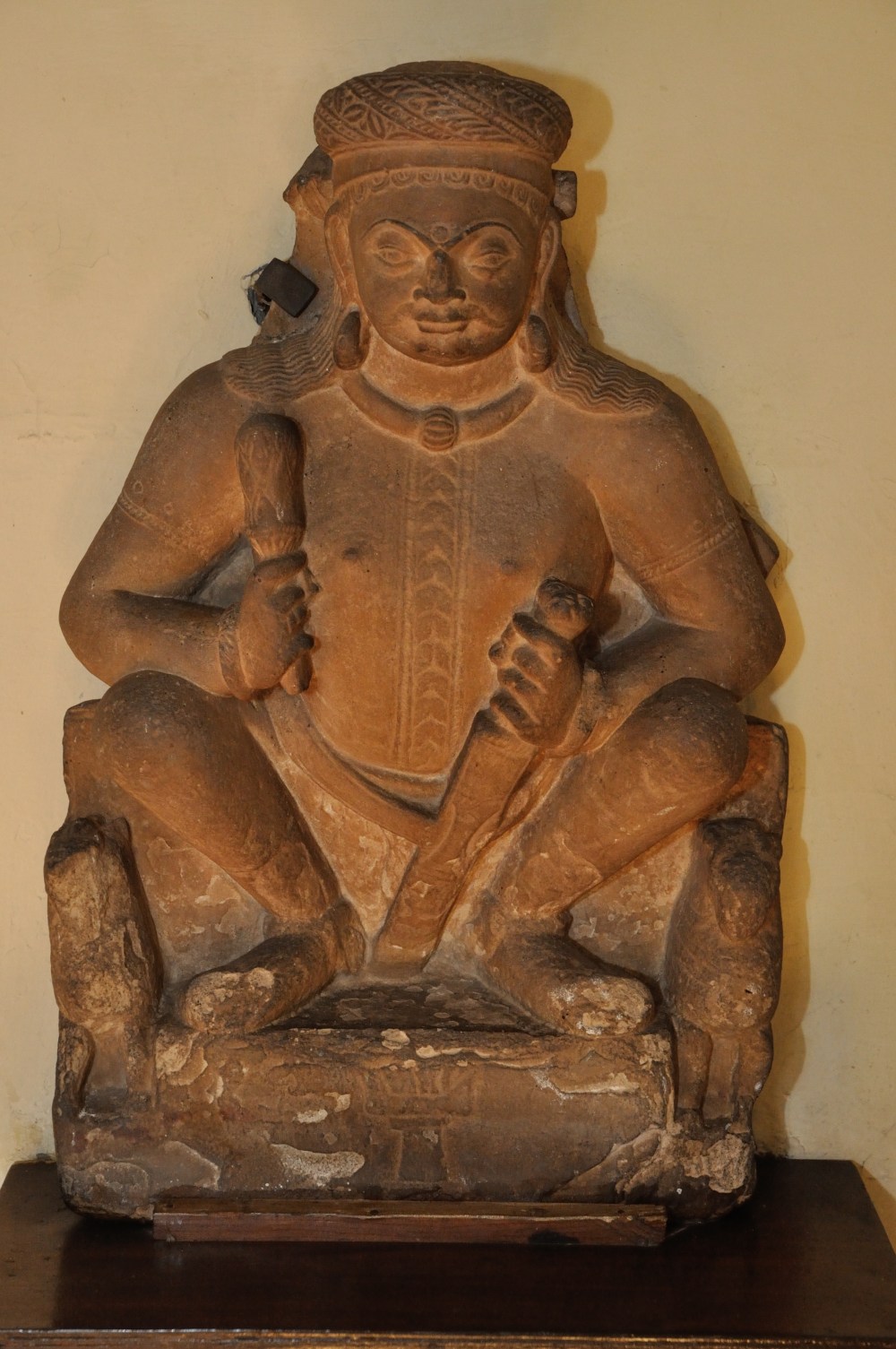

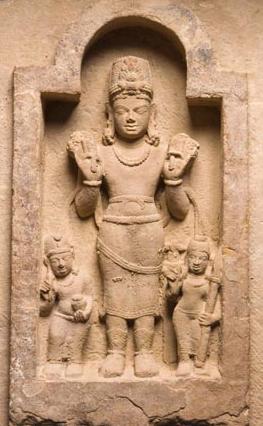
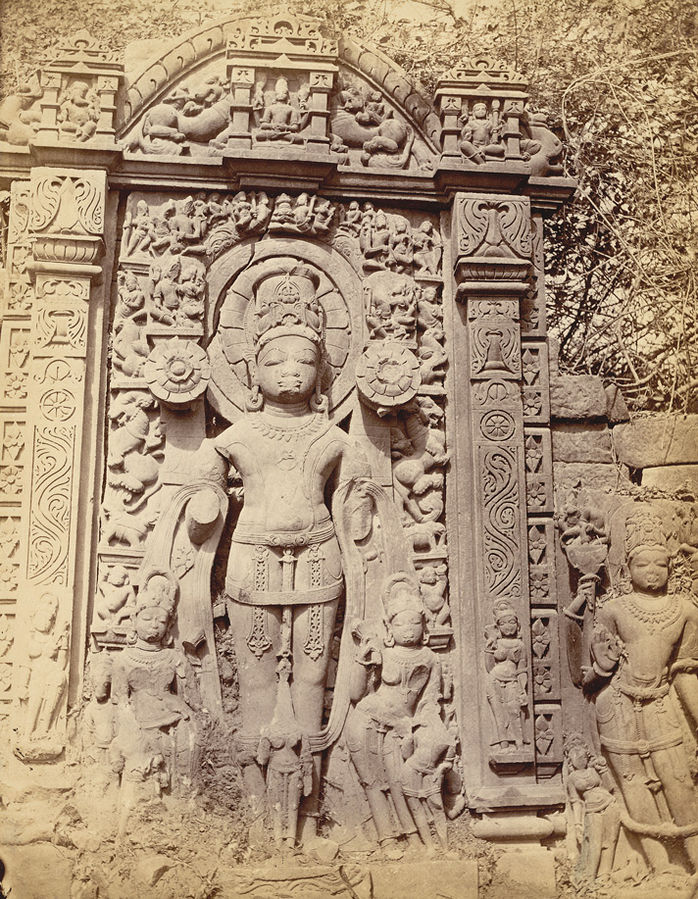
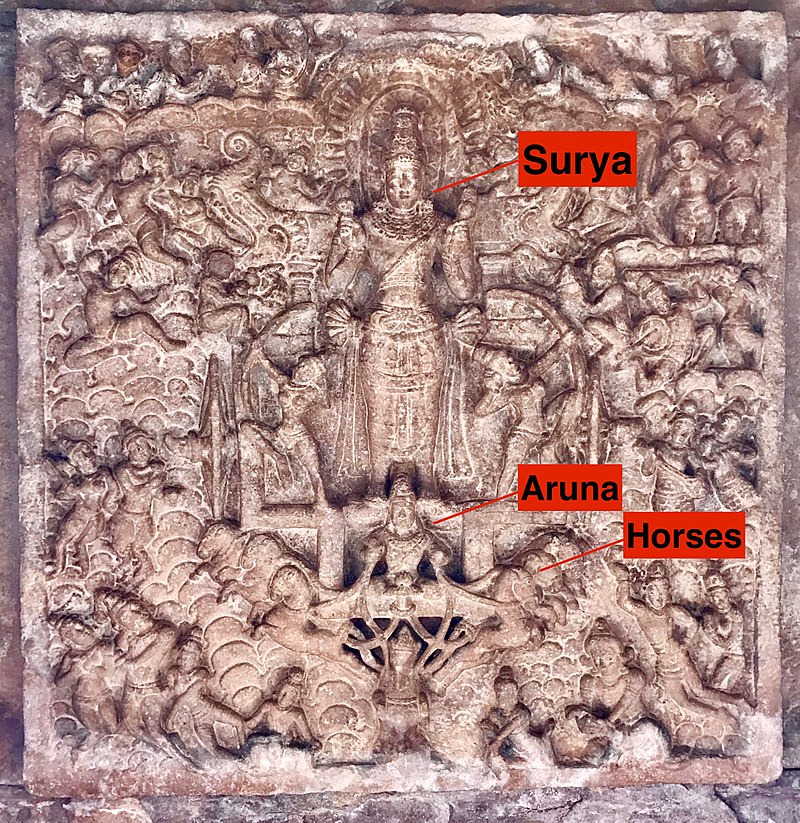
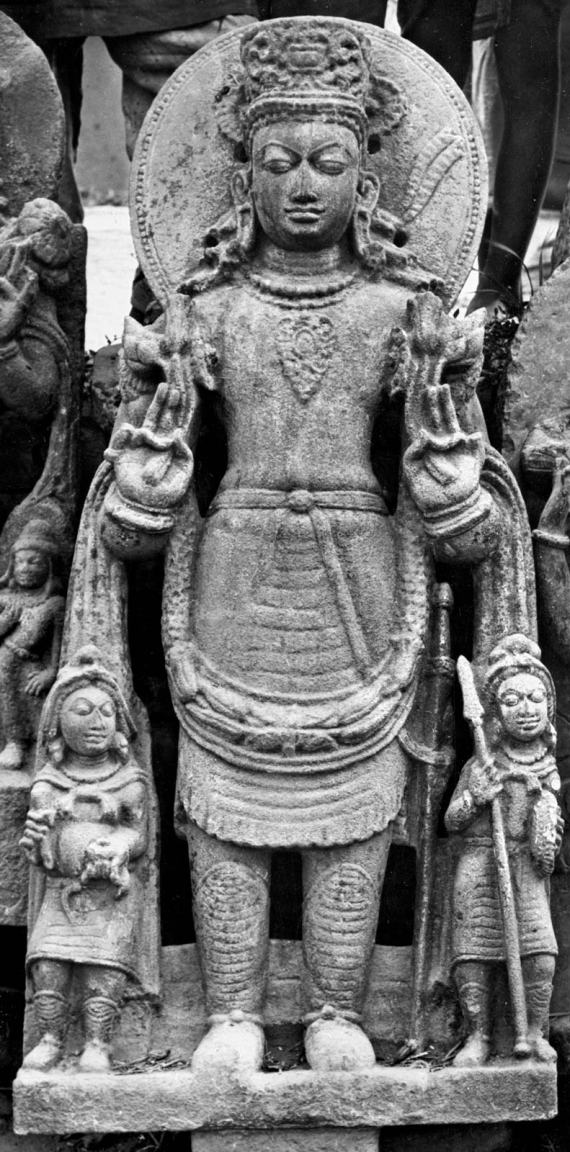
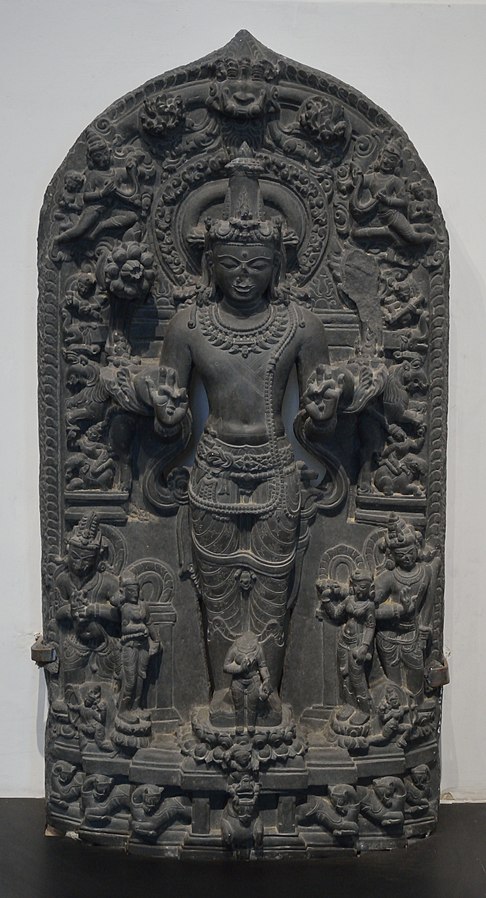


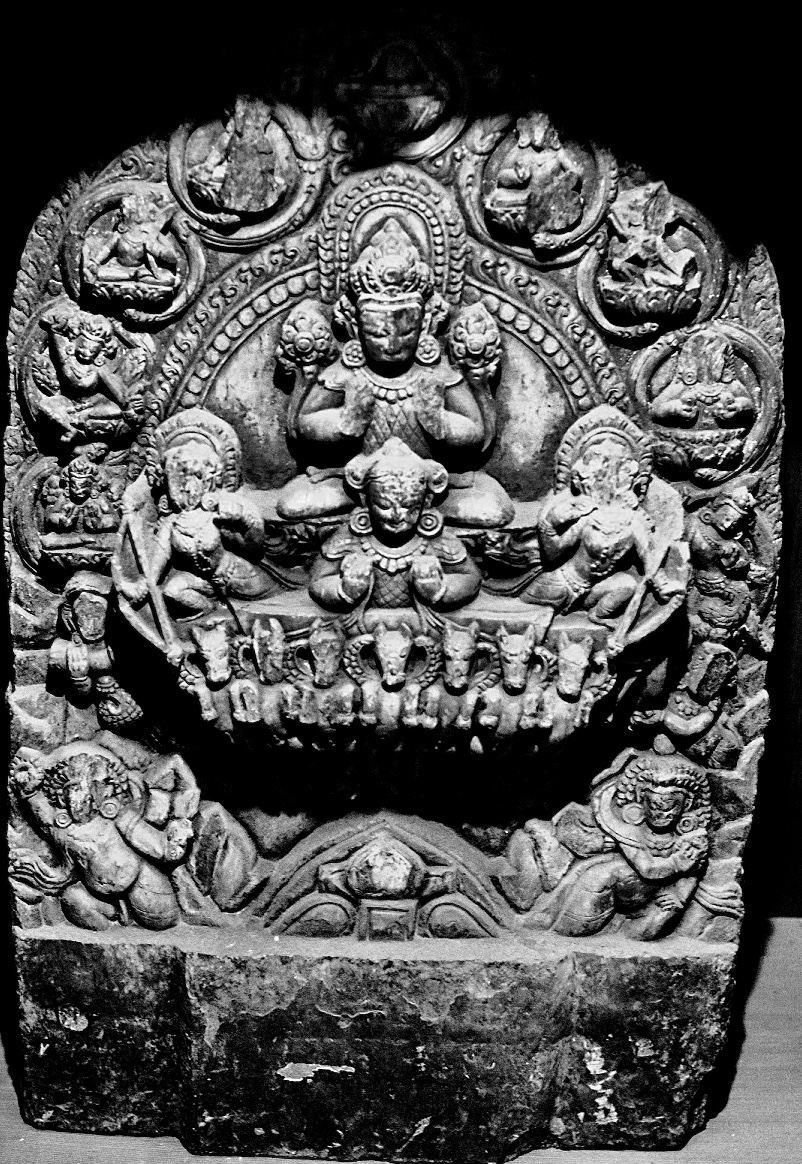
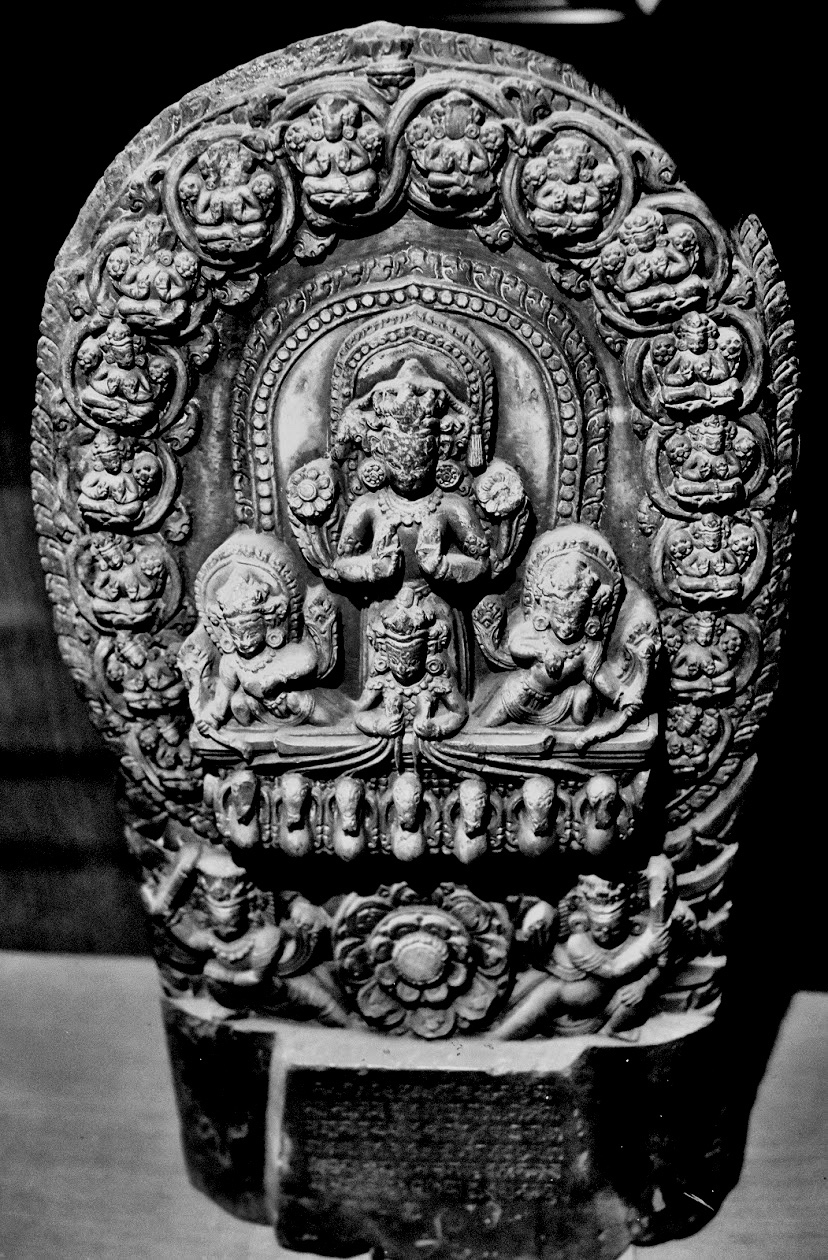


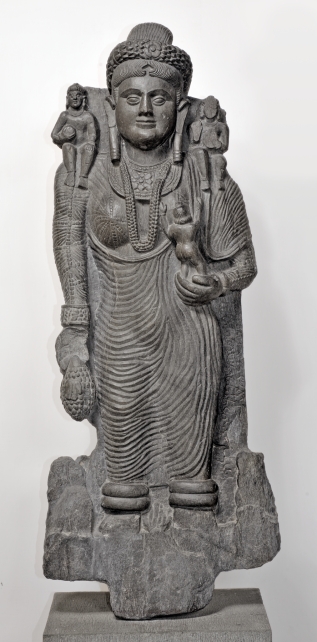




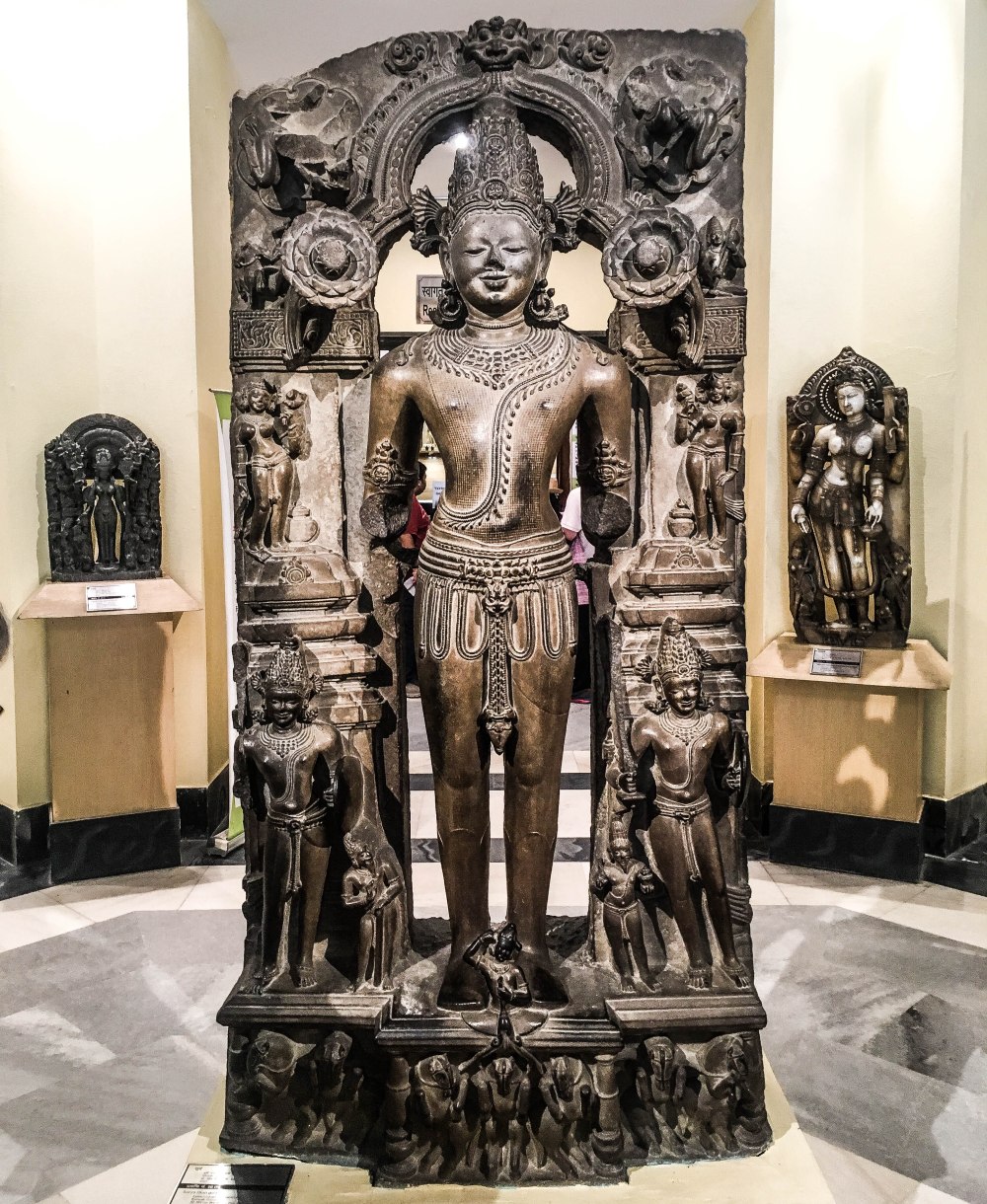
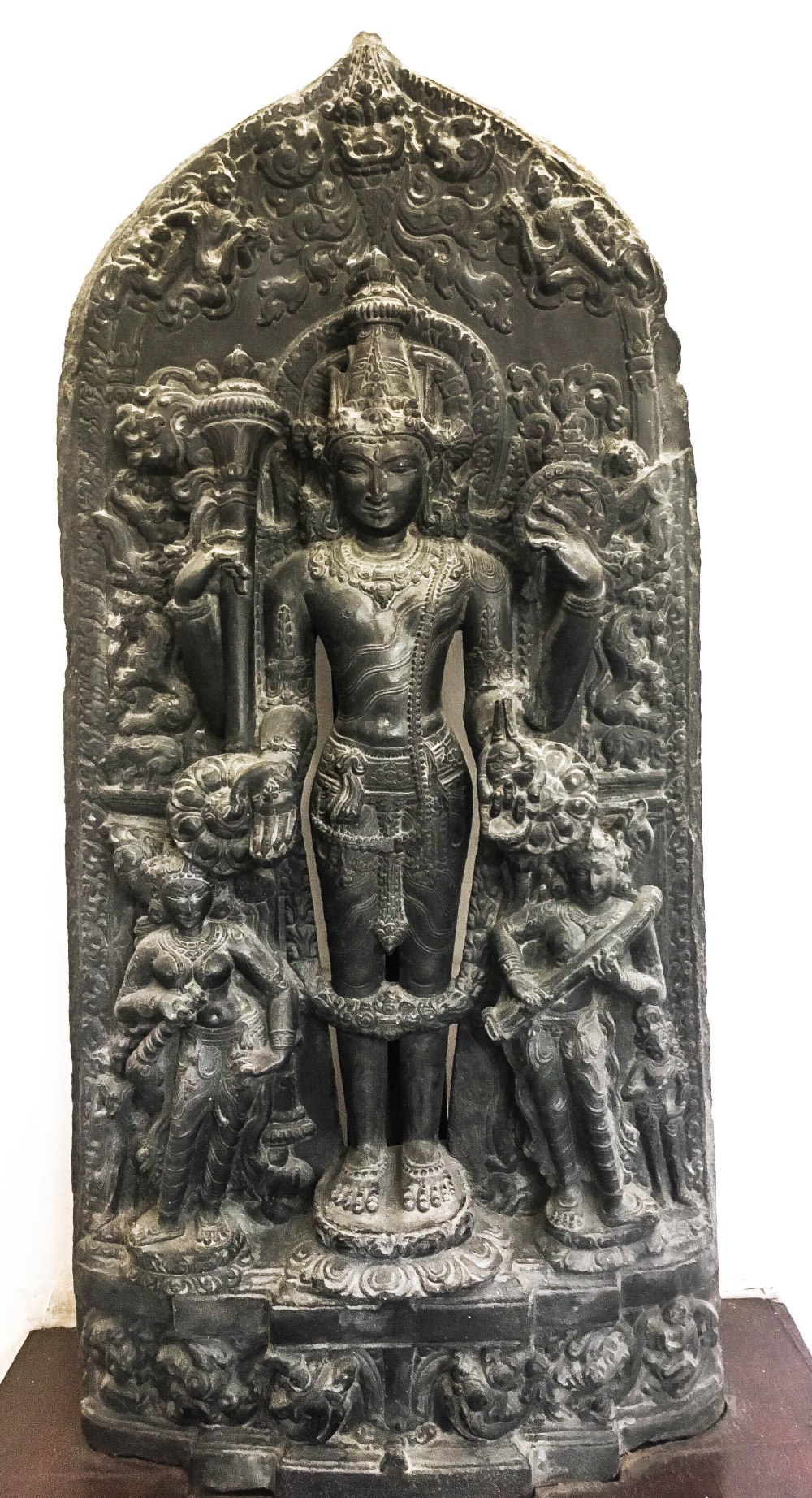


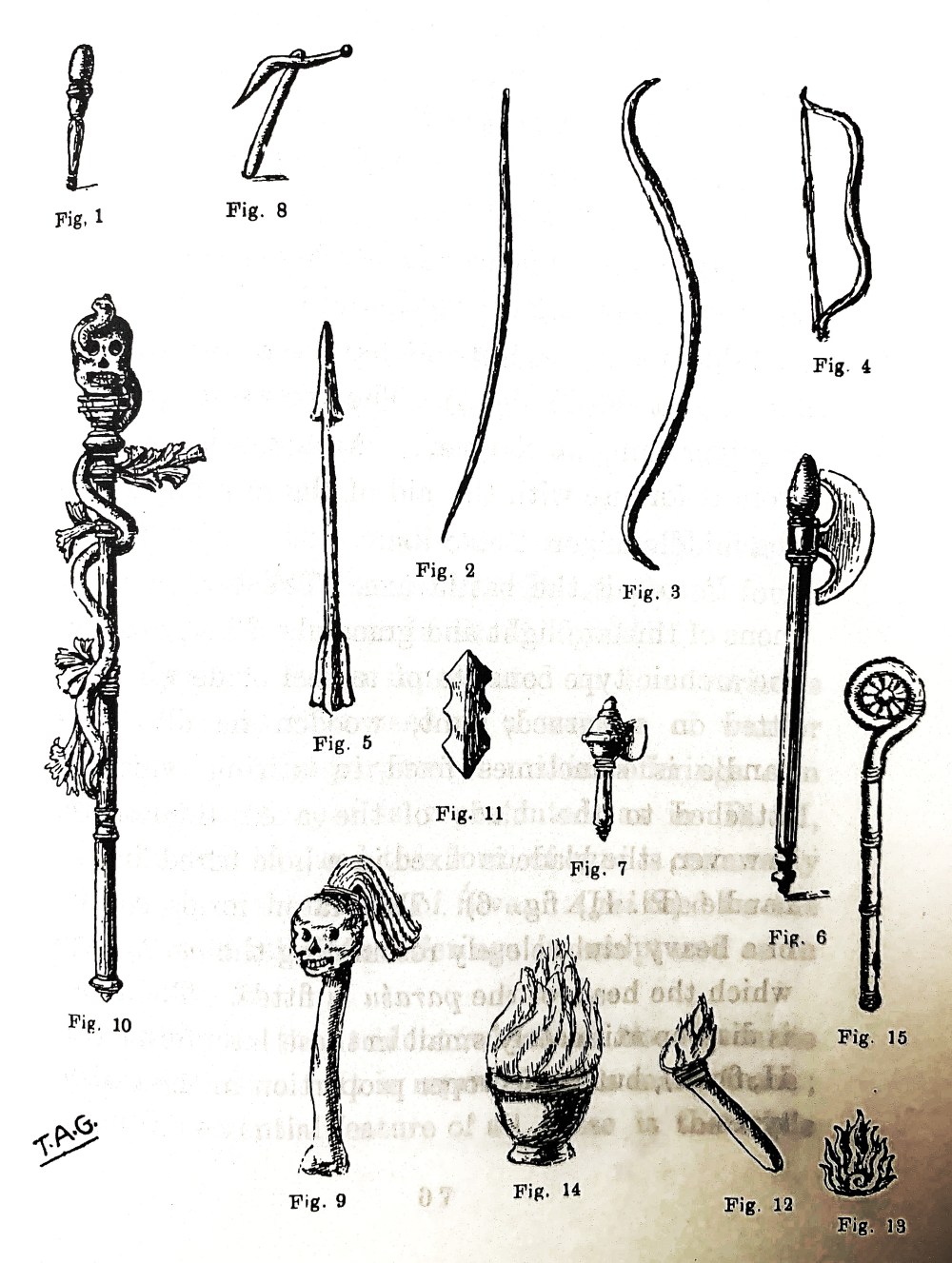
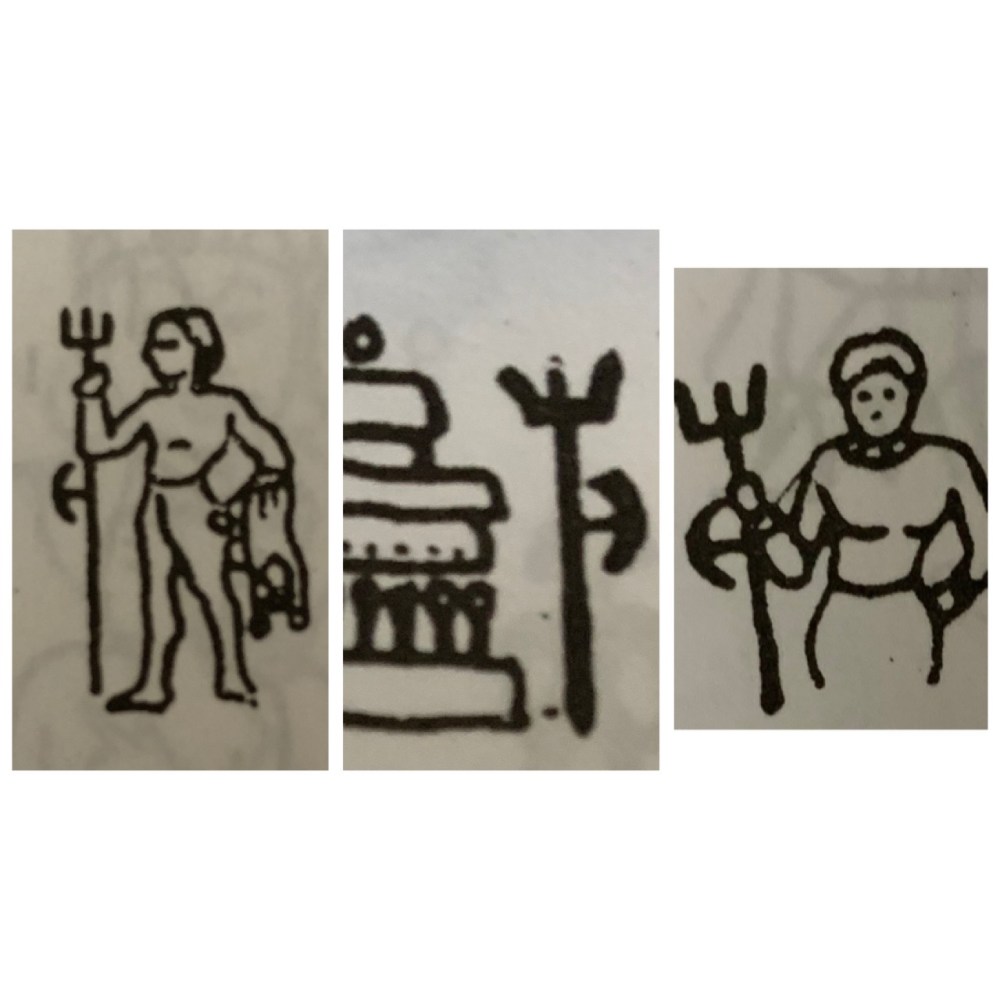


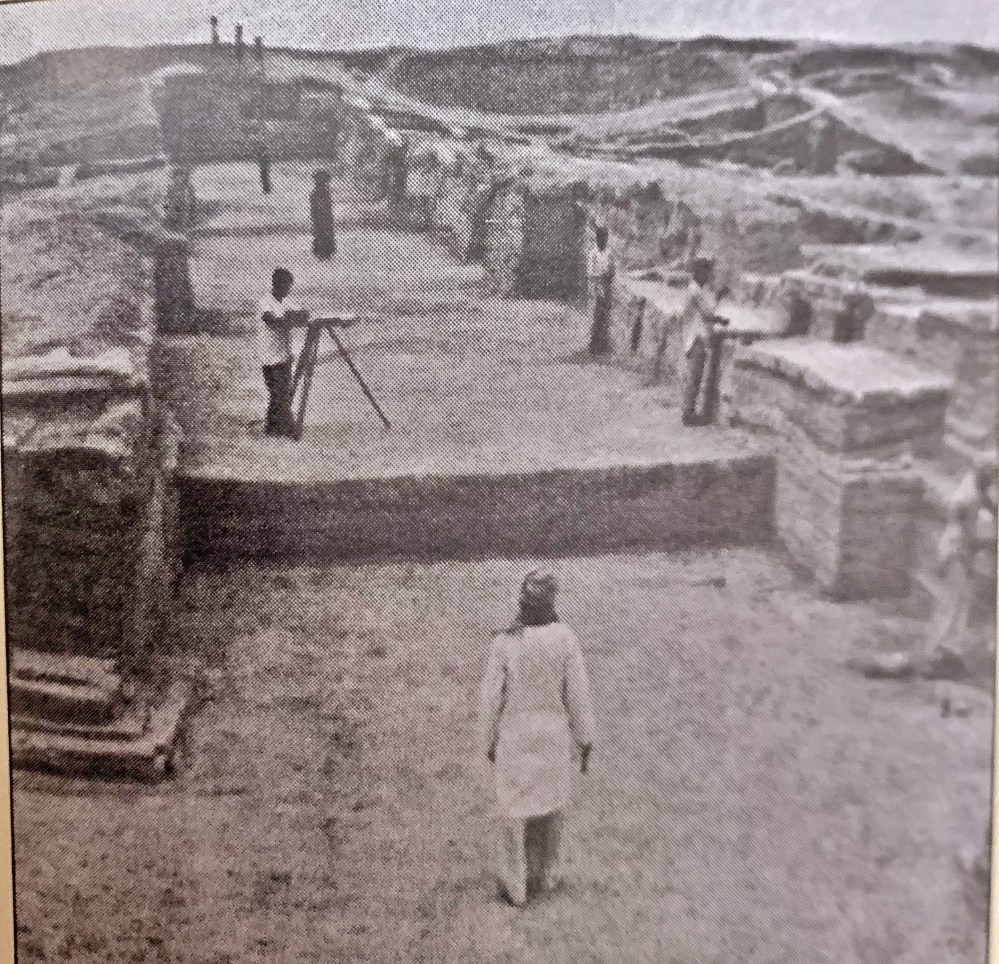



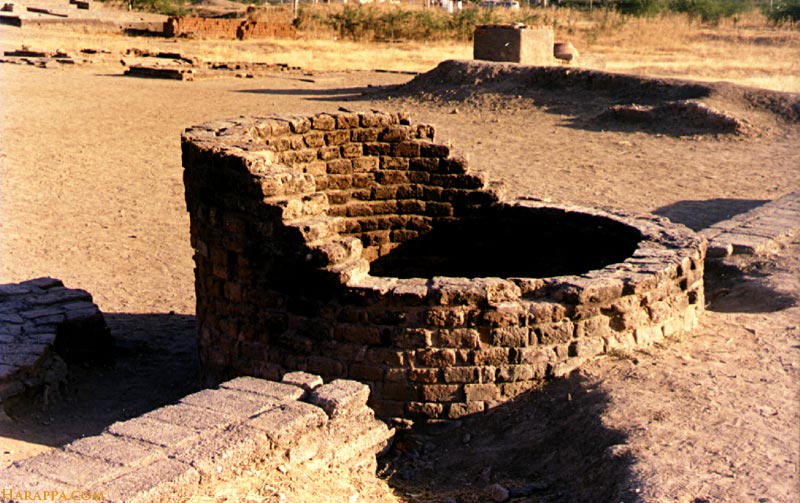

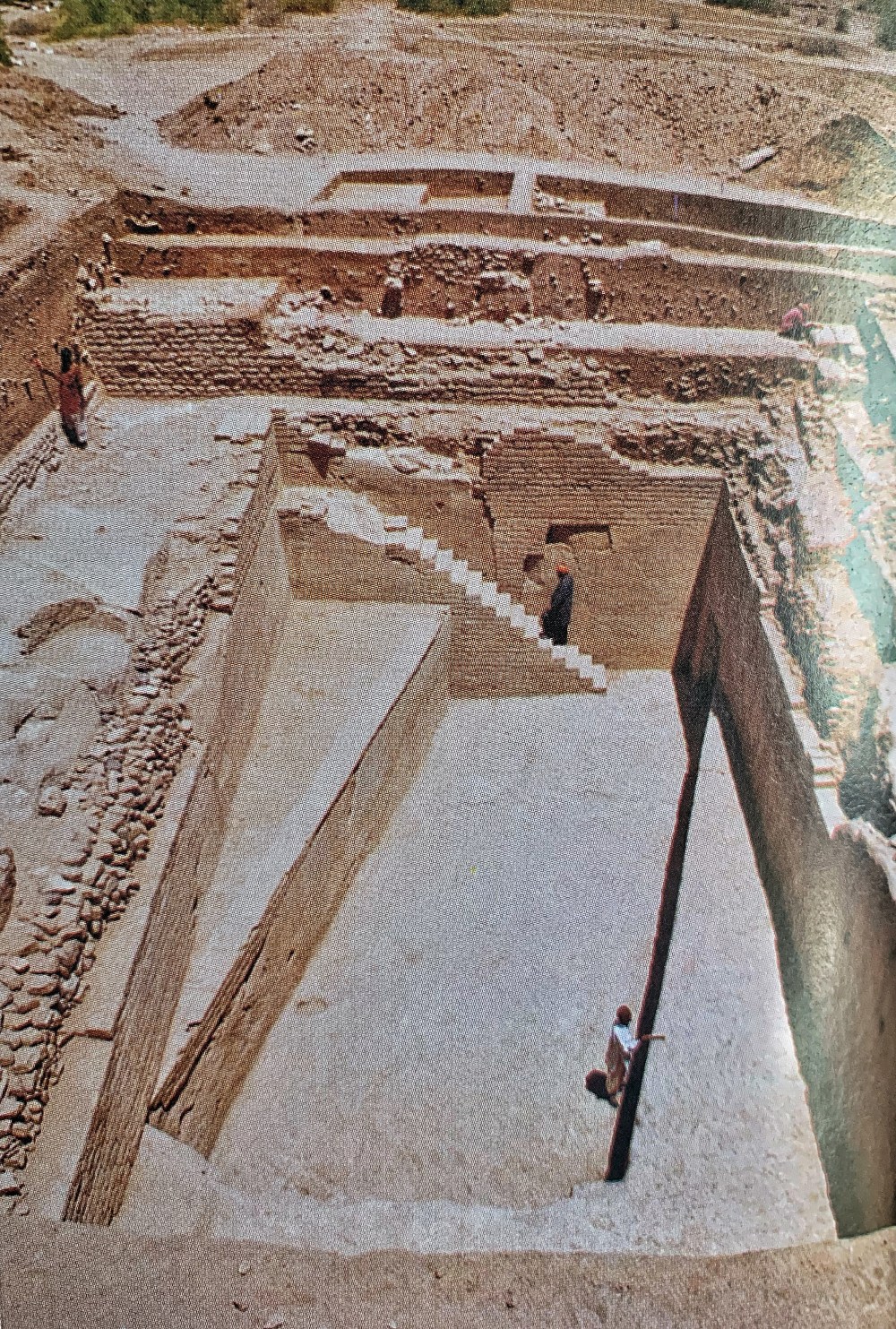
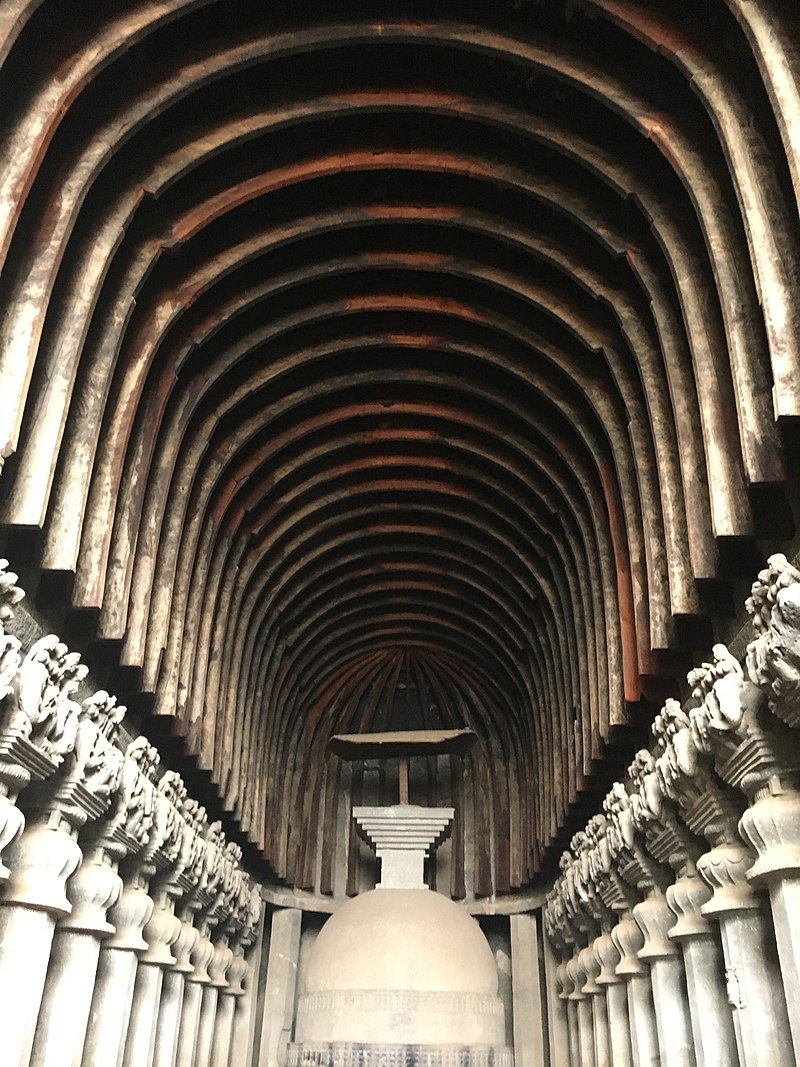
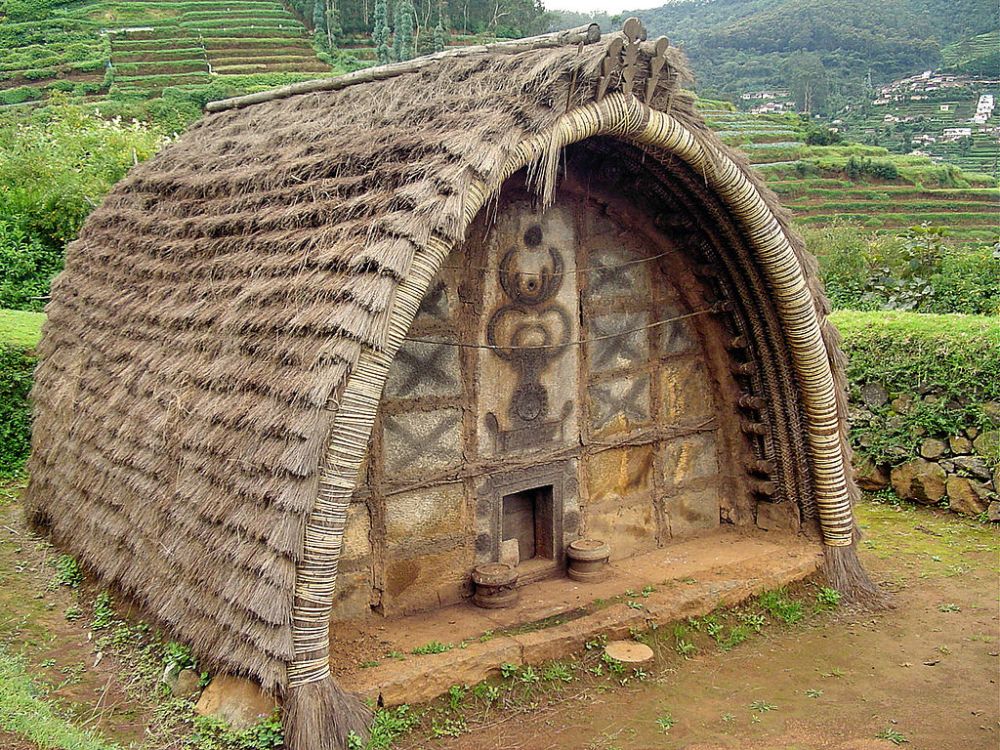


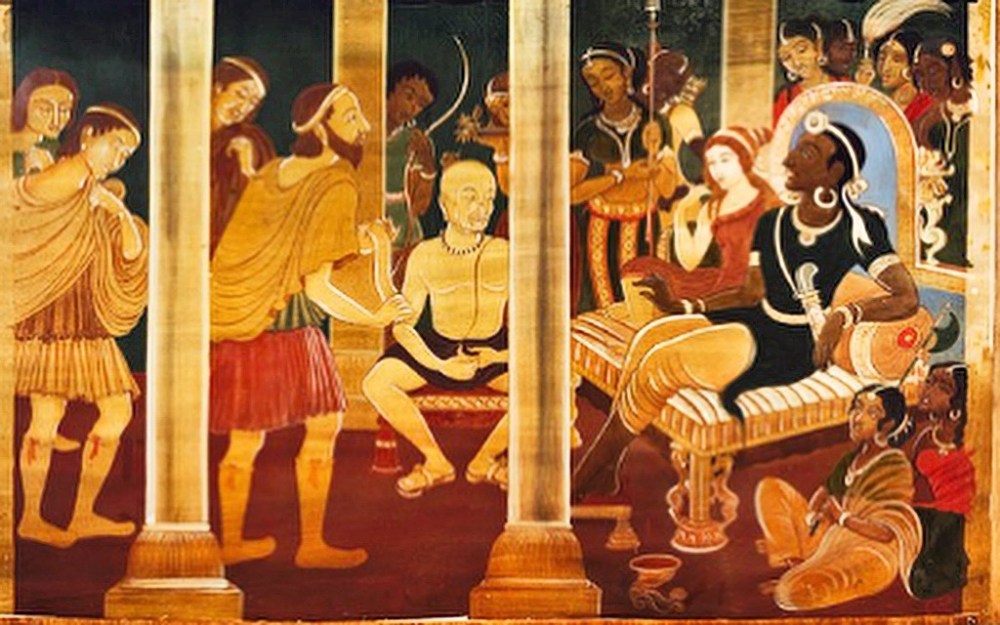
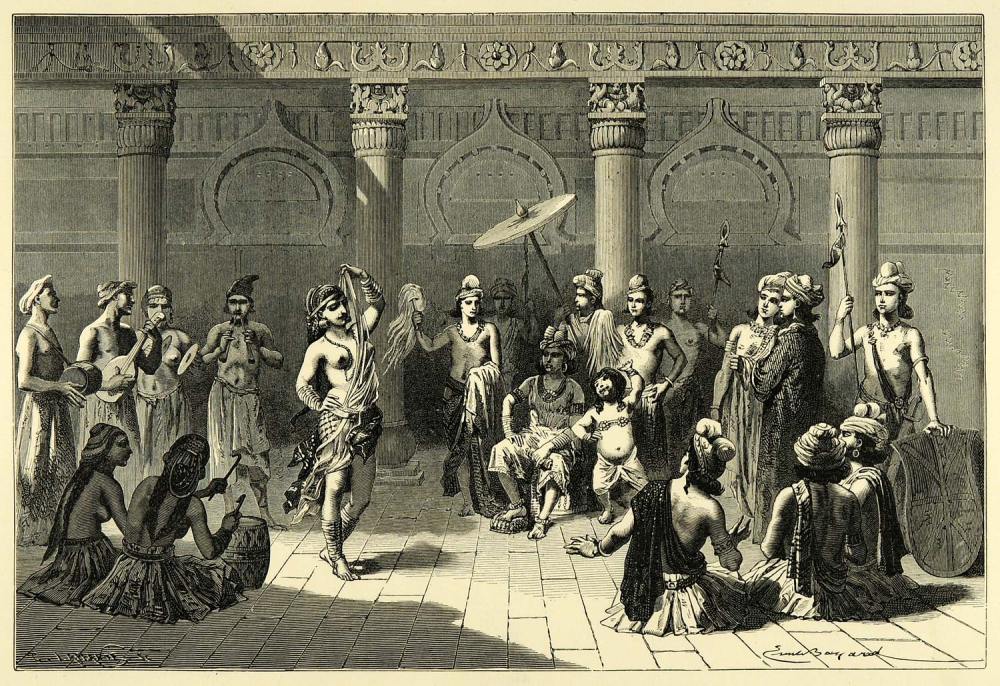
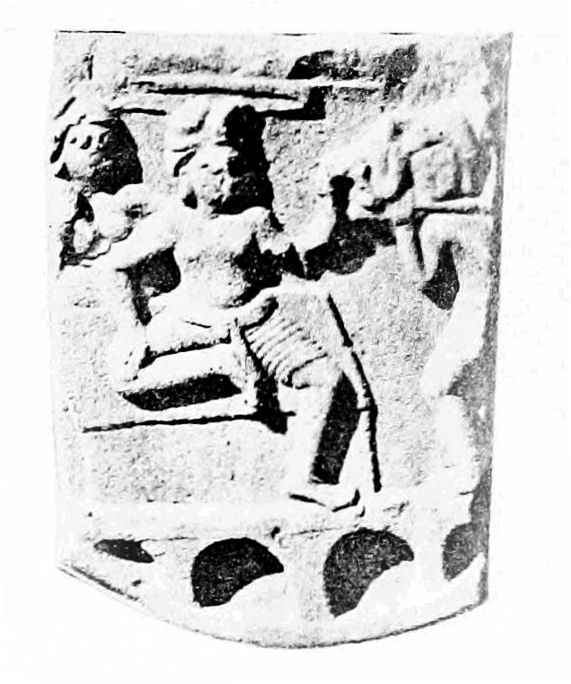



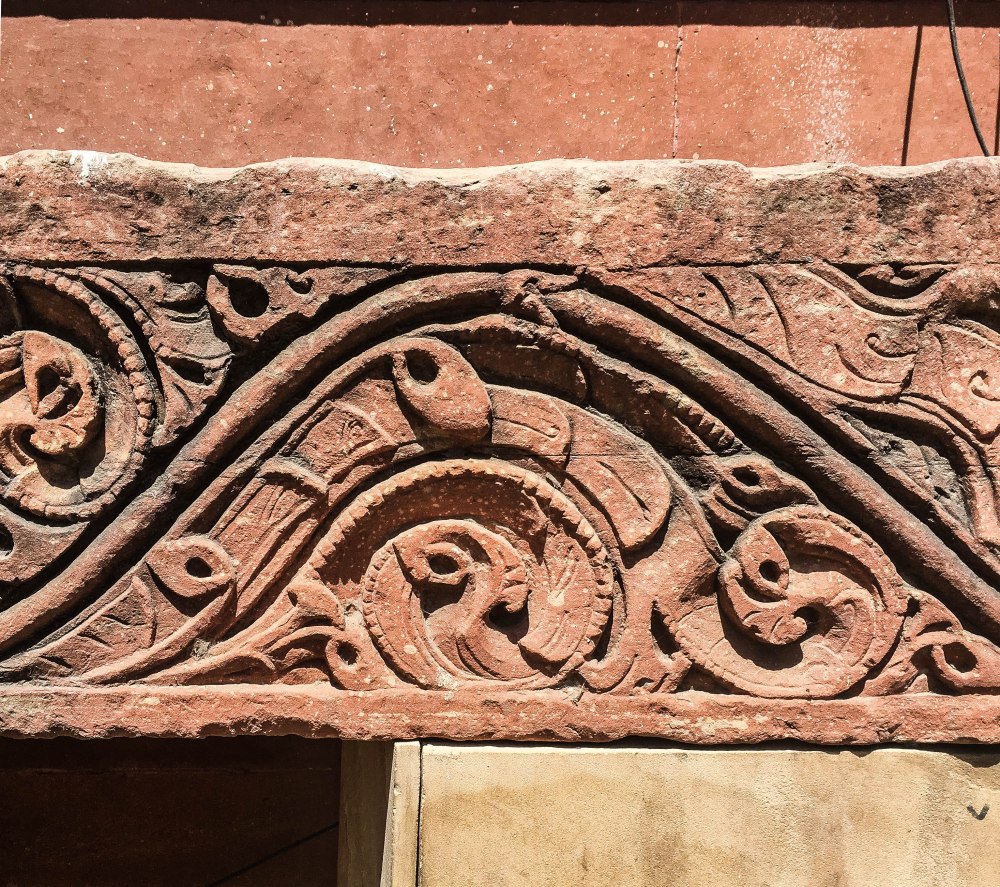
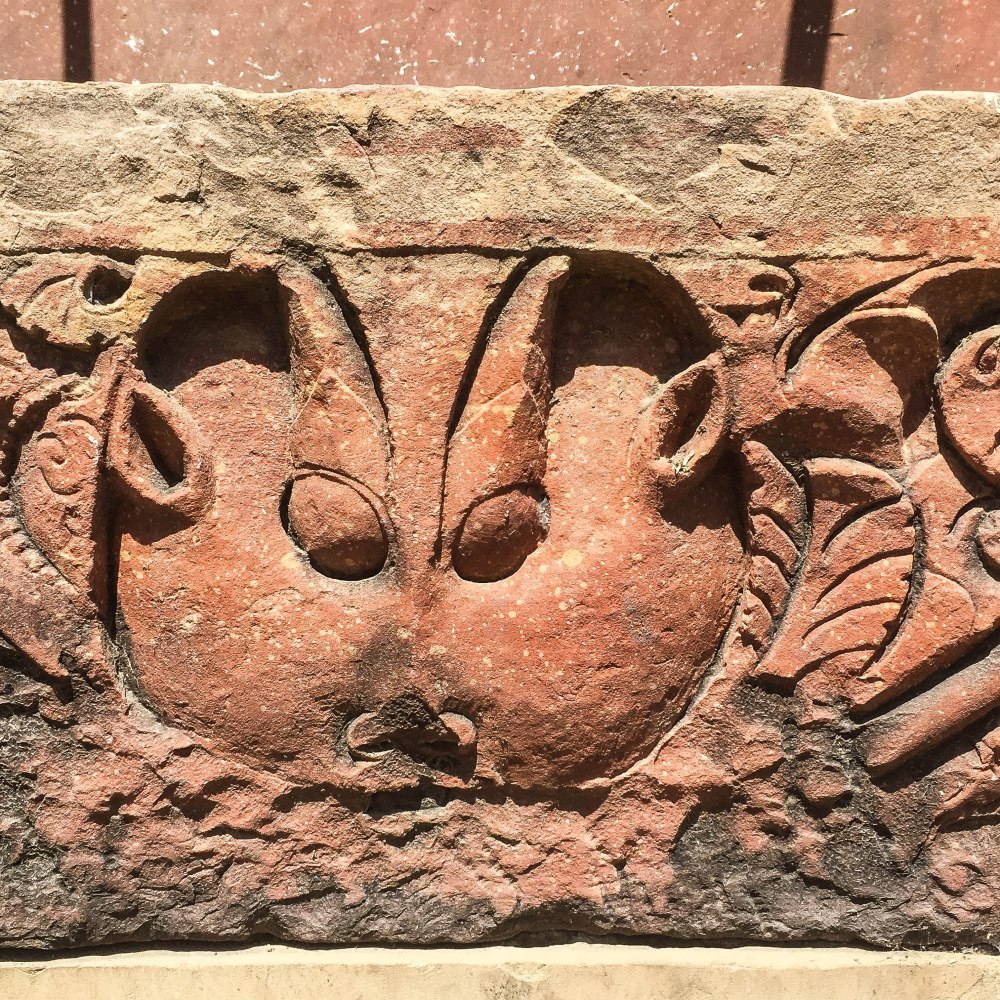
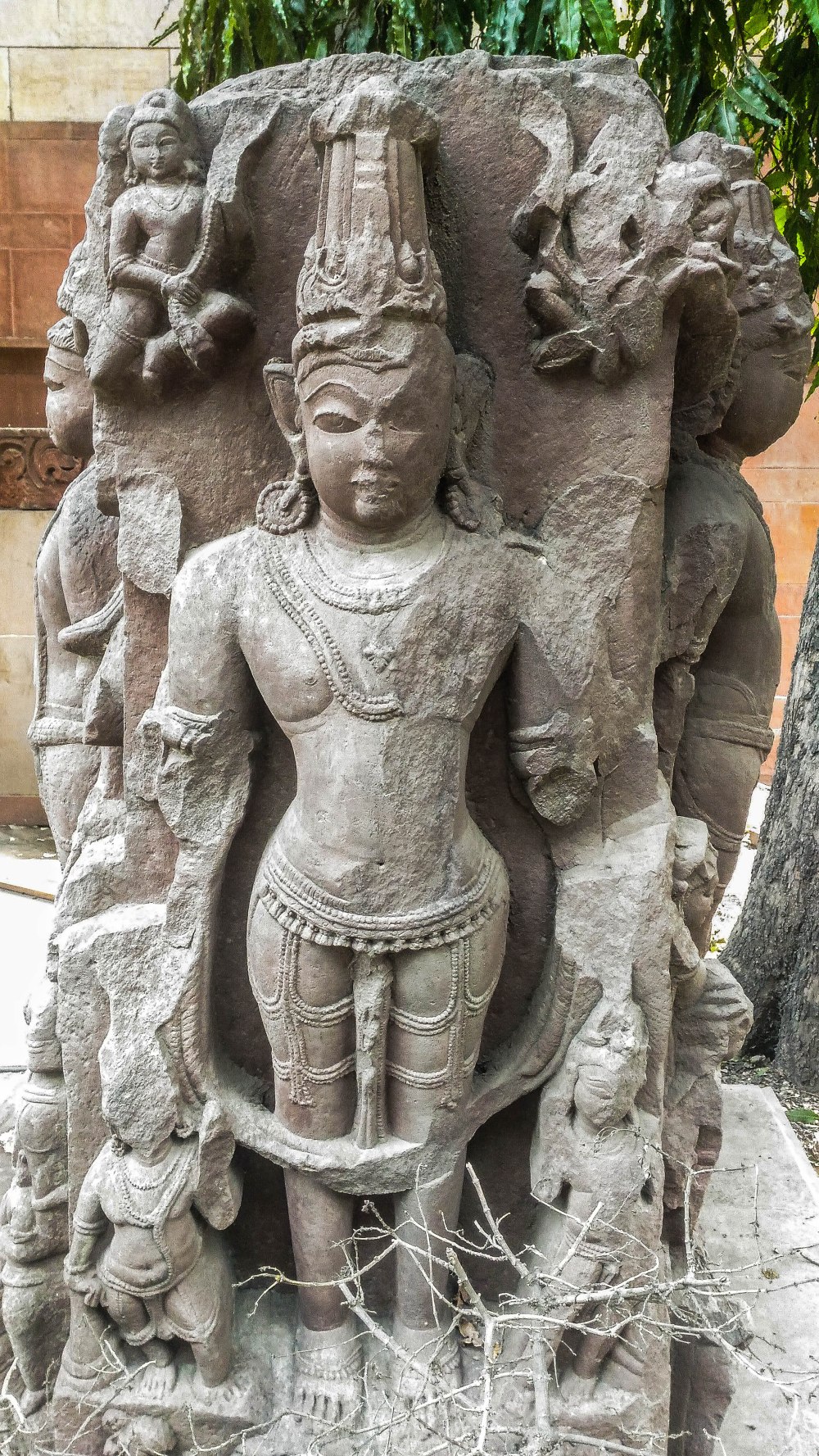
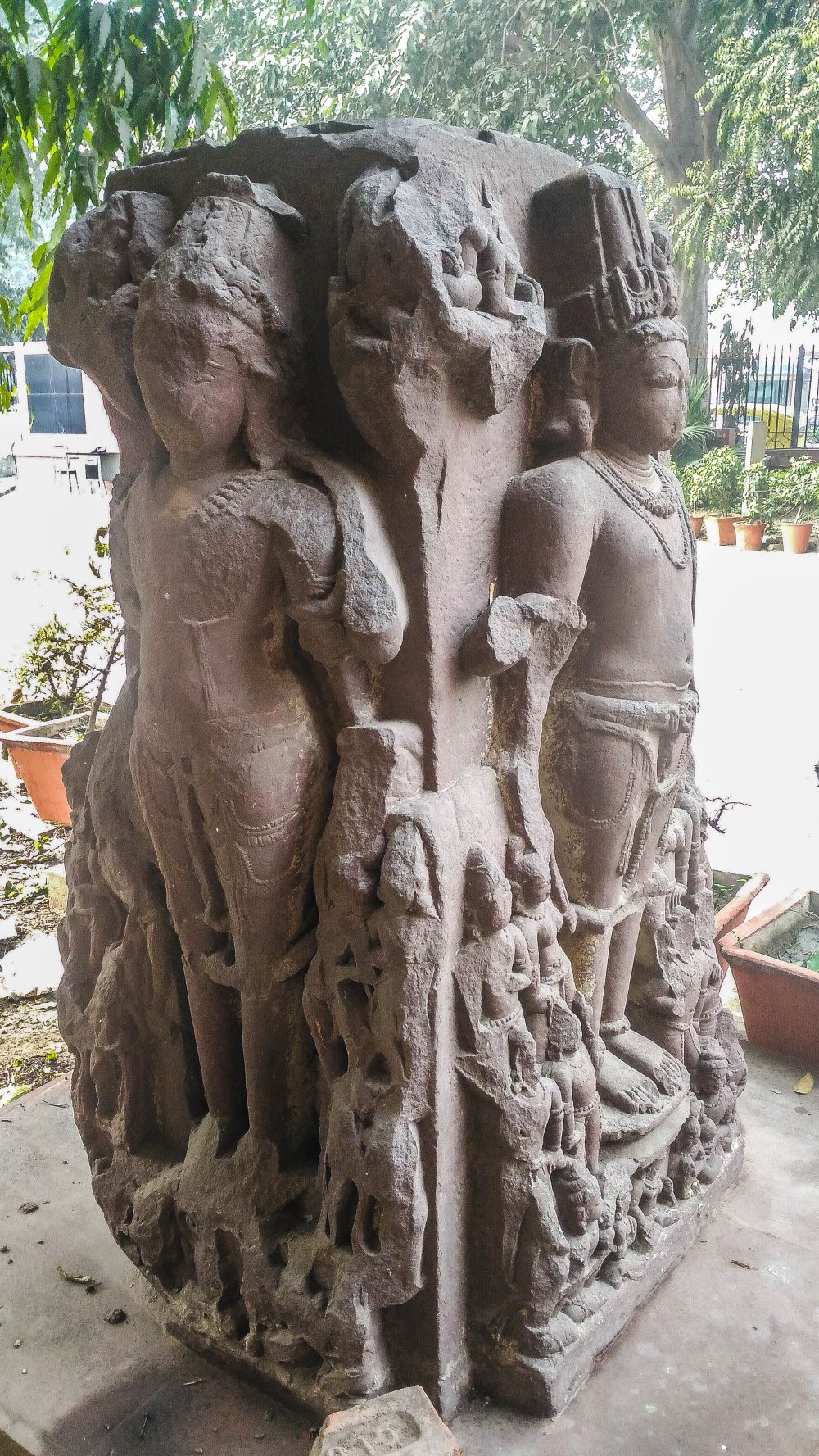
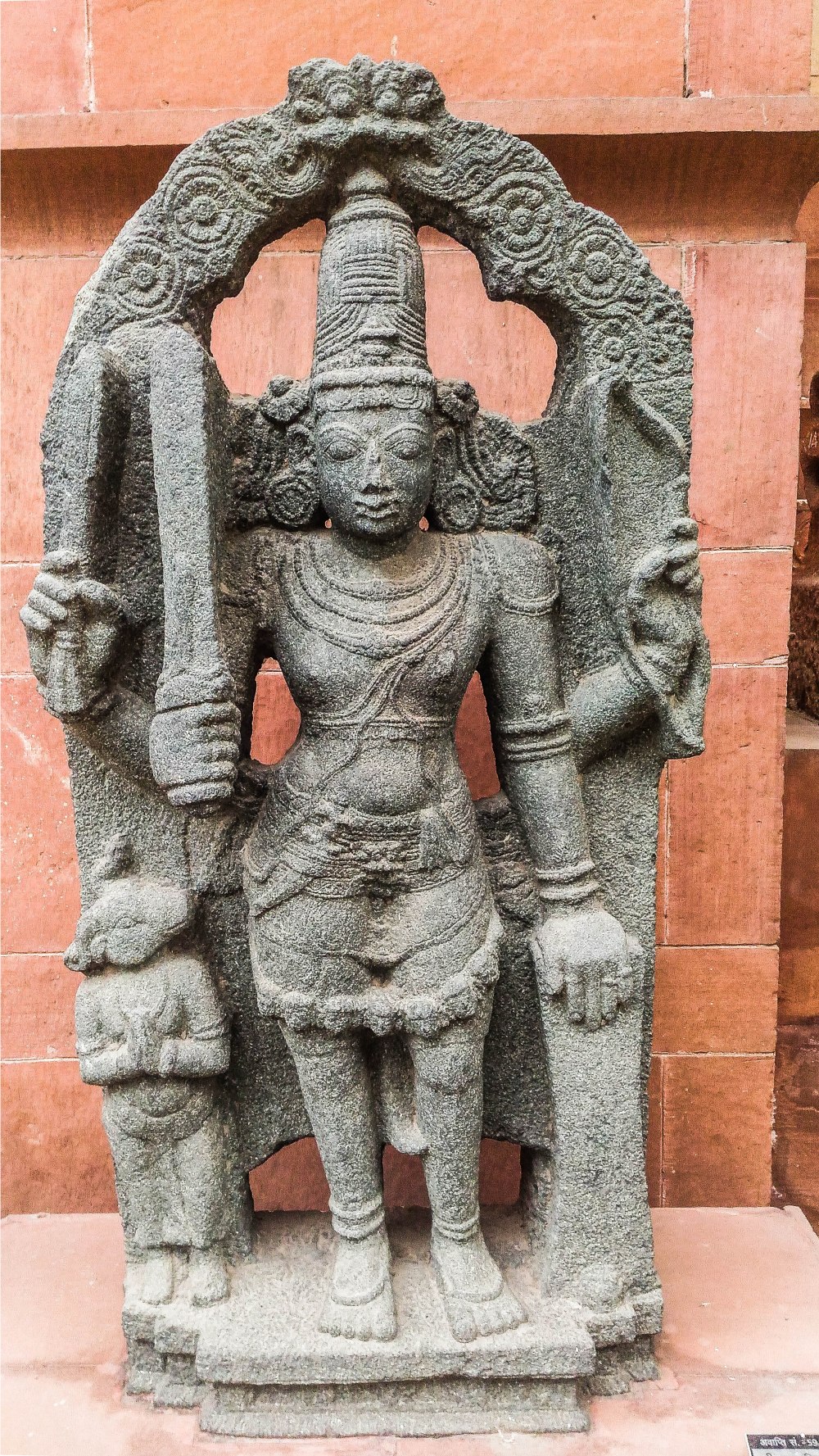
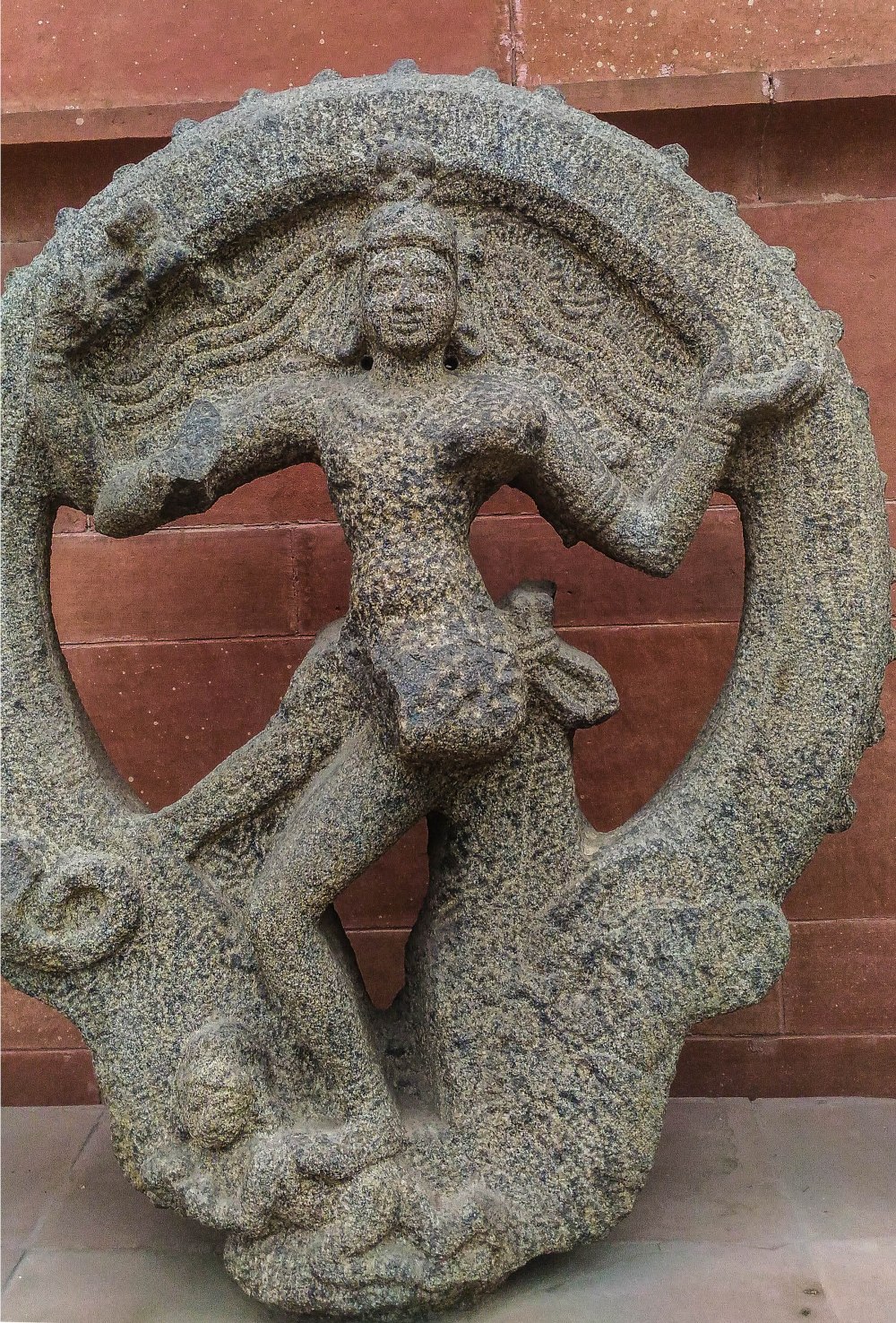

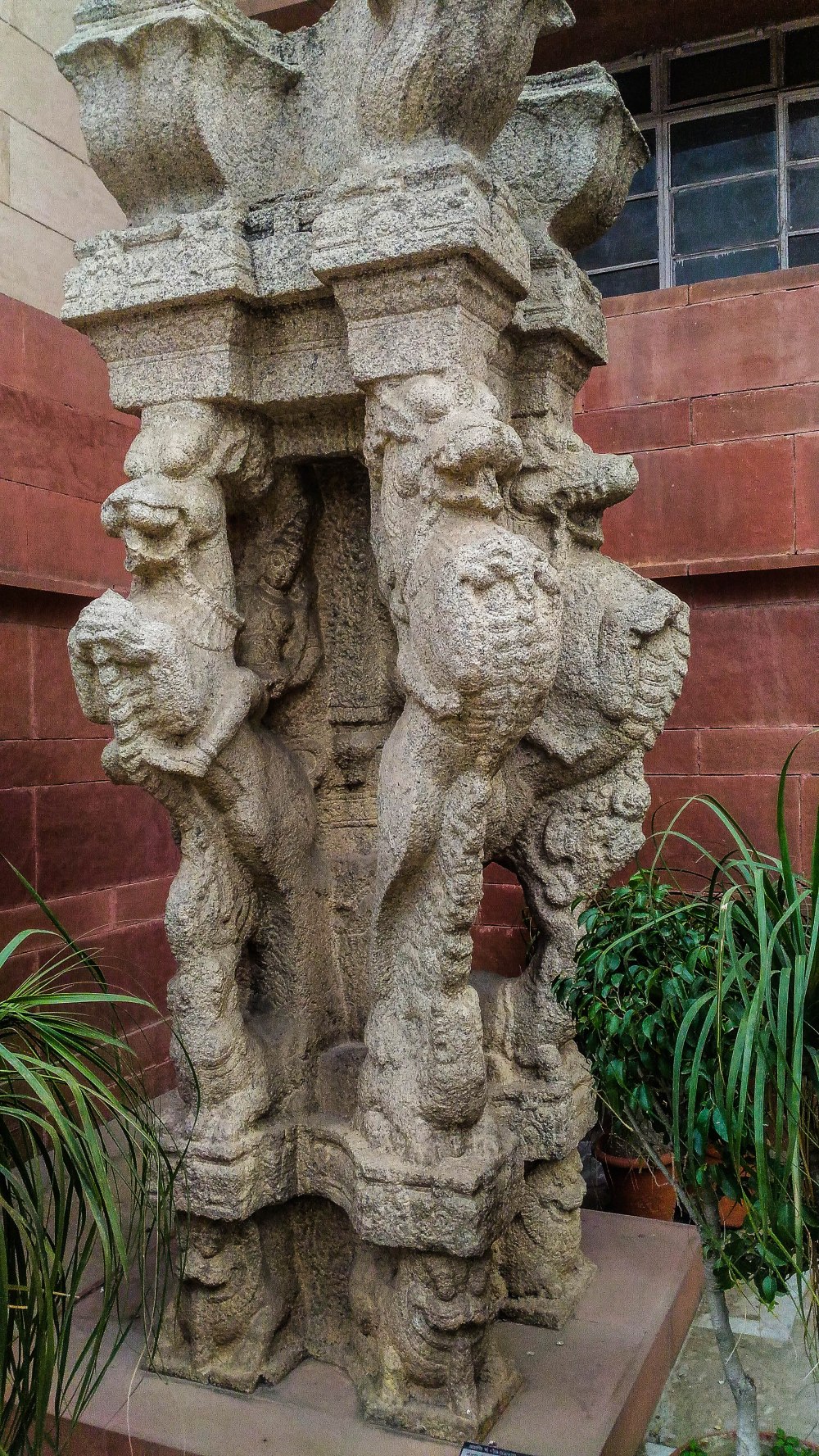

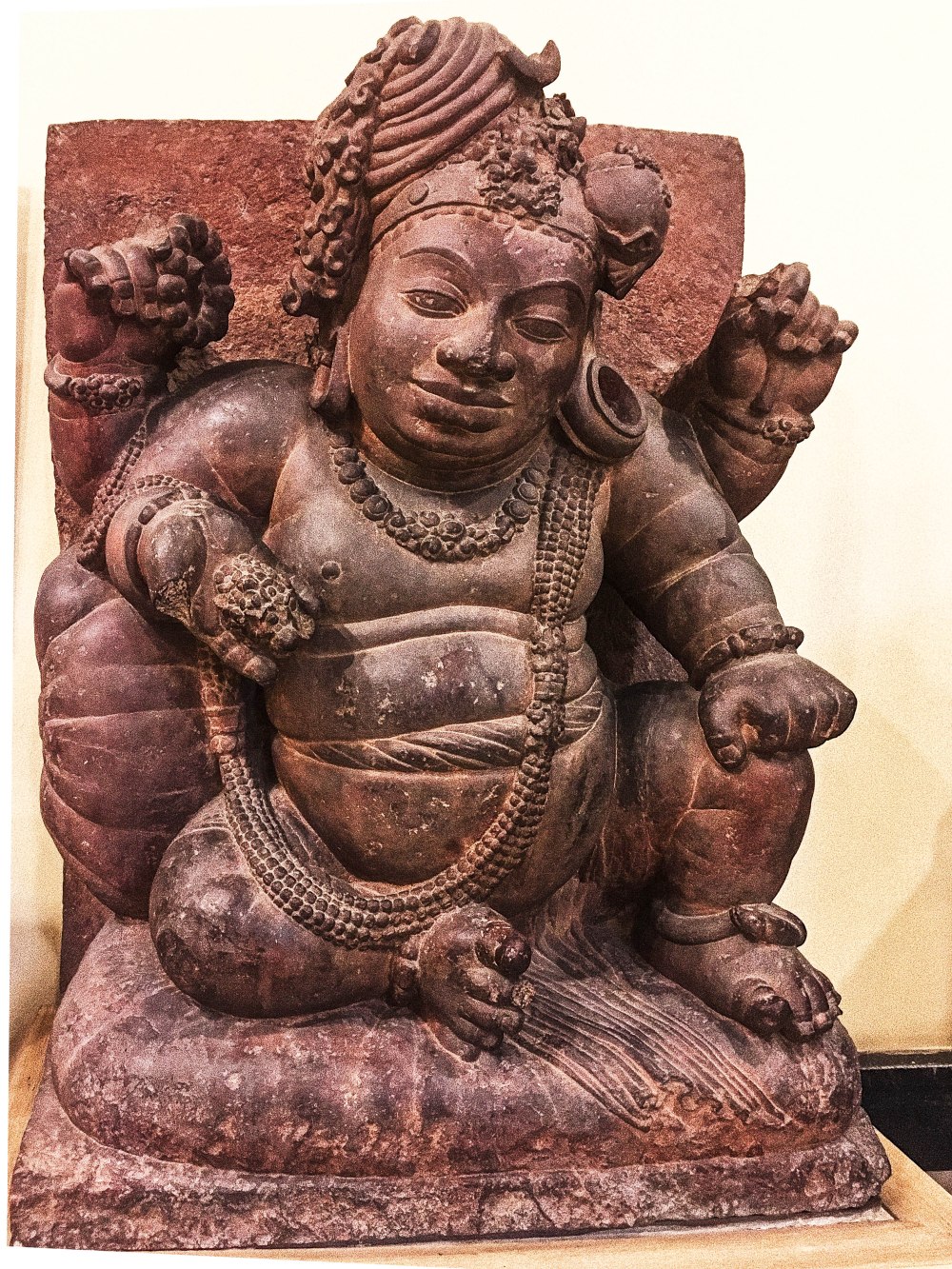
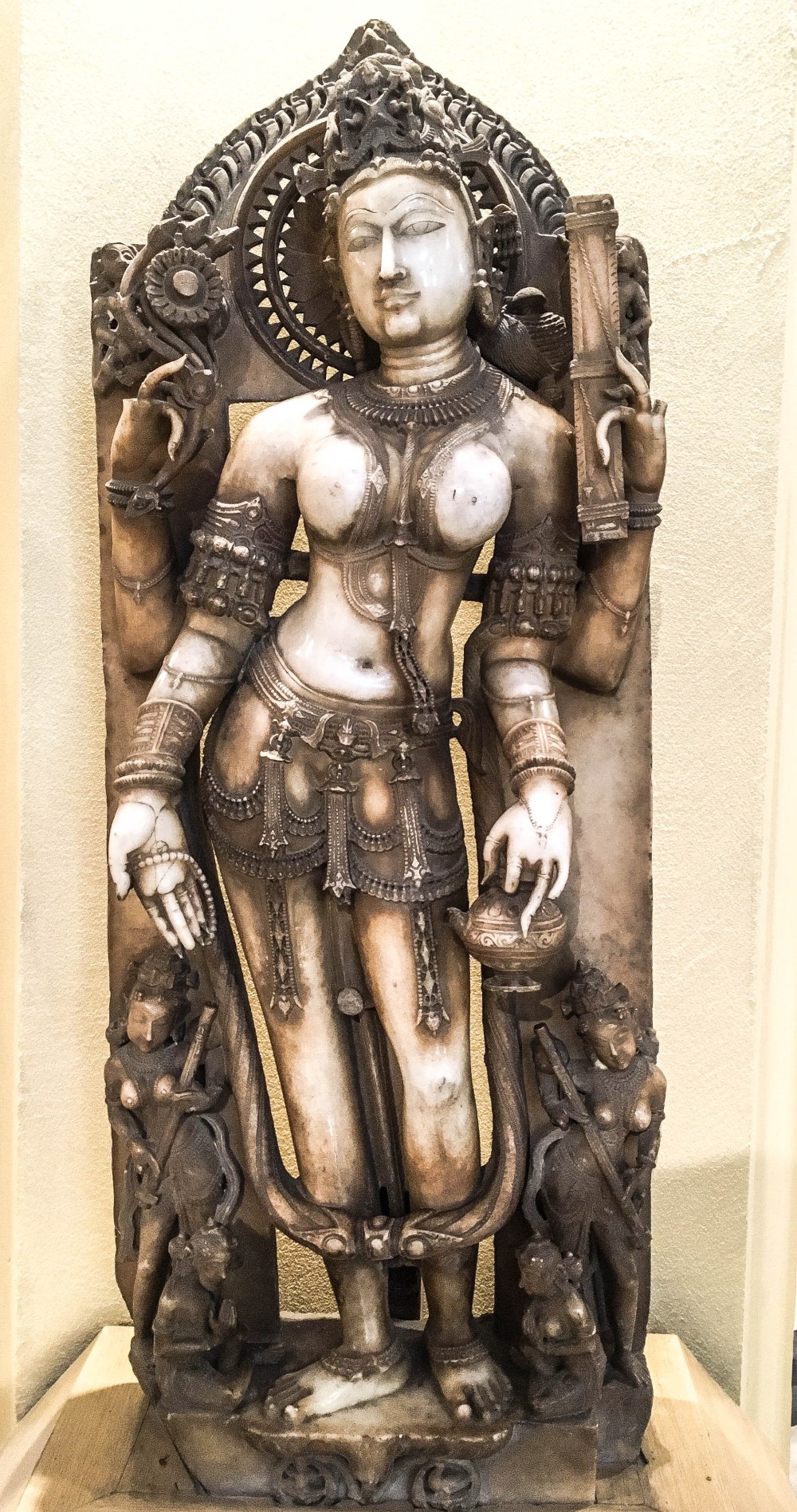
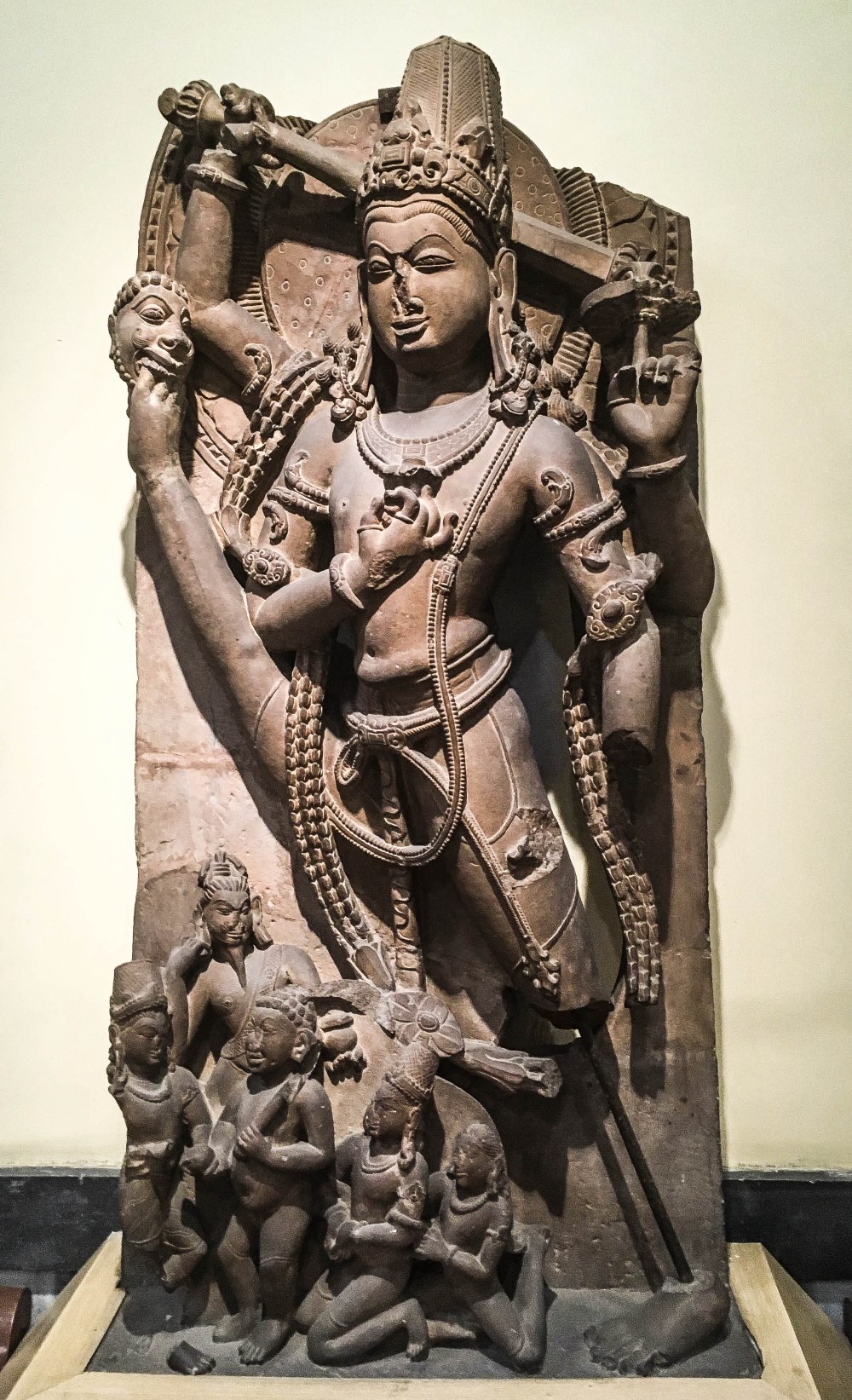
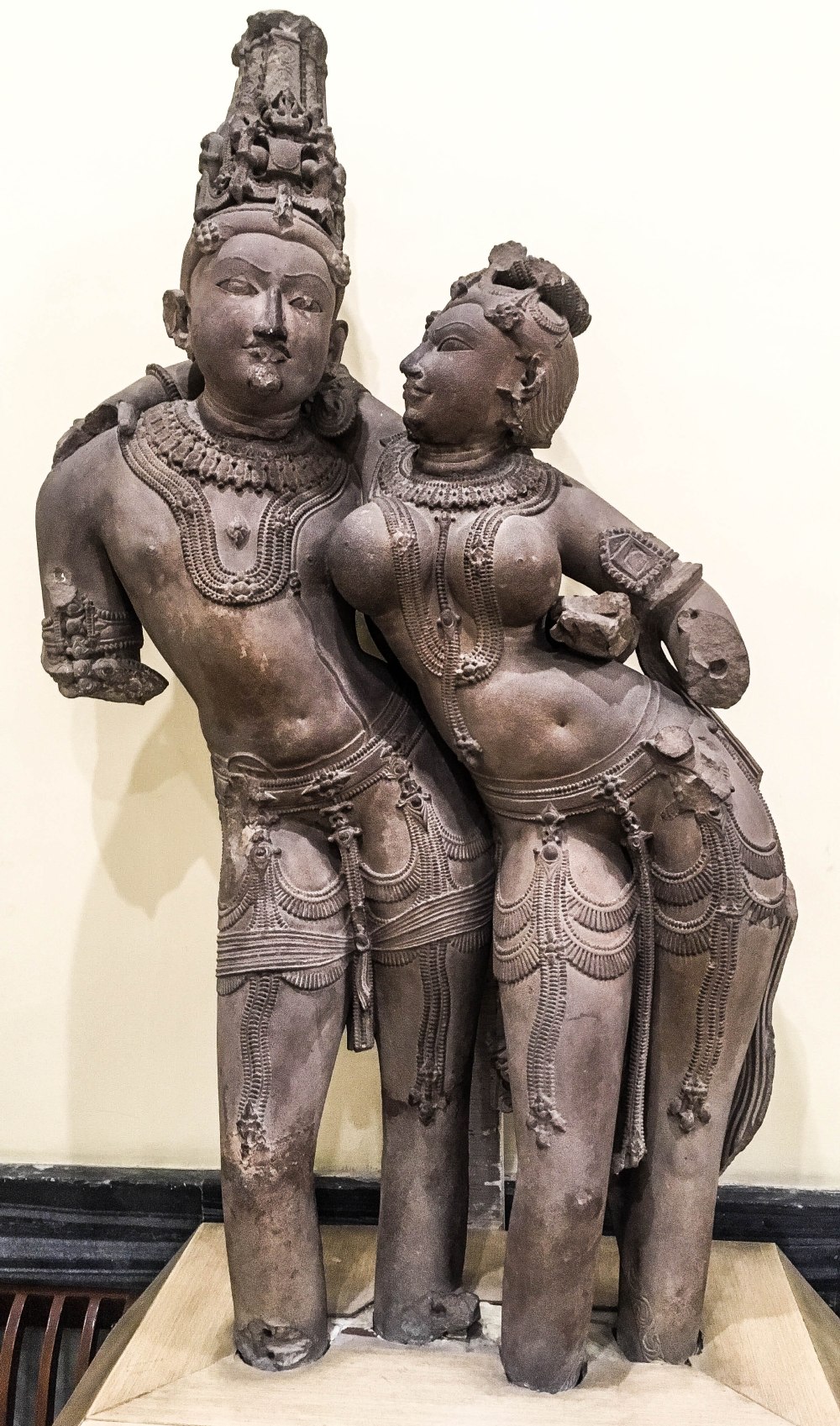
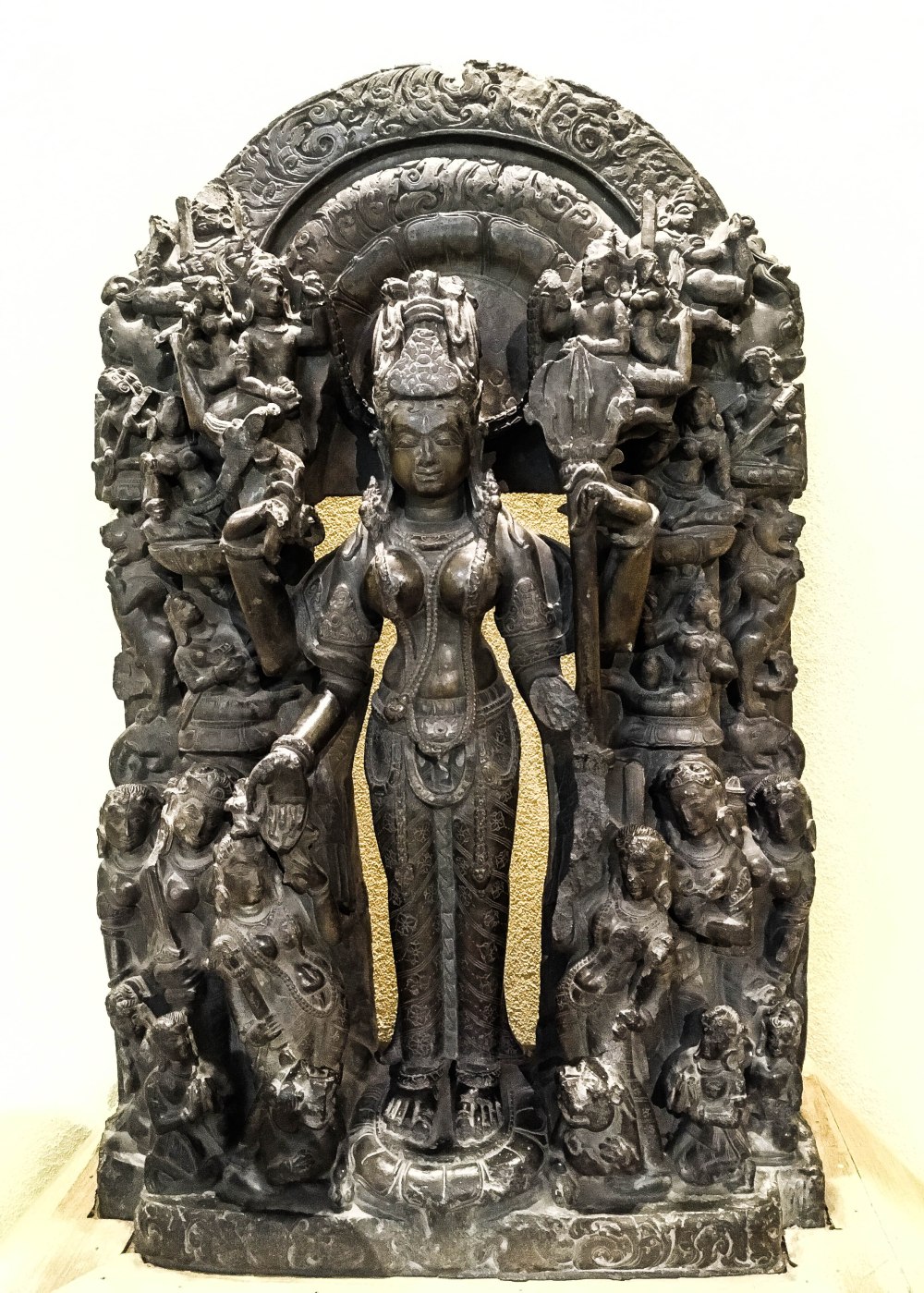
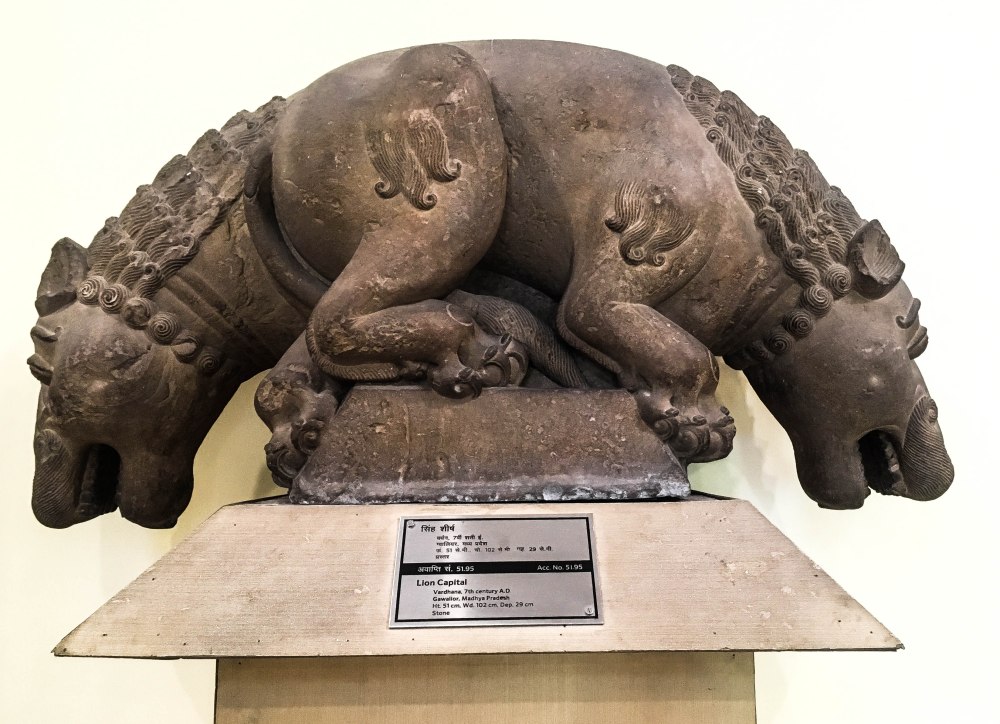
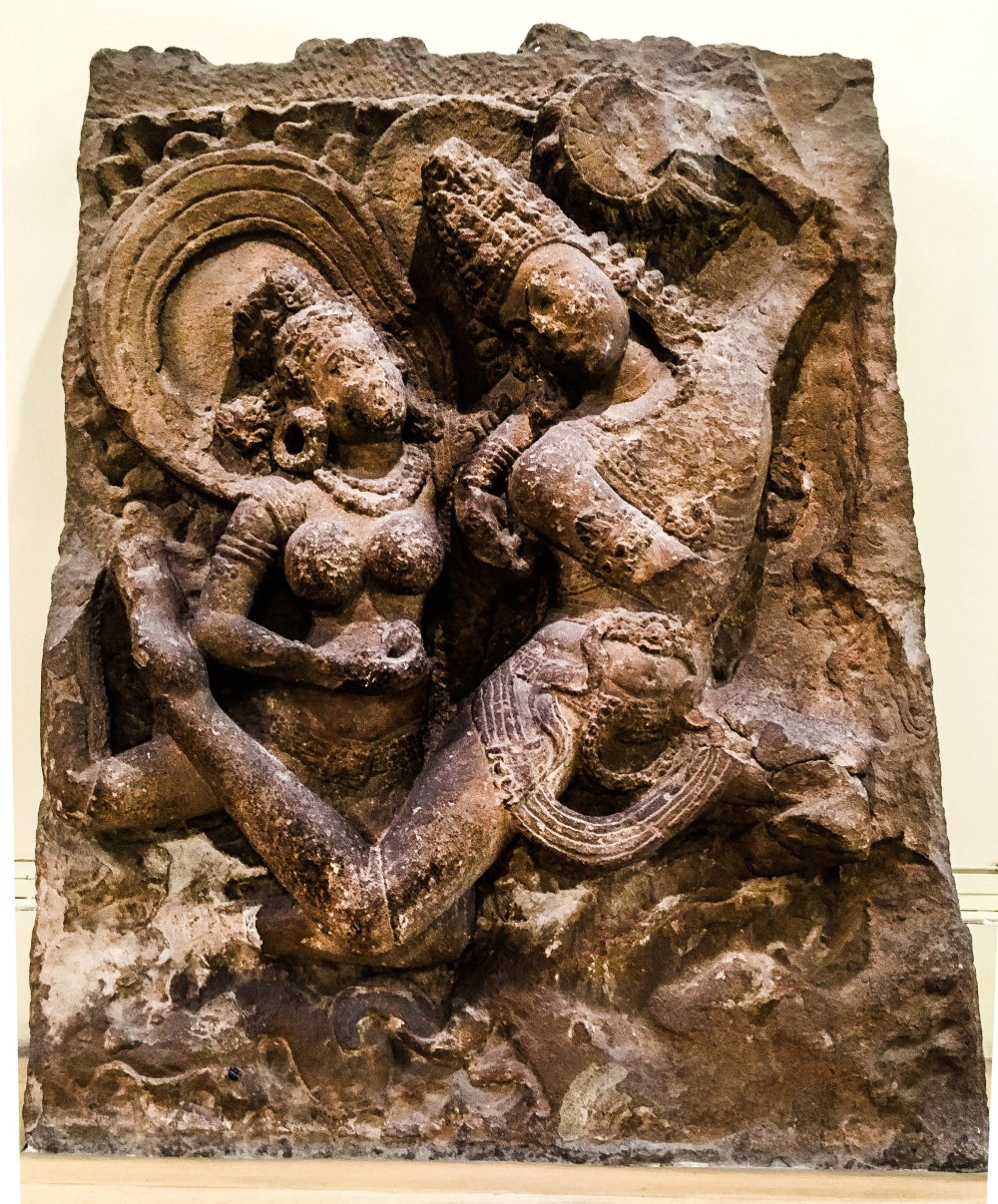


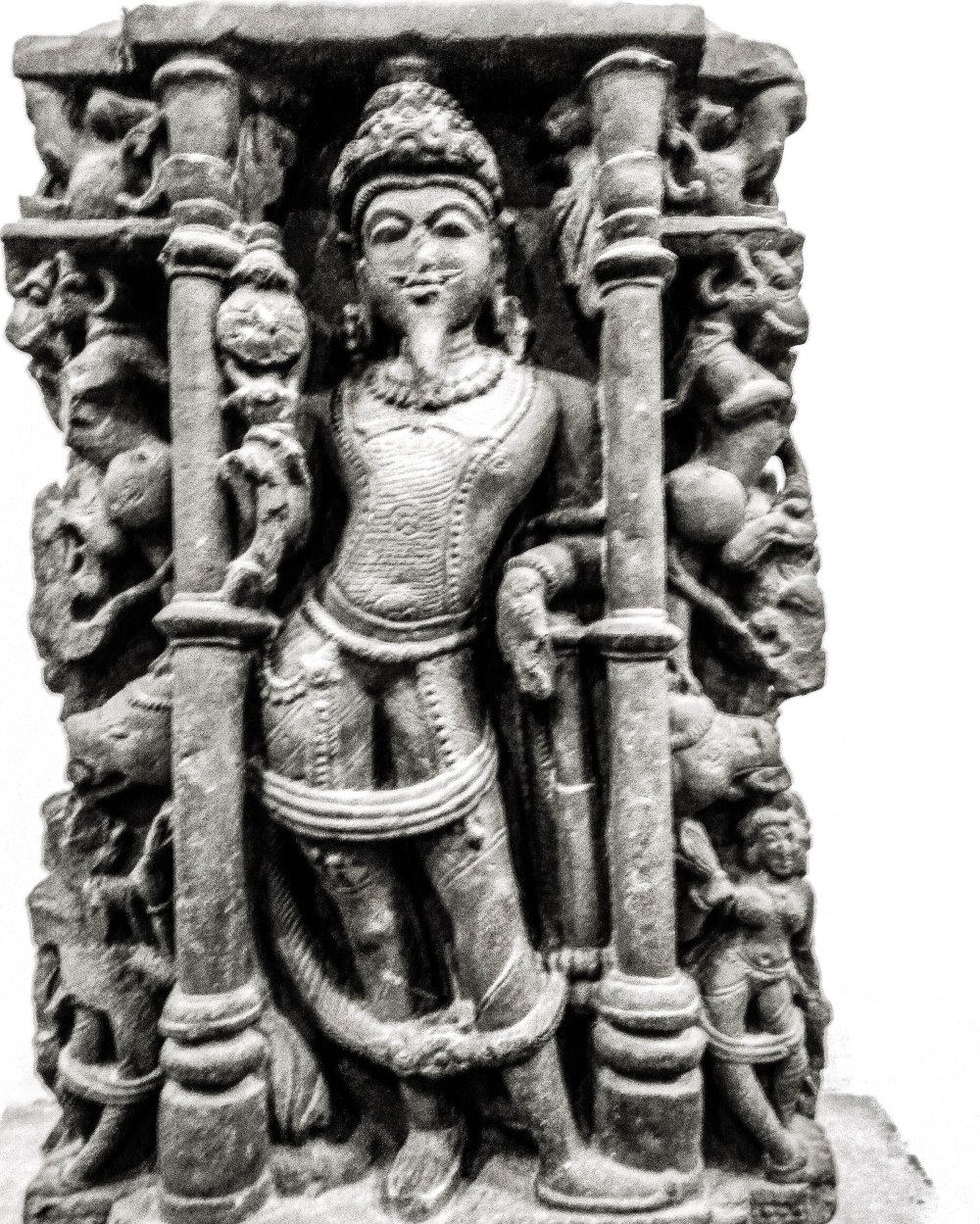
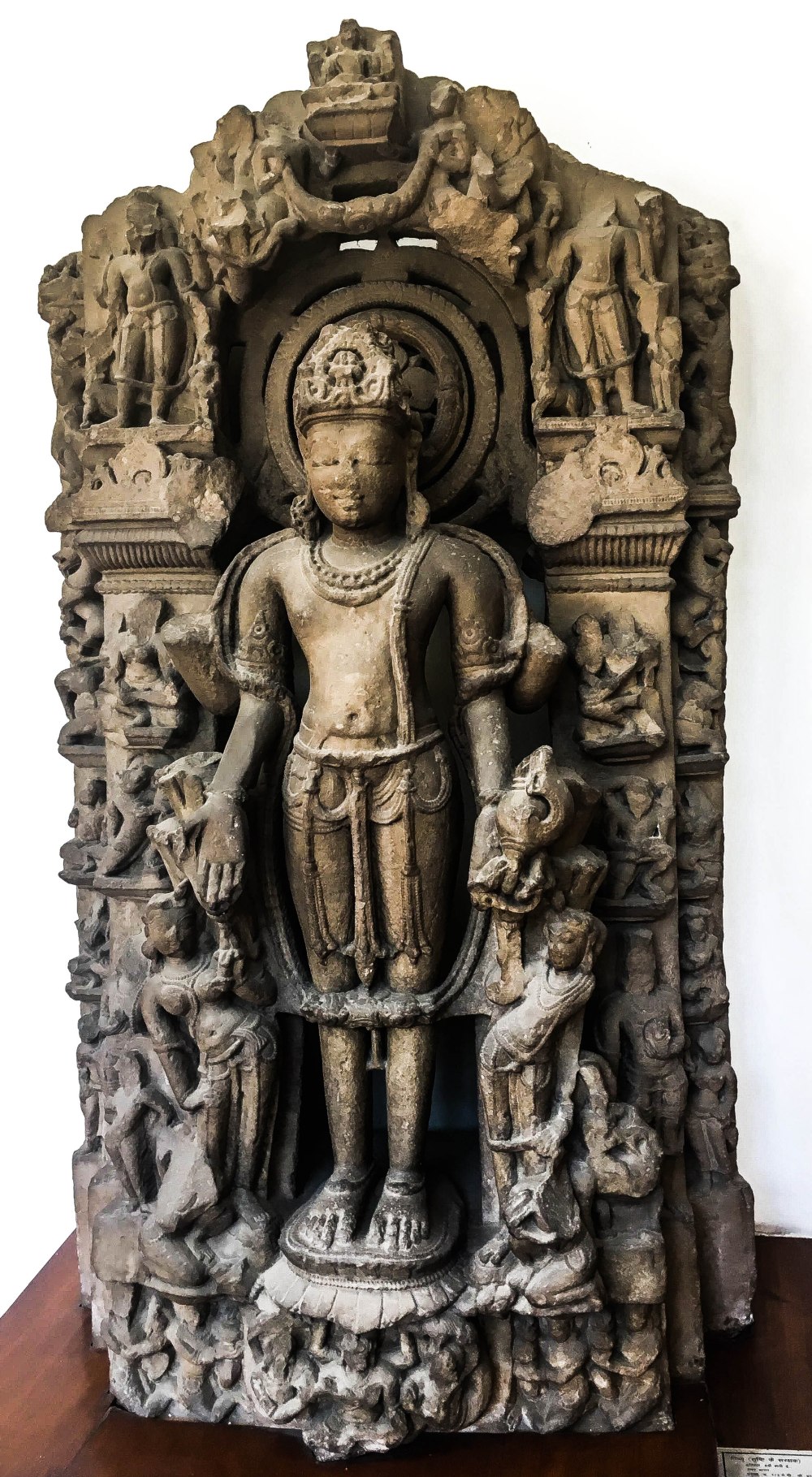
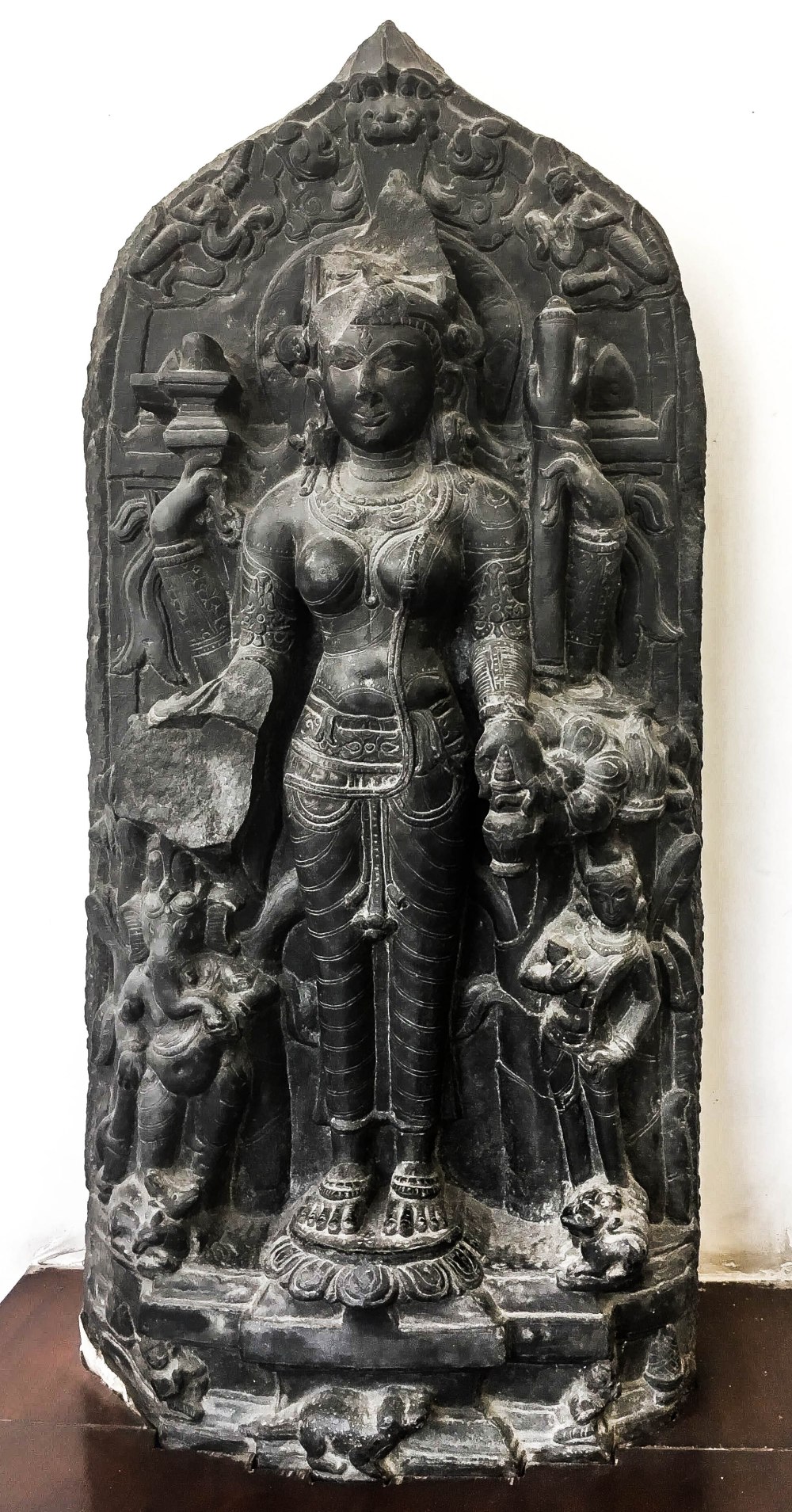
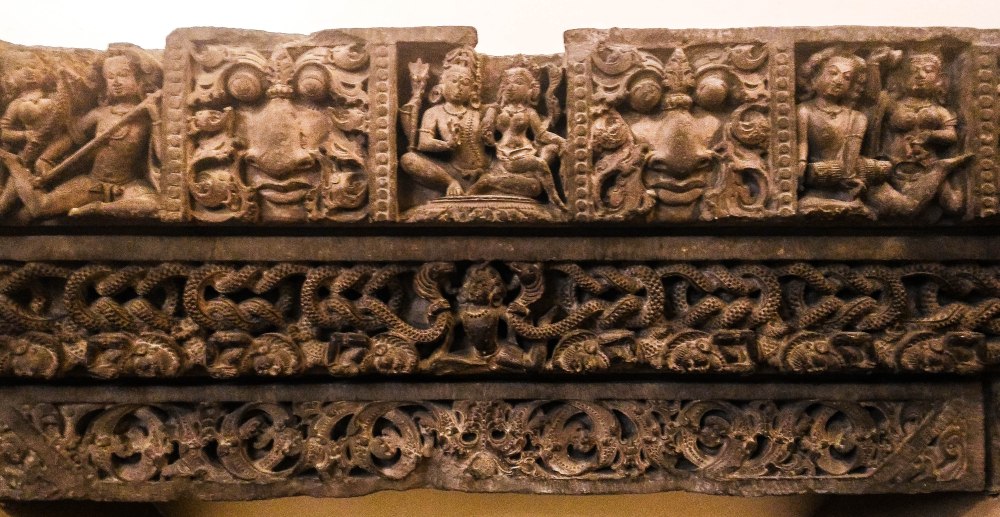
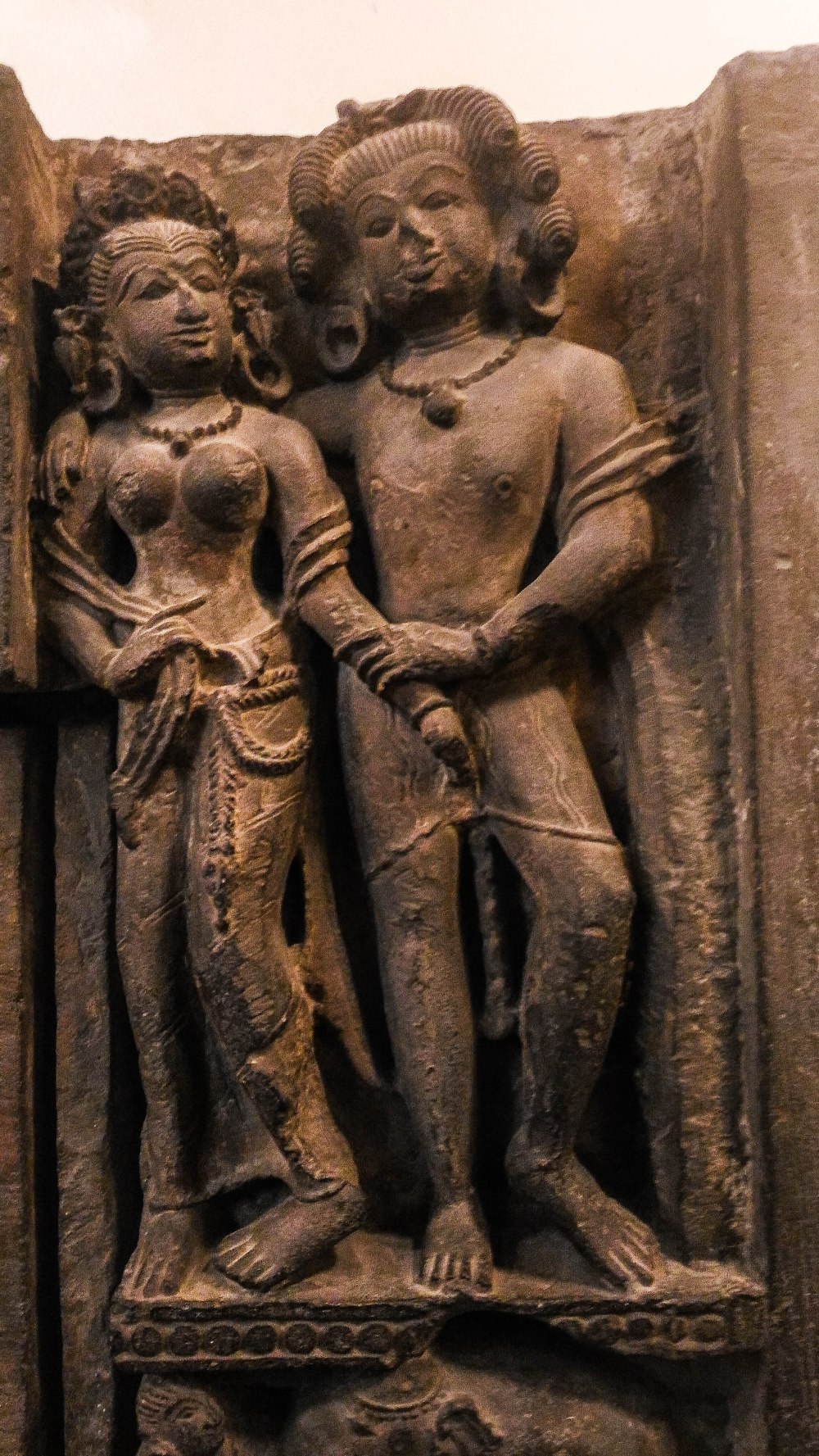
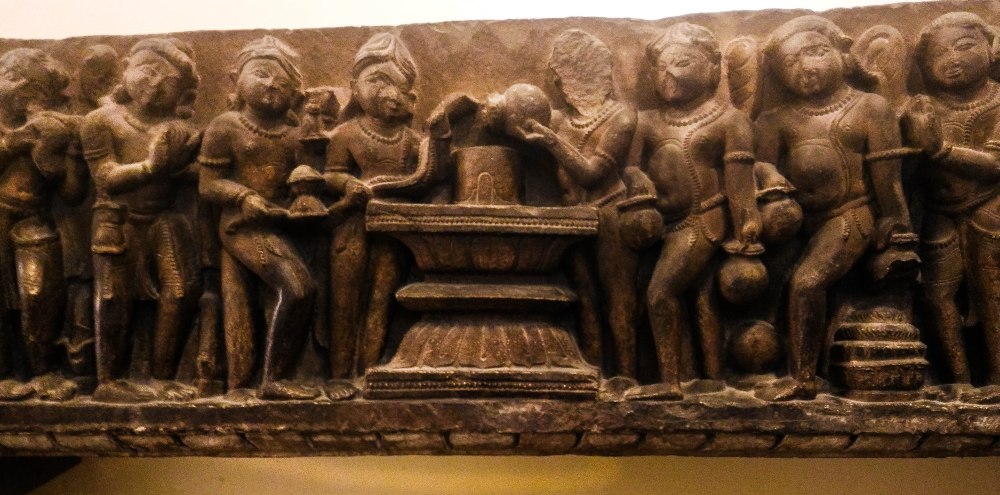

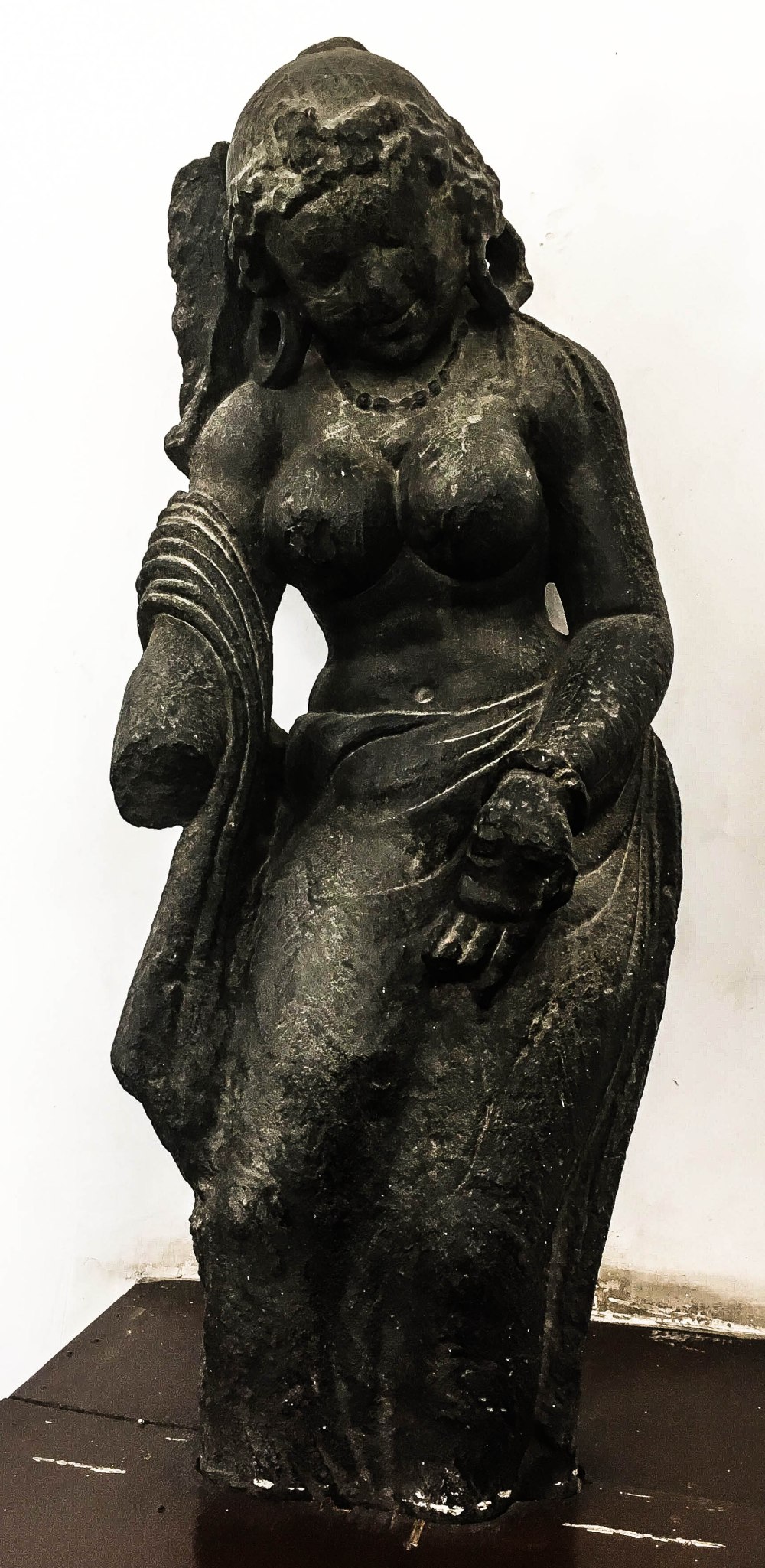
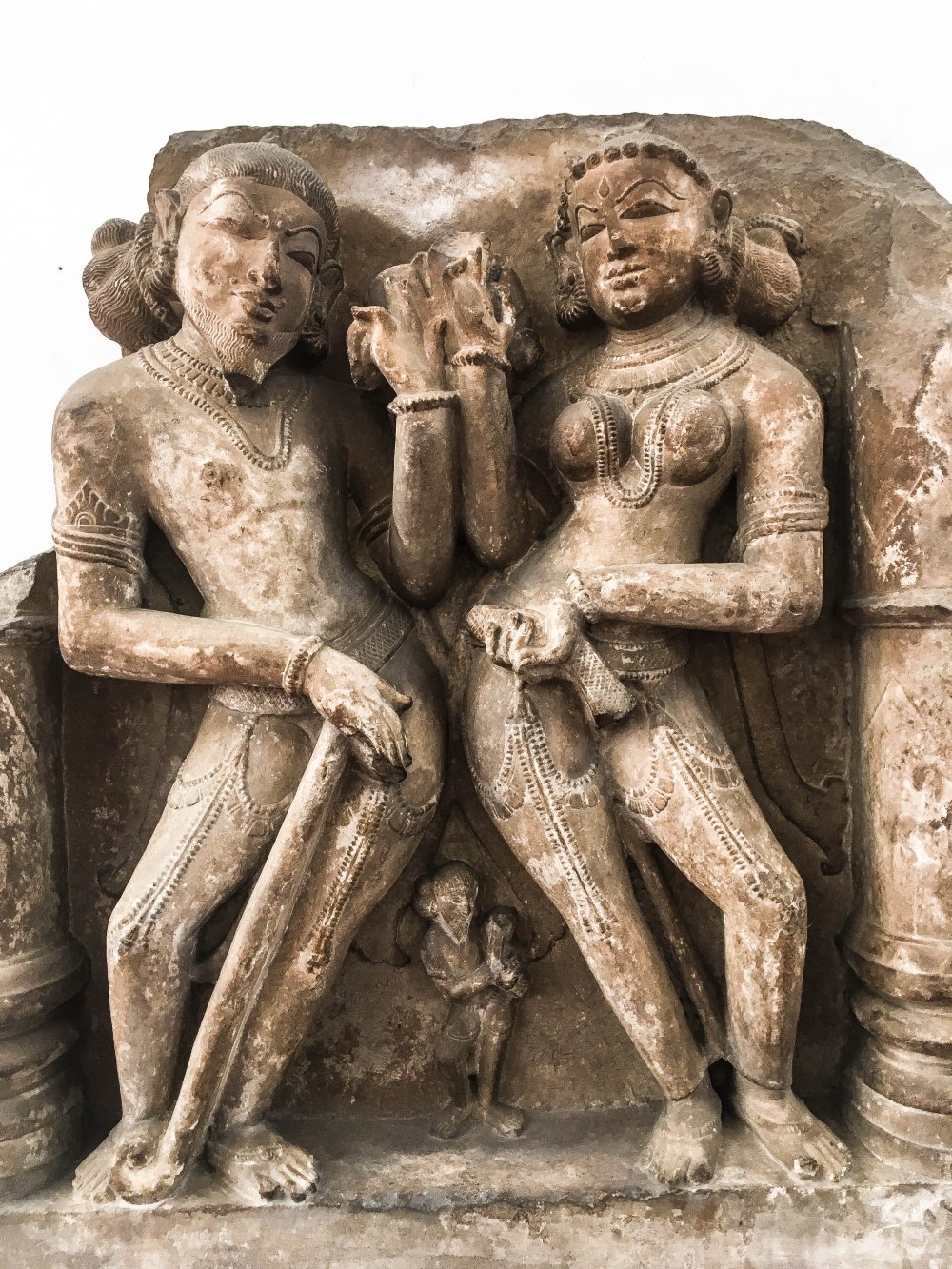
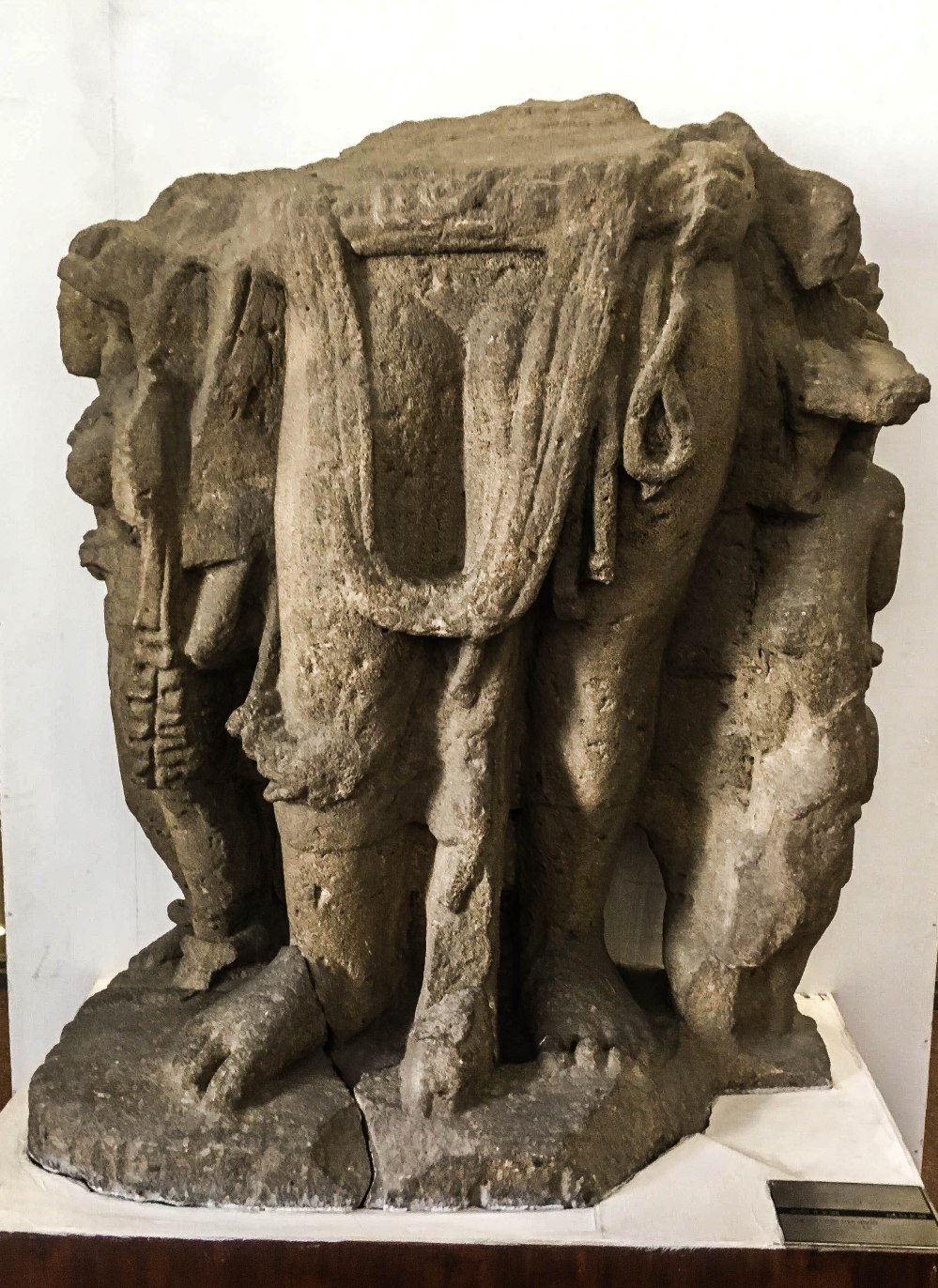

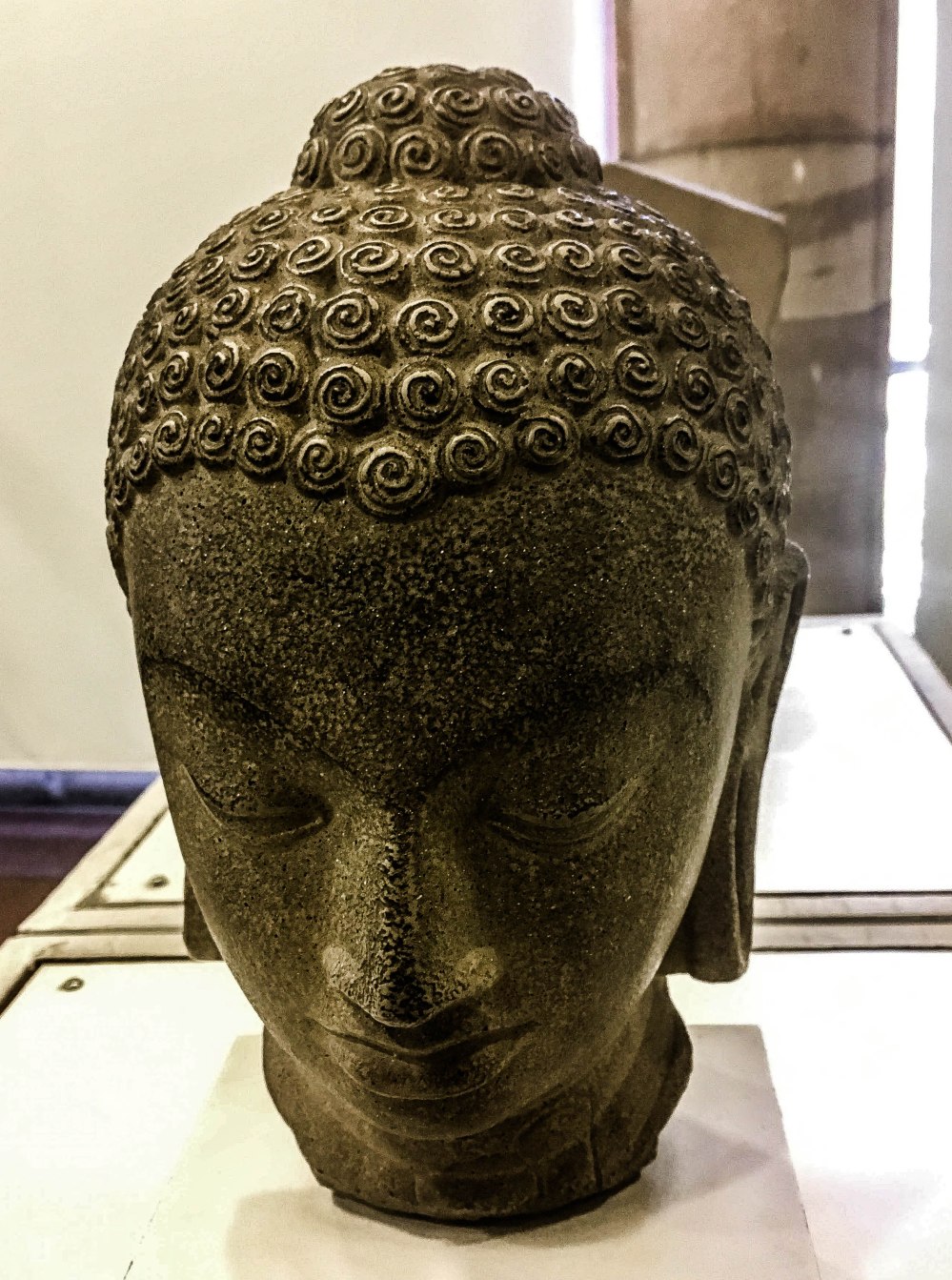
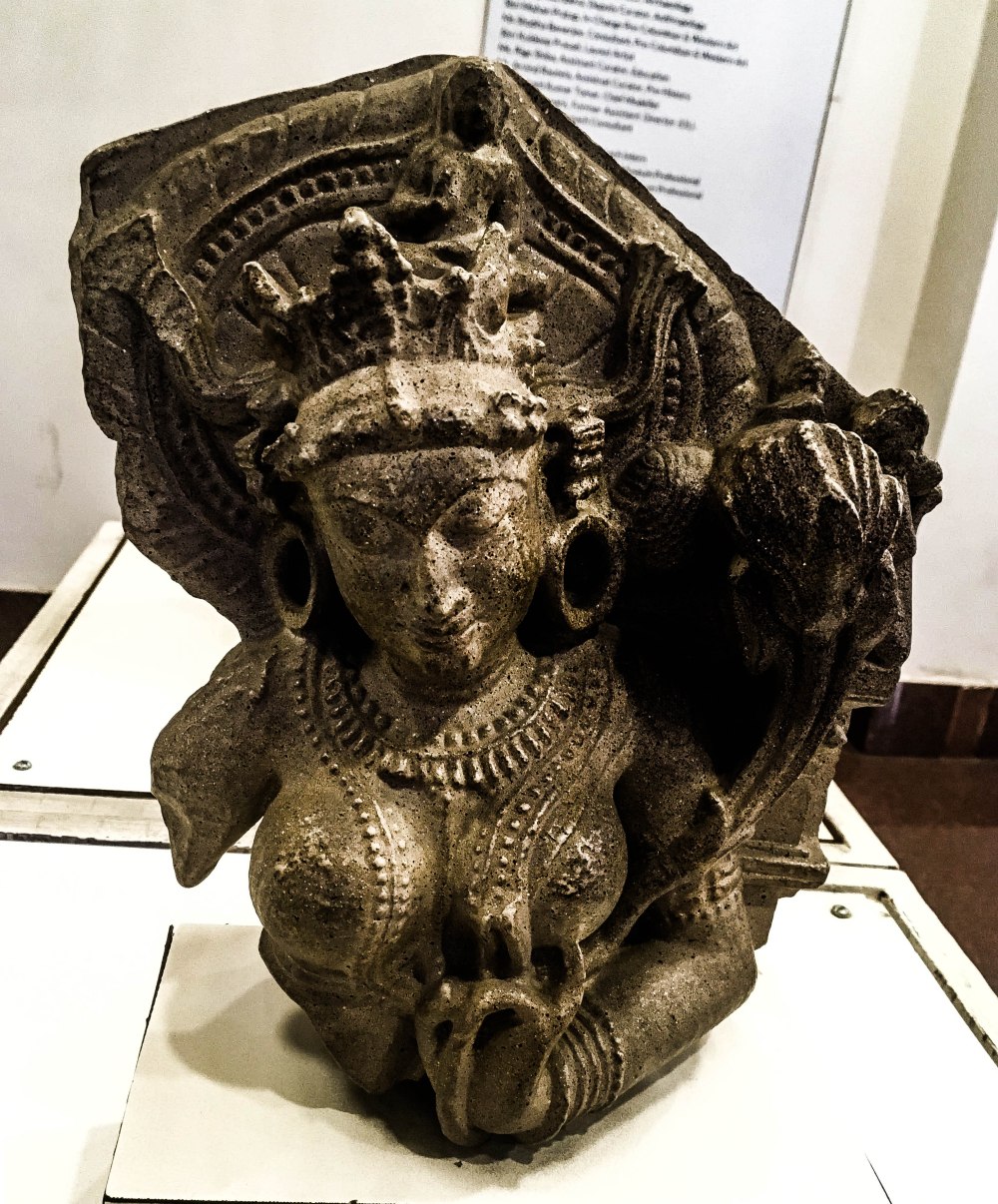

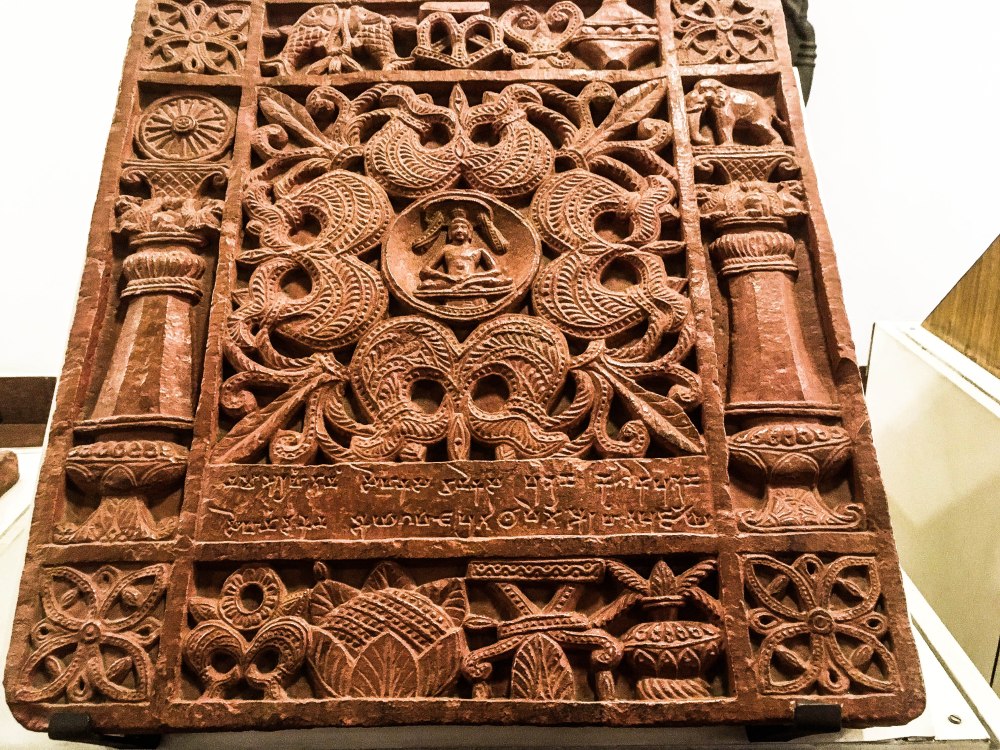
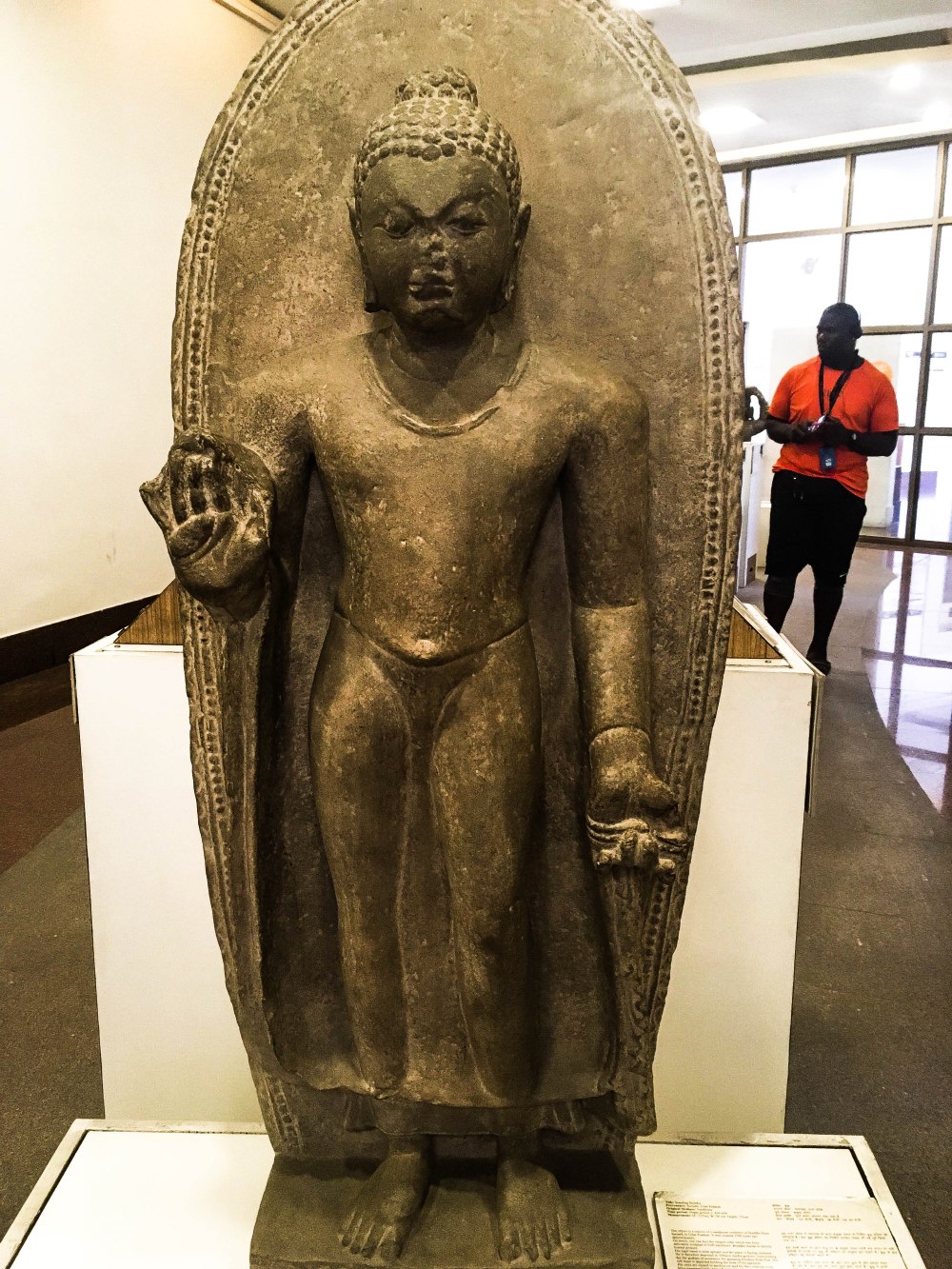
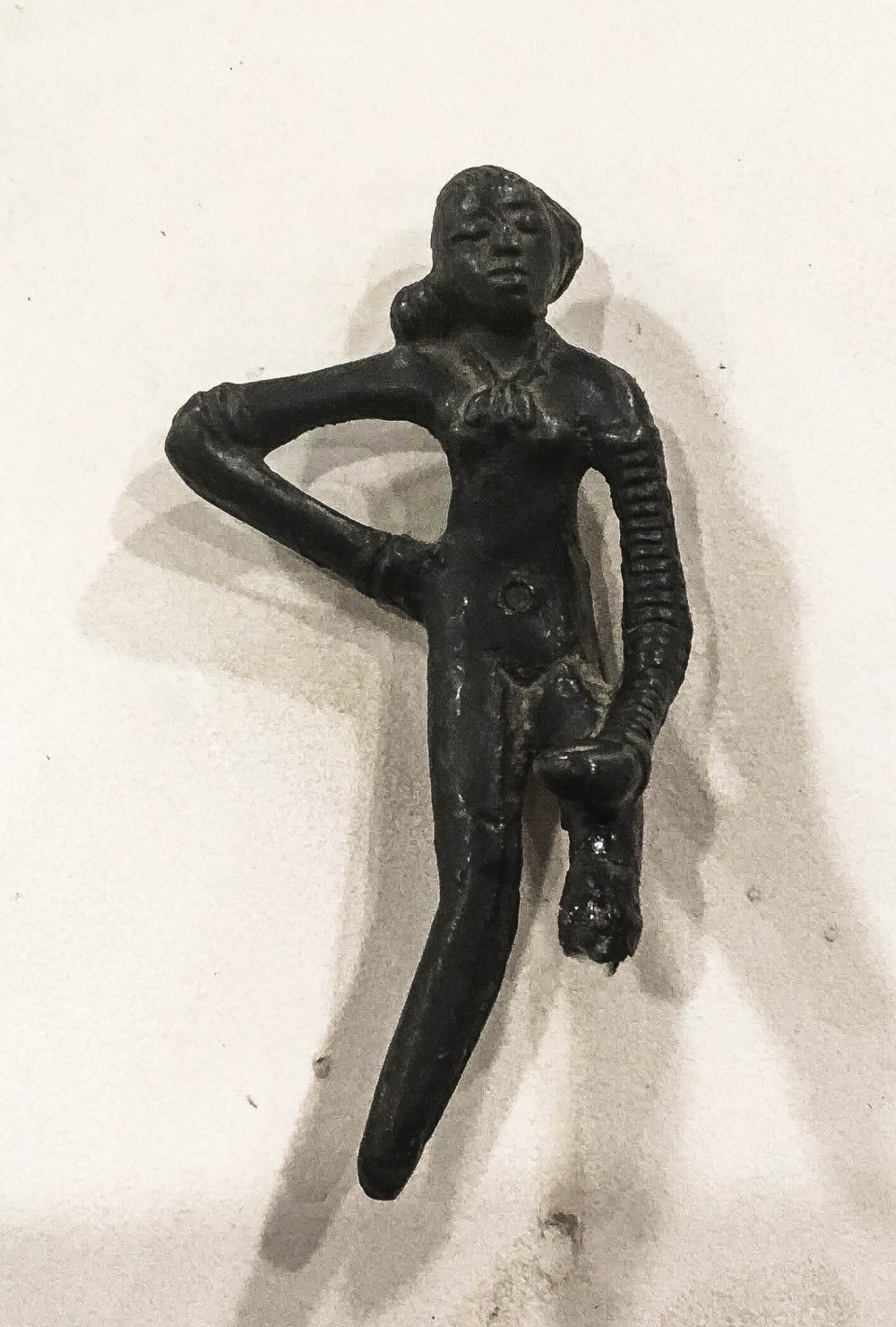


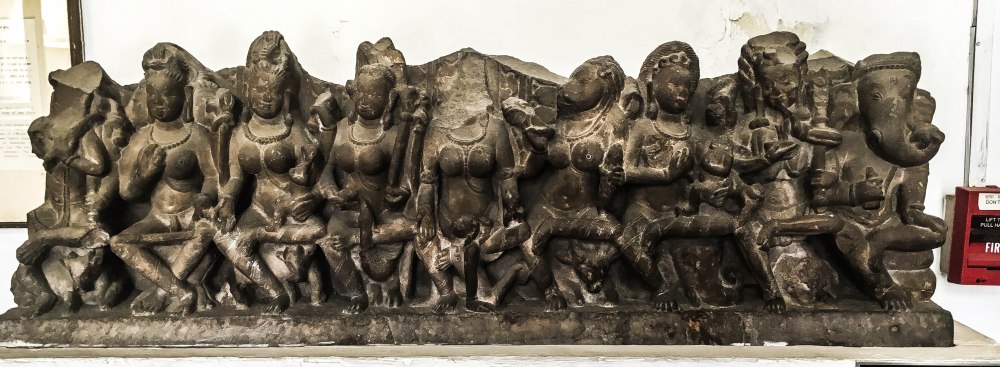

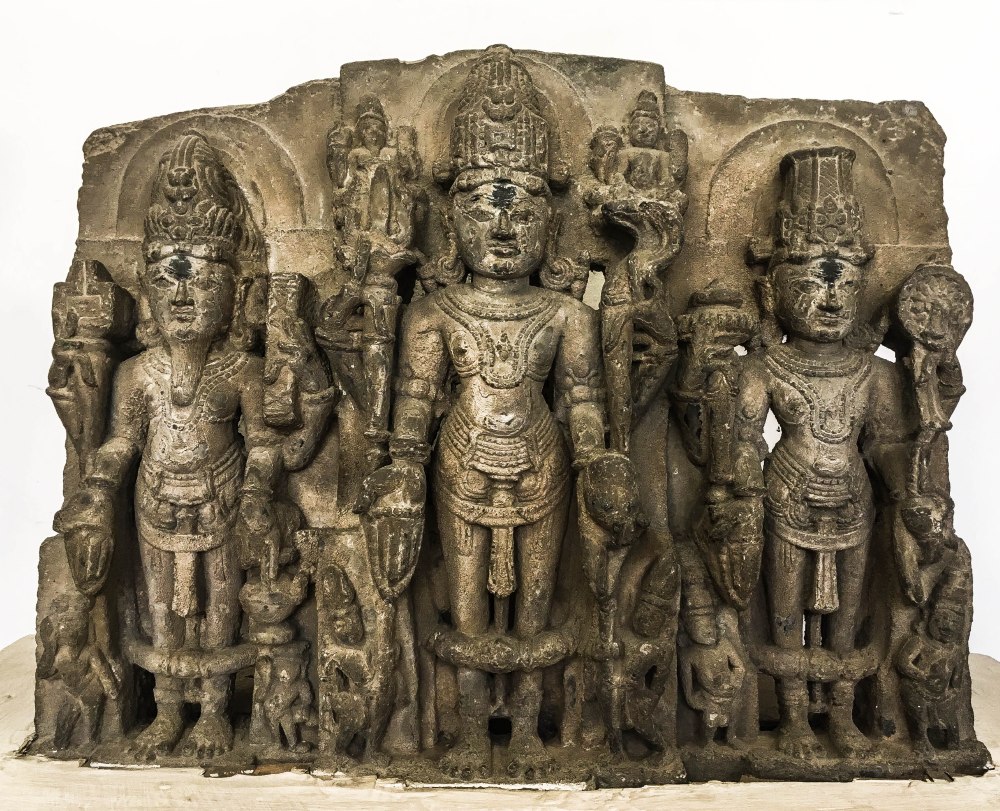
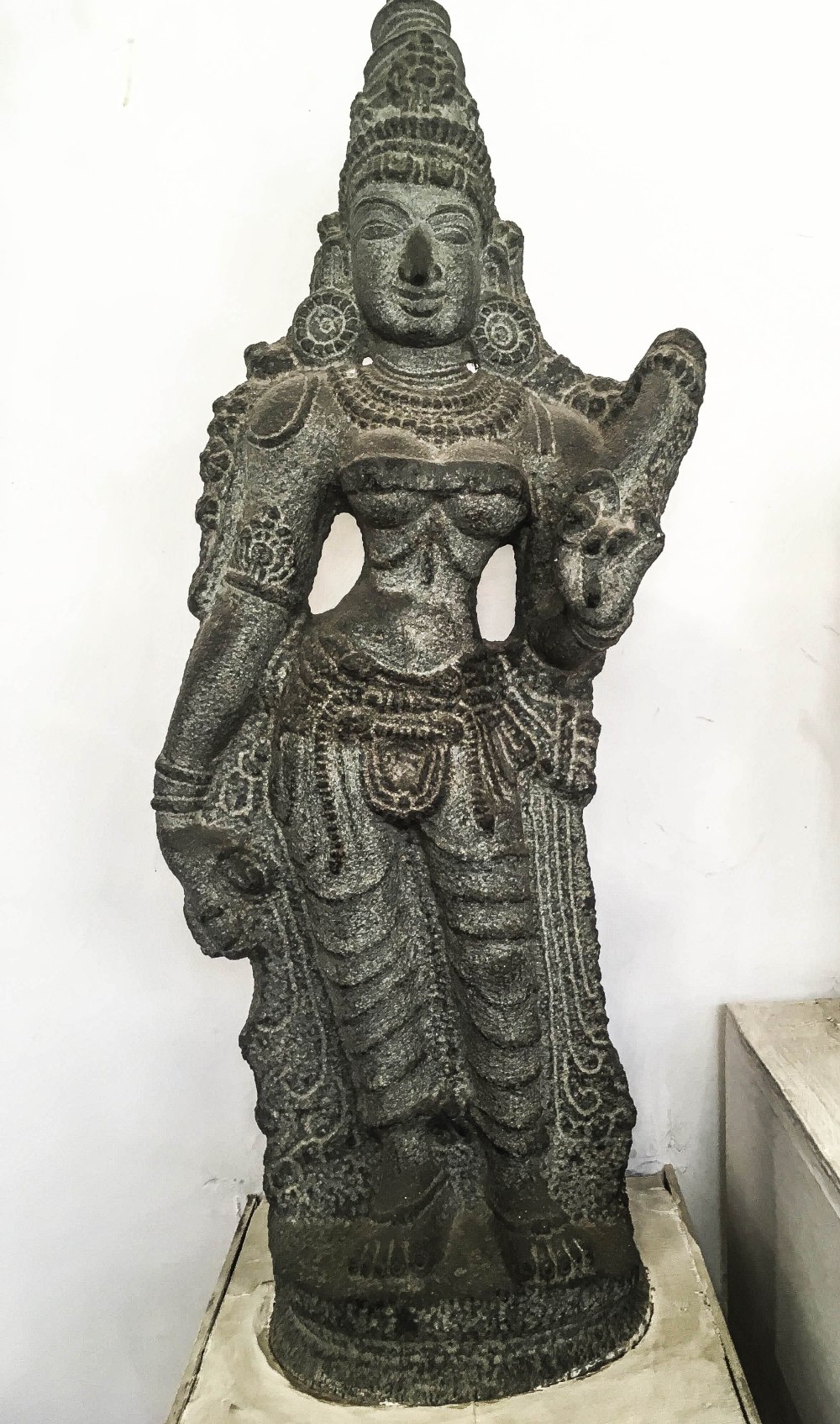
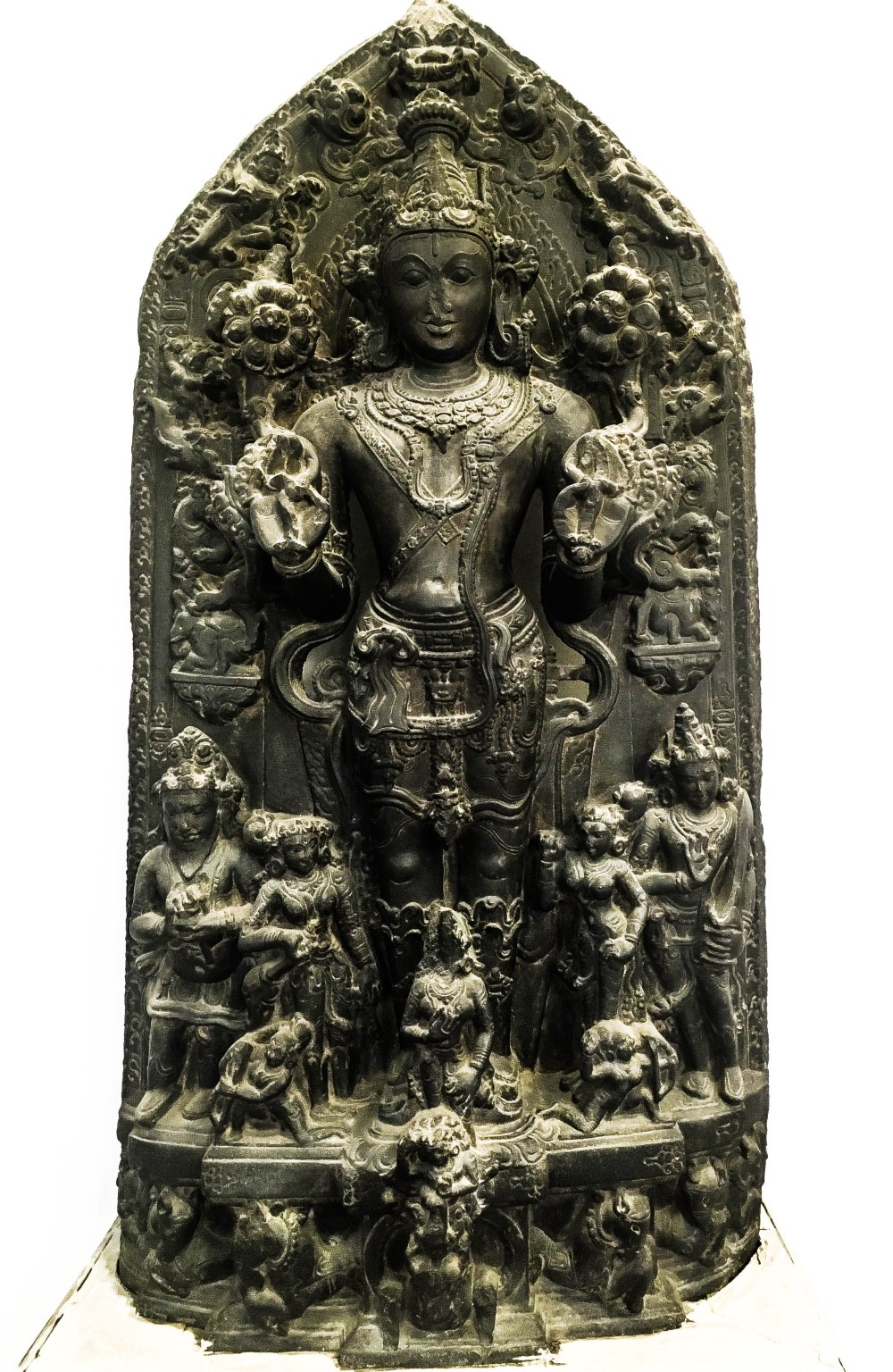

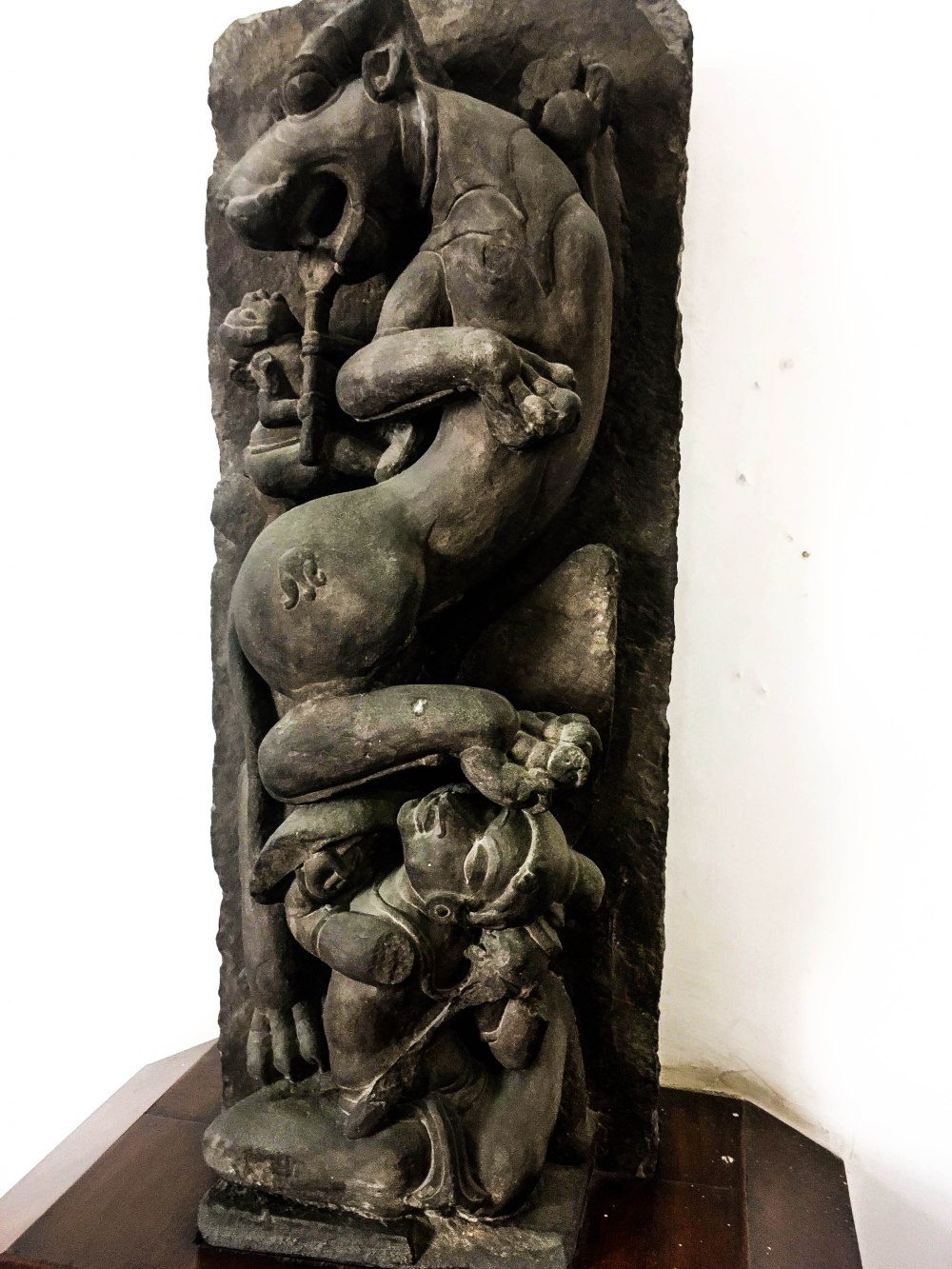
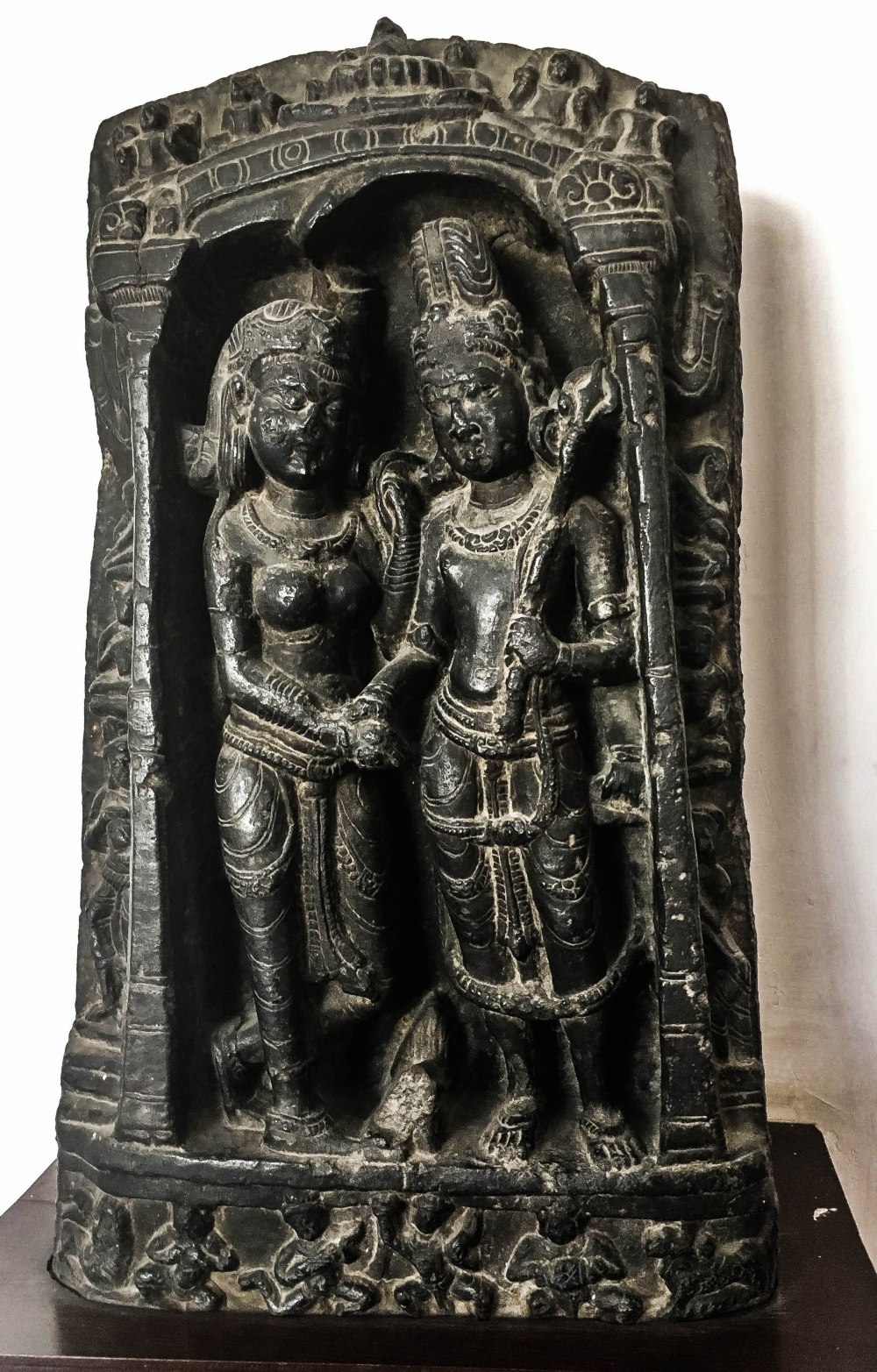
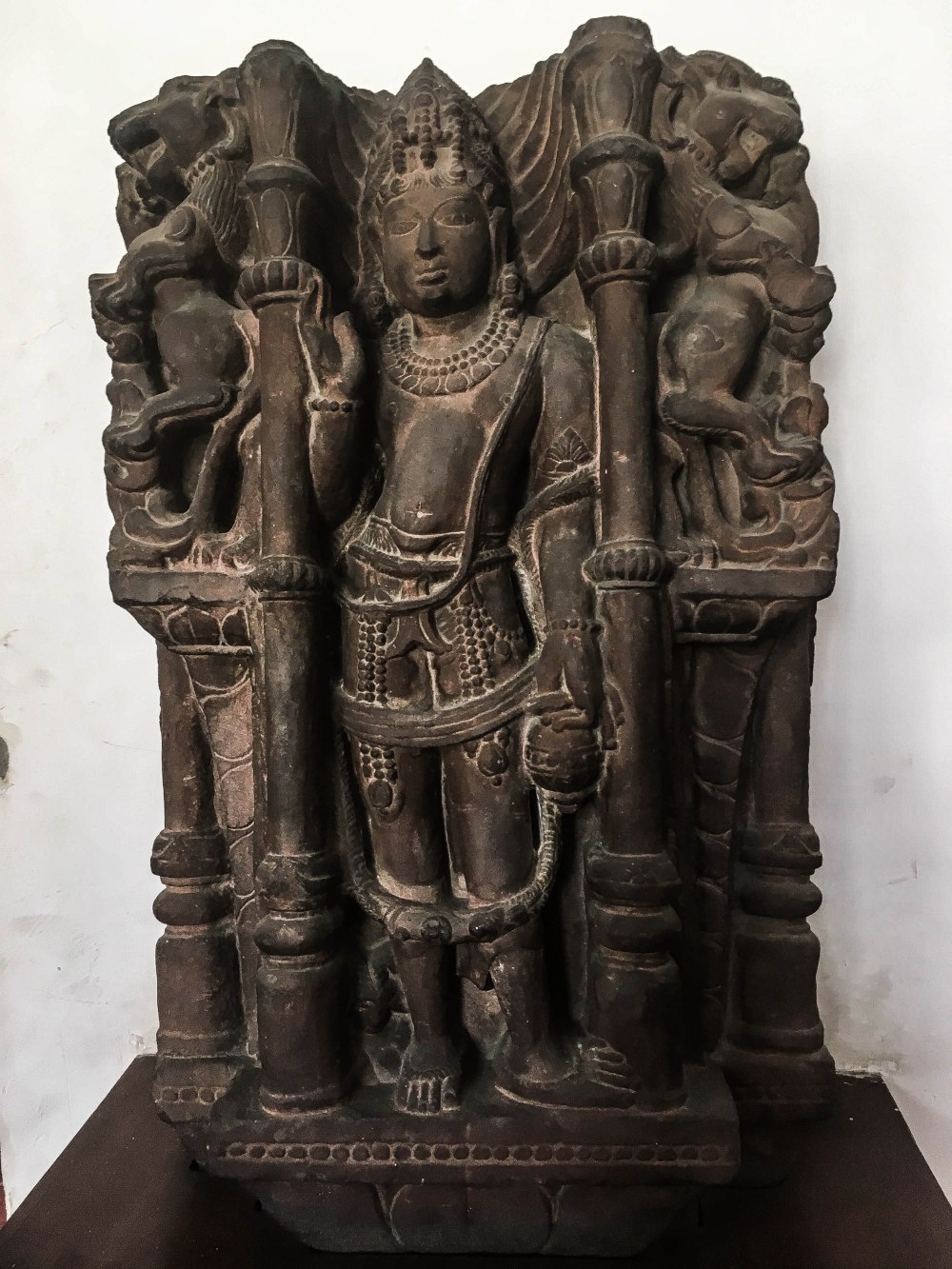

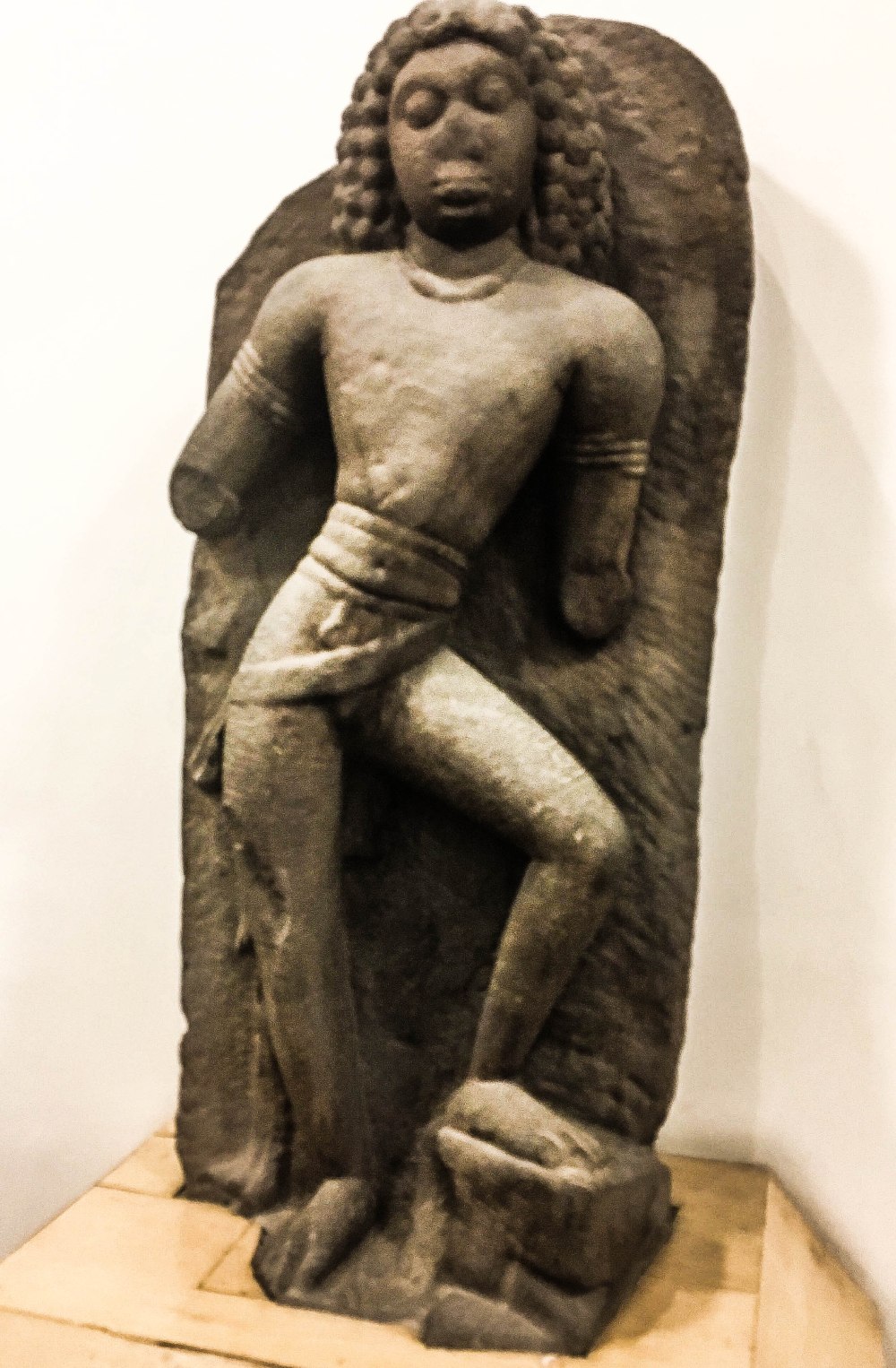

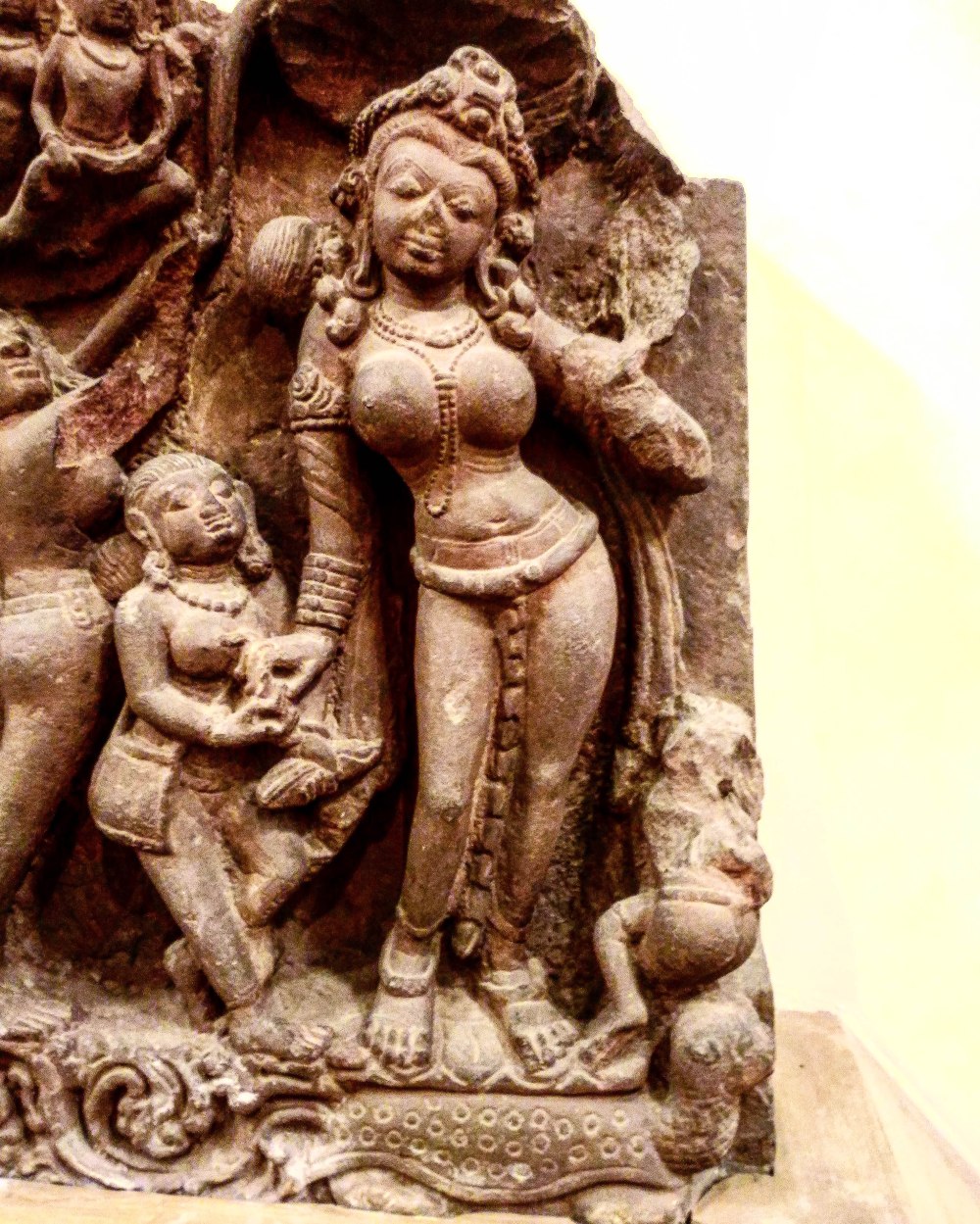

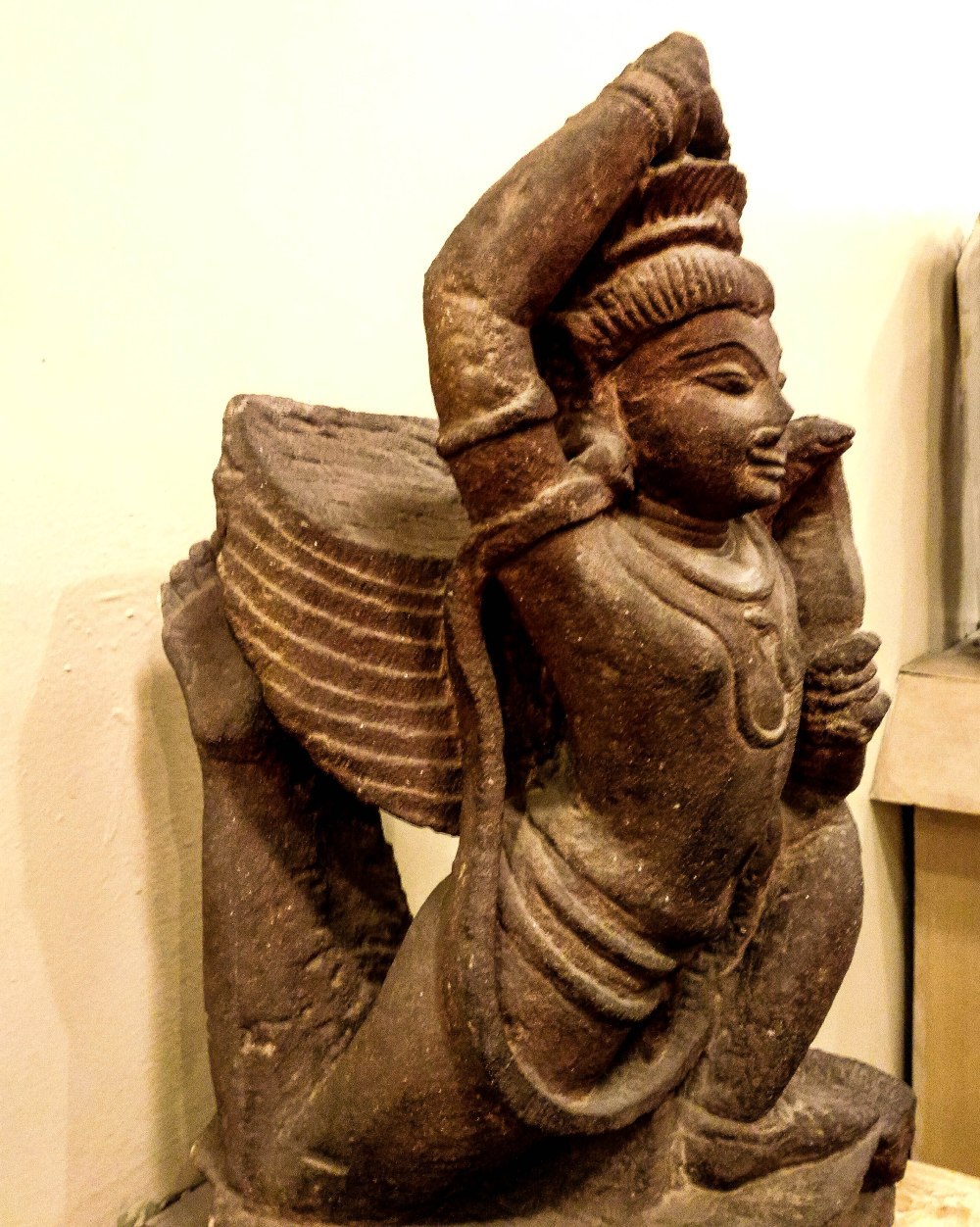
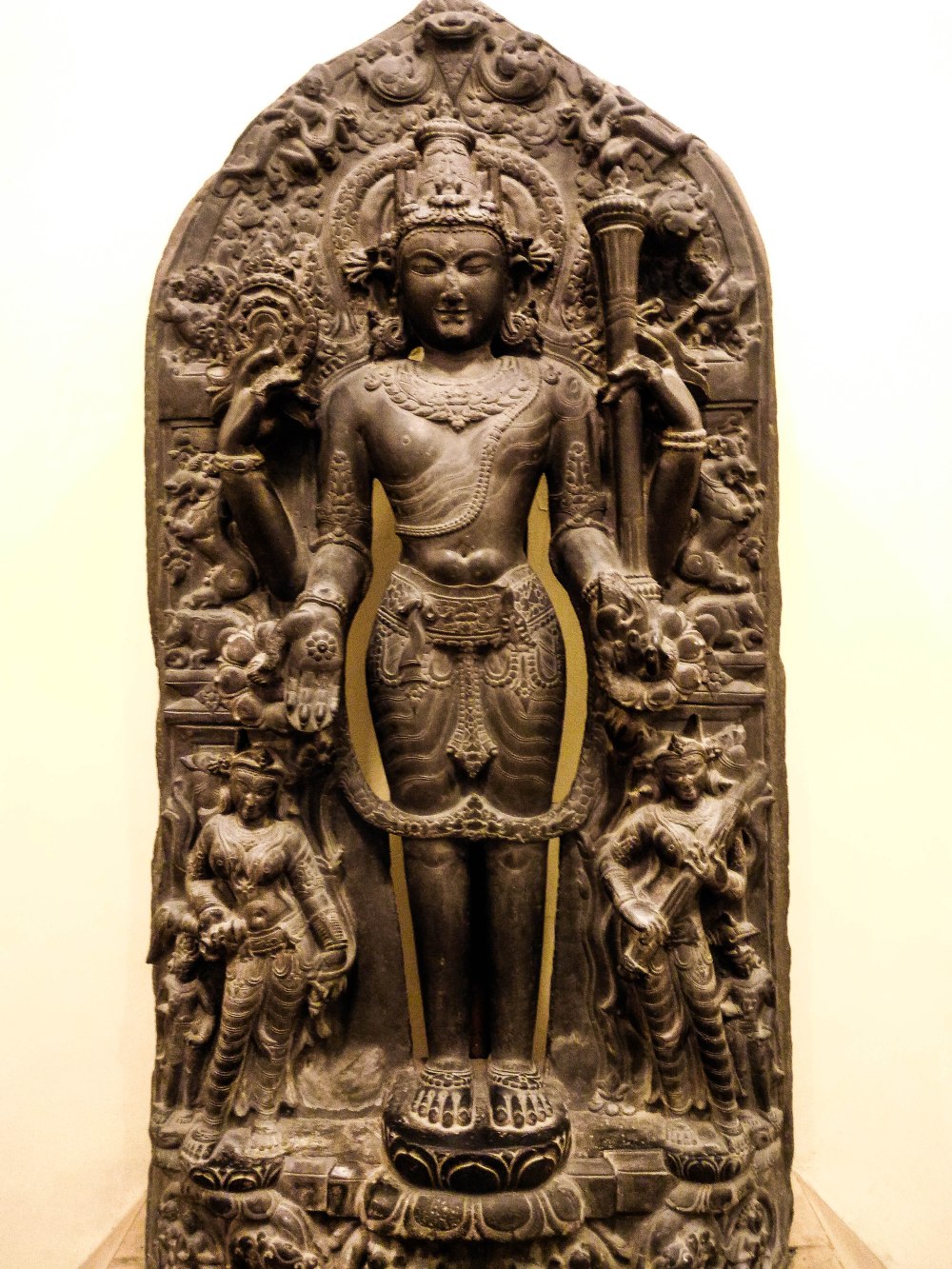


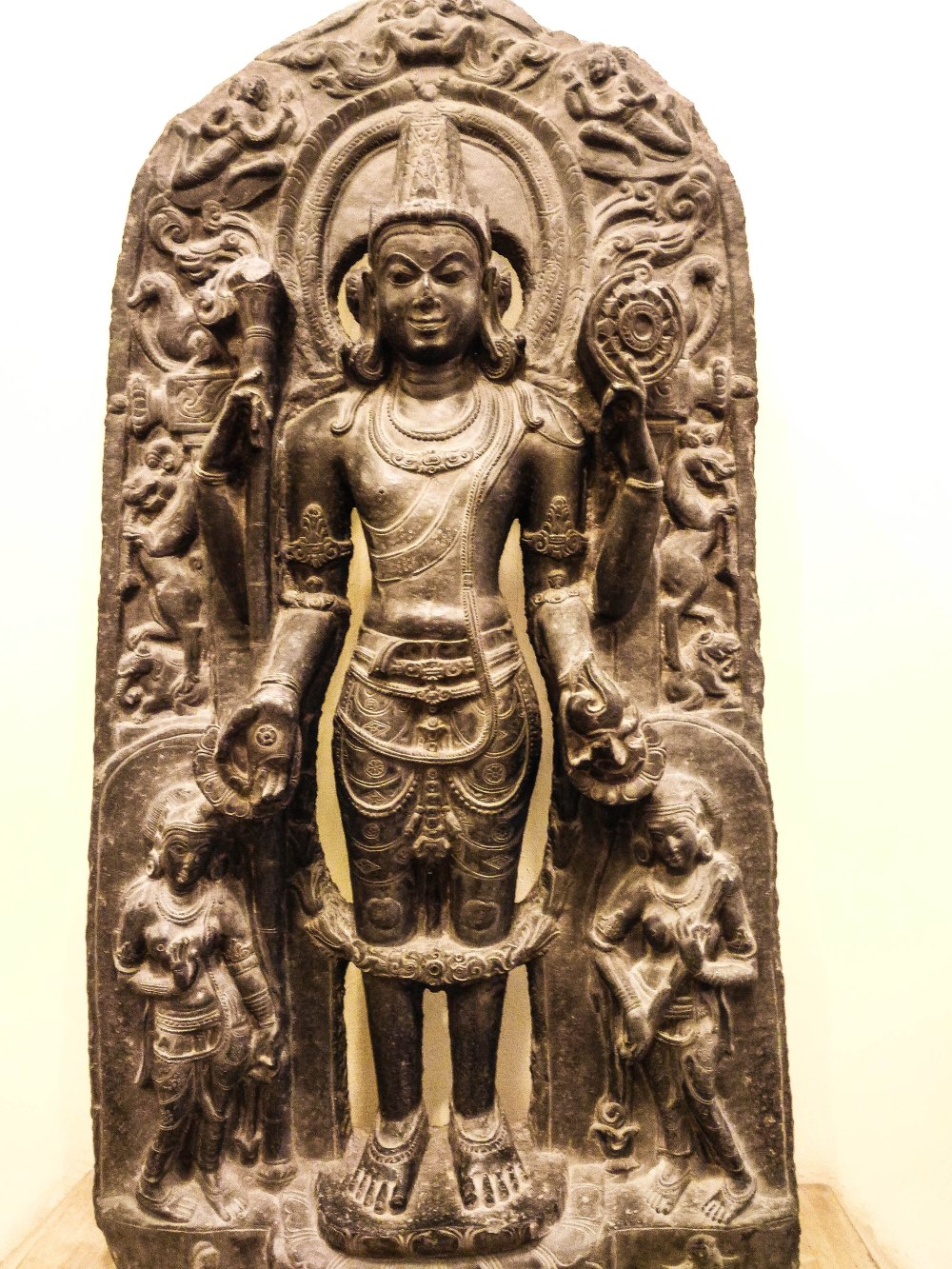

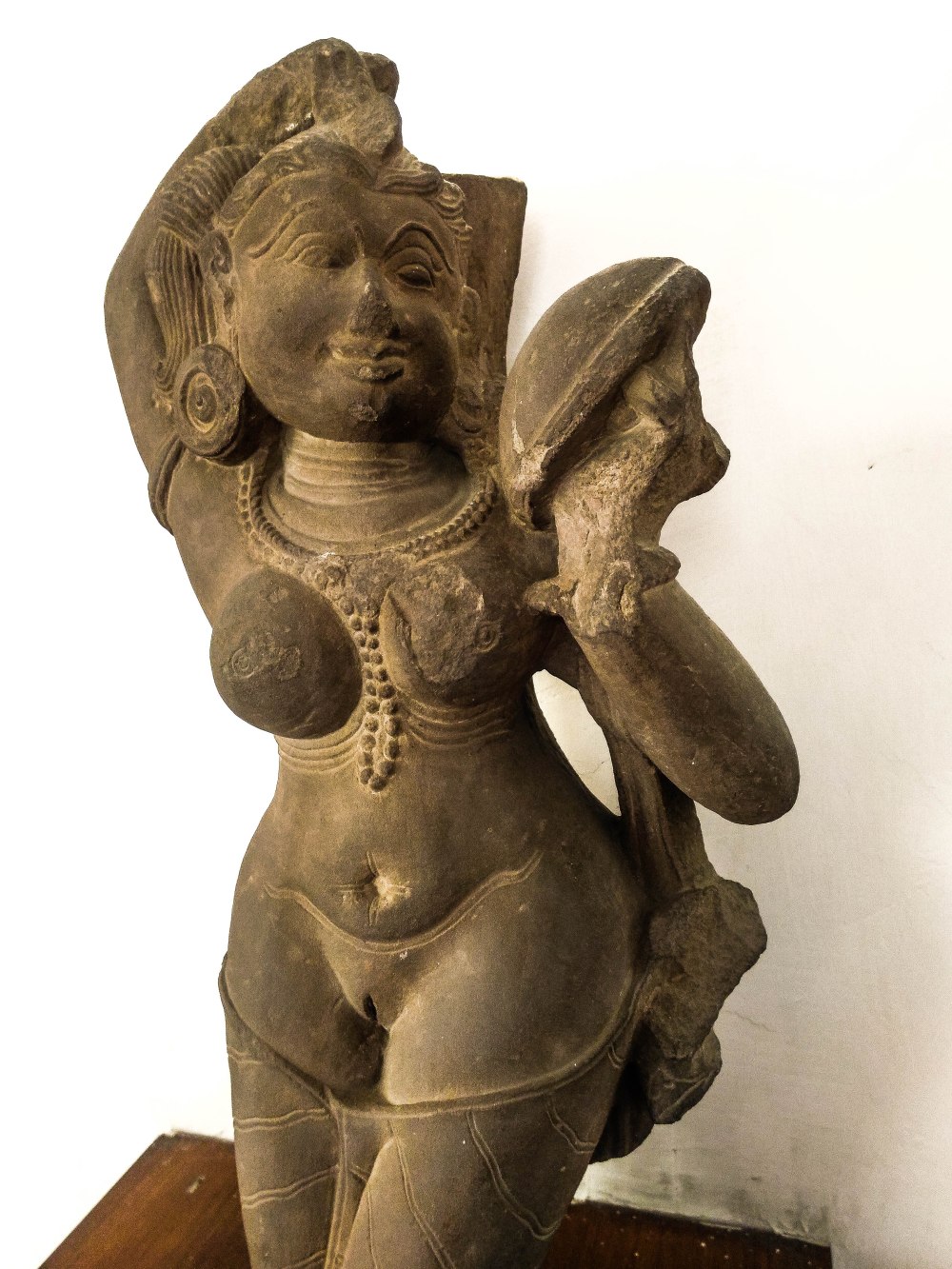

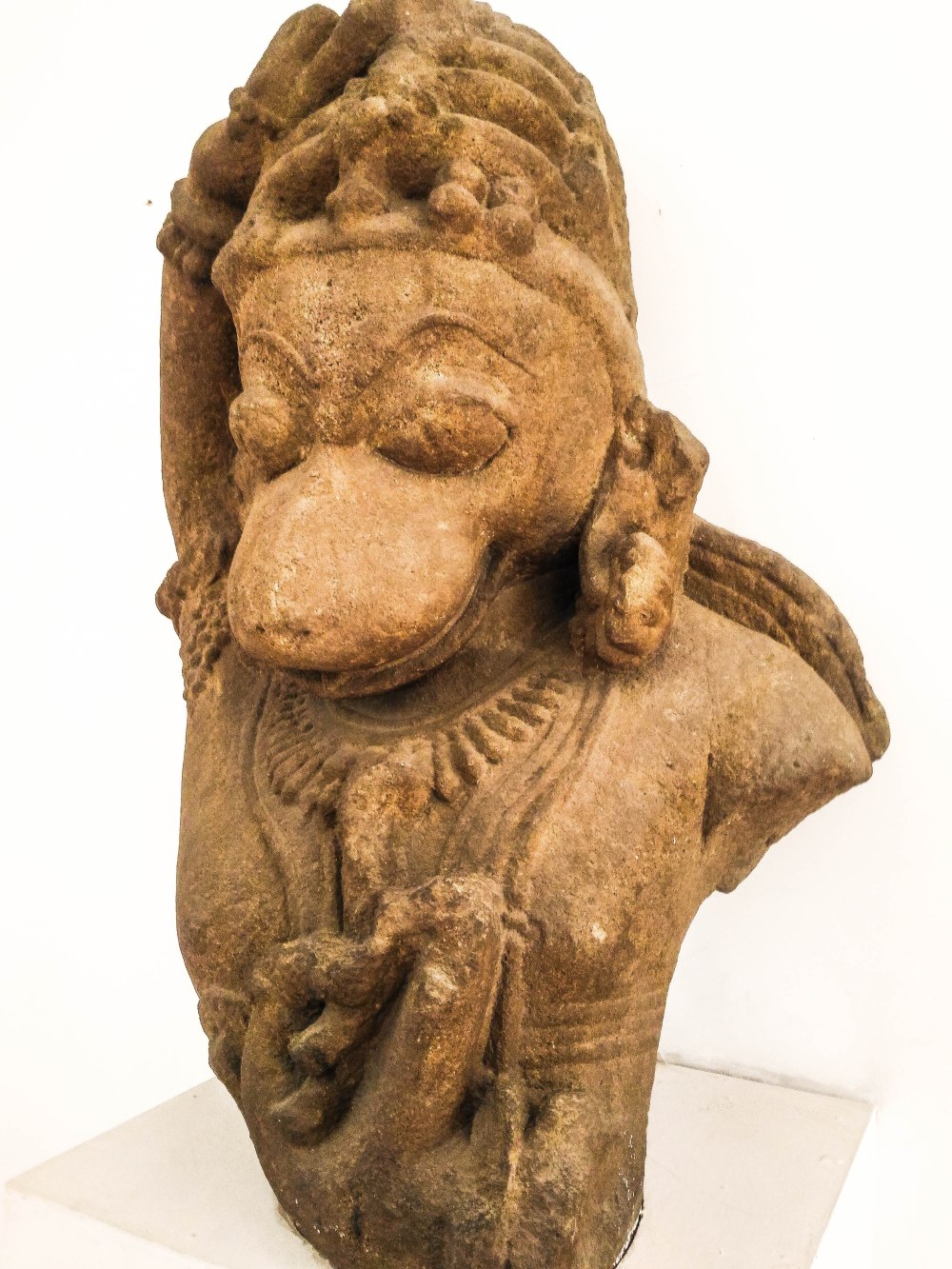
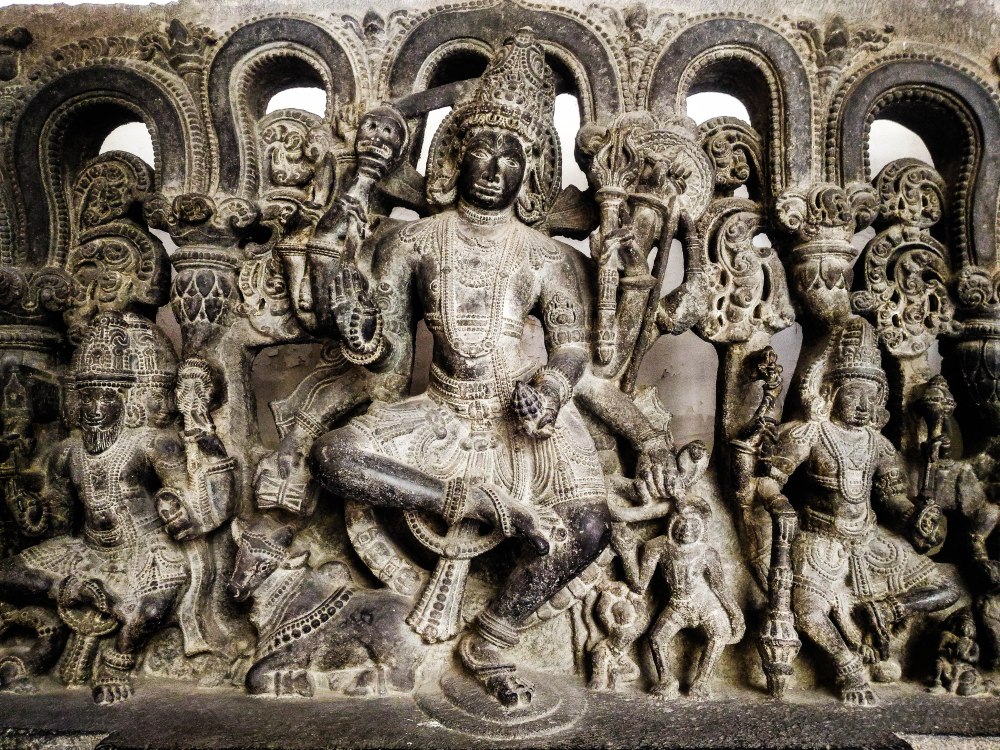
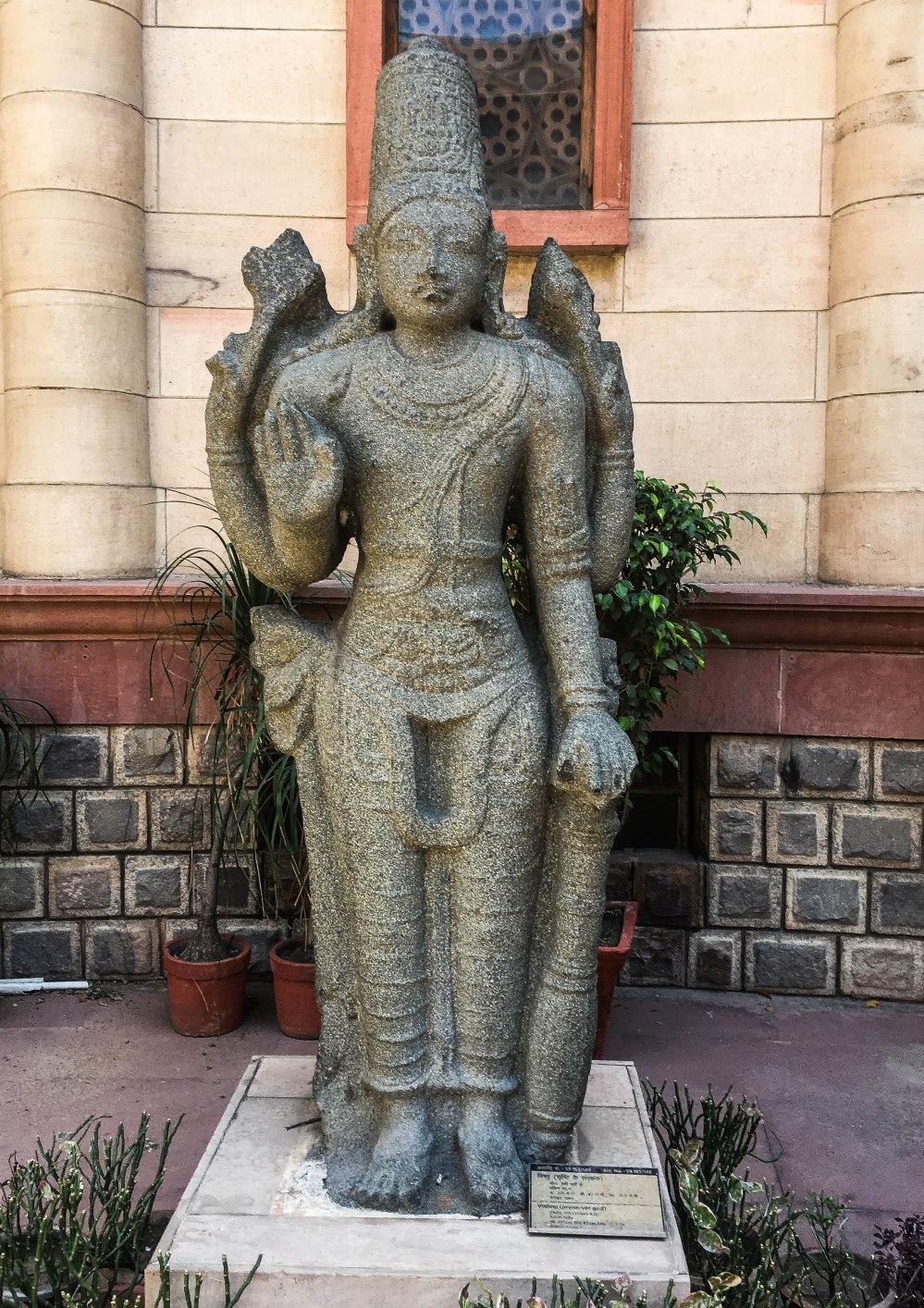
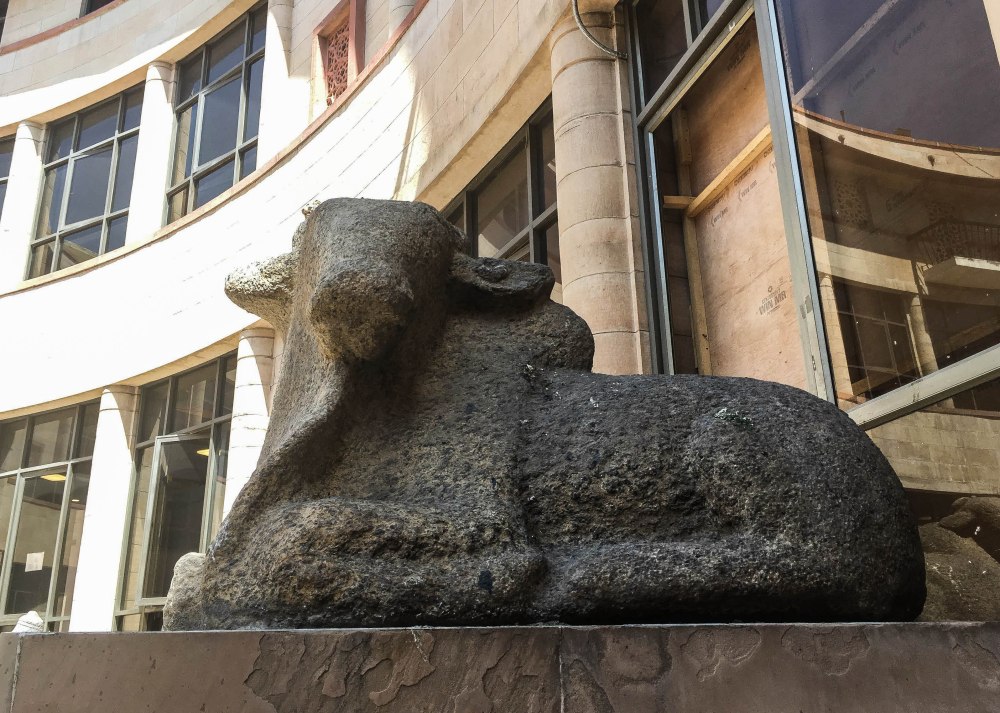
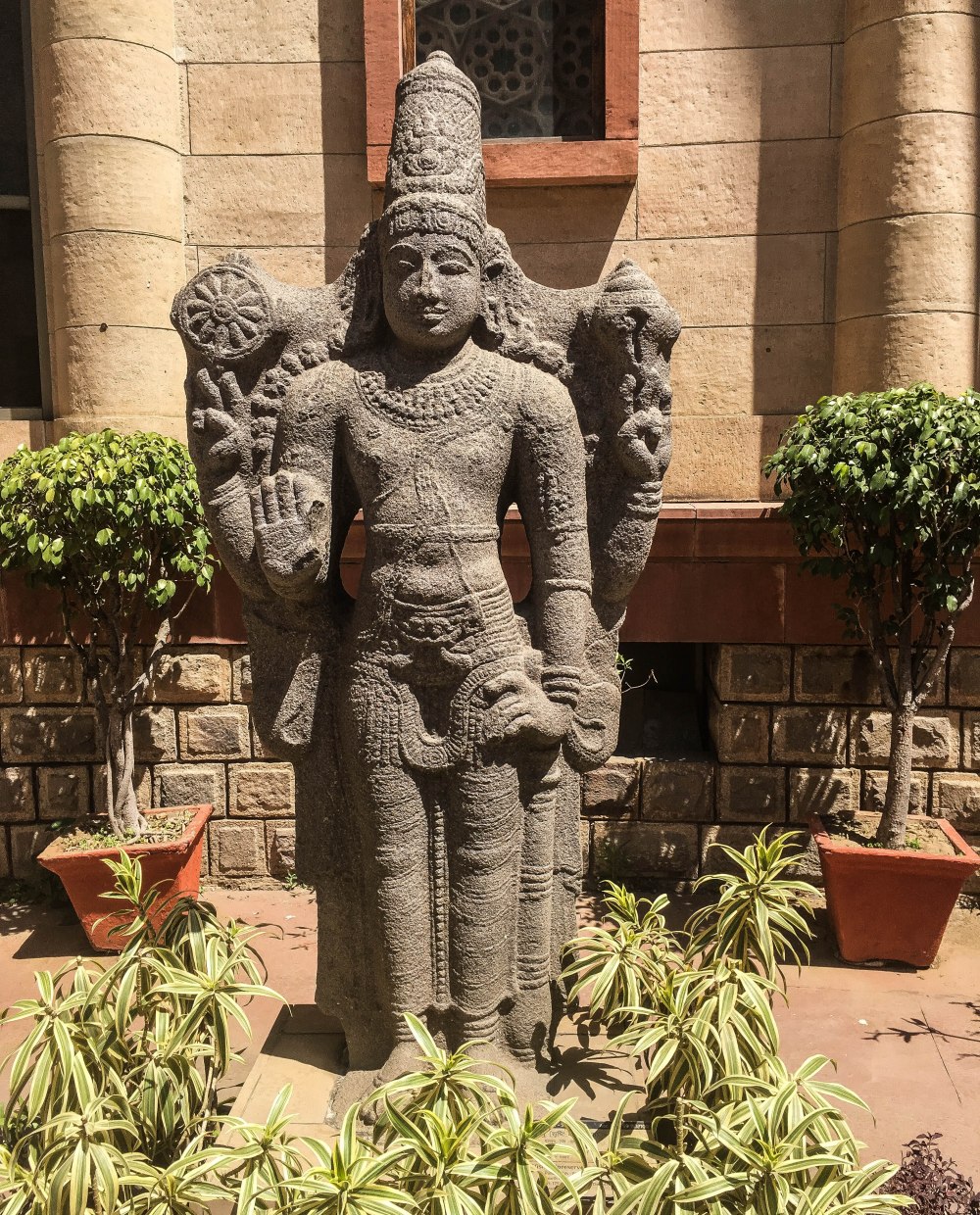
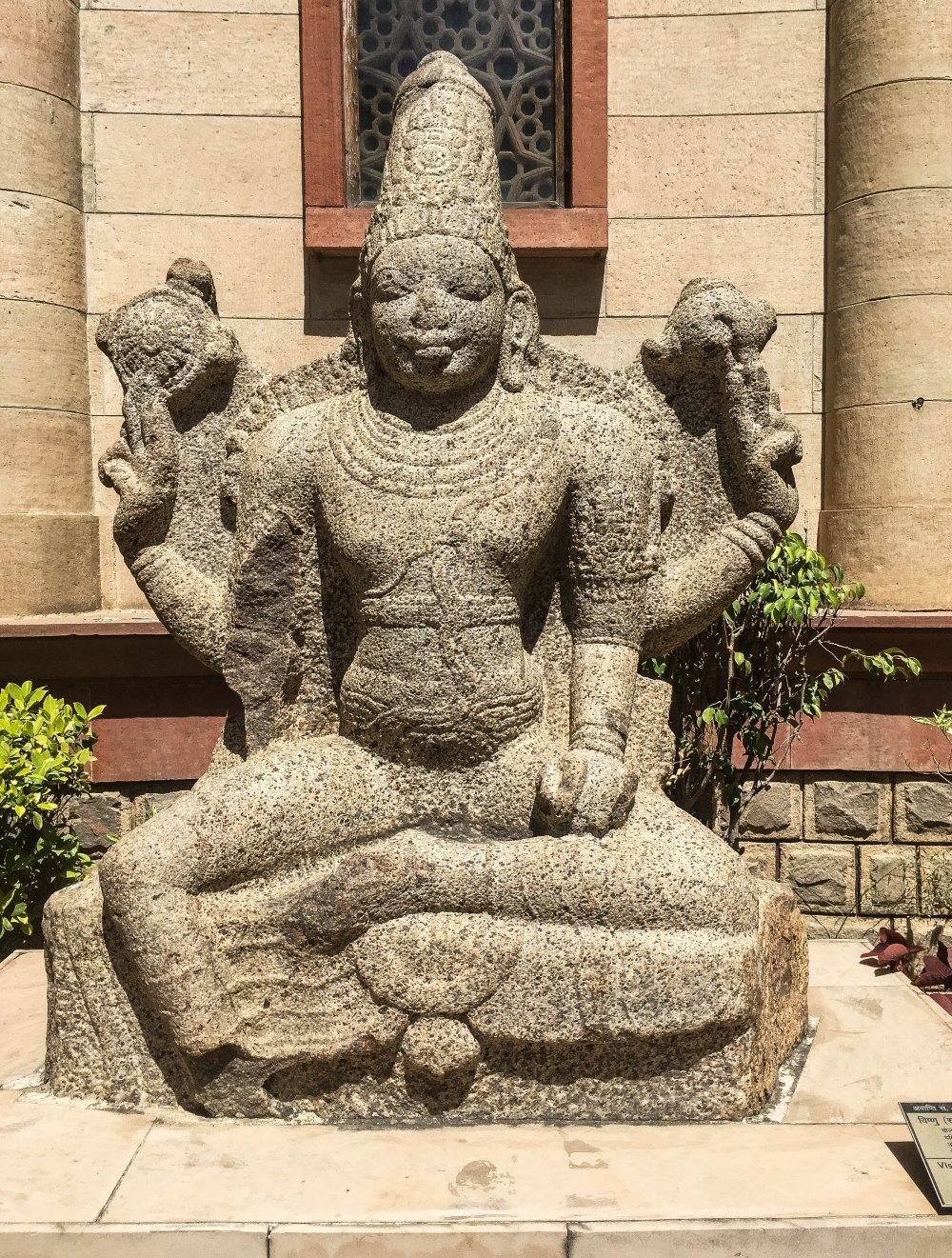

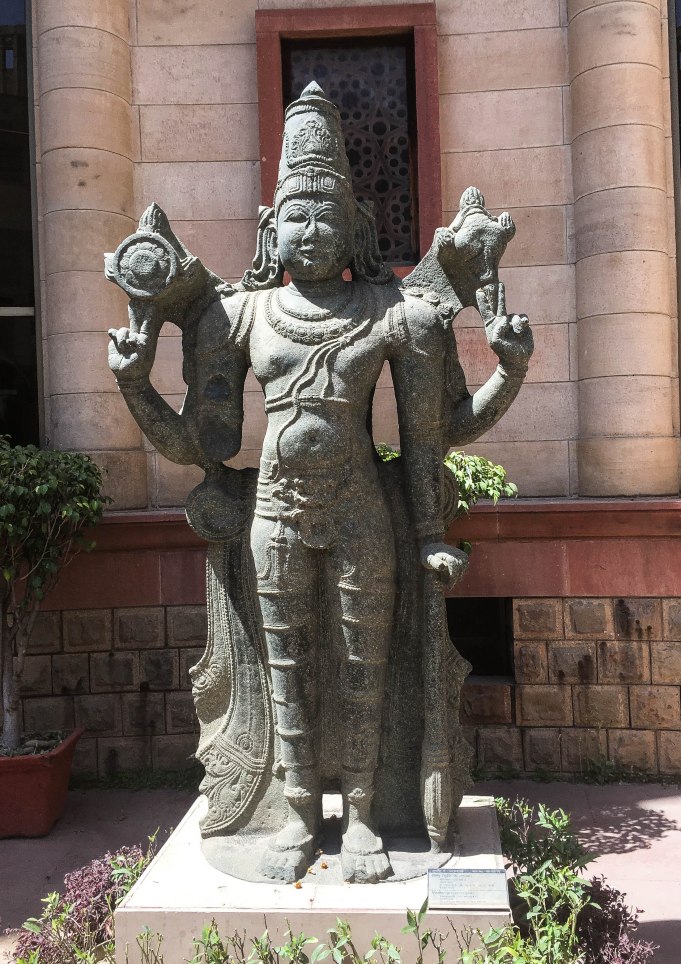
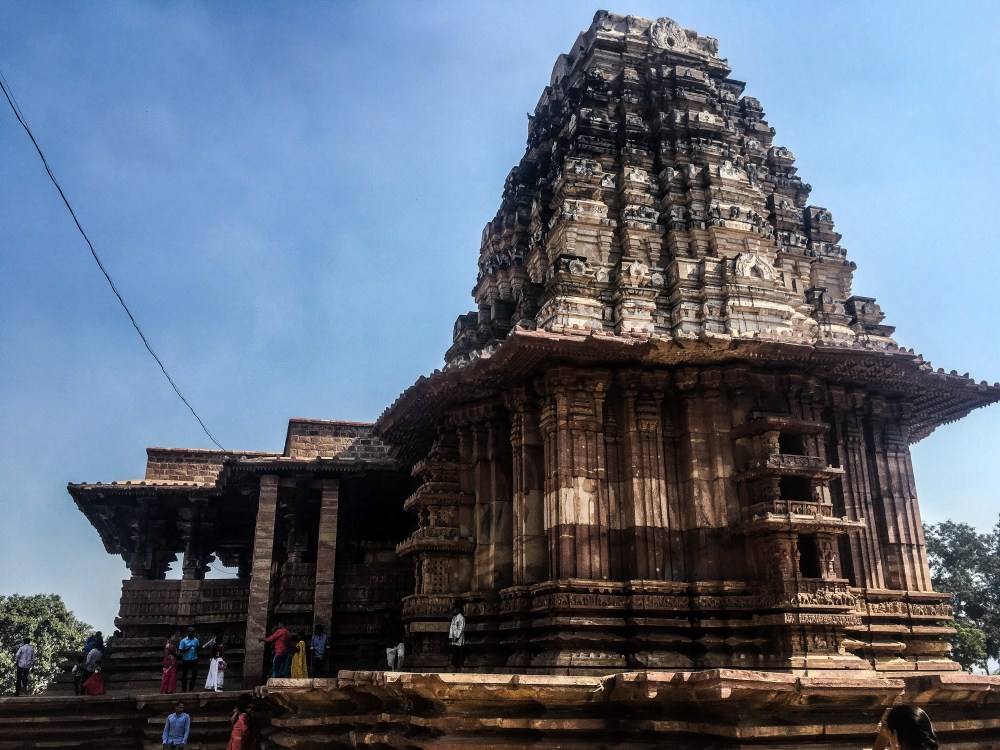
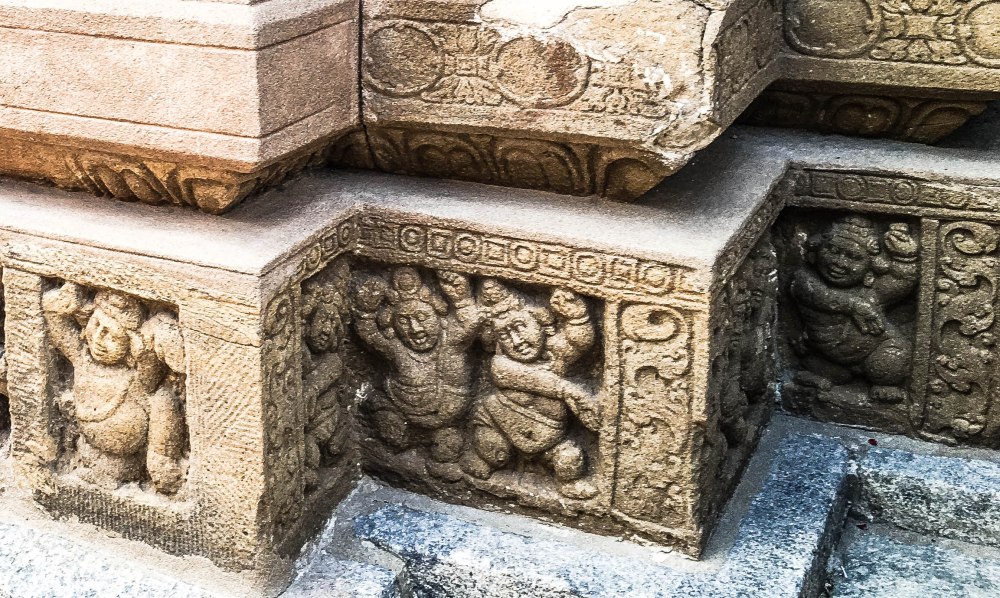
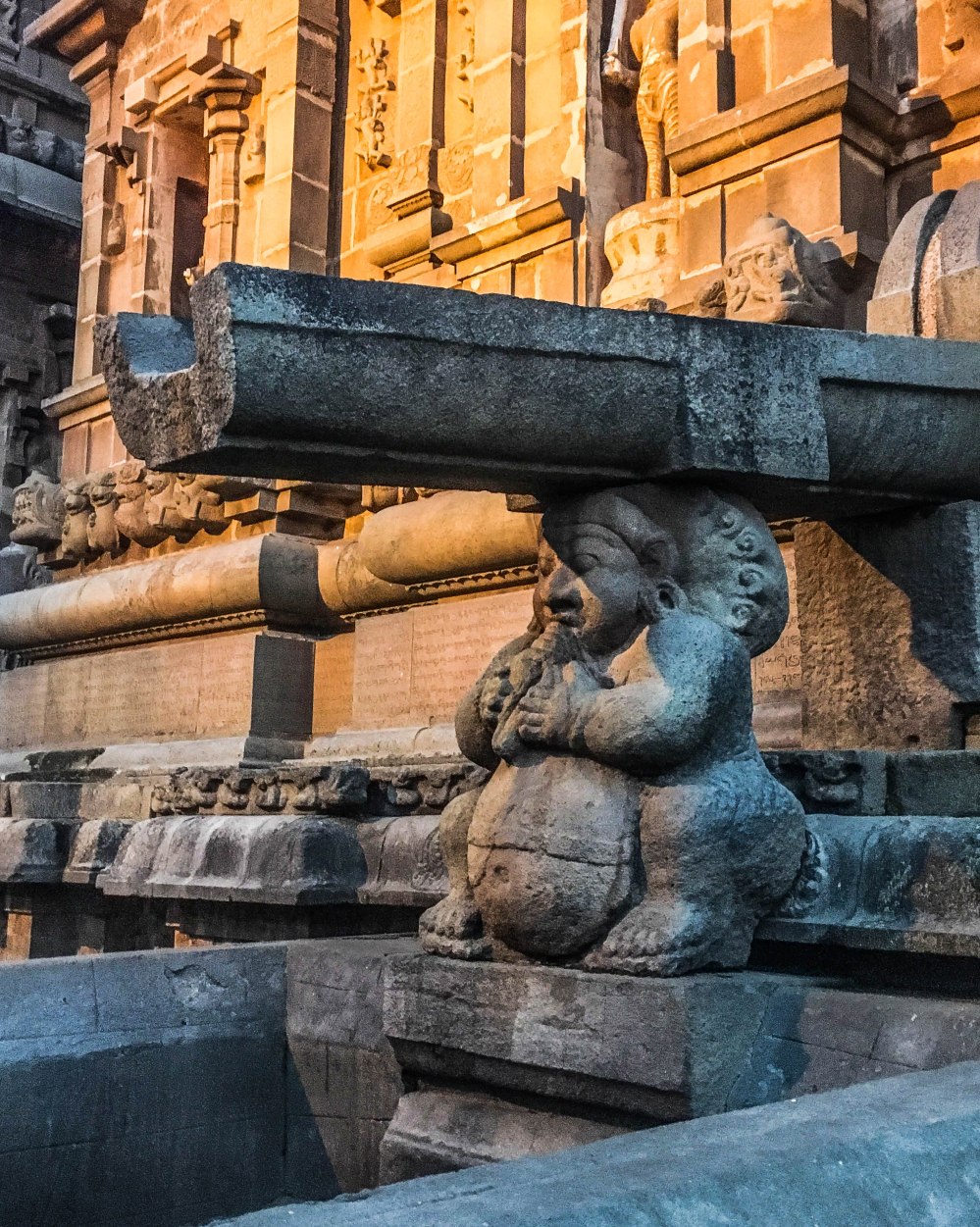
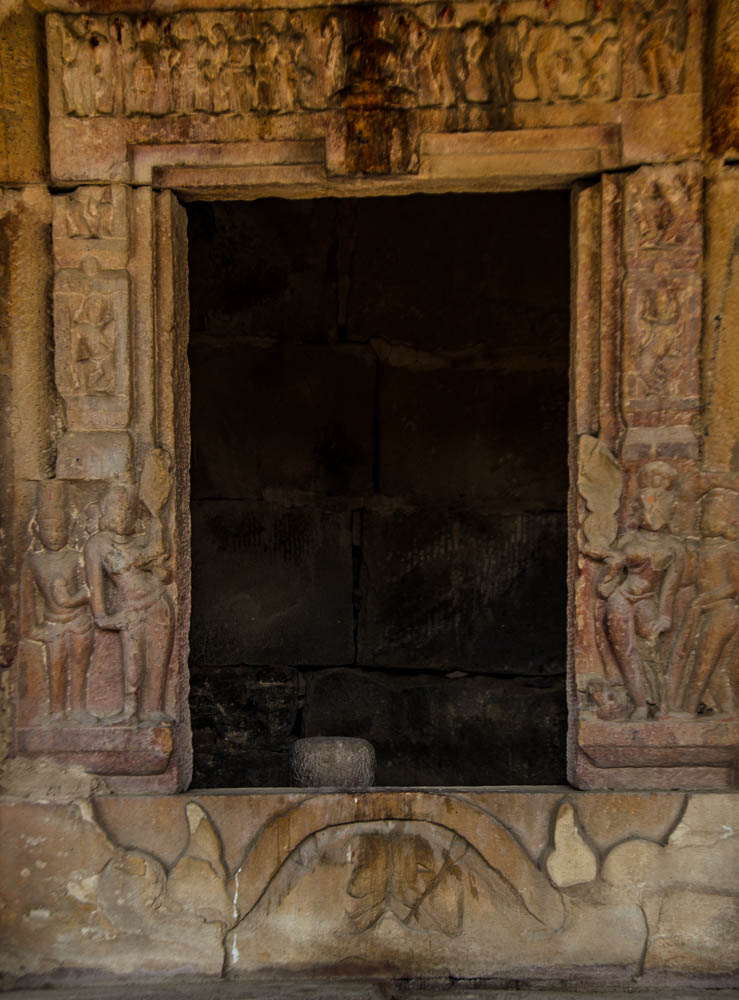
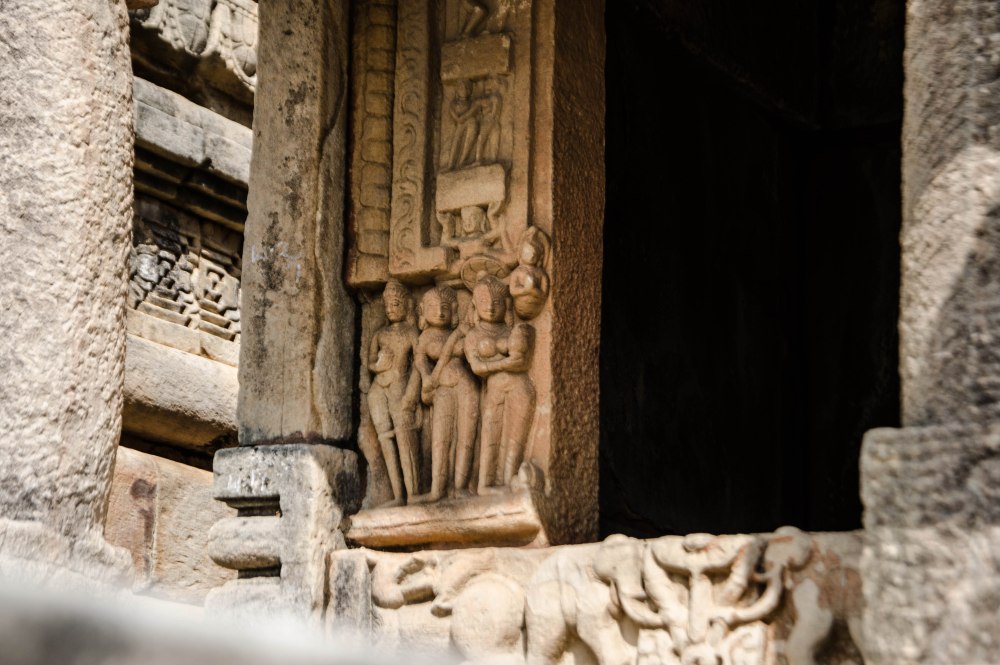
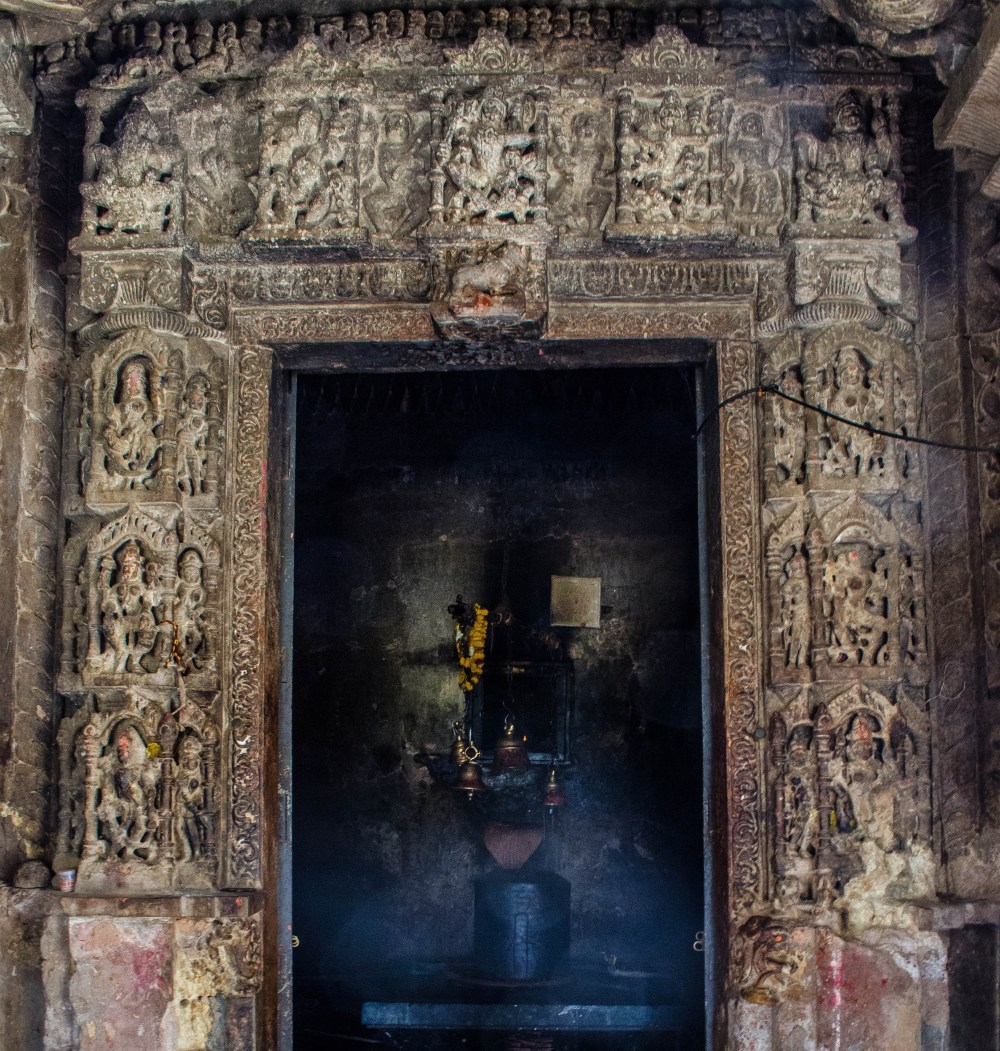
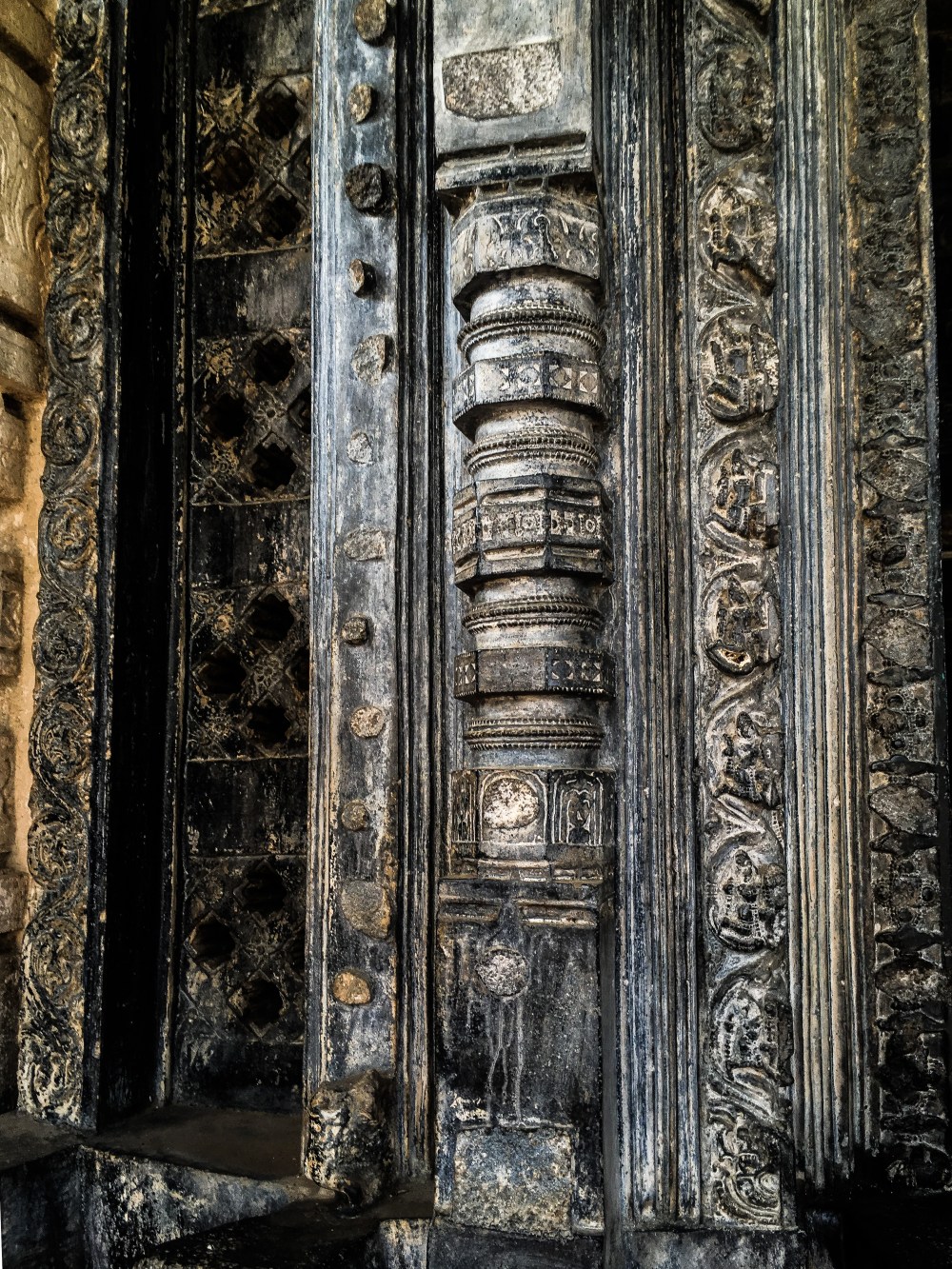
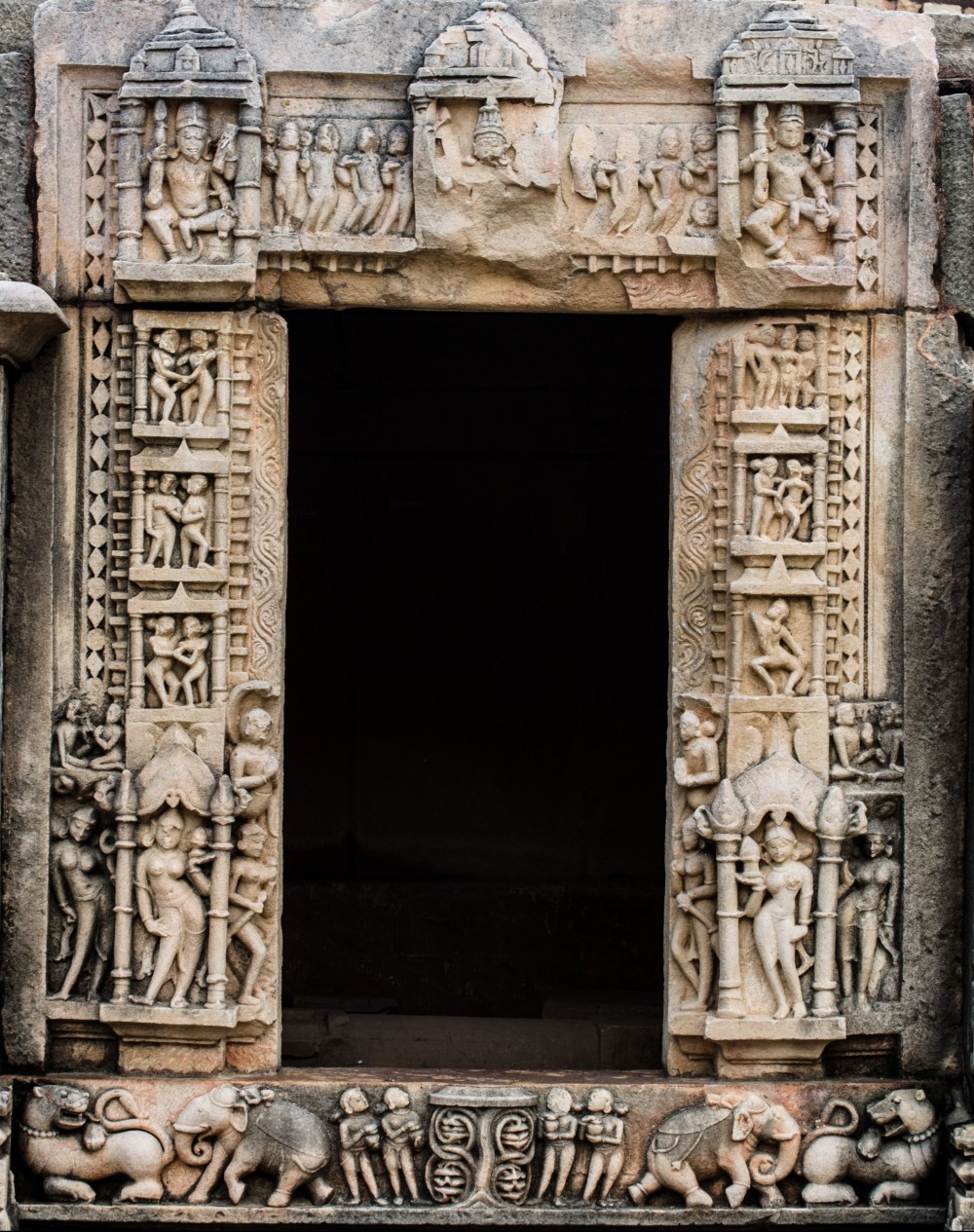
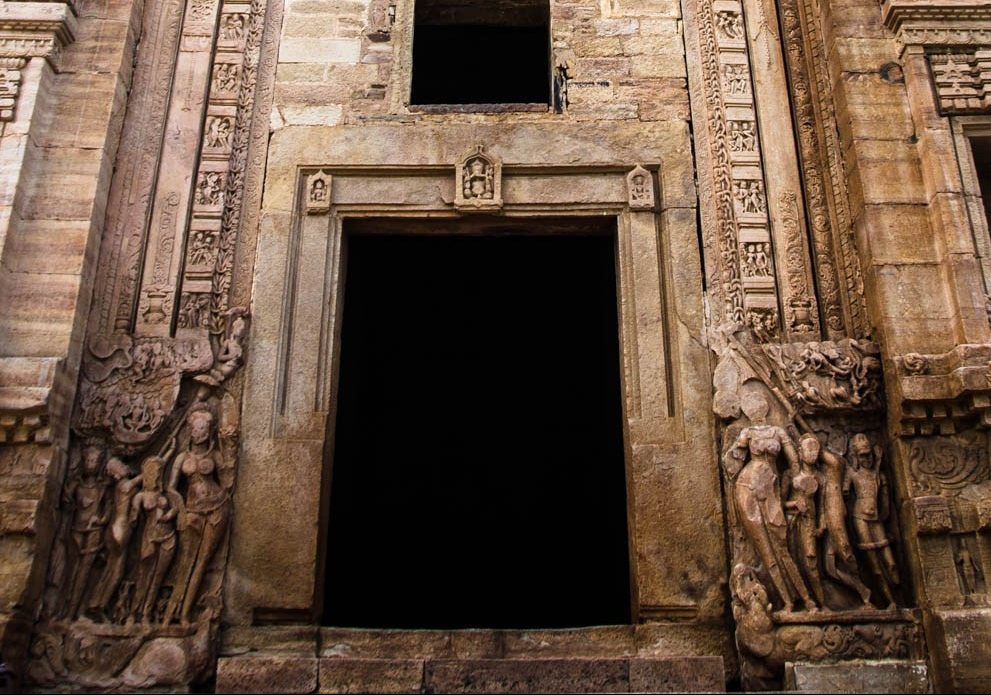 The two
river devis: Ganga stands on the right side of the door jamb on makara
(her vahana), while Yamuna is on the left side on a turtle (her vahana).
On their sides are their attendants, while the dwarapalas stand at the
two ends. The dwarapalas show the attributes of
the presiding deity inside the sanctum. The devis which rise from
heaven (the dark cell inside) give birth to and nurture new lives; while the
dwarapalas stand as protectors warding of all evil and preventing
contamination of the seed and embryo (garbha) of the temple. (Teli ka mandir, Gwalior fort)
The two
river devis: Ganga stands on the right side of the door jamb on makara
(her vahana), while Yamuna is on the left side on a turtle (her vahana).
On their sides are their attendants, while the dwarapalas stand at the
two ends. The dwarapalas show the attributes of
the presiding deity inside the sanctum. The devis which rise from
heaven (the dark cell inside) give birth to and nurture new lives; while the
dwarapalas stand as protectors warding of all evil and preventing
contamination of the seed and embryo (garbha) of the temple. (Teli ka mandir, Gwalior fort)










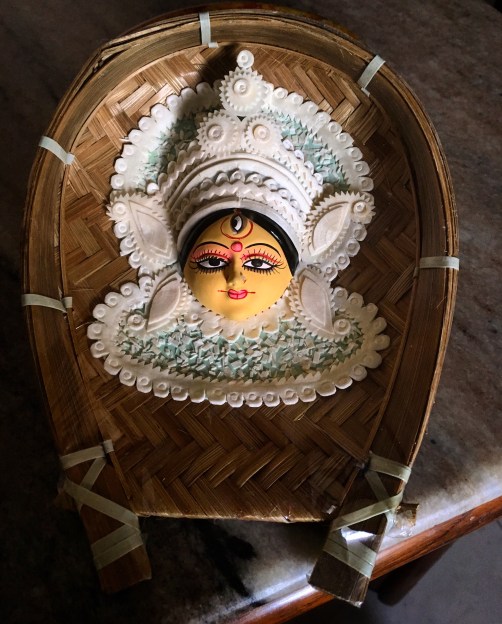





No comments:
Post a Comment