The Nātha yogīs were pioneers of haṭha yoga practices, as proved by unnumerable literary and archaeological records. Some of the earliest known depictions of āsanas appear in Nātha or Nātha related shrines (as will be shown in this article). Some of these āsanas appear much later in our textual records. Further, the canonical haṭhayogic bandhas—mūlabandha, jālandharabandha, and uḍḍīyānabandha—first appear in Nātha texts, e.g. Gorakṣaśataka, dating from the 12-13th century. Even the advanced praṇayāma practices such as sūryā, śītalī, ujjāyī and bhastrī first appear in the Nātha texts. The canonical 15th-century text of haṭha yoga, Haṭhapradīpikā, also belongs to the Nātha sampradāya.
As an archaeologist mapping the early archaeological landscape of the Nātha yogīs in western India, I will discuss two temples in Maharashtra belonging to the Nātha tradition where some of the earliest known yoga postures appear in our archaeological record: the Māṇakeśvara temple at Jhodge in Nashik District and the Brahmanātha temple at Parunde in Pune district.
Māṇakeśvara temple, Jhodge
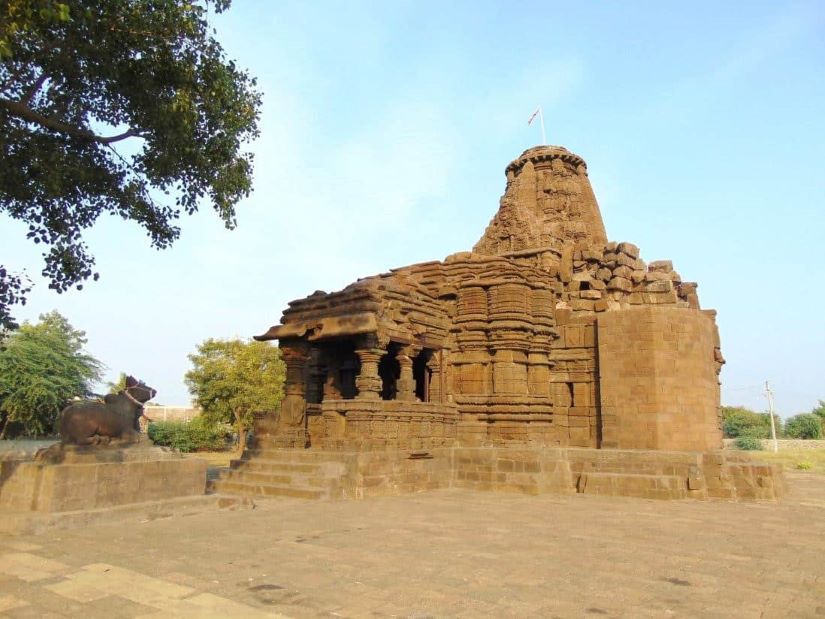
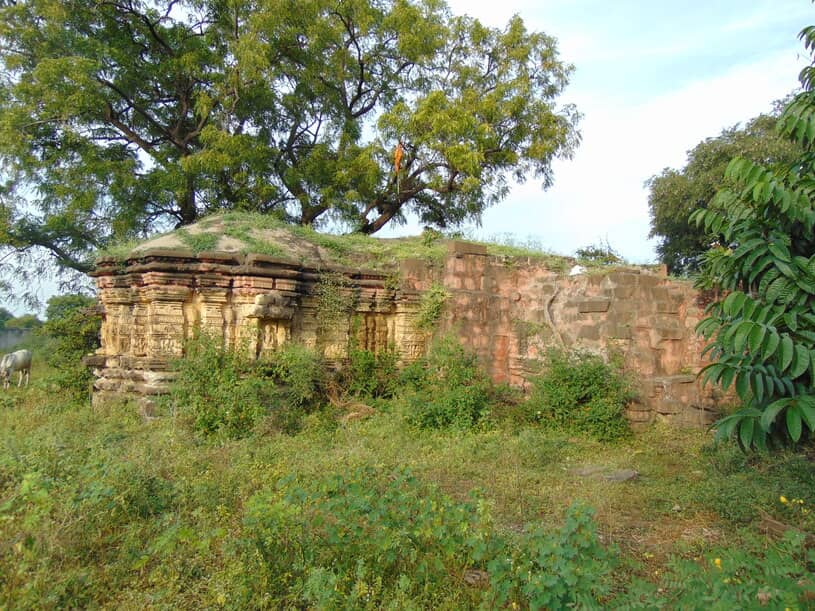
The Māṇakeśvara temple is located on the Mumbai-Agra National Highway in the northeast of Malegaon. This Śiva temple was built in the 12th century in the Bhūmija style. Due to the identification of an image of Matsyendranātha on this temple, the early activities of Yoga prevalent in the Nātha tradition can be ascertained. Along with the image of Matsyendranātha, there are sculptures of a Yogī in various yoga poses—Kukkuṭāsana, Vajrāsana, Kubaḍīāsana, Brahmāsana, etc.
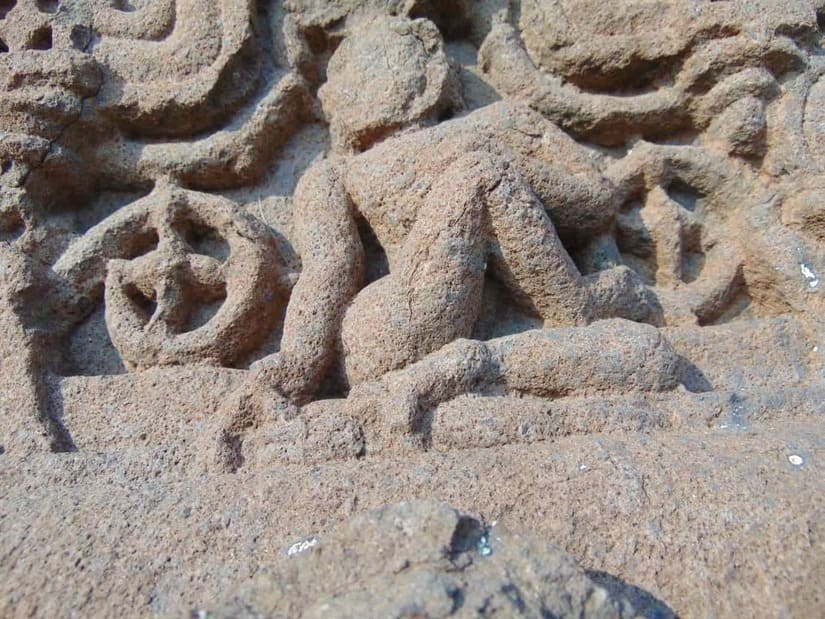
The above image is of a Yogī in the toraṇa (arch-like structure) above the devakoṣṭha. A fish is shown below the Yogī indicating that it is Matsyendranātha. Other Yogīs have been shown on the temple, but Matsyendranātha is depicted on the devakoṣṭha,1which shows his significance. The image is small, fragile, and defaced. He is depicted with karṇakuṇḍala. He places his right foot on the ground, and his left hand is on the knee.2
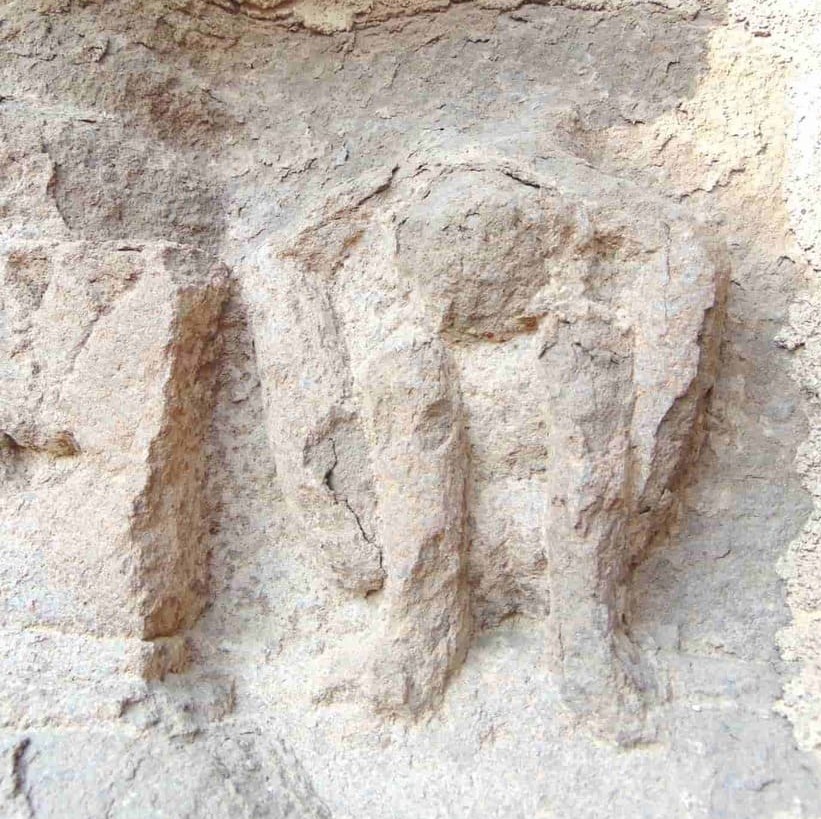
Brahmāsana/Phaṇindrāsana: In this posture, the Yogī places both his legs behind his neck and is shown with his two hands touching the ground. This posture is believed to be similar to that of phaṇindrāsana, pāśinī mudrā, skandhāsana and dvipādasirāsana.
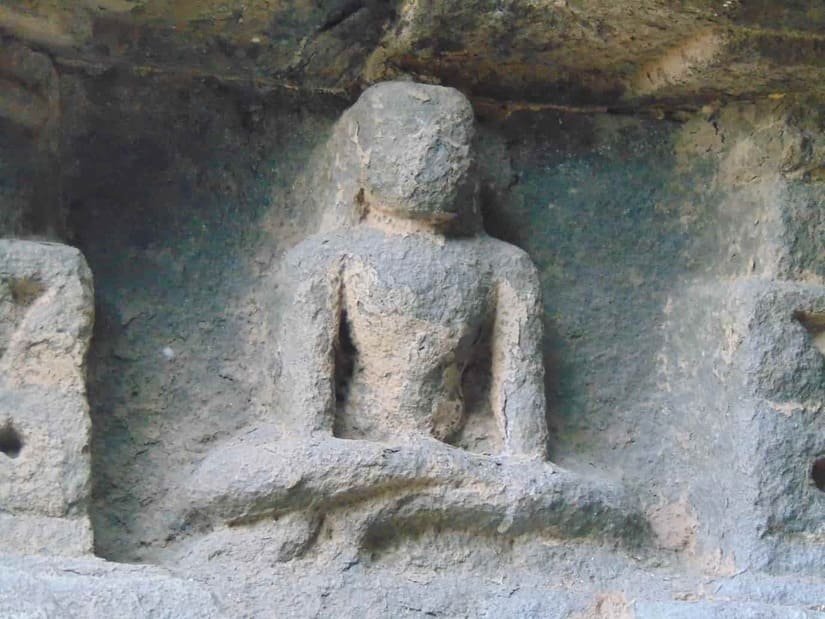
Kukkuṭāsana: There is an image of a Yogī seated in Kukkuṭāsana on the jaṅghā portion. He is shown with hands inserted between his thighs, holding up and balancing his body.
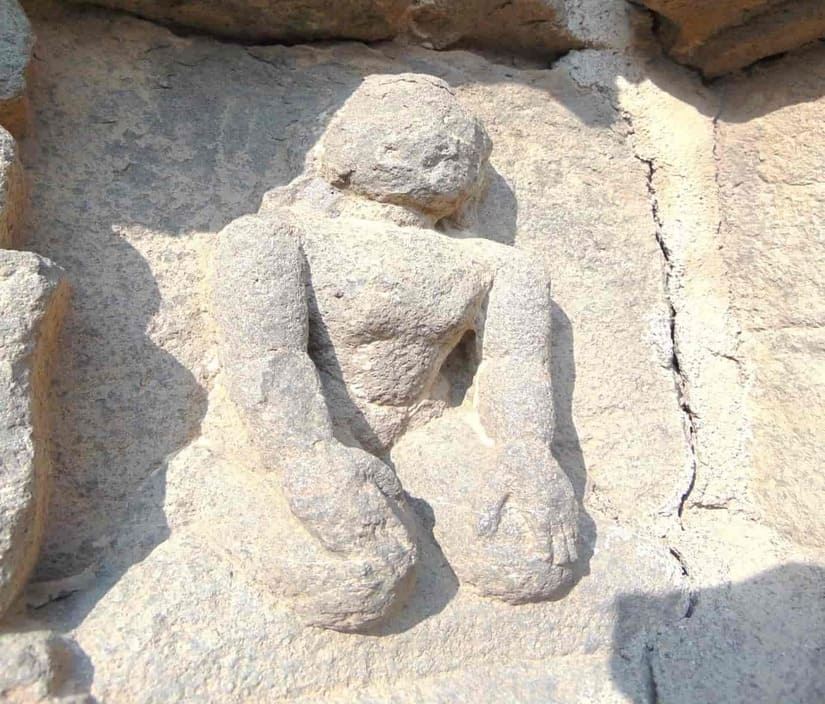
Vajrāsana: A Yogī is depicted in Vajrāsana seated on his knees with a hand placed on each.
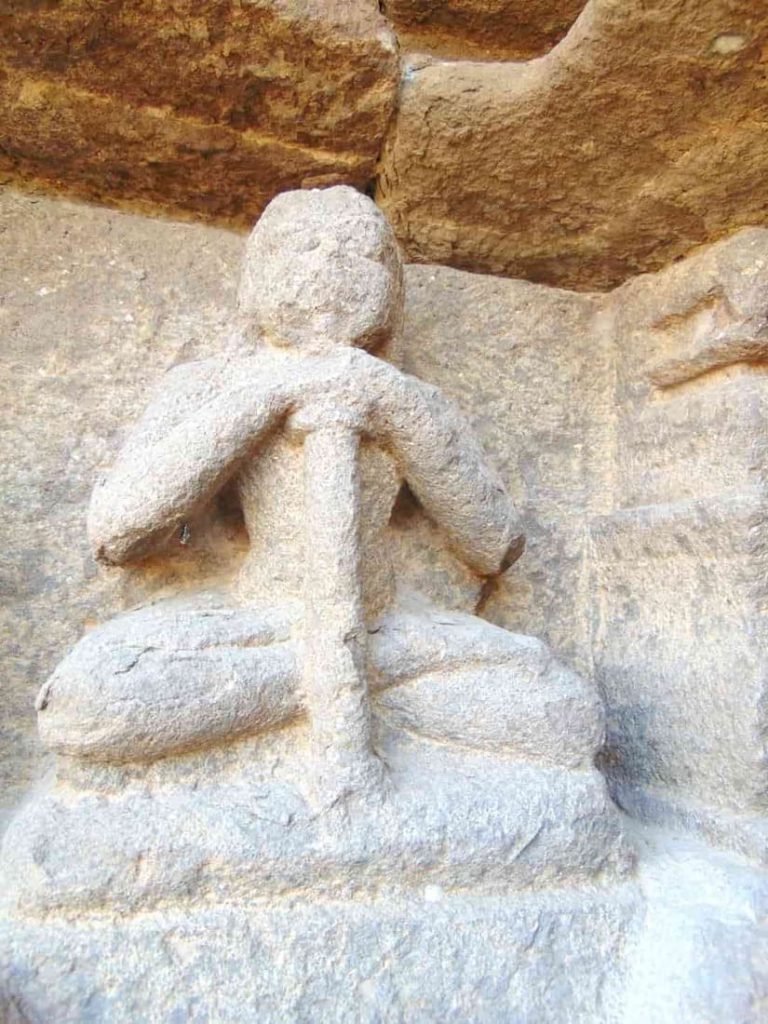
Kubaḍī āsana: The Yogī is seated in kubaḍī āsana depicted on the jaṅghā portion. In this āsana, the Yogī is seated in padmāsana and resting on the support of a kubaḍī (crutch).
Apart from these, there are several other āsanas carved on this temple, such as ardhaparyaṅkāsana, ardhapadmāsana, and gomukhāsana. These are some of the earliest known depictions of Yoga postures in our archaeological record, and therefore this temple is of historical importance. However, despite its significance, the temple is in an advanced state of disrepair and decay. Urgent work is required to restore and repair this temple, probably under the aegis of the Archaeological Survey of India.
Brahmanātha Temple, Parunde (Pune District)
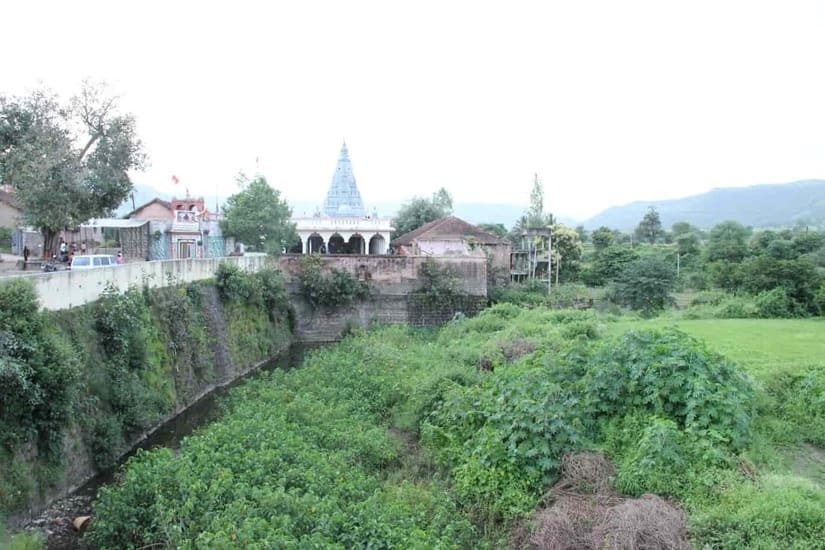
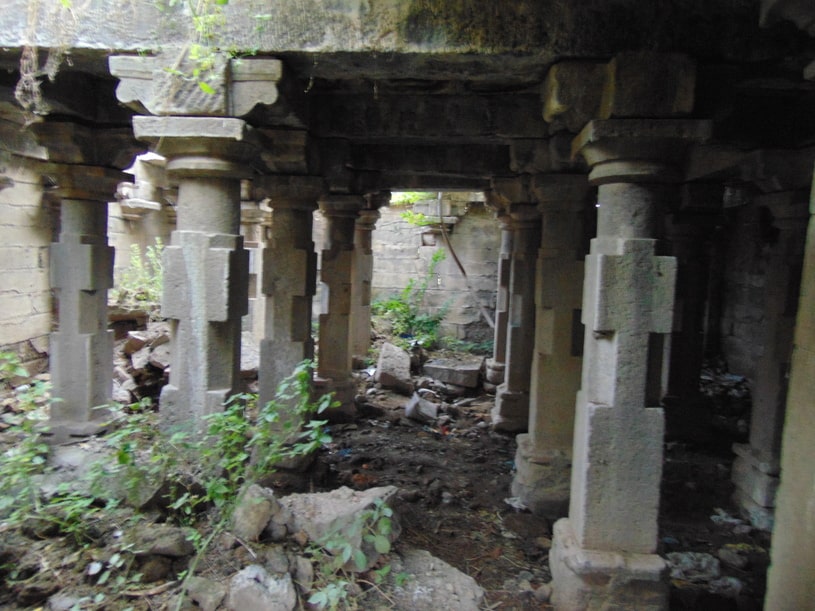
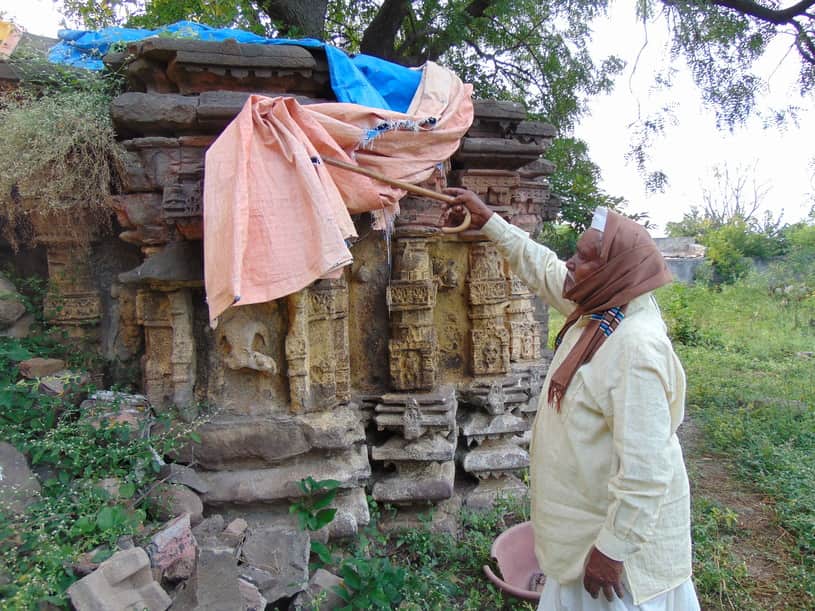
The Brahmanātha temple at Parunde in Pune District is also of archaeological importance for its early sculptural representation of yoga poses. The temple is named after Nātha Yogī Brahmanātha, who is believed to have taken samādhi at this place. Based on what remains of its architecture, it can be dated to the 13th century. The decorative pillars of the Brahmanātha temple have rare depictions of different yogic āsanas.3
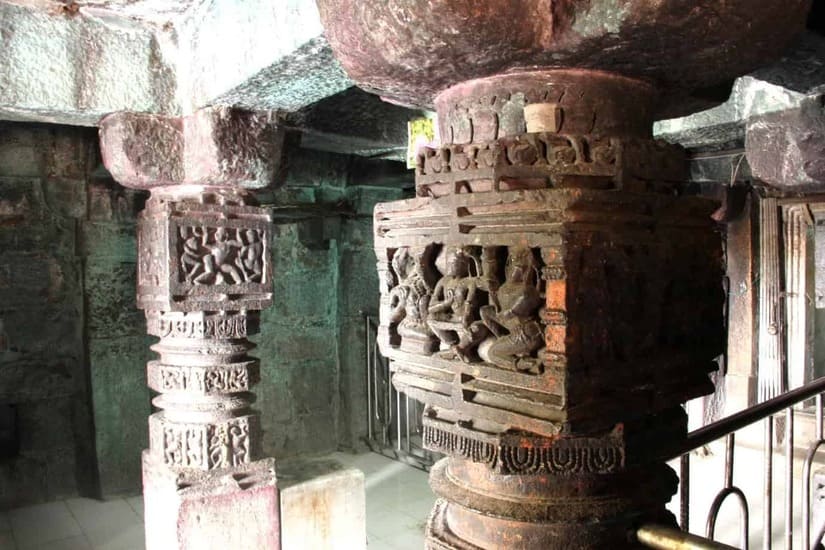
The temple was renovated sometime in the early 20th century. Only six decorated pillars have survived amongst the sculptural material. These pillars can be classified into two categories— the first comprises four pillars located in the central portion of the hall, with the remaining two pillars, which are on both sides of the doorway of the garbhagṛha, forming the second category. The first type of pillar mainly bears depictions of yogic āsanas.
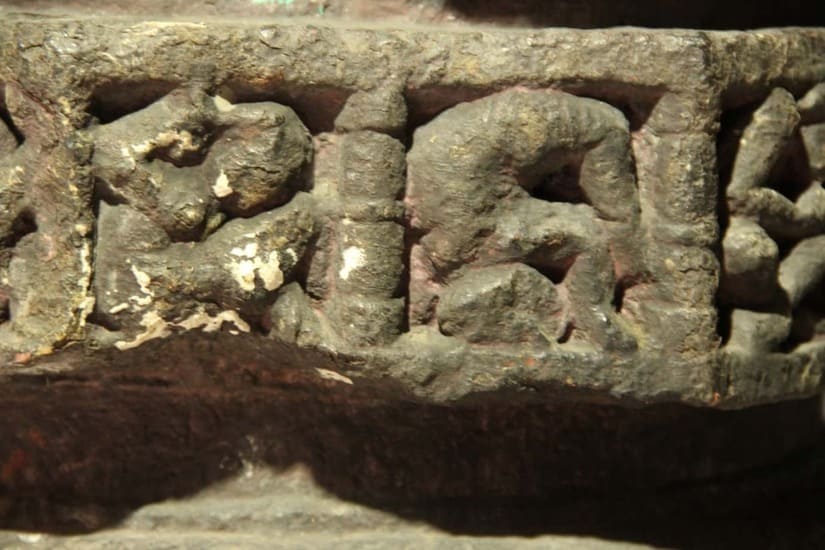
Urdhvadhanurāsana: This āsana is depicted on the western side of the middle octagonal bracket. The image is shown arching backward. The face is touching the ground, and the entire body is balanced on palms.
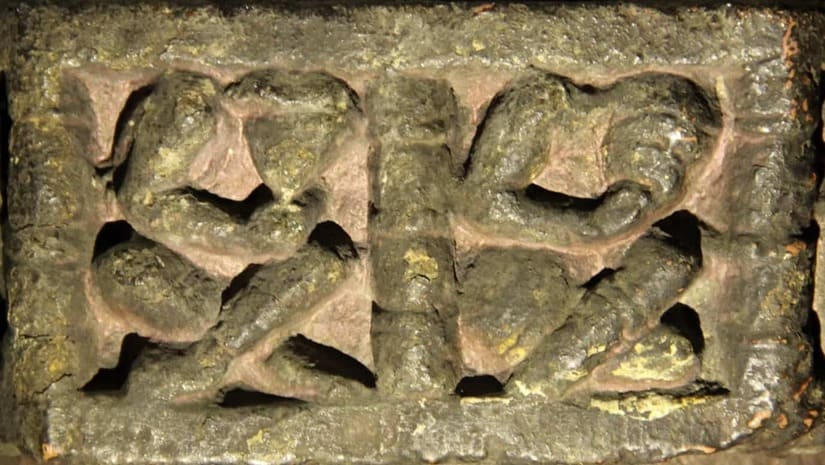
Netī Kriyā: The panel on the southwestern side of the first pillar depicts two images performing what is called the netī kriyā (cleansing of the nasal passage). Though the depiction of the actual action is the same, they are shown sitting in different āsanas.
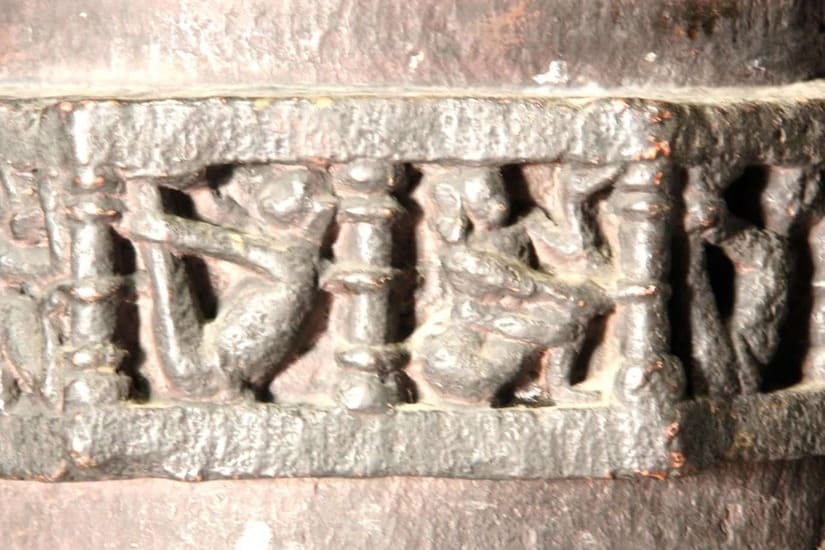
Naukāsana: There are two depictions of this āsana, found on the left-hand side of images on the northern and northeastern panels. The āsana resembles the shape of a boat and hence the name.
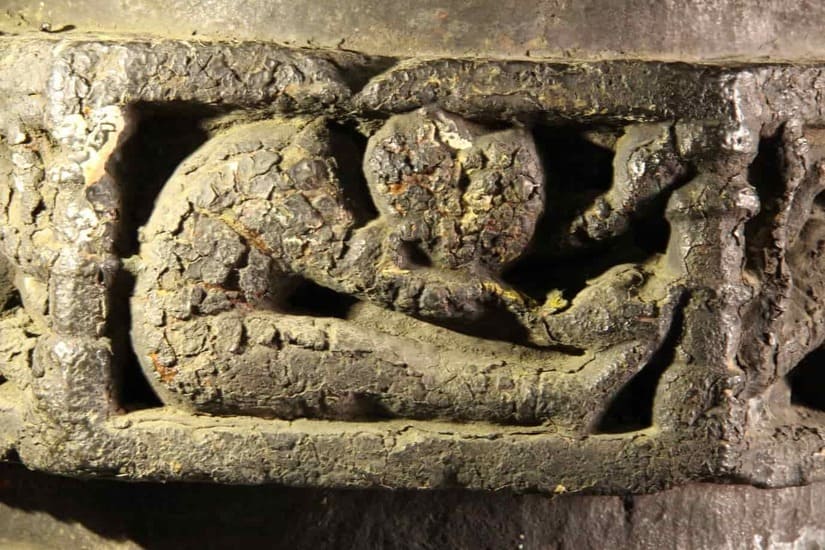
Pādapaścimottānāsana: This is depicted on the southern side of the pillar on the middle bracket. The yogī is shown seated towards the right with his legs fully stretched. He is bent forward and is holding the right foot with his right hand. Facial features are not clear owing to the erosion in the figure.
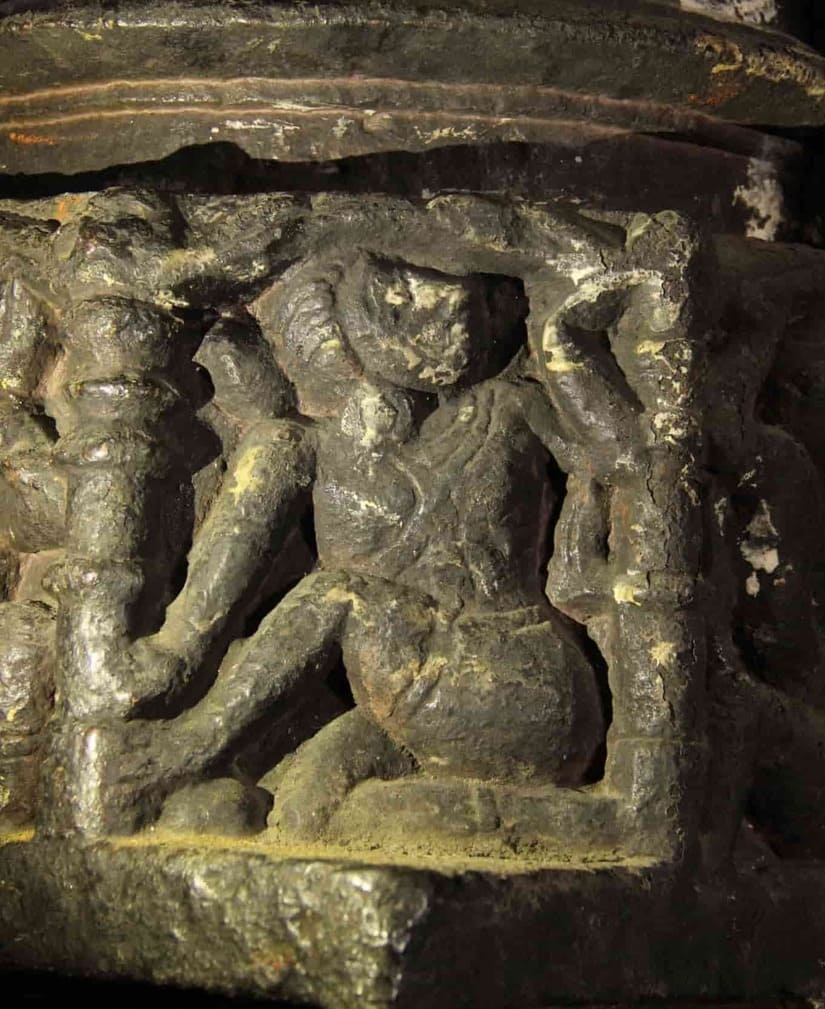
Ardhamatsyendrāsana: This āsana is depicted on the southeastern panel of the lower bracket. The yogī is shown seated. His left leg is crossed over his right leg, which is bent backwards. He appears to be sitting on his right leg. The body is turned towards the left. His right hand is near his left foot while the left hand is turned upwards. His face is turned backwards. His hair is matted and is tied in a bun. As the nomenclature suggests, this posture is known after Matsyendrāsana.
I have provided a brief glimpse of the vast yogic sculptural treasures in hundreds of early temples across India, most of which have been forgotten by history. This is surprising because Yoga has attained immense worldwide popularity, yet its archaeological and literary signature has not received the scholarly attention it merits. These temples lie scattered along the length and breadth of the country, some in complete ruins and others in various stages of ruin. These monuments in stone are our links to the inspiring past of yogīs and ascetics who practised extreme penance their entire lives to get a glimpse of that divine consciousness and, in the process, help raise the whole of humanity nearer to the level of divinity.
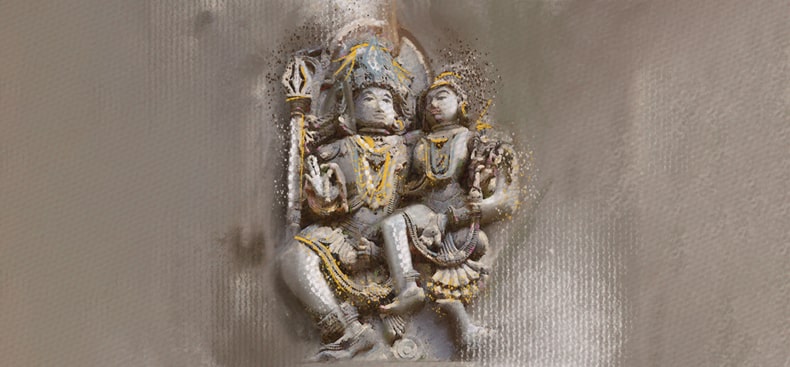
Interestingly, the rise of Śaivism coincided with the collapse of the Gupta Dynasty, though we cannot be sure if there is any connection between the two historical developments. Śaivism, during the age of the Guptas, was already a very popular religion among the masses, though the Gupta emperors themselves were followers of the Vaiṣṇava religion, calling themselves the bhāgavatas. In what follows, rather than delve into the details of the fascinating ‘Śaiva Age’—which will require multiple essays—we will trace the rise of Śaiva tradition from its textual and epigraphic emergence before the common era to its great flowering in the fifth century onwards, especially the transition from Vaiṣṇavism to Śaivism during those crucial decades of late fifth and early sixth century.
Before discussing the origins of Śaivism, it must be noted that while Śiva is eternal, its worship began at some finite period of time. By ‘origins of Śaivism’, we simply mean the point at which we find the first evidence in archaeological and textual sources for the worship of Śiva. This in no way implies that the worship of Śiva emerged only when we have surviving material evidence of it. This distinction is often overlooked.
Early Śaivism
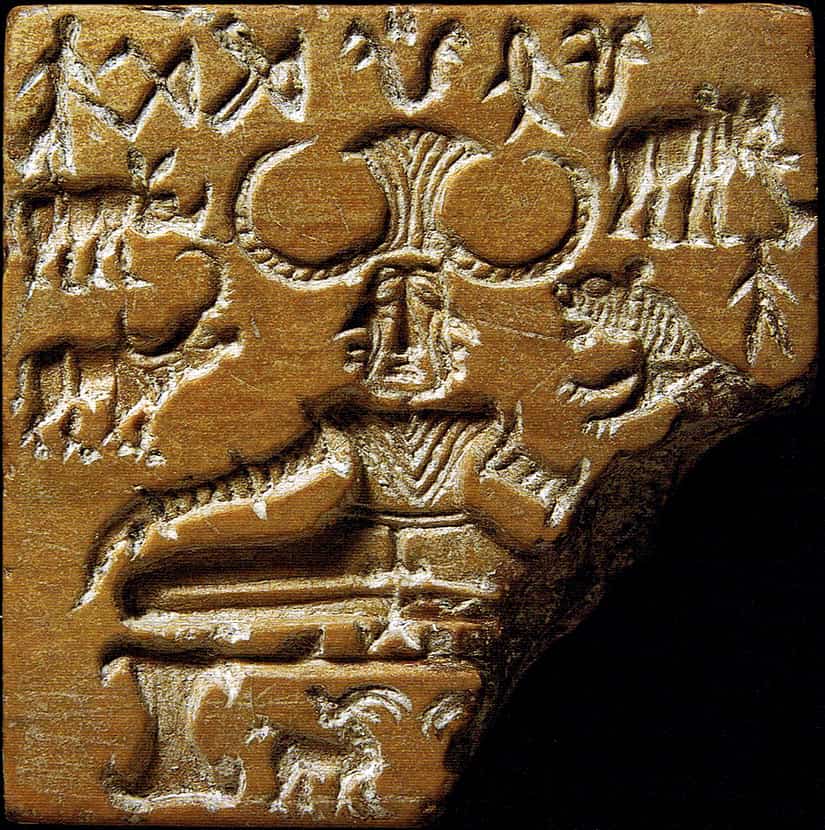
Any discussion on the origins of Śaivism begins with the discovery of the pre-Vedic seal, also called ‘proto-Śiva’. The iconography of the Indus Valley’s proto-Śiva and the iconography of Śiva that emerged a few thousand years later is remarkably similar. This has led to a lot of conjecture of Śiva being a non-Vedic God—be that as it may, our first concrete evidence of Śiva in the Vedic literature emerges in that famous hymn to Rudra in the Yajur Veda, also called Śatarudriya. However, there is no agreement that this Vedic Rudra-Śiva is the same as the Śiva which emerged in the archaeological and epigraphical sources at the turn of the common era. Despite this controversy, it is universally accepted that the Śatarudriya was one of the most important hymns of Śaivism from the very beginning of the Śaiva textual corpus.
According to scholars, the first clear-cut textual evidence of Śiva worship is found in Patañjali’s Mahābhāṣya, a monumental text of Sanskrit grammar written around 2nd century BCE.2 Patañjali speaks of a group of people who venerate Śiva as the lord (śivabhāgavataḥ). There is also a reference to small images of deities such as Śiva and Skanda sold to the householders. This evidence suggests a group of people in about 200 BCE, with a Śaiva identity conspicuous enough that they were identified as worshippers of Śiva.
The earliest epigraphical evidence for the worship of Śiva is found in the Swat Valley region, datable to around 65 CE. It records that one Moïka, son of Urumuja, had a śivasthalam (a place for the worship of Śiva) made there.3 Notice that the names of Śiva worshippers are Iranian, rather than Indian, implying that at the turn of the common era Śiva was also worshipped by people of Persian origin. The next fragmentary evidence, from a few decades later, is found in Dharwad, Karnataka, on a stone inscription which records a donation to a Śiva temple of Caṇḍaśivamahādeva during the time of a Sātavāhana king, Śrī Puḷumāvi (III). There is further evidence during the 3rd century of a land grant to a Śiva temple in Andhra Pradesh. During this period, there are many archaeological remains of chaturmukhaliṅga (four-faced Śiva) found in northern India.4
The epigraphic evidence is indeed sparse before the 3rd century. However, Alexis Sanderson states that despite the lack of material evidence for the worship of Śiva between the Maurya and the Gupta period, the worship of Śiva was common and widespread across the entire Indian sub-continent. This can be demonstrated by the proliferation of names related to Śiva—Śivadatta, Śivadāsa, Śivadhara, Śivarakṣita—in the donative inscriptions found across India from the 2nd century BCE onward.5 Śiva is also mentioned in Jain and Buddhist texts of that period. From the early common era, there is also evidence of a flourishing temple tradition related to Śaivism which later became associated with the Pāśupatas. From the 4th century onwards, epigraphic, archaeological, and textual evidence for the worship of Śiva is found in abundance.
The Dominance of Śaivism from the late 5th century
Based on the above, we can say that Śaivism’s rise to being the predominant religion of India from the 5th century onwards was built on the widespread tradition of Śaiva worship dating back to before the common era. But how can Śaivism’s ascendency be reconciled with the fact that the Guptas, who were the predominant power in Northern India between the 4th-5th century, were all followers of the Vaiṣṇava faith? The answer lies in the monumental political development taking place in northern India at the end of the 5th century. Hans Bakker describes the fifty years 484-534 CE as a period that changed Bhāratavarṣha.6 Nothing similar would happen to Bhāratavarṣha till the Islamic onslaught of the 12th century, which eventually led to the collapse of Śaivism.
During this fifty-year period, India faced repeated attacks from the Huna kingdom, which had already established itself in northwest India. The mighty Gupta empire which had ruled northern India for two hundred years, weakened by their wars with the Hunas, finally collapsed in 510 CE when the Huna King, Toramāṇa, defeated the Gupta king Bhānugupta in the battle of Eran. Northern India lay in ruins, its most important cities, such as Kaushambhi, completely sacked by Toramāṇa. After incessant warfare over the next few decades, the Hunas were finally chased out of India by the confederacy of post-Gupta kingdoms, led by Aulikara kings of Daśapura. The defeat of Huna king Mihirkula in 534 CE marked the end of Huna incursions into India.
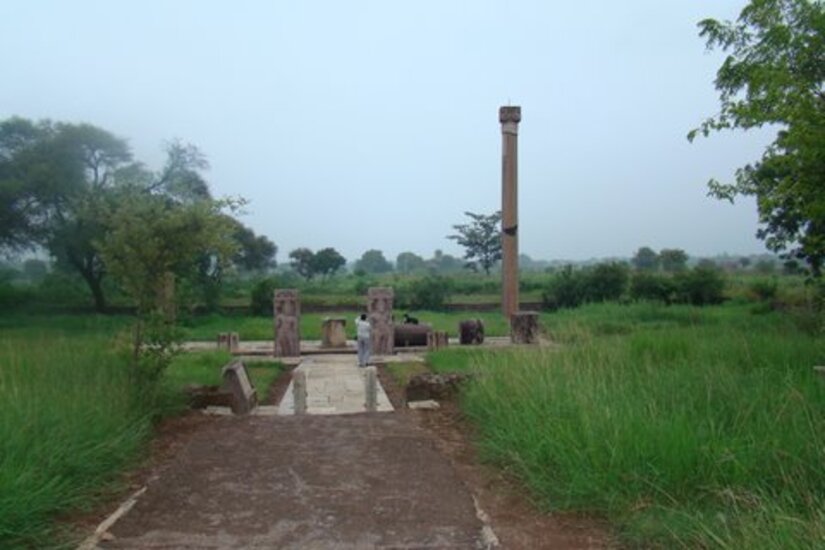
With the fall of the Gupta empire, the state religion of the Guptas, Vaiṣṇavism, received a great setback, as patronage and devotion to Vaiṣṇavism dried up. However, during this period, something remarkable happened that changed the religious landscape of the country. The post-Gupta kingdoms of Northern India—Aulikara kingdom of Daśapura, Maukhari kingdom of Kanyakubja, Maitrakas of Valabhī, the Kalacuris of Māhiṣmatī, the Vardhanas of Sthāneśvara, etc.—all became followers of Śaivism.7 It is during this period that Śaivism eclipsed Vaiṣṇavism as the dominant religion of Bhāratavarṣa. Even the Huna King Mihirkula, who finally lost to the post-Gupta kingdoms, had become a Śaiva. Here is an inscription from that time that states his Śaiva affiliation.
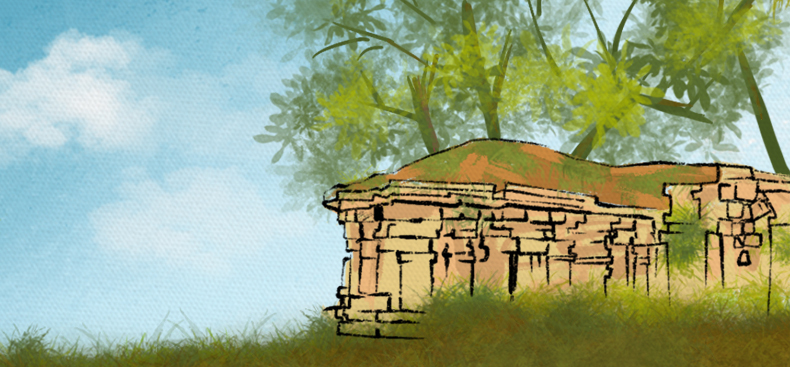
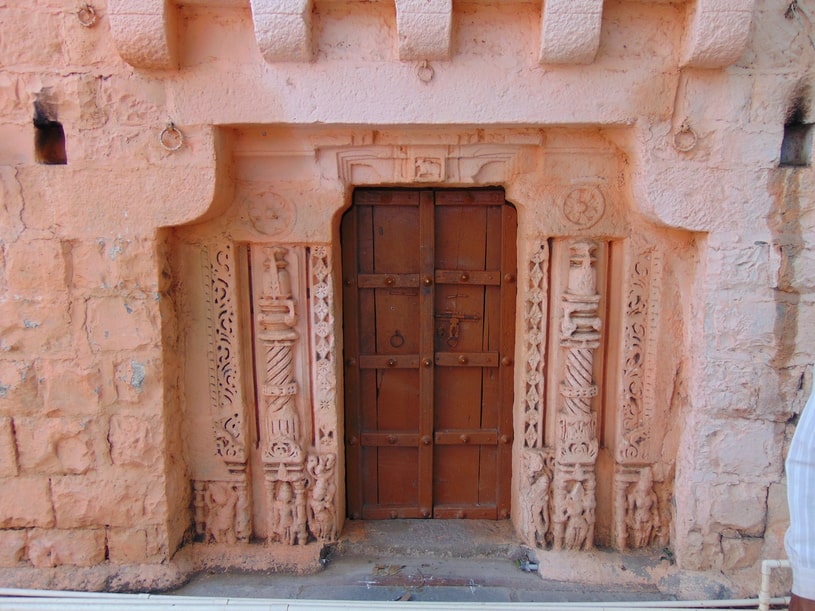
Apart from the Vīraśaiva monastery, the archaeological site of Manur village has a 13th-century Siddheśvara temple (discussed below), a Nāganātha temple of unknown date that contains Marathi inscriptions from the 17th-century as well as several tombs of ascetics, a medieval fortress, and scattered remains of sculptures and hero stones. There is also a monastery-like structure dating to the 13th-14th centuries, found at a short distance from the Siddheshwar temple. A Gadhegal (ass-curse stele) having devanāgarī characters can be found at the monastery, which also has two subsidiary shrines and a hall of several pillars. The pillars themselves are not ornate but the doorframes of the monastery are beautifully decorated.
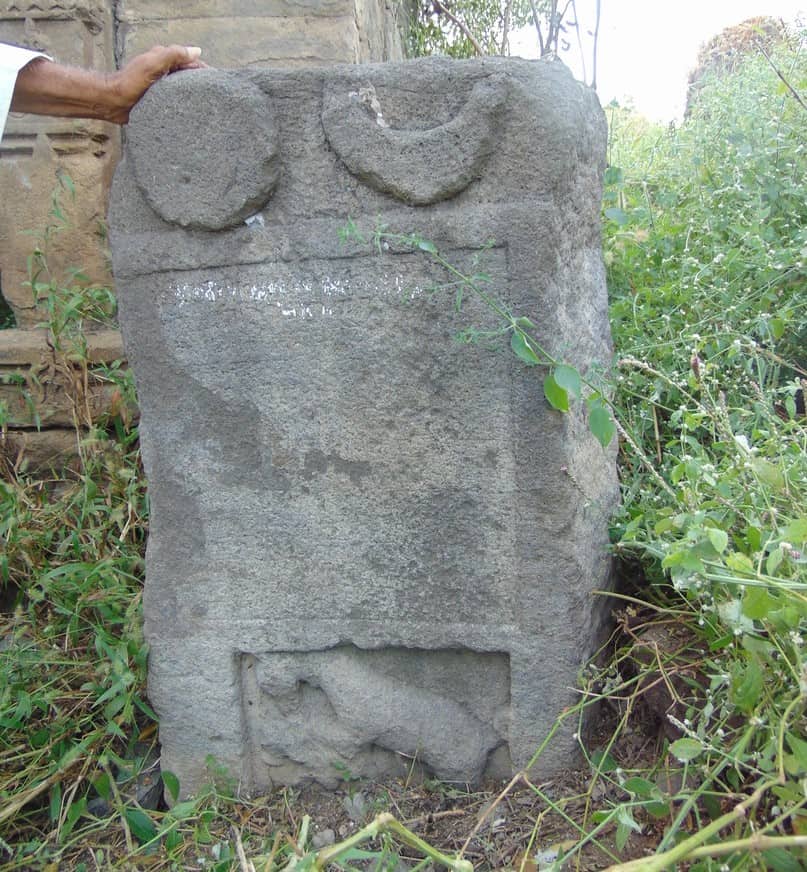
Although several archaeological remains are scattered in Manur, the site has not received due scholarly attention. An inscription from the 13th century CE has been read and studied by Brahmanand Deshpande.2 Apart from this, no other special research has been carried out on the site. This article highlights, for the first time, some important archaeological remains at Manur and explains their significance. It will show the influence of the Pāśupata-Kālāmukha sect in Manur around the 12th-13th centuries and the subsequent takeover of this site as a Vīraśaiva-Liṅgāyata centre.
Siddheśvara Temple at Manur
There is a 13th-century temple of Siddheśvara on the bank of the Mankarana, a seasonal river, to the west of Manur village. This temple—a very important centre in terms of the religious and cultural history of medieval southern Marathwada (as we will see below)—is of tridala type (temples that have three shrines). Since the sphere has completely collapsed, it is not possible to say in what style it was built. Currently, the temple is in a dilapidated state due to rainwater seeping into the walls. Although much of the Nandīmaṇḍapa has collapsed, a magnificent Nandi survives on a raised square platform. Apart from this, some samādhis (tombs), sculptures, satī stones, and hero stones can be seen scattered throughout the temple site. The ground plan consists of garbagṛha (sanctum santorum), antarāla (vestibule), gūḍhamanḍapa (closed hall), and two sub-shrines.
The interior construction of the temple has fallen into disrepair and the thick coat of paint on the temple walls makes it difficult to identify some of the sculptures. A Śivaliṅgā appears to have been installed in the centre of the garbhagṛha. Several mouldings have been carved on the exterior of the temple. Three sanctums of the temple had nine devakoṣṭhas (niches for divinities) on the maṇḍovara (exterior wall of the temple), three of which are in better condition. There are ardhastaṃbhas having mañjarī (mouldings) on all four sides of the maṇḍovara. This type of ornamentation is commonly seen on temples in South India.
Rare Sculpture of Lakulīśa
There are several different sculptures on the Siddheśvara temple, most of them broken or destroyed. Among these, images of Cāmuṇḍā, Śiva Naṭeśa, Lakulīśa, Keśava, Gaṇeśa, Sarasvatī, Pāśupata-Kālāmukha yogis, and various heavenly damsels (Surasundarīs) are visible. A beautiful āliṅgana mūrti of Umā-Maheśvara and Gaja-Lakṣmī can also be seen.
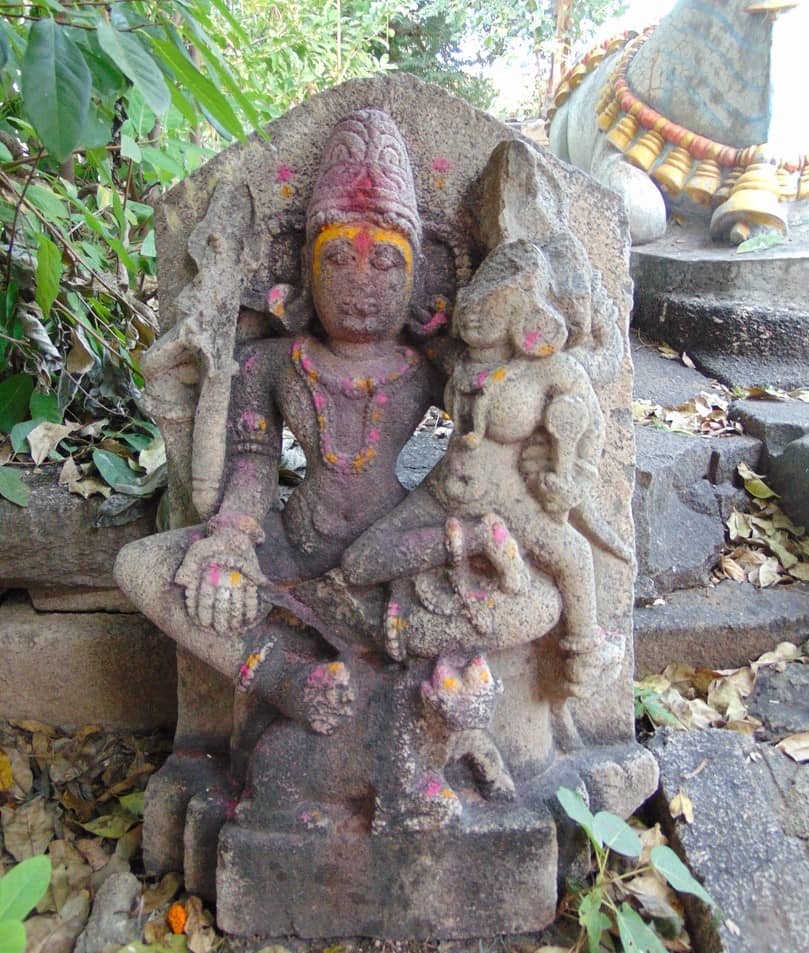
The presence of the image of Lakulīśa (a form of Śiva) in the Siddheśvara temple is significant and it indicates the influence of the Pāśupata-Kālāmukha sect. This rare image is placed in the southern niche of the outer wall of the main shrine. Another small image of Lakulīśa with a laguḍa (a club) is carved on the uttarāṅga portion of the main garbhagṛha. The first image of Lakulīśa is in the padmāsana and is depicted with uṣṇīṣa, yajñopavīta (sacred thread), and four arms, the upper arms of which are completely broken. Most of the portion of the front hands is also broken from the elbow. It seems that both front hands should be placed on the knees. He is shown ithyphallic and sits on a beautiful padmapītha. He is also depicted with his four disciples Kauśika, Gārgya, Mitra, and Kāuruśya. Two of them on either side of Lakulīśa are shown in the namaskāra mudrā. The other two disciples are shown seated on knees on either side of the padmapītha. These two images are badly mutilated.
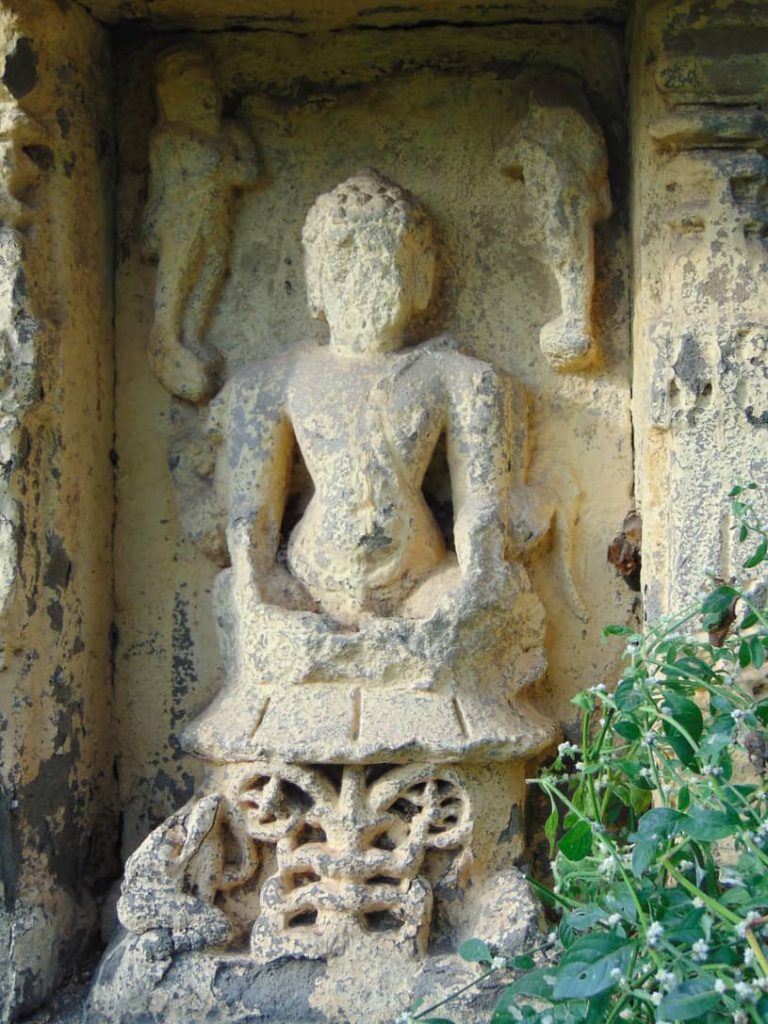
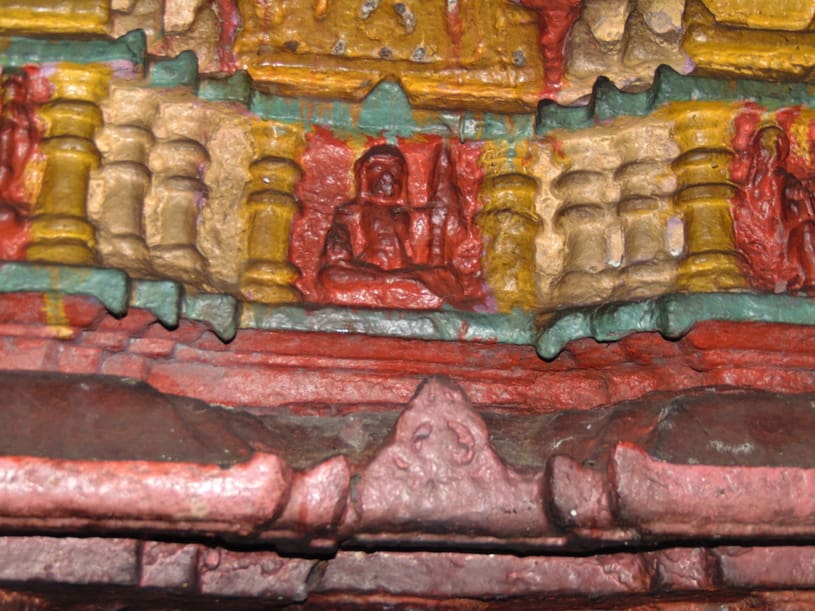
Icons of Lakulīśa are rarely observed in Maharashtra. The oldest image of Lakulīśa in Maharashtra is at Mandhal in the Vidarbha region, dating back to the 4th-5th century CE. Apart from this, there is a standalone image of the later period at Bhadravati in the Chandrapur district.3 Among the images on the structural temples, four images from the Khidreśvara temple at Khidrapur4 and the image from the Saṅgameśvara temple at Sangameshvar in Ratnagiri district can be mentioned. A possible image of Lakulīśa is also depicted in one of the niches of the Śiva temple at Umarga in Osmanabad district— however, scholars are not unanimously agreed on its identification. The image of Lakulīśa from Manur is the only known and well-identified image from the structural temples of Maharashtra to be depicted on devakoṣṭha, as one of the important deities.
The Historical Importance of the Site
From the archaeological remains at Manur, it appears that the site was a famous Śaiva centre in the medieval period. A devanāgarī inscription of 1248 CE found at Manur mentions that the Yādava prince, Kanhardeva, was appointed as Mahāmaṇḍaleśvara of this region. It also mentions the construction of an unknown temple,5 which may likely be the Siddheśvara temple. Several sources suggest that some Yādava rulers were followers of the Pāśupata-Kālāmukha sects and gave grants to them. Yādava king, Seuṇacandra II, a follower of the Pāśupata sect, received grace from a Pāśupatācārya named Sarvadevācārya. In the year 1191 CE, Bhillama V, the founder of the Yādava dynasty, had also given a village as a grant to a Kālāmukha ascetic, ‘Siddhant Chandrabhushan Pandit’.6 Inscriptions related to the Pāśupata-Kālāmukha have been found at multiple sites in South Marathwada during this period: Tirtha, Bhandarkavathe, Mardi, Darphal (Solapur district), Ganeshwadi, Kolhapur, Hottal, Ardhapur, Tadkhel, Kardkhed, and Sagaroli.7 All this shows that the Pāśupata and related sub-sects were deeply rooted in South Marathwada.
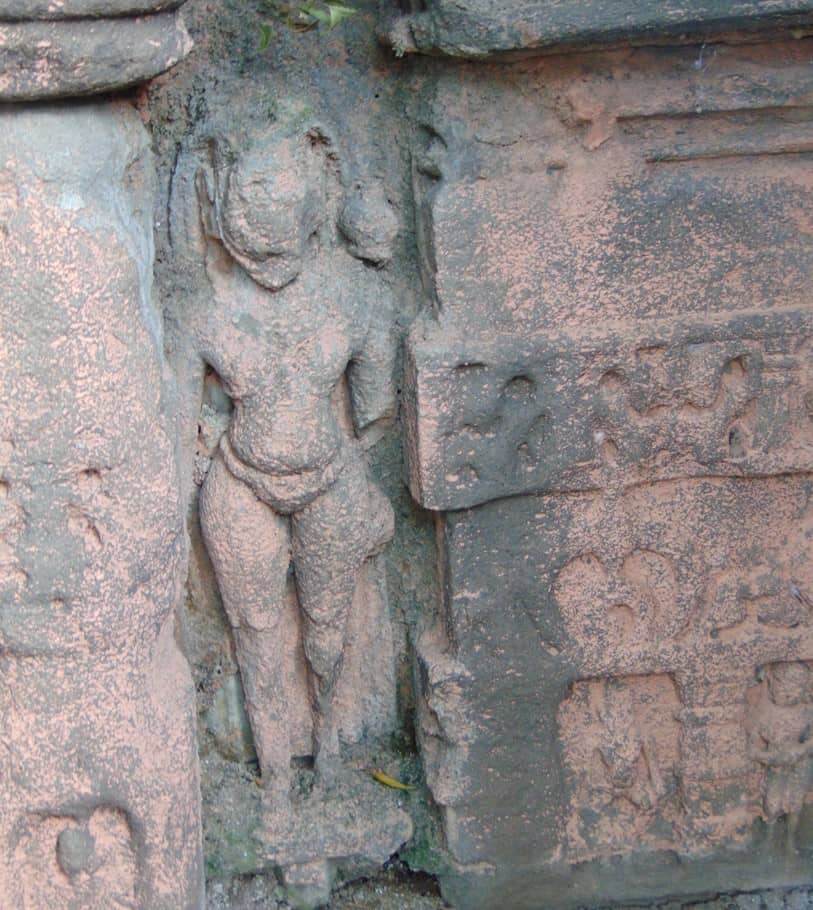
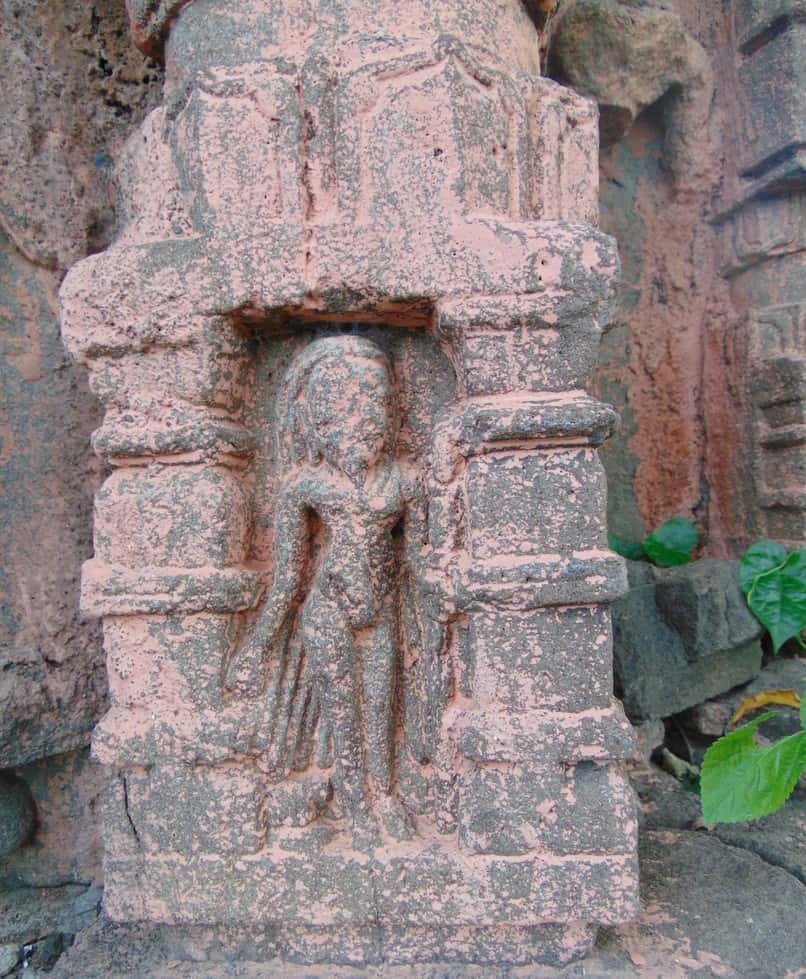
However, after the rise of the Vīraśaiva sect in Northern Karnataka, the sects of Pāśupata-Kālāmukha merged into the new-born sect. Several Pāśupata monasteries in Karnataka and South Marathwada came under the control of the Vīraśaivas. This transition seems to have been organic, as the Vīraśaivas accepted the Guru traditions of the erstwhile Pāśupata-Kālāmukha as their own.8 The same change is likely to have taken place in Manur as well. The transition from the Pāśupata- Kālāmukha sects to the Vīraśaiva-Liṅgāyata sects can be seen in the archaeological remains and the ongoing religious traditions of Manur. Archaeological evidence suggests that the Vīraśaiva-Liṅgāyata sect flourished in South Maharashtra from the 13-14th century onward, and Manur must have been an important centre of Vīraśaiva-Liṅgāyata, as it still is.9 Kapildhar, another site in the Beed district, also emerged as an important centre for the Vīraśaiva-Liṅgāyata sect. There is also evidence of an independent Śaiva sect called ‘Nāganātha’ or ‘Nagesh’ in Manur during the 17th century CE.
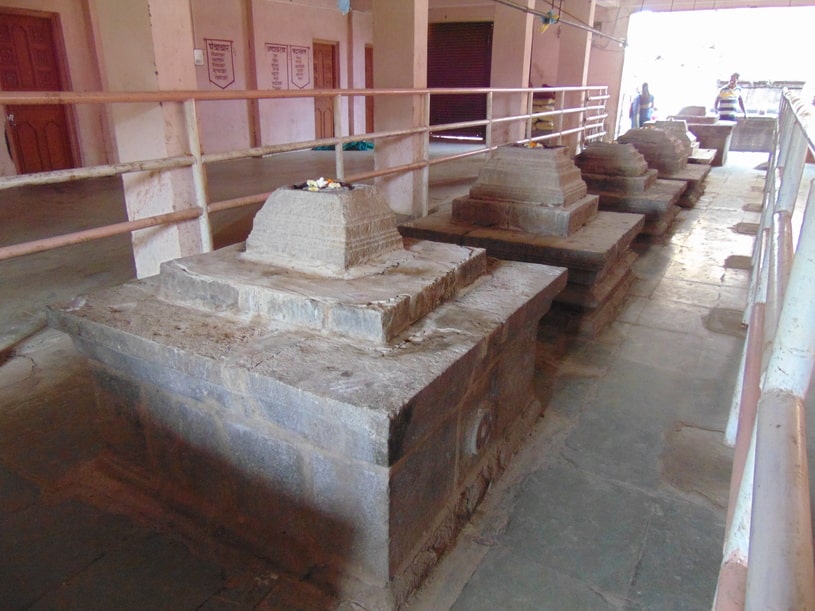
Overall, the Siddheśvara temple and the surrounding remains of the Manur-Nagnath village are very important from cultural, historical, and archaeological points of view. They constitute a valuable archaeological record of the journey from Pāśupata-Kālāmukha to Vīraśaiva-Liṅgāyata. Unfortunately, all this evidence is on the verge of extinction. The ruins of the Siddheśvara temple and other sculptures need to be preserved as soon as possible.
A few decades later, this place was correctly identified as the remains of a large Hindu monastery (matha) that flourished here during the 9th-13th centuries. The correct identification of the history and the function of this place was no doubt helped by the discovery of a monumental inscriptional slab found at the site, also called the Ranod Inscription (discussed below). Along with large monasteries, the archaeologists found the remains of large temples, administrative centres, living quarters of saints—in short, a complete monastic township. In the later years, more such ruins of 9th-12th century Hindu monasteries with large inscriptional records were found at multiple sites all across India.
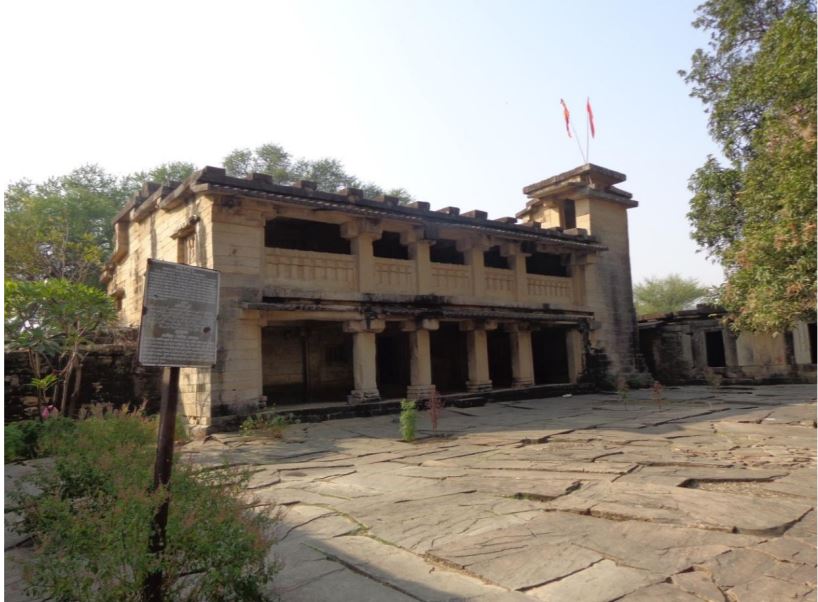
The monastery at Ranod is arguably the earliest archaeological remains of a Hindu monastery built on such a monumental scale. No doubt earlier large Hindu monasteries existed but we do not have archaeological evidence of them at present. The Ranod inscription says that the king Avantivarman had invited a Saiva sage, Purandara, belonging to a prestigious lineage of sages known for their austerity and learning, to reside at his capital and initiate him into Saivism. The inscription mentions that a large monastery was built for Purandara as his residential place, and a forest hermitage was built for his austerities. The inscription also mentions that the sage was profoundly honoured and worshipped by the king, who offered the “essence” of his kingdom to this Saiva master. But the question is, who were these sages and why did the kings so actively seek them?
Origins
We have been documenting (see here) that, from the 5th century to the 13th century, India was a land of Saivism. The kings received Saiva initiations (diksha) from the Saiva acharyas and dedicated their kingdom to God Siva. Prominent acharyas of various Saiva sects—Pashupatas, Saiva Siddhantins, and Kalamukhas—were invited by kings to become the Rajagurus of their kingdom. Due to such patronage, the acharyas of these Saiva sects had established their monasteries and temples in almost all the major dynasties of medieval India (a trend especially visible in our archaeological and epigraphical record from the 9th century onwards). These Rajagurus were ascetics, yogis and Siva ritualists who acted as the spiritual preceptor of the kings and their kingdoms. Such was their renown that Kings would call these Saiva ascetics from far off places and ritually offer their kingdoms to them (as the inscription at Ranod suggests). These ascetic yogis were the spiritual guardians of the kingdoms.
One of the most influential lineages of Saiva Rajagurus were the Mattamayuras—loosely translated as drunken peacocks—who belonged to the Saiva Siddhanta sect, one of the most influential and widespread schools of Saivism in medieval India (currently confined only to Tamil Nadu). This lineage of Saiva ascetics, originating in the Malwa region of Madhya Pradesh, initially acted as Rajagurus to the Saiva kings of many central Indian dynasties, especially the Kalachuris. Later they established monasteries (mathas) in Bengal, where they were patronised by the (Buddhist) Pala Kings; in Andhra, they acted as Rajagurus to the Kakatiyas and in Konkan they were patronised by the Silharas. By the 11th century, the lineage of Mattamayura ascetics ran their network of monasteries and temples from Kashmir to Tamil Nadu, and from Gujarat to Bengal.
A myth describing the origins of Mattamayura tells how, in a pine forest, God Brahma devoutly approached Siva at the completion of his austerity. Pleased at this devotion, Siva initiated Brahma, and from this initiation emerged the multiple lineages of Mattamayura ascetics. However, at a more mundane level, the Mattamayura line of Saiva acharyas originated in Madhya Pradesh, probably around the 8th century, before spreading ripple-like out of their original home and establishing an institutional presence across India.
The Life of a Mattamayura Sage
In the inscriptional corpus of the Mattamayuras, one is struck by the emphasis on asceticism, chastity, and austerity. Though they administered large monasteries, managed temples, and acted as spiritual and ritual advisors to the kings, their lives were like those of tapasvins (ascetic renunciants) who spent their time in forest hermitages called tapovanas to practice tapas (austerity). Here is a description of one of their tapovana:
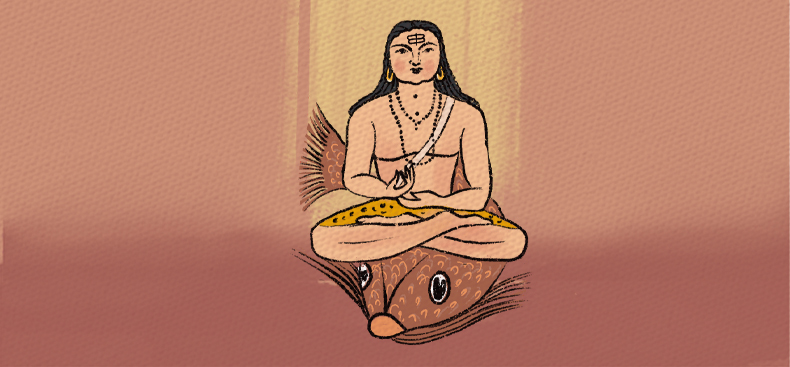
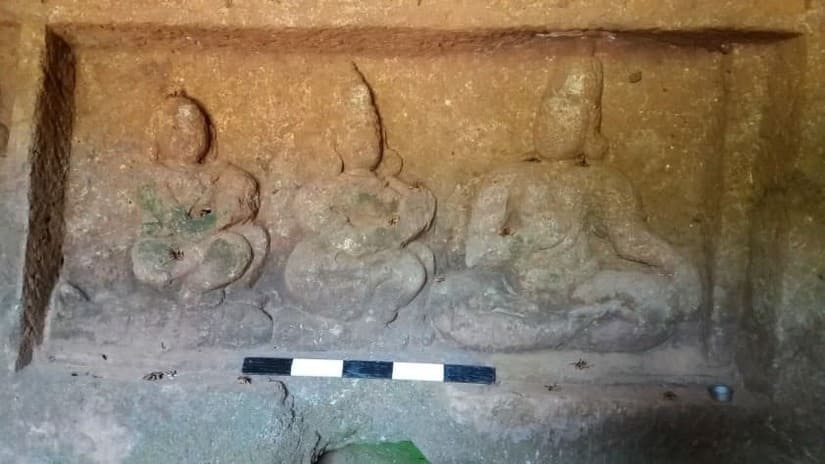
Matsyendra is also associated with many other sects and beliefs. He is one of the most prominent siddhas in the list of 84 siddhas, which is prevalent among both Śaiva and the Buddhist tradition of siddhas. He is considered to be the progenitor of the Kaula Yoginī sect. According to tradition, he is the gurū of Gorakṣanātha. In Nepali legends, he is an incarnation of Avalokiteśvara, a Buddhist deity, while in the later texts he is considered as an incarnation of Viṣṇu.2 Hundreds of popular fables feature his name throughout India. It is said that his disciple, Gorakṣanātha, rescued Matsyendranātha from various antinomian tantric practices and helped steer him to the more ascetic practice of haṭha yoga. Matsyendranātha is also credited with composing tantric and yogic texts which include the Kaulajñānanirṇaya, Akulavīratantra, Matsyendrasaṃhitā, Candrāvalokana, and Yogaviṣaya.
Images of Matsyendranātha are mainly depicted on Śaiva, Śākta, and Vaiṣṇava temples, caves, and puṣkaraṇī (step-wells). These images can be found all across India but more so in Maharashtra, which indicates how universal his recognition was in the area. Images have considerable variation in size, shape, postures, and mudras. Early ones are relatively small, while in the later period, they became larger. He is always shown with two hands and mounted on a fish. He is often shown in siddhāsana, padmāsana, and paryaṅkāsana and in jñāna and dhyānamudrā. Fish is a common iconographical symbol of Matsyendranātha.3
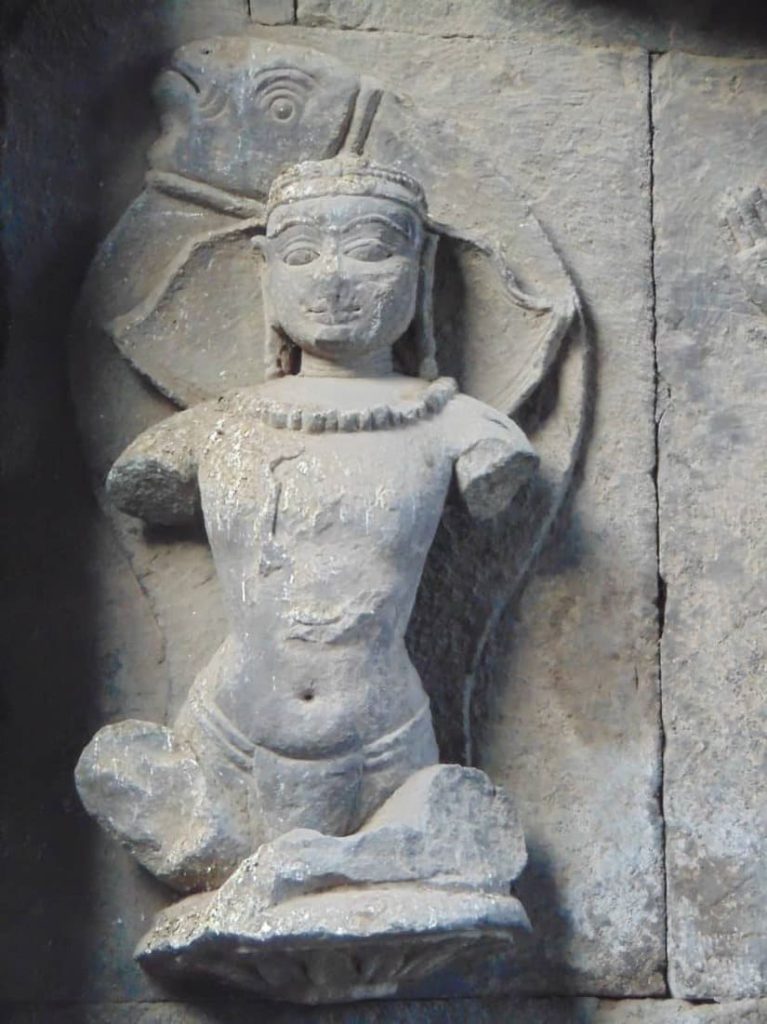
Several early images of Matsyendranātha are also noticed from Madhya Pradesh and Gujarat (the above image is that of Matsyendranāth in Mahudi Gate, Dabhoi, Gujarat). Three images of Matsyandranātha are shown on the rājasenaka row of the Surya and Viṣṇu Devī Jagadaṁbā temples at Khajuraho (constructed 1000-1025 C.E.).4 A sandstone image from Div in Saurashtra dating to the 11th century C.E has been identified as belonging to Matsyendranātha.5
Matsyendranātha is shown with a fish, yajñopavita, keyūra, valaya, hāra, kaupina, karṇakuṇḍala, śṛṅgī, headgear, and elongated jaṭās—all of these being unique iconographic elements usually associated with siddhas and Nātha yogīs in archaeological sources. Some of the earliest images of Matsyendranātha in Maharashtra are carved on temples such as the Māṇakeśvara temple at Jhodge, the Kaṅkāleśvara temple at Beed, the Mahādeva temple at Mankeshvar, and the Nāganātha temple at Aundha (images are shown below). As these temples are all assigned to the 12th century, the images are some of the earliest representations of Matsyendranātha. Here are some of these earliest-known images of Matsyendranātha.
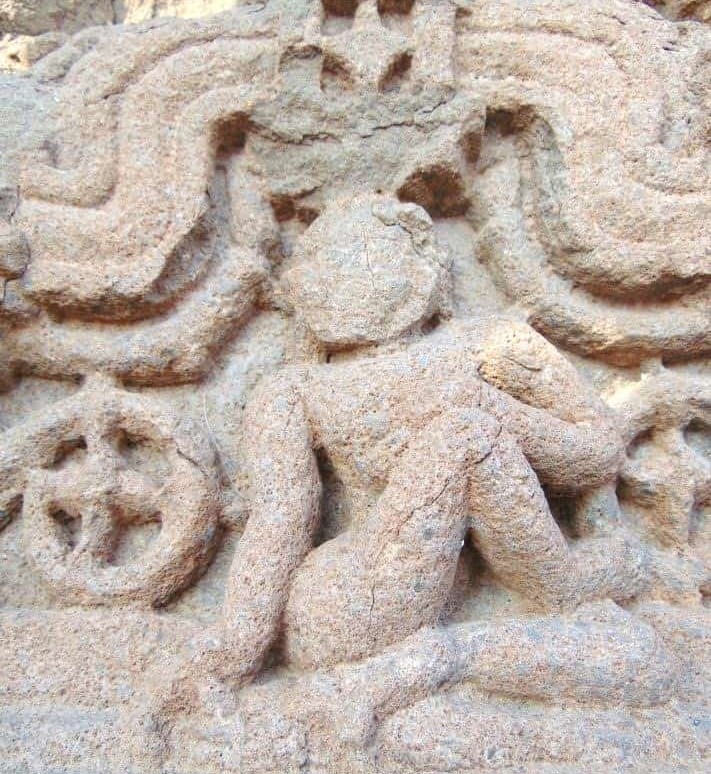
Matsyendranatha in Māṇakeśvara temple at Jhodge: Matsyendranātha is depicted on the devakoṣṭha, which shows his significance. The image is small, fragile, and defaced. He is depicted with karṇakuṇḍala. He places his right foot on the ground, and his left hand is on the knee. He is shown seated in a beautiful decorative toraṇa.
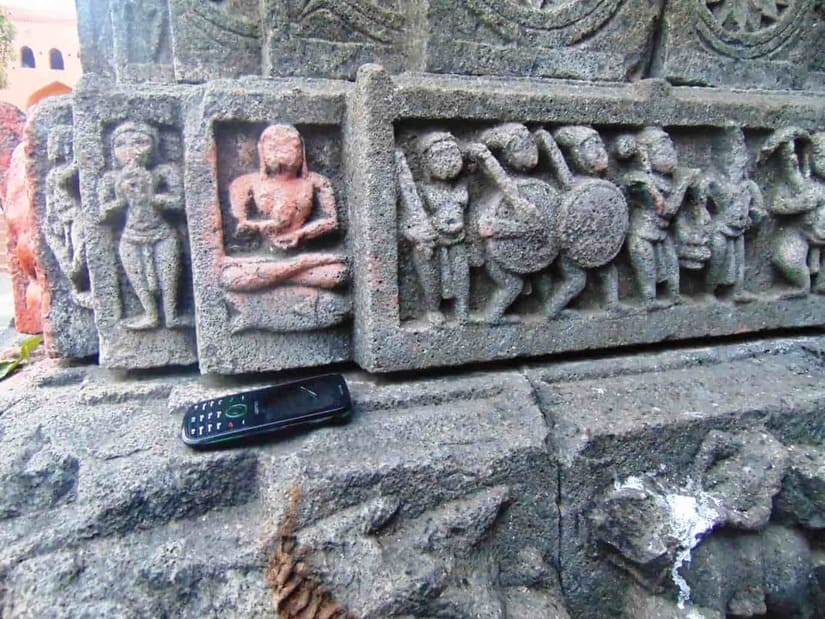
Matsyendranāth in Nāganātha temple at Aundha: This is a small image of Matsyendranātha sitting in Padmāsana with a fish carved below. As can be seen, the image has suffered a lot of wear and tear.
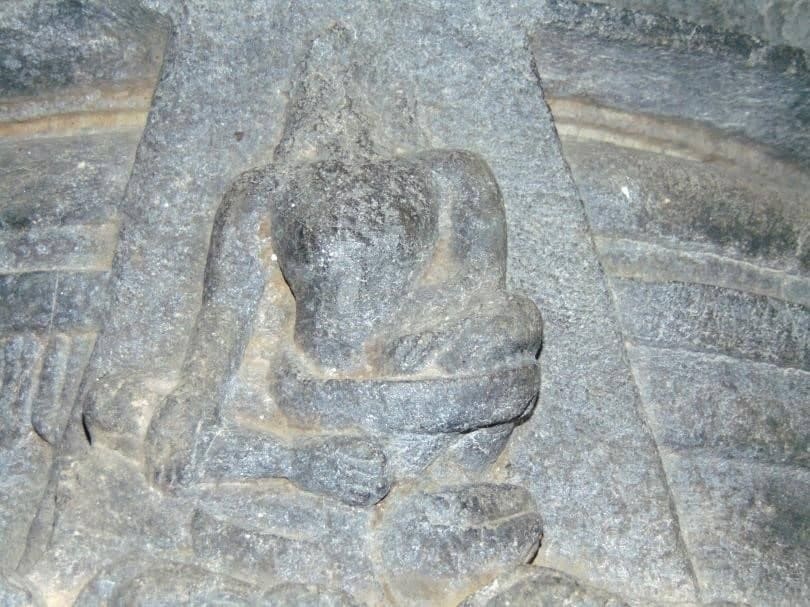
Matsyendranātha in Mahādeva temple at Mankeshvar: Matsyendranātha is shown seated on a fish with yogapaṭṭa tied around his left leg. His right hand is shown in bhūmisparśamudrā.
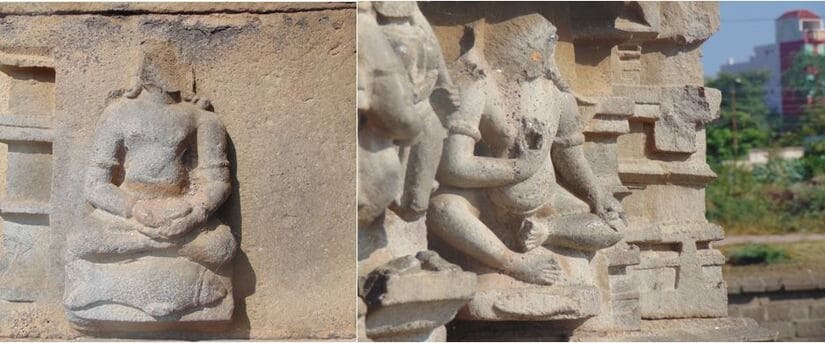
Matsyendranātha in Kaṅkāleśvara temple at Beed: Two images of Matsyendranātha have been carved on this temple. In the first image, he is shown in a seated posture with a fish carved below his seat, a symbol that confirms this image as that of Matsyendranātha. The image’s face has been mutilated, but the karṇakuṇḍala are visible and hanging over the shoulder. His right hand is placed near the chest holding an unknown object while another hand is placed on the knee of the left leg holding a śṛṅgī. He is shown with keyūra and hairdress. In the second image, he is also shown with a fish as a mound. In this image, He is seated in dhyāna mudrā (most of the images of all the temples including Matsyendranātha were defaced by the invaders in the later period)
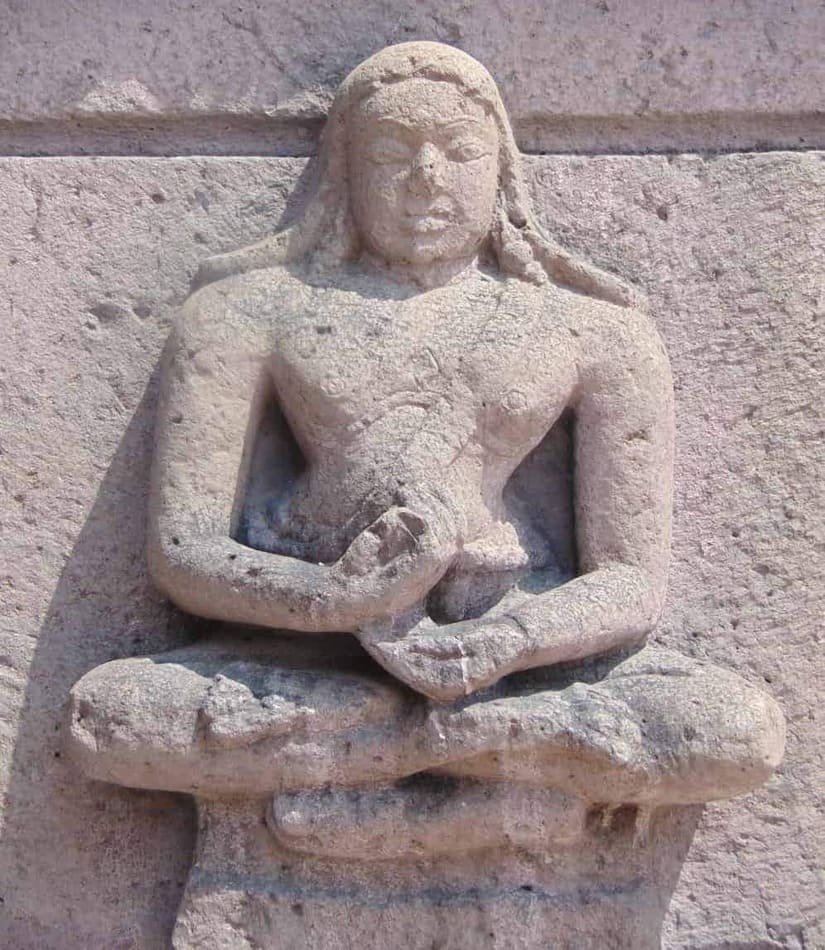
Matsyendranātha in Someśvara temple at Pimpri Dumala: There is a frontal representation of Matsyendranātha seated in padmāsana on the western side of the outer wall of guḍhamaṇḍapa. His right hand is in vyākhyānamudrā and his left hand is above his soles to support the right hand. He has probably a kaupina tied by mekhalā perhaps made of woollen strings. He has a yajñopavita placed across his left shoulder and around the waist. He has his hair falling on either side. His ear ornaments are clearly depicted and his large pierced ear lobes almost reach his shoulder. There is a small depiction of a fish on the pedestal.
This is just a small sample of Matsyendranātha iconography. In the later centuries, Matsyendranātha’s archaeological presence is found all across the Indian sub-continent, turning more ornate as the Nātha sampradāya becomes one of the most dominant Śaiva yogī traditions in India.


No comments:
Post a Comment