Friday, March 22, 2024

पाटण परिसरातील लेणी

 https://sahyadrigeographic.com/


““
 
Me Sahyadri – March 2019
 

कोयना खोरे लेणी मोहेमेचा सारांश :
मावळातील भाजे, बेडसे आणि कार्ले लेणी अप्रतिम आहेत. त्यामुळे या भागातील इतर लहान लेण्यांकडे फारसे कोणी फिरकत नाही. आम्ही चार समविचारी मित्रांनी मात्र या हरवलेल्या लेण्यांची शोधाशोध करण्याचे ठरवले. एकोणीसाव्या शतकात जेम्स बर्जेस आणि जेम्स फर्ग्युसन या दोन इंग्रज विद्वानांनी भारतातील लेणी धुंडाळली होती. त्यांनी १८८० साली "केव्ह टेम्पल्स ऑफ इंडिया" या पुस्तकाचे प्रकाशन केले. या पुस्तकात मावळातील लहान लेण्यांचा फारसा तपशिल नसला तरी, या मावळातील इतर लहान लेण्यांबद्दल ५-६ वाक्यांमध्ये आम्हाला त्रोटक का होईना माहिती मिळाली. त्यांनी उल्लेख केलेली, काही ठिकाण सापडली, तर काही ठिकाण काहीही केल्या सापडेनात. कदाचित न सापडलेली ठिकाण नष्ट झाली असावीत.
ग्रामीण मावळ लेणी शोध मोहिमेच्या धरतीवर आम्ही कराड जवळ असलेल्या अल्प परिचित लेण्यांना भेट देण्याचे ठरवले. मावळ लेणी मोहिमेतील अनुभवाचा उपयोग कोयना भागातील लेणी धुंडाळायला उपयोग झाला. आमच्या संघात विवेक काळे, अमेय जोशी, जितेंद्र बंकापुरे, साईप्रकाश बेलसरे, मिलिंद लिमये , आणि निनाद बारटक्के असे हुरहुन्नरी भटके सामिल झाले. पोफळीच्या सदफ कडवेकर ची मदत मिळाली.
शोध मोहिमेत लागणाऱ्या खाऊची सोय करणे, विषय आणि ठिकाणाचा आधी अभ्यास करणे, प्रवासाची सोय करणे, गावकऱ्यांकडे लेण्यांबद्दल चौकश्या करणे, मोहिमे दरम्यान गचपणातुन वाट शोधणे, लेण्याच्या अवशेषांची चित्रे/नकाशे काढणे, छायाचित्रे काढणे, जि. पि. एस. यंत्रावर वाटेबद्दल माहिती नोंदवणे, लेण्यात लहान बारकावे शोधणे, लेण्यांचे विश्लेषण करणे, नोंदी करणे, अशी वेगवेगळ्या प्रकारची काम वाटुन घेण्यात आली. प्रत्येक ठिकाणी जाताना, घरचा अभ्यास करावा लागला. जुनी पुस्तके, नकाशे धुंडाळले गेले. गावातल्या मित्रांची मदत झाली. गावागावात चौकश्या केल्या. गडद, लेणे, गुहा, कपार, भोगदा, विहार, पांडवांनी एका रात्री बनवलेली गुहा असे अनेक शब्द वापरुन चौकश्या झाल्या. बकऱ्या, गाई घेऊन डोंगरात फिरणारे गुराखी मात्र दरवेळेला मदतीला धाउन आले. वाटांचे आणि दिशांचे अंदाज मिळाले. जुजबी माहिती घेऊन ठिकाण शोधणे या प्रकाराचा चांगला सराव झाला.
कधी काटेरी करवंदींच्या खालुन खुप सरपटाव लागल तर कधी घसाऱ्यावर हात टेकावे लागले. लेण्यांमध्ये मोठे कोळी (स्पायडर), कातळ पाली, वटवाघळ, मधमाश्या, पाकोळ्या, घुबडं भेटले. आमच्या मुळे त्यांना उगाच त्रास झाला, असा अपराधीपणा वाटला. बहुतांश ठिकाणी कोणत्या ना कोणत्या प्रकारची जोखिम होती. वटवाघळ, लेण्यातील धुळ, काळोख, मधमाश्या, काटेरी वनस्पती, घसारा, गुहेतील ऑक्सिजन चा अभावआणि इतर न दिसणारे धोके यावर मात झाली. मोहिमेसाठी, विजेऱ्या, जि. पि. एस., मोजपट्या, दोऱ्या, लेजर यंत्र, नकाशे, गुगल मॅप, जाळीच्या टोप्या या सर्व जंत्रीचा उपयोग झाला. एकूण मिळुन नविन अपरिचित ठिकाण/वास्तु पहायला मिळाल्या, कोयनेचा भुगोल जरा अजुन नीट लक्षात आला. नविन प्रश्न पडले आणि नविन कोडी सोडवयाला मिळाली. तर्क वितर्क झाले.

About the Koyna Valley Cave exploration :
For last few years we have been exploring the MAVAL region of Pune district in search of ancient rock cut caves. Most of the caves are known and studied in depth by several researchers. While revisitng some of the lesser known rock cut caves we observed many new aspects of these caves which have been overlooked. At few places new rock cut caves were noticed which are not recorded in academic literature. We explored and found few beautiful places. The very concept of creating a hermit cave somewhere high up in the hills is fascinating. These places often are full of tranquility and nothing else. With very little architectural evidences and clues, the academicians have obviously ignored these places. It was James Fergusson and James Burgess, during their exhaustive study of “Cave temples of India, 1880” mentioned few of these hermits in Maharashtra.
With the little clues and exhaustive investigation, team of six members, Saprakash Belsare, Amey Joshi, Ninad Bartakke, Jitendra Bankapure, Milind Limaye and Vivek Kale started the exploration. The journey to locate, trek and analyse these hermit caves itself was fascinating. We met many villagers who were unaware of these places, but also met few shephards who were precisely aware of the hermits and gave us tentaive guidance. In line with Maval cave exploration, we visited Koyna valley for its recorded but less known rock cut caves. There is a very brief mention about the misceleneous caves of Maharashtra by James Fergusson and James Burgess in their work. Based on available information we decided to search these caves and monuments. The activities were planned. The food, travel , track exploration in difficult and routes full of foliage, enquiring the villagers about the caves, drawing skecthes and maps, photography, GPS data collection, making notes and analysing the information, observing the minor details of the caves etc activites were distributed amongst the team members.
We met many bats, owls, geckos, lizards, large spiders, martins, honeybees during the treks. Often we felt sad that we disturbed them to see the caves. Most of these places are hazardous due to pitch darkness, bats, dust, thorny plants, honeybees, low oxygen level in caves and rock patches etc. The high intensity torches, GPS tool, measuring tapes and measuring laser tool, Honeybee protection caps, maps, google maps, photographs etc were useful during the mission. In this photoessay, I have compiled the information and photographs of Nathachi Paga caves, in Koyna Valley.


““ 
The banner has been published here to improve the awareness of the trekkers and tourists visiting the various mountain forts, mountains in north western ghats. Please avoid accidents, by following good outdoor ethics such as no swimming in cisterns at mountain forts, no rock climbing without proper technical equipment and expertise. Please do not adventure, trek with any group or individually without understanding the risks associated. The frequency of the solo trekker fatalities have increased recently. Please strictly avoid solo treks. Please also avoid treks to mountains in large commercial groups, as it leads to damage to biodiversity of these high elevation ecological islands. Please respect the wildlife and biodiversity of the region. This has become more important as the ever increasing human interference is leading to severe damage to fragile ecosystems. Please be aware of the wildlife and biodiversity of the mountains before visiting these mountains. Please follow outdoor ethics. Follow ASI and Forest department rules. The concept of use of symbols for outdoor ethics was conceived and designed by "Sahyadri Trekker Bloggers Group".


1. Karad-Chiplun trade route Map, Maharashtra, India


2. Map, Koyna Valley Caves, Satara district, Maharashtra, India
 

कोयना नदीचा उगम महाबळेश्वर येथे होतो. पुढे दक्षिणेकडे पण घाटमाथ्याजवळच कोयनानगर येथे या नदीवर धरणाची भिंत आहे. इथ पर्यंत उत्तर दक्षिण प्रवास करत आलेली कोयना नदी येथुन पुढे मात्र पश्चिम पुर्व अशी वाहु लागते. कोयनानगर ते कराड या पश्चिम पुर्व पठारी भागातुन जाताना या नदिच्या दोन्ही बाजुस म्हणजे उत्तरेला आणि दक्षिणेला डोंगररांगा आहेत. कोयना नदीच्या उत्तरेकडे असल्या डोंगररांगेत असलेल्या नाथाची पाग लेण्याची माहिती या सदरात मांडली आहे. सदर लेणी नाथाची पाग गावाजवळ असलेल्या डोंगरात आहेत. प्राचिन काळी अंदाजे २००० वर्षांपुर्वी भारताचा व्यापार इजिप्त, ग्रीक राज्यांबरोबर होत असे. दक्खन च्या पठरावरुन वस्तु कोकणातील बंदरंपर्यंत पोहोचवल्या जात. तेथुन पुढे समुद्रमार्गे ब्यापार होत असे. कराड हे महत्वाचे व्यापारी केंद्र होते. येथुन माल कोकणापर्यंत चिपळुण आणि इतर ठिकाणाच्या खाड़्यांपर्यंत पोहोचत असे. या व्यापारी मार्गा च्या आजुबाजुला अनेक ठिकाणी बुद्ध लेणी पहावयास मिळतात.

Koyna river originates at Mahabaleshwar. It has very large dam built on it at koynanagar in Patan tehsil of Satara district. After Koynanagar the river flows towards east before it reaches Karad. This region of Koyananagar to Karad is here considered as Koyna valley. The river flows through a flat basin flanked by hill ranges on either side of it. In this photoessay, one of the caves on the northern side hill range is discussed. Out of six lesser known caves in this northern hill range facing Koyna, Nathachi Paga is one of the most less visited rock cut caves. The caves are located near the village Nathachi Paga. In ancient India about 2000 years back India used to trade with other western civilisations such Persia, Greece and Egypt. The trade used to be carried out by road from Deccan plateay through a trade center till the ports on west coast. The goodswere then transported through sea route to Egypt, Greece etc. The land route from deccan plateu to west coast was decided based on the convenience. Karad was important trade center on the deccan plateau. The goods were transported from Karad to Chiplun and other Konkan ports through Koyna valley and the pass through the wetsern ghats. Hence many buddhist caves can be seen around the Koyna valley due to this trade route from Karad to Chiplun.


3. Aerial Map, Nathachi Paga Caves, Satara district, Maharashtra, India


4. Layout – Nathachi Paga Caves, Satara district, Maharashtra, India
 

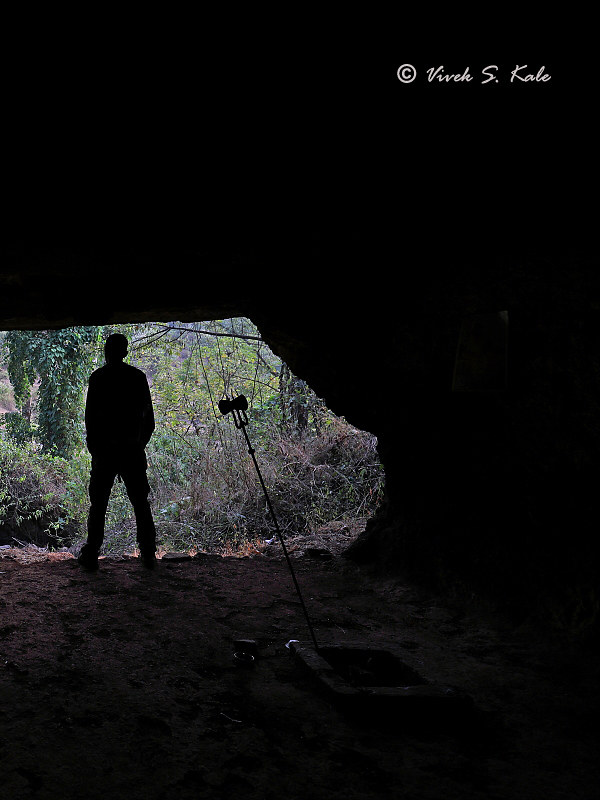
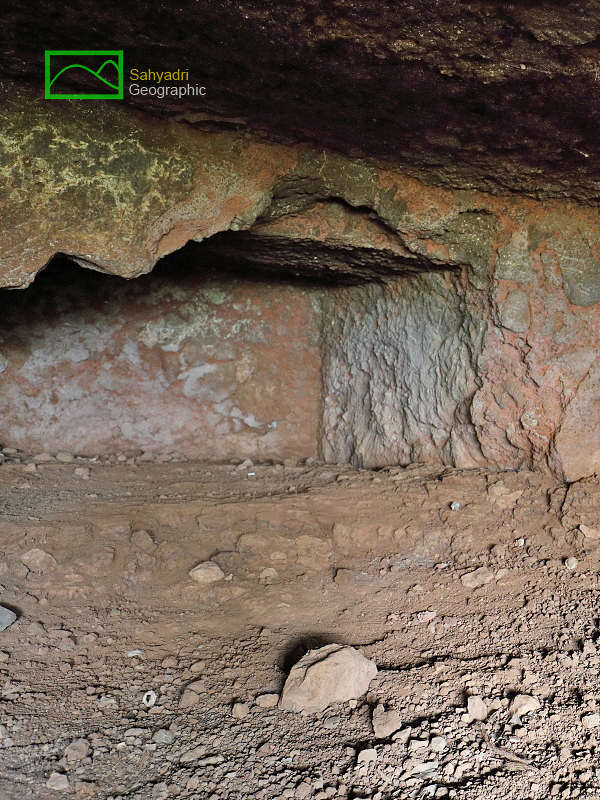
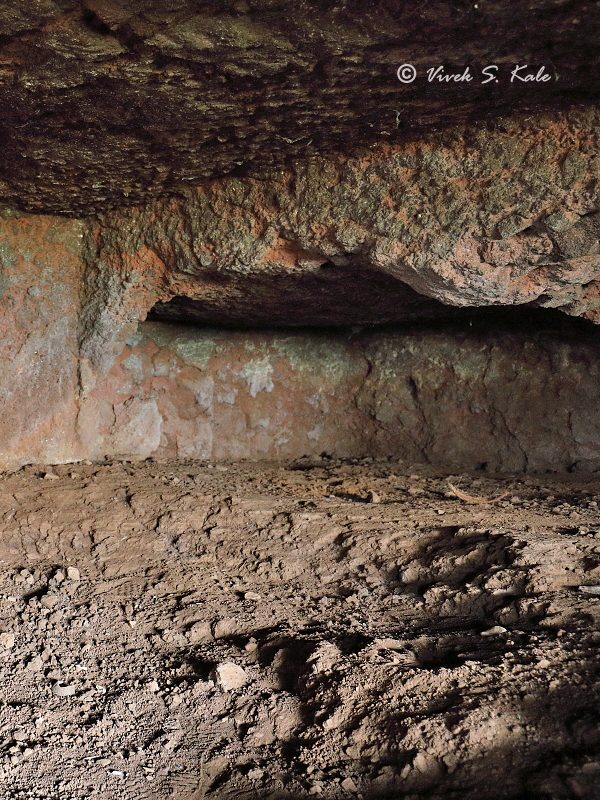
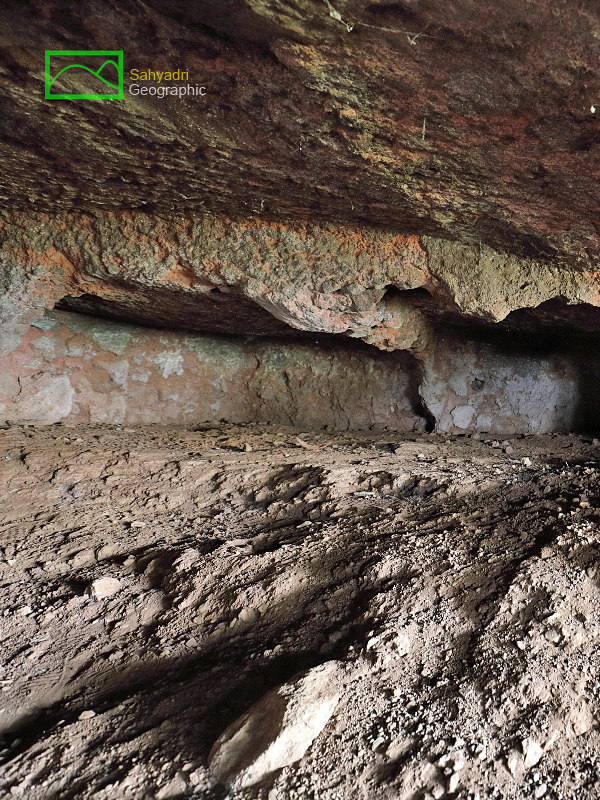
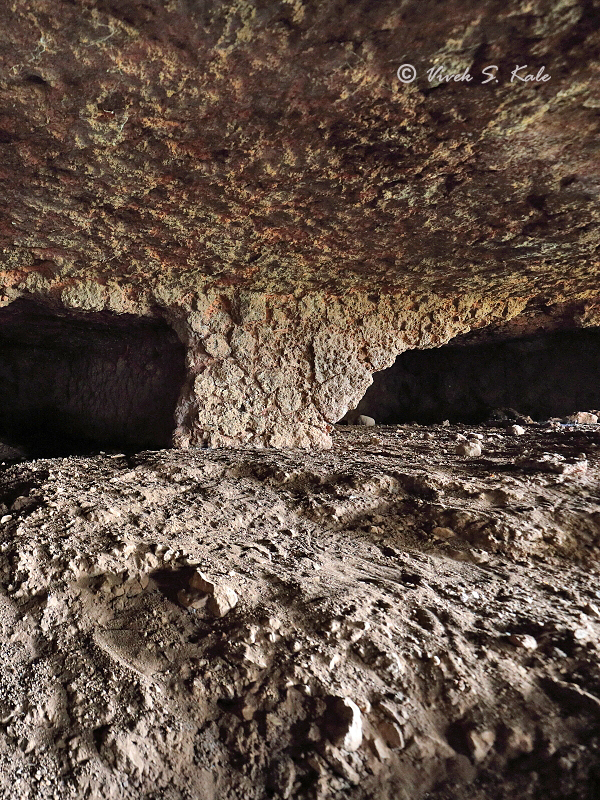
कोयनानगर-कराड रस्त्यावरुन थोडे आत पाटण – चाळकेवाडी रस्त्यावर नाथाची पाग एक गाव आहे. या गावाच्या डोंगरात नाथाची पाग लेणी आहेत. नाथाची पाग हे एक डोंगरावर वसलेले गाव आहे. लेणी डोंगराच्या आतल्या बाजुला आहे. लेणी दुरुन दिसत नाहीत. अर्धा तास आडवे चालल्यावर आम्ही डोंगराच्या खोबणीत पोहोचलो. वाट सोपी अहे. येथे एक धबधबा आहे. लेण्याच्या डाव्या (दक्षिण) बाजुला एक विहार आहे. विहाराला एक मोठे दालन आहे. दालनाच्या दर्शनी भागात असलेले खांब आणि भिंत आता अस्तित्वात नाही. त्याच्या काही खुणा छतावर पहावयास मिळतात. एका बाजुला बाक आहे. डाव्या बाजुला एक कोनाडा आहे. असाच कोनाडा मागच्या भिंतीत दोन खोल्यांच्या मध्ये आहे. दालनाच्या मागच्या भिंतीत दोन खोल्या आहेत. खोल्यांमध्ये अडगळ आहे. या विहाराच्या उजव्या (उत्तर) दिशेला एक चैत्यगृह आहे. चैत्यगृहाचे छत सपाट आहे. चैत्यगृहात एक स्तुप आहे. लेण्याच्या दर्शनी भागाची पडझड झालेली दिसते. या लेण्यांना तामकणे लेणी असे सुद्धा संबोधतात.

Nathachi Paga is a village up on the hill little further to Ker which is near to Patan town on the way to Chalkewadi. The Nathachi Paga village is a small village located high up on the hill. The cave is at the lower level just below the village. One can reach there after a horizontal walk from the main road. The cave is located under a waterfall. There is a large vihar with two cells carved out in its back wall. There is a large hall of this vihar has 2 niches and 1 bench. The cells do not have any benches in it. The façade of the vihar is collapsed. There are indications in the roof that the façade had two large pillars and windows and a doorway to enter. On the right side (north) side of the vihar there is a Chaityagriha which has a stupa. The chaityagriha has flat ceiling and its façade also is broken. There are indications that there was a large doorway to enter the Chaityagriha from the front. These caves are also known as Tamkane caves.


5. Nathachi Paga Caves from distance, Satara district, Maharashtra, India


6. Nathachi Paga Cave, Satara district, Maharashtra, India


7. Vihar, Nathachi Paga Caves, Satara district, Maharashtra, India
 

लेण्याच्या डाव्या (दक्षिण) बाजुला एक विहार आहे. विहाराला एक मोठे दालन आहे. दालनाच्या दर्शनी भागात असलेले खांब आणि भिंत आता अस्तित्वात नाही. त्याच्या काही खुणा छतावर पहावयास मिळतात. एका बाजुला बाक आहे. डाव्या बाजुला एक कोनाडा आहे. असाच कोनाडा मागच्या भिंतीत दोन खोल्यांच्या मध्ये आहे. दालनाच्या मागच्या भिंतीत दोन खोल्या आहेत. विहारातील प्रशस्त दालनाचा आकार ६ मीटर x ५.५ मीटर एवढा आहे. उंची अंदाजे २.२ मीटर आहे. दालनाच्या मागच्या भिंतीत असलेल्या खोल्या एक सारख्या असुन त्याचा आकार २ मीटर x २ मीटर x २ मीटर असा आहे. या खोल्यांच्या आत बाक नाहीत.

The cave has on its left side (South side) a large vihar with two cells carved out in its back wall. There is a large hall of this vihar has 2 niches and 1 bench. The cells do not have any benches in it. The façade of the vihar is collapsed. There are indications in the roof that the façade had two large pillars and windows and a doorway to enter. The hall is about 6 m wide, 5.5 m in length and 2.2 m in height. The left (south) side cell and the right (north) side cell are about 2 m wide, 2 m in length and 2 m in height.


8. Niche in the Vihar back wall, Nathachi Paga cave, Satara district, Maharashtra, India


9. Bench in Vihar hall, Nathachi Paga Cave, Satara district, Maharashtra, India


10. Cell in vihar, Nathachi Paga Caves, Satara district, Maharashtra, India


11. Cell, Nathachi Paga Cave, Satara district, Maharashtra, India


12. Niche in the Vihar, Nathachi Paga Cave, Satara district, Maharashtra, India


14. Façade of Vihar, Nathachi Paga Cave, Satara district, Maharashtra, India
 

विहाराच्या उजव्या (उत्तर) दिशेला एक चैत्यगृह आहे.. चैत्यगृहात एक स्तुप आहे. लेण्याच्या दर्शनी भागाची पडझड झालेली दिसते. चैत्यगृहाचे छत सपाट आहे. या चैत्यगृहात आणि दिगेवाडी, रुद्रेश्वर, येरफळ या चैत्यगृहात एक फरक आहे. दिगेवाडी, रुद्रेश्वर, येरफळ या चैत्यगृहांचे छत अर्धदंडगोलाकृती आहे. तर नाथाची पागा येथील चैत्यगृहाचे छत सपाट आहे. या इतर चैत्यांच्या पेक्षा नाथाची पागा येथील चैत्यगृह नंतर च्या काळातला असावा. येथे स्तुपावरची हर्मिका चांगल्या स्थितीत आहे. हर्मिका छतात कोरलेल्या छत्रीला जोडली अस्ल्याने ती शाबुत राहीली आहे. इतरत्र दिगेवाडी, रुद्रेश्वर आणि येरफळ येथे हर्मिका छताला जोडलेल्या नसल्याने तुटल्या आहेत. चैत्यगृहाचा आकार अंदाजे ३.४ मीटर ४ मीटर आहे. उंची २.७ मीटर आहे. स्तुपाचा व्यास १.४ मीटर आसुन त्याची उंची २.७ मीटर आहे. स्तुपाची पडझड झालेली आहे.

The chaityagriha is located immediately to right (north east) of the Vihar. The chaityagriha is about 3.4 m wide and 4 m in length. It is 2.7 m high. The cieing of this chaityagriha is flat unlike the apsidal roof of Digewadi, Yerphal and Rudreshwar caves. This indicates that this is a later cave as compared to the Digewadi, Yerphal and Rudreshwar caves. The stupa in this chaityagriha is about 1.4 meter in diameter and is 2.7 meter in height. The hermika or the capital of Stupa is intact and is attached to the roof. A circular umbrella is carved in the ceiling above the Hermika. Hermika and this umbrella are attached. This feature of attaching the hermika with roof has lead to the4 conservation of the Hermika here unlike other caves such as Digewadi, Yerphal and Rudreshwar caves. At these other caves the Hermika was not attached to roof and hence collapsed over the time period due to poor quality of rock (volcanic breccia). The chaityagriha had rectangular door way as eminent from the remains of the façade attached to the roof.


15. Chaityagriha, Satara district, Maharashtra, India


17. Stupa Hermika, Nathachi Paga Cave, Satara district, Maharashtra, India


18. Stupa, Nathachi Paga Cave, Satara district, Maharashtra, India


19. Stupa, Nathachi Paga Cave, Satara district, Maharashtra, India


20. Chaitya entrance broken facade, Nathachi Paga Cave, Satara district, Maharashtra, India


21. Chaityagriha flat ceiling, Nathachi Paga Caves, Satara district, Maharashtra, India


22. Water mill pump, Nathachi Paga Cave, Satara district, Maharashtra, India


23. Nathachi Paga Cave, Satara district, Maharashtra, India


24. Natural water cistern, Nathachi Paga Cave, Satara district, Maharashtra, India


25. Nathachi Paga Cave, Satara district, Maharashtra, India


References :
1. Cave temples of India, London, 1880, Fergusson James and Burgess James.
2. Gazetters of Bombay Presidency, Satara District, Volume XVIII, 1885.
3. Buddhist architecture of western India, 1981, S. Nagraju.
4. Caitya Halls: Evidence of a Rock-Cut Architectural Tradition in the Vicinity of Karāḍ, Southern Mahārāṣṭra, David Efurd, 2006
Mysteries of Koyna Valley – Nathachi Paga Caves
Please use minimum 1280 pixel horizontal screen resolution for viewing. Please be patient while all the images in webpage are loaded. Please do not use the images for any commercial use without permission. Text in Marathi and English is not exact translation. Please give sufficient time to allow the photographs to load. Special thanks to all those who helped me during the compilation and for the help and guidance during the activity.


देशाची आर्थिक प्रगती व्हावी असे सर्व नागरिकांना वाटणे सहाजिक आहे. अर्थकारणामुळे मिळणारा रोजगार, समृद्धी यासाठी सर्वांनाच आर्थिक प्रगती हवी हवीशी वाटते. आर्थिक प्रगती होताना, त्याचा दिर्घकाळात समाजावर, निसर्गावर, वातावरणावर दुष्परिणाम होणार नाही याची काळजी घेणे महत्वाचे आहे. मनुष्याच्या भावी पिढ्यांना पाणी, शुद्ध हवा, योग्य वातावरण मिळत रहावे अशी भावना मनात रुजणे महत्वाचे आहे. वाढत्या आर्थिक प्रगतीमुळे नैसर्गिक संपदेवर ताण येतो. प्रगतीसाठी प्रदुषण होते. जंगले, माळराने, व इतर अधिवास नष्ट होतात. वसुंधरेवर रहाणाऱ्या इतर जीवांचा मात्र मनुष्य फारसा विचार करत नाही. आर्थिक प्रगती करताना, मनुष्य निसर्गाची हानी करत आहे. मुळताच माणसाला निसर्गाचे महत्व समजणे हे सध्याच्या आपल्या प्रगत जीवनशैली मुळे अवघड झाले आहे. आर्थिक प्रगती, समाजाची प्रगती व निसर्ग संपदेची निगा, यांचा समतोल राखणे काळाची गरज आहे.
सह्याद्री (पश्चिम घाट) हा एक नैसर्गिक संपदेचा, वैविध्यतेचा, भौगोलिक व ऐतिहासिक ठेवा आहे. वाढत्या मानवी अतिक्रमणाचा, सह्याद्रीच्या विविध घटकांवर होणारा दुष्परिणाम भविष्यात आपल्यालाच धोका निर्माण करेल, यात शंका नाही. शुद्ध पाणी, हवा व उर्जा, भावी पिढीला मिळण्यासाठी, नंद्यांचे उगम असलेला सह्याद्री व त्याभागातील जंगले टिकवणे महत्वाचे आहे. सह्याद्रीच्या महत्वाच्या घटकांचे महत्व छायाचित्रांद्वारे प्रकट करण्याचा मी येथे प्रयत्न केला आहे. येथील पक्षी, प्राणी, वनस्पती, अधिवास, किल्ले व लेणी अशा विविध विषयांबद्दल आपण समजुन घेऊ.

As the economic development has taken the center stage, the balance between the environmental sustenance and socio economic development will be under the scanner. As most experts with balanced views have proclaimed, Indian wildlife and ecological system sustenance will be under threat, unless precautions are taken with the help of appropriate research and long term national interests. As we encounter the economic development, many habitats which indirectly or directly help sustainable development will be damaged. The awareness to gauge the success by sustainable development and not by year to year growth is a distant dream any environmentalist will assume in current scenario.
Western ghats, or Sahyadri as we all call it as, is a treasure trove of spectacular landscapes, biodiversity, flora, fauna, some amazing geological wonders and man made monuments. With the increasing pressure from human encroachment, all these elements are under stress and in turn are under depletion. Western ghats should be left untouched by human beings, to protect their future generations from getting short of resources, such as water, energy and clean air. The important elements of western ghats, which need protection are highlighted in the new version of Photo journal, Me Sahyadri Magazine.


““
 
Me Sahyadri – February 2019
 

कोयना खोरे लेणी मोहेमेचा सारांश :
मावळातील भाजे, बेडसे आणि कार्ले लेणी अप्रतिम आहेत. त्यामुळे या भागातील इतर लहान लेण्यांकडे फारसे कोणी फिरकत नाही. आम्ही चार समविचारी मित्रांनी मात्र या हरवलेल्या लेण्यांची शोधाशोध करण्याचे ठरवले. एकोणीसाव्या शतकात जेम्स बर्जेस आणि जेम्स फर्ग्युसन या दोन इंग्रज विद्वानांनी भारतातील लेणी धुंडाळली होती. त्यांनी १८८० साली "केव्ह टेम्पल्स ऑफ इंडिया" या पुस्तकाचे प्रकाशन केले. या पुस्तकात मावळातील लहान लेण्यांचा फारसा तपशिल नसला तरी, या मावळातील इतर लहान लेण्यांबद्दल ५-६ वाक्यांमध्ये आम्हाला त्रोटक का होईना माहिती मिळाली. त्यांनी उल्लेख केलेली, काही ठिकाण सापडली, तर काही ठिकाण काहीही केल्या सापडेनात. कदाचित न सापडलेली ठिकाण नष्ट झाली असावीत.
ग्रामीण मावळ लेणी शोध मोहिमेच्या धरतीवर आम्ही कराड जवळ असलेल्या अल्प परिचित लेण्यांना भेट देण्याचे ठरवले. मावळ लेणी मोहिमेतील अनुभवाचा उपयोग कोयना भागातील लेणी धुंडाळायला उपयोग झाला. आमच्या संघात विवेक काळे, अमेय जोशी, जितेंद्र बंकापुरे, साईप्रकाश बेलसरे, मिलिंद लिमये आणि निनाद बारटक्के असे हुरहुन्नरी भटके सामिल झाले. बाळासाहेब येळवंडे या माझ्या मित्राची आणि पोफळीच्या सदफ कडवेकर ची मदत मिळाली.
शोध मोहिमेत लागणाऱ्या खाऊची सोय करणे, विषय आणि ठिकाणाचा आधी अभ्यास करणे, प्रवासाची सोय करणे, गावकऱ्यांकडे लेण्यांबद्दल चौकश्या करणे, मोहिमे दरम्यान गचपणातुन वाट शोधणे, लेण्याच्या अवशेषांची चित्रे/नकाशे काढणे, छायाचित्रे काढणे, जि. पि. एस. यंत्रावर वाटेबद्दल माहिती नोंदवणे, लेण्यात लहान बारकावे शोधणे, लेण्यांचे विश्लेषण करणे, नोंदी करणे, अशी वेगवेगळ्या प्रकारची काम वाटुन घेण्यात आली. प्रत्येक ठिकाणी जाताना, घरचा अभ्यास करावा लागला. जुनी पुस्तके, नकाशे धुंडाळले गेले. गावातल्या मित्रांची मदत झाली. गावागावात चौकश्या केल्या. गडद, लेणे, गुहा, कपार, भोगदा, विहार, पांडवांनी एका रात्री बनवलेली गुहा असे अनेक शब्द वापरुन चौकश्या झाल्या. बकऱ्या, गाई घेऊन डोंगरात फिरणारे गुराखी मात्र दरवेळेला मदतीला धाउन आले. वाटांचे आणि दिशांचे अंदाज मिळाले. जुजबी माहिती घेऊन ठिकाण शोधणे या प्रकाराचा चांगला सराव झाला.
कधी काटेरी करवंदींच्या खालुन खुप सरपटाव लागल तर कधी घसाऱ्यावर हात टेकावे लागले. लेण्यांमध्ये मोठे कोळी (स्पायडर), कातळ पाली, वटवाघळ, मधमाश्या, पाकोळ्या, घुबडं भेटले. आमच्या मुळे त्यांना उगाच त्रास झाला, असा अपराधीपणा वाटला. बहुतांश ठिकाणी कोणत्या ना कोणत्या प्रकारची जोखिम होती. वटवाघळ, लेण्यातील धुळ, काळोख, मधमाश्या, काटेरी वनस्पती, घसारा, गुहेतील ऑक्सिजन चा अभावआणि इतर न दिसणारे धोके यावर मात झाली. मोहिमेसाठी, विजेऱ्या, जि. पि. एस., मोजपट्या, दोऱ्या, लेजर यंत्र, नकाशे, गुगल मॅप, जाळीच्या टोप्या या सर्व जंत्रीचा उपयोग झाला. एकूण मिळुन नविन अपरिचित ठिकाण/वास्तु पहायला मिळाल्या, कोयनेचा भुगोल जरा अजुन नीट लक्षात आला. नविन प्रश्न पडले आणि नविन कोडी सोडवयाला मिळाली. तर्क वितर्क झाले.

About the Koyna Valley Cave exploration :
For last few years we have been exploring the MAVAL region od Pune district in search of ancient rock cut caves. Most of the caves are known and studied in depth by several researchers. While revisitng some of the lesser known rock cut caves we observed many new aspects of these caves which have been overlooked. At few places new rock cut caves were noticed which are not recorded in academic literature. We explored and found few beautiful places. The very concept of creating a hermit cave somewhere high up in the hills is fascinating. These places often are full of tranquility and nothing else. With very little architectural evidences and clues, the academicians have obviously ignored these places. It was James Fergusson and James Burgess, during their exhaustive study of “Cave temples of India, 1880” mentioned few of these hermits in Maharashtra.
With the little clues and exhaustive investigation, team of five members, Saprakash Belsare, Amey Joshi, Ninad Bartakke, Jitendra Bankapure and Vivek Kale started the exploration. The journey to locate, trek and analyse these hermit caves itself was fascinating. We met many villagers who were unaware of these places, but also met few shephards who were precisely aware of the hermits and gave us tentaive guidance. In line with Maval cave exploration, we visited Koyna valley for its recorded but less known rock cut caves. There is a very brief mention about the misceleneous caves of Maharashtra by James Fergusson and James Burgess in their work. Based on available information we decided to search these caves and monuments. The activities were planned. The food, travel , track exploration in difficult and routes full of foliage, enquiring the villagers about the caves, drawing skecthes and maps, photography, GPS data collection, making notes and analysing the information, observing the minor details of the caves etc activites were distributed amongst the team members.
We met many bats, owls, geckos, lizards, large spiders, martins, honeybees during the treks. Often we felt sad that we disturbed them to see the caves. Most of these places are hazardous due to pitch darkness, bats, dust, thorny plants, honeybees, low oxygen level in caves and rock patches etc. The high intensity torches, GPS tool, measuring tapes and measuring laser tool, Honeybee protection caps, maps, google maps, photographs etc were useful during the mission. In this photoessay, I have compiled the information and photographs of Yerphal caves, in Koyna Valley. cave complex.


““ 
The banner has been published here to improve the awareness of the trekkers and tourists visiting the various mountain forts, mountains in north western ghats. Please avoid accidents, by following good outdoor ethics such as no swimming in cisterns at mountain forts, no rock climbing without proper technical equipment and expertise. Please do not adventure, trek with any group or individually without understanding the risks associated. The frequency of the solo trekker fatalities have increased recently. Please strictly avoid solo treks. Please also avoid treks to mountains in large commercial groups, as it leads to damage to biodiversity of these high elevation ecological islands. Please respect the wildlife and biodiversity of the region. This has become more important as the ever increasing human interference is leading to severe damage to fragile ecosystems. Please be aware of the wildlife and biodiversity of the mountains before visiting these mountains. Please follow outdoor ethics. Follow ASI and Forest department rules. The concept of use of symbols for outdoor ethics was conceived and designed by "Sahyadri Trekker Bloggers Group".


1. Karad-Chiplun trade route Map, Maharashtra, India


2. Map, Koyna Valley Caves, Satara district, Maharashtra, India
 

कोयना नदीचा उगम महाबळेश्वर येथे होतो. पुढे दक्षिणेकडे पण घाटमाथ्याजवळच कोयनानगर येथे या नदीवर धरणाची भिंत आहे. इथ पर्यंत उत्तर दक्षिण प्रवास करत आलेली कोयना नदी येथुन पुढे मात्र पश्चिम पुर्व अशी वाहु लागते. कोयनानगर ते कराड या पश्चिम पुर्व पठारी भागातुन जाताना या नदिच्या दोन्ही बाजुस म्हणजे उत्तरेला आणि दक्षिणेला डोंगररांगा आहेत. कोयना नदीच्या उत्तरेकडे असल्या डोंगररांगेत असलेल्या येरफळ लेण्याची माहिती या सदरात मांडली आहे. सदर लेणी येरफळ गावाजवळ असलेल्या डोंगरात आहेत. प्राचिन काळी अंदाजे २००० वर्षांपुर्वी भारताचा व्यापार इजिप्त, ग्रीक राज्यांबरोबर होत असे. दक्खन च्या पठरावरुन वस्तु कोकणातील बंदरंपर्यंत पोहोचवल्या जात. तेथुन पुढे समुद्रमार्गे ब्यापार होत असे. कराड हे महत्वाचे व्यापारी केंद्र होते. येथुन माल कोकणापर्यंत चिपळुण आणि इतर ठिकाणाच्या खाड़्यांपर्यंत पोहोचत असे. या व्यापारी मार्गा च्या आजुबाजुला अनेक ठिकाणी बुद्ध लेणी पहावयास मिळतात.

Koyna river originates at Mahabaleshwar. It has very large dam built on it at koynanagar in Patan tehsil of Satara district. After Koynanagar the river flows towards east before it reaches Karad. This region of Koyananagar to Karad is here considered as Koyna valley. The river flows through a flat basin flanked by hill ranges on either side of it. In this photoessay, one of the caves on the northern side hill range is discussed. Out of six lesser known caves in this northern hill range facing Koyna, Yerphal is the most less visited rock cut cave. The caves are located near the village Yerphal. In ancient India about 2000 years back India used to trade with other western civilisations such Persia, Greece and Egypt. The trade used to be carried out by road from Deccan plateay through a trade center till the ports on west coast. The goodswere then transported through sea route to Egypt, Greece etc. The land route from deccan plateu to west coast was decided based on the convenience. Karad was important trade center on the deccan plateau. The goods were transported from Karad to Chiplun and other Konkan ports through Koyna valley and the pass through the wetsern ghats. Hence many buddhist caves can be seen around the Koyna valley due to this trade route from Karad to Chiplun.


3. Aerial Map, Koyna Valley Caves, Satara district, Maharashtra, India


4. Layout – Yerphal Caves, Satara district, Maharashtra, India
 

कोयनानगर-कराड रस्त्यावर येरफळ एक लहान गाव आहे. या गावाजवळच्या डोंगरात येरफळ लेणी आहेत. गावातल्या रस्ताने आम्ही चौकशी करत गावाच्या मागच्या बाजुला गेलो. येथुन पुढे चालत रस्त्याने डोंगरपायथा गाठला. डोंगराच्या एका लहान नाळेजवळ आलो. मी इथे पुर्वी आलेलो होतो. नाळेतल्या धबधब्याच्या उजव्या बाजुने आम्ही एकदाचे लेण्यासमोर पोहोचलो. झाडोऱ्यामुळे लेणी दुरुन दिसत नाहीत. येथे लेणी समुहाचे तीन भाग आहेत. डाव्या बाजुला (पश्चिमेला) मुख्य चैत्यगृह आहे. त्यात स्तुप आहे. चैत्यगृहाच्या पुर्व बाजुला लगत एक विहार आहे. विहारात एक दालन आणि दोन खोल्या आहेत. विहाराच्या उजवीकडे (पुर्वेला) एक लेणी आहे. येथे एक दालन असुन त्यात बसायला बाक आहे. आत महादेवाची पिंड आहे. लेण्याच्या पुर्वेला, (उजव्या बाजुस) धबधब्याजवळ दोन पाण्याची टाकी आहेत.

Yerphal is a village on the Karad-Patan highway. The caves are located at about 30-50 meter altitude above the surrounding plateaue. After scrambling through the village small roads, we could reach very close to the base of the hill range on a rough road. From here it took hardly 20 minutes to reach the caves. The cave can not be seen from distance due to foliage. One can approcah cave from the right side of the stream. The caves are hidden up th hill. This cave complex can be divided in to 4 sections. The main chaityagriha in the left side. The vihar cave consisting of 2 cells and a hall is adjascent to Chaityagriha (east side). Another larger cave consisting of bench and Mahadevlingam on the right (east side) of vihar. On the other side of this cave complex beyond the waterfall there are two water cisterns.


5. View from distance - Yerphal Caves, Satara district, Maharashtra, India


6. View from distance, Yerphal Caves, Satara district, Maharashtra, India


7. Yerphal Caves, Satara district, Maharashtra, India


8. Vihara with Cells, Yerphal Caves, Satara district, Maharashtra, India
 

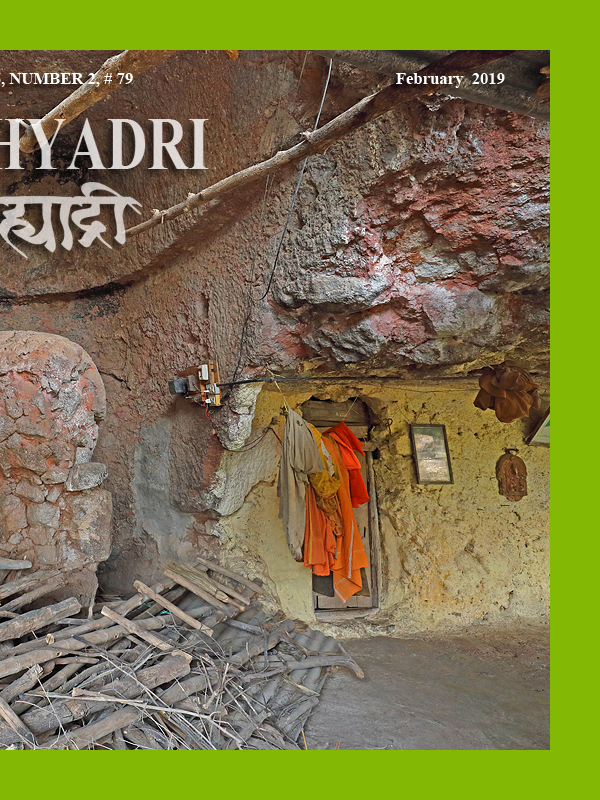
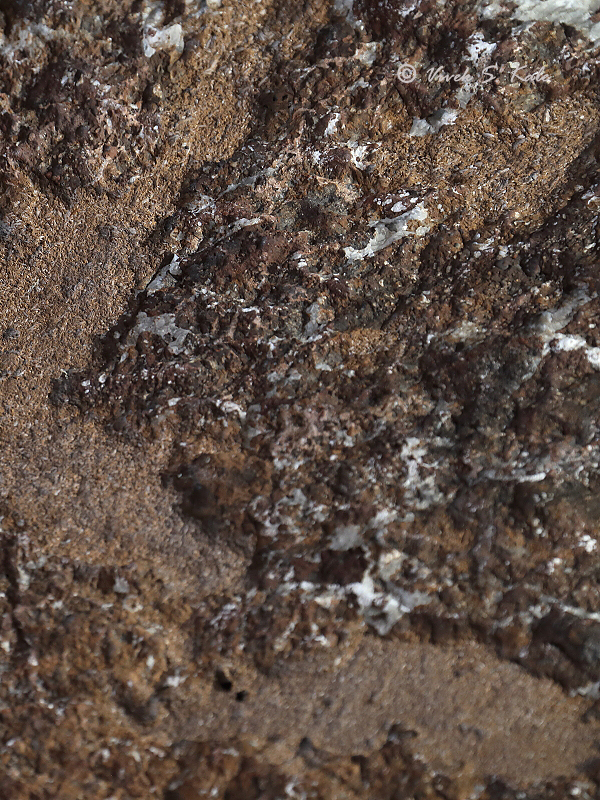
मी येथे पहिल्यांदा जेंव्हा आलो होतो तेंव्हा माझ्याबरोबर पोफळीचा सदफ कडवेकर होता. एकट दुकट रानात फिरायला नको म्हणुन त्याला सोबत घेतले होते. येरफळ गावाच्या मागच्या परसात गाडी लावली. गावकऱ्यांनी आपुकलीने चौकशी करुन लेण्याची वाट दाखवली. १५-२० मिनिटात आम्ही लेण्यात पोहोचलो. इथे कुणीच नव्हत. शांतता आणि गारवा होता. पडवी मंडपात बसुन आम्ही लेण्याची निरिक्षण करु लागलो. चैत्यगृह पाहिला. दुरुन गावातुन किर्तन पारायणाचा पुसट आवाज ऐकु येत होता. येथे झालेली पडझड पाहिली. या भागातला दगडच विचित्र आहे. ज्वालामुखीच्या स्फोटानंतर फेकल्या गेलेल्या कणखर आणि मृदु खनिजांपासुन तयार झालेले हे डोंगर. यात कणखर भाग असतो आणि मॄदु भग सुद्धा असतो. पाउस पाण्यामुळे यातला मृदु पदार्थ वाहुन जातो. आणि बुंदीच्या लाडवासारखा प्रकार तयार होतो. कणखर दगडाचे गोळे एक मेकांना कसे तरि आधार देत एकत्र रहातात. कालांतराने त्याचे विघटन होते आणि यातले काही दगड आणि त्याचे तुकडे वेगळे होऊन खाली पडतात. तसेच काही इथल्या छतात, स्तुपात पाहायवास मिळते. सर्व निरिक्षण आणि नोंदी झाल्यावर आम्ही दोन बंद दरवाजांपर्यंत पोहोचलो. दरवाजे बंद होते. येथील दोन खोल्यांना कुलुपबंद लाकडे दरवाजे होते. आत काय आहे असे कुतुहल निर्माण झाले. दरवाज्यांच्या फटींतुन विजेरीच्या प्रकाशात आत काय आहे हे आम्ही पाहु लागलो. पण आतले गुढ काही केल्या उकलेना. मग काय शांत बसलो. खाऊ खाल्ला. भिंतीवर कोण्या जुन्या साधुबुवांचा फोटो अडकवला होता. खुंटीवर भगवे कपडे अडकवुन ठेवले होते. चाव्या शोधायला पुन्हा गावात हेलपाटा घालण्याचा विचार सोडुन आम्ही वाऱ्यावर वर खाली होणार गावतल पारायण ऐकु लागलो. तेवढ्यात अचानक एक पांढरी दाढी आली. दाढी खाली भगवे कपडे होते. दाढीच्यावर एक सुरकुत्या असलेला चेहरा होता. बुवांनी चौकशी केली. पुण्यातुन आलोय म्हणल्यावर त्यांना काहीच आश्चर्य वाटले नाही. या भागात पुण्यातुन डोंगरतल्या लेणी पहावयाला आलो आहे असे सांगित्यावर लोकांना कौतुक आणि आश्चर्य दोन्ही एकदम वाटते. तसे झाले नाही. आमच्या नोंदवह्या पाहुन बुवांच्या लक्षात आले.

त्यांनी त्यांच्याकडे अमेरिकेतुन माणस लेण्याचा अभास करायला येतात असे सांगितल्यावर त्यांना आमचे कौतुक का वाटले नाही हे कळाले. त्यांना अशा अभासकांच वावड नव्हत पण फारस आश्चर्य पण नव्हत. माणुस पार पिकलेला होता. आम्ही पोर त्याला काय शिकवणार ! आम्ही गप गुमान त्याच्या धनगरी हाकाऱ्यांना सामोरे जात होतो. माहिती असताना सुद्धा बुवांकडुन लेणी समजावुन घेतली. बुवांनी येथील पाण्याची टाकी दाखवली. शिळा दाखविल्या. स्तुप मात्र बुवांना माहित नव्हता. याचा गणपती करायचा म्हणतो असे त्याने अडगळीने घेरलेल्या स्तुपाकडे पाहुन बोलुन दाखविल्यावर आम्ही जमिनीवरुन ताडकन उडलो. अस काही करु नका असे सांगितले. मग चाव्या निघाल्या. कुलुप उघडली. खोल्यांमधला खजाना दिसु लागला. आत प्रचंड अडगळ होती. एका खोलीत चुल होती. चुलीच्या फुफाटयात कधी काळी टाकलेली शेंगांची टरफळ होती. किटल्या, दिवे, बादल्या, कळश्या, लाकड, पातेली, डब्बे, बाटल्या असा मोठा मौल्यवान खजाना होता. कोपऱ्यात एक पत्र्याची पेटी होती. त्यावर दगड होते. उंदर त्रास देतात म्हणुन बुवांनी केलेला हा उद्योग होता. पेटीला कडी कोयंडा नव्हता. भिंतीवर मळक्या कळकट झोळ्या अडकवल्या होत्या. छान फार छान ! असे म्हणत आम्ही मोर्चा दुसऱ्या खोलीकडे वळवला. इथे जरा नविन सामान होते. पुजे अर्चेच सामान, जुनी बंद पडलेली भिंतीवर अडकवायची घड़्याळ, भांडी,कपडे, पंखा असा ऐवज होता. तुमच्या साठी मी पारायण सोडुन आलो आहे असे धनगरी बेरड भाषेत हाकारल्यावर आम्ही आमचा खोल्यांचा अभ्यास आवरला. बुवांच्या पाया पडुन त्यांना दक्षिणा दिली. आता मात्र बुवा पाघळले. तुम्ही महाशिवरात्रीला परत या असे आम्हाला आमंत्रण दिले. कुलुप पुन्हा लागली. आम्ही निरोप घेणार तेवढ्यात बुवांनी आम्हाला हाकारा दिला. सतत च्या हाकाऱ्यांनी आम्ही मेंढ्या झालो होतो. अचानक बुवांनी एक खोली पुन्हा उघडली. त्यात असलेली एक झोळी काढली. मेंढ्यांच्या गळयात दोन छान नव्या कोऱ्या शाली पांघरल्या गेल्या. मेंढ्यांची पुन्हा माणस झाली. बुवांचे दैवी आशिर्वाद घेऊन आणि देवाला आणि स्तुपाला पाया पडुन आम्ही बुवांचा निरोप घेतला.


9.Vihara with Cells, Yerphal Caves, Satara district, Maharashtra, India


10. Chaityagriha, Yerphal caves, Satara district, Maharashtra, India
 

लेणीसमुहाच्या डाव्या (पश्चिम) बाजुस मुख्य चैत्यगृह आहे. चैत्यगृहाची दर्शनी भिंत पडली आहे. मात्र वरच्या बाजुला दर्शनी भागात चौकोनी गवाक्ष असल्याचे दिसते, गवाक्ष अर्धे तुटले आहे. चैत्यगृहाचे छत अर्धदंडगोलाकृती आहे. चैत्यगृह अंदाजे २.६ मीटर रुंद, ४ मीटर लांब आणि ४.१५ मीटर उंच आहे. स्तुपाचा व्यास अंदाजे १ मीटर आणि उंची २.४ मीटर आहे. चैत्यगृहातील या स्तुपाची बरिच पडझड झाली आहे. चैत्यगृहात या लेण्यात रहाणाऱ्या एका साधु बुवांनी फार अडगळ गोळा केली आहे. यामुळे स्तुपाला प्रदक्षिणा घालता येत नाही. चैत्यगृहात खांब नाहीत. या भागातील डोंगराचा दगड ज्वालामुखी च्या ब्रेस्सिया पासुन तयार झाल्यामुळे तो सच्छिद्र असतो. त्यामुळे असा दगड ठिसुळ असतो. यात लहान लहान दगड एकमेकांना चिकटल्यासारखे दिसतात. यातील मृदु भागाची धुप झालेली असते. आणि सच्छिद्र कणखर भाग राहिलेला दिसतो. या मुळे स्तुपाची पडझड झालेली दिसते.

The main chaityagriha has a apsidal curved roof, with vertical side walls. The width, length and height of the chaityagriha is 2.6 m, 4 m, 4.15 m respectively. The stupa is in dilapitated condition and is about 1.4 meter in diameter and 2.4 meter in height. The local Sadhu who stays in this cave collected lot of wood and stored it in this Chaityagriha. It is thus difficult to circumnavigate the Stupa. The chaityagriha has interesting façade most of which has collapsed. The upper section of the façade is still hanging from the roof and has one broken rectangular window. There are no side pillars in this chaityagriha. Geologically most of this region one can see rocks which are nothing but volcanic breccia. In this structure, the hard substance is left behind in the rocks with soft material erosion over the time period. The lumps of stones clubber together structure can be seen in the stupa of this cave. The structure hence is fragile in nature. This is the reason why the Stupa has partially broken over the years.


11. Chaityagriha, Yerphal caves, Satara district, Maharashtra, India


12. Chaityagriha, Yerphal caves, Satara district, Maharashtra, India


13. Stupa at Chaityagriha, Yerphal Caves, Satara district, Maharashtra, India


14. Stupa at Chaityagriha, Yerphal Caves, Satara district, Maharashtra, India


15. Stupa at Chaityagriha, Yerphal Caves, Satara district, Maharashtra, India


16. Stupa at Chaityagriha, Yerphal Caves, Satara district, Maharashtra, India


17. Chaityagriha, Yerphal Caves, Satara district, Maharashtra, India


18. Chaityagriha facade, Yerphal Caves, Satara district, Maharashtra, India


19. Cells in Vihar, Yerphal Caves, Satara district, Maharashtra, India
 

चैत्यगृहाच्या उजवीकडे (पुर्वेकडे) एक दालन आहे. या दालनाची पुढील आणि डावी भिंत तुटली आहे. छताचे निरिक्षण केल्यावर येथे भिंती होत्या असे दिसते. दालनाचा आकार अंदाजे २.५ मीटर x ७ मीटर x २.२ मीटर आहे. दालनाच्या मागच्या भिंतीत दोन दरवाजे आहेत. येथे दोन खोल्या आहेत. खोल्यांना नविन बनवलेल्या लाकडाच्या चौकटी आणि दरवाजे आहेत. या खोल्यांना कुलुप लावलेली असतात. येथे रहाणाऱ्या साधुबुवांकडे याच्या चाव्या असतात. खोल्यांच्या आत बेसुमार अडगळ आहे. एका खोलीत एक बाक आहे. दुसऱ्या खोलीत बाक नाही. उजवीकडील कोपऱ्यातील खोलीत चुल आहे. (नव्याने रचलेली). एका खोलीचा आकार अंदाजे १.४ मीटर x २ मीटर x २ मीटर आहे. दुसऱ्या खोलीचा आकार अंदाजे १.९ मीटर x १.७ मीटर x २ मीटर आहे.

On the right side of main chaityagriha, there is a cave with 2 cells at its back and a hall infront of these 2 cells. The hall infront seems to have lost it front wall. The hall is of about 2.5 x 7 x 2.2 meter in width, length and height respectively.the back wall of the hall there are 2 small cellls. The cells doors are located at two ends of the wall. The cells have wooden frames fitted recently. The local Sadhu who stays in this cave complex has locked the rooms. Sadhu opened the cells for use to invetigate the interiors. One of the cells (west side) has a bench on its side. The cell is of about 1.4 x 2 x 2 meter in width, length and height respectively. The other cell (east side) does not have bench in side. The cell is of about 1.9 x 1.7 x 2 meter in width, length and height respectively. Both these cells have wooden frames and doors (recently fitted) and are normally locked. The cells have lot of objects of daily usage kept by the local Sadhu. One of the cell also has a small wood cooking stove (Chulha) in it. As the monks in the ancient times hardly had any material belongings, the cells those days were probabaly never used as storage rooms or may be were used in some cases.


20. Cells in Vihar, Satara district, Maharashtra, India


21. Material dumped in Cell in Vihar, Yerphal Caves, Satara district, Maharashtra, India


22. Material dumped in Cell in Vihar, Yerphal Caves, Satara district, Maharashtra, India


23. Material dumped in Vihar cell, Yerphal Caves, Satara district, Maharashtra, India


24.The cave hall with bench and Shivalinga , Yerphal Caves, Satara district, Maharashtra, India
 

विहाराच्या उजव्या बाजुस (पुर्वेकडे) एक लेणी आहे. याचा दर्शनी भाग कोसळला आहे. आता येथे दर्शनी बाजुला दगडी भिंत बांधलेली आहे. या लेण्यात आत एक बाक आहे. बाकावर बर्च देव ओळीने मांडुन ठेवले आहेत. यात काही वीरगळी आहेत. या लेण्यात आत एक महादेवाची पिंड आहे. पिंडीवर छतातुन पावसाळ्यात जोरात अभिषेक होतो. या भागातील डोंगराचा दगड ज्वालामुखी च्या ब्रेस्सिया पासुन तयार झाल्यामुळे तो सच्छिद्र असतो. त्यामुळे असा दगड ठिसुळ असतो. यात लहान लहान दगड एकमेकांना चिकटल्यासारखे दिसतात. यातील मृदु भागाची धुप झालेली असते. आणि सच्छिद्र कणखर भाग राहिलेला दिसतो.

On the right (east) side of the Vihar, there is a another small long cave. The front wall of the cave is missing and is replaced by a wall partially made out of rocks masonary. The cave has a long bench. Many loose sculptures are kept on this bench. The ceiling of the cave has heavy leakage and water falls on a Mahadev Linga right below the leakage point. The sculptures include godess scultures, Ganesh, several herostones etc. Geologically most of this region one can see rocks which are nothing but volcanic breccia. In this structure, the hard substance is left behind in the rocks with soft material erosion over the time period. The lumps of stones clubber together structure can be seen in the ceiling of this cave. The structure hence is fragile in nature.


25. Sculpture, The cave hall with bench and Shivalinga, Yerphal Caves, Satara district, Maharashtra, India


26. Sculpture, The cave hall with bench and Shivalinga, Yerphal Caves, Satara district, Maharashtra, India


27. Sculpture, The cave hall with bench and Shivalinga, Yerphal Caves, Satara district, Maharashtra, India


28. Sculpture, The cave hall with bench and Shivalinga, Yerphal Caves, Satara district, Maharashtra, India


29. Sculpture, The cave hall with bench and Shivalinga, Yerphal Caves, Satara district, Maharashtra, India


30. Sculpture, The cave hall with bench and Shivalinga, Yerphal Caves, Satara district, Maharashtra, India


31. Sculpture, The cave hall with bench and Shivalinga, Yerphal Caves, Satara district, Maharashtra, India


32. Sculpture, The cave hall with bench and Shivalinga, Yerphal Caves, Satara district, Maharashtra, India


33. Sculpture, The cave hall with bench and Shivalinga, Yerphal Caves, Satara district, Maharashtra, India


34. Sculpture, The cave hall with bench and Shivalinga, Yerphal Caves, Satara district, Maharashtra, India


35. Sculpture, The cave hall with bench and Shivalinga, Yerphal Caves, Satara district, Maharashtra, India


36. Sculpture, The cave hall with bench and Shivalinga, Yerphal Caves, Satara district, Maharashtra, India


37. Sculptures, The cave hall with bench and Shivalinga, Yerphal Caves, Satara district, Maharashtra, India


38. Sculptures, The cave hall with bench and Shivalinga, Yerphal Caves, Satara district, Maharashtra, India


39. Cave hall, Yerphal Caves, Satara district, Maharashtra, India


40. Cave hall ceiling, Yerphal Caves, Satara district, Maharashtra, India


41. Cave hall ceiling, Yerphal Caves, Satara district, Maharashtra, India


42. Water cistern, Yerphal Caves, Satara district, Maharashtra, India


43. Water cistern, Yerphal Caves, Satara district, Maharashtra, India


44. Pilgrims eating water melon, Yerphal Caves, Satara district, Maharashtra, India


References :
1. Cave temples of India, London, 1880, Fergusson James and Burgess James.
2. Gazetters of Bombay Presidency, Satara District, Volume XVIII, 1885.
3. Buddhist architecture of western India, 1981, S. Nagraju.
4. Caitya Halls: Evidence of a Rock-Cut Architectural Tradition in the Vicinity of Karāḍ, Southern Mahārāṣṭra, David Efurd, 2006
5. Late Hinayan Caves of western India - M.K. Dhavalikar, 1984
Mysteries of Koyna Valley –Yerphal Caves
Please use minimum 1280 pixel horizontal screen resolution for viewing. Please be patient while all the images in webpage are loaded. Please do not use the images for any commercial use without permission. Text in Marathi and English is not exact translation. Please give sufficient time to allow the photographs to load. Special thanks to all those who helped me during the compilation and for the help and guidance during the activity.


देशाची आर्थिक प्रगती व्हावी असे सर्व नागरिकांना वाटणे सहाजिक आहे. अर्थकारणामुळे मिळणारा रोजगार, समृद्धी यासाठी सर्वांनाच आर्थिक प्रगती हवी हवीशी वाटते. आर्थिक प्रगती होताना, त्याचा दिर्घकाळात समाजावर, निसर्गावर, वातावरणावर दुष्परिणाम होणार नाही याची काळजी घेणे महत्वाचे आहे. मनुष्याच्या भावी पिढ्यांना पाणी, शुद्ध हवा, योग्य वातावरण मिळत रहावे अशी भावना मनात रुजणे महत्वाचे आहे. वाढत्या आर्थिक प्रगतीमुळे नैसर्गिक संपदेवर ताण येतो. प्रगतीसाठी प्रदुषण होते. जंगले, माळराने, व इतर अधिवास नष्ट होतात. वसुंधरेवर रहाणाऱ्या इतर जीवांचा मात्र मनुष्य फारसा विचार करत नाही. आर्थिक प्रगती करताना, मनुष्य निसर्गाची हानी करत आहे. मुळताच माणसाला निसर्गाचे महत्व समजणे हे सध्याच्या आपल्या प्रगत जीवनशैली मुळे अवघड झाले आहे. आर्थिक प्रगती, समाजाची प्रगती व निसर्ग संपदेची निगा, यांचा समतोल राखणे काळाची गरज आहे.
सह्याद्री (पश्चिम घाट) हा एक नैसर्गिक संपदेचा, वैविध्यतेचा, भौगोलिक व ऐतिहासिक ठेवा आहे. वाढत्या मानवी अतिक्रमणाचा, सह्याद्रीच्या विविध घटकांवर होणारा दुष्परिणाम भविष्यात आपल्यालाच धोका निर्माण करेल, यात शंका नाही. शुद्ध पाणी, हवा व उर्जा, भावी पिढीला मिळण्यासाठी, नंद्यांचे उगम असलेला सह्याद्री व त्याभागातील जंगले टिकवणे महत्वाचे आहे. सह्याद्रीच्या महत्वाच्या घटकांचे महत्व छायाचित्रांद्वारे प्रकट करण्याचा मी येथे प्रयत्न केला आहे. येथील पक्षी, प्राणी, वनस्पती, अधिवास, किल्ले व लेणी अशा विविध विषयांबद्दल आपण समजुन घेऊ.

As the economic development has taken the center stage, the balance between the environmental sustenance and socio economic development will be under the scanner. As most experts with balanced views have proclaimed, Indian wildlife and ecological system sustenance will be under threat, unless precautions are taken with the help of appropriate research and long term national interests. As we encounter the economic development, many habitats which indirectly or directly help sustainable development will be damaged. The awareness to gauge the success by sustainable development and not by year to year growth is a distant dream any environmentalist will assume in current scenario.
Western ghats, or Sahyadri as we all call it as, is a treasure trove of spectacular landscapes, biodiversity, flora, fauna, some amazing geological wonders and man made monuments. With the increasing pressure from human encroachment, all these elements are under stress and in turn are under depletion. Western ghats should be left untouched by human beings, to protect their future generations from getting short of resources, such as water, energy and clean air. The important elements of western ghats, which need protection are highlighted in the new version of Photo journal, Me Sahyadri Magazine.


““
 
Me Sahyadri – December 2018
 

कोयना खोरे लेणी मोहेमेचा सारांश :
मावळातील भाजे, बेडसे आणि कार्ले लेणी अप्रतिम आहेत. त्यामुळे या भागातील इतर लहान लेण्यांकडे फारसे कोणी फिरकत नाही. आम्ही चार समविचारी मित्रांनी मात्र या हरवलेल्या लेण्यांची शोधाशोध करण्याचे ठरवले. एकोणीसाव्या शतकात जेम्स बर्जेस आणि जेम्स फर्ग्युसन या दोन इंग्रज विद्वानांनी भारतातील लेणी धुंडाळली होती. त्यांनी १८८० साली "केव्ह टेम्पल्स ऑफ इंडिया" या पुस्तकाचे प्रकाशन केले. या पुस्तकात मावळातील लहान लेण्यांचा फारसा तपशिल नसला तरी, या मावळातील इतर लहान लेण्यांबद्दल ५-६ वाक्यांमध्ये आम्हाला त्रोटक का होईना माहिती मिळाली. त्यांनी उल्लेख केलेली, काही ठिकाण सापडली, तर काही ठिकाण काहीही केल्या सापडेनात. कदाचित न सापडलेली ठिकाण नष्ट झाली असावीत.
ग्रामीण मावळ लेणी शोध मोहिमेच्या धरतीवर आम्ही कराड जवळ असलेल्या अल्प परिचित लेण्यांना भेट देण्याचे ठरवले. मावळ लेणी मोहिमेतील अनुभवाचा उपयोग कोयना भागातील लेणी धुंडाळायला उपयोग झाला. आमच्या संघात विवेक काळे, अमेय जोशी, जितेंद्र बंकापुरे, साईप्रकाश बेलसरे, मिलिंद लिमये आणि निनाद बारटक्के असे हुरहुन्नरी भटके सामिल झाले. बाळासाहेब येळवंडे या माझ्या मित्राची आणि पोफळीच्या सदफ कडवेकर ची मदत मिळाली.
शोध मोहिमेत लागणाऱ्या खाऊची सोय करणे, विषय आणि ठिकाणाचा आधी अभ्यास करणे, प्रवासाची सोय करणे, गावकऱ्यांकडे लेण्यांबद्दल चौकश्या करणे, मोहिमे दरम्यान गचपणातुन वाट शोधणे, लेण्याच्या अवशेषांची चित्रे/नकाशे काढणे, छायाचित्रे काढणे, जि. पि. एस. यंत्रावर वाटेबद्दल माहिती नोंदवणे, लेण्यात लहान बारकावे शोधणे, लेण्यांचे विश्लेषण करणे, नोंदी करणे, अशी वेगवेगळ्या प्रकारची काम वाटुन घेण्यात आली. प्रत्येक ठिकाणी जाताना, घरचा अभ्यास करावा लागला. जुनी पुस्तके, नकाशे धुंडाळले गेले. गावातल्या मित्रांची मदत झाली. गावागावात चौकश्या केल्या. गडद, लेणे, गुहा, कपार, भोगदा, विहार, पांडवांनी एका रात्री बनवलेली गुहा असे अनेक शब्द वापरुन चौकश्या झाल्या. बकऱ्या, गाई घेऊन डोंगरात फिरणारे गुराखी मात्र दरवेळेला मदतीला धाउन आले. वाटांचे आणि दिशांचे अंदाज मिळाले. जुजबी माहिती घेऊन ठिकाण शोधणे या प्रकाराचा चांगला सराव झाला.
कधी काटेरी करवंदींच्या खालुन खुप सरपटाव लागल तर कधी घसाऱ्यावर हात टेकावे लागले. लेण्यांमध्ये मोठे कोळी (स्पायडर), कातळ पाली, वटवाघळ, मधमाश्या, पाकोळ्या, घुबडं भेटले. आमच्या मुळे त्यांना उगाच त्रास झाला, असा अपराधीपणा वाटला. बहुतांश ठिकाणी कोणत्या ना कोणत्या प्रकारची जोखिम होती. वटवाघळ, लेण्यातील धुळ, काळोख, मधमाश्या, काटेरी वनस्पती, घसारा, गुहेतील ऑक्सिजन चा अभावआणि इतर न दिसणारे धोके यावर मात झाली. मोहिमेसाठी, विजेऱ्या, जि. पि. एस., मोजपट्या, दोऱ्या, लेजर यंत्र, नकाशे, गुगल मॅप, जाळीच्या टोप्या या सर्व जंत्रीचा उपयोग झाला. एकूण मिळुन नविन अपरिचित ठिकाण/वास्तु पहायला मिळाल्या, कोयनेचा भुगोल जरा अजुन नीट लक्षात आला. नविन प्रश्न पडले आणि नविन कोडी सोडवयाला मिळाली. तर्क वितर्क झाले.

About the Koyna Valley Cave exploration :
For last few years we have been exploring the MAVAL region od Pune district in search of ancient rock cut caves. Most of the caves are known and studied in depth by several researchers. While revisitng some of the lesser known rock cut caves we observed many new aspects of these caves which have been overlooked. At few places new rock cut caves were noticed which are not recorded in academic literature. We explored and found few beautiful places. The very concept of creating a hermit cave somewhere high up in the hills is fascinating. These places often are full of tranquility and nothing else. With very little architectural evidences and clues, the academicians have obviously ignored these places. It was James Fergusson and James Burgess, during their exhaustive study of “Cave temples of India, 1880” mentioned few of these hermits in Maharashtra.
With the little clues and exhaustive investigation, team of five members, Saprakash Belsare, Amey Joshi, Ninad Bartakke, Jitendra Bankapure and Vivek Kale started the exploration. The journey to locate, trek and analyse these hermit caves itself was fascinating. We met many villagers who were unaware of these places, but also met few shephards who were precisely aware of the hermits and gave us tentaive guidance. In line with Maval cave exploration, we visited Koyna valley for its recorded but less known rock cut caves. There is a very brief mention about the misceleneous caves of Maharashtra by James Fergusson and James Burgess in their work. Based on available information we decided to search these caves and monuments. The activities were planned. The food, travel , track exploration in difficult and routes full of foliage, enquiring the villagers about the caves, drawing skecthes and maps, photography, GPS data collection, making notes and analysing the information, observing the minor details of the caves etc activites were distributed amongst the team members.
We met many bats, owls, geckos, lizards, large spiders, martins, honeybees during the treks. Often we felt sad that we disturbed them to see the caves. Most of these places are hazardous due to pitch darkness, bats, dust, thorny plants, honeybees, low oxygen level in caves and rock patches etc. The high intensity torches, GPS tool, measuring tapes and measuring laser tool, Honeybee protection caps, maps, google maps, photographs etc were useful during the mission. In this photoessay, I have compiled the information and photographs of Digewadi caves, in Koyna Valley. cave complex.


““ 
The banner has been published here to improve the awareness of the trekkers and tourists visiting the various mountain forts, mountains in north western ghats. Please avoid accidents, by following good outdoor ethics such as no swimming in cisterns at mountain forts, no rock climbing without proper technical equipment and expertise. Please do not adventure, trek with any group or individually without understanding the risks associated. The frequency of the solo trekker fatalities have increased recently. Please strictly avoid solo treks. Please also avoid treks to mountains in large commercial groups, as it leads to damage to biodiversity of these high elevation ecological islands. Please respect the wildlife and biodiversity of the region. This has become more important as the ever increasing human interference is leading to severe damage to fragile ecosystems. Please be aware of the wildlife and biodiversity of the mountains before visiting these mountains. Please follow outdoor ethics. Follow ASI and Forest department rules. The concept of use of symbols for outdoor ethics was conceived and designed by "Sahyadri Trekker Bloggers Group".


1. Karad-Chiplun trade route Map, Maharashtra, India


2. Map, Koyna Valley Caves, Satara district, Maharashtra, India
 

कोयना नदीचा उगम महाबळेश्वर येथे होतो. पुढे दक्षिणेकडे पण घाटमाथ्याजवळच कोयनानगर येथे या नदीवर धरणाची भिंत आहे. इथ पर्यंत उत्तर दक्षिण प्रवास करत आलेली कोयना नदी येथुन पुढे मात्र पश्चिम पुर्व अशी वाहु लागते. कोयनानगर ते कराड या पश्चिम पुर्व पठारी भागातुन जाताना या नदिच्या दोन्ही बाजुस म्हणजे उत्तरेला आणि दक्षिणेला डोंगररांगा आहेत. कोयना नदीच्या उत्तरेकडे असल्या डोंगररांगेत असलेल्या दिगेवाडी लेण्याची माहिती या सदरात मांडली आहे. सदर लेणी काळेवाडी गावाजवळ असलेल्या डोंगरात आहेत. प्राचिन काळी अंदाजे २००० वर्षांपुर्वी भारताचा व्यापार इजिप्त, ग्रीक राज्यांबरोबर होत असे. दक्खन च्या पठरावरुन वस्तु कोकणातील बंदरंपर्यंत पोहोचवल्या जात. तेथुन पुढे समुद्रमार्गे ब्यापार होत असे. कराड हे महत्वाचे व्यापारी केंद्र होते. येथुन माल कोकणापर्यंत चिपळुण आणि इतर ठिकाणाच्या खाड़्यांपर्यंत पोहोचत असे. या व्यापारी मार्गा च्या आजुबाजुला अनेक ठिकाणी बुद्ध लेणी पहावयास मिळतात.

Koyna river originates at Mahabaleshwar. It has very large dam built on it at koynanagar in Patan tehsil of Satara district. After Koynanagar the river flows towards east before it reaches Karad. This region of Koyananagar to Karad is here considered as Koyna valley. The river flows through a flat basin flanked by hill ranges on either side of it. In this photoessay, one of the caves on the northern side hill range is discussed. Out of six lesser known caves in this northern hill range facing Koyna, Digewadi is the most less visited rock cut cave. The caves are located near the village Kalewadi near Digewadi. In ancient India about 2000 years back India used to trade with other western civilisations such Persia, Greece and Egypt. The trade used to be carried out by road from Deccan plateay through a trade center till the ports on west coast. The goodswere then transported through sea route to Egypt, Greece etc. The land route from deccan plateu to west coast was decided based on the convenience. Karad was important trade center on the deccan plateau. The goods were transported from Karad to Chiplun and other Konkan ports through Koyna valley and the pass through the wetsern ghats. Hence many buddhist caves can be seen around the Koyna valley due to this trade route from Karad to Chiplun.


3. Aerial Map, Koyna Valley Caves, Satara district, Maharashtra, India


4. Layout – Digewadi Caves, Satara district, Maharashtra, India
 

कोयनानगर-कराड रस्त्यावर काळेवाडी नावाहे एक लहान गाव आहे. या गावाजवळच्या डोंगरात दिगेवाडी लेणी आहेत. गावातल्या कच्च्या रस्ताने आम्ही चौकशी करत गावाच्या मागच्या बजुला गेलो. येथुन पुढे कच्च्या रस्त्याने डोंगरपायथा गाठला. दगडांच्या खाणींजवळ गाडी लावुन पुढे चालत डोंगराच्या एका लहान नाळेजवळ आलो. मी इथे पुर्वी आलेलो होतो. पहिल्या भेटीत मात्र मला जि. प. एस. यंत्रणेचा वापर करुन लेणे शोधावे लागले होते. एका शोध निबंधातुन या लेण्याचे जि. प. एस अक्षांश रेखांश आकडे मिळाले होते. नाळेतल्या धबधब्याच्या उजव्या बाजुने डोंगरात केलेल्या शेत पायऱ्या पार करत आम्ही एकदाचे लेण्यासमोर पोहोचलो. झाडोऱ्यामुळे लेणी दुरुन दिसत नाहीत. येथे लेणी समुहाचे तीन भाग आहेत. मध्य भागी मुख्य चैत्यगृह आहे. त्यात महादेवाची पिंड आहे. डाव्या बाजुला (पश्चिमेला) एक विहार आहे. या विहारात दोन खोल्या आणि पडवी आहे. उजव्या बाजुला मोठा विहार आहे. या विहारात सात खोल्या आणि एक सभागृह आहे. ऐन धबधब्या जवळ असल्याने आणि वर्षों वर्ष दुर्लक्षित राहिल्याने लेण्यात वरुन आलेली माती भरलेली आहे. उंची पहाता अर्ध लेणे मातीखाली दबले गेले आहे. वर्षोंवर्ष पाण्यामुळ येथे धुप झाली आहे. विहारातील खोल्यांच्या भिंती पडल्या आहेत. या लेण्यात कोणतीही मुर्तीकला नाही. एकुणच येथील वास्तुरचनेवरुन हे हिनायन लेणे आहे हे स्पष्ट आहे.

Kalewadi near Digewadi is a village on the Karad-Patan highway. The caves are located at about 50-60 meter altitude above the surrounding plateaue. After scrambling through the village small roads, we could reach very close to the base of the hill range on a rough road. From here it took hardly 20 minutes to reach the caves. The cave can not be seen from distance due to foliage. One can approcah cave from the right side of the stream. The caves are hidden up th hill and are south facing. This cave complex can be divided in to 3 sections. The main chaityagriha in the center. The vihar cave consisting of 2 cells with verandah are on the left (west side) of chaityagriha. Another larger Vihara cave consisting of 7 cells is on the right (east side) of chaityagriha. There is a opening in Chaityagriha wall through which one can access east side vihara cells. There is about 1 to 1.5 meter deep rubble in the entire cave complex. So one can see only the upper half of the caves which are still above the rubble. There is a waterfall outside the cave complex and the rubble with rain water must have got entered the cave complex over many years. Most of the walls in vihar caves are damaged due to the erosion over the years. The quality of rock here is brittle as is not as compact as one can see in Maval region caves such as Karle, Bedse etc. Based on the architecture it is evident that this is a early Hinayan Cave.


5. Digewadi Caves, Satara district, Maharashtra, India


6. Vihar under rubble, Digewadi Caves, Satara district, Maharashtra, India


7. Chaitygriha under rubble, Digewadi Caves, Satara district, Maharashtra, India


8. Chaityagriha under rubble, Digewadi caves, Satara district, Maharashtra, India
 

धबधब्याच्या जवळ मुख्य चैत्यगृह आहे. चैत्यगृहाची रुंदी अंदाजे ३.२ मीटर आहे. लांबी ७ मीटर आहे. तर उंची २.२ मीटर (सध्याची) आहे. खालचा भाग मातीखाली दबलेला आहे. त्यामुळे एकुण उंची अंदाजे ३.७-४.२ मीटर असावी. चैत्यगृहात महादेवाची पिंड आहे. पिंड एका दगडावर ठेवलेली आहे. दगड स्तुपावर ठेवलेला आहे. स्तुपाचा थोडासाच भाग जमिनीवर आलेला दिसतो. चैत्यगृहाचे छत गोलाकार आहे. चैतुगृहाच्या छतावर थोडे जुने प्लॅस्टर दिसते. चैत्यगृहात महादेवाच्या पिंडी व्यतिरिक्त २ लहान देवाच्या शिळा आहेत. चैत्यगृहात जमिनीवर फरश्या लावलेल्या आहेत. चैत्यगृहात खांब नाहीत. चैत्यगृहाची रचना पहाता या भागात हा चैत्य सर्वात जुना असावा असे वाटते.

The main chaityagriha has a apsidal curved roof, with vertical side walls. The height of the chaityagriha is very less. Also the Stupa is covered with rubble and only top part of stupa is visible. Atop stupa a Shivalingam is kept and is being worshipped by the local villagers. Based on some observations in this cave and other caves it is clear that the chaityagriha is filled with about 1.5 to 2 m rubble. The stupa is submerged in this rubbble. Refer Image 23 to see the tentative sketch of this submergence. The chaityagriha is about 3.2 meter wide and is about 2.2 meter (visible). The stupa must be about 1 to 1.5 meter in diameter, but as it is under rubble exact dimensions can not be realised. There are no side pillars in this chaityagriha. As this stupa has apsidal roof, it indicates the early date for this cave.


9. Chaitygriha upper part, Digewadi Caves, Satara district, Maharashtra, India


10. Shivalingam, Chaityagriha, Digewadi Caves, Satara district, Maharashtra, India


11. Shivalingam, Chaityagriha, Digewadi Caves, Satara district, Maharashtra, India


12. Shivalingam atop under rubble Stupa, Chaityagriha, Digewadi Caves, Satara district, Maharashtra, India


13. Shivalingam, Chaityagriha, Digewadi Caves, Satara district, Maharashtra, India


14. Dieties, Digewadi Caves, Satara district, Maharashtra, India


15. Chaityagriha inside out, Digewadi Caves, Satara district, Maharashtra, India


16. Chaityagriha inside out, Digewadi Caves, Satara district, Maharashtra, India


17. Traces of plaster on roof ceiling, Digewadi Caves, Satara district, Maharashtra, India


18. Deities, Digewadi Caves, Satara district, Maharashtra, India


19. Deities, Digewadi Caves, Satara district, Maharashtra, India


20. Chaityagriha wall, Digewadi Caves, Satara district, Maharashtra, India


21. Shivalingam atop under rubble Stupa, Digewadi Caves, Satara district, Maharashtra, India


22. Layout of chaityagriha considering the possible stupa under rubble, Digewadi Caves, Satara district, Maharashtra, India


23.West side Vihar, Digewadi Caves, Satara district, Maharashtra, India


24. West side Vihar, Digewadi Caves, Satara district, Maharashtra, India
 

चैत्यगृहाच्या डाव्या (पश्चिम ) बाजुला एक मोठा विहार आहे. विहारात एक पडवी आहे. पडवी च्या मागच्या बाजुला २ खोल्या आहेत. खोल्यांचे आकार समसमान नाहीत. दरवाजांना लाकडी चौकटी लावण्यासाठी लागणाऱ्या खाचा येथे दिसतात. विहाराला जाण्यासाठी एक दरवाजा आहे. सद्या विहारात सरपटत जावे लागते. याचा बहुसंख्य भाग जमिनीखाली दबलेला आहे. पुर्व आणि पश्चिम विहारांची सध्य छत पातळी वेगळी आहे. त्यांच्या जमिनीवरची पातळी सुद्धा वेगळी असावी. पावसा पाण्यामुळे भिंतींची पडझड झाली आहे. येथे बाहेर पाण्याचे टाके असणार. मात्रे ते जमिनीखाली दडलेले असणार. एकुणच सरकारी अनास्थेमुळे या २००० वर्षांपुर्वीच्या महत्वाच्या लेण्याची दुरावस्था झाली आहे.

On the left side of main chaityagriha, there is a cave with 2 cells at its back and a verandah infront of these 2 cells. Similar to the main chaityagriha, this cave also is filled with about 1 to 1.2 meter rubble. Benches in these cave cells are not visible due to rubble. The ceiling of this cave matches with the current level of the Chaityagriha floor. Assuming that the typical height of the caves in this region is about 2 to 2.4 meter, one can say that Chaityagriha is further 2.4 meter below the rubble, making the total height of Chaityagriha as 2.2 meter (visible) + 2.4 meter (under rubble) = 4.6 meter. The wooden sockets to fix the door frames can be seen in the door ways of these 2 cells.


25. West side Vihar, Digewadi Caves, Satara district, Maharashtra, India


26. West side Vihar, Digewadi Caves, Satara district, Maharashtra, India


27. West side Vihar, Digewadi Caves, Satara district, Maharashtra, India


28. West side Vihar, Digewadi Caves, Satara district, Maharashtra, India


29. East Vihar, Digewadi Caves, Satara district, Maharashtra, India


30. East Vihar, Digewadi Caves, Satara district, Maharashtra, India
 

चैत्यगृहाच्या उजव्या बाजुला एक मोठा विहार आहे. विहारात मध्यभागी एक सभागृह आहे. सभागृहाच्या भोवती खोल्या आहेत. सर्व खोल्यांचे आकार समसमान नाहीत. दरवाजांना लाकडी चौकटीलावण्यासाठी लागणाऱ्या खाचा येथे दिसतात. विहाराच्या डाव्या (पश्चिम) बाजुला २ खोल्या, मागच्या बाजुला २ खोल्या तर पुर्व बाजुस ३ खोल्या आहेत. विहाराला जाण्यासाठी चैत्यगृहात उजवीकडे एक दरवाजा केला आहे. सद्या विहारात सरपटत जावे लागते. याचा बहुसंख्य भाग जमिनीखाली दबलेला आहे. पुर्व आणि पश्चिम विहारांची सध्य छत पातळी वेगळी आहे. त्यांच्या जमिनीवरची पातळी सुद्धा वेगळी असावी. पुर्व विहारात समोरुन सुद्धा वाट असावी. पावसा पाण्यामुळे भिंतींची पडझड झाली आहे. येथे बाहेर पाण्याचे टाके असणार. मात्रे ते जमिनीखाली दडलेले असणार. एकुणच सरकारी अनास्थेमुळे या २००० वर्षांपुर्वीच्या महत्वाच्या लेण्याची दुरावस्था झाली आहे.

On the right side (East) of main chaityagriha, there is a cave with 7 cells. Two cells are on left, two on the back side and 3 on right side. Similar to the main chaityagriha, this cave also is filled with about 1 to 1.2 meter rubble. Benches in these cave cells are not visible due to rubble. The cave cell sizes are non uniform. There is a opening in the cahityagriha wall to enter this cave. There is a small passage through which one can reach the caves once entered through the chaityagriha opening. Due to rubble it is difficult to identify if the cave complex also had front entrance or not. There are no indications of water cistern nearby. But there is a likely hood that water cisterns are under the rubble. This east cave ceiling is above the current floor level of Chaityagriha by about 1 meter. It indicates that the floor level of Cave (west) and floor level of Cave (East) differs by about 1 meter. The wooden sockets to fix the door frames can be seen in the door ways of these 7 cells. The cave is being overlooked by Govt agencies. The restoration of such important ancient heritage should have been done by Govt.


31. East Vihar, Digewadi Caves, Satara district, Maharashtra, India


32. East Cave, Digewadi Caves, Satara district, Maharashtra, India


33. East Vihar, Digewadi Caves, Satara district, Maharashtra, India


34. East Vihar, Digewadi Caves, Satara district, Maharashtra, India


35. East Vihar, Digewadi Caves, Satara district, Maharashtra, India


36. East Cave, Digewadi Caves, Satara district, Maharashtra, India


37. Digewadi Caves, Satara district, Maharashtra, India


38. Pilgrims, Digewadi Caves, Satara district, Maharashtra, India


39. Pilgrims, Digewadi Caves, Satara district, Maharashtra, India


References :
1. Cave temples of India, London, 1880, Fergusson James and Burgess James.
2. Gazetters of Bombay Presidency, Satara District, Volume XVIII, 1885.
3. Buddhist architecture of western India, 1981, S. Nagraju.
4. Caitya Halls: Evidence of a Rock-Cut Architectural Tradition in the Vicinity of Karāḍ, Southern Mahārāṣṭra, David Efurd, 2006
5. Late Hinayan Caves of western India - M.K. Dhavalikar, 1984
Mysteries of Koyna Valley – Digewadi Caves
Please use minimum 1280 pixel horizontal screen resolution for viewing. Please be patient while all the images in webpage are loaded. Please do not use the images for any commercial use without permission. Text in Marathi and English is not exact translation. Please give sufficient time to allow the photographs to load. Special thanks to all those who helped me during the compilation and for the help and guidance during the activity.


देशाची आर्थिक प्रगती व्हावी असे सर्व नागरिकांना वाटणे सहाजिक आहे. अर्थकारणामुळे मिळणारा रोजगार, समृद्धी यासाठी सर्वांनाच आर्थिक प्रगती हवी हवीशी वाटते. आर्थिक प्रगती होताना, त्याचा दिर्घकाळात समाजावर, निसर्गावर, वातावरणावर दुष्परिणाम होणार नाही याची काळजी घेणे महत्वाचे आहे. मनुष्याच्या भावी पिढ्यांना पाणी, शुद्ध हवा, योग्य वातावरण मिळत रहावे अशी भावना मनात रुजणे महत्वाचे आहे. वाढत्या आर्थिक प्रगतीमुळे नैसर्गिक संपदेवर ताण येतो. प्रगतीसाठी प्रदुषण होते. जंगले, माळराने, व इतर अधिवास नष्ट होतात. वसुंधरेवर रहाणाऱ्या इतर जीवांचा मात्र मनुष्य फारसा विचार करत नाही. आर्थिक प्रगती करताना, मनुष्य निसर्गाची हानी करत आहे. मुळताच माणसाला निसर्गाचे महत्व समजणे हे सध्याच्या आपल्या प्रगत जीवनशैली मुळे अवघड झाले आहे. आर्थिक प्रगती, समाजाची प्रगती व निसर्ग संपदेची निगा, यांचा समतोल राखणे काळाची गरज आहे.
सह्याद्री (पश्चिम घाट) हा एक नैसर्गिक संपदेचा, वैविध्यतेचा, भौगोलिक व ऐतिहासिक ठेवा आहे. वाढत्या मानवी अतिक्रमणाचा, सह्याद्रीच्या विविध घटकांवर होणारा दुष्परिणाम भविष्यात आपल्यालाच धोका निर्माण करेल, यात शंका नाही. शुद्ध पाणी, हवा व उर्जा, भावी पिढीला मिळण्यासाठी, नंद्यांचे उगम असलेला सह्याद्री व त्याभागातील जंगले टिकवणे महत्वाचे आहे. सह्याद्रीच्या महत्वाच्या घटकांचे महत्व छायाचित्रांद्वारे प्रकट करण्याचा मी येथे प्रयत्न केला आहे. येथील पक्षी, प्राणी, वनस्पती, अधिवास, किल्ले व लेणी अशा विविध विषयांबद्दल आपण समजुन घेऊ.

As the economic development has taken the center stage, the balance between the environmental sustenance and socio economic development will be under the scanner. As most experts with balanced views have proclaimed, Indian wildlife and ecological system sustenance will be under threat, unless precautions are taken with the help of appropriate research and long term national interests. As we encounter the economic development, many habitats which indirectly or directly help sustainable development will be damaged. The awareness to gauge the success by sustainable development and not by year to year growth is a distant dream any environmentalist will assume in current scenario.
Western ghats, or Sahyadri as we all call it as, is a treasure trove of spectacular landscapes, biodiversity, flora, fauna, some amazing geological wonders and man made monuments. With the increasing pressure from human encroachment, all these elements are under stress and in turn are under depletion. Western ghats should be left untouched by human beings, to protect their future generations from getting short of resources, such as water, energy and clean air. The important elements of western ghats, which need protection are highlighted in the new version of Photo journal, Me Sahyadri Magazine.


““
 
Me Sahyadri – January 2019
 

कोयना खोरे लेणी मोहेमेचा सारांश :
मावळातील भाजे, बेडसे आणि कार्ले लेणी अप्रतिम आहेत. त्यामुळे या भागातील इतर लहान लेण्यांकडे फारसे कोणी फिरकत नाही. आम्ही चार समविचारी मित्रांनी मात्र या हरवलेल्या लेण्यांची शोधाशोध करण्याचे ठरवले. एकोणीसाव्या शतकात जेम्स बर्जेस आणि जेम्स फर्ग्युसन या दोन इंग्रज विद्वानांनी भारतातील लेणी धुंडाळली होती. त्यांनी १८८० साली "केव्ह टेम्पल्स ऑफ इंडिया" या पुस्तकाचे प्रकाशन केले. या पुस्तकात मावळातील लहान लेण्यांचा फारसा तपशिल नसला तरी, या मावळातील इतर लहान लेण्यांबद्दल ५-६ वाक्यांमध्ये आम्हाला त्रोटक का होईना माहिती मिळाली. त्यांनी उल्लेख केलेली, काही ठिकाण सापडली, तर काही ठिकाण काहीही केल्या सापडेनात. कदाचित न सापडलेली ठिकाण नष्ट झाली असावीत.
ग्रामीण मावळ लेणी शोध मोहिमेच्या धरतीवर आम्ही कराड जवळ असलेल्या अल्प परिचित लेण्यांना भेट देण्याचे ठरवले. मावळ लेणी मोहिमेतील अनुभवाचा उपयोग कोयना भागातील लेणी धुंडाळायला उपयोग झाला. आमच्या संघात विवेक काळे, अमेय जोशी, जितेंद्र बंकापुरे, साईप्रकाश बेलसरे, मिलिंद लिमये , आणि निनाद बारटक्के असे हुरहुन्नरी भटके सामिल झाले. पोफळीच्या सदफ कडवेकर ची मदत मिळाली.
शोध मोहिमेत लागणाऱ्या खाऊची सोय करणे, विषय आणि ठिकाणाचा आधी अभ्यास करणे, प्रवासाची सोय करणे, गावकऱ्यांकडे लेण्यांबद्दल चौकश्या करणे, मोहिमे दरम्यान गचपणातुन वाट शोधणे, लेण्याच्या अवशेषांची चित्रे/नकाशे काढणे, छायाचित्रे काढणे, जि. पि. एस. यंत्रावर वाटेबद्दल माहिती नोंदवणे, लेण्यात लहान बारकावे शोधणे, लेण्यांचे विश्लेषण करणे, नोंदी करणे, अशी वेगवेगळ्या प्रकारची काम वाटुन घेण्यात आली. प्रत्येक ठिकाणी जाताना, घरचा अभ्यास करावा लागला. जुनी पुस्तके, नकाशे धुंडाळले गेले. गावातल्या मित्रांची मदत झाली. गावागावात चौकश्या केल्या. गडद, लेणे, गुहा, कपार, भोगदा, विहार, पांडवांनी एका रात्री बनवलेली गुहा असे अनेक शब्द वापरुन चौकश्या झाल्या. बकऱ्या, गाई घेऊन डोंगरात फिरणारे गुराखी मात्र दरवेळेला मदतीला धाउन आले. वाटांचे आणि दिशांचे अंदाज मिळाले. जुजबी माहिती घेऊन ठिकाण शोधणे या प्रकाराचा चांगला सराव झाला.
कधी काटेरी करवंदींच्या खालुन खुप सरपटाव लागल तर कधी घसाऱ्यावर हात टेकावे लागले. लेण्यांमध्ये मोठे कोळी (स्पायडर), कातळ पाली, वटवाघळ, मधमाश्या, पाकोळ्या, घुबडं भेटले. आमच्या मुळे त्यांना उगाच त्रास झाला, असा अपराधीपणा वाटला. बहुतांश ठिकाणी कोणत्या ना कोणत्या प्रकारची जोखिम होती. वटवाघळ, लेण्यातील धुळ, काळोख, मधमाश्या, काटेरी वनस्पती, घसारा, गुहेतील ऑक्सिजन चा अभावआणि इतर न दिसणारे धोके यावर मात झाली. मोहिमेसाठी, विजेऱ्या, जि. पि. एस., मोजपट्या, दोऱ्या, लेजर यंत्र, नकाशे, गुगल मॅप, जाळीच्या टोप्या या सर्व जंत्रीचा उपयोग झाला. एकूण मिळुन नविन अपरिचित ठिकाण/वास्तु पहायला मिळाल्या, कोयनेचा भुगोल जरा अजुन नीट लक्षात आला. नविन प्रश्न पडले आणि नविन कोडी सोडवयाला मिळाली. तर्क वितर्क झाले.

About the Koyna Valley Cave exploration :
For last few years we have been exploring the MAVAL region od Pune district in search of ancient rock cut caves. Most of the caves are known and studied in depth by several researchers. While revisitng some of the lesser known rock cut caves we observed many new aspects of these caves which have been overlooked. At few places new rock cut caves were noticed which are not recorded in academic literature. We explored and found few beautiful places. The very concept of creating a hermit cave somewhere high up in the hills is fascinating. These places often are full of tranquility and nothing else. With very little architectural evidences and clues, the academicians have obviously ignored these places. It was James Fergusson and James Burgess, during their exhaustive study of “Cave temples of India, 1880” mentioned few of these hermits in Maharashtra.
With the little clues and exhaustive investigation, team of six members, Saprakash Belsare, Amey Joshi, Ninad Bartakke, Jitendra Bankapure, Milind Limaye and Vivek Kale started the exploration. The journey to locate, trek and analyse these hermit caves itself was fascinating. We met many villagers who were unaware of these places, but also met few shephards who were precisely aware of the hermits and gave us tentaive guidance. In line with Maval cave exploration, we visited Koyna valley for its recorded but less known rock cut caves. There is a very brief mention about the misceleneous caves of Maharashtra by James Fergusson and James Burgess in their work. Based on available information we decided to search these caves and monuments. The activities were planned. The food, travel , track exploration in difficult and routes full of foliage, enquiring the villagers about the caves, drawing skecthes and maps, photography, GPS data collection, making notes and analysing the information, observing the minor details of the caves etc activites were distributed amongst the team members.
We met many bats, owls, geckos, lizards, large spiders, martins, honeybees during the treks. Often we felt sad that we disturbed them to see the caves. Most of these places are hazardous due to pitch darkness, bats, dust, thorny plants, honeybees, low oxygen level in caves and rock patches etc. The high intensity torches, GPS tool, measuring tapes and measuring laser tool, Honeybee protection caps, maps, google maps, photographs etc were useful during the mission. In this photoessay, I have compiled the information and photographs of Mhavashi caves, in Koyna Valley. cave complex.


““ 
The banner has been published here to improve the awareness of the trekkers and tourists visiting the various mountain forts, mountains in north western ghats. Please avoid accidents, by following good outdoor ethics such as no swimming in cisterns at mountain forts, no rock climbing without proper technical equipment and expertise. Please do not adventure, trek with any group or individually without understanding the risks associated. The frequency of the solo trekker fatalities have increased recently. Please strictly avoid solo treks. Please also avoid treks to mountains in large commercial groups, as it leads to damage to biodiversity of these high elevation ecological islands. Please respect the wildlife and biodiversity of the region. This has become more important as the ever increasing human interference is leading to severe damage to fragile ecosystems. Please be aware of the wildlife and biodiversity of the mountains before visiting these mountains. Please follow outdoor ethics. Follow ASI and Forest department rules. The concept of use of symbols for outdoor ethics was conceived and designed by "Sahyadri Trekker Bloggers Group".


1. Karad-Chiplun trade route Map, Maharashtra, India


2. Map, Koyna Valley Caves, Satara district, Maharashtra, India
 

कोयना नदीचा उगम महाबळेश्वर येथे होतो. पुढे दक्षिणेकडे पण घाटमाथ्याजवळच कोयनानगर येथे या नदीवर धरणाची भिंत आहे. इथ पर्यंत उत्तर दक्षिण प्रवास करत आलेली कोयना नदी येथुन पुढे मात्र पश्चिम पुर्व अशी वाहु लागते. कोयनानगर ते कराड या पश्चिम पुर्व पठारी भागातुन जाताना या नदिच्या दोन्ही बाजुस म्हणजे उत्तरेला आणि दक्षिणेला डोंगररांगा आहेत. कोयना नदीच्या उत्तरेकडे असल्या डोंगररांगेत असलेल्या म्हावशी लेण्याची माहिती या सदरात मांडली आहे. सदर लेणी पेठ म्हावशीगावाजवळ असलेल्या डोंगरात आहेत. प्राचिन काळी अंदाजे २००० वर्षांपुर्वी भारताचा व्यापार इजिप्त, ग्रीक राज्यांबरोबर होत असे. दक्खन च्या पठरावरुन वस्तु कोकणातील बंदरंपर्यंत पोहोचवल्या जात. तेथुन पुढे समुद्रमार्गे ब्यापार होत असे. कराड हे महत्वाचे व्यापारी केंद्र होते. येथुन माल कोकणापर्यंत चिपळुण आणि इतर ठिकाणाच्या खाड़्यांपर्यंत पोहोचत असे. या व्यापारी मार्गा च्या आजुबाजुला अनेक ठिकाणी बुद्ध लेणी पहावयास मिळतात.

Koyna river originates at Mahabaleshwar. It has very large dam built on it at koynanagar in Patan tehsil of Satara district. After Koynanagar the river flows towards east before it reaches Karad. This region of Koyananagar to Karad is here considered as Koyna valley. The river flows through a flat basin flanked by hill ranges on either side of it. In this photoessay, one of the caves on the northern side hill range is discussed. Out of six lesser known caves in this northern hill range facing Koyna, Mhavashi is one of the most less visited rock cut cave. The caves are located near the village Peth Mhavashi. In ancient India about 2000 years back India used to trade with other western civilisations such Persia, Greece and Egypt. The trade used to be carried out by road from Deccan plateay through a trade center till the ports on west coast. The goodswere then transported through sea route to Egypt, Greece etc. The land route from deccan plateu to west coast was decided based on the convenience. Karad was important trade center on the deccan plateau. The goods were transported from Karad to Chiplun and other Konkan ports through Koyna valley and the pass through the wetsern ghats. Hence many buddhist caves can be seen around the Koyna valley due to this trade route from Karad to Chiplun.


3. Aerial Map, Koyna Valley Caves, Satara district, Maharashtra, India


4. Layout – Mhavashi Caves, Satara district, Maharashtra, India
 

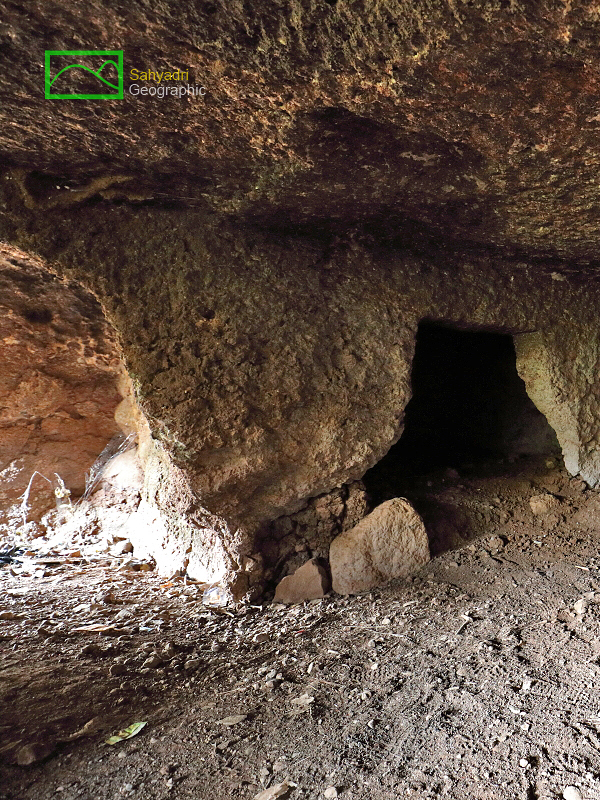
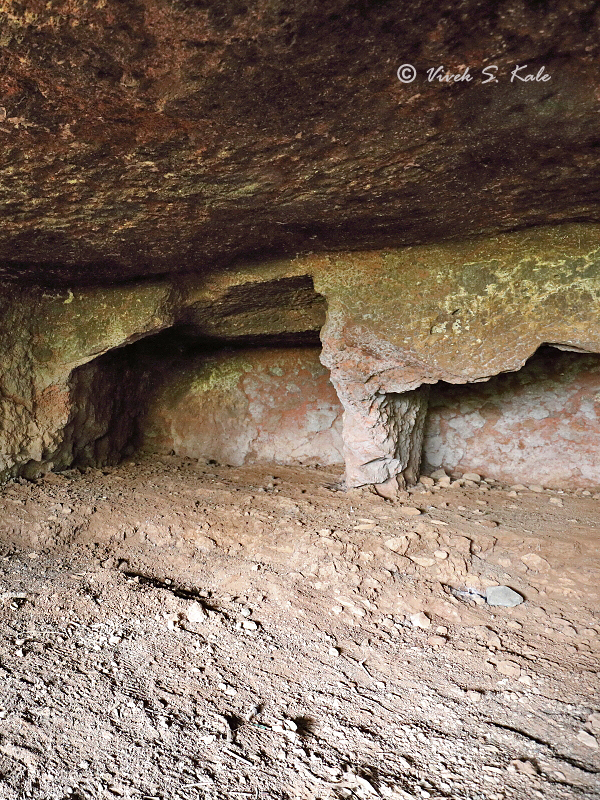
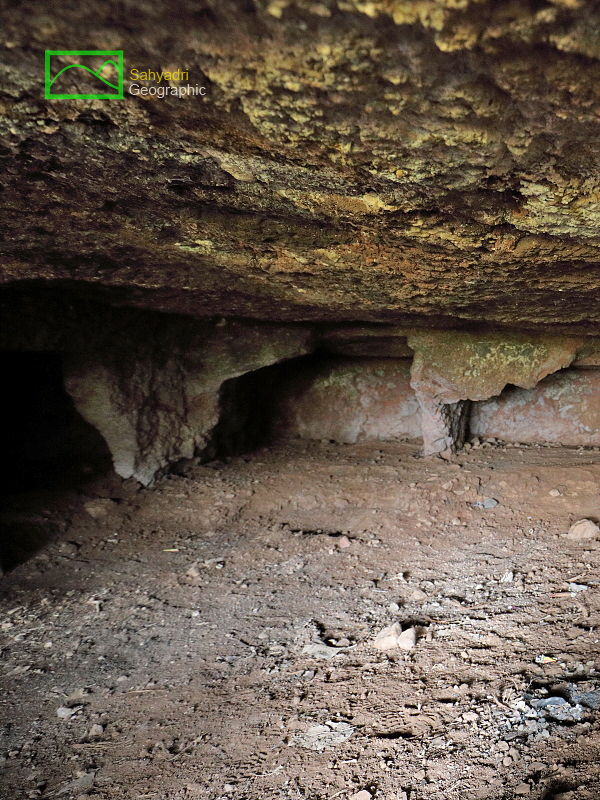
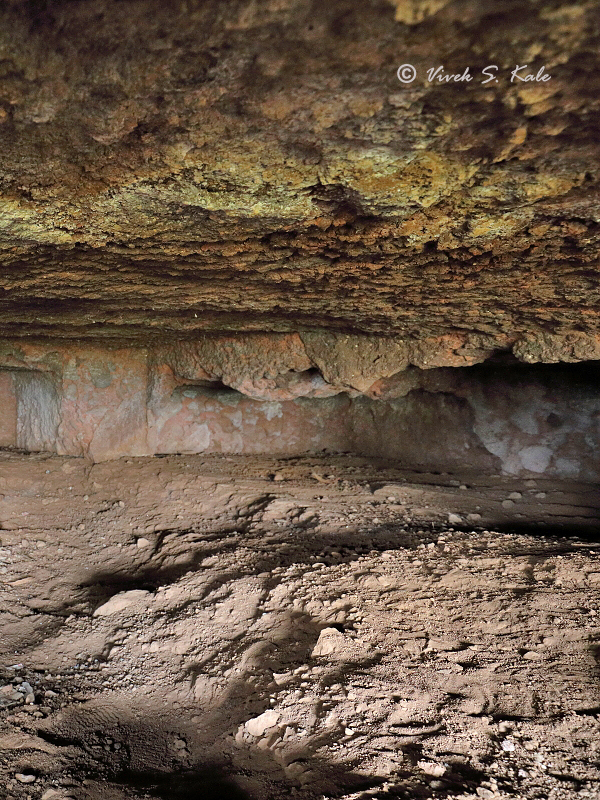
कोयनानगर-कराड रस्त्यावर पेठ म्हावशी एक मोठे गाव आहे. सकाळ लवकर आम्ही पेठ म्हावशी ला पोहोचलो. या गावाजवळच्या डोंगरात म्हावशी लेणी आहेत. म्हावशी पेठ हे एक लांब लचक पेठे सारखे पट्टी च्या आकाराचे गाव आहे. चिंचोळ्या रस्त्यांवरुन आमची गाडी पेठेत आली. अरुंद रस्ता आणि चिंचोळे गाव. पुढे रस्ता खणुन ठेवला होता. त्यामुळे गाडी बाजुला मोकळ्य़ा जागेत लावुन आम्ही पायी निघालो. गाव ओलांडले, सहाजिकच चौकश्या झाल्या. गावातल्या रस्ताने आम्ही चौकशी करत गावाच्या मागच्या बाजुला गेलो. डोंगरावर गुहा लेणे कुठे आहे असे उगाच माहित असताना विचारले. थोड़्या गाव गप्पा नंतर आम्ही गावाच्या मागच्या बाजुला पोहोचलो. इथे लांब डोंगर रांग होती. लेणे मात्र दिसत नव्हते. मोकळ्या शेतातुन तिरपे जात आम्ही एका विहिरिवर पोहोचलो. विहिरीत तरंगणाऱ्या बेडकांचा हेवा करत आम्ही माळावरच्या काटेसावराखाली पोहोचलो. सकाळच्या उन्हात बहरलेला काटे सावर स्वप्नवत वाटात होता. बाजुच्या एका डोंगराची धर मध्येच उतरली होती. त्यावर चढलो. याच्या समोर आलेल्या एका आडव्या धारेमुळे लेणी गावतुन दिसत नाही. मधल्या आडव्या धरेवर आल्यावर मात्र लेणी दिसु लागली. समोरच्या डोंगरावरच्या म्हावशी लेण्याने दुरदर्शन दिले. येथुन पुढे कच्च्या रस्त्याने डोंगरपायथा गाठला. मी इथे पुर्वी आलेलो होतो. लेणी डोंगराच्या आतल्या बाजुला आहे. अर्धा तास आडवे चालल्यावर आम्ही डोंगराच्या पायथ्याला पोहोचलो. छातीवरची चढण चढताना अधुन मधुन गवताच्या झिंज्या पकडाव्या लागतात. येथे एक लेणे आहे. आत मध्ये एक दरवाजा असलेले मोठे दालन आहे. दालनाचा आकार अंदाजे ४.५ मीटर x ३.५मीटर आहे. दुर्दैवाने आतल्या मागच्या भिंतीत कातळात मोठी नैसर्गिक भेग आहे. यातुन पाणी आत येत असणार. यामुळे या लेण्याचे काम अर्धवट सोडले आहे. लेण्याच्या दर्शनी भागात एक पडवी आहे. पडवीच्या दर्शनी भागात दोन पुर्ण आणि दोन अर्ध खांब आहेत. खांब चौकोनी आहेत. अर्ध खांब आणि पुर्ण खांब यांच्या मध्ये बसण्यासाठी बाक आहेत. कोपऱ्यात पडवीबाहेर सुद्धा दोन बाक आहेत.एका बाजुचा पुर्ण खांब तुटला आहे. लेण्याची रचना गांधारपाले लेणीसमुहातील काही लेण्यांसारखी आहे. म्हावशी ची लेणी गांधार पाले लेण्याच्या काळातील असावीत. अशा प्रकारच्या लेण्याला "मटप" किंवा "मंडप" असे म्हणतात. अशा मंडपात बौद्ध भिक्षुक एकत्र येत असत. अशा ठिकाणांचा वापर सामुदायिक कार्यक्रम आणि विधी करण्यासाठीहोत असावा. असे मंडप महाड च्या गांधरपाले लेण्यात आहेत. त्याचा काळ इसविसनानंतर तिसऱ्या किंवा चौथ्या शतकातला असावा. या लेण्यात कोणतीही मुर्तीकला नाही. एकुणच येथील वास्तुरचनेवरुन हे तिसऱ्या किंवा चौथ्या शतकातील हिनायन लेणे आहे हे स्पष्ट आहे. लेण्याच्या पुर्व बाजुस थोडे उंचावर एक पाण्याचे टाके आहे. टाके अर्धवट खोदेलेले आहे.

Mhavashi Peth is a village on the Karad-Patan highway. The Mhavashi Peth village is long Peth kind of village which is established in a long narrow strip format. We reached the village early in the morning. The narrow road passing through the village was dug up. So we decided to park the vehicle on the way in a open area. Though I was aware of the location of the cave, we still enquired about the whereabouts of the cave. This helps in having a dialogue with locals. After the enquiry we proceeded to the back side of the village on foot. One can not see the caves from here. There is a hill in between. We crossed some barren fields to reach a well in which we were forced to envy the bull frogs who were enjoying their floating on the water. Afer a while we reached a Kateswar tree which was in full bloom in its red flowers. The caves are located at about 60-70 meter altitude above the surrounding plateaue. After scrambling through the village long road, we could reach very close to the base of the hill range on a rough road. From here it took hardly 30 minutes to reach the base of the hill. The cave can not be seen from distance due to a intermediate hillock. Once you reach top of the hillock, the cave can be seen from distance. One can approcah cave from the right side. This is a single cave. The cave is incomplete due to a large defect in the rock which can be seen inside the cave. The hall is large and is about 4.5 meter by 3.5 meter in size. There is a verandah outside the cave. The cave verandah is typical verandah one can see in the caves at Gandhar Pale caves. There are 2 full and 2 semi pillars in the front architecture of verandah. One of the full pillar is broken. There is a place to seat between pillars and semipillars on either side. The pillars are having rectangular cross section. This cave must be from the same era or later era as that of Gandhar Pale caves. (3rd or 4th century AD). The cave hall is typically called as”matapa” or Mandapa which was mainlyusedfor rituals and activities involving congragations. Though not usable in rainy season due to defect inside, itmay have been used in other dry seasons. As this cave does not have any sculptures, it is a late Hinayana Cave. There is also a water cistern on the east side of the cave. The cistern is incompletely carved.


5. Mhavashi Caves from distance, Satara district, Maharashtra, India


6. Mhavashi Cave as seen from the base of the hill, Satara district, Maharashtra, India


7. Mhavashi Cave as seen from base of the hill, Mhavashi Caves, Satara district, Maharashtra, India


8. Mhavashi cave front view, Satara district, Maharashtra, India


9. Mhavashi Cave hall, Satara district, Maharashtra, India


10. Defect crack in Rock, Mhavashi Caves, Satara district, Maharashtra, India


11. Defect crack in Rock, Mhavashi Cave, Satara district, Maharashtra, India


12. Mhavashi Cave, Satara district, Maharashtra, India


13. Mhavashi Cave, Satara district, Maharashtra, India


14. Mhavashi Cave, Satara district, Maharashtra, India


15. Sadaf at Mhavashi Cave, Satara district, Maharashtra, India


16. inside out, Mhavashi Caves, Satara district, Maharashtra, India


17. Post hole, Mhavashi Cave, Satara district, Maharashtra, India


18. Post hole, Mhavashi Cave, Satara district, Maharashtra, India


19. Pug marks of cat family animal, Mhavashi Cave, Satara district, Maharashtra, India


20. Small shivalingam mark, Mhavashi Cave, Satara district, Maharashtra, India


21. Pug mark of car family animal, Mhavashi Caves, Satara district, Maharashtra, India


22. Post holes at Door, Mhavashi Cave, Satara district, Maharashtra, India


23.Post notch at door, Mhavashi Cave, Satara district, Maharashtra, India


24. Sadaf making notes of pugmarks for identification, Mhavashi Cave, Satara district, Maharashtra, India


25. Main doorway, Mhavashi Cave, Satara district, Maharashtra, India


26. Verandah right (east) side wall, Mhavashi Caves, Satara district, Maharashtra, India


27. Verandah left side (west) wall with niche, Mhavashi Caves, Satara district, Maharashtra, India


28. Water cistern, Mhavashi Cave, Satara district, Maharashtra, India


29. Water cistern, Mhavashi Cave, Satara district, Maharashtra, India


30. View from Mhavashi Cave, Satara district, Maharashtra, India


31. Pilgrims under bloomed Savar tree , Mhavashi Cave, Satara district, Maharashtra, India


32. Pilgrims looking at the hills around, Mhavashi Cave, Satara district, Maharashtra, India


33. Pilgrims, Mhavashi Cave, Satara district, Maharashtra, India


34. Pilgrims at Incomple cave, Mhavashi Caves, Satara district, Maharashtra, India


References :
1. Cave temples of India, London, 1880, Fergusson James and Burgess James.
2. Gazetters of Bombay Presidency, Satara District, Volume XVIII, 1885.
3. Buddhist architecture of western India, 1981, S. Nagraju.
4. Caitya Halls: Evidence of a Rock-Cut Architectural Tradition in the Vicinity of Karāḍ, Southern Mahārāṣṭra, David Efurd, 2006
5. Late Hinayan Caves of western India - M.K. Dhavalikar, 1984
Me Sahyadri
January 2019
Volume 6, number 1, # 78
Mysteries of Koyna Valley – Mhavashi Caves
Please use minimum 1280 pixel horizontal screen resolution for viewing. Please be patient while all the images in webpage are loaded. Please do not use the images for any commercial use without permission. Text in Marathi and English is not exact translation. Please give sufficient time to allow the photographs to load. Special thanks to all those who helped me during the compilation and for the help and guidance during the activity.


देशाची आर्थिक प्रगती व्हावी असे सर्व नागरिकांना वाटणे सहाजिक आहे. अर्थकारणामुळे मिळणारा रोजगार, समृद्धी यासाठी सर्वांनाच आर्थिक प्रगती हवी हवीशी वाटते. आर्थिक प्रगती होताना, त्याचा दिर्घकाळात समाजावर, निसर्गावर, वातावरणावर दुष्परिणाम होणार नाही याची काळजी घेणे महत्वाचे आहे. मनुष्याच्या भावी पिढ्यांना पाणी, शुद्ध हवा, योग्य वातावरण मिळत रहावे अशी भावना मनात रुजणे महत्वाचे आहे. वाढत्या आर्थिक प्रगतीमुळे नैसर्गिक संपदेवर ताण येतो. प्रगतीसाठी प्रदुषण होते. जंगले, माळराने, व इतर अधिवास नष्ट होतात. वसुंधरेवर रहाणाऱ्या इतर जीवांचा मात्र मनुष्य फारसा विचार करत नाही. आर्थिक प्रगती करताना, मनुष्य निसर्गाची हानी करत आहे. मुळताच माणसाला निसर्गाचे महत्व समजणे हे सध्याच्या आपल्या प्रगत जीवनशैली मुळे अवघड झाले आहे. आर्थिक प्रगती, समाजाची प्रगती व निसर्ग संपदेची निगा, यांचा समतोल राखणे काळाची गरज आहे.
सह्याद्री (पश्चिम घाट) हा एक नैसर्गिक संपदेचा, वैविध्यतेचा, भौगोलिक व ऐतिहासिक ठेवा आहे. वाढत्या मानवी अतिक्रमणाचा, सह्याद्रीच्या विविध घटकांवर होणारा दुष्परिणाम भविष्यात आपल्यालाच धोका निर्माण करेल, यात शंका नाही. शुद्ध पाणी, हवा व उर्जा, भावी पिढीला मिळण्यासाठी, नंद्यांचे उगम असलेला सह्याद्री व त्याभागातील जंगले टिकवणे महत्वाचे आहे. सह्याद्रीच्या महत्वाच्या घटकांचे महत्व छायाचित्रांद्वारे प्रकट करण्याचा मी येथे प्रयत्न केला आहे. येथील पक्षी, प्राणी, वनस्पती, अधिवास, किल्ले व लेणी अशा विविध विषयांबद्दल आपण समजुन घेऊ.

As the economic development has taken the center stage, the balance between the environmental sustenance and socio economic development will be under the scanner. As most experts with balanced views have proclaimed, Indian wildlife and ecological system sustenance will be under threat, unless precautions are taken with the help of appropriate research and long term national interests. As we encounter the economic development, many habitats which indirectly or directly help sustainable development will be damaged. The awareness to gauge the success by sustainable development and not by year to year growth is a distant dream any environmentalist will assume in current scenario.
Western ghats, or Sahyadri as we all call it as, is a treasure trove of spectacular landscapes, biodiversity, flora, fauna, some amazing geological wonders and man made monuments. With the increasing pressure from human encroachment, all these elements are under stress and in turn are under depletion. Western ghats should be left untouched by human beings, to protect their future generations from getting short of resources, such as water, energy and clean air. The important elements of western ghats, which need protection are highlighted in the new version of Photo journal, Me Sahyadri Magazine. 


No comments:

Post a Comment

मनसर

 प्रकार : गिरीदुर्ग जिल्हा : नागपुर उंची : १२०० फुट ...