मेट्रो सिटी होउ पहाणारे पुणे शहर कसे आहे हे सर्वांनाच माहिती आहे. रस्यावरील वाहने, माणसांची गर्दी, हॉर्नचा कर्कश आवाज, ध्वनीप्रदूषण ह्या येथील नेहमीच्या समस्या. ह्या सर्व गदारोळापासून जरा निवांत क्षण घालवायला पुण्याच्या मध्यवर्ती ठिकाणी एक लेणी आहे हे एखाद्या नवख्या व्यक्तीला खरेहि वाटणार नाही. पाताळेश्वर लेणी-पुण्यात भर गर्दीतल्या जंगली महाराज रोडवर असलेला हा कातळकोरीव ठेवा फारश्या कुणाच्या खिजगणीत नसलेला. हा वसलेला आहे जंगली महाराज मंदिराच्या अगदी शेजारीच.जंगली महाराज रस्ता जेथून सुरु होतो तेथे पाषाणकर नावाचे दुचाकीचे शोरूम आहे. त्याच्या अगदी समोरच, जंगली महाराज मंदिरा शेजारीच पाताळेश्वर लेणी आहेत. पुण्याच्या आसपास बाणेर, पाषाण येथे जो काही थोडासा डोंगराळ भूभाग आहे इथेही लेणी आहेत, पण जंगली महाराज रोड परिसरात कोठेही डोंगराळ प्रदेश नाही म्हणून हि लेणी जमिनीखाली खोदली आहेत. एकसंध कातळातून हा लेणीमंदिराचा देखावा आपल्या पूर्वाजांनी साकारलेला आहे. शेजारीच दत्तसंप्रदायातील सत्पुरुष जंगली महाराजांची समाधी आहे. सध्या ही लेणी अर्कालॉजिकल सर्व्हे ऑफ इंडियाच्या देखरेखीखाली आहेत.

आपल्याकडे काहीही भव्यदिव्य अशा निर्मितीला पांडवकालीन म्हणण्याची प्रथाच पडली आहे. सामान्य माणूस करूच श़कणार नाही म्हणून हे पांडवांनी निर्माण केले असे म्हटले जाते.भगवान शंकरांच्या १,००८ नावांपैकी एक असलेले पाताळेश्वर हे नाव या मंदिराला देण्यात आले आहे. पौराणिक कथांनुसार हे मंदिर पांडवांनी वनवासात असताना आश्रयासाठी बांधल्याचे सांगितले जाते.पाताळेश्वर या लेण्यांची निर्मिती कुठल्या राजवंशाच्या आश्रयाखाली झाली याची ठोस माहिती मिळू शकली नसली तरी लेण्यांची स्थापत्यशैली राष्ट्रकूट स्थापथ्यशैलीसोबत मेळ खाते याशिवाय उत्तर कोकणचा शिलाहार राजा अपराजित याने आपल्या राज्याचा पुण्यापर्यंत विस्तार केला होता त्यावेळी त्याने हे लेणे बांधले असावे असाही एक समज आहे कारण शिलाहार हे राष्ट्रकूट घराण्याचे एकनिष्ठ मांडलिक होते. पाताळेश्वर लेण्यांची रचना अंबेजोगाई येथील लेण्यांप्रमाणे असल्याचेही स्पष्ट झाले आहे. प्रख्यात लेणीअभ्यासक ‘जेम्स फर्गुसन’ याने या लेण्यांबद्दल काढलेल्या अभ्यासपूर्ण टिपणांमध्ये ही लेणी आठव्या शतकात राष्ट्रकूट राजाच्या कालावधी मध्ये तयार झाली असावी असा निष्कर्ष नमूद केला आहे. सहाव्या शतकापासून दहाव्या शतकादरम्यान भारतात राष्ट्रकूट राजांची राजवट होती. वेरूळ, घारापुरीची लेणी ही याच्या समकालीनच.
मात्र पुण्यातील सर्वात पुरातन शिवलिंग हे नक्कीच असावे. पाताळेश्वर लेणी ही त्याकाळच्या वास्तुविशारदमहाविद्यालयाची लॅब किंवा ट्रेंनिंग सेंटर वाटतात,कारण एकाच ठिकाणी बरेच प्रकार वेगवेगळ्या दर्जाचे काम करुन ठेवलेले आहे. अगदी पार भिंतितल्या कोनाड्यापासुन ते ह्या खालच्या पायांपर्यंत.ही लेणी ब्राह्मणीशैलीची आहेत. बौद्ध - ब्राह्मणी शैलीतील फरक म्हणजे त्यांची असलेली रचना. बौद्धलेण्यांत विहार व चैत्य दिसतात तर ब्राह्मणी शैलीतील लेण्यांत सभामंडप व गभर्गृह असते. पाताळेश्वर लेण्यांमध्ये विहार दिसत नाहीत. विहार हे भिक्खू संघाच्या राहण्याची जागा असते. मात्र ही लेणी प्रार्थनामंदिर आहे. येथे इतर शंकराच्या मंदिरांप्रमाणे कोरीवकाम दिसून येत नाही.इतर मंदिरांप्रमाणे देवाळाला कळस नाही. मंदिराचा जीर्णोद्धार पहिल्या बाजीरावांनी केल्याच्या नोंदी आहेत.विशेष म्हणजे मंदिराचे बांधकाम अपूर्ण राहिल्याचे दिसते. असे म्हटले जाते की सततच्या राजकीय उलथापालथींमुळे राजाश्रय कमी झाला व मंदिराचे बांधकाम अर्धवट सोडून दिले गेले. काहीजण म्हणतात की, मंदिरातील गाभार्याच्या मागे असलेल्या खडकातील दोषामुळे त्याची रचना अस्थिर होत असेल आणि त्यामुळेच पुढील खोदकाम करणे धोकादायक बनले असेल.
पुणे शहरला प्राचीन इतिहास आहे. पुणे शहराच्या इतिहासात बघायला गेलं तर इथे अनेक राजवटी नांदल्या.पूर्वी येथून कोकणातील कल्याण, चौल, सोपारा या बंदरांशी व्यापार चालत असे. हा व्यापार नाणेघाटातून होत असे. या मार्गावर अनेक स्तूप, लेणी व मंदिरे निर्माण झाली. पुणे जिल्ह्यात जुन्नर, कार्ले, भाजे या ठिकाणी लेणी खोदली गेली. राष्ट्रकुट राजांच्या कारकिर्दीत पातळेश्वर लेणी खोदण्यात आले.समुद्र मार्गाने आलेल्या वस्तूंचे महाराष्ट्रभर दळणवळण करण्यासाठी वापरल्या जाणाऱ्या प्राचीन कल्याण-नाणेघाट-जुन्नर-मंचर-चाकण मार्गात पुणे जुन नाव पुन्नक-पुणवली किंवा पुण्यविषय/पुनकविषय राष्ट्रकूट राजा कृष्ण पहिला याच्या कारकीर्दीत दिलेल्या ताम्रपटात ही नावे आढळतात हे गाव येत असे. राष्ट्रकूट राजे शैव, वैष्णव आणि शाक्त धर्माचे अनुयायी होते. त्यामुळेच त्यांचे बहुतेक सर्व शिलालेख भगवान विष्णू किंवा भगवान शिव यांच्या आराधनेने सुरू झाल्याचे दिसते. महाराष्ट्रातील वेरूळ आणि एलिफंटा लेणी बांधण्यासह भारताच्या दक्षिणेकडील अनेक बांधकामांमध्ये या राजांनी महत्त्वपूर्ण योगदान दिले. या काळात पुण्यविषय गावाच्या (पुण्याचे पुरातन नाव) हद्दीत पाताळेश्वर मंदिराचे निर्माण केले गेले. आता आधुनिक वास्तूंनी वेढलेल्या आणि औद्योगिक इमारतींच्या परिसरात शिवाजीनगर येथील जंगली महाराज रोडवर हे मंदिर आहे.

पाताळेश्वर लेण्याचा तळविन्यास
पाताळेश्वर मंदिराला पांचाळेश्वर किंवा भांबुर्डे मंदिर म्हणूनही ओळखले जाते. भांबुर्डा गावठाणाजवळ सध्याचे शिवाजीनगर. हे मंदिर जमिनीपासून साधारणपणे १-२ मीटर खाली असल्याने कदाचित याला पाताळेश्वर असे नाव दिले असावे! म्हणावयास पाताळेश्वर हे मंदिरही आहे व लेणीसमूह सुद्धा. पूर्वी या संपूर्ण परिसरास भांबुर्डा या नावाने ओळखत व हा परिसर अतिशय दाट अरण्याने वेढला होता.पूर्वी या भागाला भांबवडे म्हणले जायचे, त्याचे नामांतर इंग्रजांनी भांबुर्डे केले आणि पुढे आचार्य अत्रे यांच्या प्रयत्नांनी शिवाजीनगर असे नामकरण झाले. त्याकाळी पुणे शहर व भांबुर्डा या दोहोंच्या मधून मुठा नदी जात असल्याने भांबुर्डा हे एक वेगळे गाव होते मात्र आधुनिक युगात हा परिसरात पुणे शहराचाच एक भाग झाला. पूर्वी भांबुर्डे हे गाव लाकडीपूल, लॉईडपूल व दगडी पूल अशा तीन पुलांनी पुण्यास जोडले जात होते. पूर्वी येथे दर बुधवारी व रविवारी गुरांचा मोठा बाजार भरत असे याशिवाय अतिशय सुंदर निसर्ग व वातावरण असल्याने अनेक ब्रिटिश लोकांचे बंगले याच परिसरात होते.

पाताळेश्वर लेण्यात प्रवेश


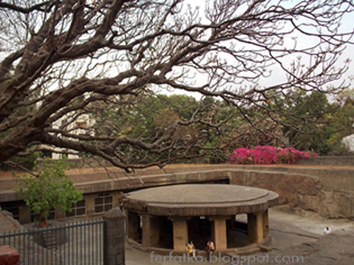
लेणी बघण्यासाठी आवारात प्रवेश केला कि सुरवातीला एक छोटीशी बाग आहे.हि छोटीशी बाग पुरातत्व खात्याने उभारली आहे. परंतु दुर्लक्षपणामुळे बागेची दुरवस्था झाली आहे. या लेण्यांमध्ये जाण्यासाठी रस्ता दगड फोडून आणि त्याला आकार देऊन बनवलेला आहे.प्रवेशद्वारापाशीच व्यालप्रतिमा आणि कळसाचे काही अवशेष ठेवलेले आहेत.बागेतून सात -आठ पायर्या उतरून आपला प्रवेश होतो ते लेण्यांच्या प्रांगणात. पाताळश्वर लेण्याला मोठे परांगण आहे. सपाट खडकाळ जमीन खोदून या लेण्या तयार करण्यात आल्यामुळे येथे जाणाऱ्याला काही पायऱ्या खाली उतरून या लेण्यांत प्रवेश करावा लागतो. लेण्यांचा परिसर विस्तीर्ण व गोलाकार आहे. पाताळेश्वरच्या शैलगृहाचे संपूर्ण खोदकाम ३०.५० मीटर रुंद व ४८.८० मीटर खोल आहे.

अखंड कातळात कोरलेली लेणी व नंदीमंडप

नंदीमंडप
नंदी

नंदीचे जवळून दर्शन
नंदीमंडप
बागेतून थोड्याफार पायर्या उतरून आपला प्रवेश होतो ते थेट लेण्यांच्या प्रांगणात. या प्रागंणाचा आकार ३०.५० मीटर ३०.५० मीटर आहे. आजूबाजूचा सर्व एकसंध कातळ छिनून हा लेणीमंदीराचा विशाल देखावा इथे निर्माण केला गेला आहे. पायर्या उतरताच डावीकडे एक नंदीची जीर्णावस्थेतील एक प्रतिमा ठेवलेली आहे. त्यानंतर लागतो तो गोलाकार खोदलेला नंदीमंडप. १२ स्तंभांनी फेर धरलेल्या या नंदीमंडपात आतमध्ये अजून चार स्तंभ आहेत.या नंदीमंडपाचे छत प्रचंड मोठे, जाड व वर्तुळाकार कातळाचे आहे. हा कातळ स्तंभांनी पेलला आहे. त्याच्याआत आणखी एक वर्तुळ आहे, व त्यामध्ये विराजमान आहे महादेवाचे वाहन नंदी. गळ्यातल्या माळा. माळांमध्ये गुंफलेल्या घंटा हे सर्वच अगदी खुबीने कोरलेले आहे.हा नंदी अतिशय भव्य आकाराचा आहे. अर्थात हा नंदी मुळचा नसून नंतरच्या काळात ठेवण्यात आला असावा. या नंदीचा सभा मंडप ४ मीटर उंचीचा आहे. आणि १२ जाड्जूड खांबावर हा गोलाकार मंडप उभारलेला आहे.

मुख्य लेणीमंड्प

सभामंडपातील स्तंभांची अतिशय सुरेख रचना

सभामंडपातील स्तंभांची अतिशय सुरेख रचना व भिंतीतील अर्धवट देखावा

राक्षसवधासारखे कसलेसे कोरीव काम

नंदीमंडप पाहून पुढे जाताच खडकात एक ओसरी खोदलेली दिसते. मध्ये दोन स्तंभ, आतमध्ये खोली आणि शेजारीच पाण्याचे टाके अशी याची रचना आहे. त्याच्या पुढे मुख्य प्रवेशद्वार आहे. यामध्ये एकूण २४ खांब आहेत. मंदिरामध्ये इतर मंदिरांप्रमाणे कोरीव काम आढळून येत नाही. या मंदिराच्या दाराशी एक शिल्प कोरलेले दिसते. हे शिल्प अर्थात खूप निरखून पाहिल्यास दिसून येते. कदाचित त्यावेळी असलेल्या परकिय आक्रमणांच्या भीतीमुळे कारागिरांनी येथील शिल्पाचे काम अर्धवट सोडून दिले असावे. काही खांबावर खोलगट कोनाड्यात पूर्वी मूर्ती असाव्यात. सभामंडपाचे छत व जमीन खडकात खोदलेली आहे. सभामंडपाच्या डाव्या व उजव्या भिंतीमध्ये पानाफुलांची नक्षी असलेली पट्टी कोरलेली आहे.

देवनागरी लिपीतला शिलालेख
मुख्य लेणीच्या पायऱ्या चढत असताना उजव्या बाजूला वरती चढत असतानाच एक शिलालेख अस्पष्ट असा नजरेस येतो. हा लेख देवनागरी लिपी मध्ये लिहिलेला असावा परंतु हा अस्पष्ट असल्यामुळे नीट वाचता येत नाही. पहिल्या ओळी तले फक्त श्री गणेशाय नमः इत्यादी अक्षरे वाचता येतात. श्री मारूती प्रसन्न, यादव असे काही शब्द ओळखू येतात त्यावरून हा शिलालेख यादवकालीन असावा हे स्पष्टच होते. पण बाकीचे अक्षरे धूसर झालेली आहेत.
मंडपाच्या मागे एकाला एक जोडलेली अशी तीन गर्भगृहे येतात, यातील मध्यभागी असणाऱ्या गर्भगृहात शिवलिंग स्थापित असून मंडपाच्या बाजूस असणाऱ्या भिंतींवर शैव व वैष्णव संप्रदायातील दृश्ये कोरलेली आहेत. नंतर लेणीच्या मुख्य प्रवेश द्वाराने आत प्रवेश केला कि मधल्या गाभार्यात शिवलिंग व डावीकडे गणेशाची व उजवीकडे पार्वतीची मूर्ती आहे. तीनही गाभर्याशी तीन गदाधारी द्वारपाल उभे दिसून येतात. पण त्यांचा तपशील मिळत नाही.


पाताळेश्वर महादेव


पाताळेश्वर महादेव
गणपती व पार्वतीच्या मूर्ती
अर्धवट खोदलेला दगड
गर्भगृहात पितळी पत्र्याने मढवलेले शिवलिंग, बाण व नागाची प्रतिमा आहे. मधल्या गाभार्यात असलेल्या शिवलिंगावर रोज दूध, फुले आणि तूपाचा अभिषेक केला जातो. १० फुट १२ फूट आकाराचे हे गर्भगृह आहे. मागील भिंतीजवळ गणेशाची लहान, सुबक संगमरवराची मूर्ती आहे. शेजारी शेंदूराचा लेप असलेला मुखवटा आहे. मंदिराला लागूनच दोन लहान मंदिरे सुद्धा आहेत. डाव्या बाजुस एका दगडी चौथर्यावर राम, लक्ष्मण व सीतेच्या संगमरवरी मूर्ती आहेत. राम-लक्ष्मण-सीतेची मूर्ती व समोर मारुतीची या मुर्ती बहुतेक नंतर बसविल्या असाव्यात.

भाविकांसाठी एक प्रदक्षिणा मार्गही आहे. त्यामुळे गुहेच्या आतील मंदिराचा अपूर्ण भागही पाहता देतो. प्रदक्षिणा मार्ग प्रशस्त आहे. प्रदक्षिणामार्गात पाठीमागच्या उजव्या कोपर्यात अर्धवट खोदलेला खडक दिसतो.

डावीकडच्या कोपर्यात असलेली ओसरी.
हे लेणे का अर्धवट राहिले हे काही कळत नाही कदाचित धनाची कमतरता हेच कारण असावे.
मुख्य मंदिर परिसर दिवसाही उजेड नसल्यामुळे अंधर असतो. ही गैरसोय दूर व्हावी यासाठी आता येथे ट्यूबलाईट लावण्यात आली आहे.
मुख्य मंदिर परिसर दिवसाही उजेड नसल्यामुळे अंधर असतो. ही गैरसोय दूर व्हावी यासाठी आता येथे ट्यूबलाईट लावण्यात आली आहे.


मंदिरात पृष्ठभागावर बरीच लहान-सहान नक्षी आपल्याला पाहायला मिळतात. पावलांचे आकार, हाताचे आकार, मानव आकृती आहेत. त्याच बरोबर भिंतींवर अनेक आकृत्या देखील आहेत. दुर्दैवाने, मंदिरातील अनेक शिल्प अपूर्ण किंवा भग्नावस्थेत आहेत. त्यामुळे शिल्प नक्की आहे तरी काय हे ओळखता येत नाही.

इथेच जमीनीवर आपल्याला फाशांचा खेळाचा पट कोरलेला दिसतो. अर्थात बर्याच ठिकाणच्या लेण्यांमध्ये असा पट दिसतो. त्याचा काळ प्राचीन की उत्तरमध्ययुगीन ते सांगता येणार नाही. पण लोकांचा फावल्या वेळातील हा खेळ असावा.एकुण काय कामाच्या ठिकाणी मौजमजा करणे हा माणसाचा अस्तित्वसिद्ध हक्क आहे हे सिद्ध झालेले आहे.
पूर्वी हे मंदिर गावाच्या बाहेर होते पण आता शहर खूप मोठे विस्तारले आहे. त्यामुळे ते गावाच्या मध्यभागी आलेले आहे.पुण्यातील सर्वात प्राचीन शिवलिंग असल्यामुळे महाशिवरात्र, त्रिपुरी पौणिर्मा व दिवाळी पाडव्याला भाविक या लेण्यांमध्ये दिव्यांची रोषणाई करतात. या दिवशी प्रचंड गर्दी असते.मंदिरा विषयी काही धार्मिक लोक आख्यायिका सांगतात, मंदिराची भव्यता मनाला भारावून टाकणारी आहे. भर उन्हात देखील मंदिरातील गारवा मन प्रसन्न करतो.तसेच इथे मंदीराच्या आवरात देवचाफ्याची झाडे असल्याने त्यांच्या सुवासामुळे वातावरणात एक प्रकारची पवित्रता येते. पर्यटकांनी व अर्थात सर्वांनीच एकदा अवश्य भेट द्यावी असे हे ठिकाण आहे.या प्राचीन लेणेमंदिराचे गिनीज बुक ऑफ वर्ल्ड रेकॉर्ड्स मध्येही स्थान आहे. मंदिराच्या संग्रहालयात ठेवलेल्या तांदळावर ५००० अक्षरे लिहिलेली आहेत.
पूर्वी हे मंदिर गावाच्या बाहेर होते पण आता शहर खूप मोठे विस्तारले आहे. त्यामुळे ते गावाच्या मध्यभागी आलेले आहे.पुण्यातील सर्वात प्राचीन शिवलिंग असल्यामुळे महाशिवरात्र, त्रिपुरी पौणिर्मा व दिवाळी पाडव्याला भाविक या लेण्यांमध्ये दिव्यांची रोषणाई करतात. या दिवशी प्रचंड गर्दी असते.मंदिरा विषयी काही धार्मिक लोक आख्यायिका सांगतात, मंदिराची भव्यता मनाला भारावून टाकणारी आहे. भर उन्हात देखील मंदिरातील गारवा मन प्रसन्न करतो.तसेच इथे मंदीराच्या आवरात देवचाफ्याची झाडे असल्याने त्यांच्या सुवासामुळे वातावरणात एक प्रकारची पवित्रता येते. पर्यटकांनी व अर्थात सर्वांनीच एकदा अवश्य भेट द्यावी असे हे ठिकाण आहे.या प्राचीन लेणेमंदिराचे गिनीज बुक ऑफ वर्ल्ड रेकॉर्ड्स मध्येही स्थान आहे. मंदिराच्या संग्रहालयात ठेवलेल्या तांदळावर ५००० अक्षरे लिहिलेली आहेत.
मंदिराची वेळ : सकाळी ८.३० ते सांय. ५.३० पर्यंत.
प्रवेश : विनामूल्य
कसे जायचे : शिवाजीनगर एस.टी स्टँडपासून बस अथवा चालत निघाल्यास १० मिनिटात पातळेश्वरला पोहचता येते.
अजून काय पहाल : चर्तुशृंगी, शनवारवाडा, कसबा गणपती, दगडूशेठ, तुळशीबाग, जंगली महाराज मंदीर, त्रिशुंड गणपती अजून बरेच काही.
प्रवेश : विनामूल्य
कसे जायचे : शिवाजीनगर एस.टी स्टँडपासून बस अथवा चालत निघाल्यास १० मिनिटात पातळेश्वरला पोहचता येते.
अजून काय पहाल : चर्तुशृंगी, शनवारवाडा, कसबा गणपती, दगडूशेठ, तुळशीबाग, जंगली महाराज मंदीर, त्रिशुंड गणपती अजून बरेच काही.
संदर्भ :-
१) पुणे जिल्हा गॅझेटीयर
२) स्थापत्य - महाराष्ट्र शासन
३) http://ferfatka.blogspot.com , https://map.sahapedia.org/, https://www.marathibuzz.com, https://www.discovermh.com/ या वेबसाईट
४ ) श्री. सागर बोरकर यांचे लिखाण
१) पुणे जिल्हा गॅझेटीयर
२) स्थापत्य - महाराष्ट्र शासन
३) http://ferfatka.blogspot.com , https://map.sahapedia.org/, https://www.marathibuzz.com, https://www.discovermh.com/ या वेबसाईट
४ ) श्री. सागर बोरकर यांचे लिखाण
Constructed
in the 8th century, the glorious Paraleshwar cave temple presents an
iconic narration to the rich history of India. The temple is found in
the epicenter of the city of Pune in Maharashtra. Carved out of a single
rock, it is dedicated to the God of the underworld - Lord Pataleshwar.
Apart from a rich historical background, the temple holds some very detailed inscriptions, museums and architectural enigmas that make it an instant attraction among tourists from across the globe. Additionally, the temple is nestled with various tropics and a river around it which makes Pataleshwar a fascinating point for adventurers to scour.
From a grain of rice that contains close to 5,000 characters in it to the mammoth pillars holding the temple, tourists who visit here are awestruck by the temple’s extravagant beauty and design.
Not just tourists but devotees of Lord Shiva are also seen visiting this place quite often, making it not just a place to explore but worship too. Additionally, Lord Ram, Laxman, Sita and Ganesh temples also reside inside the cave.
The temple also shares a number of ancient stories and legends that are famous among local residents of the place. All in all, a clean subtle environment with much to explore, the Pataleshwar cave temple is perfect for a family outing. Travelers or devotees who love a calm and quiet destination will also find themselves at home here in the cave temple of Pataleshwar.
History of Pataleshwar cave temple:
The
construction of the Pataleshwar cave dates back to the 8th century with
a number of stones in the cave dating between 700 and 800 AD. The
temple was trimmed out of a single rock and created as a building for
monumental devotion towards Lord Patleshwar, also known as the God of
the underworld.
There are numerous legends attached to the temple, some saying that the brave Pandavas who when once needed shelter resurrected the cave temple in just a couple of hours.
There are also several temples inside the cave including carvings and statues of Lord Shiva and Nandi which were also carved through a rare ancient rock during the Rashtrakuta Dynasty who ruled the majority of Indian land. However magnificent the temple is, it still remains incomplete. Upon examining the cave, historians found a defect line towards the end of the structure that indicates that the construction was stopped incomplete.
Many theories surround this discovery with some saying that this could be because of political instabilities and the development of matters greater than building the cave. It is also important to point out how strikingly similar the Pataleshwar caves are to the Elephanta caves located at the harbors of Mumbai.
A more recent history of the cave would be winning a name in the Guinness book of world records for having 5000 characters inside a grain of sand.
The architecture of Pataleshwar cave temple:
To start with, the entire cave temple of Pataleshwar is unbelievably carved out of a single rock. At the entrance, tourists can expect humongous and yet mesmerizing pillars acting as the cave's foundation. Furthermore, you'll find the statue of Lord Shiva and Nandi, etched in a rare form of rock, sitting inside the cave.
As you move further, there are a number of designs and inscriptions that decorate the walls of the cave. Close to the cave, there is also a vast sitting area where tourists can enjoy some quiet and peaceful time. Incarnations and sculptures of Lord Ram, Sita, and Laxman among others can also be found inside the temple.
The cave is also equipped with several Ailes and a mandap making it an explorer's delight. A shivling is also present inside the construct which is prayed upon by the devotees with milk.
Apart from a rich historical background, the temple holds some very detailed inscriptions, museums and architectural enigmas that make it an instant attraction among tourists from across the globe. Additionally, the temple is nestled with various tropics and a river around it which makes Pataleshwar a fascinating point for adventurers to scour.
From a grain of rice that contains close to 5,000 characters in it to the mammoth pillars holding the temple, tourists who visit here are awestruck by the temple’s extravagant beauty and design.
Not just tourists but devotees of Lord Shiva are also seen visiting this place quite often, making it not just a place to explore but worship too. Additionally, Lord Ram, Laxman, Sita and Ganesh temples also reside inside the cave.
The temple also shares a number of ancient stories and legends that are famous among local residents of the place. All in all, a clean subtle environment with much to explore, the Pataleshwar cave temple is perfect for a family outing. Travelers or devotees who love a calm and quiet destination will also find themselves at home here in the cave temple of Pataleshwar.
History of Pataleshwar cave temple:

The
construction of the Pataleshwar cave dates back to the 8th century with
a number of stones in the cave dating between 700 and 800 AD. The
temple was trimmed out of a single rock and created as a building for
monumental devotion towards Lord Patleshwar, also known as the God of
the underworld. There are numerous legends attached to the temple, some saying that the brave Pandavas who when once needed shelter resurrected the cave temple in just a couple of hours.
There are also several temples inside the cave including carvings and statues of Lord Shiva and Nandi which were also carved through a rare ancient rock during the Rashtrakuta Dynasty who ruled the majority of Indian land. However magnificent the temple is, it still remains incomplete. Upon examining the cave, historians found a defect line towards the end of the structure that indicates that the construction was stopped incomplete.
Many theories surround this discovery with some saying that this could be because of political instabilities and the development of matters greater than building the cave. It is also important to point out how strikingly similar the Pataleshwar caves are to the Elephanta caves located at the harbors of Mumbai.
A more recent history of the cave would be winning a name in the Guinness book of world records for having 5000 characters inside a grain of sand.
The architecture of Pataleshwar cave temple:
To start with, the entire cave temple of Pataleshwar is unbelievably carved out of a single rock. At the entrance, tourists can expect humongous and yet mesmerizing pillars acting as the cave's foundation. Furthermore, you'll find the statue of Lord Shiva and Nandi, etched in a rare form of rock, sitting inside the cave.
As you move further, there are a number of designs and inscriptions that decorate the walls of the cave. Close to the cave, there is also a vast sitting area where tourists can enjoy some quiet and peaceful time. Incarnations and sculptures of Lord Ram, Sita, and Laxman among others can also be found inside the temple.
The cave is also equipped with several Ailes and a mandap making it an explorer's delight. A shivling is also present inside the construct which is prayed upon by the devotees with milk.
What Not To Miss
Popular places to visit near Pataleshwar Cave Temple:
1. Raja Dinkar Kelkar Museum: Decorated
with an array of mesmerizing items, the Raja Dinkar Kelkar Museum holds
some amazing exhibition of statues, musical instruments, paintings,
utensils and more. Each of these items dates back to hundreds of years
with some retaining high historic value. 2. Darshan Museum: This museum uses 3D holographic imaging to narrate various stories from the life of Sadhu T L Vaswani, the modern saint of India. It is truly a place to be, especially if you are on a short trip to Pune.
3. Shopping at Laxmi Road: The famous Laxmi Road encapsulates an array of items, memorabilia, ornaments, and garments for everyone from a kid to an elderly. There are several stores with a number of shopping options for tourists to explore.
4. Chaturshrungi Temple: An ancient temple and a pilgrimage locale, the Chaturshrungi temple is located on a hilly rock. The tourists are expected to climb a number of stairs (120) for reaching the temple but all is paid off with the mesmerizing beauty of the tropics, a calm environment, and a cold breeze.
5. Four Fountain De-Stress Spa: Tired or not, the place is a must-visit. Its unique techniques of stress relief help you relax and take the load off of all the exploring you have been doing.
6. Mulshi Dam: Offering one of the best sunsets in the city, the Mulshi Dam is encapsulated in the density of flourishing tropics and a sparkling river. It serves as the perfect relaxation point.
How To Reach

Get down at the Pune Airport. From here take a cab or taxi directly to Pataleshwar Temple. There are bus services also available from the Pune Airport to Shaniwar Wada from where you can catch local taxi or cab to reach Pataleshwar Cave Temple.
Best Time To Visit

Between the months of October and March is the best time to visit Pataleshwar Cave Temple, the temperature during this time is pleasant with little to no showers making it perfect for exploring the gorgeous cave temple.
Essential Information

Location: Pataleshwar Cave Temple, Jangali Maharaj Rd, Revenue Colony, Shivajinagar, Pune.
Timings: 8:00 AM to 5:30 PM
Price: No visiting charges.
Special Instructions for Pataleshwar cave temple:
Tourists are expected to wear proper clothes to respect the decorum of a temple. It is also a place of worship for many Hindus and thus it should be treated the same. Defecating or loitering inside or near the cave is also an offense and should not be practiced.https://www.maayboli.com/node/42821
पुण्यातील पाताळेश्वर मंदिराचा इतिहास

IN prehistoric times, like the rest of the Deccan, Poona is said to have formed part of the Dandakaranya or Dandaka forest, which the Ramayan represents as infested by Rakshasas or wild men who disturbed the religious rites of Brahman sages. A high and ancient holiness attaches to Bhimashankar the source of the Bhima, forty-five miles north-west of Poona, the Shivling of whose temple is one of the twelve great lings of India. [Indian Antiquary, II. 15 and note 1. The eleven other great linga are: Amareshvar near Ujjain; Gautameshvar unknown; Kedareshvar in the Himalayas; Mahakal in Ujjain; Mallikarjun on the Shrishail hill in Telingana; Omkar in the Narbada; Rameshvar on Rameshvar island near Cape Comorin; Someshvar in Somnath-Patan in Kathiawar; Trimbakeshvar at Trimbak in Nasik; Vaidyanath at Devgad in the Santhal district of Bengal; and Vishveshvar at Benares.]
From very early times trade routes must have crossed the Poona district down the Sahyadri passes to the Konkan seaports of Sopara Kalyan and Cheul. Rock-cut temples, rest-chambers, and inscriptions show that as far back as the first centuries before and after Christ trade went to and from the coast by the Nana and the Bor passes. The richness of the rock-cut temples both above the pass at Bedsa Bhaja and Karli, and below the pass at Kondane and Ambivli make it probable that in the first centuries after Christ a great traffic moved along the Bor pass route. The early history of the district centres in Junnar, on the Nana pass route, fifty miles north of Poona, a city strongly placed, in a rich country, with a good climate, and facilities for trade. Two considerable groups of caves one near Kalamb about twelve miles south of Junnar, the other round Talegaon about thirty miles south-west of Kalamb, now on the main line of traffic from Junnar to the railway, apparently mark the old trade route from Junnar to the Bor pass. Of the founders of Junnar nothing is known. Even its early name has perished, if, as is generally supposed, the present name Junnar means Old City. [ Pandit Bhagvanlal gives Junnar its old name by identifying it with the Tagara of Ptolemy (A.D. 160) and of the Periplus (A.D. 247). The arguments in support of the identification are the antiquity of Junnar as proved by its numerous caves and inscriptions, its position at the head of a highway of commerce, and its comparative nearness to Shelarvadi which Professor Bhandarkar finds to be the only name connected with the Konkan Silaharas, who call Tagara their original city (Bombay Gazetteer, XIII. 423; Professor Bhandarkar's Deccan Early History); and still more the position of the city between the three hills or trigiri of Lenadri, Manmoda, and Shivner, from which it might have been called Trigiri corrupted into Tagara. The chief argument against this identification is that the position of Junnar, 100 miles west of Paithan, does not agree with Ptolemy or with the author of the Periplus both of whom place Tagara ten days east of Paithan. A minor objection is that a seventh century copperplate recording a grant to an inhabitant of Tagara has been found in the Nizam s Haidarabad which agrees with the position of Ptolemy's and the Periplus' Tagara (compare Bombay Gazetteer, XIII. 423).] The town is probably as old as the large inscription on the walls of the rock-cut chamber at the head of the Nana pass which was engraved by a Deccan king one of whose capitals was probably at Junnar and whose date probably lies between B.C. 90 and A.D. 30. Next to Ashok's (B.C. 250) edicts at Girnar in Kathiawar and Sopara near Bassein in Thana, the Nana pass inscription is the oldest writing in Western India. It is believed to be the earliest historical record in the Deccan, and has the special interest of being the oldest known Brahmanical inscription in the whole of India. In the beginning salutations are offered to Vedic and Puranik gods, to Dharma and to Indra, to Chandra the moon, Surya the sun, Agni fire, and Marut wind, to the four region-guardians or lokapals who preside over the four quarters of the universe, Yama, Varuna, Kubera, and Vasava, and to Sankarshana Krishna's brother and Vasudeva or Krishna. It mentions a pious king of Dakshinapatha or the Deccan, a staunch supporter of the Vedic religion and strictly Brahmanical in his beliefs. It gives a long account of Vedic sacrifices from the first ceremony of fire-placing or agnyadhan to the great horse or ashvamedha and other sacrifices. Mention is made of gifts of villages, elephants, horses, chariots, and of thousands and ten thousands of cows and karshapan coins. This inscription has the high value of showing that about B.C. 90 Buddhism had not yet triumphed over Brahmanism, and that the sacrifices of the Vedic age were still in use. The inscription was engraved by king Vedishri, who, as king of Dakshinapatha, probably improved the Nana pass, cut the rest-chamber for the use of travellers, and, in this large inscription, recorded the power and the piety of his family. Vedishri belonged to the great Andhrabritya or Shatakarni dynasty. [The Shatakarnis, who are better known by their Puranik name of Andhrabhrityas, were a powerful Deccan dynasty which is supposed to have flourished in the two centuries before and the three centuries after the Christian era. Their original seat was Andhra or Telangan and their capital Dharnikot at the mouth of the Krishna. At the height of their power (A.D. 10-140?) they appear to have held the whole breadth of the Deccan from Sopara in Thana to Dharnikot near the mouth of the Krishna. Their inscriptions and coins have been found at Kanheri and Sopara in the Konkan, at Junnar, Karhad, Kolhapur, and Nasik in the Deccan, at Banavasi in North Kanara, at the Amravati tope in the Kistna district, and in other parts of the Madras Presidency. Details are givenin Bombay Gazetteer, XIII. 409; XVI. 181-183, 620-623.] Several inscriptions, over what once were statues in the Nana pass chamber, are supposed to give Vedishri's pedigree mentioning Simuka Shatavahana his grandfather, [According to the Puranik lists Simuka, Sindhuka, or Sipraka was the founder of the Andhrabhritya dynasty. Sewell's Dynasties of Southern India, 5.] Shri Shatakarni and queen Nayanika his parents, and his two sons Prince Hakushri and Prince Shatavahana Later in date than the great Nana pass inscription are the Buddhist caves, about 150 in three groups at Junnar, ten at Karle, twelve at Bhaja, two at Bedsa, and twenty at and near Shelarwadi probably all of about the first and second centuries after Christ. [The Ganesh Khind and Bhambhurda caves near Poona have no inscriptions. The Bhambhurda rock temple appears to be a Brahmanical work of about the eighth century. The Ganesh Khind caves are plain cells whose age cannot be fixed. The Kalamb caves which are mentioned by Mr. Elphinstone in 1815 (Colebrooke's Elphinstone, 1 283) have not yet (May 1884) been examined.] These rock temples contain seventy-five inscriptions also of the first and second centuries after Christ. The Karle and Junnar inscriptions give the names of kings Pulumavi and Nahapana, an inscription over one of the Nanaghat cisterns gives the name of Chatarpana Shatakarni son of Vasishthi, and a Bedsa inscription mentions a Mahabhoja's daughter and a Maharathi's wife. [One of the Nana pass statue inscriptions (B. C. 90) also mentions a Maharathagranika, which may mean either a leader of large chariot fighters or, as is more probable, a leader of Marathas. In the latter sense Marathas would seem to mean Great Rattas, or Reddis, afterwards (760-973) the Ratta and Rashtrakuta kings of the Deccan and Karnatak. See Fleet's Kanarese Dynasties, 31-38, 79-83. The Bedsa inscription seems to show that the Mahabhojas married with the Maharathis. Deccan Early History, 10.] Among places, a Bedsa inscription mentions Nasik, two Junnar inscriptions mention Broach and Kalyan, and the Karle inscriptions mention Abulama perhaps Obollah at the head of the Persian gulf, [Compare Bombay Gazetteer, XIII. 421 note 2.] Dhenukakat or Dharnikot at the mouth of the Krishna, Sopara in Thana, and Vaijayanti or Banavasi in North Kanara. Among donors the Junnar inscriptions mention three Yavans, a Shak, a Brahman minister, a goldsmith, and guilds of bamboo makers, coppersmiths, and corn dealers; the Karle inscriptions mention a goldsmith, carpenters, two Yavans, and two Persians or Parthians. [Bombay Archaeological Survey Report, IV. 89-114; Separate No. X. 22-55.] The workmanship of many of the caves, especially of the chapel in the Ganesh Lena group at Junnar the magnificent cathedral at Karle and the temple cave at Bedsa, [See under Places, Bedsa.] have the special interest of showing in the animal capitals of their pillars strong foreign, probably Parthian, element. Of the Mahabhoja mentioned in the Bedsa caves nothing is known except that inscriptions in the Kuda caves in Kolaba show that about the same time a dynasty of Bhojas was roling in the Konkan. [The Bhojas and Mahabhojas appear to be a very old Deccan dynasty, as along with the Petenikas or rulers of Paithan on the north-east border of Ahmadnagar, Bhojas appear among Deccan kings in the thirteenth of Ashok's rock edicts (B.C. 250). Ind. Ant. X. 272.], The Pulumavi mentioned in the Junnar and Karle inscriptions seems to be the Pulumavi Vasishthiputra of the Nasik inscriptions whose date lies between A.D. 10 and A.D. 150; [Deccan Early History, 20; Bombay Gazetteer, XVI. 623.] Chatarpana is known to be the father of a later Andhrabhritya king Yajnashri Shatakarni one of whose silver coins has been found in Sopara; [Bombay Gazetteer, XIV. 288, 332.] and Nahapana, whose name occurs in an inscription of his minister at Junnar and of his son-in-law Ushavdat at Karle, [Ushavdat appears to have been the Gujarat and Konkan viceroy of Nahapana. His Karle and Nasik inscriptions mention gifts made at Somnath Pattan in Kathtawar and at Broach, as well as at Sopara in Thana and at Govardhan near Nasik. See under Places, Karle.] is suppesed to be a Parthian or Shak viceroy whose date probably lies between B.C. 40 and A.D. 120. [Deccan Early History, 27; Bombay Gazetteer, XVI. 620.] In Professor Bhandarkar's opinion Nahapan's minister's and other inscriptions at Junnar favour the view that Junnar was Nahapan's capital. [Deccan Early History, 22. If Junnar was the capital of Nahapana, the name Junnar may be not the old city, which, where there is no new city, is unmeaning, but the Yavans' city. In support of this suggestion it may be noticed that at the head of Ptolemy's (A.D. 150) Nanaguna (which apparently is the Nana pass though Ptolemy makes it a river), to the south of Nasik and to the east of Sopara is a town called Omenagara (Bertius' Ptolemy 174 and Asia Map X.), which, as the Yavans were also called Mins (Archaeological Survey of India Report, II. 45, 54) may be Minagara or Yavanagara that is Junnar.] For the 900 years ending early in the fourteenth century with the Musalman overthrow of the Devgiri Yadavs no historical information regarding Poona is available. Not a single stone or copperplate inscription has been found in the Poona district belonging to the three great dynasties of Chalukyas (550-760), [The name Chalukya is derived by tradition from chulka, chaluka, or chuluka, a waterpot, from which their ancestor is said to have sprung. This appears to be a late story, as, though chaluka or chuluka a waterpot may be the origin of the later forms Chalukya in the Deccan and Chalukya in Gujarat, it cannot be the origin of the early name which is written Chalkya, Chalukya, and Chalukya. They claim to belong to the Somvansh or lunar race and mention a succession of fifty-nine kings, rulers of Ayodhya, and after them sixteen more who ruled over the region of the south. The names of seven early Chalukya kings have been found who reigned from about 550 to 610. In 610 the Chalukya dominions were divided into an eastern kingdom whose head-quarters were Vengi in the delta of the Krishna and the Godavari, and a western kingdom whose head-quarters are believed to have been at Badami in Bijapur. Of this western branch called the Western Chalukyas the names of six kings have been found who ruled from 610 to 760 about which time they were overthrown by the Rashtrakutas. Several attempts were made by the dynasty, to regain its power but unsuccessfully until 973 when Taila II. destroyed the Rashtrakutas, and, under the slightly changed name of (Western) Chalukyas, up to about 1190, thirteen of his successors ruled over the greater part of the Deccan and the Karnatak. Details are given in Fleet's Kanarese Dynasties, 17-30, 39 - 56.] Rashtrakutas (760-973), [It is not certain whether the Rashtrakutas were northerners or a family of Rattas or Reddis the widespread tribe of Kanarese husbandmen who were formerly the strongest fighting class in the Karnatak and Maisur. Mr. Fleet seems to incline to a northern origin and to trace the name to Rashtrakuta or Rashtrapati, a title meaning a district head who is subordinate to some overlord. But it seems not improbable that the Rashtrakutas were Rattas or Reddis, and that the main branch when they rose to supreme power Sanscritised their name, while the side branch of Rattas who ruled as underlords at Saundatti and Belgaum and claimed a common origin with the Rashtrakutas kept their original name. The names of about twenty Rashtrakuta kings have been found, the seventh of whom Dantivarma II. overthrew the Western Chalukyas about 760. His fifteen successors were powerful soverigns who ruled till 973 when the last of their race, Kakka III., was defeated and slain by the revived Western Chalukyas, better known under the slightly changed name of Western Chalukyas. Details are given in Fleet's Kanarese Dynasties, 31-38. ] and Devgiri Yadavs (1190-1295). [The Devgiri Yadavs (1150-1310) were a dynasty of ten powerful kings who, before the Musalman conquest (1295) held almost the whole of the Deccan, the Konkan, and the Bombay Karnatak. Their capital was originally at a place called Tenevalege, then at Vijaypur or Bijapur, and lastly at Devgiri the modern Daulatabad in the Nizam's territories. Their greatest king was the ninth, Ramchandra or Ramdev (1271-1308), whose minister was Hemadri or Hemadpant the reputed builder of the widespread Hemadpanti temples of the Deccan. ] Still, as inscribed stones and copperplates have been found in the neighbouring districts of Ahmadnagar Sholapur and Satara, it is probable that the Early and Western Chalukyas held the Poona district from about 550 to 760; the Rashtrakutas to 973; the Western Chalukyas to 1184; and the Devgiri Yadavs till the Musalman conquest of the Deccan about 1300. [The only recorded traces of these early Hindu dynasties are the Shaivite rock temple at Bhambhurda two miles west of Poona, and scattered Hemadpanti remains varying from the tenth to the thirteenth century. The chief Hemadpanti remains are the Kukdeshvar temple at Pur ten miles north-west of Junnar, ponds at Behle twenty-one miles north-east of Junnar, and at Pabal twenty-five miles north-east of Poona, transformed mosques at Poona, Junnar, and Sasvad, and the Ganga and Jumna rock-cut reservoirs on the top of Shivner fort in Junnar. The broken Ganpati at the foot of the dismantled rock-cut ladder in the middle of the east or Junnar face of the Shivner scarp appears also to belong to the time of the Devgiri Yadavs, and to show that Shivner was used by them as a fort. According to Ferishta (Briggs Edition, II. 436) Chakan as well as Shivner was an early Hindu fort. See under Places, Junnar and Chakan.]
Under the Devgiri Yadavs much of the country is said to have been divided among Maratha or Koli hill chiefs or paligars; [Grant Duff's Marathas, 24.] except to Nag Naik the Koli chief of Sinhgad no reference to any Poona local chief has been traced.
From very early times trade routes must have crossed the Poona district down the Sahyadri passes to the Konkan seaports of Sopara Kalyan and Cheul. Rock-cut temples, rest-chambers, and inscriptions show that as far back as the first centuries before and after Christ trade went to and from the coast by the Nana and the Bor passes. The richness of the rock-cut temples both above the pass at Bedsa Bhaja and Karli, and below the pass at Kondane and Ambivli make it probable that in the first centuries after Christ a great traffic moved along the Bor pass route. The early history of the district centres in Junnar, on the Nana pass route, fifty miles north of Poona, a city strongly placed, in a rich country, with a good climate, and facilities for trade. Two considerable groups of caves one near Kalamb about twelve miles south of Junnar, the other round Talegaon about thirty miles south-west of Kalamb, now on the main line of traffic from Junnar to the railway, apparently mark the old trade route from Junnar to the Bor pass. Of the founders of Junnar nothing is known. Even its early name has perished, if, as is generally supposed, the present name Junnar means Old City. [ Pandit Bhagvanlal gives Junnar its old name by identifying it with the Tagara of Ptolemy (A.D. 160) and of the Periplus (A.D. 247). The arguments in support of the identification are the antiquity of Junnar as proved by its numerous caves and inscriptions, its position at the head of a highway of commerce, and its comparative nearness to Shelarvadi which Professor Bhandarkar finds to be the only name connected with the Konkan Silaharas, who call Tagara their original city (Bombay Gazetteer, XIII. 423; Professor Bhandarkar's Deccan Early History); and still more the position of the city between the three hills or trigiri of Lenadri, Manmoda, and Shivner, from which it might have been called Trigiri corrupted into Tagara. The chief argument against this identification is that the position of Junnar, 100 miles west of Paithan, does not agree with Ptolemy or with the author of the Periplus both of whom place Tagara ten days east of Paithan. A minor objection is that a seventh century copperplate recording a grant to an inhabitant of Tagara has been found in the Nizam s Haidarabad which agrees with the position of Ptolemy's and the Periplus' Tagara (compare Bombay Gazetteer, XIII. 423).] The town is probably as old as the large inscription on the walls of the rock-cut chamber at the head of the Nana pass which was engraved by a Deccan king one of whose capitals was probably at Junnar and whose date probably lies between B.C. 90 and A.D. 30. Next to Ashok's (B.C. 250) edicts at Girnar in Kathiawar and Sopara near Bassein in Thana, the Nana pass inscription is the oldest writing in Western India. It is believed to be the earliest historical record in the Deccan, and has the special interest of being the oldest known Brahmanical inscription in the whole of India. In the beginning salutations are offered to Vedic and Puranik gods, to Dharma and to Indra, to Chandra the moon, Surya the sun, Agni fire, and Marut wind, to the four region-guardians or lokapals who preside over the four quarters of the universe, Yama, Varuna, Kubera, and Vasava, and to Sankarshana Krishna's brother and Vasudeva or Krishna. It mentions a pious king of Dakshinapatha or the Deccan, a staunch supporter of the Vedic religion and strictly Brahmanical in his beliefs. It gives a long account of Vedic sacrifices from the first ceremony of fire-placing or agnyadhan to the great horse or ashvamedha and other sacrifices. Mention is made of gifts of villages, elephants, horses, chariots, and of thousands and ten thousands of cows and karshapan coins. This inscription has the high value of showing that about B.C. 90 Buddhism had not yet triumphed over Brahmanism, and that the sacrifices of the Vedic age were still in use. The inscription was engraved by king Vedishri, who, as king of Dakshinapatha, probably improved the Nana pass, cut the rest-chamber for the use of travellers, and, in this large inscription, recorded the power and the piety of his family. Vedishri belonged to the great Andhrabritya or Shatakarni dynasty. [The Shatakarnis, who are better known by their Puranik name of Andhrabhrityas, were a powerful Deccan dynasty which is supposed to have flourished in the two centuries before and the three centuries after the Christian era. Their original seat was Andhra or Telangan and their capital Dharnikot at the mouth of the Krishna. At the height of their power (A.D. 10-140?) they appear to have held the whole breadth of the Deccan from Sopara in Thana to Dharnikot near the mouth of the Krishna. Their inscriptions and coins have been found at Kanheri and Sopara in the Konkan, at Junnar, Karhad, Kolhapur, and Nasik in the Deccan, at Banavasi in North Kanara, at the Amravati tope in the Kistna district, and in other parts of the Madras Presidency. Details are givenin Bombay Gazetteer, XIII. 409; XVI. 181-183, 620-623.] Several inscriptions, over what once were statues in the Nana pass chamber, are supposed to give Vedishri's pedigree mentioning Simuka Shatavahana his grandfather, [According to the Puranik lists Simuka, Sindhuka, or Sipraka was the founder of the Andhrabhritya dynasty. Sewell's Dynasties of Southern India, 5.] Shri Shatakarni and queen Nayanika his parents, and his two sons Prince Hakushri and Prince Shatavahana Later in date than the great Nana pass inscription are the Buddhist caves, about 150 in three groups at Junnar, ten at Karle, twelve at Bhaja, two at Bedsa, and twenty at and near Shelarwadi probably all of about the first and second centuries after Christ. [The Ganesh Khind and Bhambhurda caves near Poona have no inscriptions. The Bhambhurda rock temple appears to be a Brahmanical work of about the eighth century. The Ganesh Khind caves are plain cells whose age cannot be fixed. The Kalamb caves which are mentioned by Mr. Elphinstone in 1815 (Colebrooke's Elphinstone, 1 283) have not yet (May 1884) been examined.] These rock temples contain seventy-five inscriptions also of the first and second centuries after Christ. The Karle and Junnar inscriptions give the names of kings Pulumavi and Nahapana, an inscription over one of the Nanaghat cisterns gives the name of Chatarpana Shatakarni son of Vasishthi, and a Bedsa inscription mentions a Mahabhoja's daughter and a Maharathi's wife. [One of the Nana pass statue inscriptions (B. C. 90) also mentions a Maharathagranika, which may mean either a leader of large chariot fighters or, as is more probable, a leader of Marathas. In the latter sense Marathas would seem to mean Great Rattas, or Reddis, afterwards (760-973) the Ratta and Rashtrakuta kings of the Deccan and Karnatak. See Fleet's Kanarese Dynasties, 31-38, 79-83. The Bedsa inscription seems to show that the Mahabhojas married with the Maharathis. Deccan Early History, 10.] Among places, a Bedsa inscription mentions Nasik, two Junnar inscriptions mention Broach and Kalyan, and the Karle inscriptions mention Abulama perhaps Obollah at the head of the Persian gulf, [Compare Bombay Gazetteer, XIII. 421 note 2.] Dhenukakat or Dharnikot at the mouth of the Krishna, Sopara in Thana, and Vaijayanti or Banavasi in North Kanara. Among donors the Junnar inscriptions mention three Yavans, a Shak, a Brahman minister, a goldsmith, and guilds of bamboo makers, coppersmiths, and corn dealers; the Karle inscriptions mention a goldsmith, carpenters, two Yavans, and two Persians or Parthians. [Bombay Archaeological Survey Report, IV. 89-114; Separate No. X. 22-55.] The workmanship of many of the caves, especially of the chapel in the Ganesh Lena group at Junnar the magnificent cathedral at Karle and the temple cave at Bedsa, [See under Places, Bedsa.] have the special interest of showing in the animal capitals of their pillars strong foreign, probably Parthian, element. Of the Mahabhoja mentioned in the Bedsa caves nothing is known except that inscriptions in the Kuda caves in Kolaba show that about the same time a dynasty of Bhojas was roling in the Konkan. [The Bhojas and Mahabhojas appear to be a very old Deccan dynasty, as along with the Petenikas or rulers of Paithan on the north-east border of Ahmadnagar, Bhojas appear among Deccan kings in the thirteenth of Ashok's rock edicts (B.C. 250). Ind. Ant. X. 272.], The Pulumavi mentioned in the Junnar and Karle inscriptions seems to be the Pulumavi Vasishthiputra of the Nasik inscriptions whose date lies between A.D. 10 and A.D. 150; [Deccan Early History, 20; Bombay Gazetteer, XVI. 623.] Chatarpana is known to be the father of a later Andhrabhritya king Yajnashri Shatakarni one of whose silver coins has been found in Sopara; [Bombay Gazetteer, XIV. 288, 332.] and Nahapana, whose name occurs in an inscription of his minister at Junnar and of his son-in-law Ushavdat at Karle, [Ushavdat appears to have been the Gujarat and Konkan viceroy of Nahapana. His Karle and Nasik inscriptions mention gifts made at Somnath Pattan in Kathtawar and at Broach, as well as at Sopara in Thana and at Govardhan near Nasik. See under Places, Karle.] is suppesed to be a Parthian or Shak viceroy whose date probably lies between B.C. 40 and A.D. 120. [Deccan Early History, 27; Bombay Gazetteer, XVI. 620.] In Professor Bhandarkar's opinion Nahapan's minister's and other inscriptions at Junnar favour the view that Junnar was Nahapan's capital. [Deccan Early History, 22. If Junnar was the capital of Nahapana, the name Junnar may be not the old city, which, where there is no new city, is unmeaning, but the Yavans' city. In support of this suggestion it may be noticed that at the head of Ptolemy's (A.D. 150) Nanaguna (which apparently is the Nana pass though Ptolemy makes it a river), to the south of Nasik and to the east of Sopara is a town called Omenagara (Bertius' Ptolemy 174 and Asia Map X.), which, as the Yavans were also called Mins (Archaeological Survey of India Report, II. 45, 54) may be Minagara or Yavanagara that is Junnar.] For the 900 years ending early in the fourteenth century with the Musalman overthrow of the Devgiri Yadavs no historical information regarding Poona is available. Not a single stone or copperplate inscription has been found in the Poona district belonging to the three great dynasties of Chalukyas (550-760), [The name Chalukya is derived by tradition from chulka, chaluka, or chuluka, a waterpot, from which their ancestor is said to have sprung. This appears to be a late story, as, though chaluka or chuluka a waterpot may be the origin of the later forms Chalukya in the Deccan and Chalukya in Gujarat, it cannot be the origin of the early name which is written Chalkya, Chalukya, and Chalukya. They claim to belong to the Somvansh or lunar race and mention a succession of fifty-nine kings, rulers of Ayodhya, and after them sixteen more who ruled over the region of the south. The names of seven early Chalukya kings have been found who reigned from about 550 to 610. In 610 the Chalukya dominions were divided into an eastern kingdom whose head-quarters were Vengi in the delta of the Krishna and the Godavari, and a western kingdom whose head-quarters are believed to have been at Badami in Bijapur. Of this western branch called the Western Chalukyas the names of six kings have been found who ruled from 610 to 760 about which time they were overthrown by the Rashtrakutas. Several attempts were made by the dynasty, to regain its power but unsuccessfully until 973 when Taila II. destroyed the Rashtrakutas, and, under the slightly changed name of (Western) Chalukyas, up to about 1190, thirteen of his successors ruled over the greater part of the Deccan and the Karnatak. Details are given in Fleet's Kanarese Dynasties, 17-30, 39 - 56.] Rashtrakutas (760-973), [It is not certain whether the Rashtrakutas were northerners or a family of Rattas or Reddis the widespread tribe of Kanarese husbandmen who were formerly the strongest fighting class in the Karnatak and Maisur. Mr. Fleet seems to incline to a northern origin and to trace the name to Rashtrakuta or Rashtrapati, a title meaning a district head who is subordinate to some overlord. But it seems not improbable that the Rashtrakutas were Rattas or Reddis, and that the main branch when they rose to supreme power Sanscritised their name, while the side branch of Rattas who ruled as underlords at Saundatti and Belgaum and claimed a common origin with the Rashtrakutas kept their original name. The names of about twenty Rashtrakuta kings have been found, the seventh of whom Dantivarma II. overthrew the Western Chalukyas about 760. His fifteen successors were powerful soverigns who ruled till 973 when the last of their race, Kakka III., was defeated and slain by the revived Western Chalukyas, better known under the slightly changed name of Western Chalukyas. Details are given in Fleet's Kanarese Dynasties, 31-38. ] and Devgiri Yadavs (1190-1295). [The Devgiri Yadavs (1150-1310) were a dynasty of ten powerful kings who, before the Musalman conquest (1295) held almost the whole of the Deccan, the Konkan, and the Bombay Karnatak. Their capital was originally at a place called Tenevalege, then at Vijaypur or Bijapur, and lastly at Devgiri the modern Daulatabad in the Nizam's territories. Their greatest king was the ninth, Ramchandra or Ramdev (1271-1308), whose minister was Hemadri or Hemadpant the reputed builder of the widespread Hemadpanti temples of the Deccan. ] Still, as inscribed stones and copperplates have been found in the neighbouring districts of Ahmadnagar Sholapur and Satara, it is probable that the Early and Western Chalukyas held the Poona district from about 550 to 760; the Rashtrakutas to 973; the Western Chalukyas to 1184; and the Devgiri Yadavs till the Musalman conquest of the Deccan about 1300. [The only recorded traces of these early Hindu dynasties are the Shaivite rock temple at Bhambhurda two miles west of Poona, and scattered Hemadpanti remains varying from the tenth to the thirteenth century. The chief Hemadpanti remains are the Kukdeshvar temple at Pur ten miles north-west of Junnar, ponds at Behle twenty-one miles north-east of Junnar, and at Pabal twenty-five miles north-east of Poona, transformed mosques at Poona, Junnar, and Sasvad, and the Ganga and Jumna rock-cut reservoirs on the top of Shivner fort in Junnar. The broken Ganpati at the foot of the dismantled rock-cut ladder in the middle of the east or Junnar face of the Shivner scarp appears also to belong to the time of the Devgiri Yadavs, and to show that Shivner was used by them as a fort. According to Ferishta (Briggs Edition, II. 436) Chakan as well as Shivner was an early Hindu fort. See under Places, Junnar and Chakan.]
Under the Devgiri Yadavs much of the country is said to have been divided among Maratha or Koli hill chiefs or paligars; [Grant Duff's Marathas, 24.] except to Nag Naik the Koli chief of Sinhgad no reference to any Poona local chief has been traced.


No comments:
Post a Comment